
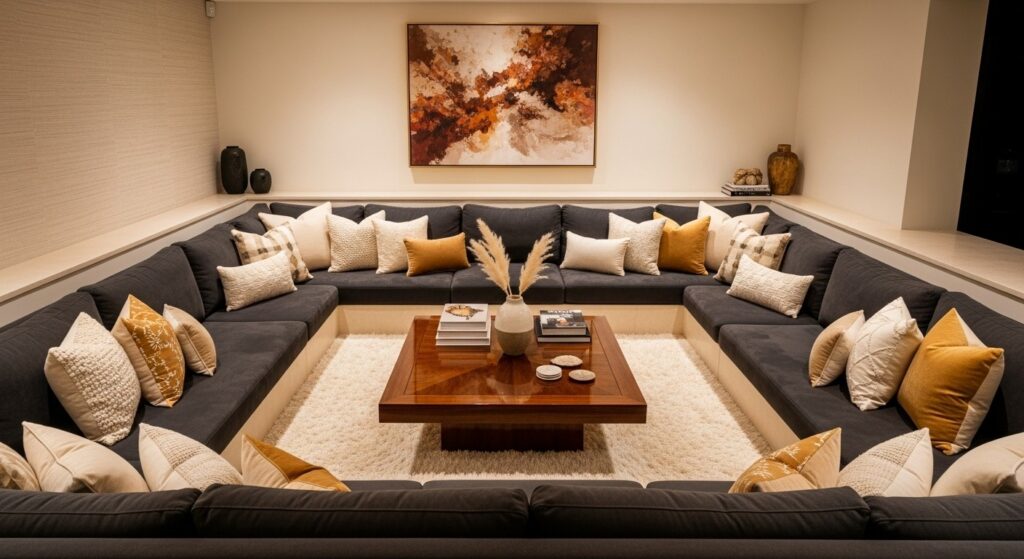
There’s something undeniably charming about a sunken living room. Maybe it’s the way it naturally draws people together, or how stepping down into a cozy space feels like entering your own private retreat. Either way, these retro conversation pits are making a serious comeback.
I’ll admit, when I first encountered a sunken living room at a friend’s mid-century home, I was skeptical. Would it feel awkward? Would guests trip? But after spending an evening curled up in that intimate space, I understood the appeal. There’s a psychological magic that happens when you literally descend into a conversation area – it creates boundaries without walls and intimacy without isolation.
Whether you’re renovating an existing sunken space or dreaming about creating one from scratch, these ideas will help you reimagine this iconic design feature. From bold color choices to creative floor design, let’s explore how to make this vintage concept work for today’s homes.
1. Modern Minimalist Sunken Lounge
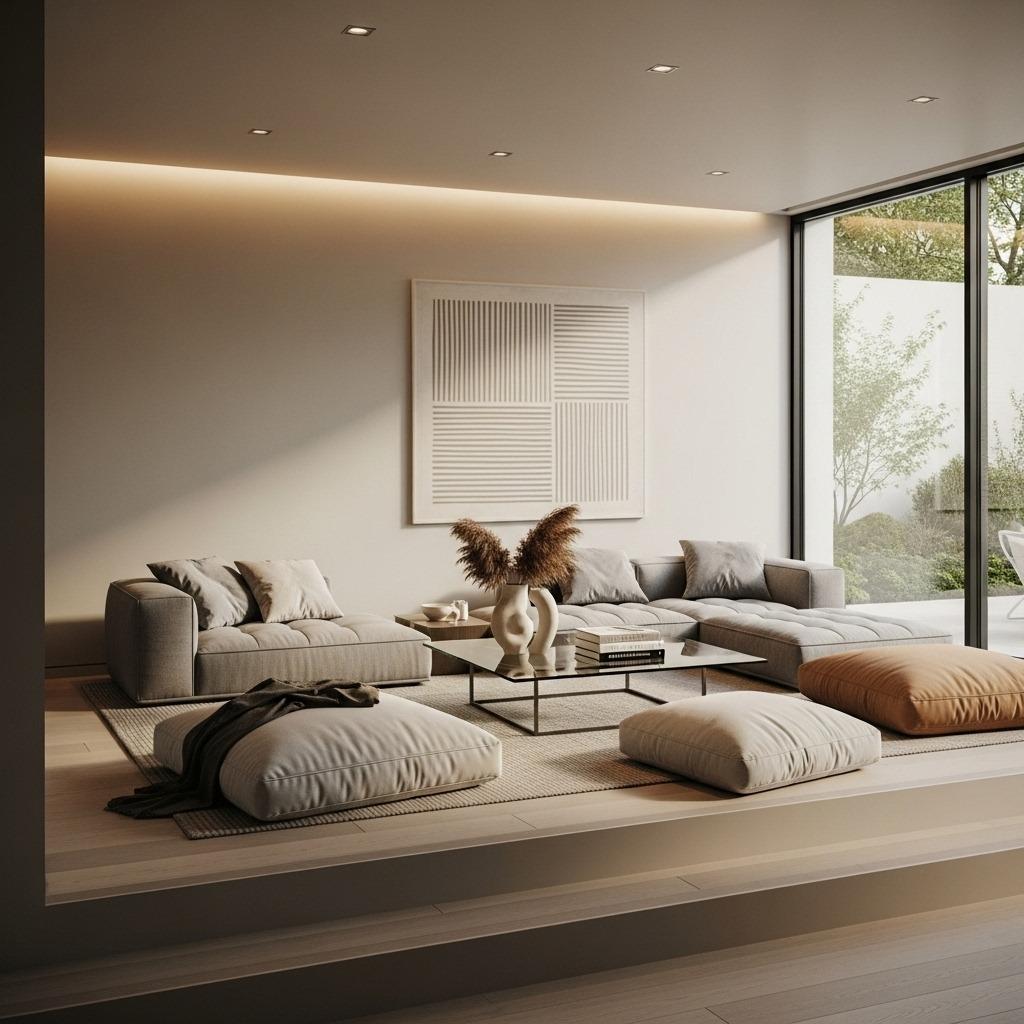
Who says conversation pits have to scream 1970s? A modern minimalist living room approach brings this classic feature into the present. Think neutral palettes, simple geometric shapes, and uncluttered surfaces that let the architecture speak for itself.
The key is choosing low-profile furniture that doesn’t fight against the sunken floor. Built-in benches with slim cushions work beautifully, as do modular seating pieces you can rearrange. Keep the color story tight – maybe warm whites, soft grays, and natural wood tones that create calm rather than chaos.
I’ve found that less really is more here. A single statement light fixture overhead, a few carefully chosen throw pillows, and maybe one sculptural object on the coffee table. The sunken space itself provides the visual interest, so you don’t need to overdo the accessories.
2. Retro ’70s Inspired Conversation Pit
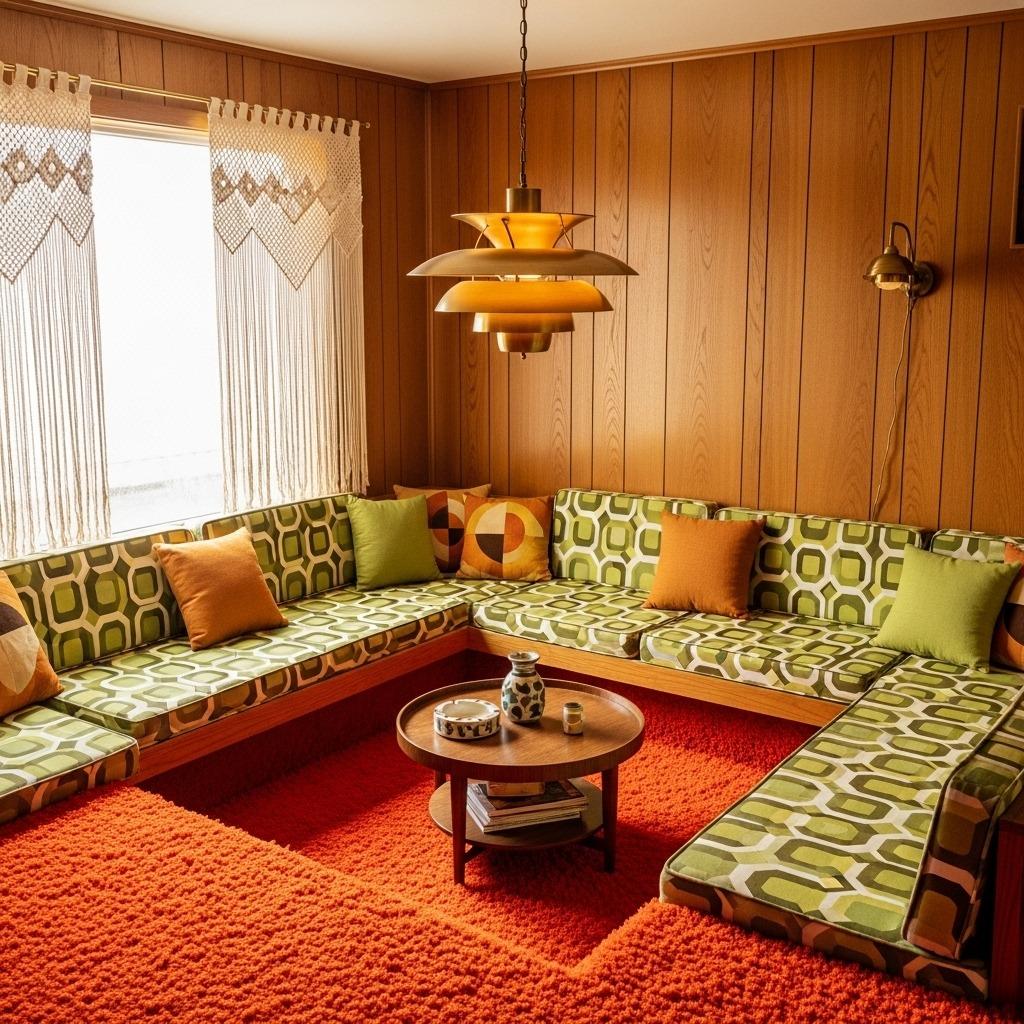
If you’re going to embrace a sunken living room, why not lean into its groovy heritage? A full-on retro lounge celebrates everything we loved about 1970s design – without the dated feel. Bold patterns, rich colors, and plush textures create an environment that’s equal parts nostalgic and surprisingly current.
Start with a warm color palette: think burnt orange, mustard yellow, avocado green, or chocolate brown. These earthy tones instantly transport you back to the decade when conversation pits ruled. Layer in geometric patterns through pillows, area rugs, or even wallpaper on the sunken level’s back wall.
Texture matters enormously in a vintage living room setup like this. Mix velvet cushions with nubby bouclé, add some macramé wall hangings, and don’t be afraid of a little fringe action on throw blankets. The goal is creating a tactile wonderland that begs people to sink in and stay awhile.
3. Cozy Hygge-Inspired Sunken Space
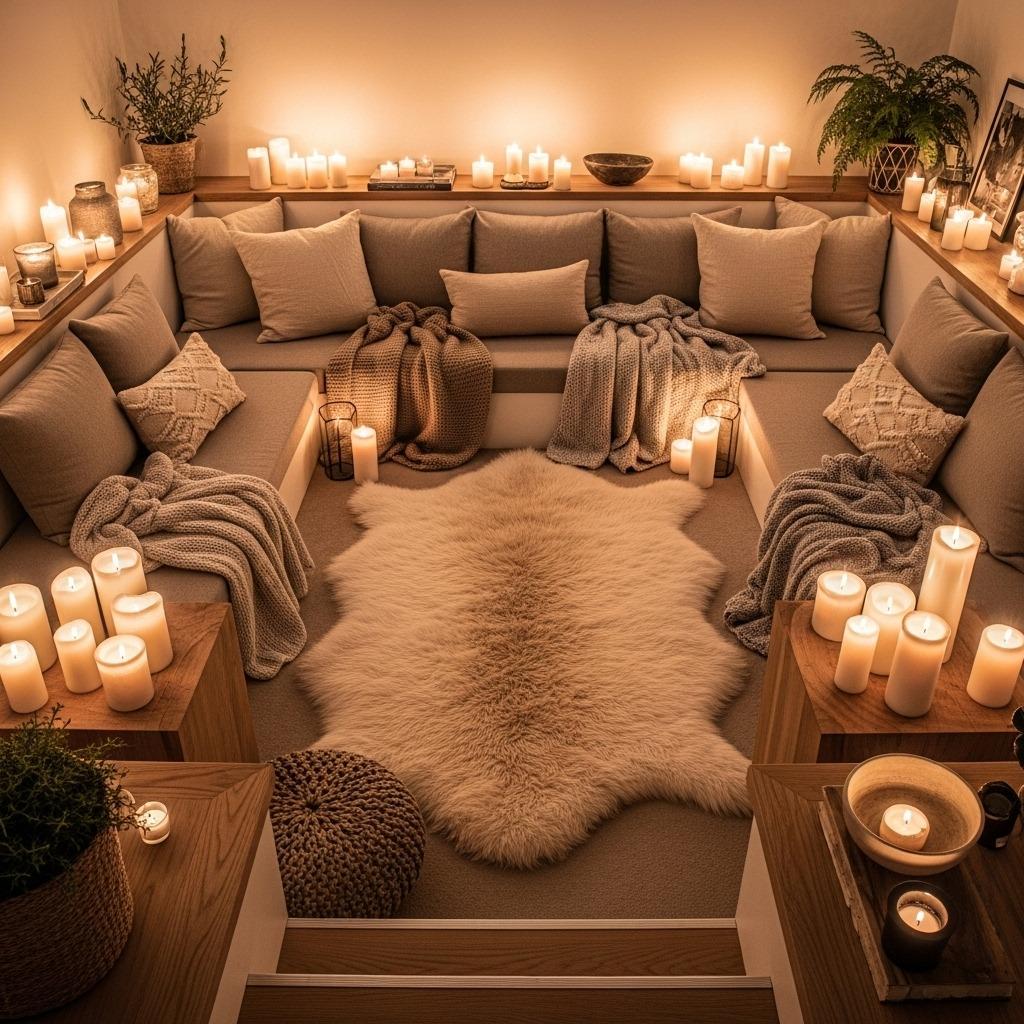
Scandinavian design principles and sunken living rooms are a match made in comfort heaven. The Danish concept of hygge – that untranslatable feeling of cozy contentment – translates perfectly to a conversation area designed for lingering. This approach prioritizes warmth, natural materials, and that elusive quality of feeling completely at ease.
Begin with a neutral foundation in whites, creams, and soft grays. Then layer in natural wood tones through coffee tables, side tables, or even wood-clad walls. The Scandinavian living room aesthetic works beautifully here because it focuses on quality over quantity.
Lighting becomes crucial in a hygge-inspired space. Skip harsh overhead fixtures in favor of multiple soft light sources – table lamps, floor lamps, and definitely candles. Lots of candles. Add chunky knit throws, sheepskin rugs, and pillows in various textures. The result? A sunken sanctuary where you’ll want to spend every winter evening.
4. Dramatic Moody Color Scheme
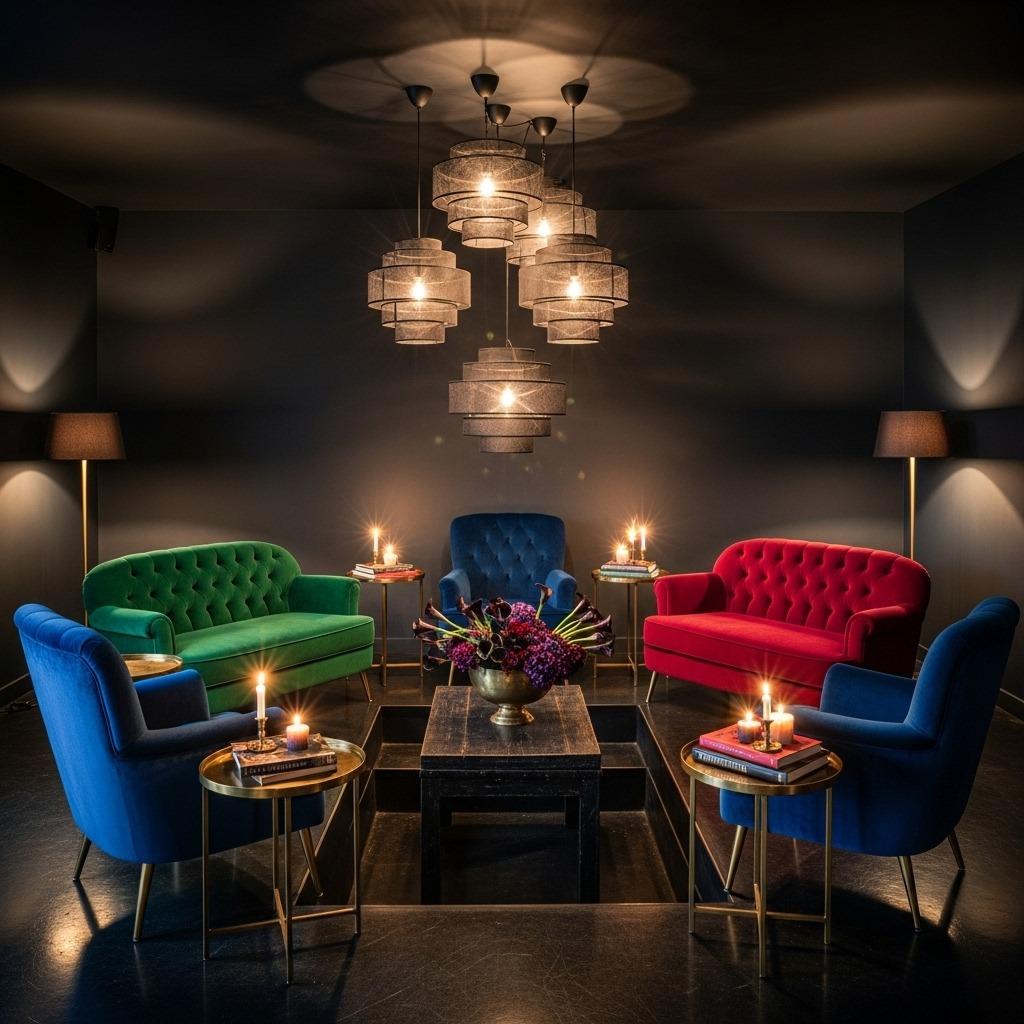
Not every sunken living room needs to be light and airy. Sometimes the most striking designs embrace darkness and depth. A moody color scheme transforms your conversation pit into something that feels more like a chic lounge than a casual family space – and that’s not a bad thing.
Consider painting the sunken area in deep, saturated colors: charcoal gray, navy blue, forest green, or even black. Yes, black. When done thoughtfully, dark walls in a colorful living room concept can make a space feel intimate rather than cramped. The key is balancing that darkness with adequate lighting and lighter accent pieces.
Jewel tones work beautifully against moody backgrounds. Think emerald velvet cushions, sapphire blue throws, or ruby red accent chairs. Metallic accents in brass, copper, or gold add warmth and catch the light. This approach works especially well if your sunken living room has limited natural light – you’re working with the space’s natural characteristics rather than fighting them.
5. Mediterranean-Inspired Sunken Courtyard
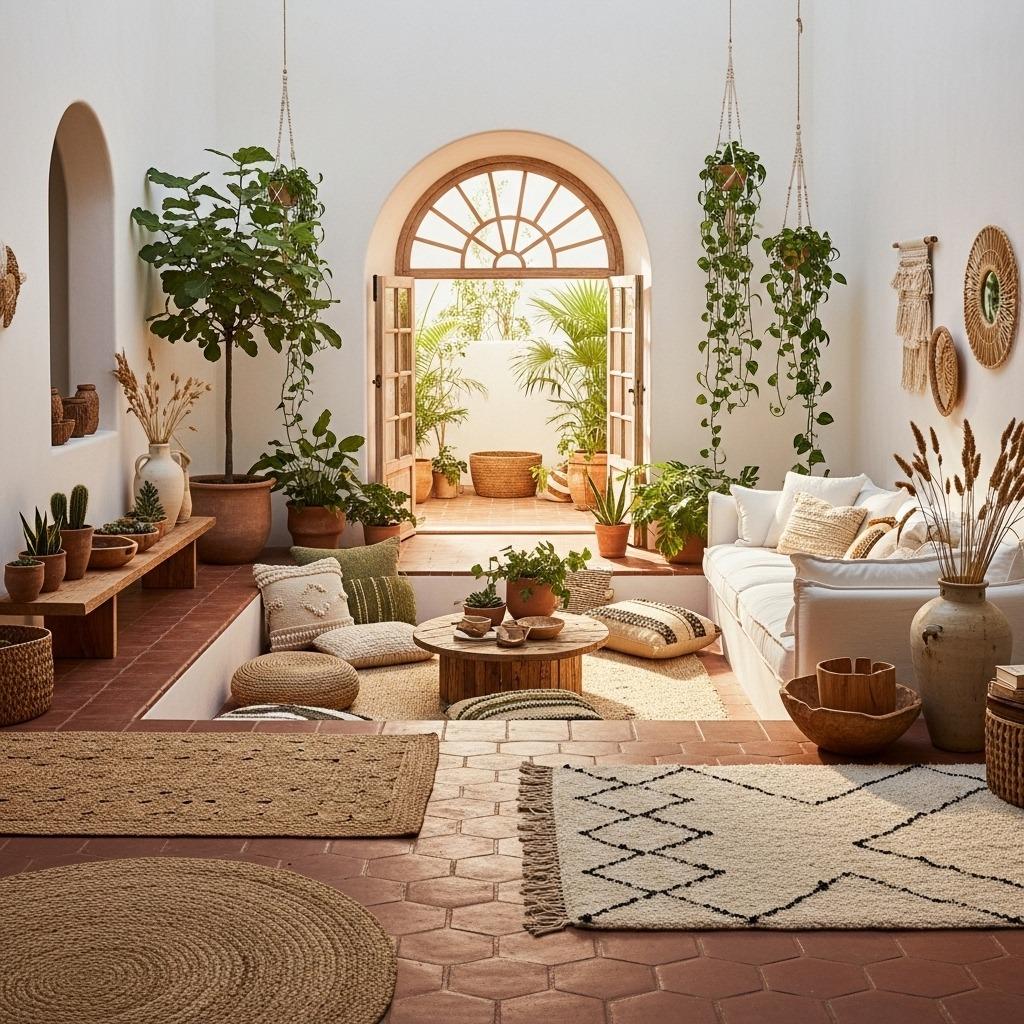
What if your conversation pit felt less like a basement level and more like a sunny Mediterranean courtyard? This approach brings outdoor relaxation indoors through materials, colors, and plants. The result is a sunken space that feels fresh, airy, and vacation-ready year-round.
Start with the floor – terracotta tiles or warm stone create that essential courtyard feeling. White or cream walls reflect light and keep things bright. Then bring in the plants, and I mean lots of them. Potted palms, trailing pothos, fiddle leaf figs – anything that adds lush greenery. You might even explore indoor garden living room concepts for more plant inspiration.
Natural fiber textiles complete the look. Jute rugs, linen cushions, woven rattan chairs – these materials reference traditional Mediterranean design while feeling completely contemporary. Add some ceramic pieces in blues and whites, maybe a fountain or water feature if you’re feeling ambitious, and suddenly you’ve got a European escape right in your home.
6. Multi-Level Creative Floor Design
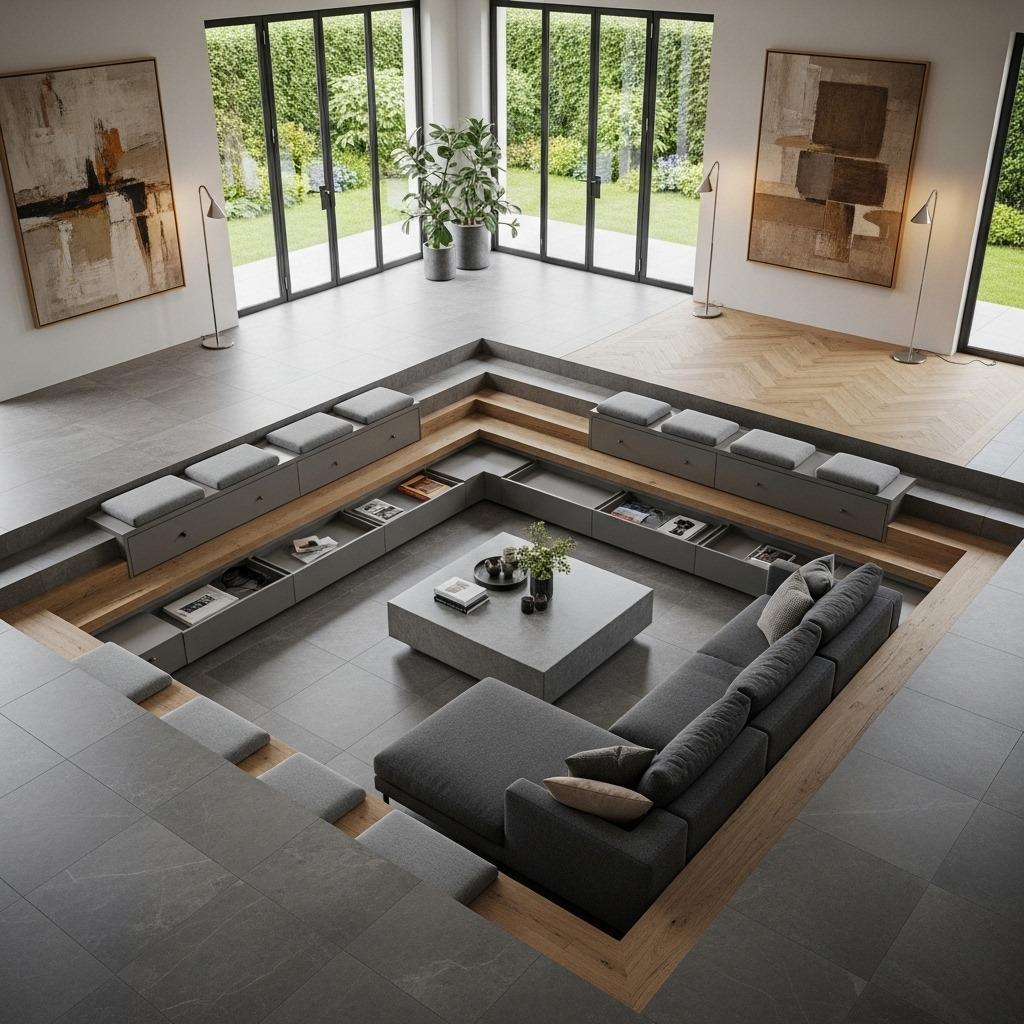
Why stop at one sunken level when you could have multiple? A multi-tiered conversation area adds architectural drama while creating distinct zones within the same space. This works particularly well in larger rooms where you want to define different purposes – maybe one level for conversation, another for watching TV, and steps that double as casual seating.
The creative floor design possibilities here are endless. You might use different materials for each level – carpet for the lowest seating area, wood for the mid-level, tile for the steps. Or keep materials consistent but play with built-in features like planters, lighting, or storage integrated into the various levels.
Just be thoughtful about accessibility. Clear sight lines, good lighting, and possibly handrails make multi-level spaces safe and welcoming for everyone. When done right, this approach feels less like a living room and more like a custom-designed retreat that could only exist in your home.
7. Built-In Banquette Seating
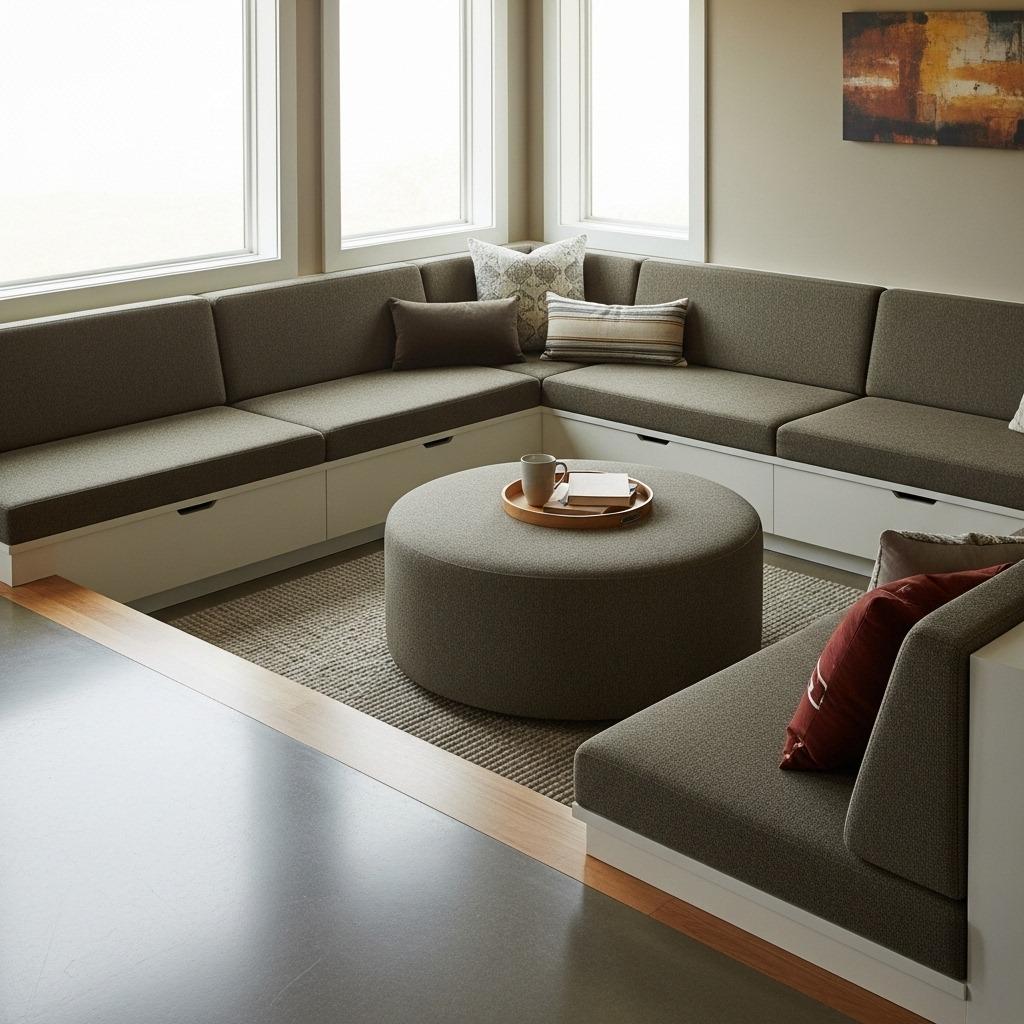
Built-in seating solves one of the biggest challenges of sunken living rooms: furniture placement. Instead of trying to find the right-sized sofas and chairs, why not create custom banquette seating that follows the exact contours of your sunken space? This approach maximizes seating capacity while keeping the area uncluttered.
The beauty of built-ins is the opportunity for hidden storage. Lift-up seats can house board games, extra blankets, or seasonal decorations. You’re not just creating a functional living room – you’re adding practical storage that doesn’t compromise your design vision. For similar built-in concepts, check out banquette seating in kitchen spaces.
Choose upholstery carefully since built-ins can’t be easily re-covered. Durable performance fabrics in timeless colors make sense here. Add personality through pillows and throws you can swap out seasonally. Consider including different cushion depths – deeper for lounging, shallower for more upright conversation.
8. Fireplace-Centered Conversation Pit
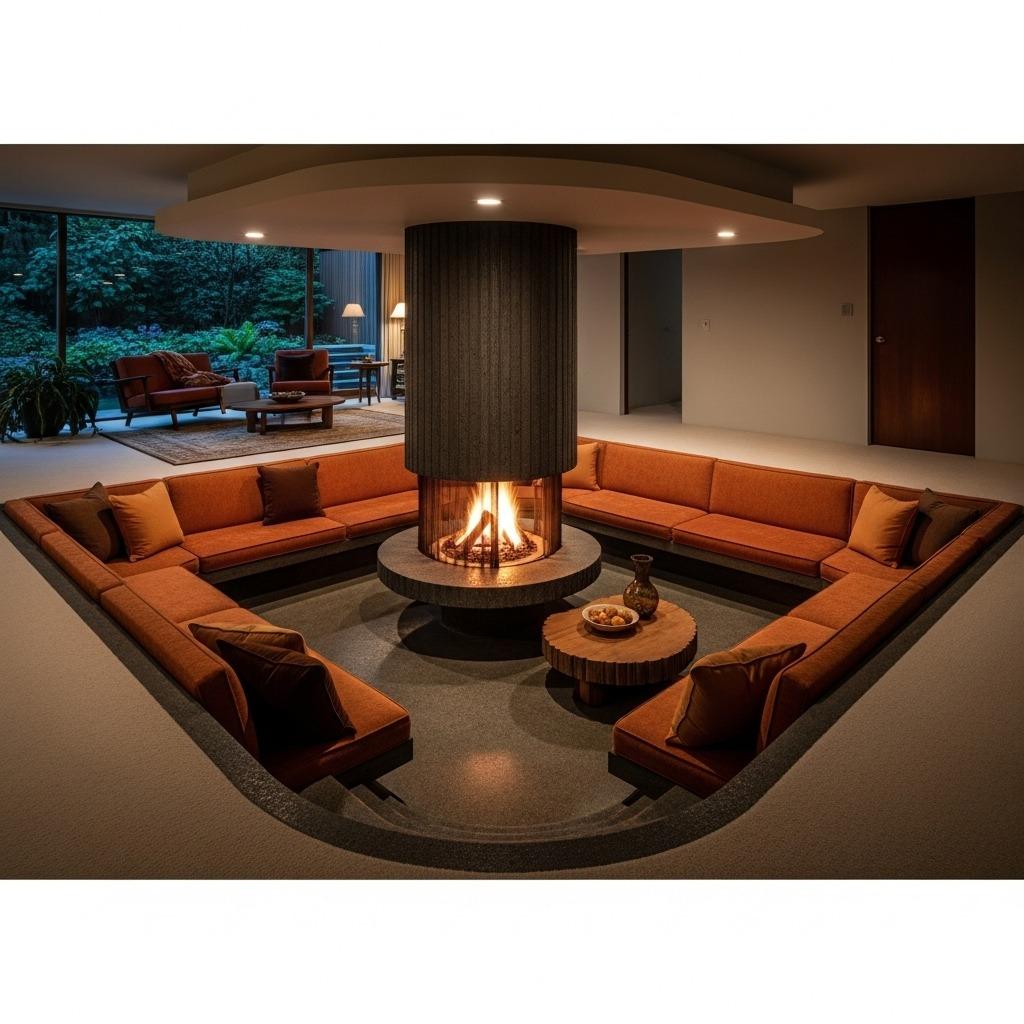
Few things draw people together like fire. Centering your sunken living room around a fireplace – whether traditional or modern – creates a natural focal point that enhances the intimate conversation area atmosphere. There’s something primal about gathering around flames, and a sunken space amplifies that feeling.
The fireplace location matters enormously. A central, circular fireplace with 360-degree views works beautifully in round conversation pits. Linear fireplaces suit rectangular sunken spaces, while corner installations maximize wall space. You might find inspiration in lounge with fireplace designs for various placement options.
Think beyond gas and wood – even electric fireplaces can create the right ambiance if chosen carefully. The goal is creating a warm, inviting atmosphere where the flicker of flames adds that extra layer of coziness. Pair your fireplace with comfortable, fire-safe furnishings at appropriate distances, and maybe a storage spot for throws that people will inevitably want as evening temperatures drop.
9. Statement Lighting Showcase
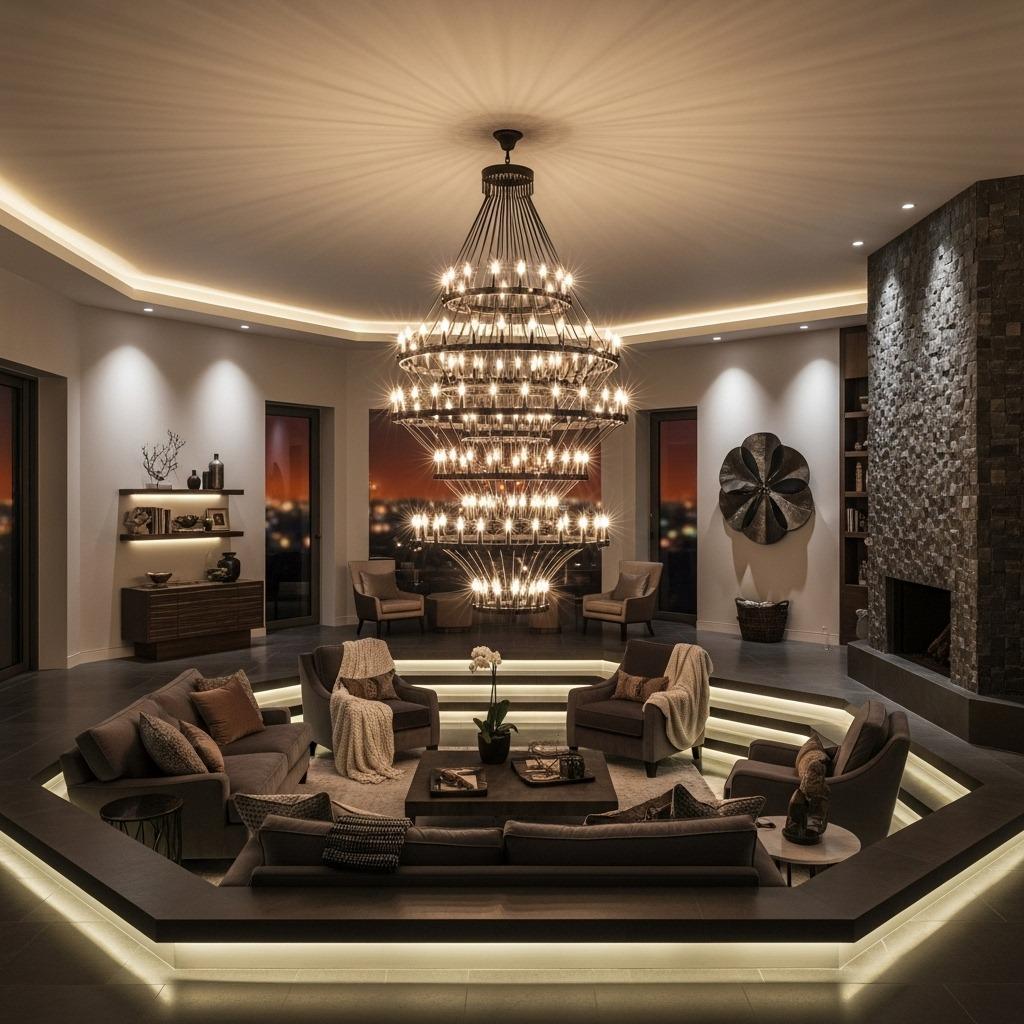
The right lighting transforms a sunken living room from merely interesting to absolutely stunning. Since conversation pits naturally draw the eye downward, they’re perfect for showcasing statement light fixtures that might overwhelm a standard room. This is your chance to go bold with that chandelier you’ve been eyeing.
Consider scale carefully – a sunken space can handle larger fixtures than you might expect because of the vertical volume they create. A dramatic pendant that hangs into the sunken area becomes sculptural art you experience from multiple angles. Cluster multiple smaller pendants for a modern look, or choose one show-stopping piece that reflects your overall design style.
Don’t rely on overhead lighting alone, though. Layer in floor lamps, table lamps, and maybe LED strips along steps or built-in seating. The goal is creating flexible lighting scenarios – bright for game nights, dimmed for movie watching, or somewhere in between for casual conversation. Good stylish home lighting makes the space work for any occasion.
10. Bohemian Texture Paradise
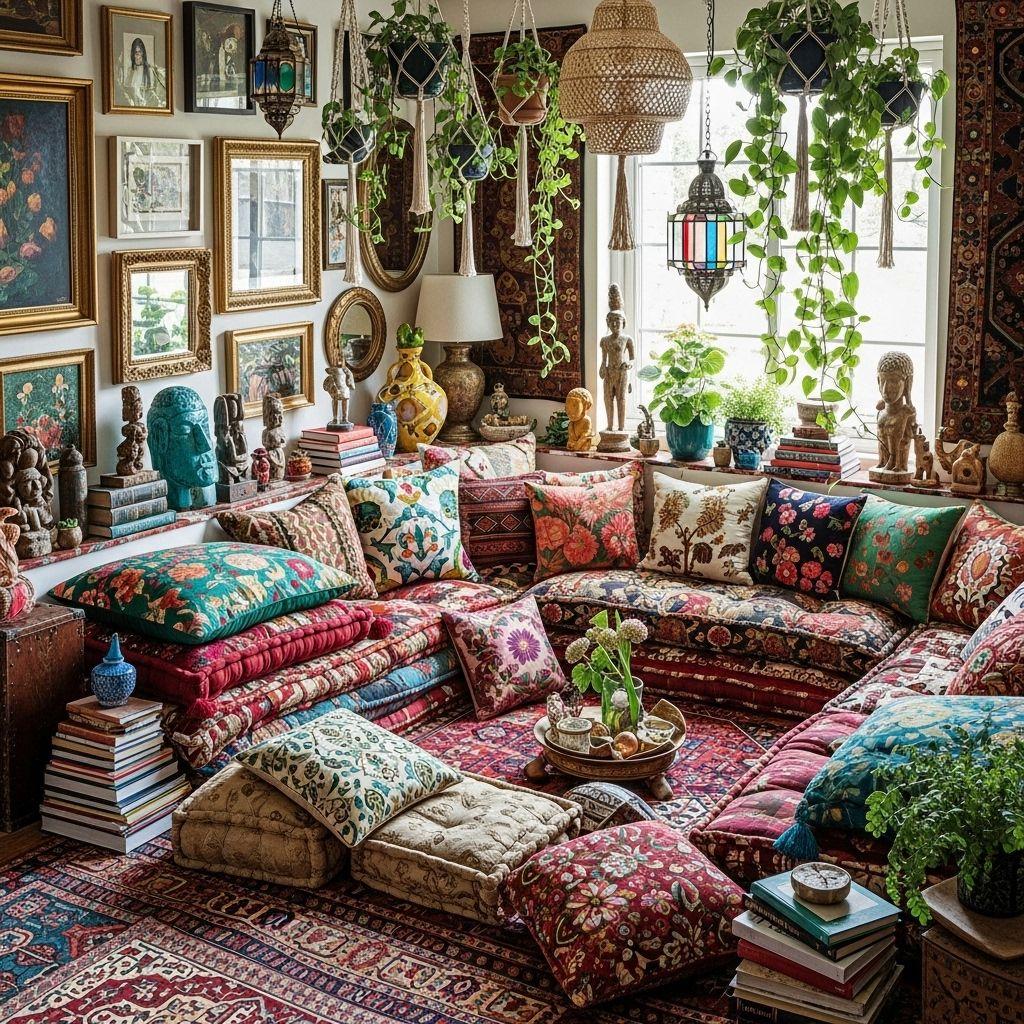
If you lean toward eclectic, layered, more-is-more design, a boho chic living room approach to your sunken space might be perfect. This style celebrates mixing patterns, piling on textures, and creating spaces that feel collected rather than coordinated. The informal, floor-level nature of conversation pits suits bohemian sensibilities beautifully.
Start with low seating – floor cushions, poufs, and mattress-style cushions that can be rearranged endlessly. Layer rugs on top of rugs in complementary patterns and colors. Don’t match; instead, look for pieces that share a color family or vibe. Think Persian rugs layered with Moroccan wedding blankets, topped with embroidered floor pillows.
Textile-wise, embrace everything: macramé wall hangings, woven baskets, fringed throws, embroidered cushions, and maybe some bohemian pillows and throws that add those final touches. Add plants – lots of them, both potted and hanging. The result should feel like a global bazaar met a California surf shack and decided to stay awhile.
11. Integrated Home Theater Setup
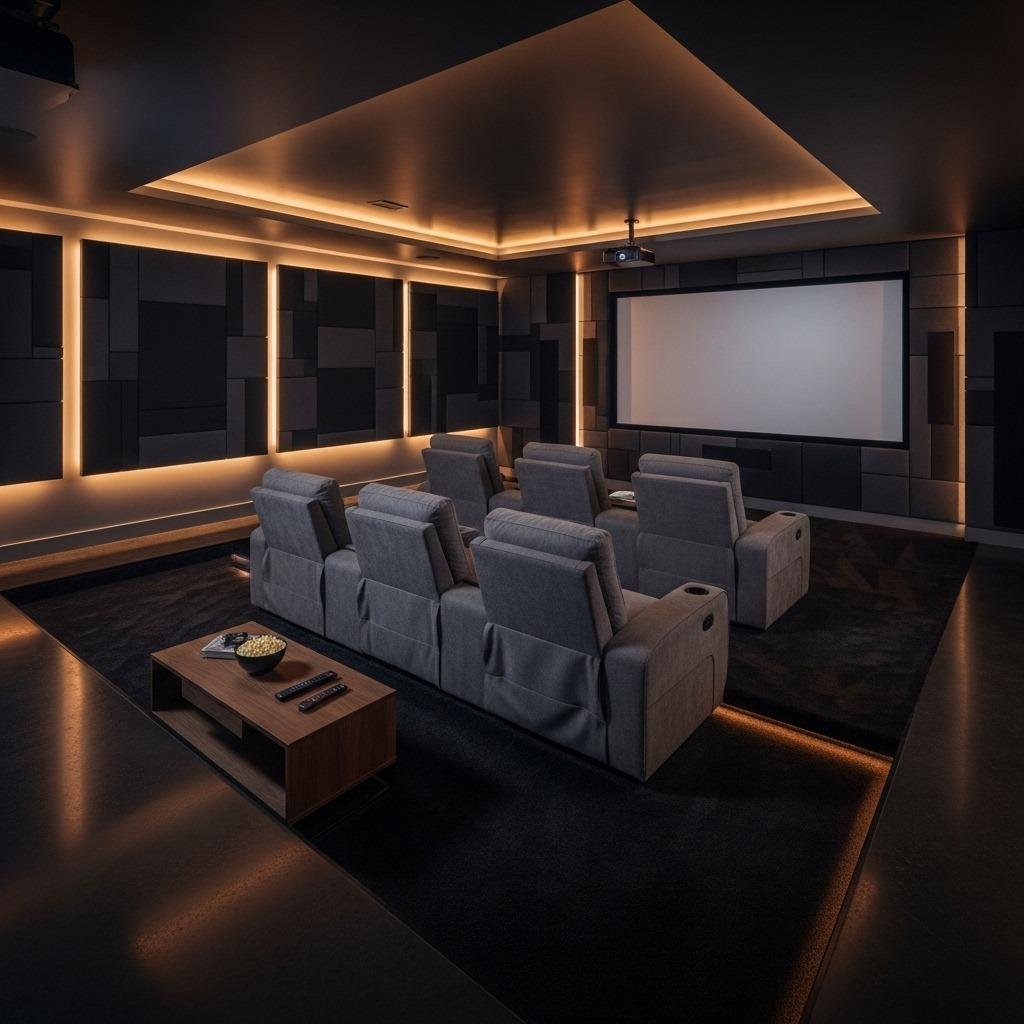
Why not combine two luxury features – a sunken living room and dedicated home theater? The conversation pit’s natural stadium-style arrangement works perfectly for movie viewing. Everyone gets an unobstructed sightline, and the sunken position minimizes glare from windows and creates that immersive theater feeling.
Start with the screen placement and seating arrangement. The back wall of your sunken area is ideal for a projector screen or large TV. Arrange seating in slight tiers if possible, so each row sits slightly higher than the one in front. Built-in or modular seating works better than traditional sofas for maximizing viewing angles.
Sound matters as much as visuals. Consider acoustic treatments disguised as decorative elements – fabric panels, textured walls, or even strategic rug placement. Recessed lighting with dimmer controls, blackout capabilities for windows, and maybe some LED accent lighting along steps complete the theater experience. This setup transforms movie night from casual to cinematic.
12. Indoor-Outdoor Connection
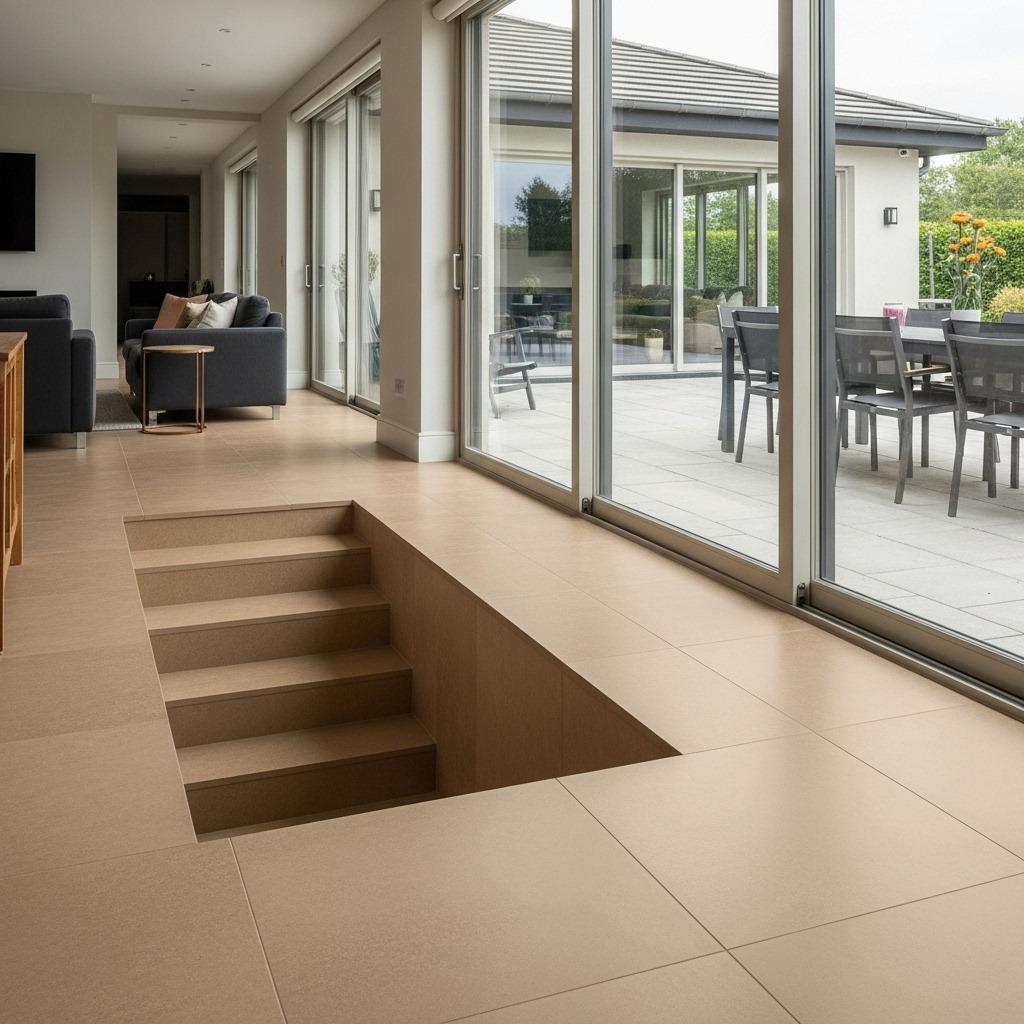
One clever way to make a sunken living room feel less basement-like is connecting it directly to outdoor space. If your conversation pit sits at ground level on one side, large glass doors or even floor-to-ceiling windows create a seamless flow between indoors and out. Suddenly that sunken feeling becomes less “below” and more “integrated.”
Material continuity strengthens this connection. If you’re using wood flooring inside, carry it onto an adjoining deck. Stone tiles inside? Continue them on the patio. Even if exact material matching isn’t possible, staying within the same color family tricks the eye into reading spaces as connected. Check out open concept kitchen living room layout ideas for more thoughts on spatial flow.
Furnishing-wise, blur the lines between indoor and outdoor pieces. Weather-resistant cushions work inside, while indoor-looking furniture rated for outdoor use extends your living space seasonally. During warm months, leave the doors open and let the conversation pit become a shaded retreat that’s still part of the garden. During cold months, the outdoor views provide visual connection even when physical access is closed.
13. Glamorous Luxe Conversation Area
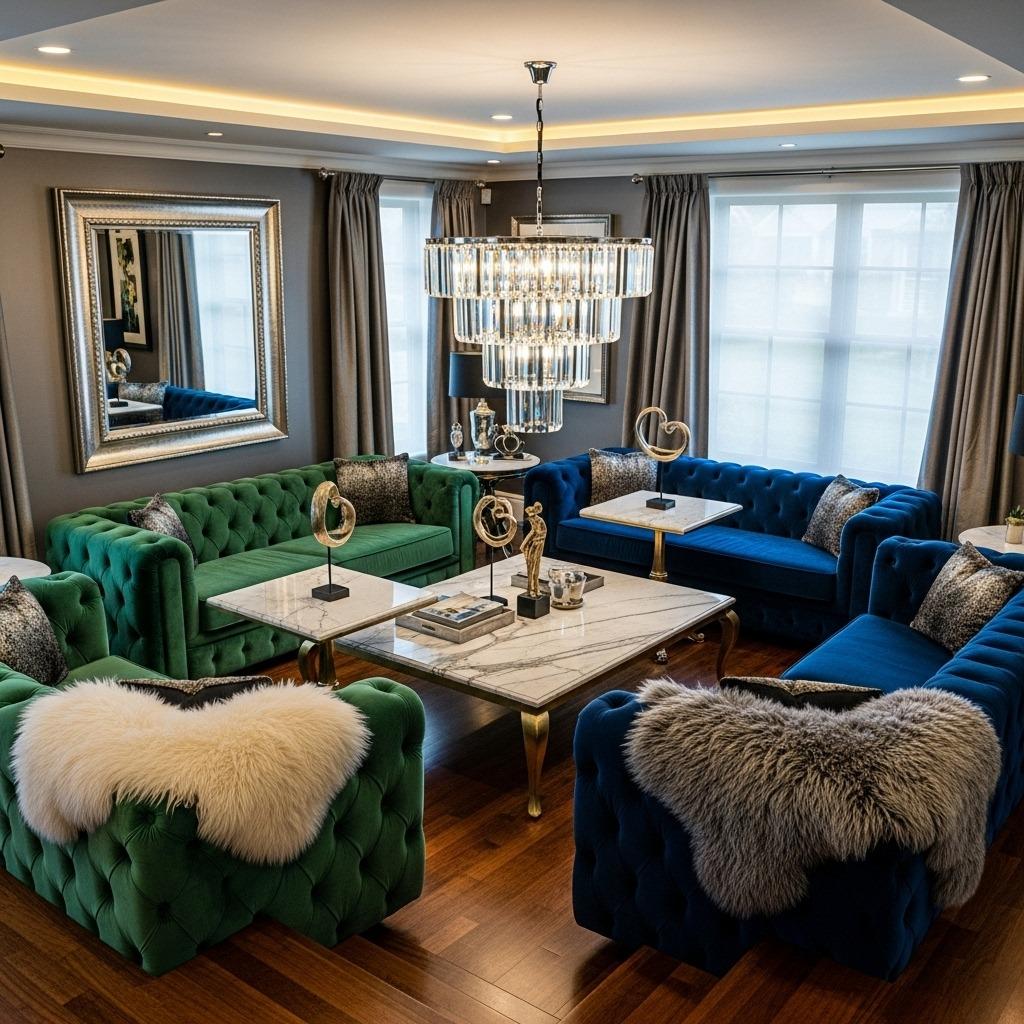
Who says sunken living rooms need to be casual? A luxury living room approach transforms your conversation pit into something you’d expect to see in a high-end hotel or celebrity home. Rich materials, sophisticated colors, and refined details create a space that’s all about indulgence.
Think sumptuous fabrics like velvet, silk, and cashmere. Deep jewel tones – emerald, sapphire, amethyst – paired with neutrals like cream, charcoal, or black. Furniture should feel substantial and well-crafted, with details like tufting, nailhead trim, or carved wood elements. A marble or mirrored coffee table adds that extra touch of glamour.
Accessories matter enormously in a glam living room setup. Crystal or glass decorative objects catch and refract light. Metallic accents in gold, silver, or rose gold add warmth and sophistication. Fresh flowers, beautiful coffee table books, and maybe a bar cart stocked with attractive glassware complete the luxury resort feeling.
14. Flexible Multi-Purpose Design
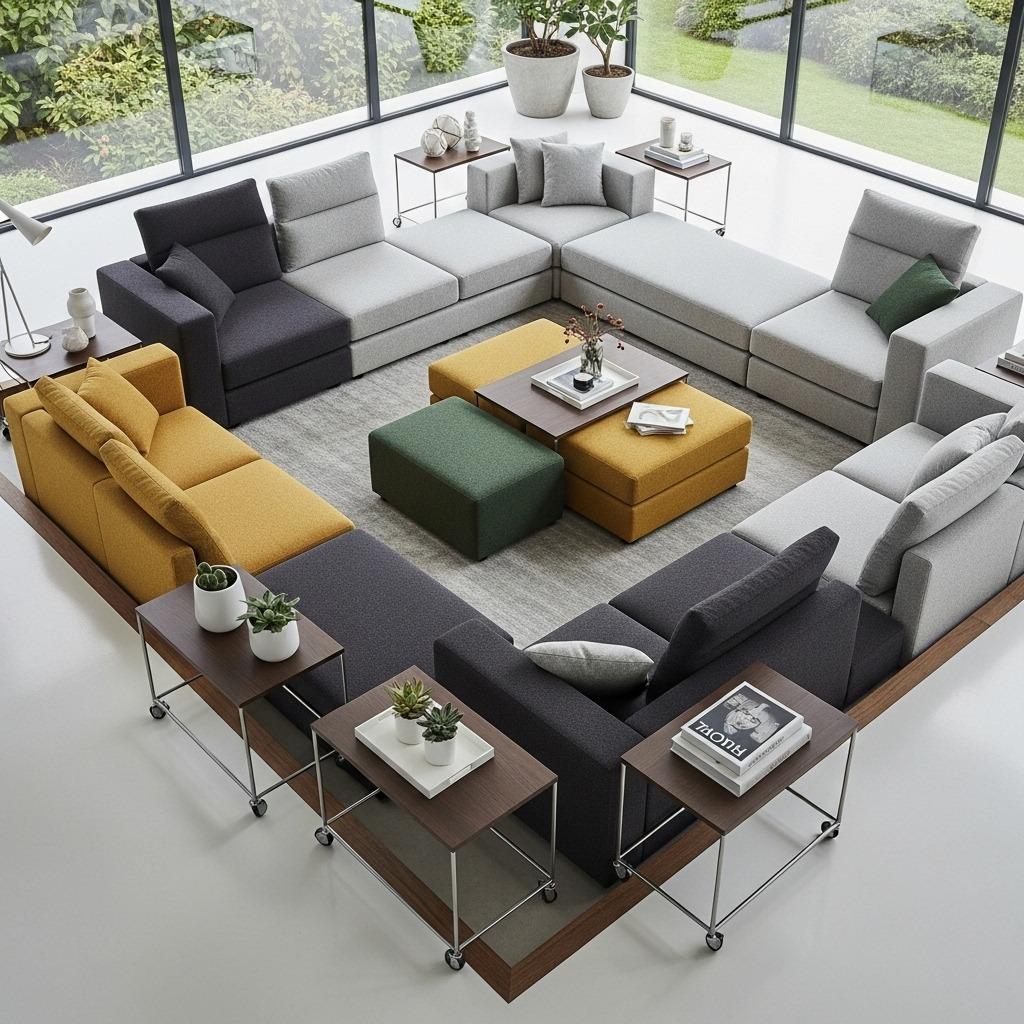
Maybe you love the idea of a sunken living room but worry about flexibility. What if you want to host large parties sometimes and intimate gatherings other times? What if your needs change as kids grow or life circumstances shift? A multi-purpose approach keeps your conversation area adaptable rather than fixed.
Modular furniture is your friend here. Sectional pieces that can be rearranged, ottomans that serve as seating or tables, nesting tables that disappear when not needed – these elements let you reconfigure the space based on what’s happening that day. Storage ottomans hide away accessories you’re not currently using.
Consider how the space might serve different functions. During the day, maybe it’s a home office remodel area with a laptop desk that rolls away. Game nights might require a different furniture arrangement than book club meetings. The ability to adapt keeps your sunken living room relevant through life’s changes rather than becoming a design decision you regret.
Making Your Sunken Living Room Work
Creating or updating a sunken living room isn’t just about aesthetics – practical considerations matter too. Safety should top your priority list. Good lighting along steps and level changes is essential, particularly for evening use. Consider contrasting step edges with different materials or colors so they’re clearly visible. If you have young children or elderly family members, handrails might be necessary.
Climate control can get tricky in sunken spaces. Heat rises, which means your conversation pit might naturally stay cooler – great in summer, potentially problematic in winter. Strategic heating solutions like radiant floor heating or well-placed vents keep the space comfortable year-round. Similarly, think about air circulation to prevent that stuffy, basement-like feeling.
The good news? They create memorable spaces that set properties apart in competitive markets. Just ensure your design works with your home’s overall flow rather than feeling disconnected or awkward.
Styling Your Conversation Pit
Once the structural elements are in place, styling brings your sunken living room to life. Scale matters – furniture that works in a standard room might overwhelm or underwhelm a sunken space. Generally, you want lower-profile pieces that don’t block sight lines into or out of the conversation area. That said, you’ve got vertical space to play with overhead.
Color psychology plays an interesting role in sunken spaces. Lighter colors help the area feel open and expansive, which works well if the pit lacks natural light. Darker, richer colors enhance that cozy, intimate vibe many people want from conversation areas. There’s no wrong answer – just different feelings. You might even explore paint color schemes that transition from lighter on upper walls to richer tones in the sunken area.
Don’t neglect the surrounding space. Your sunken living room shouldn’t feel isolated from the rest of your home. Repeat colors, materials, or design elements from adjacent rooms to create visual continuity. At the same time, the conversation pit can have its own distinct personality – think of it as a room within a room that’s both connected and special.
Final Thoughts on Sunken Living Rooms
After exploring all these possibilities, I keep coming back to what makes sunken living rooms special in the first place. In our screen-dominated world where everyone’s attention scatters in different directions, a conversation pit literally creates a space designed for connection. There’s something powerful about architecture that encourages people to face each other, settle in, and actually talk.
Yes, they require more planning than a standard living room. Yes, they’re not for everyone or every home. But if you’ve got the opportunity to create or restore one, think carefully about what style speaks to you. Are you drawn to that retro lounge nostalgia, or do you see a more contemporary interpretation? Does your family need flexibility, or would you benefit from a dedicated gathering space with a single purpose?
Whatever direction you choose, embrace the uniqueness of this design feature. A sunken living room isn’t trying to be like every other space in your home – it’s meant to stand out, create interest, and offer something different. That’s exactly what makes it worth considering in a world of open floor plans and interchangeable rooms. Sometimes the best design choices are the ones that make people pause and say, “Now that’s interesting.”

