
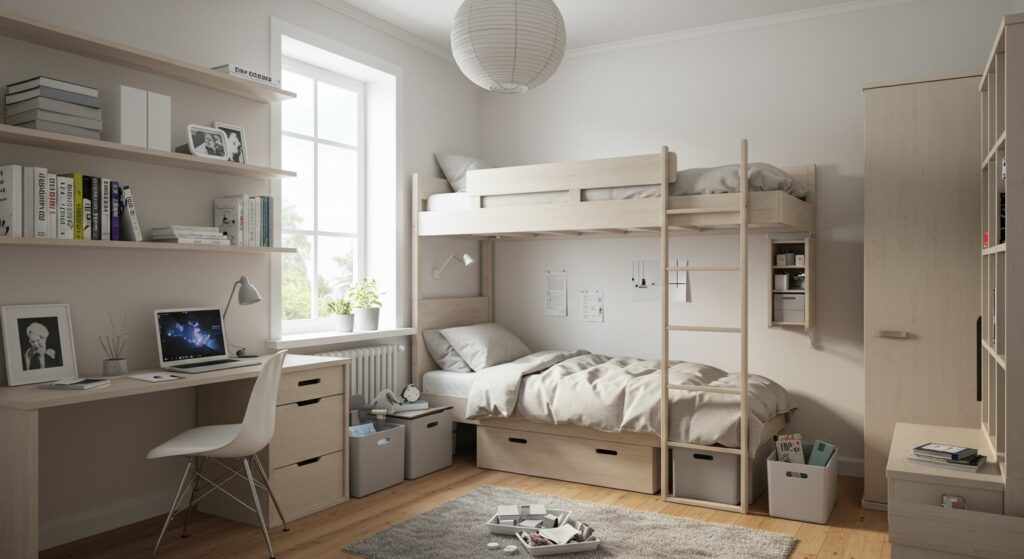
Living in a small bedroom doesn’t mean sacrificing style or comfort. Whether you’re dealing with a cramped city apartment or just trying to make the most of a modest-sized room, the right tricks can completely transform how your space feels and functions.
I’ve spent years figuring out how to make tiny bedrooms work harder, and honestly? Some of the best solutions are surprisingly simple. You don’t need a full renovation or expensive custom furniture to create a bedroom that feels open, organized, and genuinely relaxing.
These 19 small space bedroom hacks focus on clever furniture choices, smart bedroom storage solutions, and visual tricks that fool the eye into seeing more room than actually exists. Each one is something you can implement right away, without breaking the bank or requiring advanced DIY skills.
1. Mount Your Nightstand to Free Up Floor Space
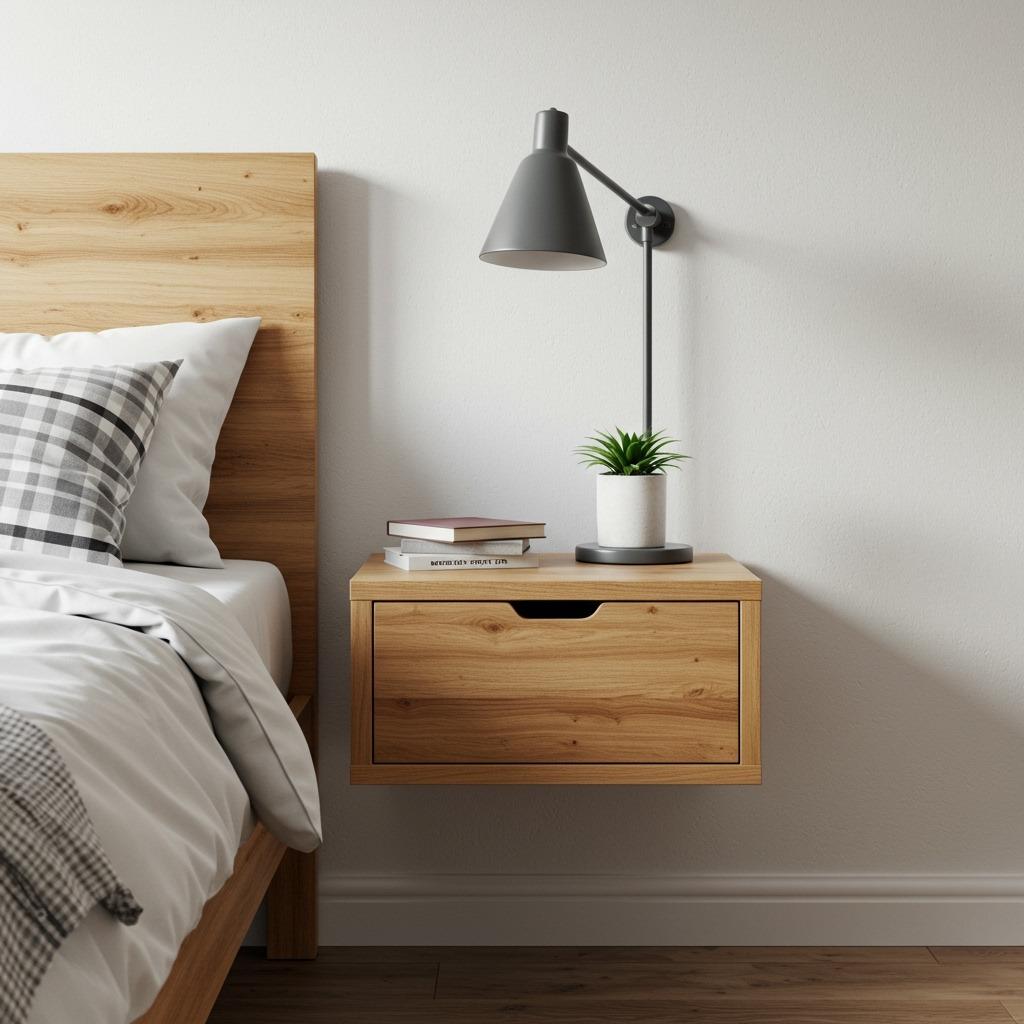
Traditional nightstands eat up precious floor space in small bedrooms. Wall-mounted alternatives give you the same functionality while making your room feel immediately less cluttered.
Floating nightstands come in countless styles, from sleek minimalist shelves to small drawer units. The gap between the furniture and floor creates visual breathing room that makes the entire space feel larger. Plus, cleaning becomes infinitely easier when you’re not navigating around furniture legs.
Consider mounting your nightstand at varying heights if you have different mattress thicknesses or personal preferences. The flexibility of placement means you can optimize for both comfort
and the illusion of space. Check out more bedroom ideas to see how vertical thinking transforms tight quarters.
2. Choose a Bed Frame With Built-In Storage Drawers
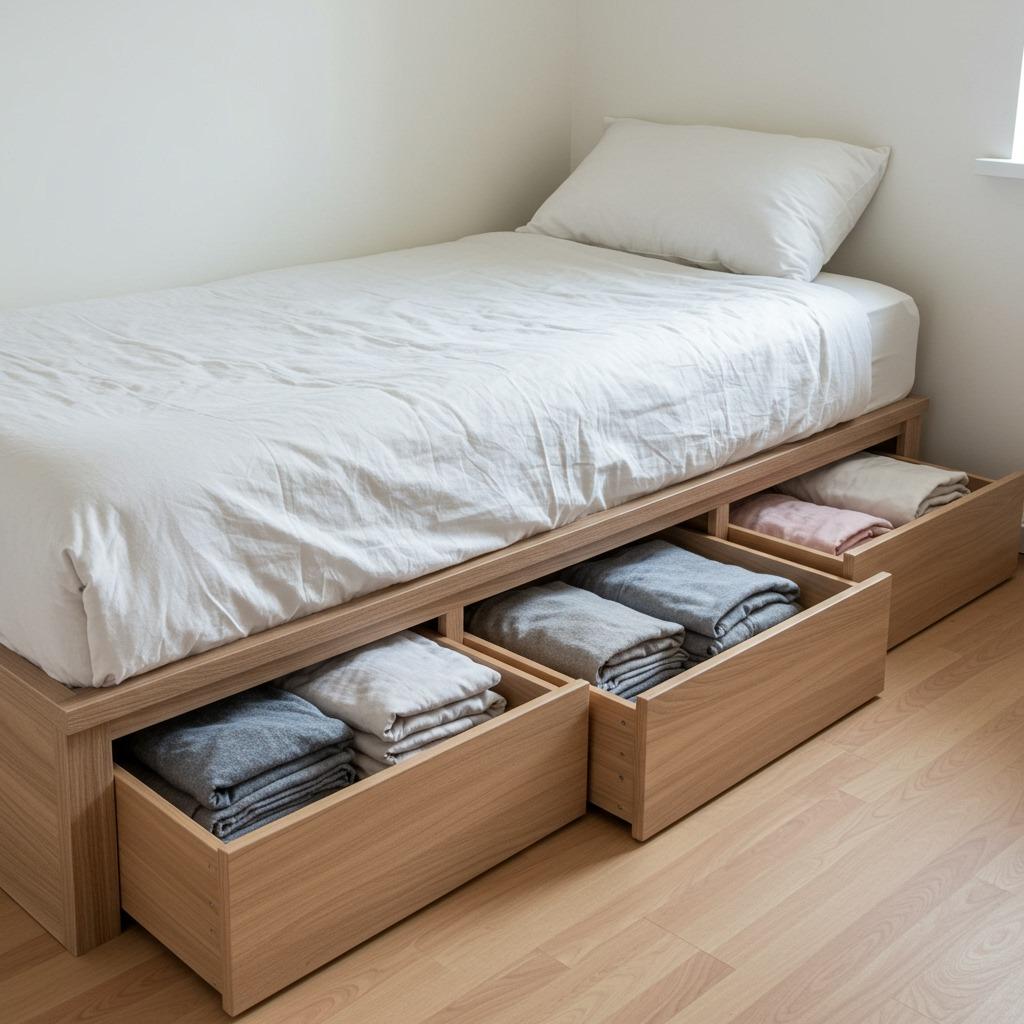
Your bed takes up the most floor space in any bedroom, so why not make it work double duty? Storage beds with built-in drawers eliminate the need for separate dressers or storage boxes.
Platform beds with drawers underneath are perfect for storing off-season clothing, extra bedding, or anything else you need to keep but don’t use daily. Some models offer hydraulic lift
mechanisms that reveal even more storage space beneath the entire mattress. The investment pays off quickly when you realize how much additional storage you’ve created.
Look for beds with drawers on both sides if your room layout allows access from multiple angles. This maximizes storage potential without requiring you to pull the bed away from the wall.
3. Install Floating Shelves Above Your Bed
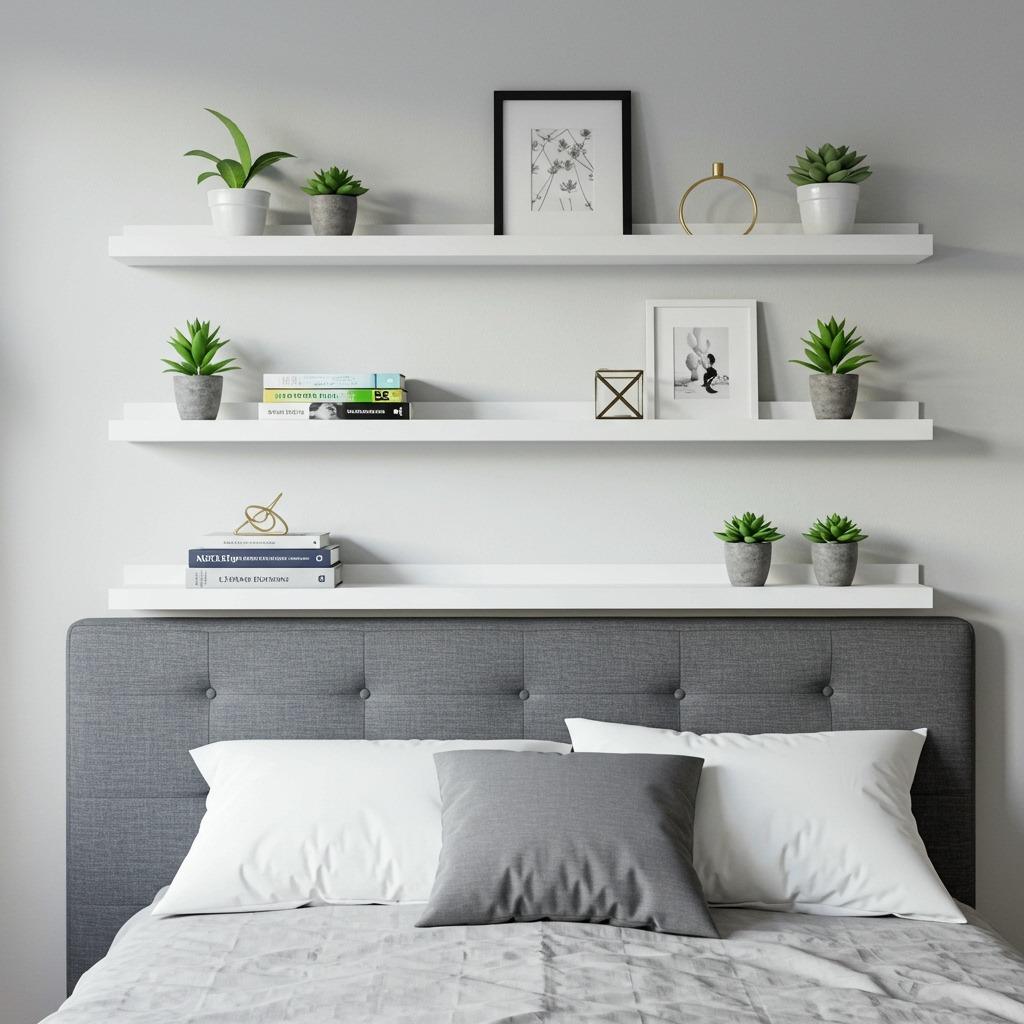
The wall space above your headboard is often completely wasted. Installing floating shelves there creates storage and display space without consuming any floor area.
Shallow shelves work best above beds since you don’t want anything too deep hanging overhead. Use them for books, small plants, decorative objects, or even practical items like your phone charger. The vertical display draws the eye upward, which psychologically makes ceilings feel higher and rooms feel more spacious.
Space your shelves thoughtfully so they don’t feel overcrowded or create a claustrophobic feeling. Three small shelves often work better than one large one in tight quarters. Similar vertical solutions appear frequently in small space renovation projects for good reason.
4. Use a Corner Desk Instead of a Traditional Workspace
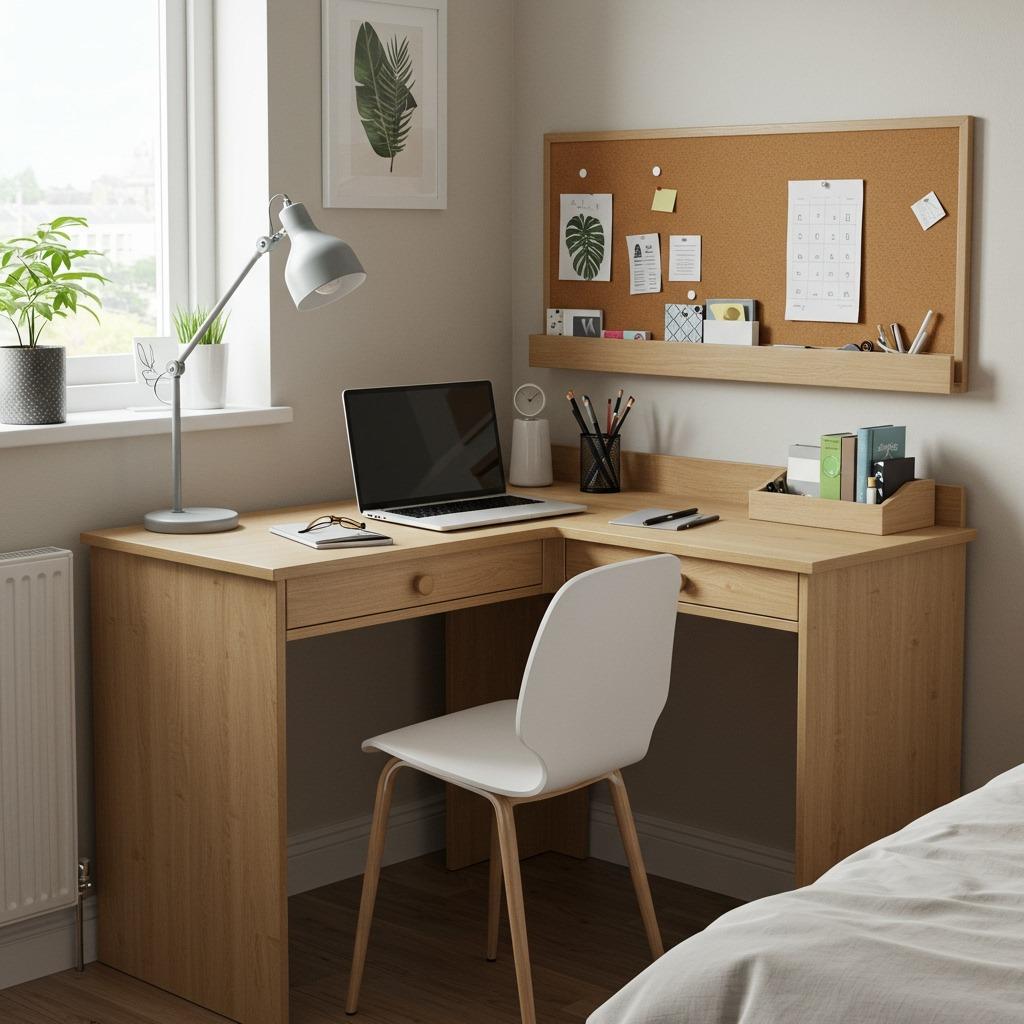
Corner desks utilize awkward angles that often become dead space in small bedrooms. They provide a functional workspace while taking up less visual real estate than traditional rectangular desks.
The triangular design fits snugly into corners, leaving more open floor space in the center of your room. Many corner desks also include built-in shelving or drawer units that maximize the vertical space in that corner. This creates a dedicated work or study zone without overwhelming the room.
Look for models with rounded edges rather than sharp 90-degree angles. They’re safer in tight spaces and create better flow when you’re moving around the room.
5. Hang Curtains High and Wide to Create Height Illusion
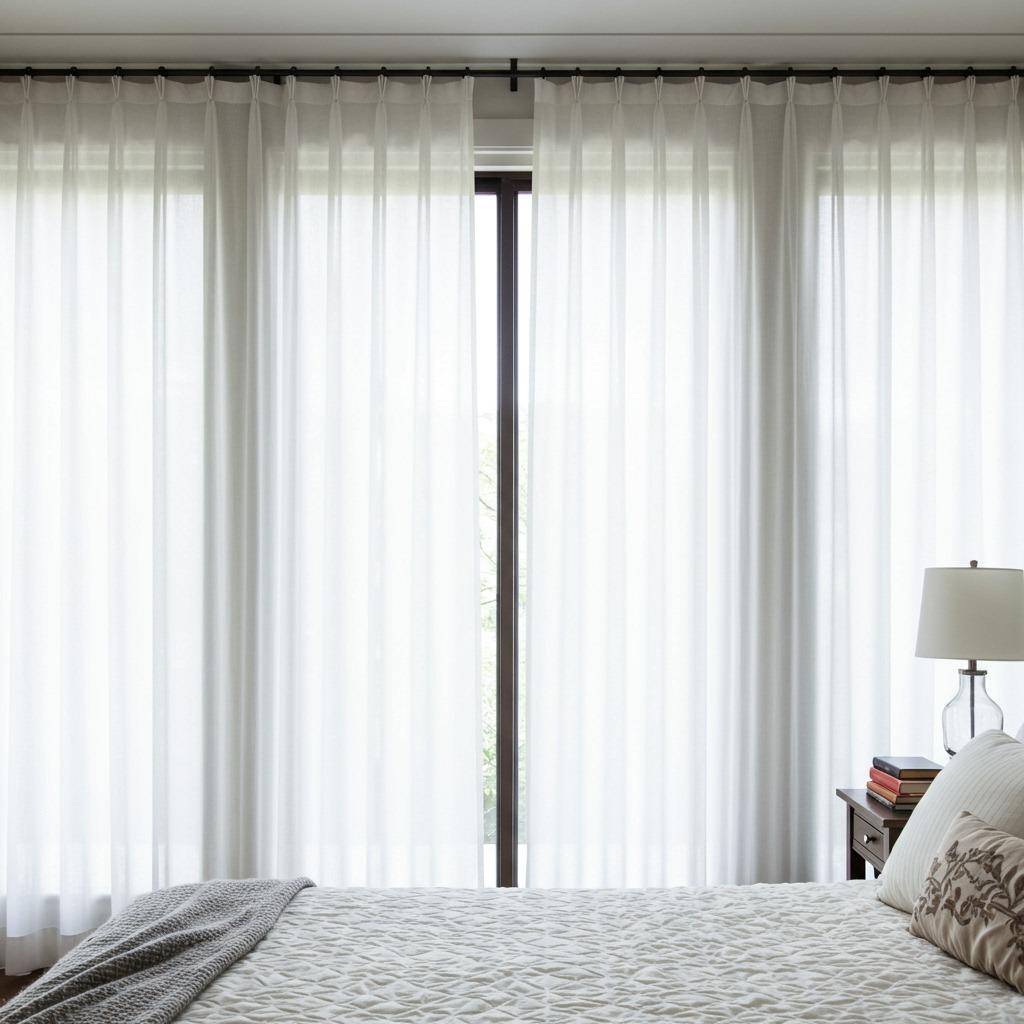
Where you hang your curtains dramatically affects how tall and wide your room appears. Mounting curtain rods close to the ceiling rather than just above the window frame draws the eye upward.
Extend your curtain rod several inches beyond the window frame on each side. When the curtains are open, the window appears larger and more light floods in. This simple visual trick makes the entire room feel more expansive and airy.
Choose light, flowing fabrics rather than heavy drapes in small spaces. The goal is to add softness and dimension without creating visual weight that makes the room feel stuffier.
6. Pick Multi-Functional Furniture Like Storage Ottomans

Every piece of furniture in a small bedroom should earn its place. Storage ottomans work as seating, footrests, and hidden storage all in one compact package.
Place one at the foot of your bed or in a reading nook. Use the interior storage for extra blankets, pillows, out-of-season clothes, or anything else that needs a home. When guests visit, it becomes additional seating without requiring you to keep extra chairs around.
Look for ottomans with removable tops rather than hinged lids. They’re easier to access and the top can pull double duty as a serving tray when needed. The principle of space-saving furniture appears throughout successful cozy small living room designs too.
7. Install a Murphy Bed for Ultimate Space Flexibility
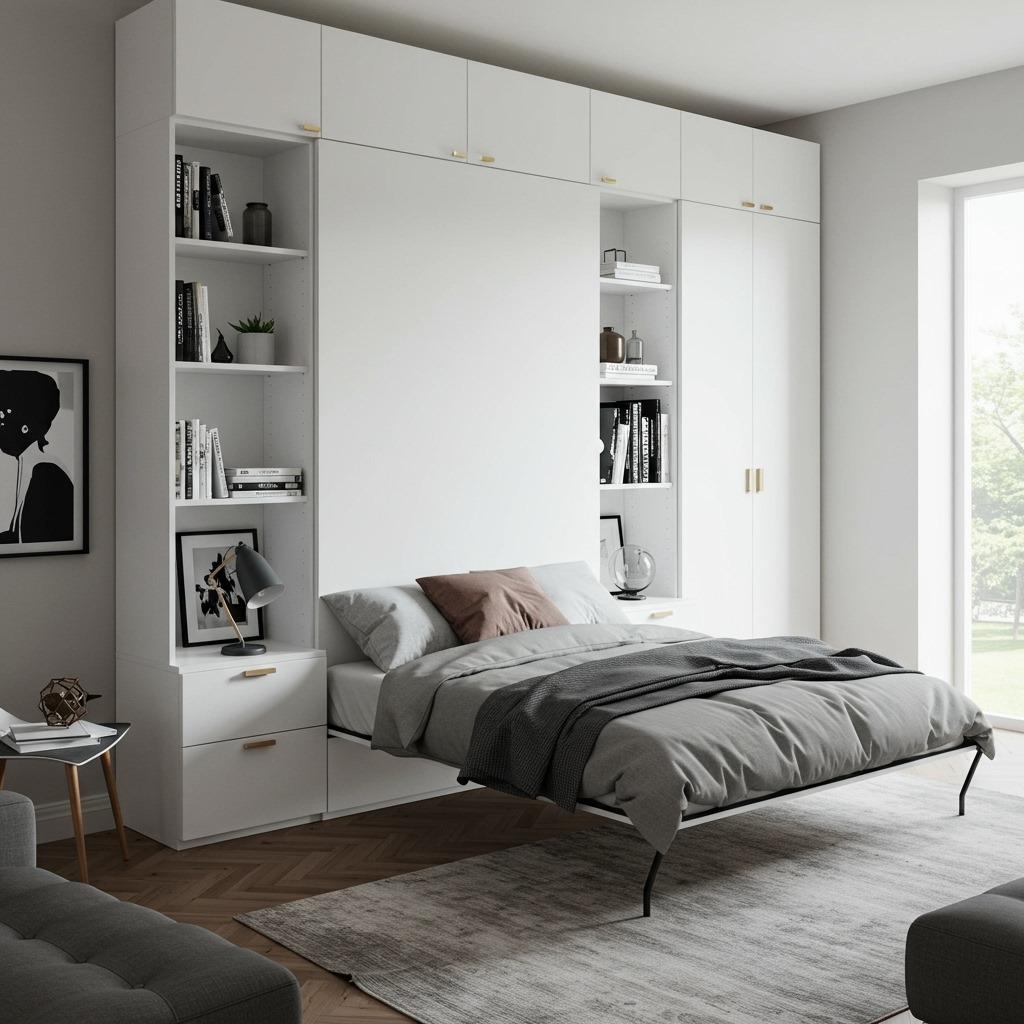
Murphy beds fold up into the wall when not in use, instantly transforming a bedroom into a multi-purpose space. They’re not just for studio apartments anymore.
Modern Murphy beds come in sophisticated designs that blend seamlessly with regular furniture. Many include built-in shelving, desks, or sofas that remain functional when the bed is
stored. The initial investment is significant, but the space-saving payoff is unmatched if you truly need maximum flexibility.
Make sure to choose a quality mechanism that’s easy to operate. You’ll use your Murphy bed daily, so smooth operation matters. Professional installation is worth the cost to ensure safety and proper function.
8. Use Mirrors Strategically to Double Visual Space
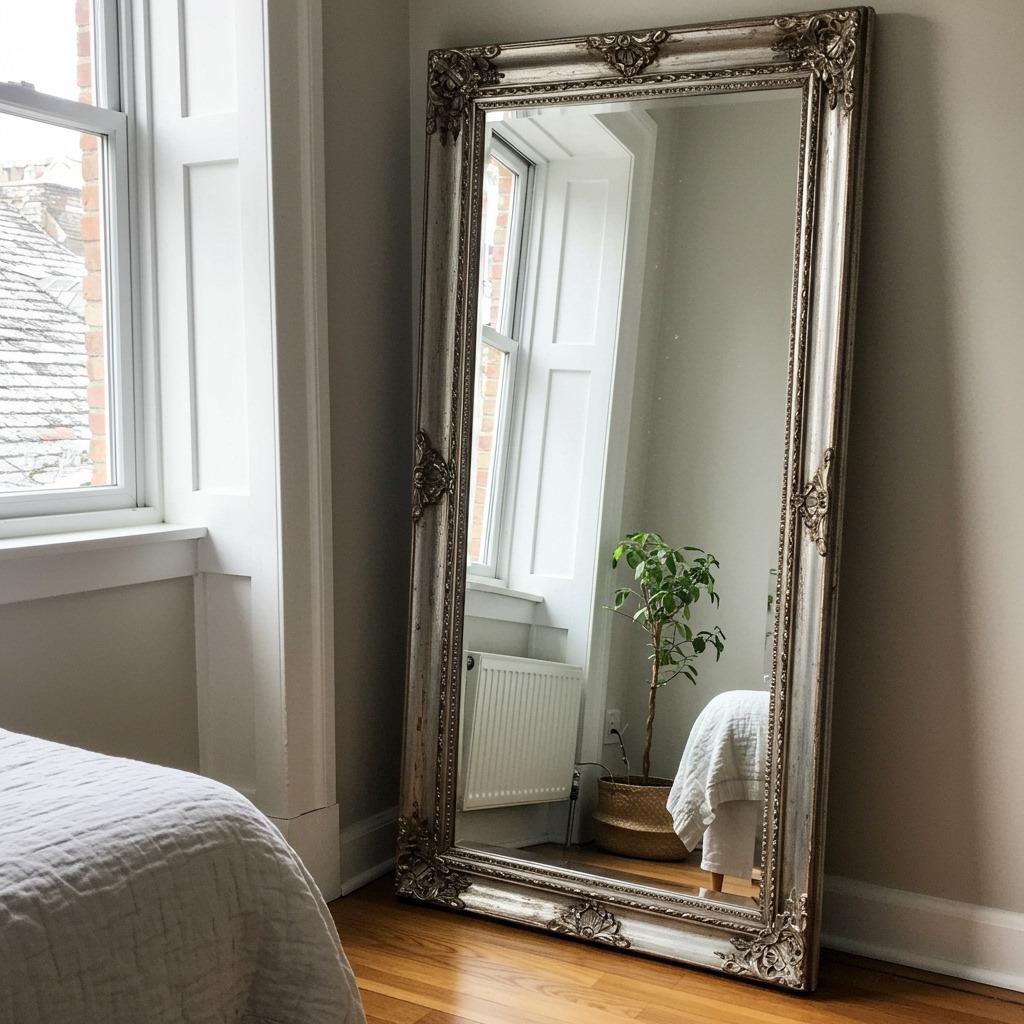
Mirrors are classic space-expanding tools because they literally reflect your room back at you. A large mirror placed opposite a window bounces natural light around and makes the space feel dramatically larger.
Floor-length mirrors work especially well in small bedrooms. Lean one against a wall for an effortless, modern look that you can easily move if needed. Mirrored closet doors serve double duty by providing full-length reflection while concealing storage.
Avoid placing mirrors directly opposite your bed if it makes you uncomfortable. Instead, position them on adjacent walls where they’ll catch light and create depth without any awkwardness.
9. Opt for a Sliding Barn Door Instead of Swing Doors
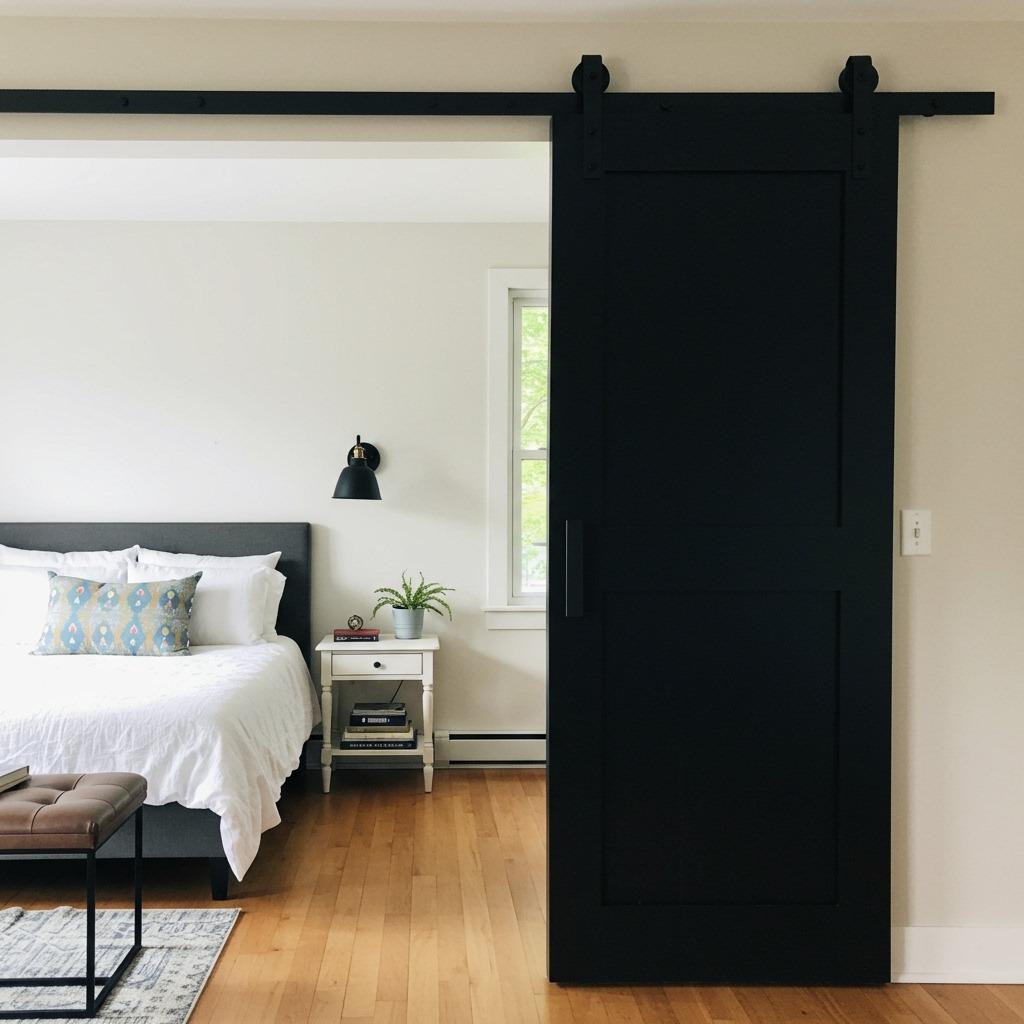
Traditional doors require clearance to swing open, which wastes valuable floor space. Sliding barn doors move along the wall, freeing up that entire arc of space for furniture or circulation.
Barn doors have become increasingly stylish, available in materials from rustic wood to sleek frosted glass. They add architectural interest while solving a practical problem. The only downside is they require wall space to slide across, so they won’t work if every wall is already occupied.
Consider pocket doors that slide into the wall cavity if you’re doing any construction. They offer even better space savings than barn doors, though installation is more complex. These types of solutions frequently appear in affordable home upgrades that make big impacts.
10. Create Vertical Storage With Tall, Narrow Dressers
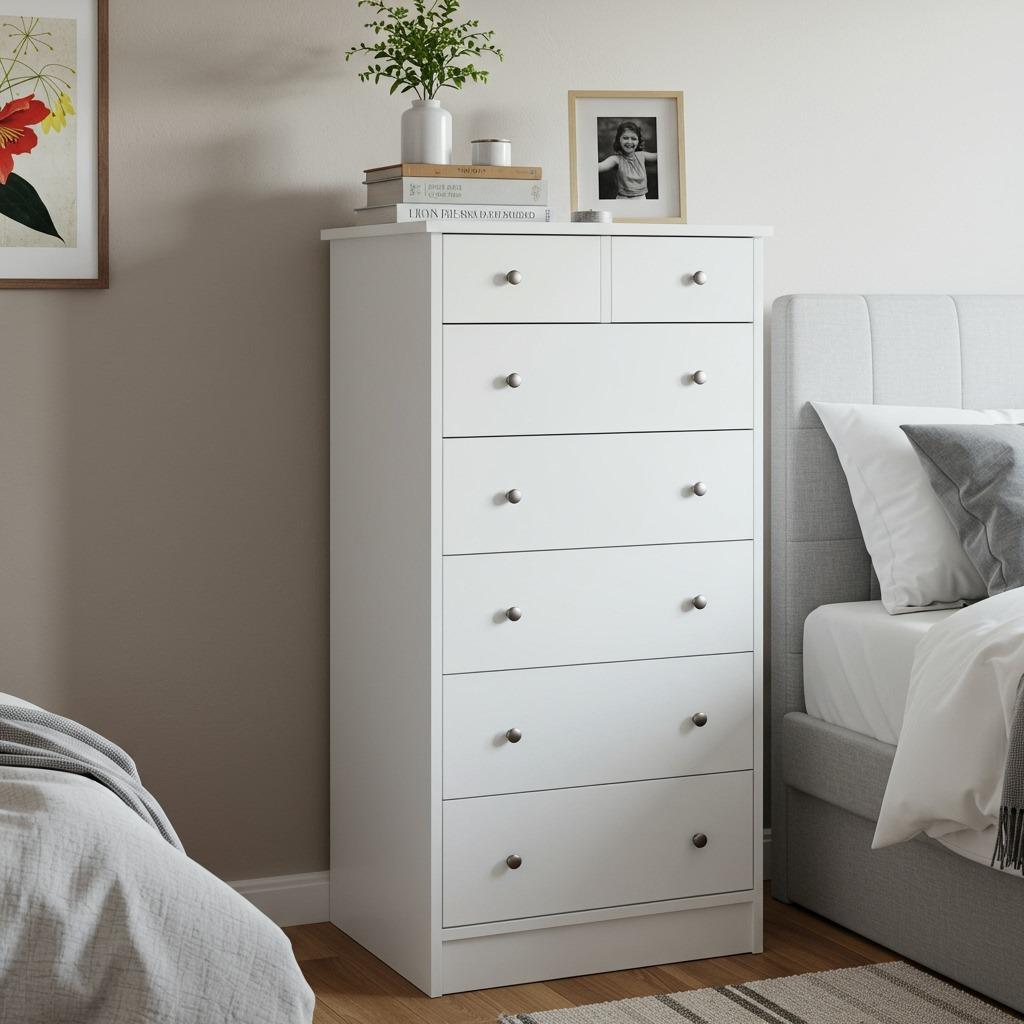
Wide, low dressers consume too much floor space in compact bedrooms. Tall, narrow dressers store just as much while occupying a smaller footprint.
Look for dressers that go vertical with six or more drawers stacked high. The narrow width (around 30 inches or less) fits easily along walls or even in closets. Going upward rather than outward is one of the fundamental principles of maximizing small spaces.
Secure tall furniture to walls with anti-tip brackets for safety. This is especially important in small rooms where you might bump into furniture more frequently. The vertical emphasis also draws the eye up, contributing to that desirable feeling of height.
11. Use the Space Under Your Bed With Rolling Storage Bins
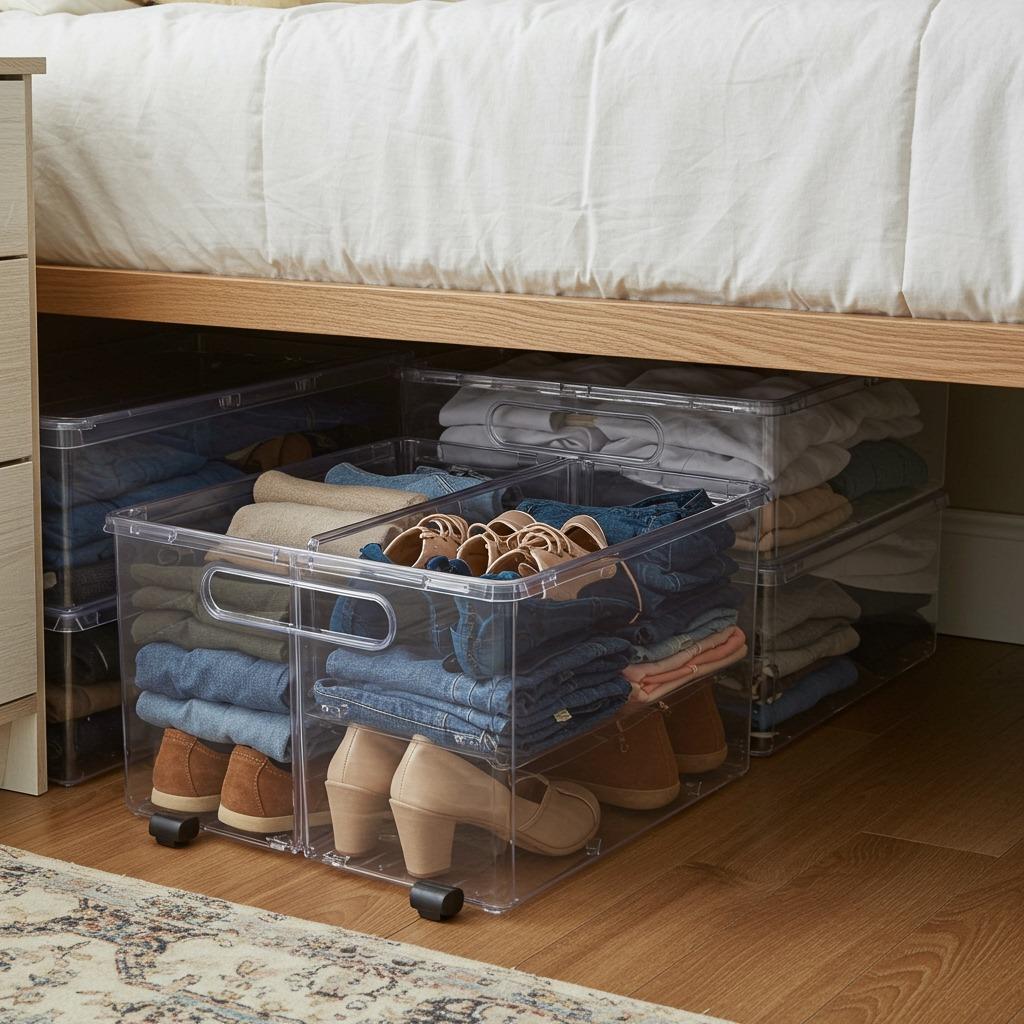
The area under your bed is prime real estate for storage if you have a raised bed frame. Rolling storage bins slide easily in and out, making access effortless.
Choose clear bins so you can see contents at a glance, or labeled opaque ones for a cleaner look. Store seasonal items, shoes, extra linens, or anything else you need but don’t access daily. The wheels make retrieval easy even in tight spaces where you can’t easily crouch down.
Measure your under-bed clearance before buying bins. You need enough height for the bins plus room for them to roll smoothly. Some beds sit lower than they appear once the mattress is on.
12. Mount Your TV on the Wall to Eliminate Media Furniture
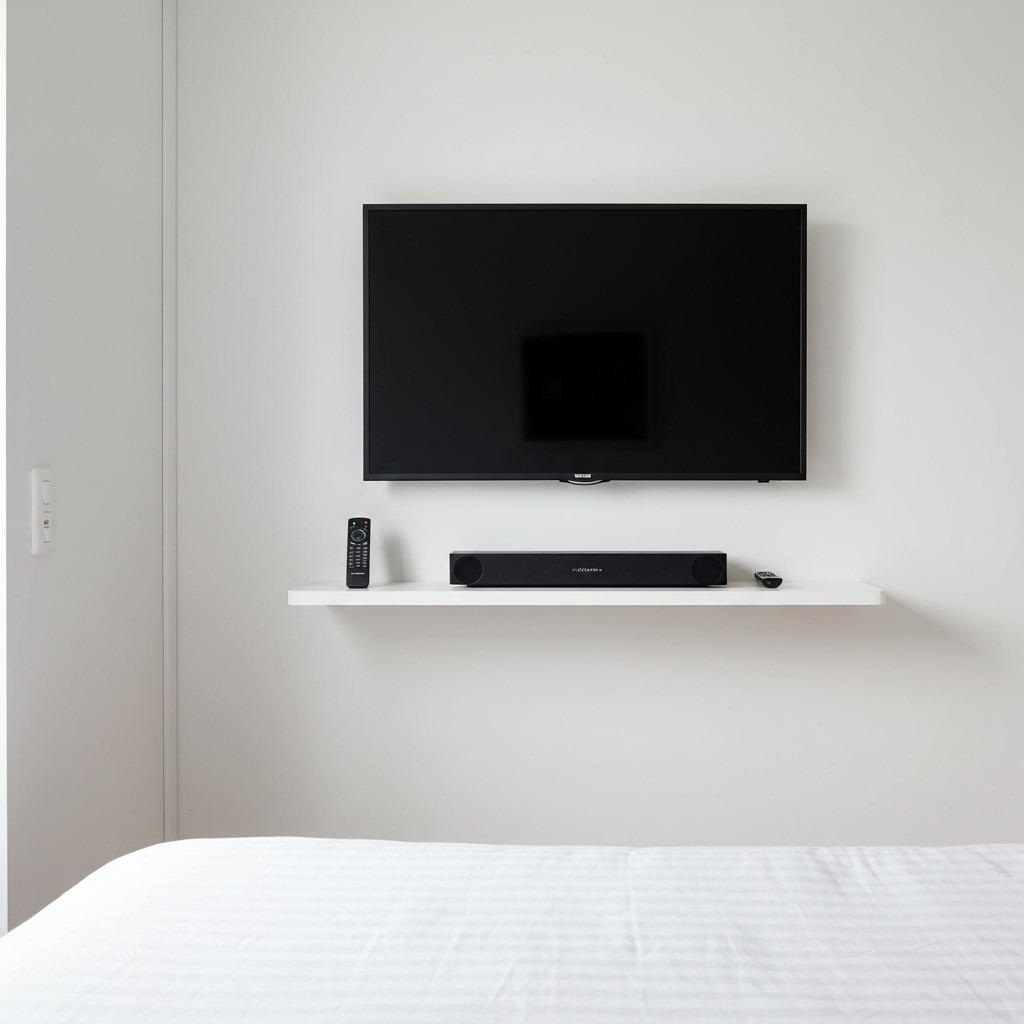
TV stands and media consoles take up significant floor and visual space. Wall-mounting your TV eliminates that furniture entirely while creating a sleek, modern look.
Position the TV at the proper viewing height when you’re sitting on your bed. Too high creates neck strain, too low feels awkward. Most mounting brackets allow for tilting and swiveling, giving you flexibility to adjust the angle.
Hide cables inside wall channels or behind cord covers for a clean appearance. The lack of bulky furniture underneath the TV makes the room feel more open and easier to move through. This principle of smart furniture elimination works across many home improvement ideas.
13. Install Closet Organization Systems to Maximize Storage
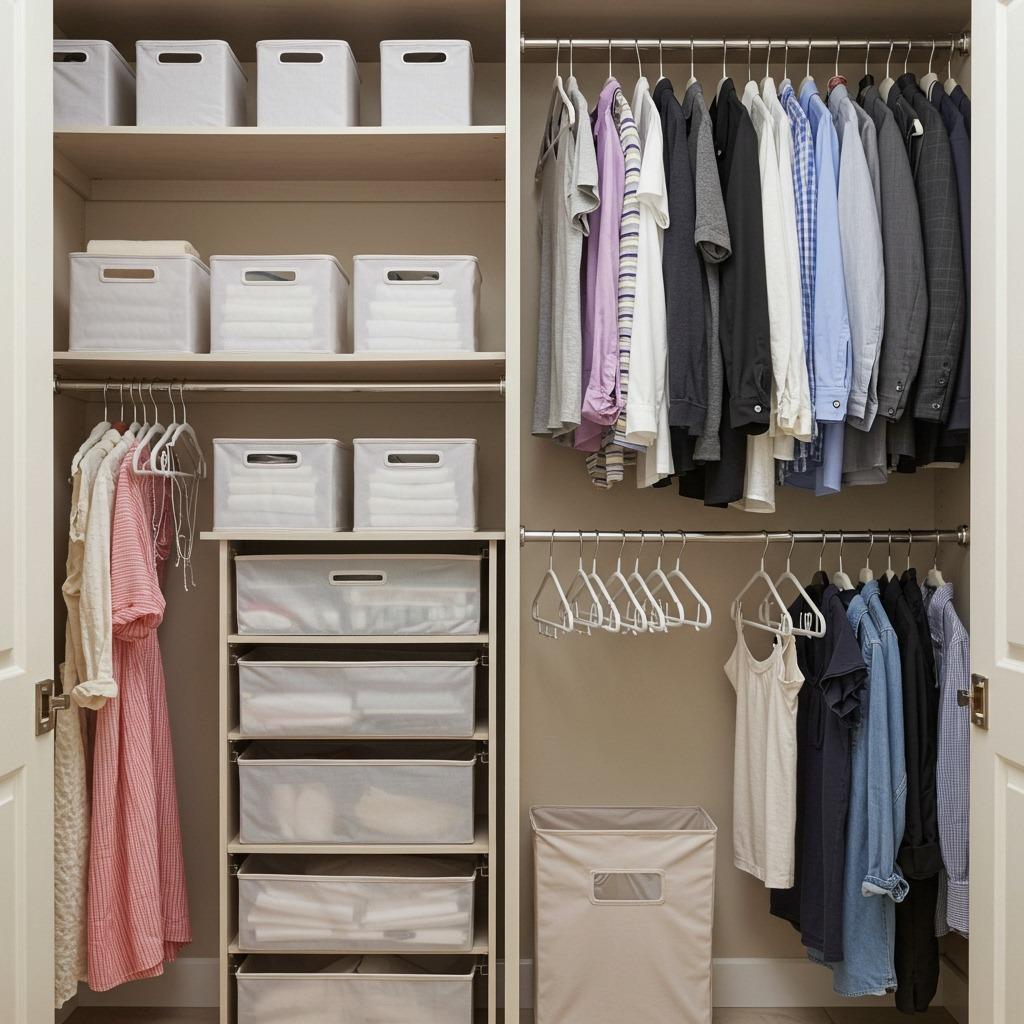
A messy, inefficient closet wastes space you desperately need in a small bedroom. Proper closet organization systems multiply your storage capacity without requiring any additional square footage.
Add double hanging rods to maximize vertical space for clothes. Use shelf dividers, drawer organizers, and specialized hangers to keep everything tidy and accessible. The more efficiently your closet works, the less you need additional bedroom storage furniture.
Consider removing closet doors entirely and using a curtain instead. This saves the swing space and can make your room feel slightly larger. Plus, an organized closet can become a design feature rather than something to hide.
14. Choose Furniture With Exposed Legs for Visual Lightness
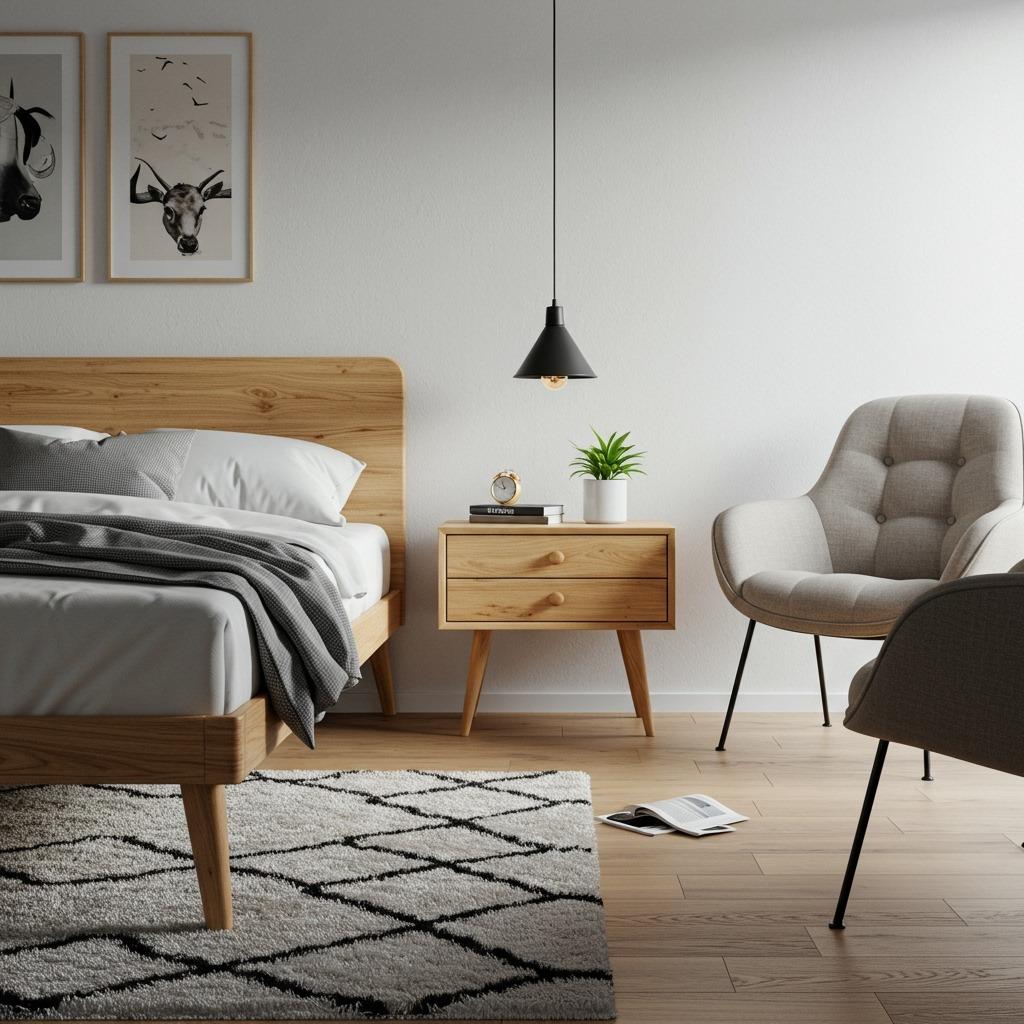
Furniture that sits directly on the floor feels heavier visually than pieces with exposed legs. This might seem minor, but it makes a real difference in how cramped or airy a room feels.
Look for beds, dressers, nightstands, and chairs with legs that lift the furniture at least a few inches off the ground. The visible floor space underneath creates an illusion of more room. Light can flow under and around the furniture, contributing to a less cluttered feeling.
This applies to upholstered pieces too. A chair with exposed wooden legs feels lighter than an identical chair with a skirt that reaches the floor. Small choices like this add up across an entire room.
15. Use Pocket Organizers on Walls and Doors
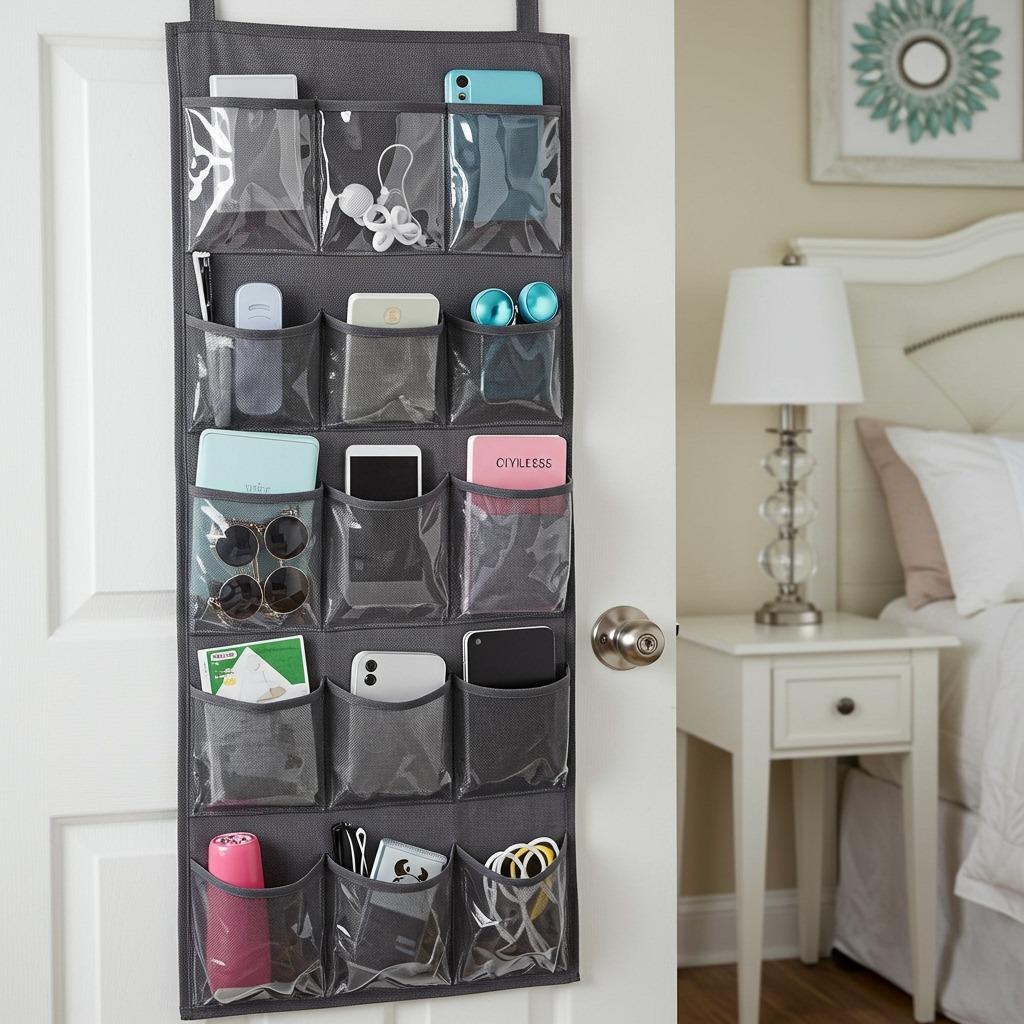
Every vertical surface is potential storage in a small bedroom. Fabric or plastic pocket organizers that hang on walls or doors create storage without consuming floor space.
Hang organizers on the back of your bedroom door to store accessories, small electronics, beauty products, or office supplies. Wall-mounted pockets near your desk can hold pens, notepads, and charging cables. These solutions keep small items accessible while preventing clutter from taking over surfaces.
Choose organizers in colors that blend with your walls rather than creating visual clutter. The goal is functional storage that doesn’t make your space feel busier. The same principle applies in space-saving dining room setups.
16. Downsize to Essential Furniture Only
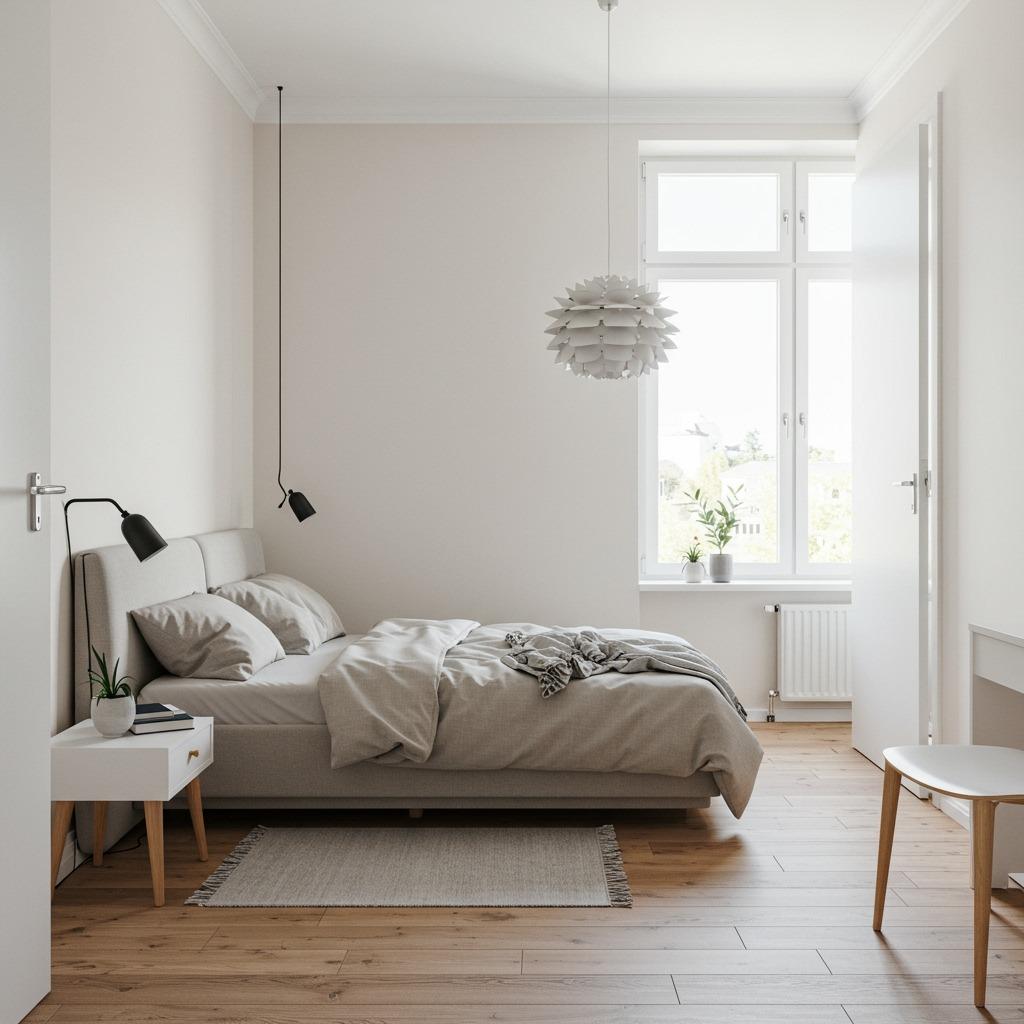
It sounds obvious, but too many people try to cram full-sized bedroom sets into spaces that can’t accommodate them. Be ruthless about what furniture you actually need versus what’s traditional.
Do you really need two nightstands if you only use one? Can a wall-mounted shelf replace a dresser? Would a floor lamp work better than table lamps that require surface space? Question every piece and eliminate anything that’s not essential.
The furniture you do keep should be appropriately scaled to your room. A queen bed might be standard, but if a full-sized bed means you can move around comfortably, it’s worth considering. More floor space creates better flow and makes any room feel more spacious.
17. Add Lighting Layers to Expand Visual Boundaries
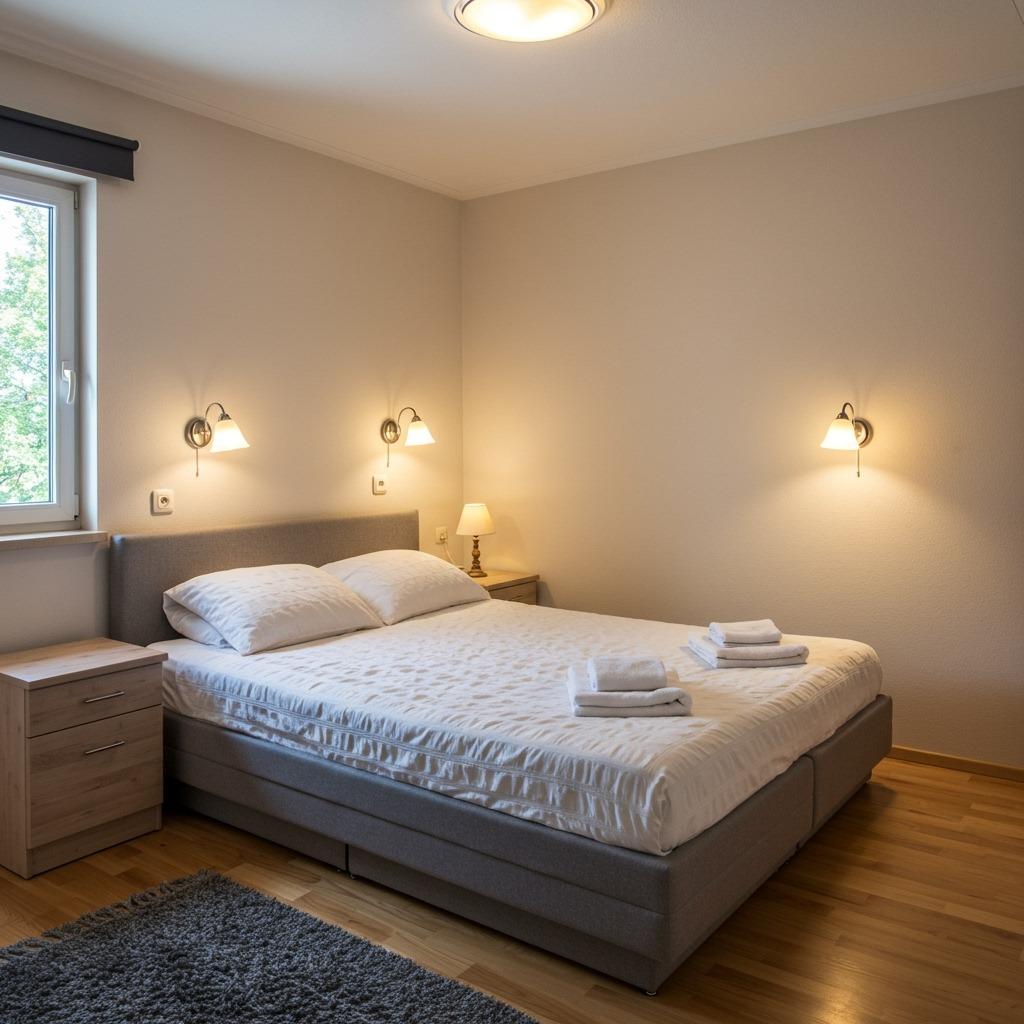
Bright, well-lit rooms feel larger than dim ones. Multiple light sources at different heights create depth and push visual boundaries outward.
Combine overhead lighting with wall sconces, table lamps, or floor lamps. This layered approach eliminates dark corners that make rooms feel smaller. Dimmer switches let you adjust the mood while maintaining the option for bright, space-expanding light when needed.
Choose light fixtures that don’t take up much space. Wall-mounted sconces replace table lamps, freeing up nightstand real estate. Pendant lights hung from the ceiling provide style without requiring any floor space. Similar lighting strategies enhance cozy winter bedroom designs beautifully.
18. Use Light Colors to Make Walls Recede Visually

Dark colors make walls feel closer, while light colors create the illusion they’re farther away. Painting your small bedroom in light, airy shades is one of the easiest ways to make it feel more spacious.
Whites, soft grays, light blues, and pale neutrals reflect light and open up the space. You don’t have to go stark white if that feels too clinical. Warm whites and creamy tones create coziness while still maintaining that spacious feeling.
Carry the light color onto the ceiling if possible. A lighter ceiling than walls can feel odd and disjointed in small spaces. Painting everything the same light shade creates a cohesive envelope that feels larger than the sum of its parts.
19. Install a Headboard With Built-In Shelving
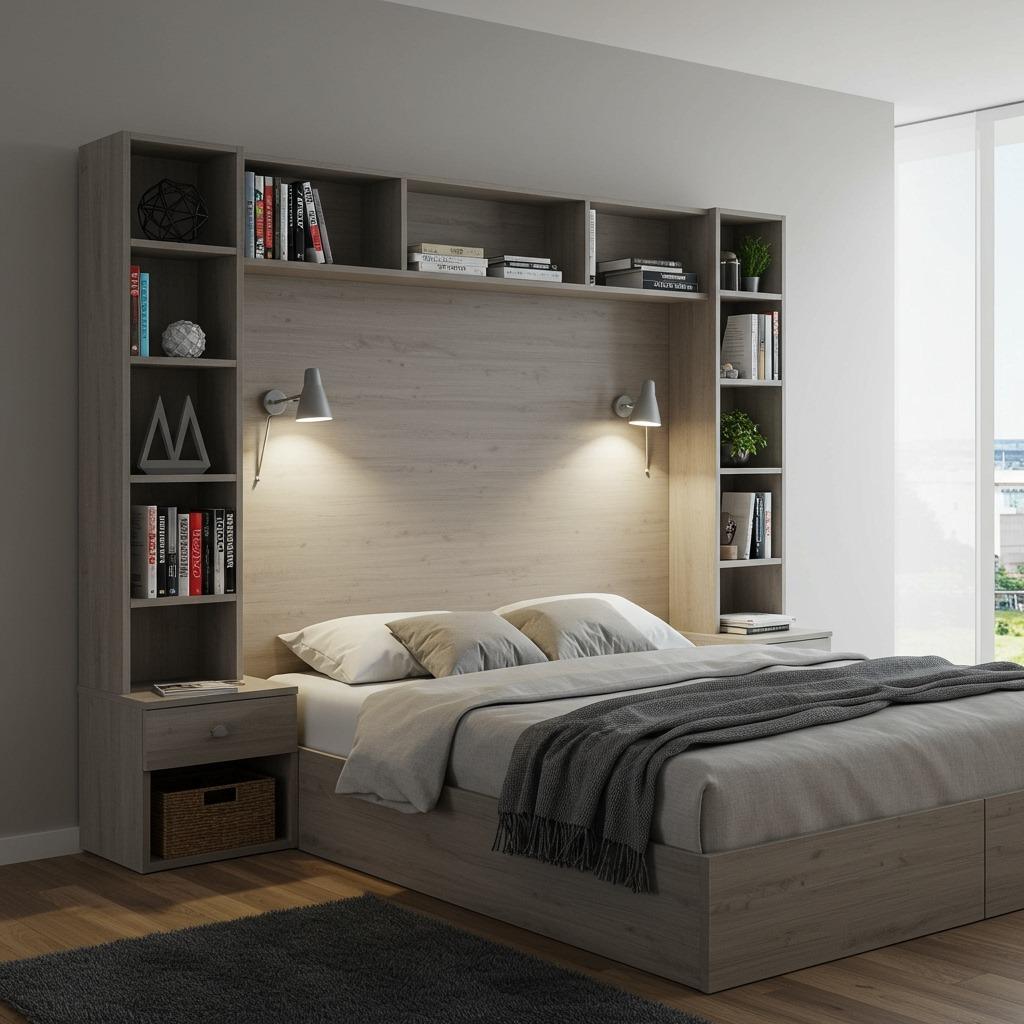
Your headboard wall offers significant storage potential if you choose the right design. Headboards with built-in shelves, cubbies, or cabinets add function without requiring additional floor space.
Store books, display decorative items, or keep bedtime essentials within arm’s reach. Some headboard designs extend up the wall, creating floor-to-ceiling storage that maximizes vertical space. Others incorporate reading lights, eliminating the need for separate lamps and nightstands.
Make sure your headboard shelving is securely attached to the wall if it’s heavy or extends high. Safety always comes first, especially with furniture mounted above where you sleep. These types of integrated solutions appear in many successful luxury master bedroom designs at all budget levels.
Making a small bedroom feel spacious isn’t about magical thinking or expensive renovations. It’s about being intentional with every design choice, from the furniture you select to how you arrange it.
These tiny bedroom tips work because they address both practical storage needs and visual perception. When you combine smart bedroom storage with design tricks that fool the eye, you create a space that functions beautifully and feels surprisingly roomy.
Start with one or two hacks that address your biggest frustrations. Maybe it’s the lack of storage or the cramped feeling when you walk in. You’ll likely find that solving one problem makes the whole space work better, giving you momentum to tackle the next challenge.
For more inspiration on making the most of compact spaces, explore our collection at Adorable Home Ideas, where you’ll find practical solutions for every room in your home.

