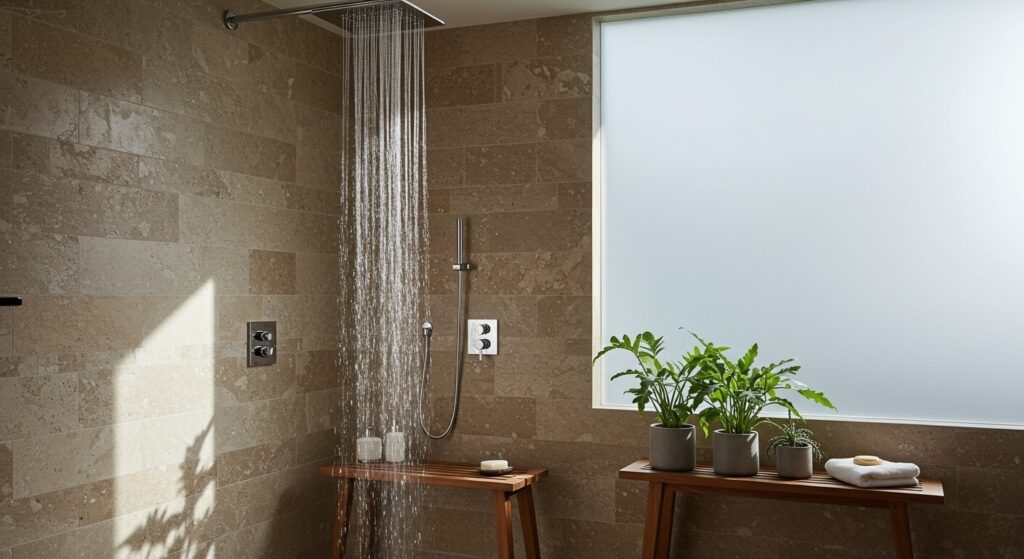
There’s something almost magical about standing under a gentle cascade of water that mimics natural rainfall. Regular showerheads blast water at you from one direction, but rain showers? They envelope you completely. The water falls from directly overhead, creating this cocoon-like experience that turns your morning routine into something you actually look forward to.
Rain shower bathrooms have moved beyond hotel suites and high-end spas. Homeowners everywhere are realizing that this luxury doesn’t require gutting your entire bathroom or spending a fortune. Sometimes it’s just about choosing the right fixtures and creating an atmosphere that supports relaxation rather than rushing.
The beauty of a spa-inspired bathroom isn’t just visual. It’s about how the space makes you feel when you step inside. The sound of water falling naturally, the warmth spreading across your shoulders, the steam rising around you – these sensory details matter more than expensive finishes. Whether you’re working with a spacious master bath or a modest shower stall, these rainfall shower ideas will help you create that resort experience you’ve been craving.
Understanding Rain Shower Systems
Rain showerheads differ fundamentally from traditional fixtures. They mount on the ceiling or high on the wall, positioned directly above you rather than at an angle. The water flows straight down through dozens or even hundreds of small nozzles, creating that signature rainfall effect instead of focused spray.
Most systems measure between 8 to 12 inches in diameter, though some luxury models stretch to 16 inches or more. The larger the showerhead, the more coverage you get, but also the more water pressure you need to maintain that gentle, even flow. Your home’s existing plumbing might handle smaller heads just fine but struggle with oversized ones.
Water pressure is honestly the make-or-break factor here. Rain showers require decent pressure to function properly – otherwise, you end up with a disappointing trickle rather than that enveloping cascade.
Ceiling-Mounted Rainfall Luxury
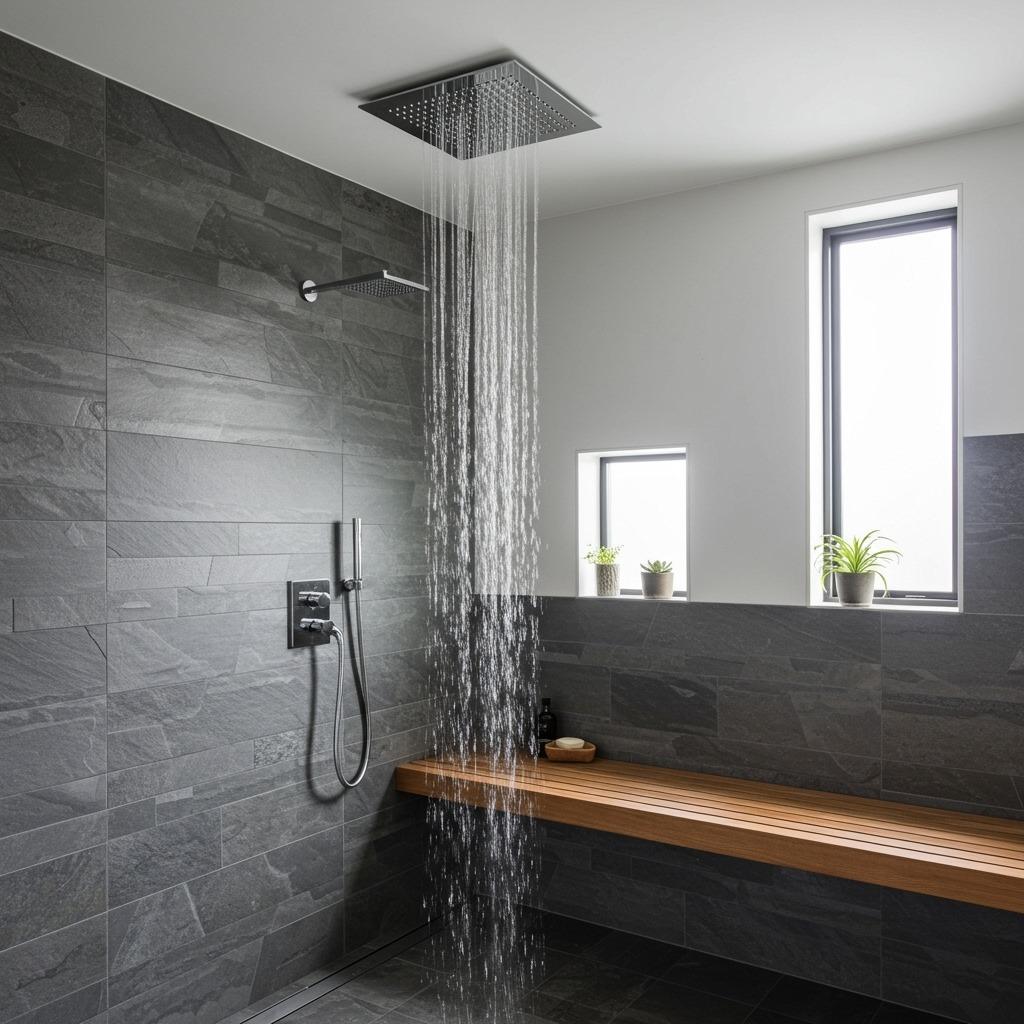
Installing your rain showerhead directly into the ceiling creates the most authentic rainfall experience possible. The water falls completely straight down, just like actual rain, creating this incredibly immersive sensation that wall-mounted systems can’t quite replicate.
This setup works best in new construction or major renovations when you can plan the plumbing accordingly. Running pipes through the ceiling isn’t impossible in existing homes, but it does require accessing the space above – either an attic, second floor, or crawlspace. The installation gets complicated if you have a flat roof or concrete ceiling.
Consider the ceiling height carefully. Standard 8-foot ceilings work fine, but 9 or 10-foot heights feel more luxurious since the water has more distance to fall and spread. Position the showerhead centrally in your shower space so you can stand directly underneath without crowding against walls. This placement mimics what you’d find in minimalist bathroom design approaches, where intentional positioning enhances the entire experience.
Wall-Mounted Rain Shower Arms
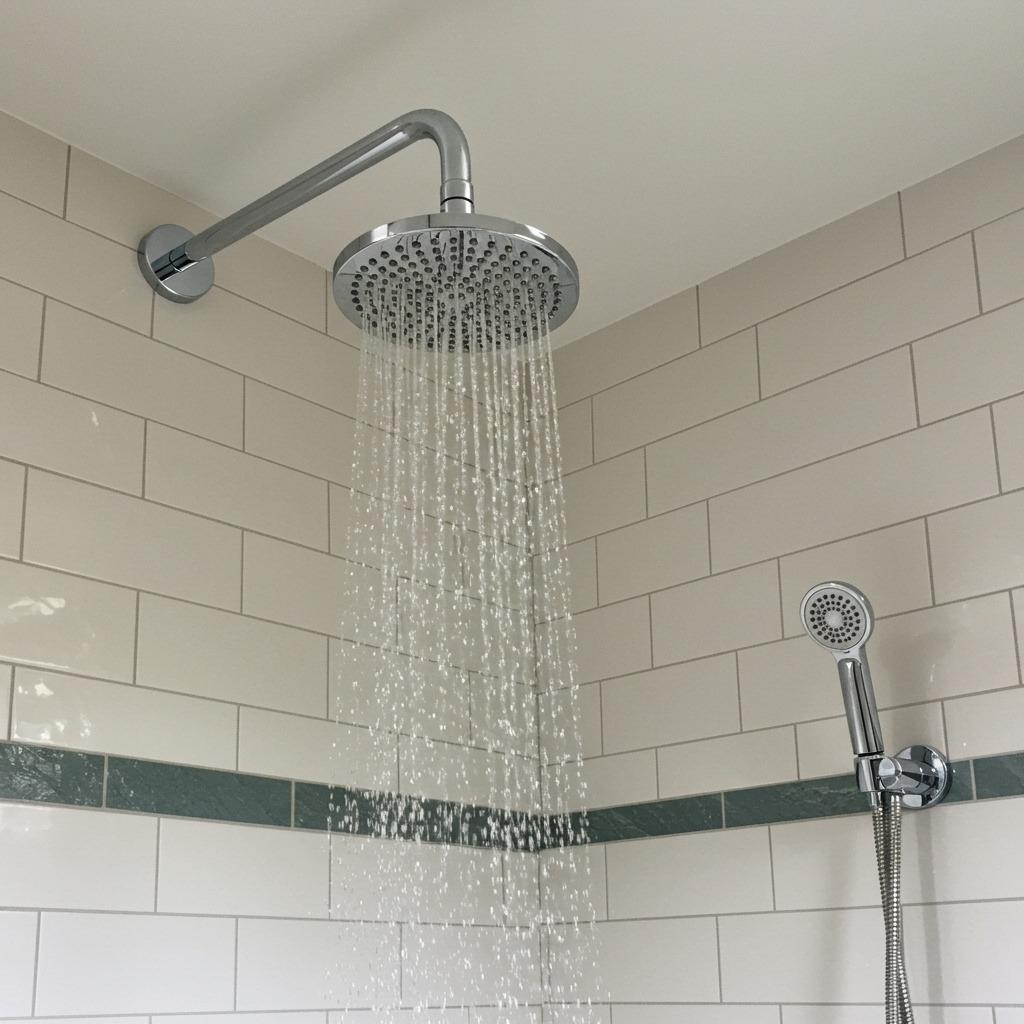
Not everyone can install ceiling plumbing, and that’s perfectly okay. Wall-mounted rain showers use extended arms that position the showerhead out over your standing area, angling it slightly downward. The effect isn’t identical to ceiling-mounted systems, but it comes remarkably close.
These arms typically extend 12 to 24 inches from the wall, giving you that overhead water flow without major construction. Installation often works with your existing shower plumbing – you simply replace the current showerhead and arm with the rainfall version. Some DIY-comfortable homeowners tackle this themselves over a weekend.
The angle matters more than you might think. Look for adjustable arms that let you fine-tune the position. Too steep an angle and you lose that rainfall feeling; too shallow and the water hits your head awkwardly. Most people find a spot about 12 inches in front of their natural standing position works best, creating full coverage without forcing uncomfortable postures.
Dual Shower Systems for Flexibility
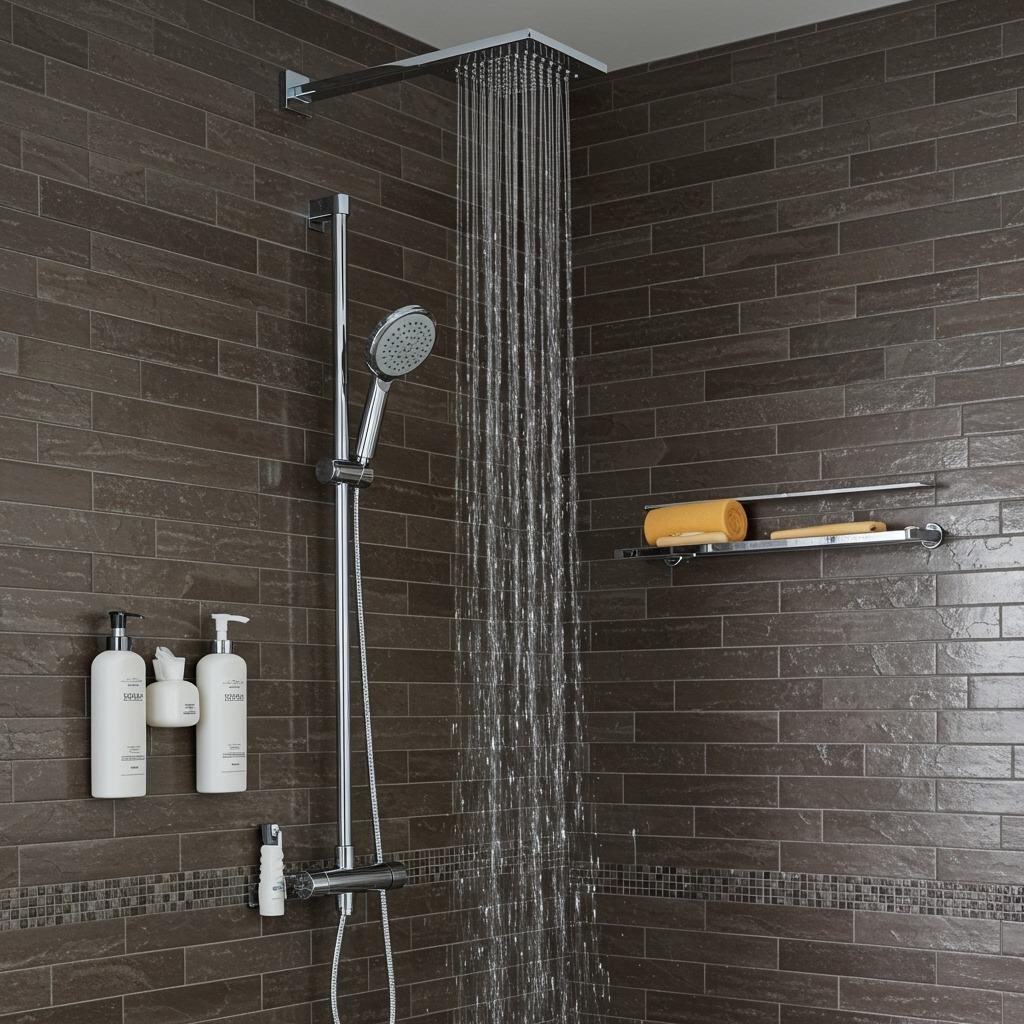
Rain showers feel incredible but aren’t always practical for quick rinses or washing long hair. That’s where dual systems shine. You get both a rainfall showerhead and a traditional handheld sprayer, switching between them based on your needs.
Most dual setups let you run both simultaneously or choose just one. Want that full immersion experience? Use only the rain head. Need to rinse shampoo from long hair or clean the shower? Grab the handheld. Morning rush? The regular shower gets you clean faster with less water usage.
Installing dual systems typically means mounting the rain shower on the wall or ceiling while positioning the handheld sprayer at standard height. Some clever designs place the handheld holder right on the rain shower arm itself, keeping everything streamlined. This flexibility makes the shower more functional for everyone in your household, which matters in shared bathrooms or when guests visit. The same adaptable thinking applies to small bathroom renovation projects where every fixture needs to earn its place.
Natural Stone and Rainfall Combinations
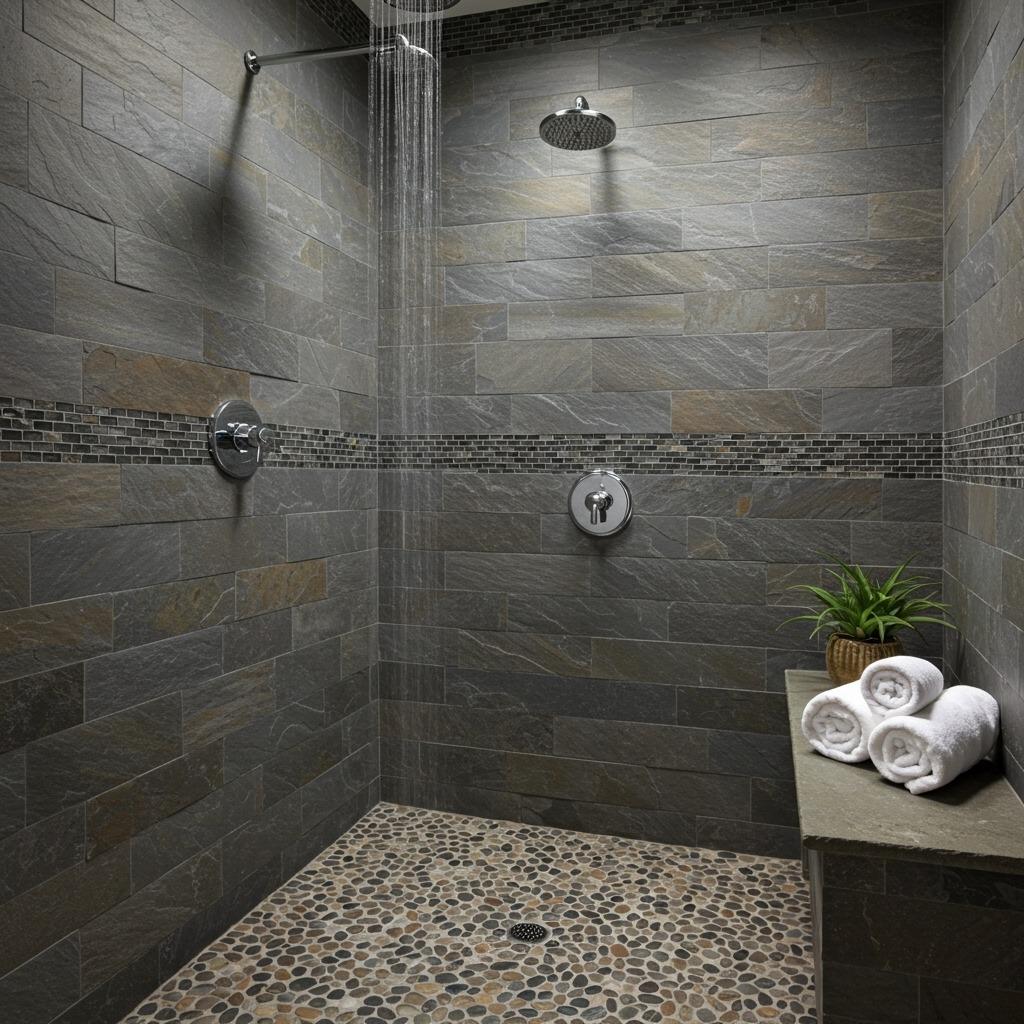
Something about natural stone just fits with rain showers. Maybe it’s the way water looks cascading over stone, or how the texture and color variations mimic outdoor settings. Either way, combining rainfall shower ideas with stone materials creates this grounded, organic atmosphere that enhances the whole experience.
Slate, river rock, marble, and limestone all work beautifully in rain shower spaces. Darker stones create moody, cave-like retreats, while lighter stones keep things bright and airy. Texture matters too – smooth polished surfaces feel sleek and modern, while tumbled or rough-cut stones bring rustic warmth.
Consider using stone beyond just the walls. A pebble floor feels amazing underfoot, providing natural massage while water drains between the stones. Stone benches or shelves add functional surfaces while maintaining the natural aesthetic. Just make sure everything is properly sealed – stone is porous and bathroom moisture can cause problems without the right protection. The organic materials connect to nature similar to what you’d find in a nature-inspired bathroom, creating that essential retreat feeling.
Glass-Enclosed Rain Shower Retreats

Frameless glass enclosures let rain showers become focal points rather than hidden features. The transparency shows off your beautiful tile work, fixtures, and that gorgeous rainfall effect while containing the water where it belongs. It’s practical and visually stunning.
Floor-to-ceiling glass panels create the most open feeling, making even modest shower spaces appear larger. They work especially well in modern bathroom tile designs where interesting patterns deserve to be seen. The glass doesn’t interrupt sight lines, so your eye travels through the space rather than stopping at an opaque barrier.
Maintenance is the trade-off here. Glass shows water spots and soap scum more than traditional curtains or frosted enclosures. Daily squeegee use helps, as does applying water-repellent coatings. Some people find the maintenance worth it for the aesthetic, others prefer partially frosted glass that hides spots while still feeling open. Consider your cleaning habits honestly before committing to completely clear glass.
Black Fixtures with Rainfall Heads
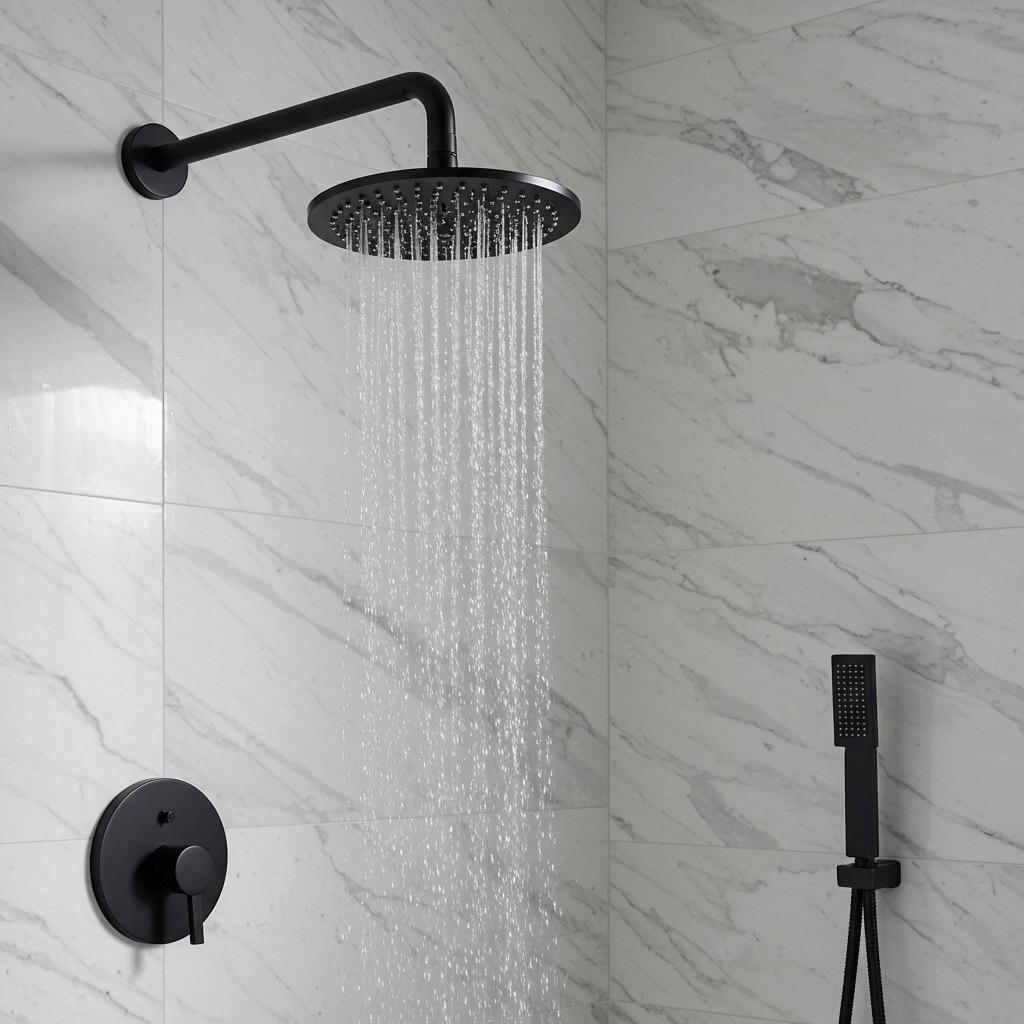
Matte black fixtures have become incredibly popular, and they look particularly striking with rain showerheads. The dark metal creates this bold, graphic statement against light tile or stone. There’s something inherently luxurious about the contrast – it reads expensive even when the actual fixtures are mid-range.
Black rainfall heads make the water itself more visible as it catches light falling through the dark nozzles. The effect is slightly dramatic, which either suits your personality or doesn’t. If you love the look but worry about commitment, start with just the showerhead and leave other fixtures chrome or brushed nickel.
Keeping black fixtures looking good requires slightly more attention than chrome. Water spots and mineral deposits show up more noticeably on dark surfaces. But regular wiping after use and occasional cleaning with appropriate products keeps them gorgeous. The high-contrast aesthetic works beautifully in black and white bathroom schemes where the fixtures become jewelry-like accessories.
Wood Accents in Rain Shower Spaces

Wood in bathrooms seems counterintuitive until you see it done well. The warmth of natural wood balances the coolness of tile and metal, creating a more inviting space. In rain shower bathrooms, wood accents like benches, shelving, or even wall panels add that spa-resort quality that pure tile installations sometimes lack.
Teak is the gold standard for shower wood because it naturally resists moisture and won’t rot or warp. Cedar also works well and costs less. Both develop beautiful silvery patinas over time if left unsealed, or you can maintain the original color with periodic oiling. Never use regular furniture wood like oak or pine – they’ll deteriorate quickly in constant moisture.
A wooden bench serves multiple purposes. It provides seating for shaving legs, a foot rest, somewhere to set products, and a visual break in all that tile. Even a small shelf for storing bath products brings warmth without requiring much space. Some people love wooden bath mats right outside the shower, though these need good airflow to dry between uses.
Minimalist White Rain Shower Designs
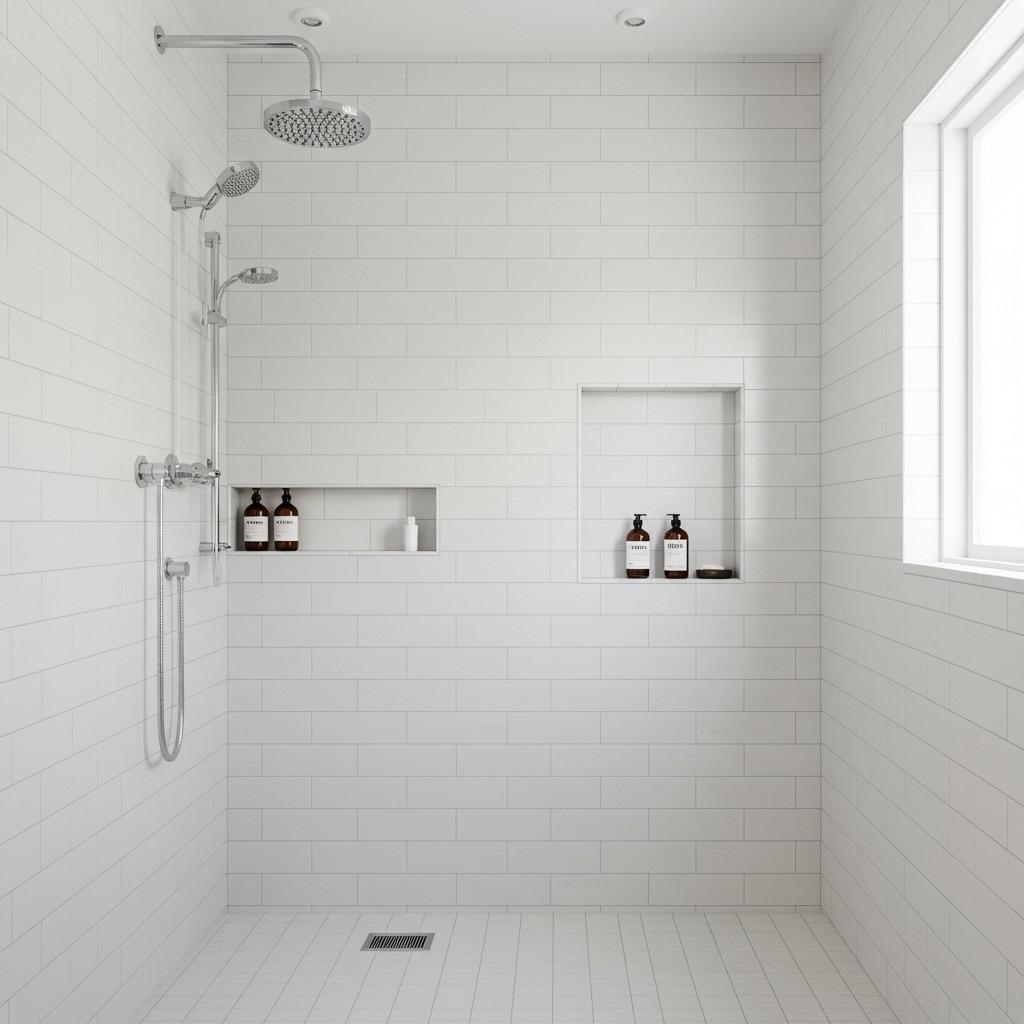
Sometimes simplicity hits differently than complexity. All-white rain shower spaces with clean lines and minimal fussiness create this pure, almost meditative environment. The lack of color variation lets you focus entirely on the water, light, and sensation rather than visual details.
White subway tiles remain classics for good reason. They’re affordable, timeless, and create that clean backdrop that never feels dated. Large-format white tiles work too, offering fewer grout lines to clean. Some people prefer white stone for more texture and depth while maintaining the monochromatic palette.
The key to successful minimalist white bathrooms is varying textures and finishes even when the color stays consistent. Mix glossy and matte surfaces. Combine smooth tiles with textured ones. Add white fixtures with different sheens. These subtle variations prevent the space from feeling flat or sterile. The approach aligns perfectly with minimalist bathroom design principles where less really does become more through thoughtful restraint.
Small Space Rain Shower Solutions
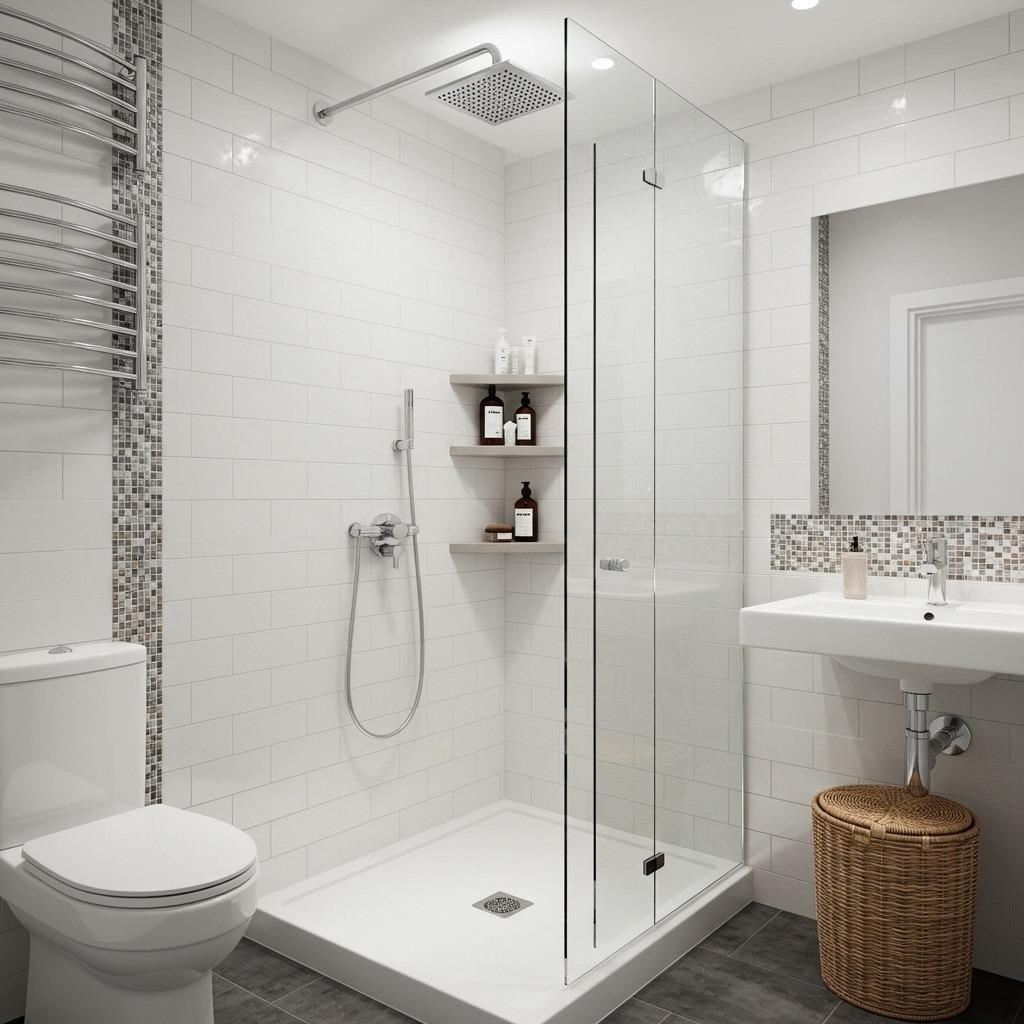
You don’t need a massive bathroom to enjoy a rain shower. Even compact shower stalls work with the right approach. The key is choosing appropriately sized fixtures and maximizing what space you have rather than trying to cram in oversized elements.
Opt for 8-inch rain showerheads rather than 12-inch models in smaller showers. The coverage still feels luxurious without overwhelming the space or leaving you pressed against cold walls. Corner installations use space efficiently, and glass doors instead of curtains make the area feel more open.
Consider a combination unit that incorporates the rain shower, handheld sprayer, and regular showerhead into one fixture. These space-saving designs give you options without mounting multiple separate pieces. Wall niches for products eliminate the need for hanging caddies that crowd the shower. Every inch matters in small space renovation projects, so choose fixtures that deliver maximum impact with minimal footprint.
Plants and Rainfall Shower Harmony
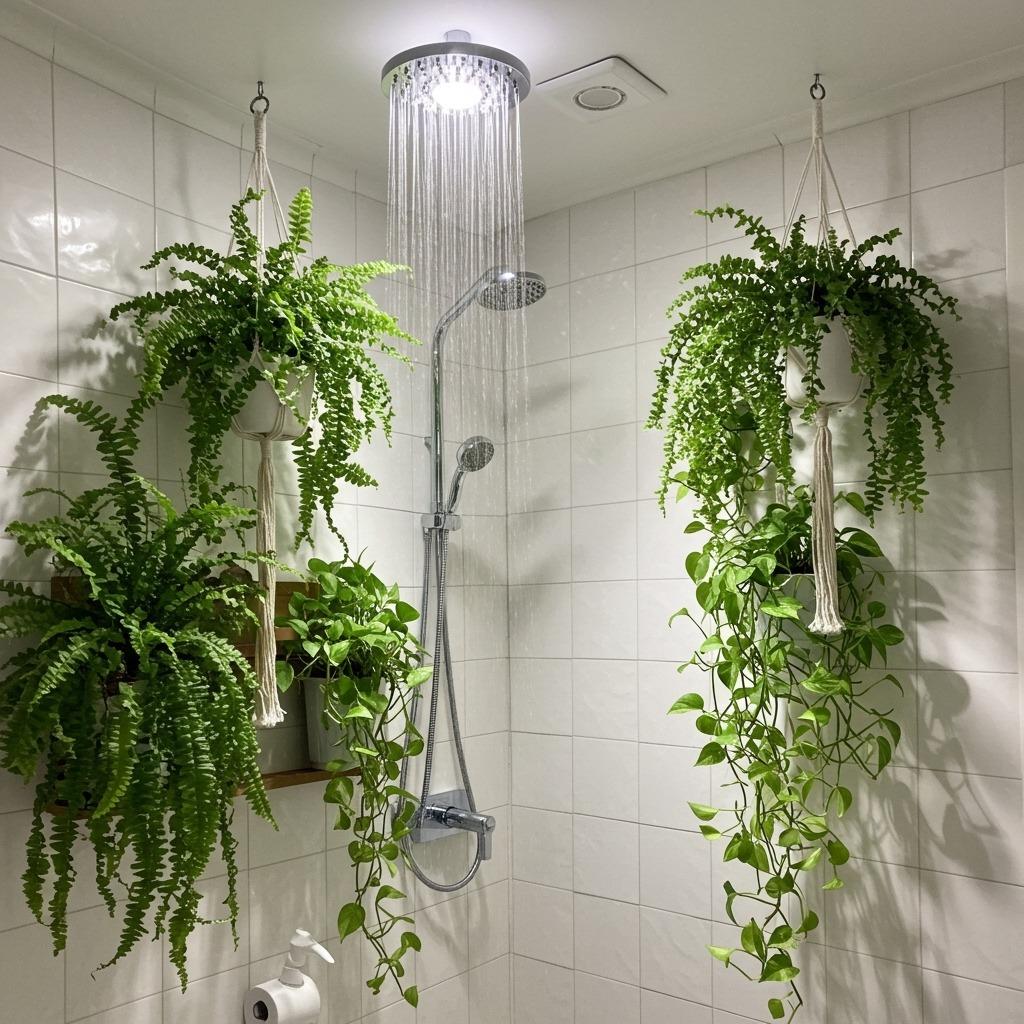
Indoor plants thrive in bathroom humidity, and they look especially natural paired with rain showers. The combination creates this garden-shower hybrid that feels almost outdoor-inspired. You’re literally showering in a plant-filled space, which hits differently than sterile all-tile environments.
Choose plants that handle low to medium light and high humidity. Ferns, pothos, philodendrons, and spider plants all do well. Position them on shelves just outside the direct water spray but where they’ll catch ambient moisture. Hanging plants work beautifully if you have ceiling height to spare.
The greenery softens hard surfaces while improving air quality and just making the space feel more alive. There’s something inherently calming about plants – they signal nature and growth and life. That psychological benefit complements the physical relaxation of the rain shower itself. If you love this concept, explore more options in our plant filled bathroom guide for specific plant recommendations and placement strategies.
LED Lighting for Ambient Rain Showers

Built-in LED lighting transforms rain showers from functional spaces into experiences. Colored lights add chromotherapy elements – the practice of using colors to influence mood and wellness. Blues calm, greens refresh, reds energize. Whether you believe in the therapeutic aspects or just think it looks cool, the effect is undeniably impressive.
Many rainfall showerheads now include integrated LED systems that don’t require electrical wiring. They power themselves through water flow, lighting up as soon as you turn on the shower. Some cycle through colors automatically, while others let you select specific hues via remote or smartphone app.
Recessed ceiling lights positioned around your rain shower create dramatic backlighting effects, especially with steam. Waterproof LED strips can run along shower niches or behind glass panels. The key is keeping the lighting functional enough for actual showering – you need to see what you’re doing – while adding that atmospheric quality that enhances relaxation.
Freestanding Tub and Rain Shower Pairs

When space allows, combining a freestanding tub with a rain shower creates the ultimate luxury bathroom setup. You get options – quick morning showers or long evening soaks. The two elements complement rather than compete, especially when thoughtfully positioned.
Open-concept wet rooms work particularly well for this pairing. The rain shower occupies one area while the tub sits nearby, both sharing the same waterproofed space. Alternatively, separate the two with partial glass panels that define zones without fully enclosing either feature. This keeps the room feeling open and spacious.
Style the area between them with purpose. A wooden stool holds towels. A plant bridges the spaces. A floor-to-ceiling window (with privacy glass) connects both to outdoor views. The goal is making each element feel intentional rather than randomly placed. This thoughtful arrangement style appears frequently in spa-inspired bathroom designs where every detail serves the overall sense of calm luxury.
Smart Technology Integration
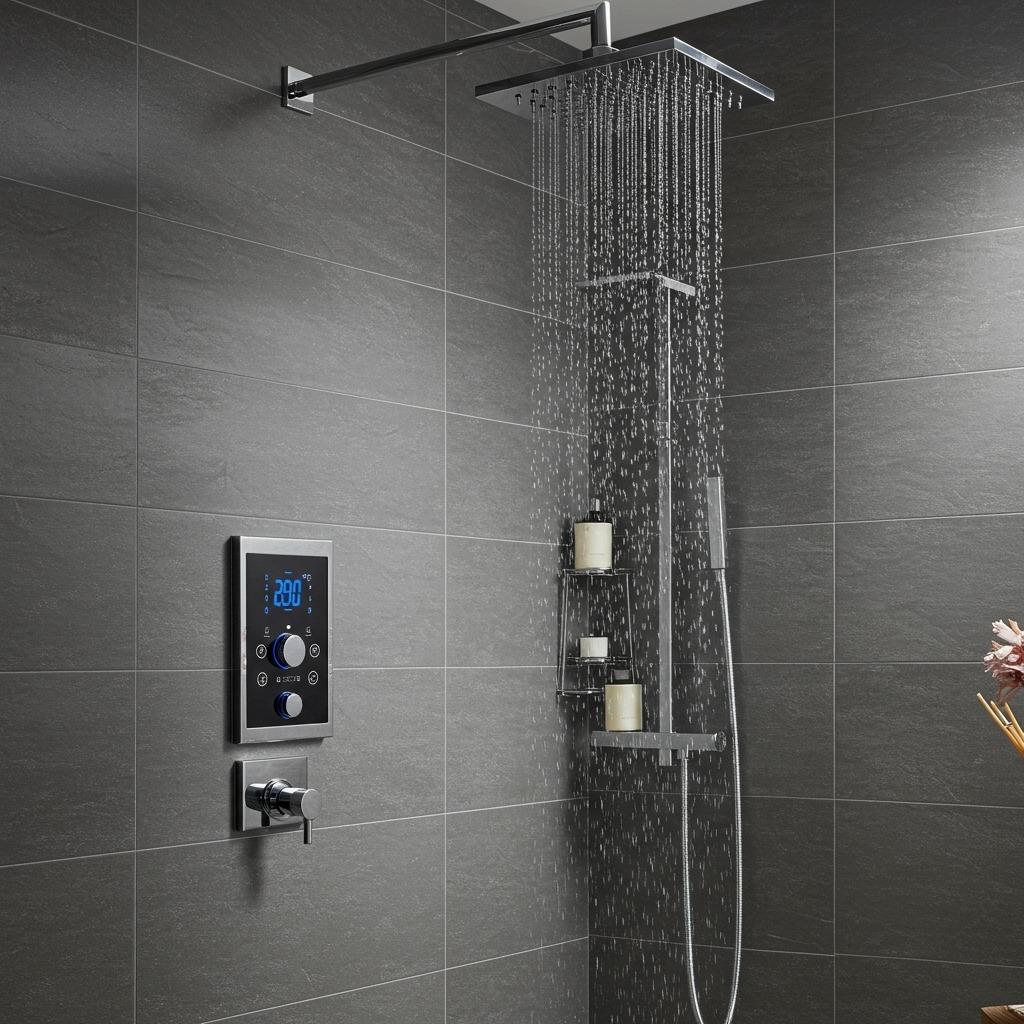
Modern rain showers can be surprisingly high-tech. Digital controls let you set exact water temperatures and save preferences for different users. No more adjusting the handle each time or getting blasted with cold water when someone flushes a toilet elsewhere in the house.
Voice-activated systems let you start the shower while still in bed, so it’s perfectly warm when you step in. Smartphone apps control everything remotely – temperature, water pressure, duration, even lighting if you have LED features. Some systems include speakers for music or news while you shower.
The convenience factor is real, but so is the cost. Smart shower systems run significantly more than traditional fixtures. Consider whether you’ll actually use the features regularly or if they’re more novelty than necessity. For tech-enthusiastic households, the integration might be worth it. For others, a reliable manual system does the job perfectly well. These types of upgrades fit naturally into broader smart home improvement strategies if you’re already automating other aspects of your home.
Spa-Inspired Materials and Textures
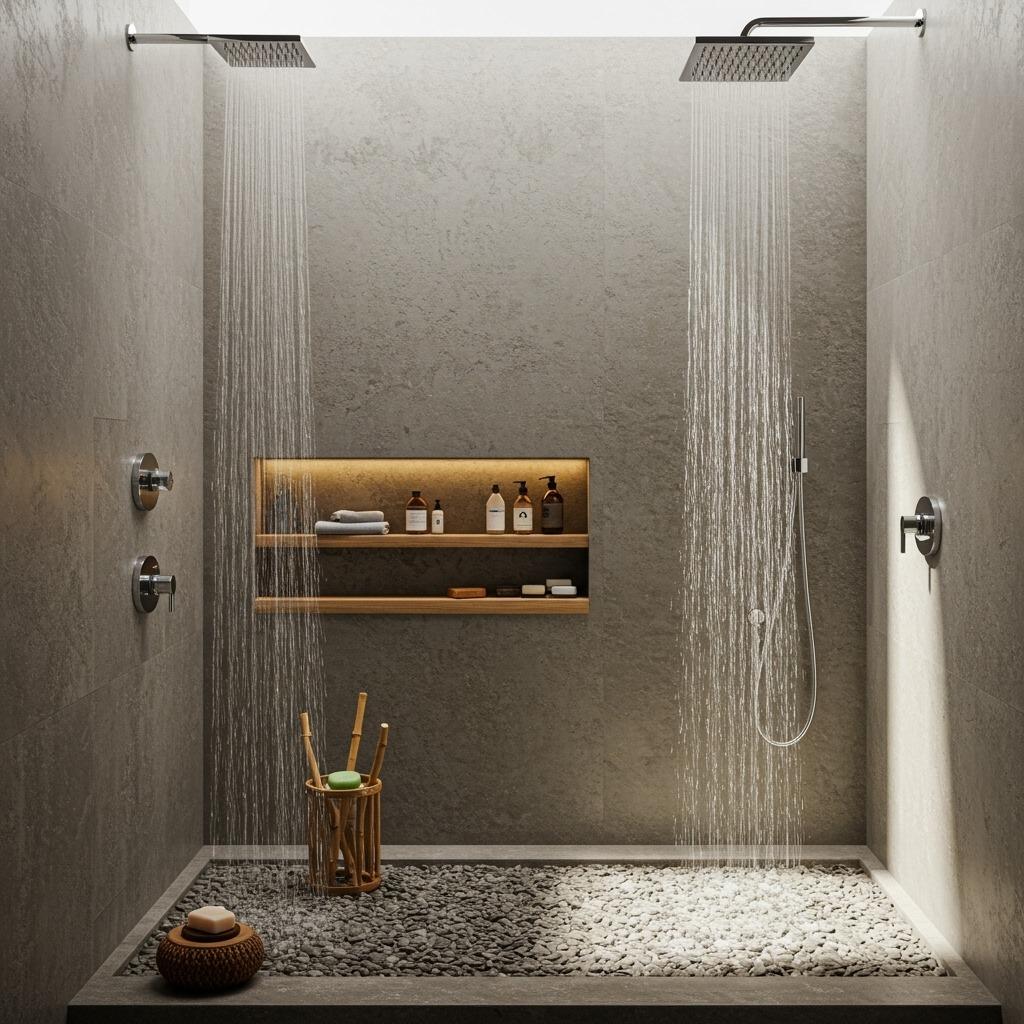
Certain materials just feel spa-like. River stone, bamboo, concrete, natural wood, linen-textured tiles – these elements signal relaxation before you even turn on the water. Combining them thoughtfully in your rain shower bathroom creates that resort-quality atmosphere you’re after.
Concrete floors with radiant heating feel substantial and warm underfoot. They pair beautifully with lighter walls to avoid feeling too industrial. Bamboo accessories like soap dishes and shelves bring organic warmth without the maintenance requirements of traditional wood. Textured tiles on one accent wall add visual interest while other surfaces stay smooth.
Layer textures rather than using just one. Maybe you have smooth white walls, a pebble floor, a wooden bench, and concrete shelving. Each element brings different tactile and visual qualities that work together to create depth. The variety keeps the space interesting while maintaining an overall sense of calm cohesion.
Budget-Friendly Rain Shower Updates
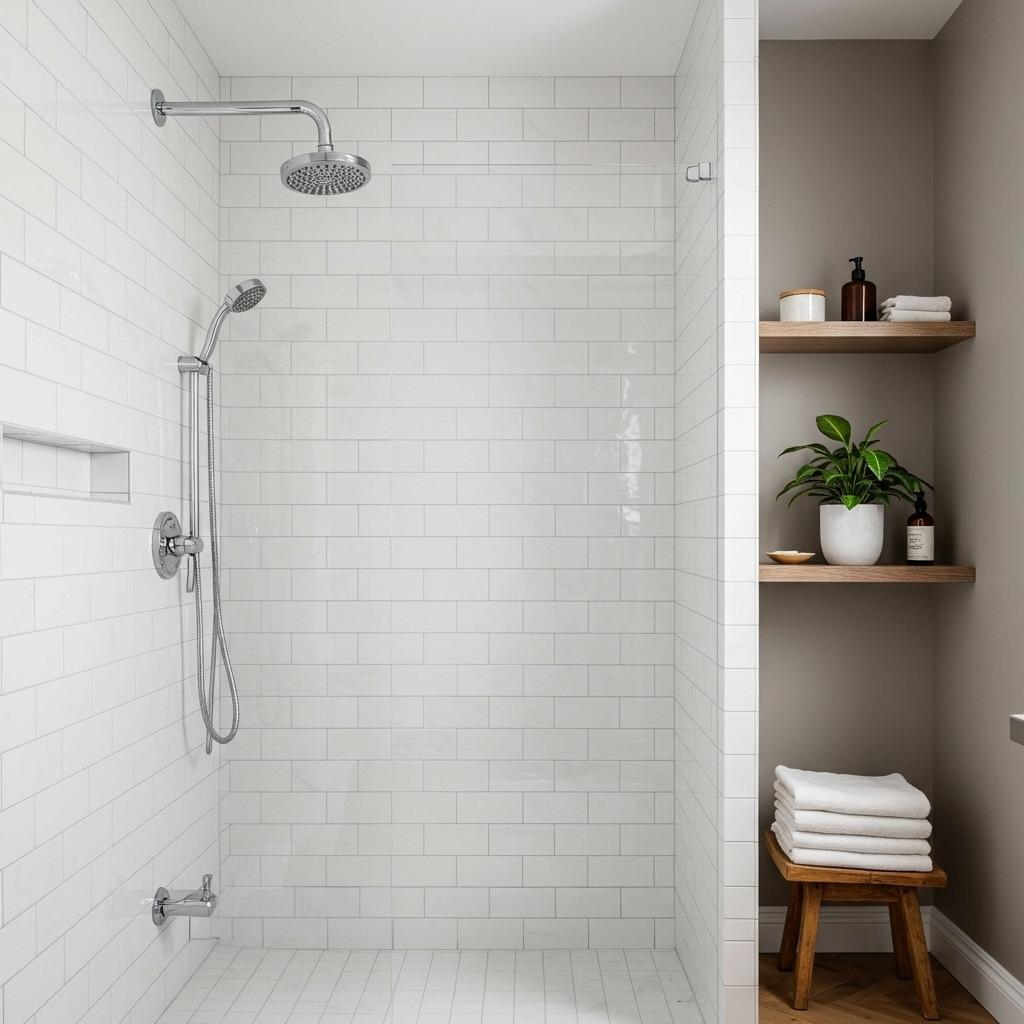
Creating a rain shower bathroom doesn’t require five-figure renovations. Strategic updates can deliver that luxury feeling without gutting the entire space. Sometimes it’s just about prioritizing what matters most and getting creative with affordable options.
Start with the showerhead itself. Quality rain shower fixtures are available at various price points. You might spend anywhere from $100 to $500 for a decent system that delivers good water flow. Installation costs depend on your existing plumbing – swapping a wall-mounted arm is simple, adding ceiling plumbing costs more.
Skip full tile replacement if your existing tile is sound. Deep clean grout, replace any damaged pieces, and update the grout color if needed. Add a rain shower fixture to the existing space. Include one or two spa elements like a wooden bench or some plants. These affordable home upgrades prove that thoughtful changes often matter more than expensive overhauls.
Focus your budget on what you’ll interact with daily – the showerhead quality, comfortable water temperature control, and proper water pressure. These functional elements matter more than fancy tiles or elaborate lighting.
Maintenance and Water Efficiency
Rain showers use more water than traditional showerheads, there’s no getting around that fact. The larger surface area means more water flows per minute. But water-efficient models have improved significantly, and some deliver that rainfall experience while using comparable amounts to regular showers.
Look for showerheads rated at 2.0 GPM (gallons per minute) or less if water conservation matters to you. Some achieve this through air-injection technology that mixes air with water, maintaining pressure and coverage while reducing actual water usage. The experience feels similar to higher-flow models with less waste.
Mineral buildup is your maintenance enemy. Hard water leaves deposits that clog nozzles and reduce water flow over time. Clean your rain showerhead monthly by soaking it in white vinegar solution, or wipe it down with vinegar if it’s not removable. Some fixtures have silicone nozzles you can simply wipe clean with your hand to dislodge deposits.
Check water temperature and pressure regularly. Declining pressure often means buildup in the pipes or shower arm rather than a failing showerhead. Inconsistent temperature might indicate issues with your water heater or mixing valve. Addressing these problems early prevents bigger repairs later.
Creating Your Rain Shower Retreat
You’ve seen the possibilities – from high-tech systems to simple updates, from expansive wet rooms to compact stalls. The perfect rain shower bathroom depends entirely on your space, budget, and what actually makes you feel relaxed and restored.
Maybe you start small with just the showerhead upgrade and a plant or two. Or perhaps you’re ready for a full renovation that includes new tile, glass enclosure, and all the spa elements. There’s no wrong approach as long as the end result serves your daily needs and brings you genuine enjoyment.
Think about your actual shower habits. Do you take long contemplative showers where you’d appreciate ambient lighting and music? Or are you in and out quickly, needing efficient function more than atmospheric extras? Build your rain shower bathroom around your real patterns rather than Pinterest fantasies that don’t match your lifestyle.
The water falling from above, the steam rising around you, the few minutes of complete presence before your day begins – that’s what this is really about. Not expensive fixtures or trendy tiles, but creating a space where you can breathe deeply and let tension drain away along with the water. Your bathroom can be that place. These ideas hopefully helped you envision exactly how to make it happen.