There’s something undeniably magical about a well-placed pergola. It transforms an ordinary backyard into an outdoor sanctuary where you can sip morning coffee, host weekend gatherings, or simply escape the afternoon heat. The right pergola doesn’t just provide shade – it becomes the architectural centerpiece that defines your entire outdoor aesthetic.
Maybe you’ve been eyeing that bare patch of lawn, imagining how much more usable it could be with some overhead coverage. Or perhaps you’re tired of your patio furniture fading in the harsh sun. Whatever brought you here, you’re about to discover pergola installation ideas that balance practical shade solutions with serious style points.
From sleek modern structures that complement contemporary homes to rustic wooden designs that feel like they’ve always been there, we’re covering installations that work for different spaces, budgets, and skill levels. Some of these ideas you can tackle over a weekend, while others might inspire you to call in the professionals for something truly spectacular.
Why Garden Shade Solutions Matter More Than You Think
Creating comfortable outdoor spaces isn’t just about aesthetics. When temperatures soar, an unshaded patio or deck becomes practically unusable during the hours you’d most want to enjoy it. That’s where thoughtful garden shade solutions become essential.
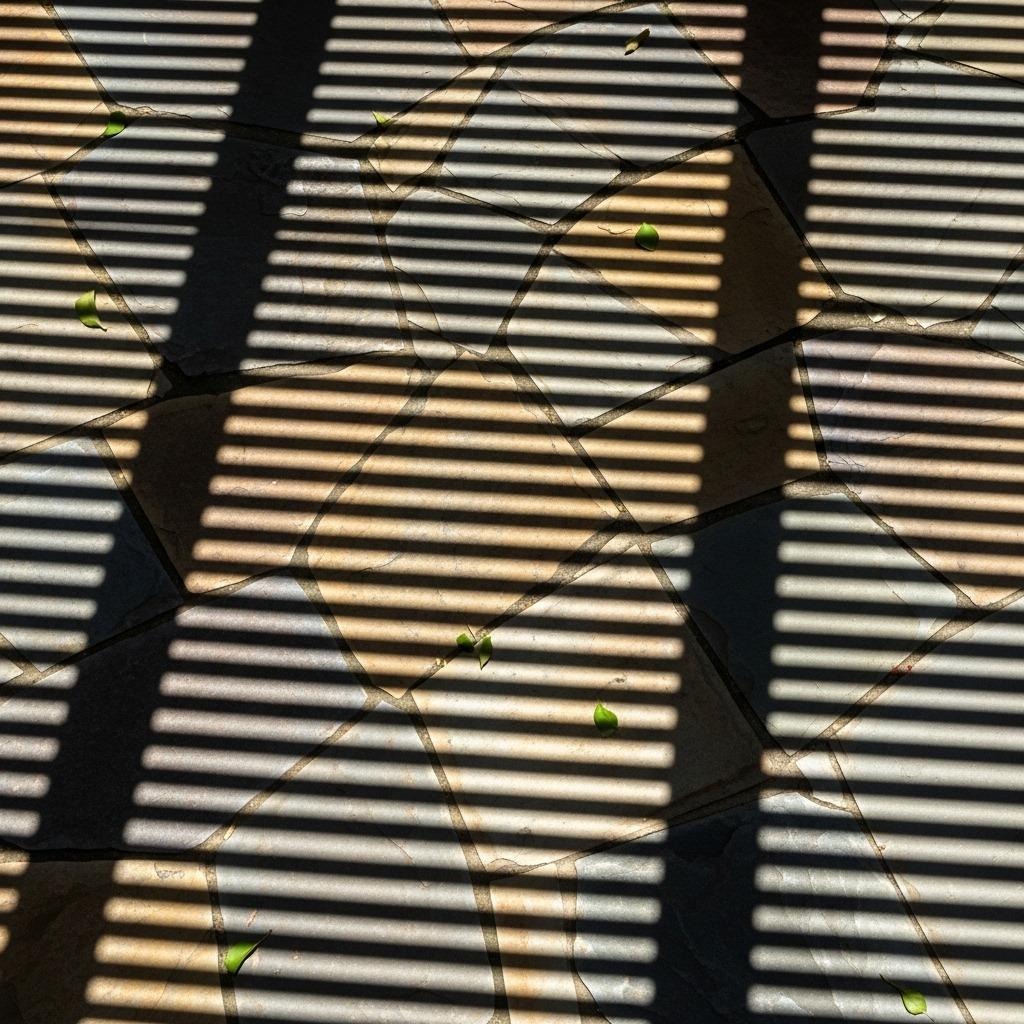
A pergola offers the perfect middle ground between full coverage and open sky. Unlike solid roof structures, pergolas filter sunlight rather than blocking it completely, creating those beautiful dappled shadows that make outdoor spaces feel both protected and connected to nature. This partial shade also allows for better air circulation, which can make your space feel several degrees cooler.
Beyond comfort, shade structures protect your outdoor investment. Furniture, cushions, and even nearby plants benefit from protection against constant sun exposure. I’ve seen outdoor seating areas last years longer simply because a pergola reduced their daily UV bombardment.
Classic Wooden Backyard Pergolas That Never Go Out of Style
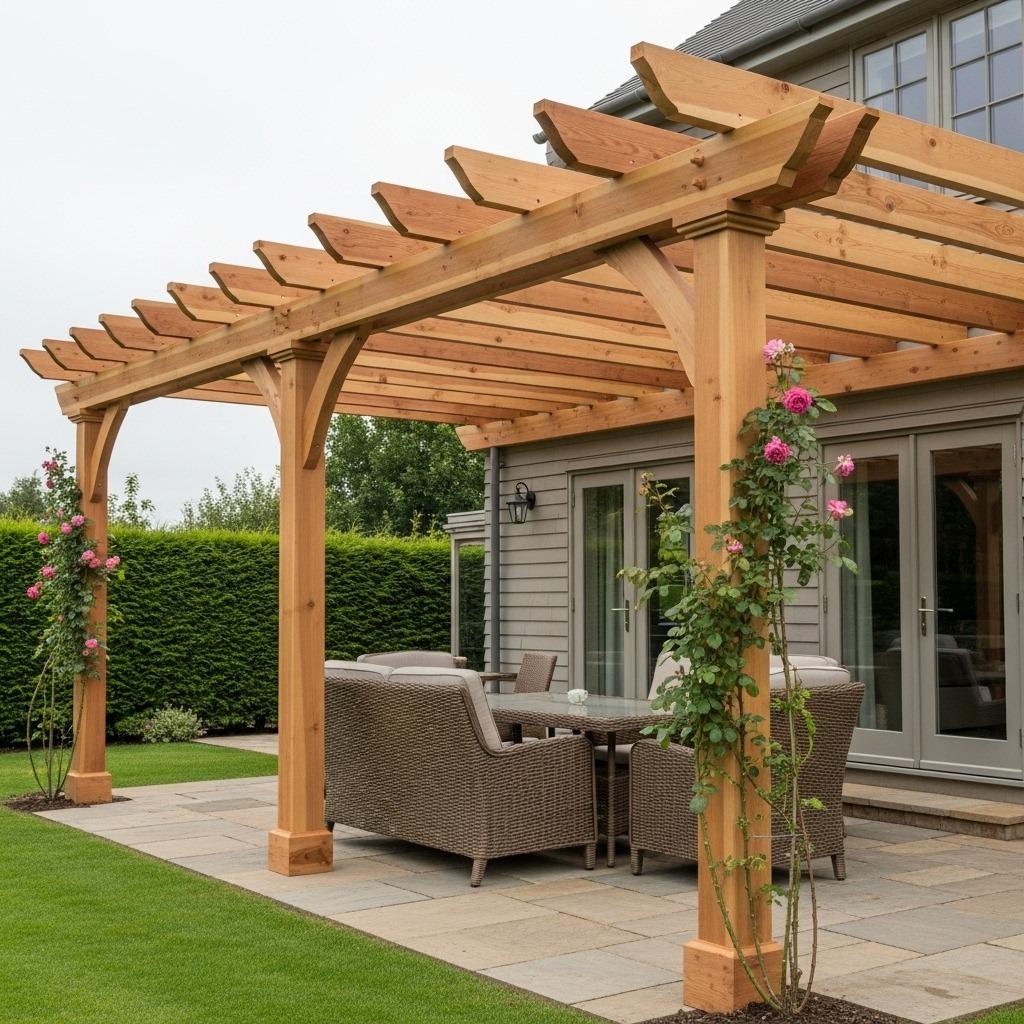
There’s a reason wood remains the go-to material for pergola construction. Its natural warmth works with virtually any home style, from traditional colonials to modern farmhouses. Cedar and redwood are particularly popular because they resist rot and insects naturally, though pressure-treated pine offers a more budget-friendly option.
The traditional four-post pergola with crossbeams creates clean, timeless lines that age beautifully. You can adjust the spacing between your top slats to control how much sun filters through – closer spacing means more shade, while wider gaps maintain an airier feel. Some homeowners get creative by angling the slats to block the harshest afternoon sun while allowing gentler morning light.
One approach I find particularly appealing is the attached pergola that extends from your home’s exterior wall. This design creates a seamless transition between indoor and outdoor living spaces, almost like adding an extra room. It works especially well when positioned over a patio or deck, providing immediate access from your kitchen or living room.
Modern Pergola Design With Clean Lines and Contemporary Materials
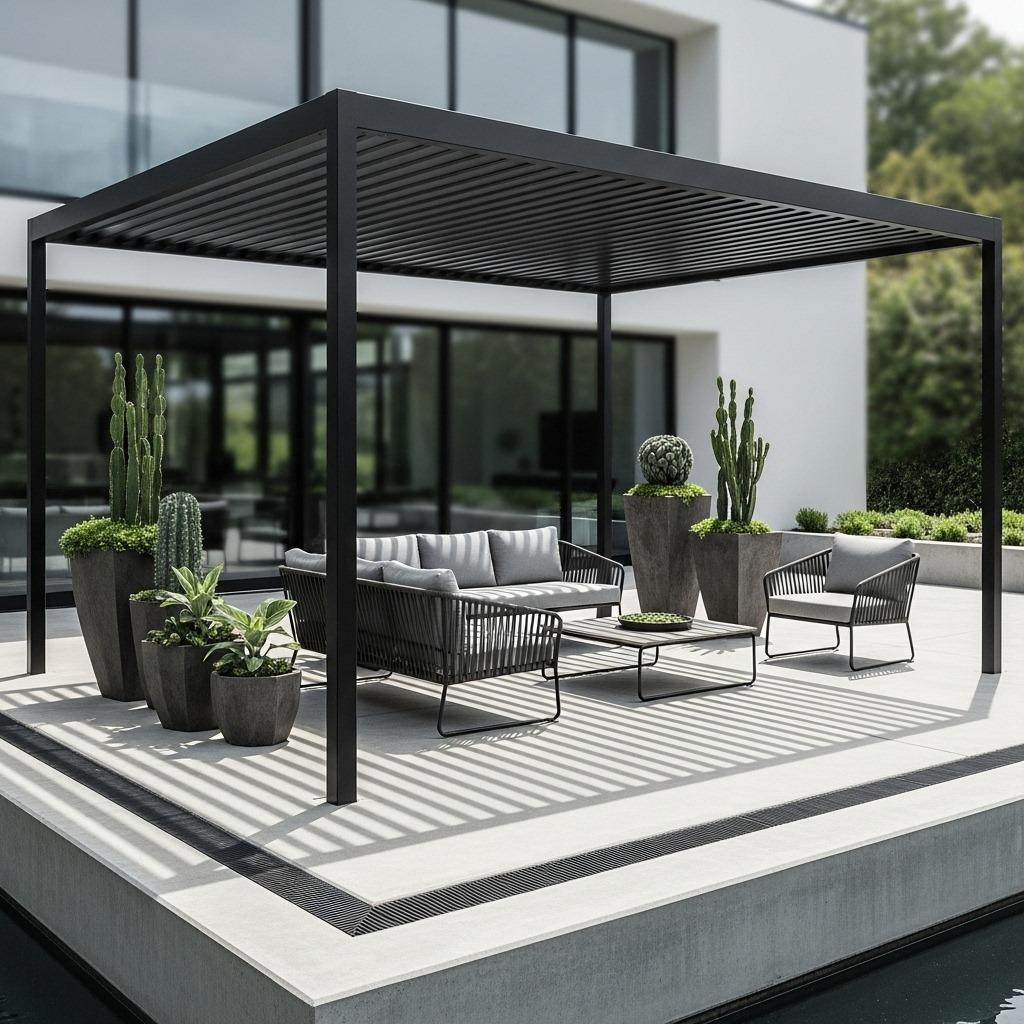
If your home leans contemporary, a modern pergola design can echo that aesthetic in your outdoor space. Think metal frames in matte black or brushed aluminum, geometric shapes instead of traditional squares, and minimalist details that let the structure speak for itself.
Steel and aluminum pergolas offer sleek profiles that seem to float above your space. These materials also allow for longer spans between posts, creating more open sightlines. Some modern designs incorporate adjustable louver systems – motorized slats that rotate to control sun exposure throughout the day. Yes, they’re pricier, but the flexibility is genuinely impressive.
The beauty of modern pergola design lies in its adaptability. You might pair a minimalist metal frame with natural wood accents for a transitional look, or go full contemporary with powder-coated aluminum and integrated LED lighting. These structures work particularly well in urban settings or when your home’s exterior already features clean, architectural lines.
1. The Vine-Covered Garden Pergola for Natural Shade
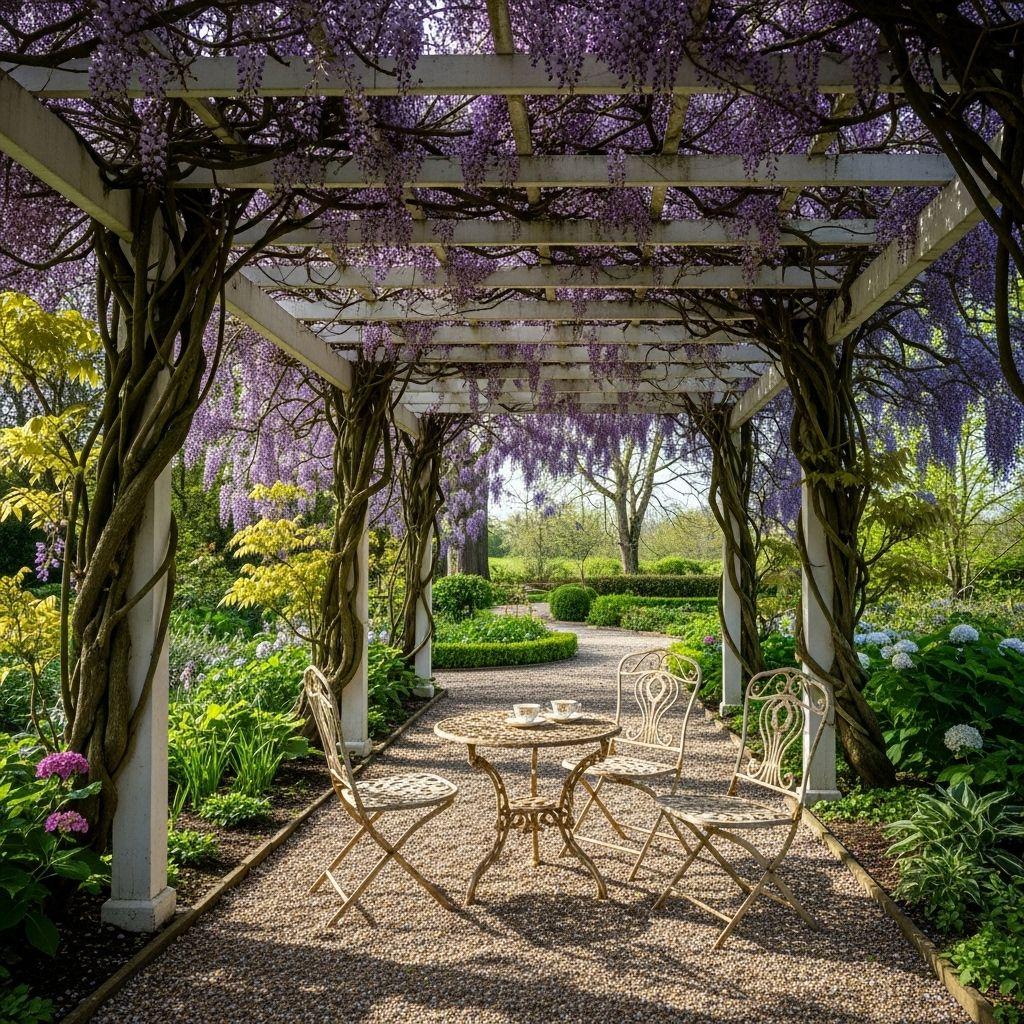
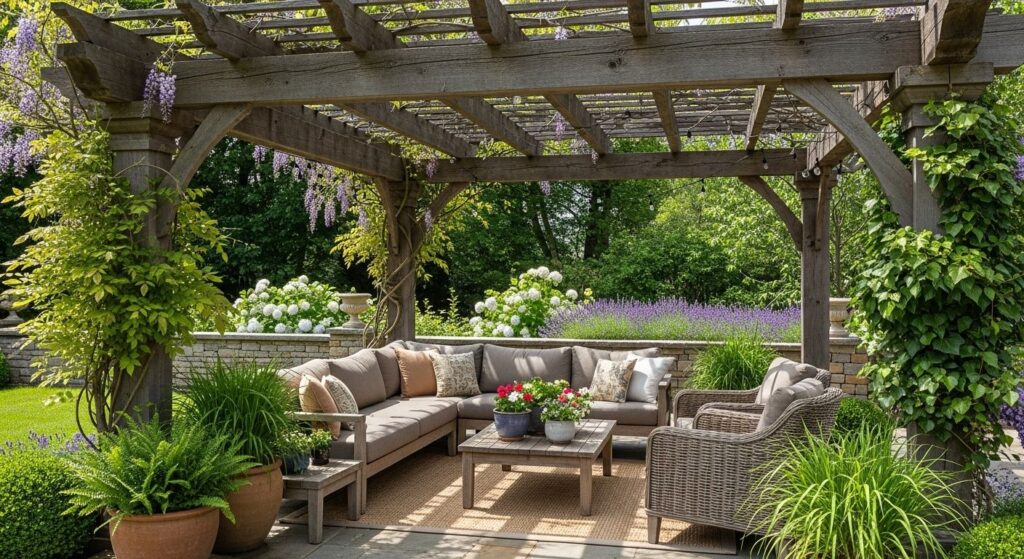
Nothing beats the romance of a vine-draped pergola. This installation idea combines structure with living greenery, creating shade that evolves with the seasons. Start with a sturdy frame – vines get heavy when mature – then choose climbing plants suited to your climate and maintenance preferences.
Wisteria creates stunning cascades of purple blooms in spring, though it requires regular pruning to prevent it from taking over. Clematis offers similar beauty with less aggressive growth, coming in varieties that bloom at different times. For edible options, grape vines provide lush coverage plus a harvest, while climbing roses add fragrance and old-world charm.
The trick is planning for the first few seasons when your vines are establishing. You might use temporary shade cloth or outdoor curtains until your plants fill in.
2. Pergola With Retractable Canopy for Flexible Coverage
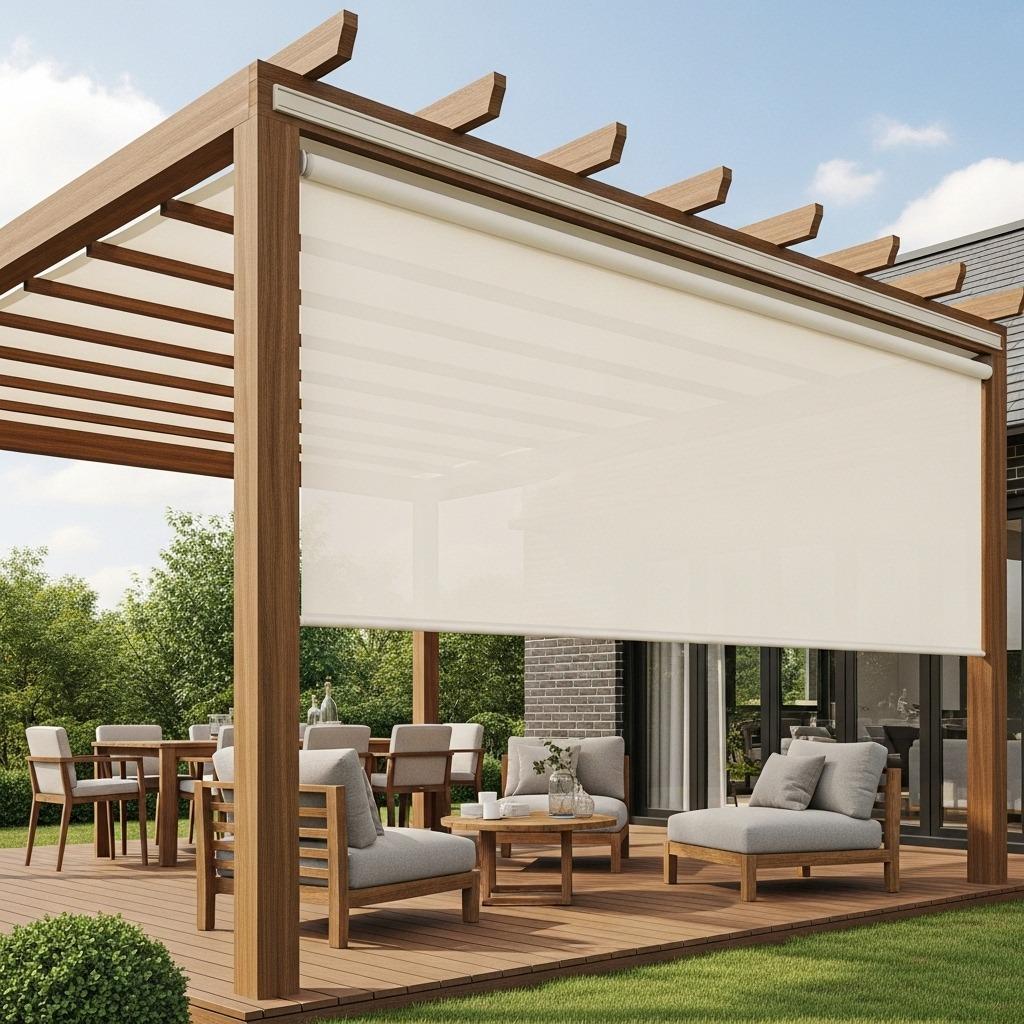
Sometimes you want shade, sometimes you want sun – a retractable canopy system gives you both options. This pergola installation idea works exceptionally well for spaces that serve multiple purposes throughout the day and across seasons.
Modern retractable systems range from simple manual cranks to fully motorized versions you control via smartphone. The fabric canopy slides along tracks mounted to your pergola’s crossbeams, extending or retracting as needed. On cooler days or evenings when you want to stargaze, pull it back completely. When the afternoon sun gets intense, extend it for full coverage.
Fabric choices matter here. Solution-dyed acrylic fabrics resist fading and handle weather better than cheaper alternatives. Some even come with UV protection ratings that block up to 98% of harmful rays. This flexibility makes retractable canopy pergolas perfect for spaces where weather patterns vary dramatically, or when you simply can’t decide how much shade you actually want.
3. Small Space Pergola Designs That Maximize Limited Yards
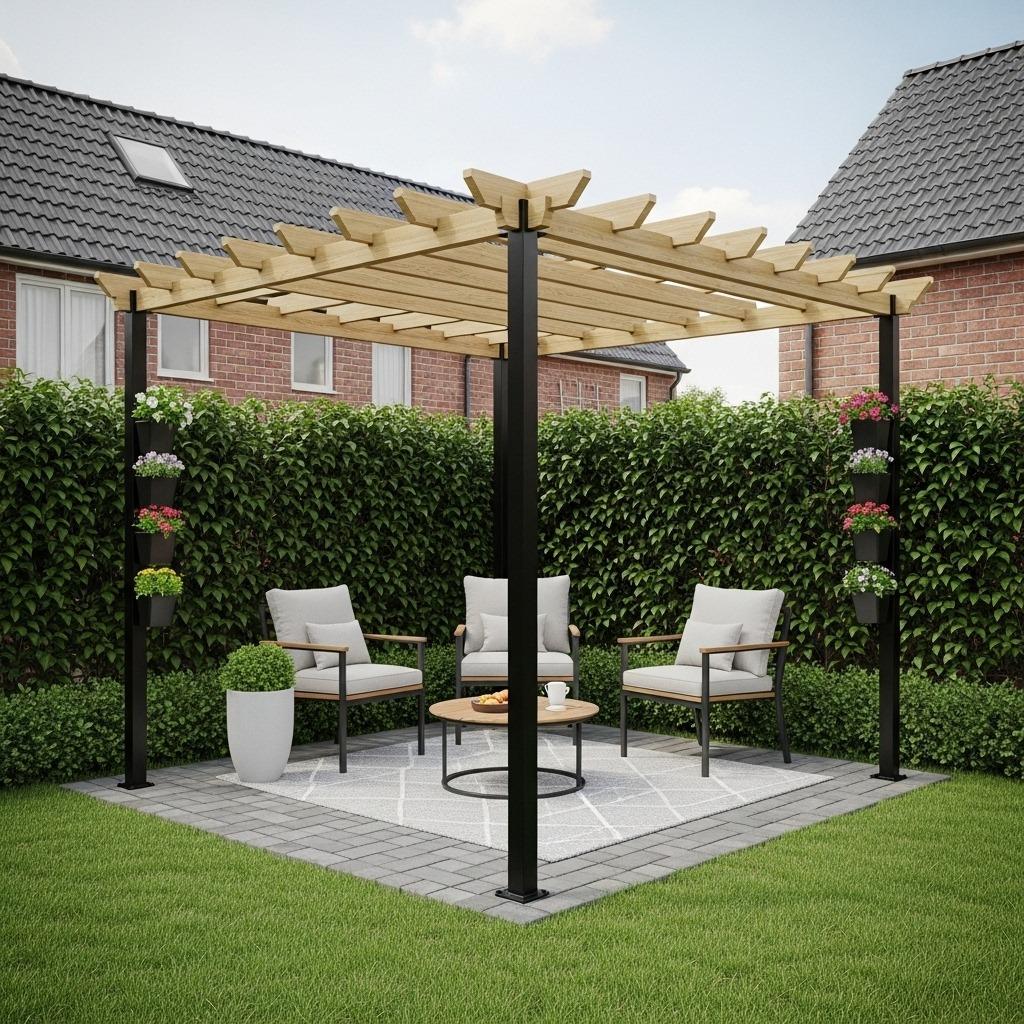
Don’t let a compact yard stop you from enjoying pergola benefits. Smaller installations can be just as impactful, you just need to think strategically about placement and proportions. A corner pergola, for instance, uses existing fence lines or walls as two of its “posts,” reducing materials and maximizing usable square footage.
For truly tiny spaces, consider a pergola that extends just beyond your back door or covers a narrow side yard. Even an 8×8 foot structure creates enough room for a bistro table and chairs. The vertical nature of pergolas actually makes small spaces feel larger by drawing the eye upward and defining outdoor rooms without boxing them in.
Slender posts and horizontal slats emphasize width rather than height in compact areas. You might also incorporate built-in planters at the base of posts or attach shelving to vertical supports, adding function without consuming additional floor space. These small space renovation principles apply beautifully to pergola planning.
4. Pergola Over Patio With Built-In Lighting
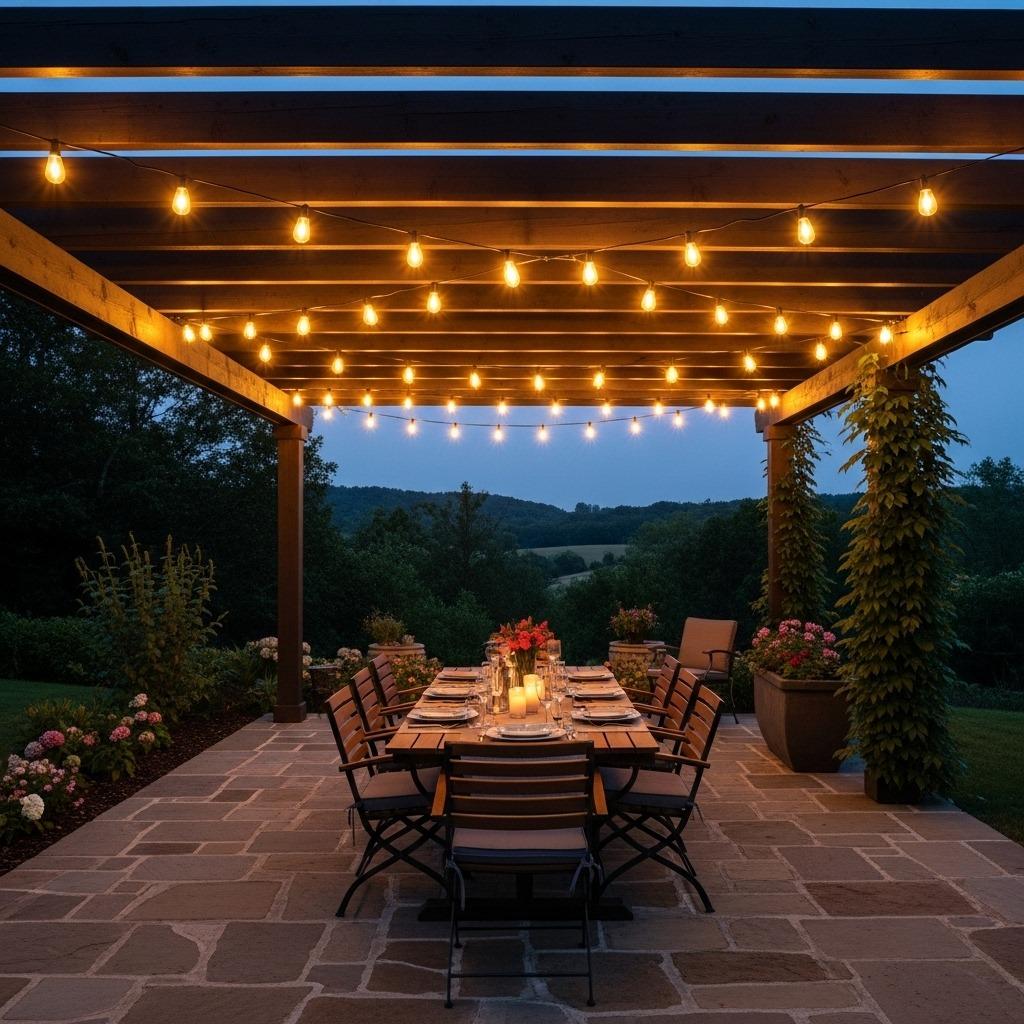
Extending your pergola’s usefulness into evening hours requires thoughtful lighting integration. The beauty is that pergola beams provide perfect mounting points for various lighting styles without requiring separate posts or complicated electrical work.
String lights remain popular for good reason – they create instant ambiance while being relatively easy to install. Drape them across beams in parallel lines for a modern look, or crisscross them for something more whimsical. For a more polished approach, recessed LED strips along the tops of beams provide indirect lighting that illuminates the space below without glare.
Pendant lights suspended from center beams work beautifully over dining areas, providing task lighting where you need it most. Solar options have improved dramatically in recent years, eliminating the need for electrical work if you’re not ready for that commitment. The right lighting transforms your pergola from a daytime shade structure into an evening retreat that rivals any indoor living room.
5. Freestanding Pergola as a Garden Focal Point
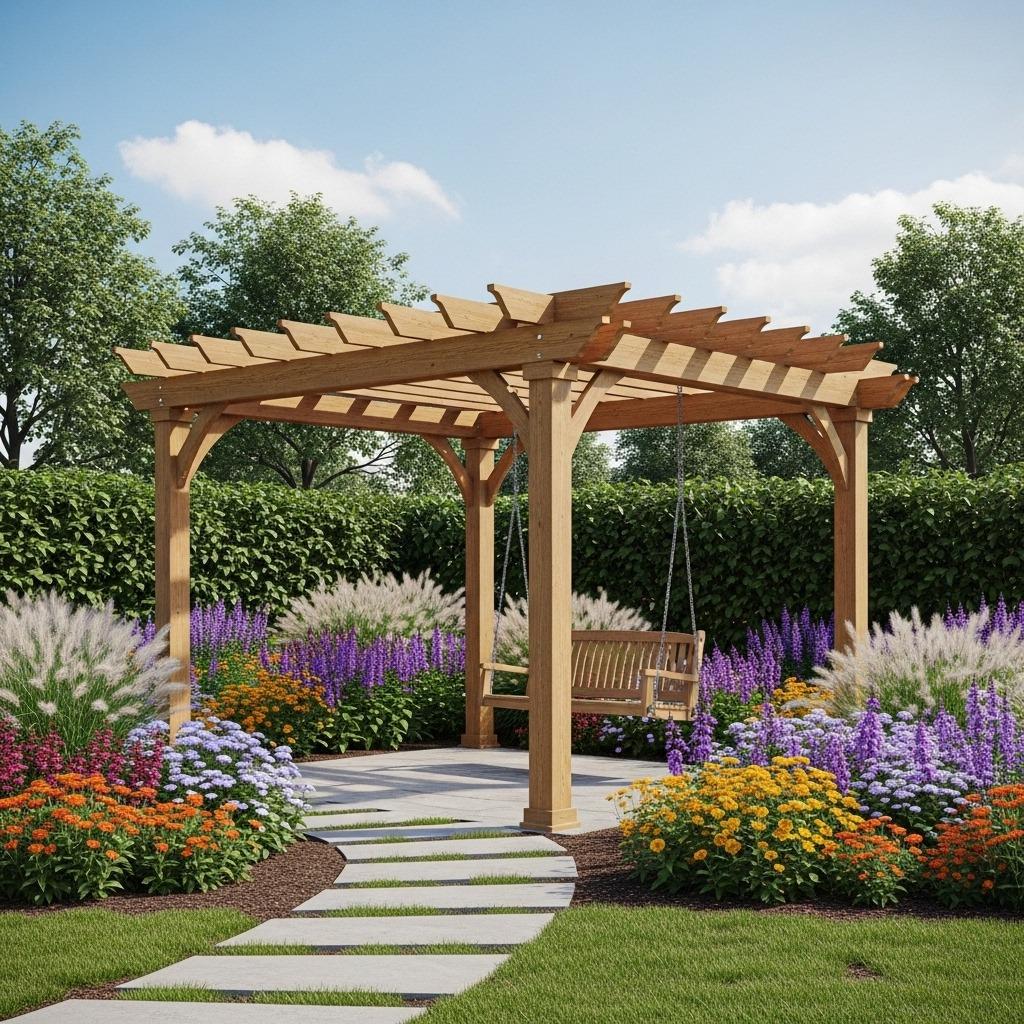
Sometimes the best pergola installation sits away from your home entirely, creating a destination within your yard. A freestanding pergola positioned over a gravel pad or in the middle of your lawn becomes a focal point that draws people into your garden space.
This approach works particularly well in larger yards where you want to create distinct zones. Position your freestanding structure near a pond, at the end of a garden path, or in a corner surrounded by plantings. It becomes a retreat within a retreat, offering a different perspective of your property than you get from the house.
Circular or octagonal designs add architectural interest that sets freestanding pergolas apart from their attached cousins. These shapes naturally encourage conversation when furniture is arranged around the perimeter. The standalone nature also means you have complete freedom in orientation – position it to capture morning sun, frame a particular view, or align with prevailing breezes.
6. Attached Pergola Creating Seamless Indoor-Outdoor Flow
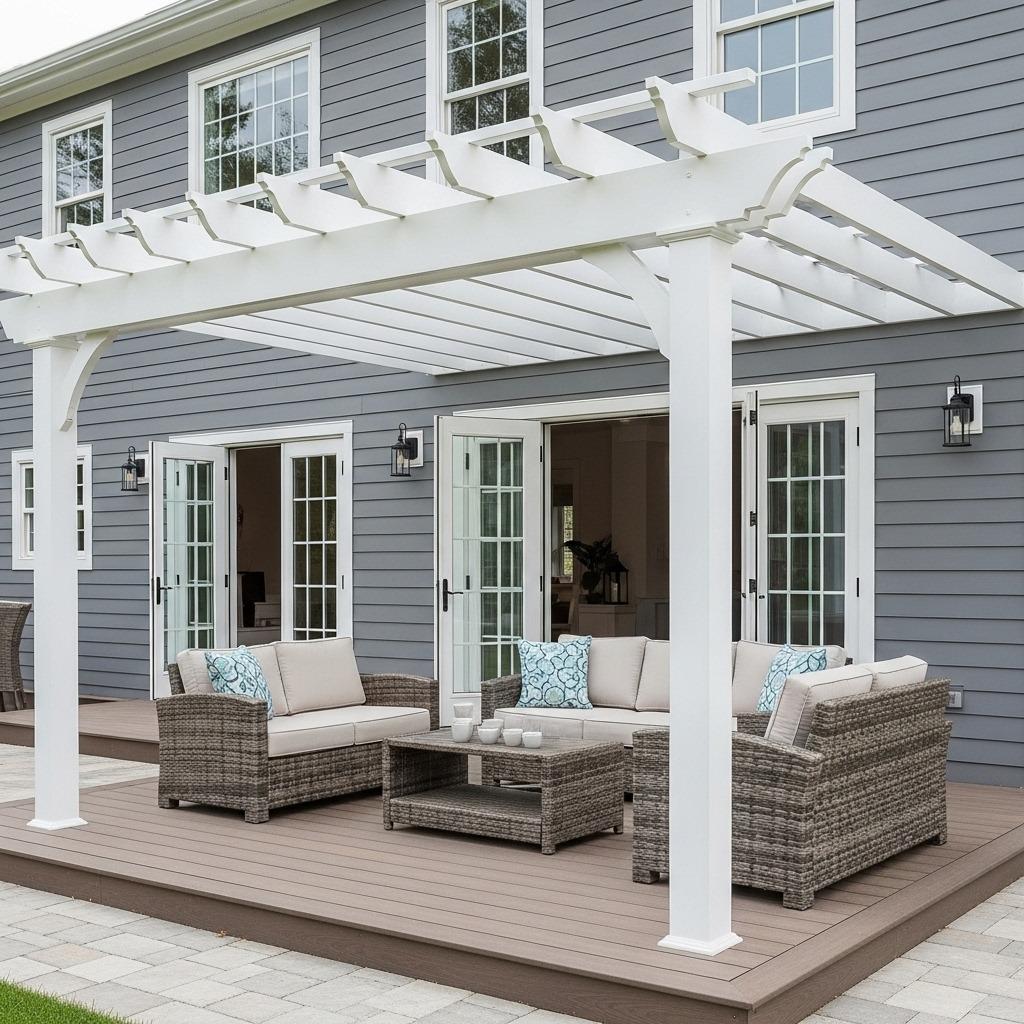
When you attach a pergola directly to your home, you essentially add outdoor square footage that feels like an extension of your interior. This installation works best when it aligns with existing doors or windows, creating visual and physical connections between spaces.
The key is matching materials and proportions to your home’s existing architecture. If you have a craftsman-style home with substantial wood trim, your pergola should feature similarly hefty posts and beams. For a ranch-style home with low-slung rooflines, keep your pergola height modest so it doesn’t overwhelm the house’s profile.
One significant advantage of attached pergolas is simplified construction. One side is already secured to your home’s structure, reducing the number of posts needed and making the project more approachable for confident DIYers. Just make sure to properly flash where the ledger board attaches to prevent water intrusion. This design pairs beautifully with open concept kitchen living room layouts that already blur indoor-outdoor boundaries.
7. Pergola With Privacy Screens for Secluded Spaces
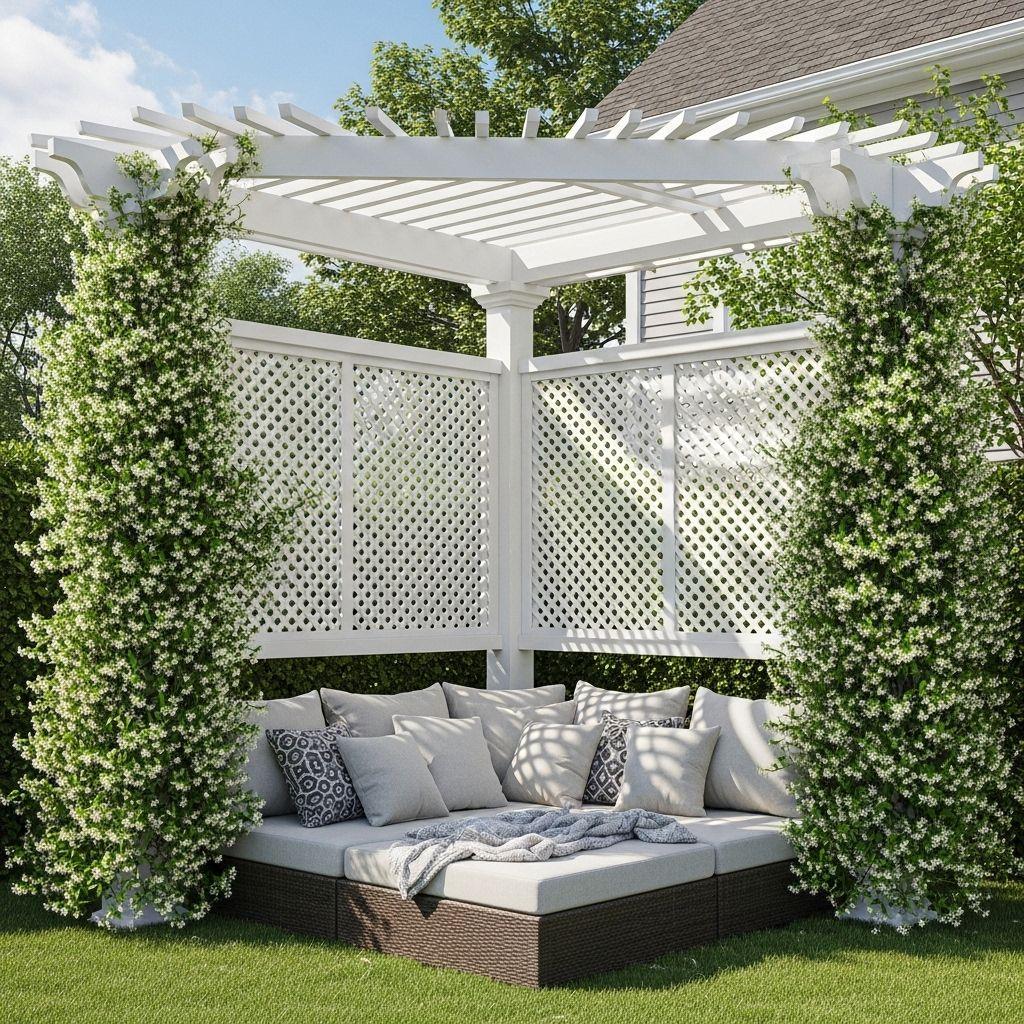
Adding privacy elements to your pergola transforms it from an open structure into a more enclosed retreat. This matters especially in neighborhoods with close property lines or when your pergola faces a less-than-scenic view.
Lattice panels attached to one or more sides provide privacy while maintaining airflow and filtered light. You can leave them natural wood, paint them to match your pergola, or let climbing plants cover them for a living wall effect. For something more substantial, vertical slat screens or frosted acrylic panels block sightlines completely while still feeling lighter than solid walls.
Outdoor curtains offer flexible privacy that you can adjust as needed. Mounting them to tracks or simple rods attached to pergola beams means you can close them for privacy during gatherings or tie them back when you want the space to feel more open. Weather-resistant fabrics in neutral tones work with any style, while bolder patterns can inject personality into your outdoor room.
8. Multi-Level Pergola Design for Dramatic Visual Interest
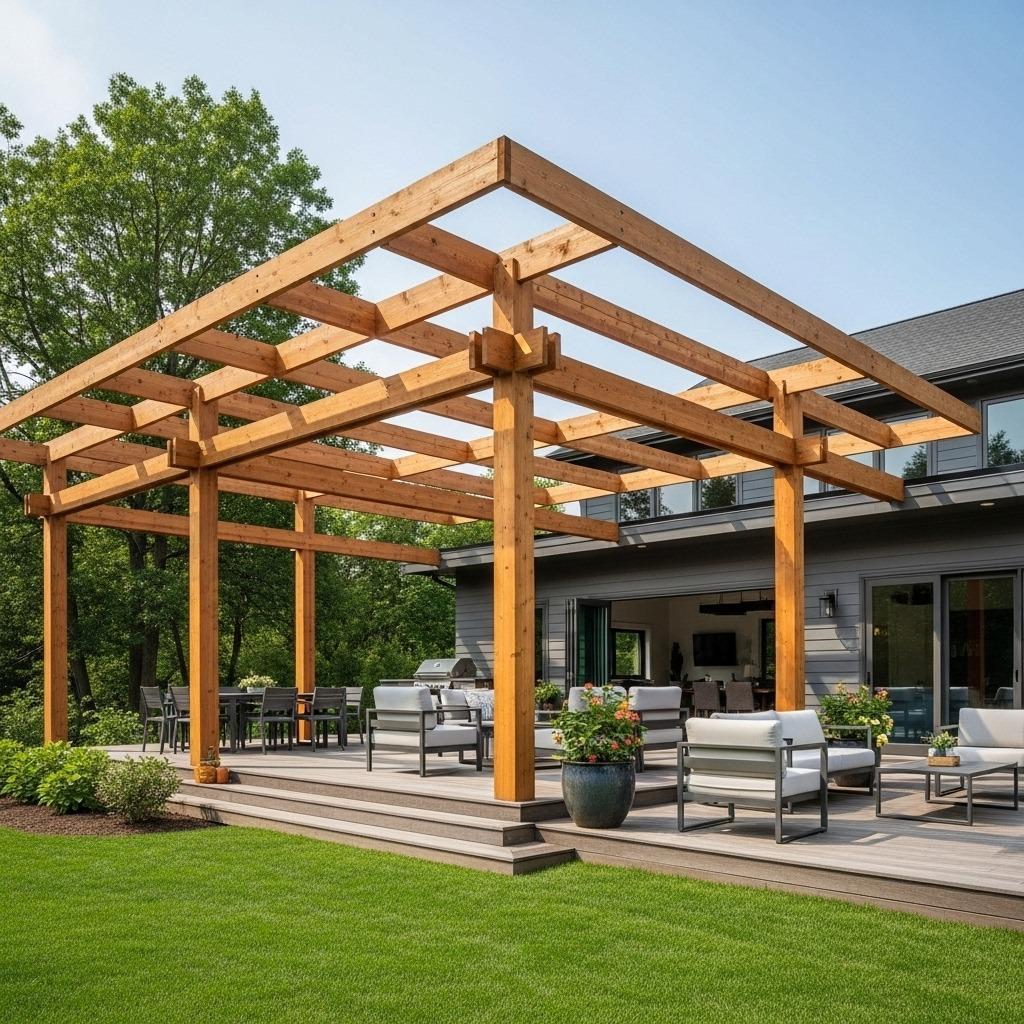
Why settle for a single-plane structure when you can create architectural drama with varying heights? A multi-level pergola installation uses stepped or offset beams to add dimension and visual complexity to your outdoor space.
This approach works particularly well on sloped properties where you can work with the natural grade. The pergola “steps” down your yard, creating distinct zones at different levels. Even on flat lots, varying beam heights by just 12-18 inches creates interesting shadow patterns and helps define different functional areas – perhaps dining at one level, lounging at another.
The staggered roofline also allows for creative lighting opportunities, with each level offering different mounting points and shadow effects. Yes, this style requires more planning and precise construction than a standard pergola, but the architectural statement it makes elevates your entire outdoor living space considerably.
9. Pergola With Built-In Seating and Storage
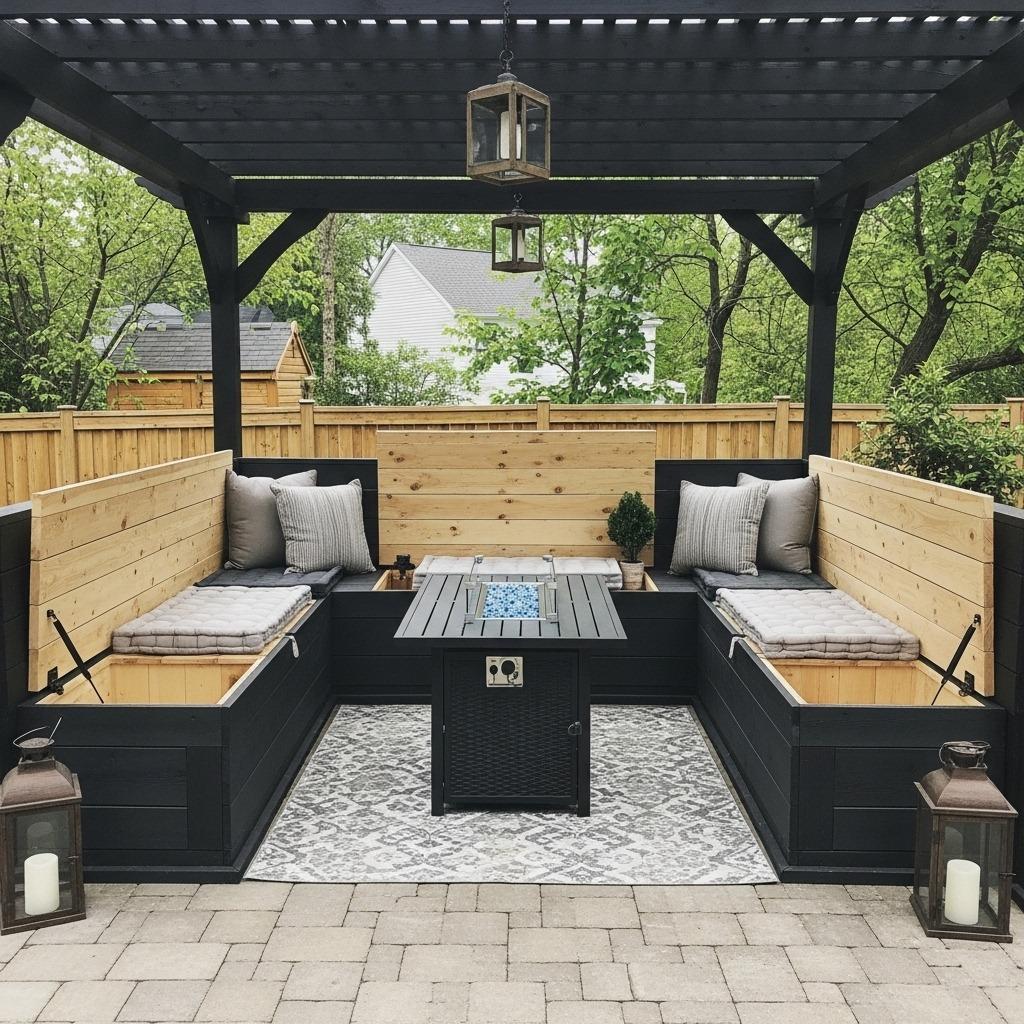
Incorporating functional elements directly into your pergola structure maximizes your outdoor space’s utility. Built-in benches along the perimeter provide ample seating without requiring separate furniture, while creating a cohesive, custom look.
These benches can hide storage underneath – perfect for stashing cushions, garden tools, or outdoor games. Flip-top seats or pull-out drawers keep items protected from weather while remaining easily accessible. For an even more integrated approach, build planter boxes into your bench design, so greenery becomes part of the seating structure itself.
Corner benches work especially well in square or rectangular pergolas, leaving the center open for a fire pit or dining table. Add cushions in weather-resistant fabrics to make these built-ins as comfortable as any indoor seating. This installation idea particularly suits homeowners who appreciate smart storage solutions and prefer furniture that can’t blow away in storms.
10. Modern Metal Pergola With Minimalist Aesthetic
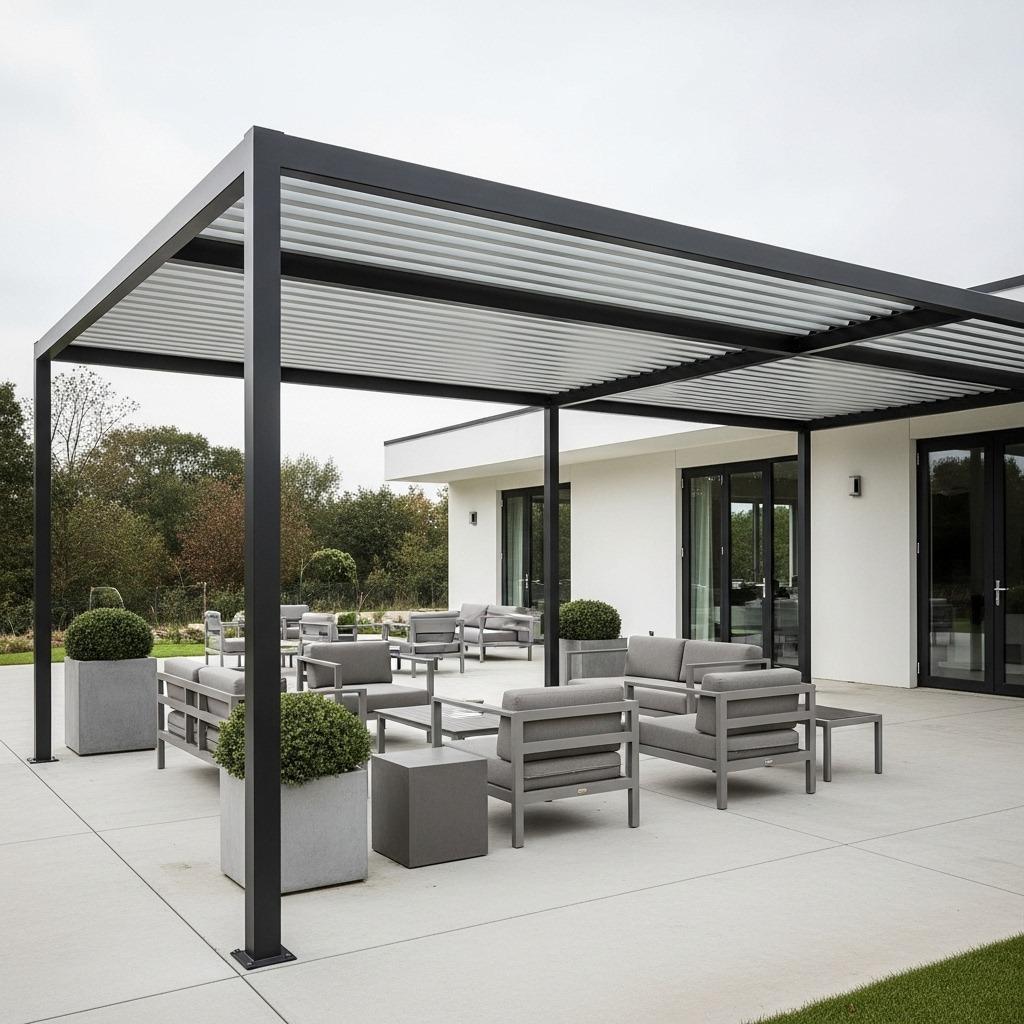
Metal pergolas bring a completely different energy than wood – sleeker, more industrial, unmistakably contemporary. Powder-coated aluminum and steel frames can span greater distances with thinner profiles, creating structures that feel almost impossibly light and airy.
Black is having a moment in outdoor design, and a matte black metal pergola makes a bold statement against any backdrop. The slim lines don’t compete with architectural details or landscaping; instead, they frame views and define space with minimal visual weight. These structures also require virtually no maintenance – no staining, sealing, or worrying about rot or insects.
For something less stark, brushed bronze or charcoal gray finishes offer warmth while maintaining that modern edge. You might combine metal frames with natural wood accents – perhaps cedar crossbeams atop steel posts – for a transitional look that bridges contemporary and traditional. This style complements homes with modern minimalist design beautifully.
11. Rustic Pergola With Reclaimed Wood Character
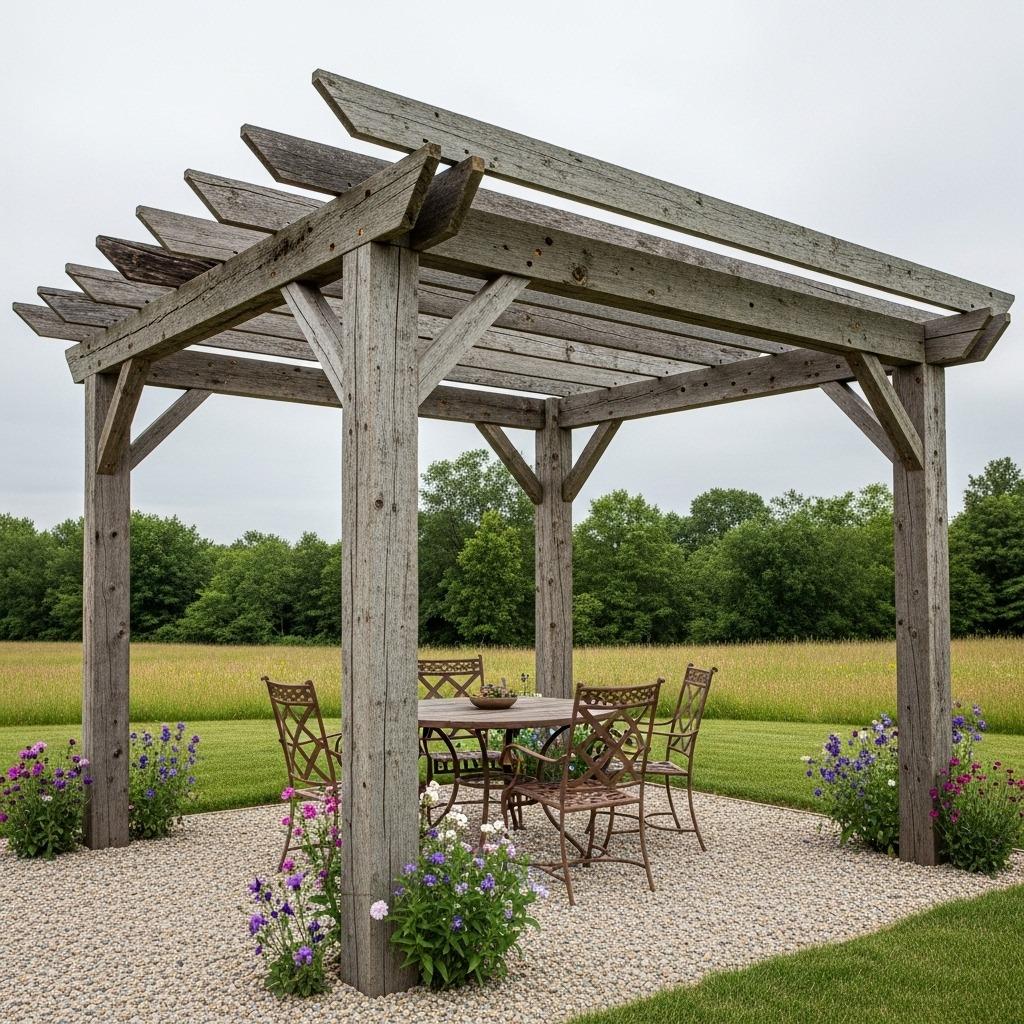
There’s something deeply satisfying about a pergola built from weathered, reclaimed wood. The material brings instant character and history, creating a structure that looks like it’s been part of your landscape for decades rather than days.
Reclaimed barn wood, old fence posts, or salvaged timber beams each tell their own story through nail holes, saw marks, and natural weathering. The varied tones and textures add visual interest that new lumber simply can’t match. Plus, you’re giving old materials new life, which feels good from both design and sustainability perspectives.
Building with reclaimed materials requires flexibility since pieces vary in dimension and condition. You might need to work with a builder experienced in adaptive reuse. The payoff is a truly one-of-a-kind structure that pairs beautifully with farmhouse style homes or gardens with a cottage feel. Just ensure the wood is structurally sound – character is great, but your pergola still needs to be safe and stable.
12. Pergola Over Pool for Stylish Aquatic Shade
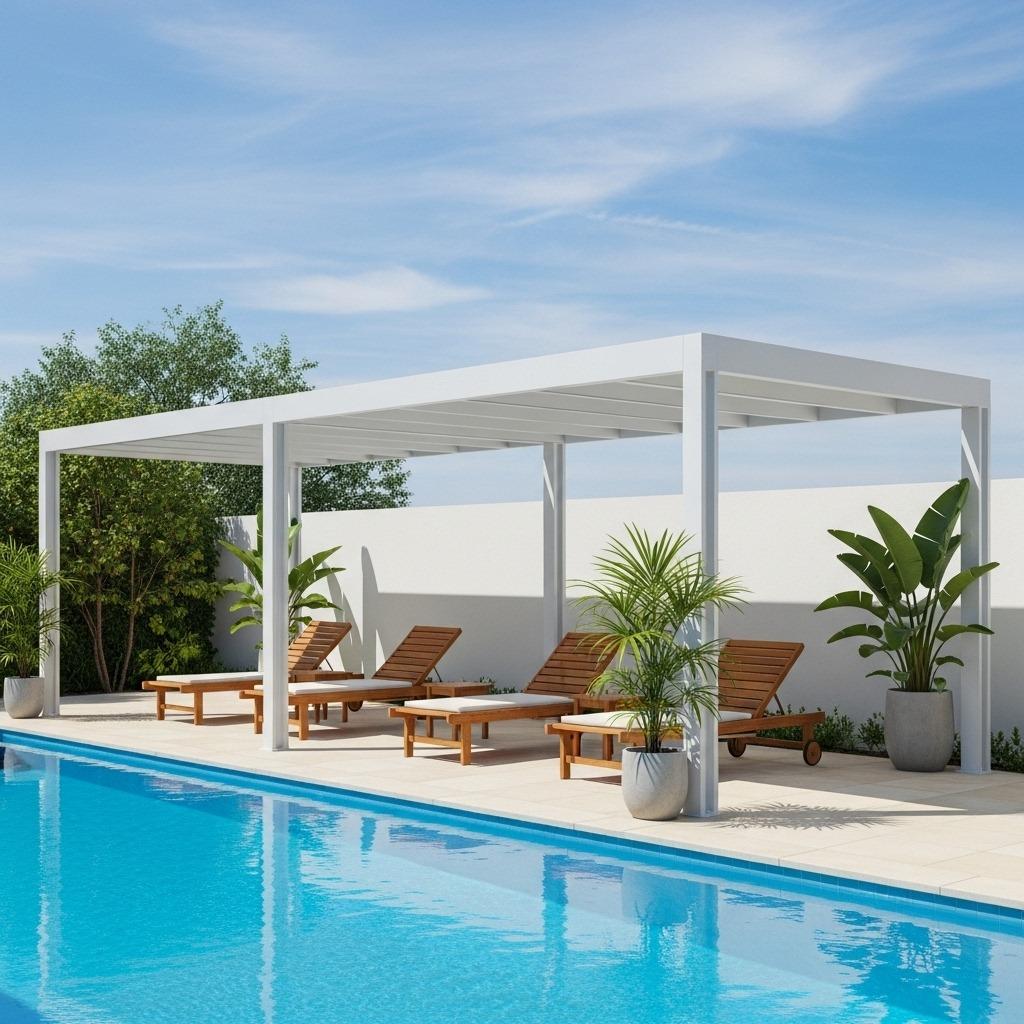
Positioning a pergola adjacent to or partially over your pool area creates a resort-like atmosphere while solving the common problem of poolside sun exposure. Nobody wants to choose between swimming and avoiding sunburn.
A partial-coverage design works well here – let your pergola shade lounge chairs and a small sitting area while leaving the pool itself open to sun. This gives swimmers the option to cool off in the water or retreat to shade without going inside. Some homeowners run their pergola parallel to the pool’s long edge, creating a covered walkway that connects different areas of their backyard.
Materials matter significantly in pool settings due to constant moisture and potential chemical exposure. Vinyl and composite materials resist moisture damage better than wood, though if you prefer wood’s look, cedar or pressure-treated lumber with regular sealing can work. Incorporate rust-resistant hardware throughout, and consider positioning the structure to block afternoon sun when UV intensity peaks. The combination of water and shade creates the kind of outdoor space that makes summer weekends something to genuinely look forward to.
13. Pergola With Fire Feature for Year-Round Use
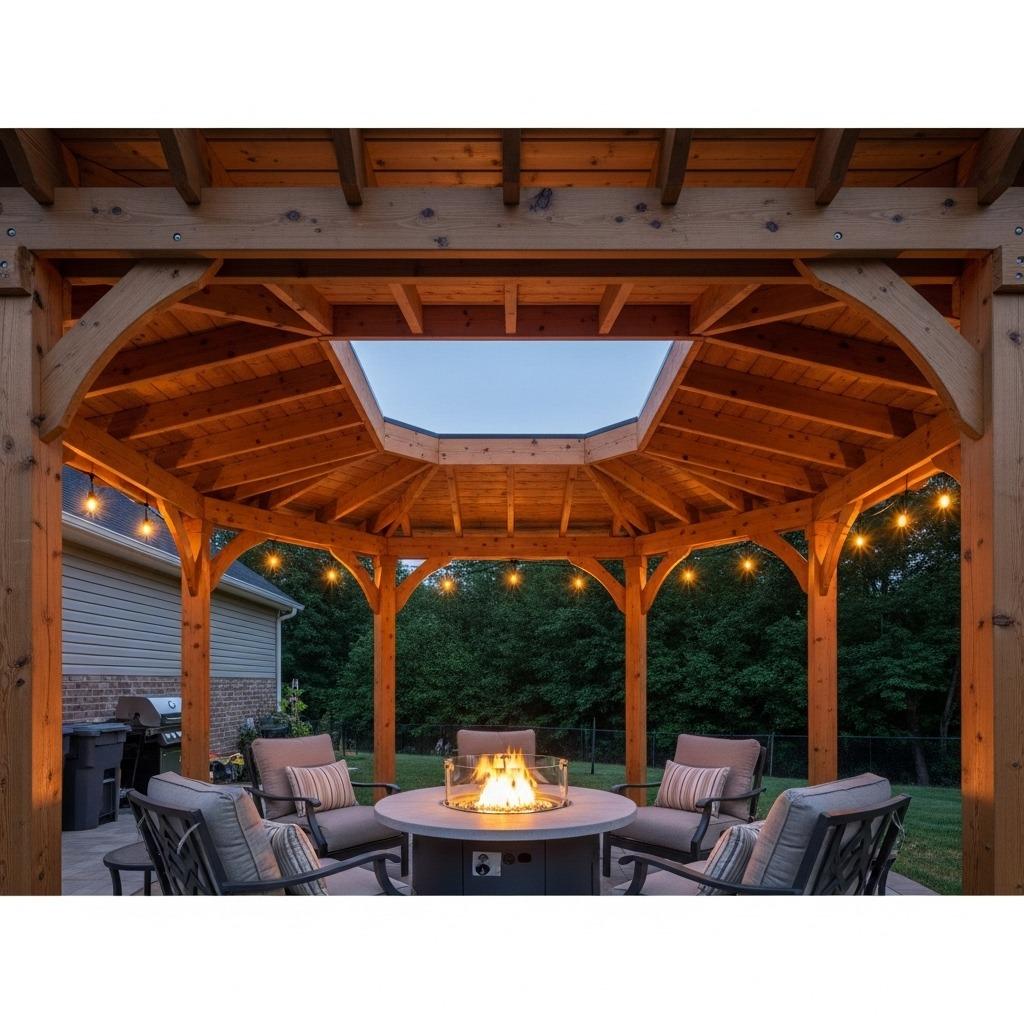
Extending your pergola’s usability into cooler months requires adding warmth, and a fire feature does exactly that while creating a natural gathering point. Whether you choose a built-in fireplace, fire pit, or portable fire table depends on your space, budget, and local regulations.
A fireplace built into one end of your pergola creates an outdoor living room vibe that’s hard to beat. It provides both warmth and ambiance, plus you can hang stockings there if you’re the type who goes all out with seasonal decor. For something more flexible, a propane or natural gas fire pit in the center of your pergola allows everyone to gather around it equally.
Safety considerations are non-negotiable when combining fire and overhead structures. Ensure adequate clearance between flames and any combustible materials – typically at least 8-10 feet vertically and several feet horizontally. Many homeowners leave the area directly above their fire feature open to the sky, with the pergola beams forming a frame around rather than completely over the flames. This setup pairs wonderfully with cozy outdoor spaces designed for comfortable evening relaxation.
14. Pergola Covering Outdoor Kitchen and Dining
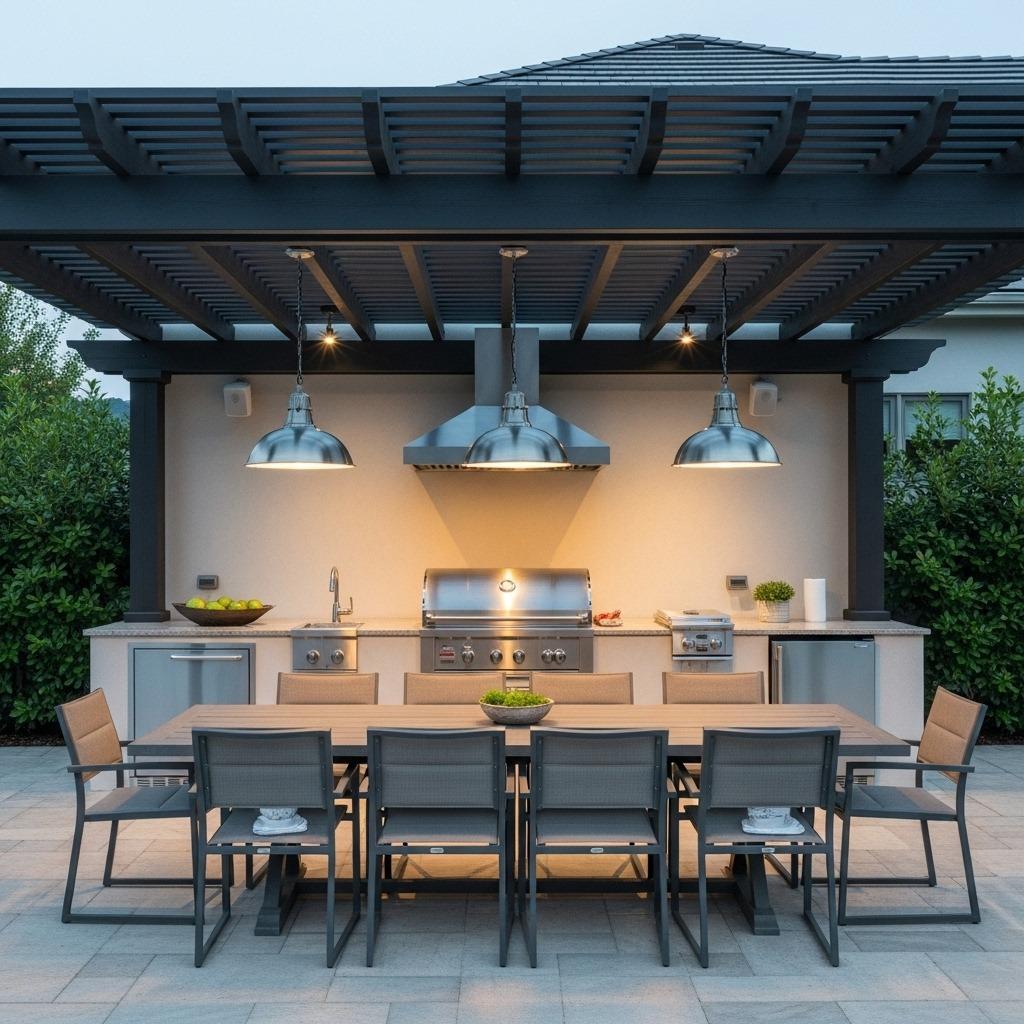
If you’re serious about outdoor entertaining, a pergola over your cooking and dining area protects both your appliances and your guests from the elements. This installation essentially creates an outdoor room dedicated to meals and gatherings.
The structure needs to accommodate smoke from grills and heat from cooking surfaces. A higher roofline – at least 10-12 feet – allows heat to rise and dissipate, and you might leave strategic gaps between beams over cooking areas for ventilation. Some homeowners install exhaust vents or fans in the pergola structure itself, particularly over built-in grills.
Size your pergola to include both your cooking zone and a dining table with comfortable clearance for chairs. An 12×16 or 14×18 foot structure typically accommodates a full outdoor kitchen setup plus dining for 6-8 people. Consider adding electrical outlets during construction for small appliances, and think about how lighting will illuminate both prep and dining areas effectively.
15. Arched Pergola for Romantic Garden Appeal
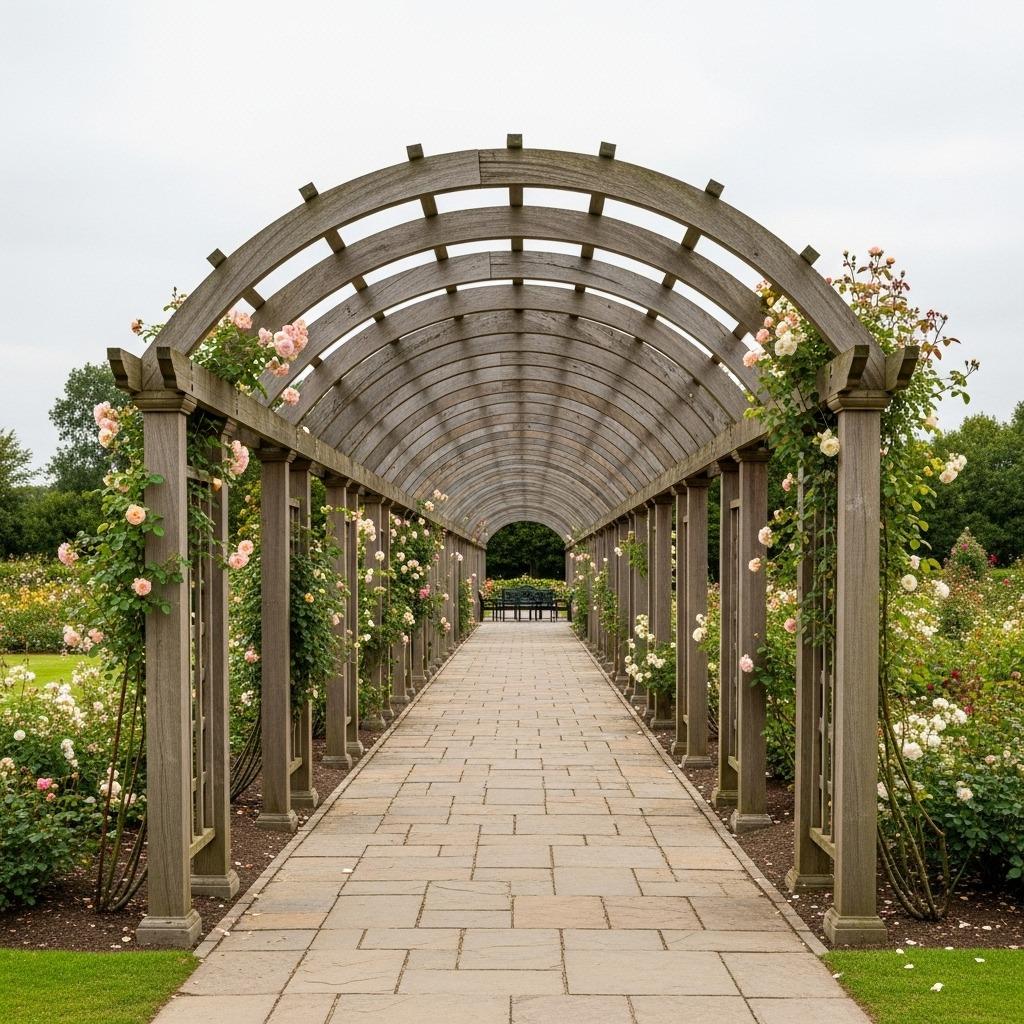
Trading traditional straight lines for graceful curves creates an entirely different mood. An arched pergola feels softer, more romantic, and particularly well-suited to cottage gardens or homes with curved architectural details.
These structures take more skill to build since creating those curves requires either laminating thin strips of wood or using specialty bent beams. Pre-fabricated arched pergola kits exist, though they limit your size and customization options. The visual payoff is substantial – arches draw the eye upward and create a sense of movement that rectangular structures simply don’t achieve.
Arched designs work beautifully as garden walkways, with the structure extending into a tunnel that leads from one area to another. Plant climbing roses or clematis along the sides, and you’ve created a classic garden feature that looks stunning in every season. This style particularly suits properties with English cottage garden aesthetics or anyone who wants their outdoor space to feel like a romantic escape.
Installation Tips and Considerations for Your Pergola Project
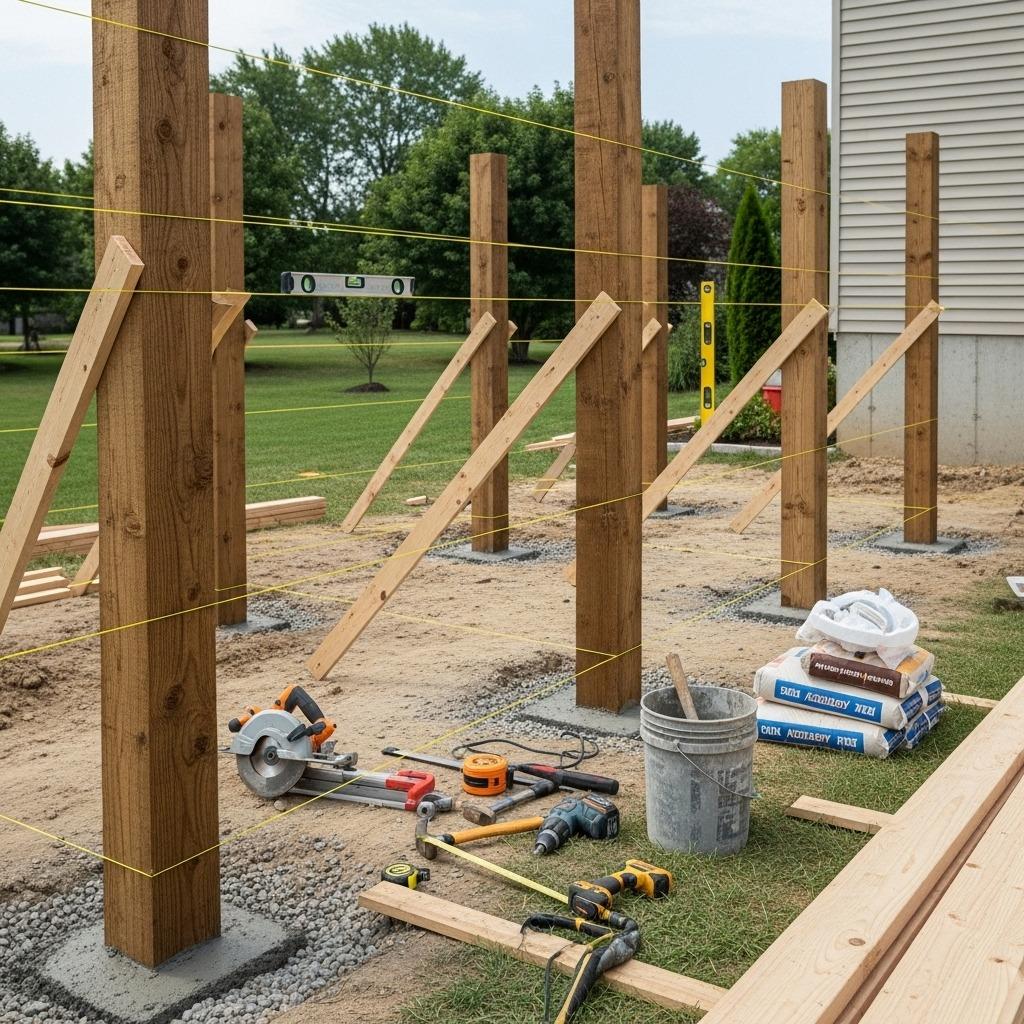
Before you start digging post holes or ordering materials, planning prevents costly mistakes. First, check local building codes and homeowner association rules – some areas require permits for structures over a certain size or height, and setback requirements might limit where you can build.
Site selection makes or breaks your pergola’s functionality. Consider sun patterns throughout the day and seasons. A pergola shading your patio beautifully in June might cast shadows in all the wrong places come October. Also think about access – you’ll appreciate having a clear path for moving furniture and maintaining the structure.
Foundation choices depend on your climate and soil conditions. In areas with frost, you’ll need footings below the frost line to prevent heaving. Concrete footings provide the most stability, but pre-cast pier blocks work for smaller structures on level ground. For DIY installations, anchor post bases that attach to concrete pads offer a middle-ground option that doesn’t require mixing or pouring.
Material quality impacts longevity significantly. Pressure-treated lumber is economical but requires regular maintenance. Cedar and redwood cost more initially but resist rot naturally and age beautifully. If you’re considering a DIY home renovation project, a pergola can be manageable with some carpentry experience and a helper or two.
Choosing Between DIY and Professional Installation
The decision to DIY or hire professionals depends on your skill level, available time, and project complexity. A basic 10×10 foot pergola kit with pre-cut lumber is absolutely manageable for homeowners comfortable with power tools and following instructions carefully. You’ll need 2-3 people for the job, a weekend or two, and basic tools most DIYers already own.
More complex projects – attached pergolas requiring ledger board installation, structures over 12×14 feet, designs with curves or multiple levels, or installations on uneven terrain – probably warrant professional help. Licensed contractors carry insurance, understand structural requirements, and complete in days what might take you weeks.
Cost considerations are straightforward but significant. A DIY kit pergola might run $1,500-$3,000 in materials, while hiring professionals for the same structure typically costs $3,000-$6,000 including materials and labor. Custom designs, premium materials, or added features like electrical work and built-ins push professional installations to $8,000-$15,000 or more.
Making Your Pergola Work for Your Space
Your perfect pergola balances several factors – your home’s architectural style, your yard’s size and layout, how you actually use outdoor space, and of course, your budget. There’s no universally “best” design because what works brilliantly in one setting falls flat in another.
Start by visualizing how you’ll use the space. Daily morning coffee? Weekly dinner parties? Occasional afternoon reading sessions? Your primary use should drive decisions about size, location, and features. A pergola that’s too small feels cramped, while an oversized structure can overwhelm your yard and make the space feel less intimate.
Style consistency matters more than matching exactly. A pergola doesn’t need to replicate your home’s every design detail, but it should feel like it belongs. Contemporary homes generally pair best with clean-lined modern pergola designs, while traditional homes can carry more ornate or rustic structures. When in doubt, simpler designs prove more versatile and timeless.
The pergolas that work best are the ones that get used. Whether you’re creating garden shade solutions for your morning routine or building a full outdoor entertainment space, prioritize function alongside form. Even the most beautiful structure disappoints if it doesn’t actually improve how you live in and enjoy your outdoor space.