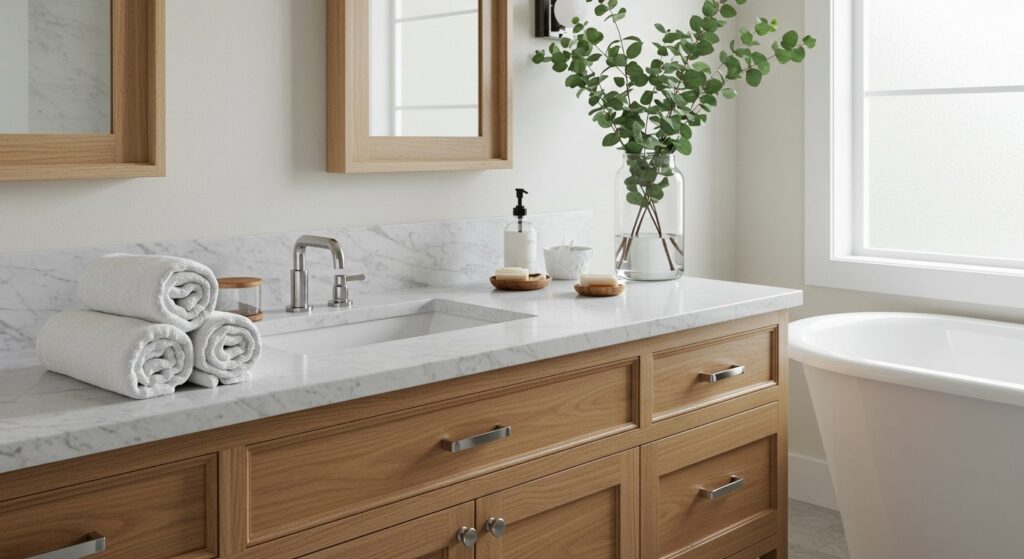
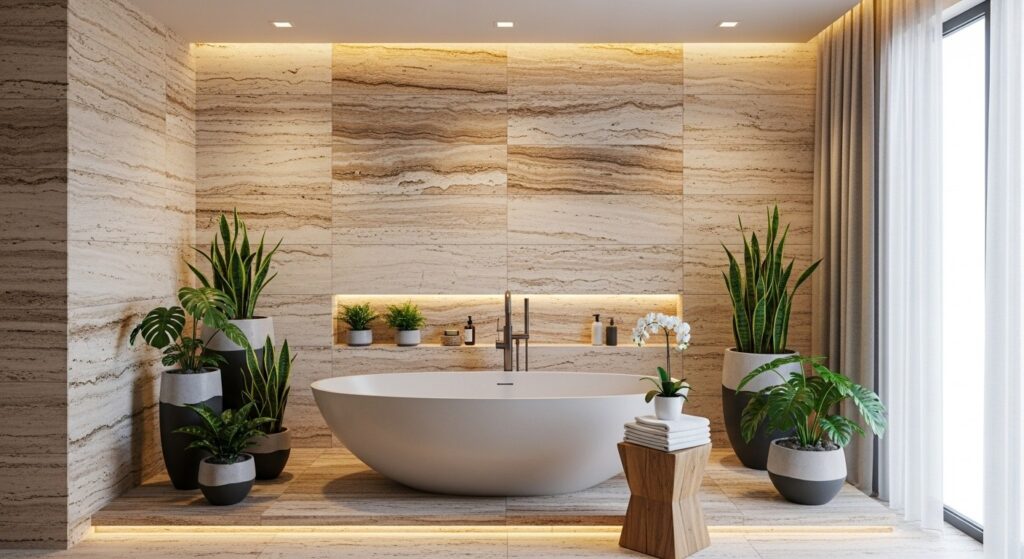
There’s something deeply satisfying about stepping into a bathroom that feels grounded, luxurious, and completely timeless. Natural stone has this incredible ability to transform an ordinary space into something that feels both ancient and modern at the same time.
Maybe you’ve scrolled through enough Pinterest boards to know what catches your eye. The rich veining in marble, the warm tones of travertine, or the rugged beauty of slate. These aren’t just materials – they’re design statements that can anchor your entire bathroom aesthetic.
In this guide, we’re exploring how to bring natural stone into your bathroom in ways that feel fresh, practical, and absolutely stunning. Whether you’re planning a full renovation or just dreaming about future upgrades, these ideas will help you see exactly what’s possible when you choose stone that speaks to you.
Why Natural Stone Makes Bathrooms Feel Different
Walk into a spa-inspired bathroom and you’ll notice something immediately – the materials matter. Natural stone brings a tactile quality that manufactured materials simply can’t replicate.
Each piece of stone carries its own story. The subtle color variations, the unique veining patterns, the way light plays across its surface throughout the day – these details create depth and interest that remains captivating year after year. It’s why natural stone bathroom designs have graced everything from ancient Roman baths to modern luxury hotels.
Beyond aesthetics, stone offers surprising practicality. When properly sealed, it resists moisture beautifully and ages gracefully. Unlike trends that feel dated after a few years, stone maintains its appeal across decades. You’re not just decorating – you’re investing in a material that becomes more beautiful with time.
1. Marble Bathroom Ideas That Define Luxury
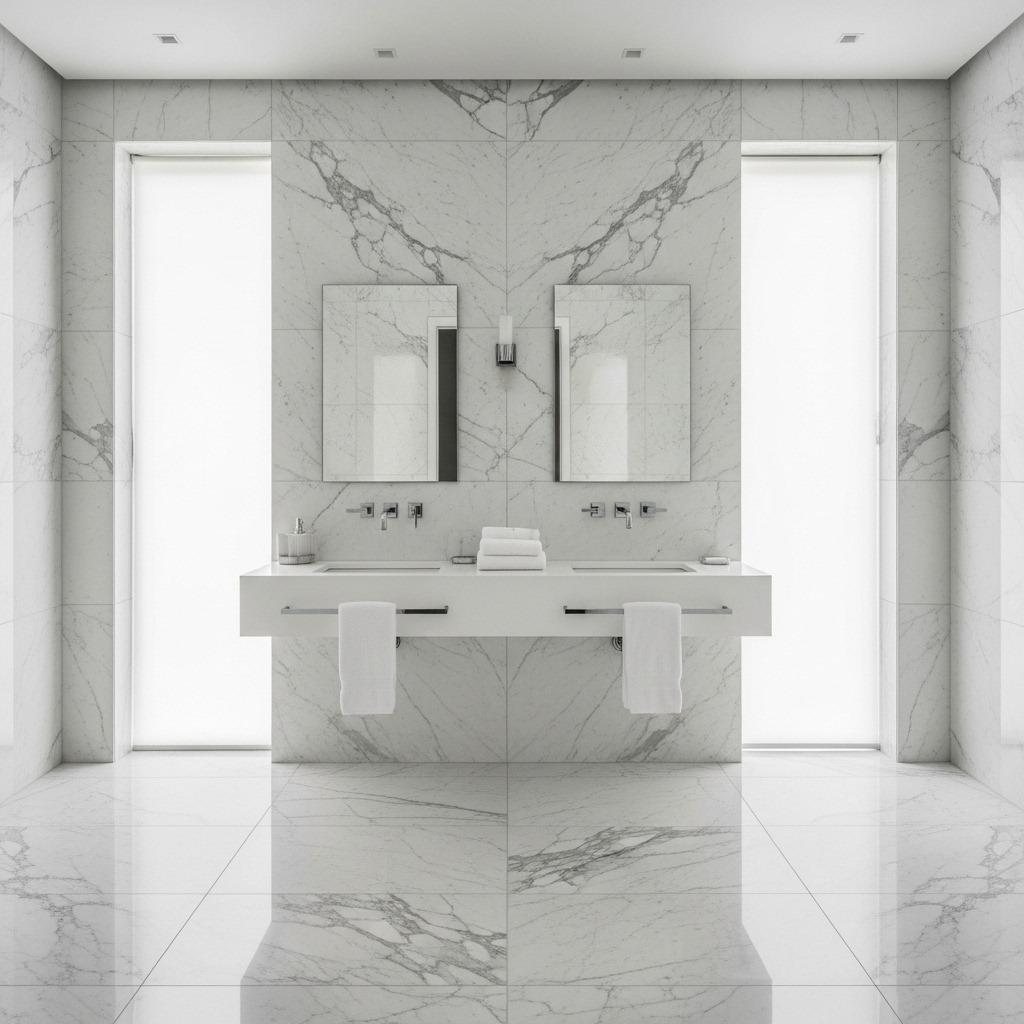
Marble remains the gold standard for luxury stone finishes, and honestly, it’s easy to see why. Those signature veins running through pristine white stone create movement and drama without overwhelming a space.
Carrara marble brings classic elegance with its soft gray veining, while Calacatta offers bolder, more dramatic patterns if you want something that truly commands attention. Statuary marble sits somewhere in between – refined but not overly quiet. The choice really depends on whether you want your stone to whisper or make a statement.
Here’s what many people don’t realize until they start shopping: marble varies wildly in appearance even within the same type. Those veins? They’re completely unique to each slab. If possible, select your specific piece rather than ordering from a sample – you’ll avoid surprises and get exactly the look you’re envisioning.
Smart Ways to Use Marble
Consider where marble makes the biggest visual impact. Floor-to-ceiling marble in a shower creates that five-star hotel feeling, especially when you choose large format tiles that minimize grout lines. A marble vanity top paired with simpler wall treatments gives you luxury without the full renovation budget.
Don’t shy away from mixing marble types either. A Carrara floor with Calacatta accent walls creates incredible depth. Just keep the rest of your palette simple – marble should be the star, not compete with busy patterns or too many material changes.
Sealing is non-negotiable with marble. It’s more porous than harder stones, which means it needs protection from water, soap, and those inevitable drops of hair dye or nail polish remover. A quality sealer applied annually keeps your marble looking pristine.
2. Travertine Brings Warmth and Texture
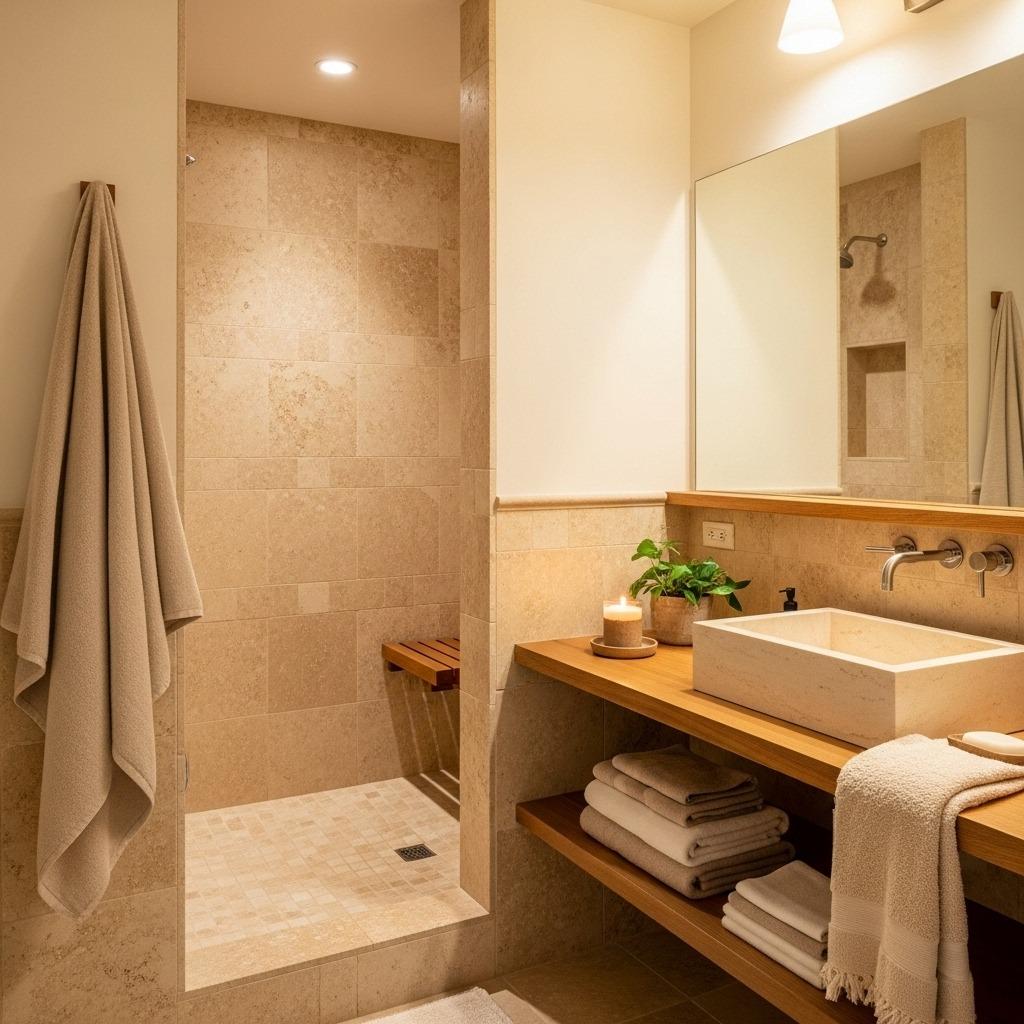
If marble feels a bit too formal for your taste, travertine offers a more relaxed alternative that’s equally beautiful. Those natural pits and valleys give travertine its characteristic texture – it feels organic and lived-in from day one.
The color palette runs from creamy ivory to rich walnut tones, which makes travertine incredibly versatile. Light travertine brightens smaller bathrooms while creating a serene backdrop, while darker varieties add warmth and coziness to larger spaces. This stone works beautifully in both contemporary and traditional settings.
Texture matters with travertine. Honed finishes offer smooth sophistication, while tumbled travertine has that rustic, old-world charm with softened edges. Brushed finishes sit nicely in the middle – some texture without being too rough underfoot.
Creating Cohesion With Travertine
One of travertine’s superpowers is its ability to unify a space. Using the same stone on floors, walls, and even a custom vanity creates this seamless, enveloping feeling that’s incredibly soothing. It’s a trick often used in minimalist bathroom design to eliminate visual clutter.
Pair travertine with warm metals like brushed gold or oil-rubbed bronze rather than cool chrome. The warm stone tones harmonize beautifully with these finishes, creating a cohesive color story throughout your bathroom. Add in some natural wood elements and you’ve got a space that feels connected to nature.
Maintenance is straightforward but important. Travertine is softer than granite or marble, so acidic cleaners are out. Stick with pH-neutral products specifically designed for natural stone, and reseal periodically to protect those gorgeous tones from water damage.
3. Granite Bath Details for Durability Meets Beauty
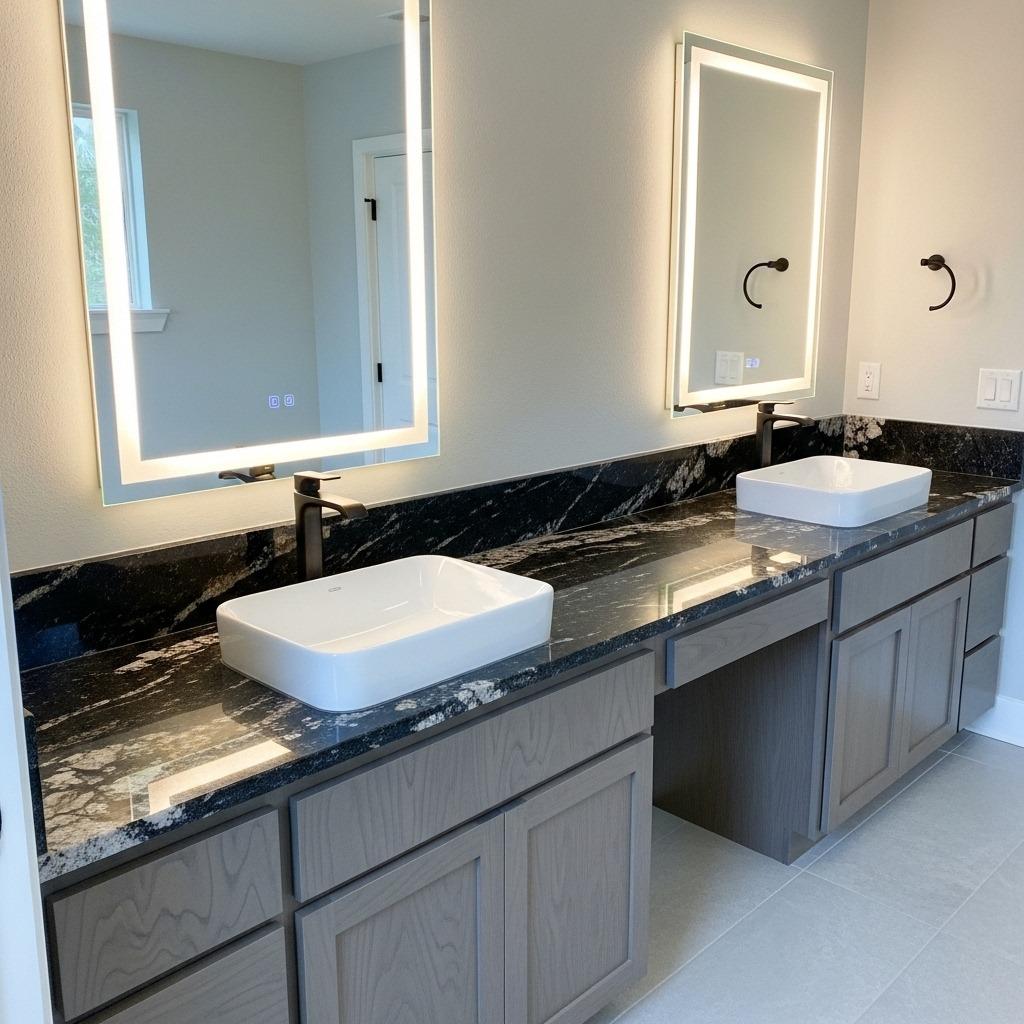
Granite doesn’t get enough credit in bathroom design. While it’s dominated kitchen countertops for years, it’s quietly becoming a favorite for bathrooms that need to withstand daily wear while looking absolutely stunning.
The density of granite makes it incredibly resistant to scratches, stains, and moisture damage – basically all the things a bathroom throws at surfaces constantly. Unlike softer stones, granite can handle the occasional dropped bottle or aggressive cleaning without showing its age.
Granite’s variety is genuinely impressive. From speckled patterns that hide water spots to bold movement that mimics more expensive marbles, there’s a granite for every design direction. Black granite with gold or silver flecks adds instant glamour, while gray and white varieties offer a softer, more understated elegance.
Incorporating Granite Strategically
A granite vanity top is perhaps the most practical application. It handles water splashes, toiletry spills, and hot styling tools without complaint. Pair it with coordinating granite backsplash to extend the stone up the wall – it protects your drywall while creating visual continuity.
Granite shower walls offer durability that tile can’t match, with fewer grout lines that trap mildew. Large granite slabs create a luxurious, seamless appearance while simplifying cleaning. Just ensure proper sealing in wet areas to prevent any moisture penetration over time.
For those working within tighter budgets, granite accent pieces deliver impact without full-room commitment. A granite shower bench, window sill, or even decorative shelving introduces natural stone without the renovation price tag.
4. Slate for Modern, Moody Ambiance
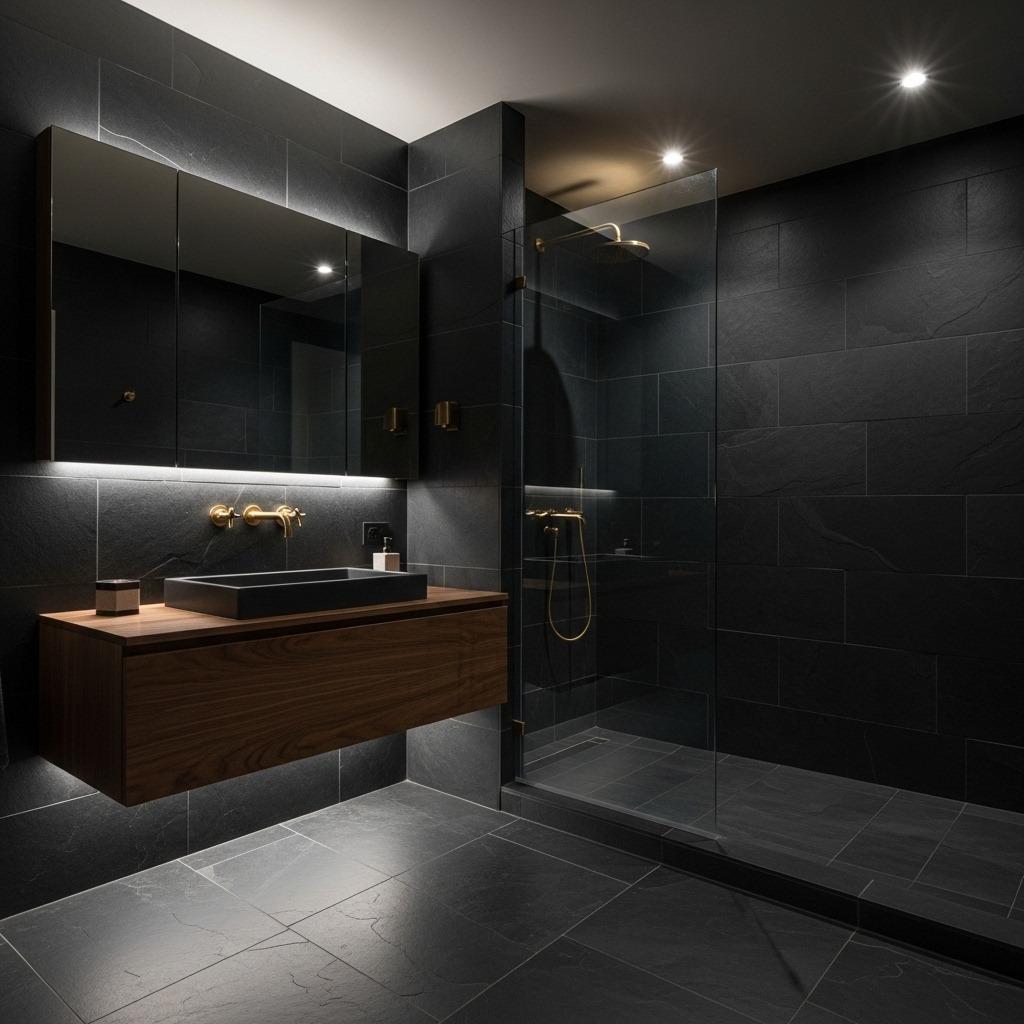
Slate brings something completely different to the bathroom conversation – it’s dark, textured, and unapologetically bold. If you’re tired of seeing the same neutral bathrooms everywhere, slate offers a refreshing departure.
The natural layering in slate creates subtle dimension that shifts as light changes throughout the day. Colors range from soft gray-blues to deep charcoals and even warm rust tones. This variety means slate can lean contemporary or rustic depending on your finish choice and surrounding elements.
Slate’s natural texture provides excellent slip resistance, making it particularly smart for shower floors and high-traffic areas. Unlike polished stones that can become slippery when wet, slate’s rougher surface offers safety without sacrificing style.
Designing Around Darker Stone
Here’s the thing about slate – it requires confidence. Darker surfaces can make spaces feel smaller if you don’t balance them properly. The solution? Ample lighting and strategic use of lighter elements. Consider slate flooring paired with white or light gray walls, or use slate as an accent wall while keeping other surfaces brighter.
Slate pairs beautifully with warm wood tones and metallic finishes. A floating vanity in rich walnut grounds the space without adding visual weight, while brass or copper fixtures create striking contrast against dark stone. This combination works perfectly in nature-inspired bathroom designs.
Keep grout lines dark when installing slate. Light grout against dark stone creates a grid pattern that can feel busy. Dark grout blends seamlessly, allowing the natural beauty of the slate to take center stage.
5. Limestone’s Subtle Sophistication
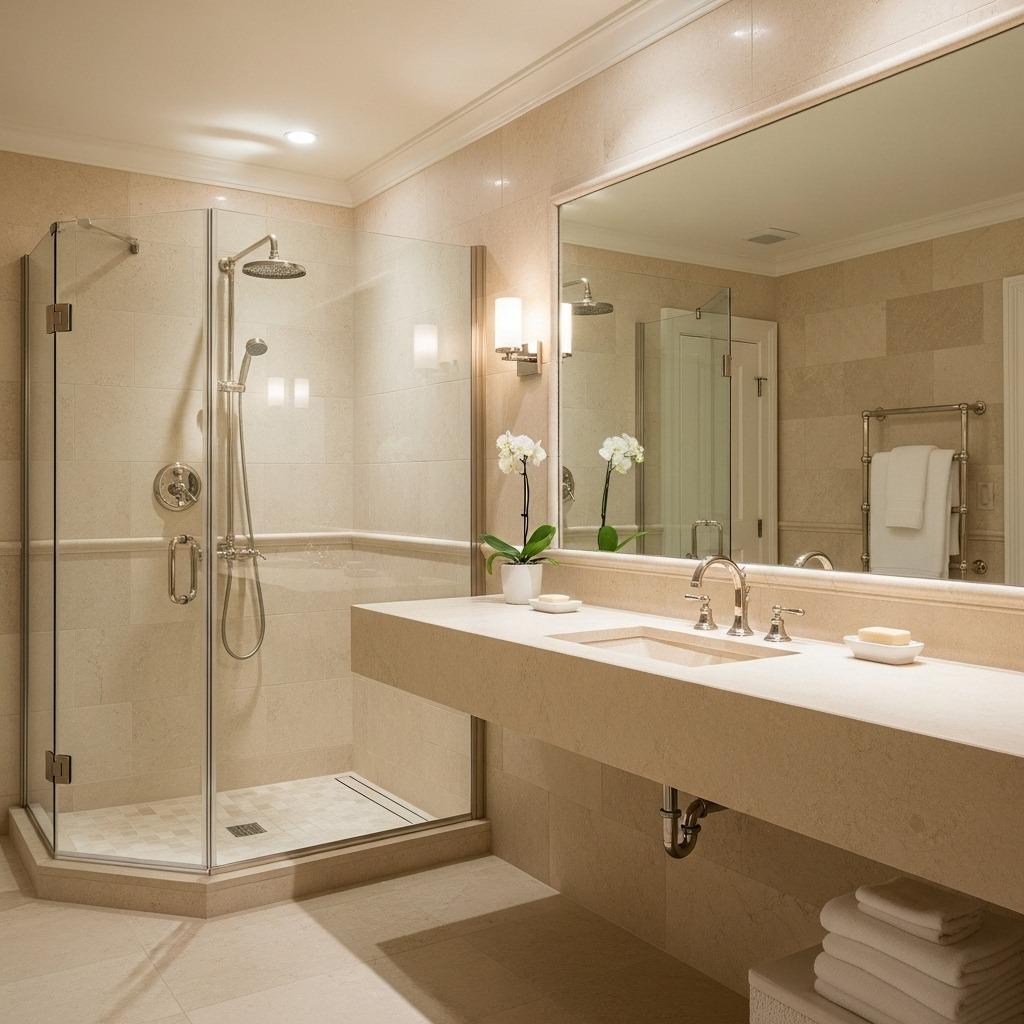
Limestone flies under the radar compared to its flashier cousins, but it offers something special – understated elegance that never tries too hard. The soft, almost chalky appearance creates an incredibly calming atmosphere.
The muted tones of limestone, typically ranging from cream to soft gray, make it exceptionally versatile. It works beautifully in modern bathroom tile layouts while feeling equally at home in traditional spaces. This chameleon quality makes limestone a safe bet if you anticipate changing your decor style over time.
Limestone’s relatively soft surface does require more maintenance than harder stones. It’s more susceptible to etching from acidic substances, so that citrus bathroom cleaner you love? Leave it in the kitchen. But with proper care and regular sealing, limestone develops a beautiful patina that only improves with age.
Working With Limestone Successfully
Size matters when choosing limestone tiles. Larger format tiles create a more luxurious, contemporary feel with fewer grout lines to maintain. Smaller tiles can feel more traditional but require more upkeep as grout collects soap scum and moisture over time.
Limestone thrives in wet areas when honed rather than polished. The honed finish provides better traction while maintaining a soft, velvety appearance that’s incredibly tactile. Save polished limestone for walls or dry areas where slip resistance isn’t a concern.
Consider French limestone if you want something truly special. Varieties like Beaumaniere or Burgundy limestone offer exceptional quality and unique character. They’re investment pieces that set your bathroom apart from standard builder-grade materials.
6. Creating Feature Walls With Statement Stone
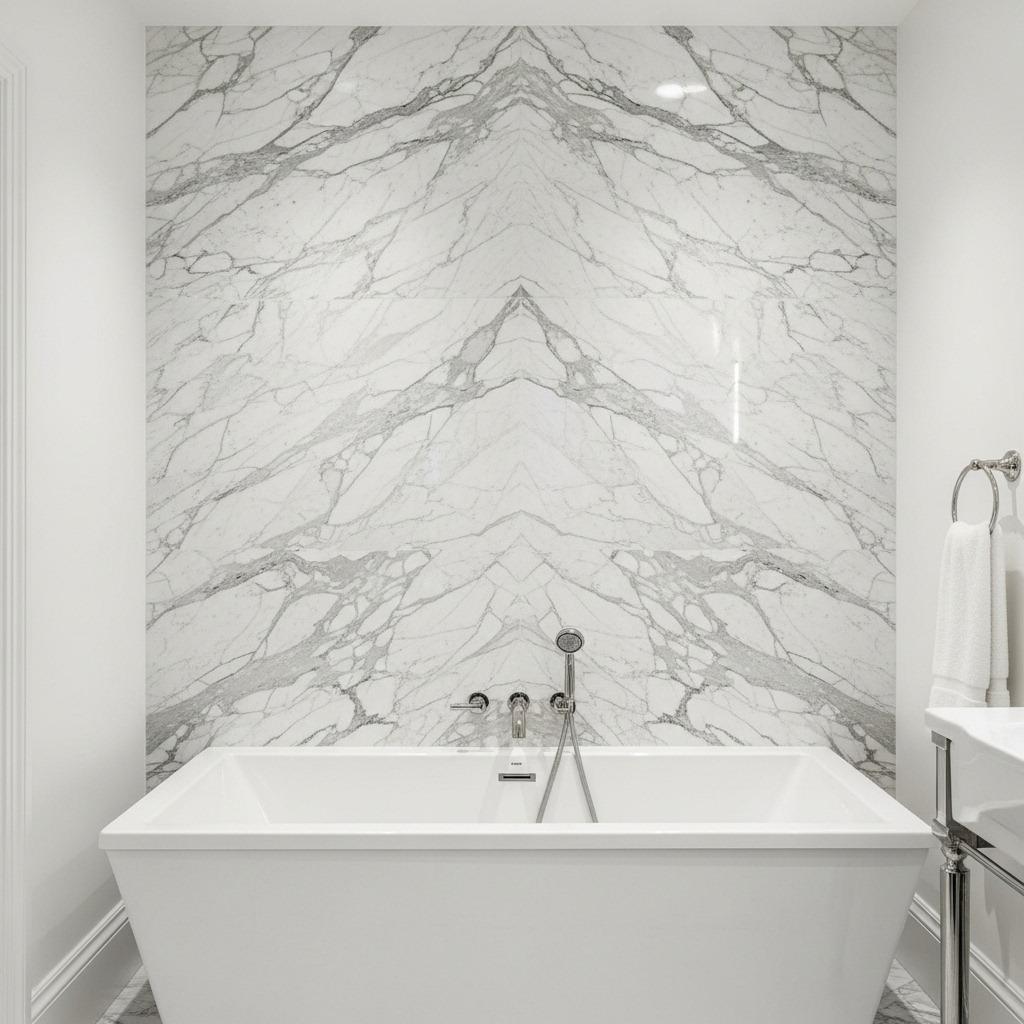
Sometimes one perfect wall makes more impact than stone everywhere. A feature wall allows you to invest in truly spectacular stone without blowing your entire budget.
Book-matched slabs create jaw-dropping symmetry by mirroring stone veining. It’s a technique straight from high-end design that instantly elevates your space. Position this behind a freestanding tub or vanity where it becomes the focal point – everything else can remain simple to let the stone shine.
Three-dimensional textured stone panels offer another approach. Split-face stone or stacked ledger panels add physical depth that catches light beautifully. This works particularly well in small bathroom renovation projects where you want big visual impact in compact square footage.
Balancing Your Feature Wall
The key is restraint everywhere else. If you’ve invested in a stunning marble feature wall, keep floors neutral and other walls simple. Let that one surface be the star rather than competing with multiple stone types or busy patterns.
Lighting makes or breaks a feature wall. Wall-washing fixtures highlight stone texture and veining, while uplighting creates dramatic shadows that emphasize three-dimensional surfaces. Consider this during planning rather than as an afterthought.
Don’t forget practical placement. A feature wall behind the toilet? Wasted opportunity. Behind the tub or vanity where you actually look? Perfect. Think about your daily routine and where your eyes naturally land when you’re in the space.
7. Natural Stone Shower Sanctuaries
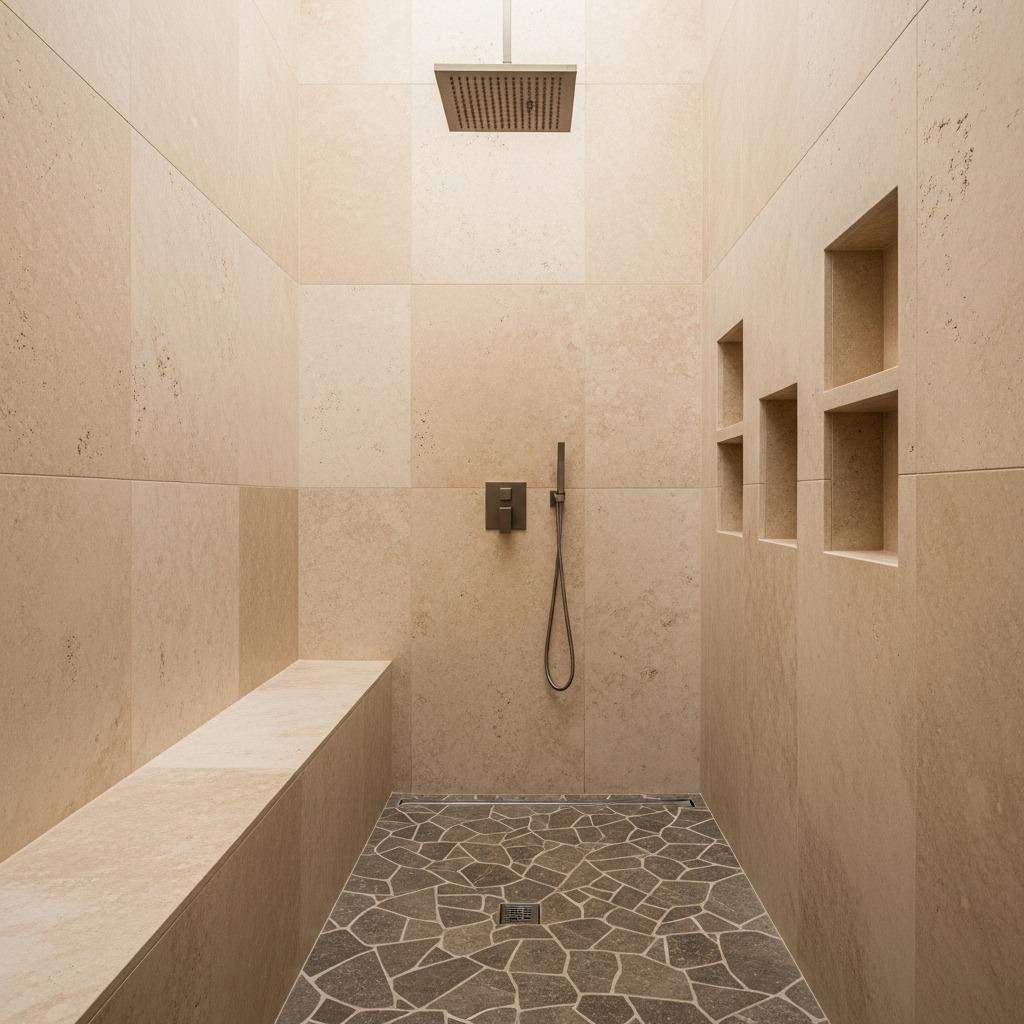
The shower is where natural stone truly proves its worth. There’s something about being surrounded by stone while water cascades down that feels primal and luxurious at the same time.
Full-height stone slabs eliminate grout lines almost entirely, creating a seamless, spa-like environment. Large format tiles achieve a similar effect while offering more budget-friendly options. Either approach transforms your daily shower into a sensory experience rather than just a functional necessity.
Built-in stone benches serve double duty – they’re practical for shaving or storing products while extending your stone design vertically. A floating bench in the same stone as your walls creates visual continuity, while contrasting stone adds an intentional design detail.
Designing Your Stone Shower
Think about water flow when selecting stone. Polished surfaces stay cleaner but can be slippery, while textured finishes provide better traction but may require more frequent cleaning. Many designers recommend textured stone on floors with honed or polished walls for the best of both worlds.
Drainage matters more than you’d think. Stone naturally channels water, but proper slope ensures everything flows toward your drain rather than pooling. A linear drain allows for larger format tiles and creates a sleeker appearance than traditional center drains.
Recessed shelving cut directly into stone walls looks incredibly sophisticated. It eliminates the need for hanging caddies or corner shelves that interrupt your stone surfaces. Work with your installer to plan these during initial construction rather than trying to add them later.
8. Stone Vanity Tops That Anchor the Space
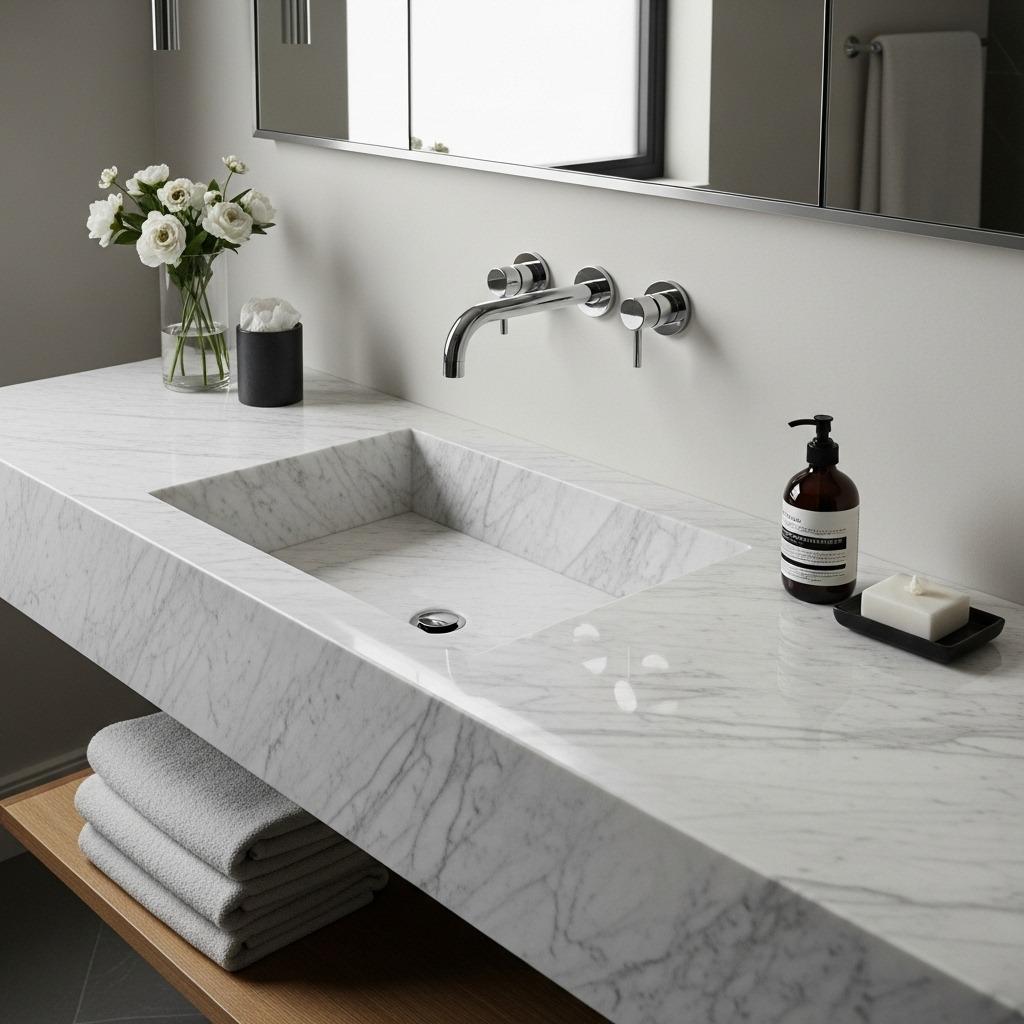
Your vanity top sees more daily action than any other bathroom surface. Natural stone handles this abuse beautifully while serving as a design anchor that sets the tone for your entire space.
Integrated stone sinks carved from the same slab as your vanity create seamless, sculptural pieces. There are no edges to collect grime, no seams where water can seep. It’s form and function working in perfect harmony, though it does require professional installation.
Edge profiles might seem like a minor detail, but they significantly impact your design. A simple eased edge feels contemporary and unfussy, while an ogee or bullnose edge leans more traditional. Waterfall edges, where stone wraps over the vanity sides, make a bold statement in luxury master bedroom en-suites.
Practical Vanity Considerations
Overhang matters for both aesthetics and function. Enough overhang protects your vanity cabinet from water damage while creating shadow lines that add depth. Too much and you’re wasting expensive stone. Most designers recommend 1-1.5 inches.
Consider your stone selection carefully for vanity tops. High-traffic, high-moisture surfaces benefit from harder, less porous stones like granite or quartzite. Save softer marbles and limestones for less demanding applications unless you’re committed to diligent maintenance.
Double vanities deserve special attention. Using the same stone slab for both sides, even if they’re separated by storage, creates cohesion. If that’s not possible, match the stone type carefully so any variation feels intentional rather than mismatched.
9. Mixing Stone Types for Visual Interest
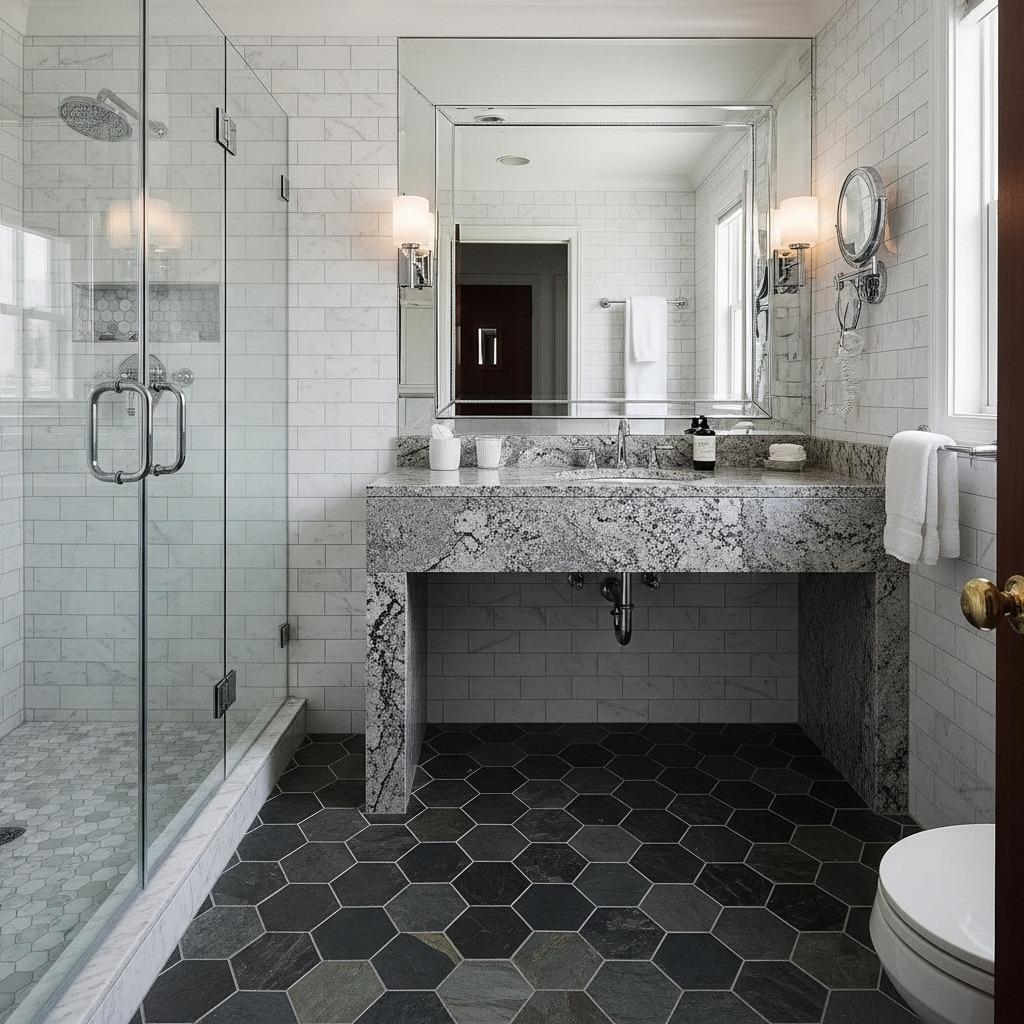
Rules about sticking to one stone type? Consider them guidelines rather than absolutes. Thoughtfully mixing stones creates depth and interest that a single material can’t achieve alone.
The trick is finding a common thread – shared tones, complementary textures, or similar veining patterns. Pair warm travertine walls with matching warm-toned granite counters. Combine cool gray marble with slate in similar hue families. The stones should feel like they belong together rather than fighting for attention.
Scale variation helps mixed materials work together. Large format stone on primary surfaces paired with smaller mosaic stone accents creates visual hierarchy. Your eye understands which stone is primary and which plays a supporting role, preventing the space from feeling chaotic.
Making Mixed Materials Work
Limit yourself to two, maybe three stone types maximum. More than that risks looking like a stone showroom rather than a cohesive design. Each stone should have a clear purpose and designated area within your layout.
Transition thoughtfully between stone types. Sharp material changes can feel jarring, while gradual transitions using matching grout colors or strategic placement of fixtures creates flow. A stone threshold between floor types, for instance, acknowledges the change deliberately.
Test samples together before committing. What looks great separately might clash when combined. Bring samples home and view them in your actual bathroom lighting at different times of day. Digital photos never tell the complete story about how stones interact.
10. Maintaining Your Investment
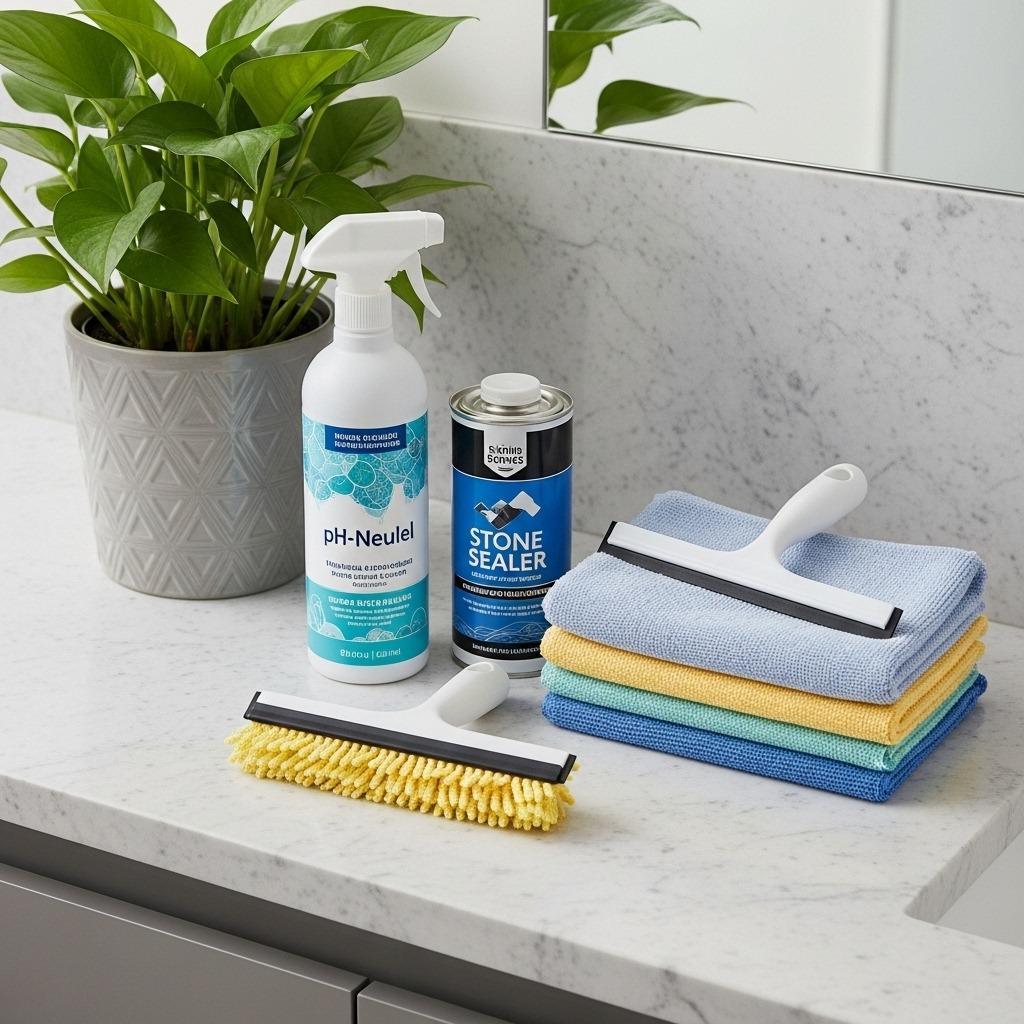
Let’s be honest – natural stone requires more attention than tile or laminate. But proper maintenance isn’t complicated, and it’s worth the minimal effort to protect your investment and keep surfaces looking pristine.
Sealing tops the priority list. Most stones need resealing annually, though exact timing depends on stone type and usage. Water droplets should bead up on sealed stone – if they’re soaking in, it’s time to reseal. This simple step prevents stains and moisture damage that can permanently alter stone appearance.
Daily maintenance is surprisingly simple. A soft microfiber cloth and pH-neutral cleaner handle routine cleaning without damaging stone. Avoid acidic cleaners, abrasive scrubbers, or anything that promises to “cut through soap scum” – those products often contain chemicals that etch or dull stone surfaces.
Long-Term Stone Care
Address spills immediately rather than letting them sit. Hair products, cosmetics, and particularly anything acidic can stain or etch stone if left too long. A quick wipe prevents problems that might require professional restoration down the line.
Consider professional cleaning every few years for high-use areas. Stone restoration specialists can remove built-up residue, repair minor damage, and reseal surfaces more thoroughly than DIY methods. It’s like a deep clean that resets your stone to near-original condition.
Protect vulnerable areas with mats or trays. A small tray on your vanity corrals daily products away from direct stone contact. A bath mat outside your shower absorbs water that might otherwise sit on stone floors. These simple barriers prevent unnecessary wear.
11. Budget-Friendly Stone Solutions
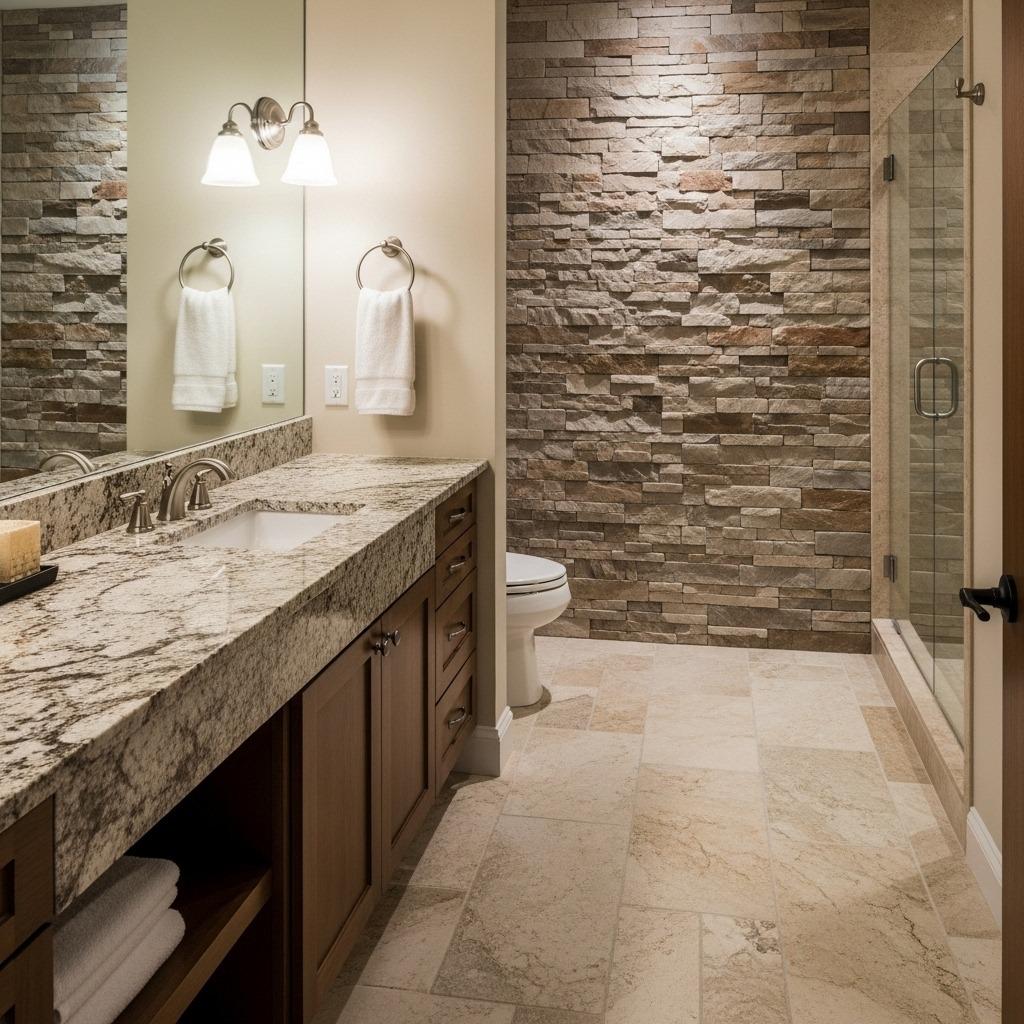
Natural stone carries a luxury reputation, but strategic choices make it accessible at various price points. You don’t need unlimited funds to incorporate authentic stone into your bathroom design.
Stone remnants offer genuine stone at fraction of typical costs. These leftover pieces from larger projects work beautifully for vanity tops, small accent walls, or custom shelving. Many stone yards sell remnants at steep discounts – you just need flexibility in sizing.
Prioritize where stone appears. Splurge on a stunning natural stone vanity top where you interact daily, then use high-quality stone-look porcelain elsewhere. Today’s porcelain convincingly mimics natural stone at a fraction of the cost, and only careful inspection reveals the difference.
Making Every Dollar Count
Shop around aggressively. Stone pricing varies wildly between suppliers, and what one yard considers premium another might discount. Visit multiple suppliers, compare quotes, and don’t hesitate to negotiate, especially for larger purchases.
Consider doing some work yourself if you’re moderately handy. While large format slabs require professional installation, smaller projects like stone backsplashes or accent walls can be DIY-friendly. You’ll invest time instead of labor costs while maintaining control over details.
Time your purchase strategically. Many stone suppliers offer sales during slower seasons or have excess inventory they’re motivated to move. Building relationships with local stone yards can lead to insider information about upcoming deals or new remnant arrivals.
12. Sustainable Stone Choices
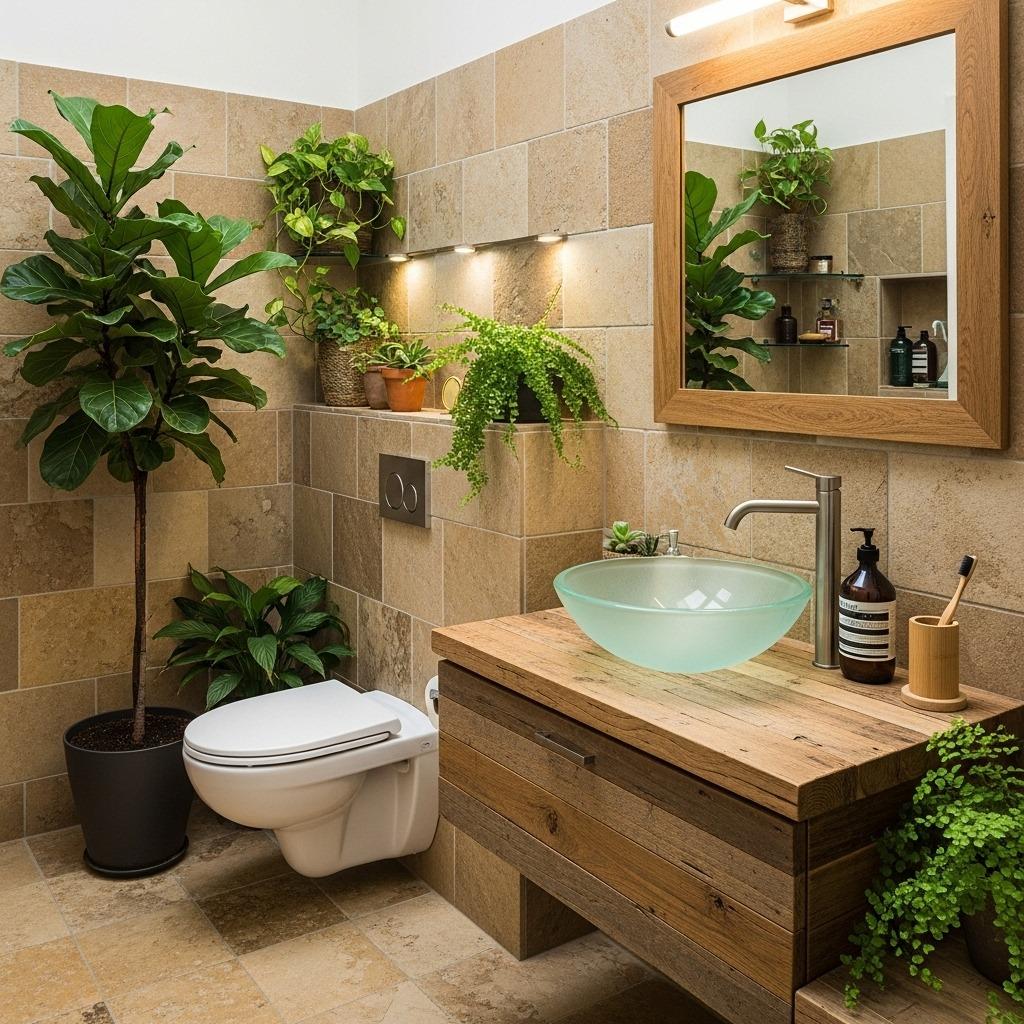
Sustainability matters, even in luxury materials. Natural stone can be an environmentally responsible choice when sourced and installed thoughtfully.
Locally quarried stone dramatically reduces transportation emissions while supporting regional businesses. Many areas have nearby stone sources that work beautifully in bathroom applications. Research what’s available within a few hundred miles – you might be surprised by the options.
Reclaimed stone offers another sustainable path. Salvage yards and architectural reclamation centers often stock vintage stone pieces with character that new materials can’t replicate. Old marble counters, stone sinks, or salvaged tiles bring history and sustainability into your design simultaneously.
Stone’s Environmental Benefits
Natural stone lasts longer than manufactured alternatives, which reduces replacement frequency and associated waste. A properly maintained stone surface can function beautifully for decades, unlike vinyl or laminate that needs replacing every 10-15 years.
Stone requires less energy to produce than manufactured materials. There’s no chemical processing, no synthetic production – just quarrying, cutting, and finishing using primarily mechanical processes. The embodied energy is typically lower than alternatives like quartz or solid surface materials.
At end of life, stone can be repurposed or returned to earth without creating toxic waste. It won’t leach chemicals or release microplastics. This cradle-to-cradle thinking matters when making long-term design decisions for your home.
13. Lighting Natural Stone Properly
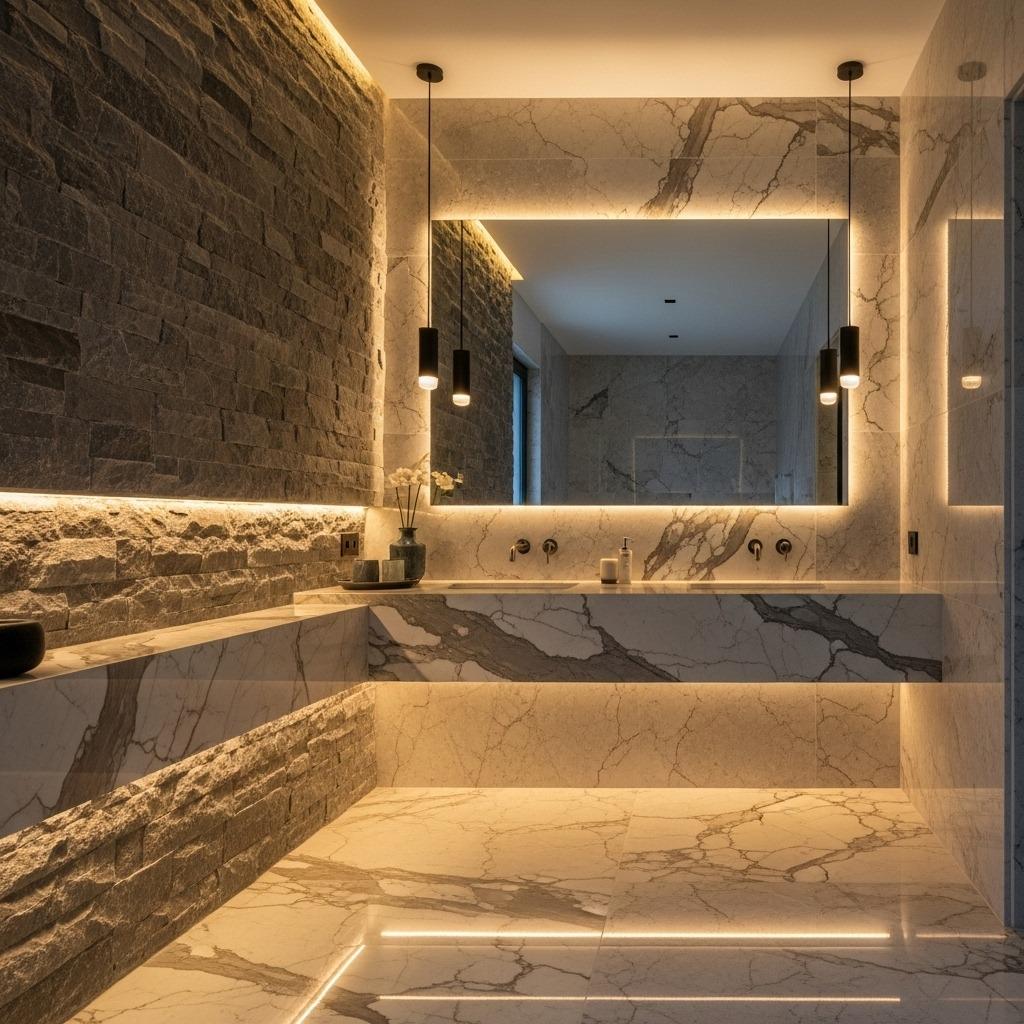
Even the most beautiful stone looks ordinary under poor lighting. Strategic illumination reveals depth, highlights texture, and transforms stone from flat surfaces into dimensional features.
Grazing light – fixtures positioned to skim across stone surfaces – emphasizes texture beautifully. This works exceptionally well with rougher stones like stacked ledger, slate, or tumbled travertine. The side angle creates shadows that reveal every variation and imperfection in the most flattering way.
Backlighting creates drama with translucent stones. Onyx, some marbles, and certain alabasters become luminous when lit from behind. This technique works beautifully for feature walls or decorative panels, turning stone into artwork that glows rather than just reflects light.
Creating Your Lighting Plan
Layer different light sources rather than relying on single overhead fixtures. Task lighting at your vanity, ambient lighting for overall illumination, and accent lighting for stone features creates depth and functionality. This approach, commonly used in bathroom ideas, ensures your space works at any time of day.
Consider color temperature carefully. Warm lighting (2700-3000K) enhances warm-toned stones like travertine and honey onyx, while cooler lighting (3500-4000K) complements gray marbles and slate. Neutral white (3000-3500K) works across most stone types if you’re unsure.
Dimmer switches offer flexibility that’s worth every penny. Bright task lighting for morning routines, softer ambient lighting for evening baths – dimmers let you adjust intensity based on use. Your stone’s appearance shifts dramatically with lighting changes, adding even more visual interest.
14. Small Bathroom Stone Strategies
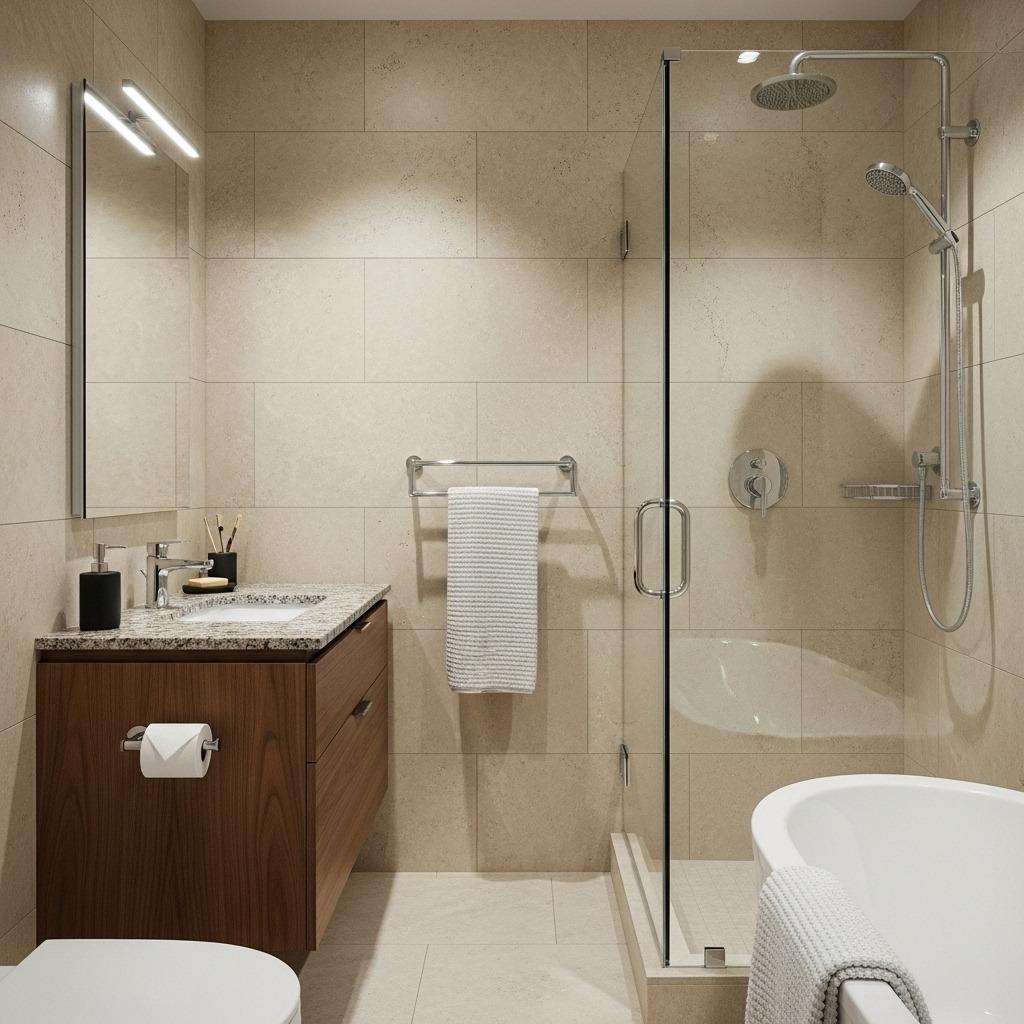
Natural stone in small bathrooms might seem counterintuitive, but smart stone selection actually makes compact spaces feel larger and more luxurious. The key is working with stone’s strengths rather than fighting against square footage limitations.
Light-colored stones visually expand small bathrooms. Creamy travertine, white marble, or pale limestone reflects light and creates airiness that darker materials can’t match. Reserve bold stones for small accent areas where they add interest without overwhelming.
Large format tiles paradoxically work better in small spaces than small tiles. Fewer grout lines create less visual fragmentation, making walls and floors feel more expansive. A single large stone slab behind a vanity makes bigger impact than multiple smaller pieces.
Maximizing Stone’s Impact
Vertical stone applications draw the eye upward, creating the illusion of height. Floor-to-ceiling stone in showers or behind toilets uses natural stone’s presence to reshape how people perceive your space’s proportions.
Consider stone for high-impact, high-visibility areas only. A gorgeous stone vanity top and matching backsplash might be your entire stone budget, and that’s perfectly fine. Pair stone accents with simpler painted surfaces rather than trying to stone everything.
Incorporate reflective surfaces alongside stone. Mirrors, glass shower enclosures, and polished fixtures bounce light around while complementing natural stone’s organic texture. This contrast makes small bathrooms feel less cramped while maintaining material interest.
15. Future-Proofing Your Stone Bathroom
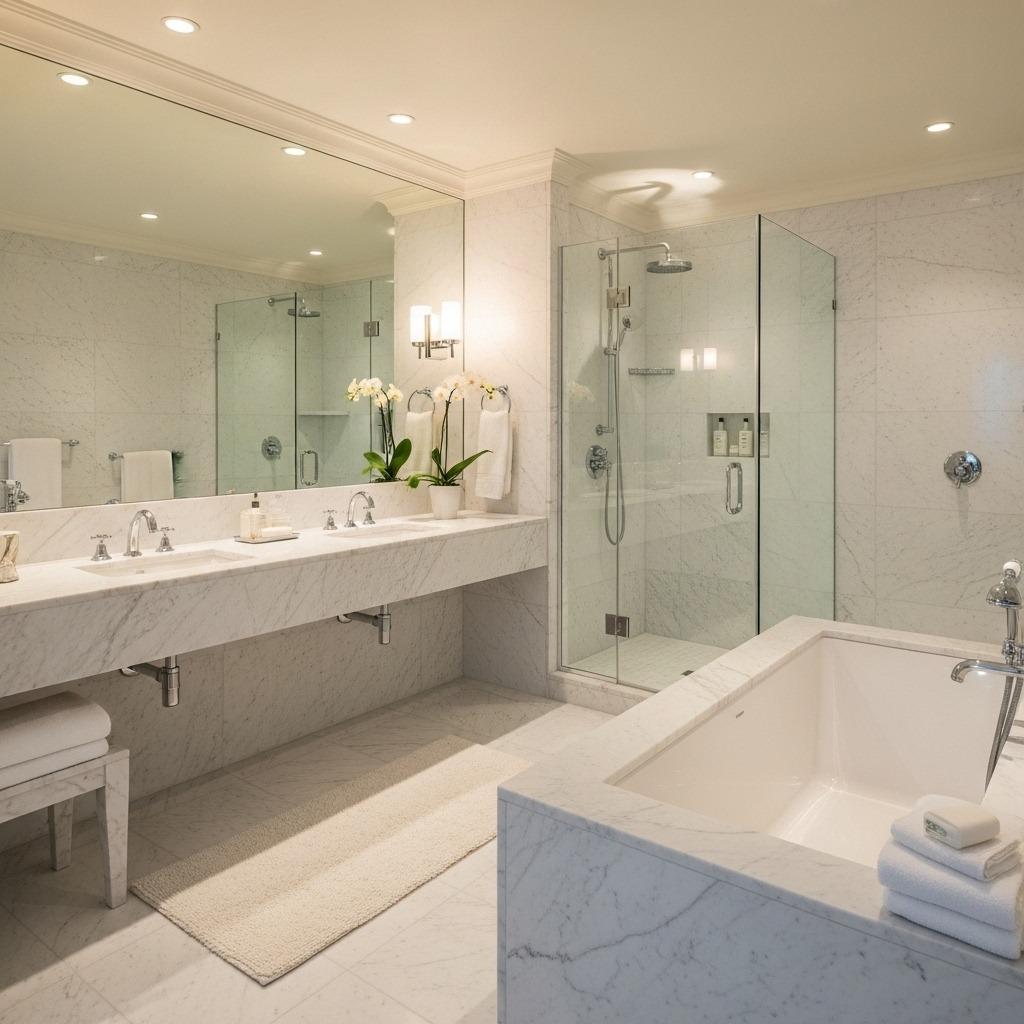
Trends come and go, but natural stone transcends temporary fashion. Making choices that remain beautiful regardless of what’s currently popular ensures your investment pays dividends for years to come.
Neutral stones offer maximum longevity. White and gray marbles, beige travertines, and classic granites have remained popular across decades because they work with evolving styles. You can completely change your decor, fixtures, and accessories while your stone remains perfectly appropriate.
Classic installations resist dating themselves. Simple, clean layouts without overly trendy details allow your stone’s natural beauty to shine. Avoid gimmicky tile patterns or unnecessarily complex stone combinations that might feel tired in five years.
Design Decisions That Last
Quality trumps quantity every time. Better to have one exquisite stone surface than multiple mediocre ones. Investment-grade stone, professionally installed, maintains its appearance and value far longer than budget alternatives that show wear quickly.
Choose timeless proportions over trendy sizes. While tile trends shift between small mosaics and large formats, human-scale proportions that feel balanced today will still feel right in twenty years. Trust classic design principles over Pinterest trends.
Consider how your stone choice affects resale value. Natural stone bathroom designs appeal broadly to potential buyers, adding perceived and actual value to your home. This matters whether you’re selling soon or eventually – quality improvements typically recoup their costs.
Natural stone brings something irreplaceable to bathroom design. It’s not just about following trends or checking boxes. There’s a tangible difference in how these spaces feel when you’re actually living in them every day.
The texture under your feet when you step out of the shower, the cool surface of marble when you place your hands on the vanity, the way light shifts across stone throughout the day – these aren’t details you’ll find in a design magazine article. They’re the lived experiences that make your bathroom renovation worth doing right.
Maybe you’ll start with one carefully chosen stone element. Perhaps you’re ready to commit to a full natural stone transformation. Either way, you’re choosing materials that have graced everything from ancient temples to modern luxury hotels for good reason. Stone simply doesn’t go out of style because its beauty is rooted in nature itself rather than manufactured trends.
Your bathroom is where days begin and end. Making it feel special, personal, and truly beautiful? That’s not an indulgence – it’s an investment in how you experience your home every single day.