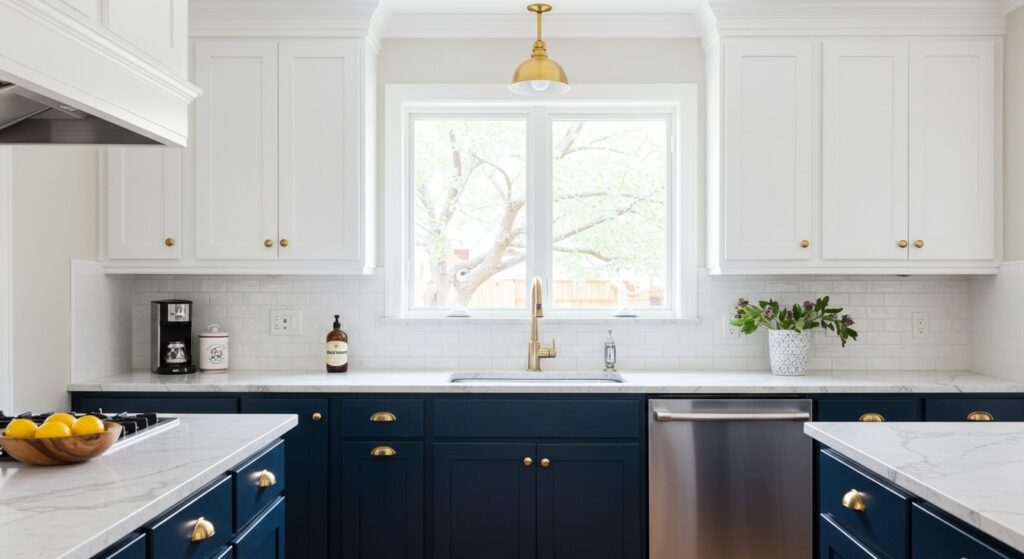
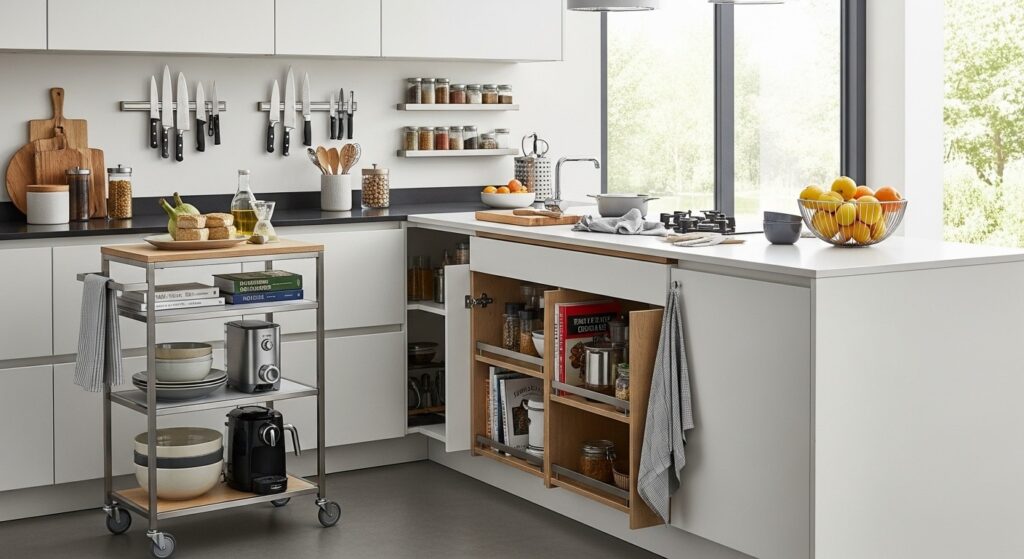
Your kitchen probably feels smaller than it actually is. Not because of the square footage, but because every available surface seems occupied by something you use daily, occasionally, or forgot you even owned.
The solution isn’t necessarily more storage. It’s smarter storage that works harder for you. Multifunctional kitchen storage transforms how you use your space by making every organizer, shelf, and container serve multiple purposes.
This isn’t about adding more stuff to an already crowded room. These ideas help you reclaim counter space, reduce visual clutter, and create a kitchen that actually supports the way you cook and live.
Why Multifunctional Storage Changes Everything
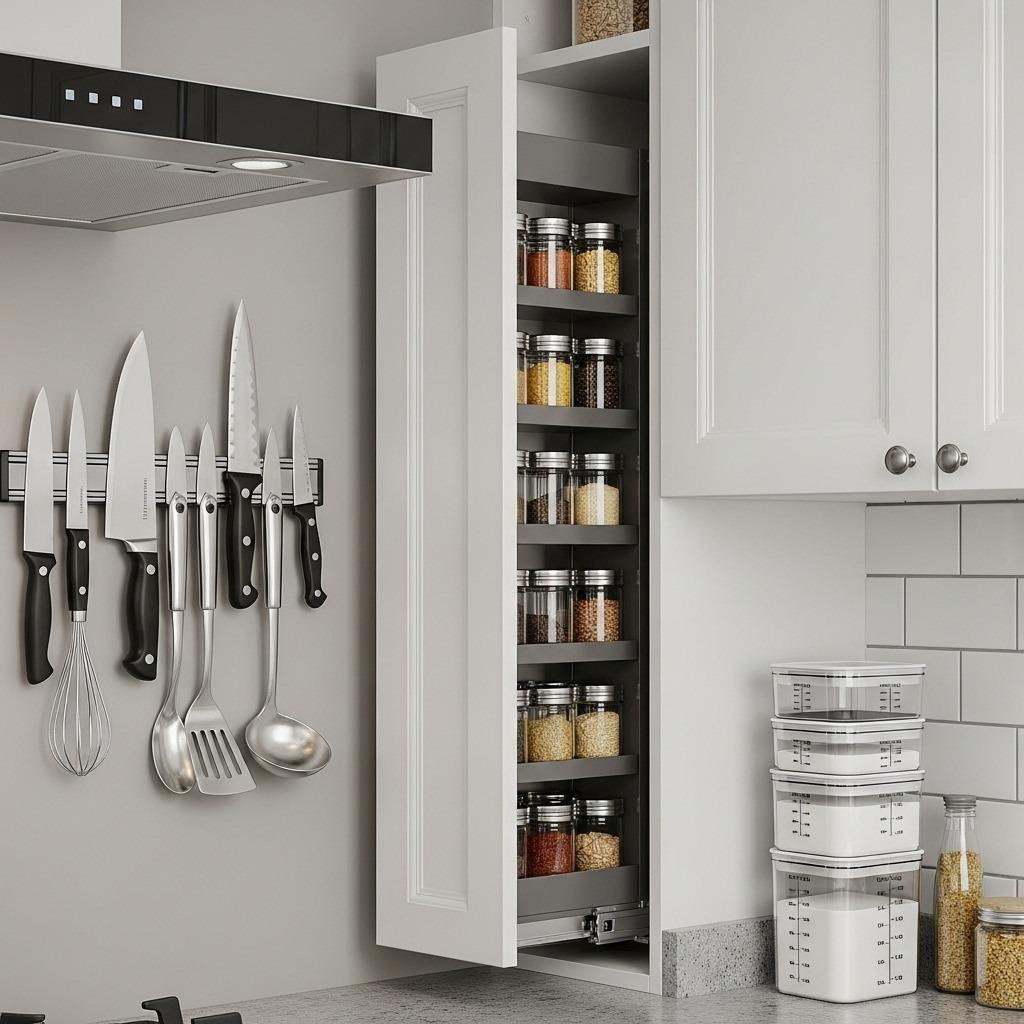
Traditional storage solutions often solve one problem while creating another. That bulky spice rack takes up valuable counter real estate. The pan organizer only holds pans. The utensil crock sits there doing one job when it could do three.
Convertible kitchen storage adapts to your changing needs throughout the day. A cutting board that covers your sink creates extra prep space. A rolling cart moves ingredients to your cooking zone, then becomes a coffee station for breakfast. Storage that multitasks means fewer items competing for space in your kitchen.
The difference shows up in your daily routine. You spend less time searching for things because everything has a logical, accessible home. Your counters stay clearer because items serve multiple functions instead of multiplying across surfaces. Even a compact dining table benefits from this philosophy when it includes built-in storage underneath.
1. Rolling Carts That Move With Your Workflow
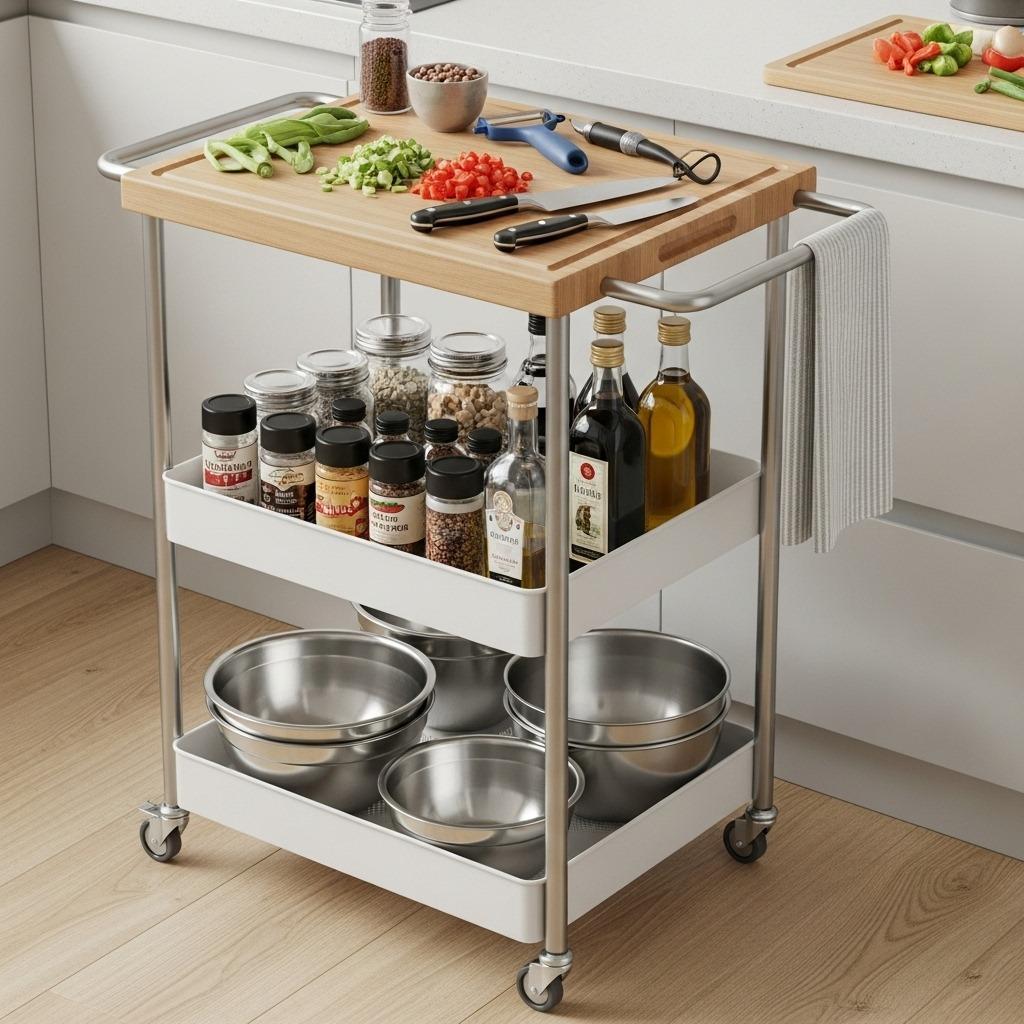
Rolling carts might seem basic, but choosing the right one changes how you cook. The best ones have different-sized tiers that accommodate various items without wasting vertical space. Look for carts with at least one flat surface large enough for actual food prep.
Use the top tier as a mobile prep station that rolls directly to your stove or sink. The middle section works perfectly for frequently used spices, oils, and cooking tools you grab repeatedly during meal prep. Reserve the bottom tier for heavier items like mixing bowls, small appliances you use weekly, or a collection of cookbooks.
What makes this space-saving approach work? The cart disappears when you don’t need it. Tuck it into a corner, slide it into a pantry, or nestle it beside your refrigerator. During dinner prep, it becomes a central hub that brings everything you need within arm’s reach. Some people even use their cart as a moveable breakfast station that transitions to a bar cart for entertaining.
2. Magnetic Strips for More Than Just Knives
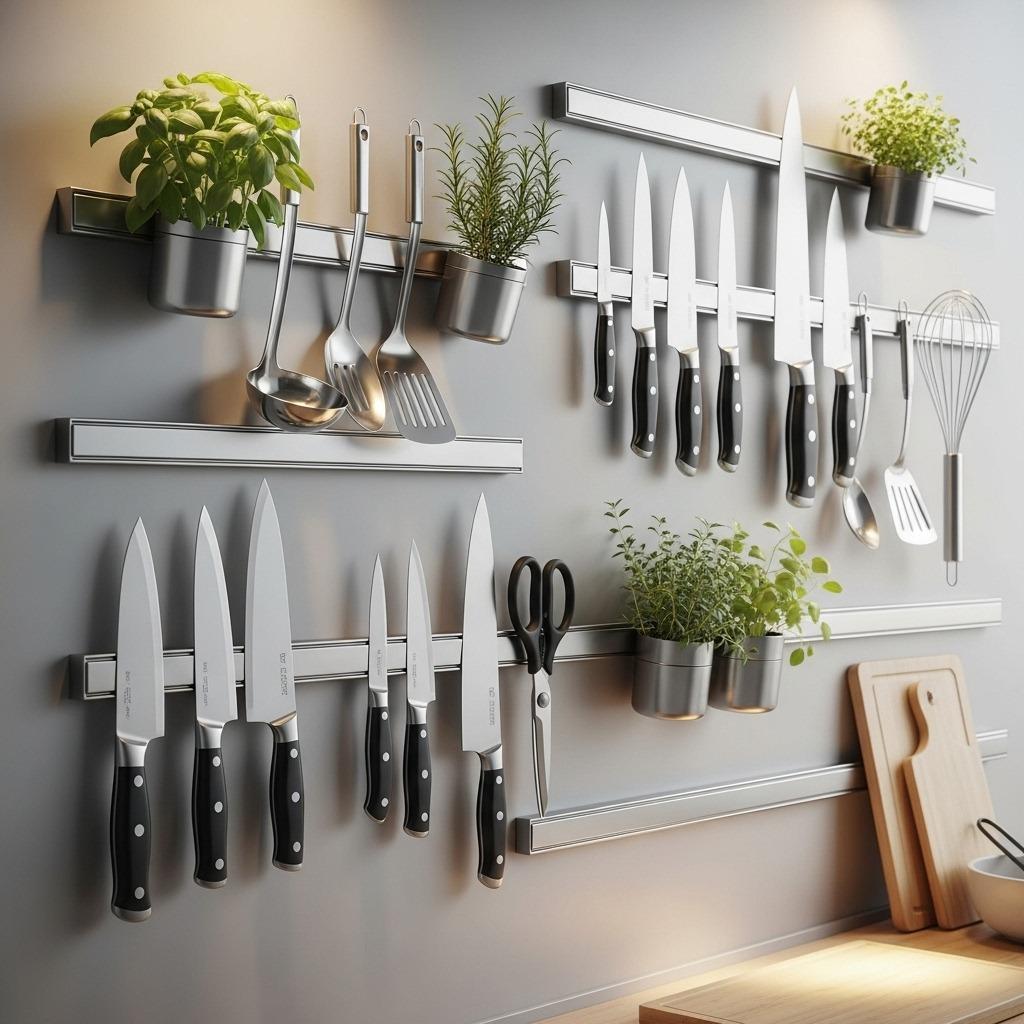
Everyone knows magnetic knife strips save drawer space. What most people overlook is their potential to organize dozens of other metal items cluttering your kitchen. Mount strips at different heights and suddenly you have a customizable storage system that adapts to whatever you need to hang.
Kitchen scissors, measuring spoons, can openers, and whisks all stick to magnetic strips. Small metal containers (like mint tins) attached to the strip become holders for herb seeds, bread bag clips, or rubber bands. You can even hang metal spice tins directly on the strip for instant access while cooking.
The beauty of this system? It takes up zero counter or drawer space while keeping frequently used items visible and accessible. Install strips inside cabinet doors for hidden storage of less attractive items. This approach works especially well in small kitchen renovation tips where every inch matters, but the concept scales beautifully to larger kitchens too.
3. Over-the-Sink Cutting Boards That Create Instant Counter Space
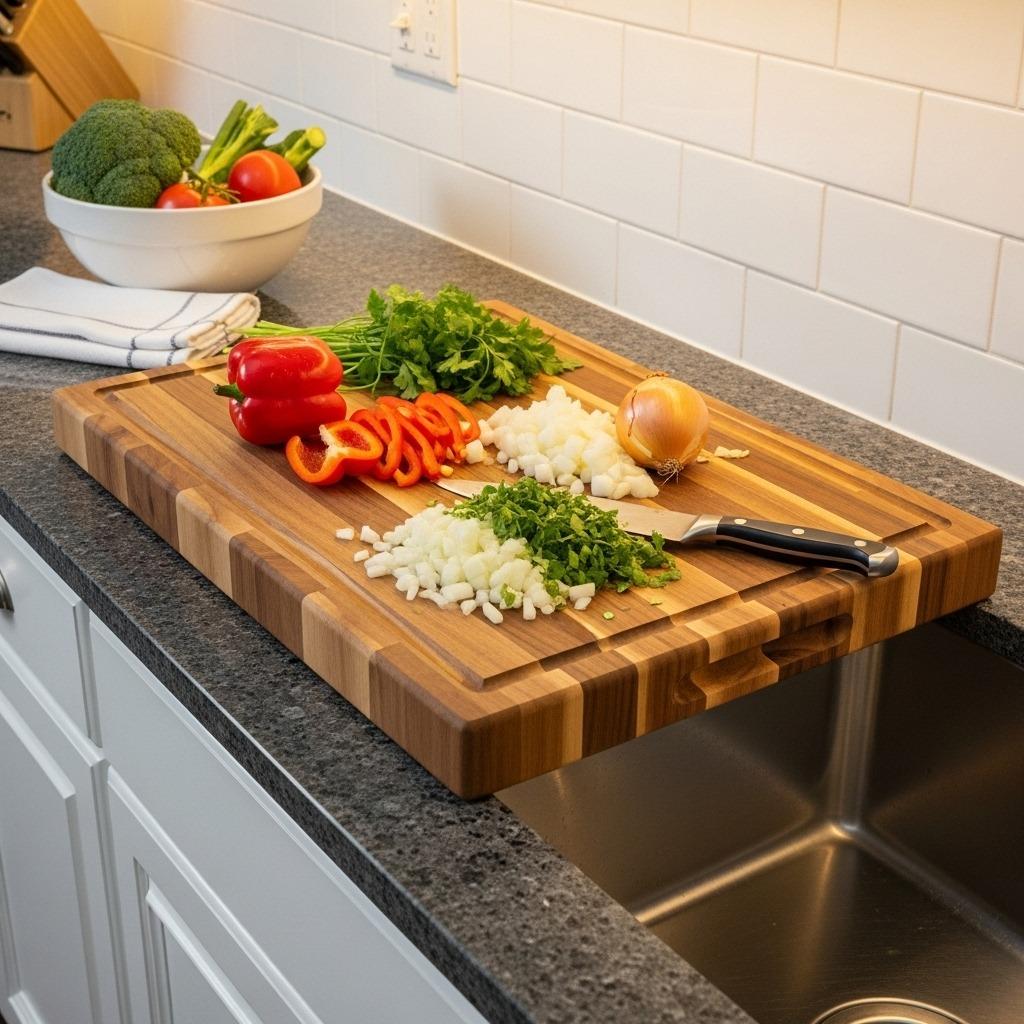
Counter space disappears fast when you’re cooking. An over-the-sink cutting board essentially gives you an extra workstation without renovating or rearranging anything. These boards rest on your sink’s edges, creating a stable prep surface exactly where you need it most.
Choose boards with integrated colanders on one section. Rinse vegetables on one side, then slide them to the cutting area without dripping water across your counter. Some versions include small containers built into corners for collecting scraps or holding prepped ingredients. The sink placement also makes cleanup ridiculously easy.
This solution works particularly well if you have a double sink. Use one side for the cutting board and keep the other available for dirty dishes or rinsing. When you finish cooking, the board stores flat against a wall or inside a cabinet. It’s one of those kitchen storage ideas that seems obvious once you try it but transforms your workflow immediately.
4. Stackable Containers That Do Double Duty
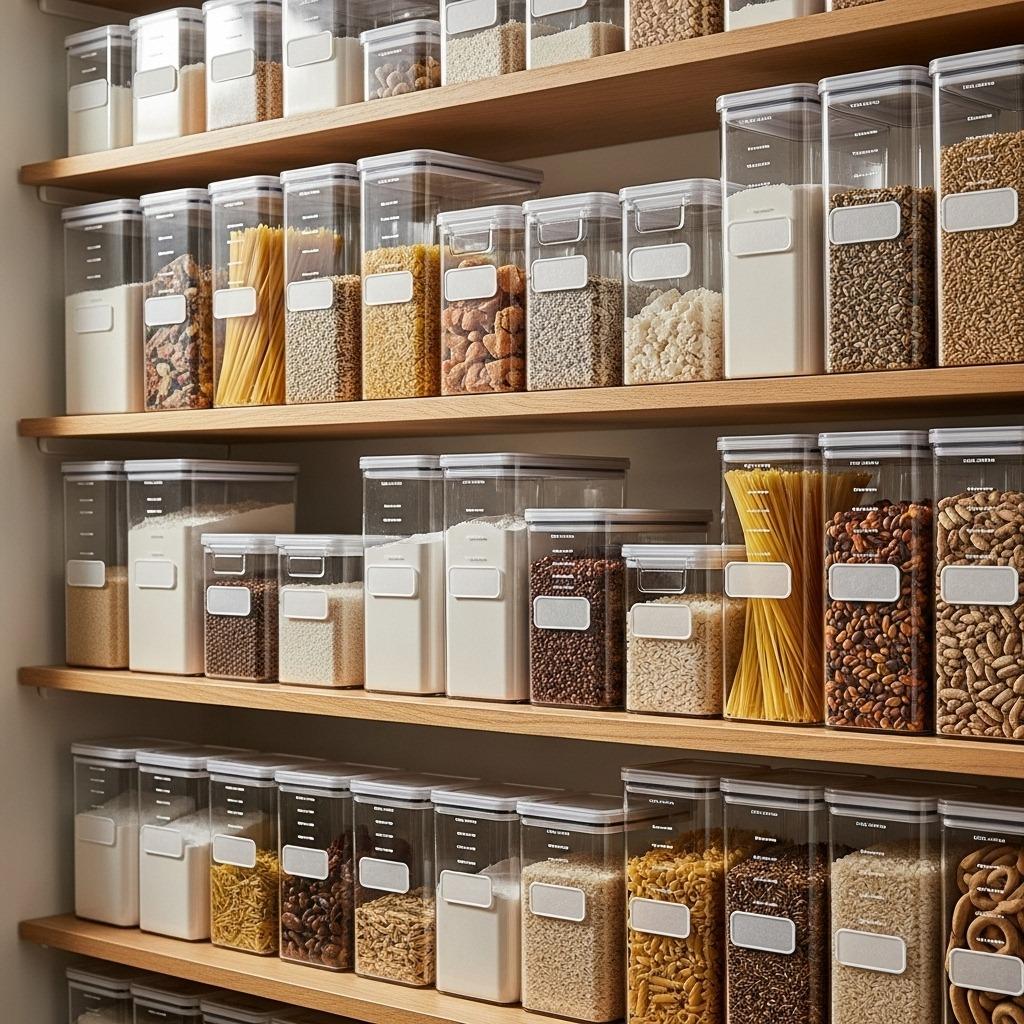
Standard food storage containers waste space because they’re all the same size regardless of what you’re storing. Stackable containers with measurement markings molded into the sides serve as both storage and measuring cups. You pour directly from the container into your recipe without dirtying extra dishes.
Look for sets with modular sizing where smaller containers nest inside larger ones when empty. This single feature reduces storage space by half when containers aren’t in use. The clear construction lets you see exactly how much of each ingredient remains, which prevents both over-buying and running out unexpectedly.
The measurement markings matter more than you’d think. Making pancakes on Sunday morning? Pour flour directly from the container to the two-cup line, then into your mixing bowl. No measuring cup to wash. This seemingly small detail adds up over dozens of meals each month. The concept extends beyond the pantry too – similar thinking applies when you’re maximizing smart bathroom storage in other areas of your home.
5. Pull-Out Cabinet Organizers That Maximize Dead Space
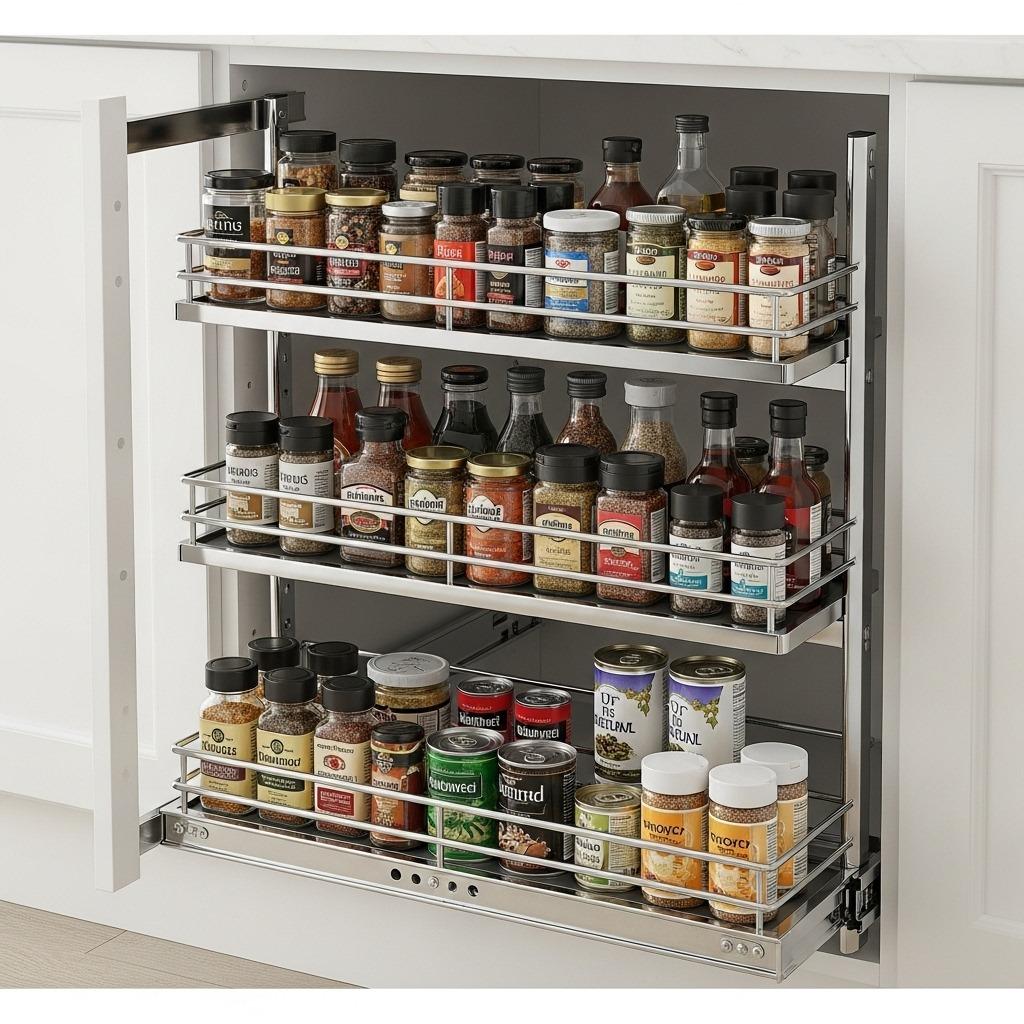
The back of your lower cabinets might as well not exist. You can’t see what’s back there, can’t reach it without kneeling, and inevitably forget about items until they expire. Pull-out organizers transform that frustrating dead space into accessible storage.
These sliding systems come in various widths to fit different cabinet sizes. Narrow pull-outs (6-9 inches) fit beside your refrigerator or stove and work perfectly for spices, oils, and vinegars. Wider versions (12-18 inches) handle canned goods, small appliances, or cleaning supplies. The key is choosing organizers with multiple tiers so you’re using vertical space efficiently.
Installation is simpler than it looks. Most systems mount with basic screws to existing cabinet frames. Once installed, everything slides out smoothly so you can see and grab items from the back as easily as the front. This type of convertible kitchen storage particularly shines in kitchen pantry organization where similar principles maximize every shelf.
6. Hanging Baskets That Use Vertical Space
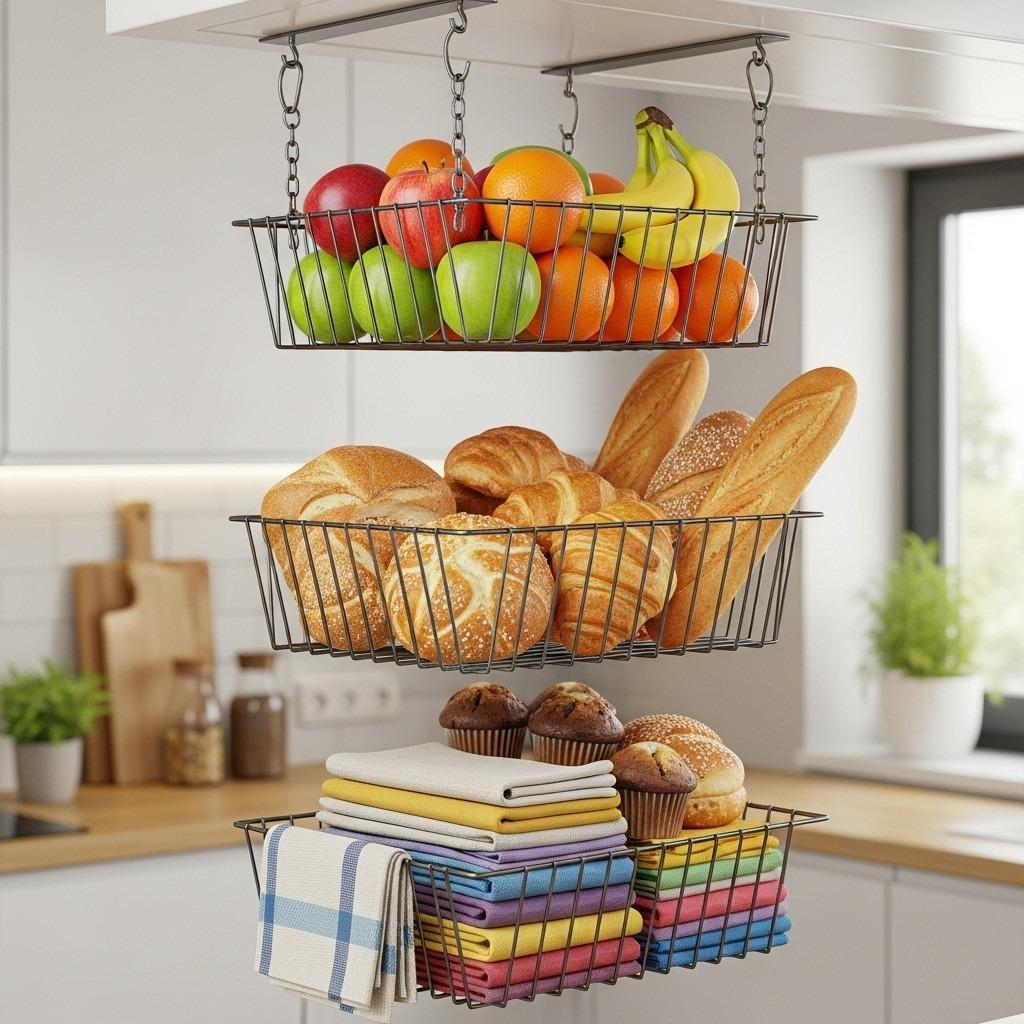
Floor and counter space get all the attention, but your kitchen has cubic feet of unused air above those surfaces. Hanging baskets mounted from the ceiling or under cabinets capture that vertical real estate without blocking your movement or sightlines.
Wire baskets work best because air circulation prevents produce from spoiling too quickly. Use the top basket for items you grab less frequently – maybe backup dish towels or specialty baking ingredients. Middle baskets hold fruits that ripen better at room temperature. Bottom baskets keep frequently used items like onions, garlic, or bread within easy reach.
The hanging approach also adds surprising style to your kitchen. Choose baskets that match your aesthetic – industrial metal, rustic wire, or modern minimal designs. This solution works particularly well in modern farmhouse kitchen designs where functional items double as decorative elements. Just make sure the baskets hang low enough to reach comfortably but high enough that tall people won’t bump their heads.
7. Corner Lazy Susans That Actually Get Used
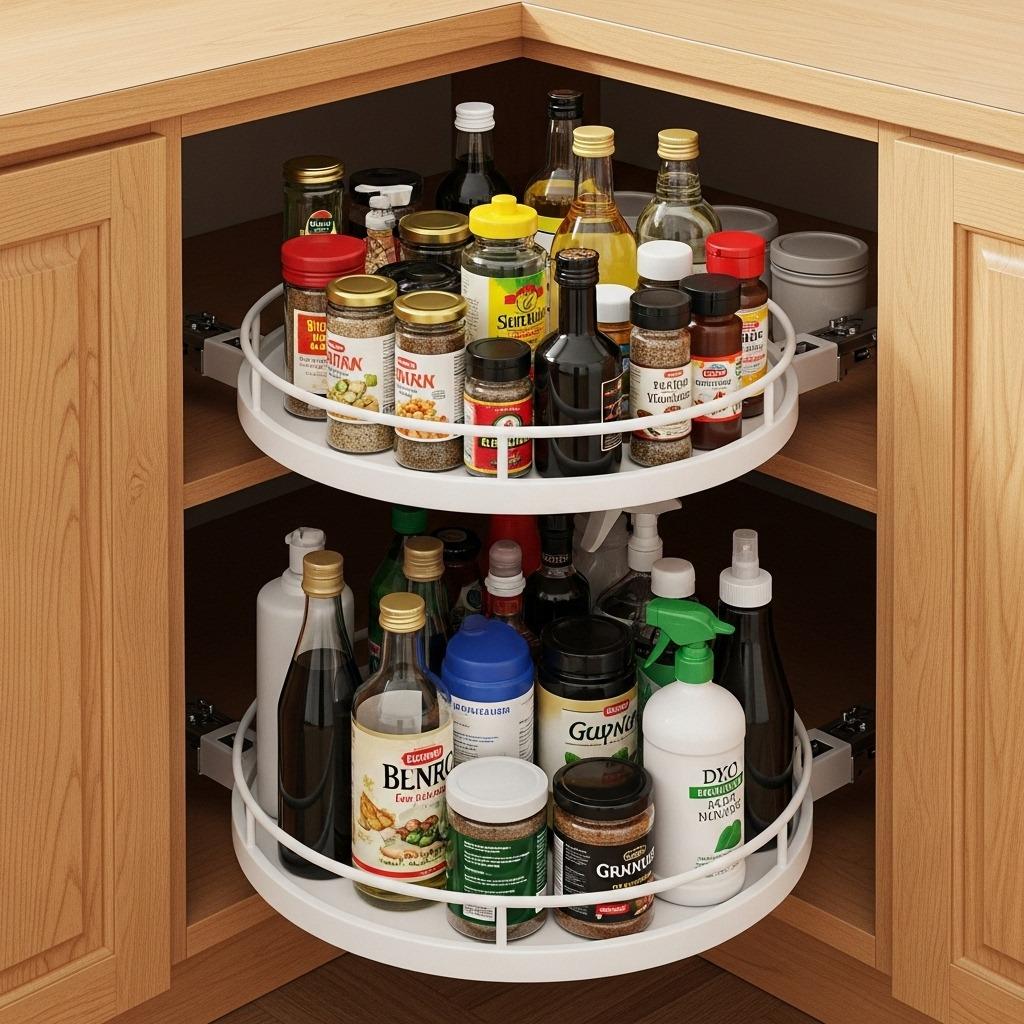
Corner cabinets represent some of the most wasted space in any kitchen. Traditional lazy Susans help, but many spin awkwardly or have a center post that blocks valuable storage area. Modern two-tier versions solve both problems while maximizing what corner space offers.
The best lazy Susans have independent tiers that rotate separately. This means you can spin just the bottom level without disrupting items on top. Look for versions with raised edges to prevent items from falling off during rotation. Some include adjustable dividers that keep bottles and containers from sliding around.
Reserve one tier for cooking oils, vinegars, and sauces you use regularly. The other tier can hold backup supplies, less-used spices, or small appliances. The key is actually using your lazy Susan instead of treating it as dead storage. When items are this accessible, you’ll naturally reach for them more often. The same organizational mindset works when planning kitchen shelving ideas throughout the rest of your space.
8. Drawer Dividers That Adjust to Your Needs
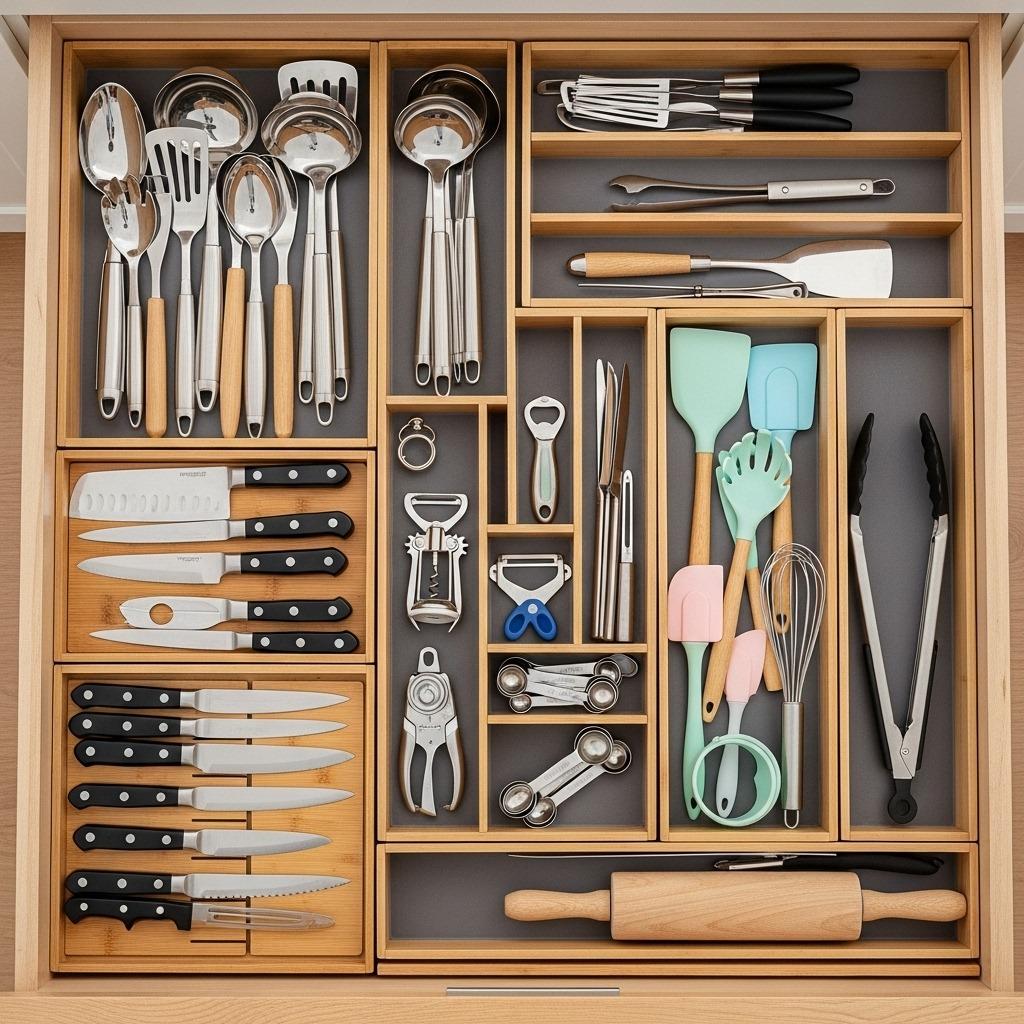
Fixed drawer dividers frustrate because your needs change but the dividers don’t. Adjustable systems let you reconfigure compartments as your kitchen tools evolve. Spring-loaded dividers work particularly well because they don’t require any installation and expand to fit drawers of different depths.
Start by grouping similar items – all whisks together, all spatulas together, all measuring spoons together. Then adjust dividers to fit each group snugly. This prevents the annoying drift where utensils migrate into neighboring sections every time you open and close the drawer. The tighter organization also lets you see at a glance when you’re running low on something.
Consider dedicating one drawer to items you use daily and another to specialty tools. The daily drawer might include a spatula, wooden spoon, can opener, and wine key. The specialty drawer holds your garlic press, zester, meat thermometer, and pastry brush. This separation prevents your most-used tools from getting buried under occasionally-needed gadgets.
9. Under-Shelf Baskets That Double Your Cabinet Space
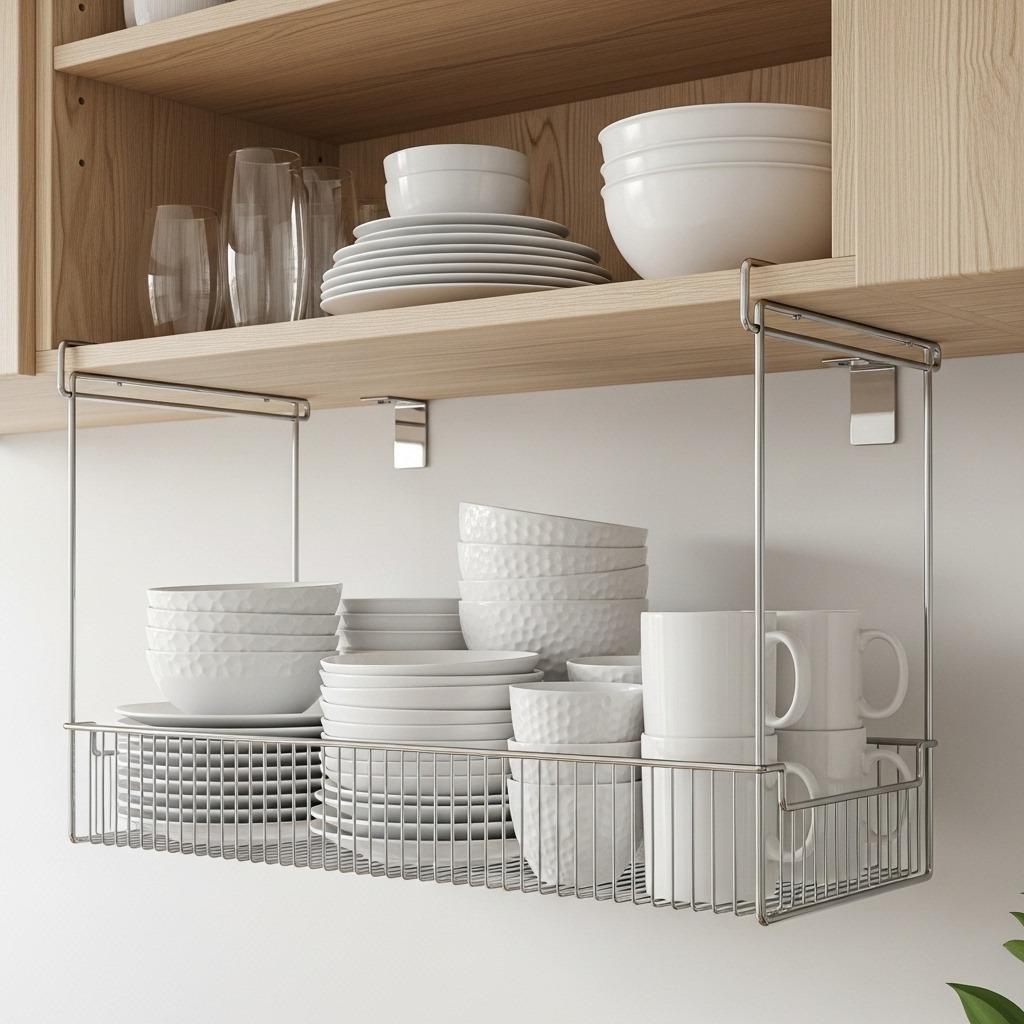
Your cabinets have hidden storage space between each shelf and the one above it. Under-shelf baskets hook onto existing shelves and hang down, creating an entirely new storage tier without any installation or modification. This simple addition essentially doubles your cabinet capacity.
Use these baskets for lightweight items that won’t strain the shelf above – coffee mugs, small plates, plastic storage containers, or packages of napkins and paper goods. The hanging position keeps items visible and accessible without requiring you to rearrange everything else to reach them. It’s particularly useful for things you want to keep but don’t use daily.
10. Wall-Mounted Pegboards That Evolve With You
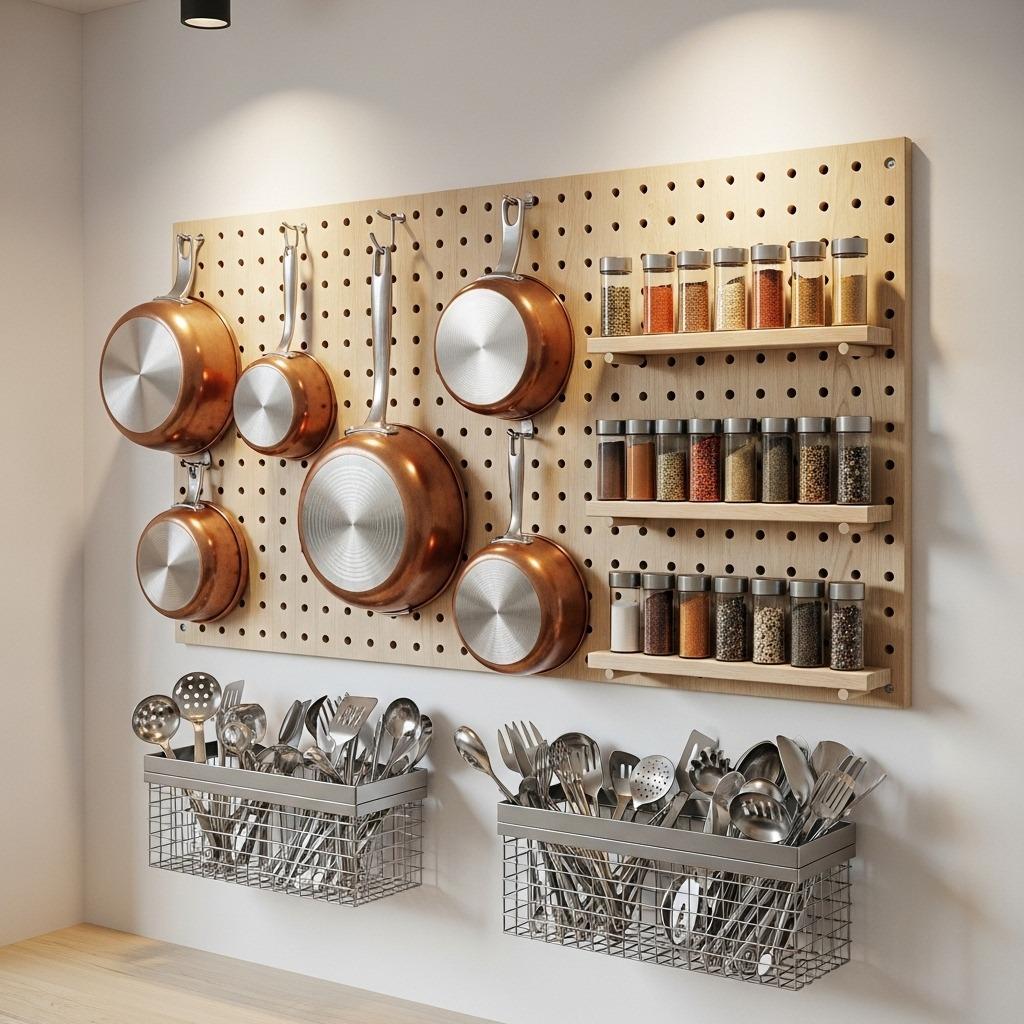
Pegboards aren’t just for garages anymore. Kitchen-specific versions offer sophisticated storage that changes as your needs change. Unlike fixed shelving or hooks, pegboard systems let you move every element whenever you want. Cooked pasta three nights this week? Move your colander and pot to the most accessible positions.
Paint pegboard to match your kitchen or leave it natural for an industrial look. The board itself costs less than most storage solutions, but the real value comes from the flexibility. Hooks hold pots and pans, S-hooks catch utensils, small shelves display spices, and metal baskets contain everything from produce to dish towels.
This space-saving approach works beautifully even in rentals because pegboard installation requires minimal wall damage – usually just a few screws. When you move, you can easily patch the holes. The visual impact impresses too. A well-organized pegboard adds architectural interest while solving storage problems. Many people use similar thinking when planning open concept kitchen living room layout spaces where storage needs to look good from multiple angles.
11. Collapsible Items That Disappear When Not in Use
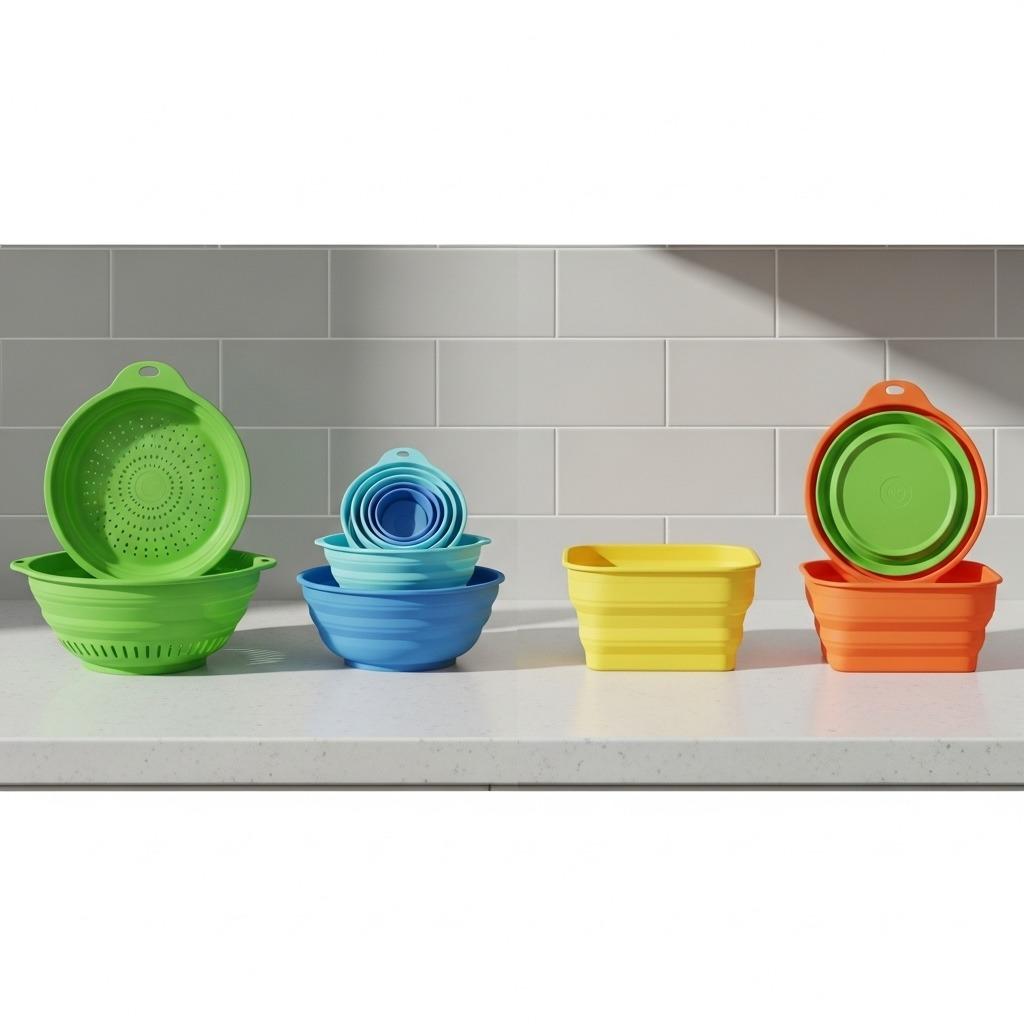
Colanders, mixing bowls, dish tubs, and storage bins all take up significant space even when empty. Collapsible versions serve their purpose perfectly when deployed but compress to a fraction of their size for storage. A large colander that’s 8 inches tall when expanded might collapse to just 2 inches.
Modern collapsible items use silicone construction that’s genuinely durable – not the flimsy plastic versions from years ago. They withstand heat, resist staining, and clean easily. The silicone also provides enough grip that bowls don’t slide around on your counter while you’re mixing ingredients.
Store collapsed items vertically in a cabinet or drawer slot like you would with cutting boards or baking sheets. This vertical storage means you can access any item without unstacking others. The space savings add up significantly when you replace three or four traditional items with collapsible equivalents. It’s one of those kitchen storage ideas that sounds gimmicky until you actually implement it and realize how much space you’ve reclaimed.
12. Convertible Islands and Carts With Hidden Storage
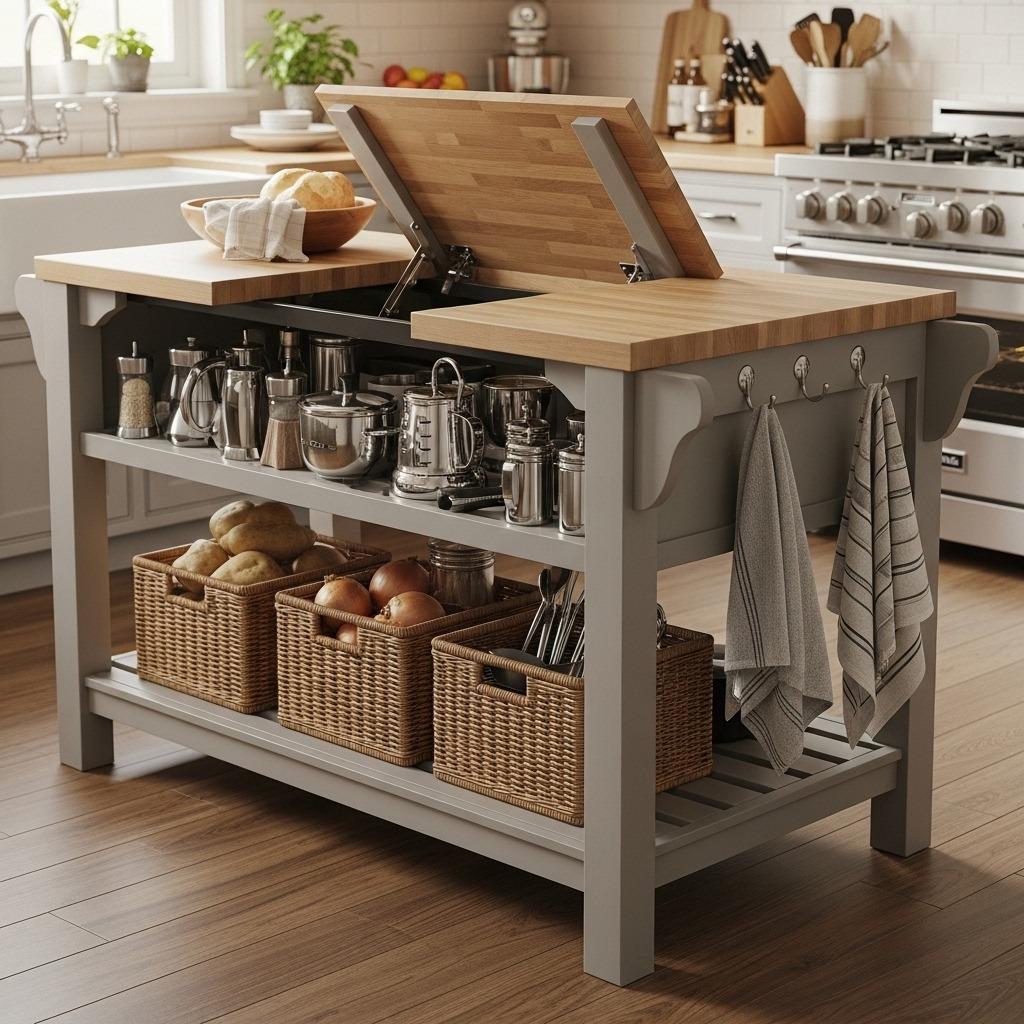
Fixed islands eat floor space but don’t always justify their footprint. Convertible versions earn their keep through multiple storage features built into a single piece of furniture. Look for islands with butcher block tops that provide extra prep space, hooks on the ends for hanging towels or oven mitts, and open shelving or closed cabinets below.
The most versatile islands include drop leaves that expand the surface area when you need it for serving or entertaining. When collapsed, the island fits into tighter spaces or against a wall. Some include built-in wine racks, towel bars, or even electrical outlets for small appliances. A few high-end versions have lift-up tops that reveal hidden storage compartments perfect for items you use occasionally.
Mobile islands on casters deserve special consideration. They provide all the storage benefits while moving exactly where you need them. Position the island near your stove during dinner prep, then roll it to the dining area as a serving station. The mobility transforms one piece of furniture into a flexible helper that adapts to whatever you’re doing.
Making Multifunctional Storage Work in Your Kitchen
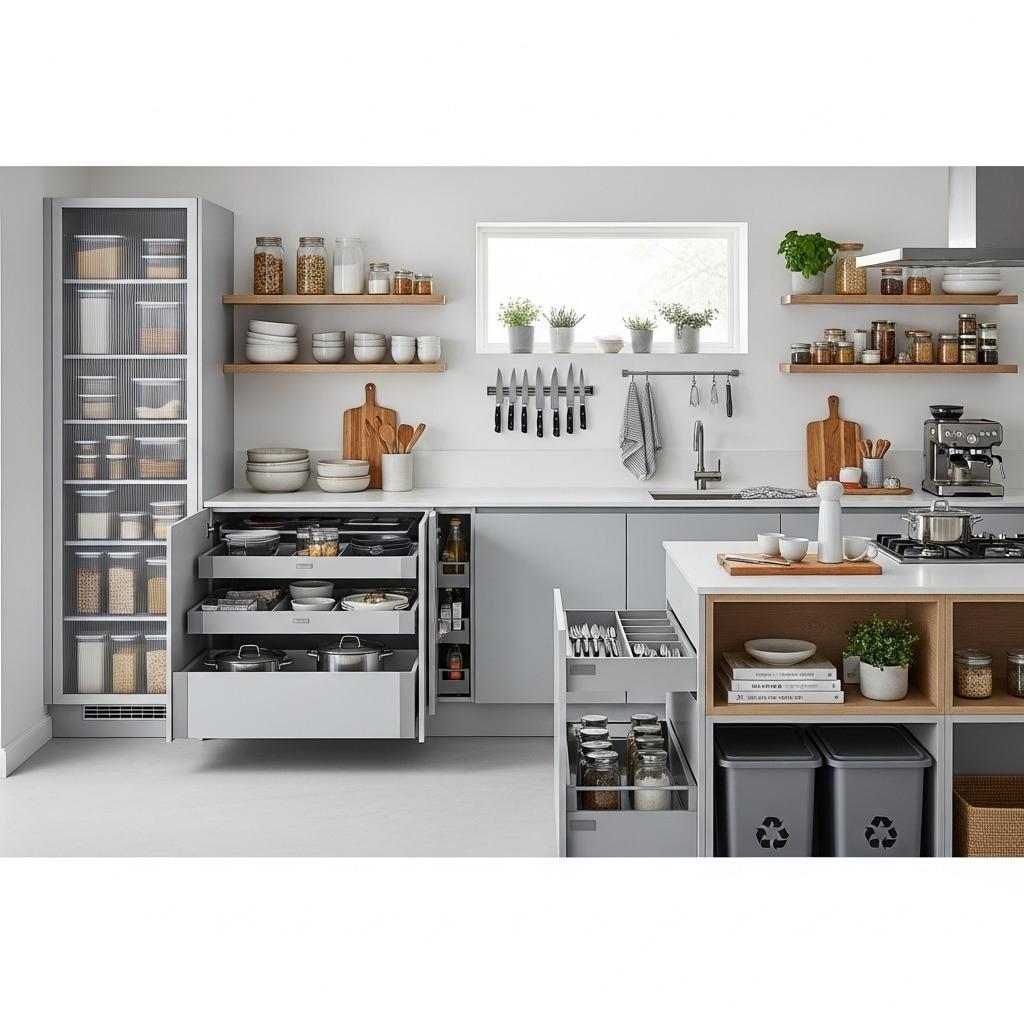
The magic happens when you combine several of these strategies instead of relying on just one. A rolling cart paired with magnetic strips and some under-shelf baskets creates a comprehensive system where everything has a logical place. Start with the storage solution that addresses your biggest frustration, then add others as you identify what still needs improvement.
Think about your actual cooking workflow. What items do you use together? What do you reach for most often? Storage should support these patterns rather than forcing you to adapt to arbitrary organization. If you bake frequently, keep measuring cups, mixing bowls, and baking sheets in the same zone. If you’re more of a stovetop cook, prioritize easy access to pots, pans, and cooking utensils.
The goal isn’t achieving some Pinterest-perfect kitchen where everything looks identical and color-coded. Real multifunctional storage adapts to your life, your cooking style, and your space limitations. It should reduce stress and save time rather than creating maintenance work. When storage solutions truly work, using your kitchen feels easier – and that’s the whole point.