
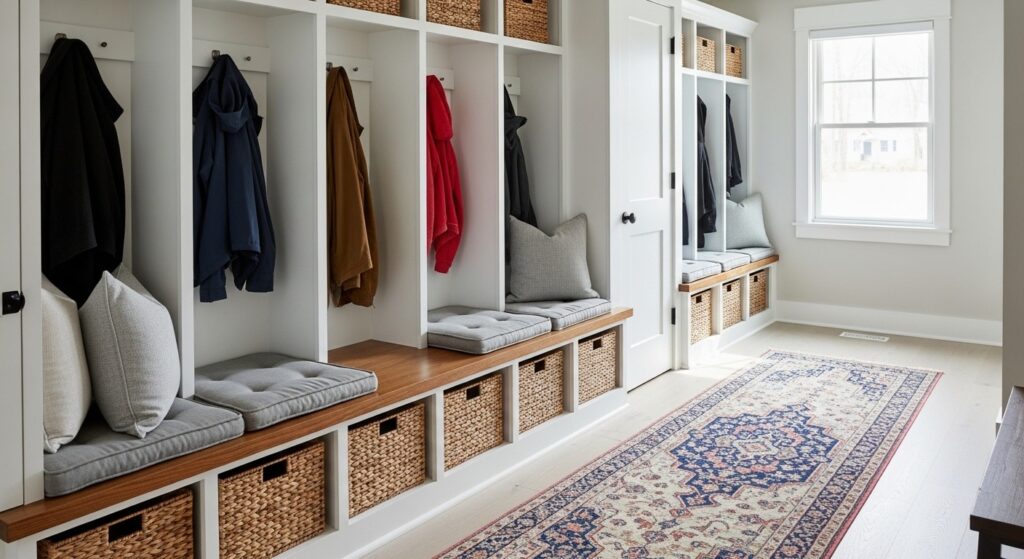
Your entryway sets the tone for your entire home, yet it’s often the most cluttered and overlooked space. Between backpacks, muddy boots, winter coats, and mystery items that somehow accumulate by the door, it’s easy for this area to spiral into chaos.
A well-planned mudroom remodel can completely change how your household functions. Whether you’re working with a dedicated mudroom or carving out a functional entryway setup in a small space, the right combination of storage solutions and thoughtful design can keep everything in its place while looking surprisingly good. These 17 mudroom remodel ideas will help you create an organized entry that actually works for your family’s daily routine.
1. Built-In Bench with Hidden Storage Compartments
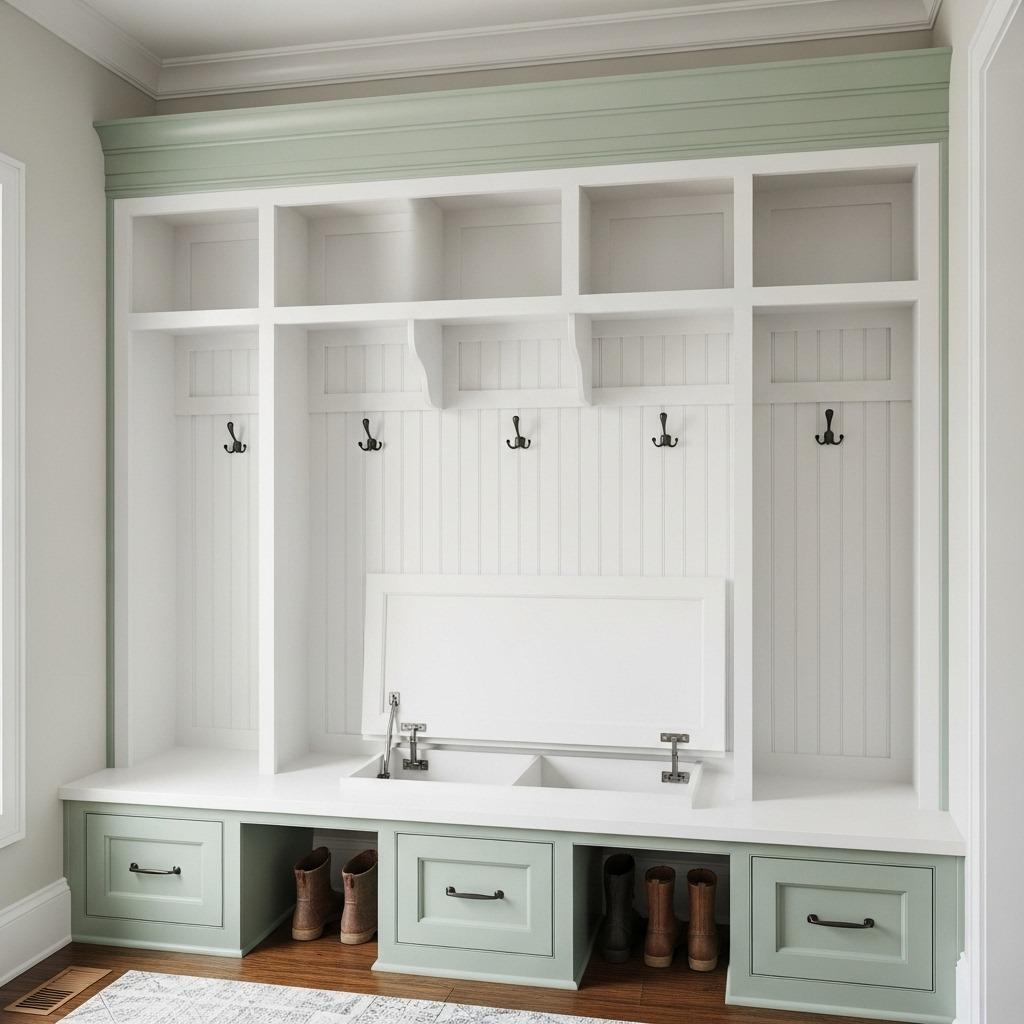
A built-in bench with hidden storage underneath is probably one of the smartest investments you can make in a mudroom remodel. The top provides a comfortable spot for putting on or removing shoes, while the compartments below swallow up seasonal items, sports equipment, or anything you want out of sight.
Consider installing lift-top benches with soft-close hinges to prevent little fingers from getting pinched. You can also mix in pull-out drawers for items you need to access more frequently. This setup works especially well in small space renovations where every inch of storage counts.
The bench height should be around 18 inches for comfortable seating. If you’re DIY-inclined, you can build this yourself or have a carpenter create a custom piece that fits your exact dimensions.
2. Individual Family Cubbies with Name Labels
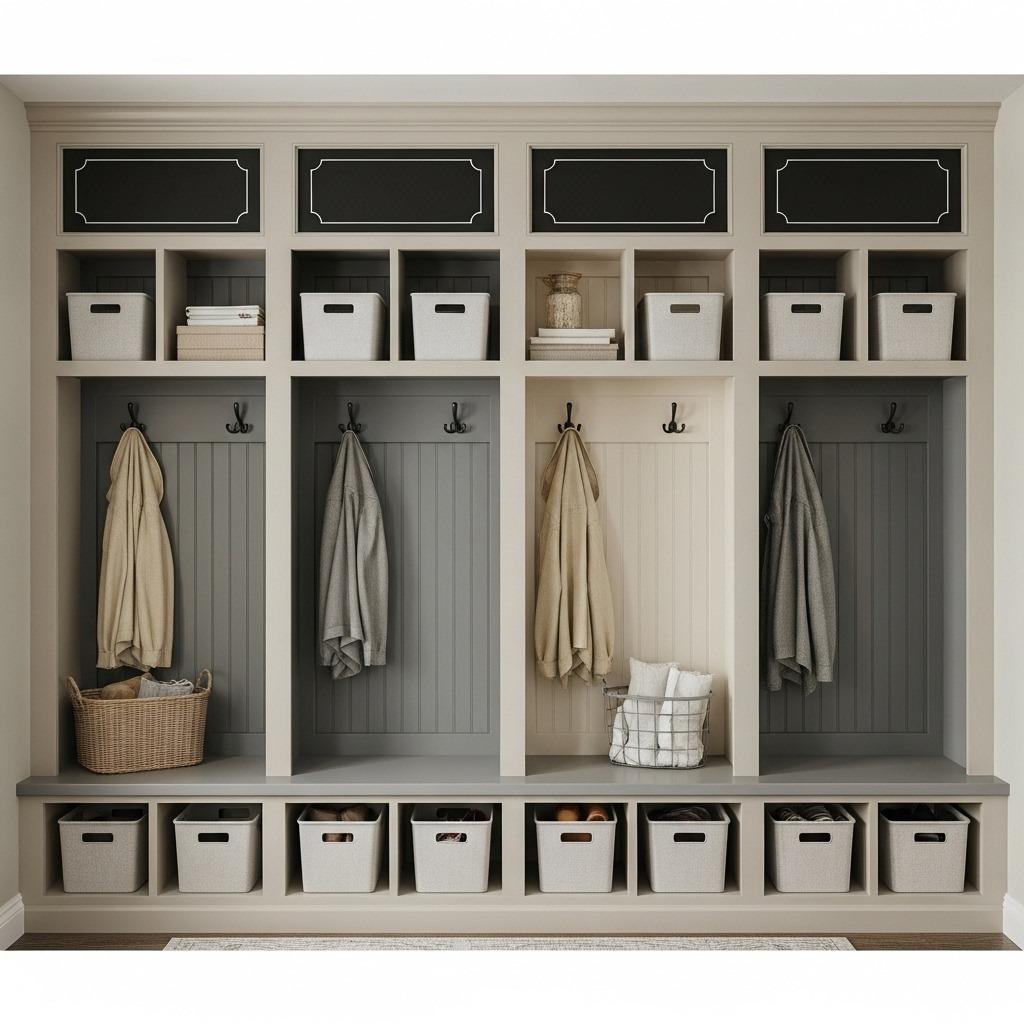
Assigning each family member their own designated cubby eliminates the “where’s my stuff?” morning scramble. Each person gets their own hooks, shelf space, and bin for keeping track of their belongings.
Add personalized name labels using chalkboard paint, printed vinyl, or even decorative nameplates. This simple organizational system teaches kids responsibility while keeping everything sorted. You can customize each cubby based on individual needs – maybe one person needs more hook space while another requires extra shelf room.
The key is making each section distinct enough that there’s no confusion about ownership. This approach to mudroom organization can dramatically reduce household stress during busy mornings.
3. Floor-to-Ceiling Open Shelving System
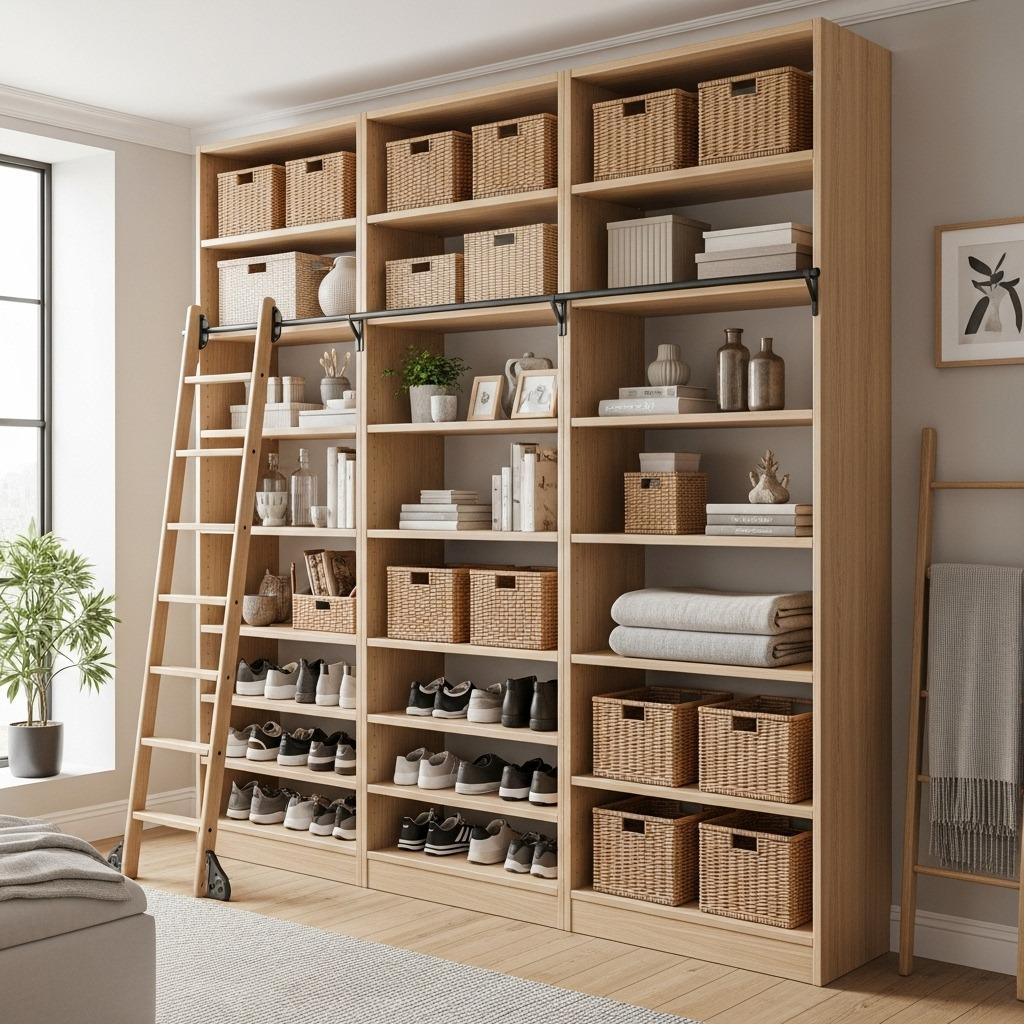
Floor-to-ceiling shelving maximizes vertical space in ways that standard furniture simply can’t. This approach works particularly well in narrow mudrooms where you need storage without eating up floor space.
Use the lower shelves for everyday items like shoes and bags, middle shelves for baskets containing gloves and accessories, and upper shelves for seasonal or less-frequently-used items. The open design keeps everything visible and accessible, though it does require more intentional organization to look tidy.
Mix in decorative elements on some shelves to keep the space from feeling too utilitarian. A few plants, attractive storage boxes, or even framed photos can soften the look while maintaining functionality.
4. Mudroom Lockers with Mesh Doors
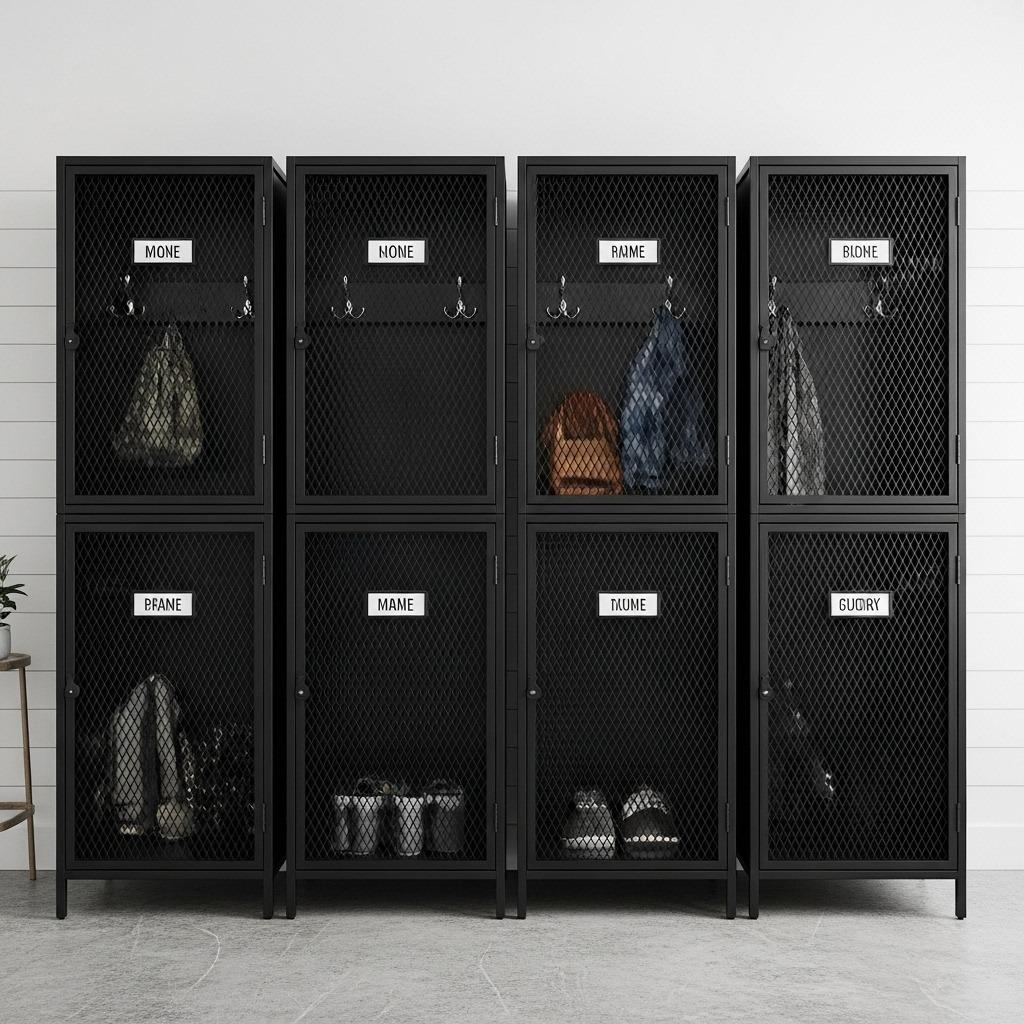
Lockers bring an organized, almost gym-like efficiency to your entryway. The mesh doors allow air circulation – crucial for drying damp coats and preventing that musty smell that can plague closed storage.
These work beautifully in active households with sports gear, work bags, or school backpacks that need dedicated homes. The see-through doors also make it easy to spot what’s inside without opening each locker. You can find ready-made mudroom lockers or commission custom ones that fit your exact specifications.
Paint them in colors that complement your home improvement ideas throughout the rest of your space. Navy, charcoal, or even a bold color can add personality while remaining practical.
5. Farmhouse-Style Hooks with Reclaimed Wood Board
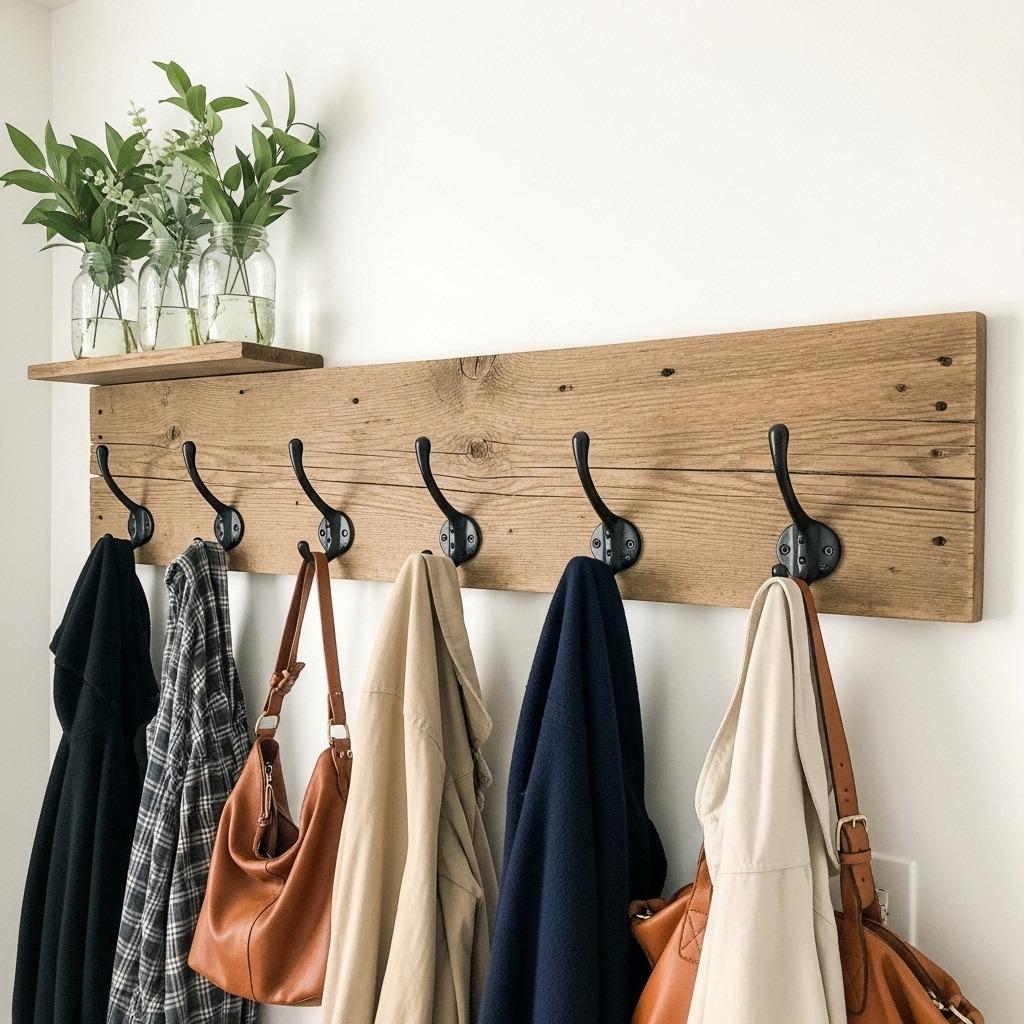
Sometimes the simplest solutions are the most effective. A reclaimed wood board with sturdy hooks delivers both function and farmhouse charm without requiring a major renovation.
This budget-friendly option works especially well in small mudroom designs where bulky storage units would overwhelm the space. Mount the board at varying heights if you have both adults and children in the household. Add a narrow shelf above for keys, sunglasses, or small decorative touches.
The beauty of this approach is its flexibility. You can easily add or rearrange hooks as your needs change, and the reclaimed wood brings warmth and character that matches popular farmhouse style living rooms.
6. Drawer Tower for Accessories and Small Items
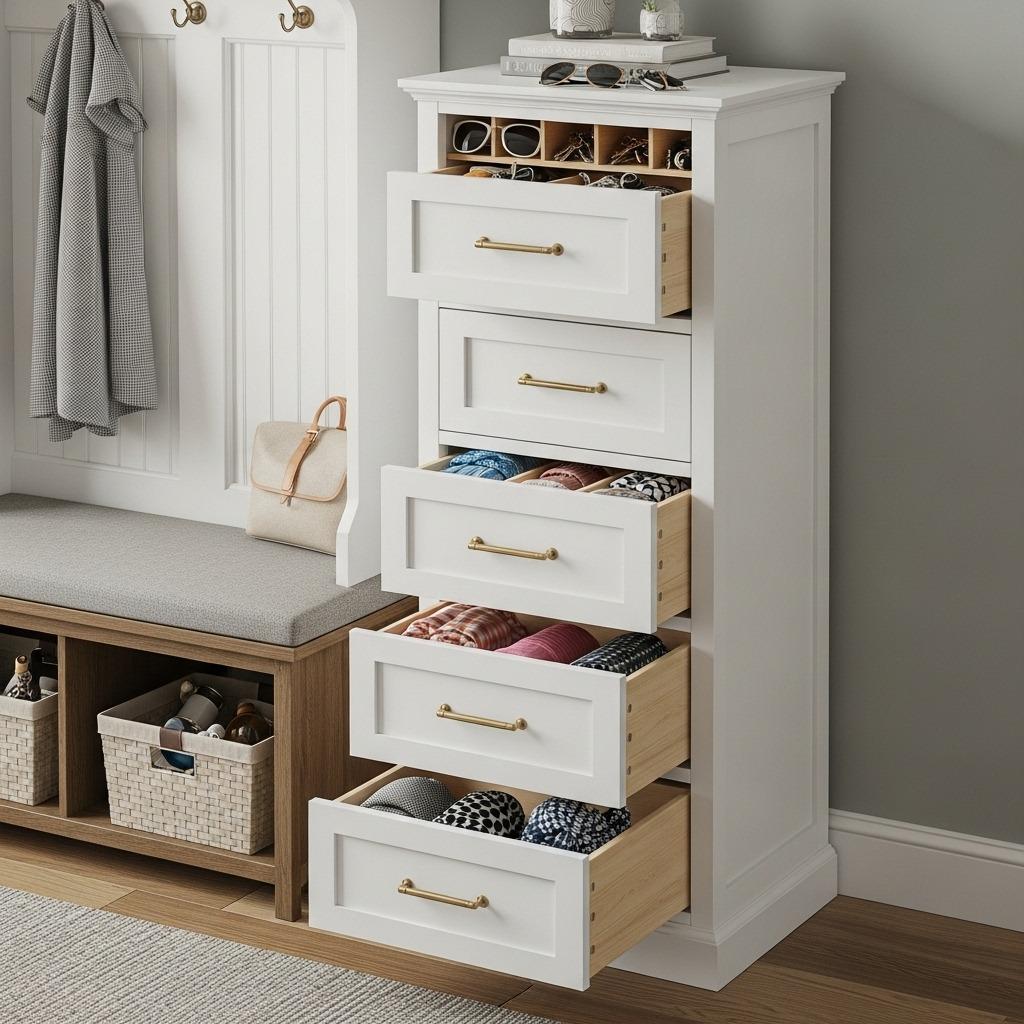
Those small items – dog leashes, sunglasses, spare change, lip balm – always seem to vanish in mudrooms. A dedicated drawer tower keeps these essentials organized and easy to locate when you’re rushing out the door.
Choose a narrow tower design that doesn’t take up much floor space but offers significant storage capacity. Clear drawer organizers inside each drawer prevent everything from becoming a jumbled mess. Label the drawer fronts if you want to take organization to the next level.
Position this tower near the exit door for maximum convenience.
7. Shoe Cabinet with Tip-Out Compartments
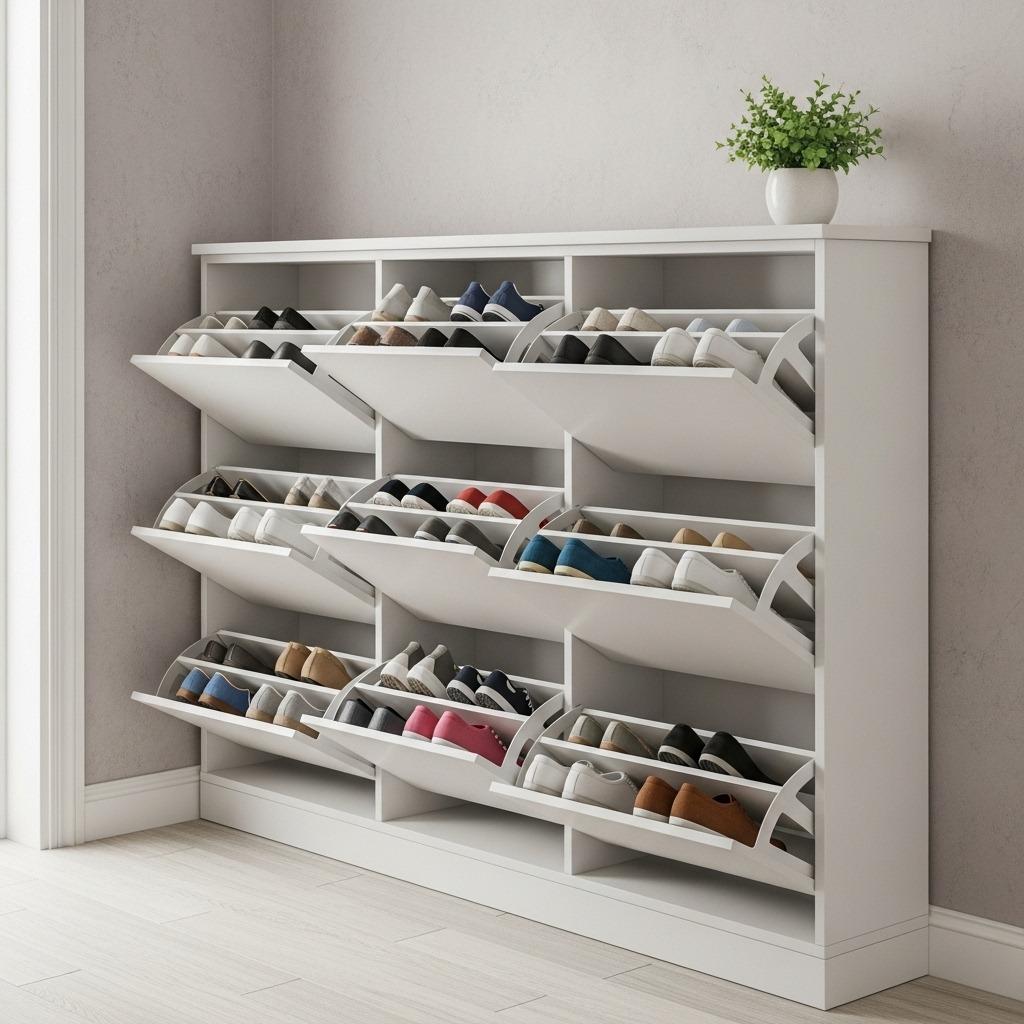
Traditional shoe racks can look cluttered and take up valuable floor space. Tip-out shoe cabinets provide a streamlined alternative that keeps footwear organized and hidden from view.
These cabinets typically hold 12-20 pairs of shoes depending on size, and the angled compartments make it easy to see and grab what you need. The top surface doubles as a display area for plants, a catch-all tray, or decorative items.
This solution works particularly well in functional entryway setups where aesthetics matter as much as organization. Choose a cabinet depth that matches your available space – deeper units hold boots while shallower ones work for tight mudrooms.
8. Pegboard Wall with Adjustable Hooks and Baskets
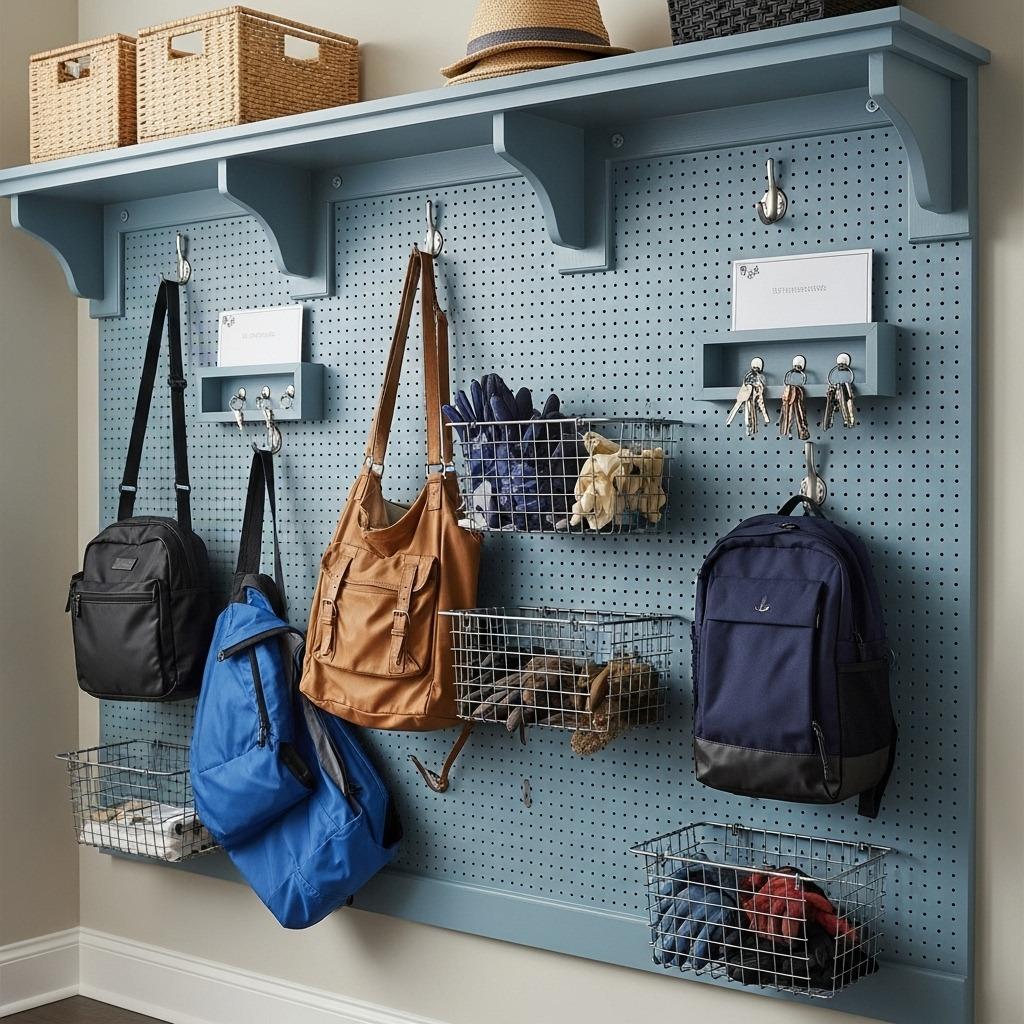
Pegboard isn’t just for garages anymore. A painted pegboard wall in your mudroom creates an infinitely customizable storage system that adapts as your needs change.
Paint the pegboard in a color that complements your home’s palette – soft gray, navy, or even a fun accent color. Then arrange hooks, small shelves, and wire baskets to hold everything from backpacks to umbrellas. The best part? You can rearrange everything whenever you want without any damage to the walls.
Add a wooden frame around the pegboard to give it a more finished, intentional look. This approach combines the flexibility of open storage with a design-forward aesthetic that fits modern homes.
9. Sliding Barn Door to Conceal Mudroom Storage
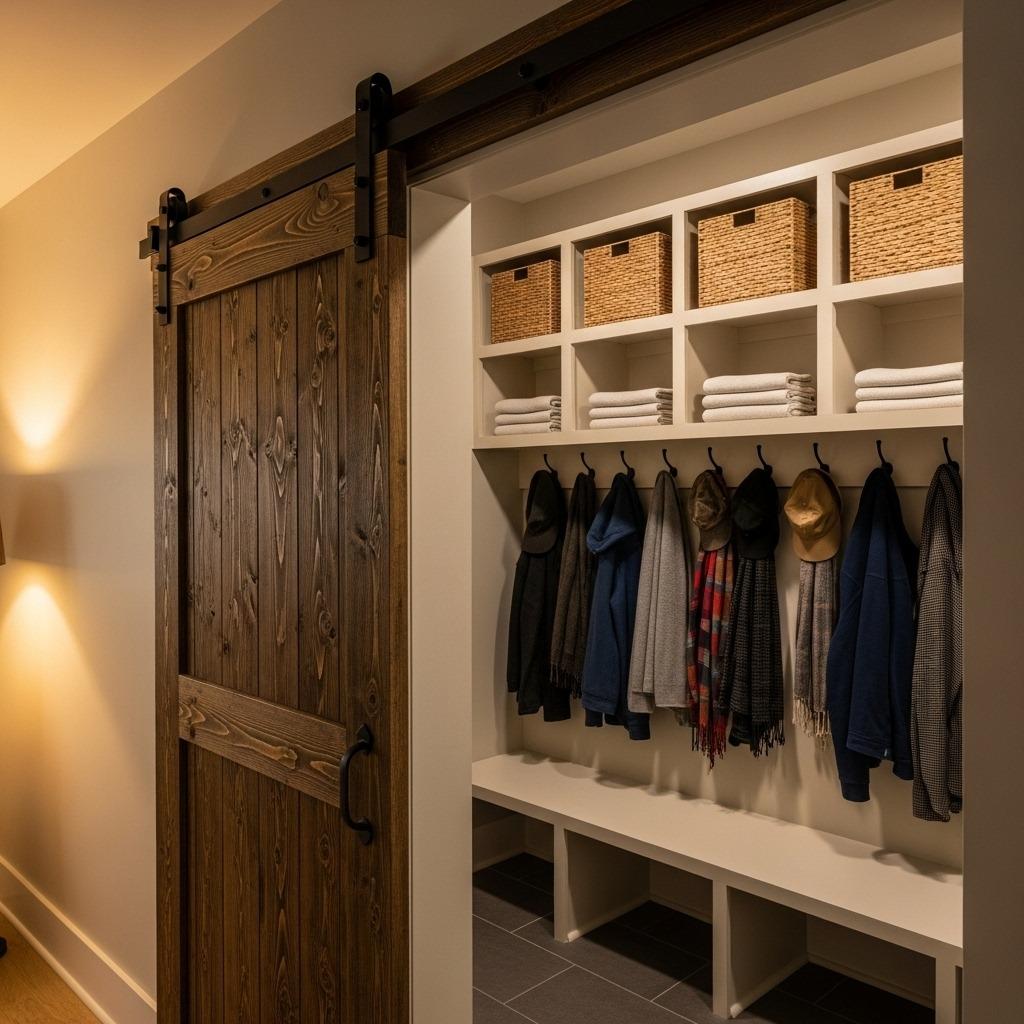
If your mudroom opens directly to your main living space, a sliding barn door lets you hide the chaos when guests arrive. This feature has become increasingly popular in affordable home upgrades because it adds both function and style.
Choose a door style that matches your home’s aesthetic – whether that’s rustic wood, sleek modern panels, or even a chalkboard-painted surface. The sliding mechanism saves space compared to traditional swinging doors, which is particularly valuable in compact mudrooms.
Install the track slightly wider than the doorway so the door can slide completely to one side. This creates full access to your mudroom when you need it while maintaining the option to close everything off.
10. Built-In Drying Station with Boot Tray
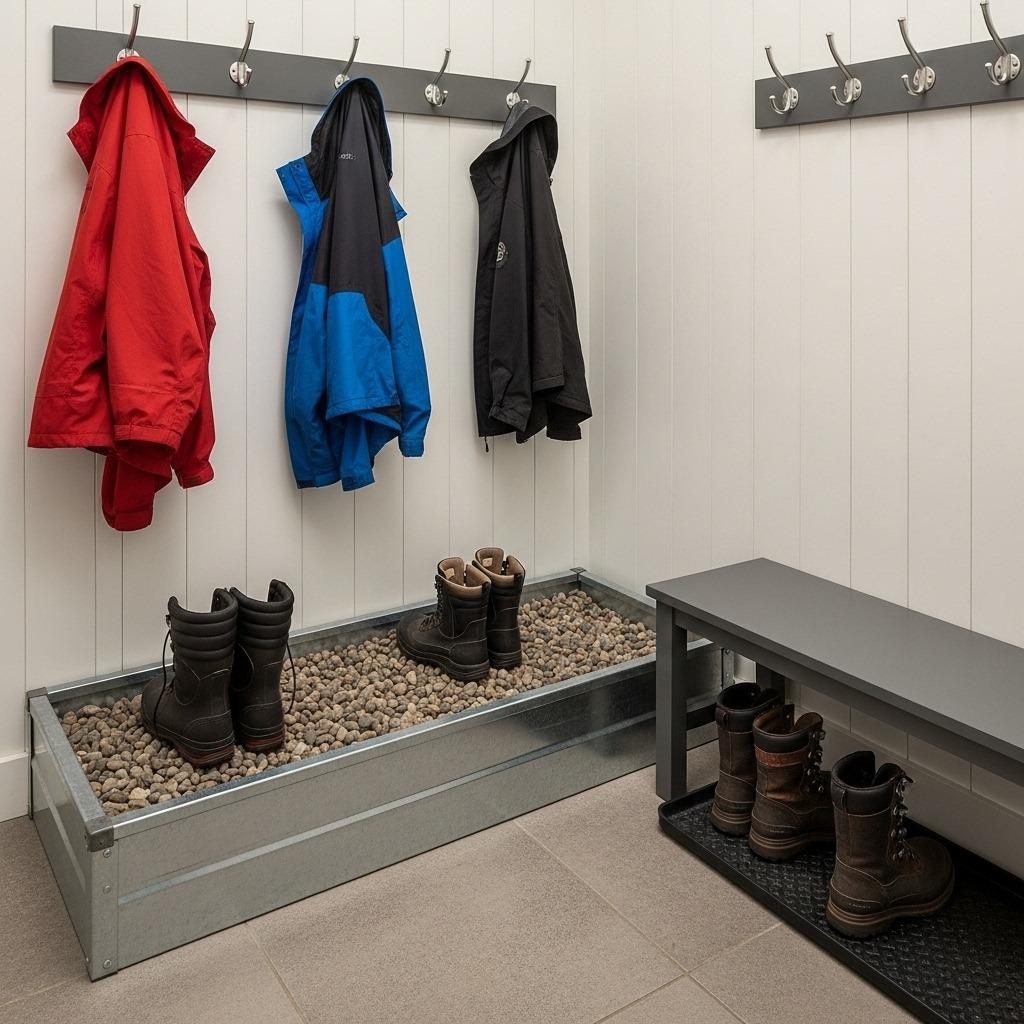
Wet boots and coats need special consideration in mudroom planning. A dedicated drying station with proper drainage prevents water damage and keeps moisture contained.
Install a raised boot tray filled with river rocks or a specialized drying mat that allows water to drain away from footwear. Mount a sturdy drying rack or hooks above for wet coats and scarves. Some homeowners even add a small portable heater or fan during winter months to speed up the drying process.
Choose water-resistant flooring like tile or luxury vinyl in this area. This practical addition pays for itself by protecting your floors and preventing that damp smell that can permeate poorly-ventilated entryways.
11. Mudroom Bench with Cubbies and Cushioned Seating
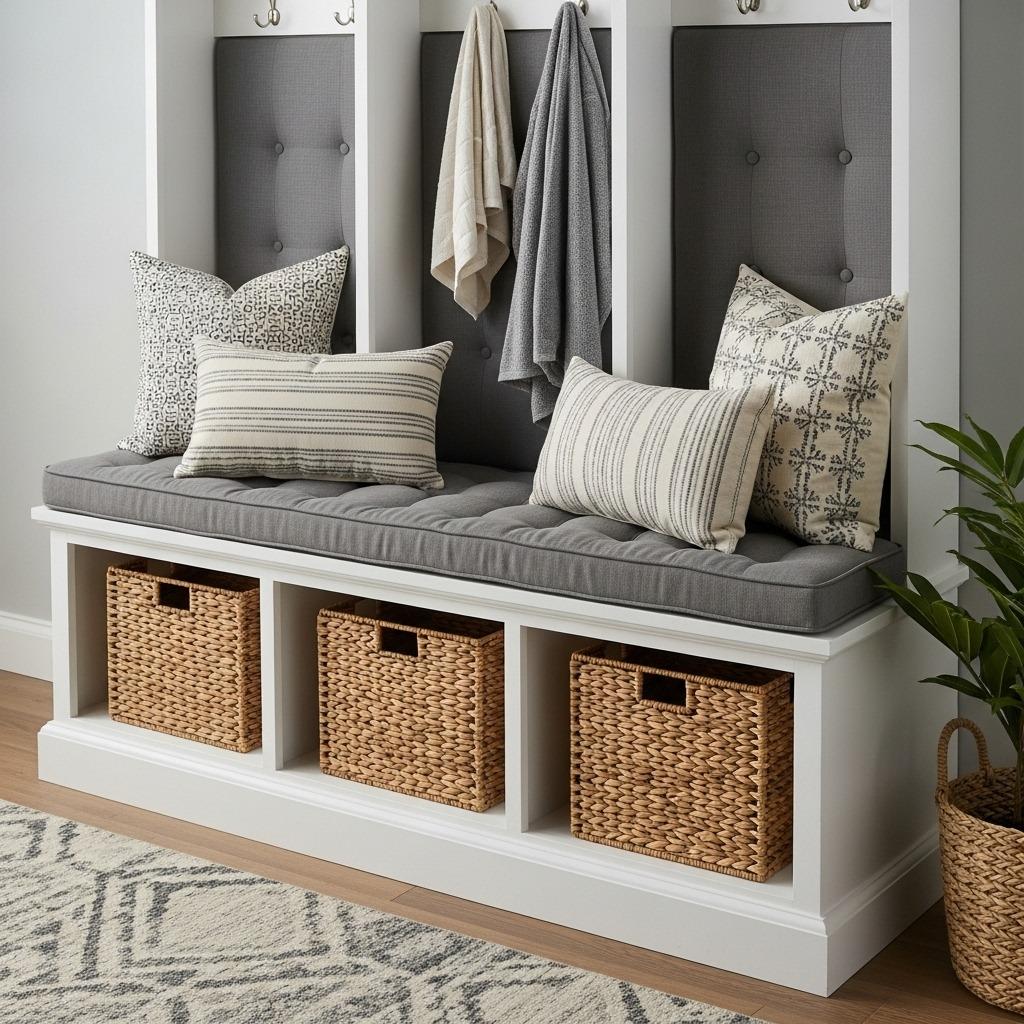
Combining comfortable seating with smart storage underneath creates a mudroom centerpiece that’s both practical and inviting. The cubbies below can house shoes, sports equipment, or seasonal accessories, while the cushioned top makes it easy to sit while dealing with footwear.
Add a wipeable cushion in a durable fabric that can handle daily wear. Coordinate throw pillows can make the space feel more designed rather than purely functional. This approach works especially well if your mudroom doubles as a transitional space that’s visible from other rooms.
Consider making the cubbies different sizes to accommodate various items – maybe one larger cubby for backpacks and several smaller ones for shoes. This flexibility in home storage improvement makes the system work for changing needs.
12. Corner Mudroom Setup with L-Shaped Bench
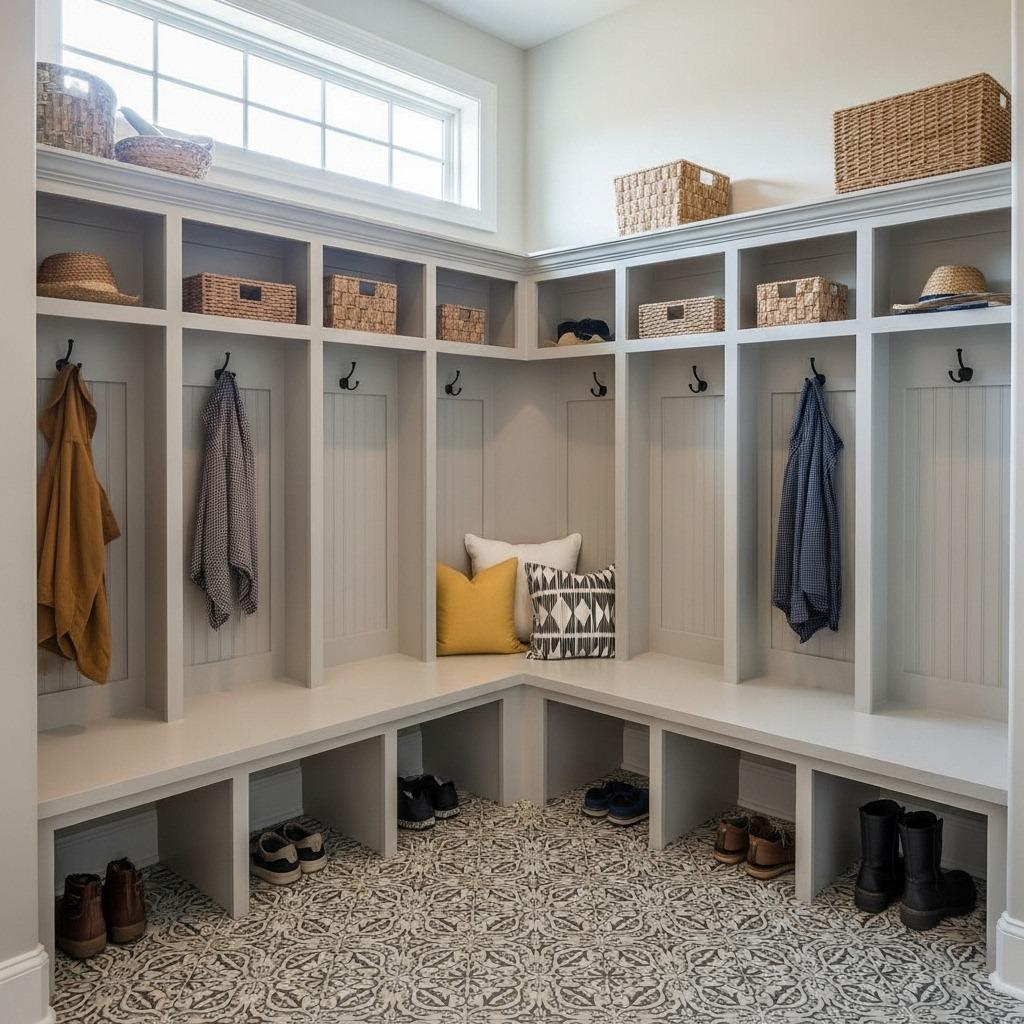
Corners are often wasted space in home design, but an L-shaped mudroom bench transforms this awkward area into a highly functional storage zone. This configuration works particularly well in smaller homes where you’re creating a mudroom from an unused corner rather than having a dedicated room.
The L-shape provides extra seating capacity while maximizing storage options along two walls. You can install hooks and shelves above both sections of the bench, essentially doubling your organizational space. This setup also creates a more defined mudroom zone even in an open floor plan.
Make sure to measure carefully before installation. The two sides of the L don’t need to be equal – adjust the lengths based on your space and traffic flow patterns.
13. Minimalist Mudroom with Scandinavian Design
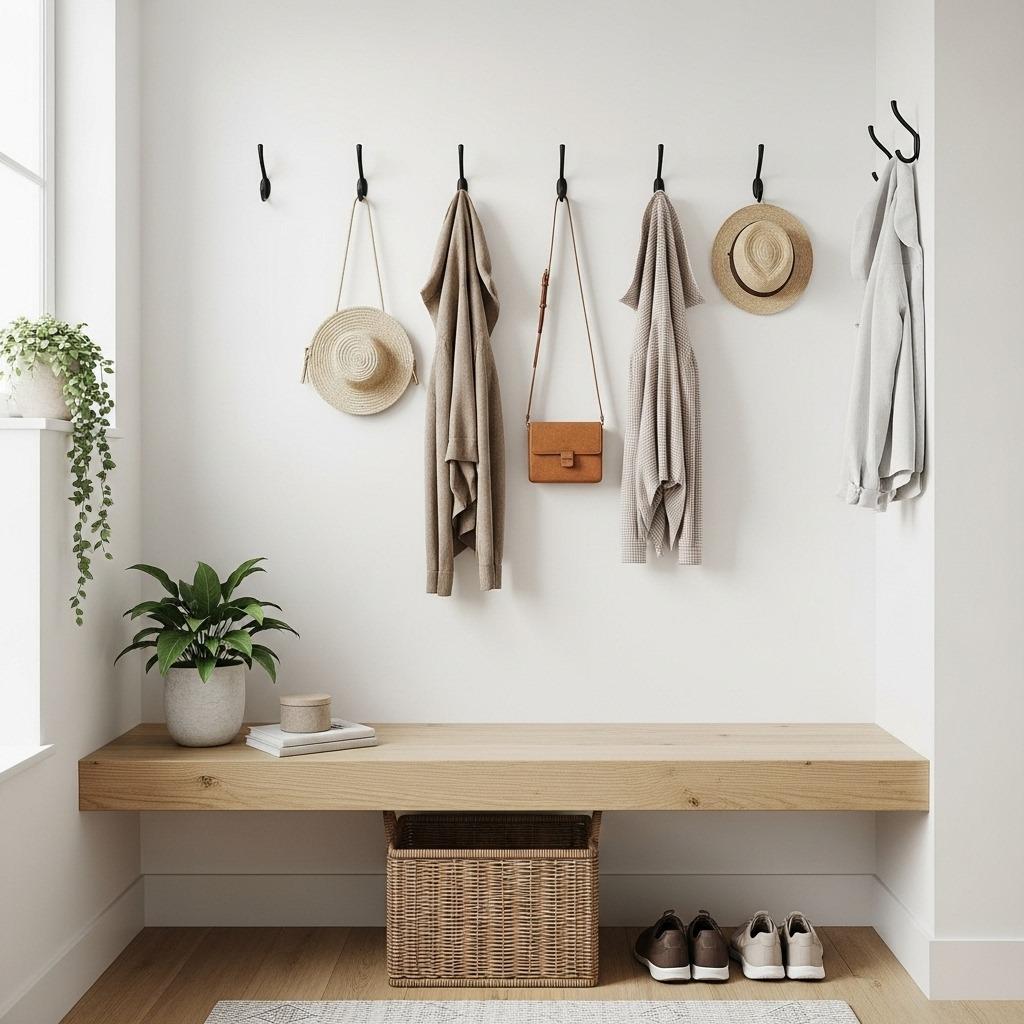
Not every mudroom needs to be packed with storage solutions. A minimalist approach using Scandinavian design principles can feel refreshingly uncluttered while still being highly functional.
Stick to a neutral color palette – whites, light woods, and soft grays. Choose just a few high-quality storage pieces rather than filling every wall. A floating bench, a row of simple hooks, and one or two baskets might be all you need if you regularly edit what stays in the mudroom.
This approach requires discipline in what you allow to accumulate in the space, but the visual calm is worth it. The minimalist aesthetic pairs beautifully with Scandinavian living room design if you’re carrying that style throughout your home.
14. Mudroom with Integrated Laundry Hamper
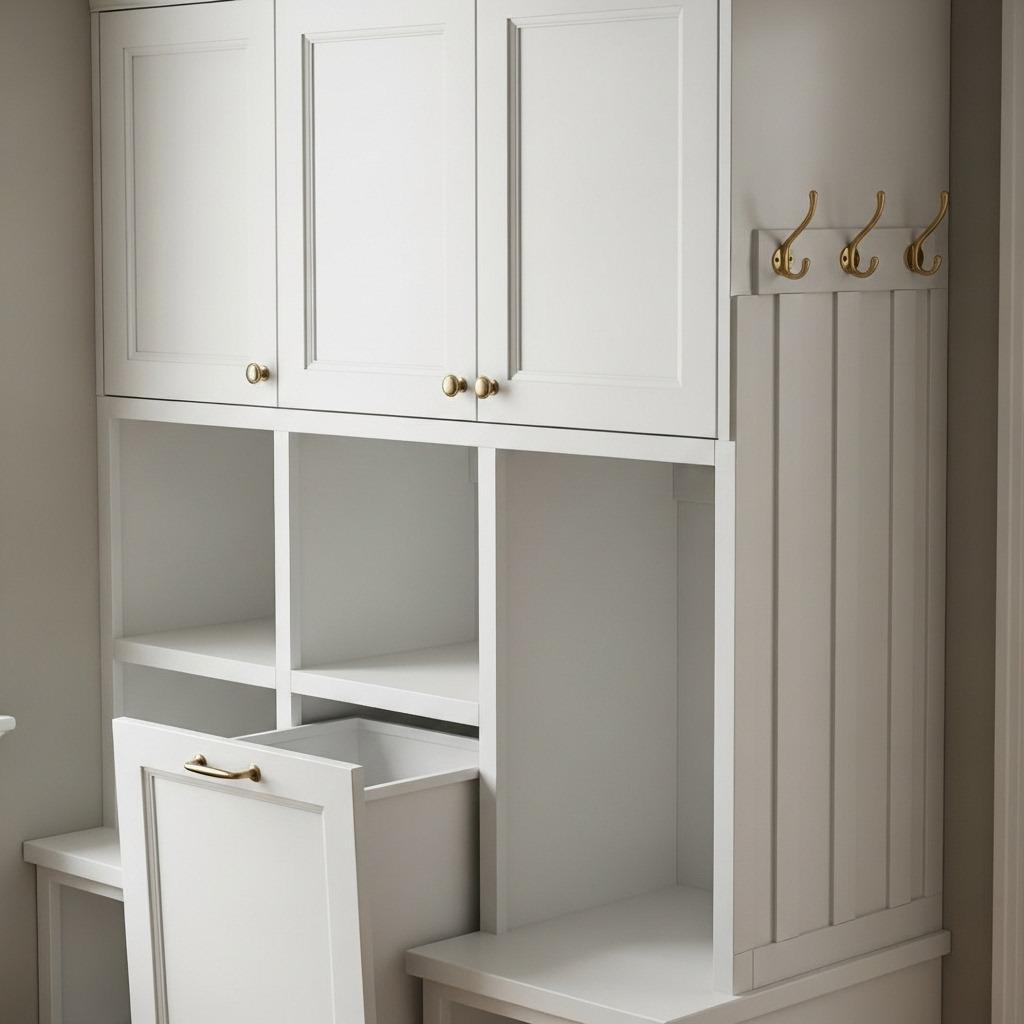
Integrating a laundry hamper into your mudroom design is surprisingly practical, especially for active families. Kids can shed dirty sports uniforms immediately, and the hamper stays hidden behind cabinet doors.
Install a pull-out hamper system in the lower section of your mudroom cabinetry. Some designs include multiple hampers for sorting lights and darks right from the start. This small addition streamlines laundry day and prevents dirty clothes from migrating throughout the house.
If your mudroom connects to the garage, this becomes even more useful for containing grimy work clothes or gardening gear. Make sure the hamper has ventilation holes to prevent mustiness.
15. Chalkboard Wall for Messages and Schedules
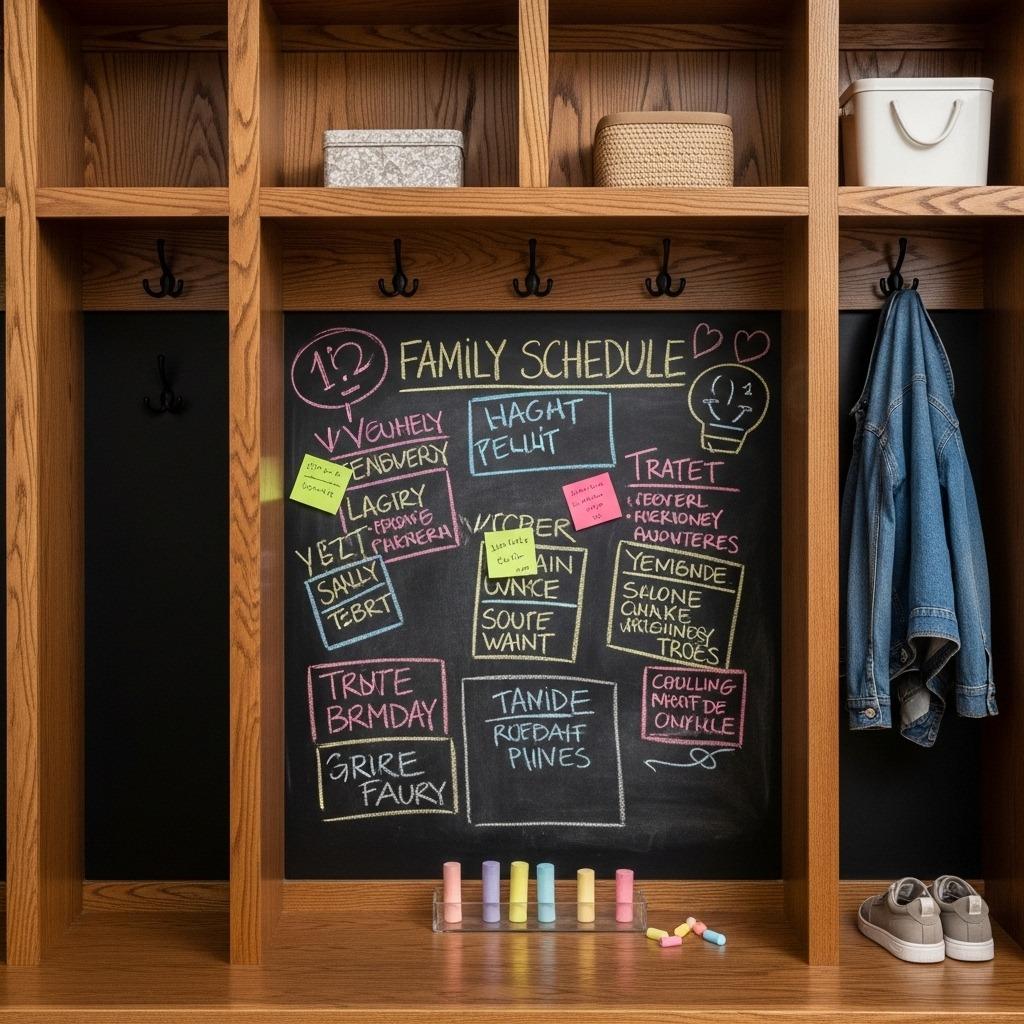
A chalkboard wall transforms your mudroom into a family communication center. Write reminders, weekly schedules, motivational messages, or let kids doodle while waiting to head out the door.
Paint one wall with chalkboard paint, or install a large framed chalkboard for a more finished look. Position it at a height that works for all family members. Add a small shelf or ledge below to keep chalk and erasers handy.
This feature adds personality while serving a genuine organizational purpose. It’s particularly helpful for families juggling multiple schedules and activities. The visual reminder by the door means important information catches everyone’s attention.
16. Glass-Fronted Upper Cabinets for Display Storage
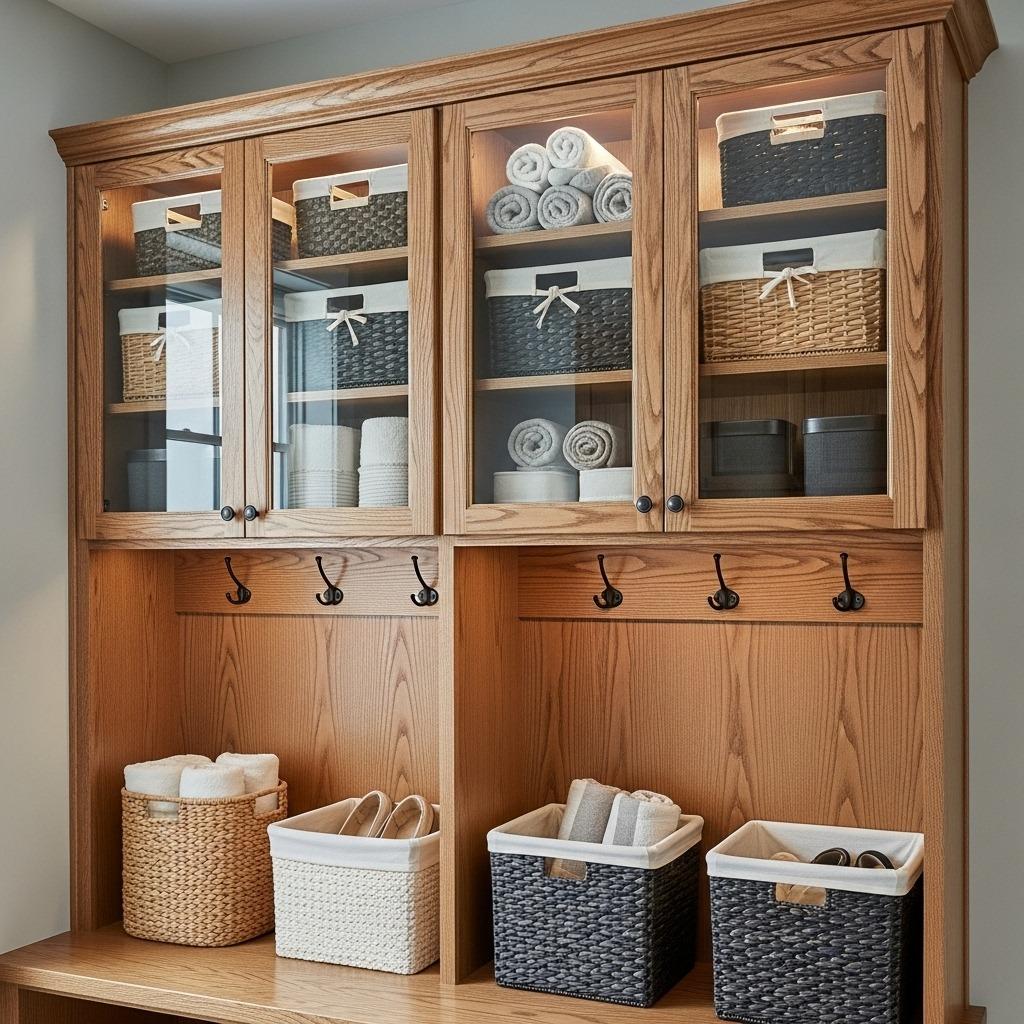
Glass-fronted cabinets in a mudroom might seem counterintuitive, but they work beautifully when styled thoughtfully. The transparent doors keep you honest about maintaining organization while making the space feel less closed-in.
Store attractive baskets, neatly folded items, or seasonal decorations behind the glass. The visibility encourages you to keep things tidy since everything is on display. Add small LED lights inside the cabinets to highlight the contents and improve functionality during darker months.
This approach works best for upper cabinets where you store less frequently used items. Keep everyday chaos contained in closed lower storage while the upper cabinets add a design element to your mudroom.
17. Multi-Functional Mudroom with Homework Station
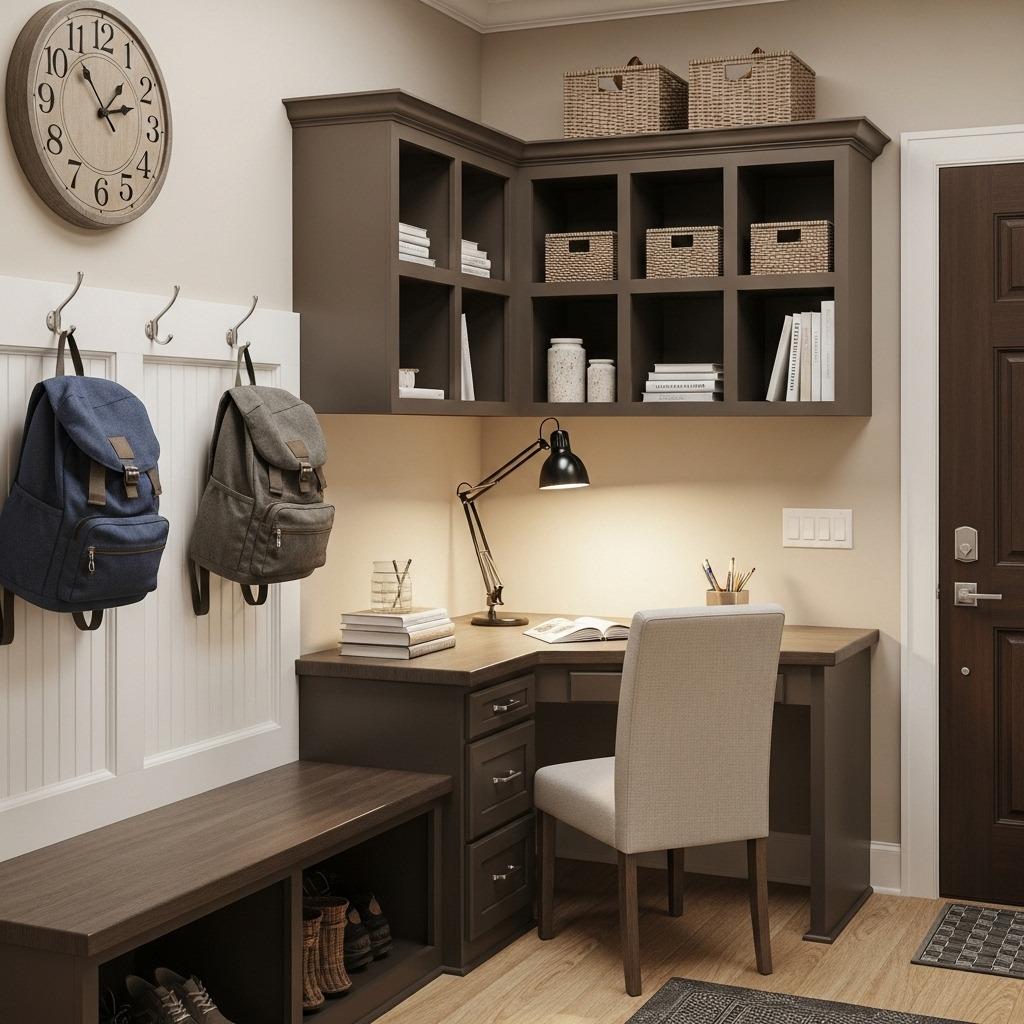
Why not make your mudroom work double duty? Adding a small homework or work station turns the space into a multi-functional area that serves your family beyond just storing outdoor gear.
Install a narrow desk or fold-down work surface in one section of your mudroom. Add task lighting and a few shelves for school supplies. This setup is perfect for kids to drop their bags and tackle homework immediately after school, keeping school stuff contained rather than spreading throughout the house.
Include charging stations for devices and a bulletin board for important papers. This type of smart home improvement maximizes the usefulness of every square foot in your home.
Making Your Mudroom Remodel Work for Your Family
The best mudroom is one that matches how your family actually lives. Before diving into any remodel, spend a week observing what items accumulate in your entryway and how people move through the space. Do you need more shoe storage or hanging space? Is pet gear taking over? Are backpacks the main issue?
Start with the storage solutions that address your biggest pain points, then layer in design elements that make the space feel intentional rather than purely utilitarian. Remember that organization systems only work if they’re convenient enough for everyone to use consistently.
Whether you’re working with a spacious dedicated mudroom or carving out a small functional zone by your entrance, these mudroom remodel ideas can help you create an entryway that keeps clutter contained and makes daily routines smoother. The key is choosing features that solve your specific organizational challenges while creating a space that welcomes you home every day.

