

I’ll be honest – I used to think accent walls were a bit overdone. Then I realized the problem wasn’t the concept itself, but how people were approaching it. A thoughtfully designed feature wall can completely reshape how a room feels without touching anything else.
The beauty of modern accent wall ideas lies in their versatility. Whether you’re working with a tiny apartment or a sprawling living space, the right wall treatment creates depth, adds character, and gives your eye somewhere interesting to land. And unlike a full room makeover, you’re only committing to one wall, which makes experimenting so much less intimidating.
What makes today’s approach different from the dark purple accent walls of 2008? Modern designs focus on texture, dimension, and unexpected materials rather than just bold paint colors. Think wood slats, 3D panels, or even curated gallery arrangements that tell a story. These aren’t just walls anymore – they’re conversation starters.
Why Living Room Accent Walls Work
Your living room is where life happens. It’s movie nights, morning coffee, awkward small talk with your in-laws, and everything in between. That’s exactly why it deserves a focal point that reflects your personality.
An accent wall naturally draws attention, which is particularly useful if you’re trying to highlight architectural features or distract from less appealing elements. Got a dated fireplace you can’t afford to replace? A stunning wall treatment around it can make the whole setup look intentional. Weird room proportions? The right accent wall visually balances awkward spaces.
There’s also something psychologically satisfying about walking into a room with a clear focal point. It feels finished, thought-out, and put-together even if the rest of your decor is still a work in progress. Plus, home improvement ideas like this typically offer impressive results for relatively modest investments.
1. Vertical Wood Slat Wall
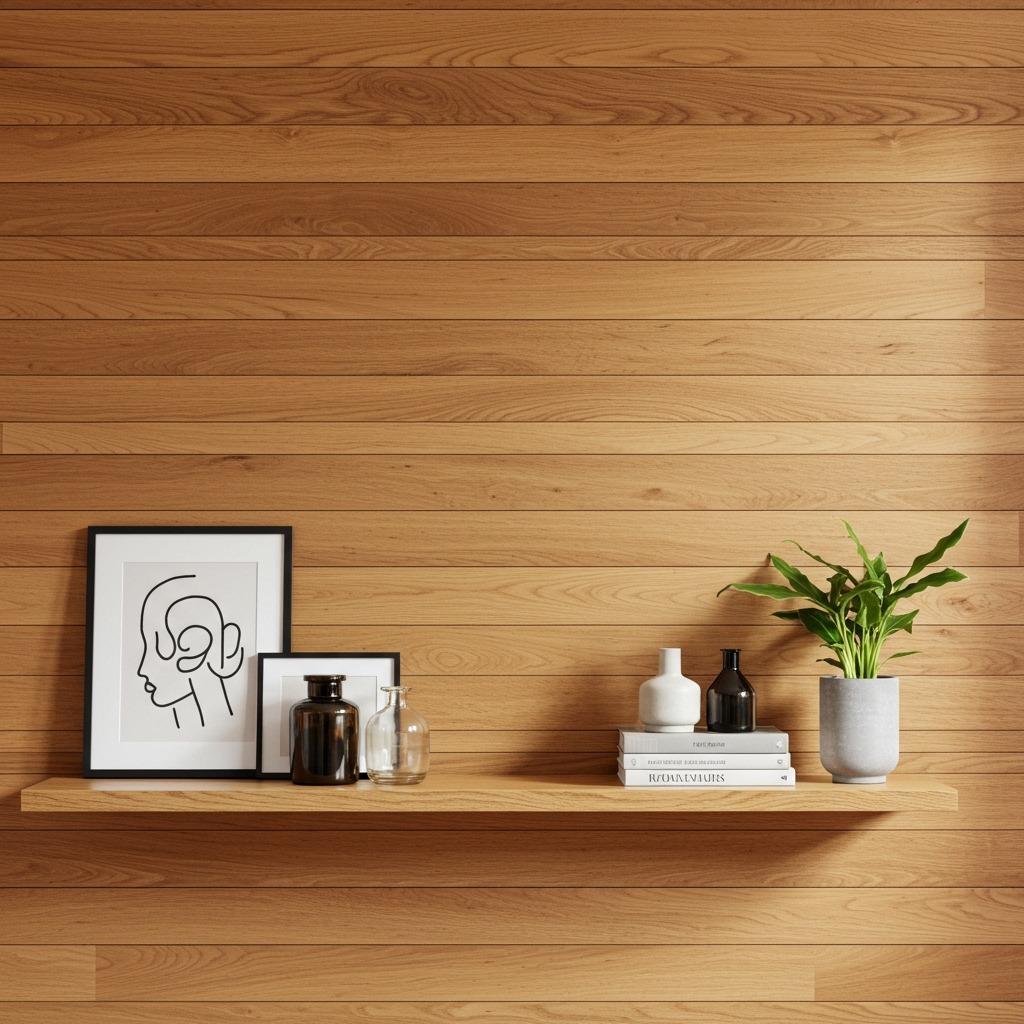
Vertical wood slats have this wonderful way of making ceilings feel taller. The lines guide your eye upward, which is a designer’s trick for adding height to any space. I’ve seen this work beautifully in living room ideas where the goal is making a standard-height room feel more spacious.
The spacing between slats matters more than you’d think. Wider gaps create dramatic shadow effects, especially with strategic lighting. Tighter spacing offers a more subtle, cohesive look that works well behind TVs or in minimalist spaces. You can DIY this with pre-finished wood strips from your local hardware store, or spring for a professional installation if precision matters to you.
What I love about wood slats is how they add warmth without competing with your furniture. They’re textured enough to be interesting but neutral enough to work with almost any color scheme. Pair them with a Scandinavian living room aesthetic for that perfect blend of warmth and simplicity.
2. Moody Dark Paint Color
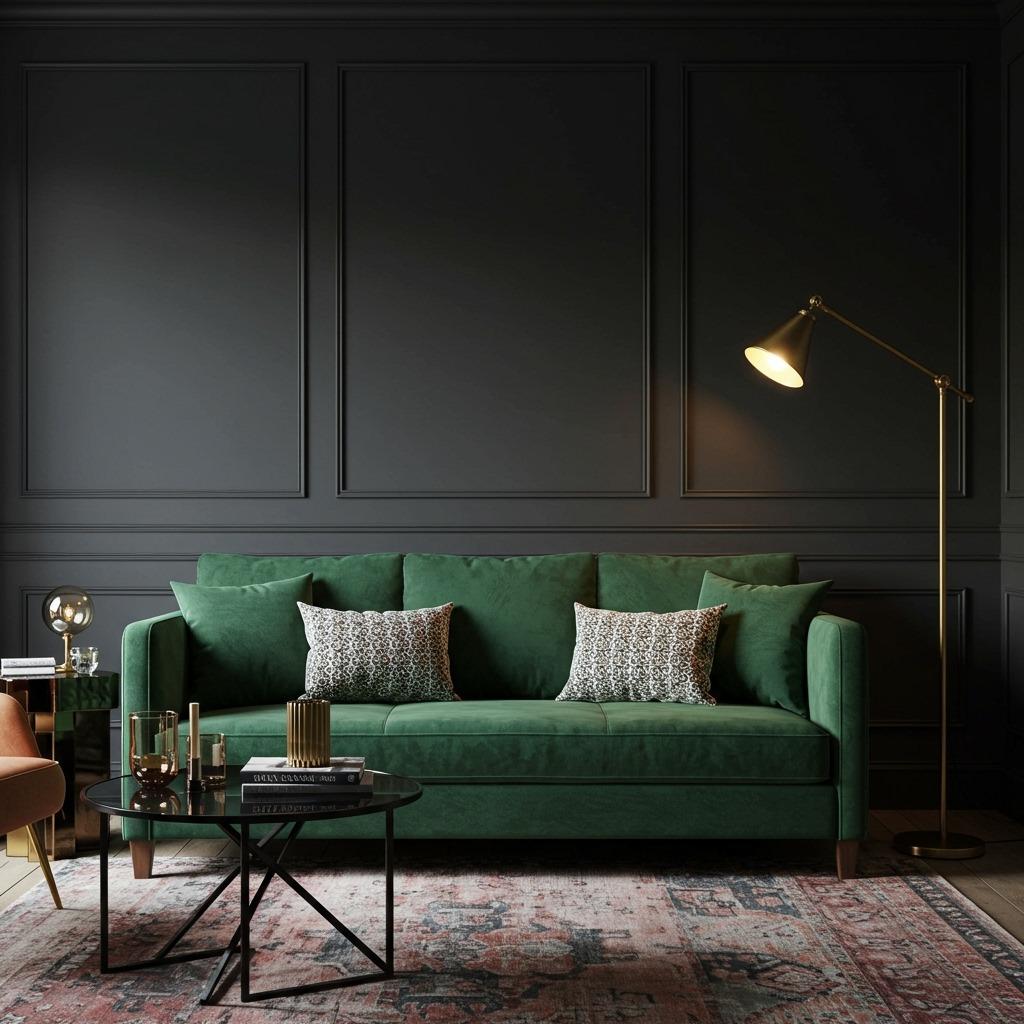
There’s something undeniably cozy about a dark wall. Deep charcoal, navy, or forest green creates an envelope effect that makes large rooms feel more intimate. I was skeptical about this until I tried it in my own space – the transformation was immediate.
Dark walls work particularly well behind lighter furniture, creating that gorgeous contrast that makes both elements pop. The key is lighting – you need multiple light sources at different heights to prevent the space from feeling cave-like. Think floor lamps, table lamps, and maybe some picture lights or sconces.
One unexpected benefit? Dark walls hide TV cables and wall-mounted equipment way better than light colors. If you’re setting up an entertainment center, this practical advantage might seal the deal. Just make sure your room gets decent natural light, or you’ll want to keep those window treatments open during the day.
3. Geometric Paint Pattern
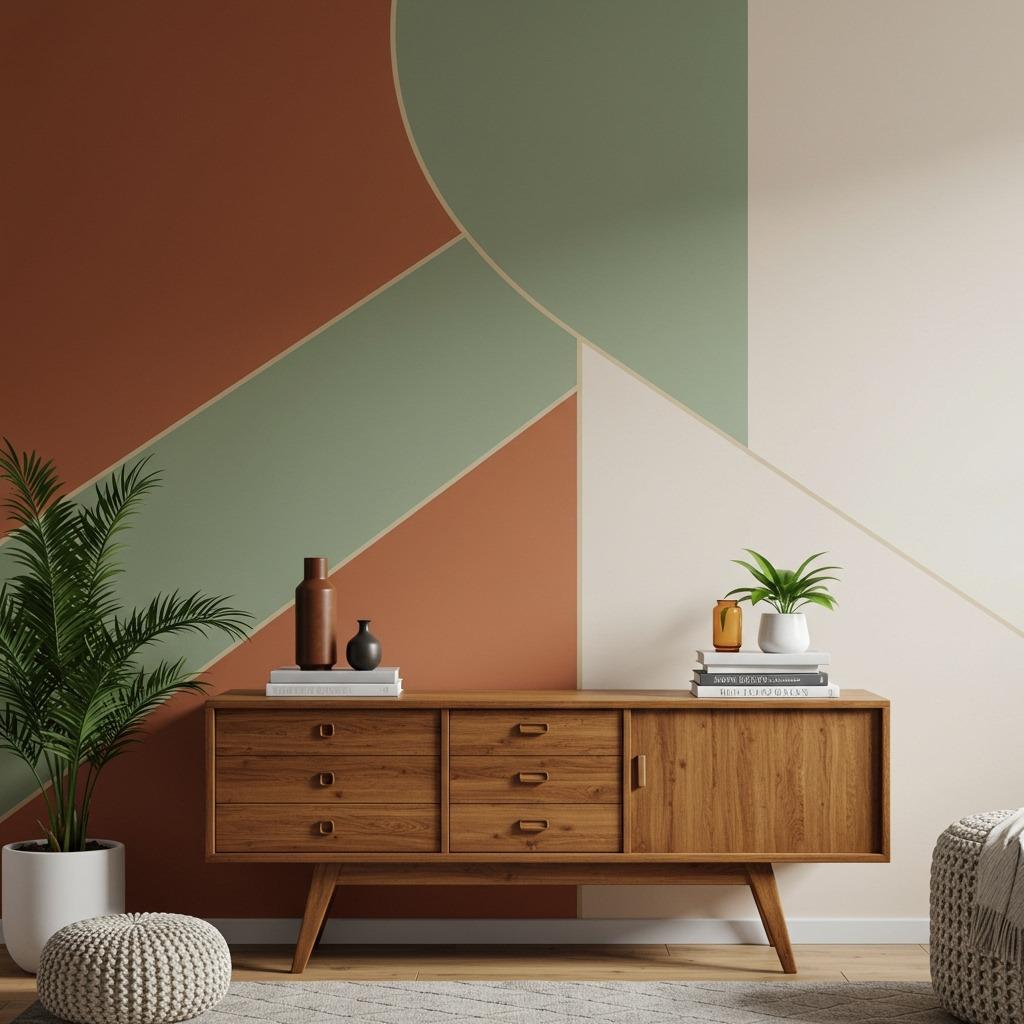
Geometric patterns turn your wall into functional art. The beauty is that you can go as simple or complex as you’re comfortable with – even basic triangles or hexagons create impressive visual impact. This is one of those modern accent wall ideas that looks expensive but can be totally budget-friendly if you’re willing to put in the time.
Painter’s tape becomes your best friend here. The crispest lines come from really pressing down that tape edge and removing it while the paint is still slightly tacky. I learned that the hard way after peeling off tape from completely dried paint and taking some of the base coat with it. Not my finest moment.
The color combination matters tremendously. Monochromatic schemes (different shades of the same color) feel sophisticated and calming. Complementary colors create energy and drama. According to House Beautiful, geometric patterns work especially well in contemporary and mid-century modern spaces where clean lines are already part of the design language.
4. Textured Plaster or Venetian Plaster
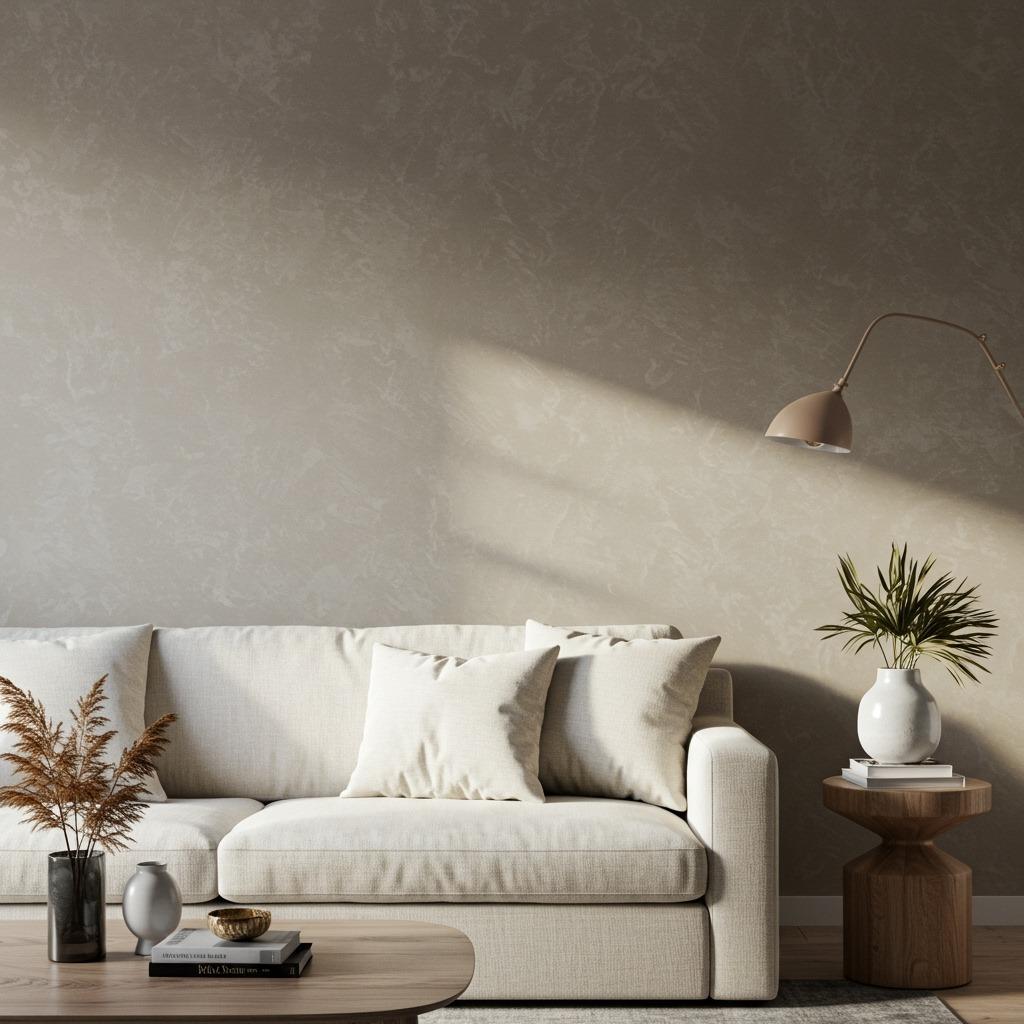
Venetian plaster has this luminous quality that flat paint just can’t replicate. The way light plays across the subtle texture changes throughout the day, which means your wall literally looks different at sunrise versus sunset. It’s like having art that shifts with the natural light.
This technique does require some skill – or a professional – to get right. The plaster is applied in multiple thin layers, then burnished to create that signature sheen. You can find DIY kits at most home improvement stores, but I’d recommend practicing on a sample board first. The learning curve is real.
The finish feels organic and handcrafted, which adds warmth to modern spaces that might otherwise feel too polished. It pairs beautifully with natural materials like linen, wool, and unfinished wood. Consider this for feature wall design that needs to bridge contemporary furniture with a more lived-in, collected vibe.
5. Floor-to-Ceiling Built-In Shelving
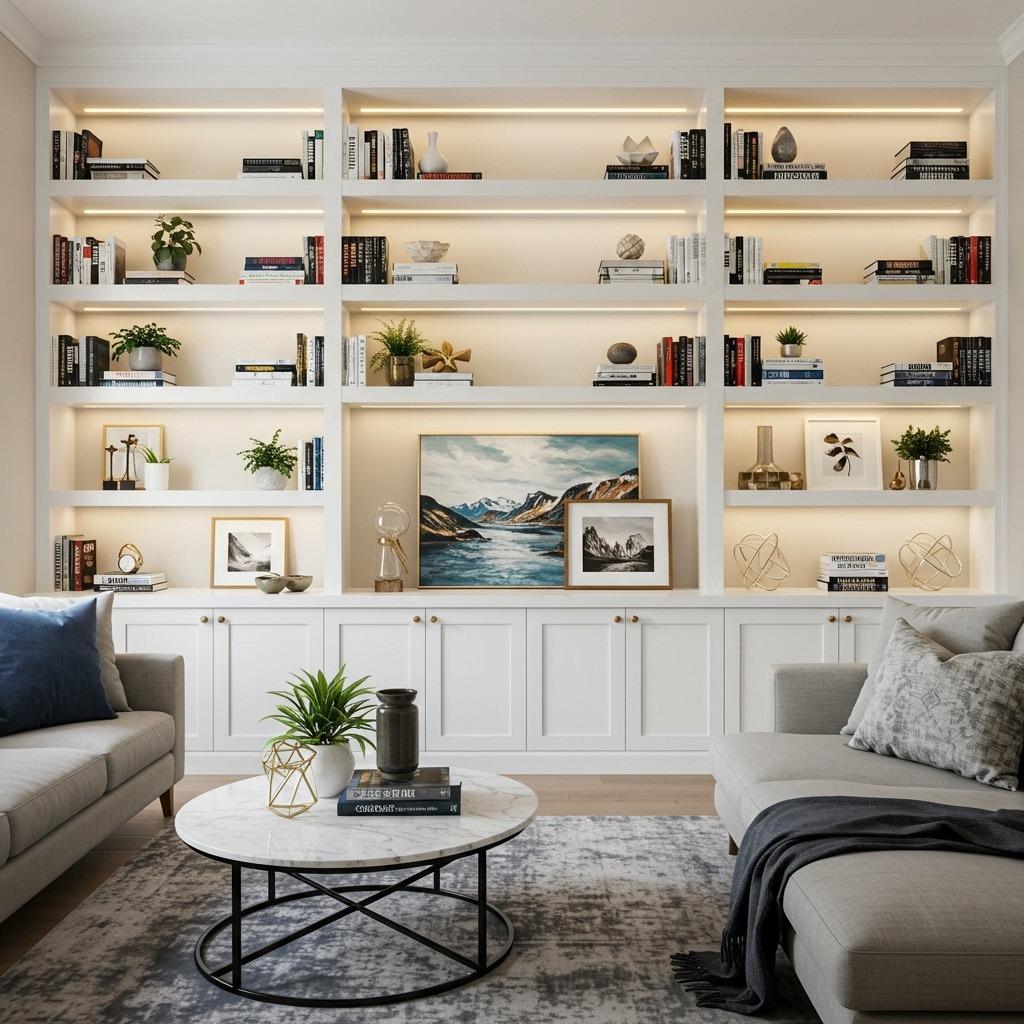
Built-in shelving transforms a blank wall into both storage and display. This is probably the most functional option on this list – you’re creating beautiful visual interest while solving the eternal problem of where to put all your stuff. Books, plants, travel souvenirs, that vintage camera collection – everything finds a home.
The styling is where people often stumble. The trick is varying heights, layering items, and leaving some negative space so it doesn’t look cluttered. Follow the designer’s rule of thirds: roughly one-third books, one-third decorative objects, one-third breathing room. And please, not everything needs to face forward. Some spine-out books add texture and authenticity.
If custom built-ins aren’t in your budget, modular shelving systems like IKEA’s Billy bookcases can achieve a similar effect when installed wall-to-wall. Add a coat of paint, crown molding at the top, and baseboard at the bottom to make them look built-in. This approach fits perfectly with affordable home upgrades that maximize impact without breaking the bank.
6. Stone or Brick Veneer
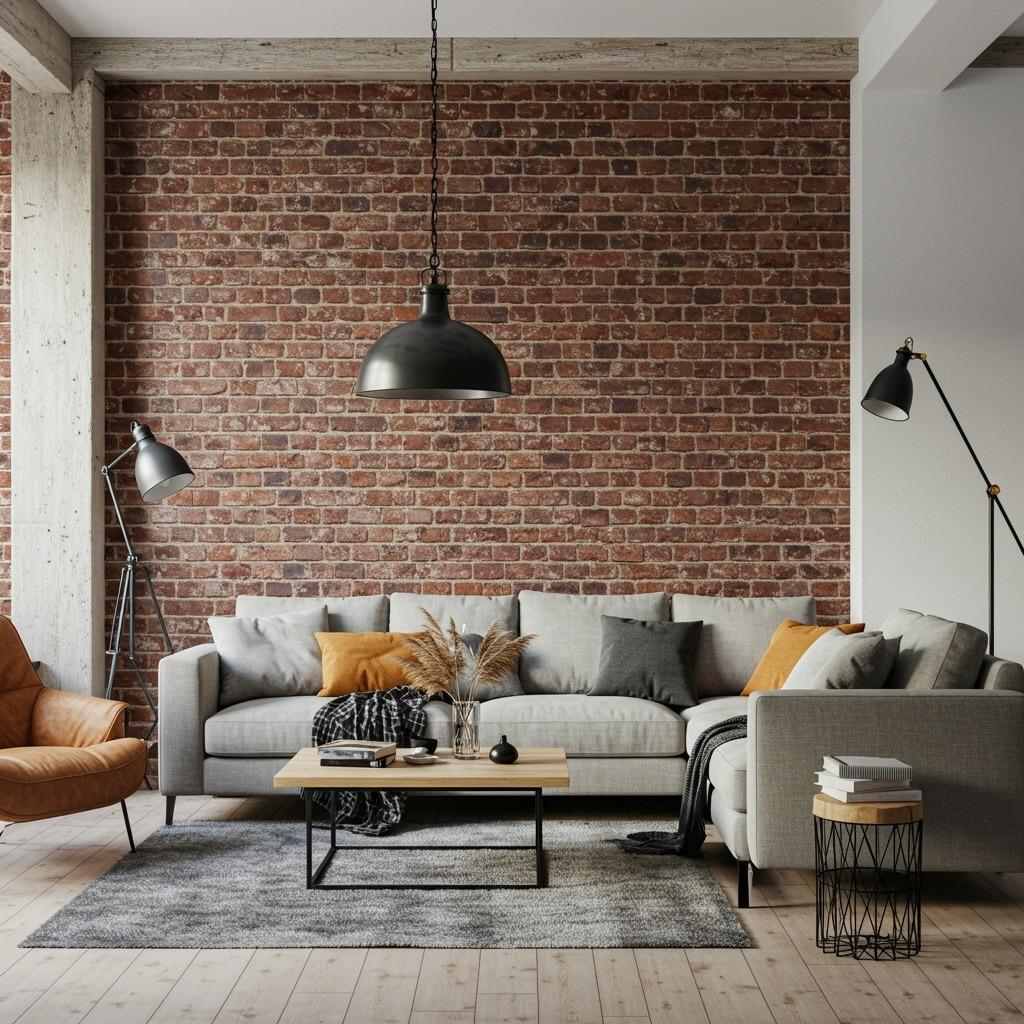
Real brick or stone adds instant character but weighs a ton and costs a fortune. Veneer gives you the look at a fraction of the weight and price. Modern veneers are surprisingly convincing – we’re not talking about the fake-looking stuff from decades past.
I’ve seen this work brilliantly in both urban loft aesthetics and more traditional spaces that need some edge. The texture creates shadows and dimension that photographs beautifully, which is why this feature wall design shows up constantly on Pinterest. It’s genuinely one of the most pin-worthy treatments you can choose.
Installation is manageable for confident DIYers. The thin veneer pieces adhere directly to drywall with construction adhesive, then you grout the seams. The whole process takes a weekend if you’re methodical about it. Just make sure your wall is smooth and properly primed – any imperfections will show through.
7. Peel-and-Stick Wallpaper
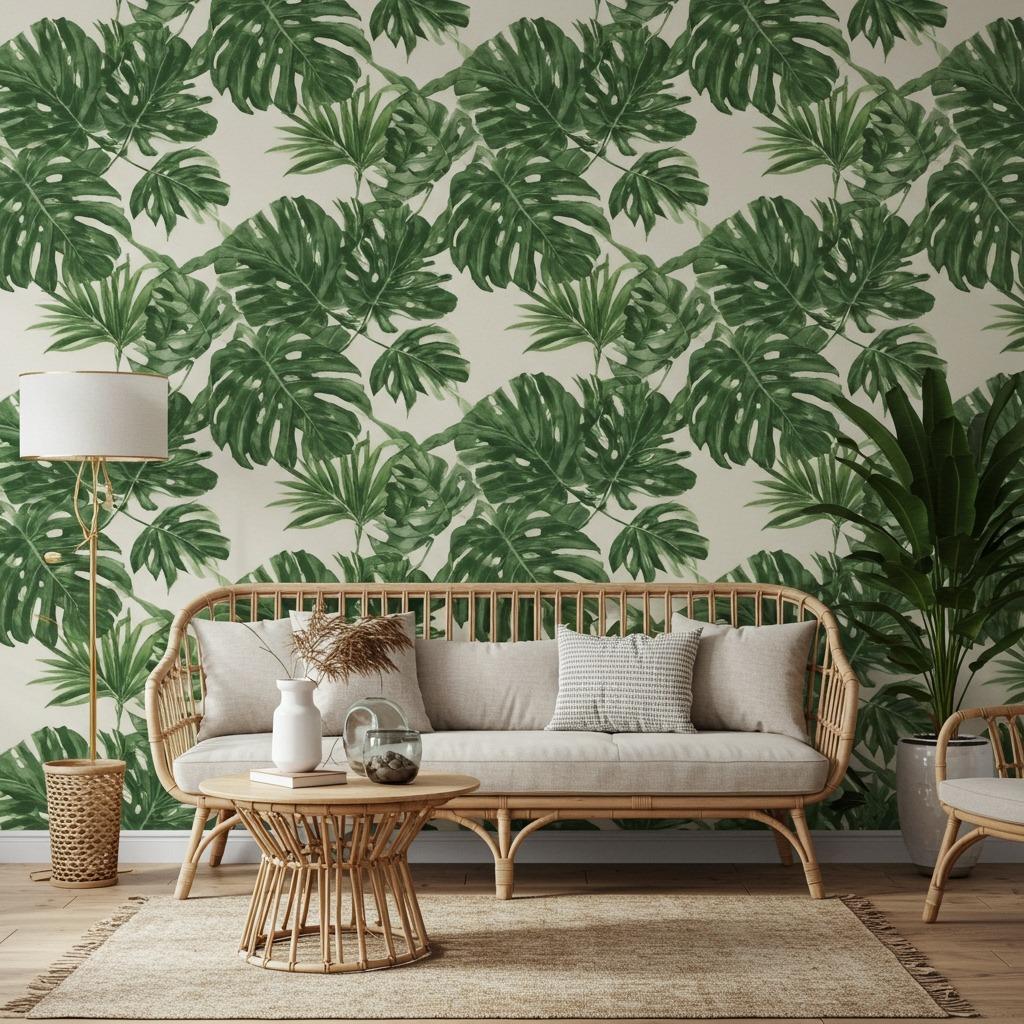
Peel-and-stick wallpaper has come so far from the plasticky college dorm versions. Today’s options include genuine designer patterns, textured finishes, and even fabric-backed papers that look and feel high-end. The best part? When you’re ready for something new, it comes off cleanly without damaging your walls.
Application is straightforward but requires patience. Measure twice, start at the ceiling, use a smoothing tool to work out bubbles, and trim carefully at the baseboards. I usually recruit a friend for this – having someone hold the top of the strip while you align the bottom makes the process infinitely easier.
Pattern selection is where you can really have fun. Large-scale prints make bold statements in spacious rooms, while smaller repeating patterns suit cozier spaces. If you’re nervous about pattern overload, try wallpaper on just one wall while keeping the others neutral. This works especially well in a cozy small living room where you want interest without overwhelming the space.
8. Gallery Wall Arrangement
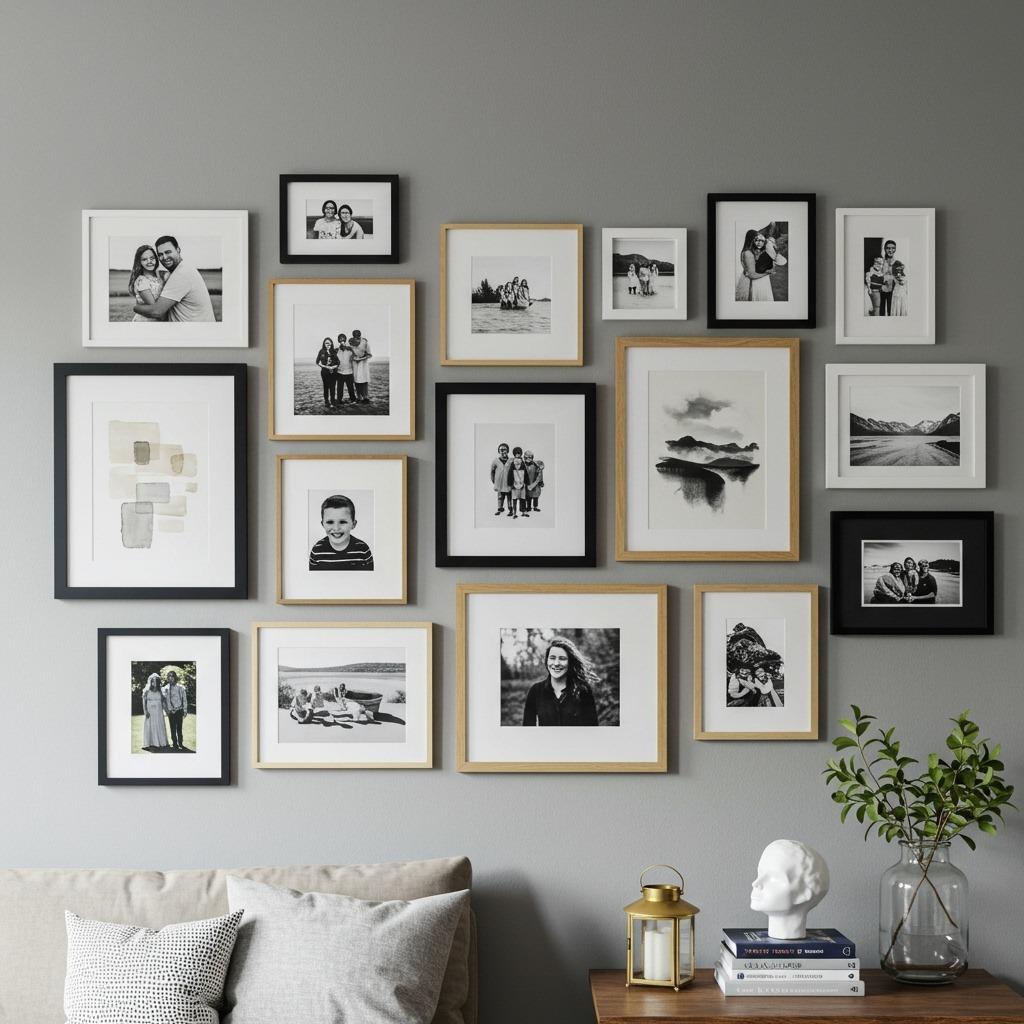
A well-executed gallery wall is art, storage, and personal history all in one. The key is treating the entire arrangement as a single piece rather than individual frames that happen to share a wall. Layout the whole thing on the floor first, take a photo, then replicate it on the wall using that photo as your guide.
Mixing frame styles and sizes creates visual interest, but you need something to tie it all together – maybe a consistent mat color, similar wood tones, or a cohesive color palette in the artwork itself. Too much variety and it looks chaotic. Too little and it feels boring. Finding that sweet spot takes some experimentation.
Start with your largest piece at eye level, then build around it. Maintain roughly 2-3 inches of space between frames for a curated look. This is one of those living room wall inspiration ideas that evolves over time – you can add, subtract, and rearrange as you find new pieces or your taste changes.
9. Bold Wallpaper Statement
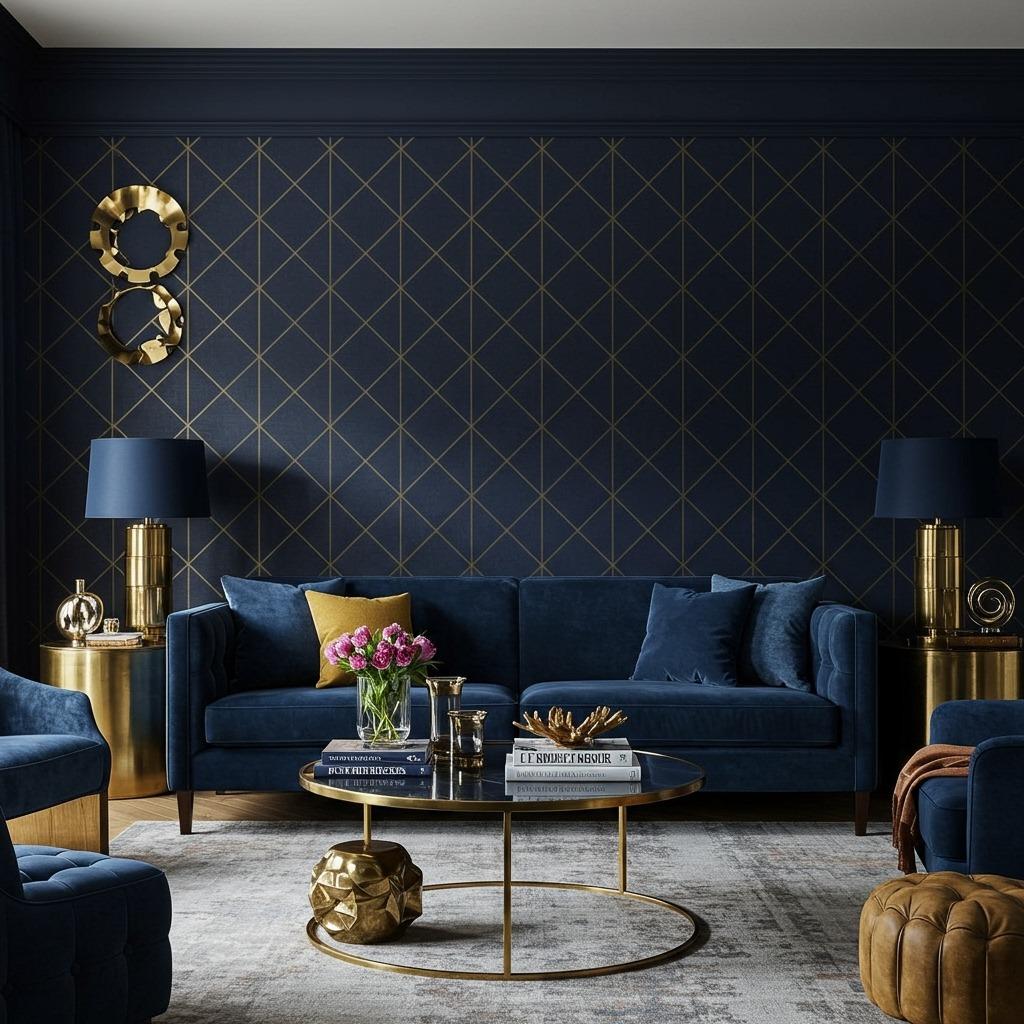
Sometimes subtle just isn’t what the room needs. Bold wallpaper – think oversized florals, metallic geometrics, or dramatic murals – announces itself the second you walk in. This approach works particularly well in homes with otherwise neutral decor where you want one showstopping element.
The scale of your room matters when choosing pattern size. Large patterns can overwhelm small spaces, though occasionally breaking that rule creates an unexpectedly cozy, jewel-box effect. In bigger rooms, small patterns can look busy and chaotic from a distance. Sample swatches in your actual space at different times of day before committing.
Installation with traditional wallpaper (not the peel-and-stick variety) is more involved. You’re dealing with paste, proper wall prep, and precise pattern matching. Unless you’re confident in your skills, this might be worth hiring out. A professional installation ensures clean seams and proper adhesion, which matters more with expensive paper.
10. Shiplap or Horizontal Planking

Shiplap brings that modern farmhouse vibe everyone’s been chasing. The horizontal lines make rooms feel wider, which is particularly useful in narrow spaces. Real shiplap involves interlocking planks, but you can achieve a similar look with simple plywood strips and a nail gun.
Painting shiplap white is classic, but don’t sleep on other options. Natural wood stain keeps things warm and rustic. Soft grays or greiges work beautifully in transitional spaces. I’ve even seen black shiplap that looked surprisingly sophisticated rather than heavy – it’s all about the room’s lighting and other elements.
The beauty of this treatment is its versatility across design styles. Works in coastal themes, farmhouse aesthetics, even Scandinavian-inspired spaces when kept minimal. For more ways to incorporate Scandinavian design elements, check out ideas for creating a Scandinavian living room that balances simplicity with warmth.
11. 3D Textured Wall Panels
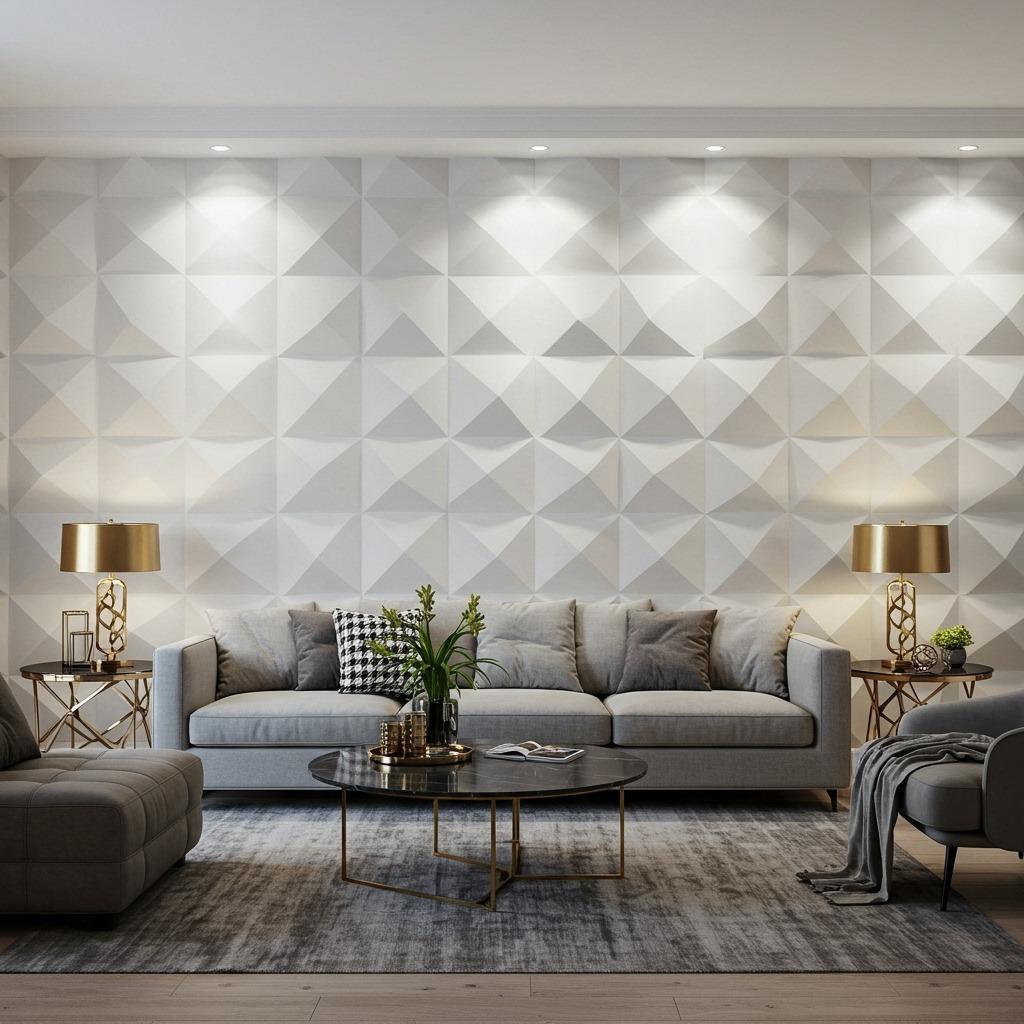
Three-dimensional panels add serious architectural interest without actual construction. They cast shadows that change throughout the day as light shifts, which means your wall never looks quite the same twice. Most panels come in lightweight materials like PVC or plant fiber, so installation is surprisingly straightforward.
The geometric patterns range from subtle waves to bold angular designs. I find that more dramatic patterns work best on walls without much furniture in front of them – you want to see the full effect. Subtler textures can work behind sofas or entertainment centers where you’re seeing them at an angle.
Painting these panels the same color as your other walls creates a sophisticated, tone-on-tone effect. The texture provides visual interest without color contrast. Alternatively, paint the panels in a coordinating but different shade for added depth. This modern approach to feature wall design adds architectural detail that looks far more expensive than it actually is.
12. Two-Tone Paint with Chair Rail
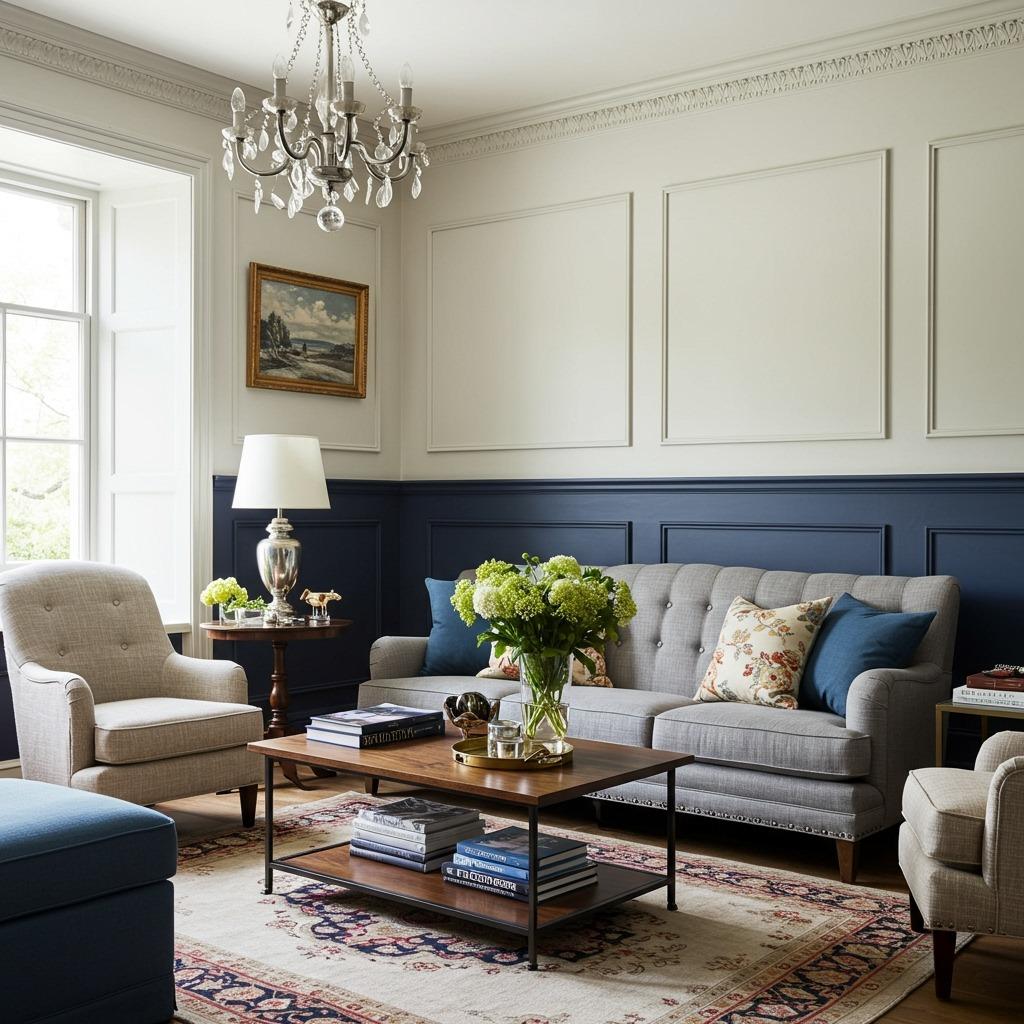
Chair rail molding lets you play with multiple colors on one wall without things looking chaotic. Traditionally, the lower portion (wainscoting area) is darker, which helps hide scuffs and wear. But rules are meant to be broken – a light bottom with dark top creates unexpected drama.
The rail typically sits about one-third of the way up the wall, though you can adjust based on your ceiling height and furniture scale. Install the molding first, then paint. Use painter’s tape along the edges for clean lines, and remove it before the paint fully dries for the crispest results.
This treatment adds formality and traditional charm, which works beautifully when you’re trying to give a newer home some character. It’s also practical in homes with kids or pets – that lower section takes the abuse while looking intentional. The two-tone approach relates to the principles you’ll find in two tone kitchen cabinet designs, where contrasting colors create visual interest and practical benefits.
13. Mural or Hand-Painted Art
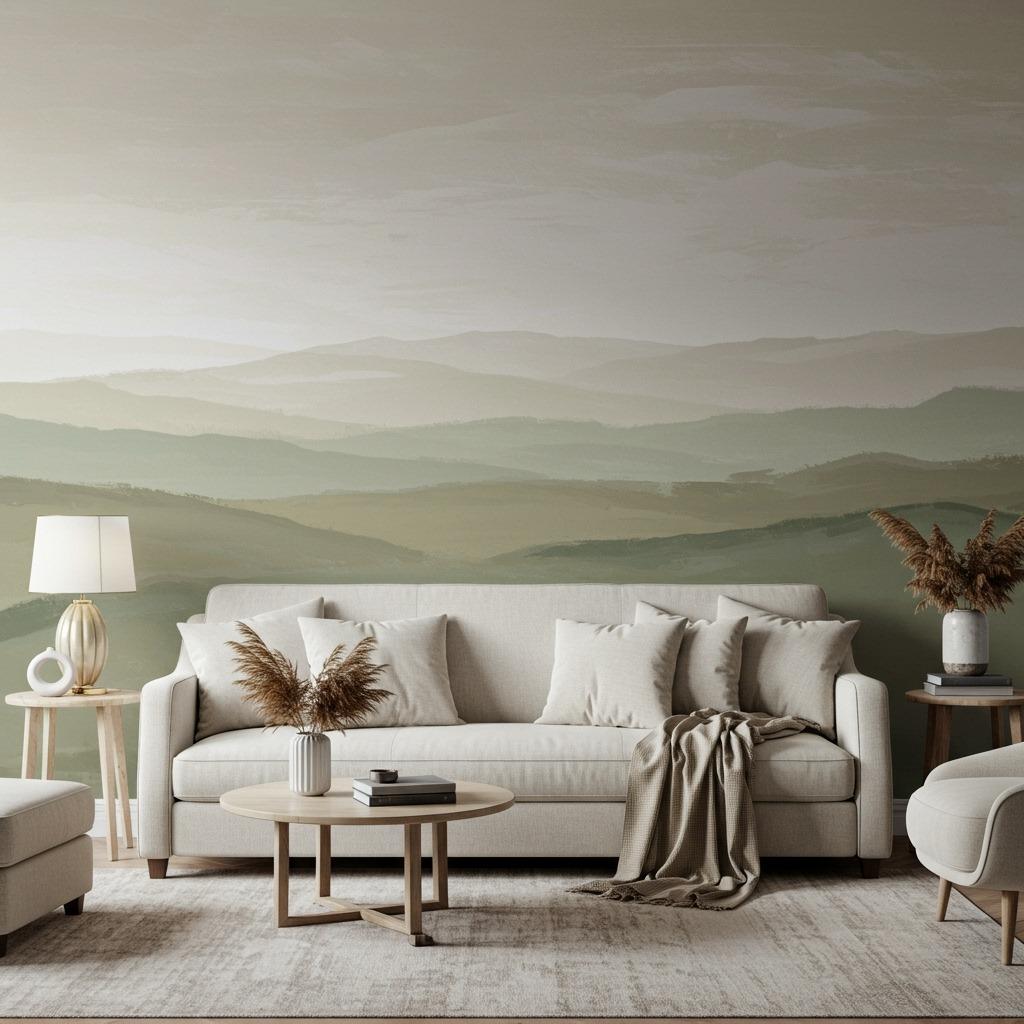
A custom mural is the ultimate personalization. Whether you hire an artist or tackle it yourself, you’re creating something genuinely one-of-a-kind. This isn’t just decoration – it’s a conversation piece that reflects your personality and interests.
If you’re not artistically inclined, don’t count this out. Projectors make tracing designs onto walls surprisingly accessible. You can project an image, trace the outlines in pencil, then fill in the colors. Stencils offer another option for creating impressive painted details without freehand skills.
The subject matter should relate to your overall aesthetic. Abstract designs work with modern spaces, nature scenes suit organic or bohemian rooms, geometric patterns complement mid-century modern. Whatever you choose, make sure it’s something you’ll love long-term – murals aren’t quick to change like paint or wallpaper.
14. Colorful Ombre Effect
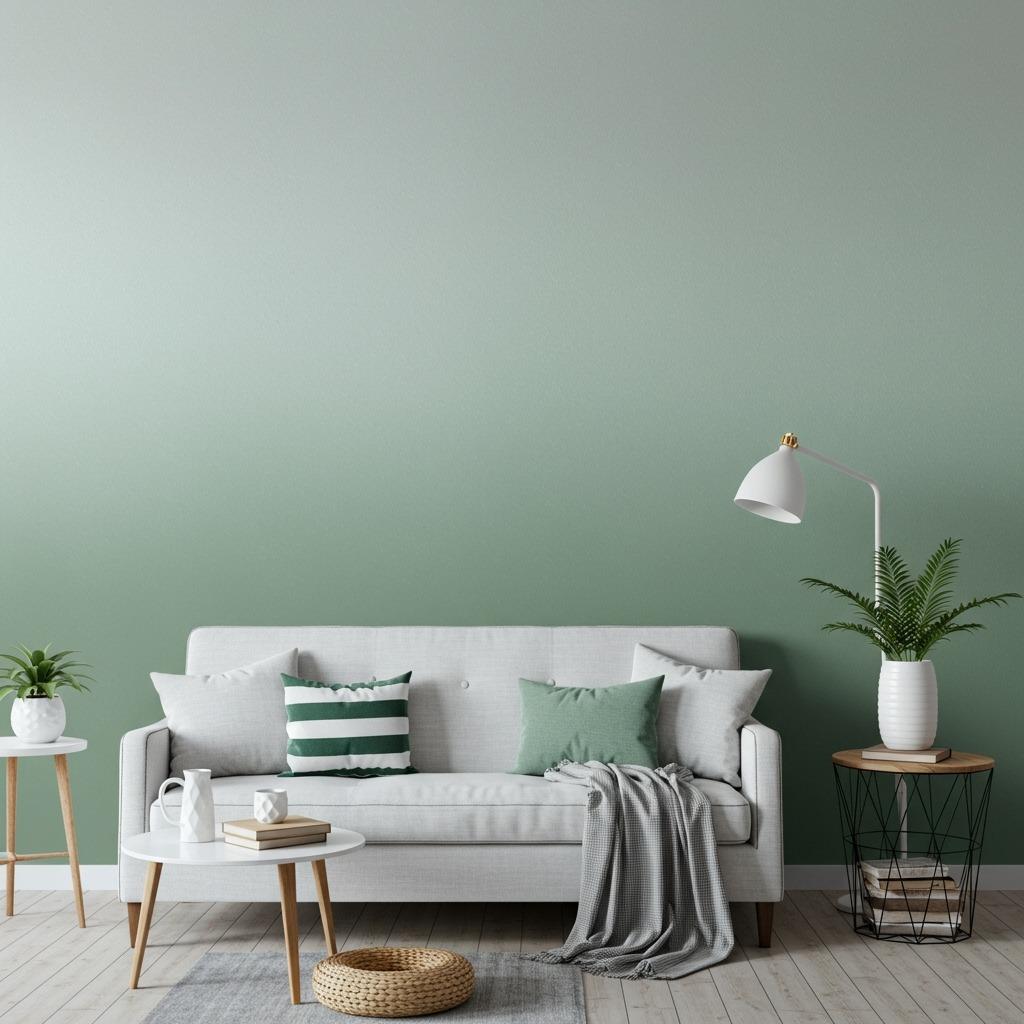
Ombre walls create a dreamy, artistic effect that photographs beautifully. The color gradually transitions from dark to light (or vice versa), which adds depth and interest without harsh lines. This is trendy paint technique that looks complex but is actually achievable with patience and the right blending method.
The key is working in sections while the paint is still wet, blending the colors together with a large dry brush or small roller. Start with your darkest shade at the bottom, your lightest at the top, and create the gradient in the middle by mixing the two colors in various ratios. Work quickly and keep a wet edge to avoid visible lines.
Color choice dramatically affects the mood. Cool tones like blues and purples feel calming and work well in relaxation spaces. Warm tones like coral to cream create energy and welcome. Stick with colors in the same family for the most cohesive look – jumping from blue to orange probably won’t give you the dreamy effect you’re hoping for.
15. Woven Wall Hanging as Focal Point

Sometimes the accent isn’t the wall itself but what you hang on it. An oversized woven textile or macramé piece creates a soft, textural focal point that works beautifully in bohemian or globally-inspired spaces. The natural fibers add warmth and organic texture that painted walls simply can’t match.
Scale matters here – the piece needs to be substantial enough to anchor the wall and hold its own visually. Too small and it looks like you’re trying to fill space. The right size creates intentional impact. Generally, aim for a piece that’s roughly two-thirds the width of your sofa or major furniture piece below it.
This approach works particularly well in cozy small living room setups where heavy architectural treatments might overwhelm the space. The softness of textile art adds interest without the visual weight of wood, stone, or bold paint. Layer it with a painted accent wall in a complementary neutral for even more depth.
16. Concrete or Industrial Finish
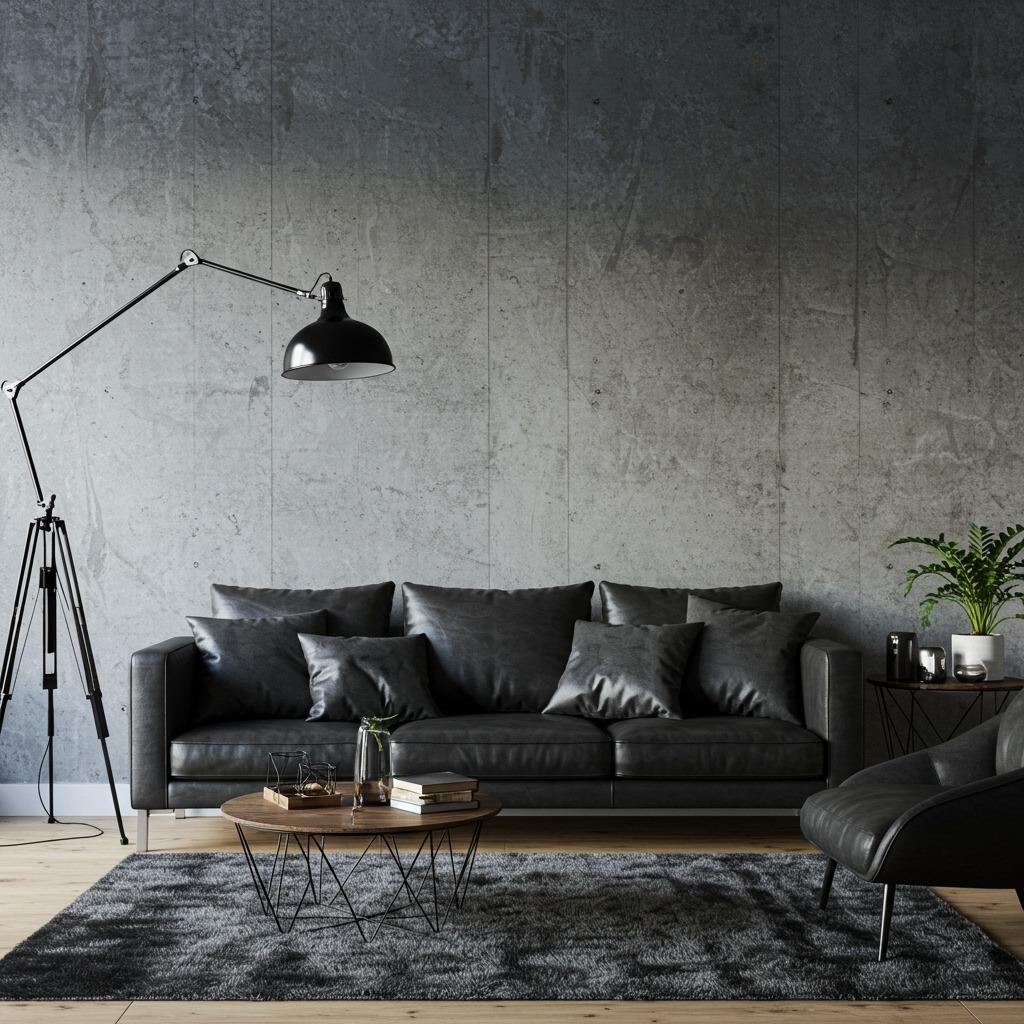
Concrete finishes bring serious urban edge. The raw, industrial look works perfectly in modern lofts or contemporary spaces that embrace harder materials and cooler tones. Real concrete is heavy and permanent, but specialty paints and plasters create the look with far less commitment.
Application techniques matter for authenticity. Layering different shades of gray, working the material with trowels to create texture, and leaving some imperfections all contribute to that genuine concrete appearance. Too perfect and it reads as fake. Some randomness and variation actually makes it more convincing.
This treatment pairs beautifully with metal accents, leather furniture, and exposed bulb lighting. The raw material contrasts nicely with softer elements like plush rugs or velvet pillows, creating that high-low mix that keeps industrial spaces from feeling cold. Balance is everything when working with harder finishes.
17. Metallic Accent Paint
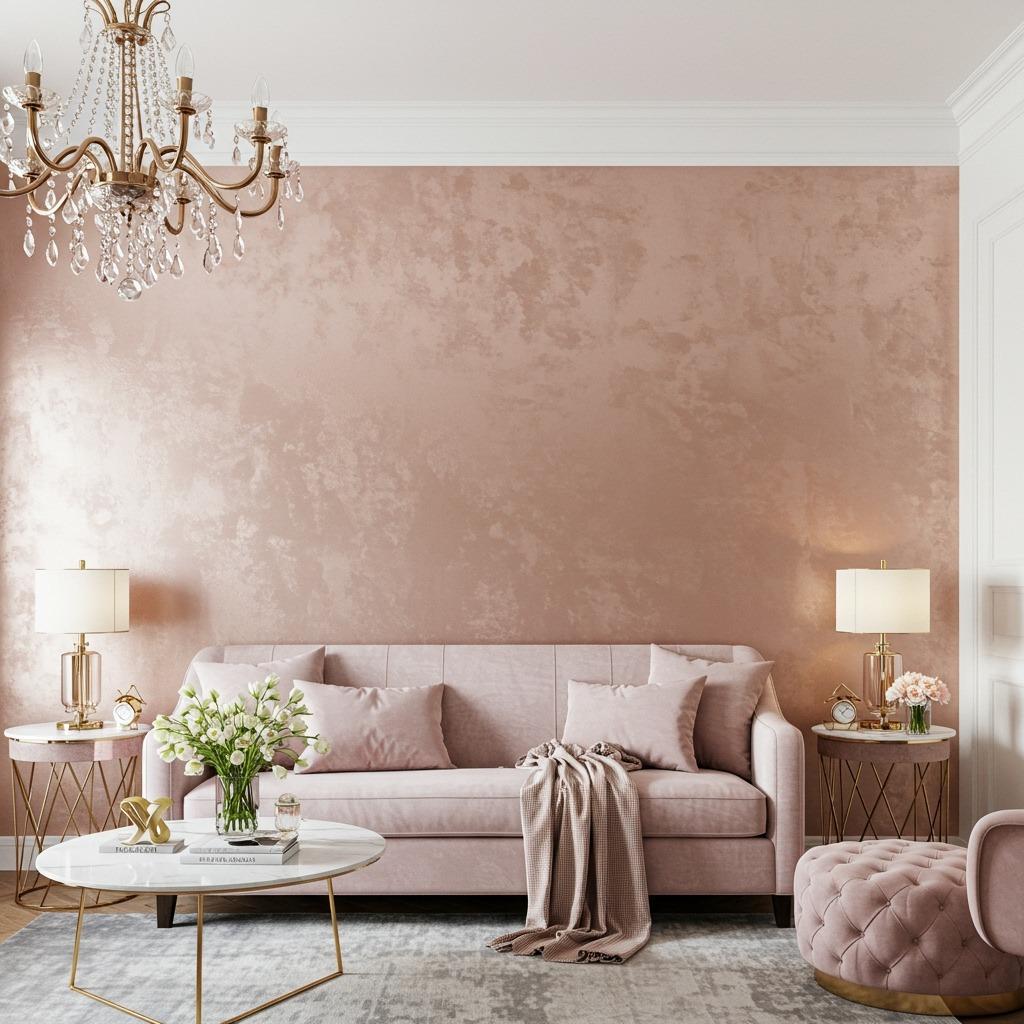
Metallic paint catches light in ways that regular paint never will. The subtle shimmer adds luxury and sophistication, especially in rooms with good natural light or strategic artificial lighting. Golds, coppers, and rose golds create warmth. Silvers and pewters offer cooler elegance.
The quality of metallic paint varies dramatically. Cheaper versions can look more glitter than metal. Better options have finer particles that create genuine shimmer rather than obvious sparkle. Sample before committing – what looks beautiful on a chip might read differently across an entire wall.
Application requires more care than standard paint. Metallic shows every roller mark and brush stroke, so technique matters. Use a high-quality roller, maintain a wet edge, and work in consistent overlapping patterns. Some people prefer hiring this out because getting a smooth, even finish takes practice and patience.
18. Window or Mirror Wall
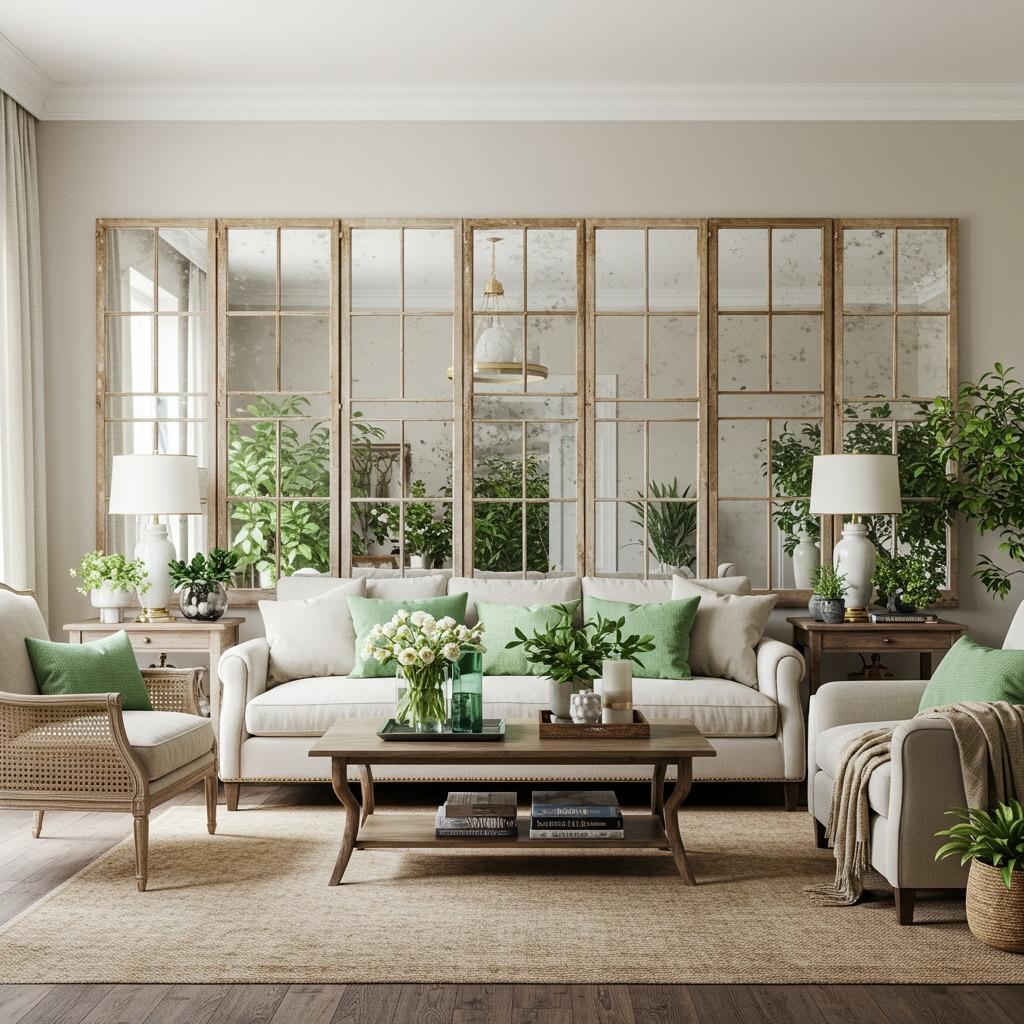
Mirrors fundamentally change how a room feels. They bounce light, create the illusion of space, and add architectural interest. A collection of mirrors arranged on one wall becomes functional art that makes your room feel larger and brighter than it actually is.
The arrangement matters. Symmetrical layouts feel formal and traditional. Asymmetrical groupings read as more casual and collected. Mixing frame styles works if you have a unifying element – maybe all gold-toned frames in different designs, or all vintage mirrors in various sizes.
Window-style mirrors (with divided panes) are particularly popular right now. They add architectural detail while reflecting light. Lean an oversized window mirror against the wall for an easier, commitment-free option that still makes a statement. This ties beautifully into strategies for small space renovation where visual expansion is key.
19. Cork Wall for Function and Style
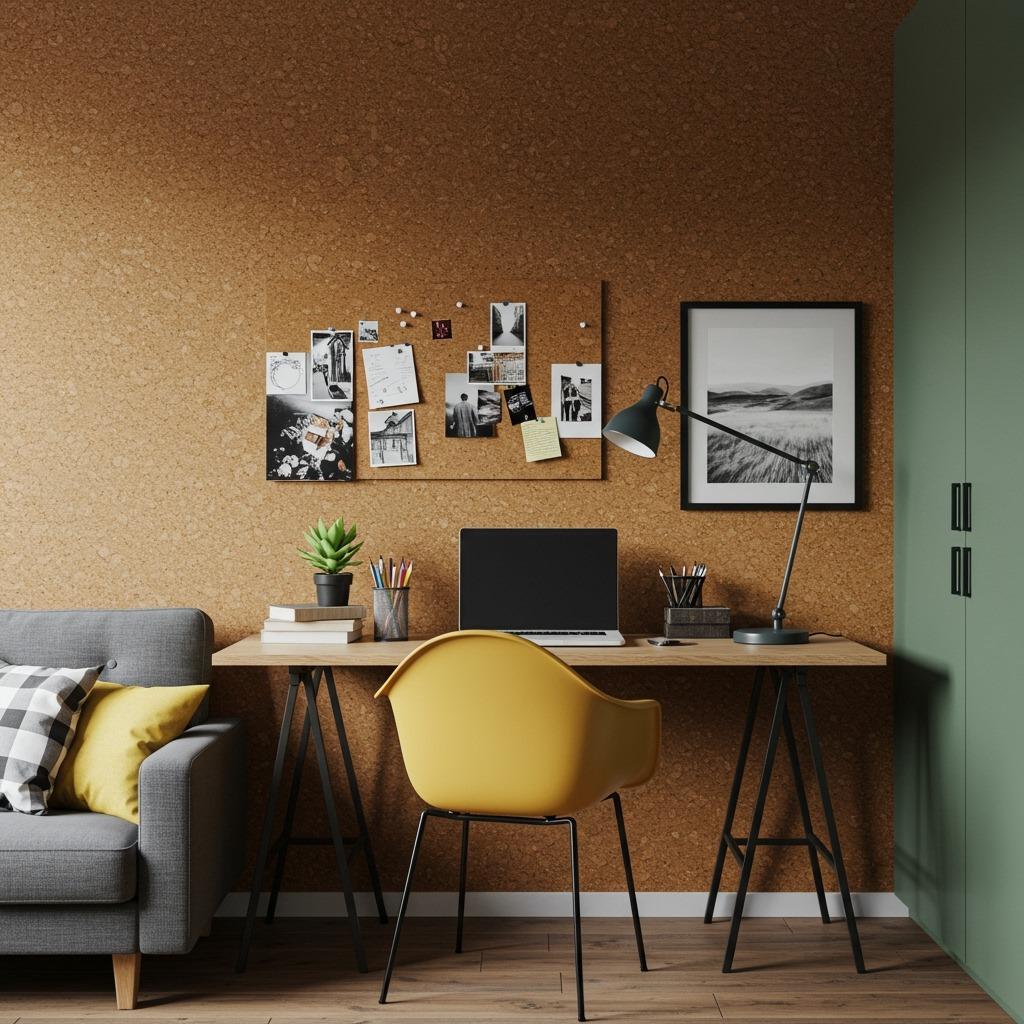
Cork brings warmth and functionality together. The natural texture looks organic and interesting while providing a massive bulletin board for inspiration, photos, kids’ artwork, or whatever needs pinning. It’s particularly brilliant in spaces that serve multiple purposes – think living room that’s also a homework spot or home office.
Cork comes in various formats. Traditional squares are affordable and easy to install. Cork wallpaper offers more design flexibility with patterns and colors. Larger cork panels or planks create a more seamless look. Consider your budget and desired aesthetic when choosing.
The natural brown tones of cork work beautifully with warm wood tones and earth-colored schemes. If natural cork feels too brown for your space, painted cork exists in various colors while maintaining that interesting texture. This is one of those modern accent wall ideas that’s genuinely useful beyond aesthetics.
20. Chalkboard or Whiteboard Wall
Functional walls that change constantly bring different energy. Chalkboard or whiteboard paint turns your wall into an interactive surface for art, messages, lists, or kids’ creativity. It’s particularly useful in family homes where the space needs to work hard and adapt to different needs.
Chalkboard paint now comes in colors beyond black – deep green, gray, even rust tones. Multiple coats and proper curing time are essential for a surface that writes and erases smoothly. Prime the wall first, then apply several thin coats rather than one thick one. Most chalkboard paint needs to cure for several days before use.
Create a ledge below the chalkboard area for holding chalk or markers. This keeps supplies accessible while preventing the “where did the chalk go?” frustration. Frame the chalkboard area with molding to make it look intentional rather than like you forgot to paint the rest of the room. This works particularly well in kitchen and dining ideas where menu planning and shopping lists live.
21. Fabric Panels or Upholstered Wall
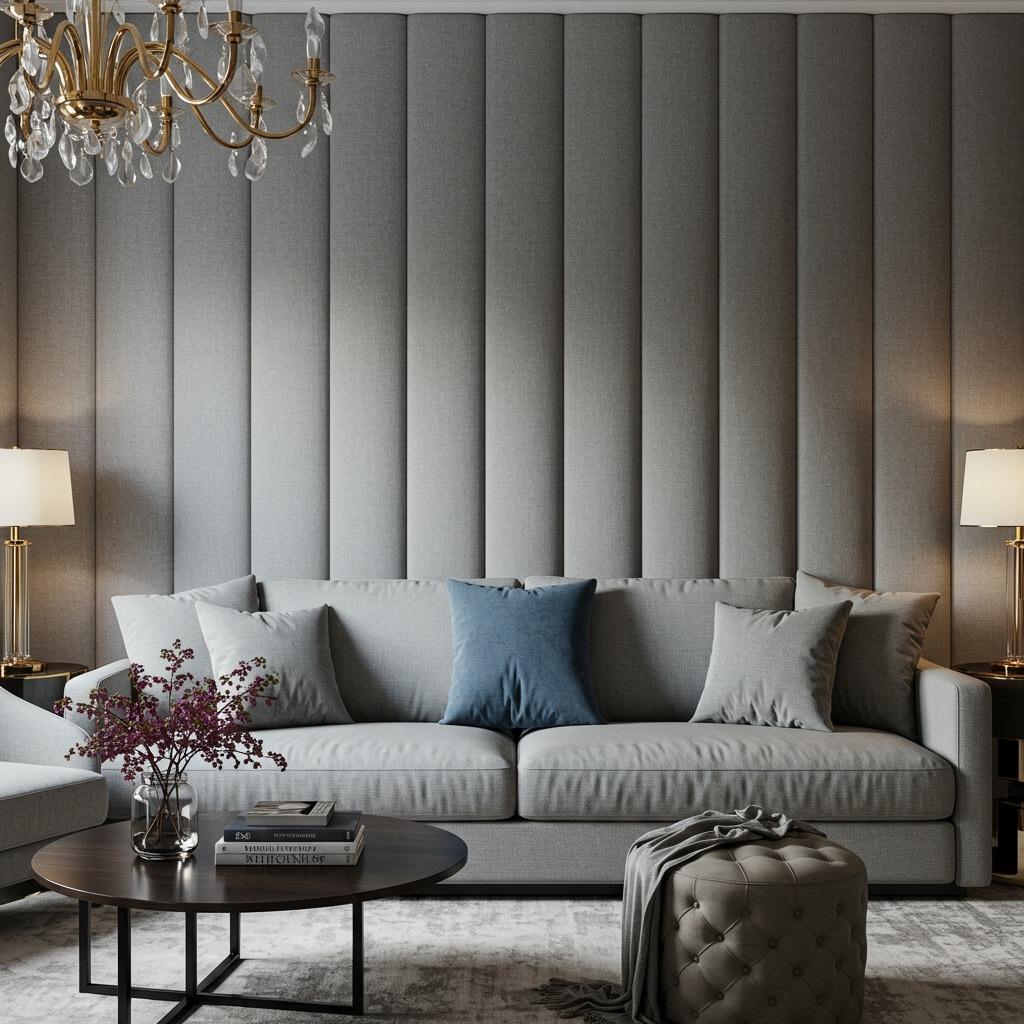
Upholstered walls bring unexpected softness and luxury. The padded surface absorbs sound, which is practical in echo-prone spaces or rooms where you want more acoustic control. It also reads as seriously high-end – this is the kind of detail you see in boutique hotels and designer homes.
DIY versions use fabric wrapped around plywood panels, which you can remove and replace when you want a change. Professional installations involve batting and fabric applied directly to the wall with hidden fasteners. The batting thickness affects both the look and sound absorption – thicker feels more padded, thinner keeps things subtle.
Fabric choice dramatically impacts the final effect. Linen and wool offer natural texture and durability. Velvet brings serious luxury and light-catching depth. Pattern is an option, though solid colors often showcase the dimensional texture better. Whatever you choose, make sure it’s something you won’t tire of quickly – changing upholstered walls is more involved than repainting.
22. Botanical or Nature-Inspired Mural

Nature murals bring the outdoors in without the maintenance of actual plants. Oversized botanicals, forest scenes, or abstract nature interpretations create calming, organic focal points that work particularly well in urban spaces craving some greenery. The scale makes them feel more like art installations than typical wall decor.
Wallpaper murals make this approach accessible without artistic skills or hiring a muralist. Prices range from budget-friendly to investment pieces, with quality generally reflected in the detail and color accuracy. Installation is similar to regular wallpaper but requires careful alignment to match the image across panels.
This ties beautifully into the growing trend of biophilic design – bringing natural elements into living spaces for wellbeing. Pair your botanical mural with actual plants (maybe inspired by indoor garden living room concepts), natural materials, and earth tones for a cohesive nature-inspired space that feels restorative and calm.
23. Mixed Material Collage Wall
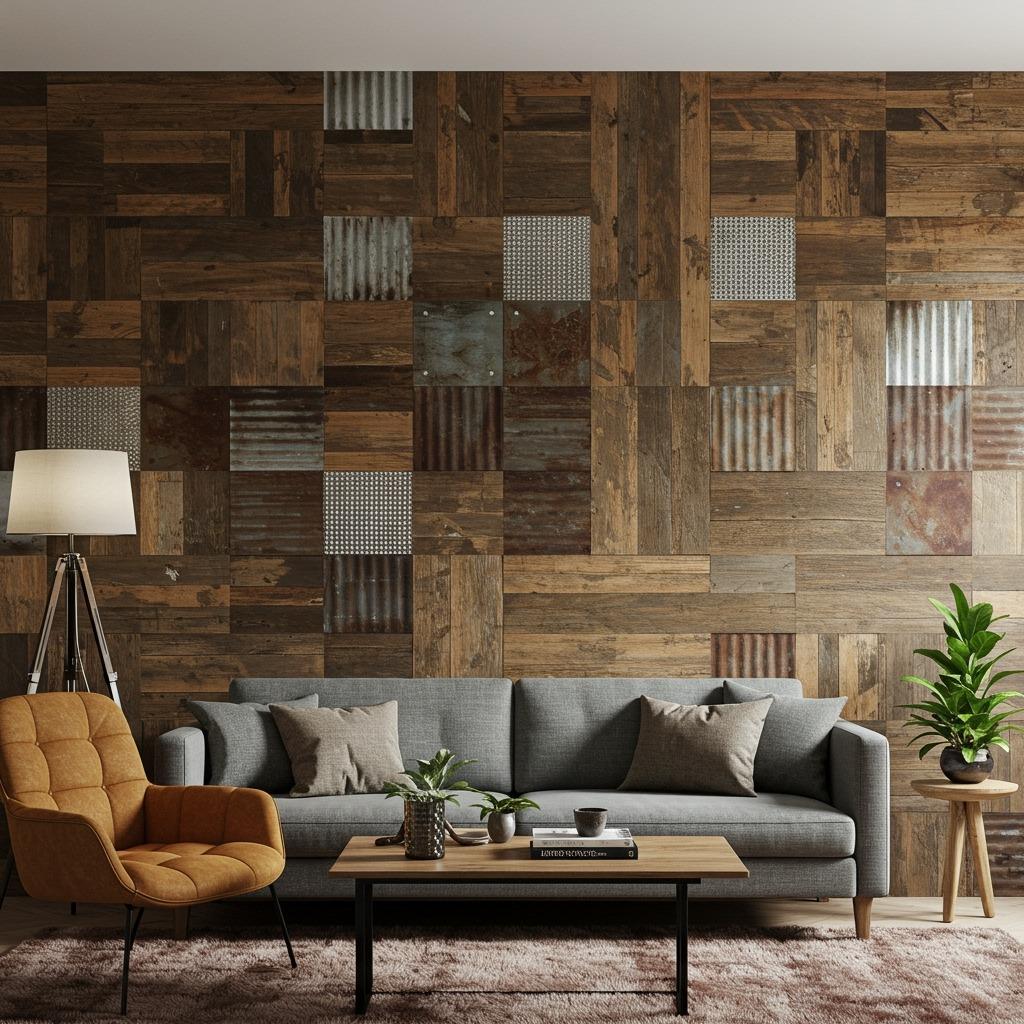
Why choose one material when you can combine several? Mixed material walls create incredible visual interest and texture by combining wood, metal, fabric, wallpaper, or paint in one cohesive design. The key is having a unifying element – maybe a consistent color palette, similar finish tones, or geometric arrangement that ties everything together.
This approach requires planning and a good eye for balance. Sketch your layout, considering how different materials complement and contrast with each other. Too random and it looks messy. Too organized and it loses that creative, collected feel. Sample combinations with smaller pieces before committing to the full wall.
The beauty of this technique is its flexibility and ability to evolve. Start with a base, then add elements over time as you find interesting materials or pieces. It becomes a living project that grows with your home, making it genuinely personal. Just maintain some visual cohesion so it reads as intentional design rather than indecision.
Choosing Your Perfect Accent Wall
With this many options, how do you actually pick one? Start by considering your room’s existing elements. What style are you working with? What’s your budget? How permanent do you want this to be? A rental situation calls for different solutions than a forever home.
Think about your space’s quirks too. Low ceilings benefit from vertical elements that add height. Small rooms might need lighter treatments that don’t overwhelm. Large spaces can handle bolder choices that might feel too intense in compact areas. Work with your room’s reality rather than against it.
I find it helpful to create a vision board with images of accent walls you love, then look for common threads. Are you drawn to texture? Color? Natural materials? Those patterns reveal what will make you happiest long-term. Trust your gut – you have to live with this choice, so pick something that genuinely excites you.
Final Thoughts on Creating Your Feature Wall
An accent wall is more than decoration. Done right, it transforms your entire living room’s character and creates a space that feels uniquely yours. The options range from weekend DIY projects to professional installations, with something appropriate for virtually any budget and skill level.
What matters most is choosing something authentic to your style and needs. Don’t chase trends that don’t resonate with you. The best modern accent wall ideas are the ones that make you happy every time you walk into your room. Whether that’s bold color, natural texture, or functional creativity, commit to what speaks to you.
Start small if you’re nervous – test paint colors, order samples, pin inspiration images. But at some point, you’ve got to commit and just do it. Your living room is waiting for that transformation. And honestly? Even if your first attempt isn’t perfect, you’ll learn what works and what doesn’t for your space. That knowledge is worth more than analysis paralysis.
Ready to tackle your own living room transformation? I’d love to hear which of these modern accent wall ideas you’re considering. Sometimes just talking through the decision helps clarify what feels right for your space.

