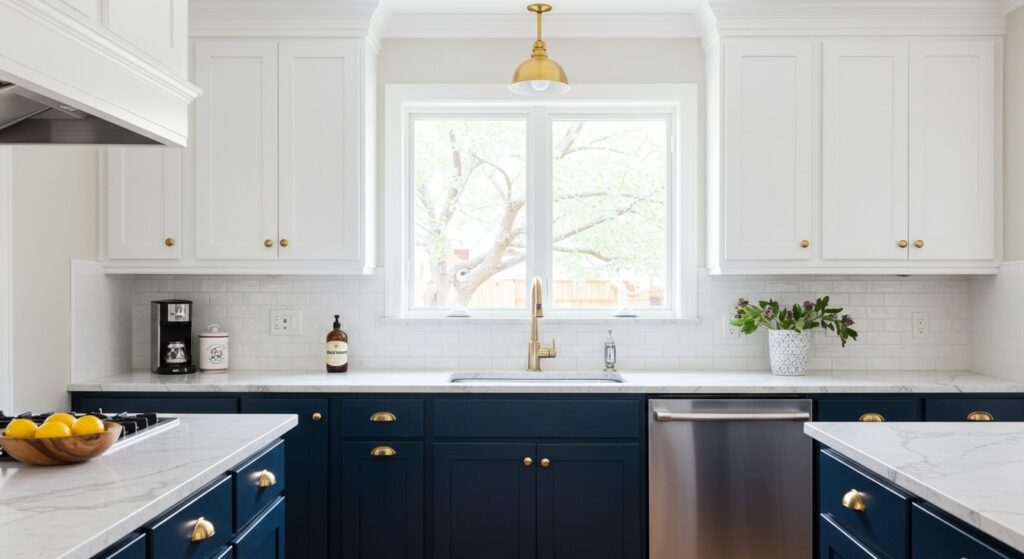
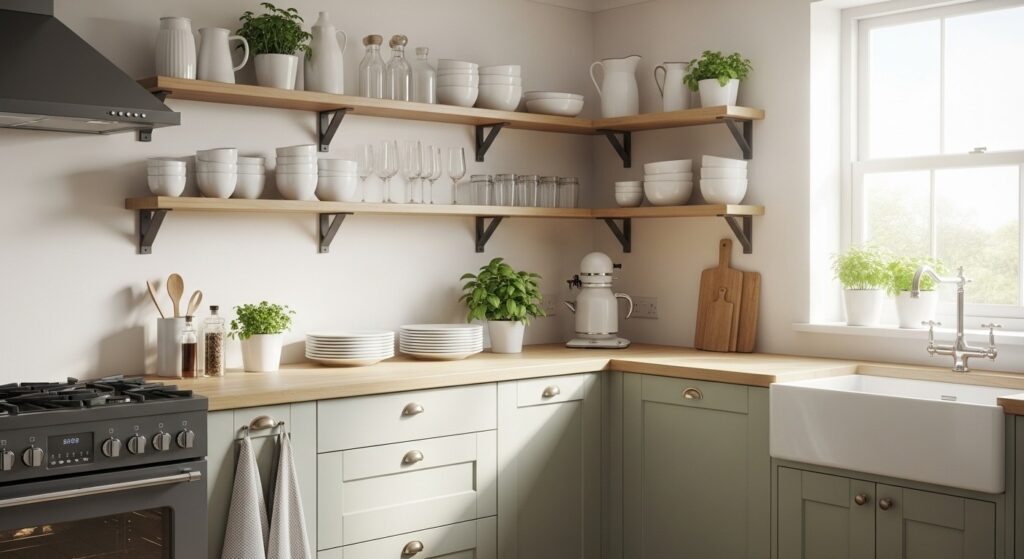
Your kitchen deserves better than cluttered cabinets where you can’t find anything. The right shelving can turn everyday cooking essentials into a display worth admiring while keeping everything within arm’s reach. Whether you’re working with a tiny galley kitchen or a spacious open-plan setup, the shelving you choose shapes how you use your space.
Open shelving has made a major comeback, and for good reason. It opens up the room visually, makes your dishes accessible, and lets you style your space with personality. But it’s not just about looks – strategic shelving actually improves how you cook and move through your kitchen. From floating shelves that make narrow walls useful to floor-to-ceiling units that maximize vertical space, there’s a solution for every layout and style.
The key is finding the balance between display and function. Not everything needs to be on show, but the items you use most should be easy to grab. Ready to rethink your kitchen storage? These ideas will help you create a space that works as beautifully as it looks.
1. Classic Floating Shelves with Minimalist Brackets
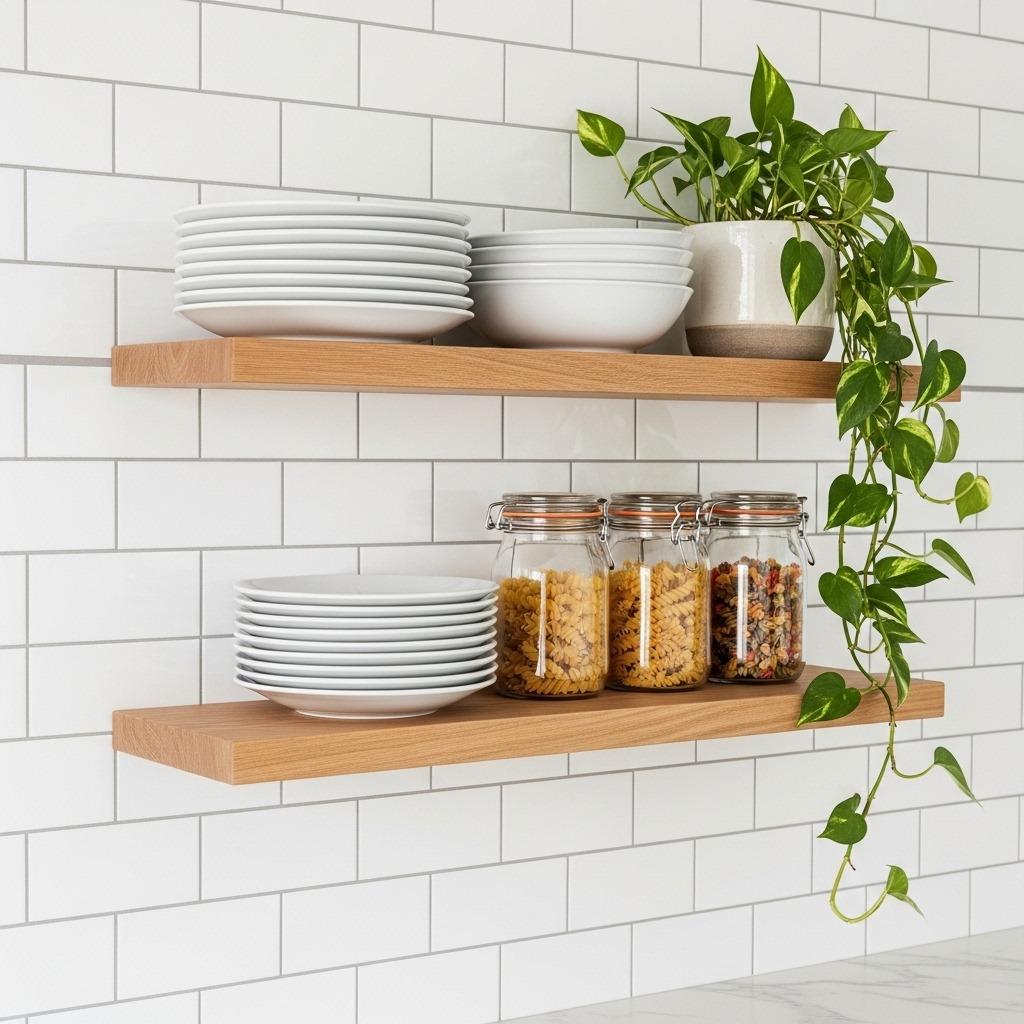
Floating shelves are the foundation of modern kitchen storage. They create clean lines without the visual weight of bulky cabinets, making your kitchen feel more spacious. The brackets disappear into the wall, leaving the focus on what you display.
Wood tones bring warmth to sterile kitchens, while painted shelves can match your cabinetry for a cohesive look. Install them above your prep area to keep cooking oils, spices, and utensils within reach. The trick is mounting them properly – use heavy-duty anchors because these shelves will hold more weight than you think.
Style them with a mix of everyday items and decorative pieces. Stack plates by size, group glassware together, and add a small plant or cookbook for personality. Just remember that everything on display will collect dust, so choose items you actually use regularly.
2. Open Shelving Kitchen with Upper Cabinet Replacement
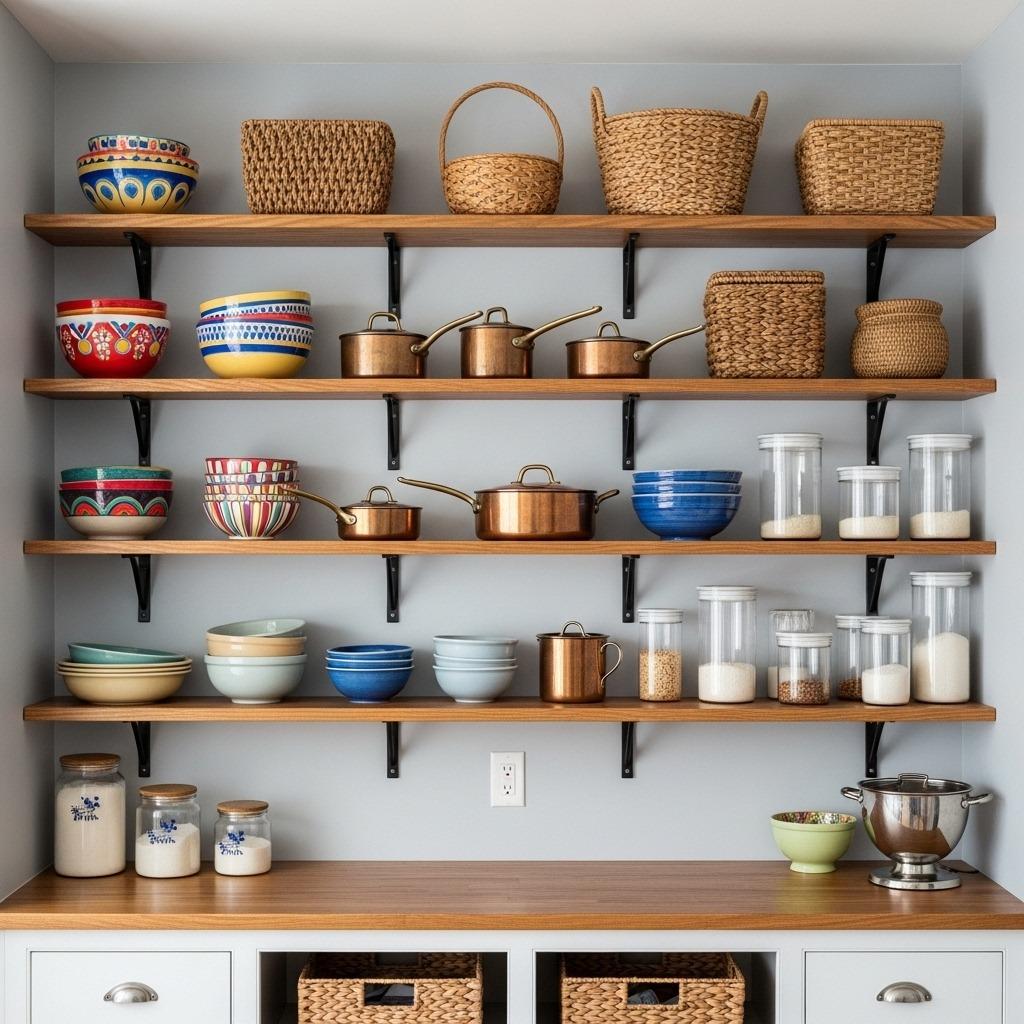
Removing upper cabinets entirely creates a dramatic, open feel that transforms your kitchen. This approach works especially well in smaller spaces where closed cabinets can make the room feel cramped. You gain visual space even if you lose some storage capacity.
Plan your shelving depth carefully – standard dinner plates need at least 10 inches, while smaller items work on 8-inch shelves. Stagger the heights between shelves based on what you’re storing. Coffee mugs need less clearance than tall pitchers or blenders you might want to tuck away.
This layout requires you to be more intentional about what you own. Everything becomes part of your decor, which means you’ll probably want to upgrade those mismatched plastic containers. But that constraint often leads to a more curated, cohesive kitchen that feels more personal than one filled with closed cabinets.
3. Industrial Pipe Shelving for Rustic Charm
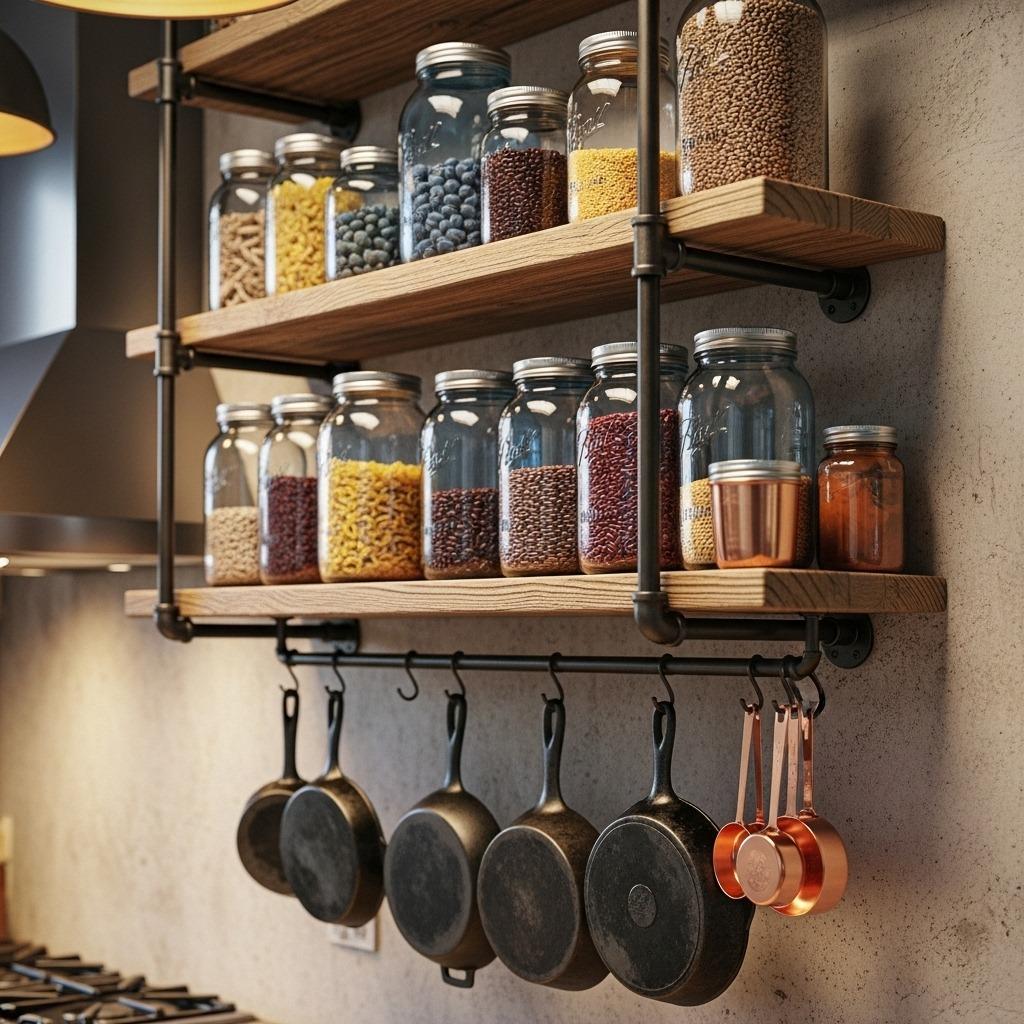
The industrial look brings unexpected character to kitchen and dining spaces. Black iron pipes paired with weathered wood create shelving that feels substantial and built to last. The exposed hardware becomes a design feature rather than something to hide.
These shelves handle serious weight, making them perfect for storing cast iron cookware, heavy mixing bowls, or small appliances. Add S-hooks to the lower pipe to hang mugs, utensils, or even pots and pans. The vertical pipes can support multiple shelf levels, maximizing your storage in a small footprint.
Installation takes more effort than standard floating shelves, but the finished result has a custom, architectural quality. You can buy pre-threaded pipe kits or have your local hardware store cut and thread pipes to your exact measurements. Seal the wood properly since kitchen shelves deal with splashes and humidity.
4. Corner Shelving to Maximize Dead Space
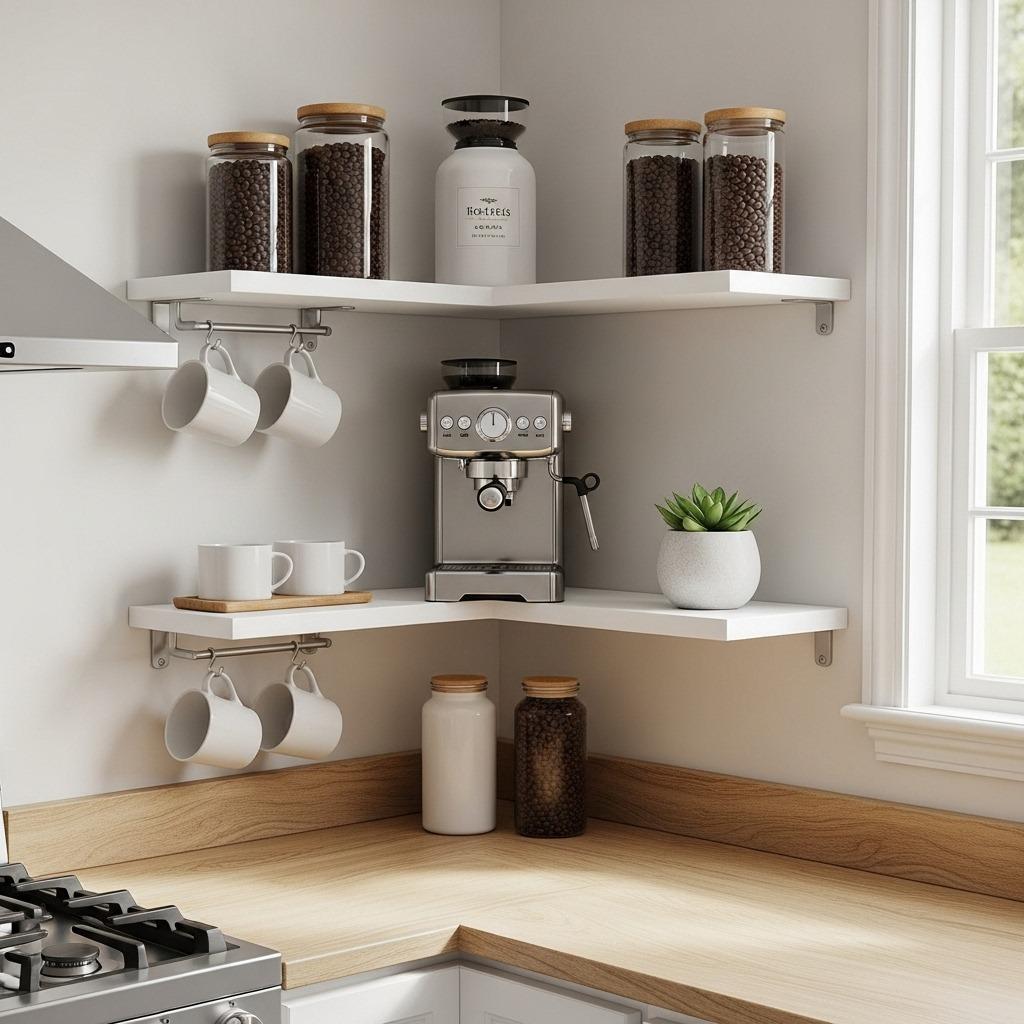
Kitchen corners usually become black holes where things go to be forgotten. Corner shelves rescue that wasted space and turn it into something useful. They work especially well for creating dedicated zones like a coffee station or baking area.
Triangular corner shelves fit snugly into 90-degree angles, while L-shaped shelves wrap around the corner for more surface area. Position them at comfortable heights – eye level for items you grab daily, higher for things used less often. The key is accessibility; don’t put everyday items in spots you need a step stool to reach.
Style corner shelves with items that make sense together. A morning coffee setup with mugs, beans, and a grinder becomes a functional vignette. Or use them for cookbooks you actually reference, kept upright with simple bookends.
5. Glass Shelves for an Airy, Light Feel
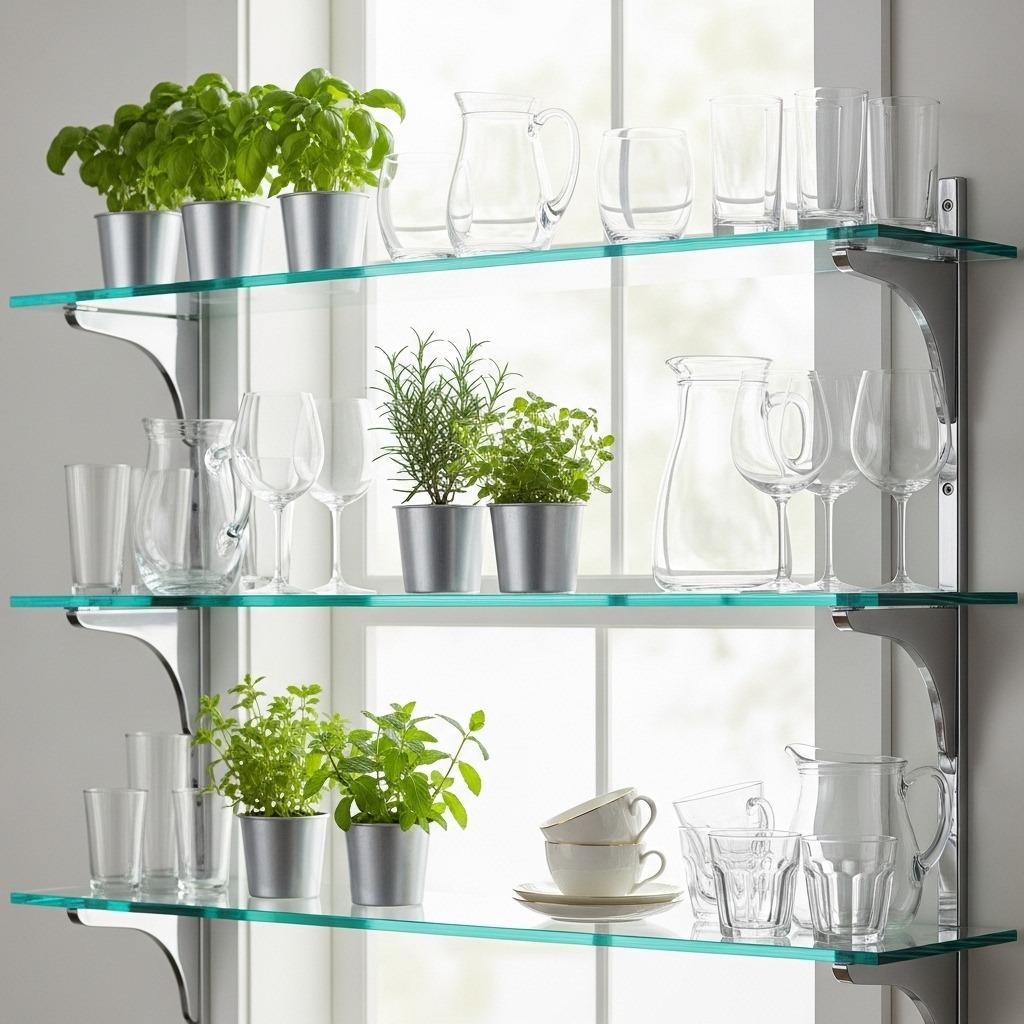
Glass shelving almost disappears visually, making it perfect for maintaining light flow in your kitchen. When mounted in front of windows or between spaces, glass shelves don’t block sightlines the way solid shelves do. They work beautifully in Scandinavian-inspired kitchens where light and minimalism are priorities.
The see-through quality means you’ll want to keep what you store here looking neat. Glass and ceramic dishes look elegant on glass shelves, creating layers of transparency. Avoid storing anything with messy labels or that you don’t want viewed from below – these shelves show everything.
Tempered glass is a must for safety, and proper mounting is critical since you can’t just screw into the glass itself. The brackets need to support the entire weight, so choose quality hardware. Wipe them down weekly since fingerprints and dust show more obviously on glass than wood.
6. Built-In Shelving Between Studs
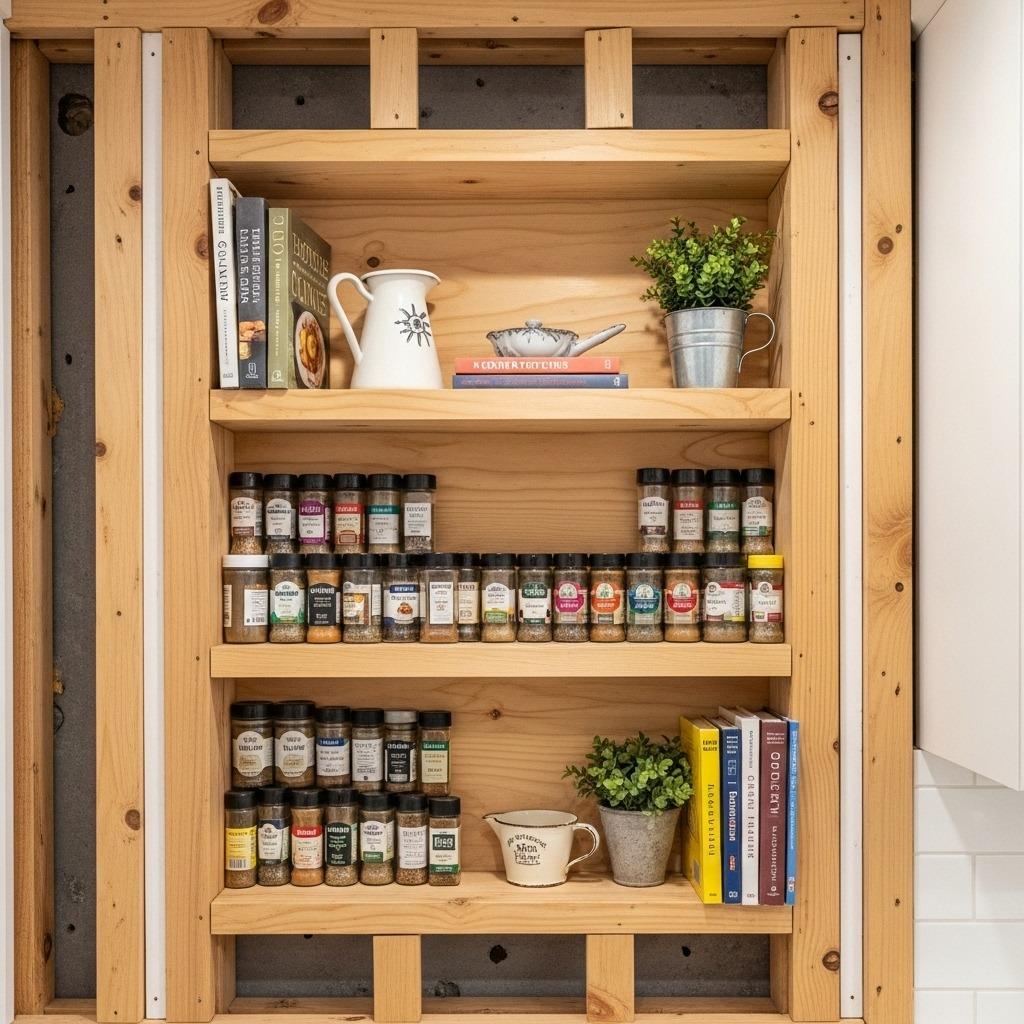
Built-in shelves carved into your walls create storage without taking up floor space. If you’re renovating or have access to open walls, this approach adds functionality where you otherwise couldn’t fit furniture. It’s particularly smart in narrow galley kitchens where every inch matters.
Standard wall studs are 16 inches apart, giving you about 14.5 inches of usable width between them. That’s perfect for spice jars, small plates, or cookbooks turned spine-out. You can build them as shallow or deep as your wall cavity allows, though most interior walls are about 4 inches deep.
Frame the opening neatly and add trim for a polished look. Paint the interior a contrasting color or line it with wallpaper for unexpected detail. These shelves feel custom and intentional, like they were always meant to be part of your kitchen’s architecture.
7. Ladder-Style Leaning Shelves
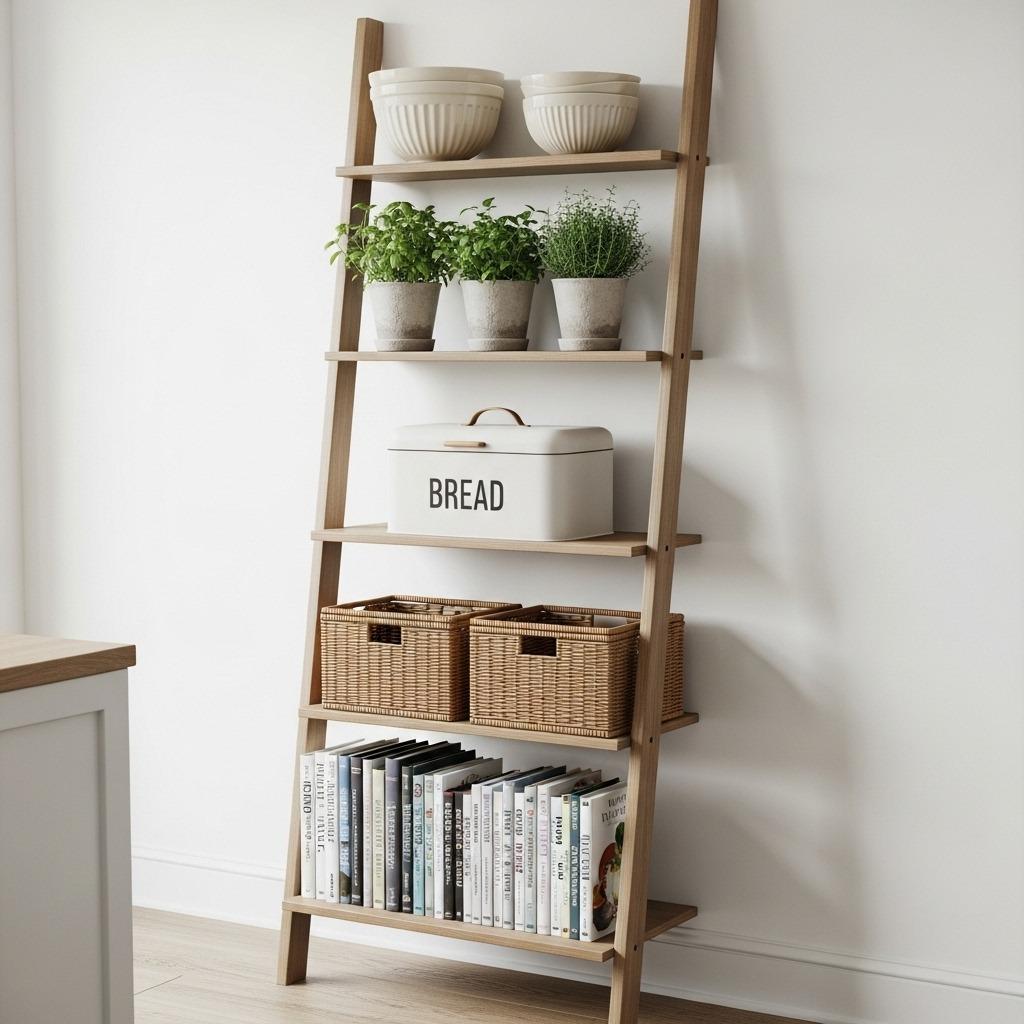
Leaning shelves bring flexibility that built-ins can’t match. They require no installation, making them perfect for renters or anyone who likes to rearrange. The angled design takes up minimal floor space while providing multiple display levels.
The lower shelves naturally hold heavier items, while upper tiers work for lightweight pieces or plants. This design encourages you to style as you organize – it’s equal parts storage and decor. Move it to different walls seasonally or when you want to refresh your kitchen’s layout.
Choose a finish that complements your existing furniture. Natural wood warms up modern kitchens, while painted white or black creates contrast. Just make sure it’s stable – some designs include wall-mounting options at the top for extra security, which is smart if you have kids or pets.
8. Plate Racks for Vertical Dish Display
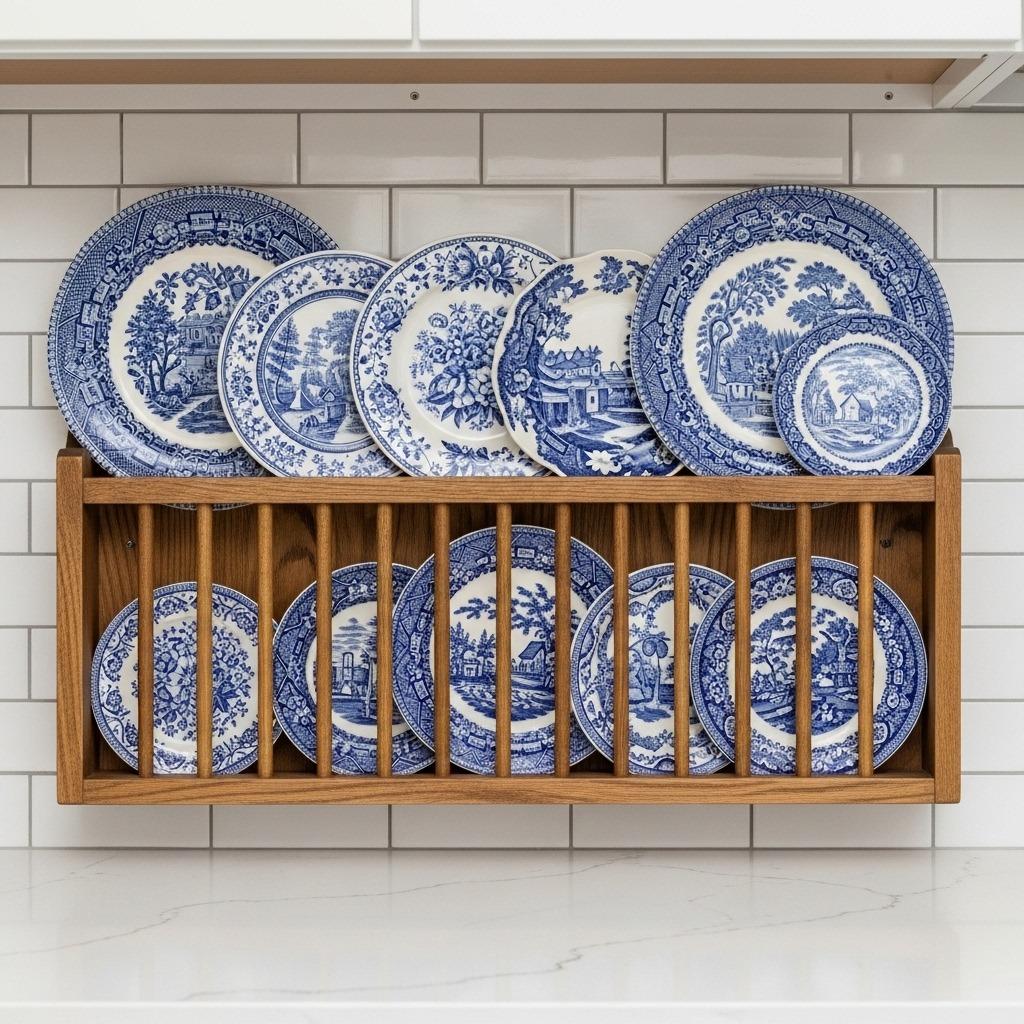
Plate racks turn dishes into art while keeping them accessible. Instead of stacking plates in cabinets where the bottom ones never get used, vertical storage lets you see everything at once. It’s especially striking when you collect dishes in a cohesive color scheme or pattern.
Wall-mounted racks work above counters or sinks, while freestanding versions can sit on countertops. Look for racks with grooves that hold plates at a slight angle so they lean back against the wall securely. Some include a shelf on top for mugs or small bowls.
This storage method works best for dishes you use regularly since they’ll need washing more often than cabinet-stored ones. But that visibility encourages you to actually use your nice plates instead of saving them for someday. It’s a small shift that makes everyday cooking feel more intentional.
9. Mix of Open Shelves and Closed Cabinets
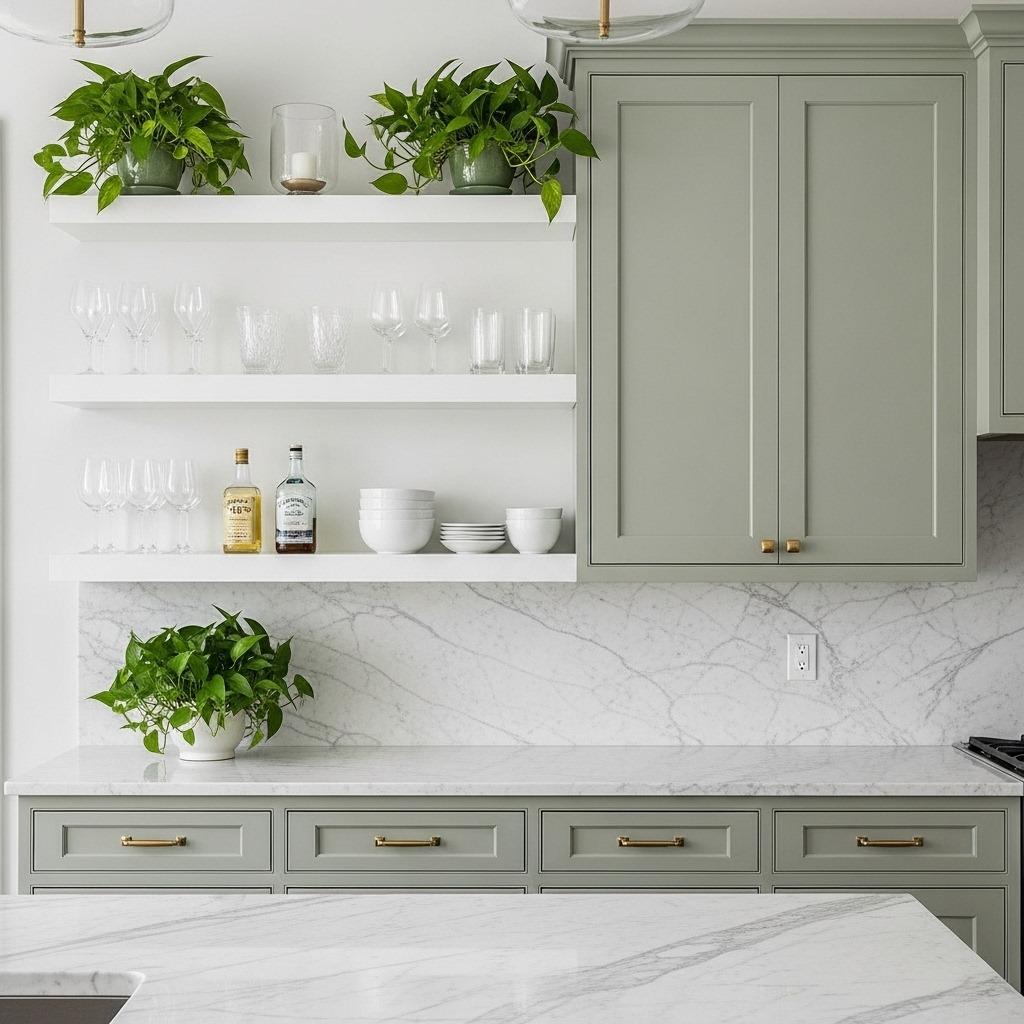
You don’t have to go all-in on open shelving. A strategic mix gives you the visual lightness of open shelves while maintaining closed storage for less photogenic items. This approach lets you control what’s on display without sacrificing practical storage space.
Place open shelves in areas where you want to showcase items – next to the stove for oils and spices, or flanking a window with coffee mugs and plants. Use closed cabinets for food storage, cleaning supplies, and the random kitchen stuff that doesn’t need to be visible. This combination works especially well in modern farmhouse kitchens where warmth and function balance.
Color-coordinate what’s on display so it looks intentional rather than cluttered. Even if the items themselves are mismatched, grouping by color creates visual cohesion. Keep closed cabinets for anything that breaks your color scheme or that you simply don’t want to dust.
10. Under-Cabinet Floating Shelves
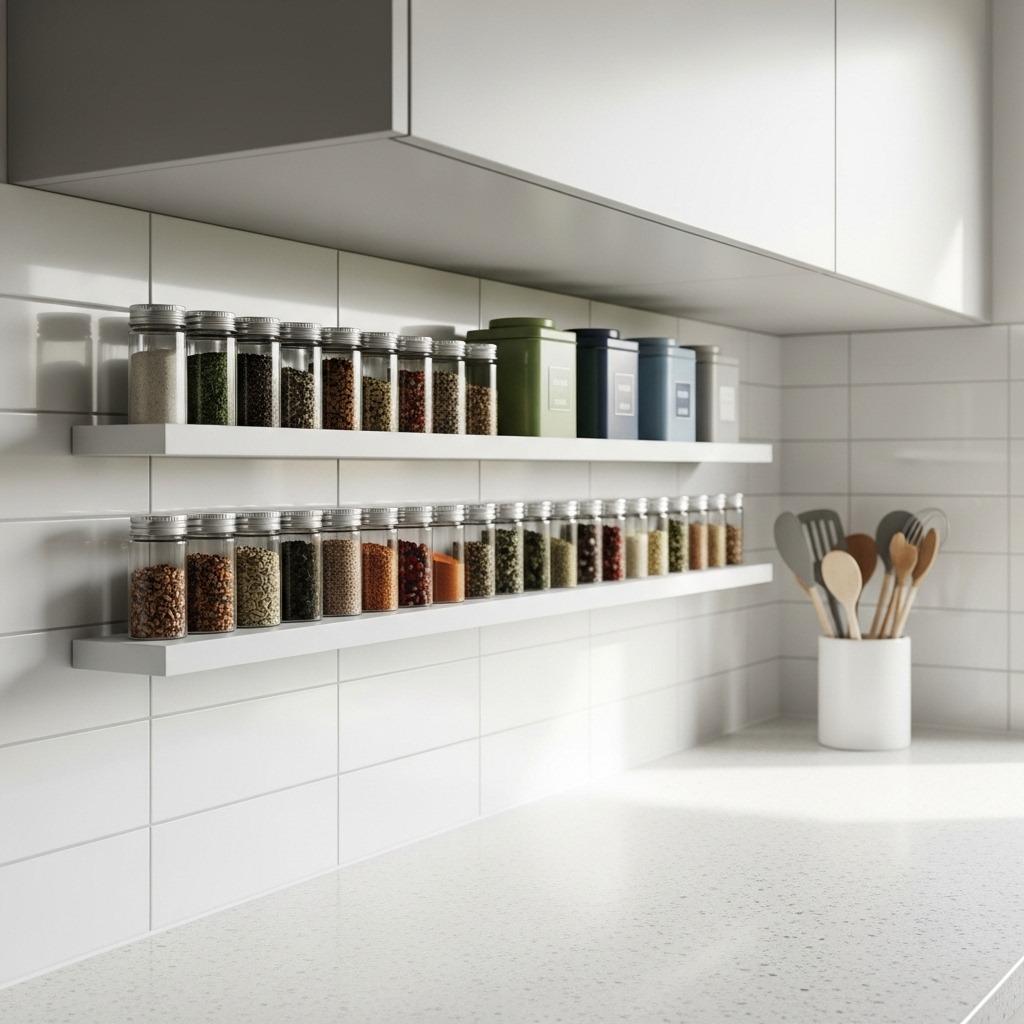
The gap between your countertop and upper cabinets usually goes unused, but it’s prime real estate for thin shelving. These slim shelves sit right in your prep zone, keeping frequently used items within easy reach while you cook. They’re perfect for spices, cooking oils, or small jars.
Keep these shelves shallow – 4 to 6 inches deep is plenty. Any deeper and they’ll interfere with your workspace or make the backsplash feel crowded. Mount them high enough that you don’t hit your head but low enough that you can comfortably see what’s stored there.
This works especially well if you’re short on cabinet space or want to free up counter space. Instead of leaving items out on the counter, they get dedicated homes just above. It’s a simple addition that makes a surprising difference in how efficiently you can move through cooking tasks.
11. Rustic Wood Beam Shelves
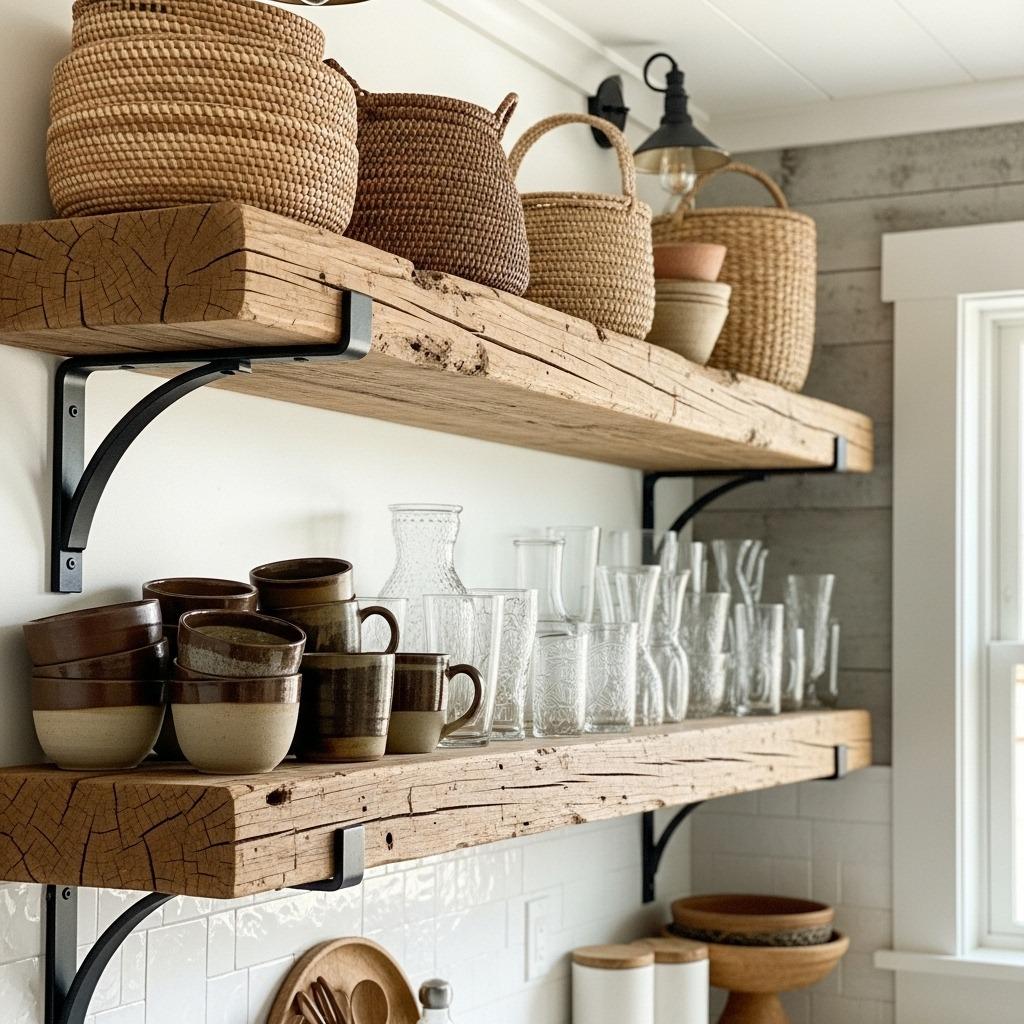
Chunky wood beams bring instant character and warmth. These substantial shelves make a statement in rustic kitchens or spaces with exposed brick and natural textures. The raw edge and visible grain tell a story that manufactured shelving can’t match.
Reclaimed beams often come from old barns or buildings, carrying history in their weathered surfaces. New wood can be distressed and stained to achieve a similar look, though it won’t have quite the same authenticity. Either way, seal the wood properly to protect against kitchen moisture and splashes.
These shelves can handle serious weight, so don’t hesitate to store heavy crockery, cast iron, or appliances. The thick profile means they need strong mounting – typically lag bolts driven directly into studs. But once installed, they become a permanent, architectural feature of your kitchen.
12. Narrow Shelves for Spice Storage
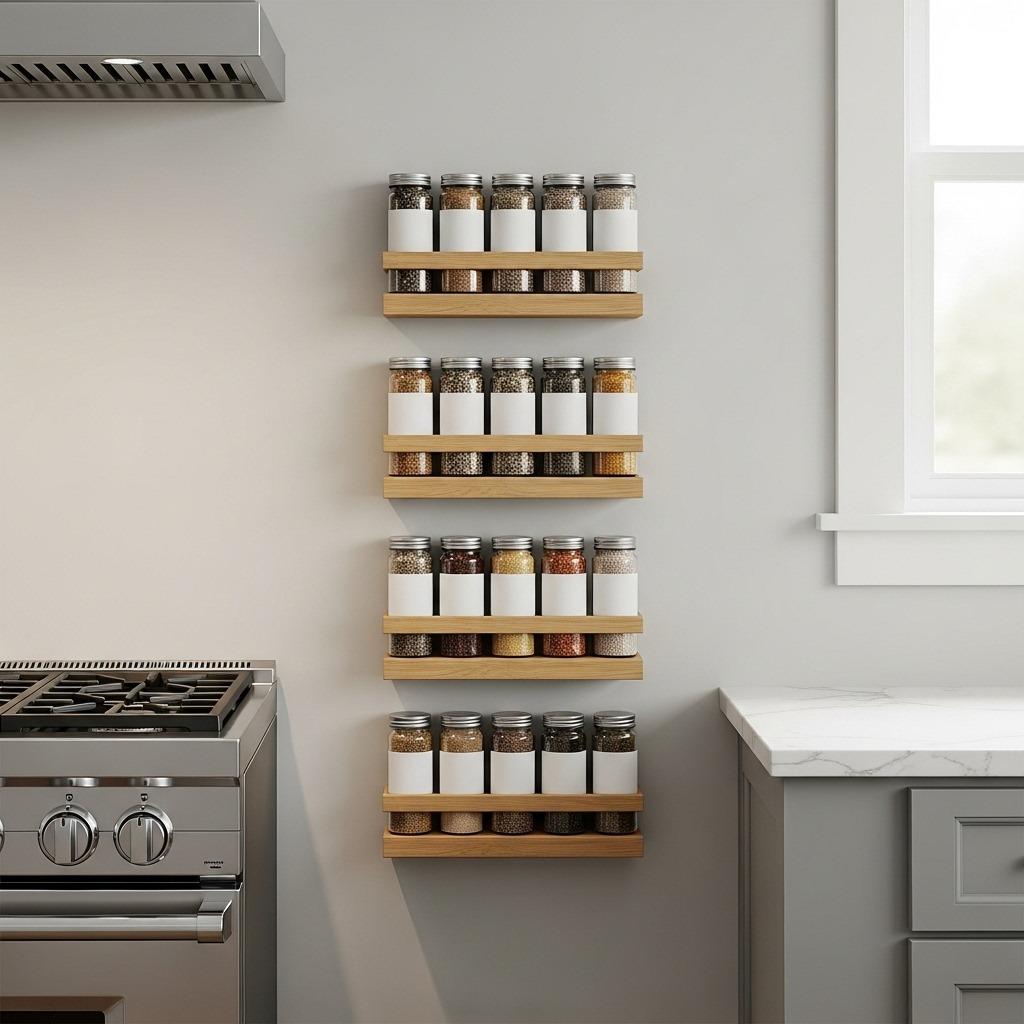
Dedicated spice storage keeps your most-used ingredients visible and organized. Narrow shelves – just deep enough for a single row of jars – transform skinny walls into functional space. This is perfect for that odd gap beside your range or refrigerator that’s too small for cabinets.
Uniform jars create a clean, organized look even when you have dozens of spices. Transfer everything to matching containers and label them clearly. Arrange alphabetically or by frequency of use – either way, you’ll stop digging through cabinets mid-recipe trying to find cumin.
Mount these shelves within arm’s reach of your stove so you can grab spices while cooking. The shallow depth means jars won’t hide behind each other, and you can spot what you need at a glance. It’s a small organizational change that makes cooking feel less chaotic.
13. Two-Tone Shelving for Visual Interest
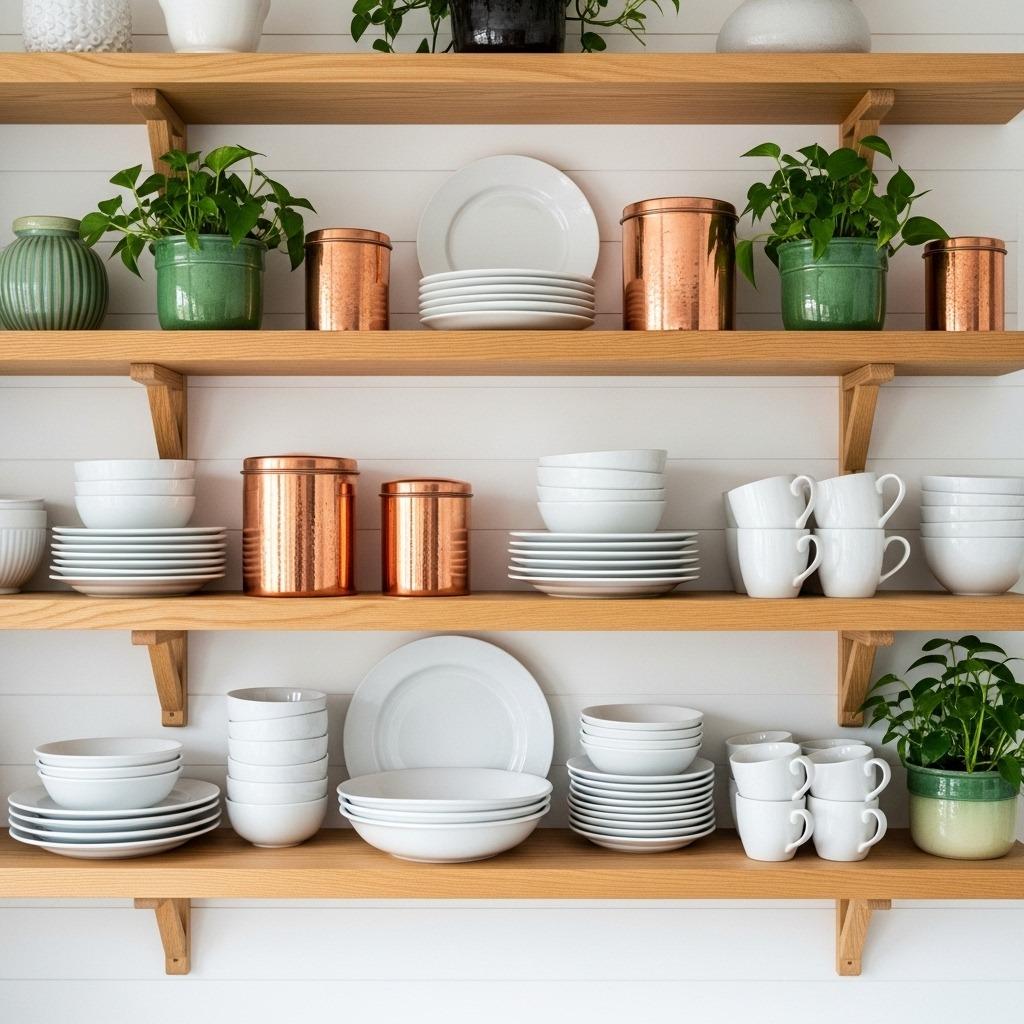
Playing with color adds depth and personality to open shelving. Painting the backing board while leaving shelves natural creates dimension, or do the reverse for a different effect. Two-tone shelving breaks up large expanses of wall and draws the eye in a way single-color shelving doesn’t.
This works especially well when your shelving coordinates with other kitchen color schemes. If your cabinets are navy, paint the backing board to match and use wood shelves for warmth. Or keep shelves the same color as walls and add a bold backing for pop.
The contrast helps displayed items stand out rather than blending into the background. White dishes pop against dark backings, while colorful ceramics look striking against neutral ones. Think about what you’ll display when choosing your color combination – the shelving should enhance, not compete with, your items.
14. Shelving with Integrated Lighting
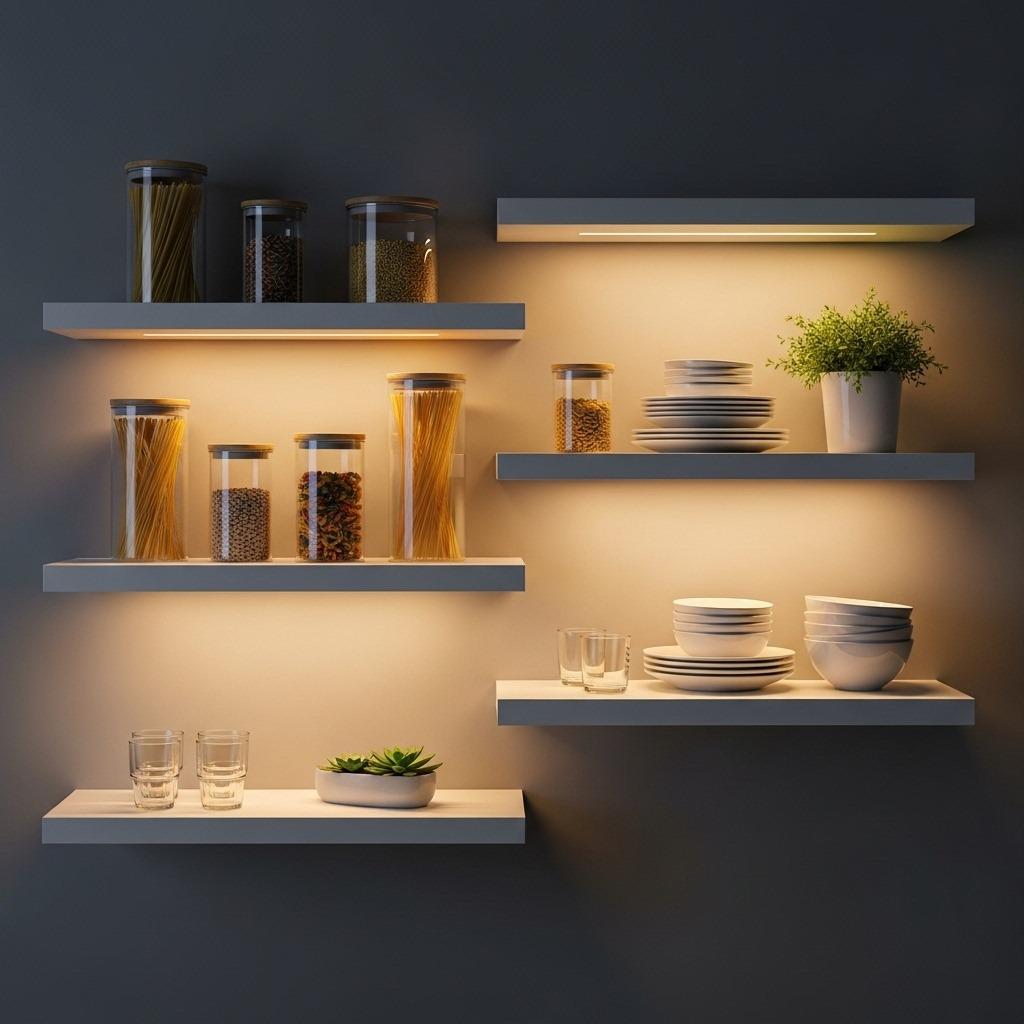
Integrated lighting transforms shelving from purely functional to atmospheric. LED strips mounted under each shelf illuminate what’s displayed while adding task lighting to your work surfaces. This upgrade makes your shelving usable even in dim lighting and creates ambiance during evening hours.
Warm white LEDs create a cozy feel, while cool white gives a more modern, gallery-like appearance. Battery-operated strips work if you don’t want to deal with wiring, though hardwired options offer more consistent performance. Hide the power source behind nearby cabinets or along the wall edge where it won’t show.
The upward wash of light makes glass and ceramic pieces glow beautifully. This is particularly effective with translucent items or anything with an interesting texture. It’s a fairly simple addition that elevates your shelving from basic storage to a designed focal point in your kitchen.
Styling Tips for Kitchen Shelving
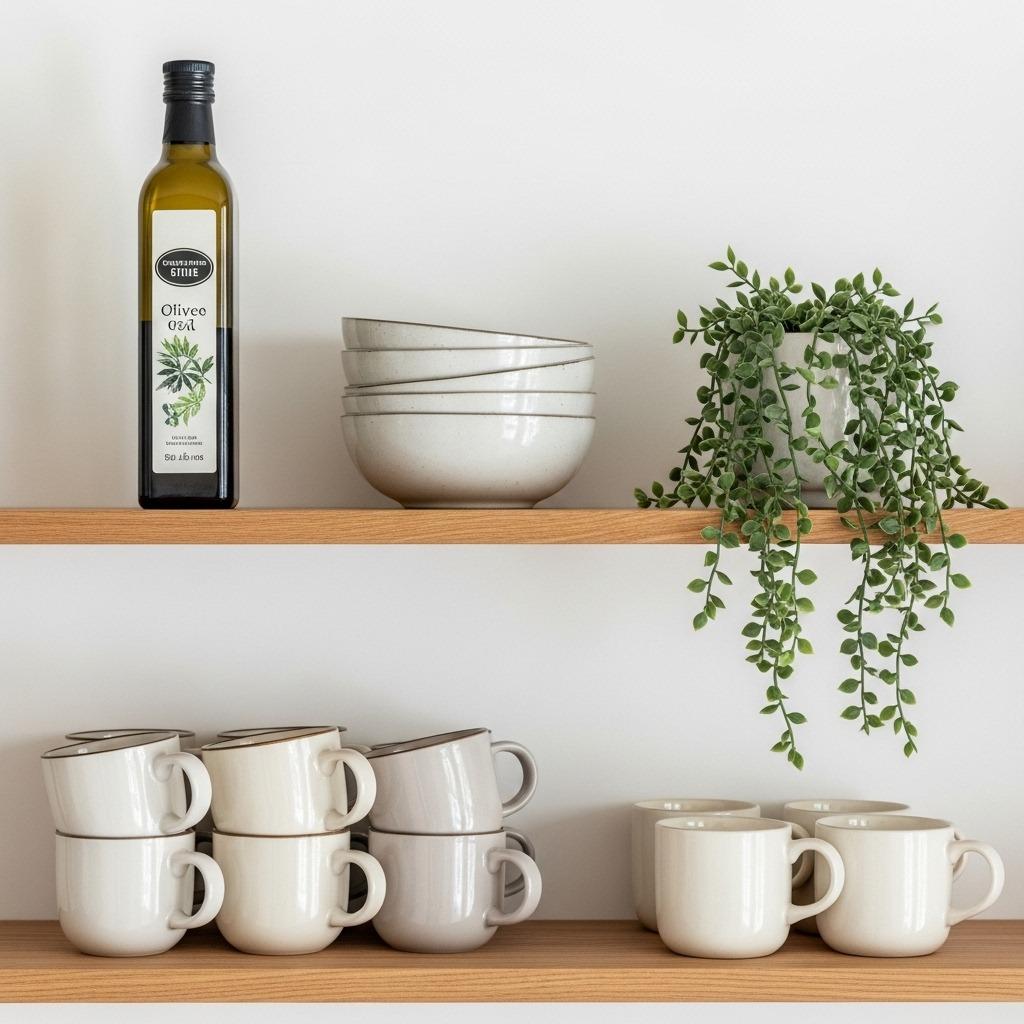
Successful shelf styling balances function with aesthetics. Start by grouping items by frequency of use – everyday dishes at eye level, occasional pieces higher or lower. Within each shelf, vary heights to create visual rhythm. Tall items next to short ones, with medium heights bridging the gap.
The rule of thirds works here just like in photography. Divide each shelf mentally into thirds and avoid centering everything. Offset stacks, cluster items in groups of three or five, and leave intentional empty space. That breathing room keeps shelves from looking crowded even when they’re quite full.
Add life with small plants – herbs you actually use, trailing pothos, or succulents that tolerate kitchen conditions. The organic element softens hard edges and brings color beyond dishes. Just remember to rotate or replace them as needed since kitchen conditions can be tough on plants.
Color coordination ties everything together. You don’t need all-white dishes, but grouping similar tones creates cohesion. All neutrals with wood accents, or a specific color family like blues and greens, or even a rainbow arrangement if that’s your style. The key is intention – random looks cluttered, curated looks collected.
Kitchen shelving transforms how you cook, store, and experience your space. Whether you go all-in on open shelving or incorporate just a few floating shelves, the right storage makes everyday tasks simpler. Your dishes become part of your decor, your most-used items stay within reach, and your kitchen starts feeling more like the heart of your home.
The beauty of shelving is its flexibility. Start small with a single shelf and add more as you figure out what works for your cooking style. Mix closed and open storage to balance display with practicality. Most importantly, organize and style in ways that serve your real life, not just what looks good in photos.
Your kitchen should work for you, and thoughtful shelving is one of the most impactful changes you can make. Pick the style that speaks to you, install it properly, and enjoy a space that’s both functional and inspiring.