Your kitchen floor works hard. Between spills, dropped utensils, and constant foot traffic, it takes quite the beating. But that doesn’t mean it can’t look incredible while doing its job.
A well-chosen rug can completely shift the vibe of your kitchen – adding warmth to cold tile, defining zones in an open layout, or injecting personality into an otherwise neutral space. The trick is finding options that look beautiful but can also handle whatever your cooking adventures throw at them. Whether you’re drawn to vintage-inspired patterns, sleek modern designs, or something in between, the right kitchen rug creates that finished feeling that makes the whole room come together.
These 17 kitchen rug ideas prove that function and style don’t have to be at odds. Ready to give your kitchen floor the upgrade it deserves?
1. Classic Striped Runner for Timeless Appeal
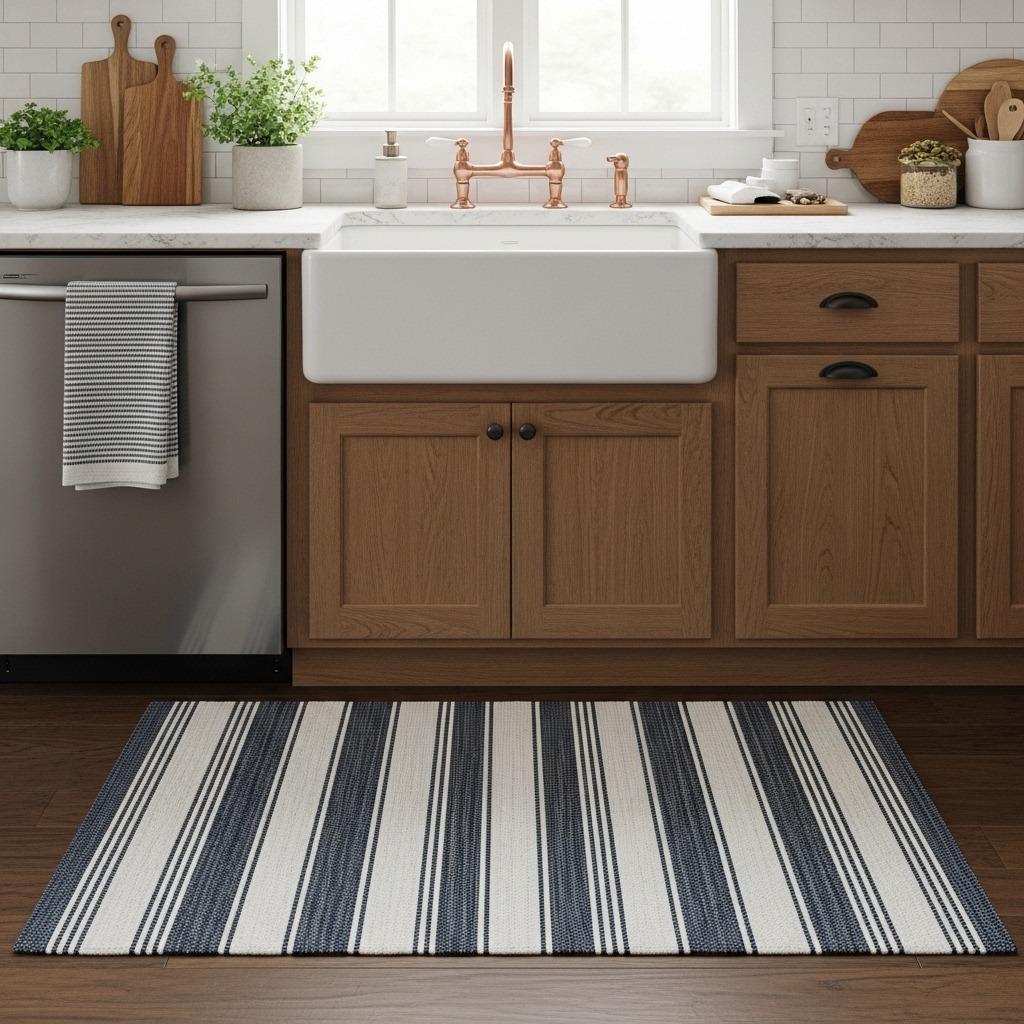
There’s something effortlessly chic about a striped runner stretching along your kitchen workspace. The linear pattern naturally draws the eye through the space, making even compact kitchens feel more expansive. Black and white stripes create crisp contrast, while softer color combinations like navy and cream or gray and white offer a gentler approach.
This style works particularly well in front of your sink or stove, defining your primary work zone without overwhelming the space. The repetitive pattern cleverly disguises minor stains and wear patterns that inevitably happen in high-traffic areas. Plus, stripes play nicely with almost any kitchen style, from modern farmhouse kitchens to sleek contemporary spaces.
Look for cotton or synthetic materials that can withstand frequent washing. A low-pile construction keeps the rug flat against the floor, reducing tripping hazards while you’re moving quickly between tasks.
2. Vintage Persian-Inspired for Rich Character
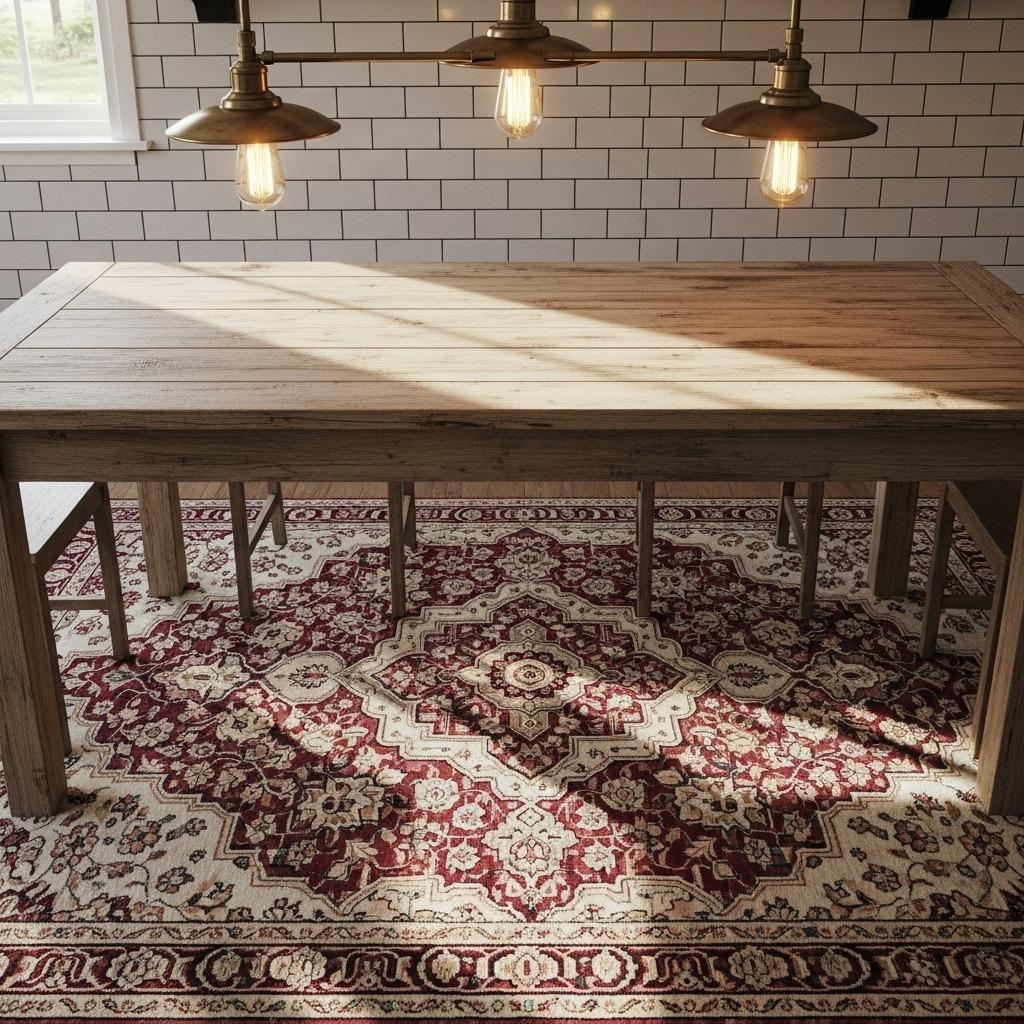
Vintage-style rugs bring an unexpected sophistication to kitchen spaces. Those intricate medallions and faded jewel tones add layers of visual interest that newer rugs simply can’t replicate. The beauty lies in their apparent imperfection – slightly worn patterns and muted colors that suggest stories and history.
These rugs work surprisingly well in kitchens because their busy patterns naturally camouflage spills and splashes. A rich burgundy or navy base with cream and rust accents can anchor your entire color scheme. They’re especially stunning in kitchens with vintage kitchen decor elements or as a contrast piece in ultra-modern spaces.
The key is choosing machine-washable versions that mimic the vintage aesthetic. Many companies now produce convincing lookalikes in easy-care materials that capture the beauty without the fragility.
3. Geometric Patterns for Modern Edge
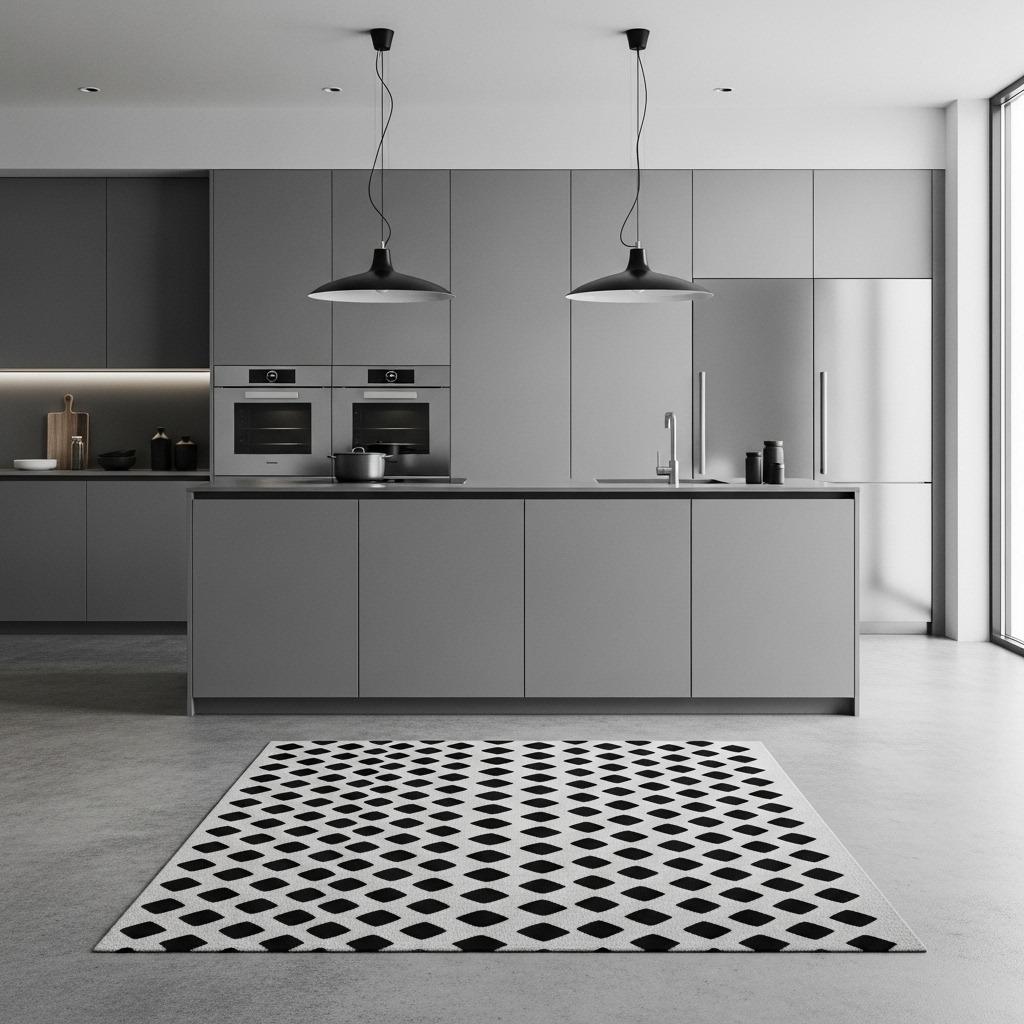
Bold geometric designs immediately modernize any kitchen. Think hexagons, triangles, chevrons, or abstract shapes in contrasting colors. These patterns create visual energy and can make a design statement all on their own, turning your floor into an intentional focal point rather than an afterthought.
Geometric rugs work beautifully in minimalist kitchen decor settings where clean lines dominate. The structured patterns echo the angular quality of modern cabinetry and appliances. Black and white geometric designs offer maximum impact, while softer colorways in gray, blush, or sage create a more subdued effect.
Scale matters with geometric patterns. Larger motifs suit spacious kitchens, while smaller repeating patterns work better in compact areas. Consider how the pattern interacts with your tile or flooring – you want complement, not competition.
4. Natural Jute for Organic Texture
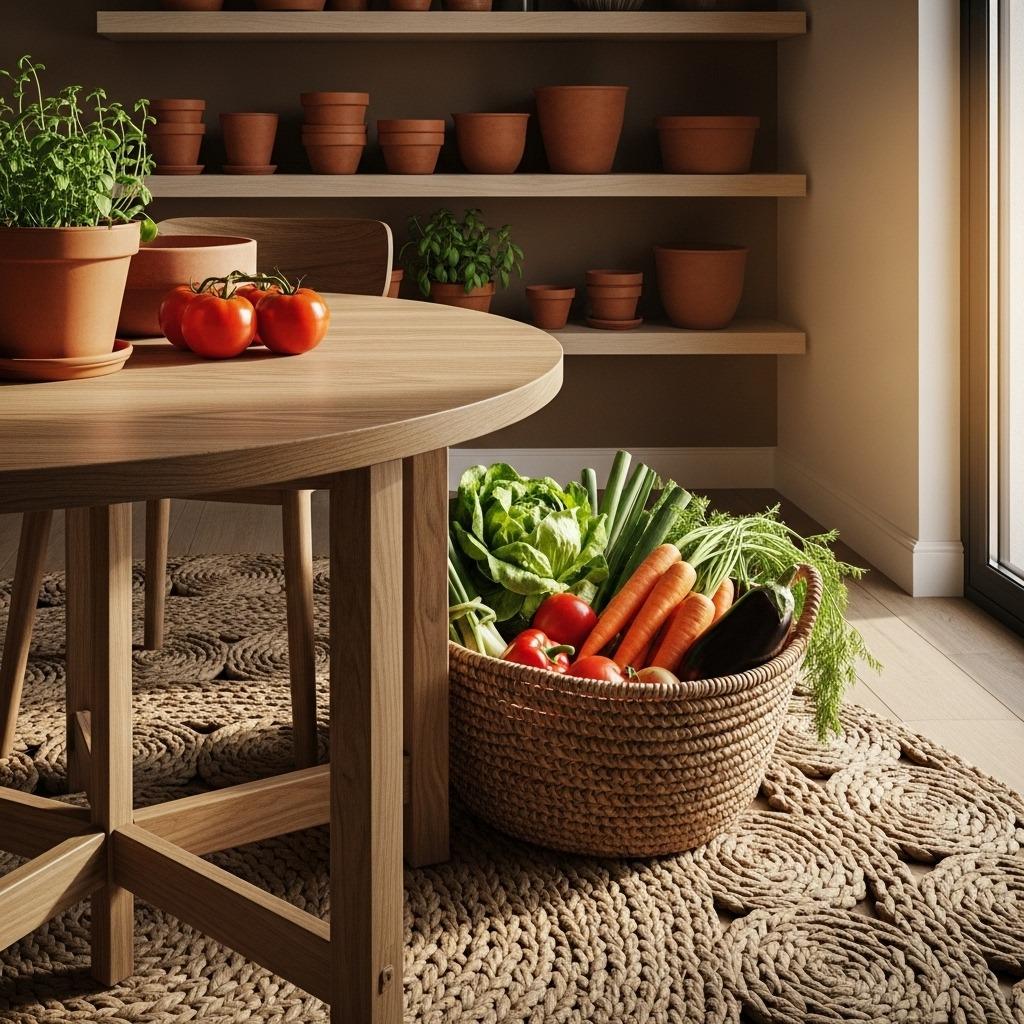
Jute rugs bring that earthy, relaxed feel that softens even the most utilitarian kitchen. The natural fiber texture adds warmth underfoot and creates beautiful contrast against smooth surfaces like tile, concrete, or hardwood. The neutral tan color works as a grounding element that lets your cabinets, backsplash, and accessories take center stage.
This material particularly shines in rustic kitchen designs or spaces with lots of wood tones. The organic quality connects indoor cooking spaces with outdoor elements, especially nice if your kitchen opens to a garden or patio. Jute’s natural variations mean each rug has subtle character differences.
Fair warning though – jute doesn’t love moisture as much as synthetic options do. It works best in areas that don’t see heavy spills or splashes. Consider layering a jute rug in your dining zone rather than directly in front of your sink.
5. Watercolor Wash for Artistic Flair
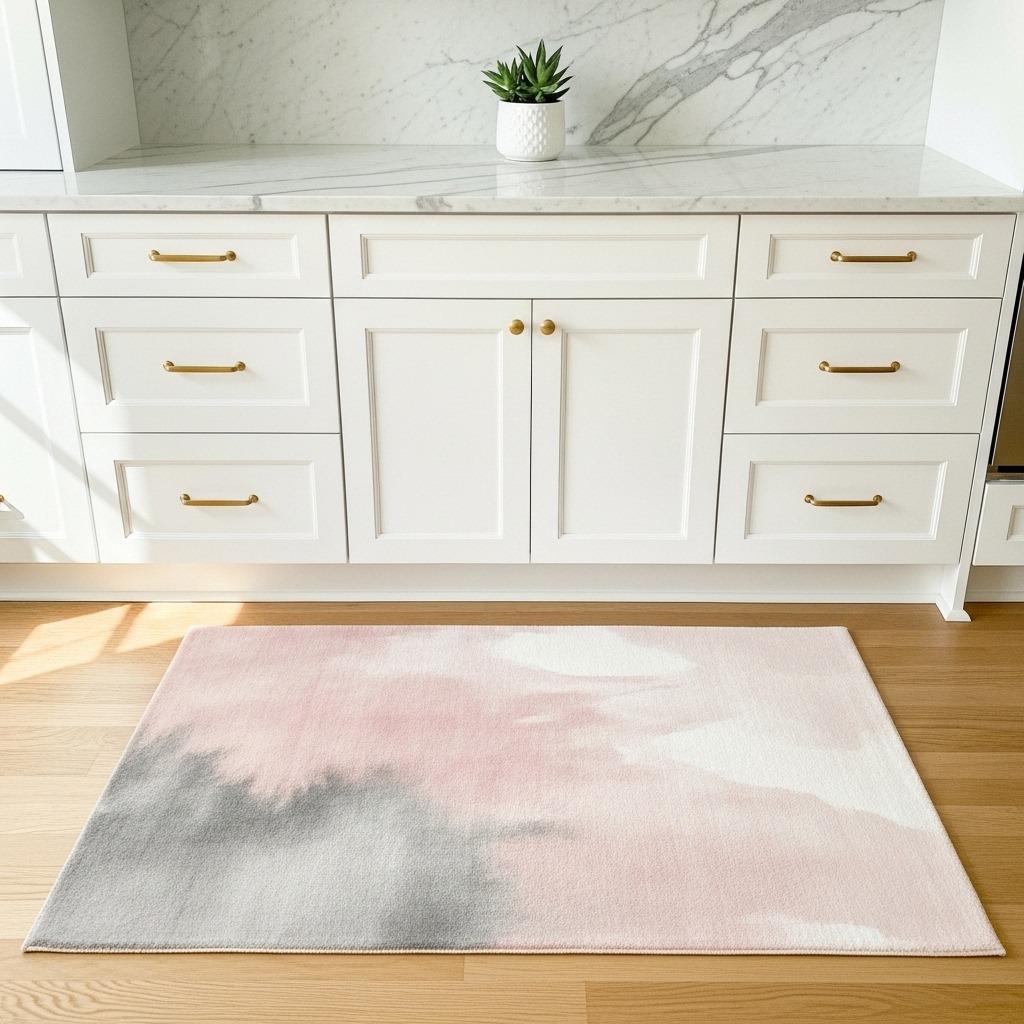
Watercolor-style rugs bring a dreamy, artistic quality to kitchen floors. These designs feature soft color transitions and abstract patterns that resemble painted canvas. Blush pinks melting into soft grays, ocean blues fading to seafoam green, or sunset oranges bleeding into cream create movement without harsh lines.
These rugs excel at hiding imperfections and stains thanks to their varied color patterns. They add personality to colorful kitchen designs without competing with other elements. The soft aesthetic works particularly well if you’re going for that collected, layered look rather than perfectly matched everything.
Look for low-maintenance synthetic versions that capture the watercolor effect. The beauty of these designs is they read as artistic rather than practical, elevating your kitchen’s style quotient significantly.
6. Bold Black and White Graphic
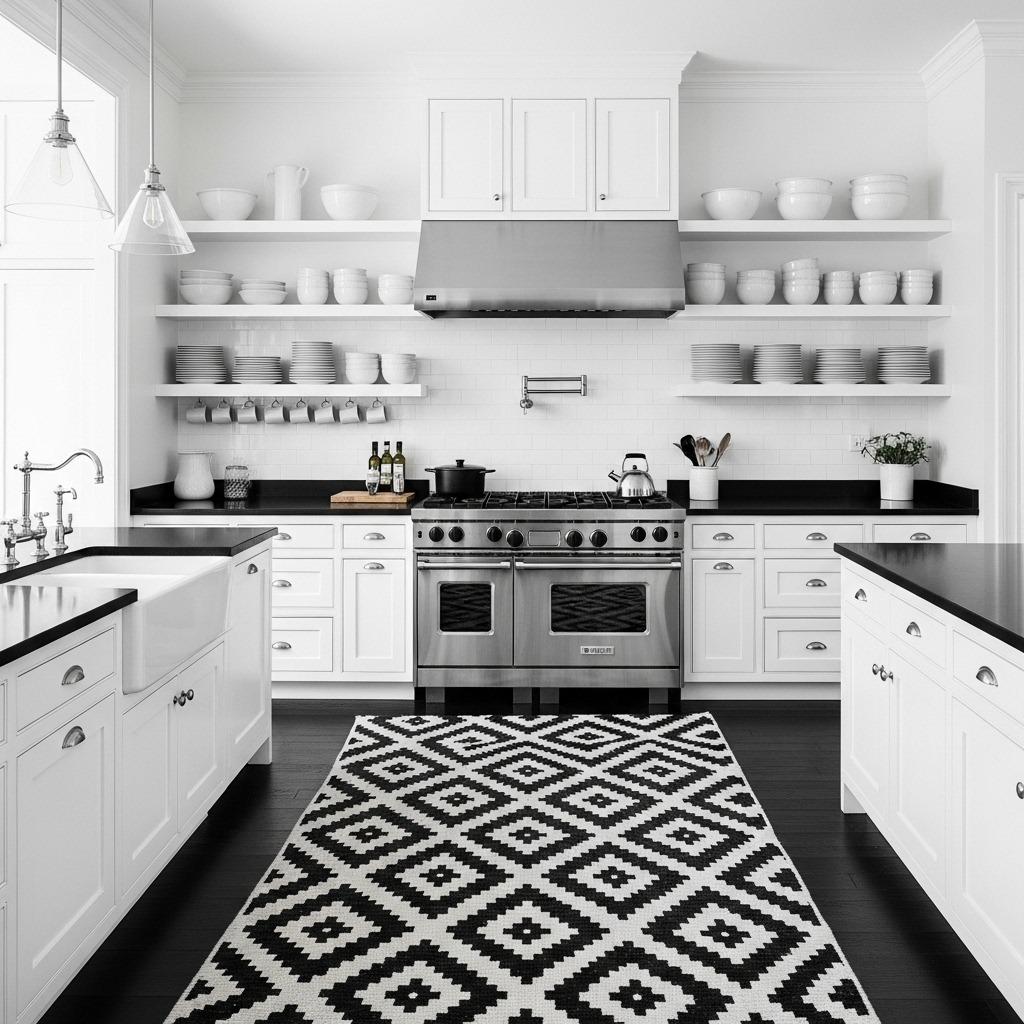
Sometimes you need a rug that makes a statement. Black and white graphic designs – whether Moroccan-inspired diamonds, bold stripes, or abstract patterns – create instant drama. The high contrast demands attention and can actually make small kitchens feel more intentional and designed.
This approach works especially well in all-white kitchens that need a grounding element, or in two-tone kitchen cabinet designs where you want to echo that contrast. The graphic quality adds personality without introducing additional colors that might clash with your existing palette.
The beauty of black and white is its versatility across styles. It reads modern in a contemporary space, classic in a traditional kitchen, and eclectic in a more collected environment. Plus, both colors are forgiving when it comes to inevitable kitchen messes.
7. Washable Rugs for Practical Luxury
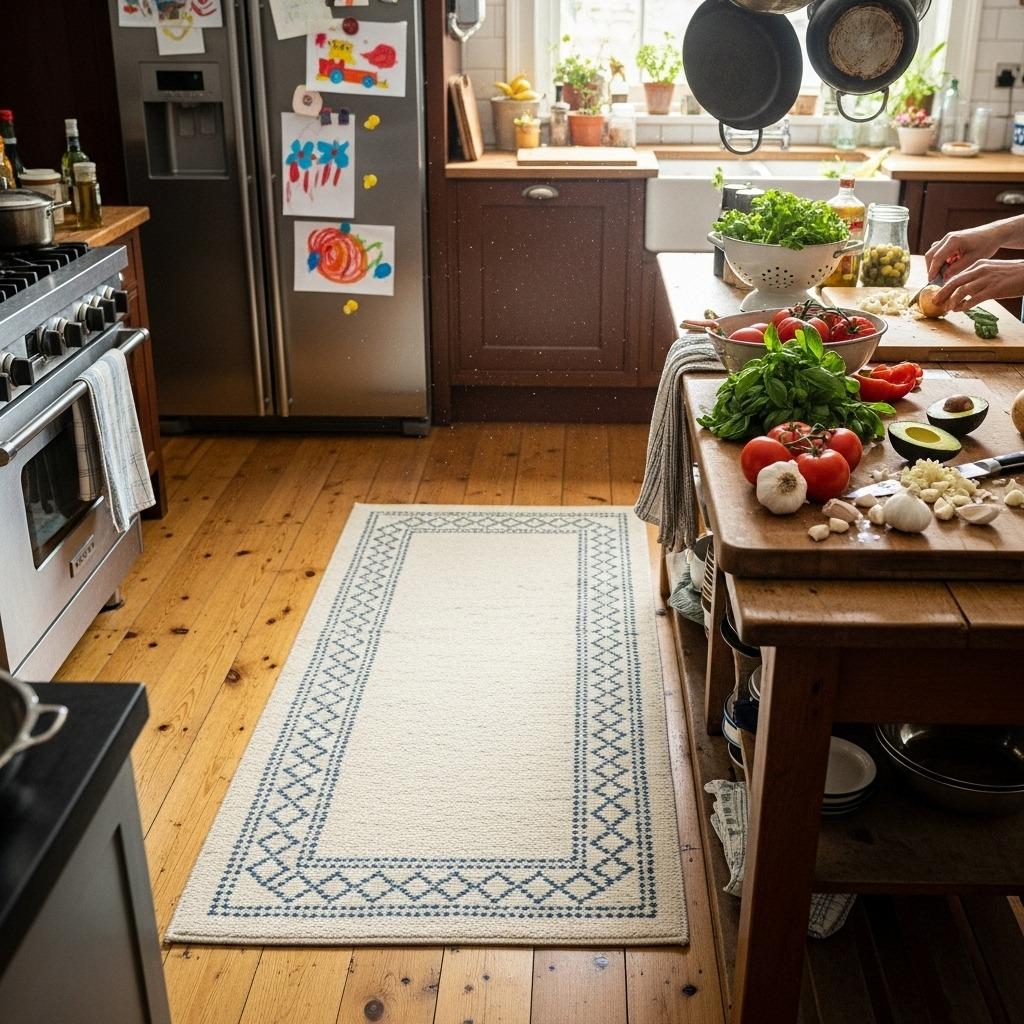
Let’s be honest – kitchens are messy. Washable rugs have completely changed the game, allowing you to have beautiful floor coverings without the constant worry about permanent stains. Modern washable options come in gorgeous designs that rival traditional rugs, from intricate patterns to solid colors.
The ability to throw your rug in the washing machine means you can choose lighter colors or more intricate patterns without anxiety. Cream, white, or pale blue suddenly become viable options. This opens up your design possibilities significantly, especially if you have a specific color scheme in mind for your kitchen and dining space.
Most washable rugs use synthetic materials that resist moisture and dry quickly. They typically have a flatter profile than traditional rugs, which actually helps prevent tripping. Many brands now offer stylish options that don’t sacrifice aesthetics for practicality.
8. Layered Runners for Visual Interest
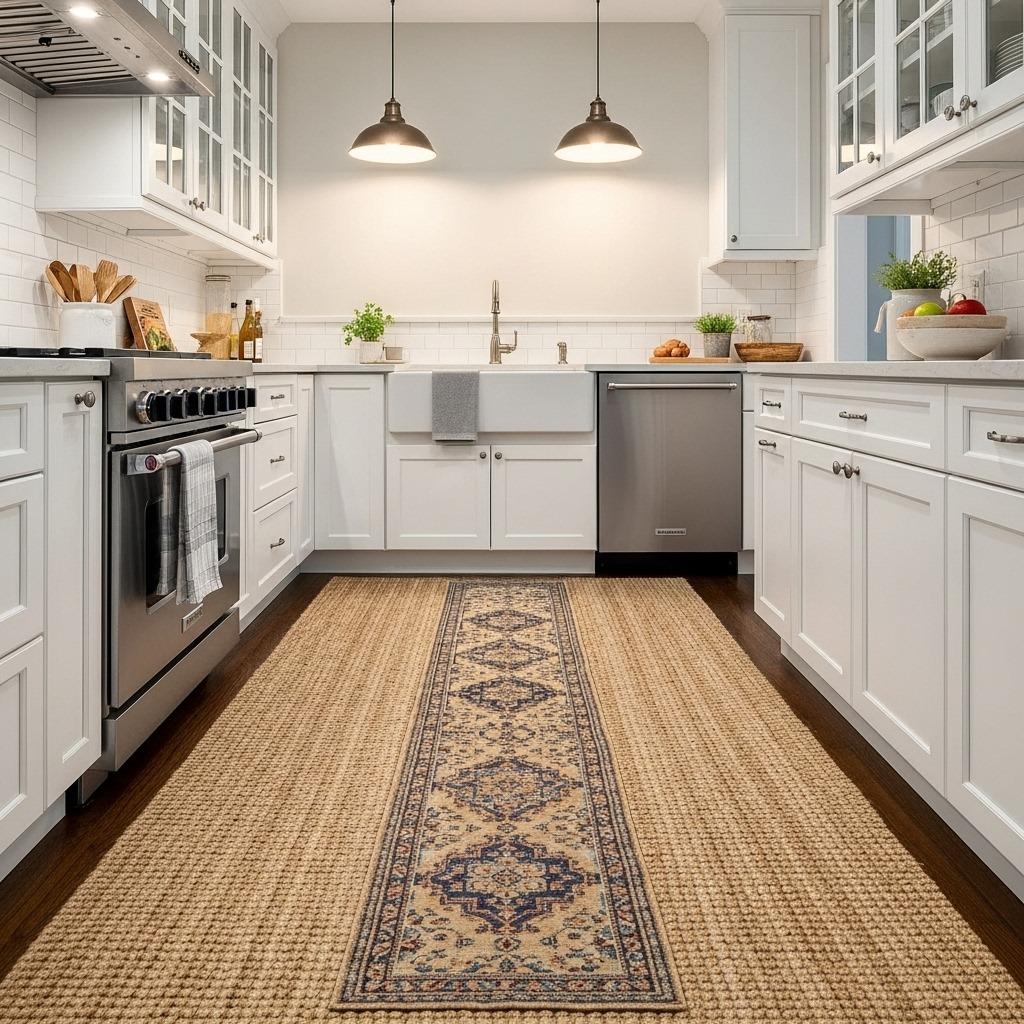
Why settle for one rug when you can have two? Layering runners creates dimensional interest and allows you to mix patterns, textures, or colors in unexpected ways. Try a neutral jute runner as your base with a narrower patterned runner on top, or layer two complementary patterns for maximum impact.
This technique works particularly well in larger kitchens with open concept layouts where you need to define zones without walls. The layered look adds sophistication and that designer touch that makes spaces feel curated. It’s also practical – the bottom layer catches spills while the top layer provides the pretty pattern.
Play with different lengths and widths to create visual rhythm. The contrast between layers becomes part of your design statement. This approach also allows you to swap out the top layer seasonally without completely changing your look.
9. Colorful Kilim for Global Style
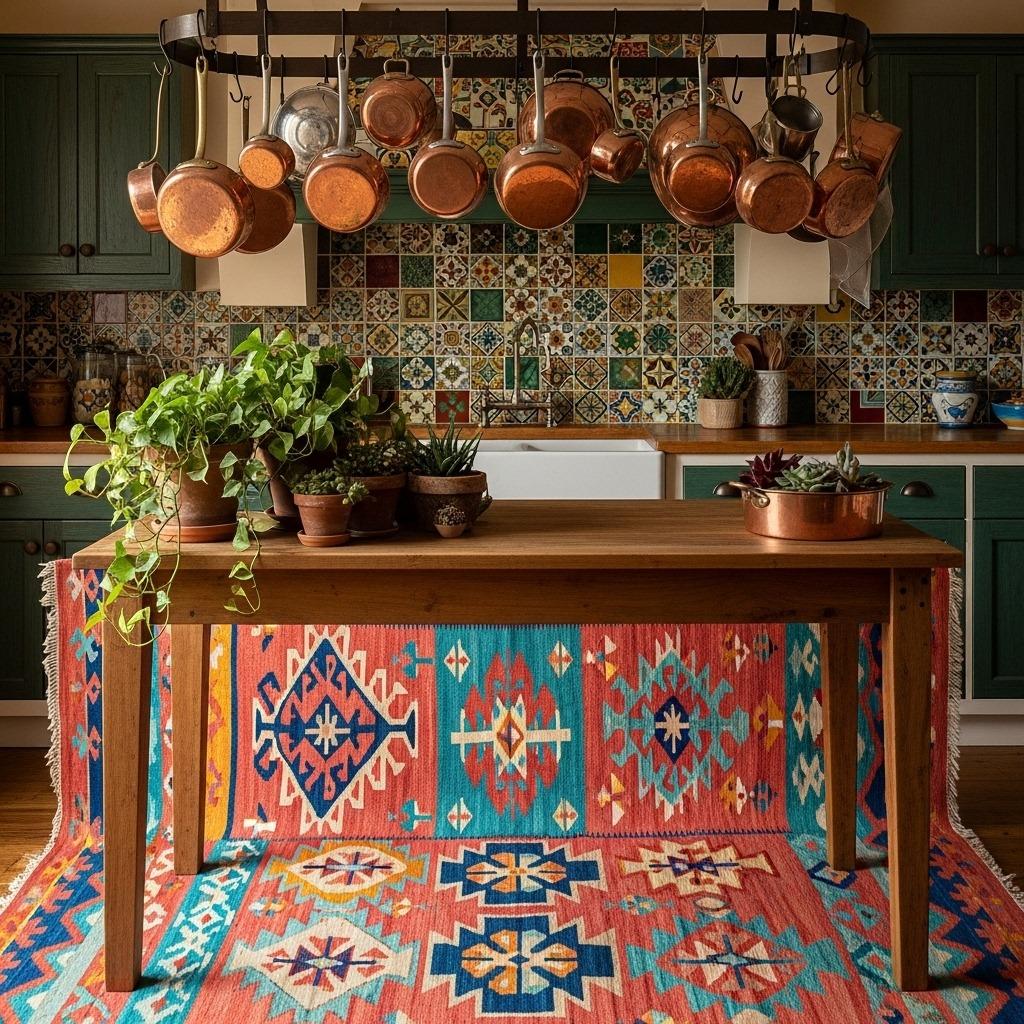
Kilim rugs bring that well-traveled, worldly aesthetic to kitchen spaces. These flat-woven textiles feature geometric patterns and vibrant color combinations – think coral, turquoise, ochre, and magenta dancing together. The relatively thin profile makes them practical for kitchens while the bold patterns inject serious personality.
This style particularly suits eclectic kitchens where you’re mixing various design elements. The colorful patterns provide that collected-over-time feeling that makes spaces feel personal and lived-in. They work beautifully with open shelving, brass accents, and natural wood tones.
Traditional kilims can be delicate, but many modern interpretations use durable synthetic fibers that capture the aesthetic with added practicality. The flat weave makes them easy to vacuum and less likely to trip you when you’re carrying hot pots.
10. Neutral Texture for Subtle Sophistication
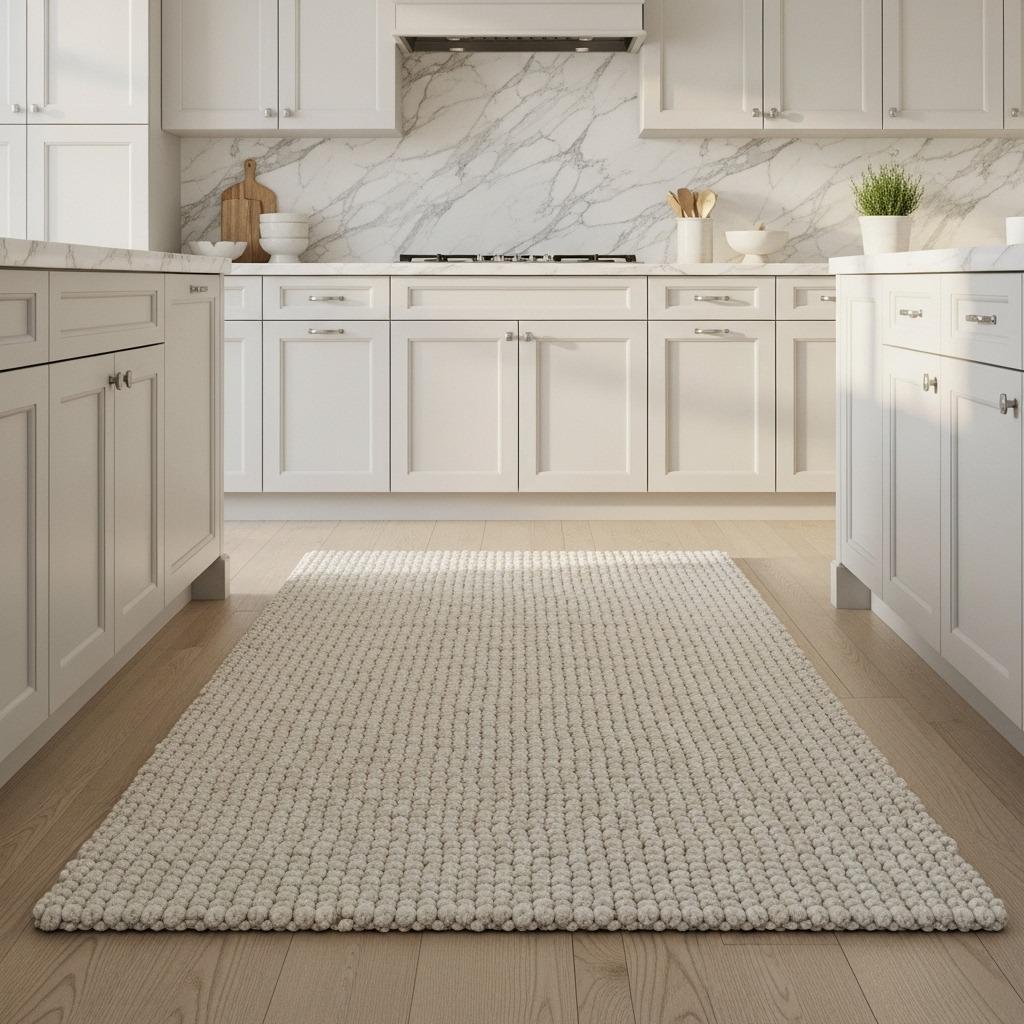
Sometimes the most impactful choice is the quietest one. Textured neutral rugs in cream, beige, gray, or soft taupe add warmth and comfort without visual competition. The interest comes from the material itself – perhaps a high-low pile, a braided construction, or a chunky weave rather than pattern or color.
These rugs excel in kitchens with bold backsplashes, colorful cabinets, or striking countertops where you need something to balance rather than add to the visual energy. They’re also perfect in Scandinavian-style spaces that prioritize calm, minimalist aesthetics. The neutral palette creates a foundation that allows everything else to shine.
Texture becomes your design element here. A chunky braided rug feels casual and relaxed, while a subtle high-low pattern reads more refined. Consider the existing textures in your kitchen – smooth cabinets, rough wood beams, glossy tile – and choose something that adds variety.
11. Runner Along Kitchen Island
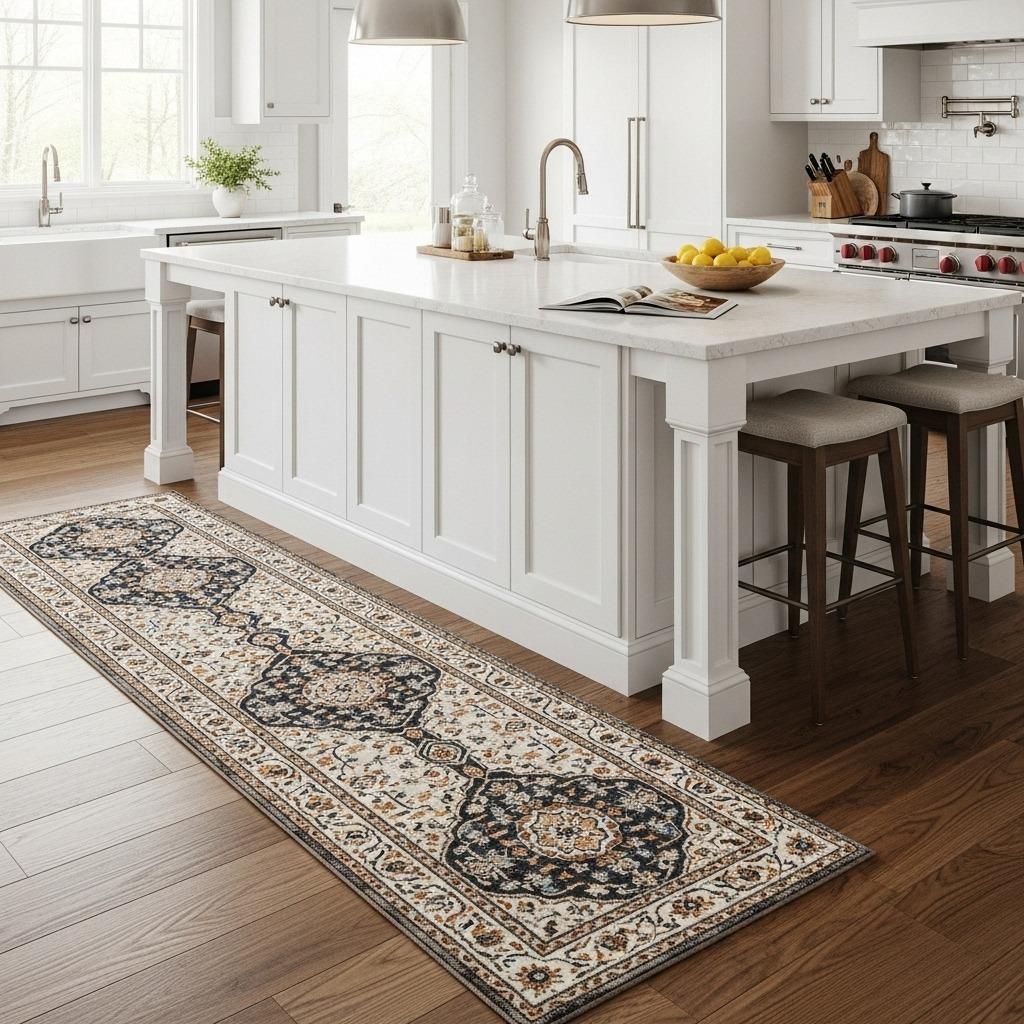
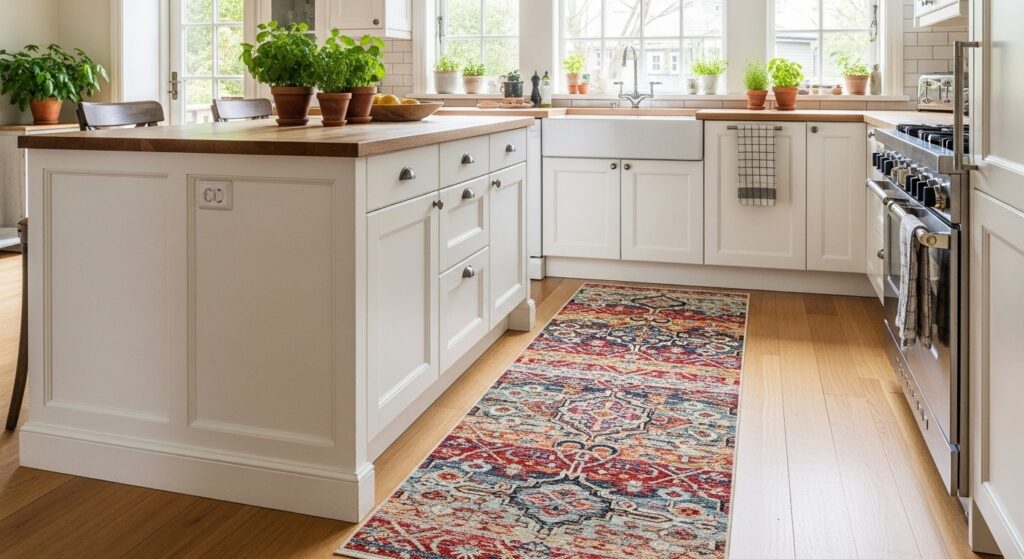
If you have a kitchen island, a runner alongside it creates a designated zone that looks incredibly intentional. This placement works whether you use your island for food prep, casual dining, or both. The runner defines the space, adds comfort for standing, and protects your flooring from the heaviest traffic area.
The length matters here – your runner should extend slightly beyond the island on both ends rather than stopping exactly at the edges. This creates better visual balance and provides coverage where people naturally stand to interact with the island. Choose a width that allows cabinet doors or drawers on adjacent walls to open freely.
This is an excellent spot for a stylish kitchen runner that combines beauty with high performance. Since island areas see constant use, prioritize materials that can handle the activity. The kitchen island naturally becomes a focal point, and your rug choice emphasizes that importance.
12. Round Rug Under Kitchen Table
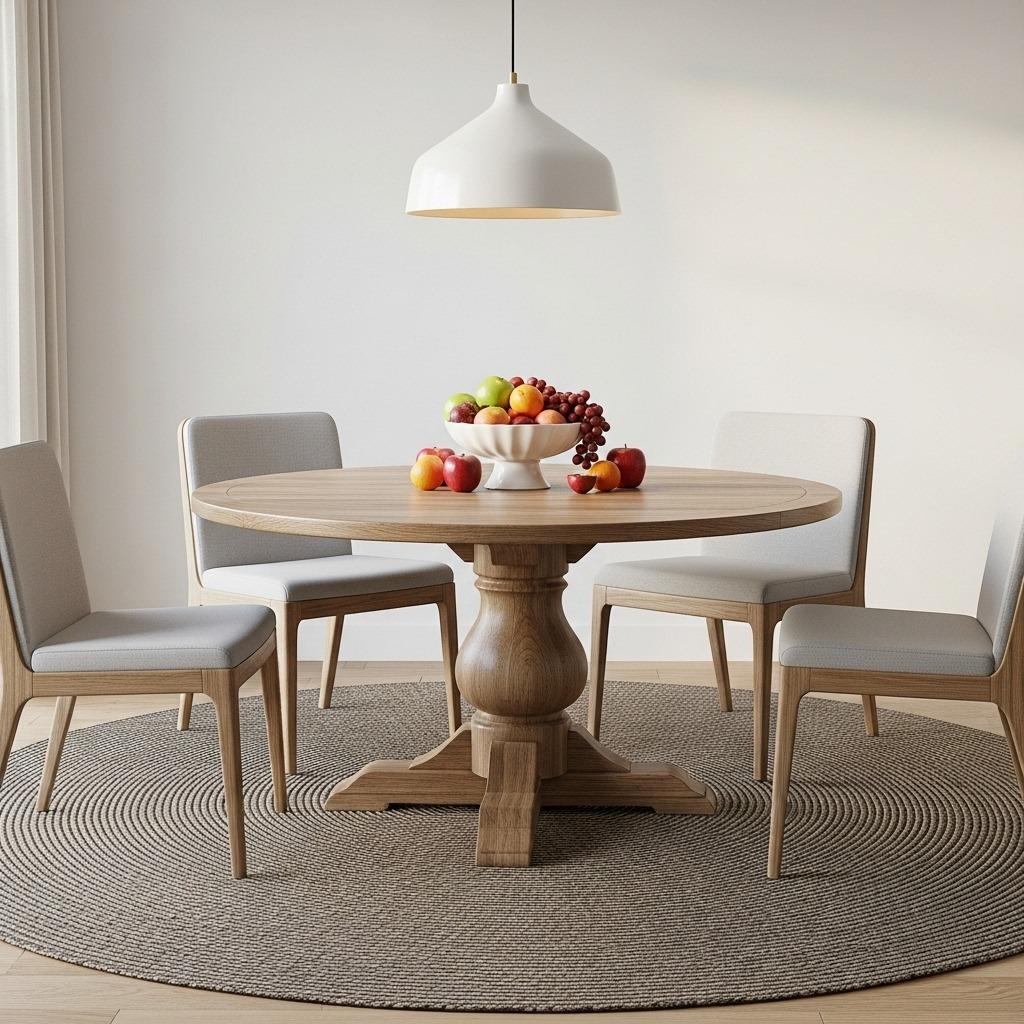
Circular rugs create a softer aesthetic than rectangular ones, and they’re perfect for defining your kitchen dining area. A round rug under a round table creates pleasing geometry, while pairing a circular rug with a rectangular table adds unexpected contrast that feels fresh and modern.
Size is crucial with round rugs – you want enough diameter that chairs remain on the rug even when pulled out. Generally, add at least 24 inches to your table diameter to ensure comfortable seating. This creates a distinct room-within-a-room effect that separates your eating zone from your cooking zone in open floor plan kitchens.
Round rugs soften the angular quality of most kitchens filled with rectangular cabinets, counters, and appliances. They guide the eye in a circular motion, creating a gathering spot that feels welcoming and intentional.
13. Vintage-Look Patchwork
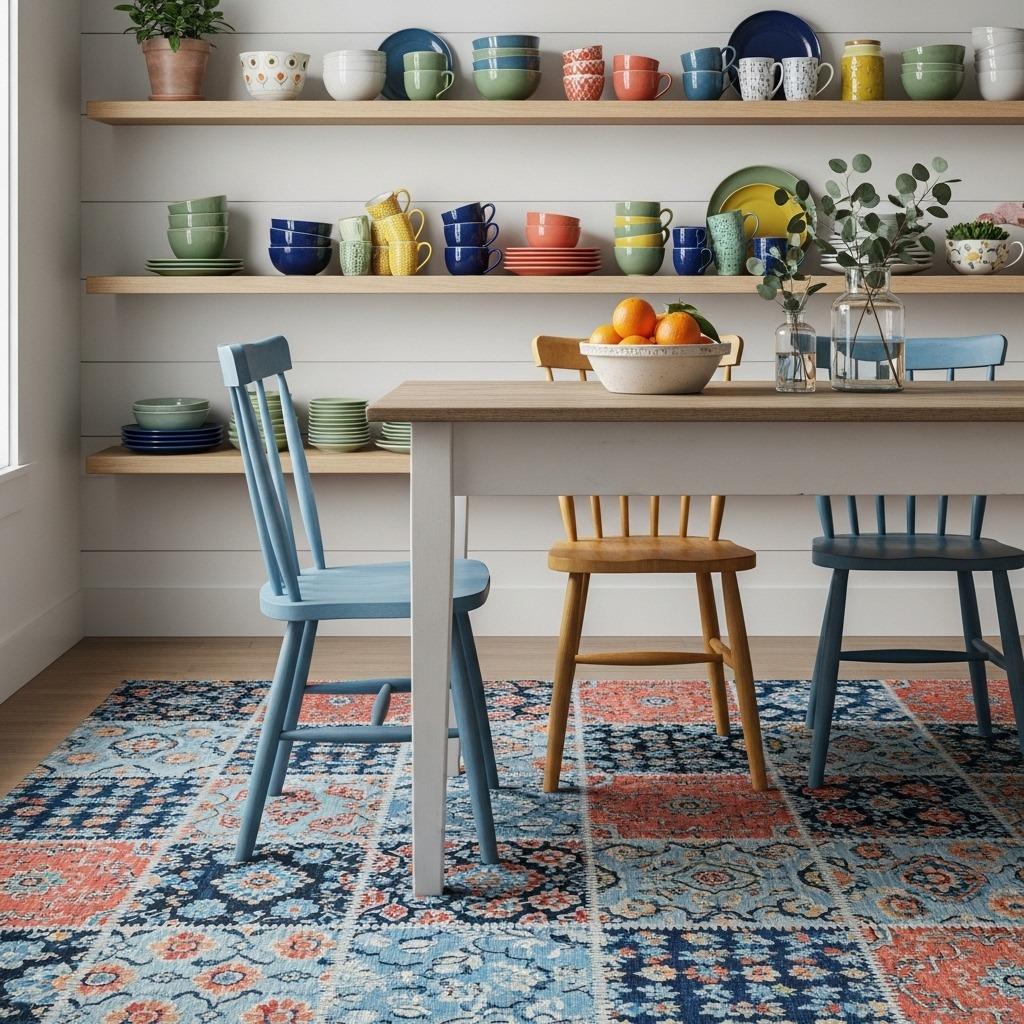
Patchwork rugs tell a story through their pieced-together design. These rugs feature sections of different patterns or colors joined together, creating an eclectic, collected look. Modern versions often use coordinated color palettes so the patchwork feels intentional rather than chaotic, perfect for adding character to your kitchen.
This style particularly suits kitchens with cottage or vintage aesthetics where imperfection adds charm. The varied patterns naturally disguise wear and stains better than solid colors or single patterns. Each section offers something different to look at, creating visual interest without overwhelming the space.
Patchwork works beautifully in kitchens that embrace color and pattern elsewhere – think colorful dishes on open shelving, patterned backsplashes, or collected vintage accessories. The rug becomes part of that layered, personal aesthetic.
14. Indoor-Outdoor Rugs for Maximum Durability
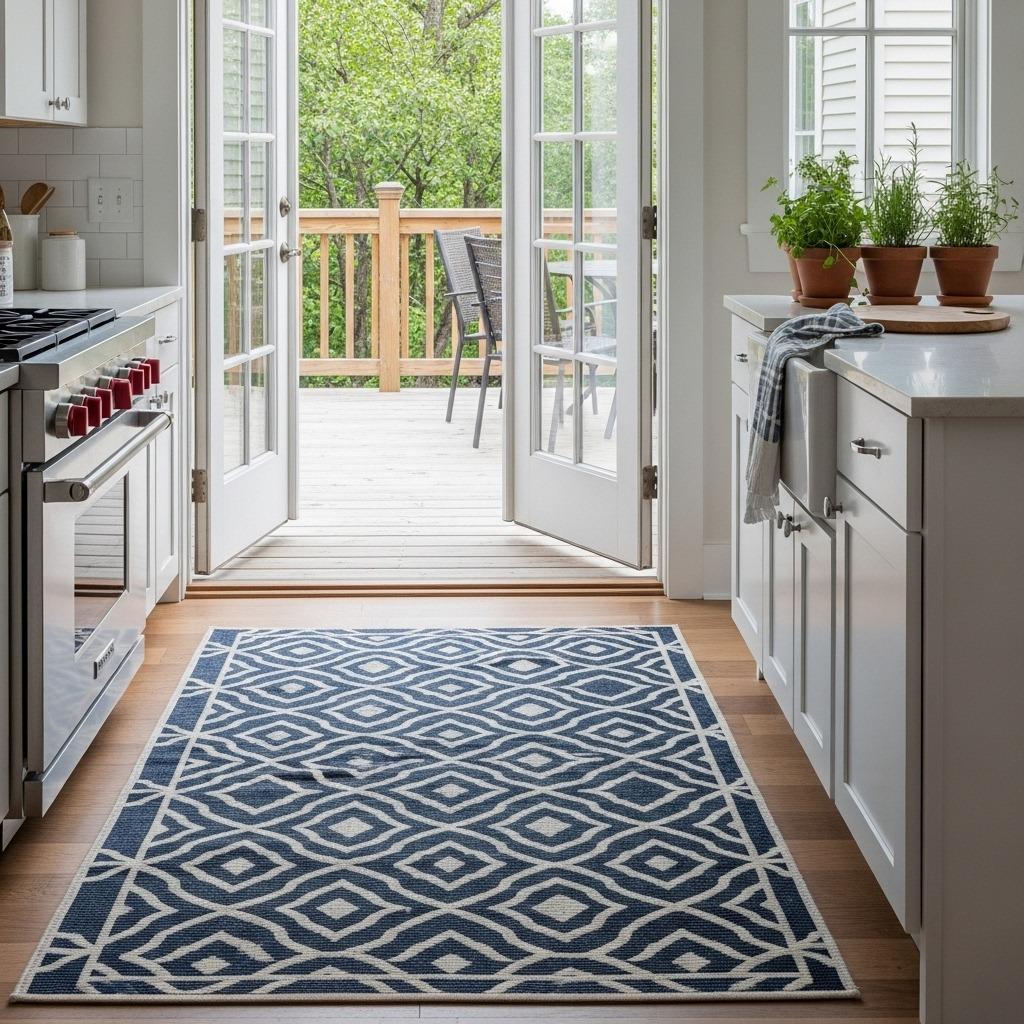
Indoor-outdoor rugs have evolved far beyond those plasticky versions from decades ago. Today’s options offer stunning designs in materials engineered to withstand moisture, stains, and heavy traffic – exactly what kitchens demand. The tight weave repels spills rather than absorbing them, and most can be cleaned with a garden hose.
These rugs work exceptionally well in kitchen spaces that open to outdoor areas, creating visual continuity between inside and outside. The durability means you can use them in your messiest zones – in front of the sink, stove, or refrigerator – without constant worry.
Modern indoor-outdoor rugs come in sophisticated patterns and colors. From subtle stripes to bold geometrics, you’ll find options that match your style while offering superior performance. The slightly textured surface provides good grip underfoot, reducing slip potential on smooth floors.
15. Long Runner from Sink to Stove
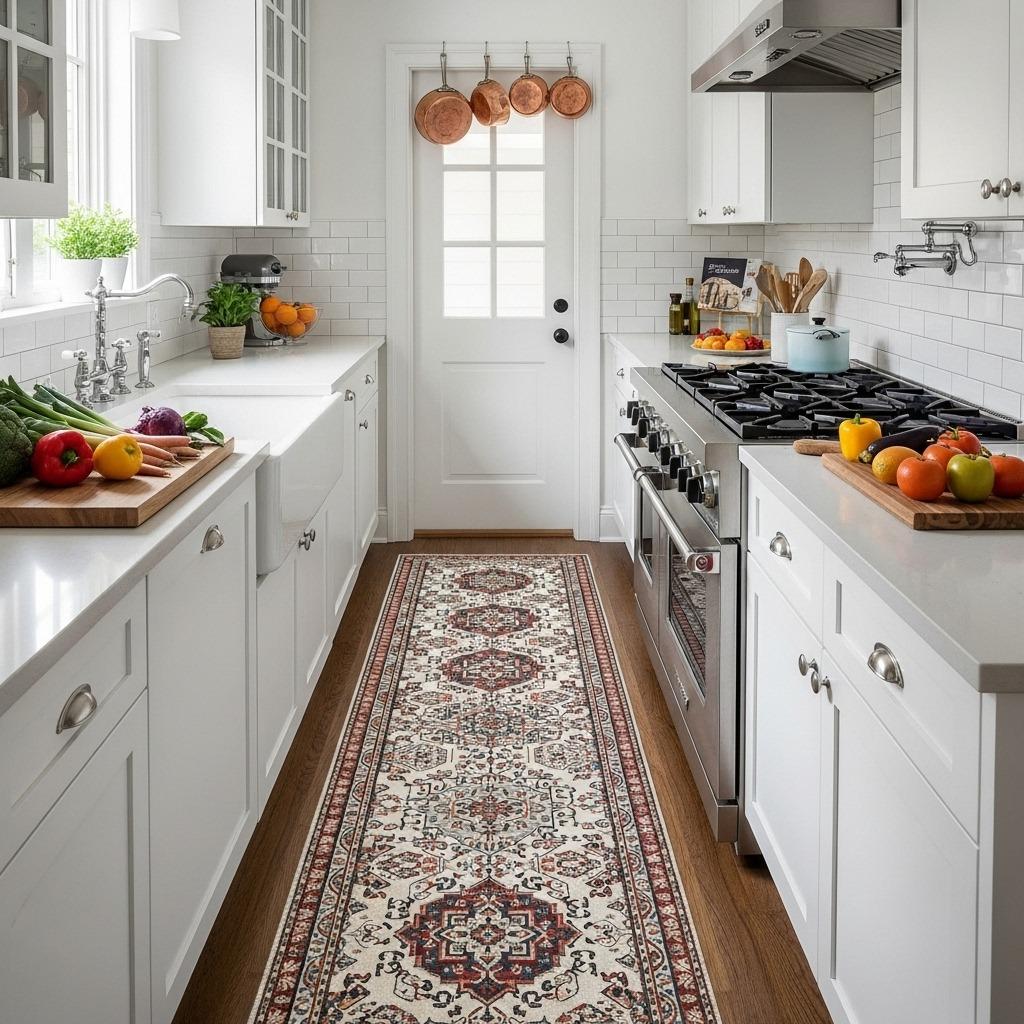
A continuous runner connecting your sink and stove creates a practical work zone while adding a polished finishing touch. This layout makes perfect sense functionally – you’re covering the path you travel most frequently while prepping meals. The visual effect creates a clear kitchen triangle that feels purposeful and well-designed.
Length matters more than width here. The runner should extend the full distance between your major work areas with a few inches beyond on each end. A narrower width (around 2 to 2.5 feet) works better than overly wide options that might interfere with cabinet access or create tripping hazards in tight spaces.
Choose a stylish kitchen runner in a design that complements your overall aesthetic but can handle the reality of being in your primary work zone. Darker colors or busy patterns prove more forgiving than light solids. This is where washable rugs really earn their keep.
16. Bohemian Fringe Details
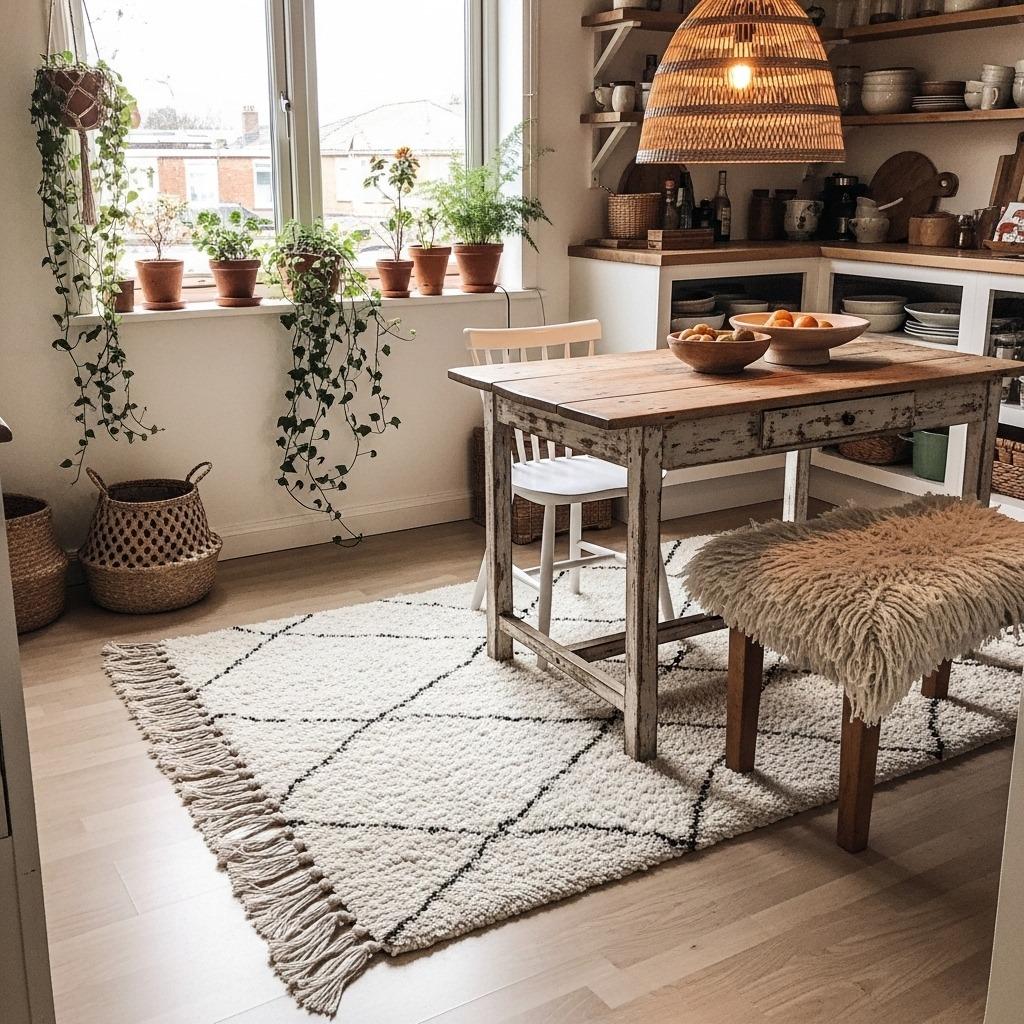
Rugs with fringe details add movement and textural interest that feels relaxed and slightly undone. Whether it’s short fringe on the ends of a runner or longer dramatic fringe on a larger area rug, these details soften the hard edges typical in kitchen spaces. The boho aesthetic brings warmth and personality without being overly formal.
Fringe works particularly well in kitchens with natural textures and relaxed styling – think exposed wood beams, open shelving, and plants. The handcrafted quality of fringed rugs adds to that collected, eclectic vibe. Cotton rugs with substantial fringe feel casual and approachable, perfect for family kitchens.
Just consider the practical side – longer fringe may catch on chair legs or prove harder to vacuum. Shorter fringe (1-2 inches) provides visual interest without as much hassle. The detail adds dimension that makes even simple solid-colored rugs feel more interesting.
17. Muted Floral for Soft Romance
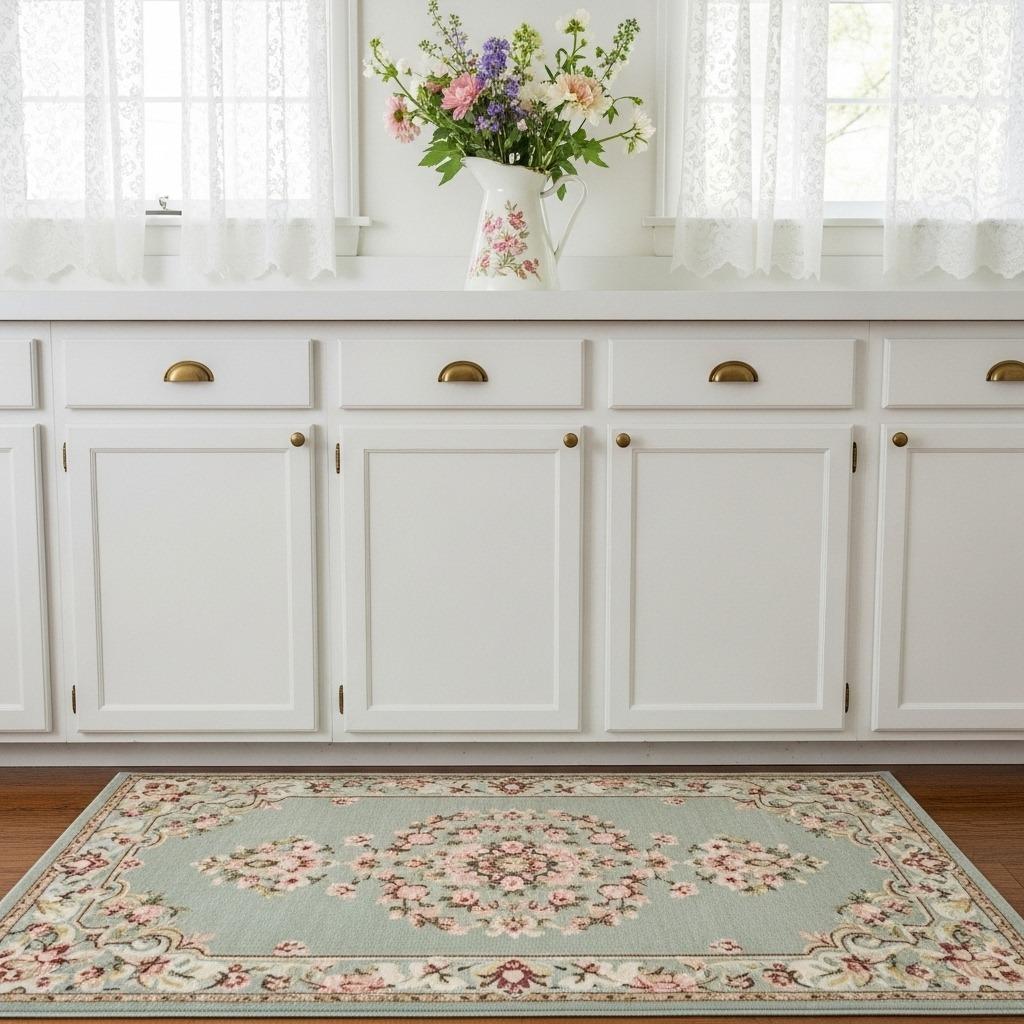
Floral patterns don’t have to read as overtly feminine or dated. Muted floral designs in soft, sophisticated color palettes – think dusty rose, sage green, and cream – add a romantic quality to kitchens without feeling overly precious. Larger-scale blooms feel more modern than tiny ditzy prints, creating impact without busy-ness.
These rugs work beautifully in kitchens with vintage charm, cottage aesthetics, or spaces where you want to introduce organic shapes into an angular environment. The botanical element connects your indoor kitchen to garden inspiration. Paired with simple white cabinets and natural wood tones, a floral rug becomes the personality element that makes the space feel complete.
Choose washable versions in polypropylene or other easy-care materials that capture the watercolor effect of vintage florals. The key is selecting muted rather than bright colors so the pattern feels sophisticated rather than overwhelming.
Finding Your Perfect Kitchen Rug Match
The right kitchen rug balances three essential elements – style, comfort, and practicality. Your choice should reflect your aesthetic preferences while handling the specific demands of your cooking space. Consider where spills happen most frequently, how much foot traffic your kitchen sees, and whether you’re willing to do frequent washing or prefer lower-maintenance options.
Don’t be afraid to try unexpected choices. A vintage-inspired rug in a modern kitchen creates interesting contrast. Bold pattern in an otherwise neutral space becomes an instant focal point. The beauty of rugs is they’re relatively easy to change if your first choice doesn’t work out, making them a low-risk way to experiment with style.
For more inspiration on transforming your kitchen into a space you love, explore our collection of kitchen and dining ideas or discover how affordable home upgrades can refresh your entire home.
The floor beneath your feet deserves as much attention as the counters above. With these 17 ideas, you’re equipped to find patterned kitchen carpeting that works hard and looks even better.