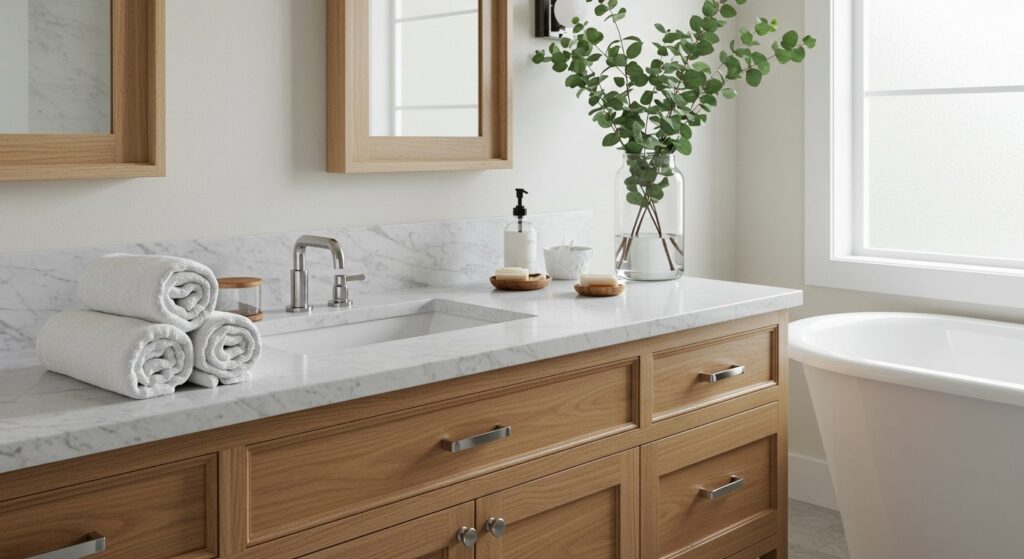
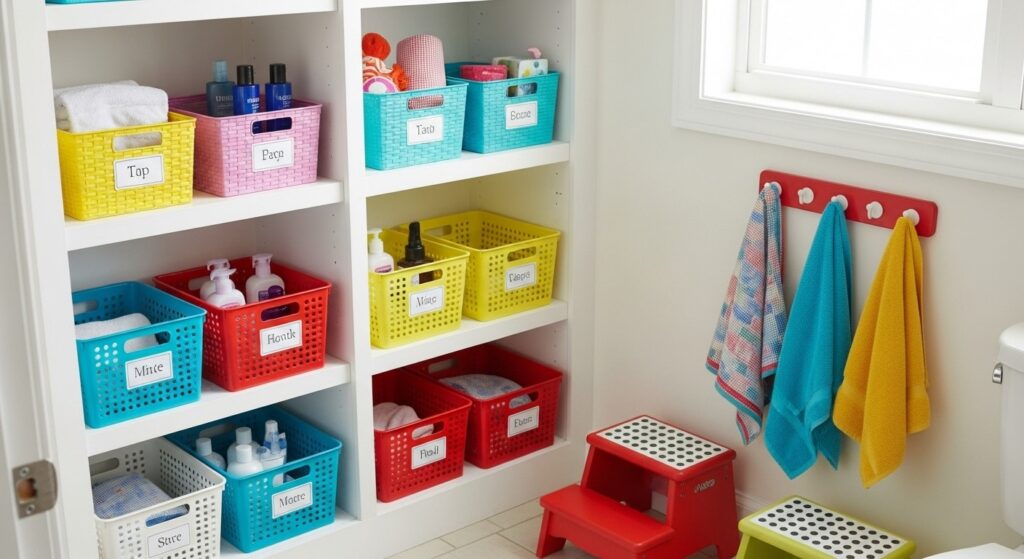
Anyone with kids knows the morning bathroom rush can feel like controlled chaos. Toothbrushes go missing, towels end up on the floor, and somehow there’s toothpaste on surfaces you didn’t even know existed. But what if your kids’ bathroom could actually make mornings easier instead of harder?
Smart kids bathroom organization isn’t about creating a magazine-perfect space that stays pristine for five minutes. It’s about designing a functional zone where little ones can find what they need, put things away without your help, and gradually learn independence. When everything has a clear home and systems are kid-friendly, you’ll spend less time nagging and more time actually getting out the door on time.
The secret lies in choosing playful storage solutions that appeal to children while keeping the space practical for daily use. Think colorful bins they can actually reach, visual cues that show where things belong, and setups that make cleanup feel less like a chore. Ready to transform your bathroom into a space that works with your family, not against it?
Why Kids Bathroom Organization Actually Matters
You might wonder if organizing a kids’ bathroom is worth the effort when it’ll just get messy again tomorrow. But here’s the thing – a well-organized bathroom teaches children valuable life skills while reducing your daily stress. When kids know exactly where their toothbrush lives or which basket holds their bath toys, they develop autonomy and confidence.
Chaos in the bathroom often leads to wasted time during those critical morning minutes. Searching for hairbrushes, arguing over whose towel is whose, or dealing with spills from cluttered counters all add unnecessary friction to your routine. A thoughtfully organized space eliminates these pain points before they happen.
There’s also the hygiene factor that parents sometimes overlook. When toiletries are properly stored and surfaces stay clear, it’s easier to keep the bathroom clean. Kids are more likely to wash their hands thoroughly when the soap is within easy reach, and they’ll actually hang up their towels when hooks are at the right height. Small organizational changes create ripple effects throughout your daily routine.
Understanding Your Kids’ Bathroom Needs
Before buying any organizers or storage bins, take a step back and observe how your kids actually use the bathroom. Do they struggle to reach the sink? Are bath toys scattered everywhere because there’s no designated spot? Maybe your teenager needs different storage than your preschooler. Each family’s needs vary based on ages, bathroom size, and daily routines.
Consider conducting a quick inventory of what’s currently in your bathroom. You might discover expired medicines, outgrown bath toys, or duplicate items taking up valuable space. This assessment helps you understand what truly needs storage versus what can be purged or relocated.
Think about your children’s heights and abilities too. A five-year-old can’t safely use the same storage solutions as a twelve-year-old. Your organizational systems should grow with them, or at least be adjustable. When kids can independently access their supplies without climbing or asking for help, everyone wins.
Vertical Storage Solutions That Kids Can Actually Use
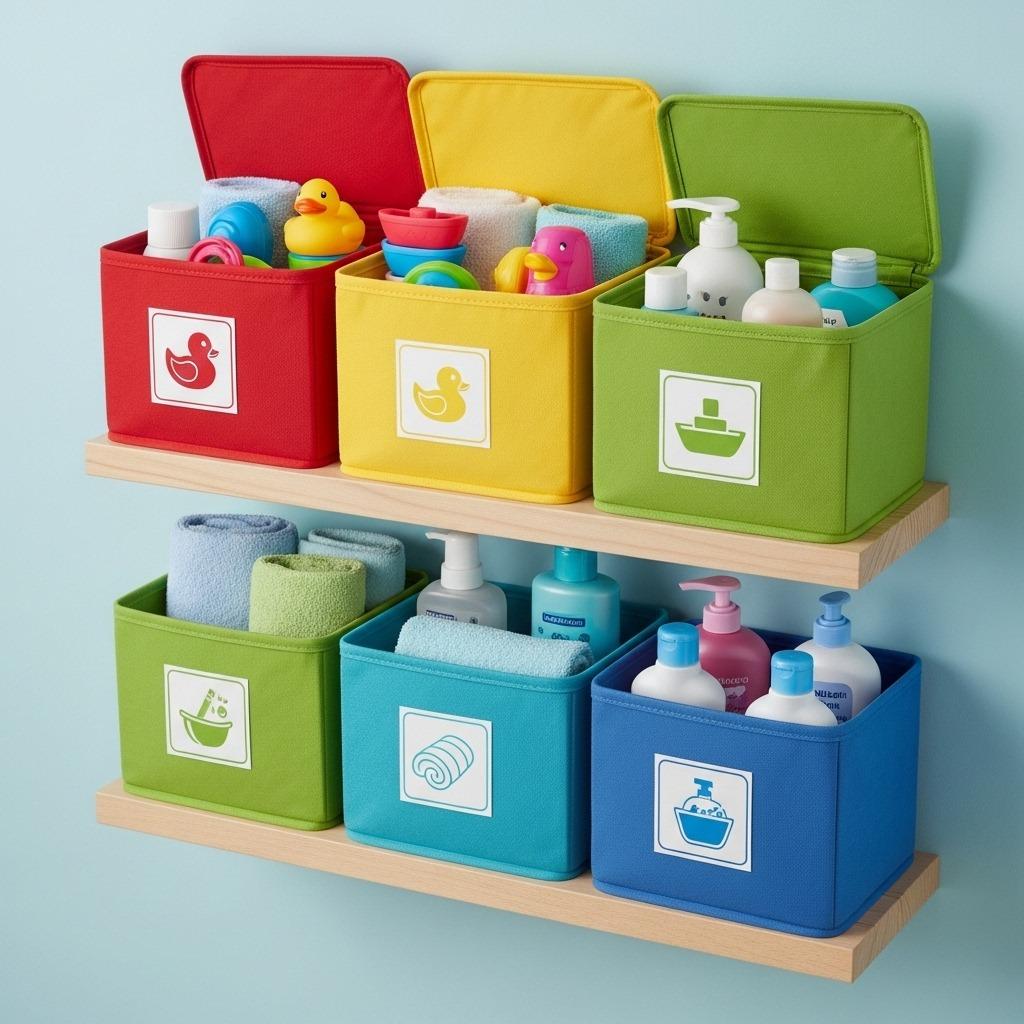
Wall space is your secret weapon in any bathroom organization project, especially in compact areas. Installing shelves, hooks, and organizers at kid-appropriate heights transforms unused vertical real estate into functional storage. The key is making everything accessible so children don’t need to ask for help every single time.
Open shelving works surprisingly well for kids when paired with labeled bins or baskets. Unlike cabinets with doors that little hands struggle to open, open shelves let children see exactly what’s available. Choose shallow shelves that prevent items from getting lost in the back. This approach encourages kids to return things to their spots since everything remains visible.
Over-the-door organizers deserve special mention for their versatility. These hanging solutions can hold everything from hair accessories to small toys without requiring any wall damage. Look for clear pocket organizers so kids can easily spot what they need. Some families even use these for morning routine checklists, creating a visual guide that helps children stay on track.
Smart Drawer and Cabinet Systems
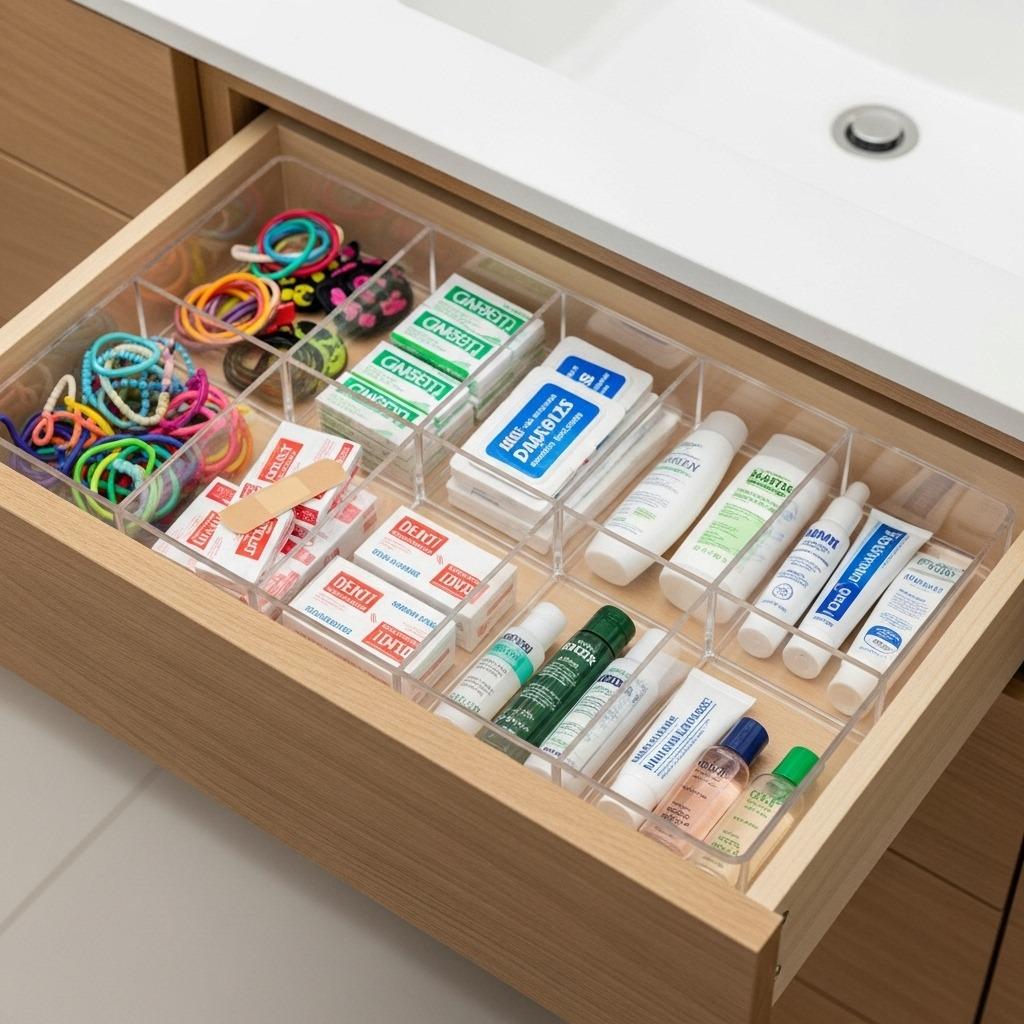
If your bathroom has existing cabinets and drawers, don’t overlook their organizational potential. The inside of these spaces often becomes a jumbled mess, but simple dividers and baskets can transform them into efficient storage zones. Start by designating specific drawers for specific purposes – one for hair supplies, another for first aid, and so on.
Drawer dividers keep small items from migrating into one giant pile. You can find adjustable versions that fit various drawer sizes, or even repurpose shallow boxes or containers you already own. This system prevents the morning scramble where everyone’s dumping out the entire drawer to find one hair tie. When items have designated compartments, kids learn to put things back correctly.
For lower cabinets, pull-out baskets or sliding organizers make a world of difference. Children can easily access items in the back without knocking everything over. Consider installing cabinet door organizers too – that inside surface is prime real estate for hanging caddies that hold cleaning supplies, extra toilet paper, or toiletries. Just make sure anything hazardous stays secured with childproof locks for younger kids.
The Magic of Color-Coded Organization
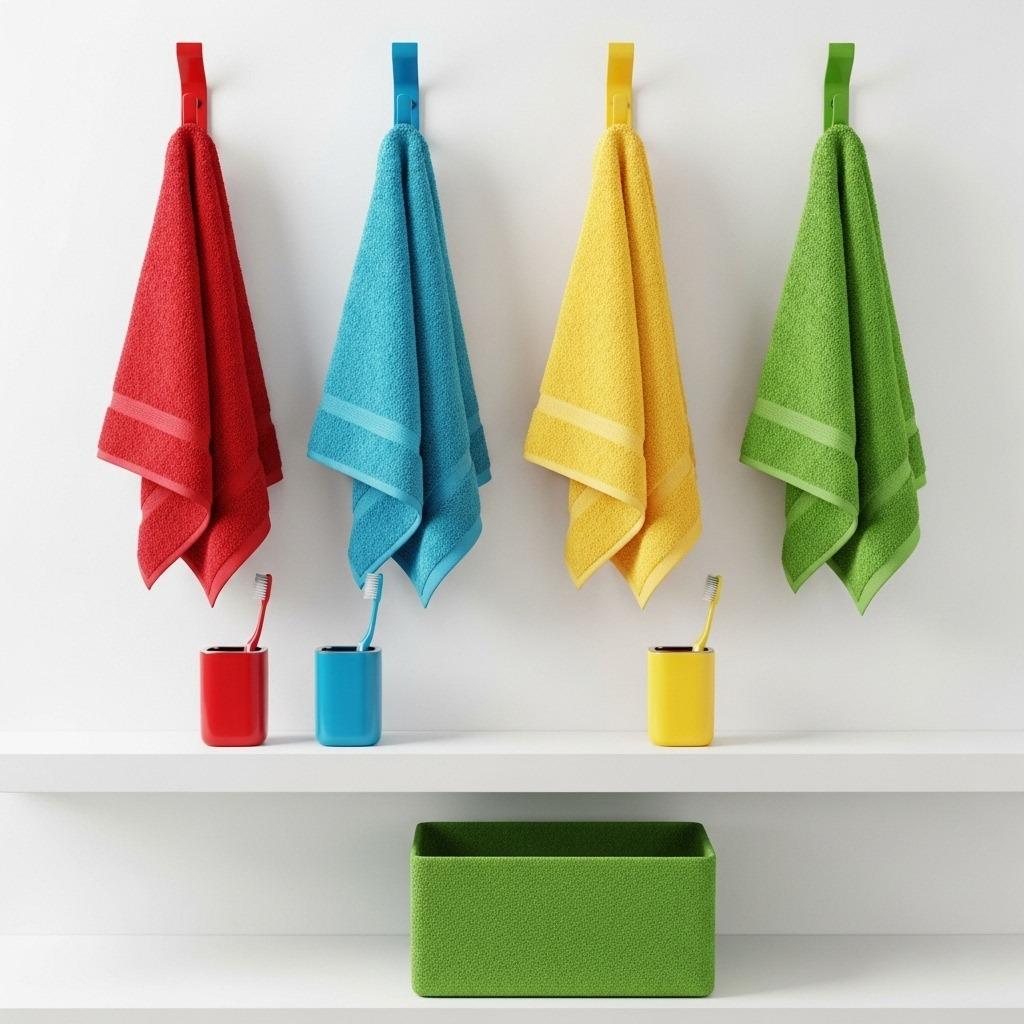
Kids respond incredibly well to visual systems, which makes color-coding one of the most effective organizational strategies for family bathrooms. Assign each child a specific color for their towels, toothbrushes, storage bins, and other personal items. This simple system eliminates the constant “that’s mine!” arguments and helps even non-readers identify their belongings.
Color-coding extends beyond just preventing sibling disputes. It creates an intuitive organizational system that kids grasp immediately. When your daughter knows everything purple is hers and everything green belongs to her brother, cleanup becomes straightforward. They can independently sort items after bath time or quickly grab the right supplies before school.
You can implement this strategy gradually without buying all new items at once. Start with towel hooks in different colors, then add coordinating bins or baskets as you replace old storage. Many parents find that children actually enjoy having “their” color and take more ownership over keeping their items organized. This approach works particularly well in kids’ spaces throughout your home.
Bath Toy Storage That Actually Drains
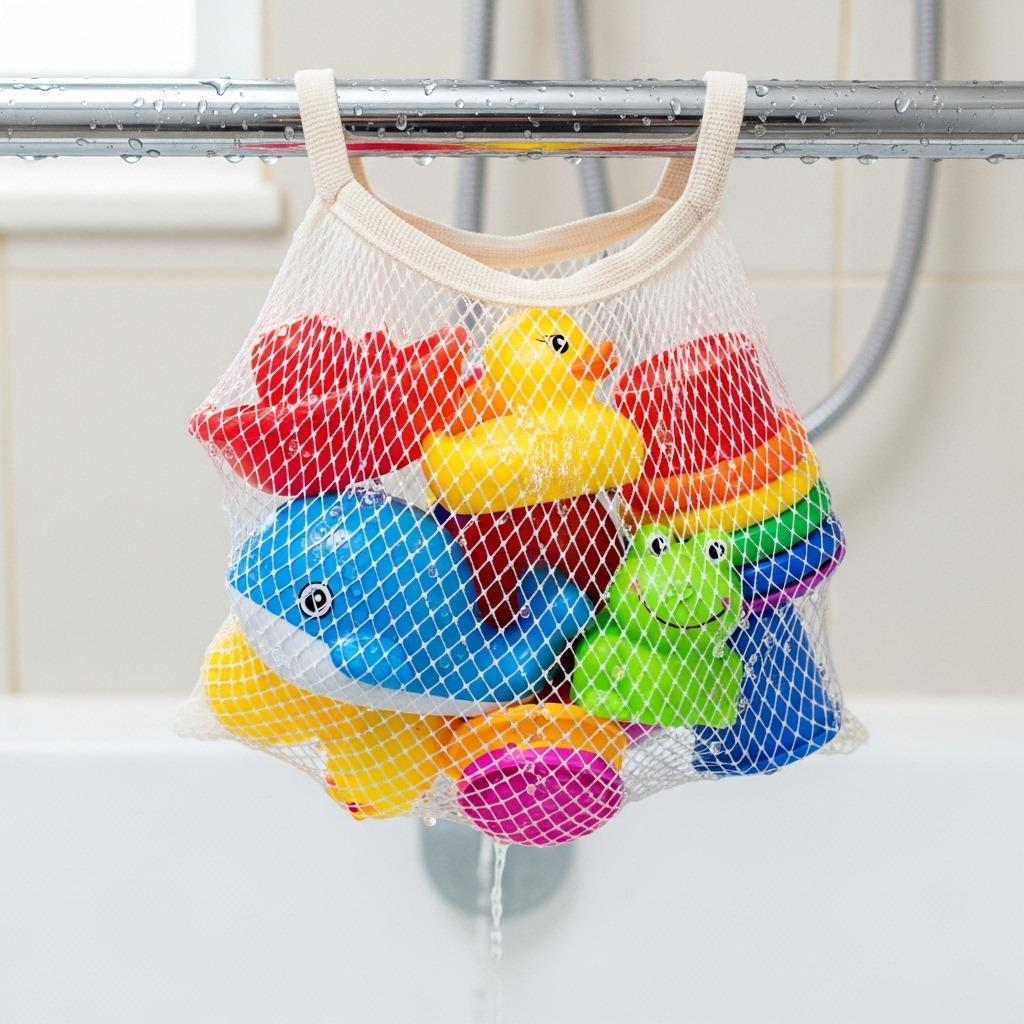
Bath toy clutter might be the number one complaint from parents about kids’ bathrooms. Those rubber ducks and squirt toys accumulate water, grow mildew, and somehow multiply overnight. The solution isn’t getting rid of bath toys entirely but finding storage that allows them to properly dry between uses.
Mesh bags designed specifically for bath toys are budget-friendly lifesavers. Hang them from suction cup hooks or shower rods where toys can drip dry directly into the tub. Kids can toss toys into the bag at cleanup time, and the breathable mesh prevents that nasty buildup that happens in solid containers. Some versions come with fun designs that appeal to children and blend with your bathroom decor.
Corner caddies and hanging baskets offer another drainage-friendly option. Look for versions with multiple tiers if you’ve got a serious toy collection. The key is elevation – getting toys up off the tub ledge where they typically sit in puddles. Regularly rotate toys in and out of storage to prevent overwhelming your bathroom while keeping bath time interesting.
Step Stools and Accessibility Helpers
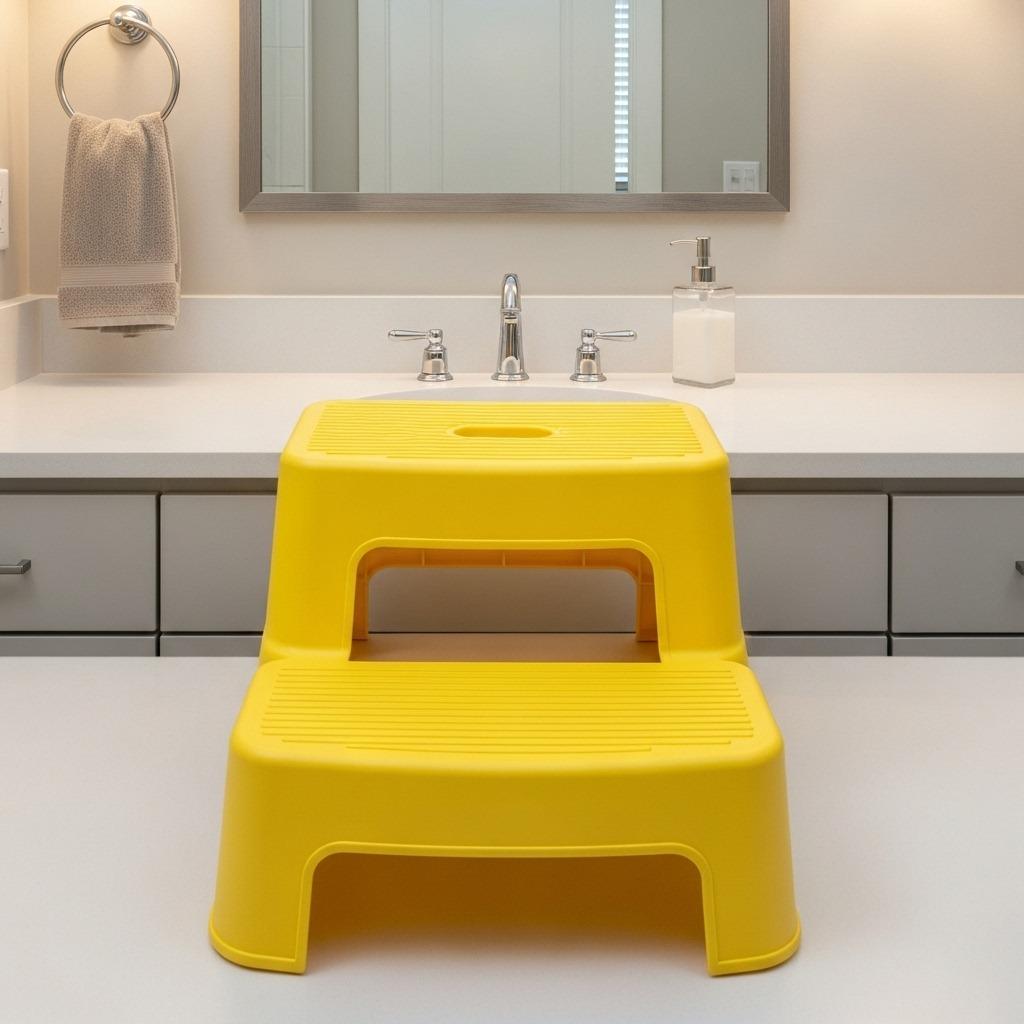
Independence starts with accessibility. When kids need to yell for help just to reach the sink or turn on the faucet, bathroom tasks become parent-dependent instead of self-sufficient. A sturdy step stool transforms your standard bathroom into a kid-friendly space where little ones can manage their own hygiene routines.
Choose step stools with non-slip surfaces and rubber feet that won’t slide around on tile floors. Two-step versions work better for very young children, while a single wide step might suffice for older kids. Some clever designs include built-in storage inside the stool itself, giving you a place to stash extra soap or washcloths. Consider getting stools in fun colors or with characters that encourage kids to use them.
Beyond step stools, faucet extenders deserve consideration for families with toddlers and preschoolers. These inexpensive attachments bring the water flow forward and downward, so small hands can actually reach under the stream. They’re temporary solutions that come off when kids outgrow them, but they make a noticeable difference during those crucial early years of learning bathroom independence. You’ll find similar practical solutions in smart bathroom storage setups.
Towel and Robe Organization Systems
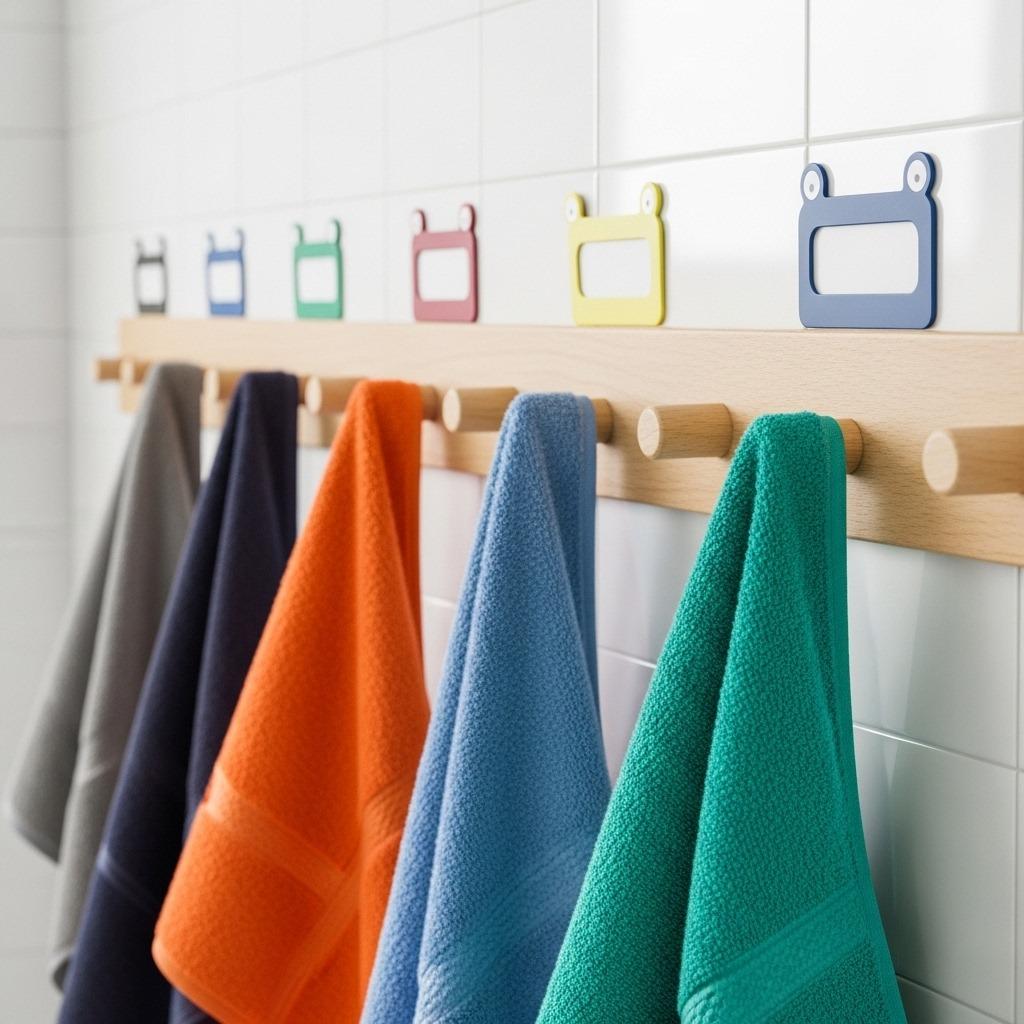
Wet towels on the floor? It’s practically a universal kids’ bathroom phenomenon. But before you blame your children entirely, consider whether your current towel storage actually makes sense for them. Standard towel bars mounted at adult height don’t work well for young children who can barely reach them, let alone neatly fold and hang a damp towel.
Individual hooks installed at kid height solve this problem elegantly. Children can easily hang towels on hooks without the coordination required for bars. Space hooks far enough apart that each towel has its own spot – this prevents the damp pile-up that happens when towels touch. Label hooks with names or use that color-coding system we discussed earlier for a personalized touch.
For bathrobes, consider lower hooks near the shower or tub rather than behind the door. When robes are conveniently located where kids actually use them, there’s a better chance they’ll hang them up. Some families add a small hamper specifically for damp towels if daily laundry isn’t feasible. This keeps wet textiles contained while preventing mildew from developing on improperly hung towels.
Toiletry and Personal Care Stations
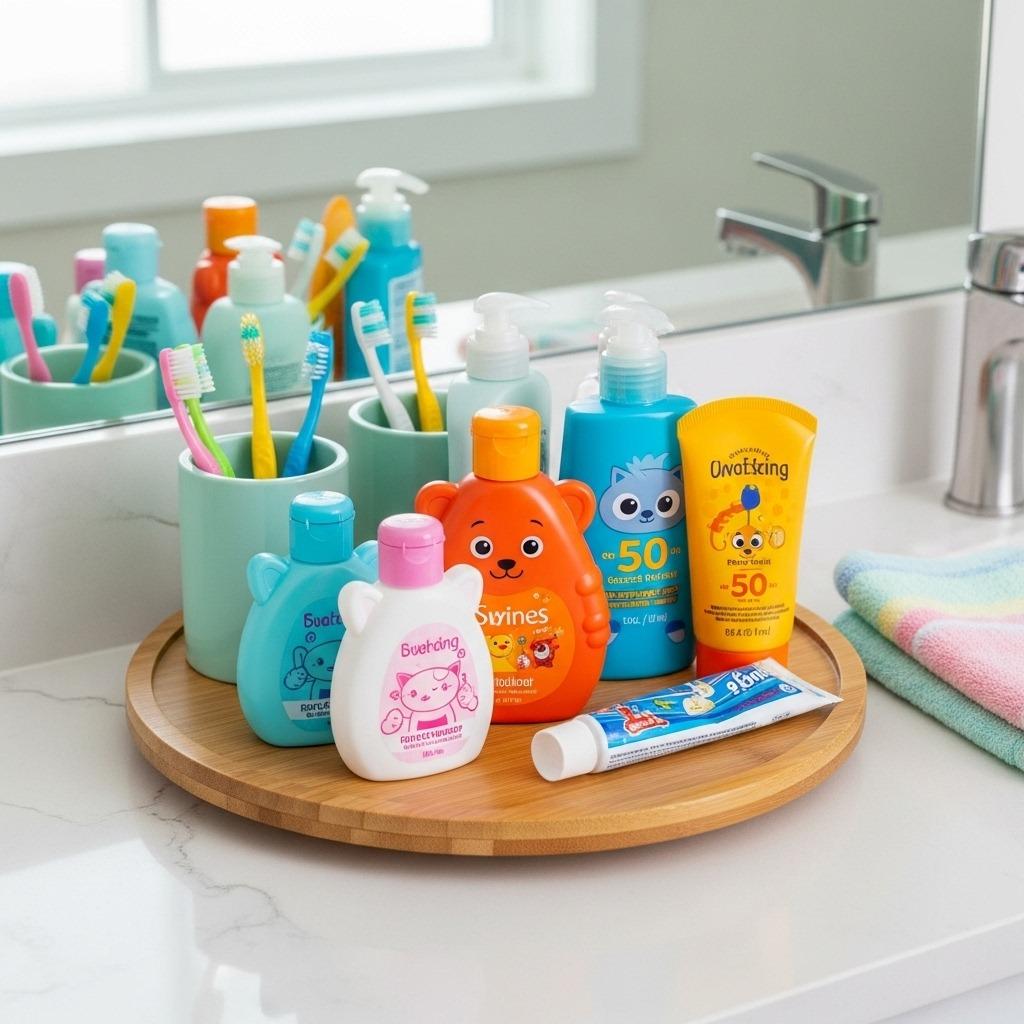
Creating designated stations for different bathroom activities helps kids understand what goes where and streamlines their routines. A morning station might include toothbrushes, toothpaste, hairbrushes, and face wash – everything needed to get ready grouped together. This clustering strategy reduces the hunting and gathering that makes mornings take forever.
Lazy Susans or turntables work surprisingly well for shared toiletries that multiple kids use. Place one on the counter or inside a cabinet with items like lotion, sunscreen, and hair detangler. Kids can simply spin the organizer to find what they need without knocking everything over. This approach works especially well in small bathroom renovations where counter space is limited.
For older kids and teens who have more personal care products, consider drawer organizers or small bins that slide under the sink. These portable caddies let them keep their growing collection of products separate from younger siblings’ supplies. Teaching children to maintain their own designated area builds responsibility while preventing bathroom counter takeover as they age.
Medicine and First Aid Organization
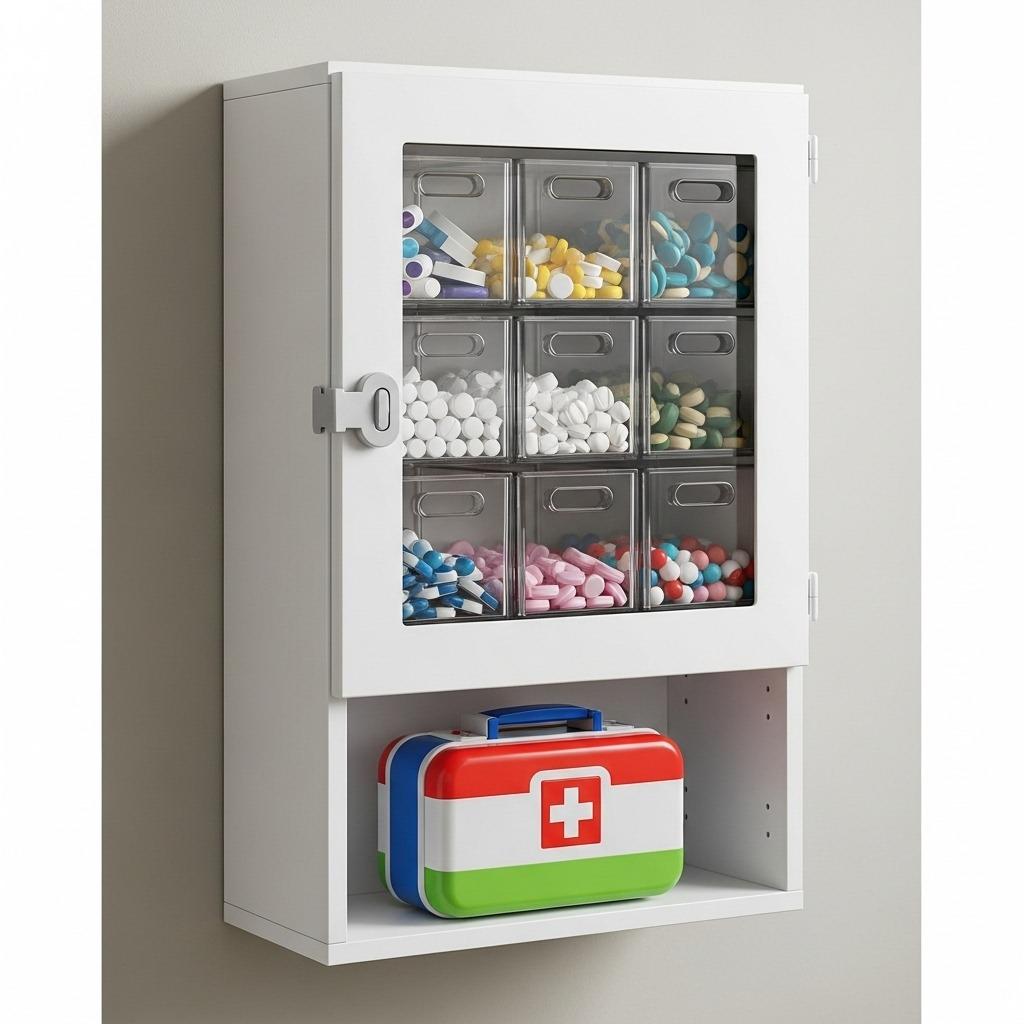
Medication storage requires extra thoughtfulness in kids’ bathrooms. Safety absolutely comes first, which means keeping medicines completely out of reach for young children while still maintaining an organized system for parents. Wall-mounted cabinets with locks provide secure storage while utilizing vertical space efficiently.
Inside your medicine cabinet, use small bins or dividers to separate categories: pain relievers, bandages, cold medicine, vitamins, and so on. Label everything clearly and check expiration dates regularly. Some families designate different sections for each child’s specific medications or supplements. This prevents accidentally giving the wrong medicine during those hectic sick days when your brain isn’t firing on all cylinders.
For frequently needed items like bandages or antibiotic ointment, consider a separate “boo-boo kit” in a lower drawer that older kids can access independently for minor scrapes. Stock it with kid-friendly bandages, antiseptic wipes, and other basic first aid supplies. This empowers children to handle small injuries themselves while keeping actual medications safely locked away. Similar organizational principles apply throughout your home storage improvement projects.
Morning Routine Visual Charts and Timers
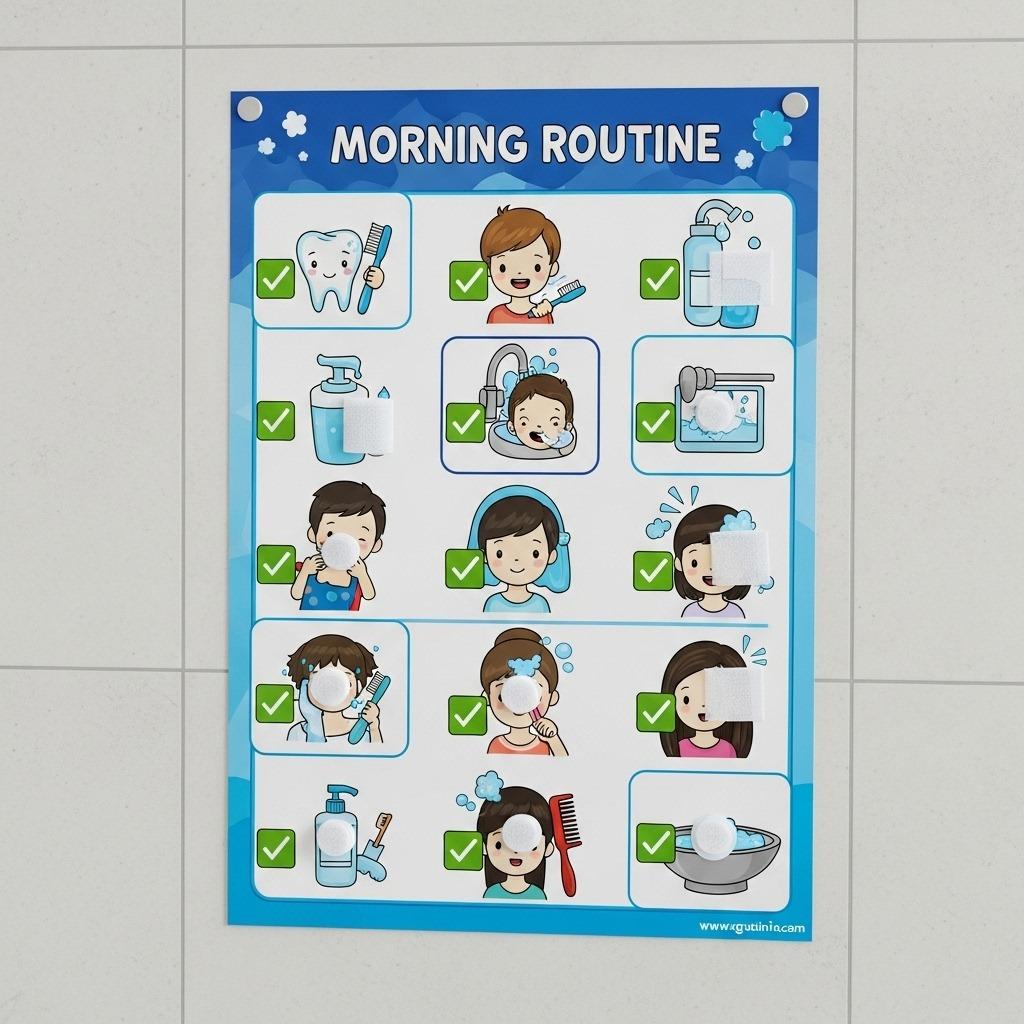
Sometimes the best organizational tool isn’t a bin or basket – it’s a visual system that helps kids manage their own routines. Laminated morning routine charts showing each step with pictures and checkboxes give children a clear roadmap for what needs to happen. Hang these at eye level where kids naturally look while getting ready.
You can create custom charts featuring photos of your own children completing each task, which makes the routine feel personalized and achievable. Include steps like brushing teeth, washing face, combing hair, and getting dressed. Some families add Velcro or magnets so kids can move task cards to a “completed” section, making the process feel like a game rather than a chore.
Timers add another layer of structure without constant parental nagging. A simple sand timer or digital countdown clock helps kids understand how much time they have for bathroom tasks. This prevents dawdling at the sink or getting lost in imaginative play when they should be brushing teeth. Visual time management tools teach valuable skills while keeping mornings moving at a reasonable pace.
Cleaning Supply Accessibility and Safety
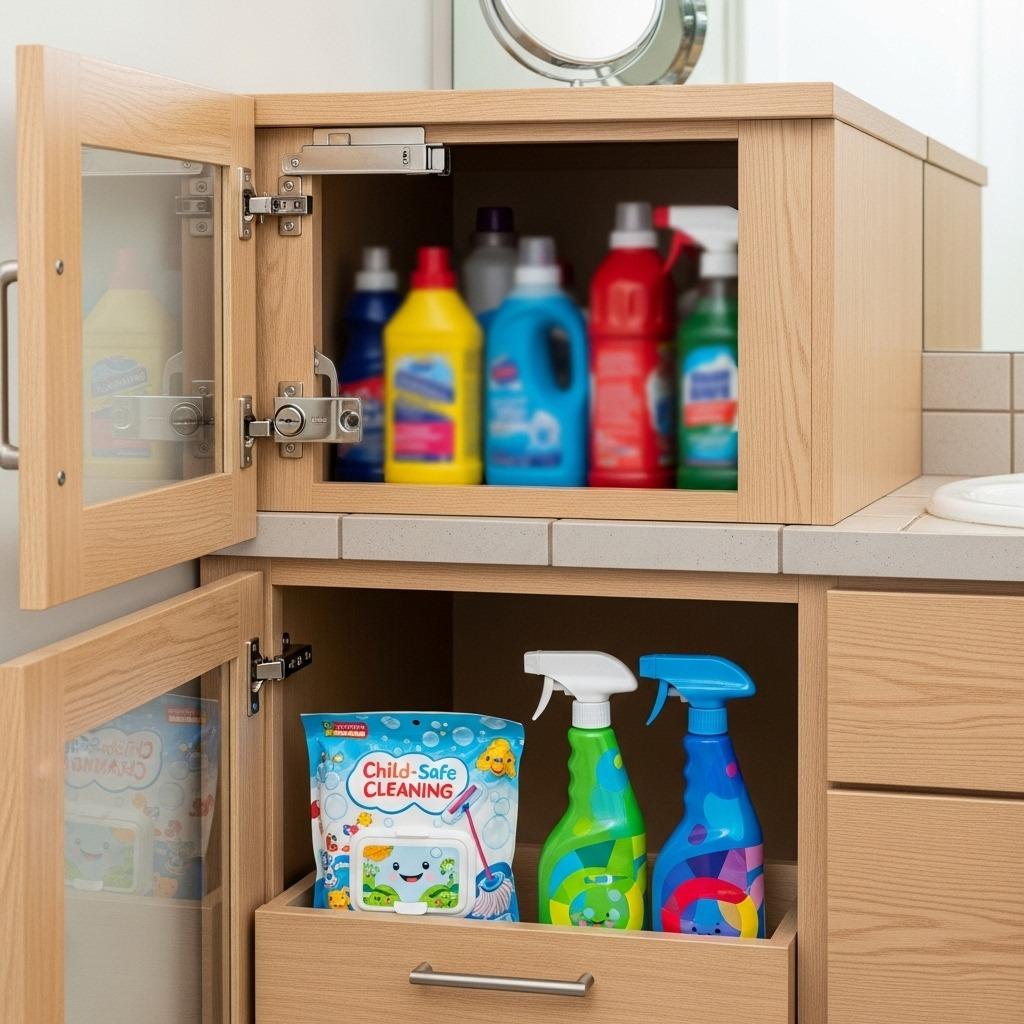
Here’s an organizational challenge that seems contradictory: you want kids to help clean the bathroom, but you also need to keep harsh chemicals safely locked away. The solution lies in creating a two-tier system where child-safe cleaning supplies live in accessible spots while stronger products stay secured out of reach.
Stock a lower cabinet or caddy with kid-appropriate cleaning items like disinfecting wipes, paper towels, and gentle spray cleaners. Label this area clearly as the “helper supplies” and teach children that they can use these items to wipe down the sink or clean up spills. When kids have their own cleaning station, they’re more likely to actually participate in bathroom upkeep.
Meanwhile, bleach, toilet bowl cleaners, and other harsh chemicals should live in locked cabinets or on high shelves where curious hands can’t reach. Never store these mixed in with kid-accessible supplies, even temporarily. Teaching children early on that some items are for adults only establishes important safety habits. This thoughtful approach to kid-friendly bath decor extends to every organizational decision you make in the space.
Laundry and Dirty Clothes Management
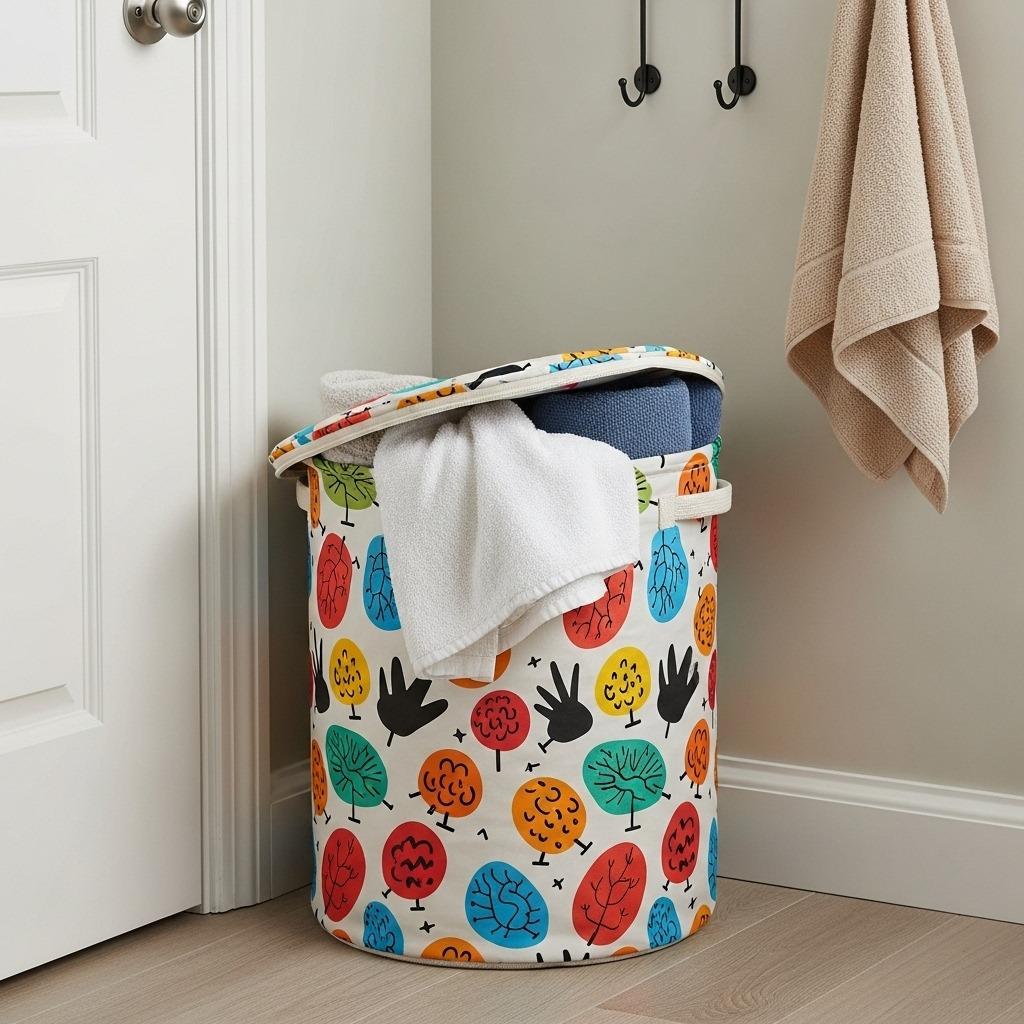
Dirty clothes have an uncanny ability to accumulate in kids’ bathrooms, especially towels and pajamas shed during morning routines. Rather than fighting this natural tendency, work with it by providing an obvious designated spot for laundry. A hamper in the bathroom itself eliminates the excuse of clothes being “too far” from the laundry room.
Choose hampers with lids to contain any smells, or go with open-top versions if you prefer something that’s easier for kids to use. Some families like dual hampers that separate lights and darks from the start, teaching children early sorting skills. Position the hamper near where kids typically change clothes – often by the tub or shower – to catch items right where they’re removed.
For towels specifically, some families find success with a designated “damp towel” hook separate from clean towel storage. This intermediary spot acknowledges that towels can be used more than once before washing but shouldn’t be stored with clean items. It’s a small detail that prevents the clean-dirty confusion that leads to unnecessary laundry or, worse, using dirty towels thinking they’re fresh. These practical solutions mirror the efficiency found in minimalist bathroom design principles.
Hair Accessories and Grooming Tools Station
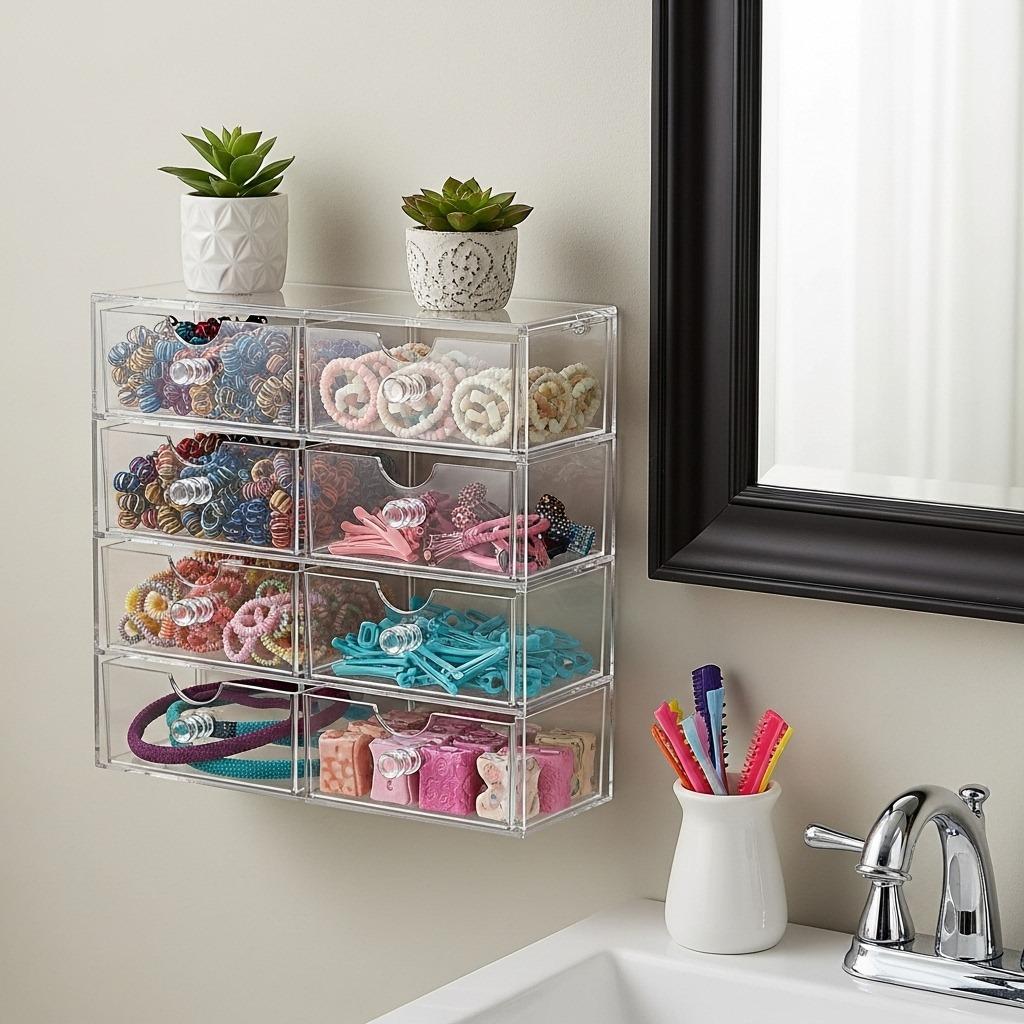
Hair accessories multiply mysteriously, and they seem to migrate to every surface in a kids’ bathroom. Hair ties wrap around faucets, clips scatter across the counter, and brushes disappear into the abyss. Creating a dedicated grooming station corrals these items while making morning hair routines significantly faster.
Wall-mounted organizers with multiple compartments work beautifully for hair accessories. Clear acrylic versions let kids see exactly what’s available, while drawer organizers keep everything contained if you prefer a hidden system. Separate elastics, clips, headbands, and bobby pins into different sections so children can quickly grab what they need without dumping everything out.
For hair styling tools like brushes and combs, consider a countertop caddy or a hanging organizer that keeps handles up and bristles down for better drying. If you have kids with longer hair who use heat tools, mount a heat-resistant holder on the wall at a safe height. Teaching organizational habits early – like putting away the hairbrush after use – prevents the frustrating searches that make everyone late.
Shower and Tub Caddies for Multiple Kids
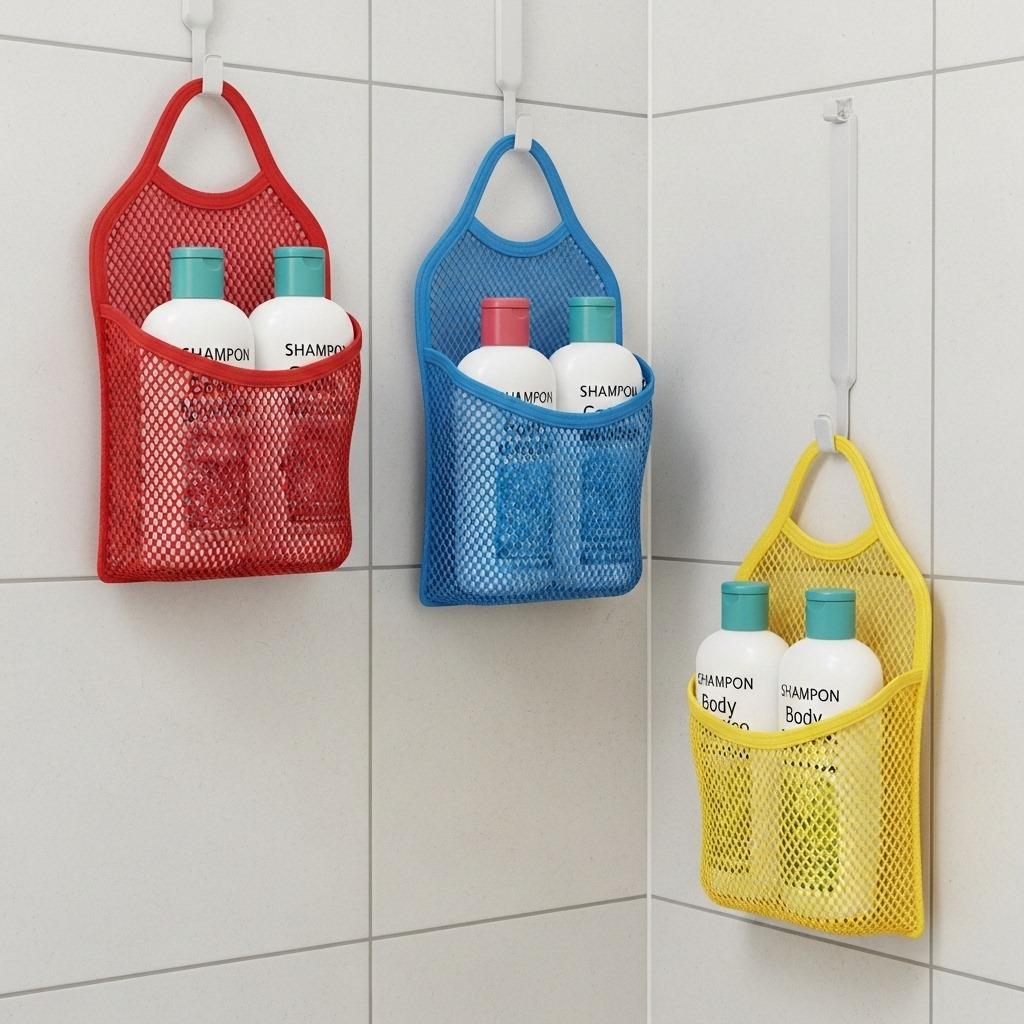
When multiple children share a bathroom, shower organization becomes crucial for maintaining peace. Nobody wants to use someone else’s shampoo or deal with the bottle chaos that inevitably happens in a shared tub. Individual caddies solve this problem while teaching kids to manage their own bath supplies.
Hanging shower caddies work well, especially versions with multiple pockets that can be color-coded for different children. Some families prefer suction cup shelves mounted at various heights depending on kids’ ages. The key is giving each child their own designated space rather than expecting them to share one crowded shelf. This respect for personal space reduces squabbles and helps children take ownership of their belongings.
For tub baths, corner caddies that span multiple levels can accommodate different children’s supplies while maximizing often-wasted corner space. Make sure whatever system you choose has proper drainage holes to prevent soap scum buildup. Regularly declutter these areas with your kids, removing empty bottles and products they’ve outgrown. This maintains the functionality of your organizational system over time.
Counter Organization and Clutter Control
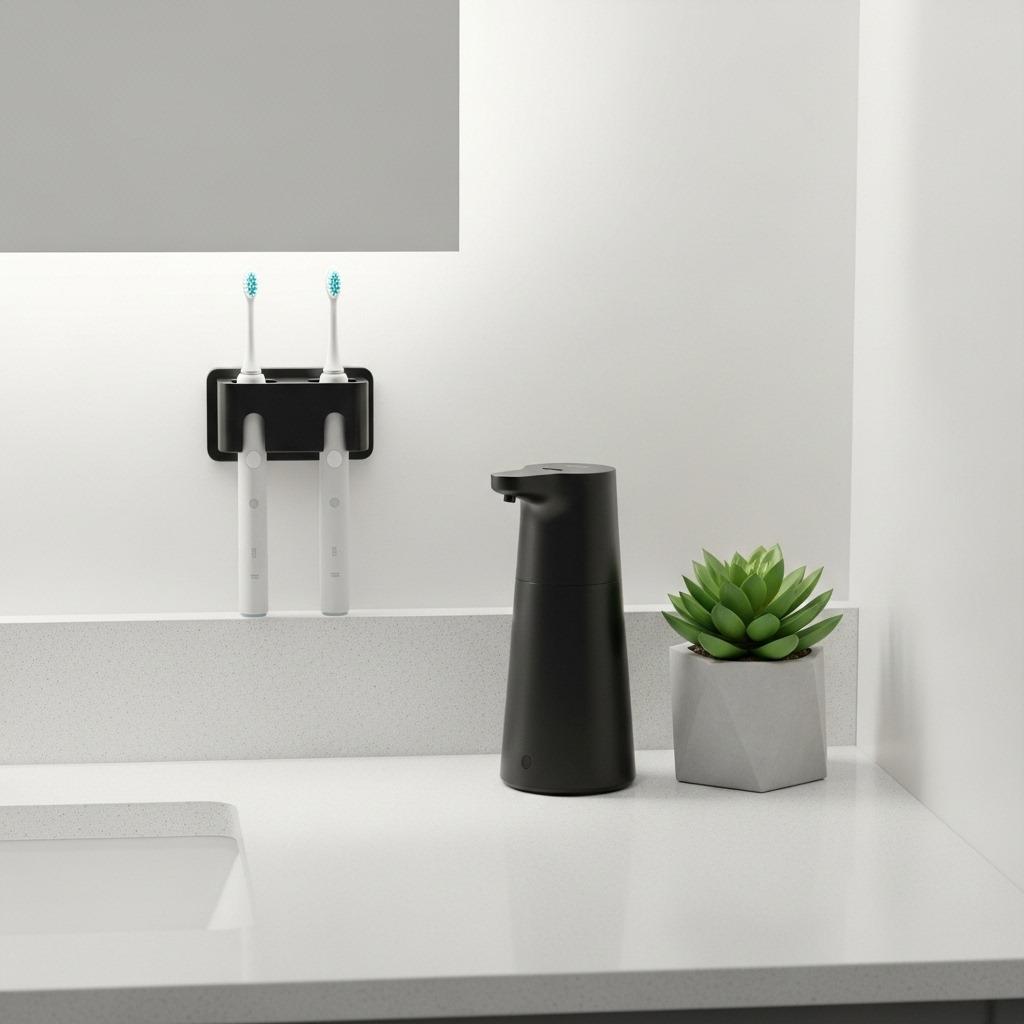
Bathroom counters seem to attract clutter like magnets. Toothbrush holders, soap dispensers, random toys, and mysterious sticky spots all compete for space on what should be a functional surface. The solution starts with ruthlessly limiting what actually lives on the counter permanently versus what can be stored elsewhere.
Keep only daily-use items on display: soap, a toothbrush holder, and perhaps one decorative element. Everything else – even if used regularly – can live in drawers, cabinets, or wall-mounted storage. This minimalist approach isn’t just aesthetic; it makes cleaning significantly easier and prevents the visual chaos that stresses everyone out during busy mornings.
Toothbrush holders deserve special attention since every family member needs one. Choose designs with separated slots rather than communal cups where bristles touch – it’s more hygienic and helps kids identify their own toothbrush. Wall-mounted toothbrush holders free up counter space entirely while keeping toothbrushes at a height where children can easily access them. If counter space is extremely limited, take inspiration from small space renovation strategies that maximize every inch.
Labeling Systems That Actually Work
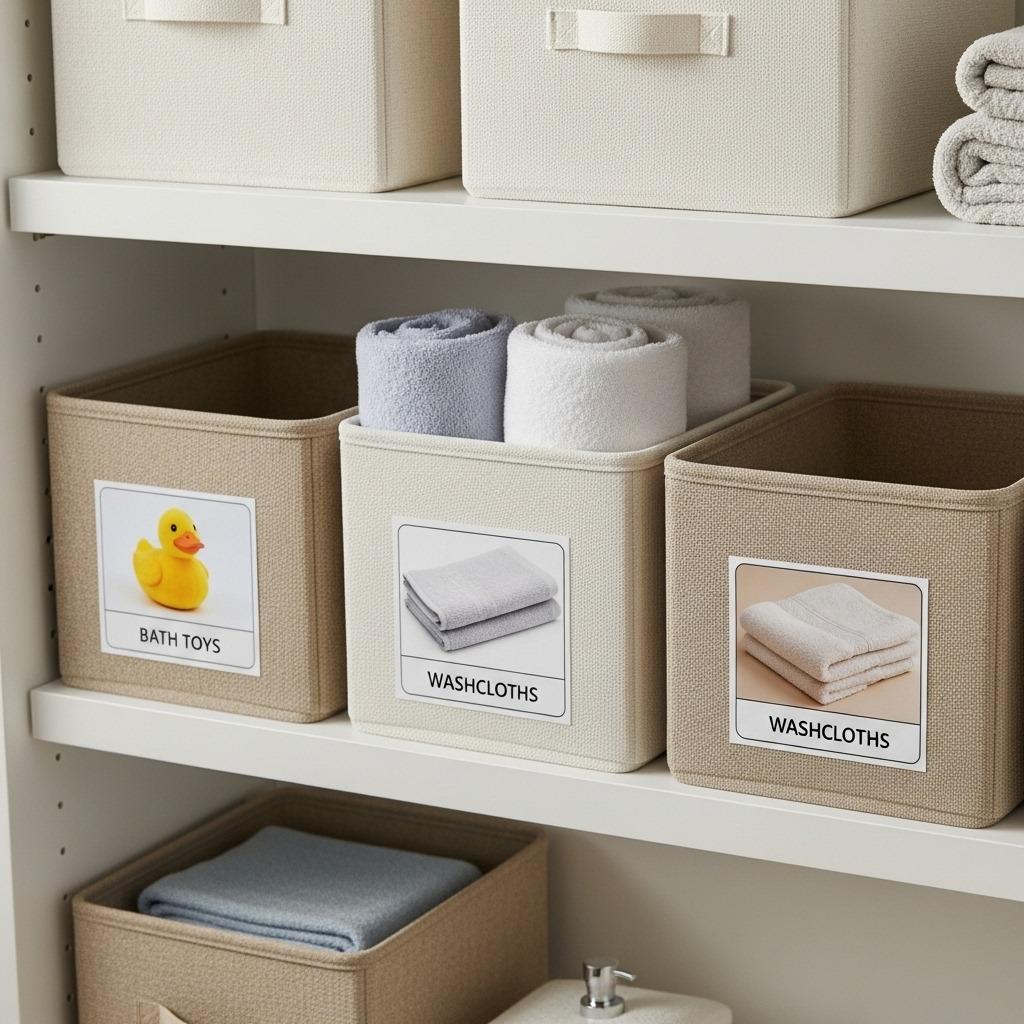
Labels transform organizational systems from hopeful attempts into sustainable solutions, especially with kids who can’t yet read. Picture labels showing what belongs in each bin or on each shelf create visual guides that children as young as two or three can follow. Even once kids start reading, keeping picture labels alongside words reinforces the system.
A label maker is a worthwhile investment for family organization projects, but you don’t need fancy equipment. Hand-drawn labels or printed pictures work just as well. The important part is consistency – once you establish where something lives, keep that designation stable. Constantly changing organizational systems confuses kids and undermines the habits you’re trying to build.
Consider the label placement carefully. Put labels on the front of bins where kids actually look, not just on top where adults might prefer them. For shelves, labels can go directly on the shelf edge or on the front of containers. Some families use chalkboard labels that can be updated as needs change, while others prefer permanent markers for stability. Choose what works for your family’s style and your children’s ages.
Nighttime Routine Storage Considerations
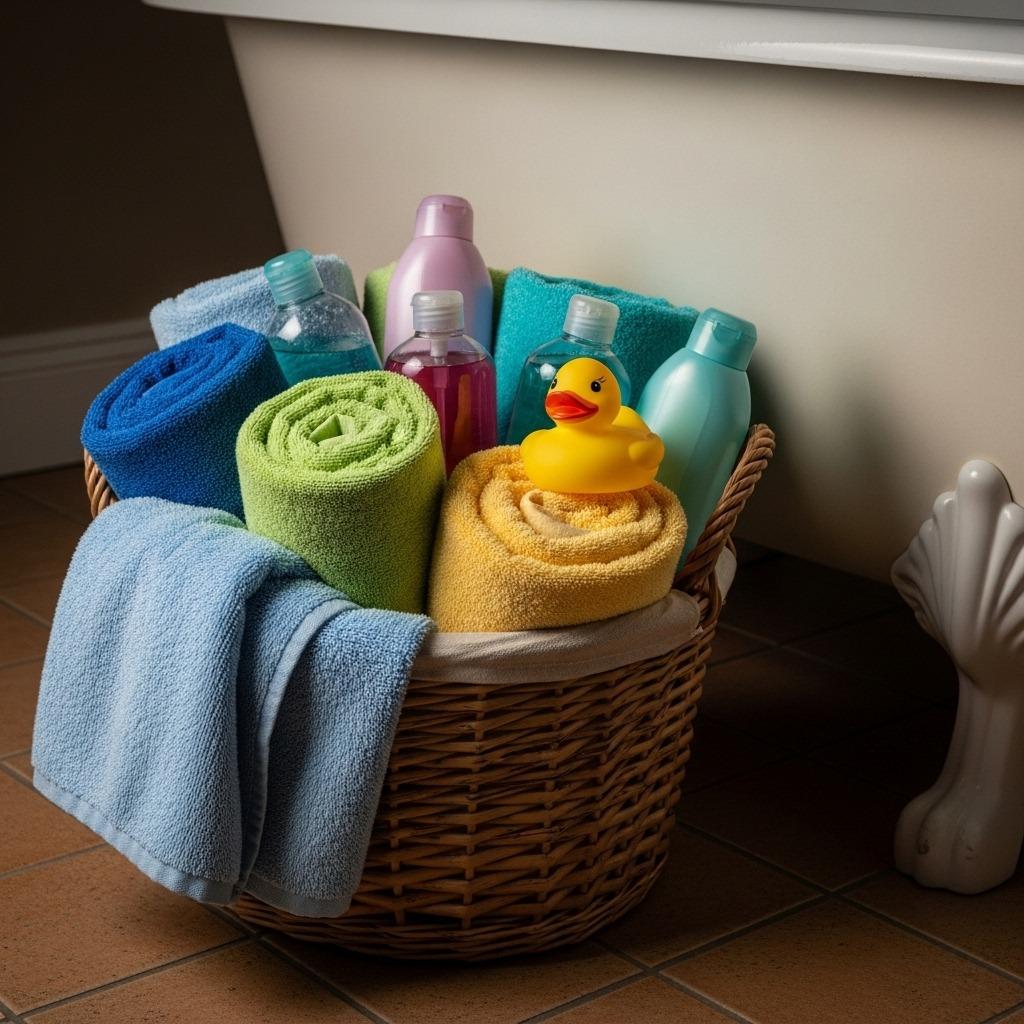
While morning organization gets most of the attention, nighttime bathroom routines need their own thoughtful systems. Bedtime often involves different products than morning prep – think bath toys, pajamas, and calming products like lavender lotion. Creating a separate evening station keeps these items from cluttering the morning routine zone.
A basket or caddy near the tub that holds bath-time favorites makes evening routines flow more smoothly. Include bubbles, washcloths, hooded towels, and whatever else your kids use during baths. When everything needed for the nighttime routine stays together, you’re not running around gathering supplies while kids get cold waiting for their bath.
For bedtime toiletries like toothpaste and floss, consider whether your kids would benefit from separate morning and evening supplies. Some families find this redundant, while others appreciate the mental separation it creates. Pay attention to the actual flow of your family’s routines and organize accordingly. There’s no one-size-fits-all solution – the best system is the one your family will actually maintain. This principle applies to functional living room organization and every other space in your home.
Seasonal Storage Rotation
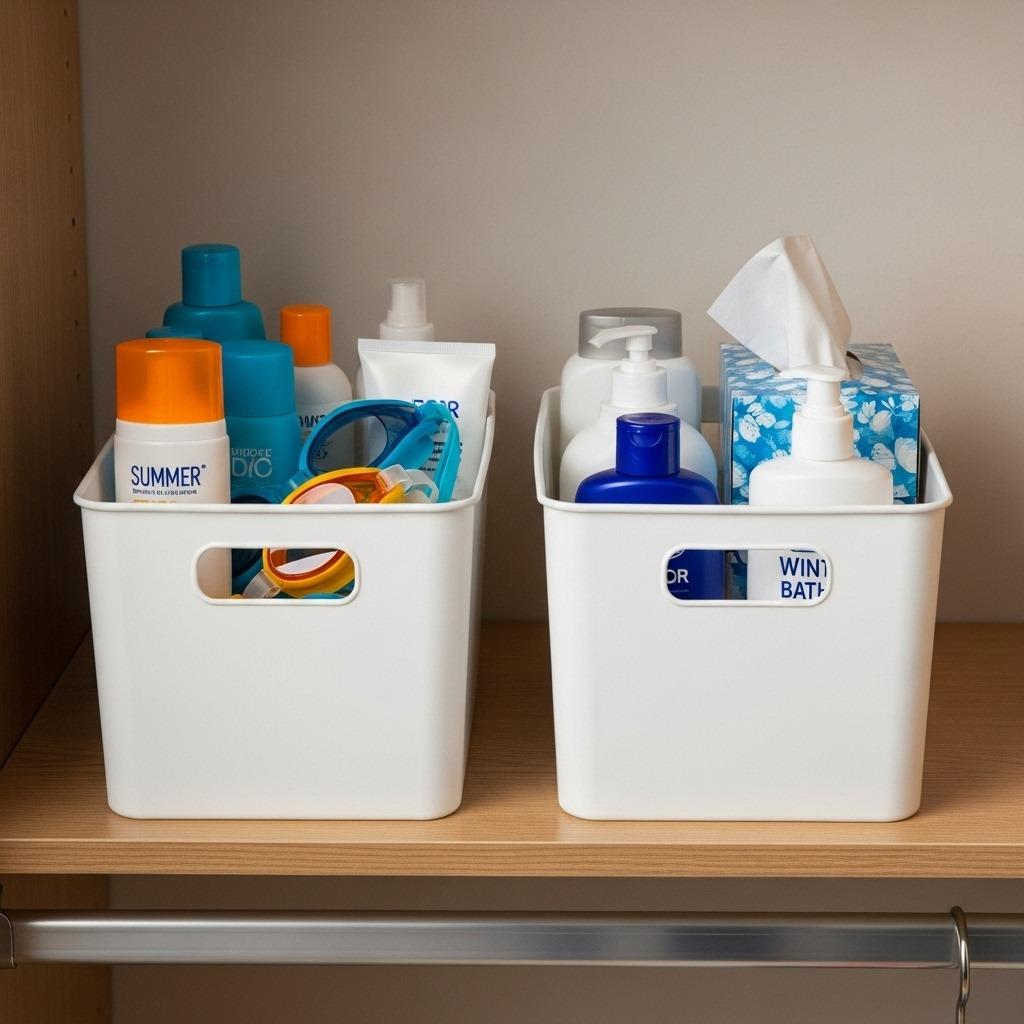
Kids’ bathroom needs change throughout the year, and acknowledging these seasonal shifts can prevent overcrowding. Summer might bring sunscreen, goggles, and beach toys into the bathroom, while winter calls for extra lotion and cold medicine. Rather than trying to accommodate everything year-round, rotate seasonal items in and out of prime storage.
Use bins or baskets labeled by season to store out-of-rotation items elsewhere – in a closet, garage, or basement. When the season changes, swap the containers and update your bathroom storage accordingly. This rotation keeps the bathroom from feeling cramped while ensuring you have exactly what you need for current weather and activities.
This approach extends to bath toys too. Kids get bored with the same toys anyway, so keeping some in rotation and others stored away creates excitement when “new” old toys reappear. Every few months, switch out half the bath toy collection. This strategy reduces clutter while keeping bath time engaging and fun.
Teaching Kids to Maintain Organization
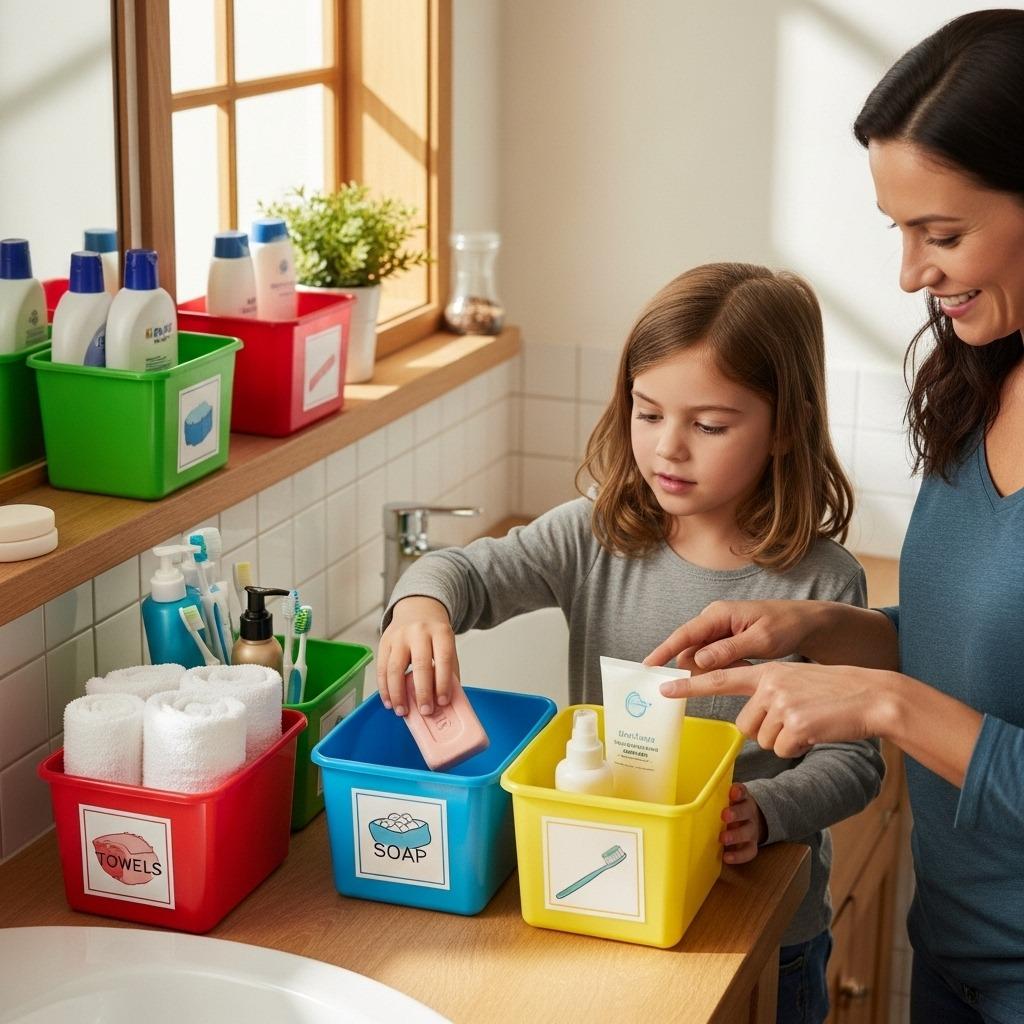
All the bins and labels in the world won’t help if kids don’t actually use them. The real magic happens when you involve children in creating and maintaining organizational systems. Let them help choose storage colors, decide where things should live, and understand why organization matters. Kids who feel ownership over systems are infinitely more likely to follow them.
Start with manageable expectations based on age. A preschooler can put toys in a basket and hang up their towel. A school-age child can sort their belongings into labeled bins and wipe down the sink after use. Teens should be managing their entire bathroom routine independently, including restocking supplies and doing their own laundry. Build skills progressively rather than expecting perfection immediately.
Make cleanup part of the routine rather than an occasional deep-clean. Two minutes of tidying after each bathroom use prevents the overwhelming messes that make kids shut down. Set a timer, play a quick song, or create a checklist – whatever makes the maintenance feel achievable. Consistency matters more than perfection. When organizational habits become automatic, your kids bathroom organization system becomes truly sustainable.
Budget-Friendly Organization Hacks
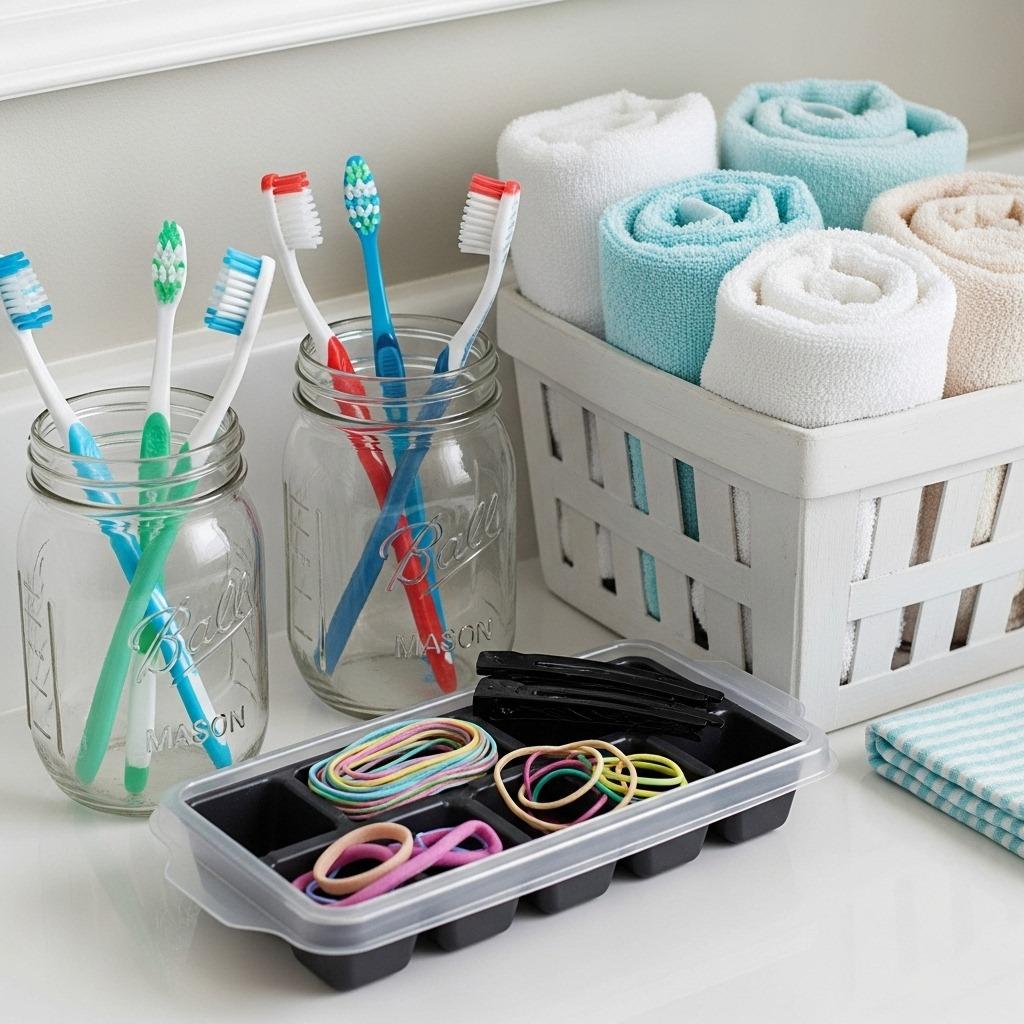
Creating an organized kids’ bathroom doesn’t require expensive specialized products. Some of the best solutions come from repurposing items you already own or finding creative alternatives to pricey organizers. Shower caddies from the dollar store work just as well as expensive versions. Mason jars make excellent toothbrush holders. Ice cube trays organize tiny hair accessories perfectly.
Tension rods create instant storage possibilities – mount one under the sink to hang spray bottles, or use one in the shower for hanging caddies. Command hooks eliminate the need for drilling holes and can be repositioned as your children grow. Shoe organizers hung over the door provide dozens of pockets for toiletries, toys, and supplies at a fraction of the cost of custom storage systems.
Thrift stores and yard sales often have perfectly good baskets, bins, and shelving units waiting for new homes. A quick spray paint makeover can transform mismatched storage into a cohesive color scheme. The most important factor isn’t how much you spend but whether the organizational system actually functions for your family’s specific needs and habits. Sometimes the simplest, cheapest solutions work best. For more cost-effective ideas, explore affordable home upgrades that won’t stretch your budget.
Transforming a chaotic kids’ bathroom into an organized, functional space might seem like a monumental task, but remember that small changes create significant ripples. Start with one area – maybe bath toy storage or towel hooks – and build from there. Success doesn’t mean achieving Pinterest-perfect organization that stays immaculate forever. It means creating systems that genuinely work for your family’s rhythms and routines.
The goal isn’t just a prettier bathroom, though that’s certainly a nice bonus. Thoughtful kids bathroom organization builds independence, reduces daily stress, and teaches life skills that extend far beyond childhood. When your kids can manage their own morning routines without constant reminders, everyone starts the day calmer and more prepared.
Your family’s needs will evolve as children grow, and your organizational systems should adapt accordingly. What works for toddlers won’t work for tweens, and that’s okay. View bathroom organization as an ongoing process rather than a one-time project. Keep what functions well, adjust what doesn’t, and don’t be afraid to completely overhaul systems that have stopped serving your family. The bathroom that supports smooth mornings is absolutely worth the effort – for your sanity and your kids’ growing independence.