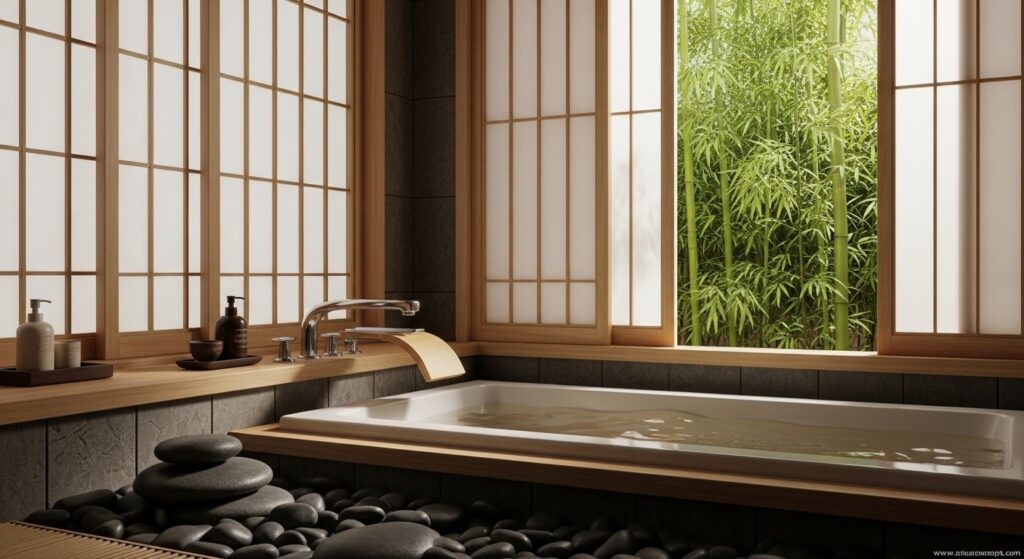
There’s something undeniably calming about stepping into a space that feels like a retreat from the world. A Japanese style bathroom captures that essence perfectly – stripping away the unnecessary and focusing on what truly matters: peace, simplicity, and connection to nature.
I’ve always been drawn to the way Japanese design honors natural materials and creates harmony through restraint. Unlike bathrooms that try to impress with elaborate fixtures and bold patterns, these spaces whisper rather than shout. They invite you to slow down, breathe deeply, and find a moment of stillness in your day.
If you’re craving a bathroom that feels less like a utilitarian space and more like a personal sanctuary, these ideas will show you how to bring that tranquil energy into your own home. Whether you’re starting from scratch or simply want to infuse some zen elements into your existing space, there’s room to explore what resonates with you.
1. Natural Wood Soaking Tub
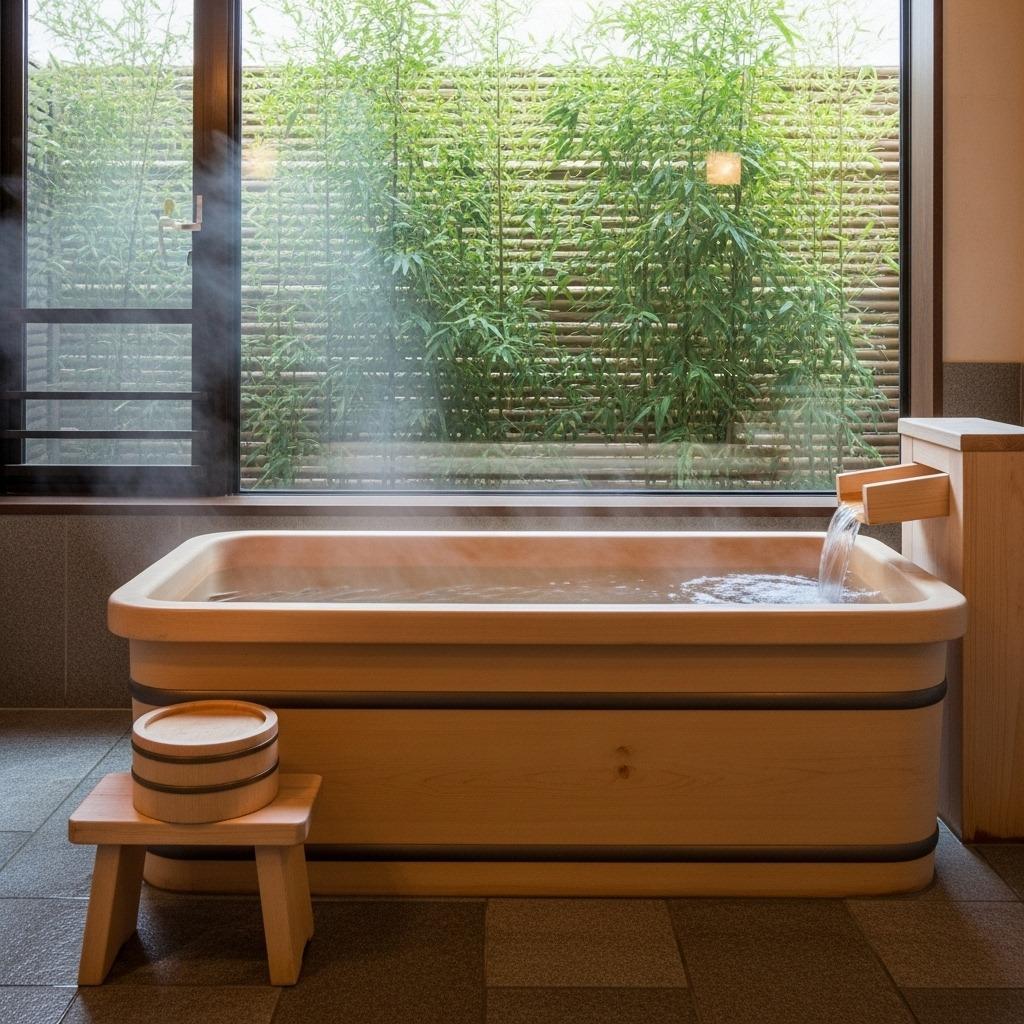
A wooden soaking tub (or ofuro) becomes the centerpiece of an authentic Japanese bathroom experience. These deep, compact tubs are designed for sitting rather than lying down, encouraging a meditative bathing ritual that’s entirely different from Western-style soaking.
The wood itself – often hinoki cypress – releases a subtle, calming fragrance when it comes into contact with hot water. It’s this kind of sensory detail that elevates the experience from simply bathing to something more intentional. The warmth of the wood against your skin creates an immediate connection to nature.
What surprises many people is that these tubs don’t require as much floor space as you’d think. Their vertical design makes them perfect for smaller bathrooms while still providing that luxurious deep soak. Pair yours with a simple wooden stool nearby for the traditional pre-bath cleansing ritual.
2. River Stone Flooring Elements
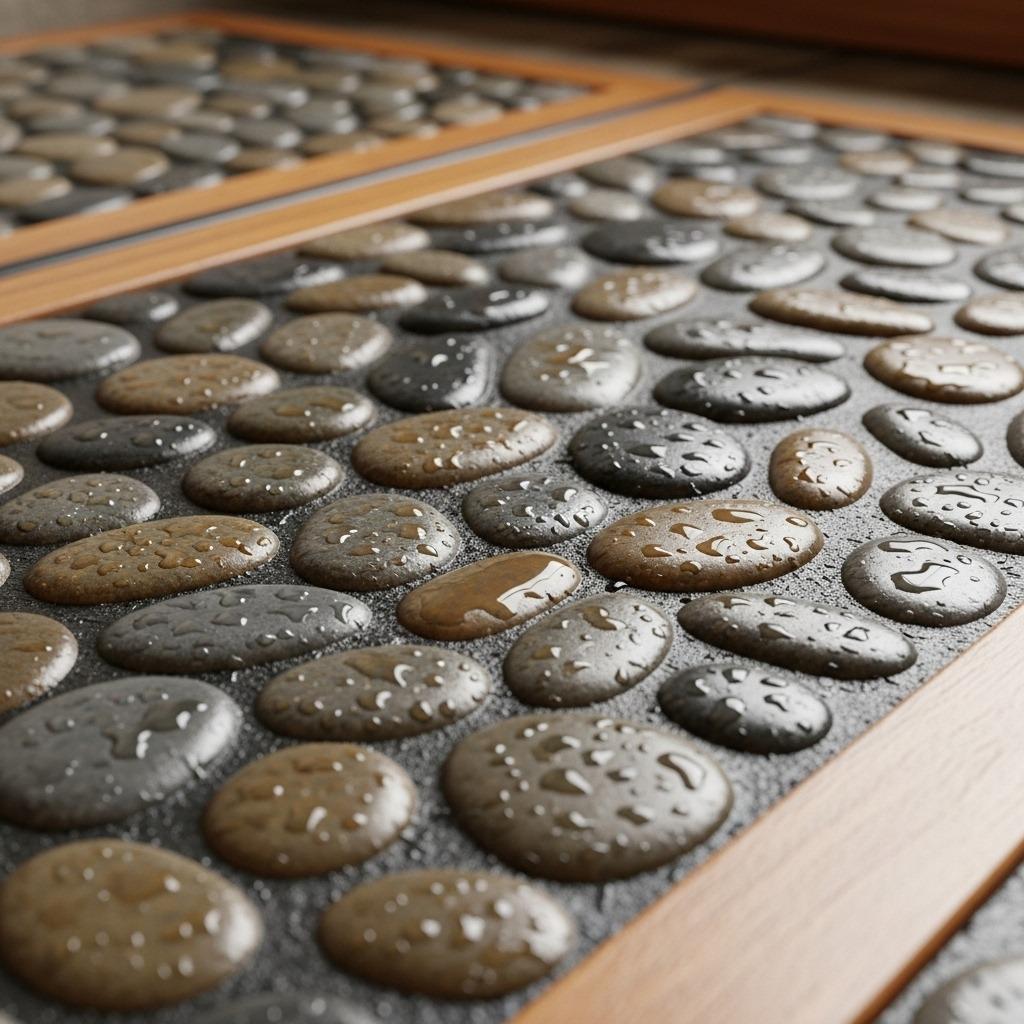
Incorporating smooth river stones into your bathroom floor design brings an immediate grounding quality to the space. These aren’t just decorative – they provide gentle foot massage and create a tactile connection to nature that’s central to Japanese design philosophy.
You might choose to create a full pebble shower floor or simply add a stepping stone path from your vanity to the bathing area. Either way, the uneven surface reminds you to move mindfully through the space. There’s something deeply satisfying about feeling those smooth stones beneath bare feet.
The practical benefits are worth noting too. River stones provide excellent drainage and naturally resist mold and mildew better than many conventional materials. They work beautifully in wet areas where other flooring might struggle.
3. Shoji-Inspired Window Screens
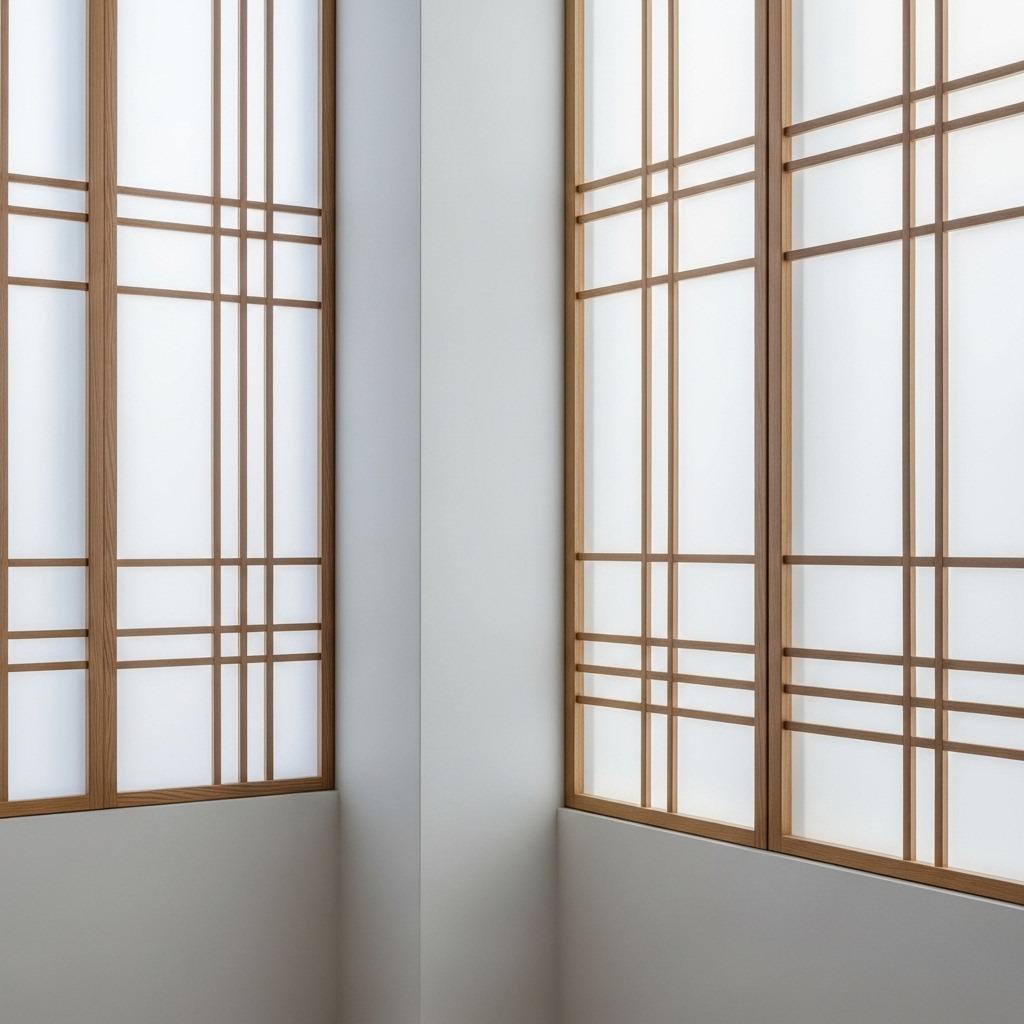
Traditional shoji screens filter light in the most beautiful way, creating a soft, diffused glow that changes throughout the day. You don’t need authentic rice paper screens to capture this effect – frosted glass panels or translucent window films can achieve similar results while being more practical for humid bathroom environments.
The key is how these screens provide privacy without completely blocking natural light. They transform harsh sunlight into something gentle and almost ethereal. This filtered illumination feels calming rather than clinical, which is exactly what you want in a spa-inspired bathroom.
I love how this approach eliminates the need for heavy curtains or blinds that can feel visually cluttered. The clean lines of shoji-style screens maintain that minimalist aesthetic while solving the very real problem of bathroom privacy.
4. Minimalist Floating Vanity
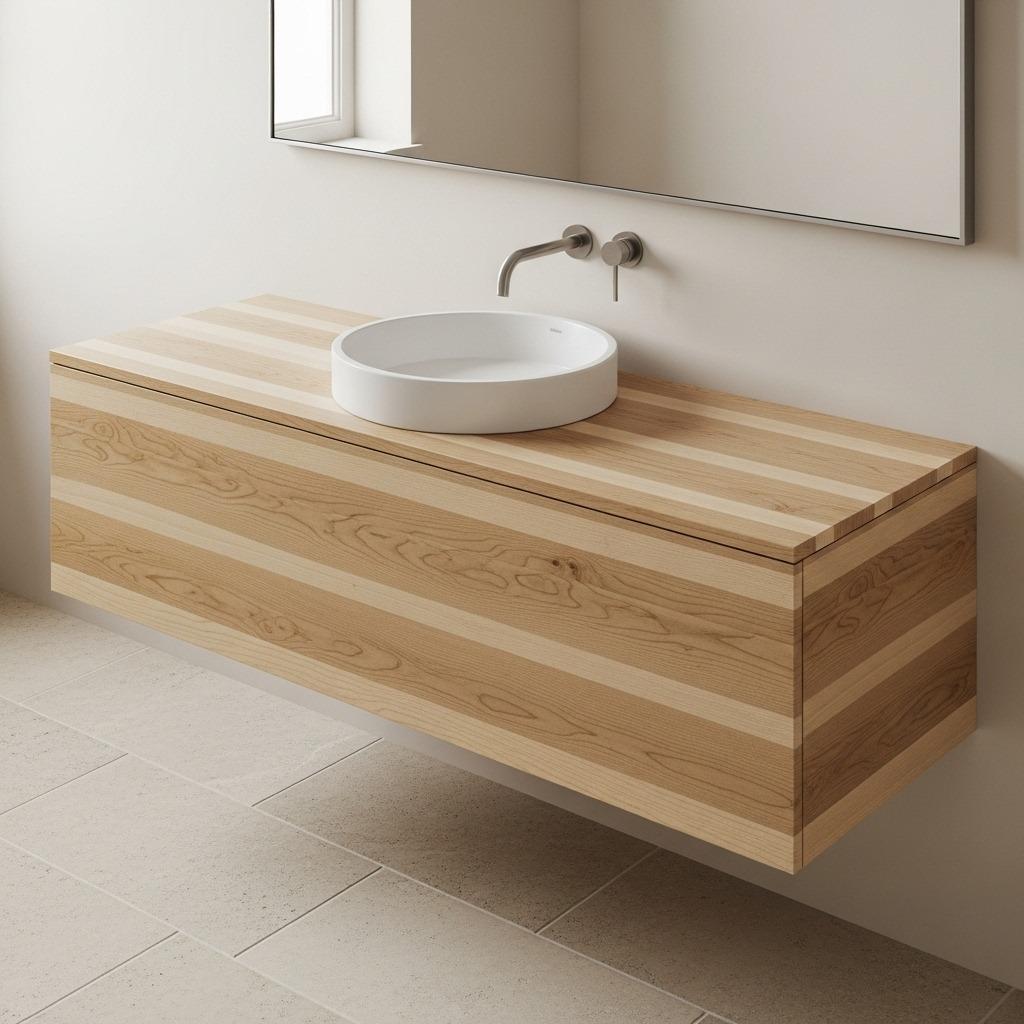
A wall-mounted vanity embodies the Japanese principle of creating visual space and allowing energy to flow freely. By lifting the vanity off the floor, you create an airier feeling that makes even small bathrooms feel more expansive.
Choose simple, clean-lined designs in natural wood finishes rather than ornate cabinetry. The beauty comes from the quality of materials and craftsmanship, not from decorative details. A single horizontal wood grain pattern can be more striking than any carved embellishment.
This minimalist bathroom design approach also makes cleaning easier – you can sweep or mop right underneath without obstacles. It’s a practical decision that happens to look stunning.
5. Bamboo Accent Wall
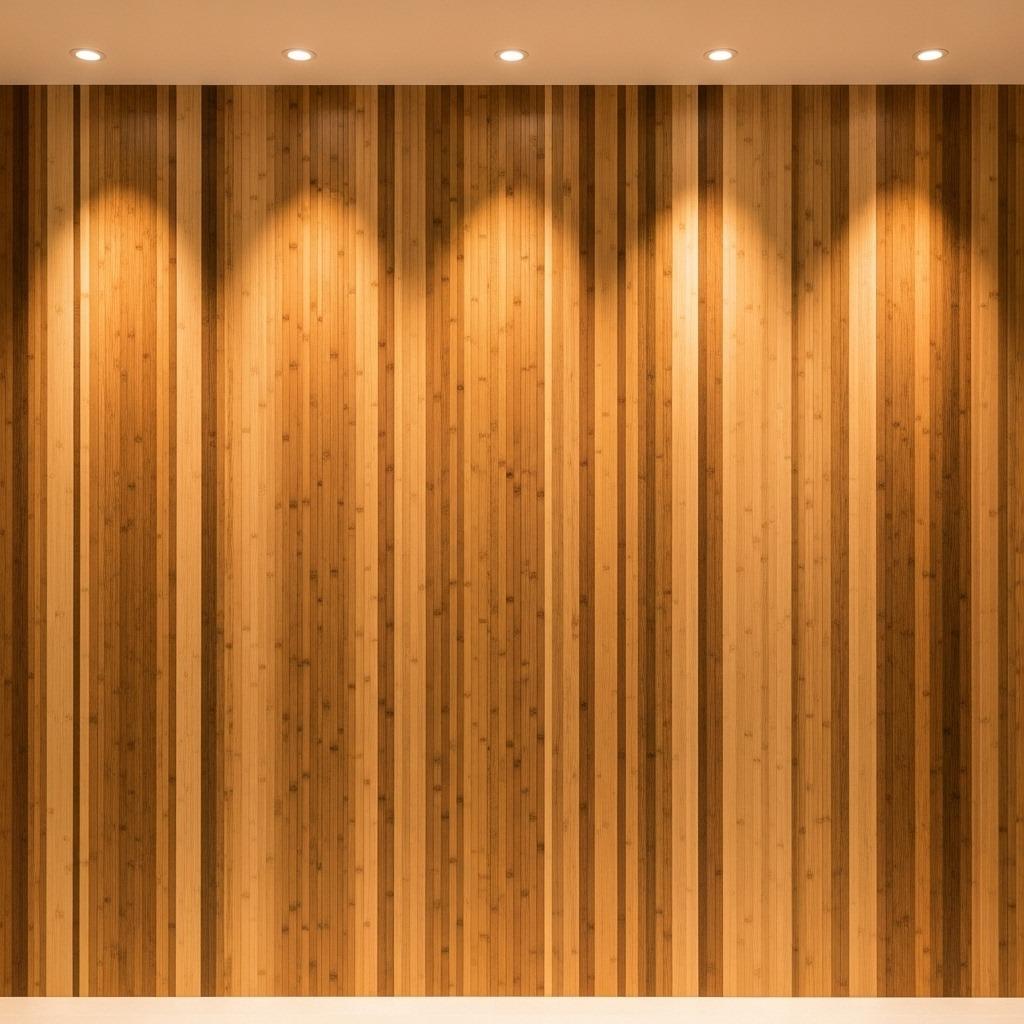
Bamboo brings instant warmth and texture to bathroom walls while staying true to Japanese aesthetic principles. Whether you choose actual bamboo panels, bamboo-look tile, or even bamboo wallpaper, this material creates a striking focal point without overwhelming the senses.
The vertical lines of bamboo naturally draw the eye upward, which can make ceilings feel higher. This subtle visual trick works especially well in bathrooms with limited square footage. The organic pattern also adds interest without requiring colorful decoration.
Bamboo’s natural water resistance makes it surprisingly practical for bathroom environments. Just make sure any real bamboo is properly sealed, or opt for porcelain tiles that capture bamboo’s appearance with enhanced durability.
6. Neutral Stone Vessel Sink
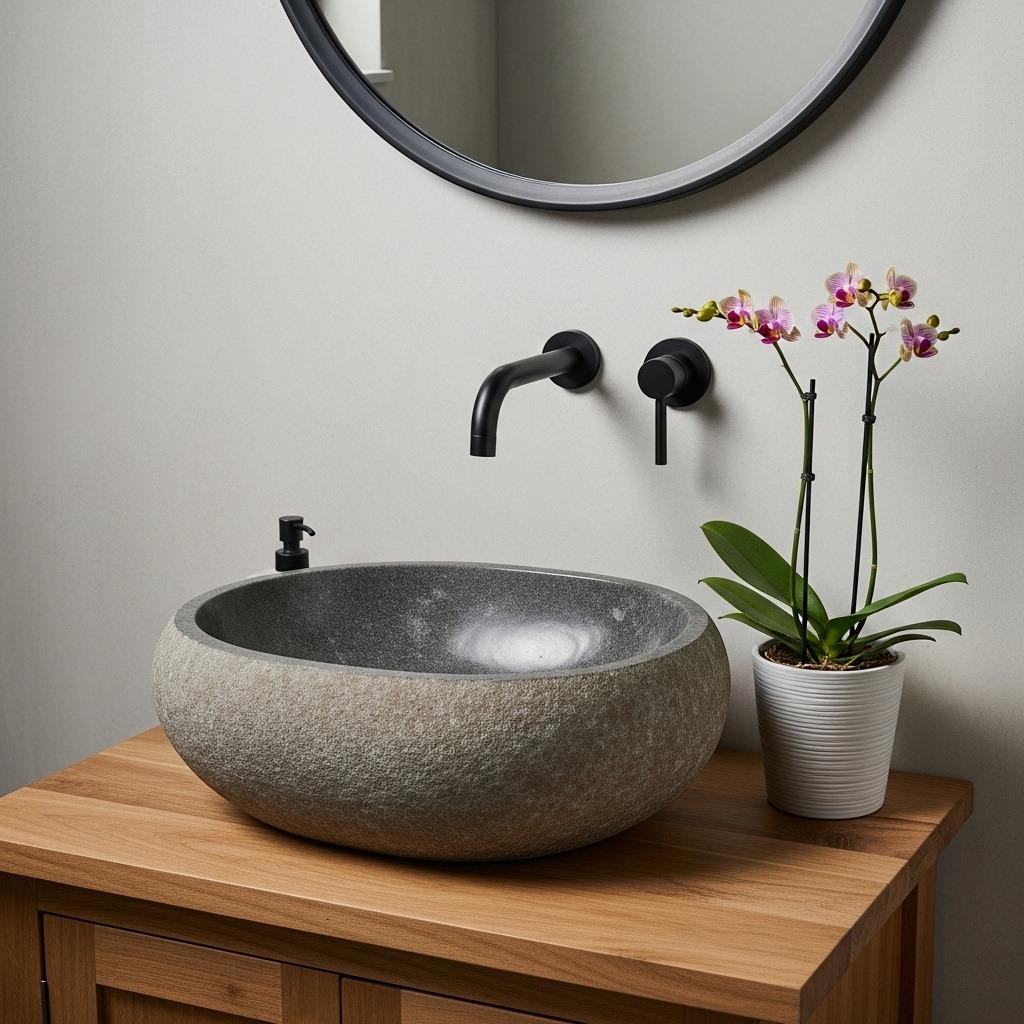
A stone vessel sink carved from a single piece of granite, marble, or river rock becomes a functional piece of sculpture. These sinks honor the Japanese concept of wabi-sabi – finding beauty in natural imperfections and the unique character of each material.
No two stone sinks are exactly alike, which means your bathroom features something genuinely one-of-a-kind. The weight and solidity of natural stone also provides a satisfying contrast to more delicate elements in the room. When you wash your hands, you’re interacting with something that feels substantial and real.
Pair your stone sink with a simple wall-mounted faucet to let the basin’s natural beauty take center stage. The goal is to showcase the material, not compete with it.
7. Open Shower with Rainfall Head
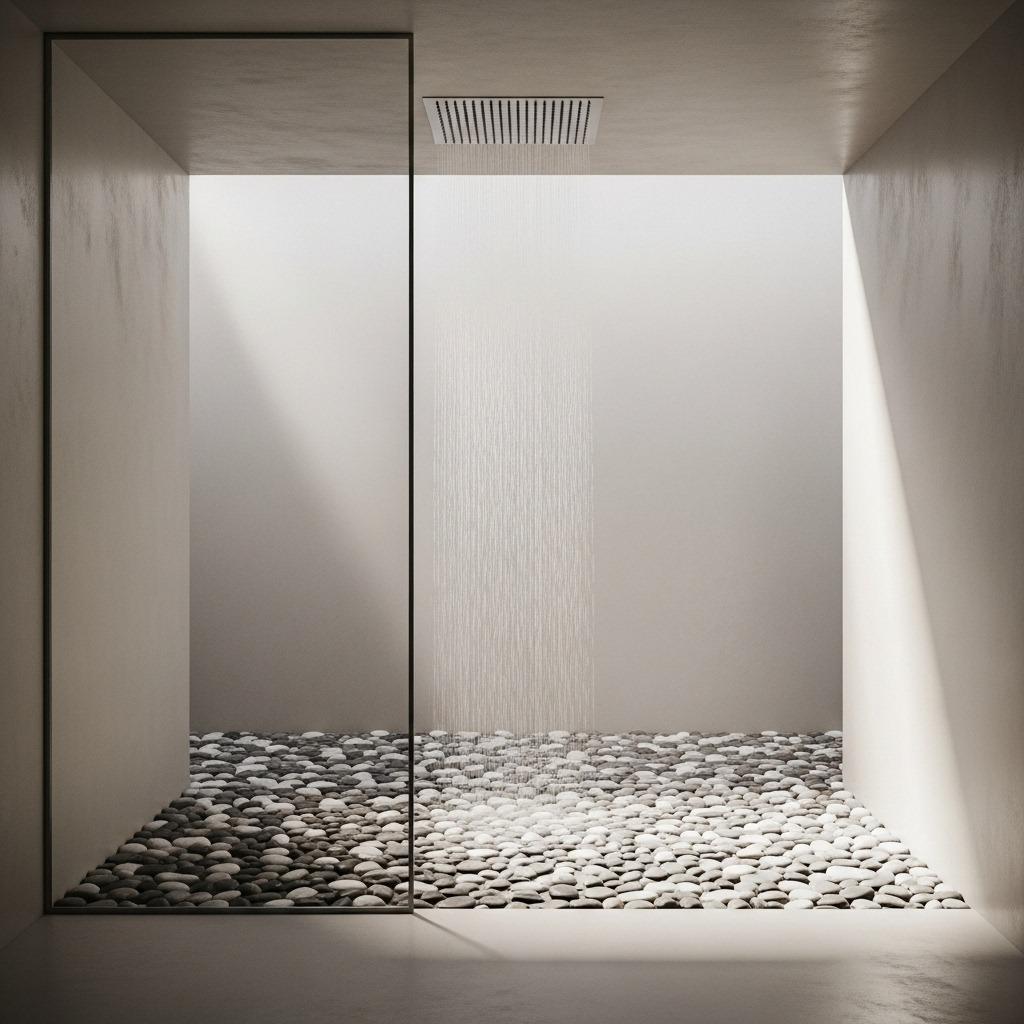
Japanese bathing culture emphasizes cleansing as a separate ritual from soaking, which is why open shower designs work so beautifully in this aesthetic. A frameless glass enclosure (or even no enclosure at all) with a large rainfall showerhead creates that sense of bathing beneath a gentle waterfall.
The absence of a traditional shower curtain or heavy glass door maintains visual openness throughout the bathroom. You can see across the entire space, which helps even modest bathrooms feel more generous. This openness also allows natural light to flow freely.
Consider installing the showerhead in the ceiling for the most authentic rainfall experience. The water falls straight down rather than at an angle, creating a more immersive and meditative shower experience. This might be similar to the tranquility found in nature-inspired bathroom designs.
8. Low-Profile Japanese Toilet
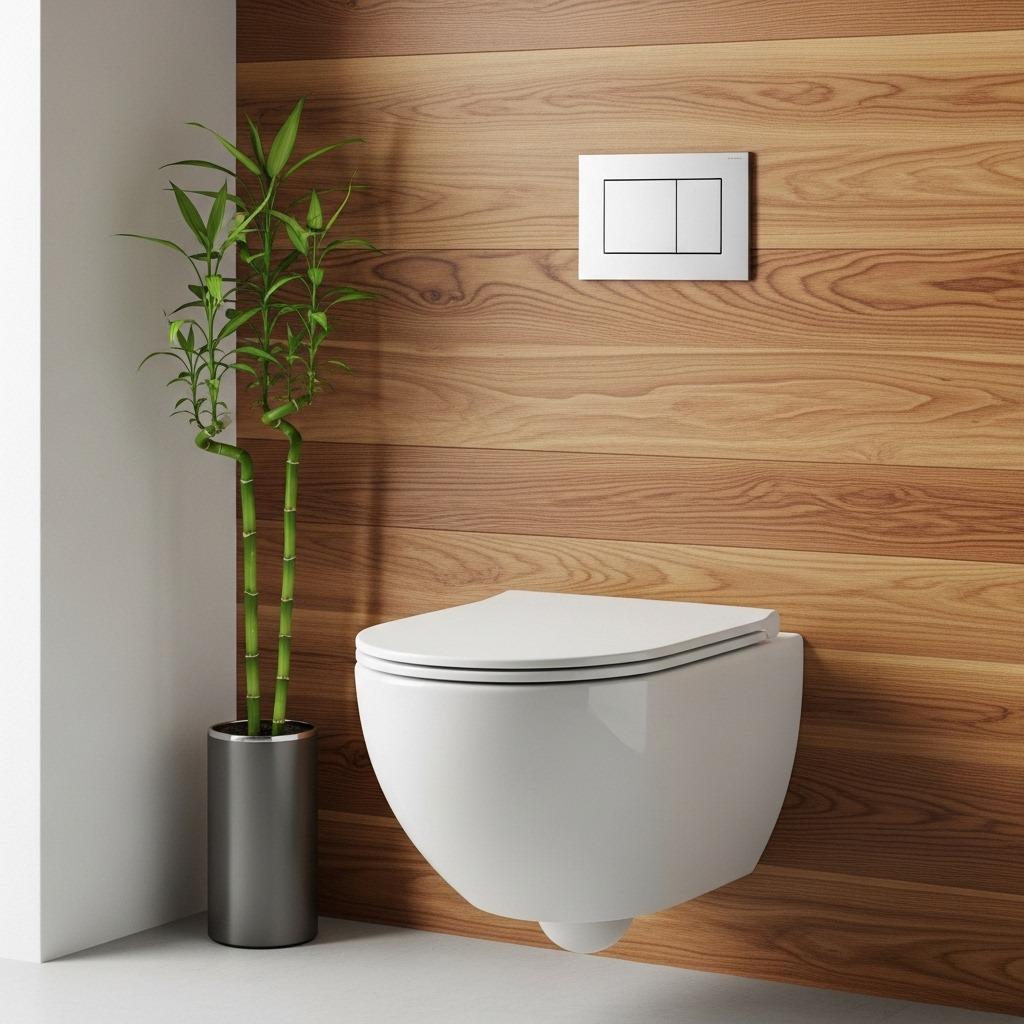
Modern Japanese toilets are famous for their technology, but even without the bells and whistles, a low-profile toilet design contributes to the room’s overall aesthetic. These toilets tend to have cleaner lines and a more compact silhouette than traditional Western models.
The streamlined appearance helps maintain that uncluttered look that’s essential to Japanese design. Less visual bulk means more breathing room for your eyes to rest. Even this practical element becomes part of the room’s overall sense of calm.
If you’re investing in updates, consider a wall-hung toilet that continues the floating aesthetic of your vanity. The consistent approach to minimizing floor contact creates a cohesive design language throughout the space.
9. Natural Fiber Window Treatment
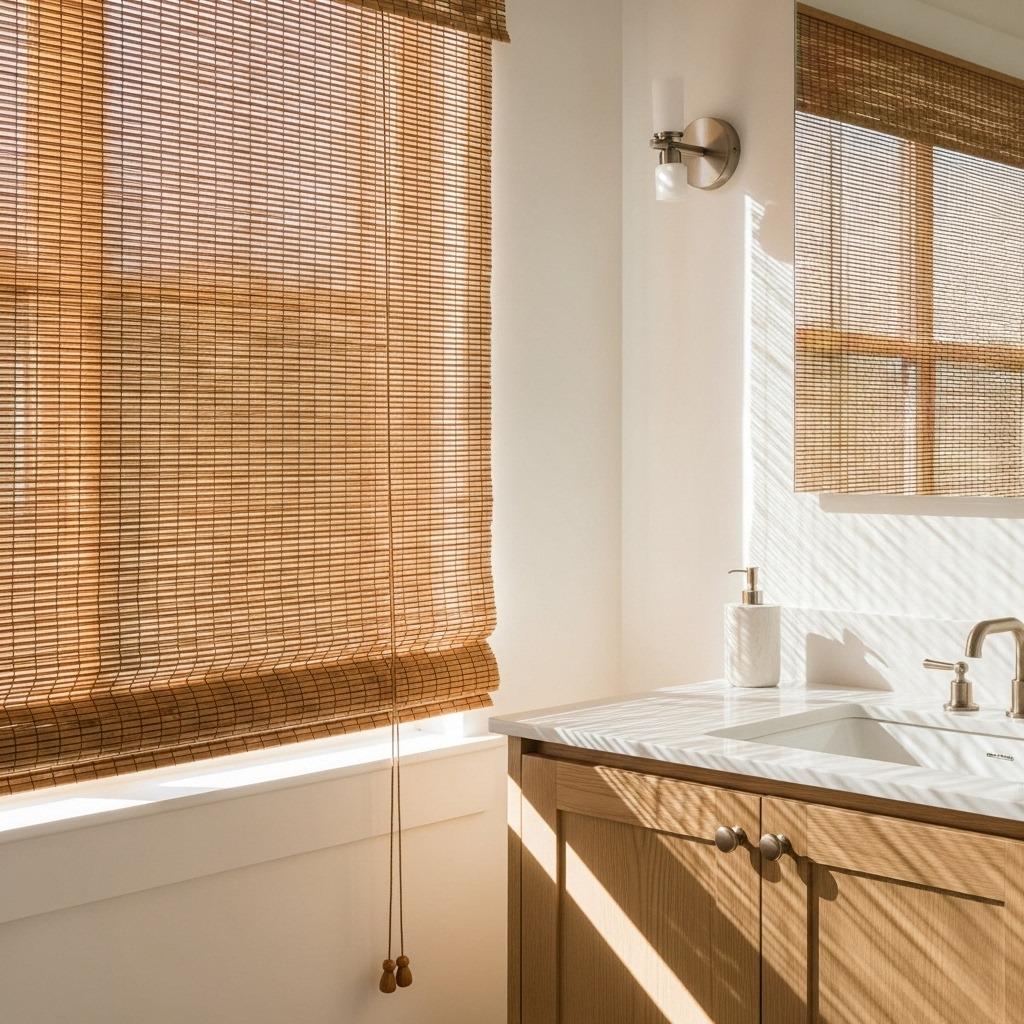
Woven wood shades or bamboo blinds provide privacy while maintaining that essential connection to natural materials. These treatments filter light beautifully, creating patterns that shift throughout the day as the sun moves across the sky.
The texture of natural fibers adds visual warmth without introducing busy patterns or bright colors. They feel organic and handcrafted, which aligns perfectly with Japanese design values. Unlike synthetic materials, these natural options age gracefully, developing character over time.
I find that these window treatments work particularly well in bathrooms because they don’t fight for attention. They quietly do their job while enhancing the room’s overall aesthetic rather than becoming a focal point.
10. Indoor Plant Display
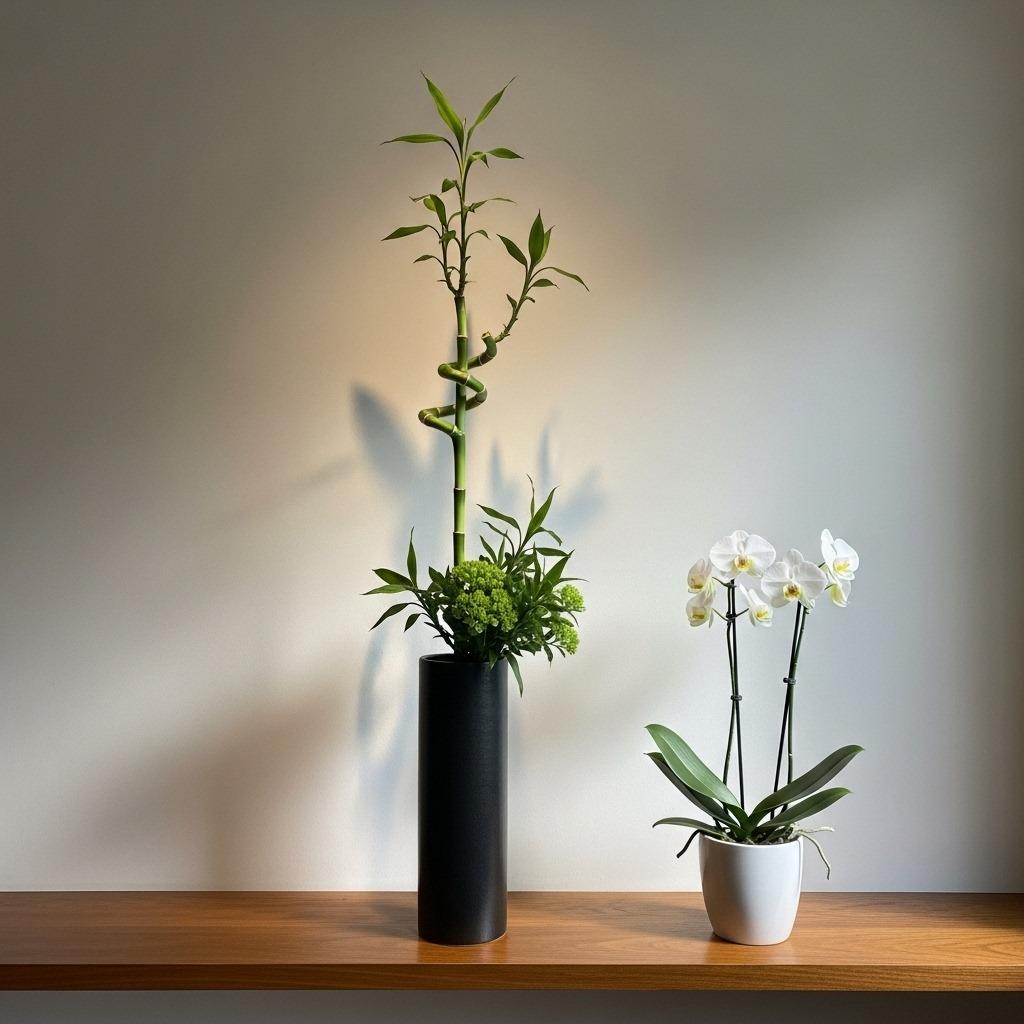
Carefully selected plants bring life and natural energy into your Japanese bathroom without cluttering the space. Think quality over quantity – a single statement orchid or a small arrangement of bamboo stalks makes more impact than crowding surfaces with multiple small plants.
The Japanese practice of ikebana (flower arranging) teaches us to appreciate negative space around plants. Each plant should have room to breathe and be appreciated individually. This mindful placement transforms plants from decoration into living art.
Consider moisture-loving plants that will thrive in your bathroom’s humidity. Ferns, peace lilies, and certain orchids actually benefit from the steamy environment. You might also explore plant-filled bathroom concepts for more inspiration.
11. Matte Black Hardware Accents
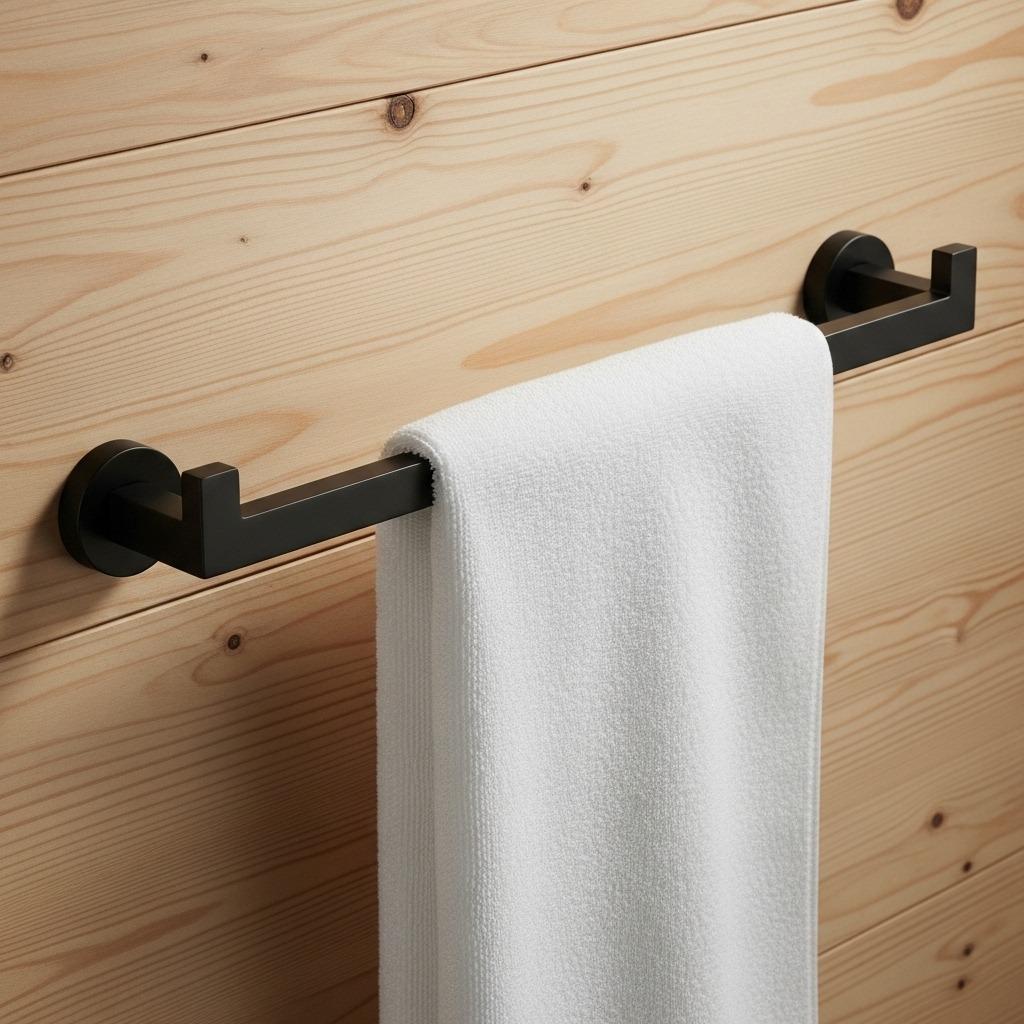
While Japanese design often embraces natural tones, strategic use of matte black fixtures provides striking contrast without disturbing the peaceful atmosphere. Black faucets, drawer pulls, and towel bars create visual anchors that define the space.
The key is consistency and restraint. Choose one finish and stick with it throughout the room rather than mixing metals. This unified approach feels more intentional and sophisticated. Matte finishes also hide water spots better than polished options, which means less maintenance.
Black hardware against light wood or white surfaces creates a modern interpretation of traditional Japanese design. It’s a subtle nod to contemporary aesthetics while respecting the principles of simplicity and function.
12. Textured Plaster Walls
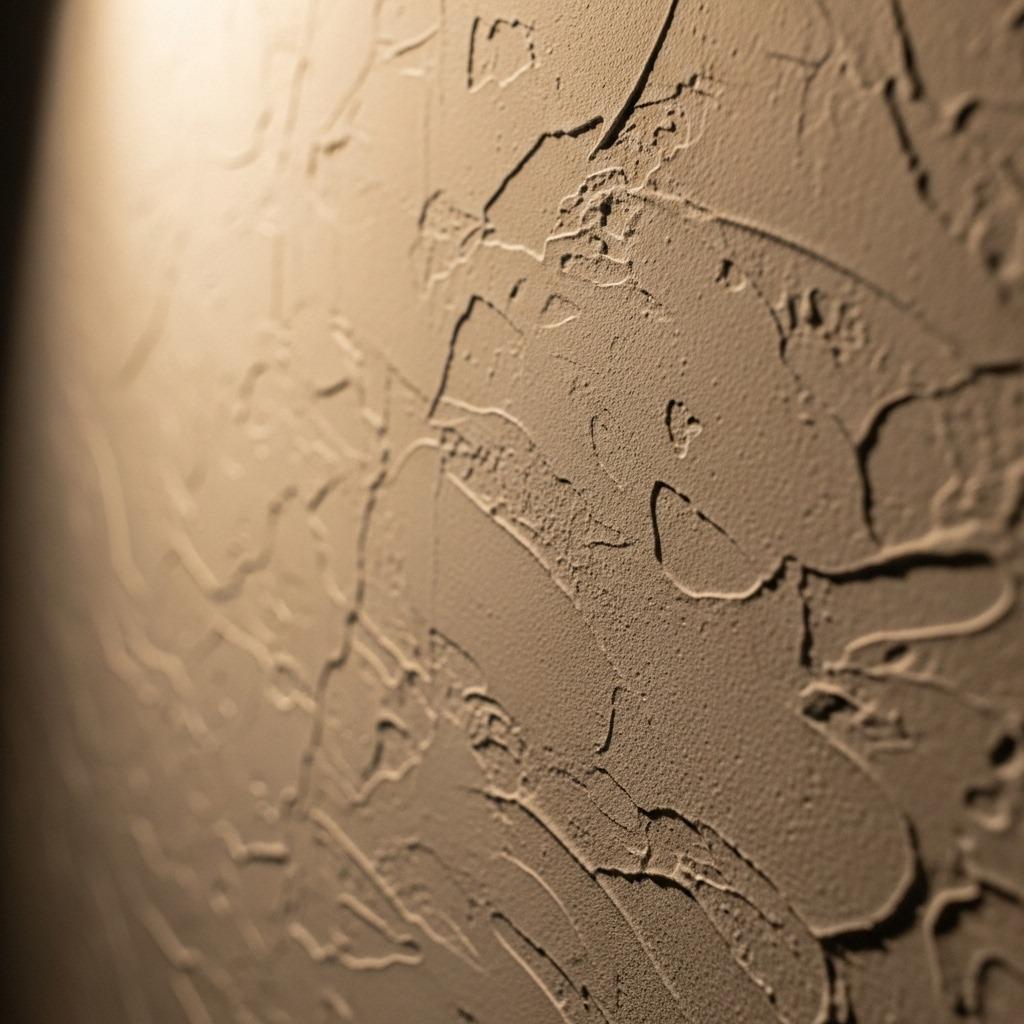
Japanese plastering techniques create subtle, organic wall textures that add depth without pattern or color. These hand-applied finishes have slight irregularities that catch light differently throughout the day, creating a living surface that changes with natural illumination.
Unlike perfectly smooth walls, textured plaster feels crafted and intentional. There’s a human quality to these surfaces that machine-made materials can’t replicate. The imperfections are precisely what makes them beautiful – another expression of wabi-sabi philosophy.
Neutral colors work best here – think warm whites, soft grays, or gentle earth tones. The goal is to create interest through texture and light rather than through color contrast. This approach also works well in small bathroom renovation projects where you want visual interest without overwhelming limited space.
13. Cedar Wood Bathing Stool
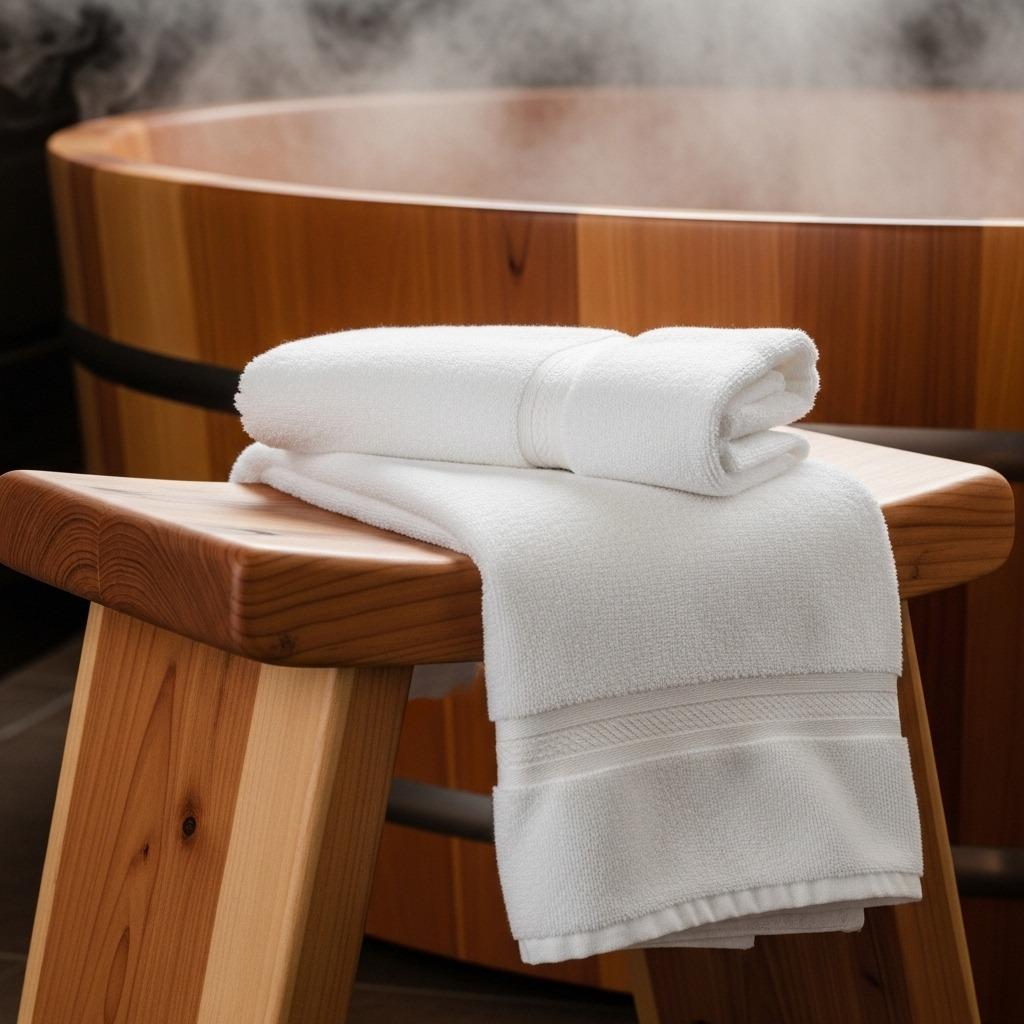
A traditional Japanese hinoki or cedar bathing stool serves both practical and aesthetic purposes. Used for the pre-bath cleansing ritual, these simple wooden stools embody the beauty of functional objects made with care and quality materials.
The stool’s clean lines and honest construction become a decorative element when not in use. There’s no pretense here – just a well-made object doing its job beautifully. This appreciation for utilitarian beauty is central to Japanese design thinking.
Even if you don’t follow traditional bathing rituals, having a stool in your bathroom proves surprisingly useful. It provides a place to sit while applying lotion, a temporary shelf for your bathrobe, or simply a beautiful wooden accent that reinforces the room’s natural aesthetic.
14. Recessed Shelf Niche
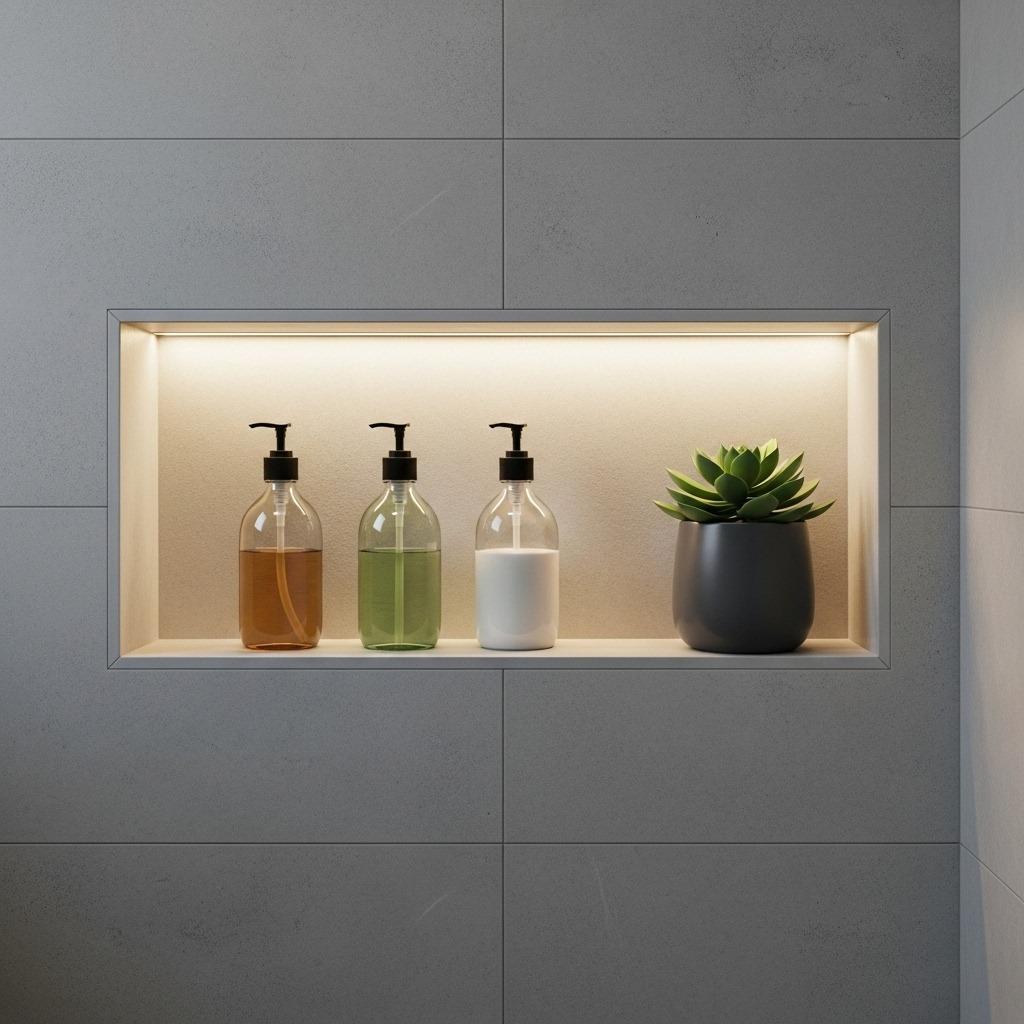
Built-in niches carved directly into shower or tub walls provide storage without interrupting clean lines. These recessed shelves keep toiletries organized and accessible while maintaining the minimalist aesthetic that defines Japanese bathroom design.
The beauty of niches is their invisibility – they serve their purpose without demanding attention. Unlike protruding shelves or hanging caddies, recessed storage preserves the room’s serene simplicity. You can reach your shampoo without visual clutter.
Consider lining niches with the same stone or tile as surrounding walls for a seamless look. Add subtle LED strip lighting inside for both function and atmosphere. This creates a soft glow that highlights your stored items without harsh overhead lighting.
15. Paper Lantern Lighting
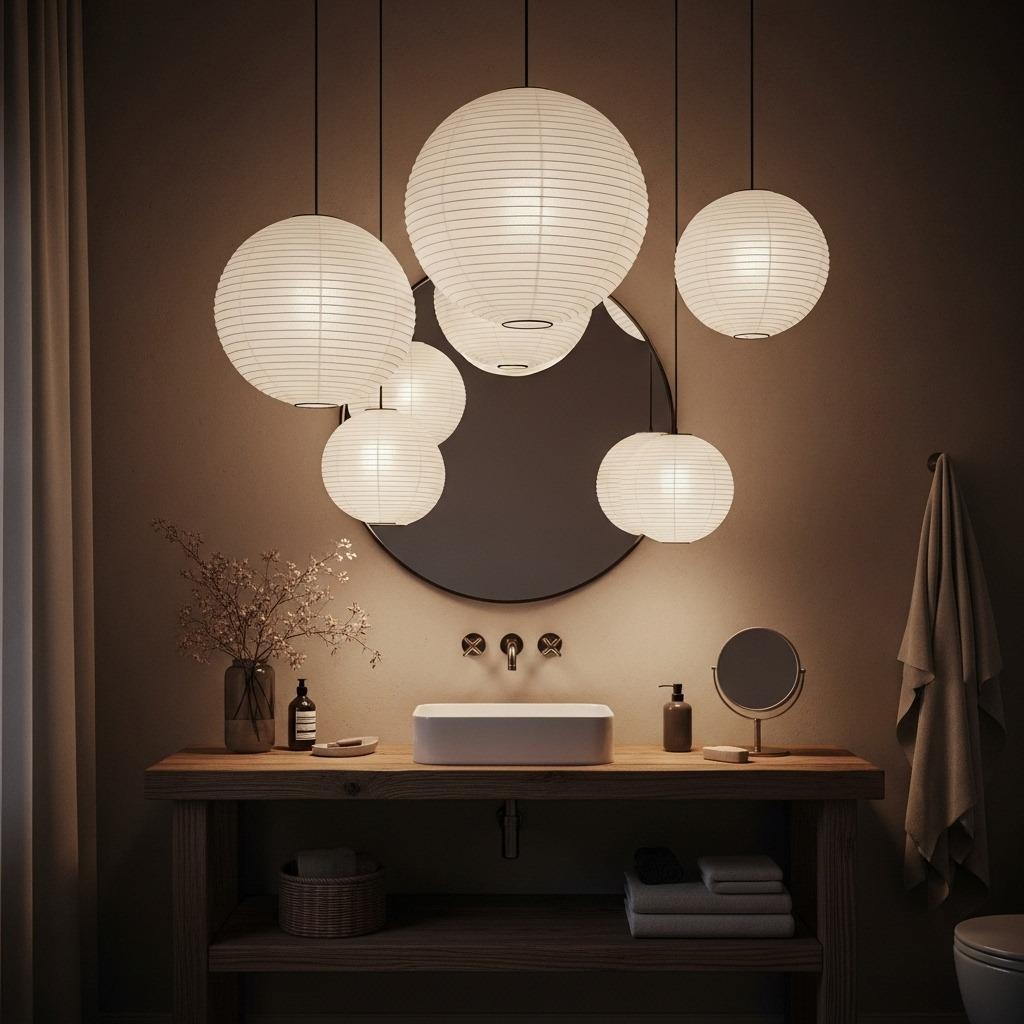
Soft, diffused lighting from paper lanterns or rice paper pendant lights creates the warm, gentle illumination essential to Japanese bathroom ambiance. These fixtures scatter light in all directions rather than creating harsh focused beams, which contributes to the room’s peaceful atmosphere.
The translucent quality of paper shades transforms electrical lighting into something that feels almost natural. It’s reminiscent of candlelight or early morning sun – soft, forgiving, and deeply calming. This type of lighting makes everyone look better, which we all appreciate in a bathroom.
Hang lanterns at varying heights to add visual interest without complicating the design. The spherical shapes provide organic contrast to the room’s rectangular architecture. You might also check out bathroom lighting strategies for additional inspiration, though bedroom and bathroom approaches differ.
Creating a Japanese style bathroom isn’t about perfectly replicating a traditional Japanese home – it’s about embracing the principles that make these spaces so appealing. Natural materials, minimal clutter, and intentional design choices that prioritize peace over pizzazz.
What I find most compelling about this approach is how it encourages you to question what you actually need in a bathroom. Do you really need that decorative bowl of potpourri? The collection of scented candles? The stacks of rolled towels arranged just so? Sometimes the most beautiful spaces are the ones that give you room to breathe.
You might start with just one or two elements – maybe a bamboo plant and some new matte black hardware. Or perhaps you’re ready to commit to a full renovation with that dreamy soaking tub. Either way, each choice you make toward simplicity and natural beauty moves you closer to having a bathroom that feels less like a chore and more like a destination.
Your bathroom should be the place where stress washes away, not where it accumulates among cluttered counters and harsh lighting. These Japanese-inspired ideas offer a path toward that kind of tranquility – you just need to decide which elements speak to you and your space.