
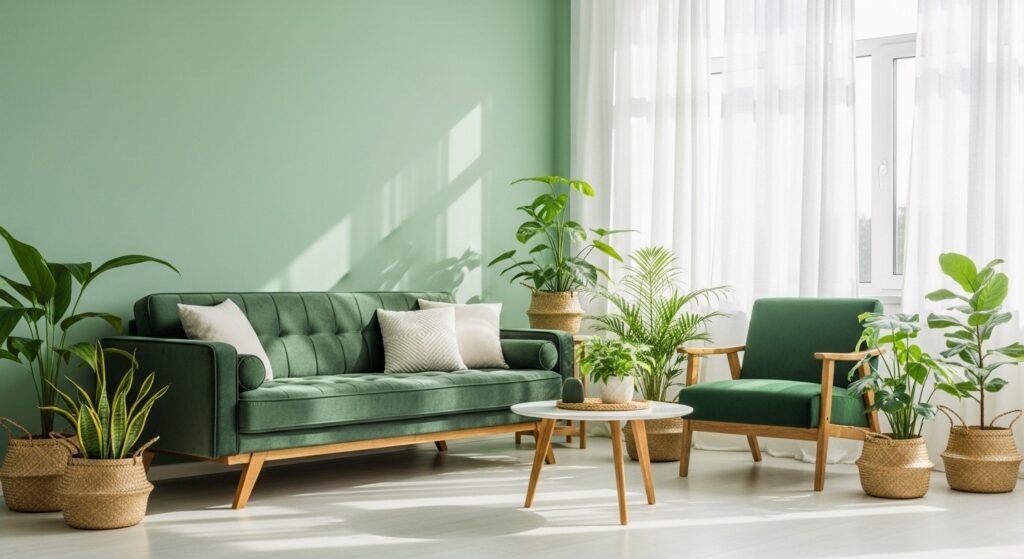
There’s something undeniably calming about a green living room. Maybe it’s the way green mirrors the outdoors, or how it can shift from energizing lime to restful sage depending on the shade you choose. Either way, this color has been having a moment, and for good reason.
If you’ve been scrolling through Pinterest, you’ve probably noticed green popping up everywhere – on walls, sofas, even ceilings. But creating a cohesive space that feels intentional rather than overwhelming? That takes a bit of planning. Whether you’re drawn to soft, botanical vibes or crave something bolder and more dramatic, there’s a shade and style that’ll work for you.
In this post, we’re walking through everything you need to know about styling a green living room – from picking the right tones to layering in plant decor and choosing eco-friendly pieces that elevate the space. Think of this as your cheat sheet for turning your lounge into a fresh, inviting retreat.
Why Green Works So Well in Living Rooms
Green isn’t just trendy. It’s versatile, mood-boosting, and surprisingly easy to live with. Unlike some bold colors that can feel overpowering after a while, green tends to grow on you (pun intended). It works in almost any style of home, from modern minimalist to cozy farmhouse.
Psychologically, green is known to reduce stress and create a sense of balance. That makes it perfect for a living room – a space where you unwind, host friends, or curl up with a book. Plus, it pairs beautifully with natural materials like wood, rattan, and linen, which makes it a go-to for anyone leaning into organic lounge aesthetics.
And let’s not forget: green is incredibly forgiving when it comes to mixing and matching. You can layer different shades together – think olive, sage, and emerald – without it feeling chaotic. It’s one of those colors that just plays well with others.
Choosing the Right Shade of Green
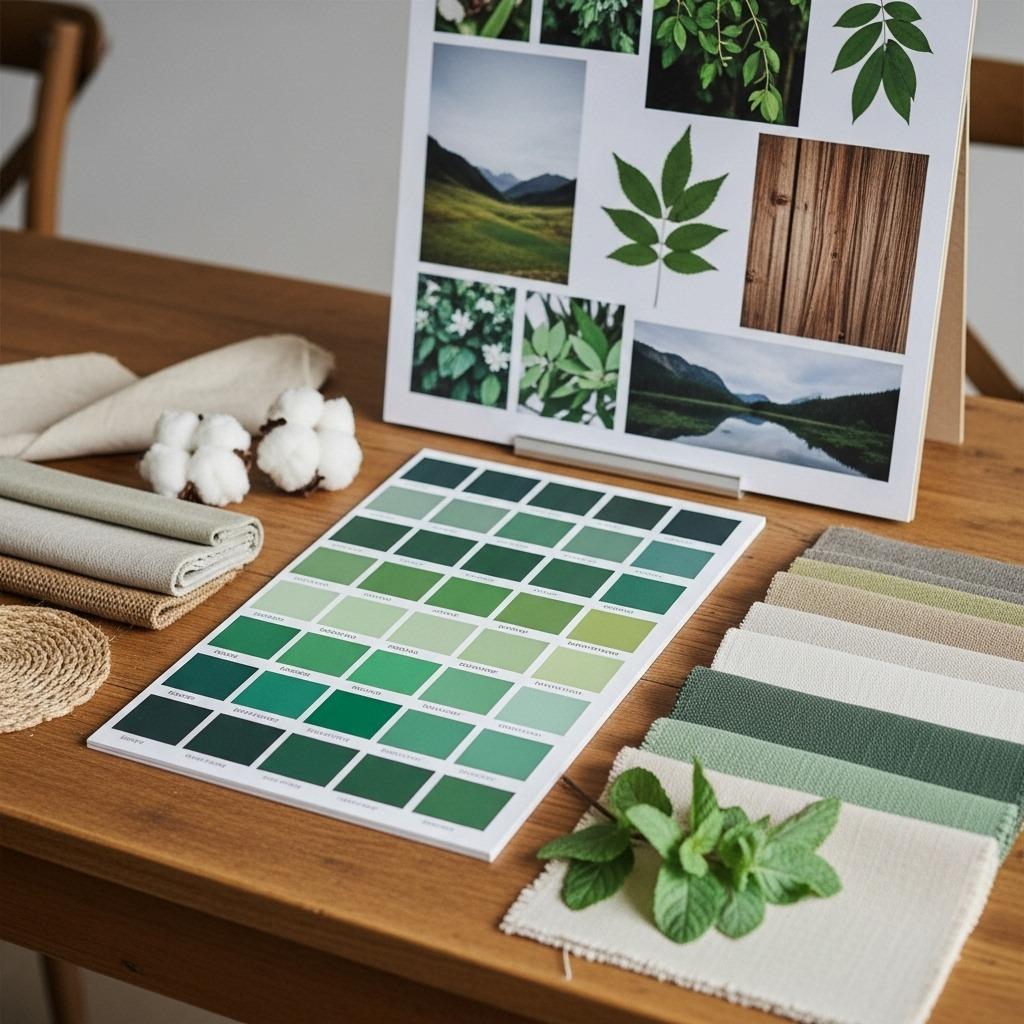
Not all greens are created equal. The shade you choose will set the tone for your entire space, so it’s worth taking a beat to figure out what vibe you’re going for. Soft, muted greens like sage and seafoam bring calm and airiness. They’re perfect if you want a cozy small living room that feels open and breathable.
On the flip side, deeper greens – think forest, emerald, or hunter – add drama and sophistication. These work especially well in larger rooms or spaces with lots of natural light. They can make a room feel grounded and luxurious, almost like you’ve stepped into a high-end hotel lobby.
If you’re unsure, start with a sample pot of paint or a few throw pillows in different shades. Live with them for a week and see how they feel at different times of day. Lighting changes everything, and what looks fresh in the morning might feel too dark by evening.
Green Walls: Bold or Subtle?
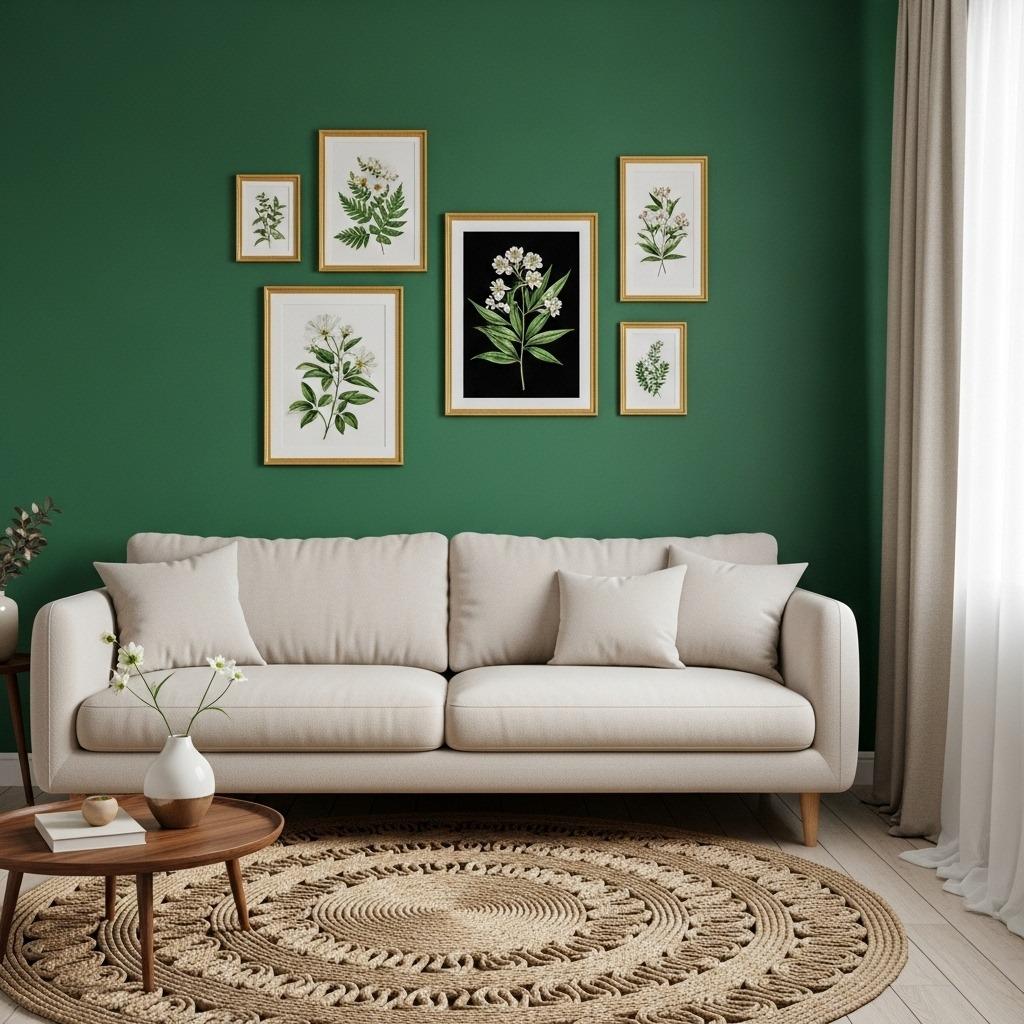
Painting your walls green is one of the fastest ways to transform your living room. But should you go all-in with four green walls, or play it safe with an accent wall? Honestly, both can work – it just depends on your space and your comfort level.
An accent wall is a great middle ground. It gives you that pop of color without committing fully. Try painting the wall behind your sofa or the one opposite your entryway. This draws the eye and creates a focal point without overwhelming the room. Pair it with neutral furniture and you’ve got a balanced, modern minimalist living room vibe.
If you’re feeling braver, go for it – paint all four walls. This works especially well with lighter shades like mint or celadon. The key is to bring in plenty of white or cream accents to keep things from feeling too heavy. Think white trim, light-colored curtains, and a neutral rug.
Incorporating Plant Decor Without Overdoing It
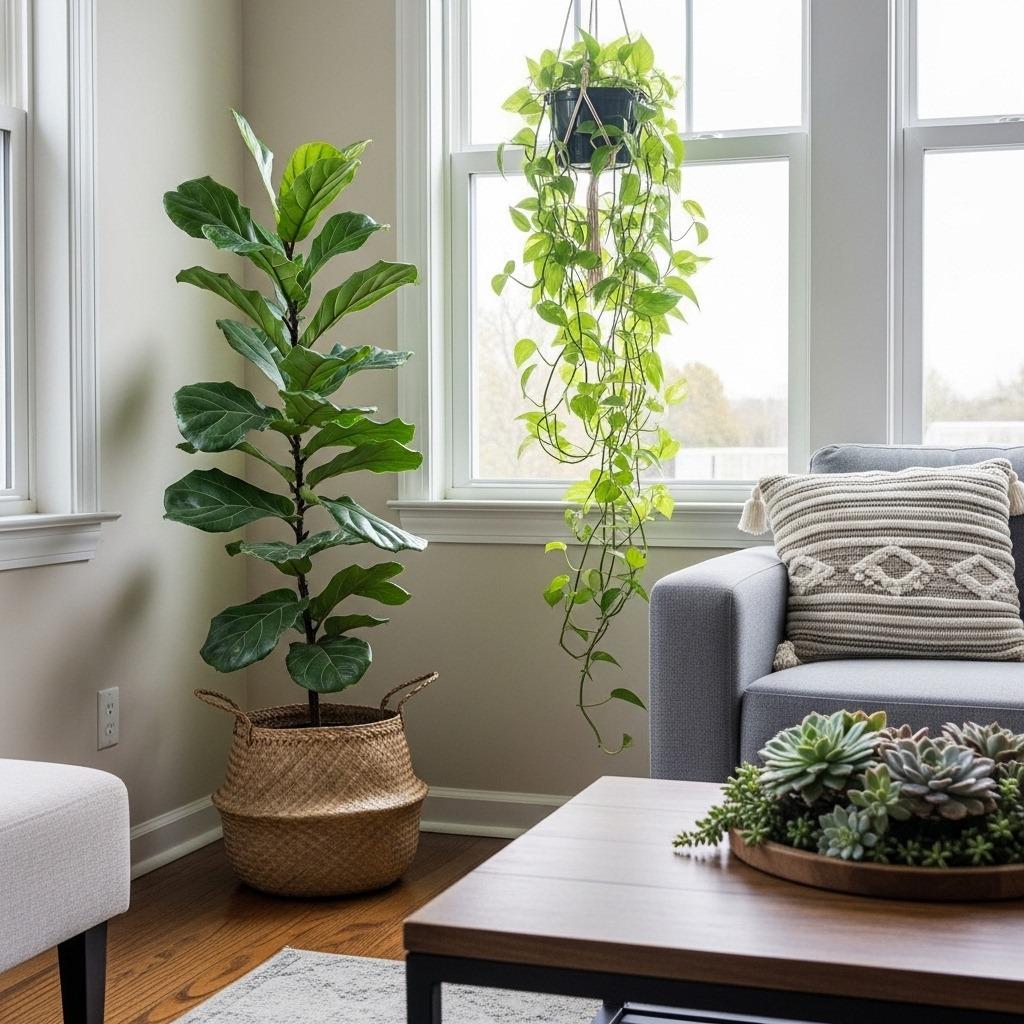
You’d think a green living room would be the perfect backdrop for houseplants, and you’d be right. But there’s a fine line between lush and cluttered. The trick is to be intentional about where and how you place your greenery.
Start with a few statement plants – a tall fiddle leaf fig in the corner, a trailing pothos on a bookshelf, or a cluster of smaller plants on a side table. Vary the heights and textures to create visual interest. And don’t forget about planters – woven baskets, ceramic pots, and wooden stands all add to that indoor garden living room feel.
If you’re worried about upkeep, choose low-maintenance varieties like snake plants, ZZ plants, or succulents. They’re nearly impossible to kill and still look great. And if you’re short on floor space, consider hanging planters or wall-mounted shelves to keep things off surfaces.
1. Sage Green Sofas and Seating
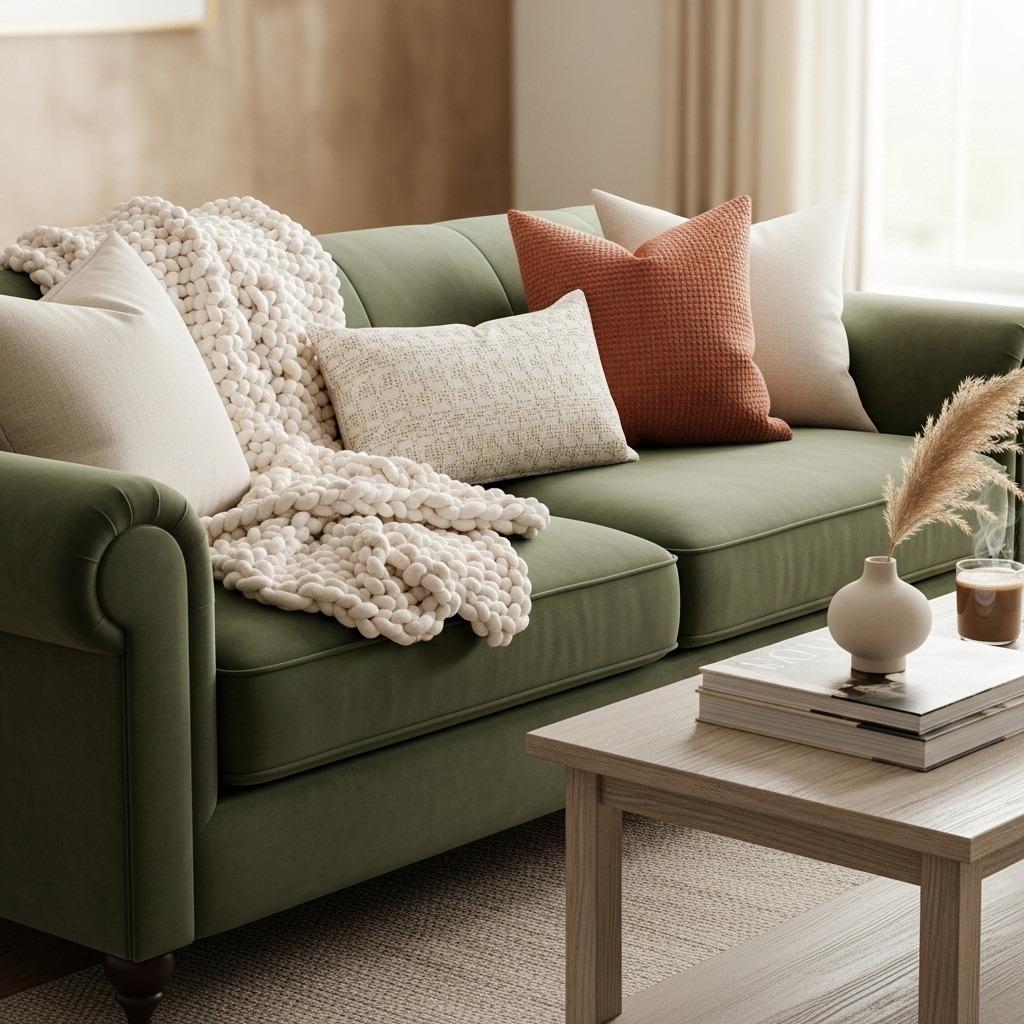
A sage green sofa is like the Swiss Army knife of furniture – it’s versatile, timeless, and works with almost any color palette. Whether your style leans boho chic living room or something more tailored, a green sofa can anchor the space beautifully.
Look for sofas in velvet or linen for added texture. Velvet gives you that rich, luxurious feel, while linen keeps things light and casual. If you’re not ready to commit to a green sofa, try a green armchair or ottoman instead. You still get that pop of color without it being the main event.
Styling tip: Layer your green seating with throw pillows in complementary colors like terracotta, cream, or blush pink. It softens the green and adds warmth. A chunky knit throw in a neutral tone also works wonders for making the space feel inviting.
2. Green Accent Furniture and Decor
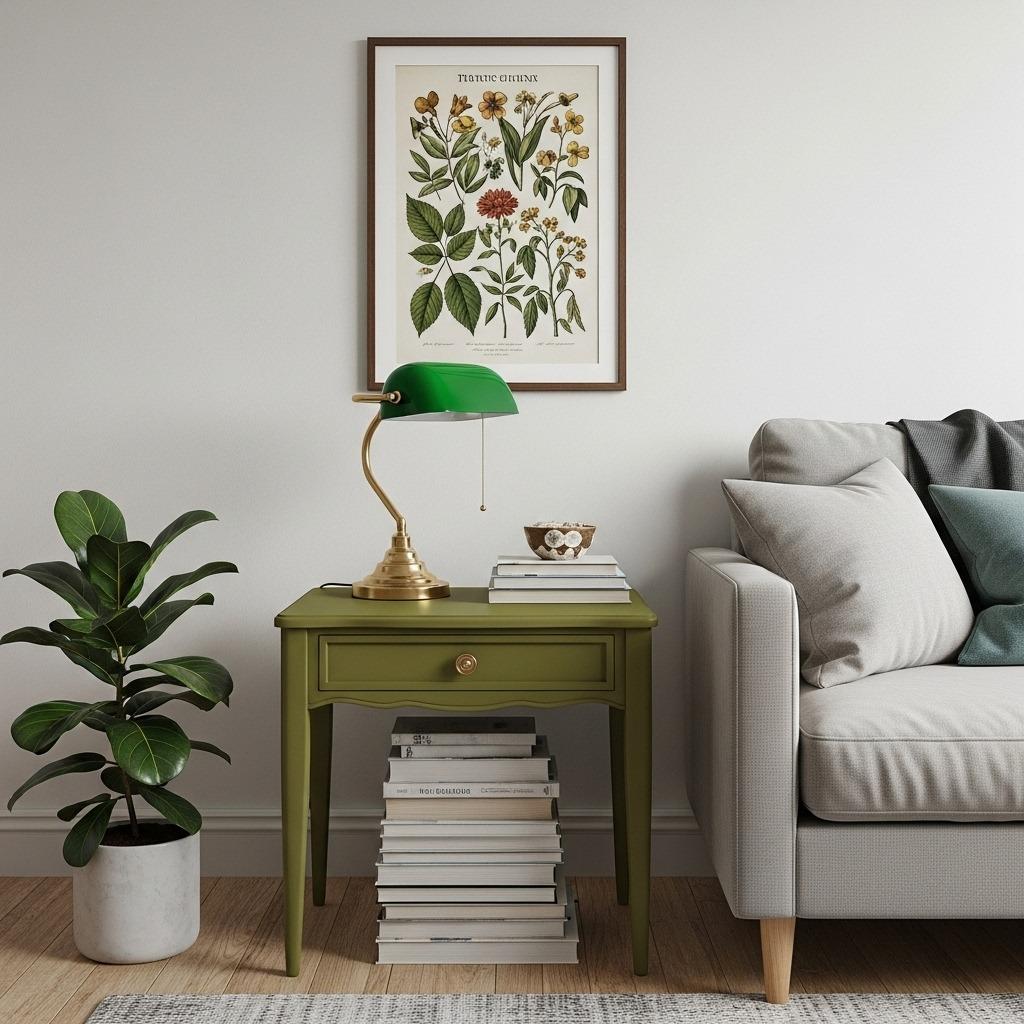
If painting your walls or buying a new sofa feels like too much commitment, start small with green accent pieces. A green side table, a set of green picture frames, or even green lampshades can bring in the color without dominating the room.
Vintage or secondhand furniture is a goldmine for unique green pieces. Think mid-century credenzas, painted wooden chairs, or retro cabinets. Not only do these add character, but they’re also a more sustainable choice – perfect for an eco-friendly living room.
You can also bring green in through textiles. Curtains, rugs, and throw blankets in various shades of green add softness and warmth. And because they’re easy to swap out, they’re a low-risk way to experiment with the color.
3. Layering Textures in a Green Living Room
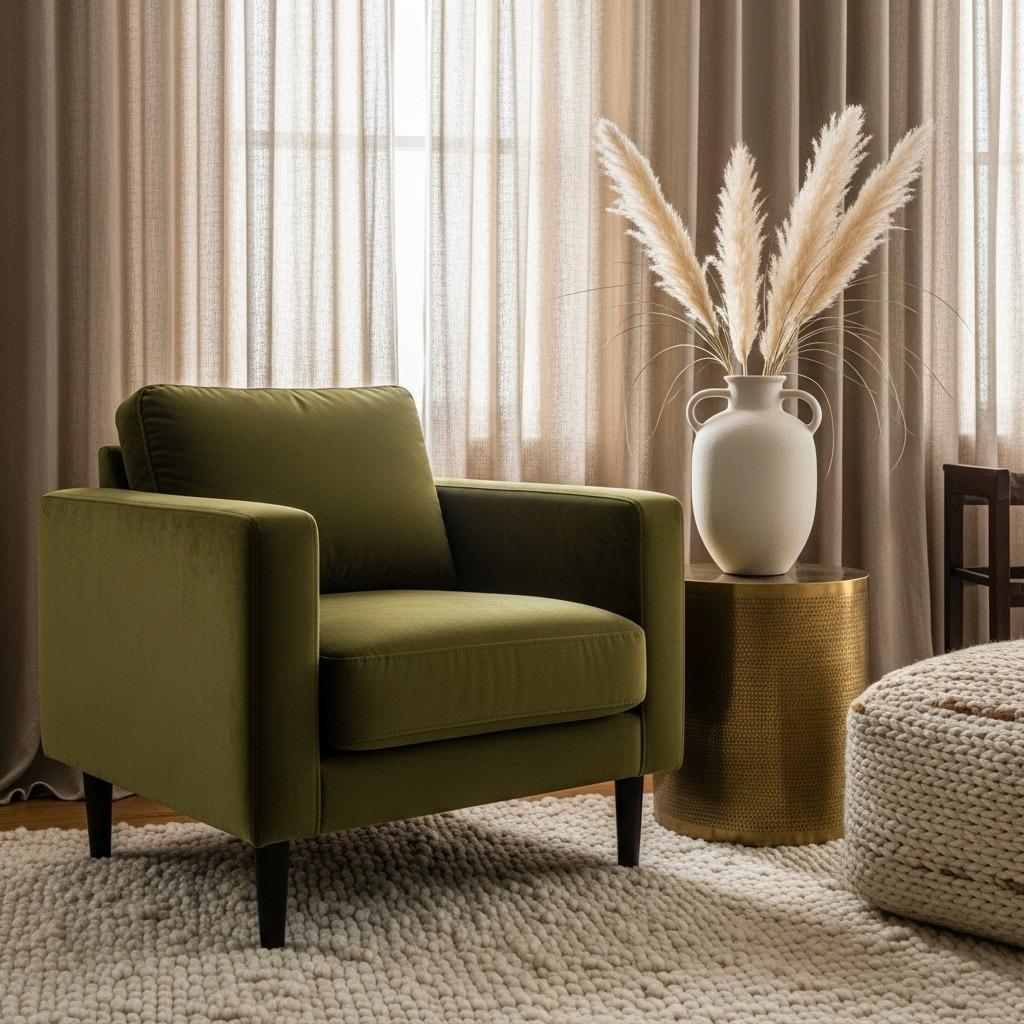
A monochromatic green living room can feel flat if you don’t play with texture. The good news? Layering different materials is one of the easiest ways to add depth and interest.
Start with your larger pieces – a velvet sofa, a jute rug, and linen curtains. Then layer in smaller textures like a knitted pouf, a faux fur throw, or a ceramic vase. Even something as simple as a woven basket or a macramé wall hanging can make a difference.
Don’t be afraid to mix shiny and matte finishes either. A glossy green ceramic lamp next to a matte velvet cushion? Chef’s kiss. It’s all about balance.
4. Pairing Green with Neutrals
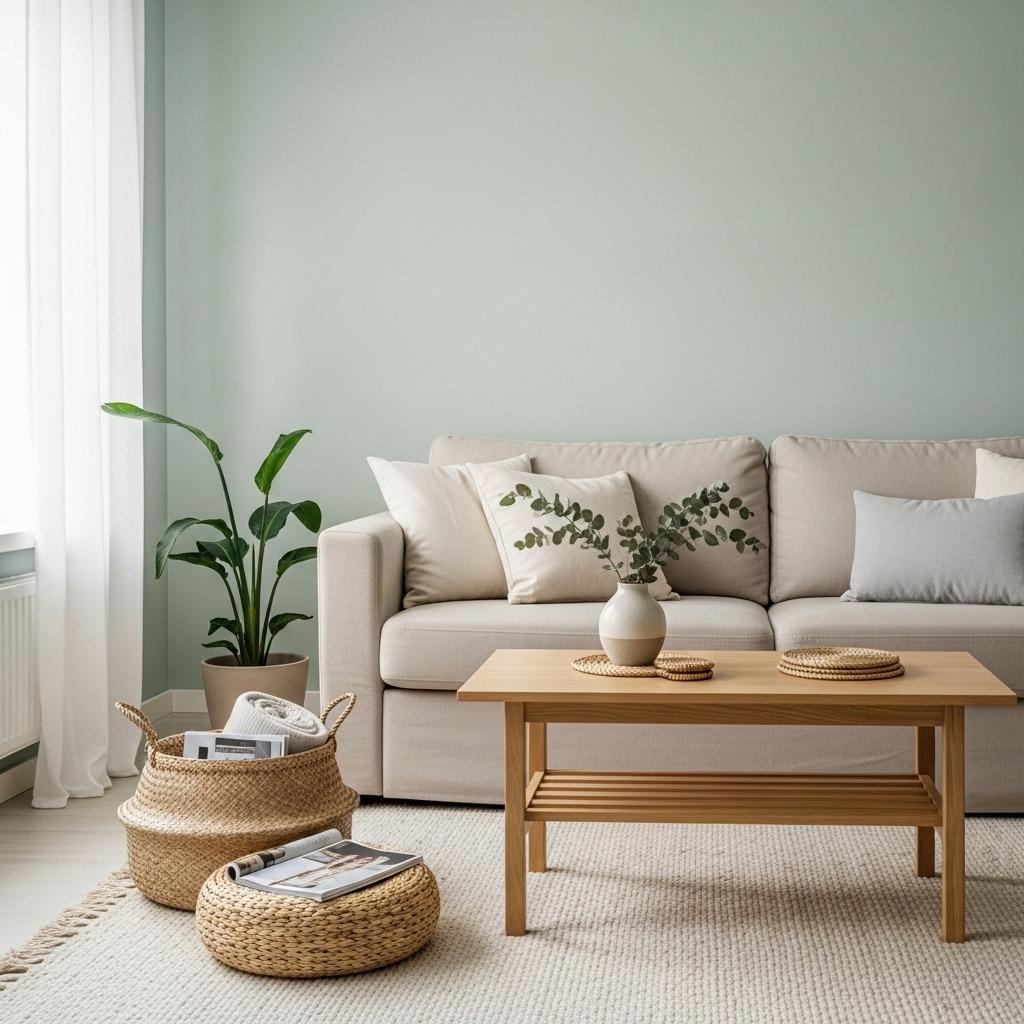
Green and neutrals are a match made in decorating heaven. Neutrals like white, beige, gray, and taupe let green shine without competing for attention. This combo is especially effective if you want a calm, organic lounge vibe.
Try pairing a soft green wall with a cream-colored sofa and natural wood furniture. Add in some woven baskets, linen pillows, and a jute rug, and you’ve got yourself a space that feels both fresh and grounded. It’s the kind of living room that photographs beautifully and actually feels good to live in.
If you’re working with a darker green, lean into warmer neutrals like beige and camel. They add coziness and prevent the space from feeling too cool or sterile. A cream throw blanket or a beige accent chair can do wonders.
5. Adding Metallic Accents to Green Spaces
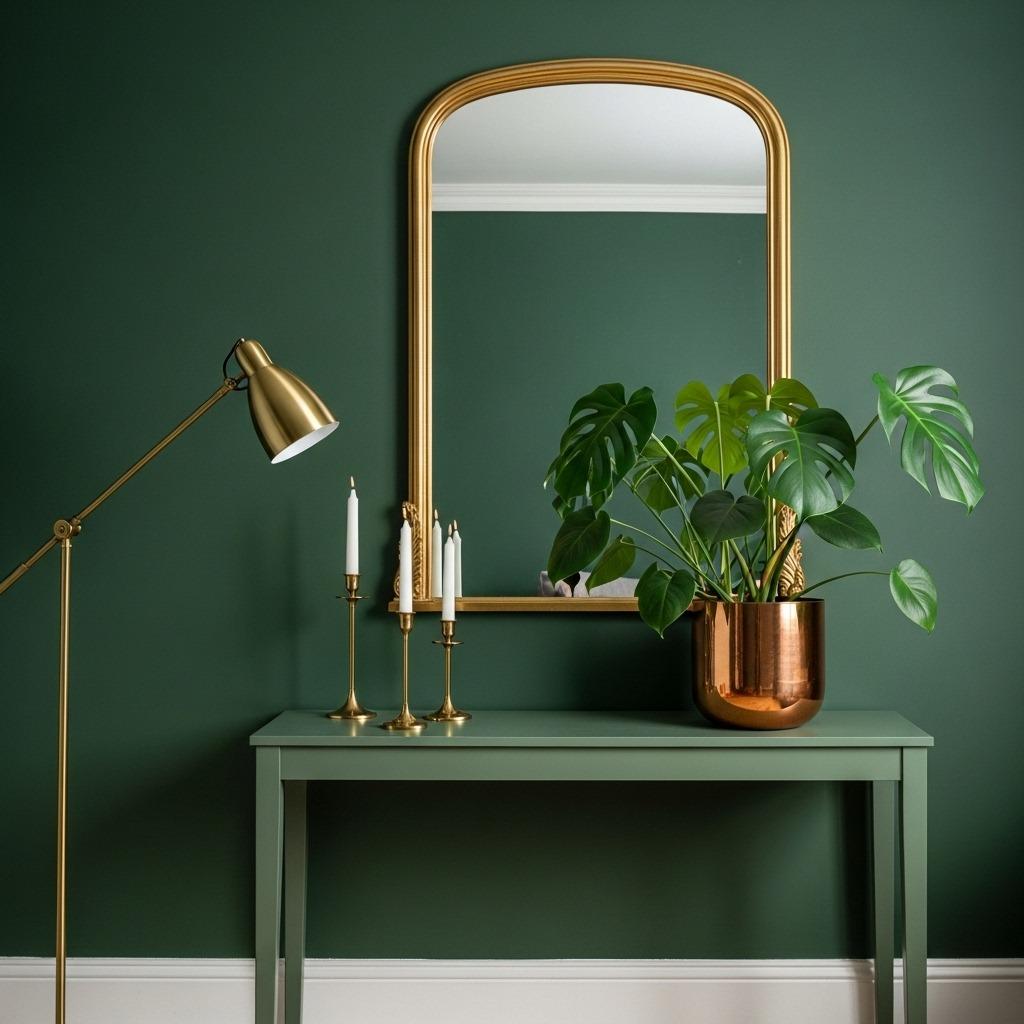
Metallics and green are an underrated duo. Gold, brass, and copper bring warmth and a touch of glam, while silver and chrome keep things modern and sleek. The key is to not go overboard – a little metallic goes a long way.
Consider brass table lamps, gold-framed mirrors, or copper planters. Even small touches like gold drawer pulls or a silver picture frame can elevate the space. If you’re into a more glam living room aesthetic, layer in more metallics through lighting fixtures, side tables, or decorative trays.
One trick? Stick to one or two metallic finishes to keep things cohesive. Mixing too many metals can start to look chaotic, unless you’re going for a maximalist vibe.
6. Green and Wood: A Natural Pairing
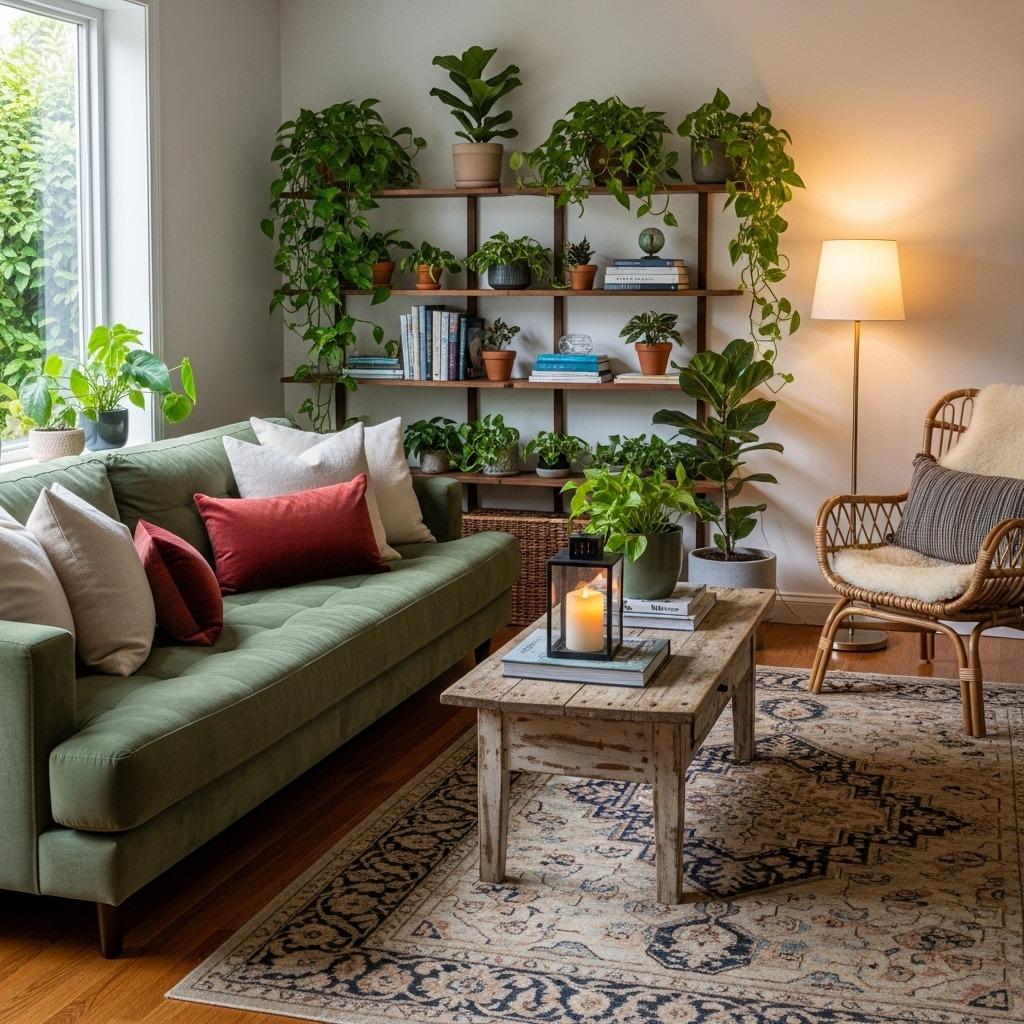
Wood and green just work. Whether it’s light oak, rich walnut, or rustic reclaimed wood, the warmth of wood tones balances the coolness of green. This pairing is perfect if you’re aiming for a rustic living room or something more Scandinavian-inspired.
Try a wooden coffee table with a green sofa, or open wooden shelving against a green wall. Wood furniture also helps ground the space and adds a bit of natural texture. If you want to lean into the earthy vibe, add in woven accessories like rattan chairs or wicker baskets.
And don’t forget about wood finishes on smaller items – picture frames, trays, shelving brackets. These little details tie the whole look together and reinforce that natural, organic lounge feel.
7. Creating a Biophilic Design with Green
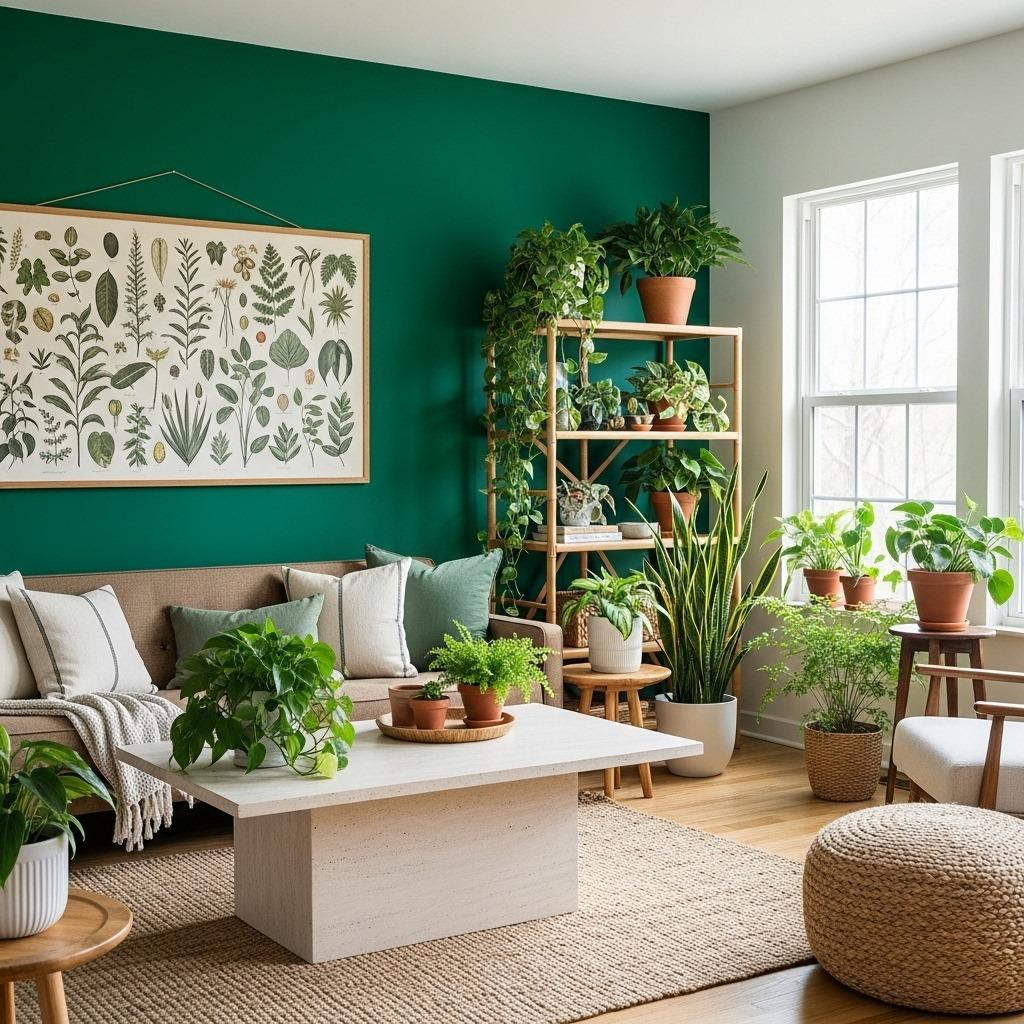
Biophilic design is all about bringing the outdoors in, and a green living room is the perfect canvas for this. Beyond just adding plants, think about how you can incorporate natural elements throughout the space.
Use natural materials like stone, cork, bamboo, and clay. A stone accent wall, cork coasters, or a bamboo side table all contribute to that earthy, connected-to-nature feeling. Combine this with plenty of sunlight, and you’ve got a space that feels like a breath of fresh air.
Layering in botanical prints or nature-inspired artwork also reinforces the theme. Think framed pressed leaves, landscape photography, or even a large-scale mural of a forest or garden. It’s a subtle way to bring more green into the room without adding more plants.
8. Green Living Room Lighting Ideas
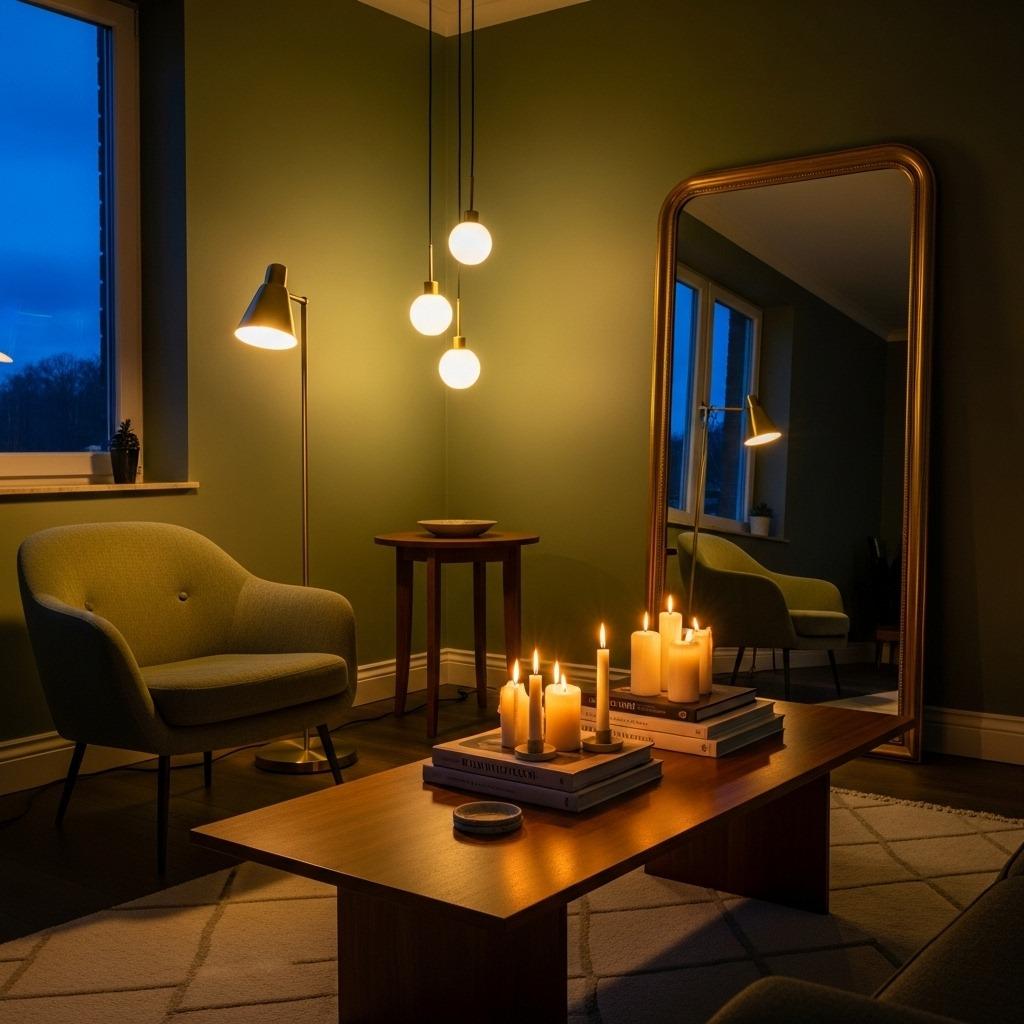
Lighting can make or break a green living room. The right lighting brings out the richness of the color, while poor lighting can make it look dull or muddy. Natural light is your best friend here, so keep windows unobstructed and use sheer curtains if you need privacy.
For artificial lighting, layer different sources – overhead lighting, table lamps, floor lamps, and accent lights. Warm-toned bulbs (around 2700K-3000K) work best with green, as they add a cozy glow. Avoid cool, bluish lights that can make green look too clinical.
Consider statement lighting fixtures in brass, gold, or matte black to add visual interest. A sculptural floor lamp or a cluster of pendant lights can become a focal point while also serving a practical purpose. And don’t underestimate the power of candles for creating ambiance.
9. Styling Green Shelves and Bookcases
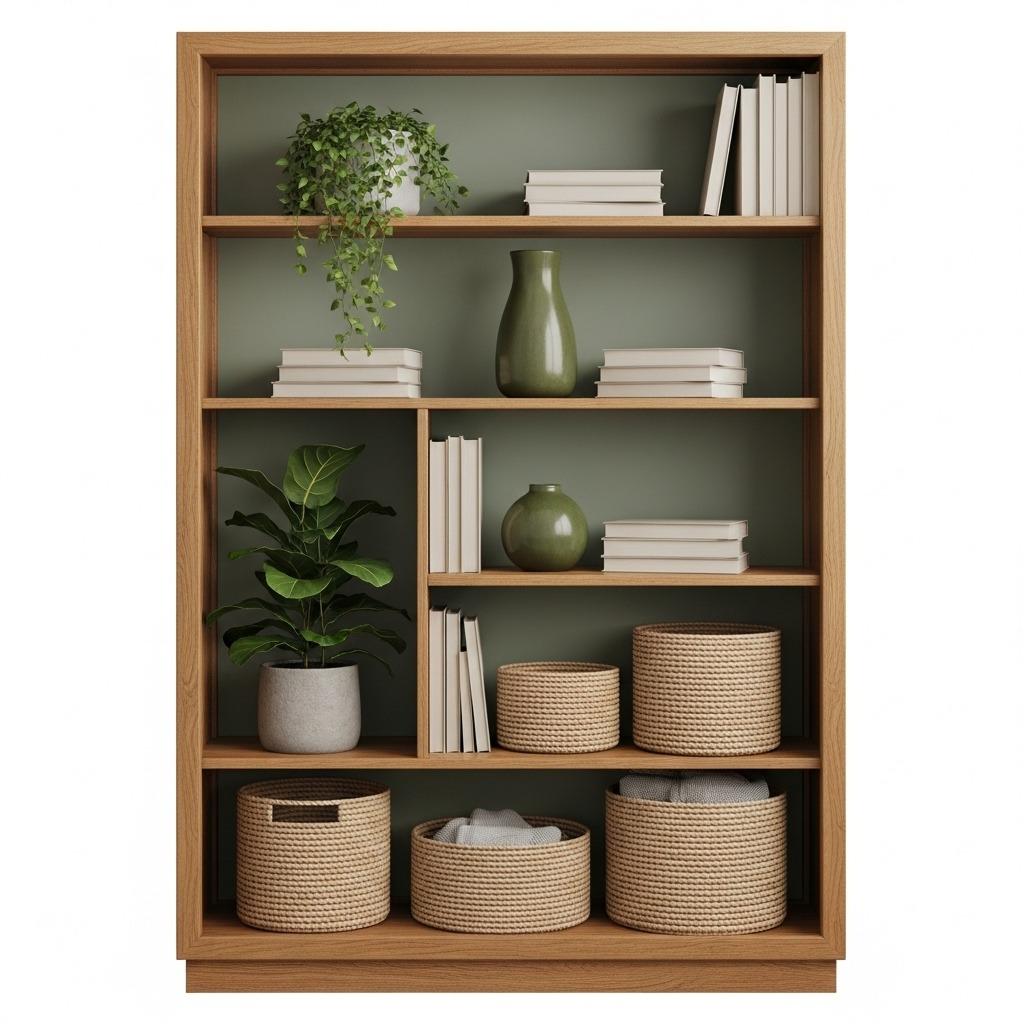
If you have open shelving or a bookcase in your living room, styling it with green in mind can tie the whole room together. Use the shelves to display plants, green vases, or books with green spines. It’s a simple way to reinforce your color scheme.
Mix in some decorative objects – ceramics, sculptures, woven baskets – to add variety. The key is to balance the green items with neutral pieces so the shelves don’t look too matchy-matchy. Leave some breathing room too; overstuffed shelves can feel chaotic.
Another idea: paint the back panel of the bookcase in a soft green. It adds a pop of color and makes the items on the shelves stand out more. This works especially well in a functional living room where storage needs to look good too.
10. Green Rugs and Flooring Options
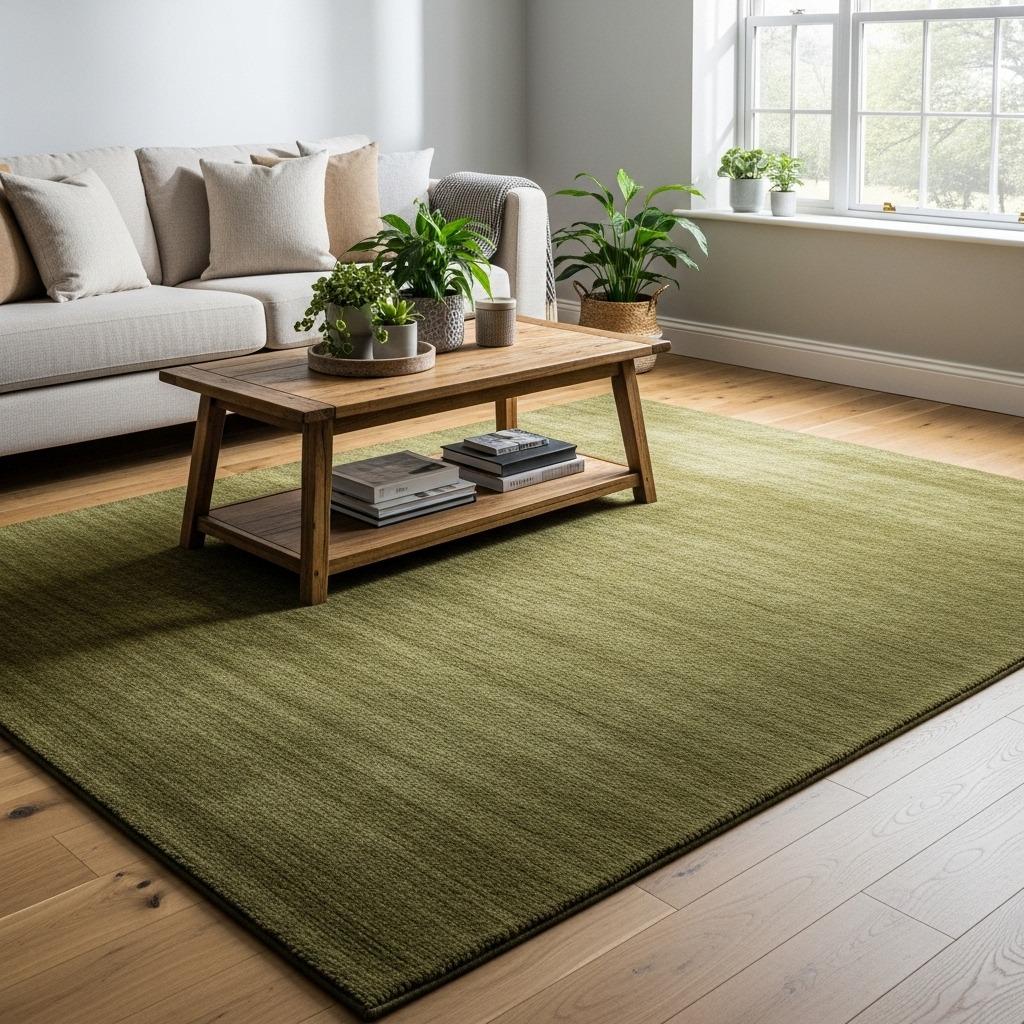
A green rug can anchor your living room and pull the whole color scheme together. Whether you go for a solid green or a patterned rug with green accents, it’s an easy way to introduce the color without committing to paint or furniture.
Look for rugs in natural fibers like jute, wool, or cotton. These materials add texture and align with that eco-friendly living room vibe. If you’re worried about a solid green rug being too bold, try a neutral rug with green geometric patterns or botanical motifs.
As for flooring, light wood or natural stone pairs beautifully with green. If you’re doing a renovation, consider bamboo or cork flooring – both are sustainable choices that complement green tones. Even a simple coat of white paint on old floorboards can brighten the space and let the green shine.
11. Mixing Green with Other Colors
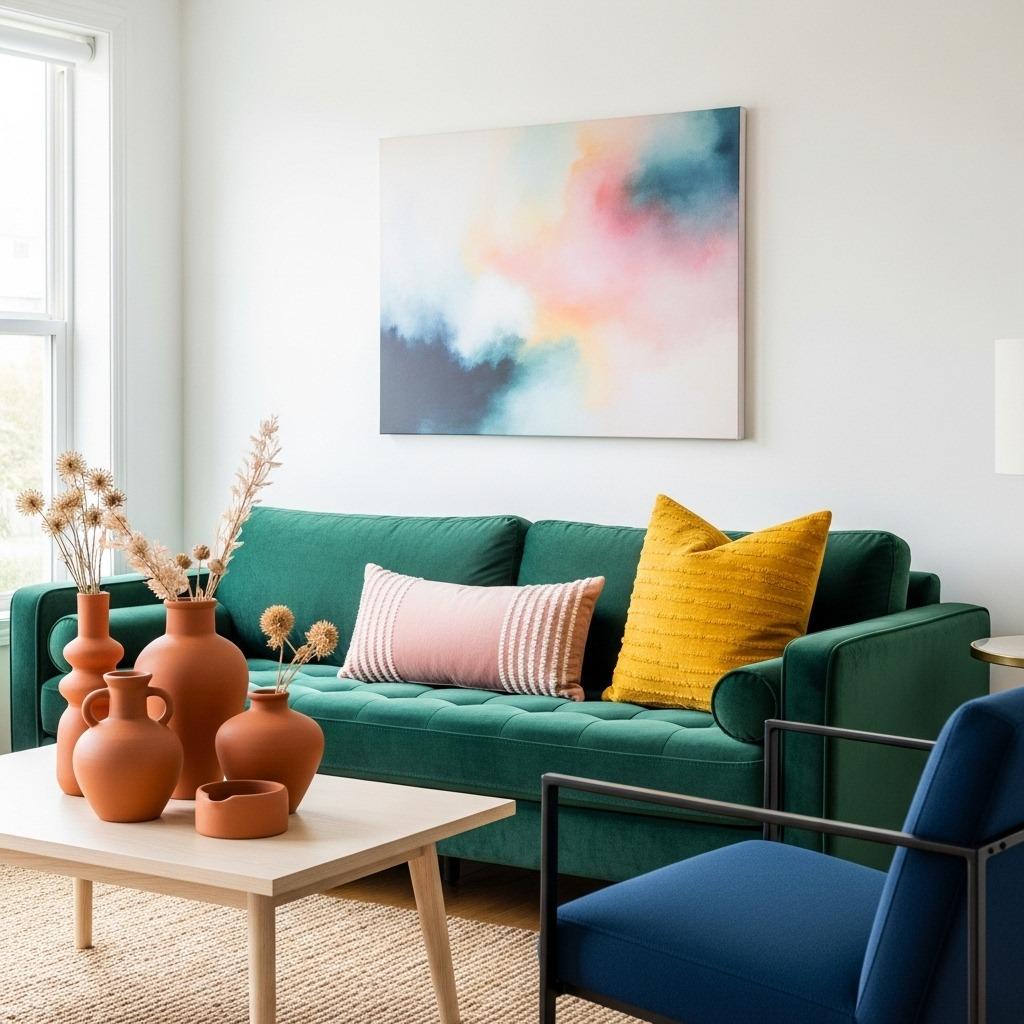
Green doesn’t have to fly solo. In fact, it pairs beautifully with a surprising range of colors. For a soft, romantic look, try green with blush pink or dusty rose. For something more vibrant, pair it with mustard yellow or burnt orange.
If you’re into a colorful living room aesthetic, don’t be afraid to mix multiple hues. Green, navy, and terracotta create a rich, layered palette that feels both bold and grounded. Just make sure to balance the colors with plenty of neutrals to avoid overwhelming the space.
White and green is a classic combo that feels crisp and clean. Black and green, on the other hand, is dramatic and modern. Play around with different combinations using pillows, throws, and artwork before committing to larger pieces.
12. Green Gallery Walls and Artwork
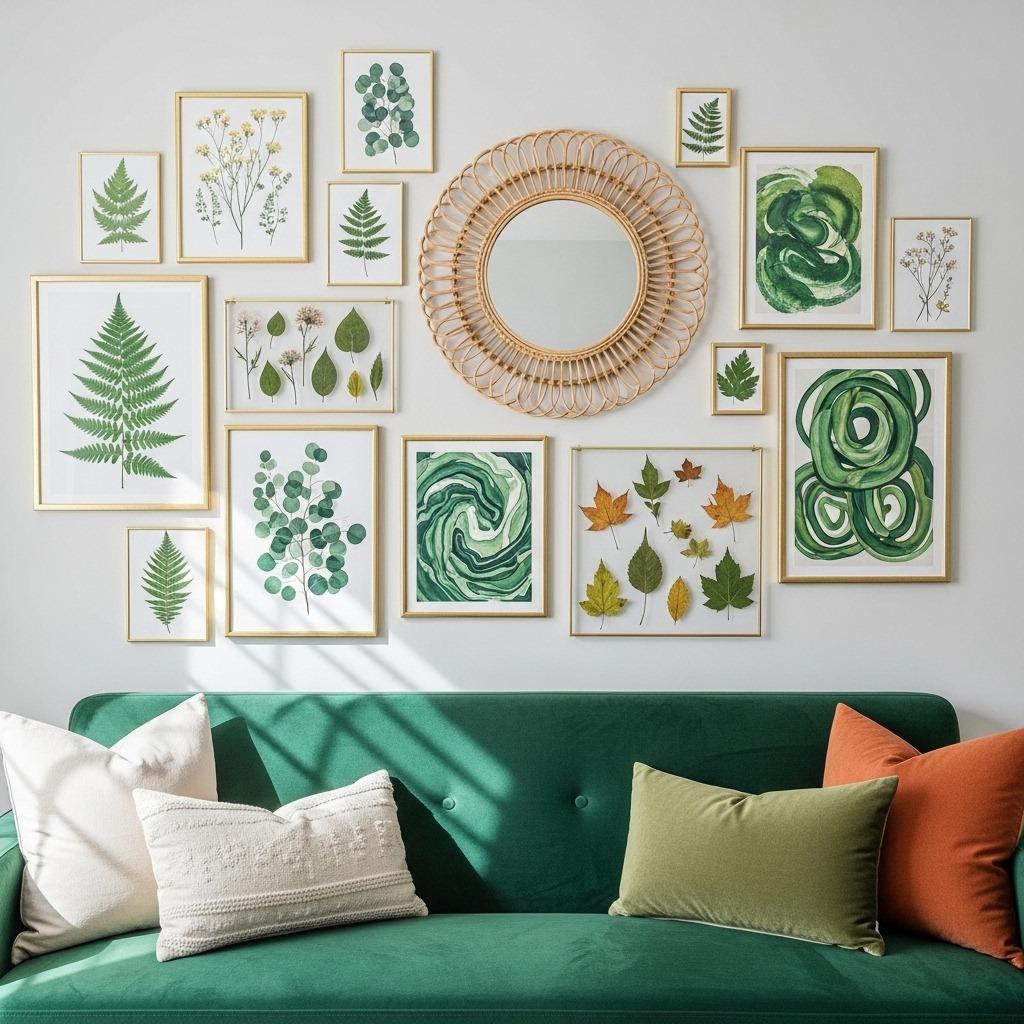
A gallery wall is a great way to bring more green into your living room without it being too literal. Mix botanical prints, abstract green art, and framed pressed leaves for a curated, personal touch. You can find some tips on arranging gallery walls in our living room gallery wall ideas post.
Vary the frame sizes and styles for visual interest. A mix of gold, black, and natural wood frames looks more collected and less uniform. And don’t feel like every piece needs to be green – sprinkle in some neutrals and other accent colors to keep it dynamic.
If you’re not into traditional art, consider using mirrors, macramé wall hangings, or even floating shelves with plants. The goal is to create a focal point that draws the eye and adds personality to the space.
13. Small Space Green Living Room Ideas
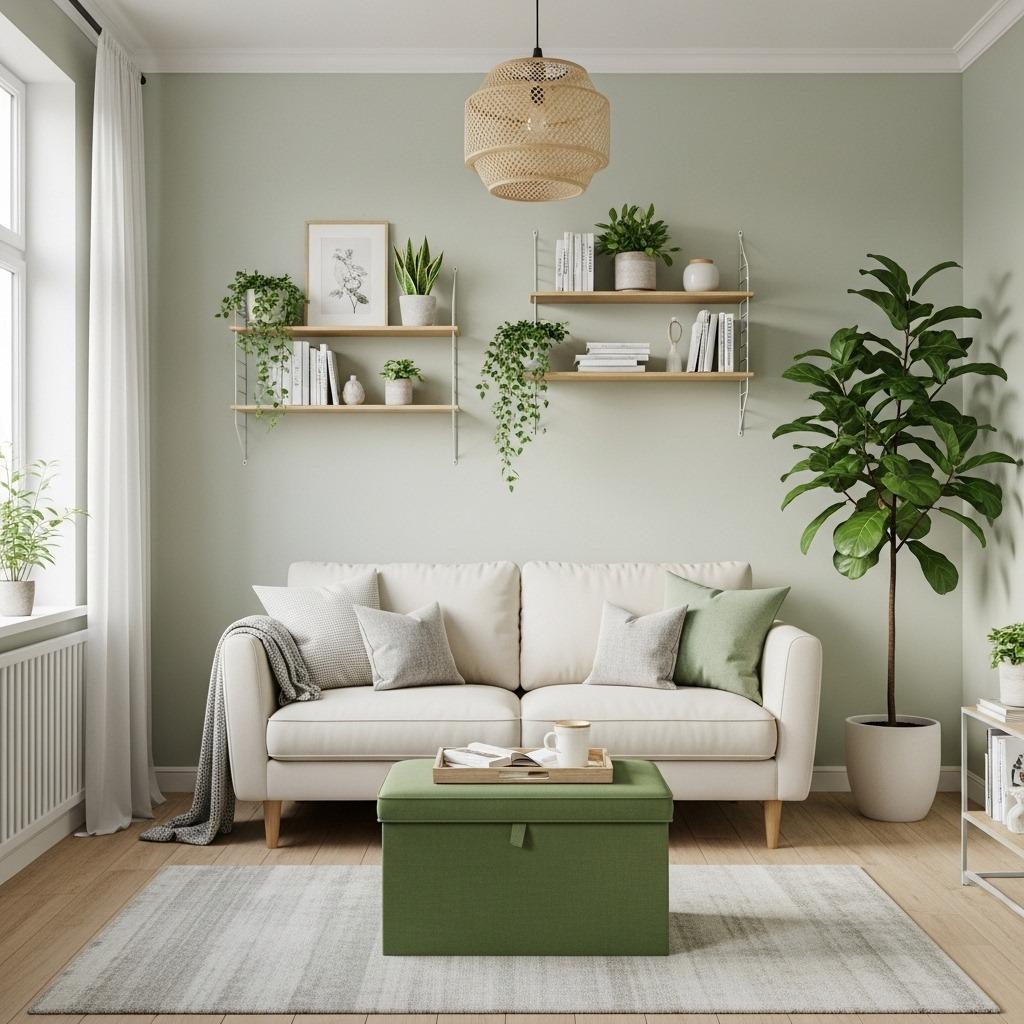
Working with a smaller living room? Green can actually make the space feel larger if you use it strategically. Lighter shades like mint, seafoam, and pale sage reflect light and create an airy feel. Pair these with mirrors and light-colored furniture to maximize the sense of space.
Keep furniture minimal and multi-functional. A green storage ottoman, for example, adds color while also providing seating and storage. Wall-mounted shelves free up floor space and let you display plants and decor without cluttering surfaces. You can find more ideas in our small space renovation guide.
Vertical elements like tall plants or floor-to-ceiling curtains draw the eye upward and make the ceiling feel higher. And if you’re really tight on space, consider using green in smaller doses – a green accent wall, a few green cushions, or a single statement plant.
14. Sustainable and Eco-Friendly Decor Choices
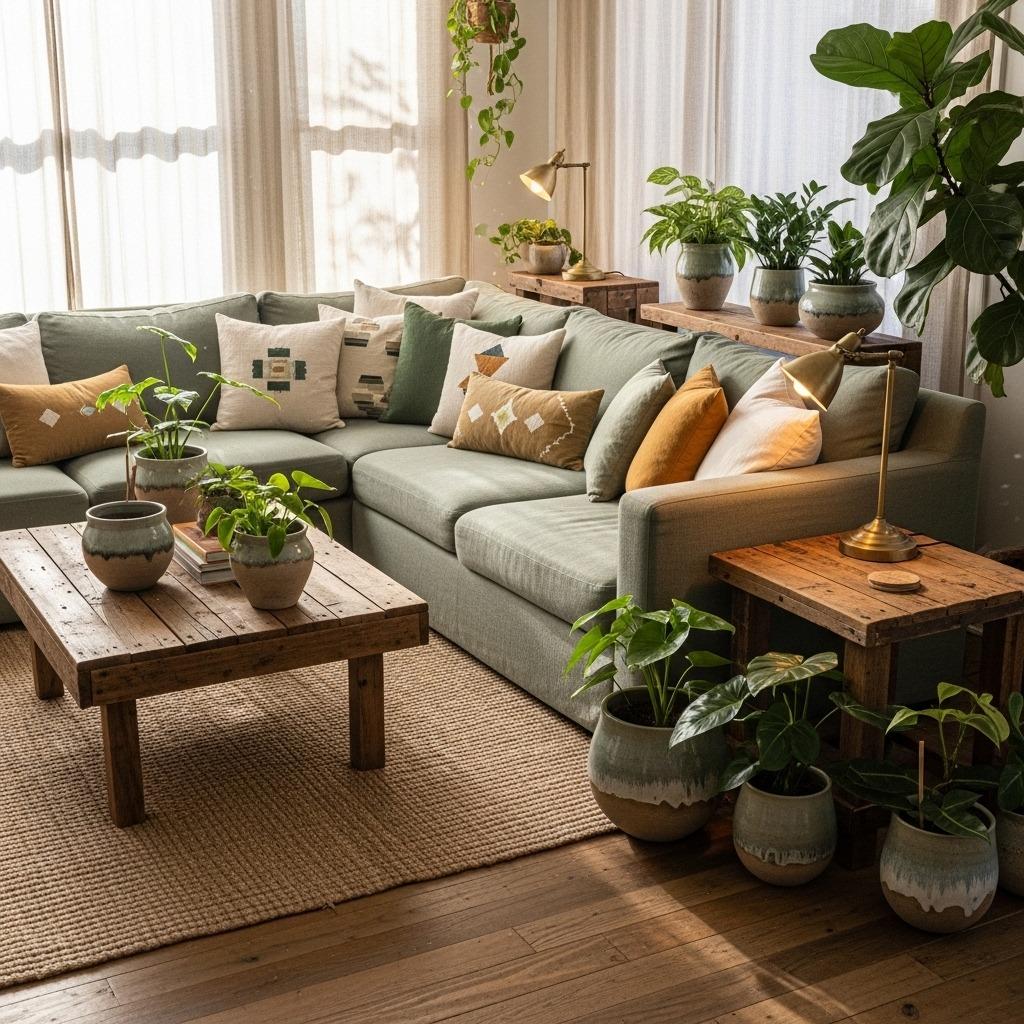
If you’re drawn to the idea of an eco-friendly living room, a green color scheme is the perfect starting point. But it’s not just about the color – it’s also about the materials and brands you choose.
Opt for furniture made from reclaimed wood, bamboo, or FSC-certified wood. Look for organic textiles like organic cotton, linen, and hemp. Vintage and secondhand pieces are also a win – they’re sustainable and often more unique than new items.
When it comes to paint, choose low-VOC or zero-VOC options to keep your indoor air quality high. Brands like Benjamin Moore and Sherwin-Williams offer eco-friendly lines. And for accessories, support small makers and artisans who prioritize sustainable practices.
15. Seasonal Green Decor Swaps
One of the best things about a green living room is how easy it is to tweak for different seasons. In spring and summer, go lighter and brighter – think mint greens, lots of plants, and white or pastel accents.
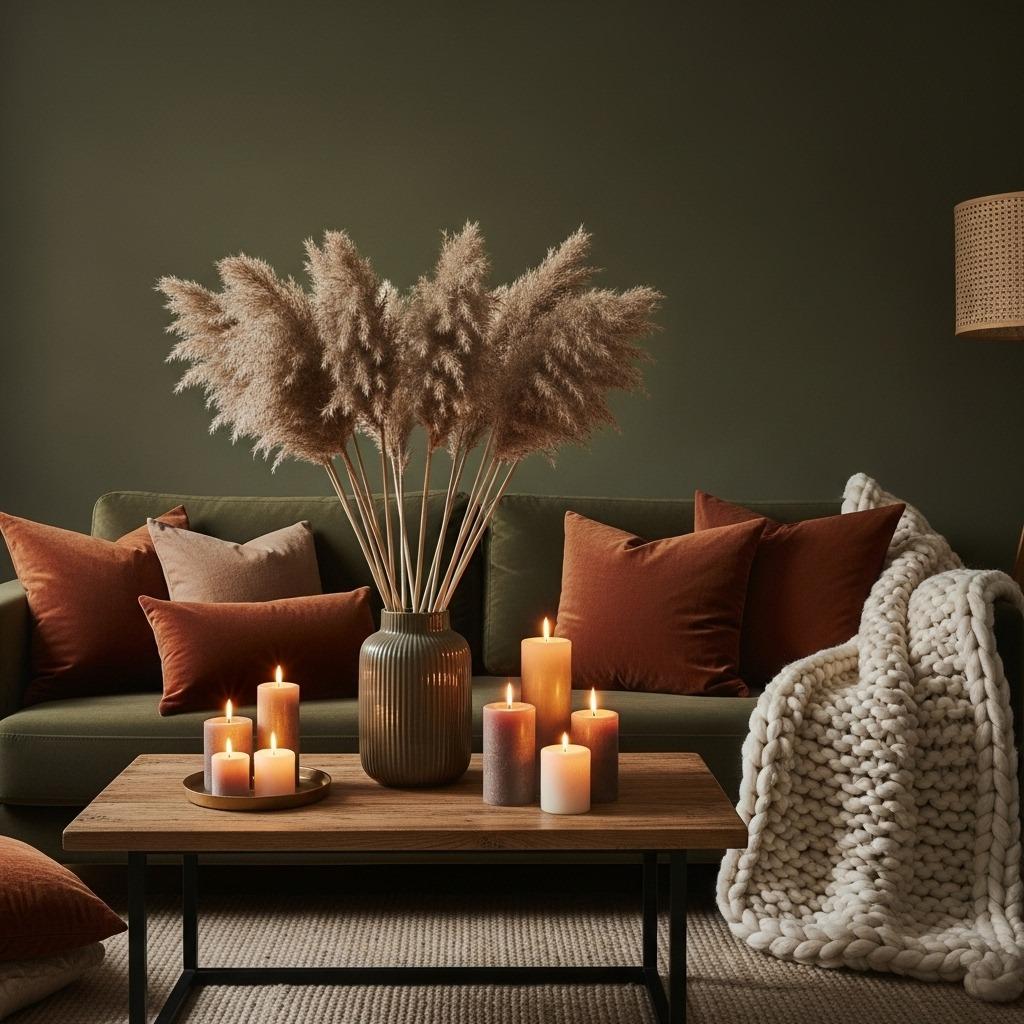
When fall rolls around, swap in deeper greens like olive and forest. Add in warm textures like velvet and wool, and layer in autumnal colors like rust, mustard, and burgundy. It’s a simple way to refresh the space without a full redesign.
Winter calls for cozy, moody greens paired with rich textures. Think emerald velvet, chunky knit throws, and metallic accents. You might enjoy our cozy winter bedroom post for more seasonal styling ideas. Candles and warm lighting also go a long way in creating that hygge vibe.
Final Thoughts on Creating Your Green Living Room
A green living room is more than just a color choice – it’s a mood, a feeling, a way to bring a bit of the outdoors inside. Whether you go bold with emerald walls or keep it subtle with sage accents, the key is to make it feel like you.
Start small if you’re nervous. A few plants, a green throw pillow, or a painted accent wall can test the waters before you commit. And remember, decorating is a process. Your space doesn’t have to be perfect right away. Layer things in over time and adjust as you go.
The beauty of green is that it’s forgiving, versatile, and timeless. It works in tiny apartments and sprawling homes, in modern spaces and traditional ones. So grab that paint swatch, order that velvet sofa, or just bring home a new houseplant. Your green living room is waiting.

