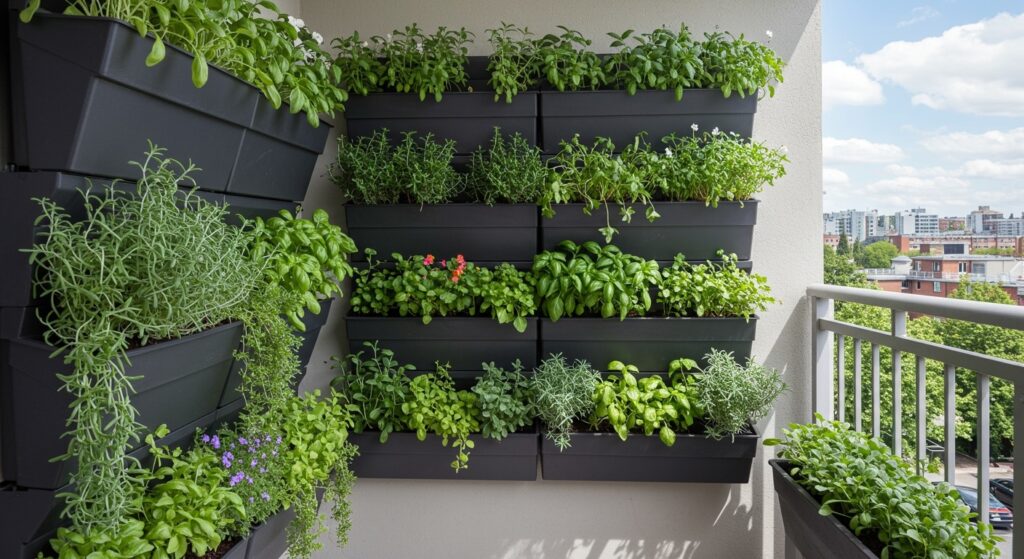
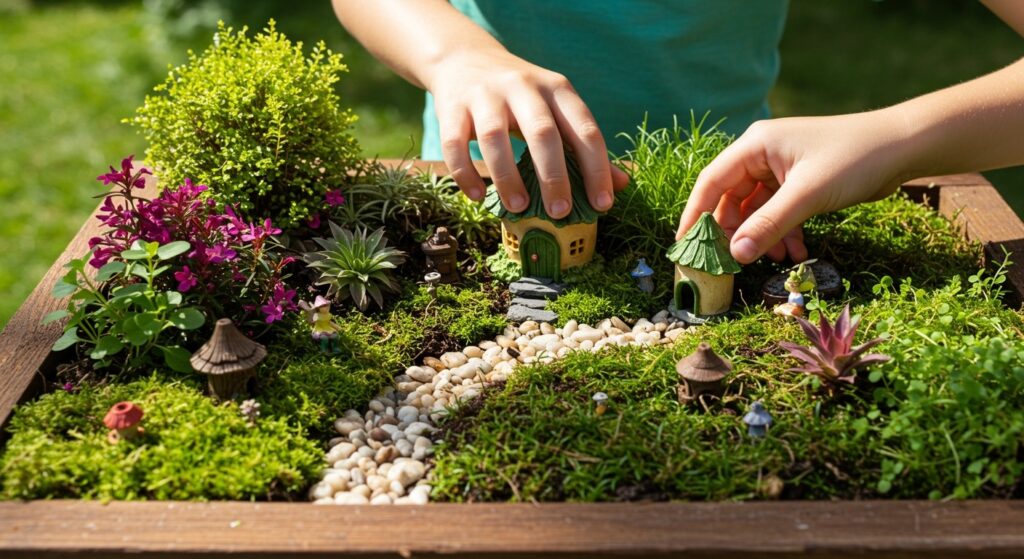
There’s something about tiny things that captivates children. Give them a miniature world to create, and they’ll spend hours lost in imaginative play, building stories around every little detail.
Fairy garden ideas for kids combine the wonder of make-believe with the satisfaction of growing real plants. These pint-sized landscapes aren’t just adorable – they’re gateways to teaching responsibility, patience, and creativity. When kids tend their own little garden, they’re learning that living things need care and attention.
The best part? You don’t need to spend a fortune on specialty supplies. Most fairy gardens start with a container you already own, some potting soil, and whatever interesting bits and pieces you can find around the house or yard. Add a few small plants, and you’ve got a project that keeps giving long after that first afternoon of setup.
Why Fairy Gardens Hook Kids Like Nothing Else
Miniature worlds tap into something deep in a child’s imagination. Maybe it’s the same reason dollhouses never go out of style – there’s magic in creating a complete universe at a scale you can control.
Unlike static toys, fairy gardens are alive. Plants grow and change. Flowers bloom. Leaves unfurl. This dynamic quality means the garden looks different every week, giving kids new things to notice and tend. That ongoing relationship with living plants builds connection and responsibility in ways that regular toys simply can’t.
1. Classic Container Fairy Garden
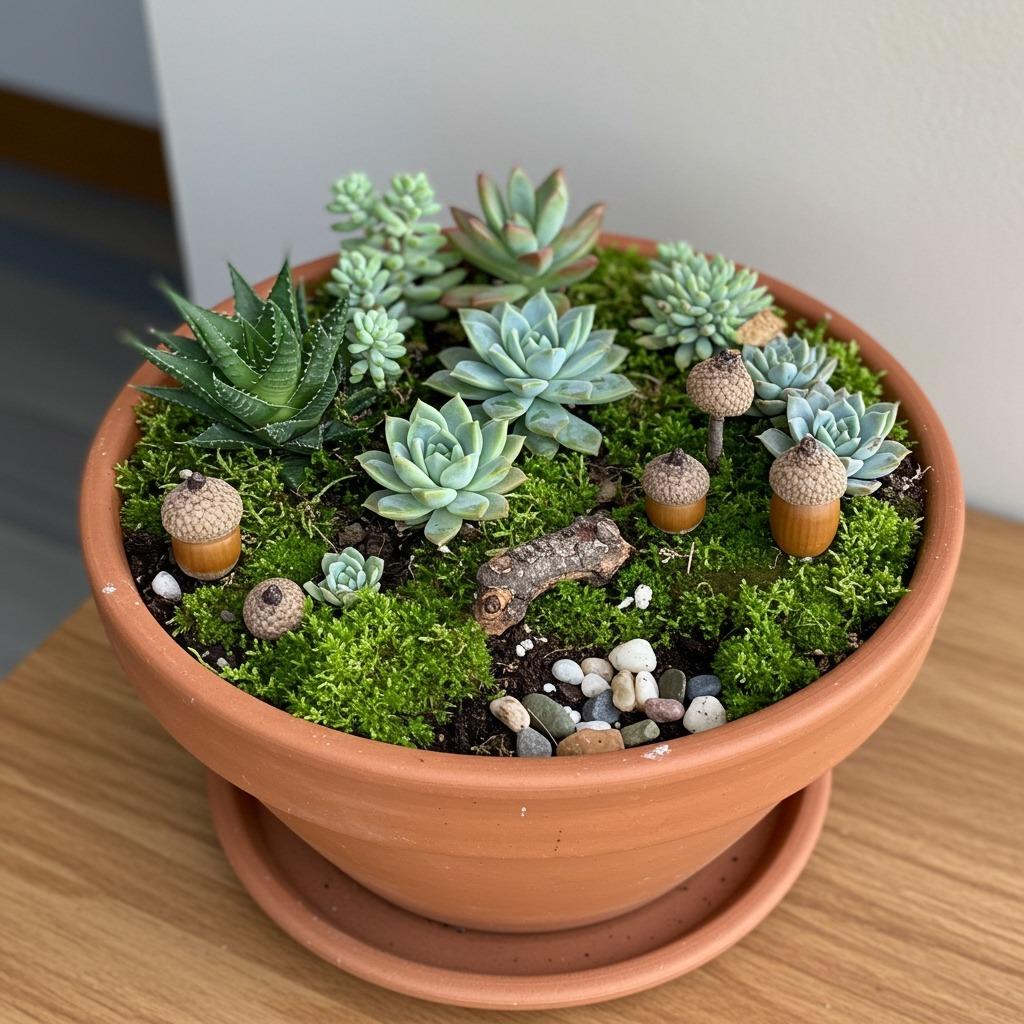
A single large pot makes the perfect starter fairy garden. This self-contained approach works whether you’ve got a sprawling backyard or just a sunny apartment balcony.
Choose a container at least 12 inches wide to give plants room to grow. Terracotta pots breathe well and look naturally rustic, but plastic containers work fine too – they’re lighter and hold moisture longer. Drill drainage holes if your container doesn’t have them already, because soggy soil kills fairy gardens faster than anything else.
Fill with quality potting mix and add 2-3 small plants with different textures. Succulents work beautifully because they tolerate neglect and come in fascinating shapes. Let your child arrange found objects like interesting rocks, small pinecones, or twigs as furniture and decorations. The contained format keeps the project manageable for younger kids who might feel overwhelmed by bigger spaces.
2. Teacup Garden Magic
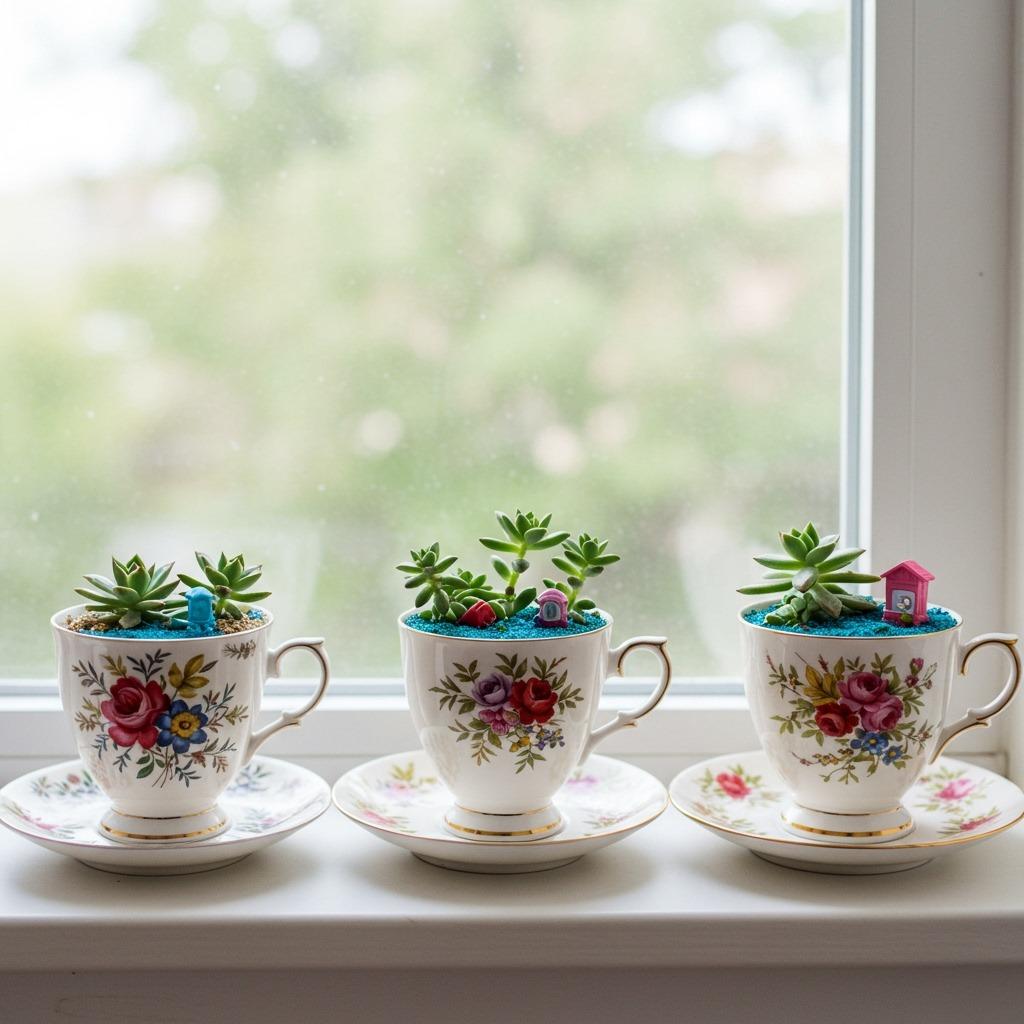
Got a chipped teacup gathering dust in the back of your cabinet? Perfect. These tiny vessels create impossibly charming gardens that fit on a windowsill or bookshelf.
The small scale suits kids with shorter attention spans – they can complete a teacup garden in 20 minutes and feel that satisfying sense of accomplishment. Use a single small succulent or air plant, add fine gravel or decorative sand, and include one tiny accessory. That’s it. Simple and adorable.
Line up several teacup gardens and you’ve created a whole fairy neighborhood. Each one can house a different character with its own personality and style. This series approach encourages kids to think about community and how different spaces relate to each other, building storytelling skills alongside their garden and nursery ideas.
3. Broken Pot Fairy Village
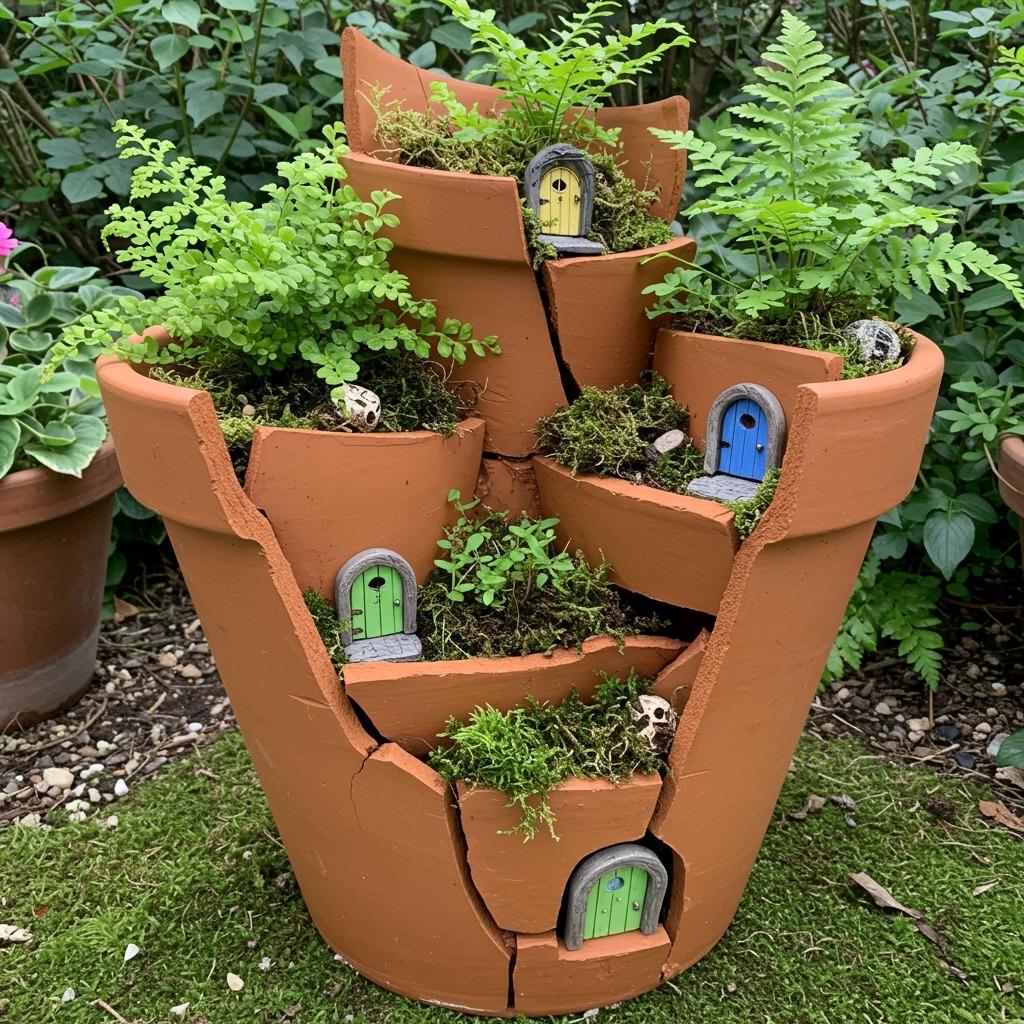
Before you toss that cracked planter, consider this: broken pots create stunning multi-level fairy villages that look straight out of a fairytale book.
Position the broken pieces at angles to form terraced levels or tuck them into soil to create tiny caves and alcoves. Kids love the puzzle aspect of figuring out how pieces fit together. What would normally be damage becomes architectural interest – cracks turn into doorways, chips become windows.
This project teaches creative problem-solving and resourcefulness in the best way. Instead of viewing broken items as trash, children learn to see potential in imperfection. That mindset shift extends far beyond gardening into how they approach challenges in general.
4. Tire Planter Transformation
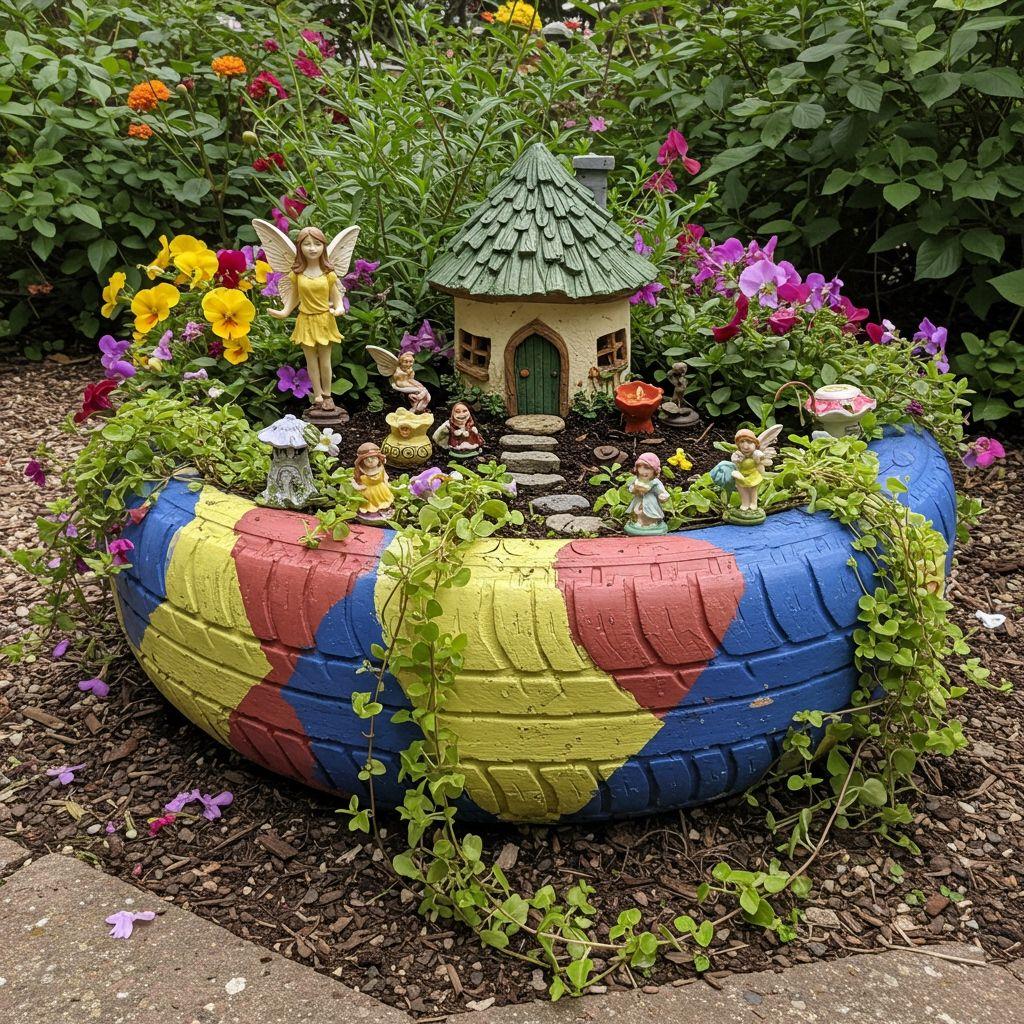
Old tires get a bad reputation, but they make surprisingly practical planters for fairy gardens. The rubber holds moisture well, and the circular shape naturally defines your garden space.
Let kids paint the tire in bright colors using weather-resistant outdoor paint. You could create stripes, polka dots, or whatever pattern sparks their creativity. Fill it with soil and plants, then use the tire’s center as a focal point – maybe a fairy house or a small pond fashioned from a shallow dish.
Stack multiple tires to create a vertical garden that really stands out. The elevated design also works well for creating visual interest in flat yards.
5. Wheelbarrow Garden on Wheels
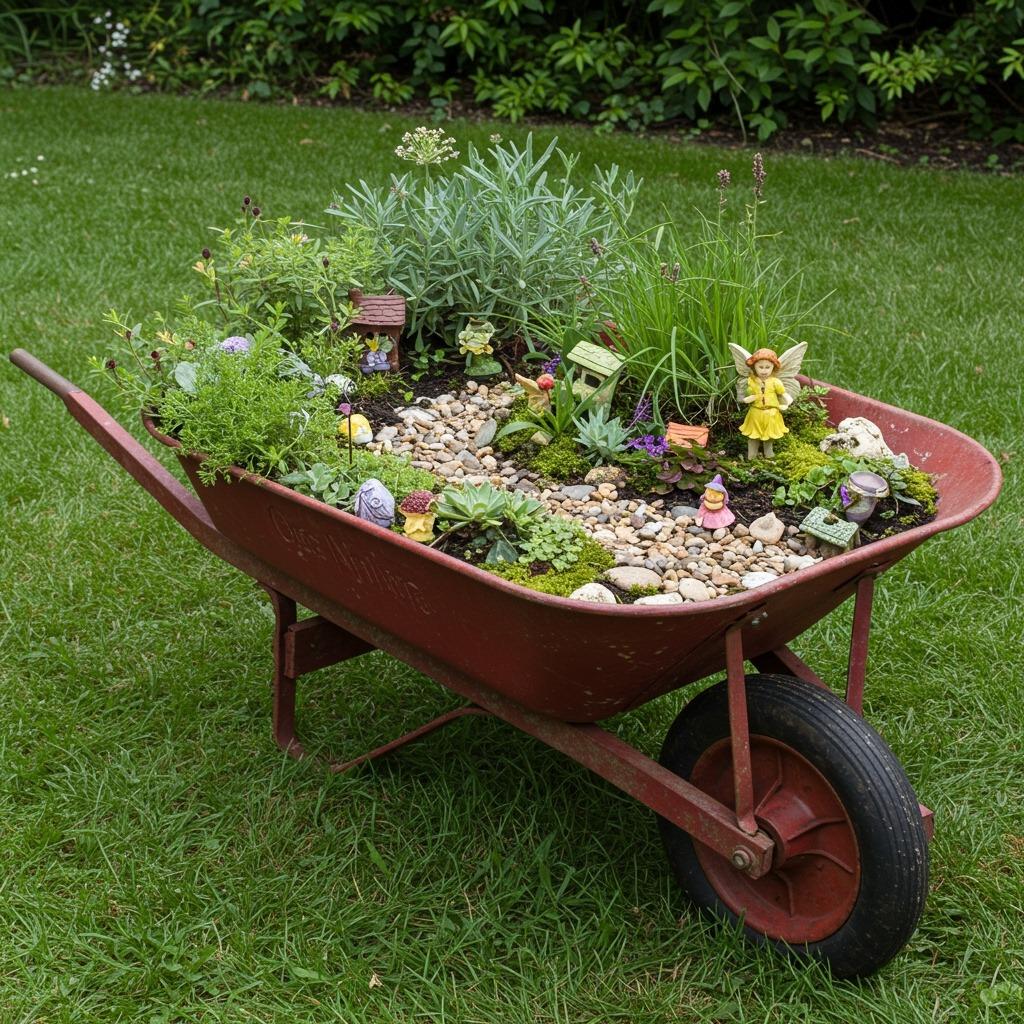
Vintage wheelbarrows make fantastic portable fairy gardens. The depth allows proper drainage and root growth, while the size gives kids real room to develop a complete landscape.
Plant in layers – taller specimens in back, medium height in middle, ground covers in front. This teaches basic landscape design principles through hands-on experimentation. Kids start understanding that gardens need structure and planning, not just random plant placement.
The mobility factor is huge. Roll the wheelbarrow to catch optimal sunlight, wheel it under cover during storms, or move it closer to the house when kids want to play nearby. This flexibility helps
children understand that gardens need ongoing adjustment and aren’t just set-it-and-forget-it projects.
6. Tree Stump Fairy Dwelling
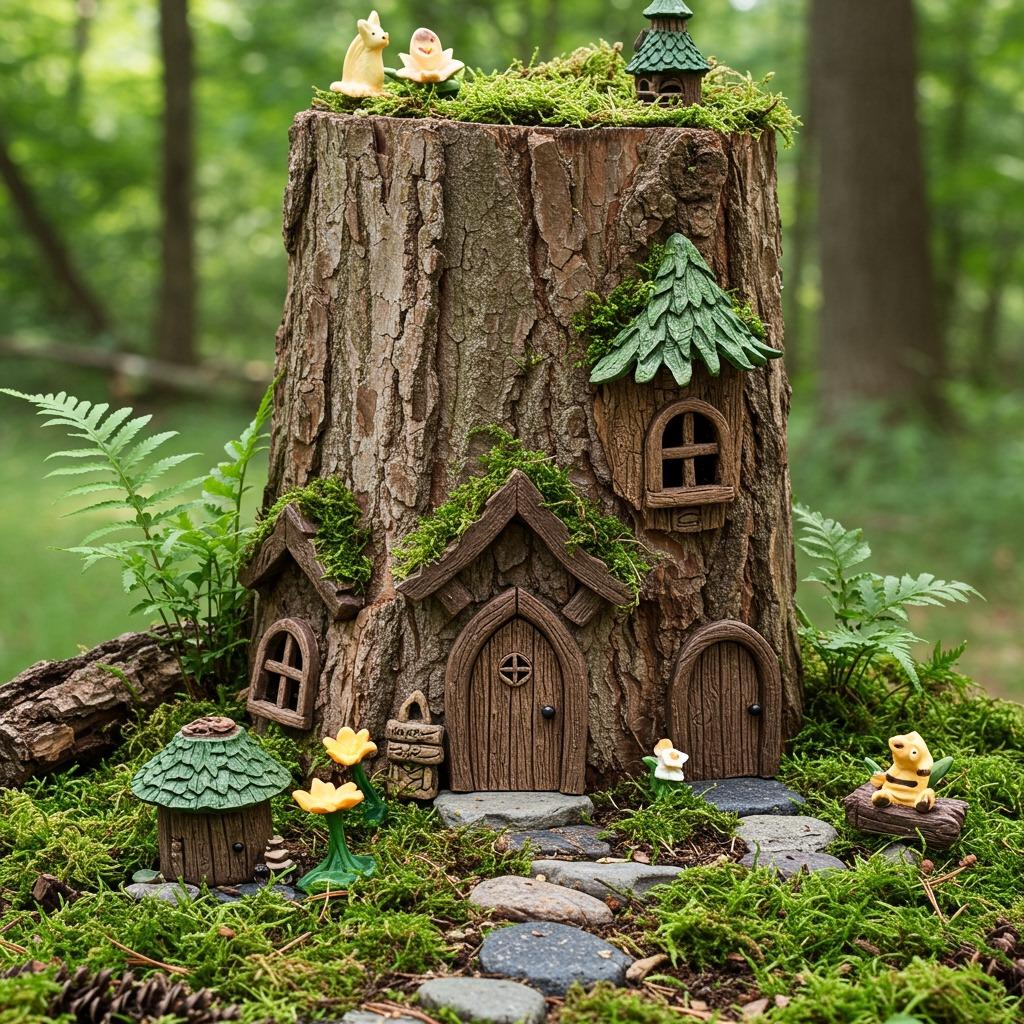
If you’ve recently removed a tree, that stump is prime fairy real estate. Don’t grind it out just yet – it could become the centerpiece of magical outdoor play.
Help kids hollow out soft spots in the wood to create tiny rooms and doorways. Arrange moss and small ferns around the base. The natural wood looks ancient and mystical without any effort, as if fairies have lived there for centuries.
Tree stumps work particularly well for younger children because they’re sturdy and ground-level. No worrying about tipping containers or reaching too high. The stump itself becomes a storytelling prop that sparks narratives about who lives in that tree and what adventures happen there. This kind of outdoor play space connects beautifully with container gardening concepts in unexpected ways.
7. Hanging Basket Garden
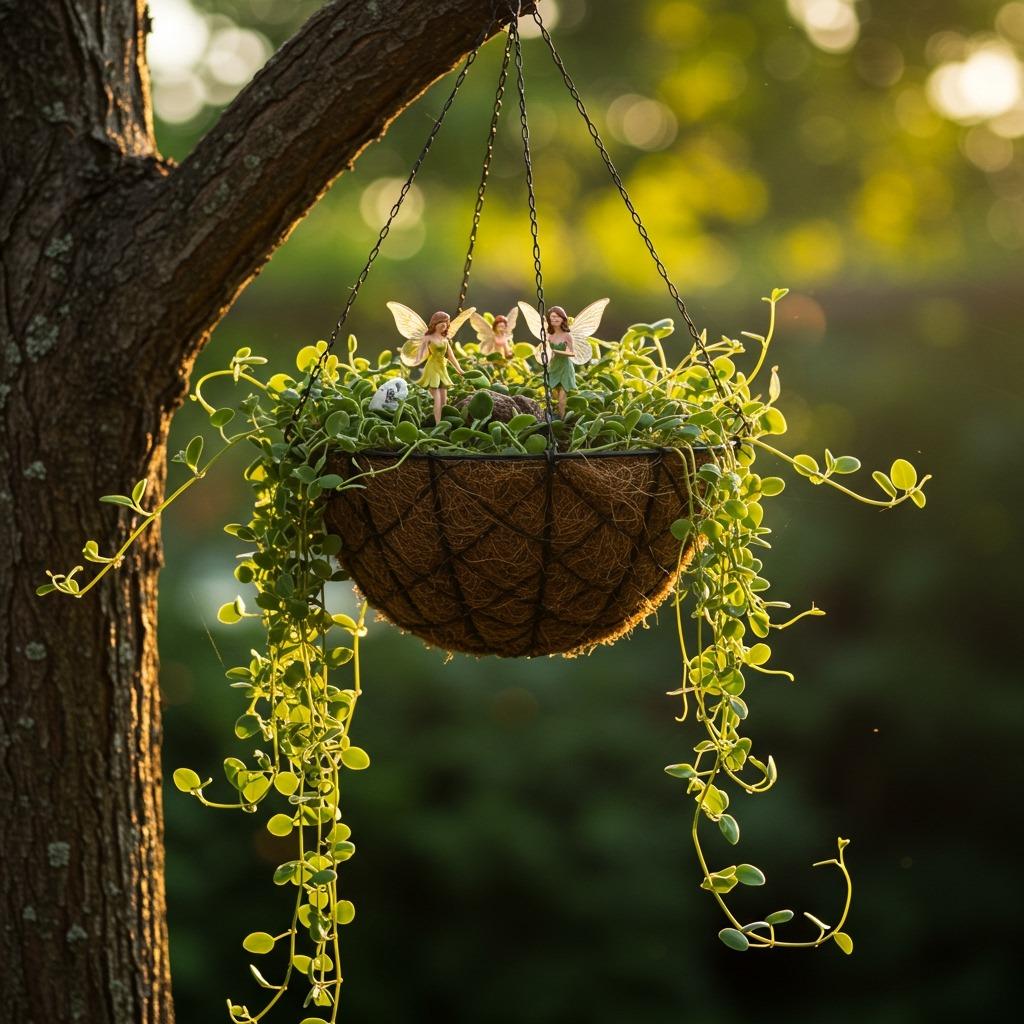
Hanging baskets bring fairy gardens up to eye level, which works perfectly for kids who have trouble bending down or for maximizing space in small yards.
Choose trailing plants like string of pearls or creeping Jenny that cascade over the edges. This creates a curtain effect that makes the garden feel secret and enclosed. Mount hooks at kid height so they can easily water and tend their creation without needing a step stool.
The elevated position also protects gardens from curious pets or toddler siblings who might otherwise “help” by pulling out plants. Plus, hanging elements naturally draw the eye upward, making spaces feel larger and more interesting – similar principles we use in vertical gardening ideas.
8. Red Wagon Garden on the Move
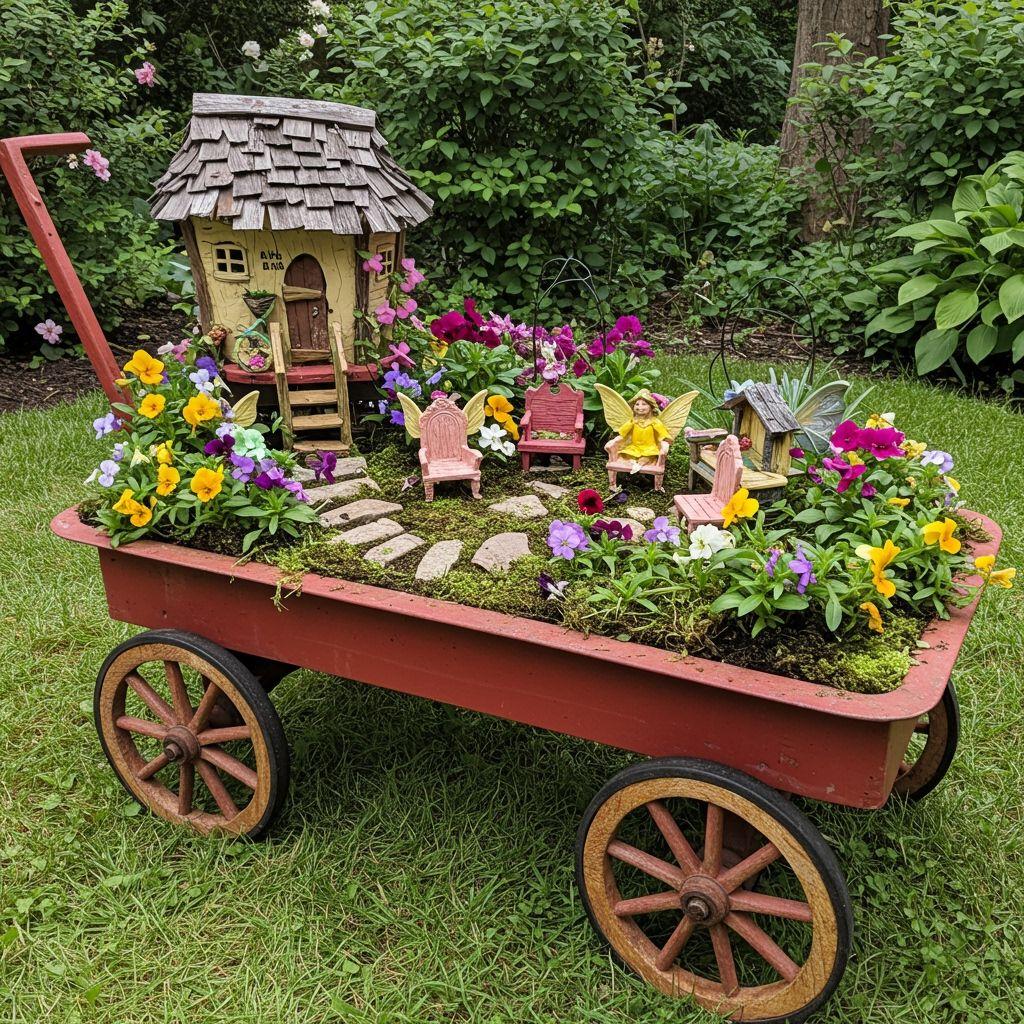
Classic red wagons pull double duty as plant containers and imaginative play props. Kids can “drive” their fairy garden to different yard locations, creating stories about where the fairies are traveling today.
Most vintage wagons already have drainage holes (they’re often the rust spots), or you can drill a few. Layer rocks at the bottom for drainage, add soil, and start planting. The wagon sides give you vertical surfaces for attaching tiny hooks to hang miniature wind chimes or fabric bunting.
This design brilliantly combines plant care with imaginative play. One day the wagon sits in the garden while fairies tend their flowers. The next, it’s pulled to a new spot because the fairies are visiting relatives across the yard. The evolving story keeps kids engaged with maintaining their garden long after initial setup excitement fades.
9. Birdbath Garden Theater
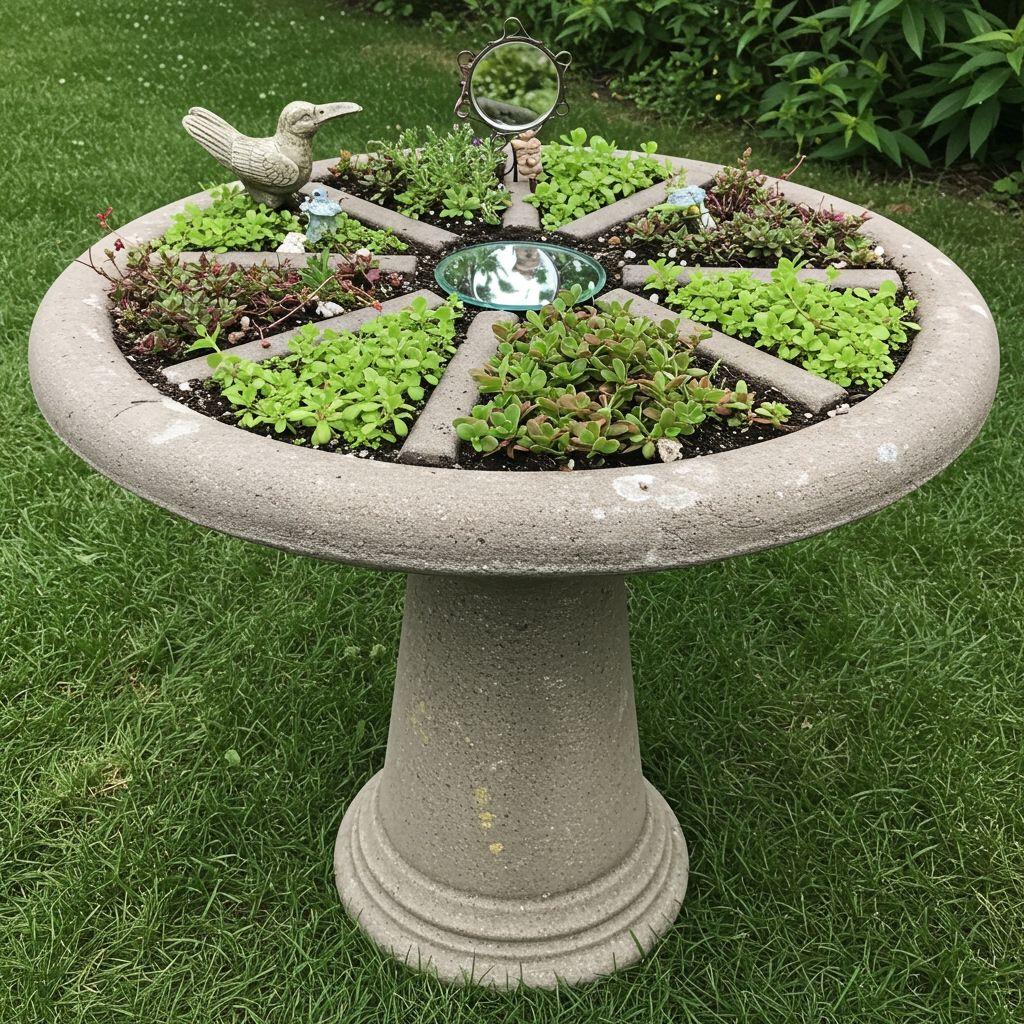
A shallow birdbath basin creates an instant fairy garden stage. The pedestal base gives it presence, and the raised height makes it comfortable for kids to work on without crouching.
Choose plants with shallow root systems since birdbaths don’t offer much depth. Succulents, air plants, and moss work perfectly here. Add a small mirror or piece of reflective material to represent a fairy pond where your tiny residents might swim on hot days.
The circular shape naturally encourages radial garden designs. Kids can divide the circle like a pie into different sections – sleeping quarters here, garden plot there, sitting area over there. This introduces spatial planning concepts through play, building skills they’ll use in everything from organizing their rooms to eventually designing real gardens.
10. Mason Jar Terrarium World
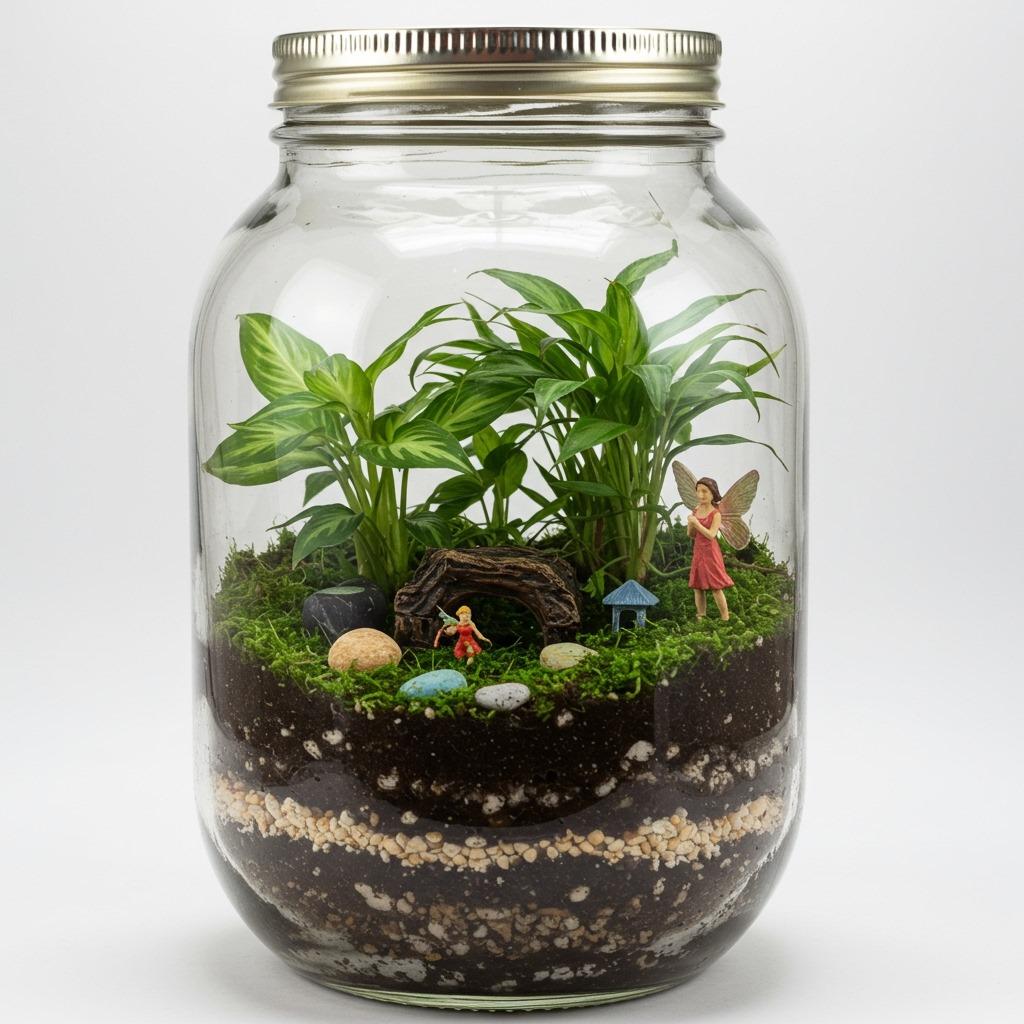
Glass jars create enclosed fairy worlds that work almost like snow globes. Kids can observe their garden from all angles and watch moisture cycle through the system.
Layer small pebbles for drainage, add activated charcoal to prevent mold, then add soil and plants. Choose humidity-loving species like fittonia or small ferns that thrive in enclosed environments. The lid keeps moisture in, so these gardens need watering only every few weeks – perfect for teaching delayed gratification.
Terrarium fairy gardens become living science experiments. Children watch water evaporate, condense on glass walls, and drip back down to water plants. It’s a complete water cycle happening right before their eyes in miniature. This approach connects nicely with indoor garden living room concepts for families wanting to extend garden magic indoors.
11. Hollow Log Garden
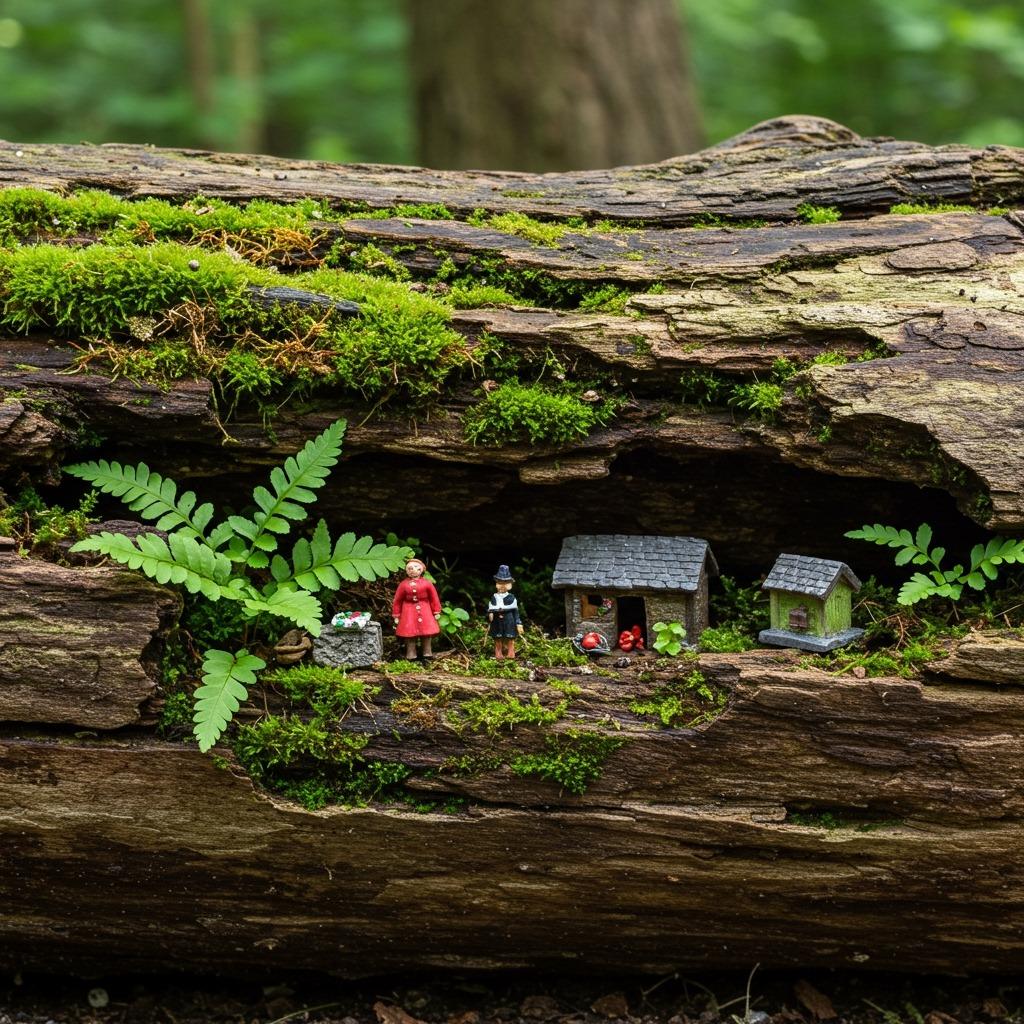
A hollow log or flat-topped log section becomes an instant naturalistic fairy garden base that looks completely at home in any yard setting.
The wood slowly decomposes over time, adding nutrients to soil and creating habitat for beneficial insects. Kids learn that decay isn’t bad – it’s part of nature’s recycling system. Drill shallow depressions if needed to create planting pockets, or simply nestle plants into existing cracks and hollows.
Moss grows readily on log surfaces, creating that soft green carpet without any effort on your part. Add shade-loving plants like miniature hostas or small ferns. The organic nature means this garden looks better as it ages rather than worse – a refreshing change from most kids’ projects that eventually look worn and sad.
12. Wooden Crate Garden
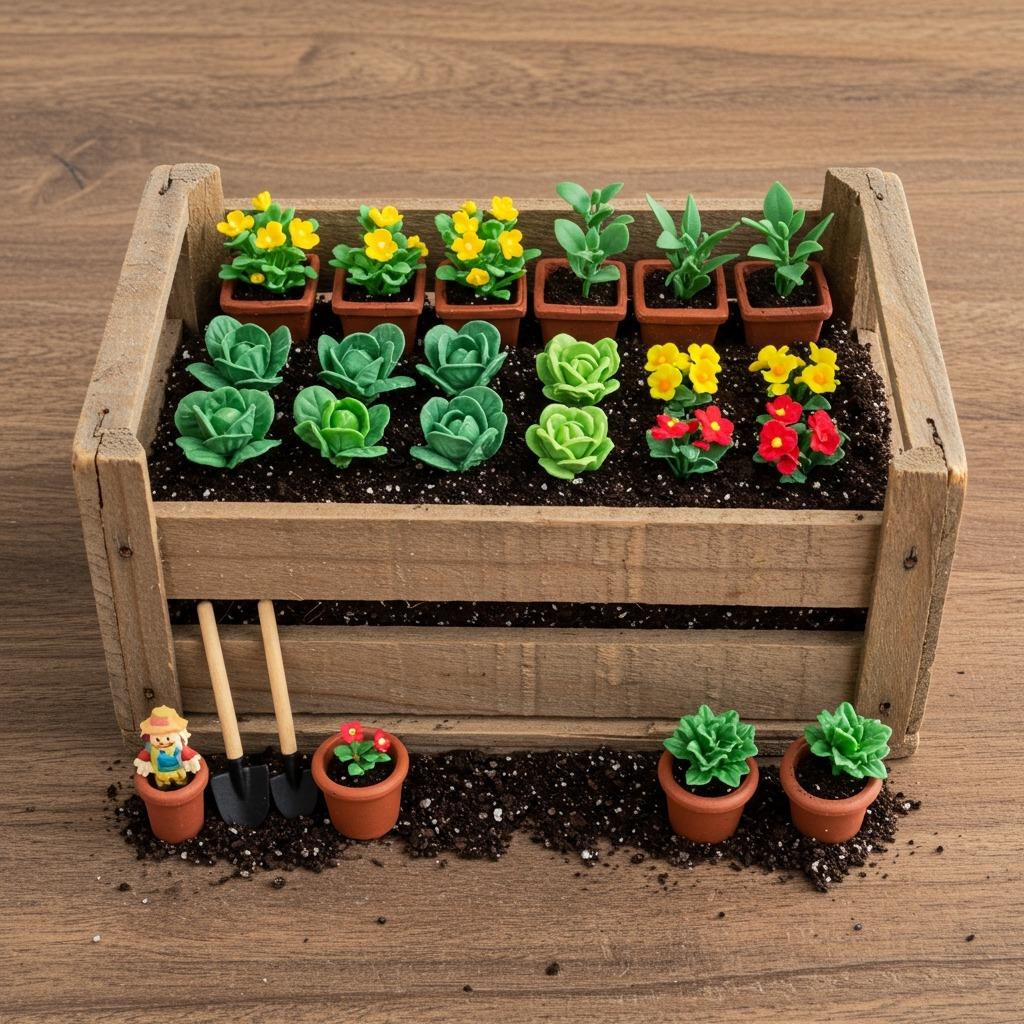
Vintage wooden crates or simple DIY boxes create rustic containers with built-in drainage through slatted sides. The farmhouse aesthetic works with almost any outdoor space.
Line the crate with landscape fabric to hold soil while allowing water to drain freely. The rectangular shape lends itself to row planting – kids can create tiny vegetable gardens for their fairies, complete with miniature garden markers labeled with plant names.
Crate gardens work wonderfully for teaching gardening for beginners basics. The defined rows make it easy to explain spacing, companion planting, and garden layout. Plus, kids can personalize the wood sides with paint or wood-burning designs that make the garden uniquely theirs.
13. Boot Garden Surprise
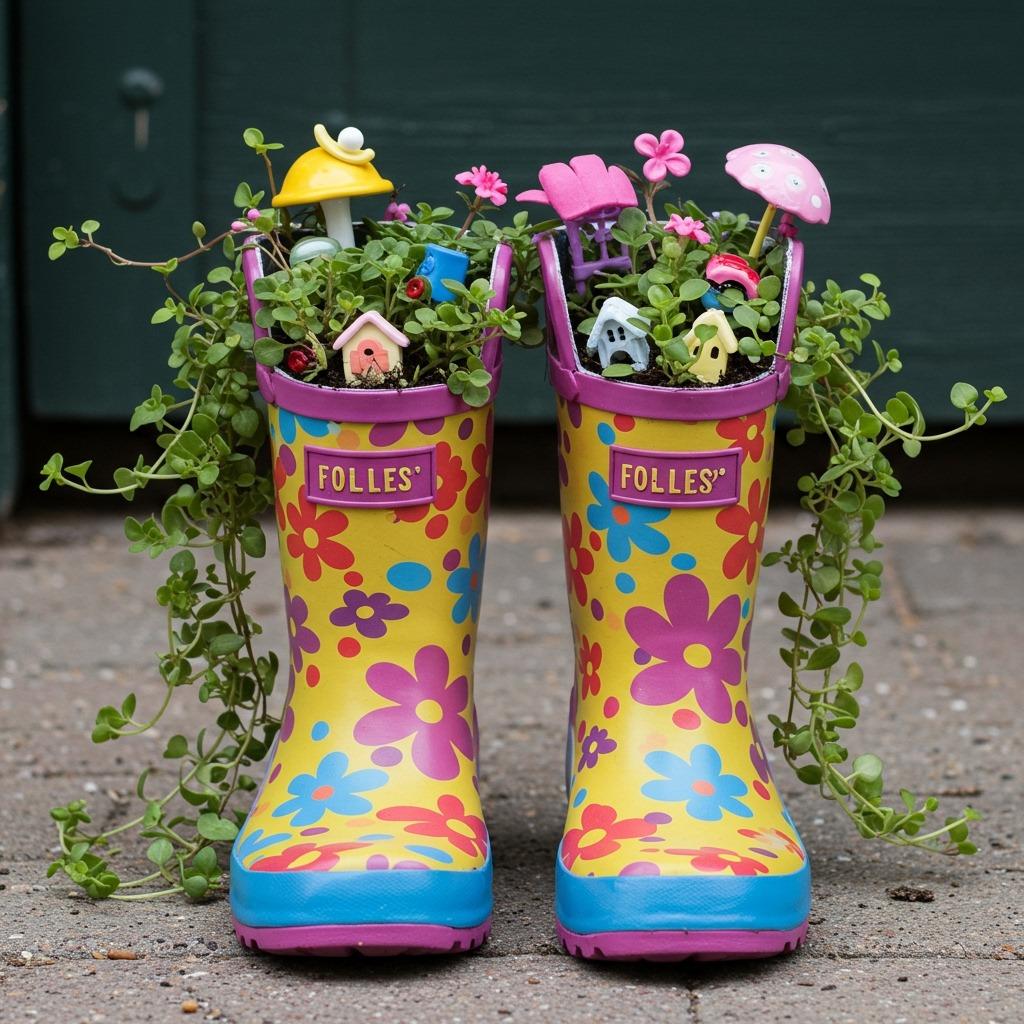
Before tossing worn-out rain boots or old sneakers, consider their potential as quirky fairy garden containers. The unexpected choice sparks conversations and shows kids that gardens don’t need conventional vessels.
Rubber boots work best because they’re naturally waterproof. Poke drainage holes in the soles, fill with soil, and plant trailing varieties that spill over the boot tops. Kids find it hilarious to grow plants in shoes – that humor factor keeps them engaged and makes the project memorable.
This unconventional approach encourages creative thinking. If shoes work as planters, what else might? Suddenly kids start seeing potential containers everywhere, which is exactly the kind of problem-solving you want to nurture. It’s creative garden crafts at its most playful.
14. Colander Garden
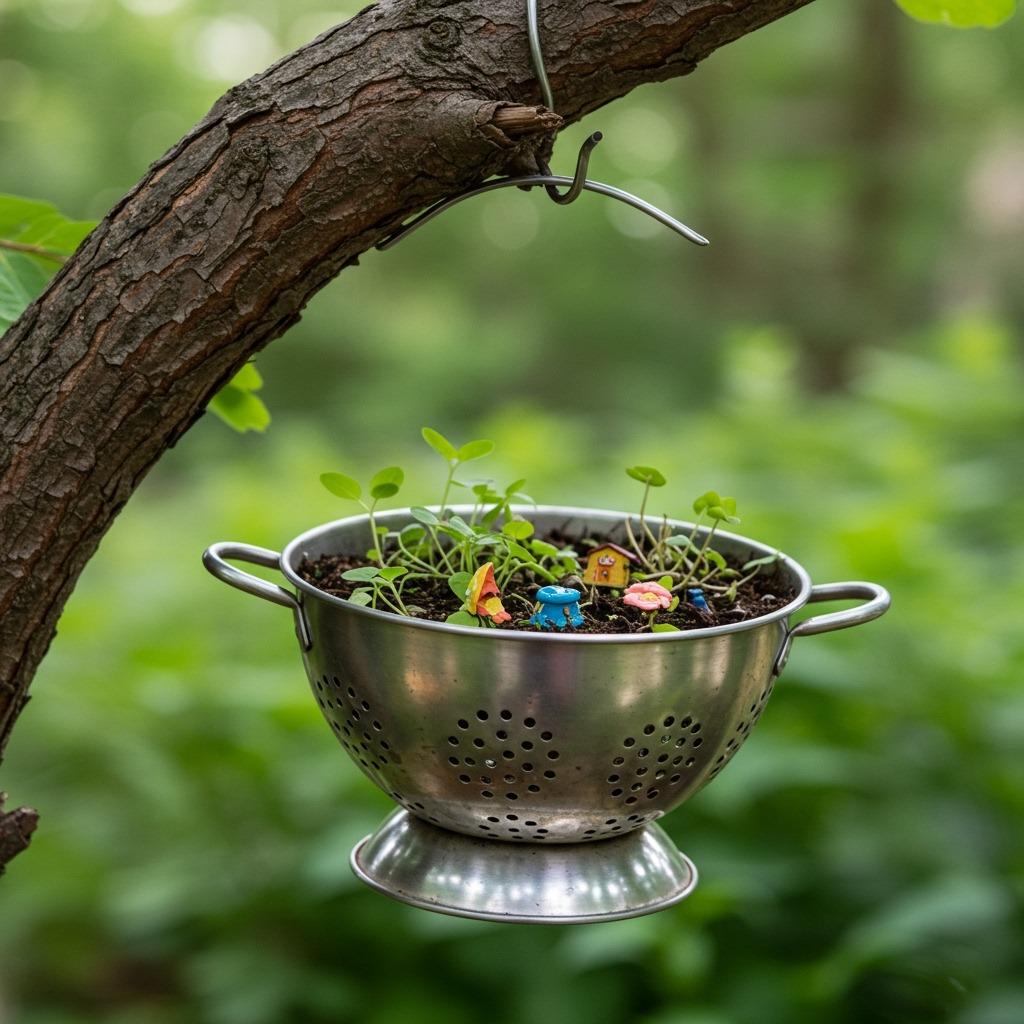
Metal colanders from thrift stores make perfect fairy garden containers with drainage holes already built in. The vintage look adds instant charm, and the handle makes them easy for small hands to move.
Hang the colander from a sturdy tree branch or shepherd’s hook to create a suspended garden that sways gently in breezes. This movement adds life even when nobody’s actively playing with it. Choose lightweight plants and accessories to keep total weight manageable.
The perforated bottom lets plant roots breathe exceptionally well, which means healthier plants with less effort. This built-in success factor helps build kids’ confidence in their gardening abilities. When plants actually thrive instead of dying, children stay motivated to keep caring for them.
15. Stacked Stone Garden
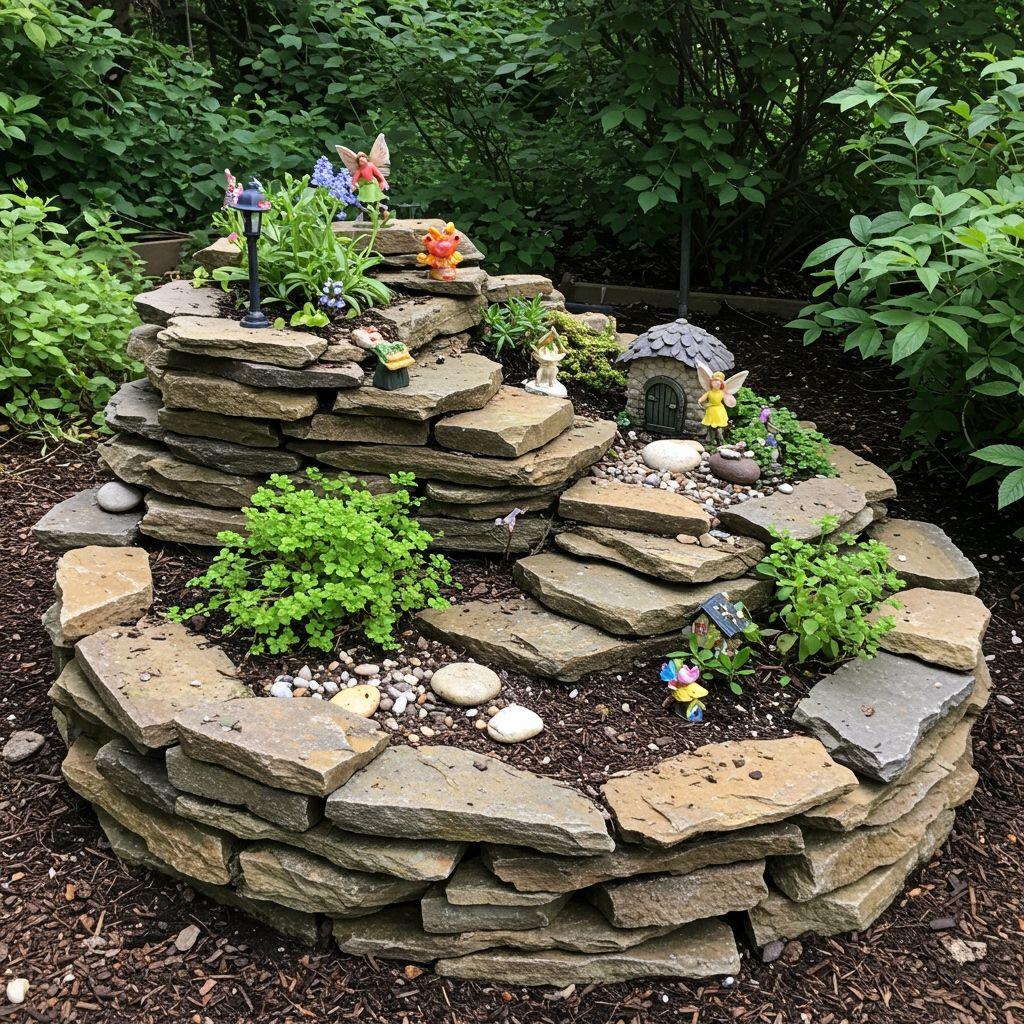
If your yard has landscaping stones or you can collect flat rocks from a stream, stack them to create multi-level fairy garden terraces without any container at all.
This design requires no vessel – the stones themselves define the garden space. Kids can experiment with different arrangements, learning about balance and stability through trial and error. Tuck plants into spaces between rocks, and use flat tops as platforms for fairy accessories.
The stacking process develops spatial reasoning and fine motor control. Unlike most fairy gardens that start essentially finished, stone gardens evolve continually. Kids can keep adding levels and rearranging rocks as their skills and ideas develop, making this one of the most engaging long-term projects you can try.
Best Plants for Kids’ Fairy Gardens
Choosing the right plants makes the difference between a thriving fairy garden and a disappointing brown mess. You want species that tolerate a bit of neglect and bounce back from occasional rough handling.
Succulents top the list for good reasons. They need watering only once a week or so, and they come in fascinating shapes kids love – rosettes, trailing strings of beads, fuzzy leaves. Sedum varieties work particularly well because they grow low and spread naturally to fill space.
Moss creates instant enchanted atmosphere. Buy it from garden centers or carefully transplant some from shady spots in your yard. Keep it consistently moist but not waterlogged. Miniature hostas, small ferns, and baby tears (Soleirolia soleirolii) provide different textures while staying appropriately scaled. Avoid aggressive growers or you’ll constantly battle overgrowth.
Making Accessories from Household Items
Store-bought fairy garden accessories get expensive fast. The good news? Kids often prefer handmade items because they can create exactly what their imaginary story needs right now.
Craft tiny tables and benches from twigs and hot glue. Paint wooden beads to create colorful stepping stones. Walnut shells become planters or boats. Smooth glass beads arranged on soil represent ponds or streams. Wine corks slice into discs that stack into tiny tables or stools.
The crafting process extends fairy garden fun beyond actual planting time. Rainy afternoons turn into accessory-making workshops. This reinforces creative reuse thinking that makes these projects meaningful beyond just their appearance. When kids transform ordinary items into magical garden elements, they start seeing all the “stuff” around them differently.
Seasonal Garden Updates
Gardens change with seasons, and fairy gardens should too. This ongoing evolution teaches kids that nature isn’t static – it’s always shifting and adapting to conditions.
Spring brings fresh planting opportunities. Add tiny tulip bulbs or miniature daffodils that bloom right at fairy scale. Summer allows small flowering annuals that add color pops. Fall means decorating with miniature pumpkins, dried leaves, and autumn-blooming mums.
Winter fairy gardens need evergreen elements to stay interesting when other plants die back. Small conifers maintain structure through cold months. Add pine cone “trees” and white pebbles representing snow. Some families enjoy creating winter scenes with small LED lights powered by button batteries hidden under moss. This seasonal adaptation keeps children engaged year-round rather than abandoning gardens after initial excitement fades.
Creating Lasting Memories Together
Fairy gardens give families a project everyone can contribute to regardless of age or skill level. Toddlers arrange rocks, older kids design layouts, and adults help with tasks requiring more strength or coordination.
The magic happens in those collaborative moments – figuring out together where the fairy house should go, debating whether the pond belongs here or there, imagining stories about tiny residents. These projects naturally create conversation and shared creativity that builds family bonds.
What starts as a simple fairy garden often expands into genuine interest in gardening overall. Kids who care for miniature plants eventually want to try growing vegetables or flowers at full scale. They’ve learned the basics – plants need water, sunlight, and regular care – in a low-stakes, high-fun format. That’s exactly how lifelong gardeners are born, one tiny magical world at a time.