Setting a beautiful table shouldn’t feel like you need a degree in interior design. Whether you’re hosting Thanksgiving dinner or just want Tuesday night pasta to feel a bit more special, the right dining room tablescape can completely shift the mood of your meal.
I’ve always believed that table styling is where function meets creativity. You’re not just arranging pretty things – you’re creating an experience for the people sitting down to share food and conversation. And honestly? Sometimes the simplest setups are the most memorable.
What I love about kitchen and dining spaces is how they give us permission to experiment. You can go bold with color one week, minimalist the next, and nobody’s going to judge. This guide walks through 11 different approaches to table decor ideas that work for various occasions, seasons, and personal styles. Some lean formal, others are wonderfully relaxed, but all of them prove that setting a stunning table is more accessible than you might think.
1. Classic Elegance with White and Gold Accents
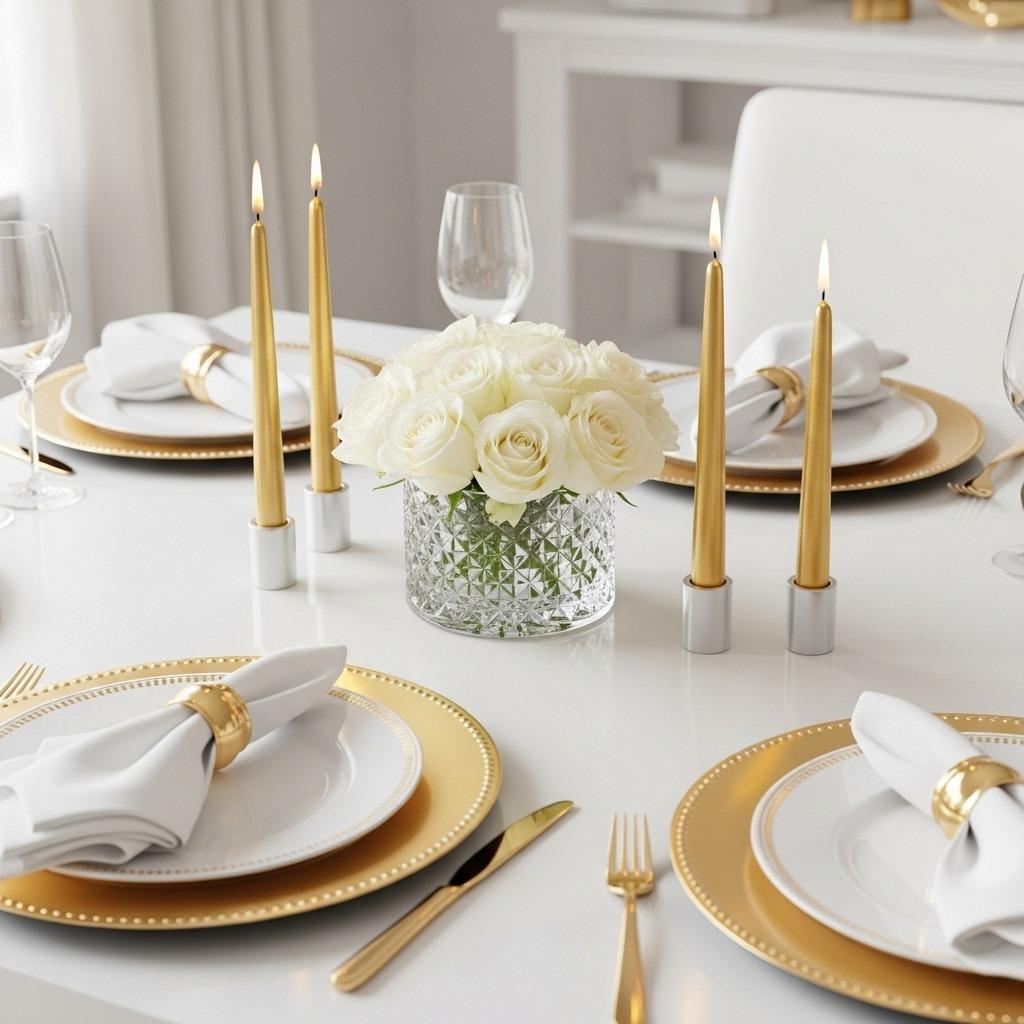
There’s something timeless about a white foundation paired with gold touches. This combination never feels dated, and it works for everything from intimate dinners to larger celebrations. The beauty here is in the restraint – you’re not overwhelming the table, just elevating it.
Start with crisp white linens as your base. I prefer a tablecloth rather than placemats for this look because it creates that seamless, polished foundation. Layer in gold flatware or charger plates to add that hint of luxury without going overboard. White dinnerware keeps things clean and classic.
For the centerpiece, think low and lush. White roses, hydrangeas, or even eucalyptus branches in a simple vase work beautifully. Add gold candlesticks at varying heights to create visual interest. The key is keeping everything refined but not stuffy – you still want people to feel comfortable reaching across the table for the bread basket.
2. Rustic Farmhouse Charm
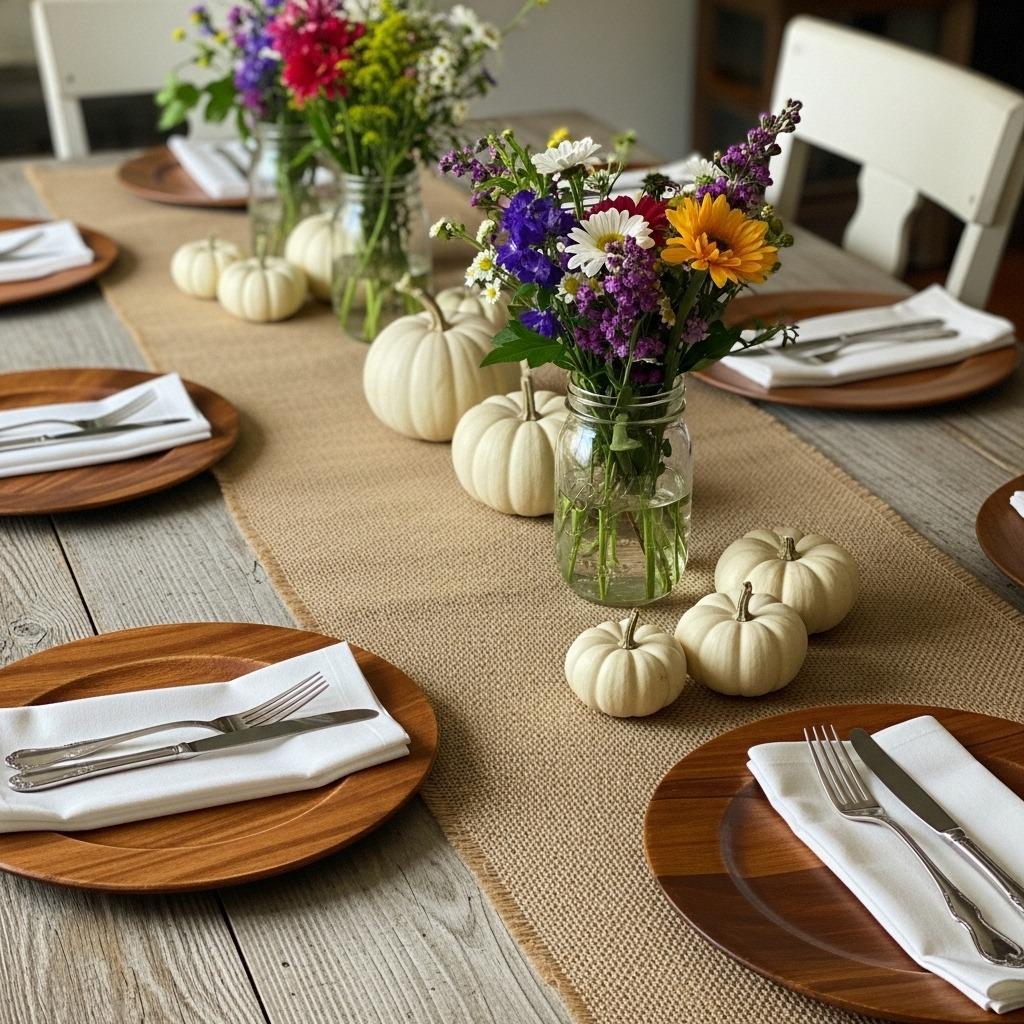
If you’re drawn to farmhouse style in your living spaces, there’s no reason your dining table shouldn’t echo that warmth. This tablescape embraces natural textures, weathered finishes, and that collected-over-time vibe that makes farmhouse design so inviting.
A burlap or linen runner down the center immediately sets the tone. Layer in wooden chargers or simple stoneware plates – nothing too precious or perfect. Mason jars make excellent vases for wildflowers or herb bundles, and they fit the aesthetic perfectly. You could even use them as drinking glasses if you want to commit to the theme.
The centerpiece for this look should feel organic and slightly imperfect. A wooden dough bowl filled with seasonal produce, scattered pinecones, or a collection of white pumpkins works wonderfully. Add some Edison bulb string lights if you’re doing an evening setup. The whole point is creating that cozy, unpretentious feeling that makes everyone want to linger at the table.
3. Minimalist Monochrome Magic
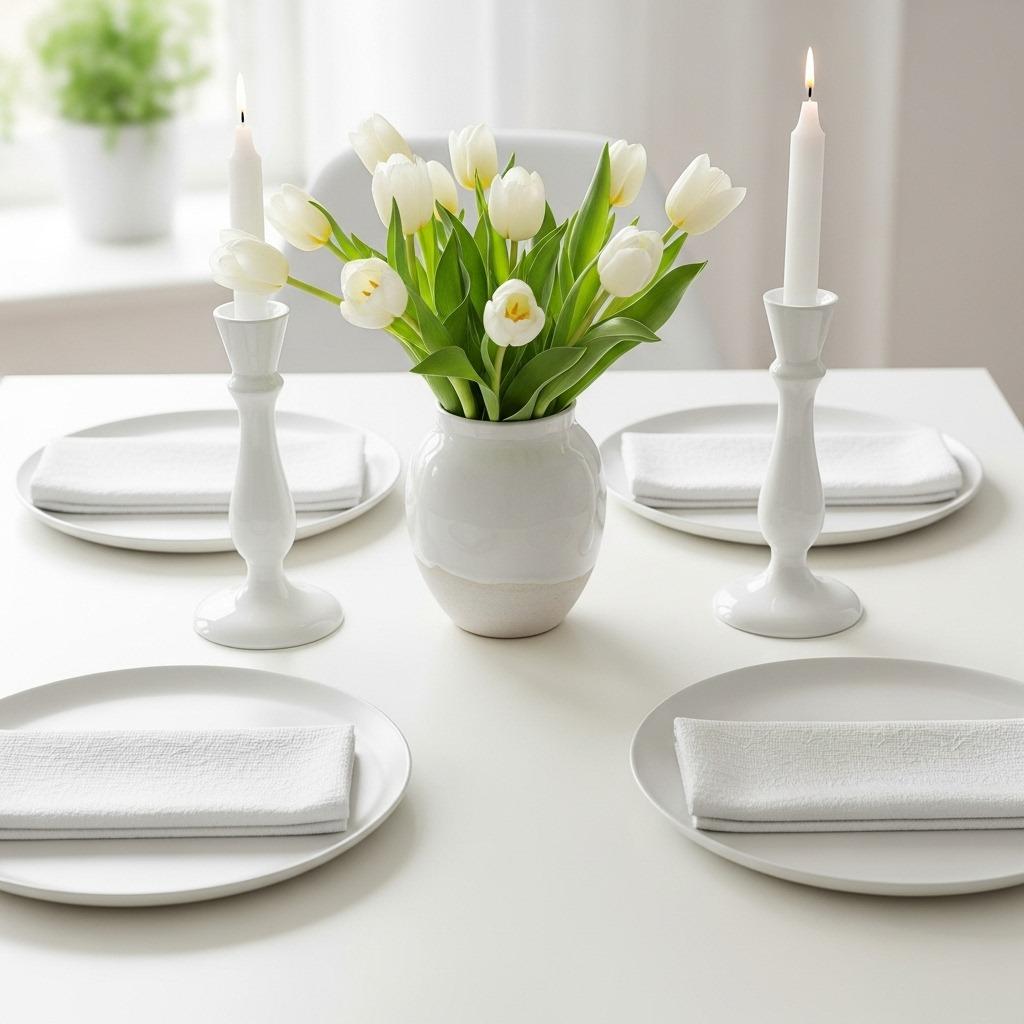
Sometimes less truly is more. A monochromatic dining room tablescape can be incredibly striking, especially if you’re someone who appreciates clean lines and breathing room on your table. This approach works particularly well in modern minimalist spaces.
Choose one color and commit to it fully – all white, all black, or even all terracotta if you’re feeling adventurous. The visual cohesion is what makes this work. Use different textures within your chosen color palette to keep things interesting: matte plates, glossy candlesticks, woven placemats, smooth glassware.
Keep your centerpiece simple but intentional. A single sculptural vase with one type of flower, or even just interesting branches, can be enough. The negative space on your table is part of the design here. Don’t feel pressured to fill every inch – the simplicity is the statement.
4. Vibrant Bohemian Layers
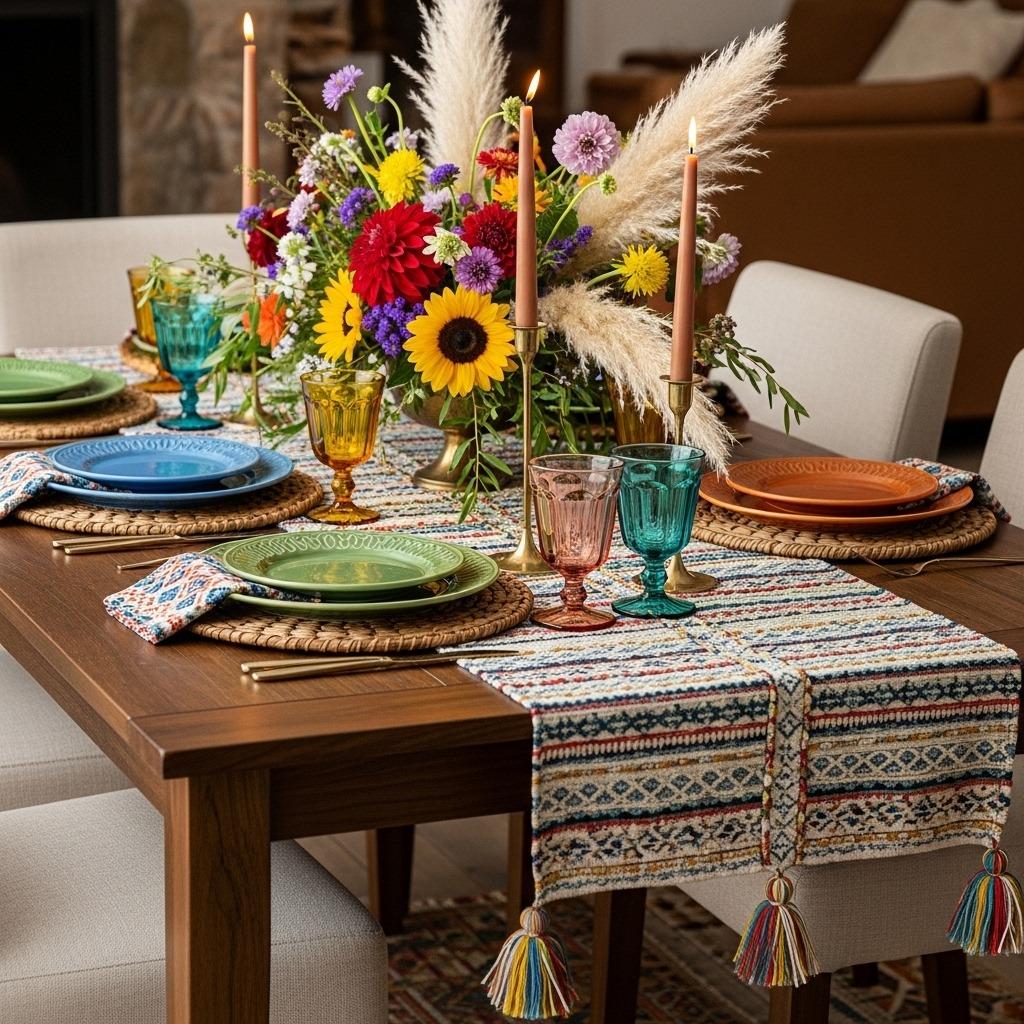
For those who love color and pattern, a boho-inspired tablescape lets you play with all the rich hues and eclectic pieces you’ve been collecting. This style is forgiving and fun – there’s no such thing as too much when it comes to texture and color here.
Start with a patterned tablecloth or runner – think bold prints, tassels, or ethnic-inspired designs. Mix and match your plates and glassware rather than using matching sets. Colored glassware, especially in jewel tones, adds instant personality. Don’t be afraid to combine different patterns; boho style thrives on that collected, worldly aesthetic.
Your centerpiece can be abundant and slightly wild. Combine fresh flowers with dried elements like pampas grass or palm leaves. Add lots of candles in different holders – brass, ceramic, glass. Scatter in some small decorative objects like geodes, small pottery, or vintage finds. The goal is creating a table that feels abundant and inviting without being cluttered.
5. Seasonal Autumn Harvest Table
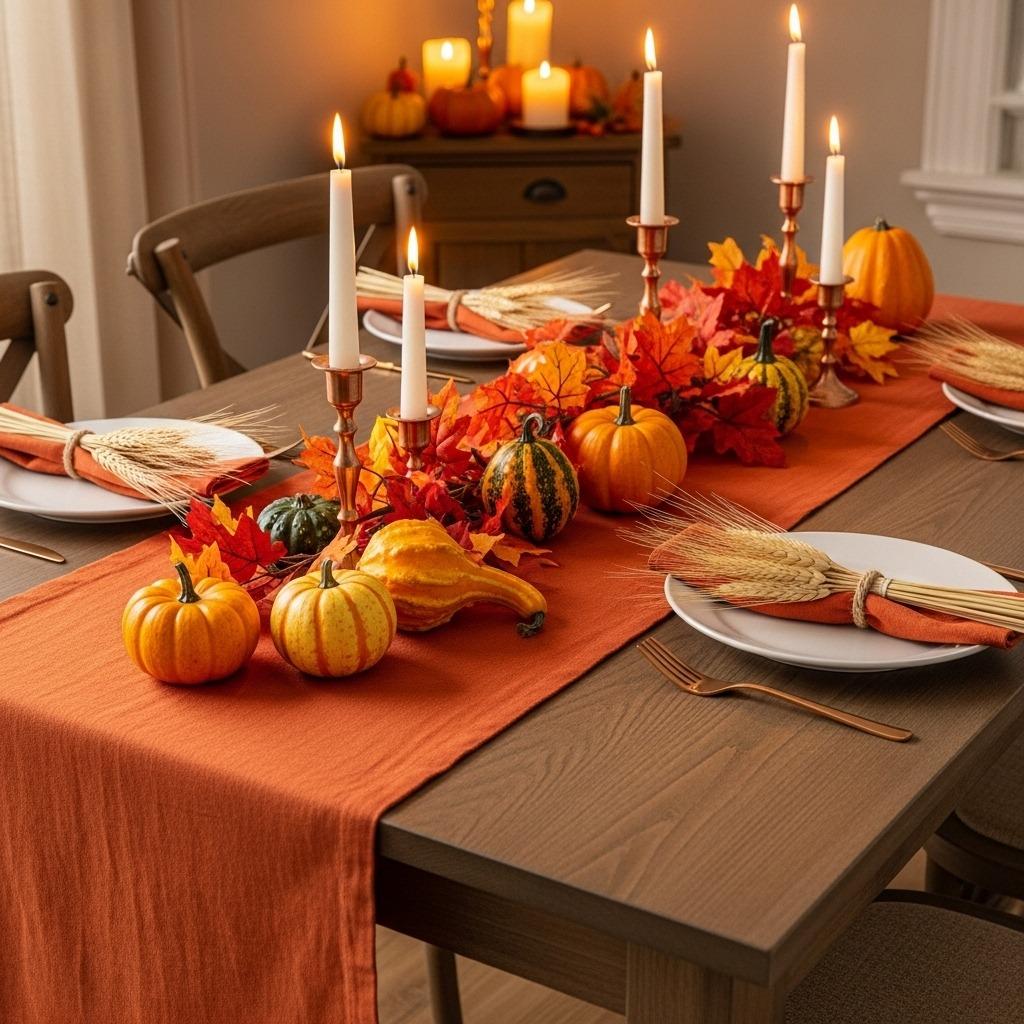
When fall arrives, your table becomes the perfect canvas for celebrating the season’s rich colors and textures. This is one of those seasonal tables that practically decorates itself with all the gorgeous natural elements available. Similar to how you might approach seasonal garden transformations, your autumn tablescape should embrace what the season offers.
Layer warm-toned linens in burnt orange, deep burgundy, or chocolate brown. Incorporate natural elements like small pumpkins, gourds, and fall leaves as part of your place settings or scattered down the center. Wheat bundles tied with twine make excellent napkin decorations and add to that harvest feeling.
For your centerpiece, think abundance. A cornucopia arrangement or a long garland of fall foliage running down the table creates impressive visual impact. Add brass or copper candlesticks to complement the warm color palette. The beauty of autumn table decor ideas is that you can often forage many of your materials, making this an affordable option that still looks incredibly rich.
6. Fresh Spring Garden Party
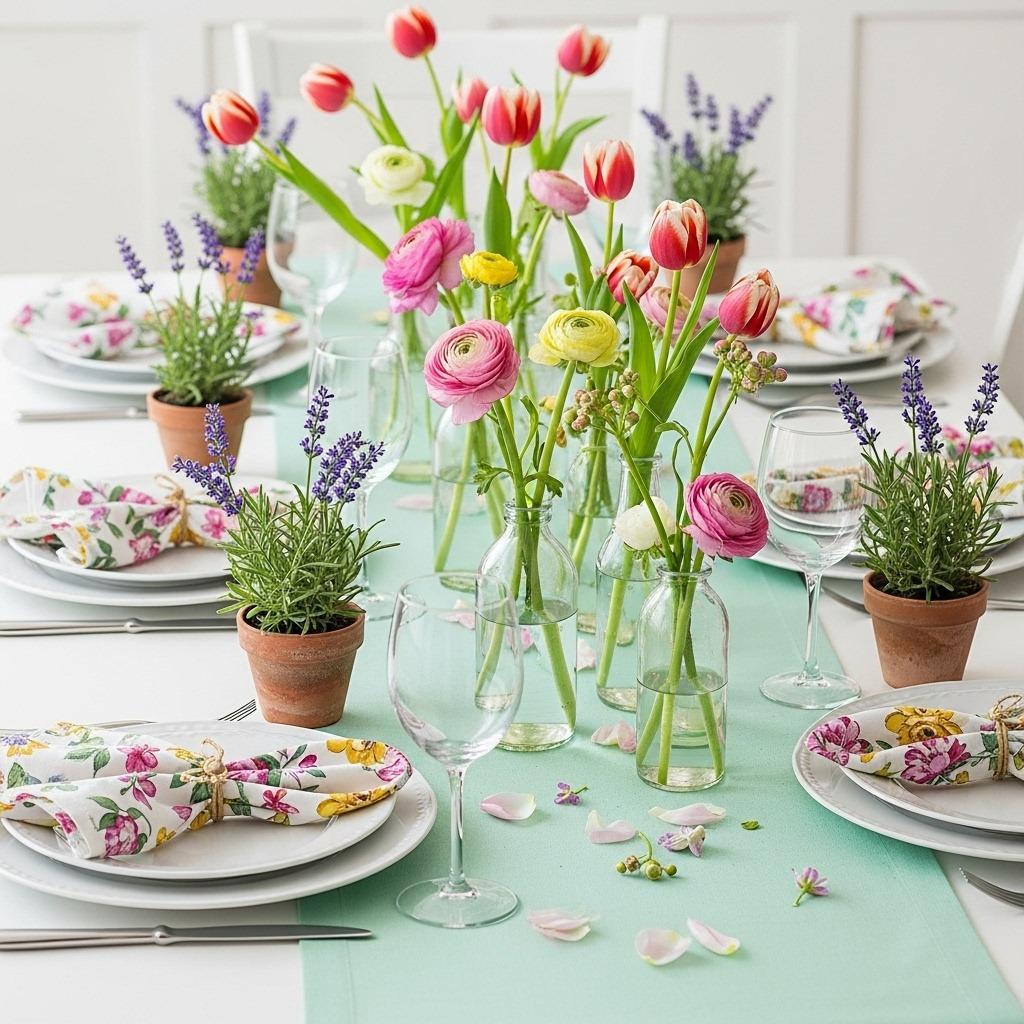
After months of winter, a spring-inspired tablescape feels like taking a deep breath of fresh air. This setup is all about celebrating new growth, soft colors, and the return of flowers. It’s cheerful without being overly sweet, perfect for Easter brunch or a casual Sunday lunch.
Start with pastel linens in soft pink, mint green, or butter yellow. White plates keep things fresh and let your colorful accents shine. Incorporate floral patterns through napkins or a runner if you want to lean into the garden theme without overwhelming the table. Small potted plants or herbs at each place setting double as both decor and party favors guests can take home.
Your centerpiece should overflow with fresh flowers – think tulips, daffodils, ranunculus, or whatever’s blooming locally. Arrange them in mismatched vintage bottles or a long low trough for a garden-gathered feel. Add small nests with decorative eggs, or scatter flower petals along the table. The overall effect should feel light, optimistic, and connected to the natural world.
7. Coastal Casual Blues and Whites
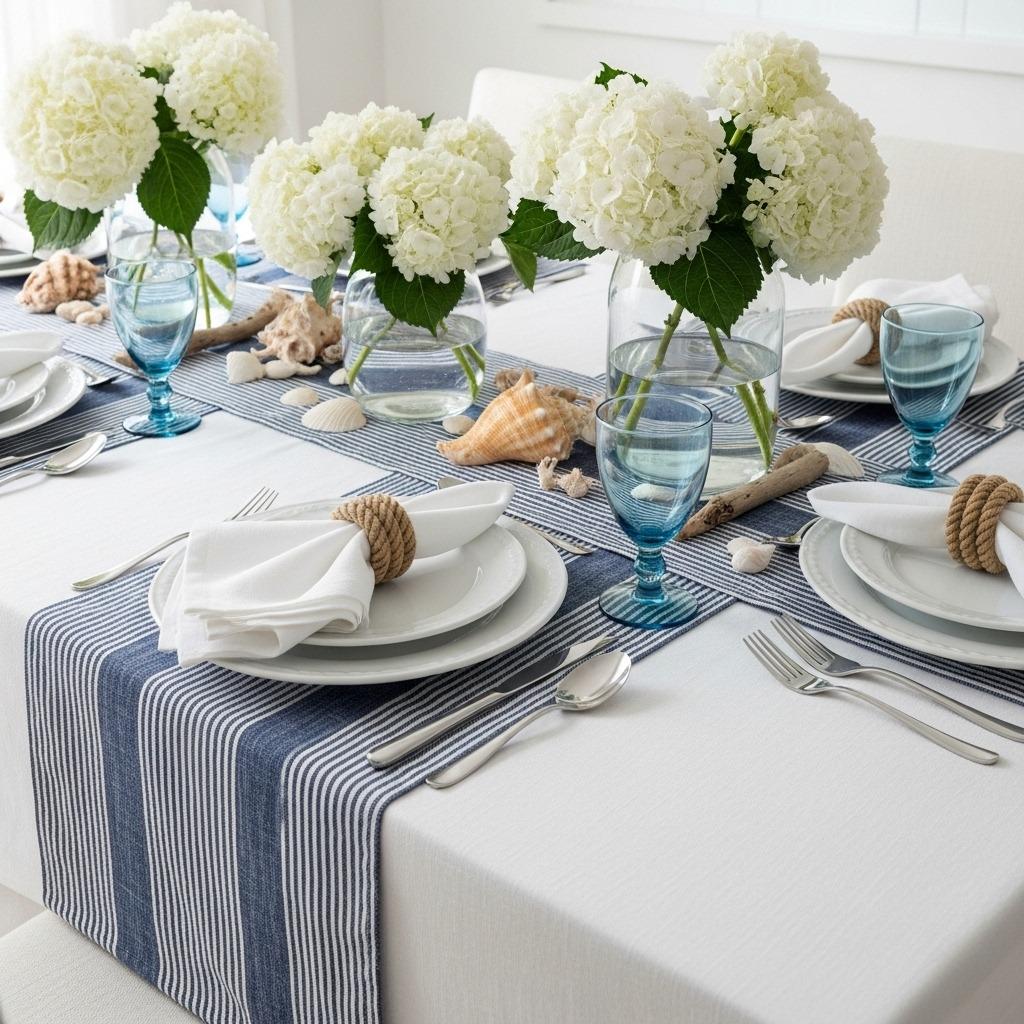
If you dream of beach houses and ocean breezes, bringing that coastal feeling to your dining table creates an instantly relaxed atmosphere. This look works year-round but especially shines during summer gatherings. It borrows from nautical bathroom aesthetics but adapted for dining spaces.
Use a white or natural linen tablecloth as your foundation, then layer in shades of blue through napkins, plates, or a striped runner. Incorporate natural elements like driftwood pieces, shells, or coral (sustainably sourced or faux) as decorative accents. Rope-wrapped candle holders or napkin rings add subtle texture that reinforces the theme.
Keep your centerpiece low and organic. A wooden bowl filled with sand and shells, glass bottles in various blue tones, or a simple arrangement of white hydrangeas captures that breezy coastal vibe. The key is maintaining that effortless, vacation-mode feeling – nothing too formal or fussy. You want guests to feel like they could be dining with sand between their toes.
8. Romantic Candlelit Dinner Setting
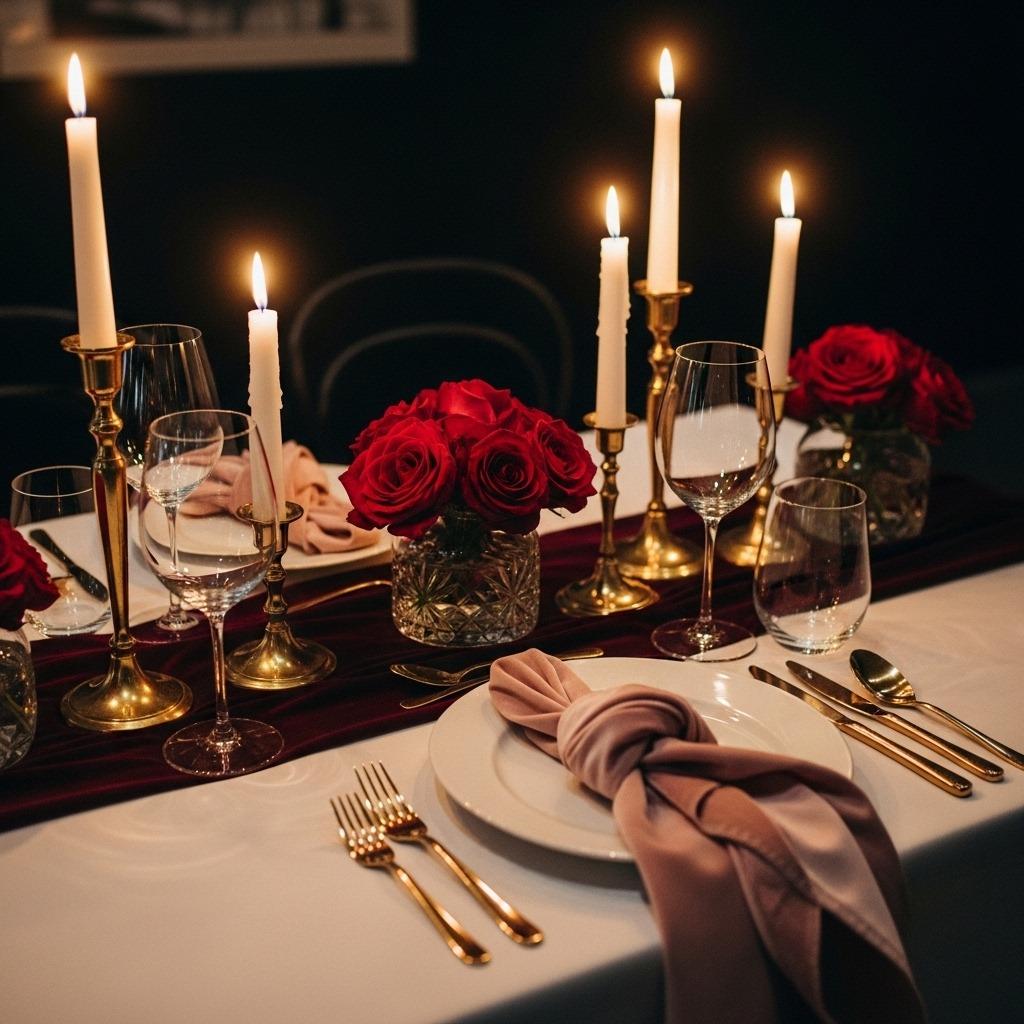
Sometimes you want your table to set the mood for an intimate evening. A romantic tablescape doesn’t require flowers or fancy china – it’s really all about creating warmth through lighting and thoughtful details. This approach works beautifully for anniversary dinners, Valentine’s Day, or honestly any random Tuesday when you want to make dinner feel special.
Dim the overhead lights and let candles do the heavy lifting. Use multiple candles at different heights – tapers in elegant holders, votives scattered across the table, perhaps even some floating candles in shallow bowls. The flickering light creates instant ambiance that no overhead fixture can match. Choose unscented candles if you’re serving food with subtle flavors.
Keep your color palette soft and sophisticated – blush pink, deep wine red, or even rich jewel tones like emerald. Silk or velvet napkins add a luxurious touch without breaking the budget. A simple arrangement of roses or peonies in a low vase won’t block conversation but adds romance. The goal is creating an atmosphere that encourages lingering over wine and dessert long after the plates are cleared.
9. Modern Scandinavian Simplicity
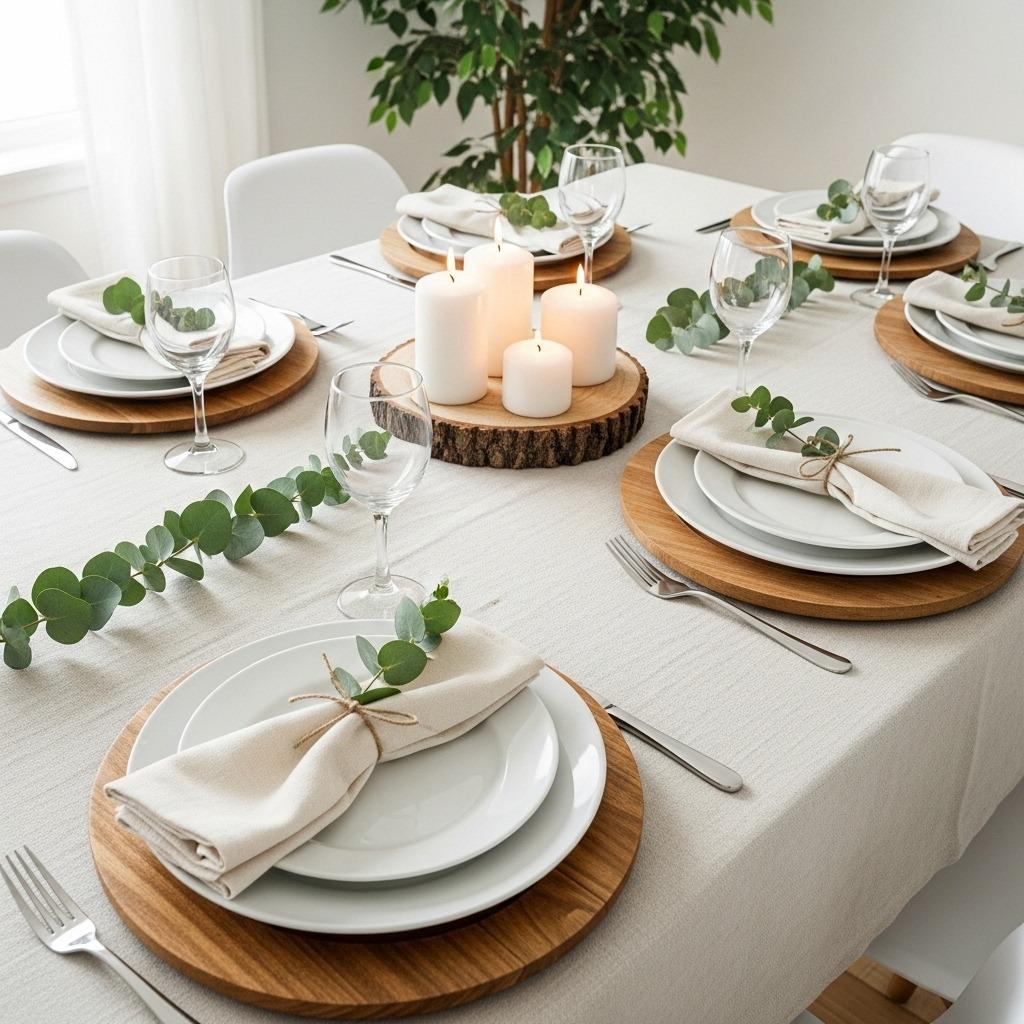
Scandinavian design principles translate beautifully to table settings, creating spaces that feel calm, functional, and quietly beautiful. This aesthetic embraces natural materials, neutral colors, and that hygge feeling that makes Scandinavian homes so appealing.
Start with natural wood elements – wooden chargers, a raw wood slice as a centerpiece base, or even a simple wooden table left mostly bare. Use white or cream dinnerware to maintain that clean, airy feeling. Linen napkins in natural tones add softness without cluttering the visual space. The beauty is in the quality of each element rather than the quantity.
For your centerpiece, think simple and natural. A single branch with interesting form in a ceramic vase, a small collection of white candles, or even just a beautiful wooden bowl can be enough. You might add a small sprig of eucalyptus at each place setting. The Scandinavian approach values the space between objects as much as the objects themselves, so resist the urge to over-decorate.
10. Holiday Glam with Metallics
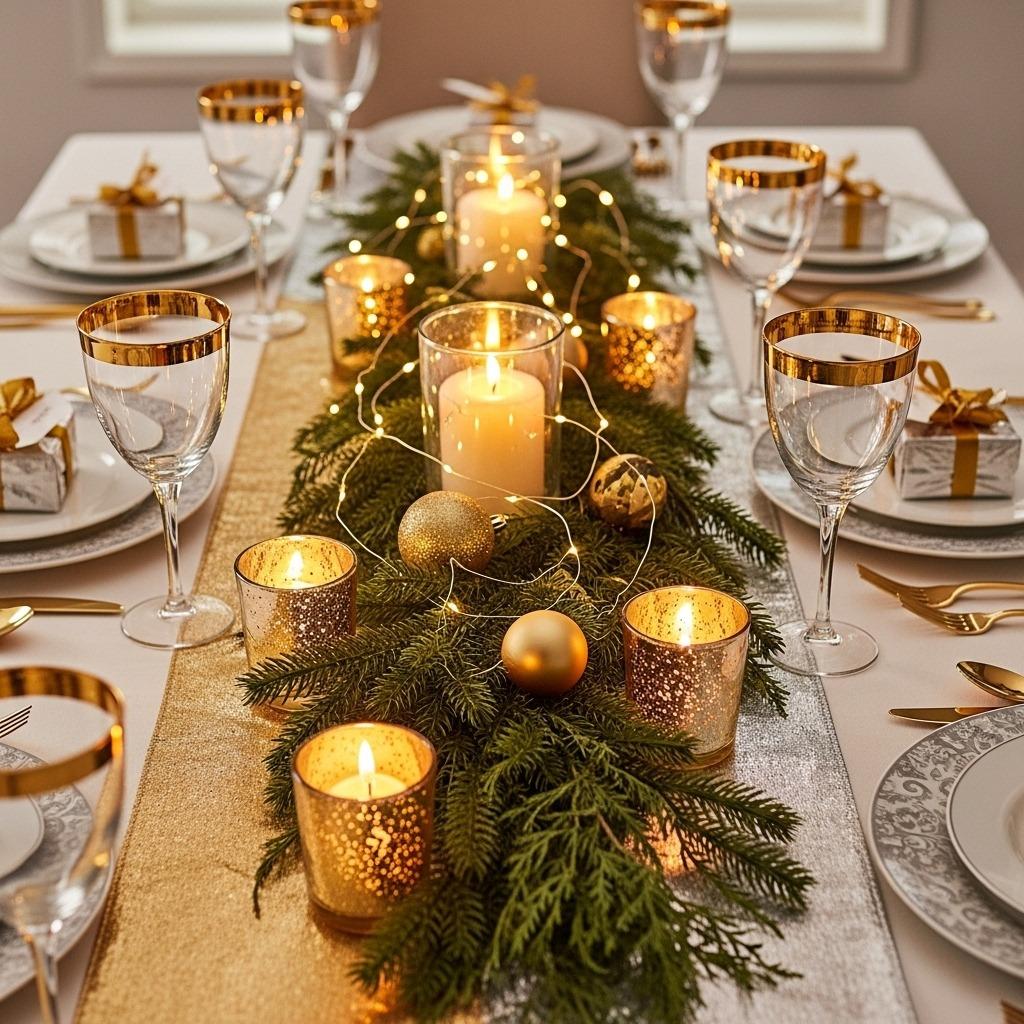
When the holiday season arrives, your dining room tablescape can embrace a bit more sparkle and drama. This look combines traditional holiday elements with modern metallic finishes for a setup that feels festive without being overly themed. It works for Christmas, New Year’s Eve, or any celebration where you want to go a bit bolder.
Mix metallic finishes – gold, silver, and copper – rather than sticking to just one. The variety creates more visual interest and actually feels more curated than matchy-matchy metals. Use a metallic table runner or placemats as your foundation. Incorporate mercury glass votive holders, metallic chargers, or gold-rimmed glassware to carry the theme through.
Your centerpiece can be statement-making here. Think evergreen garland woven with metallic ornaments and fairy lights, tall gold candlesticks flanking a floral arrangement with metallic spray-painted branches, or a collection of metallic vases at varying heights. Add small wrapped packages as place card holders or scattered decorative elements. The goal is celebratory elegance that photographs beautifully but still feels inviting enough for a relaxed dinner party.
11. Eclectic Mix-and-Match Personality
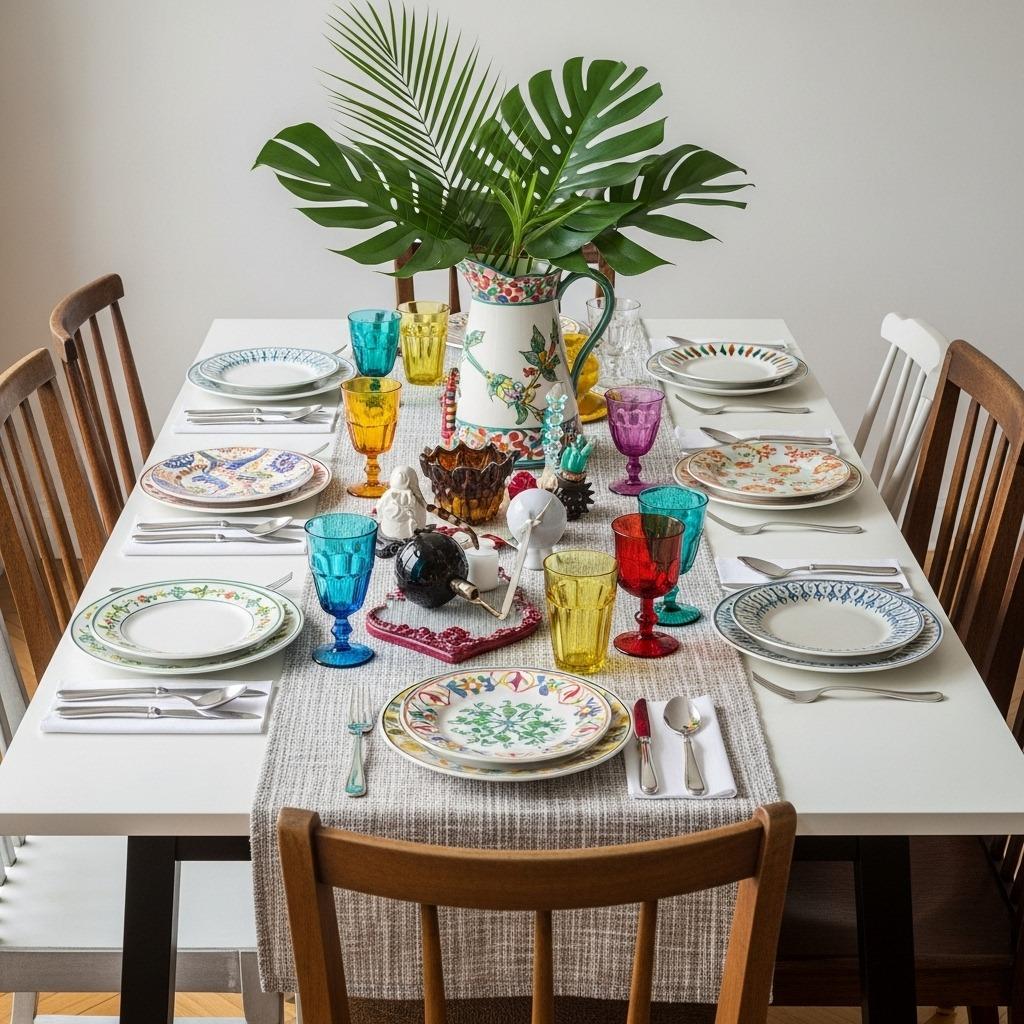
If you’ve ever worried about your table settings “matching,” this approach is your permission to throw that rule out entirely. An eclectic dining room tablescape celebrates personality, collected pieces, and the beauty of combining unexpected elements. Similar to creating an eclectic living room, your table becomes a reflection of your unique style.
Start by mixing plate patterns and colors – florals with stripes, solid colors with patterns, vintage finds with modern pieces. The trick is finding some common thread, whether that’s a color that appears in multiple pieces or a similar style era. Mismatched chairs (if you have them) only add to the collected charm of this look.
Your centerpiece can be wonderfully unexpected. Combine objects that wouldn’t traditionally go together – a vintage pitcher with tropical leaves, colorful glassware holding single stems, quirky thrifted finds mixed with sleek modern elements. Layer different textiles as runners or placemats. The beauty of this creative table setting is that it evolves over time as you find new pieces that speak to you. Nothing has to be perfect; it just has to feel authentically you.
Essential Tips for Styling Any Tablescape
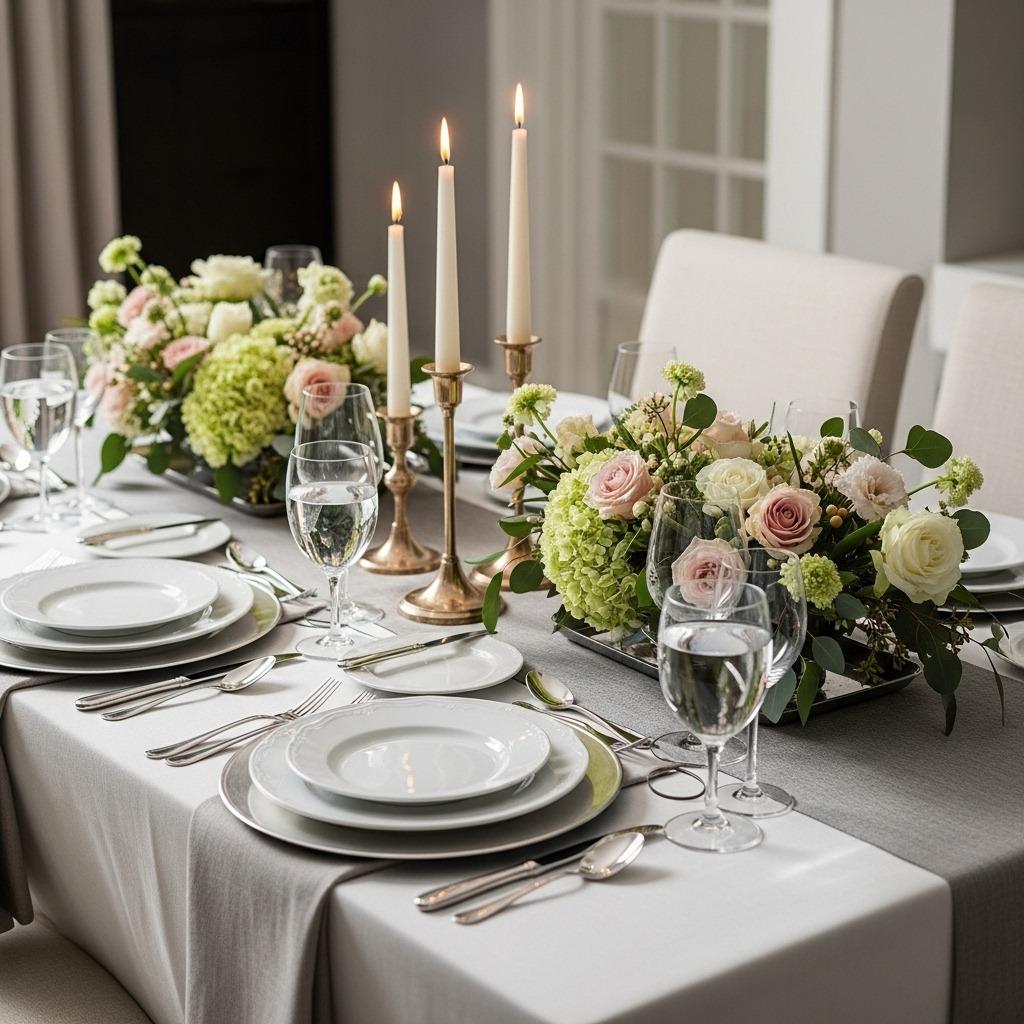
Now that we’ve explored specific looks, let’s talk about the underlying principles that make any table decor ideas successful, regardless of style. These techniques work whether you’re going formal or casual, seasonal or year-round.
Height variation creates visual interest. Don’t let everything on your table sit at the same level. Mix tall candlesticks with low arrangements, stack books under decorative objects, or use cake stands to elevate certain elements. Your eye naturally moves around the table when there’s dimension to explore.
Layer your textiles thoughtfully. A tablecloth provides foundation, a runner adds visual interest down the center, and placemats or chargers create defined spaces for each setting. You don’t need all three every time, but combining at least two creates depth. Even something as simple as a space-saving dining room setup benefits from this layering approach.
Consider your centerpiece height carefully. This is crucial but often overlooked. Arrangements should either be very low (under 12 inches) so guests can see over them, or quite tall (above 24 inches) so they can see under them. That awkward middle height blocks sight lines and makes conversation difficult across the table.
Playing with Color and Texture
Color choices can completely transform the mood of your dining experience. Warm colors like reds, oranges, and yellows stimulate appetite and create energy. They’re fantastic for lively dinner parties where you want conversation to flow. Cooler colors like blues and greens create calm, making them perfect for more intimate gatherings or when you want a relaxed atmosphere. Neutrals provide versatility and let other elements like food presentation or flowers take center stage.
Texture adds depth without requiring more space on your table. Combine smooth ceramic with rough linen, shiny metallics with matte wood, delicate glassware with chunky woven elements. Even within a monochromatic color scheme, varied textures create visual richness that keeps your table from feeling flat or boring.
Don’t be afraid to experiment. If you’re typically drawn to neutrals, try incorporating one bold color as an accent. If you usually go colorful, see what happens when you limit yourself to two complementary shades. Your dining table is one of the easiest places to play with design because you can completely change the look for your next meal if you want to try something different.
Seasonal Swaps That Make a Big Impact
One of my favorite aspects of table styling is how easily you can shift with the seasons. You don’t need to store 12 different complete table settings – just a few key swaps transform your tablescape throughout the year while keeping your base pieces consistent.
For spring, introduce pastels and fresh flowers. Swap heavy fabrics for lightweight linens. Add small potted plants or bulbs as living centerpieces that grow throughout the season. Summer calls for brighter colors, lighter textiles, and perhaps incorporating fruits like lemons or limes into your centerpiece.
Autumn is when rich textures shine. Trade your white napkins for rust or burgundy, add natural elements like pinecones or acorns, incorporate warm metallic tones. Winter brings opportunities for evergreens, deeper colors, more candles, and cozy fabrics like velvet or thick linen. Similar to how home improvement ideas change seasonally, your table can reflect the time of year.
The investment in a few seasonal accent pieces – runners, napkins, small decorative objects – goes a long way. Your plates, flatware, and glassware can stay consistent while these accent pieces completely change the feeling of your table. It’s both economical and storage-friendly.
Budget-Friendly Styling Secrets
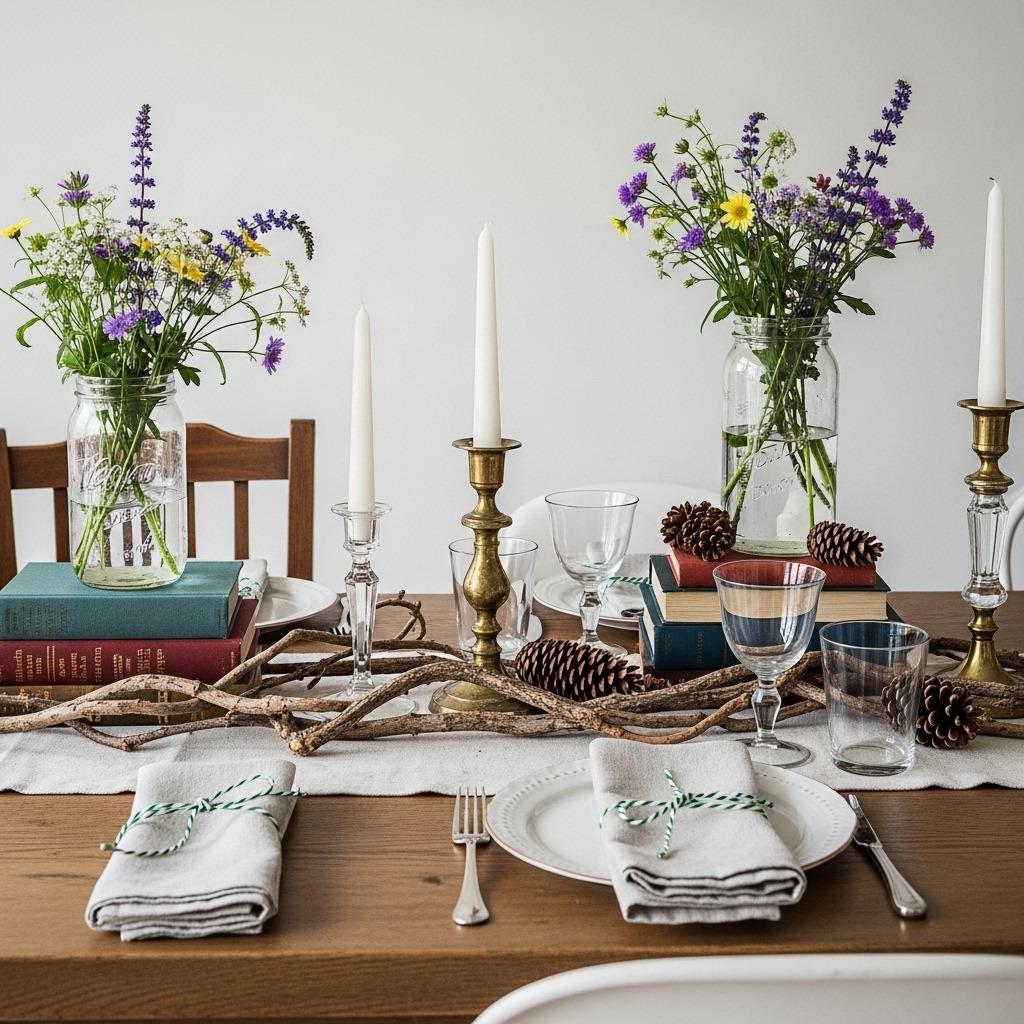
Creating a stunning dining room tablescape doesn’t require expensive purchases or specialty stores. Some of my favorite table setups have cost almost nothing because they relied on creativity and natural materials rather than pricey decor items.
Nature provides incredible free resources. Branches, leaves, pinecones, stones, wildflowers (where permitted), herbs from your garden – these all make beautiful table elements. A simple bundle of rosemary tied with twine at each place setting costs pennies but looks thoughtful and smells wonderful. Incorporating gardening for beginners techniques means you can grow your own centerpiece materials.
Thrift stores and estate sales are goldmines for unique glassware, candlesticks, and vintage dishes. The mismatched eclectic look we discussed earlier becomes incredibly affordable when you’re buying secondhand. Look for interesting shapes and colors rather than perfect condition – minor imperfections add character.
Repurpose items from elsewhere in your home. That vase from your bedroom works just as well as a centerpiece. Books stacked as risers, picture frames lying flat under glass chargers, even interesting jars from your pantry can become part of your table design. The best tablescapes tell a story about the people who live in the home, and that authenticity costs nothing.
Making Your Tablescape Functional
Beautiful table settings must also be practical – nobody wants to eat dinner while carefully navigating around a forest of decor. The best creative table settings balance aesthetics with functionality, ensuring your guests can actually use the table comfortably.
Leave adequate space for serving dishes if you’re doing family-style service. Your centerpiece might look stunning, but if there’s nowhere to set the pasta bowl, something needs to adjust. Consider using a long, low centerpiece that leaves the ends of the table open for platters, or create a centerpiece that can be easily moved to a sideboard once food is served.
Ensure each place setting has enough room – about 24 inches per person minimum. This includes space for their plate, glassware, and elbow room for comfortable eating. It’s better to seat fewer people comfortably than to squeeze everyone in so tightly they can’t relax. Your napkins, while beautiful, should actually be usable. Place them where guests can easily access them without disrupting other elements.
Think about lighting practically too. Candles create ambiance but shouldn’t be so numerous that the table feels like a fire hazard. Make sure guests can see their food and each other’s faces. If you’re using candles, unscented is usually better so fragrances don’t compete with your meal. The functionality of spaces like modern breakfast nook designs applies equally to formal dining – beauty should never compromise usability.
Personalizing Your Table for Guests
Adding personal touches to your place settings makes guests feel truly welcomed and creates memorable dining experiences. These details don’t have to be elaborate – sometimes the smallest gestures make the biggest impact.
Handwritten place cards show effort and help guests find their seats without awkwardness. You can use anything from formal calligraphy to a simple name tag tied to a napkin with twine. Small thoughtful additions at each place setting – a single flower, a favorite quote printed on cardstock, a small treat or party favor – make people feel considered.
Tailor elements to your guests when possible. If you know someone’s favorite color, incorporate it into their place setting. Dietary preferences can be acknowledged with special napkin colors or place cards. For children at adult tables, consider slightly different place settings that feel special to them – maybe colorful straws in their water glasses or a small activity at their spot.
The conversation your table sparks matters as much as how it looks. Consider adding conversation starter cards, or creating a centerpiece that prompts discussion. One of my favorite touches is including a small blank card at each setting where guests write something they’re grateful for, which gets read aloud during the meal. It costs nothing but creates connection.
Final Thoughts on Creating Your Perfect Table
The most important thing about any dining room tablescape is that it reflects you and makes your guests feel welcome. All the rules and suggestions in the world matter less than creating a space where people want to gather, linger, and enjoy each other’s company.
Start simple if you’re new to table styling. You don’t need every element we’ve discussed to create something beautiful. Begin with clean dishes, fresh napkins, and maybe a single centerpiece element – even just candles or a vase of flowers. As you gain confidence and collect pieces over time, your tablescapes will naturally become more complex.
Pay attention to what works for your specific space and entertaining style. If you have young children, a delicate crystal-heavy table might not be practical right now, and that’s perfectly fine. If you host casual taco nights more than formal dinners, your table styling should reflect that reality. The best table decor ideas are the ones you’ll actually use.
Remember that imperfection is part of the charm. A slightly off-center vase or napkins that don’t match perfectly won’t ruin your tablescape – they make it look like real people live there. The goal isn’t magazine-perfect styling; it’s creating a welcoming environment where good food and good company come together. Your dining table is where memories are made, and that’s worth styling thoughtfully.