Finding room for a proper dining table when you’re working with limited square footage feels like trying to solve a puzzle where the pieces don’t quite fit. You want somewhere decent to eat that isn’t your couch, but where exactly is that table supposed to go when your entire apartment could fit inside someone else’s living room?
I’ve been there. Eating meals perched on the edge of your bed or hunched over a coffee table gets old fast. But squeezing a full-sized dining set into a studio or small apartment just creates a cramped, cluttered feeling that makes the space feel even smaller. The solution isn’t giving up on dining tables altogether – it’s finding smarter options.
These 15 compact dining table solutions prove that small spaces can absolutely accommodate proper dining areas. The key is choosing furniture that works as hard as you do, adapting to your needs throughout the day. Some fold away, others extend when guests arrive, and a few pull double duty as work surfaces. Whatever your space constraints, there’s an option here that’ll work.
1. Wall-Mounted Drop-Leaf Tables
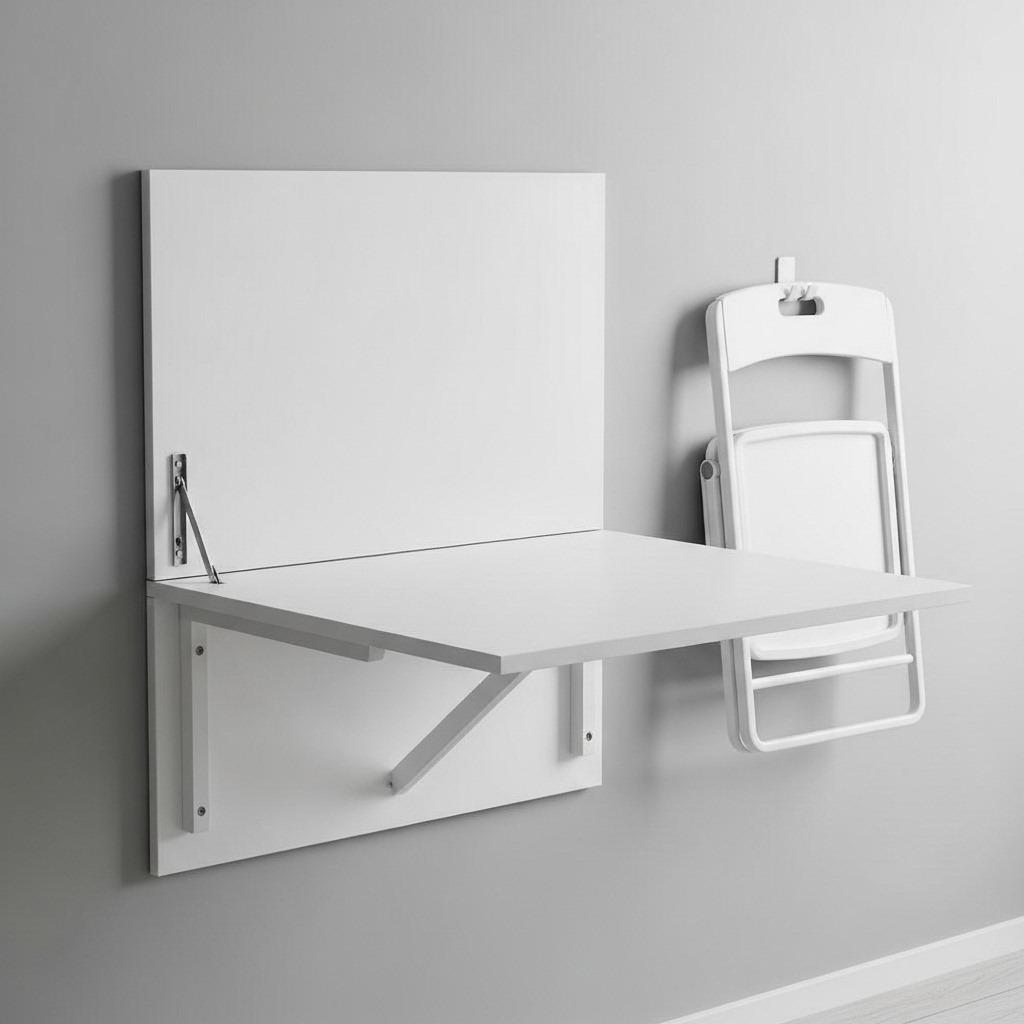
A wall-mounted drop-leaf table might be the ultimate space-saving dining furniture for tiny apartments. When you’re not eating, it folds flat against the wall, taking up barely any floor space. Flip down one or both leaves when it’s time for a meal, and suddenly you have a legitimate dining surface.
Installation is simpler than you’d think. Most mount directly to wall studs with heavy-duty brackets that can support the table’s weight plus dishes and food. You’ll want to ensure proper anchoring – this isn’t the place to cut corners with basic drywall anchors. A properly installed drop-leaf can hold as much weight as a traditional table.
The beauty of this setup is the flexibility. Need a quick breakfast spot? Drop down one leaf. Having a friend over for dinner? Use both sides. The rest of the time, your floor space remains completely open, making even the smallest room feel more breathable. Just make sure to leave enough clearance below for chairs to tuck in when the table’s up.
2. Extendable Round Tables
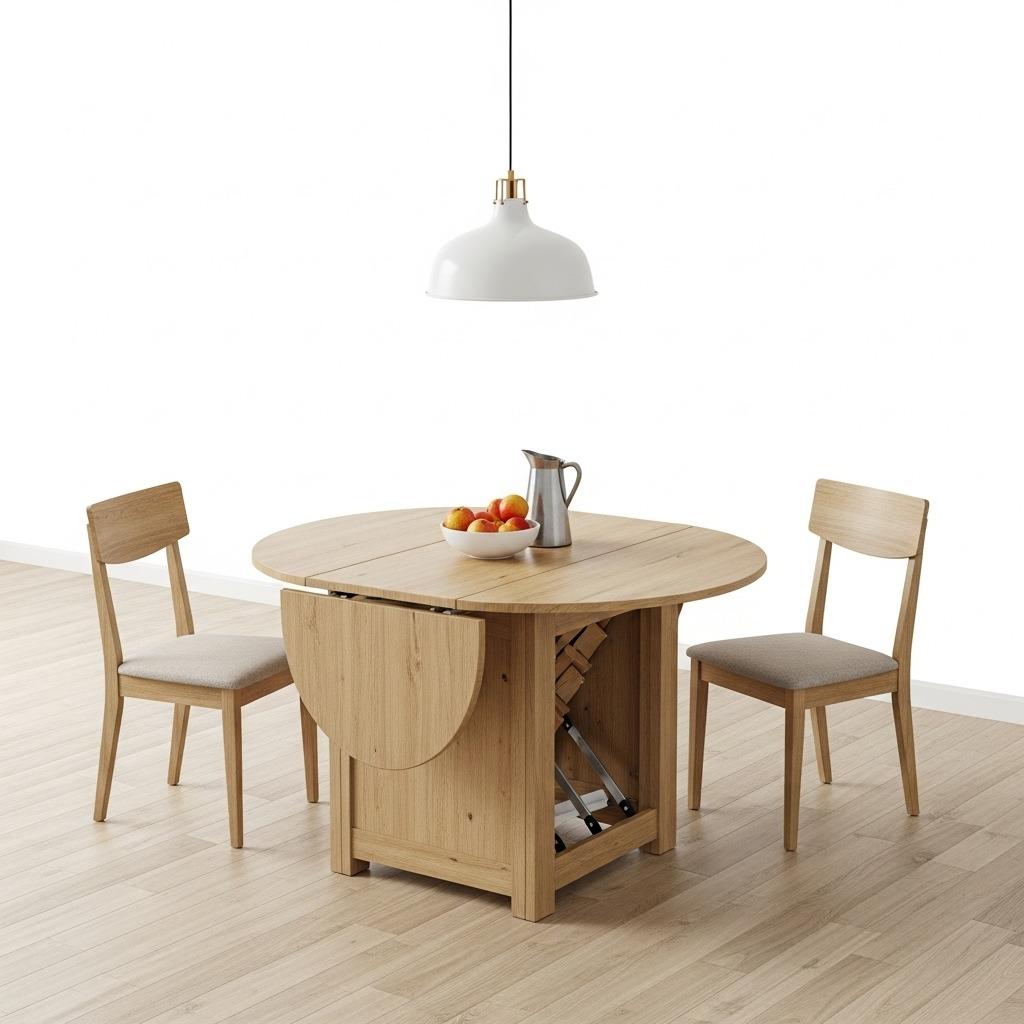
Round tables naturally feel more spacious in small rooms because there are no corners jutting out into walkways. Add an extension mechanism, and you’ve got a compact dining table that grows when you need it. These work particularly well in square rooms where a rectangular table would feel awkward.
Modern extendable rounds often use butterfly leaf systems hidden within the table itself. The mechanism lets you pull the table apart and unfold a leaf from the center – no need to store extra pieces in a closet somewhere. When collapsed, the table seats two or three comfortably. Extended, you can usually fit four to six people.
The round shape also encourages conversation in a way rectangular tables don’t. Everyone can see each other easily, making meals feel more intimate and connected. For small apartments where the dining area might be your primary gathering spot, that circular configuration creates a natural hub. This approach works beautifully alongside space-saving dining room strategies that maximize every inch.
3. Folding Console to Dining Table
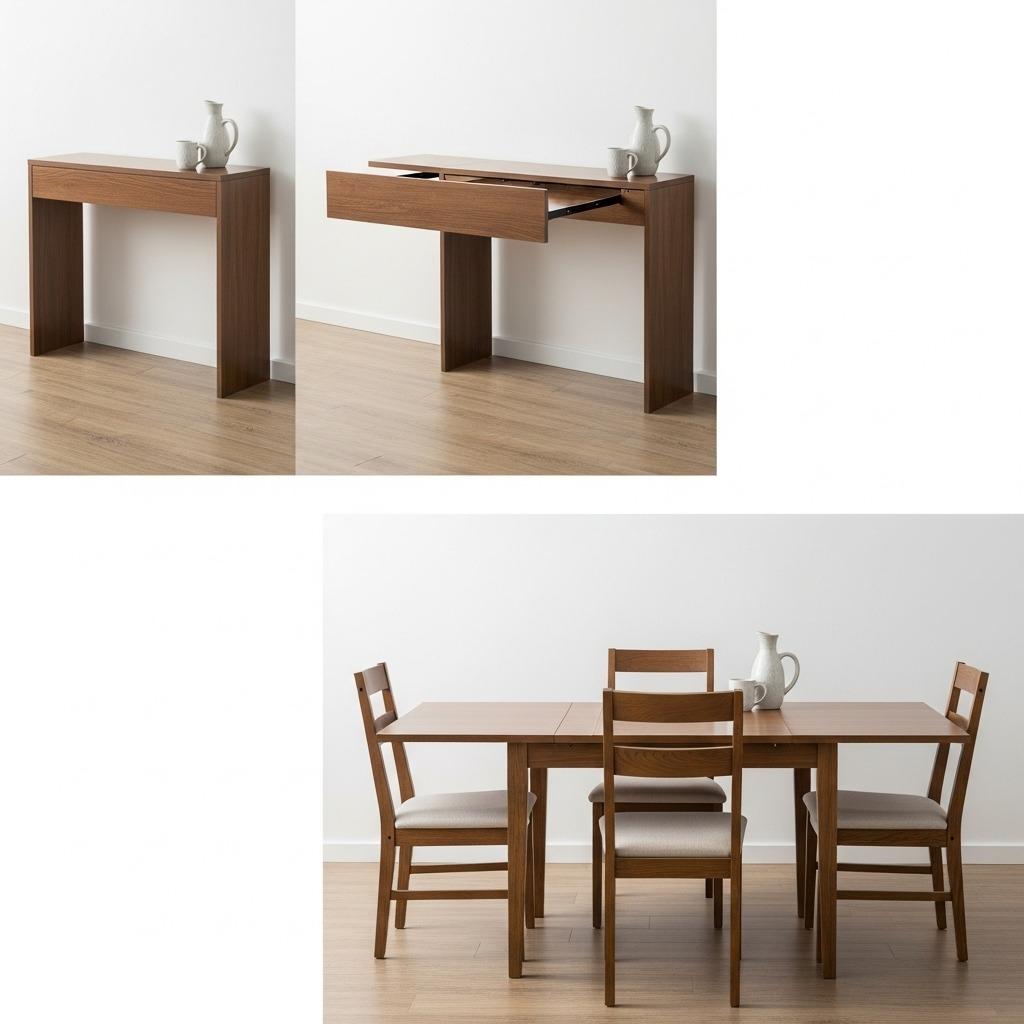
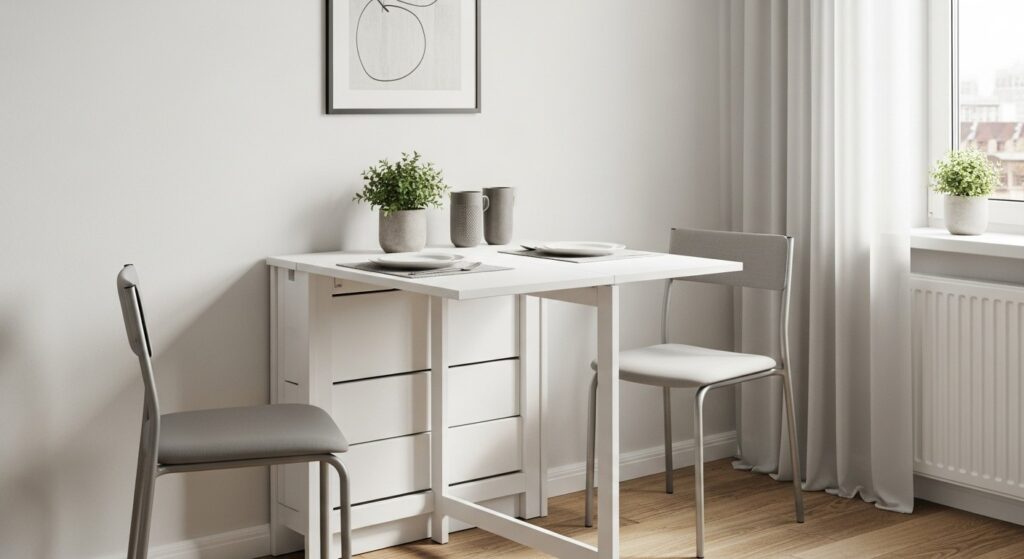
Console tables that fold out into full dining surfaces might be the cleverest solution for studio apartments. They live against a wall as slim console tables – perfect for keys, mail, or a small lamp. When you need dining space, they unfold and transform into proper tables that seat four to six people.
The transformation usually involves unfolding legs or supports that tuck underneath when not in use. Some designs get quite elaborate, with multiple folding sections that create surprisingly large surfaces from seemingly tiny consoles. It’s a bit like furniture origami, and watching it unfold never gets old.
This dual-purpose approach means you’re not dedicating precious space to single-function furniture. During the day, it’s an entryway console or a slim desk. At dinner time, it becomes your dining table. For anyone practicing small space renovation principles, this kind of flexible furniture is essential.
4. Bar-Height Tables with Stools
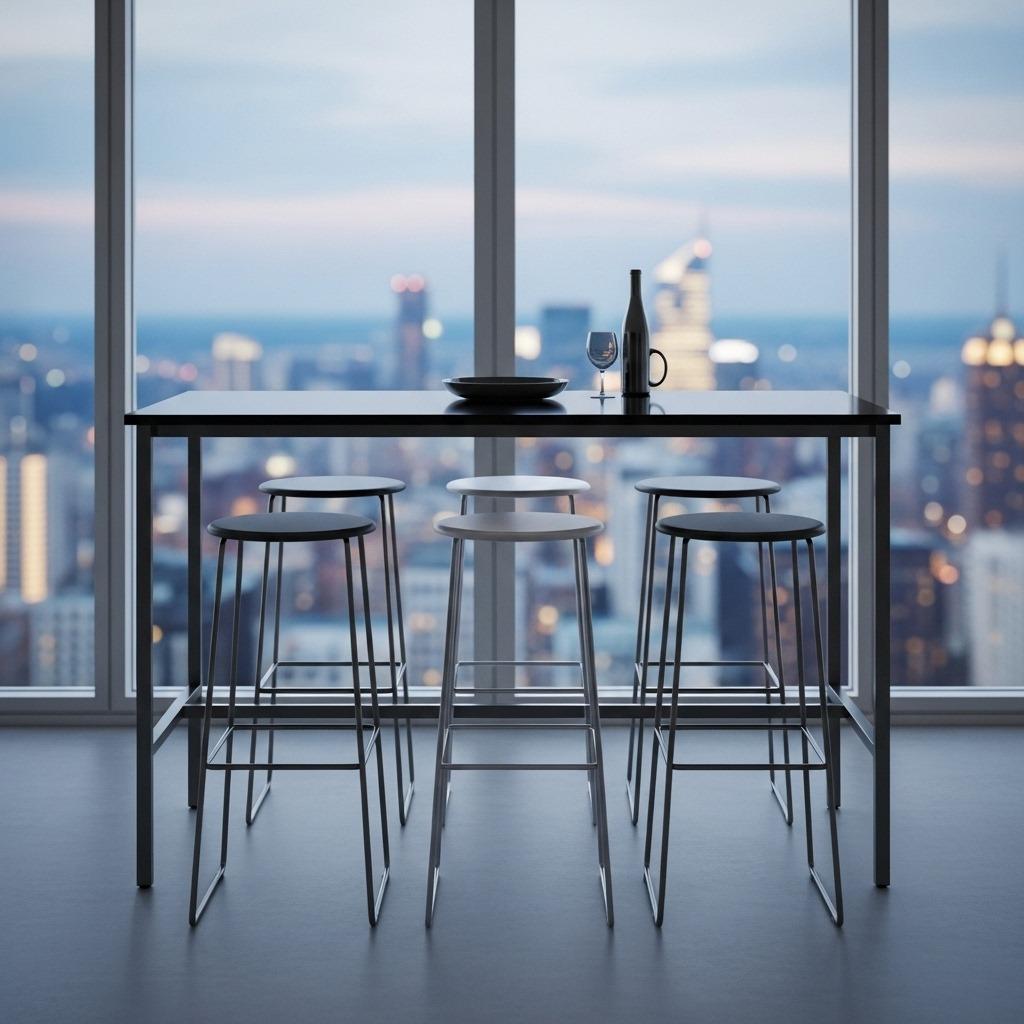
Bar-height tables take up less visual space than standard dining tables because the open area underneath stays visible. This transparency makes rooms feel larger even though you haven’t actually gained any square footage. Pair one with backless stools that tuck completely underneath, and the setup practically disappears when not in use.
The elevated height also creates nice separation between dining and living zones in open studios. A bar table can function as a room divider without blocking sightlines or closing off spaces. Place it perpendicular to a wall, and you’ve subtly defined separate areas within one room.
Stools offer another advantage over chairs – they’re easier to move around. Need extra seating in the living area? Pull over a stool. Having more guests than your small table accommodates? Stools work at kitchen counters too. That flexibility matters when every piece of furniture needs to earn its keep.
5. Nesting Dining Sets

Nesting tables in dining sizes let you adjust your surface area based on who’s coming to dinner. The smaller tables tuck under the main one when not needed, creating a compact footprint. Pull them out to create an L-shaped or extended dining configuration when you need more room.
This modular approach adapts to different situations beautifully. Eating alone? Use just the smallest table. Having a couple friends over? Pull out one additional section. The flexibility means you’re not constantly stuck with either too much table or too little.
Storage is basically built-in with nesting sets. The smaller pieces don’t need closet space or garage storage – they simply slide back under the main table. For small apartment dining where every inch counts, this self-storing quality is incredibly valuable. Plus, the separated surfaces can serve different purposes – one for eating, another for laptop work.
6. Corner Banquette with Small Table
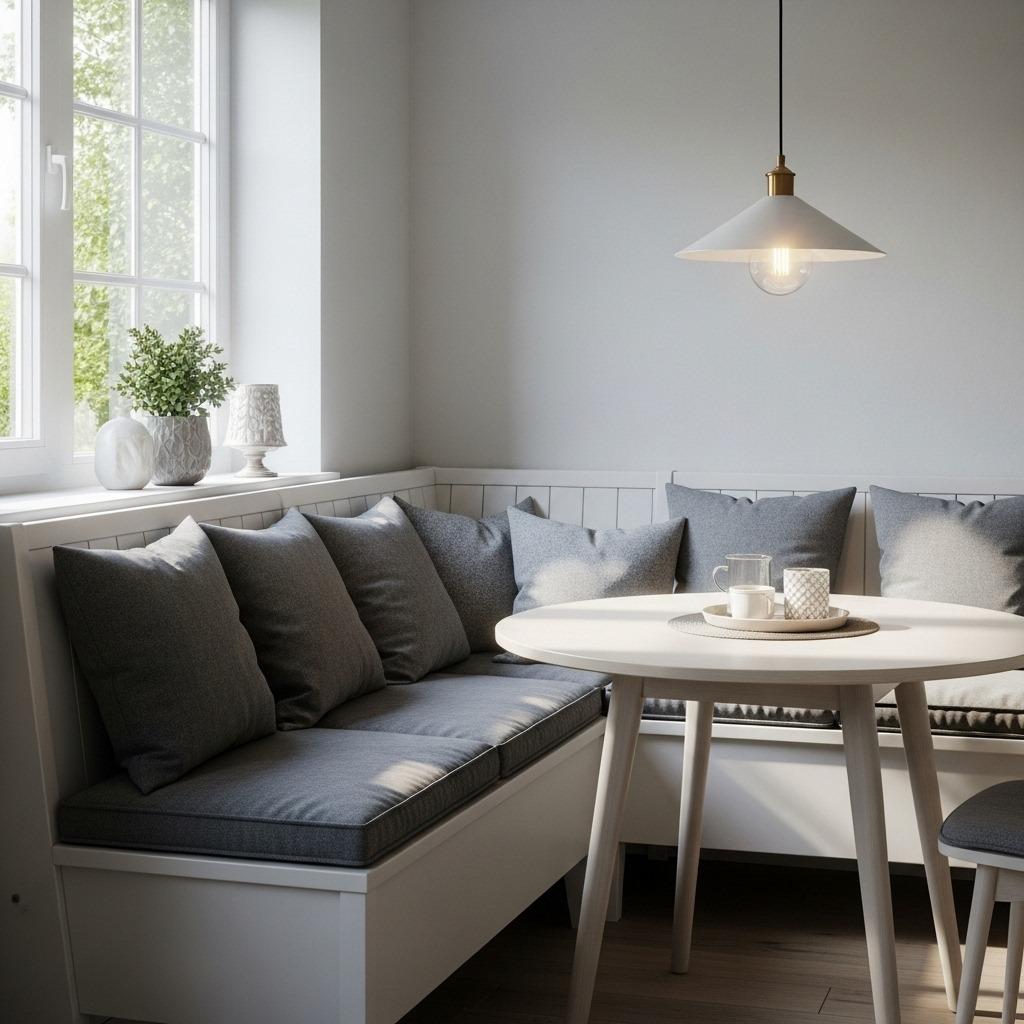
Built-in corner banquettes maximize awkward corner spaces that often go unused in small apartments. Add a small square or round table in front, and you’ve created an efficient dining nook that feels intentionally designed rather than crammed in. The bench seating eliminates the need for multiple chairs, saving considerable space.
Under-bench storage is the bonus that makes this solution truly work. Lift-up seats or pull-out drawers turn the banquette into a storage powerhouse for linens, small appliances, or anything else you need to stash. You’re gaining dining space and storage simultaneously – a win-win for small spaces.
The cozy, wraparound feeling of banquette seating makes even small dining areas feel special and intentional. There’s something about tucking into a corner booth that transforms everyday meals. This setup also anchors the dining area visually, giving it presence despite its compact size. Consider pairing it with ideas from modern breakfast nook designs for inspiration.
7. Glass Top Tables
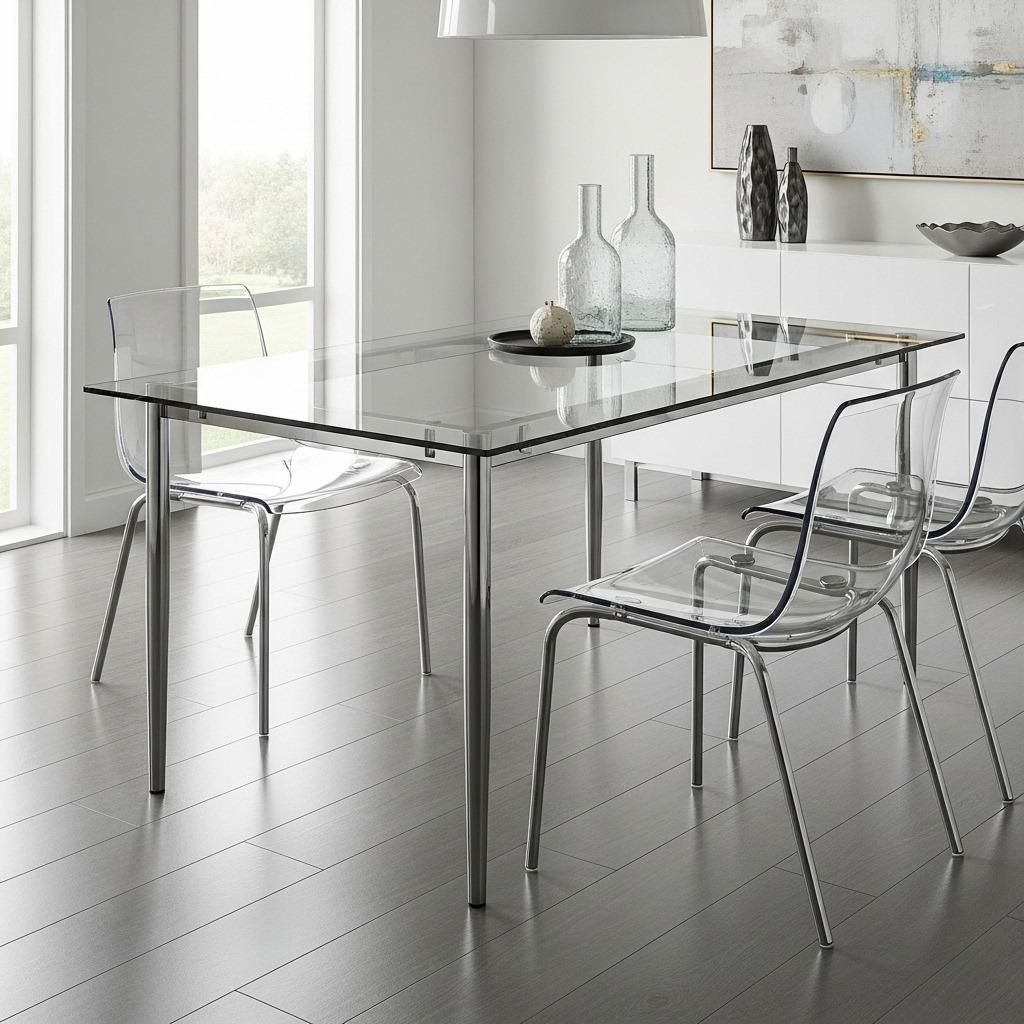
Glass-topped tables create visual lightness that helps small dining areas feel less cluttered. You can see straight through to the floor, which tricks the eye into perceiving more space. The transparency doesn’t add visual weight the way solid wood or painted surfaces do.
Modern glass tables are far more durable than you might think. Tempered glass resists scratches and can handle normal dining use without issue. The main consideration is cleaning – glass shows every fingerprint and water spot. But if you’re willing to wipe it down regularly, the spacious feeling is worth the maintenance.
Pair glass with slim metal or acrylic legs for maximum airiness. The entire table seems to float, barely registering as a physical object in the room. This optical trick is particularly effective in small apartments where heavy furniture can make spaces feel crowded and oppressive.
8. Butcher Block Cart as Dining Table
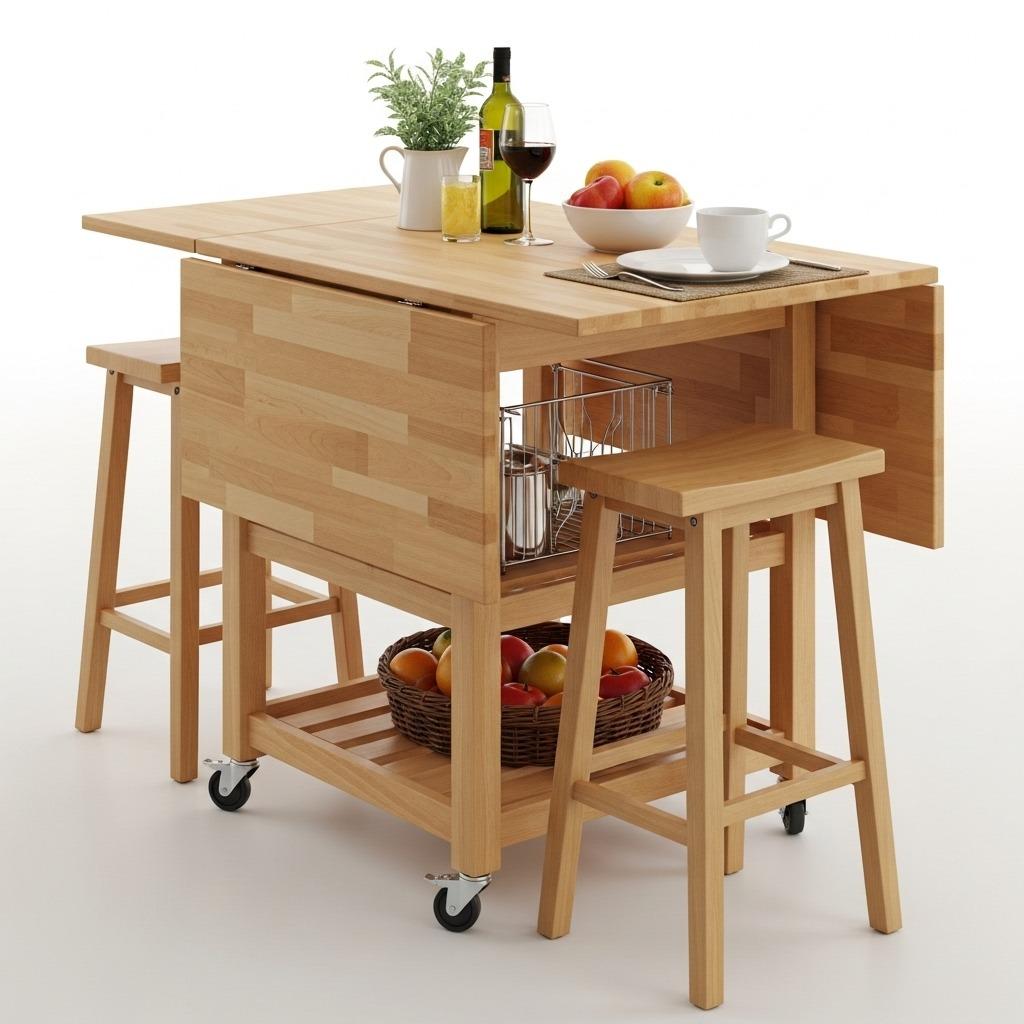
Rolling butcher block carts designed for kitchens make surprisingly effective foldable dining tables in small apartments. They’re the right height, provide a sturdy surface, and many include fold-down leaves that extend the dining area. Best of all, they roll wherever you need them.
The mobility factor is huge. Park the cart against a wall when you’re not eating, then roll it to the center of the room for meals. Need extra prep space while cooking? Roll it into the kitchen. Want a serving station for a gathering? Position it near your main food area. One piece of furniture serves multiple functions.
Many kitchen carts also include storage shelves or drawers underneath, giving you a place for placemats, napkins, or small dining essentials. The butcher block surface is durable and ages well, developing character over time. For anyone implementing small kitchen renovation tips, these versatile pieces bridge kitchen and dining needs.
9. Apartment-Sized Rectangular Tables
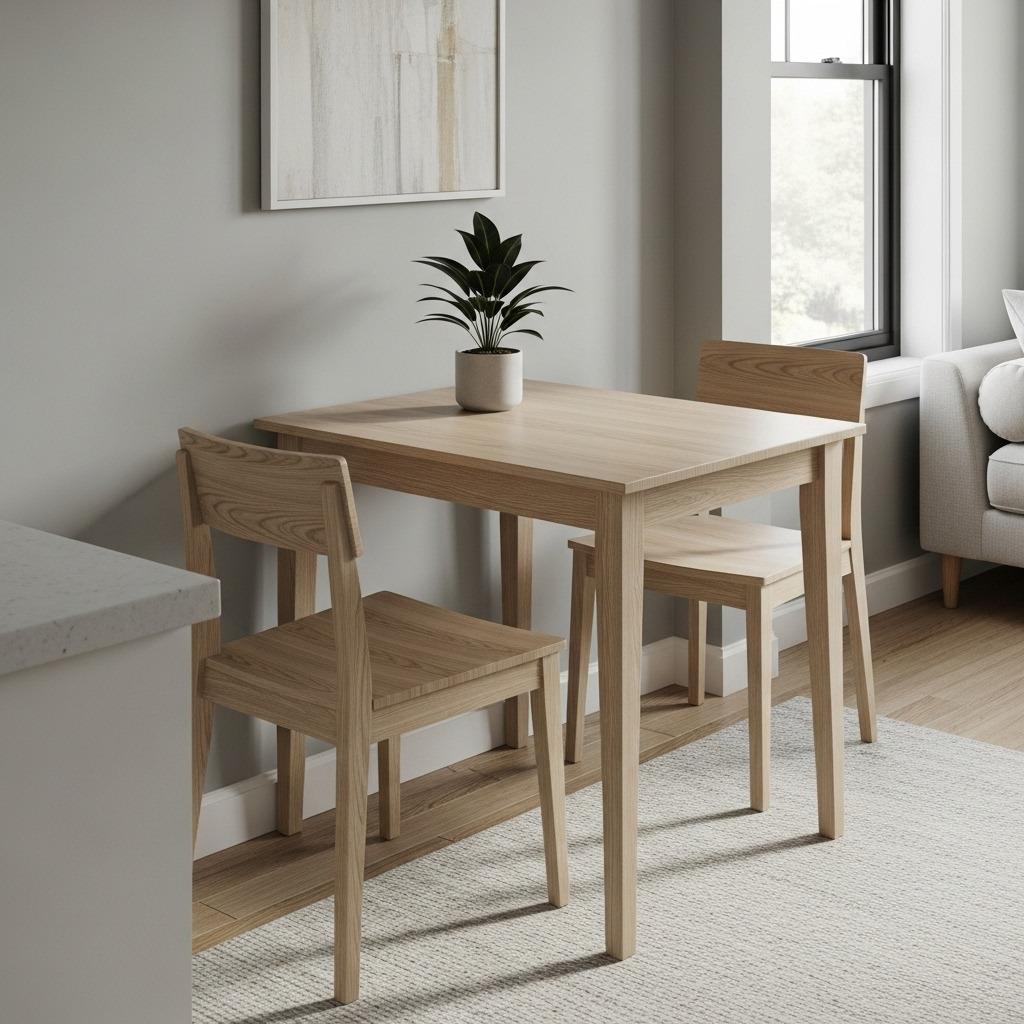
Sometimes you just want a traditional table, only smaller. Apartment-sized rectangular tables typically measure 24-30 inches wide and 36-48 inches long – narrow enough to fit tight spaces while still providing a proper dining surface. These proportions work better in small spaces than trying to cram in a standard-sized table.
The slim width is key. You can often tuck these tables against walls or in narrow gaps between kitchen and living areas where wider tables wouldn’t fit. Two people can sit across from each other comfortably, and you can squeeze in a third or fourth chair at the ends if needed.
Look for tables with clean lines and slim profiles. Chunky farmhouse styles overwhelm small rooms, while streamlined modern or mid-century designs maintain that sense of openness. Pairing compact tables with minimalist kitchen decor creates a cohesive, uncluttered aesthetic throughout your space.
10. Fold-Out Wall Desk/Table Combos
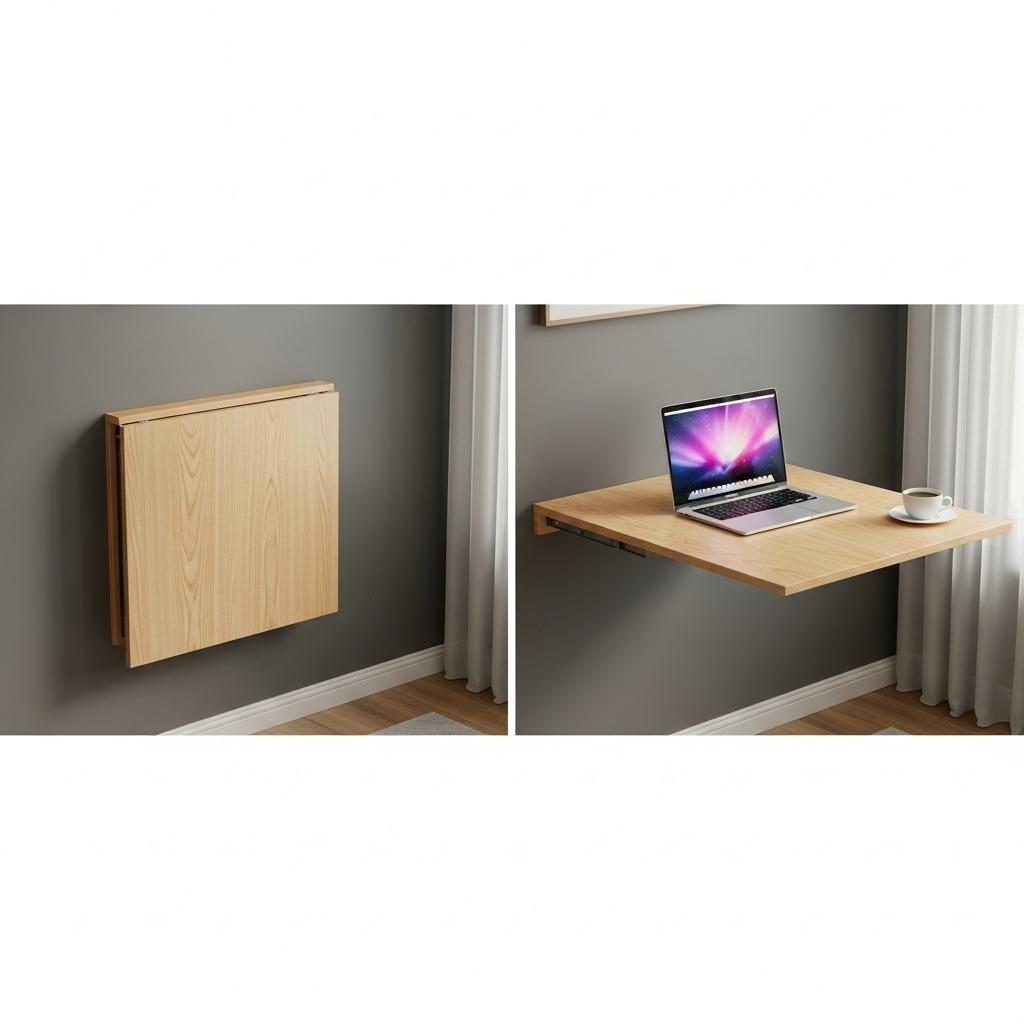
Wall-mounted desks that fold out into dining tables serve double duty in small apartments where you need both work and eating surfaces. These typically mount more securely than drop-leaf tables because they’re designed to support computer equipment and provide stable work surfaces.
The fold-out mechanism usually includes support legs or brackets that lock into place when extended. This stability means the surface works well for meals, projects, or focused work. When folded up, it looks like a modern wall-mounted cabinet or floating shelf – hardly taking up any visual space at all.
Many designs include small storage compartments or cubbies built into the unit. You can stash pens, napkins, or small items right in the table itself. This integrated storage keeps essentials accessible without requiring additional furniture. The space-saving dining furniture approach extends beyond just the table to your entire small apartment lifestyle.
11. Pedestal Tables for Leg Room
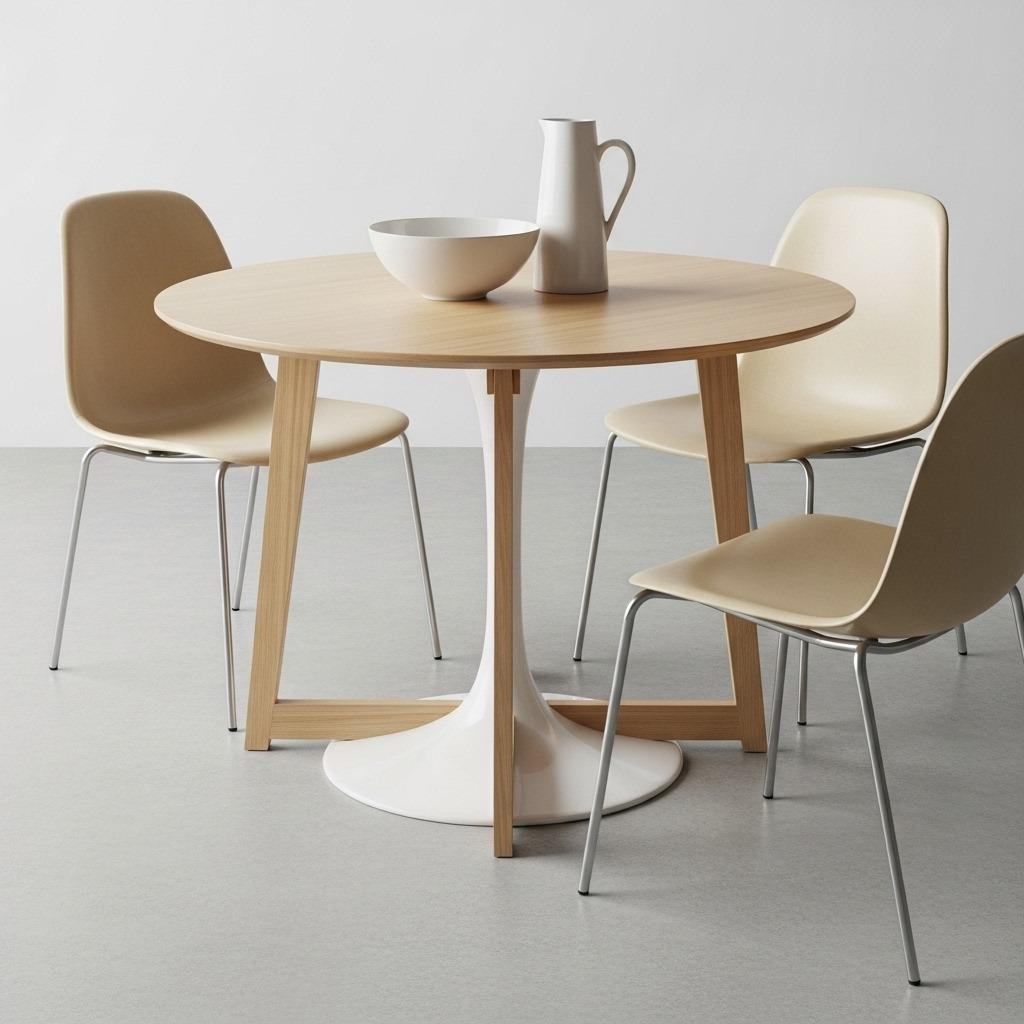
Pedestal bases free up leg room in a way four-legged tables never can. Without corner legs blocking movement, you can fit chairs anywhere around the perimeter. This flexibility is especially valuable in small apartments where you might need to squeeze an extra person in occasionally.
The single central support also makes small dining areas feel less cluttered. Four table legs create visual noise and make the floor area look busier. One pedestal support is cleaner and creates better flow around the table. You’re less likely to bump into table legs while navigating a tight space.
Round pedestal tables are classic, but square and rectangular versions work too. The key is that central support that frees up all the space at the edges. For maximum openness, choose pedestals with slim profiles rather than chunky bases. Pair with lightweight chairs that look substantial but actually weigh very little.
12. Murphy Table Systems
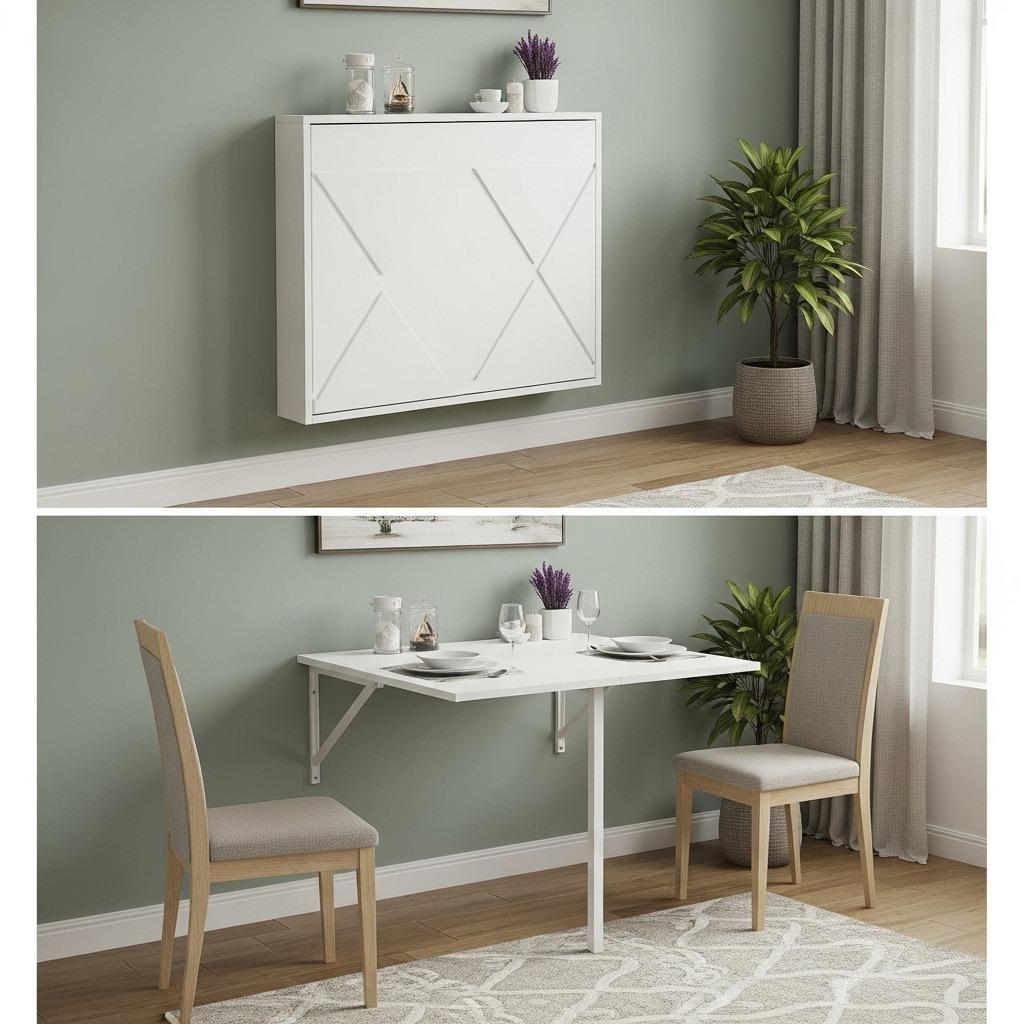
Murphy tables take the classic Murphy bed concept and apply it to dining. These systems mount to walls and fold completely flat when not in use, often looking like decorative panels or artwork. Pull them down when you need dining space, then fold them back up to reclaim your floor area.
Installation requires sturdy mounting into wall studs, similar to Murphy beds. But once properly installed, these systems are incredibly stable and secure. Some include integrated supports that fold out automatically as you lower the table, while others use removable legs that store nearby.
The transformation is dramatic. One moment you have a blank wall or decorative panel, the next you have a full dining table. For ultra-small studios or efficiency apartments, this disappearing act is often the only way to fit proper dining space. The table literally vanishes when you’re done eating, making your apartment feel larger most of the time.
13. Adjustable Height Tables
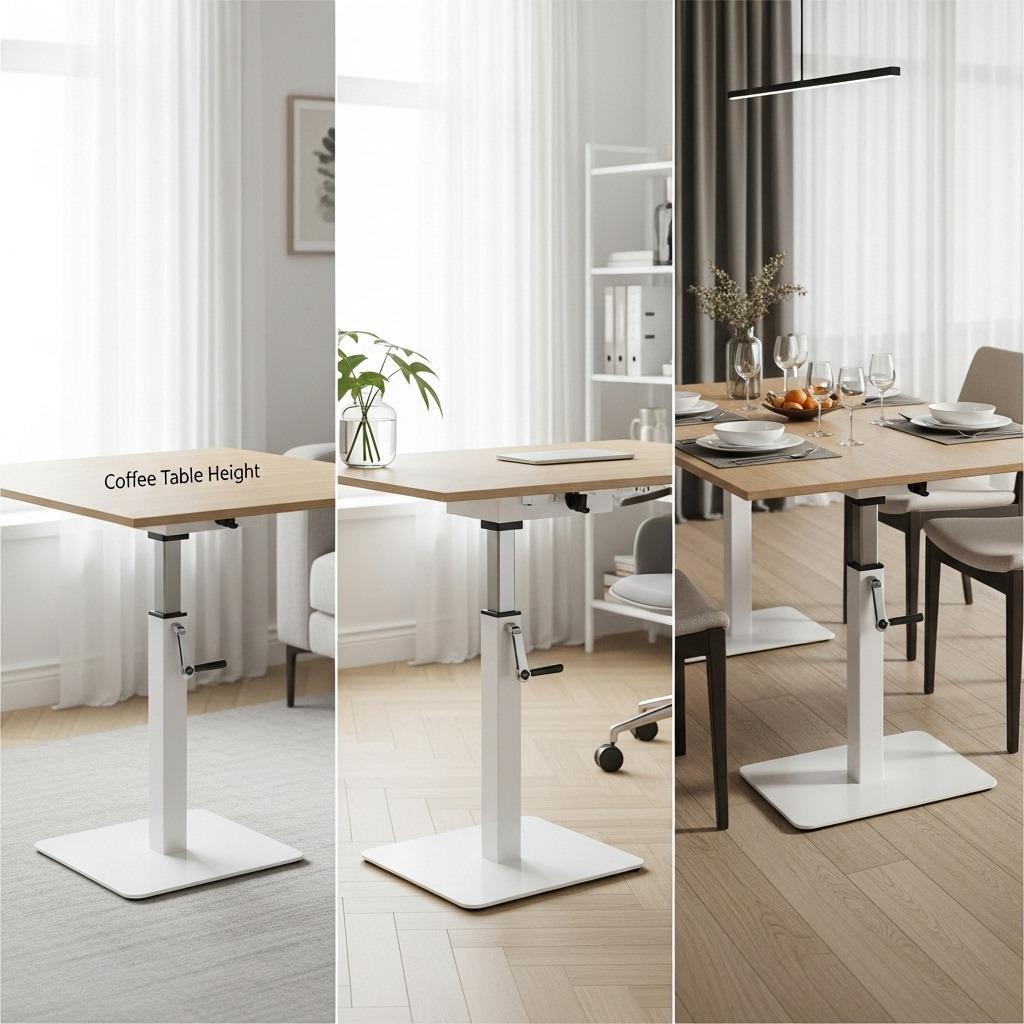
Tables with adjustable heights adapt to multiple uses throughout the day. Lower them to coffee table height for casual living room dining or working from the couch. Raise them to standard dining height for proper meals. This versatility means one table serves multiple functions.
The adjustment mechanisms vary from pneumatic lifts to manual cranks to pop-up systems. Pneumatic versions are easiest to operate – just lift or press down and the mechanism does the work. Manual cranks are more affordable but require a bit more effort. Either way, the ability to change heights dramatically increases a table’s usefulness.
This flexibility is particularly valuable in studio apartments where your dining table might also serve as your desk, craft table, or entertainment center. Rather than compromising on height for any one function, you can optimize for each use. Similar principles apply to multifunctional bedroom layouts where furniture adapts to different needs.
14. Slim Profile Counter Tables
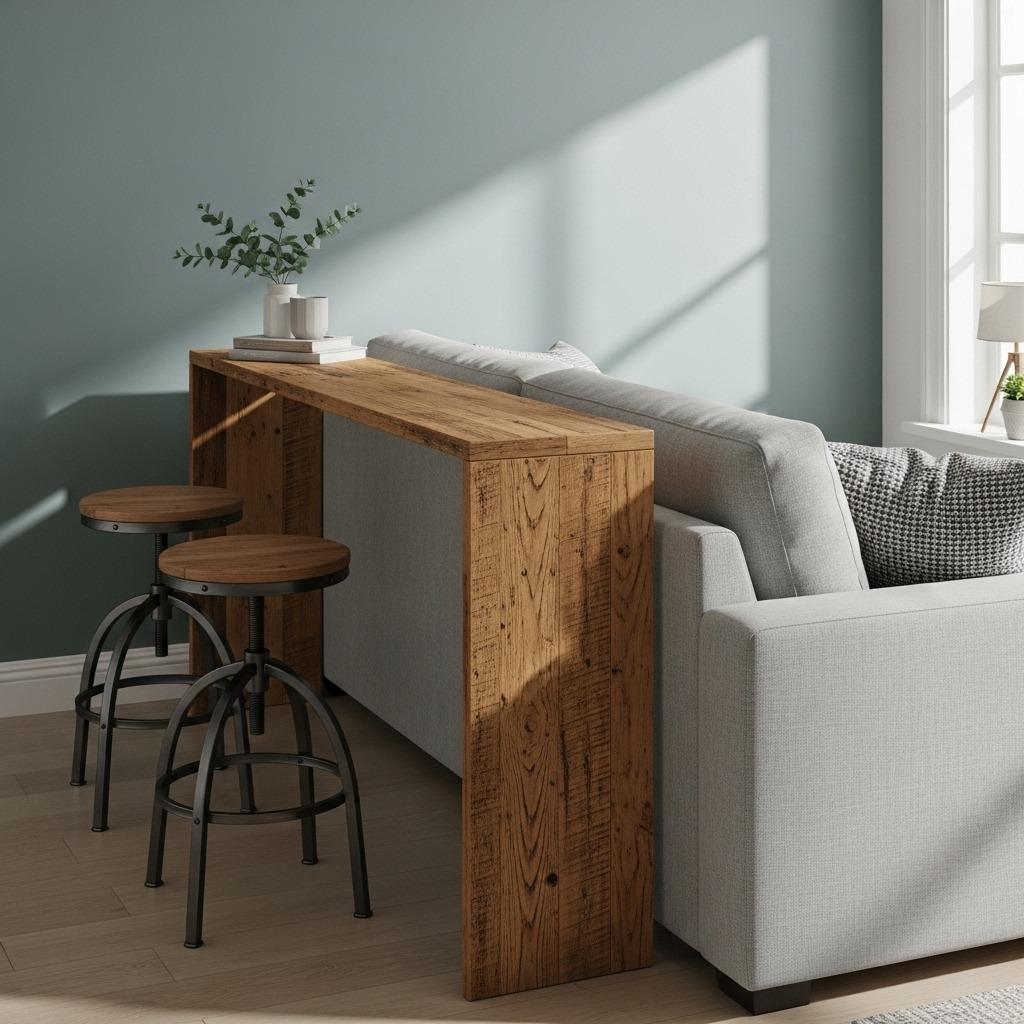
Counter-height tables with ultra-slim profiles slip into spaces standard dining tables can’t reach. Think narrow areas behind sofas, against walls between rooms, or in galley-style spaces. These tables are tall and narrow – often just 12-18 inches deep but running several feet long.
The slim depth means they barely intrude into walking paths or living spaces. You can set up stools on one side against a wall, leaving the other side completely open. This configuration works well for quick meals or as a standing eating area that doesn’t require dedicated seating at all.
Counter tables also naturally separate spaces in open floor plans. Position one behind a sofa, and you’ve created a subtle division between living and dining zones without blocking views or light. The narrow profile keeps things open while still defining distinct areas. For more ways to maximize tight spaces, check out these kitchen and dining ideas that make the most of every inch.
15. Expandable Butterfly Leaf Tables
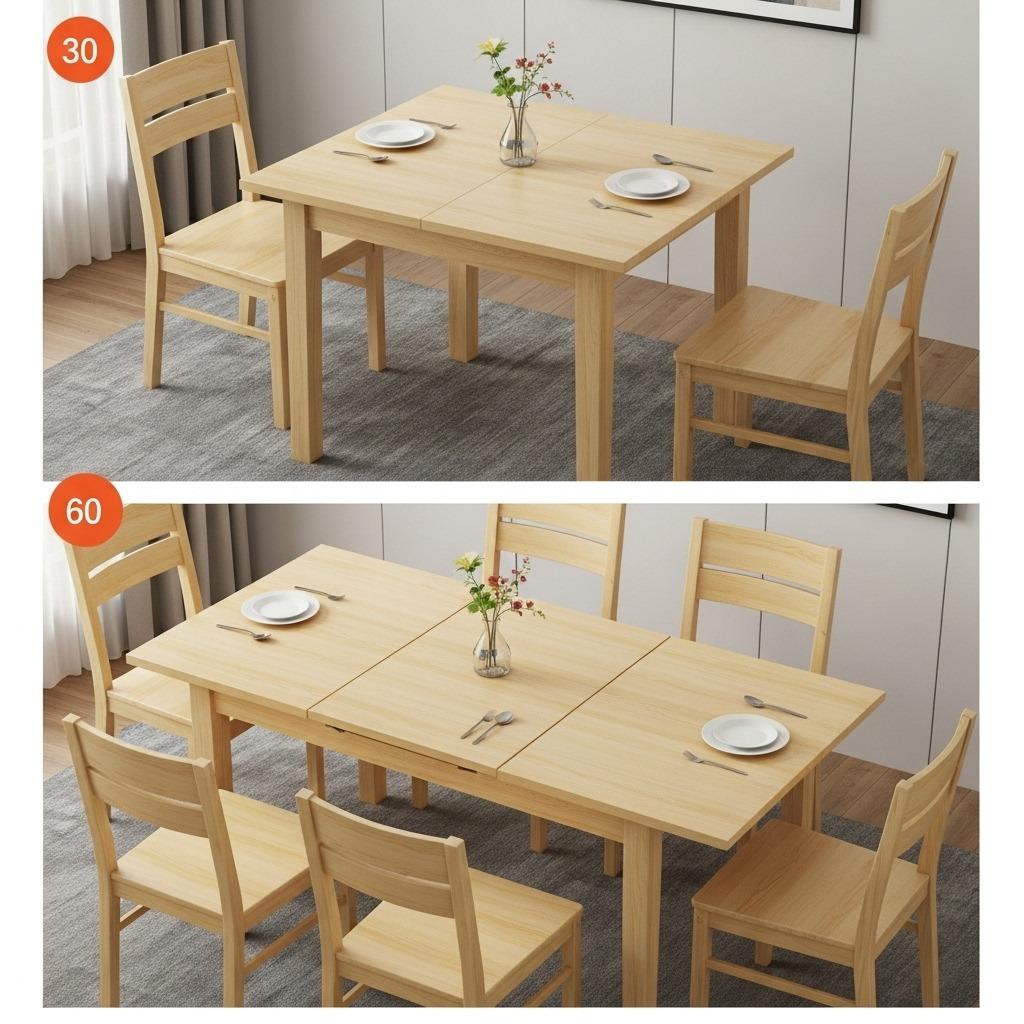
Butterfly leaf tables hide their expansion mechanism within the table itself. Pull the ends apart, and a leaf unfolds from the center – no separate pieces to store or lose. This self-contained expansion is perfect for small apartment dining where storage space for extra leaves doesn’t exist.
The mechanism is satisfying to operate. There’s something pleasing about watching the table transform from compact to spacious in seconds. When collapsed, these tables often look like standard small rectangular or square tables. Extended, they can seat several more people than you’d expect from the compact base size.
Quality matters with butterfly mechanisms. Cheaper versions can be wobbly or difficult to operate smoothly. Invest in a well-constructed table with a solid mechanism, and you’ll have a reliable solution for years. The expanded size handles holiday dinners or gatherings, while the compact version suits daily life in your small space.
Making It Work in Your Space
Choosing the right compact dining table isn’t just about dimensions – it’s about understanding how you actually live. Do you cook at home most nights, or are you grabbing takeout more often than not? Do you work from home and need dining space that doubles as a desk? How often do you have people over?
Answer those questions honestly, and the right solution becomes clearer. Someone who rarely cooks might do fine with a wall-mounted drop-leaf that’s up most of the time. A remote worker needs something more permanent and stable. Regular entertainers want extension options that don’t require elaborate setup.
The best compact dining table is the one you’ll actually use rather than work around. I’ve seen too many people buy clever space-saving furniture that ends up being more trouble than it’s worth. If folding and unfolding your table feels like a chore, you’ll eat on the couch instead. Choose something that matches your energy level and lifestyle, not just your square footage. And if you’re tackling a complete overhaul, consider how your dining solution fits into broader affordable home upgrades that work together to maximize your small space.
Measure carefully before buying anything. Know your space’s dimensions, account for chair clearance, and consider traffic flow patterns. A table that technically fits might still make your apartment feel cramped if it blocks the main walkway. Sometimes going slightly smaller than you think you need actually improves both function and feel.