
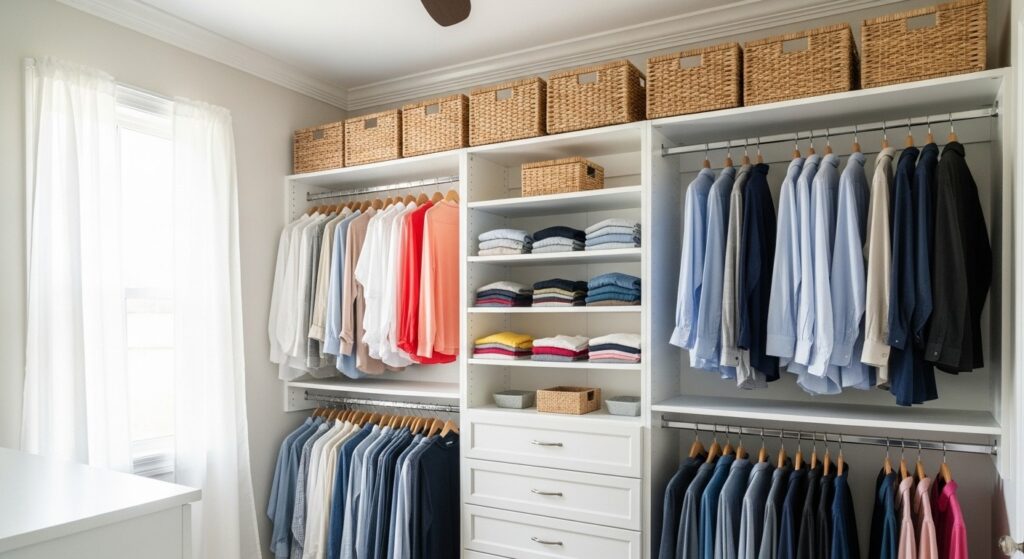
Is your closet bursting at the seams? You’re not alone. Most of us have wrestled with cramped, disorganized closets that make getting dressed feel like a daily scavenger hunt. But here’s the thing – a well-planned closet renovation doesn’t have to mean gutting the entire space or spending thousands of dollars.
Smart closet renovation strategies can completely change how you interact with your storage spaces. Whether you’re dealing with a tiny reach-in closet or planning a full walk-in transformation, the right approach makes all the difference. I’ve learned that the best renovations combine practical storage solutions with thoughtful design that actually fits how you live.
Ready to stop fighting with your closet every morning? These 12 strategies will help you create a space that’s not just prettier, but genuinely more functional for your everyday life.
1. Start With a Complete Closet Assessment
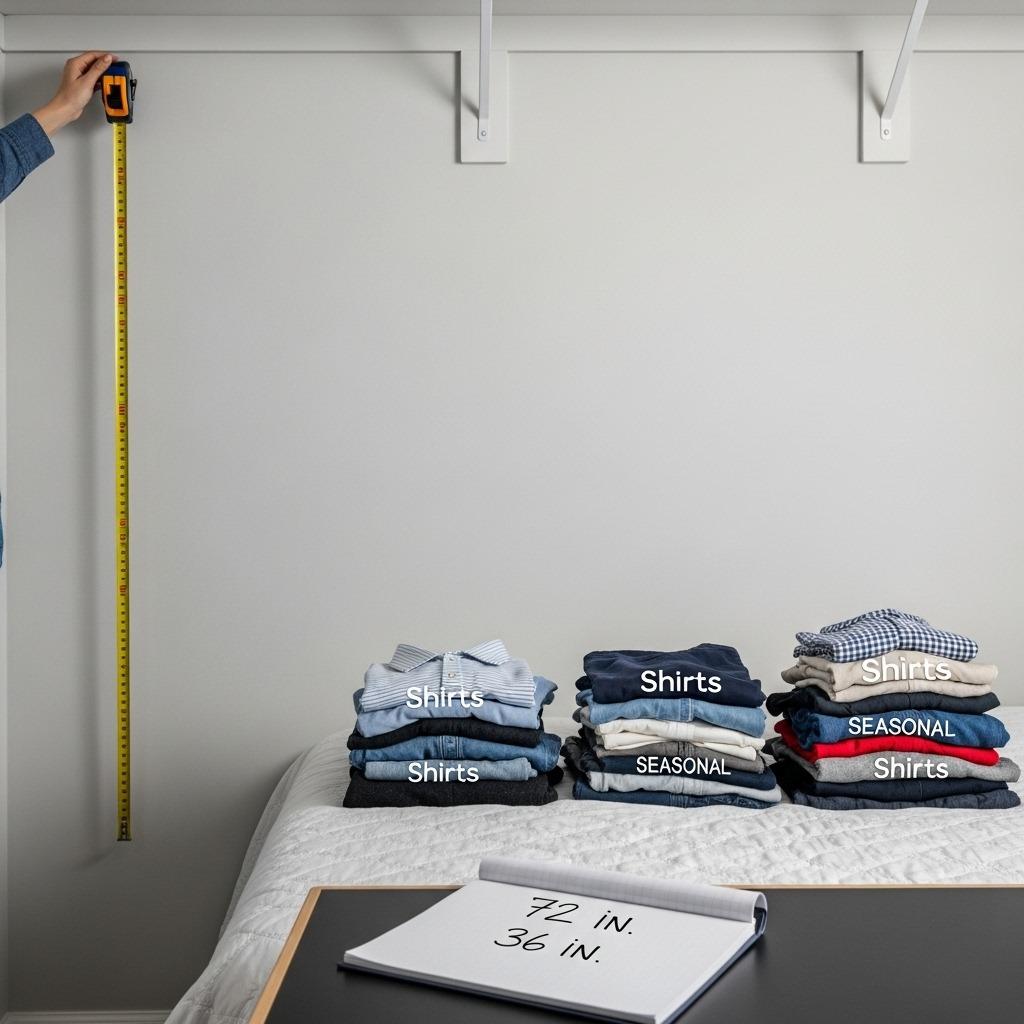
Before you buy a single organizer or pick up a drill, take everything out of your closet. Yes, everything. This might seem overwhelming, but it’s the only way to truly see what you’re working with and what you actually need to store.
Sort through your items honestly. How many pieces do you actually wear? What’s taking up valuable real estate that you haven’t touched in months? This process isn’t just about decluttering – it’s about understanding your storage needs so your renovation actually solves problems instead of just looking nice.
Measure your closet dimensions carefully, including height, width, and depth. Note any quirks like slanted ceilings, awkward corners, or existing fixtures you want to keep. These measurements will be your roadmap for every decision that follows. If you’re tackling multiple spaces, check out these home improvement ideas for a comprehensive approach.
2. Design Around Your Actual Wardrobe
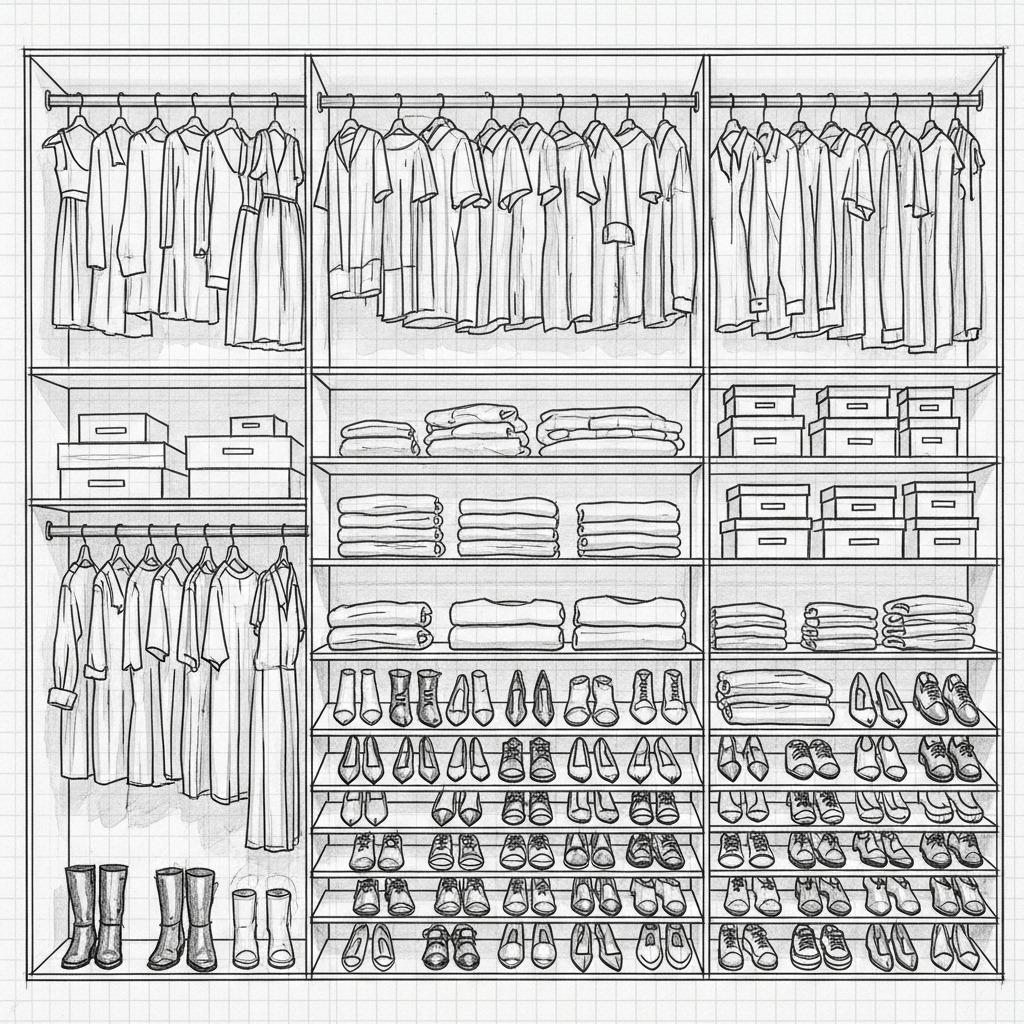
Here’s where most closet renovations go wrong – people install generic systems without considering what they actually own. Do you have mostly dresses and long coats? You need different hanging space than someone with primarily folded sweaters and jeans.
Count your hanging items, folded pieces, shoes, and accessories. Be specific. This inventory tells you exactly how much of each type of storage you need. For instance, if you own 30 pairs of shoes but only 10 dresses, don’t waste prime real estate on excessive hanging space.
Think about how you get dressed too. If you pick outfits by category, group your storage that way. If you dress by color, arrange accordingly. Your closet should work with your habits, not against them. This personalized approach is similar to creating a colorful minimalist bedroom – it’s about making the space work for you.
3. Maximize Vertical Space With Double Hanging Rods
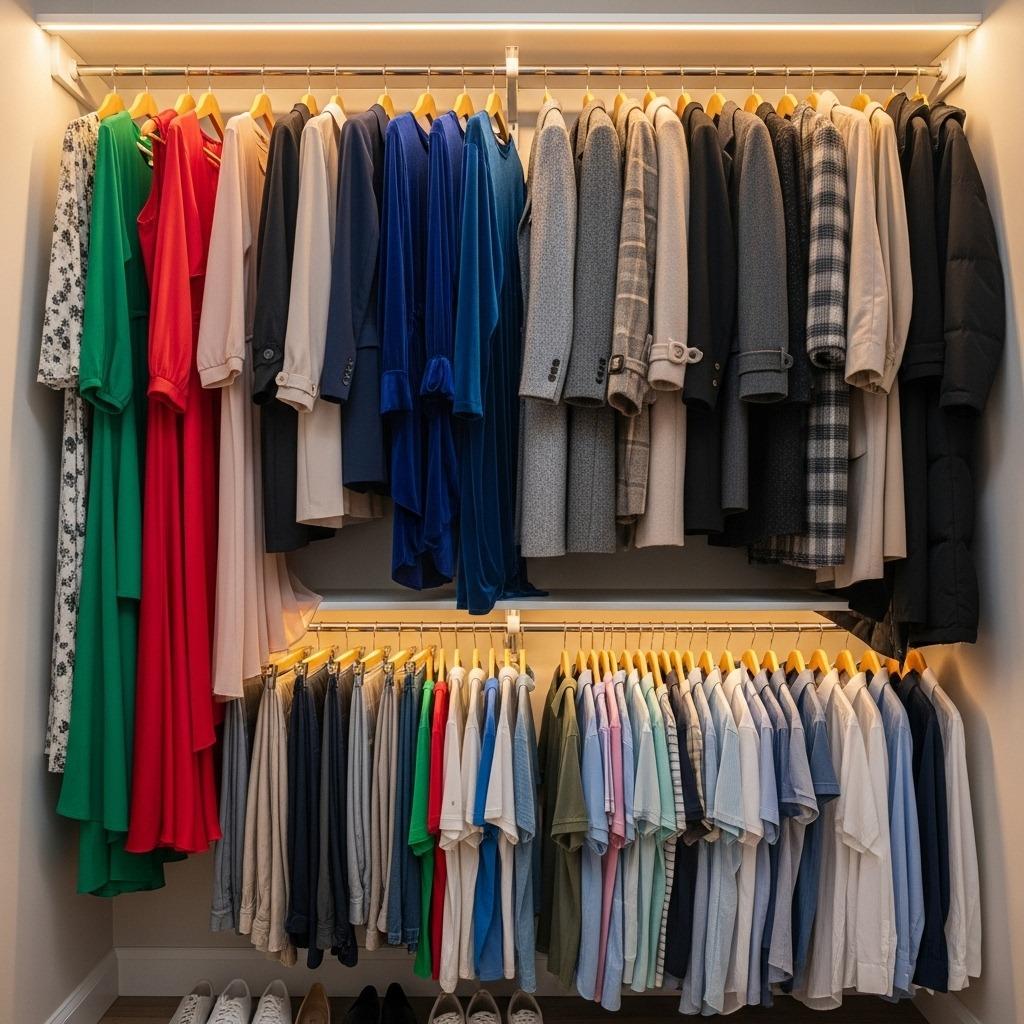
One of the simplest yet most effective wardrobe organization hacks is installing double hanging rods. Most closets waste incredible amounts of vertical space with a single rod placed somewhere in the middle. Why settle for that when you could nearly double your hanging capacity?
Install one rod at about 80 inches for full-length items like dresses and coats. Then add a second rod at 40 inches for shorter pieces like shirts, folded pants, and skirts. This simple change instantly creates more room without any floor space expansion.
Not everything needs to hang full-length anyway. Shirts, blazers, and folded pants work perfectly on the lower rod, while your longer pieces get the top position. This tiered approach transforms wasted air into functional storage that you’ll use daily.
4. Incorporate Custom Shelving Solutions
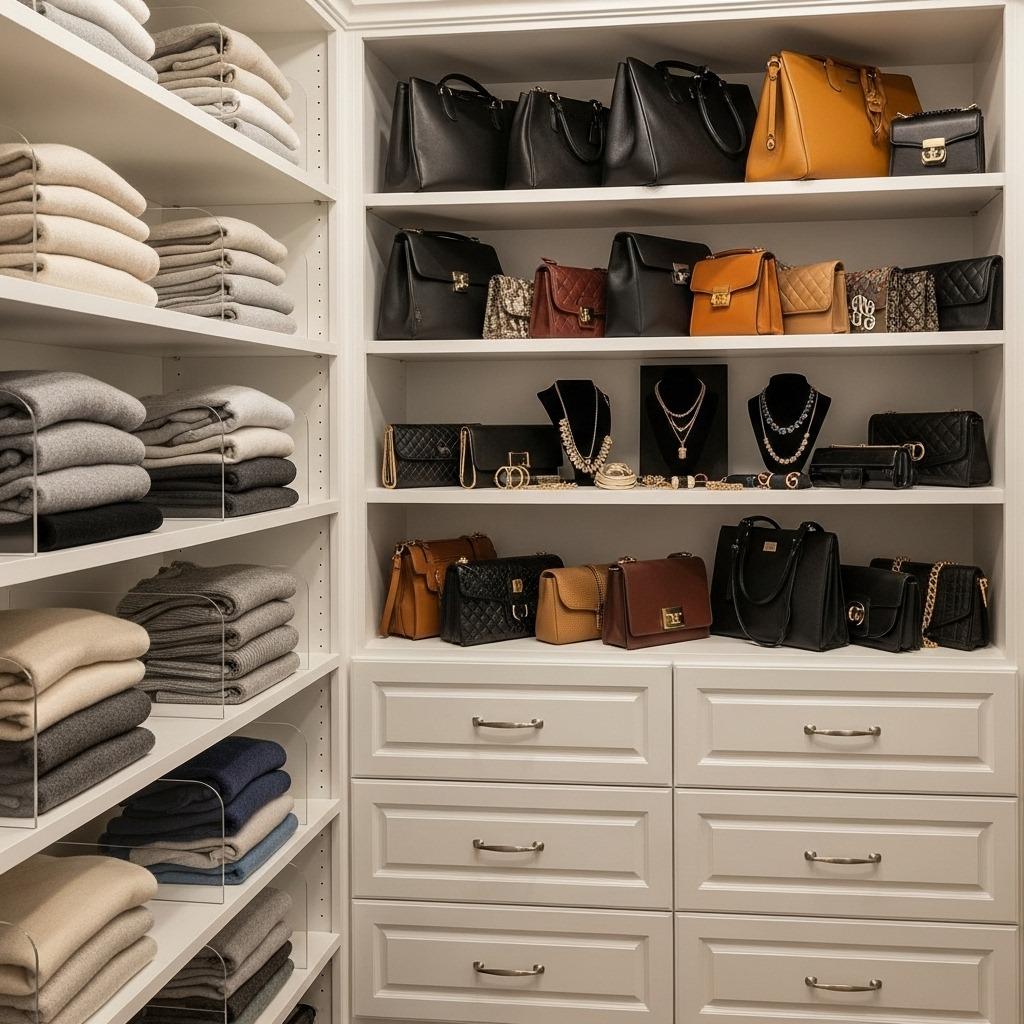
Off-the-rack organizers rarely fit perfectly, leaving gaps that collect dust and waste space. Custom shelving – even if you DIY it – makes every inch count. You don’t need to be a master carpenter either. Simple adjustable shelving systems let you configure storage that evolves with your needs.
Consider varying your shelf depths throughout the closet. Shallower shelves (about 12 inches) work beautifully for folded t-shirts and accessories, while deeper ones (16-18 inches) accommodate bulkier items like sweaters and bags. This variation prevents items from getting lost in the back of deep shelves.
Add shelf dividers to keep stacks from toppling over. There’s nothing more frustrating than neatly folding everything only to have it collapse into chaos the first time you pull something out. These simple additions maintain order with minimal effort. For more storage ideas throughout your home, explore these home storage improvement tips.
5. Add Specialty Storage for Shoes
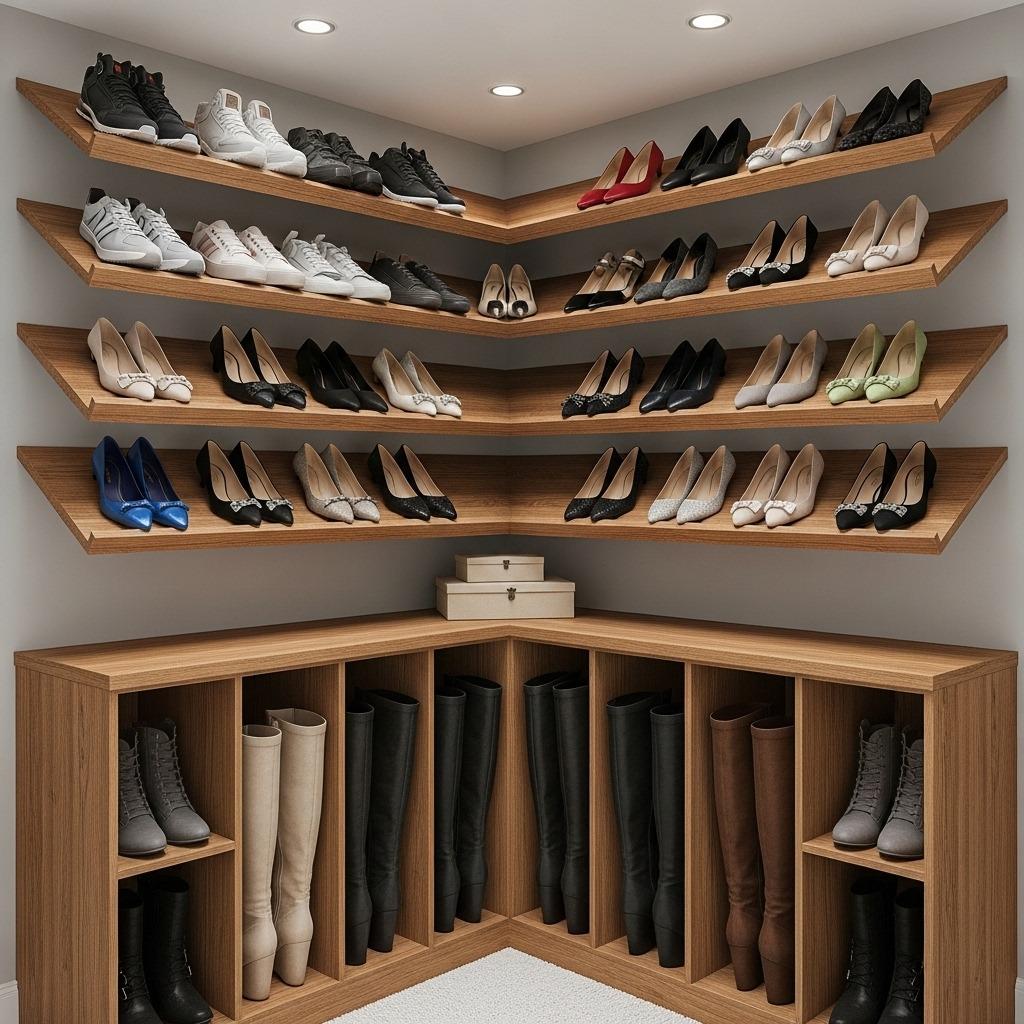
Shoes scattered on the closet floor aren’t just messy – they’re damaged by being piled on top of each other. Dedicated shoe storage protects your investment and makes it easier to find the pair you want. But the solution depends on your collection size and closet layout.
Slanted shoe shelves let you see every pair at a glance, perfect if you have the wall space. Over-the-door organizers work well in smaller closets but limit you to flatter shoes. For serious shoe collectors, consider pull-out drawers or cubbies that keep dust off while displaying your options clearly.
Think about accessibility too. Store your everyday shoes at eye level or within easy reach, while seasonal or special occasion pairs can go higher or lower. This hierarchy keeps your most-used items convenient without cluttering prime real estate.
6. Install Pull-Out Drawers and Baskets
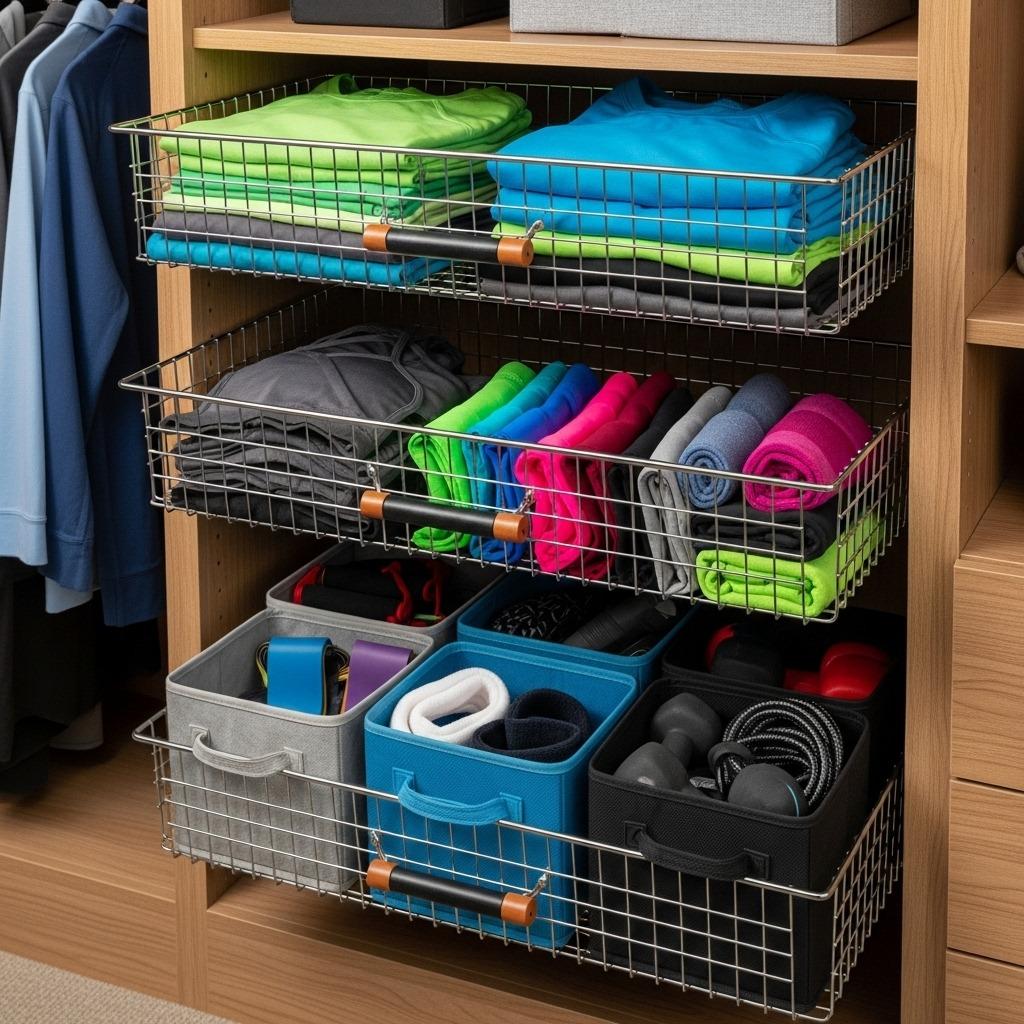
Not everything belongs on a hanger or shelf. Pull-out drawers and baskets handle those in-between items beautifully – underwear, socks, accessories, workout gear. They keep small things contained while remaining fully accessible.
Wire baskets work wonderfully for items that don’t need to be perfectly flat. They’re also more affordable than wooden drawers and allow air circulation, which is helpful for gym clothes or items you want to keep fresh. But for delicate items or things you want hidden, solid drawers provide more protection and polish.
Install these at a comfortable height where you can reach in without bending or stretching awkwardly. The goal is making your daily routine smoother, not creating another obstacle. This kind of thoughtful planning is essential in any DIY home renovation ideas project.
7. Create a Dedicated Accessories Zone

Jewelry tangled in drawers, scarves stuffed on shelves, belts draped over hangers – accessories often become the most chaotic part of a closet. They deserve their own designated space where everything has a specific home and stays visible.
Hooks work perfectly for necklaces, keeping them untangled and easy to grab. Shallow drawers with dividers organize rings, earrings, and bracelets so you can see everything at once. For scarves and belts, consider a pull-out rack or individual hooks that display each piece.
The key is making accessories as easy to put away as they are to take out. If storing something feels complicated, it’ll end up in a pile somewhere. Simple, visible storage encourages you to actually use these pieces instead of forgetting you own them.
8. Improve Lighting for Better Visibility
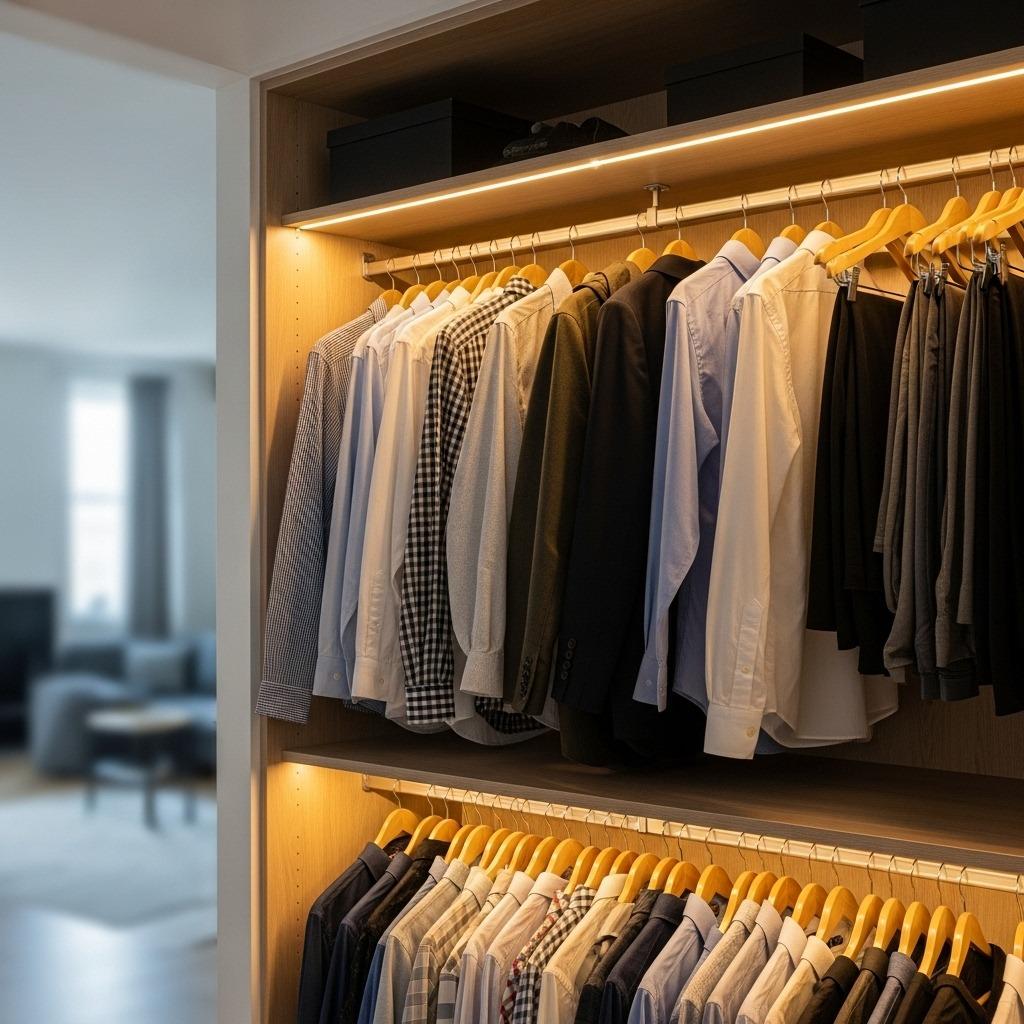
You can’t organize what you can’t see. Most closets have terrible lighting – maybe a single dim bulb that barely illuminates half the space. Quality lighting transforms both the functionality and feel of your closet.
LED strip lights installed on shelves or along the top of hanging rods provide bright, even illumination without taking up any space. Motion-sensor lights are even better – they turn on automatically when you open the door and shut off when you leave, saving energy while adding convenience.Consider adding a small pendant light or chandelier if your closet is large enough.
9. Use the Back of the Door Strategically
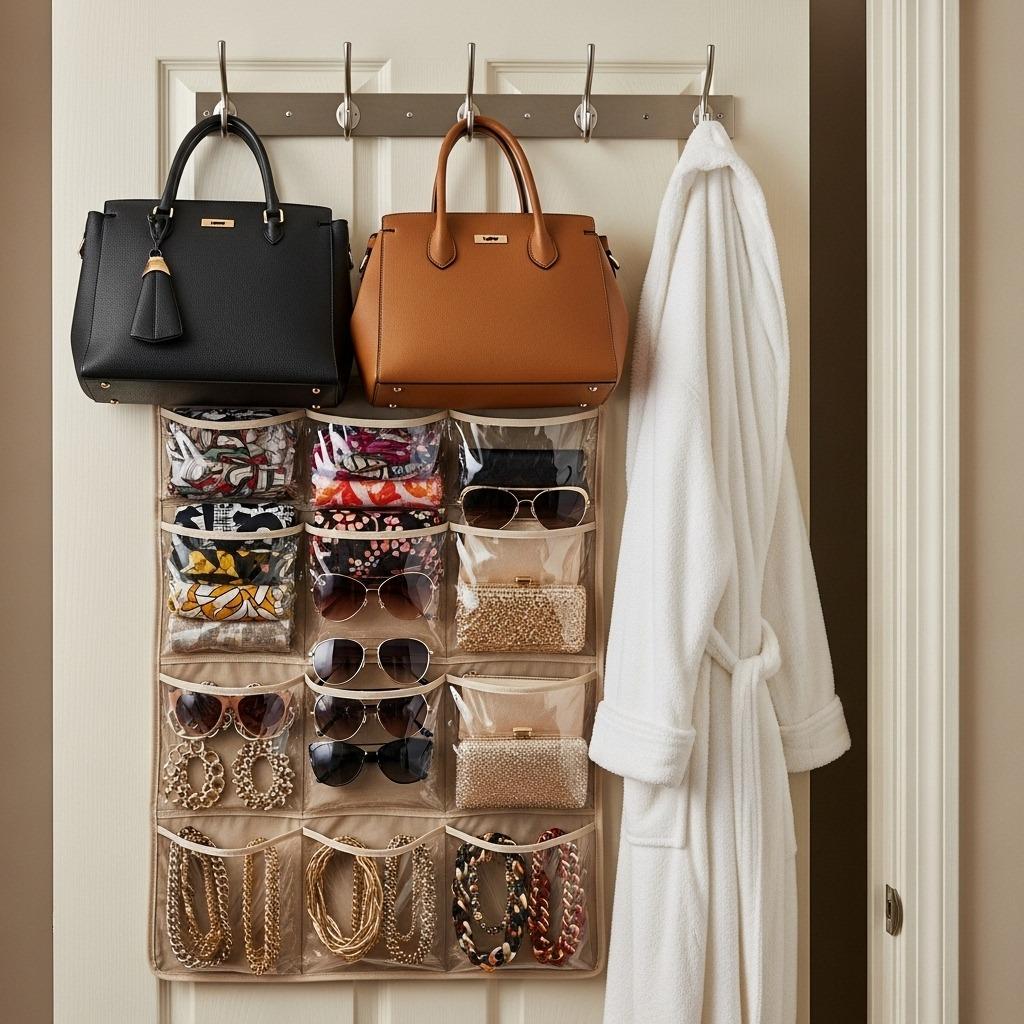
That blank door is prime real estate you’re probably wasting. An over-the-door organizer adds storage without sacrificing any existing closet space. But choose carefully – not all door organizers are created equal.
Avoid anything too heavy that strains the door hinges. Fabric organizers with clear pockets work well for accessories, scarves, or small items you want to see. Hooks are perfect for bags, robes, or tomorrow’s outfit. Just make sure whatever you add doesn’t prevent the door from closing properly.
Keep the door storage curated. This isn’t a catch-all for overflow – it’s intentional space for specific items you use regularly. Overstuffing defeats the purpose and makes your closet feel cluttered even when the inside is organized.
10. Incorporate Seasonal Rotation Storage
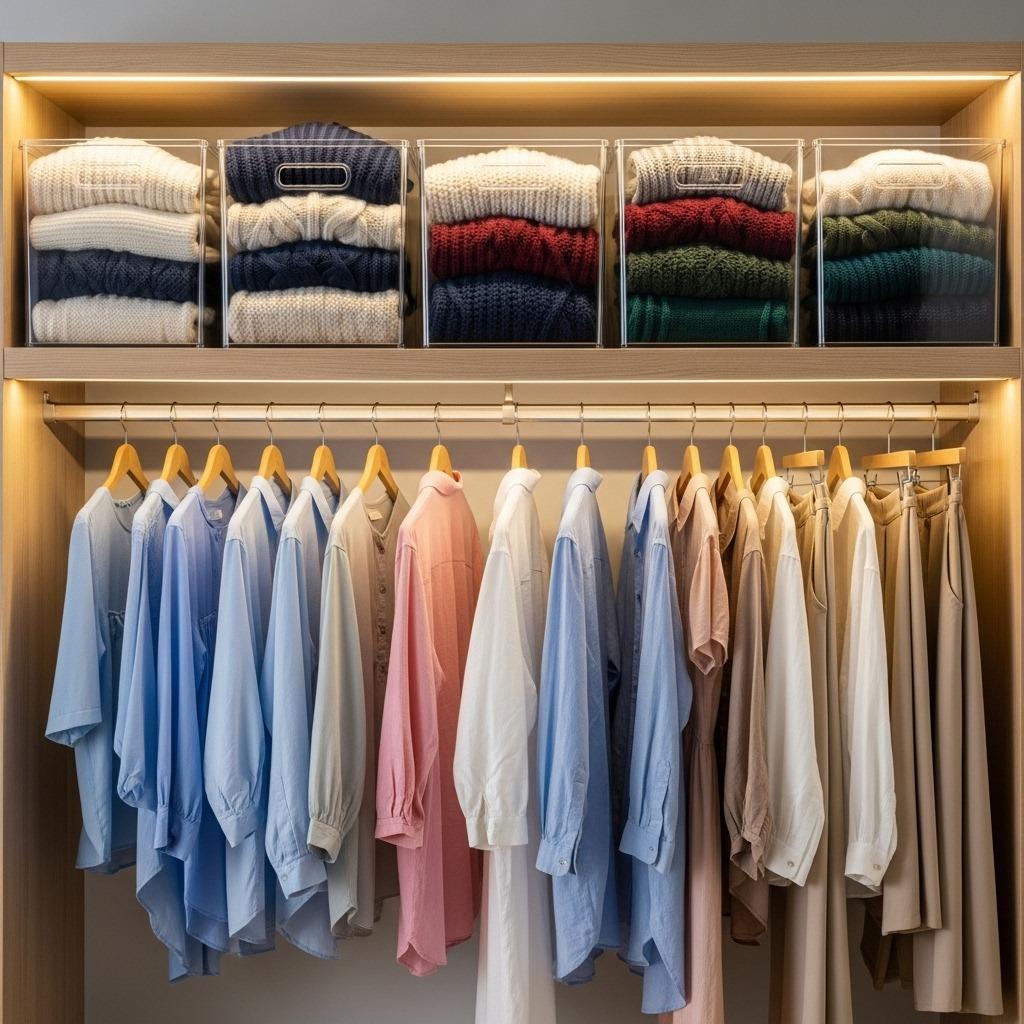
Unless you live somewhere with identical weather year-round, you don’t need every season’s wardrobe taking up prime closet space simultaneously. Seasonal rotation keeps your current needs accessible while storing off-season items out of the way.
Use upper shelves or bins for out-of-season clothes. Clear containers let you see what’s inside without opening them, and labels eliminate any guessing. When the seasons change, swap the contents – it’s like shopping your own closet twice a year.
This strategy works especially well in small space renovation projects where every inch counts. You’re not getting rid of anything, just being smarter about what occupies your most accessible storage.
11. Add a Closet Island or Built-In Dresser
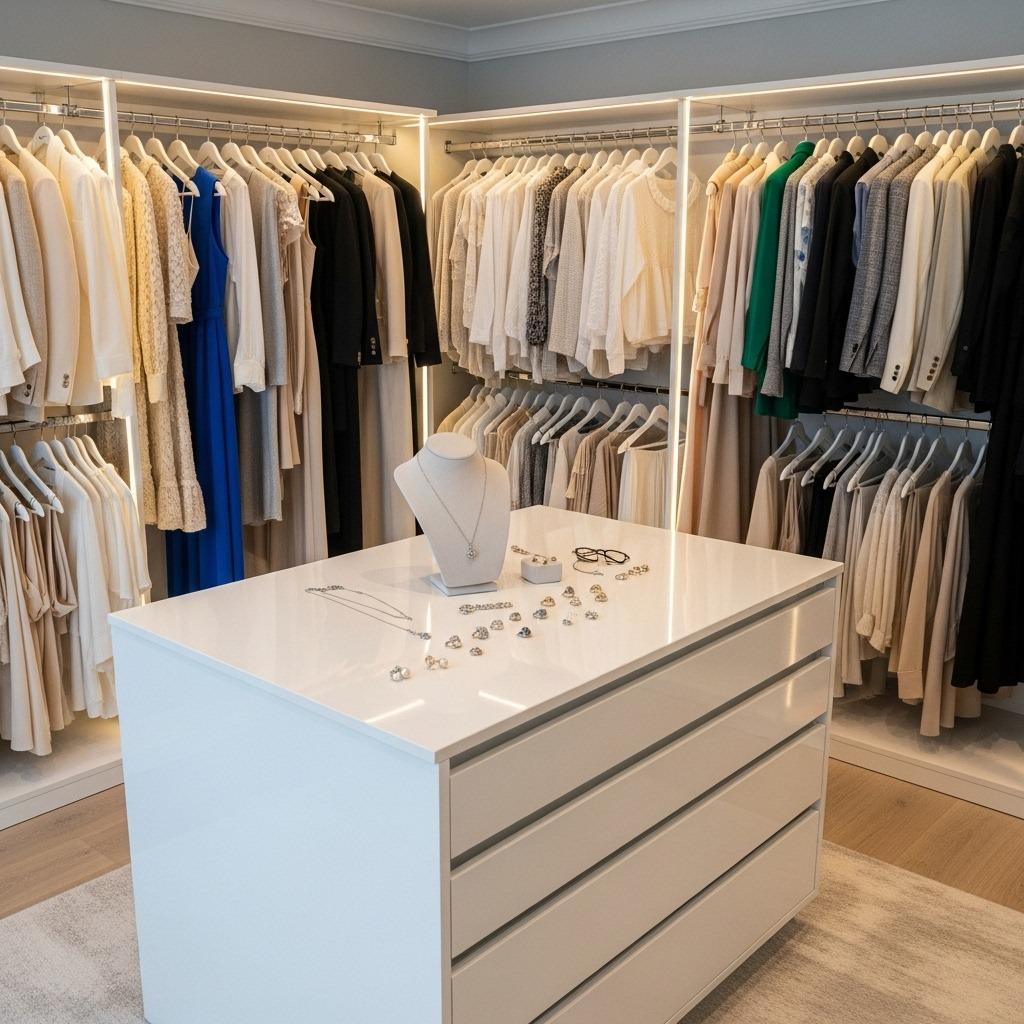
If you’re blessed with a walk-in closet, consider adding a central island or built-in dresser. This turns your closet into a true dressing room and adds substantial drawer storage for items that fold better than they hang.
A closet island provides counter space for laying out outfits, storing jewelry in flat drawers, or displaying decorative items that make the space feel more personal. The top surface alone is incredibly functional for daily routines.
Built-in dressers along a wall serve a similar purpose in slightly smaller spaces. They eliminate the need for a separate bedroom dresser, freeing up space in your sleeping area while keeping all your clothes in one organized location. This integrated approach mirrors the thoughtful design of a luxury master bedroom.
12. Finish With Thoughtful Details That Matter
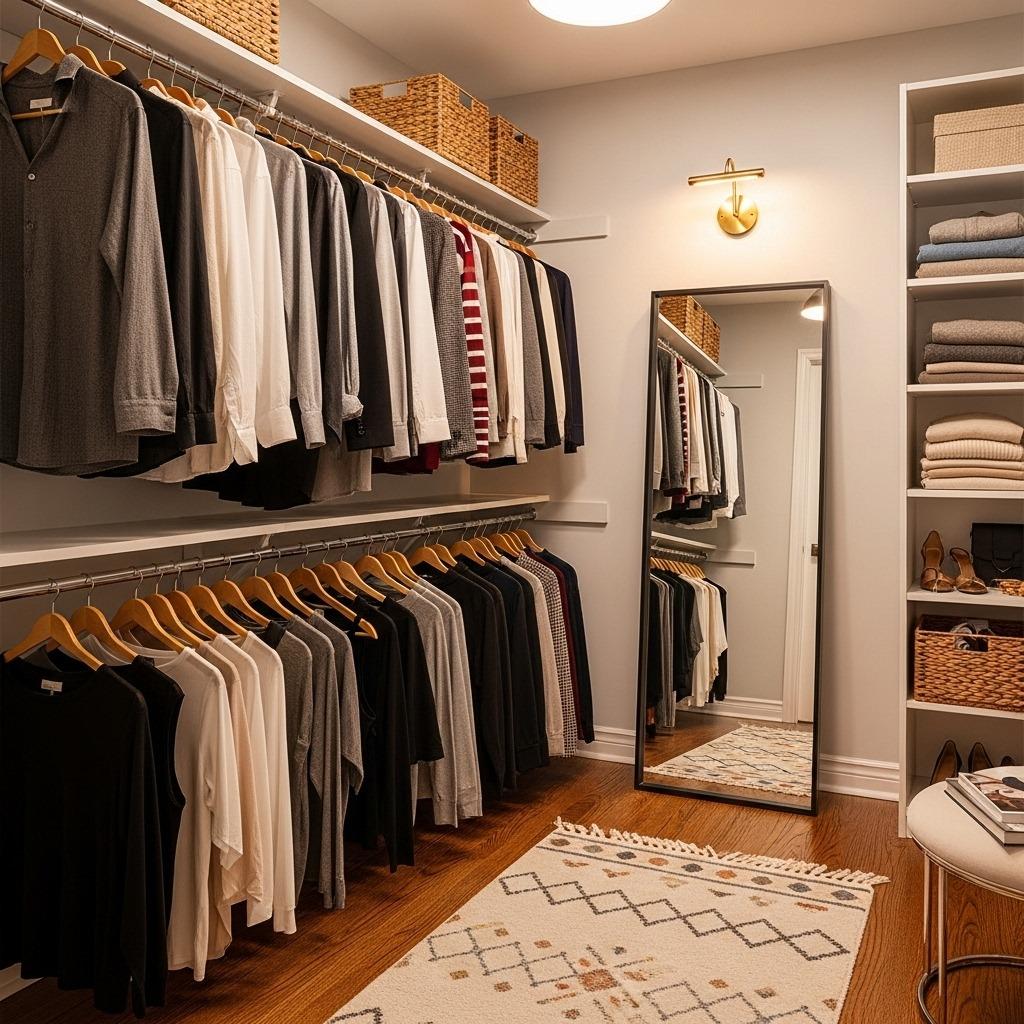
The final touches make the difference between a functional closet and one you genuinely love using. These details might seem small, but they dramatically impact your daily experience.
Matching hangers create visual calm and maximize space – velvet hangers are slim and prevent clothes from slipping. A small step stool lets you reach high shelves safely. A full-length mirror is essential for checking outfits without leaving your closet.
Consider adding a small rug if you have floor space, some artwork if there’s wall space, or even a chair if the closet is large enough. These aren’t frivolous additions – they transform a storage area into a space you enjoy spending time in. When you like being in your closet, you’re more likely to keep it organized.
A successful closet renovation isn’t about following trends or copying magazine photos. It’s about creating a system that actually works for your wardrobe, your space, and your daily routine. The strategies we’ve covered here can be mixed, matched, and adapted to fit any closet size or budget.
Start with the changes that address your biggest frustrations first. Maybe that’s better lighting so you can actually see what you own, or double hanging rods to fit more clothes in a small space. Each improvement builds on the others, gradually transforming your closet from a source of stress into something that simplifies your mornings.
What closet challenge drives you the most crazy? Sometimes identifying that one pain point is all you need to begin creating a space that finally works the way you’ve always wanted it to.

