
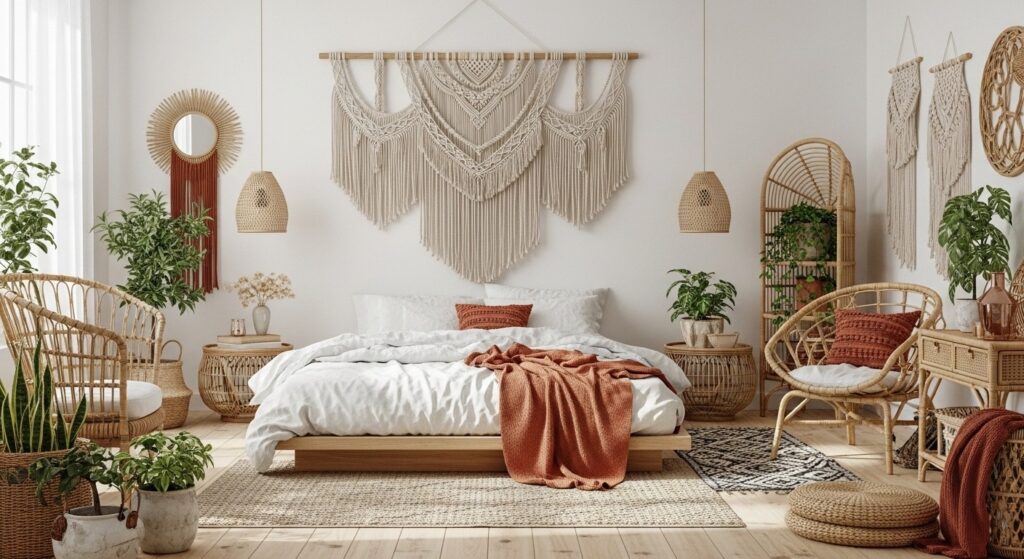
There’s something magical about hanging a tapestry that completely shifts the energy of a room. Unlike painting an accent wall or installing wallpaper, a bohemian tapestry offers instant transformation with zero commitment – you can switch it out with the seasons or whenever inspiration strikes.
Whether you’re drawn to intricate mandalas, woven textures, or vibrant patterns, these wall hanging decor pieces do more than cover blank space. They soften acoustics, add warmth, and create that collected-over-time aesthetic that makes boho style bedrooms feel so inviting. Plus, they’re renter-friendly and budget-conscious, which is always a win.
I’ve gathered 18 ways to style bohemian tapestries that go beyond the obvious “centered above the bed” approach. Some ideas play with unexpected placements, while others layer multiple textiles for maximum impact. Ready to find your favorite?
1. Oversized Mandala as a Headboard Alternative
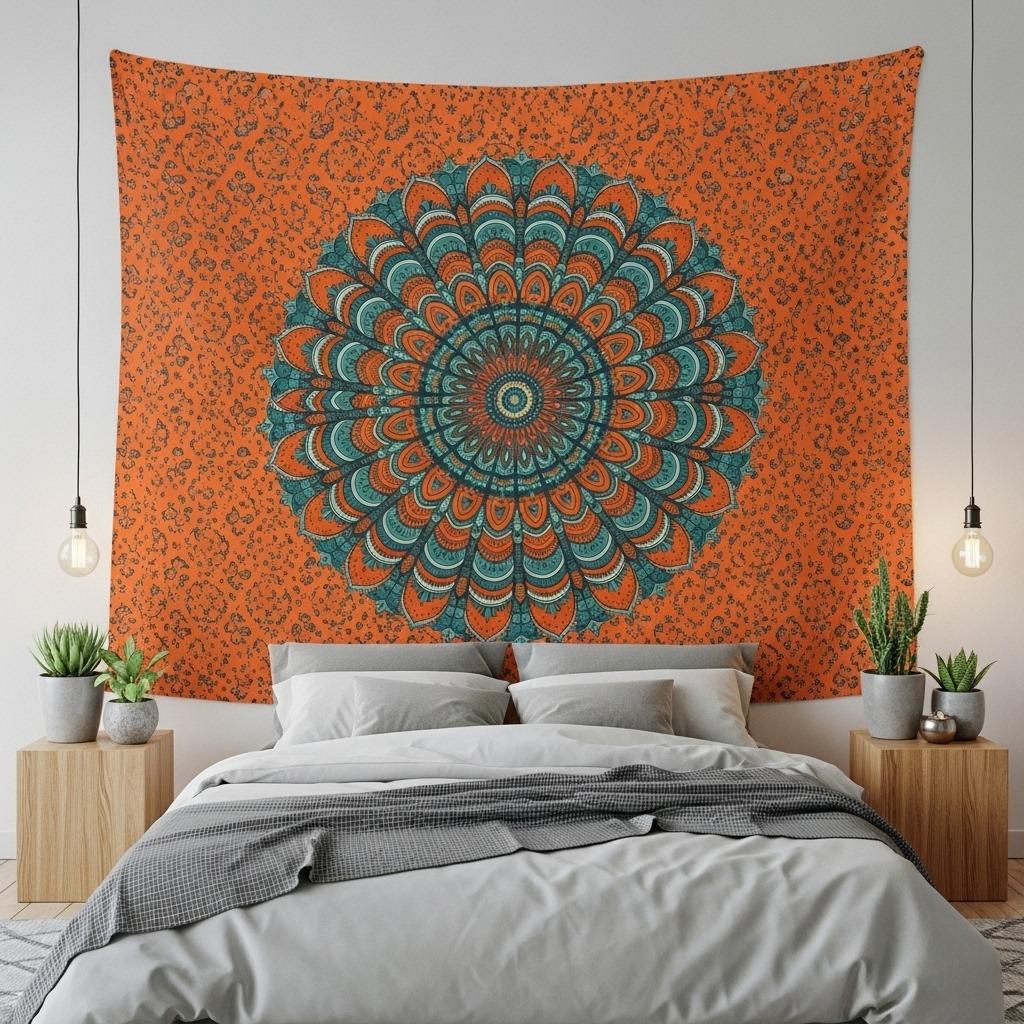
Skip the traditional headboard entirely and let a large-scale mandala tapestry take center stage. The circular geometry naturally draws the eye and creates a focal point that feels both grounding and artistic.
Look for tapestries that extend at least 6-8 feet wide to achieve proper visual weight behind a queen or king bed. The symmetrical design of mandalas works especially well in this application because it frames the bed beautifully without requiring precise centering.
Hang it so the bottom edge sits about 6 inches above your mattress. This placement prevents the fabric from getting caught in your sheets while maintaining that cohesive headboard effect. The repetitive patterns also add a meditative quality to your bedroom ideas that promotes relaxation.
2. Layered Textile Wall Gallery
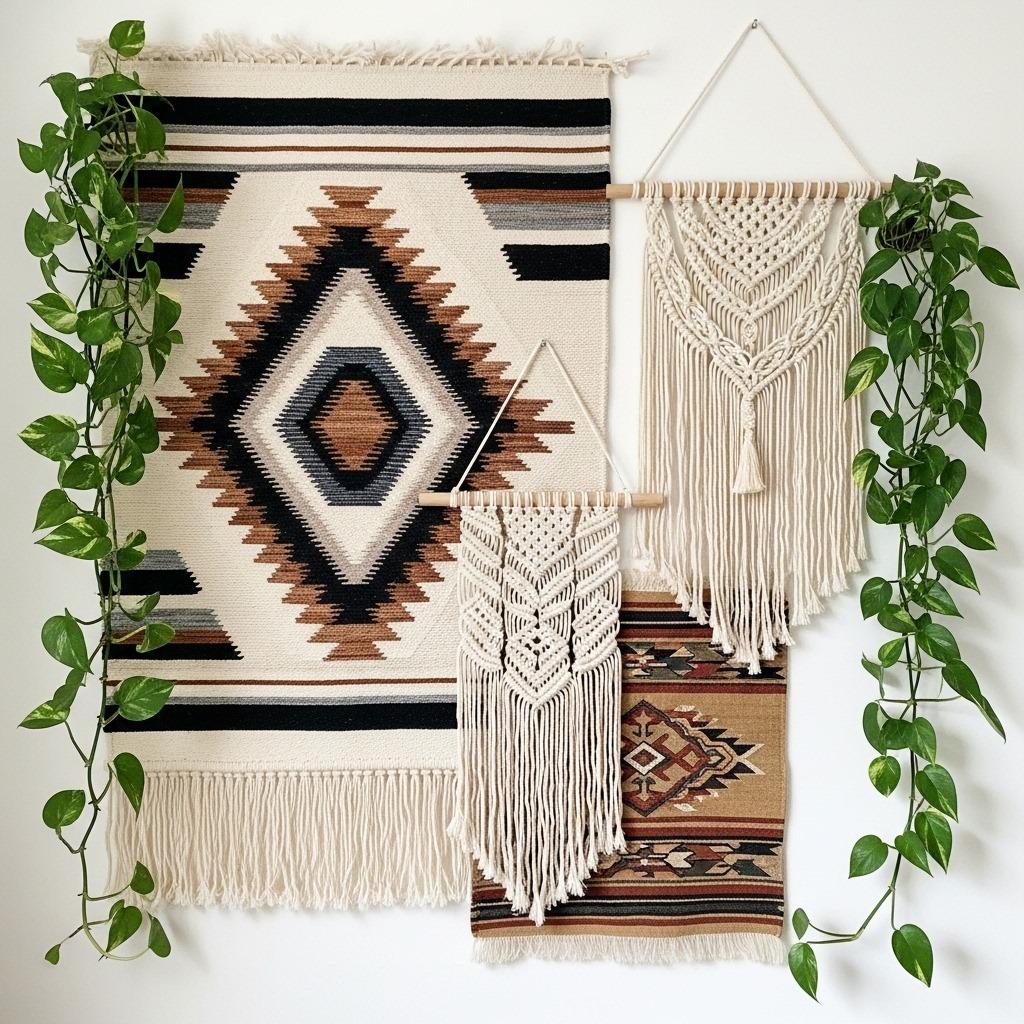
Why stop at one tapestry when you can create an entire textile gallery wall? Mix different sizes, textures, and patterns for a collected look that tells a story. The key is finding pieces that share a common color thread even if the patterns vary wildly.
Start with your largest piece as the anchor, then build around it with smaller woven wall hangings, macramé pieces, or vintage textiles. Leave intentional negative space between items – you’re not trying to cover every inch of wall, just create visual interest.
This approach works particularly well on large empty walls where a single tapestry might look lost. The varied textures catch light differently throughout the day, making the display feel dynamic rather than static.
3. Ceiling-Mounted Canopy Effect
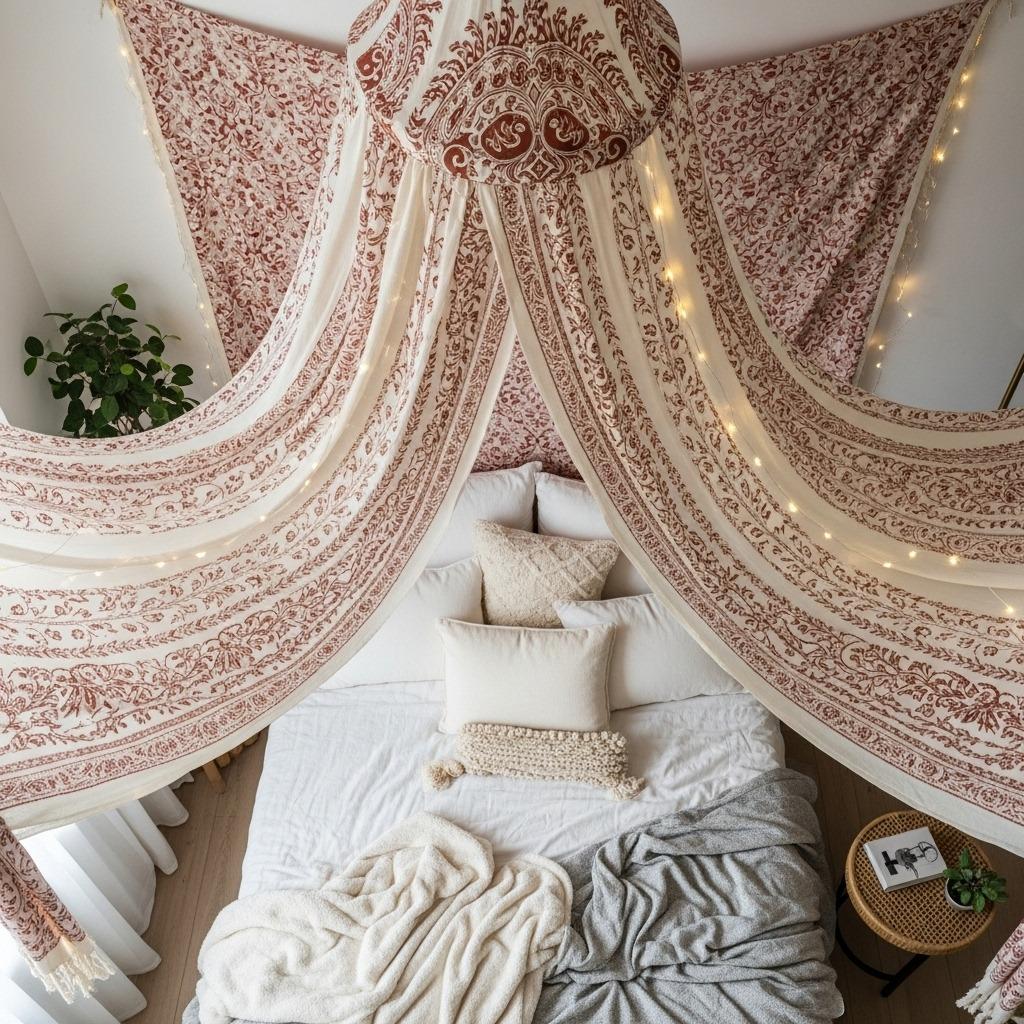
Transform your bedroom into a dreamy bohemian retreat by mounting a large tapestry to the ceiling above your bed. This creates an intimate canopy effect without the structure of a traditional four-poster bed.
Use adhesive ceiling hooks or command strips rated for the weight of your tapestry. Let the fabric drape down behind your headboard or pool slightly on either side of the bed. The overhead textile softens the room’s acoustics and creates a cozy, enclosed feeling.
This technique particularly shines in small space bedroom hacks because it adds drama and dimension without taking up any floor space. Choose lightweight fabrics that won’t overwhelm the room visually.
4. Corner Accent Installation
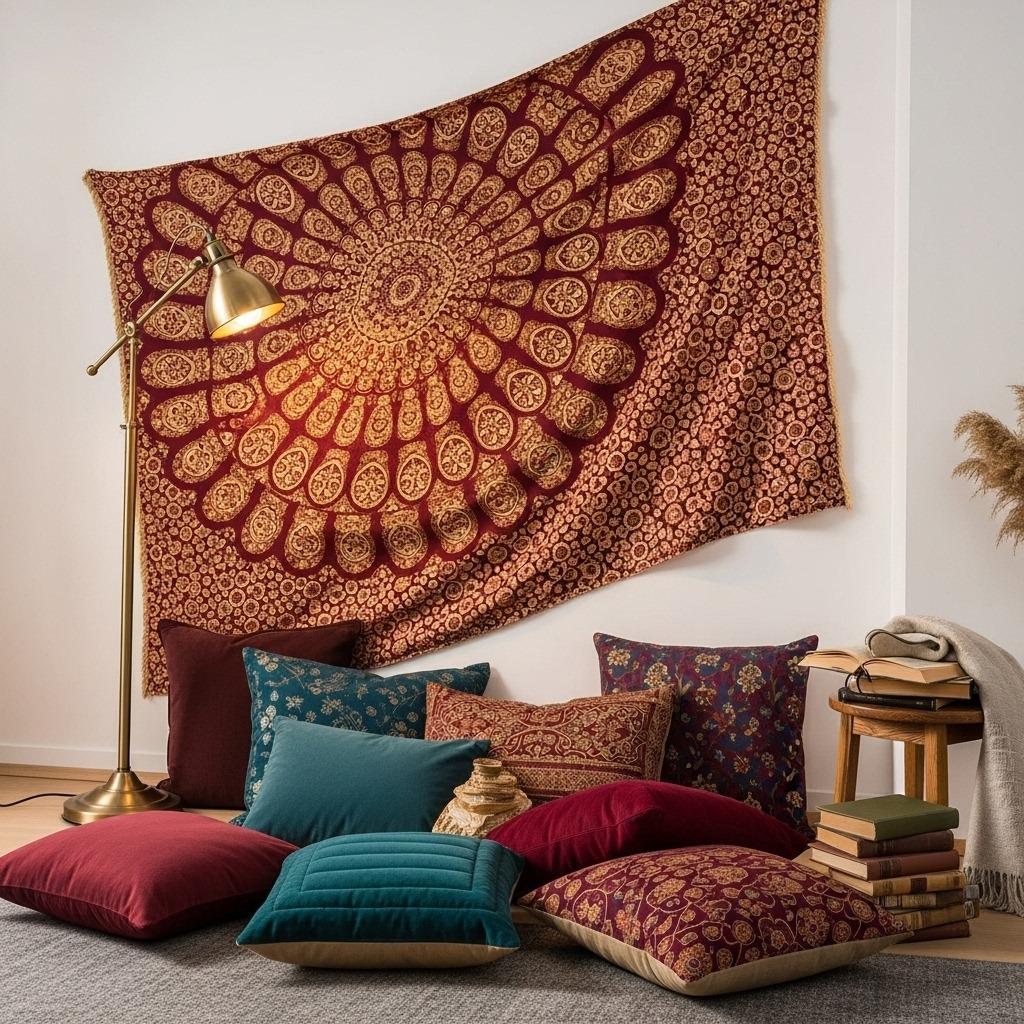
Don’t overlook your bedroom corners when planning your bohemian tapestry placement. A tapestry hung diagonally across a corner creates unexpected visual interest and softens the hard angles of the room.
This works especially well in rooms with awkward layouts or unused corner spaces. The diagonal line adds movement and draws the eye upward, making ceilings feel higher. Pair the corner tapestry with floor cushions or a reading nook to create a defined cozy zone.
Choose tapestries with vertical patterns or fringe details that emphasize the corner placement. The cascading effect of tassels or woven edges adds dimension that flat wall art simply can’t achieve.
5. Tapestry Room Divider
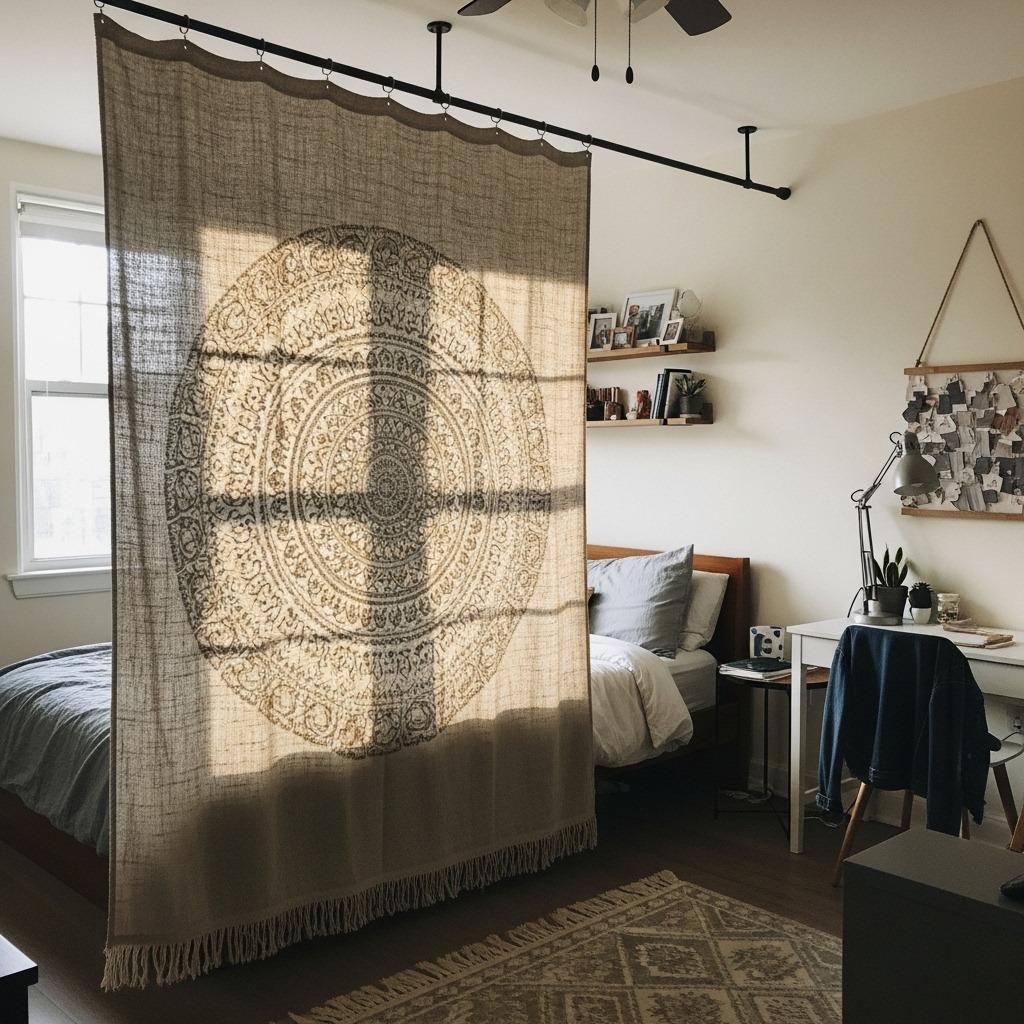
In studio apartments or open-concept bedrooms, a bohemian tapestry makes an excellent space divider that defines zones without blocking light. Mount a ceiling track or tension rod to suspend the tapestry, creating a flexible partition you can open or close as needed.
This solution works beautifully for separating sleeping areas from home offices or dressing spaces. Unlike solid walls or heavy curtains, tapestries maintain airflow and that airy boho chic living room aesthetic throughout the space.
Select semi-sheer or loosely woven tapestries that allow some light penetration. The filtered glow through the fabric creates beautiful shadow patterns on surrounding walls, adding another layer of visual interest.
6. Behind Open Shelving Display
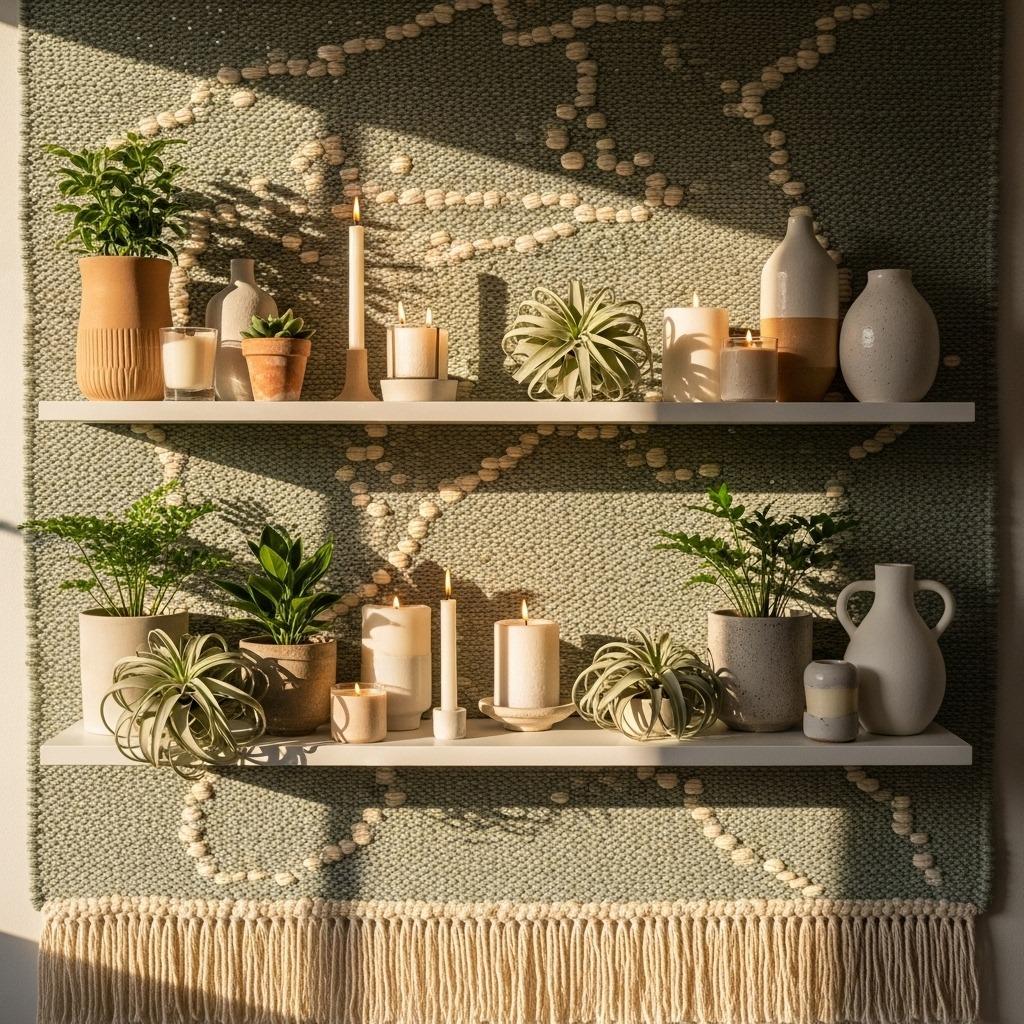
Add unexpected depth by hanging a tapestry behind open shelving units or floating shelves. The textile backdrop makes your displayed items pop while adding warmth that plain walls lack.
This technique works particularly well with minimalist or industrial shelving where you want to soften the look without sacrificing the open, airy feel. The tapestry provides color and pattern in a controlled way – your shelved items remain the focus while the textile adds supporting character.
Choose tapestries in muted tones if your shelves hold colorful objects, or go bold with pattern if your display items are neutral. The contrast between hard shelving materials and soft textiles creates appealing tension according to modern accent wall ideas.
7. Window Treatment Alternative
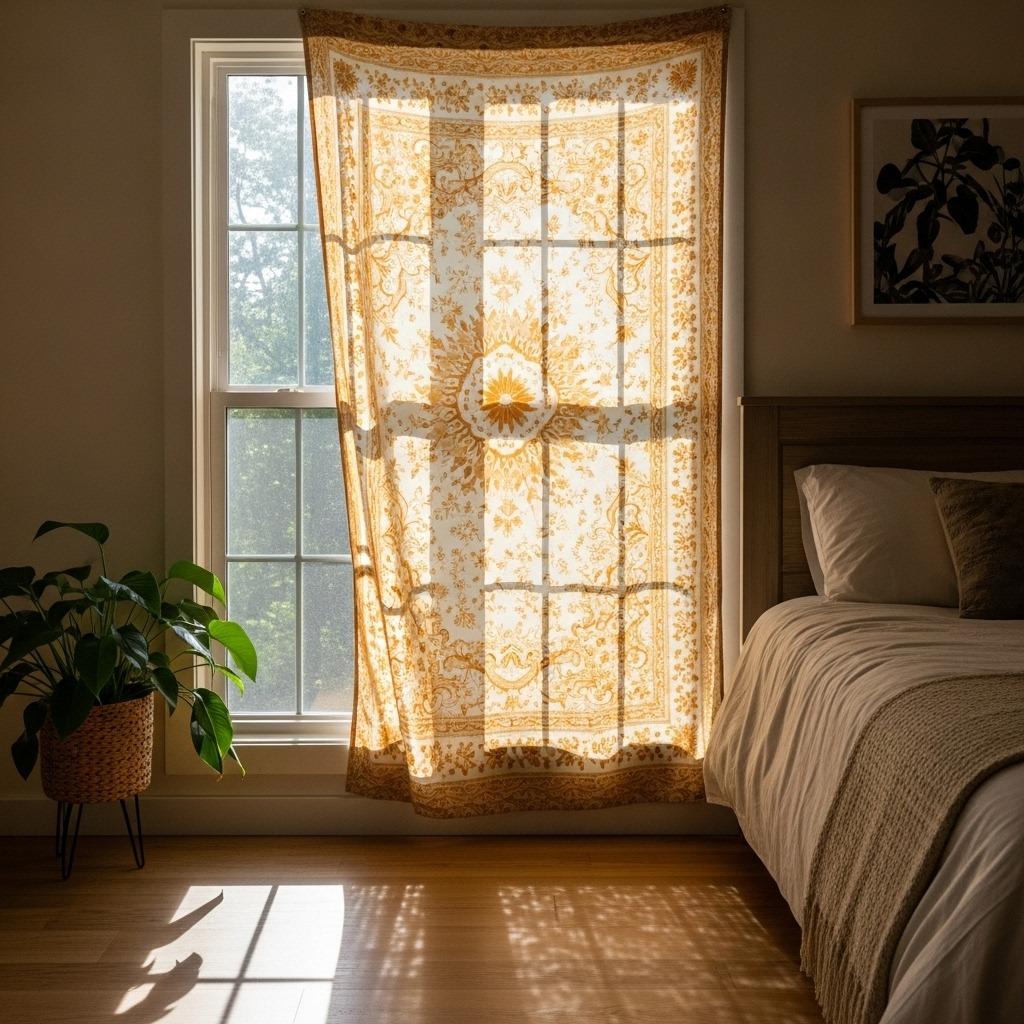
Replace heavy curtains with a lightweight tapestry for a bohemian approach to window dressing. This works best with windows that don’t require complete blackout coverage or privacy – think spaces where filtered light is acceptable.
Mount the tapestry on a curtain rod so you can still draw it open or closed as needed. The woven texture softens harsh sunlight while maintaining that breezy, relaxed bedroom window ideas vibe that defines bohemian spaces.
Look for tapestries with looser weaves that allow light penetration. The dappled patterns created by sunlight filtering through add ever-changing visual interest throughout the day.
8. Bed Crown Installation
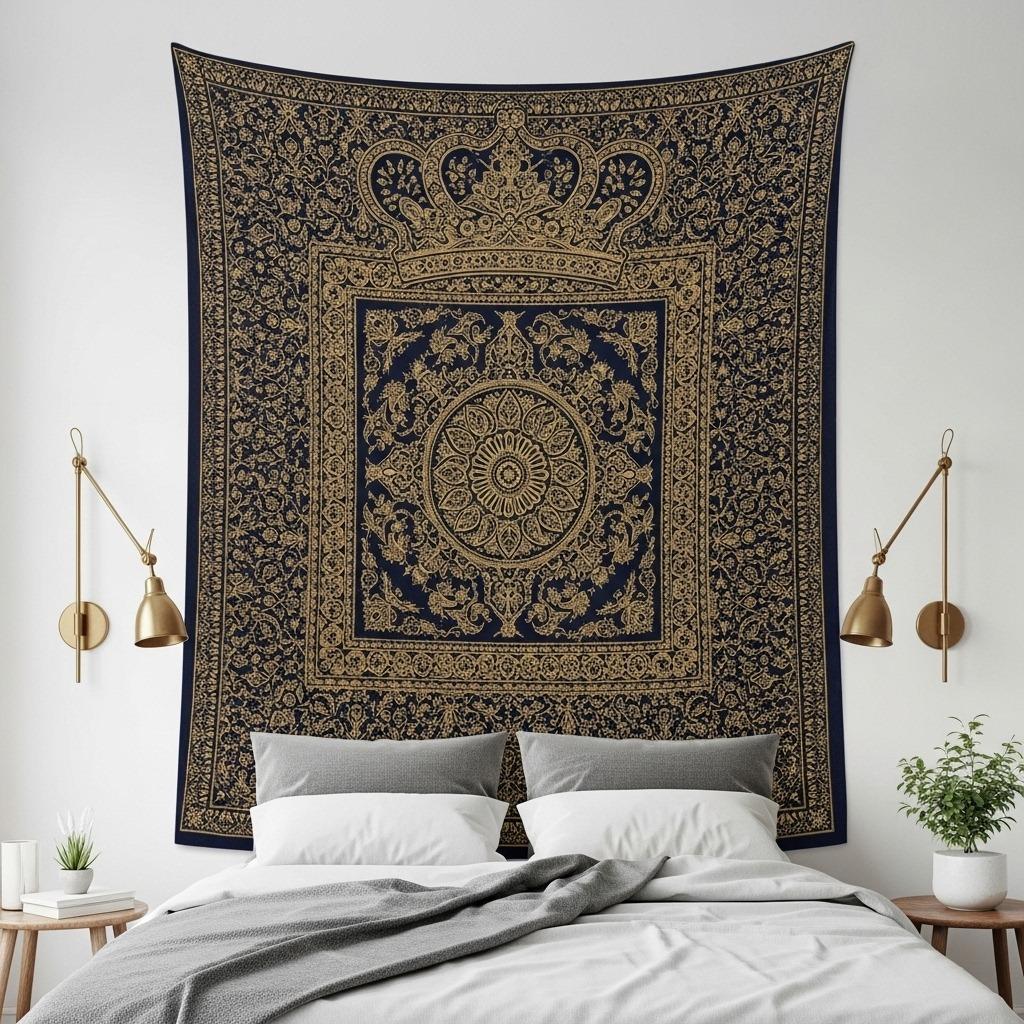
Create an elevated focal point by mounting a tapestry high on the wall as a bed crown. This vertical placement draws the eye upward and makes standard-height ceilings feel taller – a valuable trick in typical bedroom dimensions.
Position the tapestry’s top edge about 12-18 inches from the ceiling, allowing it to cascade down behind the bed. The height creates drama while the flowing fabric adds softness. This approach mimics expensive architectural details without the permanent commitment.
Pair this with bedroom lighting fixtures on either side to frame the installation and highlight the tapestry’s texture in the evening. The uplighting creates beautiful shadows that emphasize the weave.
9. Horizontal Stripe Effect
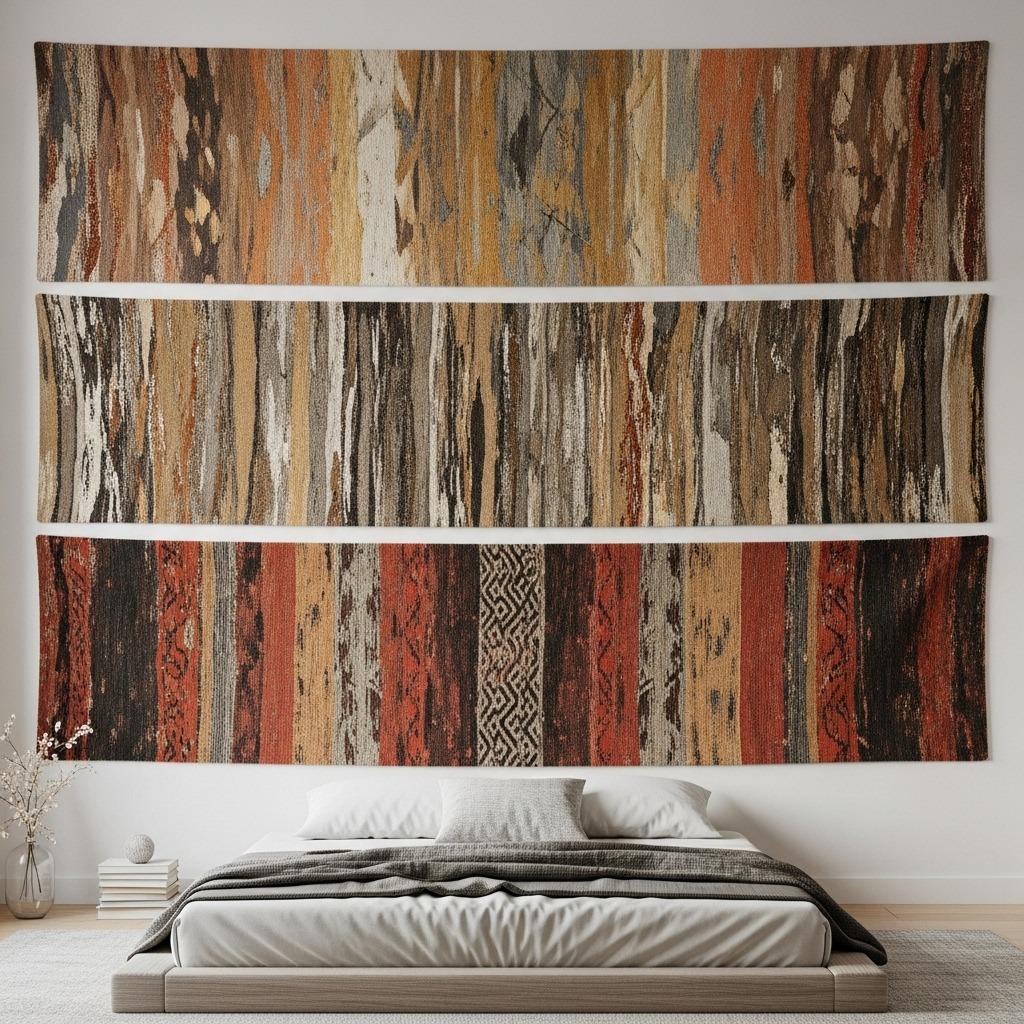
Challenge traditional vertical hanging by mounting multiple narrow tapestries or woven runners horizontally across your wall. This creates striped visual interest that emphasizes the room’s width rather than height.
Space the tapestries with intentional gaps between them – about 6-8 inches of negative space lets each piece breathe while creating rhythm across the wall. This approach works beautifully in rooms with low ceilings where you want to draw attention sideways rather than up.
Mix textures within a cohesive color palette. Combine chunky weaves with fine macramé or printed fabrics to add dimensional variety while maintaining visual harmony through your color choices.
10. Closet Door Transformation
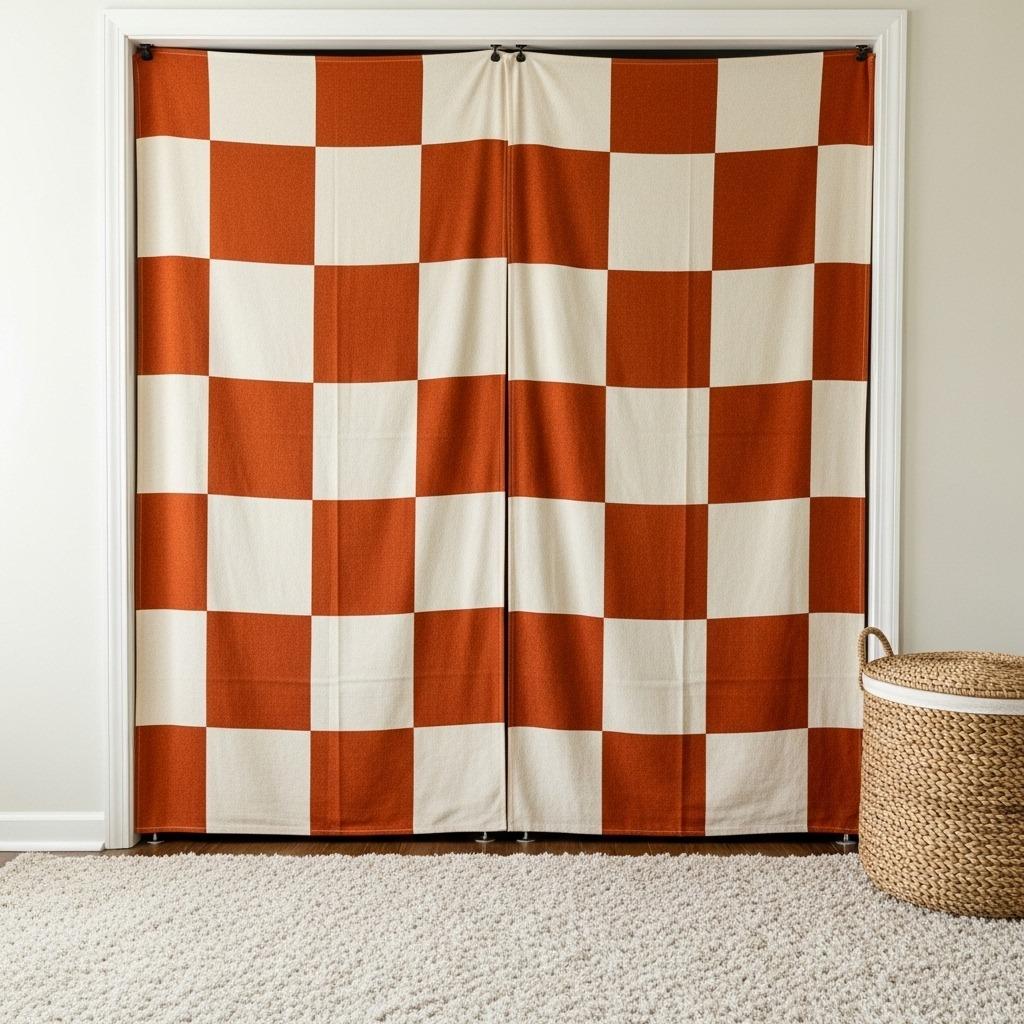
Give boring closet doors instant personality by hanging tapestries from tension rods mounted inside the door frame. This hides generic doors while adding texture and color that integrates with your overall bedroom design.
The beauty of this approach is its complete reversibility – perfect for rental spaces. When you move, simply remove the tension rod and tapestry without leaving any marks. The fabric also adds a layer of softness that helps with room makeover bedroom acoustics.
Choose tapestries slightly longer than your door height so they pool slightly at the floor. This extra fabric prevents gaps at the bottom and adds to that relaxed, unfussy bohemian aesthetic.
11. Low-Hanging Statement Piece
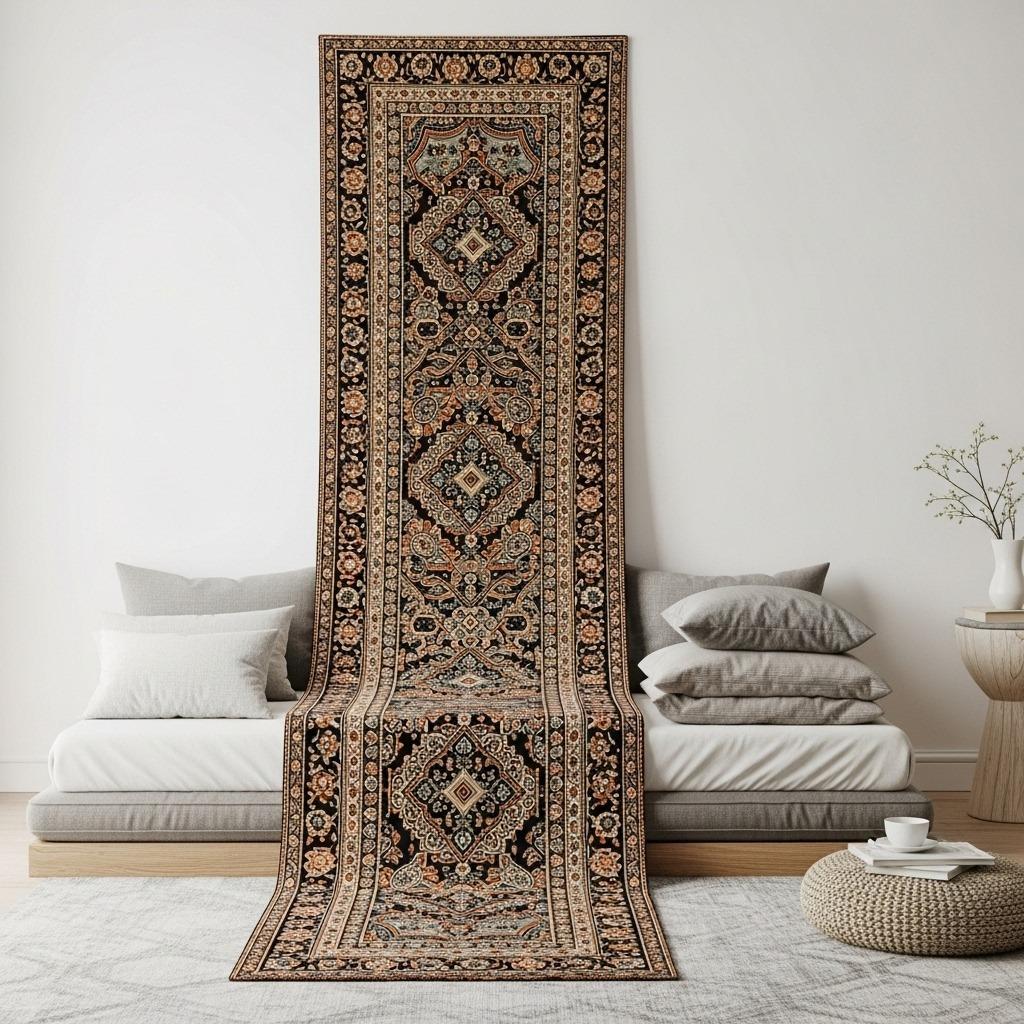
Break the rules by hanging your tapestry lower than conventional wisdom suggests. When positioned with its bottom edge just above your baseboards, the tapestry creates an unexpected focal point that grounds the room differently.
This works particularly well with extra-long tapestries that might overwhelm when hung at standard heights. The lower placement showcases the full design while creating interesting proportions. It’s especially effective behind low-profile platform beds or floor seating arrangements.
The unconventional height also makes the space feel more intimate and cocoon-like. Your eye naturally settles at this level when seated on the bed or floor, making the tapestry’s details more immediately appreciable.
12. Mixed Media Wall Composition
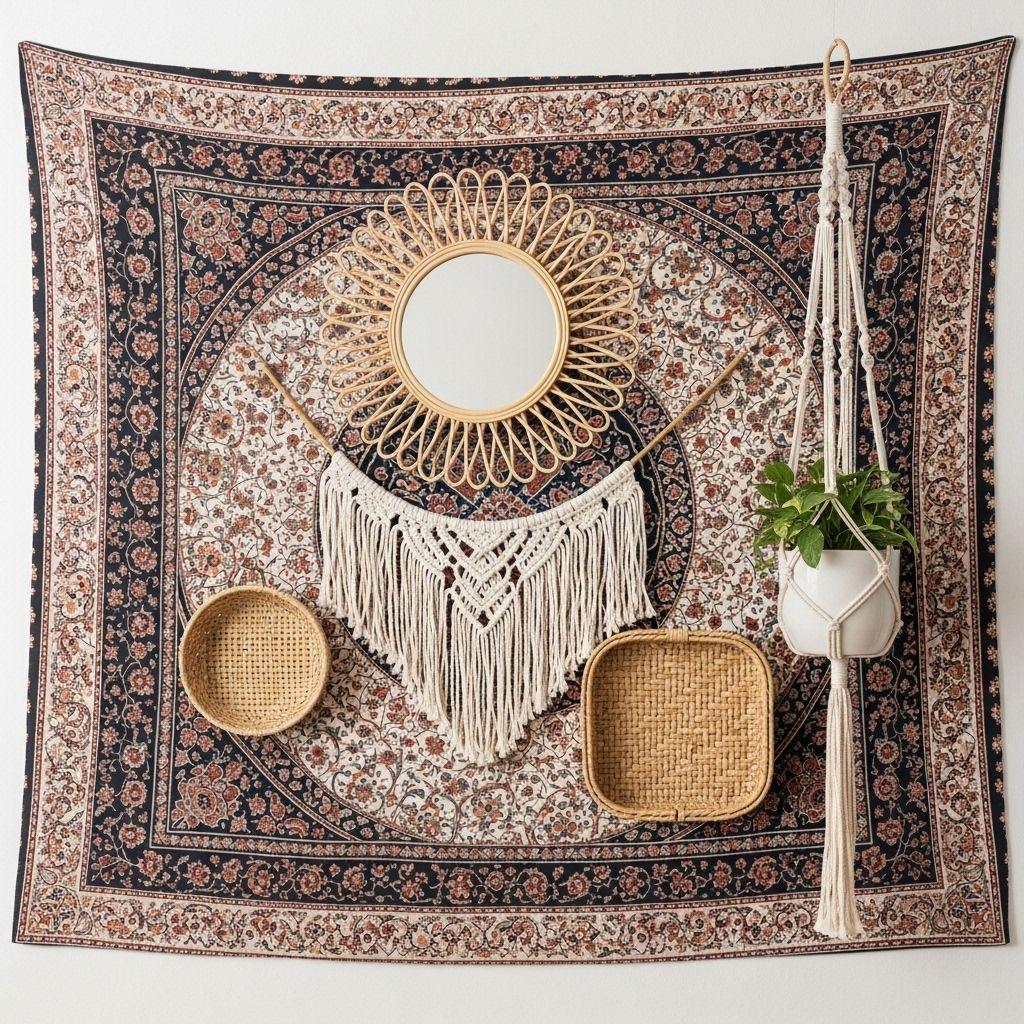
Integrate your bohemian tapestry into a larger mixed media wall display that includes mirrors, artwork, and sculptural elements. The textile becomes one component of a more complex visual story rather than standing alone.
Start by hanging the tapestry as your base layer, then layer smaller elements in front. Woven baskets, macramé plant hangers, small mirrors, and framed art can all float in front of the textile backdrop. This layered approach adds incredible depth and creates that collected-over-time aesthetic central to bohemian pillows and throws styling.
Keep your added elements within the same general color family as the tapestry to maintain cohesion. The varying depths create shadows that change with natural light throughout the day.
13. Asymmetrical Side Wall Placement
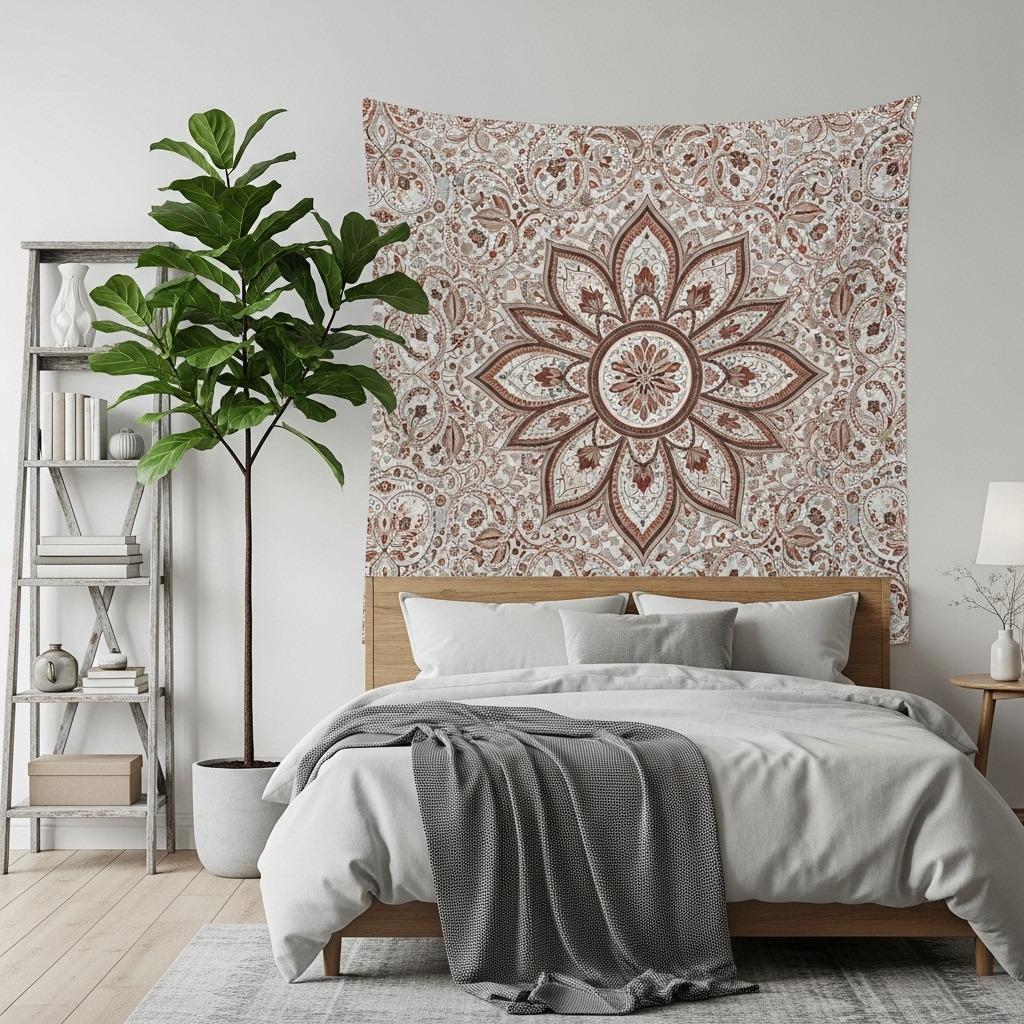
Move away from centered symmetry by hanging your tapestry to one side of the bed rather than directly behind it. This asymmetrical approach feels more casual and collected, less “matchy-matchy” than traditional centered placement.
Balance the offset tapestry with weighted elements on the opposite side – perhaps a tall floor plant, a ladder shelf, or a standing mirror. The uneven distribution actually creates more visual interest than perfect symmetry ever could.
This placement strategy also works well in rooms where architectural features like windows or doors make centered hanging impractical. You’re working with the room’s natural layout rather than fighting against it.
14. Tucked Behind Bed Frame
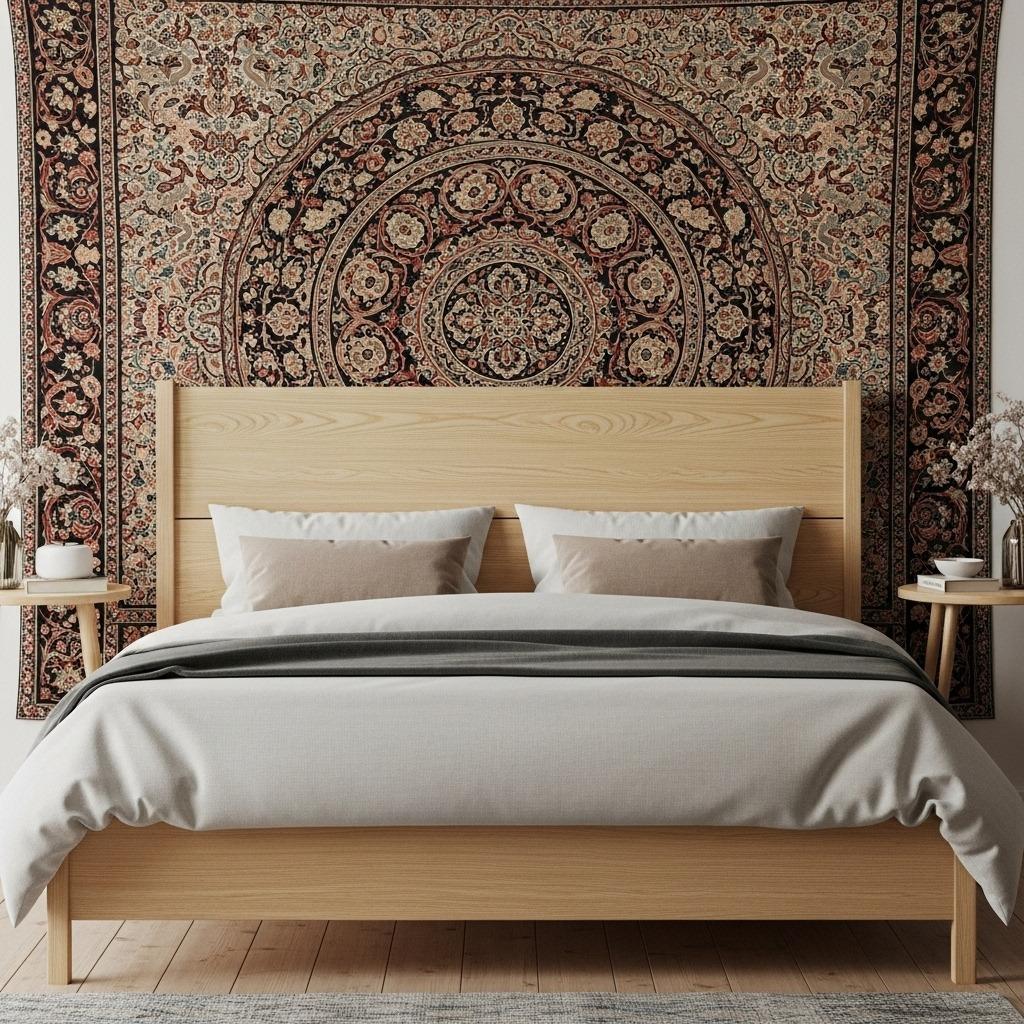
For a subtle approach, tuck the tapestry between the wall and your bed frame so only the upper portion shows. This creates a headboard effect while revealing just enough pattern to add interest without overwhelming the space.
This technique works beautifully with busier, more intricate tapestries that might feel too intense when fully displayed. By showing only the top third or half, you get the benefit of the color and texture without the visual weight.
The hidden lower portion also creates intrigue – visitors catch glimpses of pattern peeking out, suggesting there’s more to discover. It’s that restrained approach that prevents colorful minimalist bedroom spaces from tipping into chaos.
15. Draped and Puddled Styling
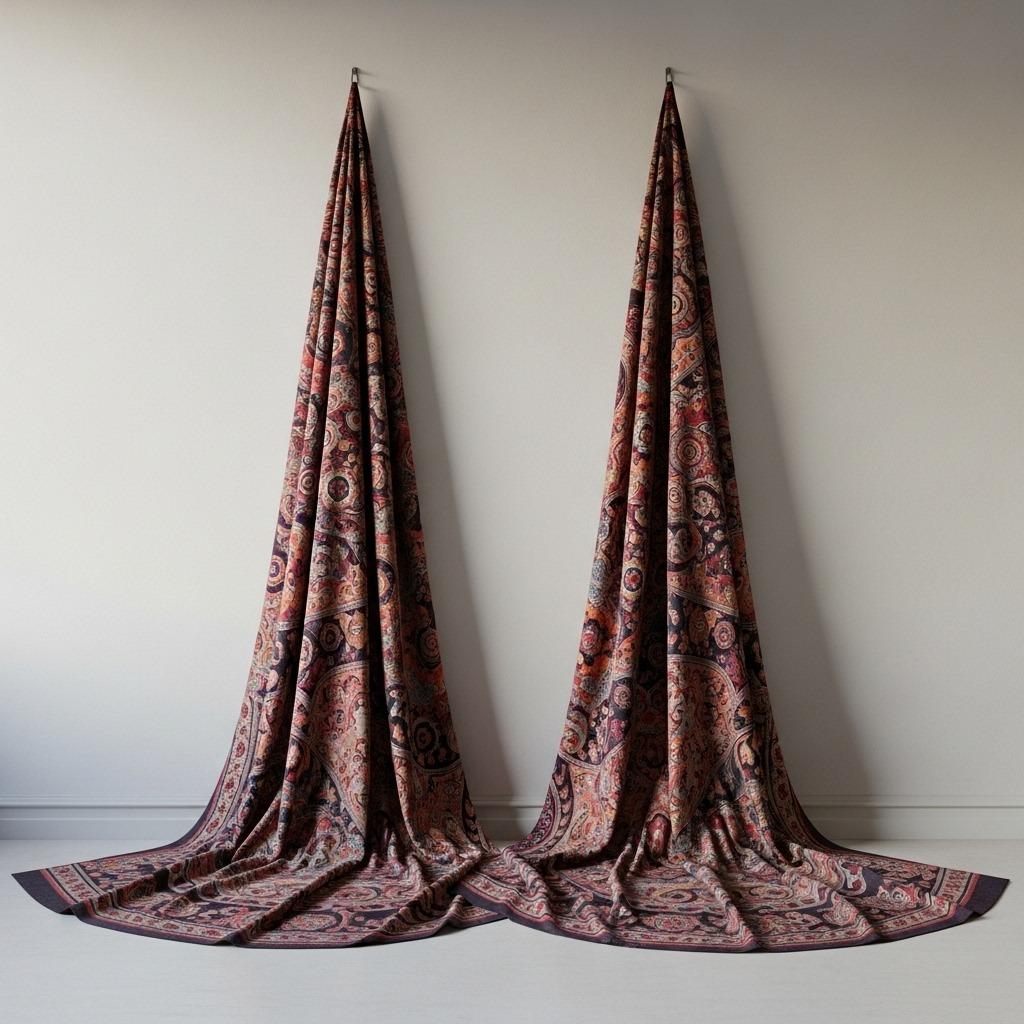
Embrace imperfection by draping your tapestry loosely from hooks so it puddles slightly on the floor. This relaxed installation method epitomizes that effortless bohemian aesthetic where things look casually beautiful rather than rigidly styled.
Use just one or two mounting points rather than stretching the tapestry taut across its full width. Let gravity do the work, creating natural folds and draping that add dimension. The pooled fabric at the bottom anchors the installation and adds luxurious visual weight.
This approach works especially well with larger tapestries where the extra fabric creates beautiful, organic shapes. The movement in the draping catches light differently throughout the day, making the installation feel alive rather than static.
16. Partial Wall Coverage with Furniture Integration
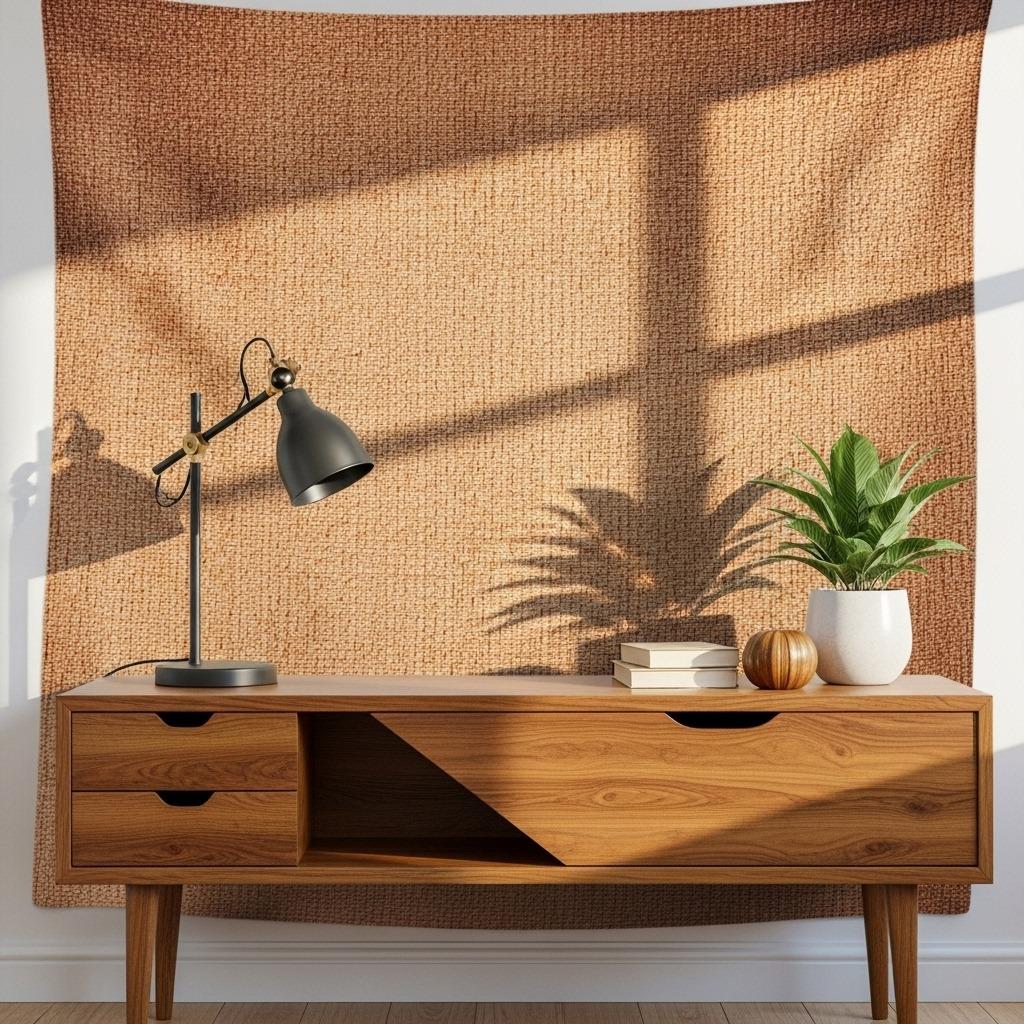
Instead of trying to cover your entire wall, hang a tapestry that deliberately interacts with your bedroom furniture. Let a nightstand, dresser, or reading chair partially overlap the tapestry’s lower edge, creating intentional integration between wall decor and functional pieces.
This approach makes the tapestry feel like an integral part of the room’s design rather than something applied afterward. The furniture grounds the textile while the tapestry provides colorful backdrop that makes your pieces pop.
Choose furniture in wood tones or materials that complement the tapestry’s colors. The combination of hard furniture edges against soft textile creates appealing contrast similar to approaches used in vintage bedroom styling.
17. Tapestry Plus Fairy Light Combination
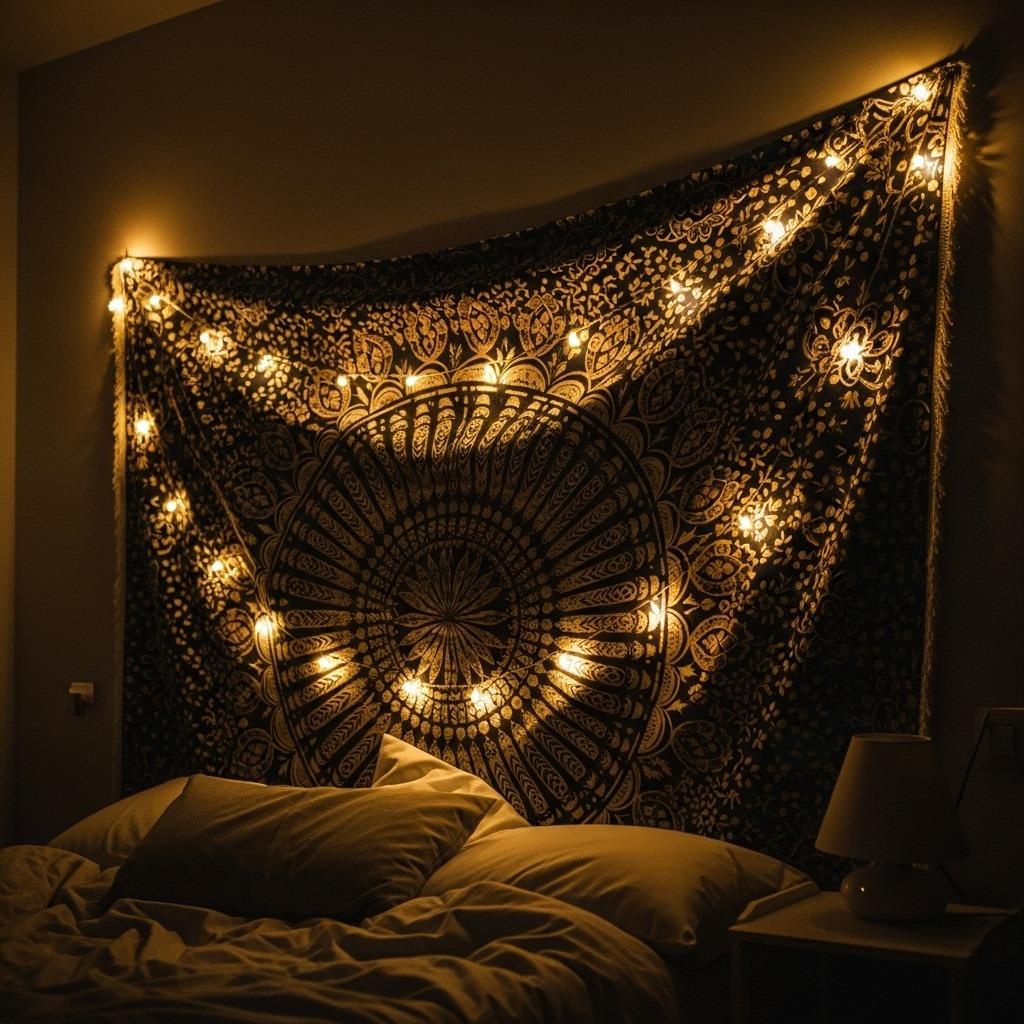
Enhance your bohemian tapestry with strings of warm fairy lights woven through or draped in front of the fabric. The combination creates ambient lighting that highlights the tapestry’s texture while adding functional illumination.
Secure battery-operated LED string lights along the tapestry’s top edge or weave them through any openings in the weave. The warm glow backlights the textile in the evening, creating a cozy atmosphere perfect for winding down.
This pairing is especially effective in bedrooms that lack overhead lighting or need supplemental ambient light. The soft illumination creates depth and makes the tapestry a functional lighting element rather than purely decorative.
18. Framed Tapestry Section
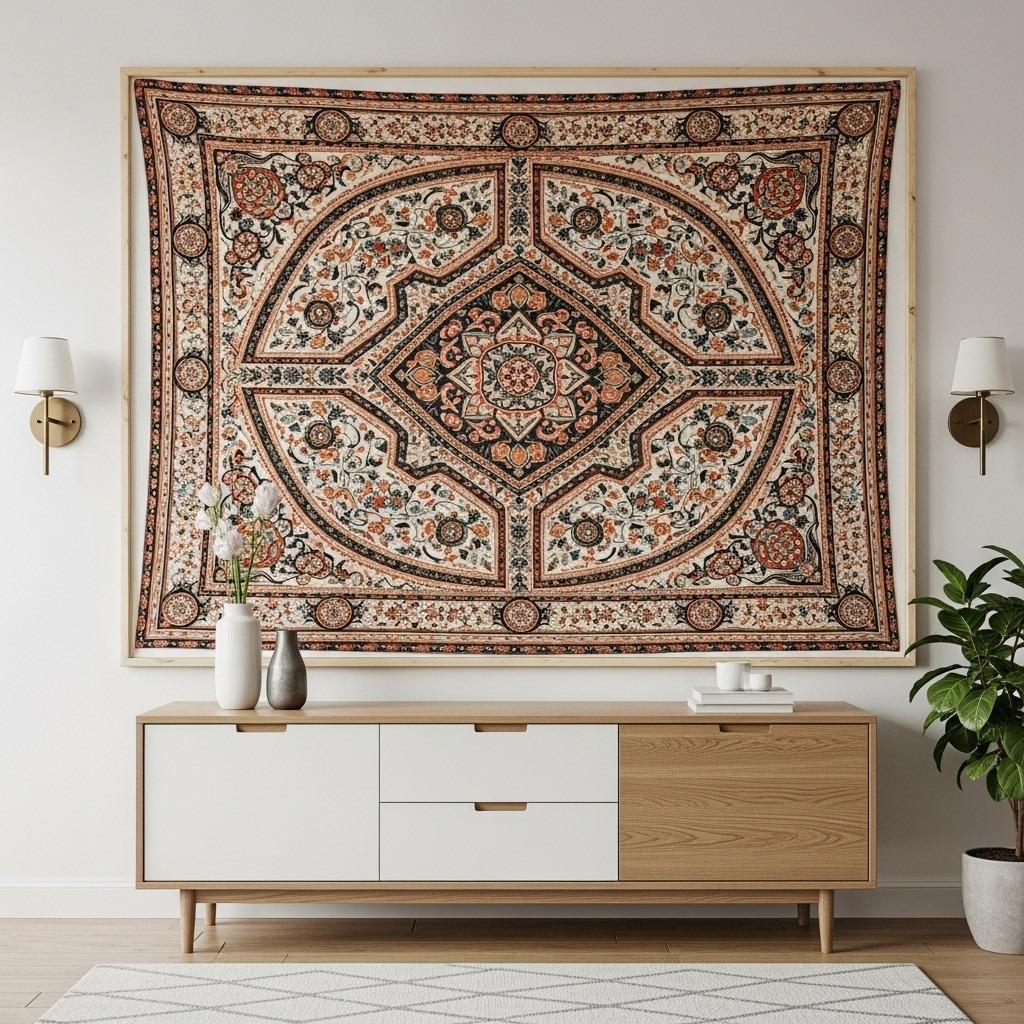
For a more polished take on boho bedroom accents, mount a smaller tapestry section in a large frame or stretch it across a canvas frame like art. This bridges the gap between casual textile and formal wall art.
Choose a tapestry with a particularly striking section or pattern detail worth highlighting. The frame creates boundaries that make the piece feel more curated and intentional while protecting the textile from dust and fading.
This approach works well when you want bohemian elements but need to maintain a slightly more formal or minimal aesthetic. The framing contains the boho energy while letting you enjoy the textile’s beauty in a refined way.
Tips for Hanging and Styling Your Bohemian Tapestry
Getting your wall hanging decor properly installed makes the difference between “just hung something up” and “intentionally designed space.” Start by measuring your wall and tapestry carefully – you’d be surprised how often people eyeball placement and end up off-center or too high.
The standard rule suggests hanging art so the center point sits at eye level, roughly 57-60 inches from the floor. However, tapestries behind beds can sit lower since you’re primarily viewing them while seated or lying down. Aim for the tapestry’s center to land about 50-55 inches up when it’s behind a bed.
For damage-free hanging in rental spaces, consider these mounting options: adhesive strips rated for the tapestry’s weight, small finishing nails that leave minimal holes, tension rods in corners or between walls, or curtain rods with proper anchoring. Each method works better for different tapestry weights and wall types, so choose based on your specific situation.
Bohemian tapestries offer one of the most flexible, affordable ways to completely transform your bedroom walls. Unlike paint or permanent installations, these textiles let you experiment with color, pattern, and placement without commitment or costly mistakes.
The beauty of tapestry styling tips lies in their forgiving nature – there’s really no wrong way to hang a bohemian tapestry as long as it speaks to you and enhances your space. Maybe you’ll start with the classic centered placement and eventually graduate to more adventurous layered compositions. Perhaps you’ll embrace that draped, puddled look right away because it matches your personality.
What matters most is choosing pieces that make you happy every time you walk into your room. That’s the real magic of bringing these textiles into your space – they carry that handmade, collected-over-time energy that makes a bedroom feel genuinely yours rather than staged from a catalog.

