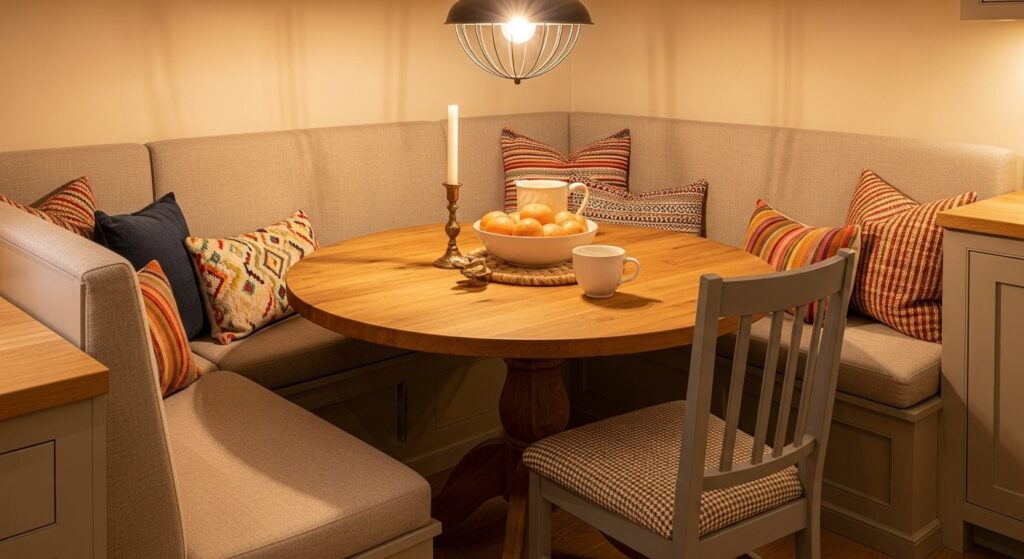
There’s something undeniably inviting about sliding into a cushioned corner seat with your morning coffee. That’s the magic of banquette seating in kitchen spaces – it transforms an ordinary eating area into a gathering spot that feels both intimate and intentional. Unlike standard dining chairs that can make a kitchen feel cluttered, a built-in bench wraps around your space in a way that just makes sense.
I’ve watched banquette seating evolve from strictly formal dining rooms to becoming one of the most sought-after features in modern kitchens. The appeal isn’t hard to understand: you get more seating in less space, hidden storage possibilities, and a look that feels custom and considered. Whether you’re working with a cramped galley or an open-concept layout, there’s probably a banquette configuration that could work.
What surprises most people is just how versatile these built-in kitchen benches can be. You’re not locked into one style or setup. From minimalist Scandinavian corners to plush velvet statements, the possibilities span pretty much every design direction you can imagine. Let’s look at what actually works in real kitchens.
1. Classic L-Shaped Corner Banquette
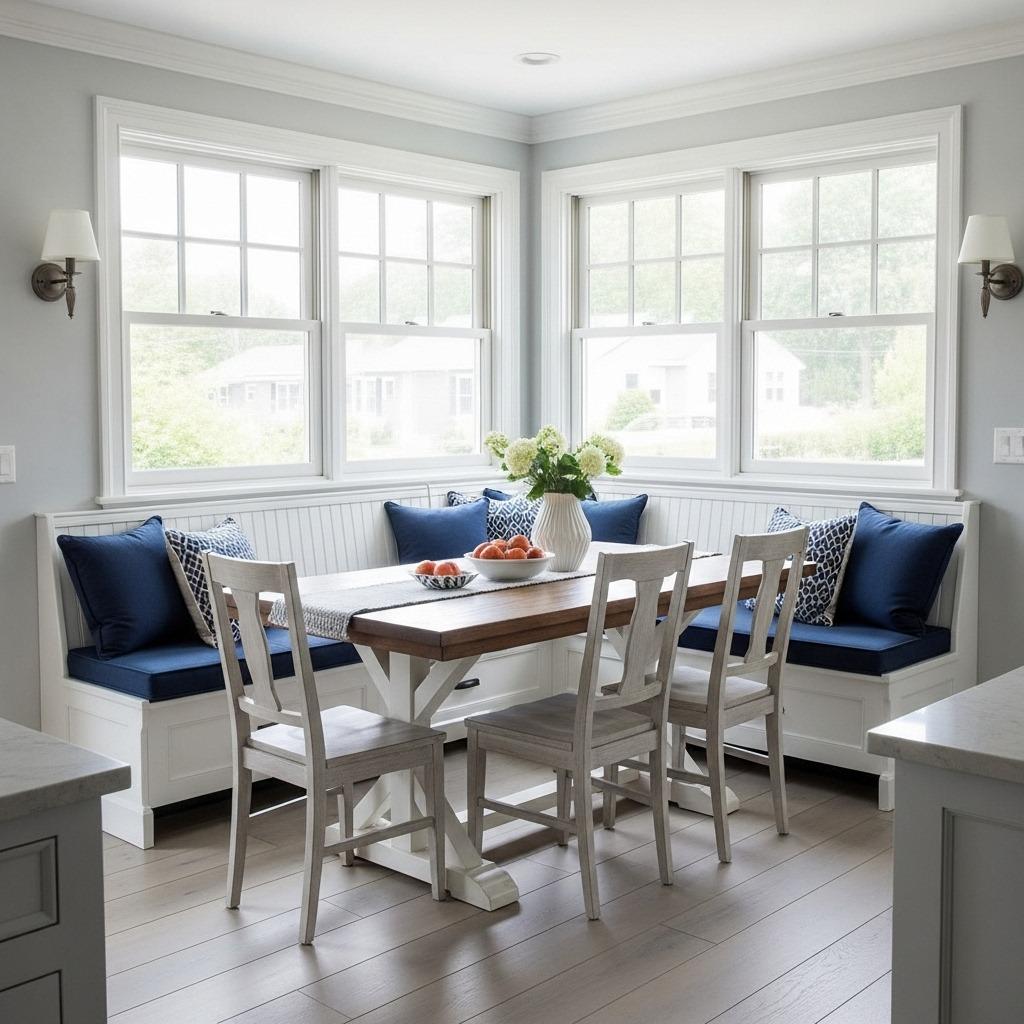
The L-shaped configuration remains popular for good reason – it maximizes corner space that often goes underutilized. This setup typically wraps around two walls, creating a cozy kitchen corner that can seat anywhere from four to six people comfortably. The corner itself becomes the most coveted spot, especially for kids who love the enclosed feeling.
What makes this layout particularly smart is how it defines the eating area without requiring additional square footage. In small space renovation projects, this approach consistently delivers more seating capacity than traditional chairs would allow. The L-shape also creates a natural flow that doesn’t interrupt the kitchen work triangle.
Consider the proportions carefully though. You’ll want at least 21 inches of depth for comfortable seating, and the table should sit about 30 inches from the bench edge. Too tight, and people feel trapped. Too loose, and you lose that intimate banquette feeling.
2. Minimalist Built-In with Storage Drawers
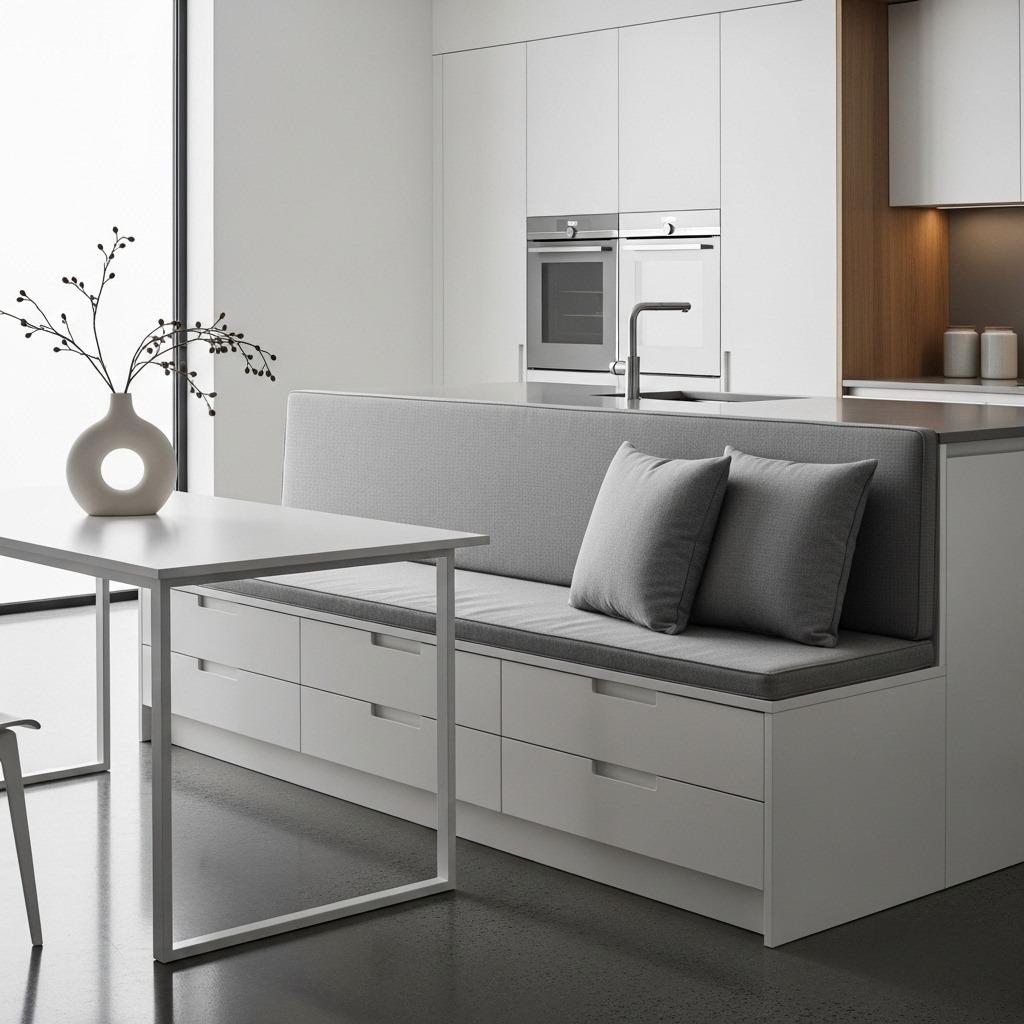
Storage-integrated designs solve two problems at once. The space beneath your seating becomes prime real estate for stashing everything from table linens to small appliances you don’t use daily. Pull-out drawers work better than lift-up seats in my experience – you’re not asking anyone to move every time you need to access something.
This approach particularly shines in kitchens where cabinet space feels limited. Some of the smartest kitchen and dining ideas incorporate deep drawers that can hold bulky items like mixing bowls or serving platters. The key is ensuring your drawer slides are heavy-duty enough to handle the weight.
The minimalist aesthetic keeps things from feeling too furniture-heavy. Simple lines, neutral cushions, and integrated storage create a streamlined look that works whether your kitchen leans modern or transitional.
3. Window Seat Banquette with Natural Light
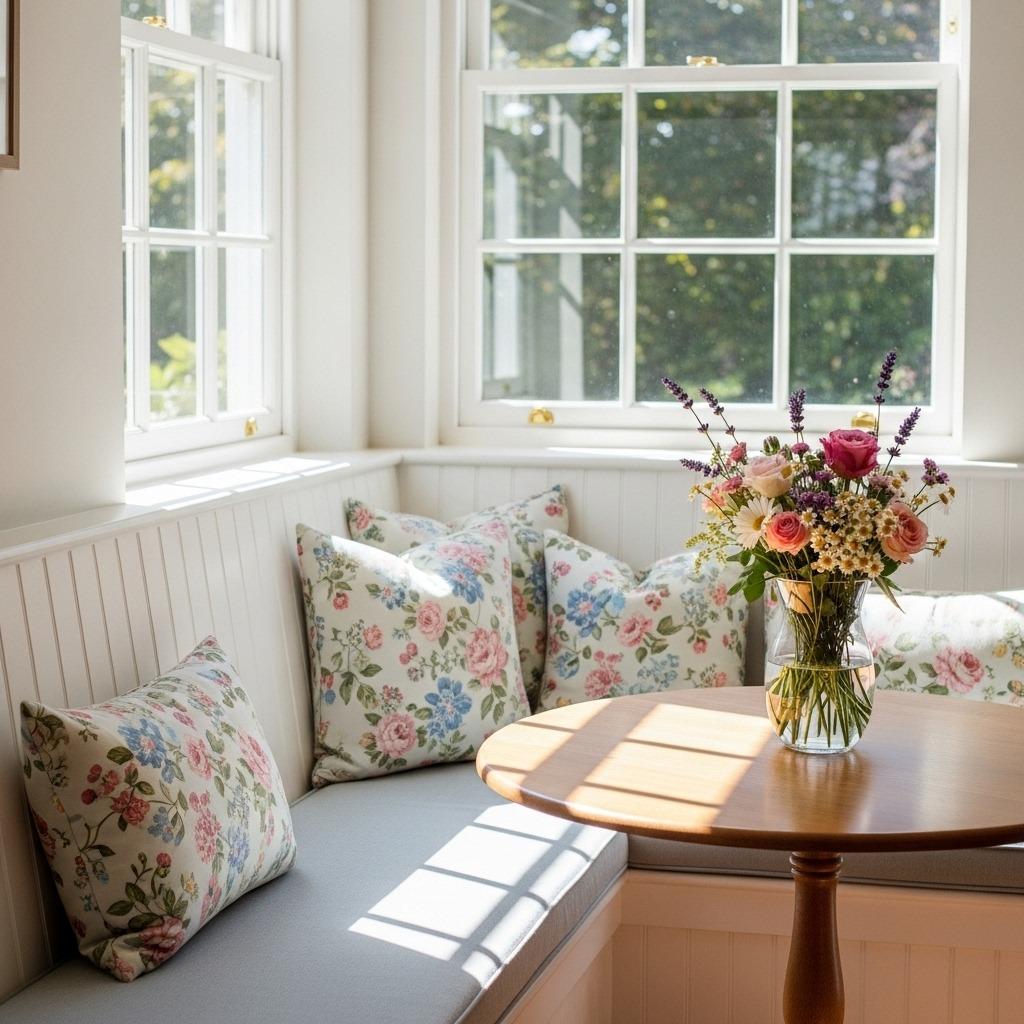
Positioning your banquette under a window transforms breakfast into a completely different experience. Natural light floods the eating area, and you get views while you sip your coffee – it’s basically the kitchen equivalent of a restaurant window seat. This placement works especially well in modern farmhouse kitchen designs where connecting indoor and outdoor spaces matters.
The challenge here is managing the windowsill relationship. You’ll either need to work around existing sills or incorporate them into the bench design. Some builders extend the bench back to meet the sill, creating a continuous surface that doubles as a plant shelf or display area.
Window treatments require thought too. You want the light, but privacy matters. Consider top-down/bottom-up shades that let you control exposure while maintaining the brightness that makes this spot special.
4. Upholstered Luxury Banquette
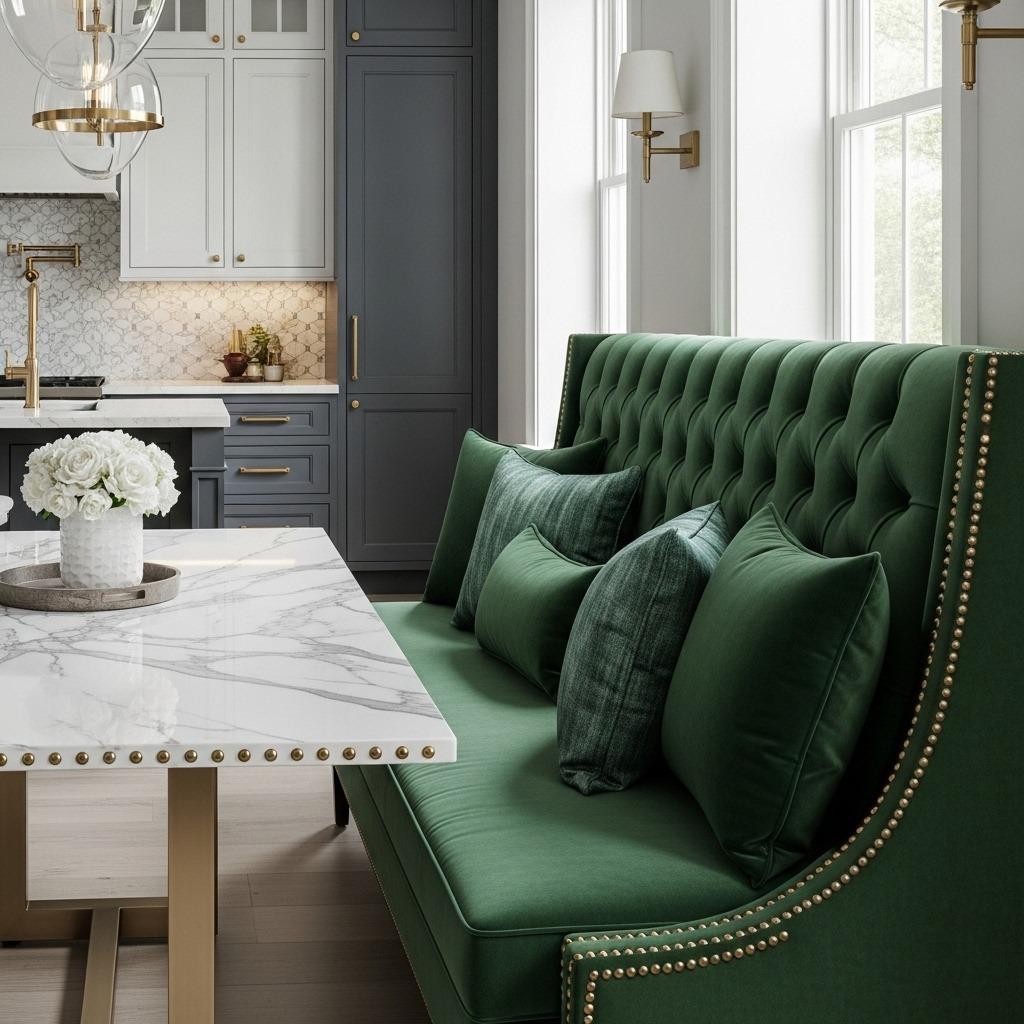
Sometimes you want your kitchen seating to feel more like your living room. A fully upholstered banquette with quality fabric and thoughtful details elevates the entire space. Think tufted backs, coordinated welting, and fabrics that can handle real life while looking sophisticated. This works beautifully in open concept kitchen living room layout situations where the seating needs to hold its own visually.
Performance fabrics have come incredibly far. You can now get the look of velvet or linen with stain-resistant technology that actually works. This matters in a kitchen where spills aren’t occasional – they’re guaranteed.
The investment here goes beyond just fabric. Quality foam that won’t flatten after six months, proper spring support, and professional upholstery construction make the difference between a banquette that looks good for a year versus one that stays comfortable for a decade.
5. Rustic Farmhouse Bench Style
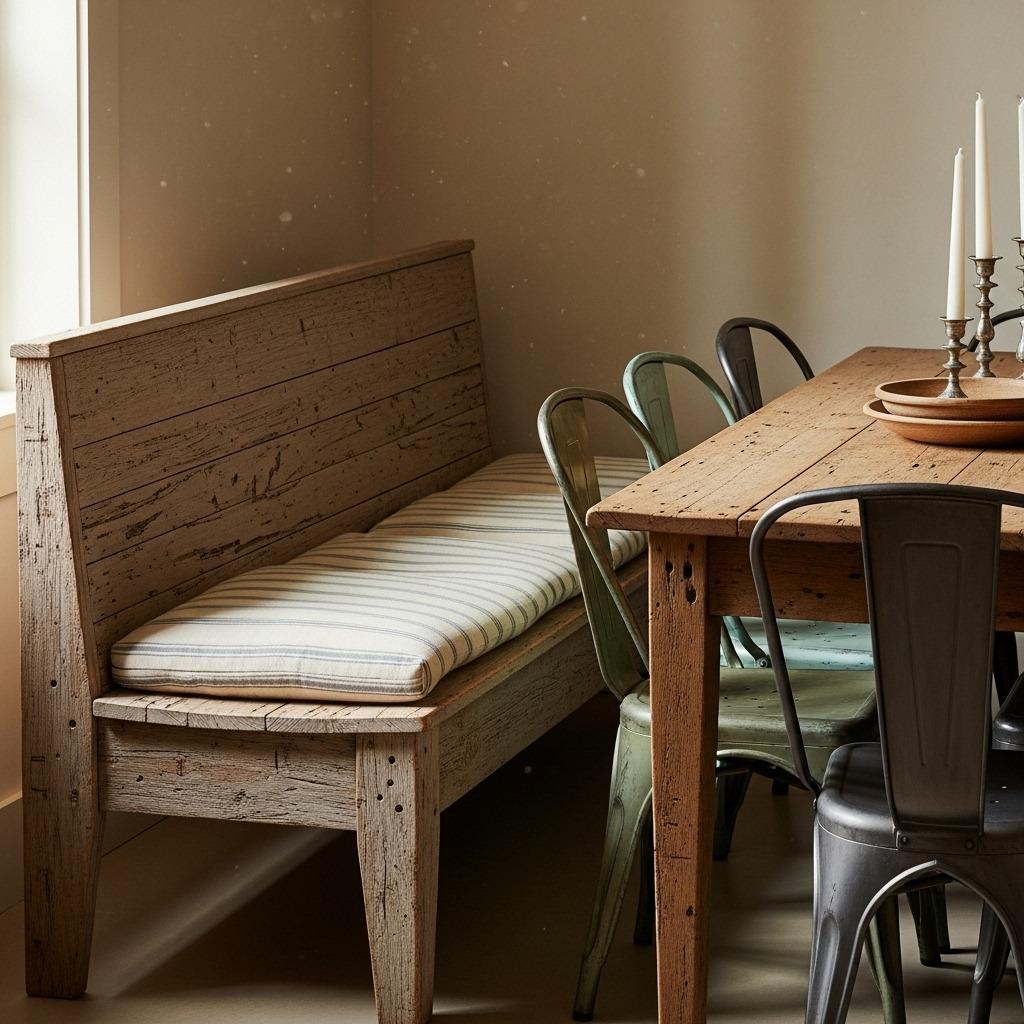
The casual farmhouse approach strips things down to essentials. A built-in wooden bench with minimal cushioning creates an informal eating spot that feels collected rather than designed. This style pairs perfectly with mismatched vintage chairs across the table, mixing seating types for visual interest.
What I appreciate about this look is its honesty – it doesn’t pretend to be anything other than functional seating. The wood can show wear, the cushions can be simple ticking stripe or basic linen. In rustic kitchen backsplash ideas and farmhouse-inspired spaces, this approach feels authentic rather than styled.
Maintenance becomes simpler with less upholstery involved. A quick cushion wash and some wood conditioning keeps everything looking intentional. The rustic approach also forgives the inevitable dings and scratches that come with daily family use.
6. Curved Banquette for Rounded Tables
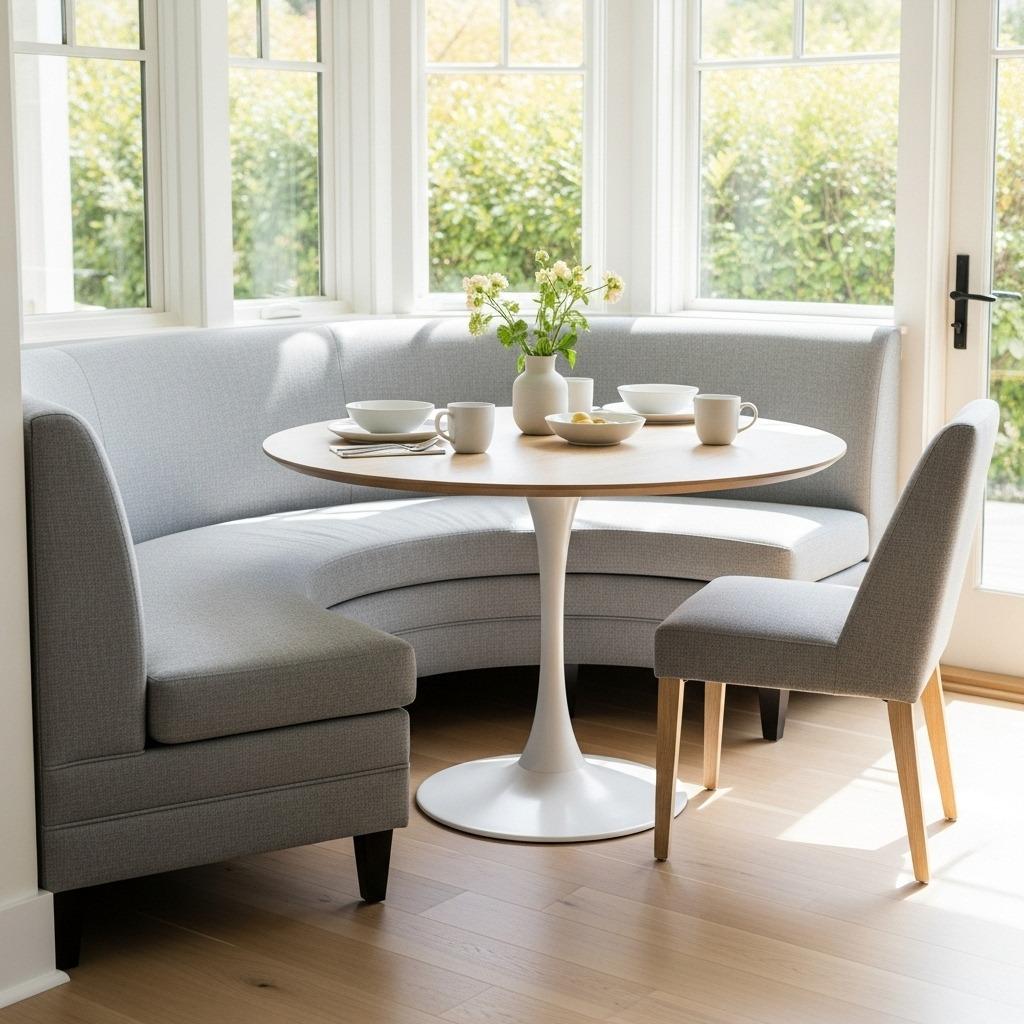
Curved banquettes create flow in ways straight lines can’t match. When you wrap seating around a round or oval table, the whole arrangement feels more conversational and less formal. This configuration works particularly well in modern breakfast nook designs where the goal is creating an intimate gathering spot.
Building curved banquettes requires more carpentry skill than standard angles, which typically translates to higher construction costs. But the result looks custom in a way that standard L-shapes don’t quite achieve. The curve also eliminates sharp corners – a consideration if you have small kids navigating the space.
Seating capacity changes with curves too. You’ll fit more people comfortably because there’s no wasted corner space. Everyone has equal access to the table, and conversation flows more naturally when you’re not stuck in a corner position.
7. Two-Tone Contrast Design
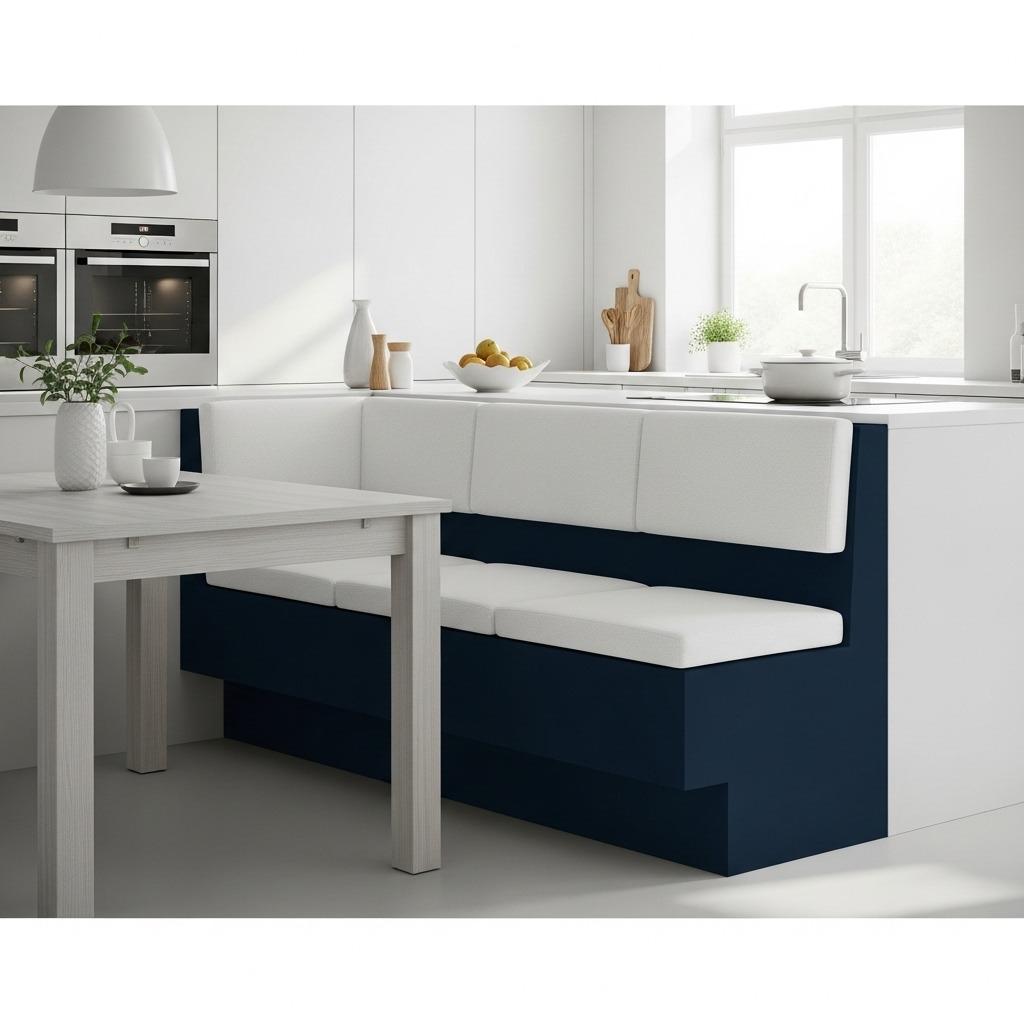
Playing with color through your banquette construction adds dimension without requiring pattern or texture. A darker base with lighter cushions grounds the piece while keeping the visual weight balanced. This technique appears frequently in two tone kitchen cabinet schemes where designers use color strategically to define different areas.
The contrast approach also solves practical concerns. Darker colors on the base hide scuffs and marks better than all-white construction, while lighter seat cushions keep the space from feeling heavy. You get both durability and brightness in one design.
Consider how your two-tone choice relates to existing kitchen colors. If you’ve already got strong cabinet colors, your banquette might need to either echo those tones or provide intentional contrast. There’s no single right answer – it depends on whether you want the seating to blend or stand out.
8. Industrial Style with Metal Accents
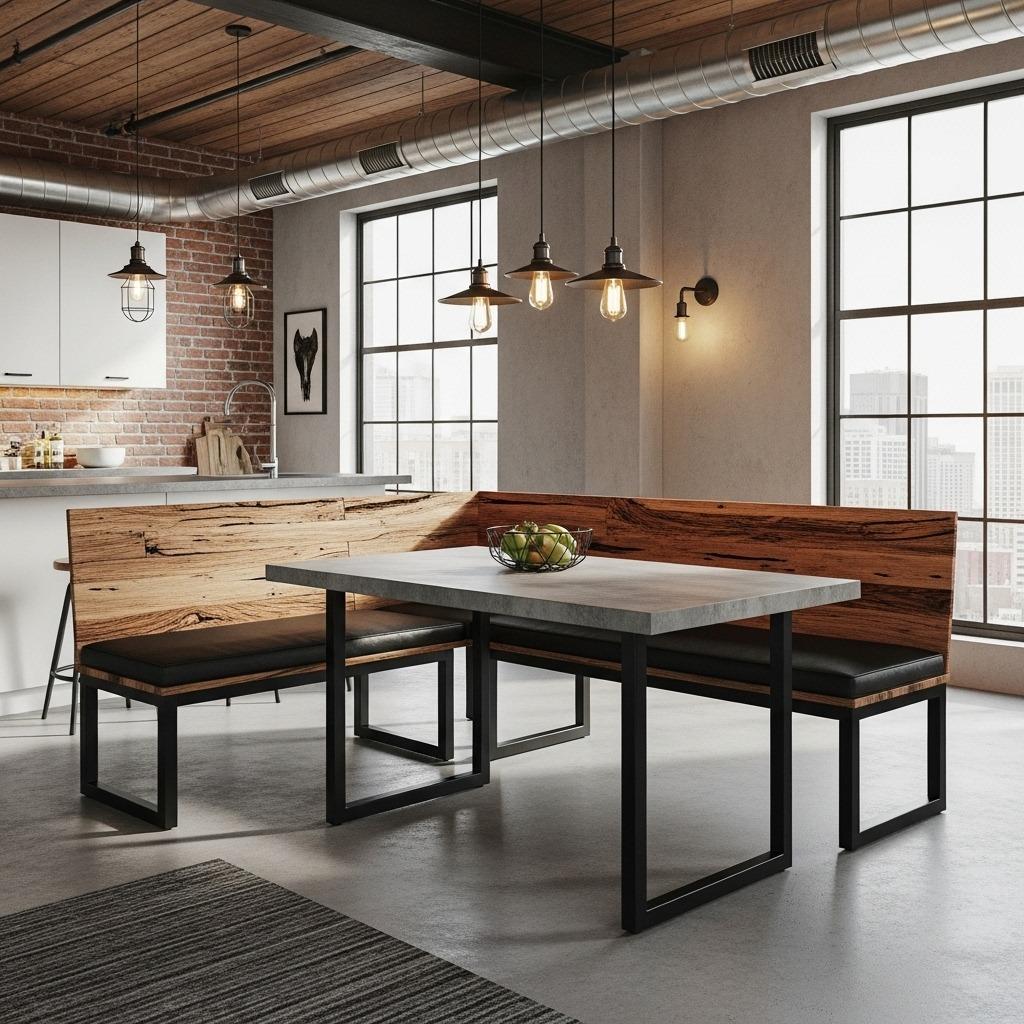
Metal framework brings an entirely different aesthetic to kitchen banquettes. Exposed steel or iron legs create an airy, less built-in feeling while still providing structure. This approach suits industrial loft bedroom and open-plan spaces where the industrial style carries through multiple areas.
The combination of metal with wood or leather cushioning creates interesting material contrast. You get the warmth of natural materials with the edge of industrial elements. It’s a look that reads both masculine and refined, working well in contemporary urban spaces.
One practical advantage: metal bases don’t show wear the way painted wood can. Scratches and marks become part of the patina rather than damage that needs touching up. For busy households, this low-maintenance aspect matters more than you might initially think.
9. Built-In Bookshelf Banquette Combo
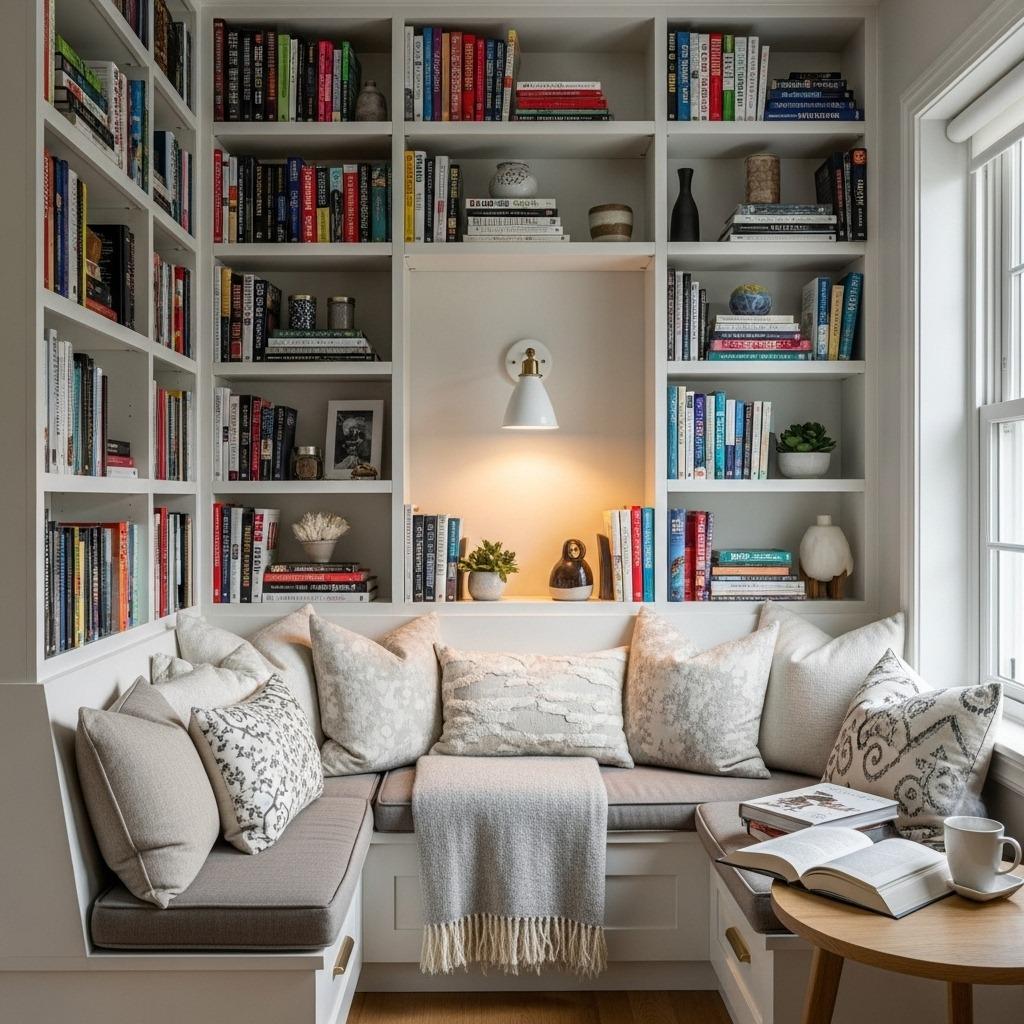
Why not combine your cookbook storage with your seating? Building shelving around and above your banquette creates a focal point that serves multiple functions. You get a reading nook, display space, and eating area all in one defined zone. This works especially well in small kitchen renovation tips where every element needs to work harder.
The floor-to-ceiling treatment makes the space feel more library than kitchen, which can be exactly the vibe you’re after. Cookbooks, serving pieces, and decorative objects all have a place while remaining accessible. Task lighting added to the shelving makes evening reading or meal planning more comfortable.
Consider weight distribution if you’re planning extensive shelving above the seating. Proper structural support matters, especially if you’re stacking heavy hardcover books. This isn’t a DIY project to skimp on – get the framing right from the start.
10. Scandinavian Simplicity
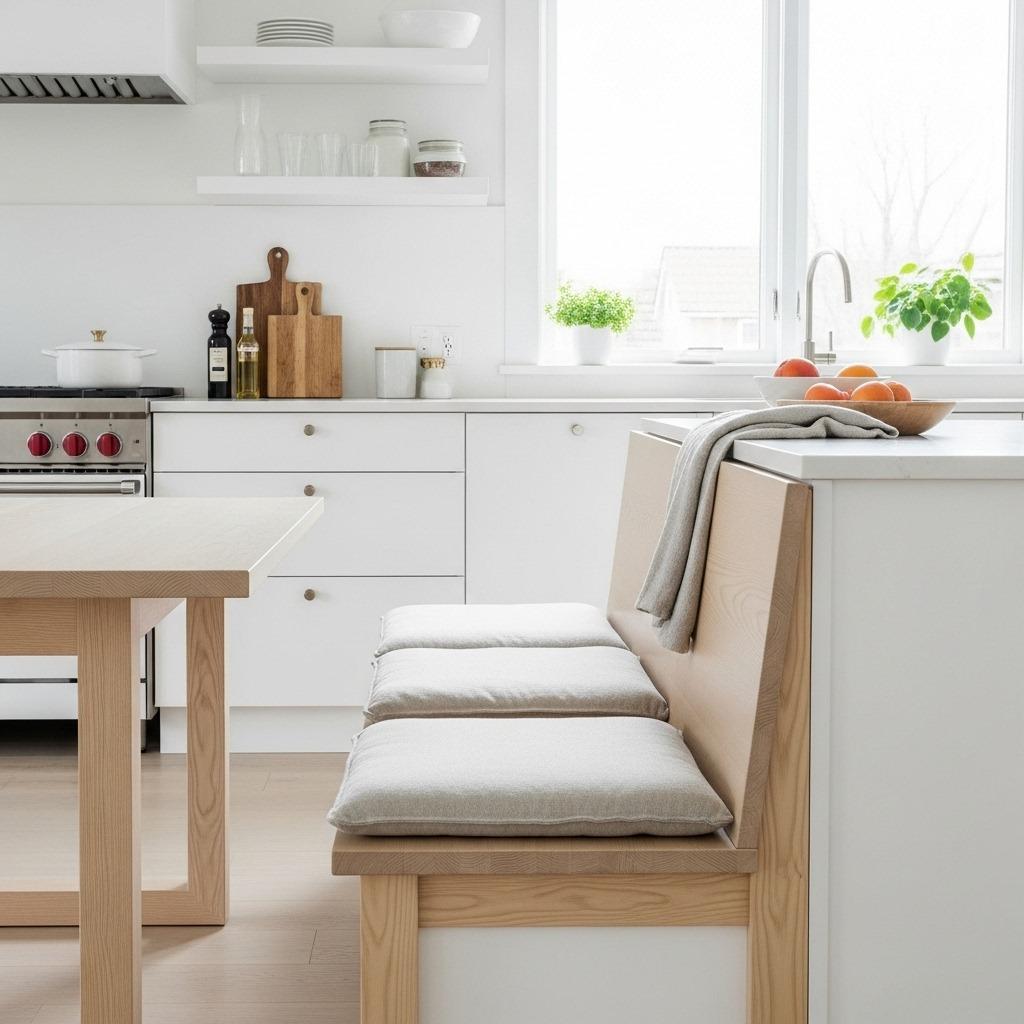
The Scandinavian approach to banquette seating prioritizes function and clean lines over embellishment. Light woods, simple cushions, and an uncluttered aesthetic create seating that feels contemporary without trying too hard. This pairs beautifully with Scandinavian dining room elements and the overall hygge approach to home design.
What defines this style is restraint. You won’t see elaborate tufting or layers of decorative pillows. Instead, you get honest materials, quality construction, and a quiet confidence in simplicity. The seating works because it doesn’t compete with the rest of the space.
This minimalist approach also tends to age well. Without trend-driven details, a Scandinavian-inspired banquette looks fresh five years later. It’s an investment in longevity rather than following whatever’s currently popular on design blogs.
11. Banquette with High Back Support
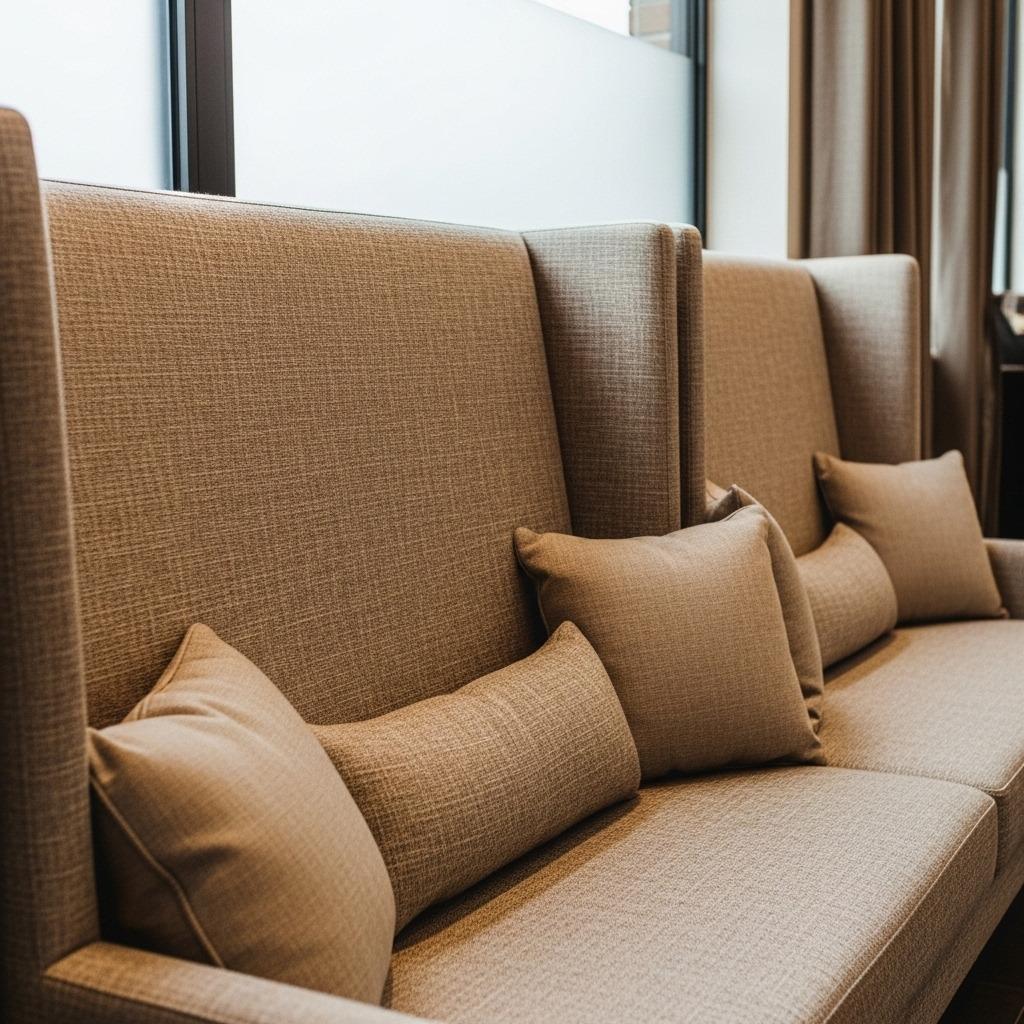
Sometimes comfort means more support, not less. A high-backed banquette provides the kind of seating that encourages lingering over meals rather than eating and running. This restaurant-booth feeling translates surprisingly well to home kitchens, especially for families who use the kitchen table for homework, projects, and long conversations.
The additional back height does change the visual weight of the piece. You’re creating more of a furniture moment rather than a subtle built-in. In space saving dining room layouts, this can actually help define the eating zone within a larger open space.
Upholstery choices matter even more with high backs. You’re covering significantly more surface area, so fabric durability and cleanability become critical. Consider also how the back height interacts with windows, light switches, or artwork on adjacent walls.
12. Corner Booth Restaurant Style
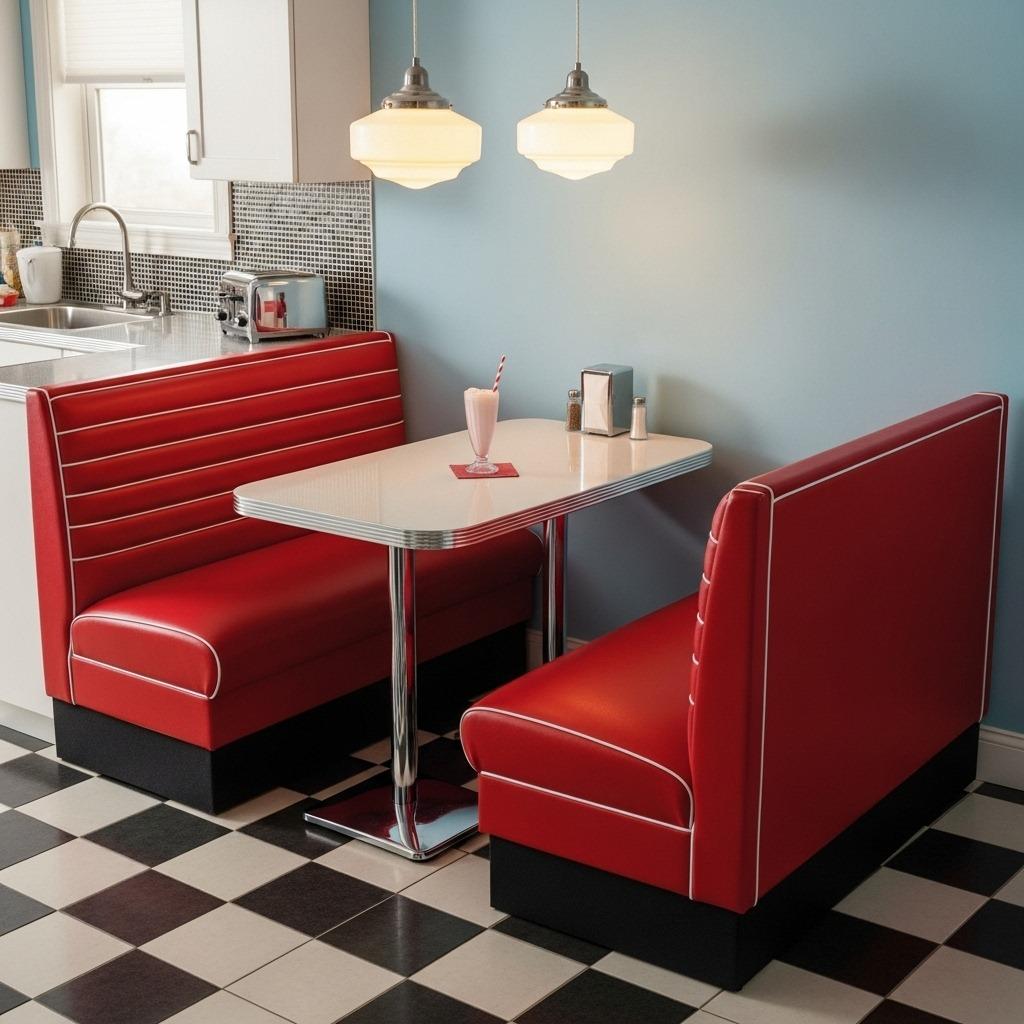
For those who love the restaurant aesthetic, a genuine booth-style banquette brings that energy home. Think vinyl upholstery, defined edges, and that satisfying slide-in feeling you get at your favorite diner. This works particularly well in vintage kitchen decor schemes where embracing nostalgia is part of the point.
The booth approach typically means both sides of the table include built-in seating rather than mixing benches with chairs. This creates a more enclosed, intimate feeling – perfect for breakfast but potentially tight for dinner parties. Consider your typical usage patterns before committing to a full booth.
Vinyl has practical advantages beyond aesthetics. It wipes clean instantly, doesn’t absorb spills, and maintains its appearance through years of use. Modern vinyl options move far beyond basic diner red, offering sophisticated colors and textures that work in contemporary settings.
13. Floating Bench Design
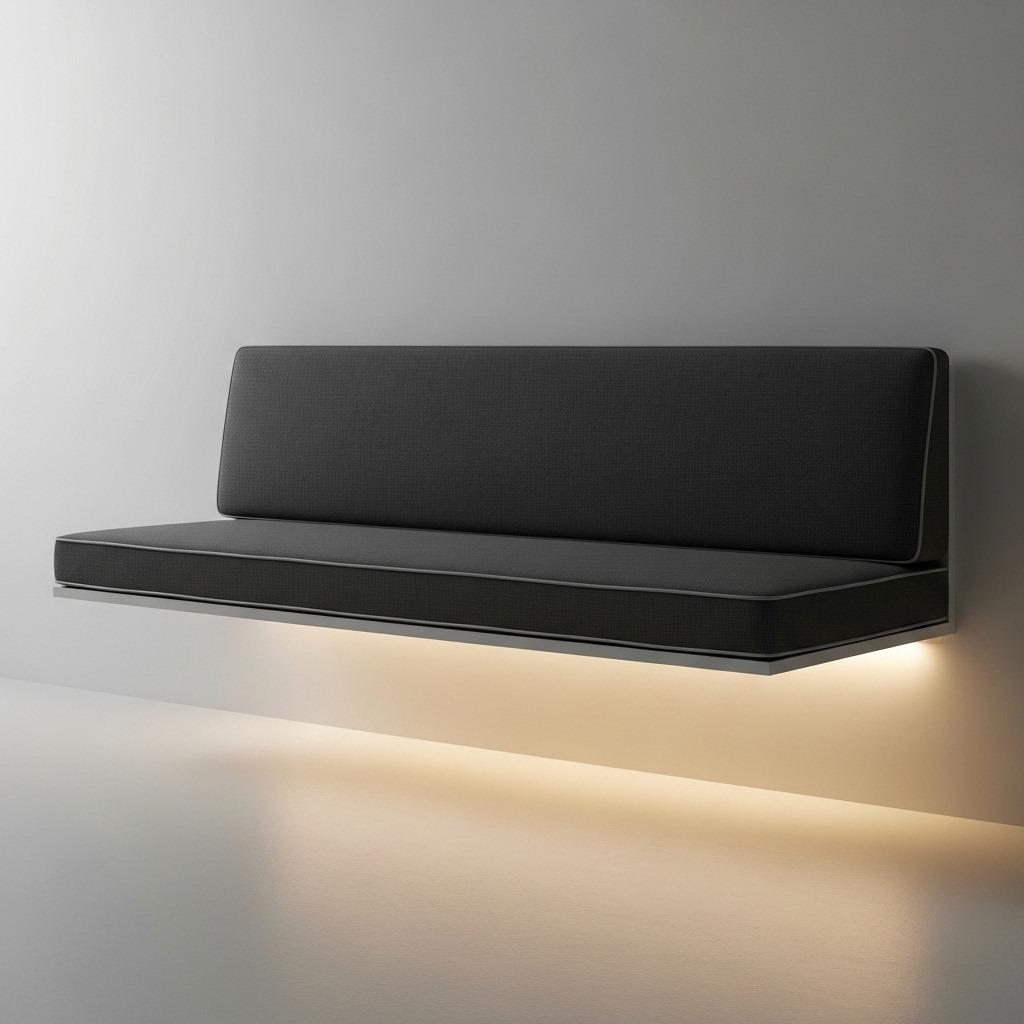
Wall-mounted floating benches create drama through what they don’t show. Without visible legs or base cabinets, the seating appears to hover, making the floor space feel larger and easier to clean. This design choice particularly suits modern minimalist aesthetics where reducing visual clutter drives design decisions.
The floating effect requires serious structural support hidden within the wall. You’re essentially cantilevering the entire bench and its occupants, which means proper blocking and anchoring during construction. This isn’t something you can retrofit easily – it’s a decision that needs to happen during the planning phase.
Lighting added beneath floating benquettes amplifies the effect. A subtle LED strip creates ambiance while emphasizing the floating design. It’s a detail that transforms the banquette from simple seating to an architectural feature.
14. Patterned Textile Statement
Sometimes your banquette becomes the pattern punch your kitchen needs. A bold fabric choice transforms simple built-in seating into an art piece. This approach works beautifully in neutral kitchens where you want personality without permanent commitment – you can always reupholster if your tastes shift.
Pattern selection matters more than you might think. Large-scale prints work better than tiny patterns in most kitchen contexts. The viewing distance and fabric expanse means small patterns can read as texture rather than design. Consider also how much of the pattern will be visible when people are actually sitting – you want the impact to remain even when the seat’s in use.
Mixing patterns through throw pillows adds another layer of visual interest. The key is maintaining a consistent color story while varying scale and style. Boho chic bathroom design principles translate surprisingly well to pattern-heavy banquettes – it’s about confident mixing rather than perfect matching.
15. Narrow Galley Kitchen Banquette
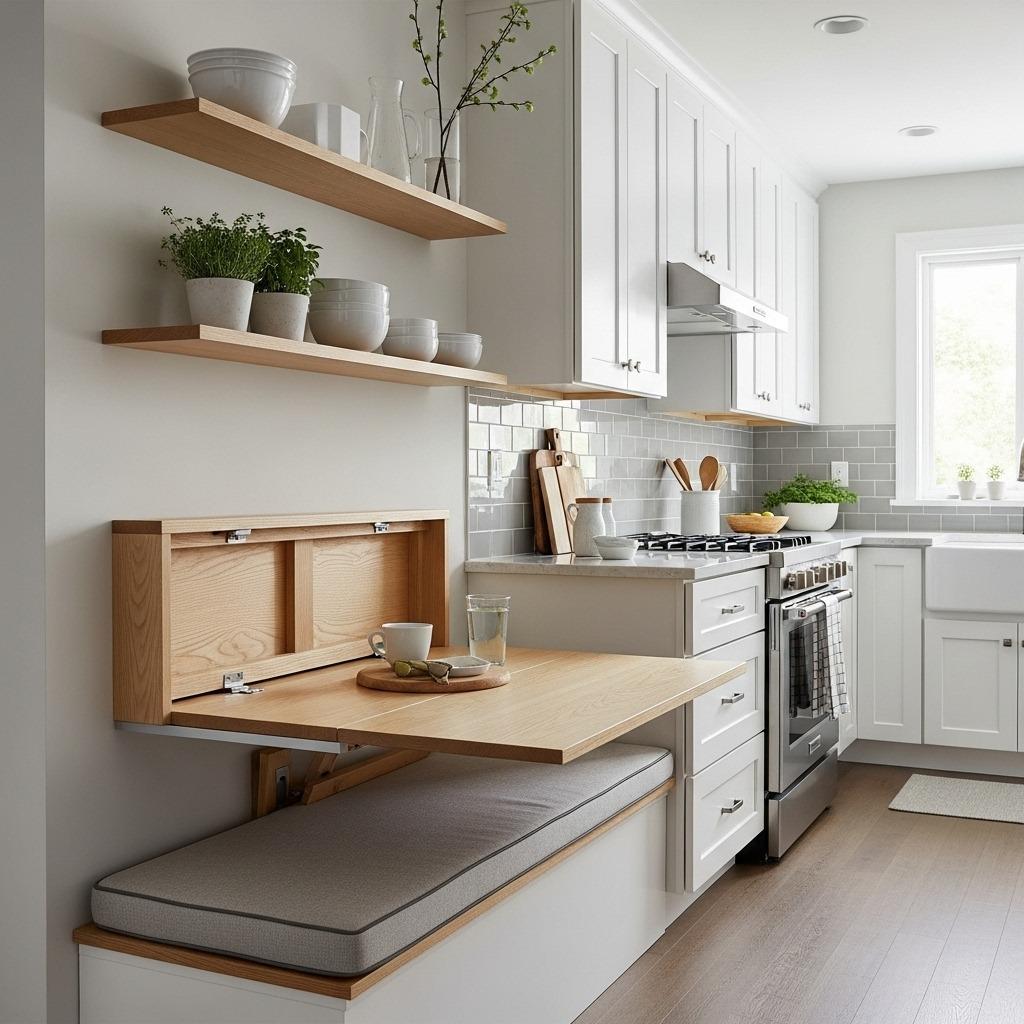
Not every kitchen can accommodate an L-shaped corner setup. Single-wall banquettes work in tight galley layouts where you’re maximizing one side while keeping the other clear for movement. The narrower depth – sometimes as little as 16 inches – means you sacrifice some lounging comfort but gain precious floor space.
Pairing this slim banquette with a wall-mounted or fold-down table adds flexibility. When you’re not eating, the table folds up or swings away, opening the galley completely. This transformable approach suits compact dining table strategies where flexibility matters more than permanent setup.
Storage beneath shallow banquettes becomes trickier but not impossible. Consider vertical dividers creating slots for baking sheets, cutting boards, or serving trays – items that need minimal depth. Every inch counts in galley configurations, so even shallow storage adds value.
16. Multi-Level Height Design
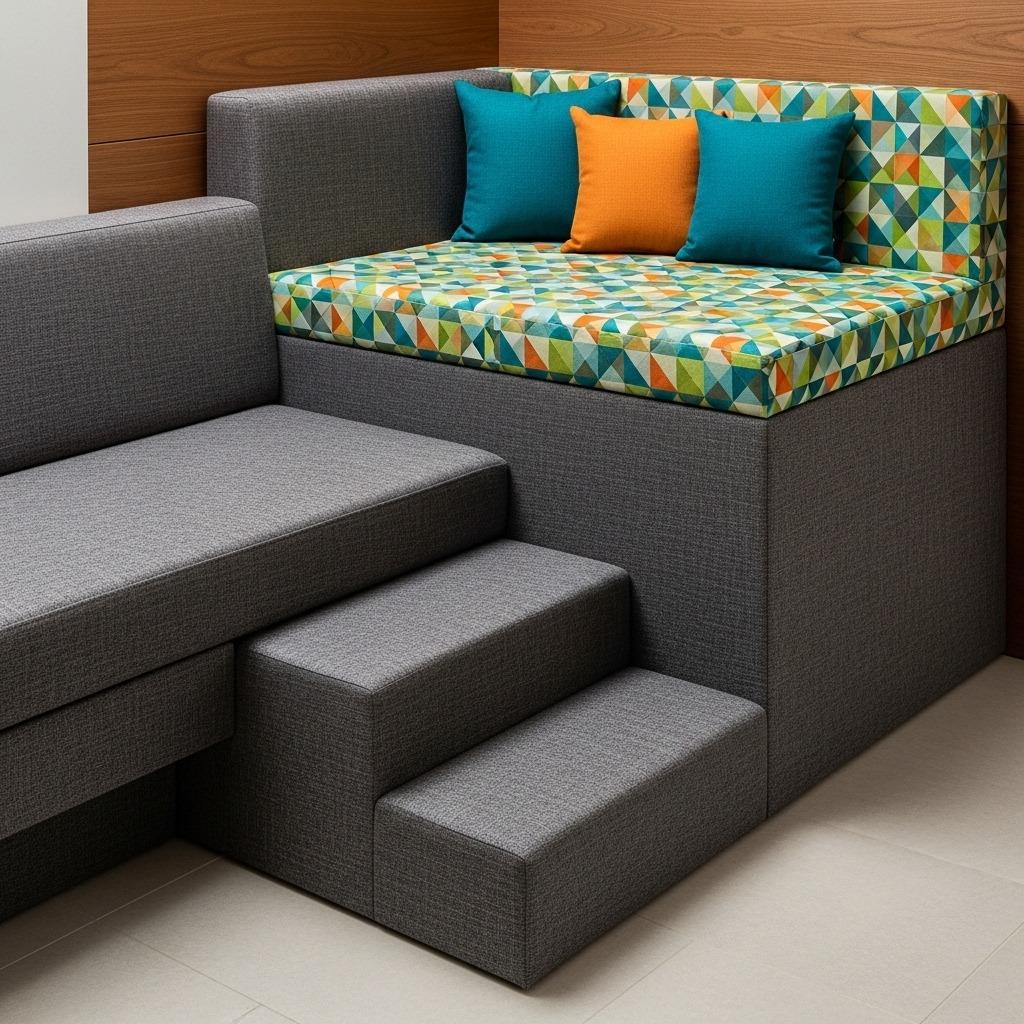
Playing with height creates functional zones within a single banquette. A raised platform section might serve kids better, giving them the boost they need to sit comfortably at the table. Or perhaps a lower lounging section transitions into standard-height dining seating as you move around the L-shape.
This approach requires more complex carpentry but delivers unexpected functionality. Different users have different needs – why shouldn’t the seating accommodate that? The multi-level approach also creates visual interest, breaking up what might otherwise be a monotonous built-in.
Consider cushion strategy carefully with varying heights. You might need custom-sized cushions for each level, or you could embrace the difference through intentionally mismatched pillow arrangements. Either way, the varied heights need to feel deliberate rather than like a mistake.
17. Banquette with Integrated Lighting
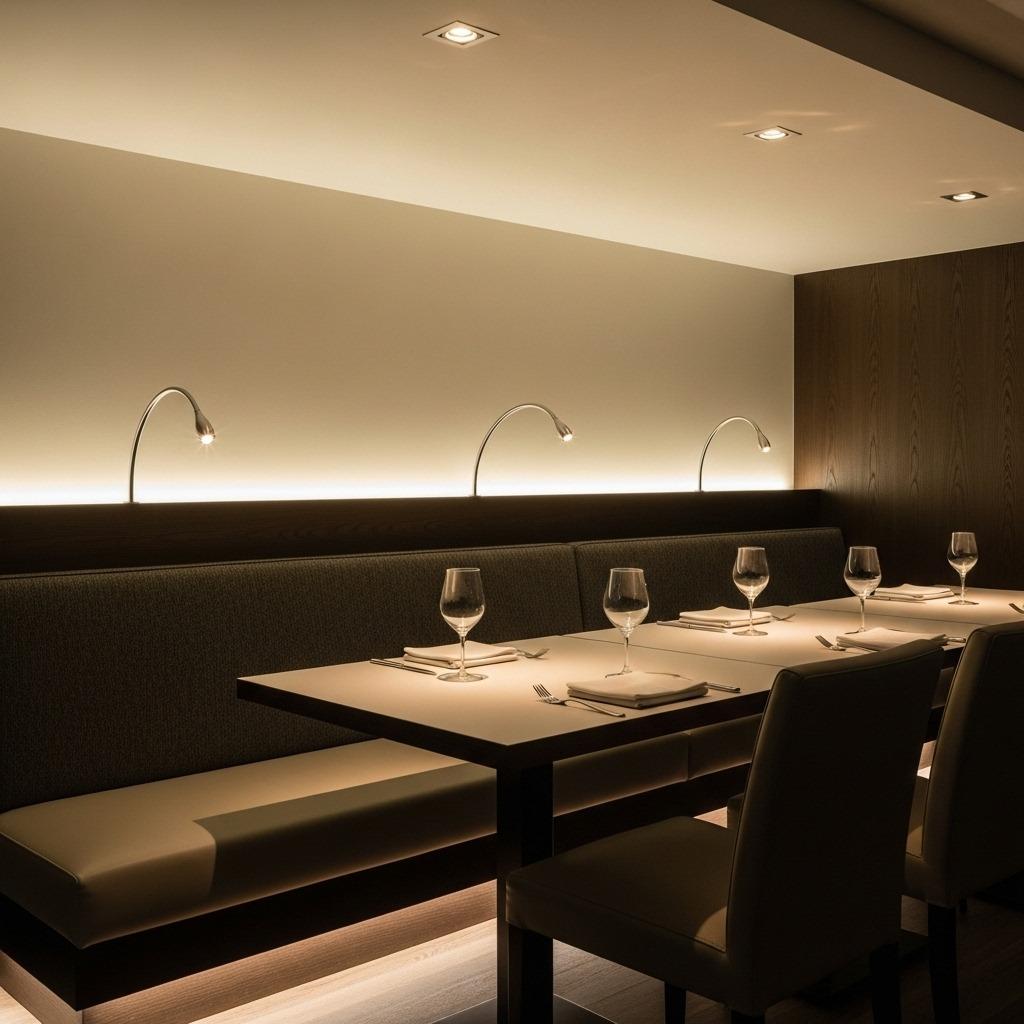
Lighting transforms a banquette from daytime seating to evening ambiance. Task lights mounted above or behind the seating make reading possible, while ambient lighting sets mood during dinner. The integration matters – fixtures should feel planned rather than added as an afterthought.
Wall-mounted swing-arm lamps work particularly well for banquettes used beyond meals. If you’re solving homework or working on laptops at the kitchen table, directed task lighting prevents eye strain. These fixtures also free up table space that would otherwise hold lamps.
Consider dimmers for any banquette lighting. The flexibility to adjust brightness based on time of day or activity makes the space more versatile. Bright for morning breakfast, dimmed for evening wine – it’s a small detail that significantly impacts how the space feels.
Creating Your Perfect Kitchen Banquette
The right banquette seating in kitchen spaces does more than provide a place to sit. It shapes how you use your kitchen, who gathers there, and how the space feels on an average Tuesday morning versus a special occasion dinner. Built-in kitchen benches offer this unique combination of practicality and personality that few other kitchen elements can match.
What makes banquettes particularly satisfying is how they adapt to your specific space rather than requiring you to work around standard furniture dimensions. That awkward corner? Now it’s the best seat. That narrow wall? Perfect for a cozy kitchen corner that wouldn’t accommodate a standard table and chairs. The custom nature of banquettes means you’re solving your actual layout challenges rather than making do with generic solutions.
If you’re considering adding banquette seating, start with how you actually use your kitchen. Do you need seating for quick breakfasts or lingering dinners? Is storage critical or secondary? Does the seating need to blend into the background or make a statement? The answers to these questions will guide you toward the right approach for your home. With so many kitchen banquette ideas available, there’s absolutely a configuration that will make your kitchen both more functional and more inviting.