
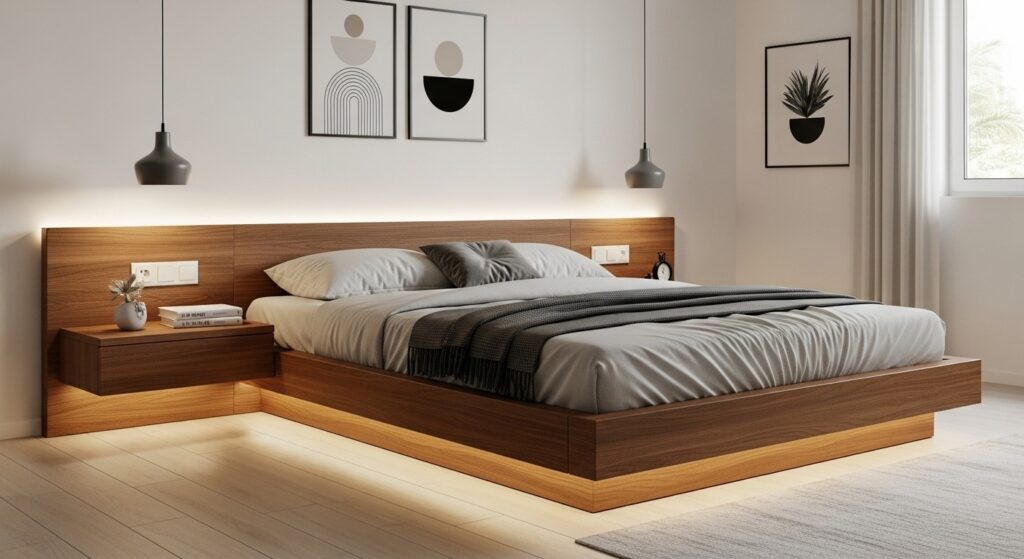
There’s something refreshingly clean about a bedroom where furniture seems to hover. Floating nightstands have this almost magical quality – they free up your floor, make cleaning ridiculously easy, and somehow make even the smallest bedroom feel more spacious.
I’ve noticed more people gravitating toward this look, especially those dealing with tight quarters or anyone who just wants that streamlined, contemporary vibe. The beauty here isn’t just aesthetic. When you eliminate bulky legs and bases, you’re actually changing how a room breathes.
This approach to bedroom ideas works whether you’re going full minimalist or just trying to squeeze a bit more breathing room into your space. Wall-mounted nightstands come in so many styles now – from simple floating shelves to sophisticated drawer units that seem to defy gravity.
Why Floating Nightstands Transform Bedroom Aesthetics
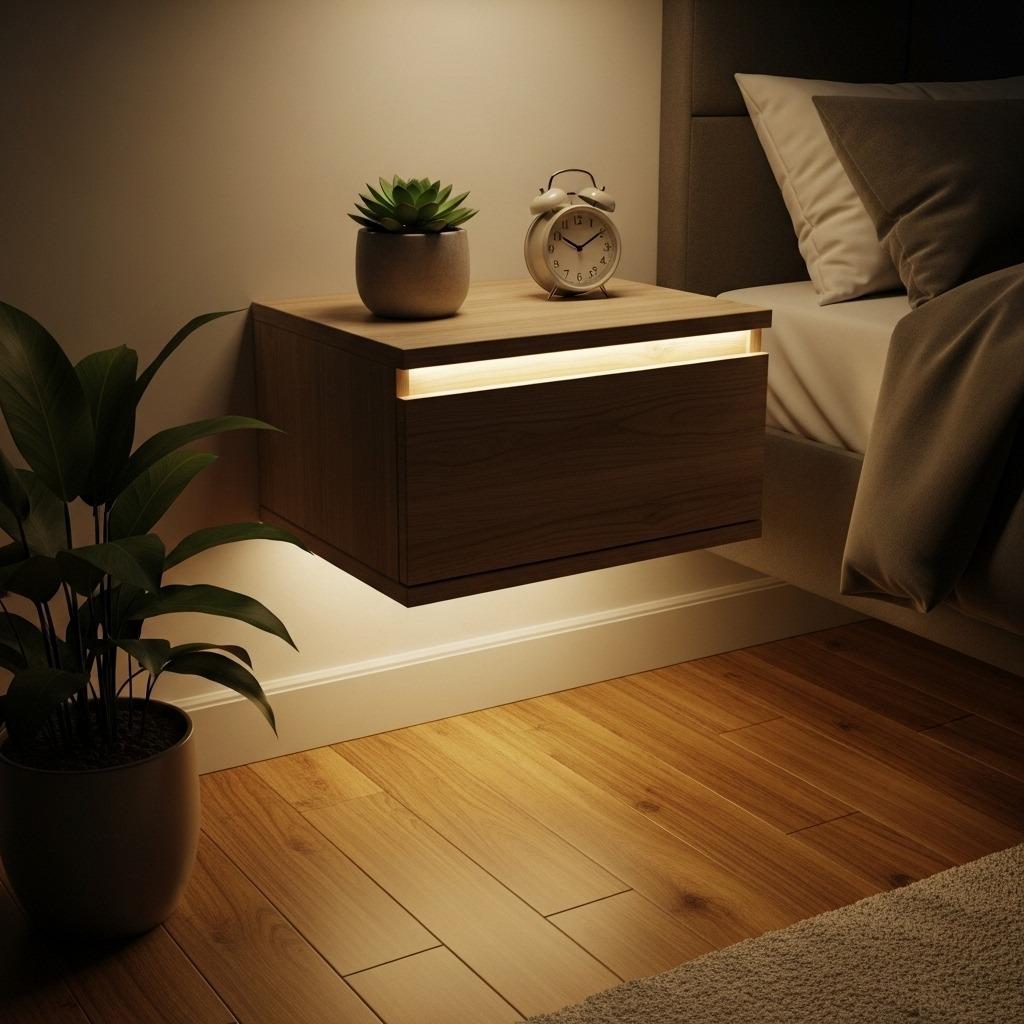
The visual impact of wall-mounted bedside furniture runs deeper than you might expect. When traditional nightstands sit on the floor, they create visual weight that can make a room feel crowded, even when you have adequate square footage.
Mounting your nightstand opens up sight lines. Your eye travels across the floor uninterrupted, which tricks your brain into perceiving more space. Interior designers have known this forever, but it’s becoming more accessible as hardware improves and installation gets simpler.
There’s also something undeniably modern about furniture that hovers. It fits perfectly with contemporary design movements that value clean lines and intentional negative space. This doesn’t mean your room has to feel cold or sterile – floating pieces can be warm wood, textured metal, or even upholstered designs.
The maintenance factor shouldn’t be overlooked either. Anyone who’s tried to vacuum around traditional nightstand legs knows the frustration. With wall-mounted options, you simply sweep or vacuum right underneath. It’s one of those small quality-of-life improvements that adds up over time.
1. Minimalist Wooden Floating Nightstands
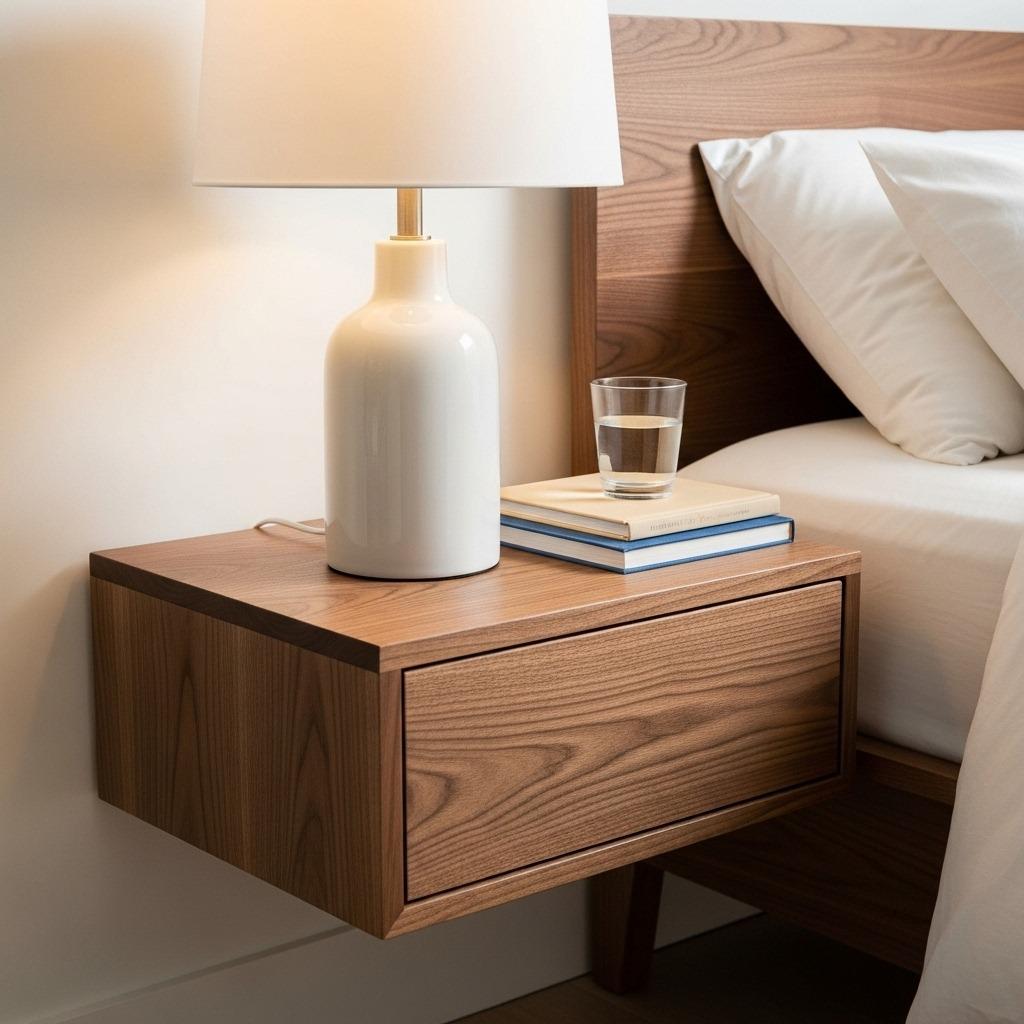
Simple wooden shelves mounted at mattress height create an understated elegance that never goes out of style. Oak, walnut, or maple brings natural warmth while maintaining that floating aesthetic you’re after.
The grain patterns in natural wood add visual interest without overwhelming your space. You don’t need much – just a solid piece of wood with clean edges, properly anchored to your wall. Some people add a small lip at the front to prevent items from sliding off during the night.
What I appreciate about this approach is its versatility. Wooden floating shelves work in Scandinavian living room inspired bedrooms, farmhouse styles, or even industrial spaces. The wood type and finish determine whether it feels rustic or refined.
Installation is straightforward if you hit your wall studs correctly. For heavier items, consider using floating shelf brackets that can support more weight. The key is ensuring your nightstand sits at a comfortable height – typically 24 to 28 inches from the floor, depending on your mattress thickness.
2. Floating Nightstands with Built-In Drawers
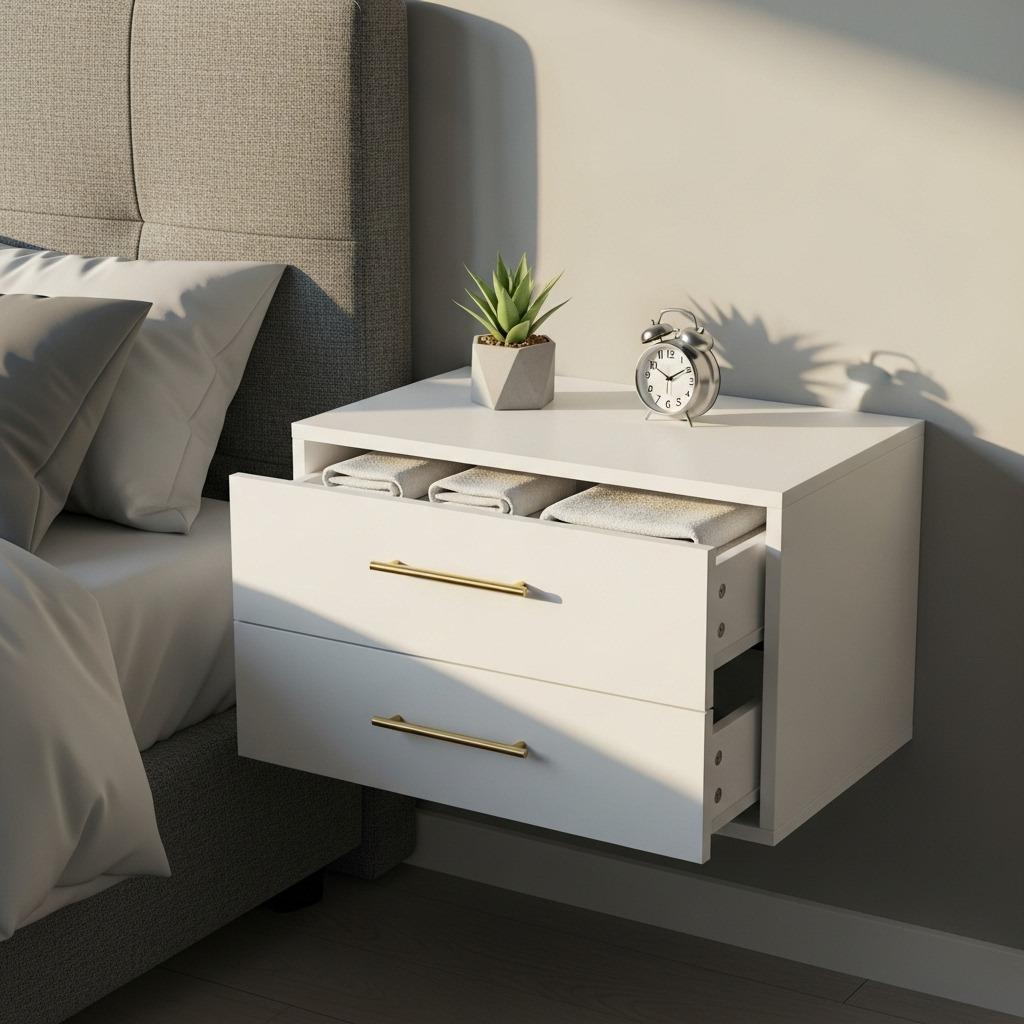
Storage doesn’t have to sit on your floor. Wall-mounted nightstands with integrated drawers offer the functionality of traditional furniture with none of the visual bulk.
These units typically feature one or two drawers that glide smoothly, even without floor support. The mechanics have improved dramatically – soft-close hinges and quality drawer slides make these feel as solid as floor-standing furniture. You’d be surprised how much you can tuck away in these compact units.
The space-saving furniture aspect becomes obvious when you’re dealing with narrow bedrooms. Every inch of floor space counts, and these drawer units deliver storage without encroaching on your walking paths. Some designs even incorporate hidden compartments or felt-lined sections for jewelry.
Look for units with solid construction – this isn’t the place to skimp on quality since you’re trusting your wall and the mounting hardware to support everything. Particle board might save money upfront, but solid wood or high-quality engineered wood will last longer and feel more substantial.
3. Industrial Metal Floating Nightstands
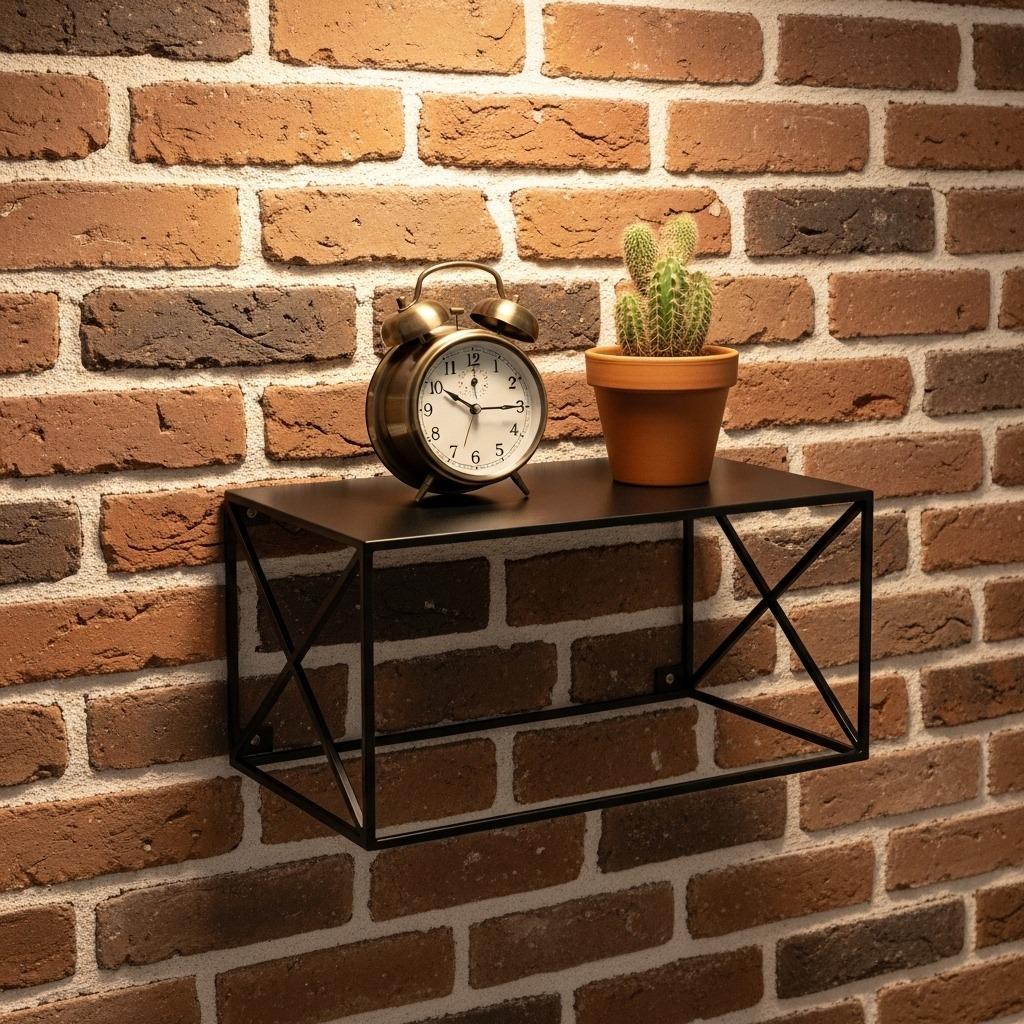
Metal floating shelves bring an edgy, urban quality to bedroom spaces. Think black steel, brushed brass, or matte bronze – materials that pair beautifully with exposed brick, concrete walls, or modern industrial aesthetics.
These nightstand ideas often feature minimal designs – maybe just a metal frame with a glass or wood insert. The simplicity is the point. Metal doesn’t try to hide its purpose; it celebrates the structural elements that make floating furniture possible.
I’ve seen these work particularly well in loft-style bedroom ideas or spaces with high ceilings where you want to ground the design without adding heaviness. The metal finish reflects light in interesting ways, creating subtle visual interest throughout the day.
Maintenance is practically nonexistent – wipe them down occasionally and you’re done. They’re also incredibly durable. Unlike wood that can scratch or warp, quality metal maintains its appearance for years. Just make sure your wall anchors are rated for the weight, especially if you’re mounting to drywall rather than directly into studs.
4. Floating Nightstand with Integrated Lighting
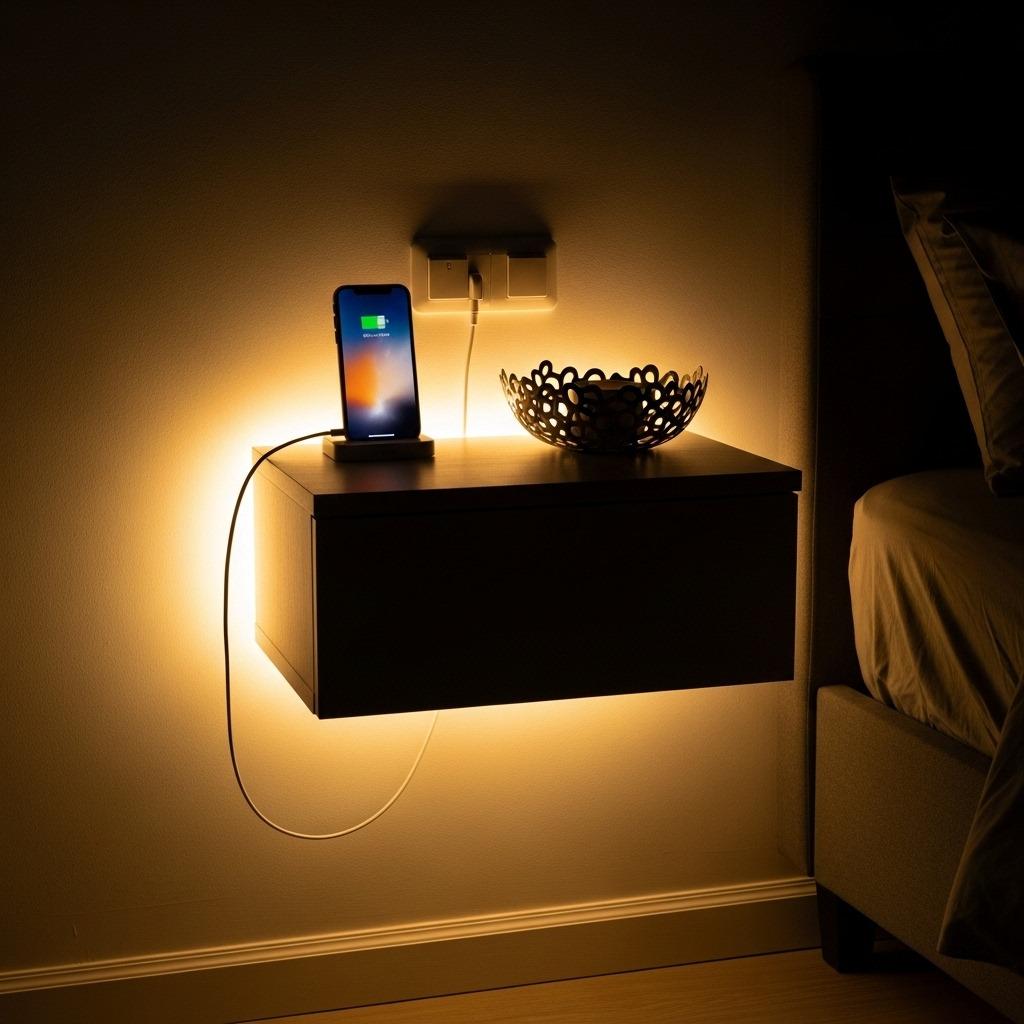
Built-in LED strips or backlighting transform a functional nightstand into an ambient lighting feature. The glow emanating from beneath creates a subtle, almost ethereal quality that’s perfect for late-night reading or early morning routines.
This design typically involves mounting your nightstand with a small gap between the shelf and the wall, allowing LED strips to cast light downward and outward. The effect is gentle illumination that doesn’t disturb a sleeping partner but provides enough visibility to navigate your bedroom safely.
The lighting can be as simple or sophisticated as you want. Basic LED strips with a simple on-off switch work fine, but smart lighting systems let you adjust color temperature and brightness through your phone. Warmer tones work better for bedrooms – they’re easier on your eyes and won’t interfere with sleep patterns the way blue-toned light can.
Installation requires running electrical wiring unless you opt for battery-operated or plug-in LED strips. The wiring adds complexity, but the result is cleaner without visible cords. Consider this element when planning your bedroom lighting strategy – integrated nightstand lights can reduce or eliminate the need for traditional table lamps.
5. Corner Floating Nightstands for Small Bedrooms
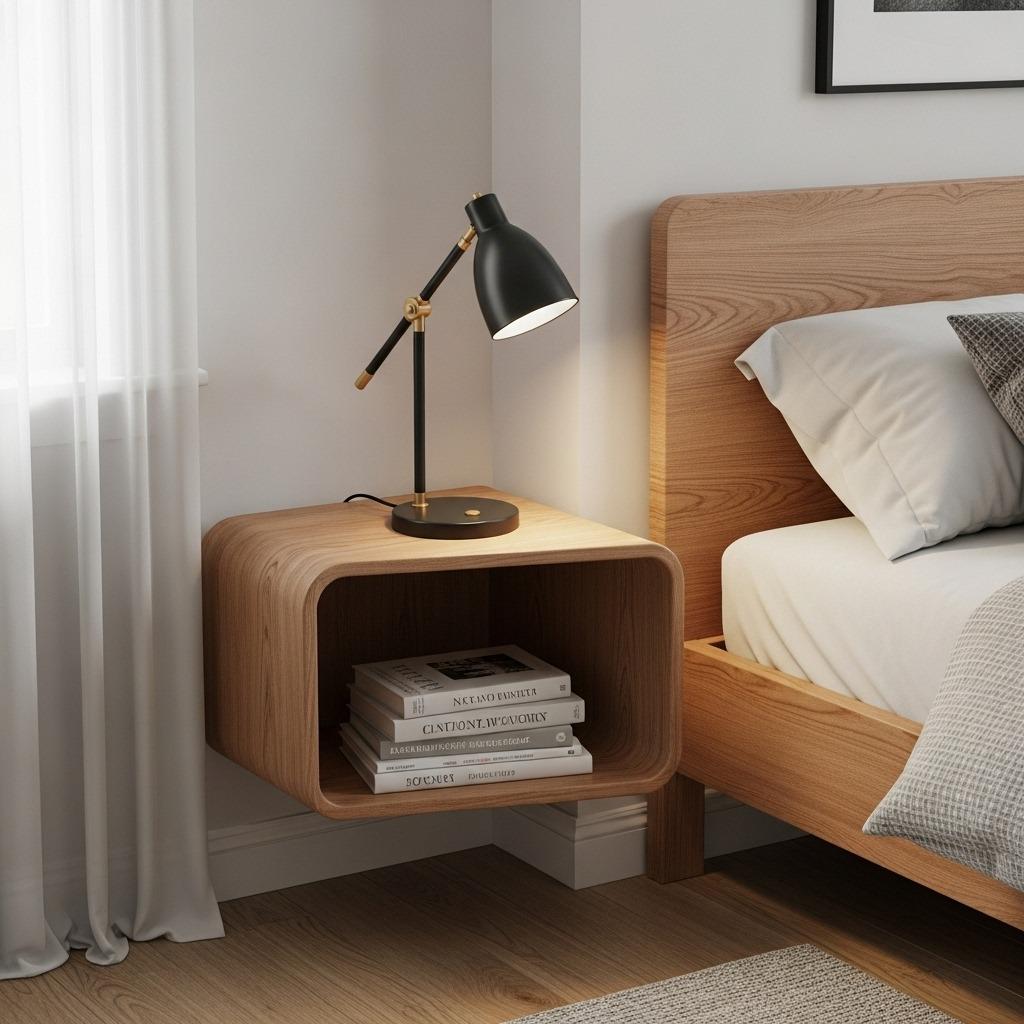
Corner-mounted nightstands solve a specific problem: what do you do when you literally don’t have wall space beside your bed? These triangular or curved units fit snugly into corners, utilizing space that typically goes unused.
The geometry works in your favor here. A corner unit can be surprisingly spacious while taking up minimal visual real estate. They’re particularly useful in small space bedroom hacks where every configuration needs to pull double duty.
These designs often feature multiple tiers or levels, giving you vertical storage options. You might have your phone and glasses on the top surface, books on a lower shelf, and small items tucked into an integrated cubby. The vertical approach maximizes the corner’s potential without sprawling outward into your room.
Mounting requires careful attention to ensure both walls provide adequate support. You’re essentially creating a bridge between two planes, so solid anchoring into studs is even more critical than with standard floating nightstands. But once installed properly, they’re rock-solid and incredibly functional.
6. Glass Floating Nightstands for Airy Elegance
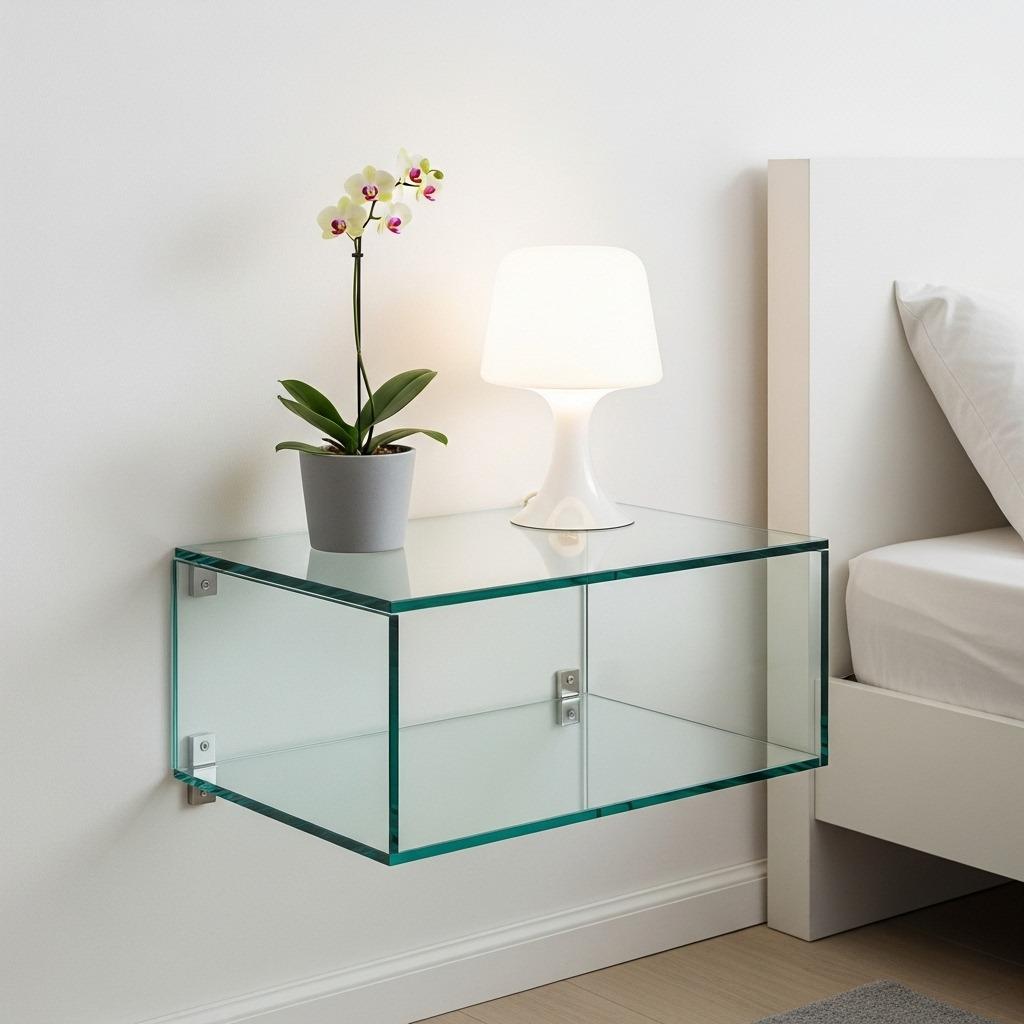
Tempered glass shelves create the ultimate illusion of space. They’re there when you need them but seem to disappear visually, making them perfect for colorful minimalist bedroom schemes where you want furniture to fade into the background.
The transparency doesn’t mean fragility – tempered glass is remarkably strong and can easily support lamps, books, and typical bedside items. The edges are usually polished smooth, and the mounting hardware often uses minimal metal brackets that add to the floating effect.
Cleaning is straightforward but necessary – glass shows fingerprints and dust more readily than opaque surfaces. A quick wipe with glass cleaner keeps them looking pristine. The trade-off is worth it for the visual lightness they bring to your space.
Consider what you’ll display on glass shelves. Unlike opaque nightstands that hide clutter, glass puts everything on display from every angle. This can actually be a good thing – it encourages you to be more intentional about what stays on your nightstand, naturally reducing visual clutter.
7. Rustic Reclaimed Wood Floating Nightstands
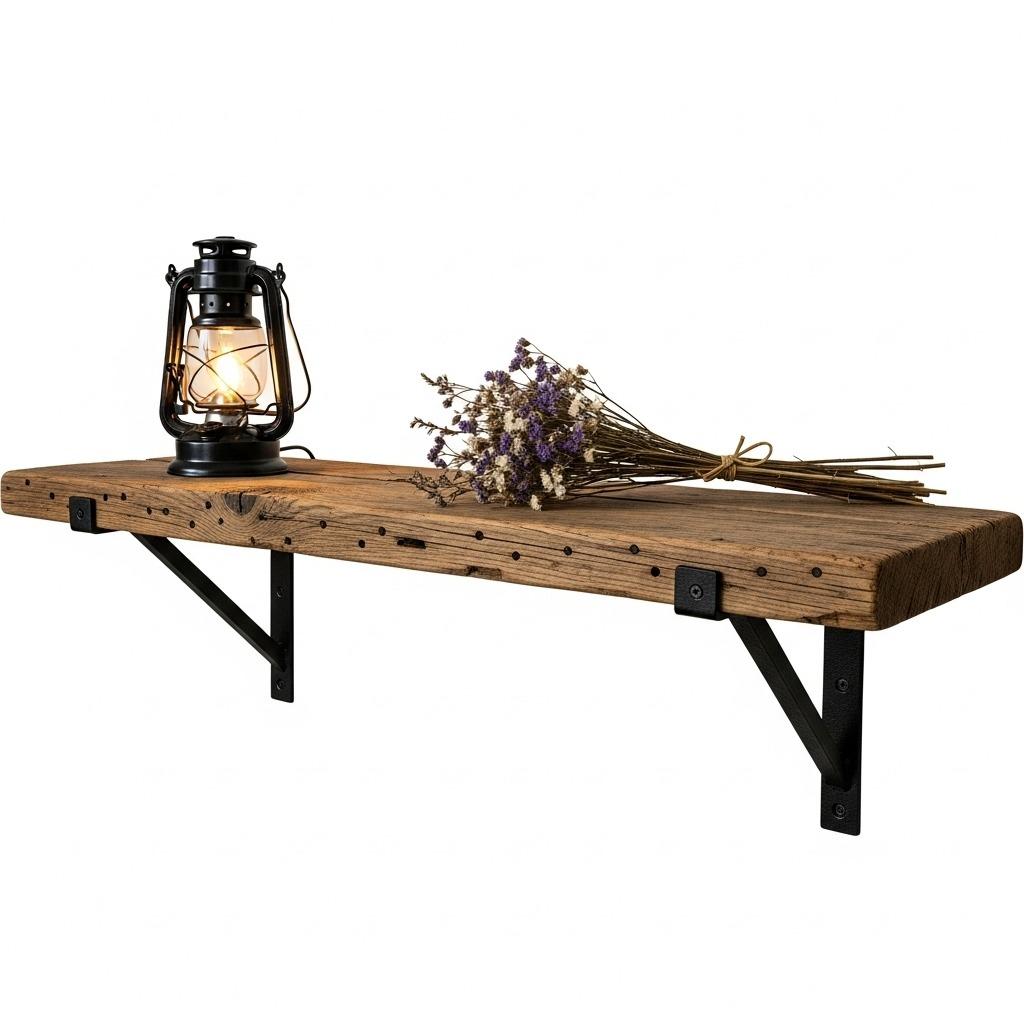
Weathered wood with visible history brings character and texture to modern spaces. Reclaimed barn wood, old fence posts, or salvaged lumber creates nightstands with stories embedded in every grain and imperfection.
The juxtaposition is what makes this work – rustic materials in a contemporary floating format. You get the warmth and authenticity of aged wood combined with the clean, modern lines of wall-mounted furniture. It’s a style that fits perfectly in farmhouse bedroom themes or transitional spaces.
Each piece is genuinely unique. The distressing, color variations, and wood character mean no two nightstands look identical. Some people love this individuality; others prefer more uniformity. Consider your personal aesthetic before committing to heavily distressed pieces.
The mounting needs to account for potentially irregular surfaces. Reclaimed wood may not be perfectly straight or uniform in thickness, which affects how you attach it to your wall. Working with a piece that has natural character requires more patience during installation, but the result adds warmth that manufactured materials can’t replicate.
8. Floating Nightstands with Open Shelving
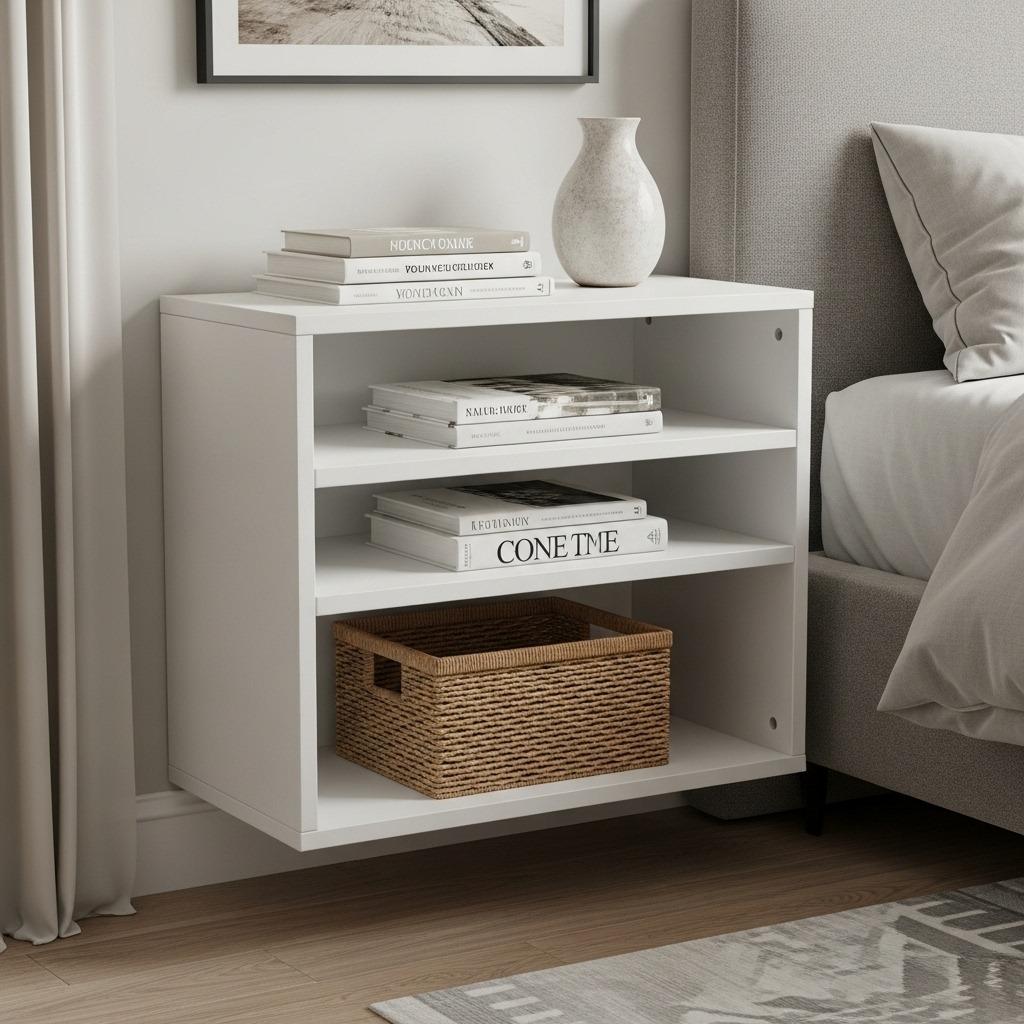
Multiple tiers of open shelving give you display space and storage without the visual weight of enclosed cabinets. This design exposes your bedside items, turning organization into part of your decor.
The openness encourages curation. You’ll naturally arrange books with spines facing out, style small decorative objects, and keep only items that look good together. It’s a more intentional approach to bedside storage that eliminates the junk drawer tendency of enclosed nightstands.
These work particularly well in multifunctional bedroom layouts where your sleeping space also serves as a reading nook or small workspace. The shelving provides accessible storage without feeling cramped or closed-off.
The styling opportunity here shouldn’t be underestimated. Open shelves become a chance to express personality – mix books with small plants, display travel mementos, or arrange items by color. Just remember that everything is visible, so dust maintenance becomes more important than with enclosed storage.
9. Scandinavian-Inspired Floating Nightstands
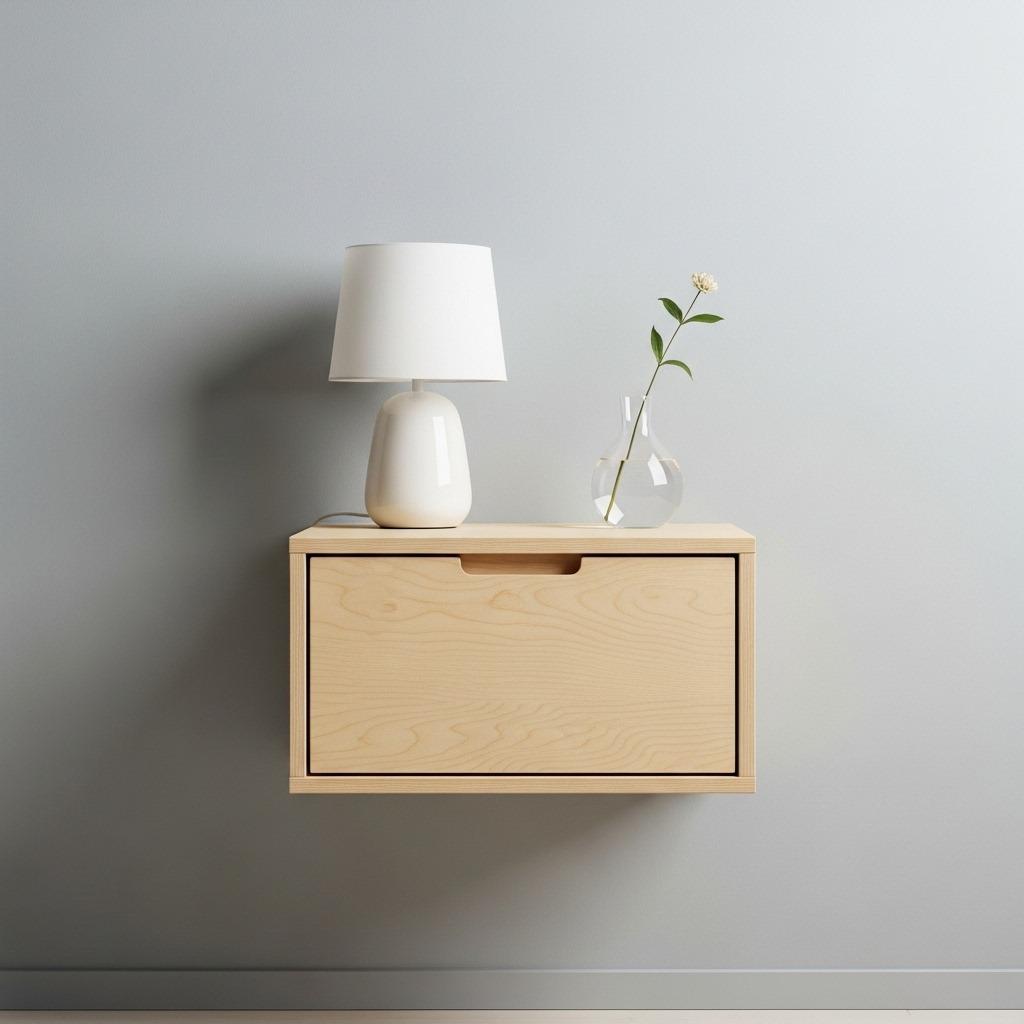
Light woods, simple lines, and functional elegance define Scandinavian design. Floating nightstands in this style typically feature blonde wood tones – birch, ash, or light oak – with minimal ornamentation and maximum practicality.
The Scandinavian approach values both form and function equally. Your nightstand should be beautiful but also solve problems efficiently. This often translates to designs with integrated cord management, subtle drawer pulls, and surfaces sized precisely for what you actually need beside your bed.
These pieces pair naturally with other Scandinavian interior bedroom elements – think soft textiles, neutral palettes, and strategic pops of black or dark gray for contrast. The overall effect is calming and uncluttered, which is exactly what most people want in their sleeping space.
Quality matters significantly in Scandinavian design. The simplicity means there’s nowhere for poor craftsmanship to hide. Invest in well-made pieces with smooth drawer action, solid wood construction, and finishes that will age gracefully. The goal is furniture that functions beautifully for decades, not just seasons.
10. Floating Nightstands with Hidden Storage Compartments
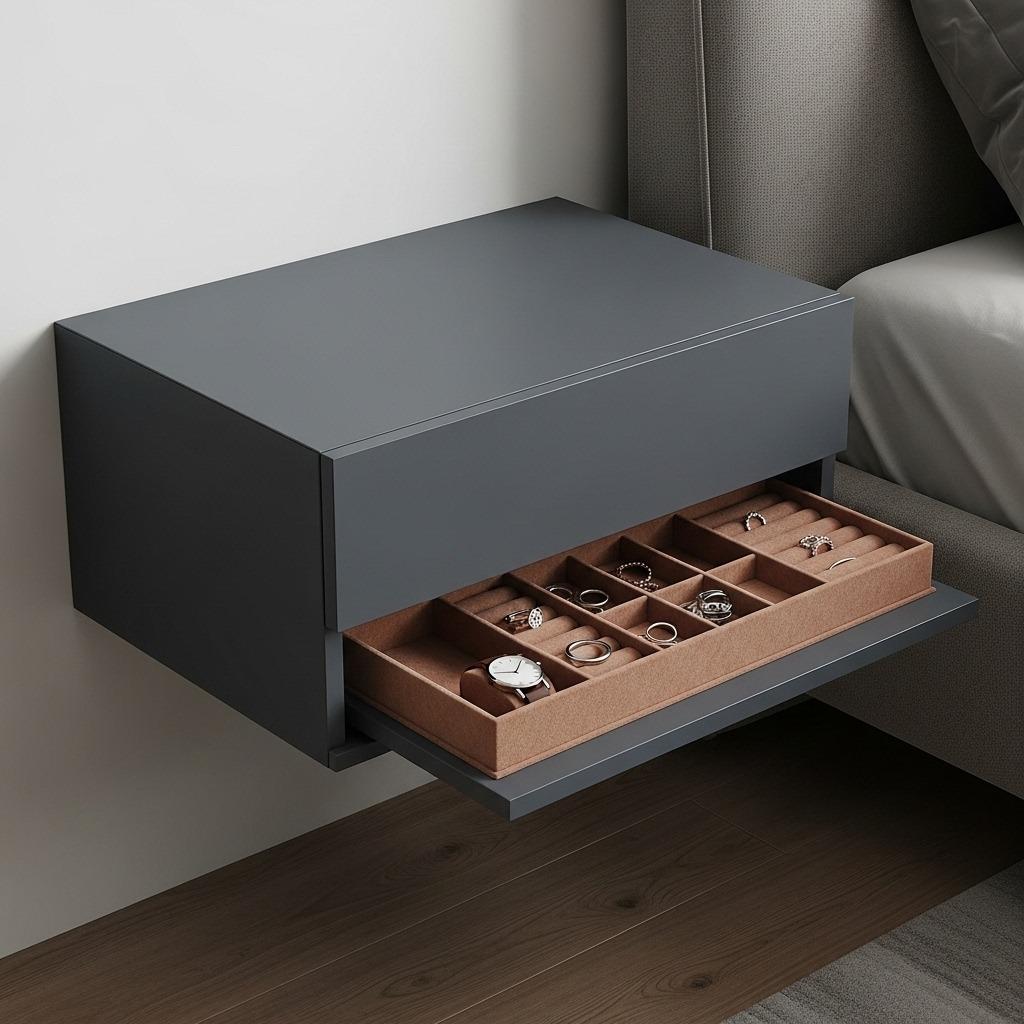
Secret compartments and concealed storage add intrigue while keeping valuable items secure. These designs often feature false drawer fronts that flip down, hidden magnetic catches, or sliding panels that reveal storage behind seemingly solid surfaces.
The appeal goes beyond security – there’s something satisfying about hidden storage. It keeps your space looking minimal while actually accommodating everything you need. Medications, jewelry, important documents, or anything you’d rather not display can disappear completely.
Installation typically requires more planning since these units often weigh more than simple shelves. The hardware needs to support not just the nightstand but also the contents of hidden compartments. Make sure you’re mounting into solid backing – drywall anchors alone won’t cut it for heavier designs.
These designs work especially well for people who value smart storage living room principles and want that same thoughtfulness in their bedroom. Everything has its place, but nothing clutters your visual space. It’s an approach that creates serenity without sacrificing functionality.
11. Asymmetrical Floating Nightstand Arrangements
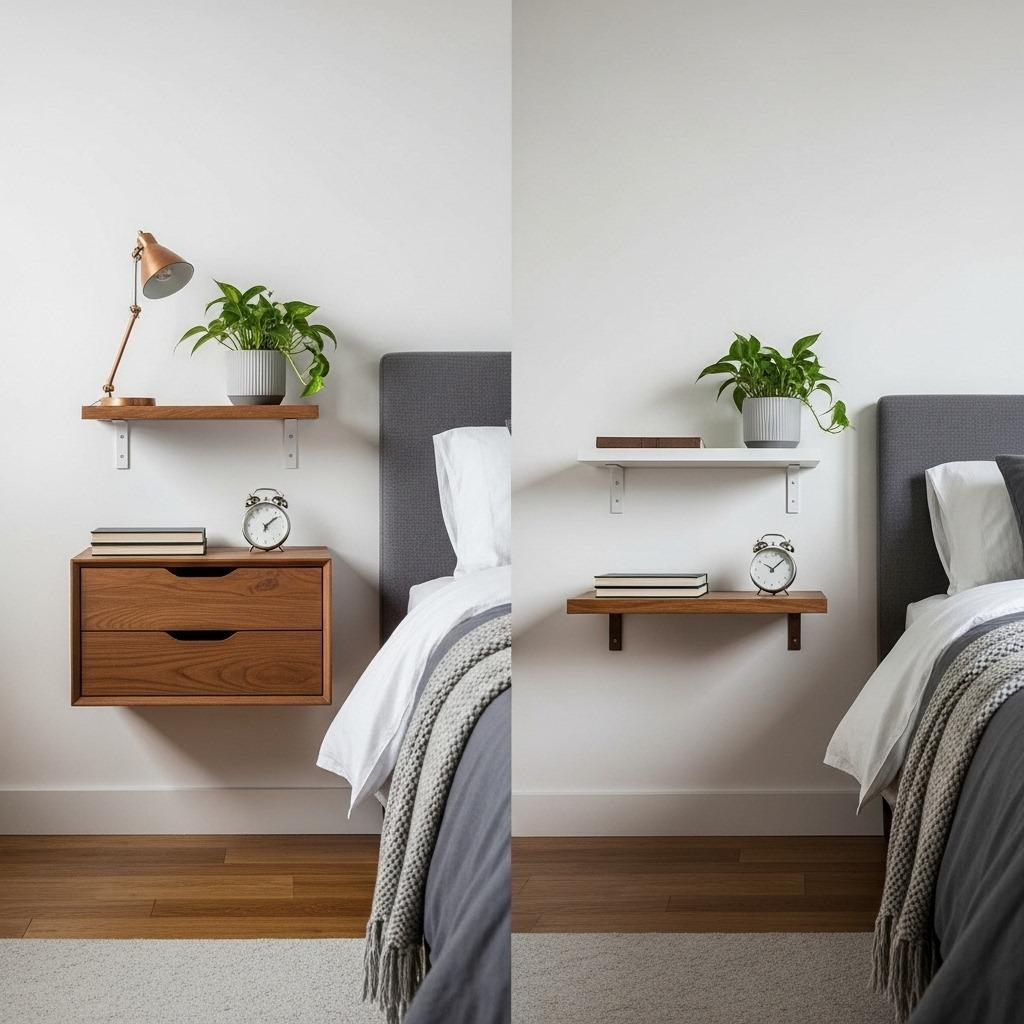
Who says both sides of your bed need matching nightstands? Asymmetrical arrangements create visual interest and can actually solve practical problems when you’re working with unusual room layouts or different storage needs on each side.
Maybe you need drawer storage on one side for medications and reading glasses, but a simple shelf suffices on the other. Or perhaps your room’s dimensions mean one side has more wall space than the other. Embracing asymmetry gives you flexibility to optimize each side independently.
This approach requires a good eye for balance. The nightstands should relate to each other visually even if they’re not identical – similar wood tones, coordinating finishes, or complementary shapes help unify the look. Think of it like mixing patterns in your bedding – variety works when there’s an underlying connection.
The style fits naturally in eclectic living room inspired bedrooms where collected, personal spaces trump matchy-matchy perfection. It’s a more relaxed, confident approach to decorating that celebrates individual pieces rather than forcing everything into uniform sets.
12. Floating Nightstands with Built-In Charging Stations
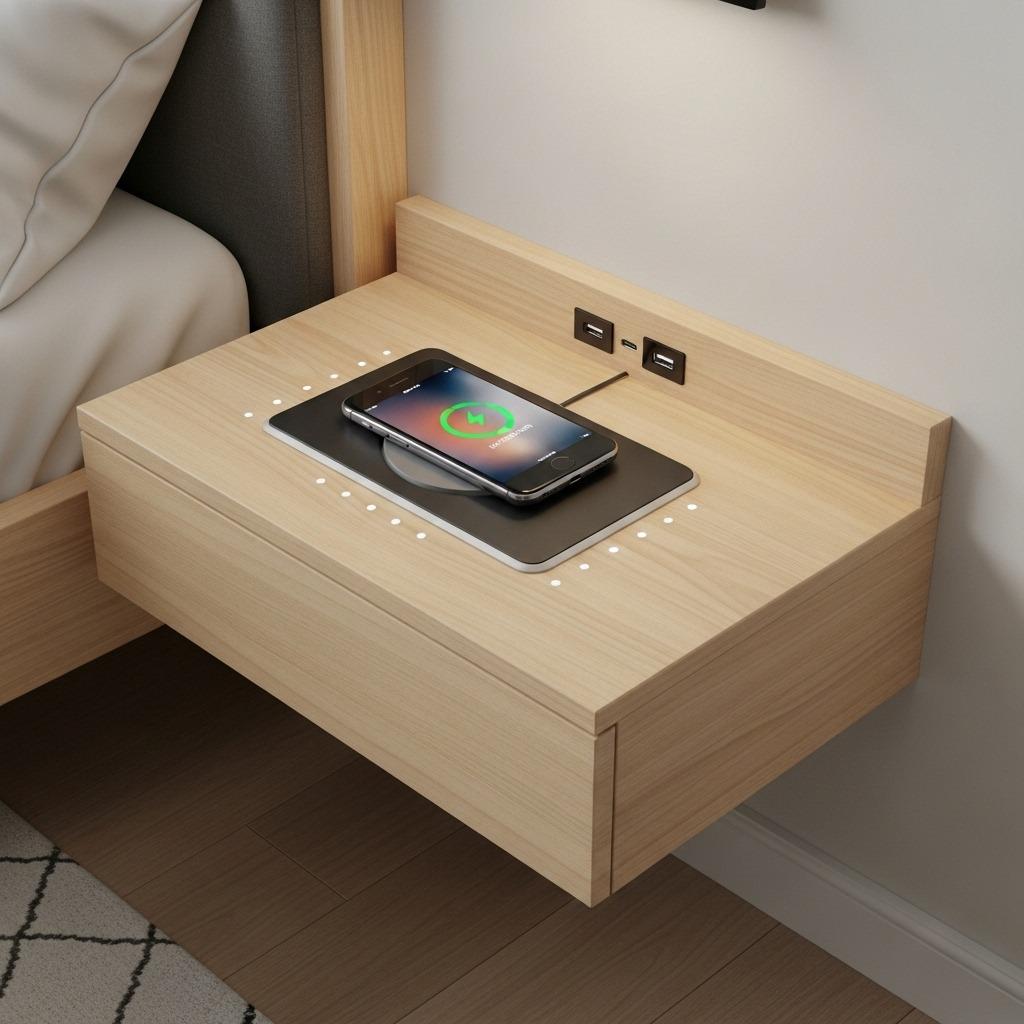
Integrated USB ports and wireless charging pads eliminate cord clutter while keeping devices accessible. These tech-forward designs acknowledge how we actually use our bedrooms in 2025 – phones charging overnight, tablets for reading, maybe smart home controls all within reach.
The charging elements are typically built into the top surface or integrated into a drawer. Wireless charging pads sit flush with the surface, so you simply set your phone down and it powers up. USB ports might be discreetly positioned along the back or side edge.
Cable management becomes crucial with these designs. The best versions include routing channels or hidden compartments where excess cord length can be tucked away. Nothing ruins the clean aesthetic of a floating nightstand faster than cables dangling down the wall.
These pieces often require planning during installation since you’ll need access to electrical outlets. Some people run new outlets specifically for charging nightstands, positioning them behind the unit where they’ll be hidden. It’s worth consulting an electrician for smart home improvement integrations if you’re doing major bedroom renovations.
13. Colorful Painted Floating Nightstands
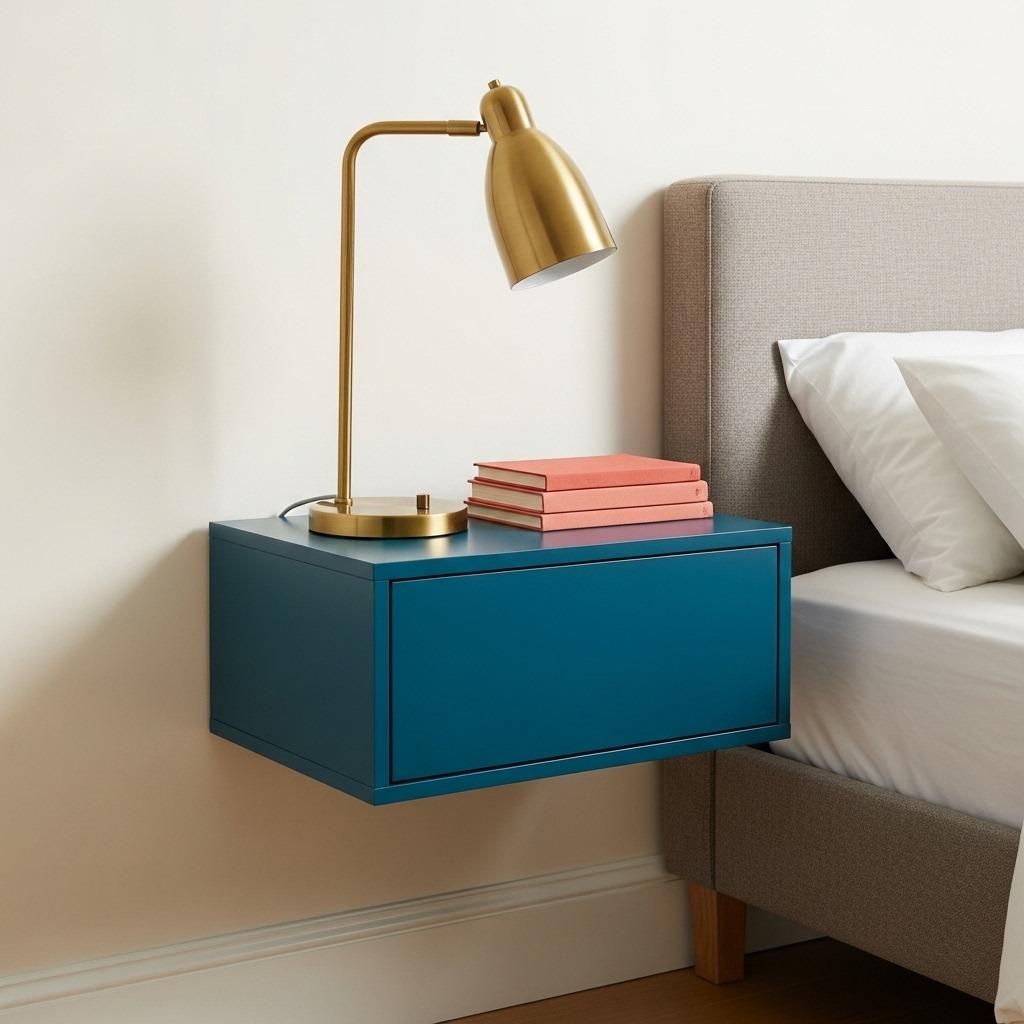
Bold colors transform utilitarian storage into artistic statements. A floating nightstand in deep emerald green, rich navy, or even dramatic black creates a focal point while maintaining the space-saving benefits of wall-mounted furniture.
Color choice depends entirely on your existing palette. In neutral bedrooms, a vibrant nightstand adds energy without overwhelming the space. In rooms with colorful bedding or wall treatments, a painted nightstand can echo those tones and tie the design together.
Paint quality matters more than you might expect. Furniture-grade paint with proper primer underneath creates a durable finish that resists chipping and wear. Cheaper paint jobs can look great initially but show wear quickly, especially on surfaces where you’re constantly setting down objects.
This is also an excellent DIY opportunity. If you’re handy with basic carpentry, you can build and paint custom floating nightstands for a fraction of retail prices. Sites like affordable home upgrades offer guidance on budget-friendly furniture projects that deliver high-impact results.
14. Floating Nightstands for Platform Beds
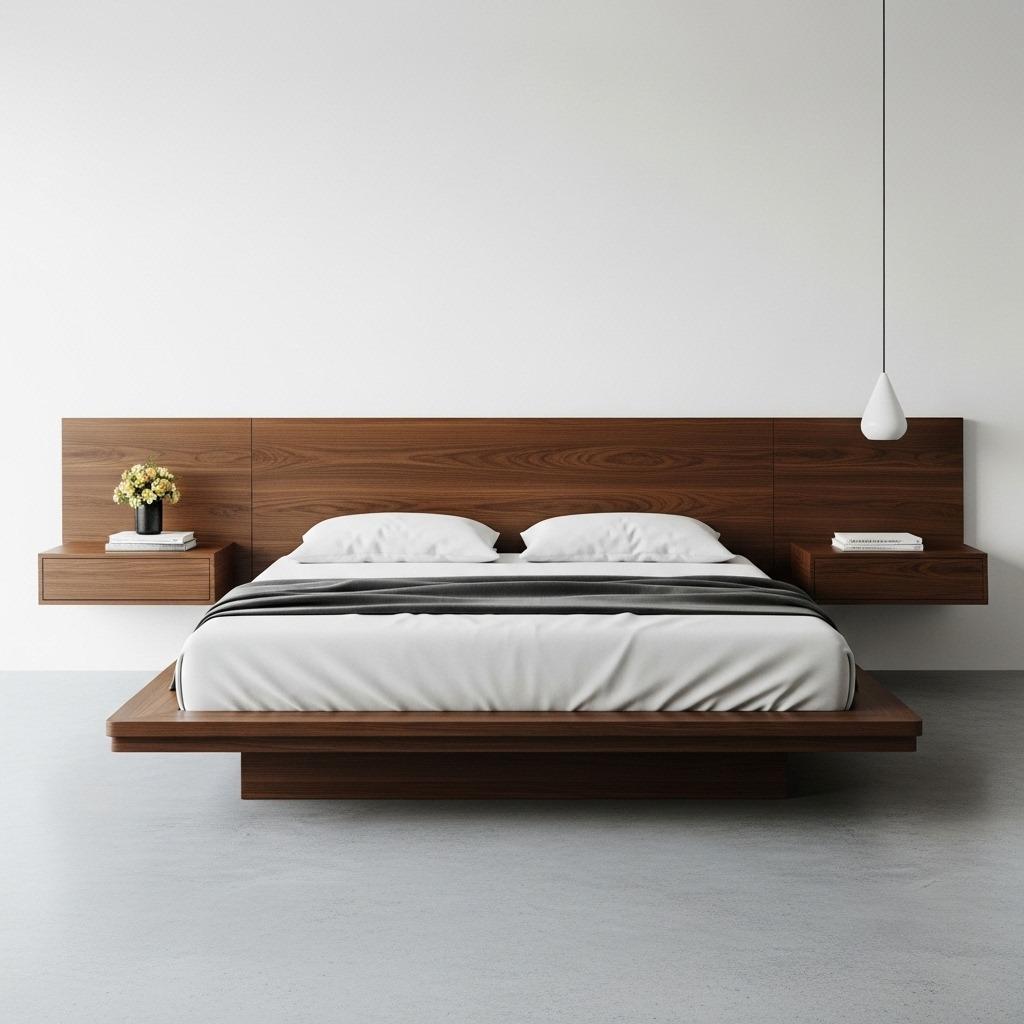
Platform beds sit lower than traditional frames, which means your nightstand height needs adjustment. Floating designs are perfect here because you can mount them at exactly the right height relative to your mattress top.
The lower profile creates interesting design opportunities. Your nightstand might sit just 12-15 inches off the floor, creating long, horizontal lines that emphasize the bed’s low-slung aesthetic. This works beautifully in luxury master bedroom designs where the bed is the obvious focal point.
The visual continuity between bed and nightstand feels intentional and cohesive. Some people even match materials and finishes, creating a suite effect where the bed platform and floating nightstands read as a unified furniture system.
Mounting at lower heights can actually be structurally easier. You’re often hitting the lower wall plates or solid backing rather than relying entirely on drywall anchors. Just make sure the height still provides comfortable access – you shouldn’t have to reach awkwardly to grab items from your nightstand.
15. Marble-Top Floating Nightstands
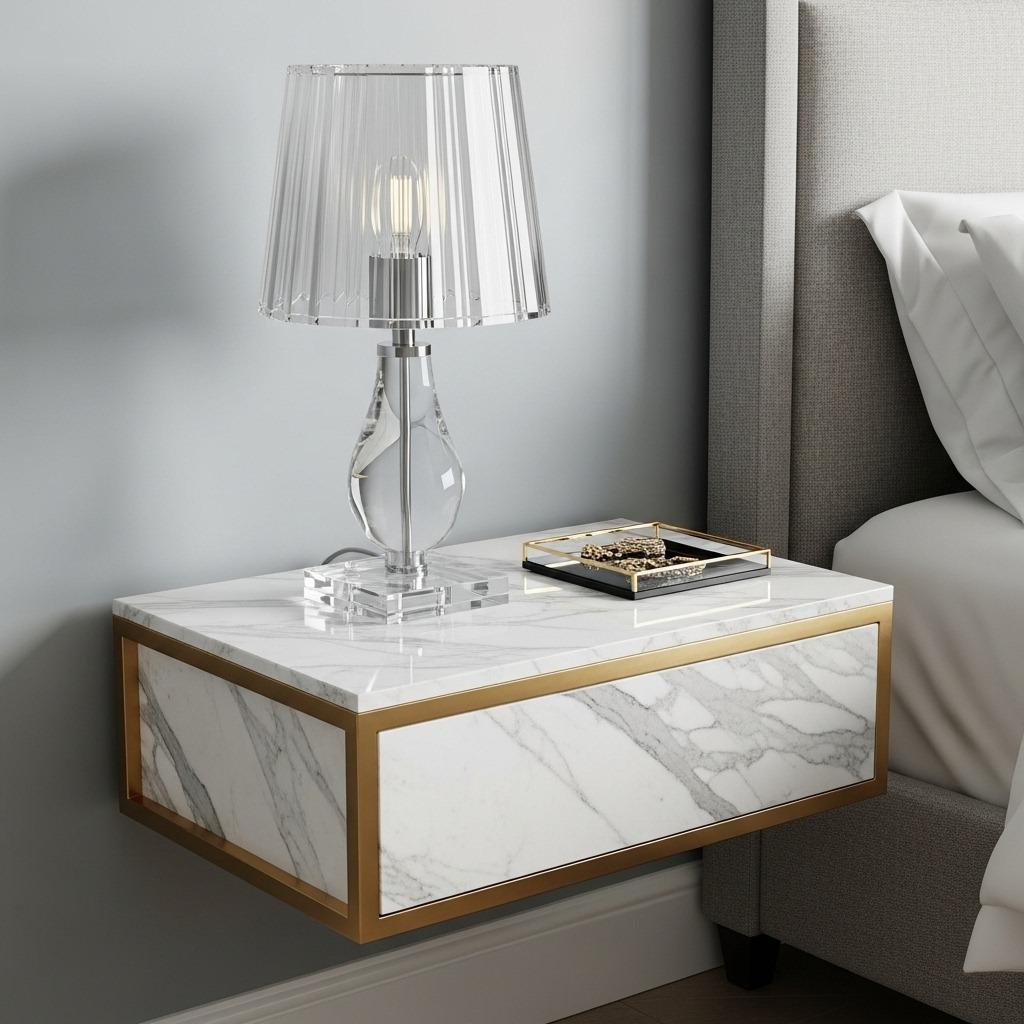
Natural stone surfaces bring luxury and permanence to bedroom design. A marble or granite top on a floating nightstand creates an upscale feel while providing a cool, smooth surface that’s practical for lamps, glasses, and other bedside essentials.
The weight of stone requires robust mounting. You’ll definitely need solid backing and heavy-duty brackets rated for significantly more weight than wood alternatives. But the investment pays off in durability and visual impact.
Stone variations mean each piece is unique. Some people love the unpredictability of natural materials; others prefer more uniform manufactured stone alternatives. Engineered quartz gives you the look of marble with more consistent patterning and easier maintenance.
Care requirements are straightforward but non-negotiable. Stone needs sealing to prevent stains, and acidic liquids (coffee, citrus, wine) should be wiped up quickly. The maintenance is worth it for the sophistication these surfaces bring, especially in boho style bedroom schemes where mixed materials create rich, layered aesthetics.
Installation Tips for Floating Nightstands
Getting your nightstand properly mounted is crucial for both safety and aesthetics. Poor installation can lead to sagging, damage, or worse – complete failure under weight.
First, locate your wall studs using a reliable stud finder. Mounting directly into studs provides the strongest support. If your desired nightstand position doesn’t align with studs, use heavy-duty drywall anchors rated for the weight you’ll be supporting. Don’t guess on this – check the manufacturer’s weight specifications and exceed them.
Height matters more than you might think. Standard nightstand height sits at roughly the same level as your mattress top, typically 24-28 inches from the floor. But measure your specific bed – thicker mattresses or platform frames change this calculation. You want comfortable reach without awkward stretching.
Level is non-negotiable. Even a slight tilt becomes obvious once you place objects on the surface, and it creates visual tension that bothers you every time you look at it. Use a quality level during installation and double-check before permanently securing the mounting hardware.
Consider the long game when planning placement. Will your nightstand interfere with opening closet doors, window treatments, or bedroom traffic patterns? Can you easily access power outlets for lamps or phone chargers? Thinking through daily use patterns prevents frustration later.
Styling Your Floating Nightstand
Less is genuinely more when styling wall-mounted nightstands. The whole point is creating clean, uncluttered spaces, so resist the urge to pack every inch with objects.
Start with essentials – a lamp if you don’t have built-in lighting, your phone, maybe a book you’re currently reading. Then add one or two decorative elements that bring personality: a small plant, a meaningful photo, or an object you love looking at.
Balance matters visually. A tall lamp on one side benefits from a lower object on the other – maybe a stack of books or a short vase. You’re creating visual weight distribution rather than perfect symmetry. Think of your nightstand as a small still life that changes occasionally but maintains certain core elements.
According to Architectural Digest, one of the best home design resources, incorporating <a href=”https://www.architecturaldigest.com/gallery/best-small-space-furniture”>space-saving furniture</a> requires thoughtful styling that maximizes function without sacrificing style. This principle applies perfectly to floating nightstands where every item should earn its place.
Keep the area beneath your floating nightstand clear. Part of the visual appeal is that open floor space, so don’t undermine it by stashing items underneath. If you need that storage, you probably want a nightstand with drawers rather than an open shelf.
Rotate items seasonally if you enjoy changing your decor. Winter might bring cozy candles and warm-toned objects, while summer could feature lighter, airier styling. This keeps your bedroom feeling fresh without major overhauls or significant expense.
Floating nightstands solve real problems while elevating bedroom aesthetics. They’re not just trendy – they’re practical solutions for modern living where space is precious and style matters.
Whether you’re drawn to minimalist wood shelves, sophisticated drawer units, or tech-integrated designs, there’s a floating nightstand approach that fits your space and needs. The key is choosing styles that align with how you actually use your bedroom, not just what looks good in photos.
Installation requires care and proper planning, but the payoff lasts for years. You’ll clean floors more easily, move through your space more comfortably, and enjoy the visual lightness that comes with furniture that seems to hover.
Start with one nightstand if you’re unsure about committing to both sides. Test the height, live with the functionality, and refine your approach before installing a matching piece. Your bedroom should evolve thoughtfully, not be rushed into configurations that don’t quite work for your daily routines.

