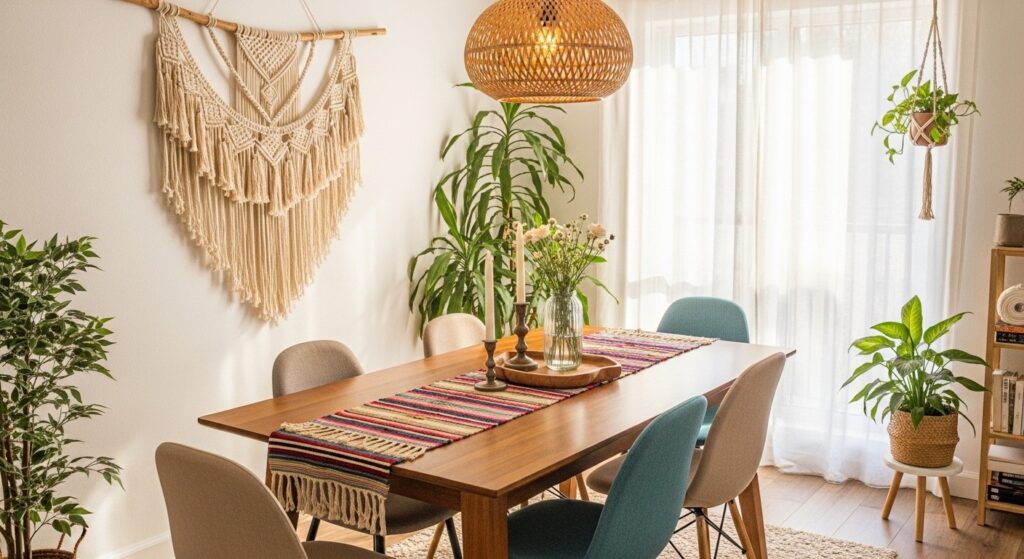
There’s something magnetic about a boho dining room. Maybe it’s the way mismatched chairs somehow look perfectly coordinated, or how layered textures make the space feel lived-in without trying too hard. Whatever it is, bohemian dining decor has this rare ability to make every meal feel like a casual celebration.
If you’ve been scrolling through Pinterest dreaming of a dining space that reflects your free-spirited side, you’re in the right place. These ideas blend comfort with creativity, proving that you don’t need a formal setup to host memorable dinners. From eclectic tablescapes to relaxed dinner styling, let’s explore how to transform your dining area into a welcoming bohemian haven.
1. Mix and Match Seating for Effortless Charm
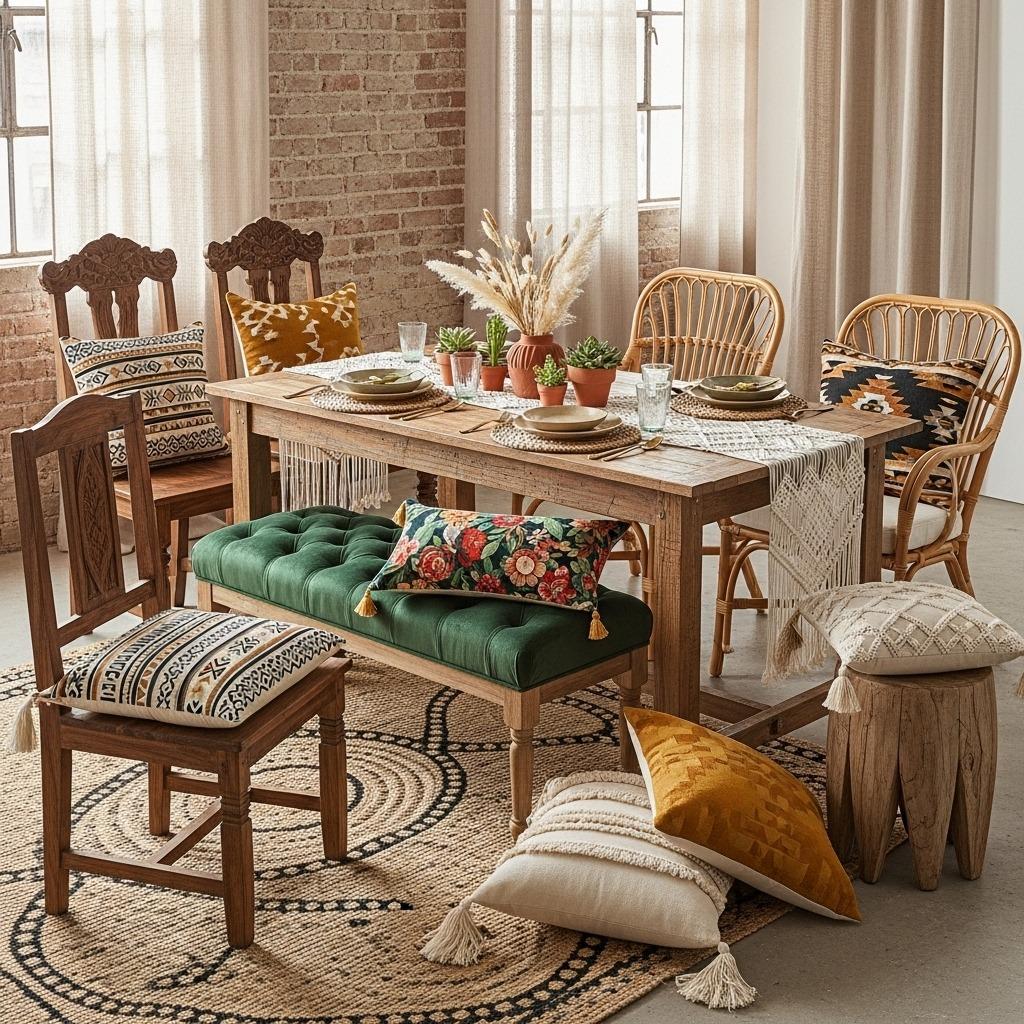
Forget matching dining sets. The beauty of a boho dining room lies in its collected-over-time aesthetic. Pull together wooden chairs from different eras, throw in a vintage bench, maybe add a couple of rattan seats. The result? Character that can’t be bought as a package deal.
What makes this work is intentionality. Choose pieces that share a common thread, whether that’s wood tones, similar heights, or a consistent level of wear. Add cushions in complementary patterns to tie everything together. This approach not only looks interesting but also tells a story about your personal style.
The best part? You can build this look gradually. Start with what you have, then add pieces as you find them at thrift stores or flea markets. It’s budget-friendly and creates a dining space that feels uniquely yours.
2. Layer Natural Textures Throughout the Space
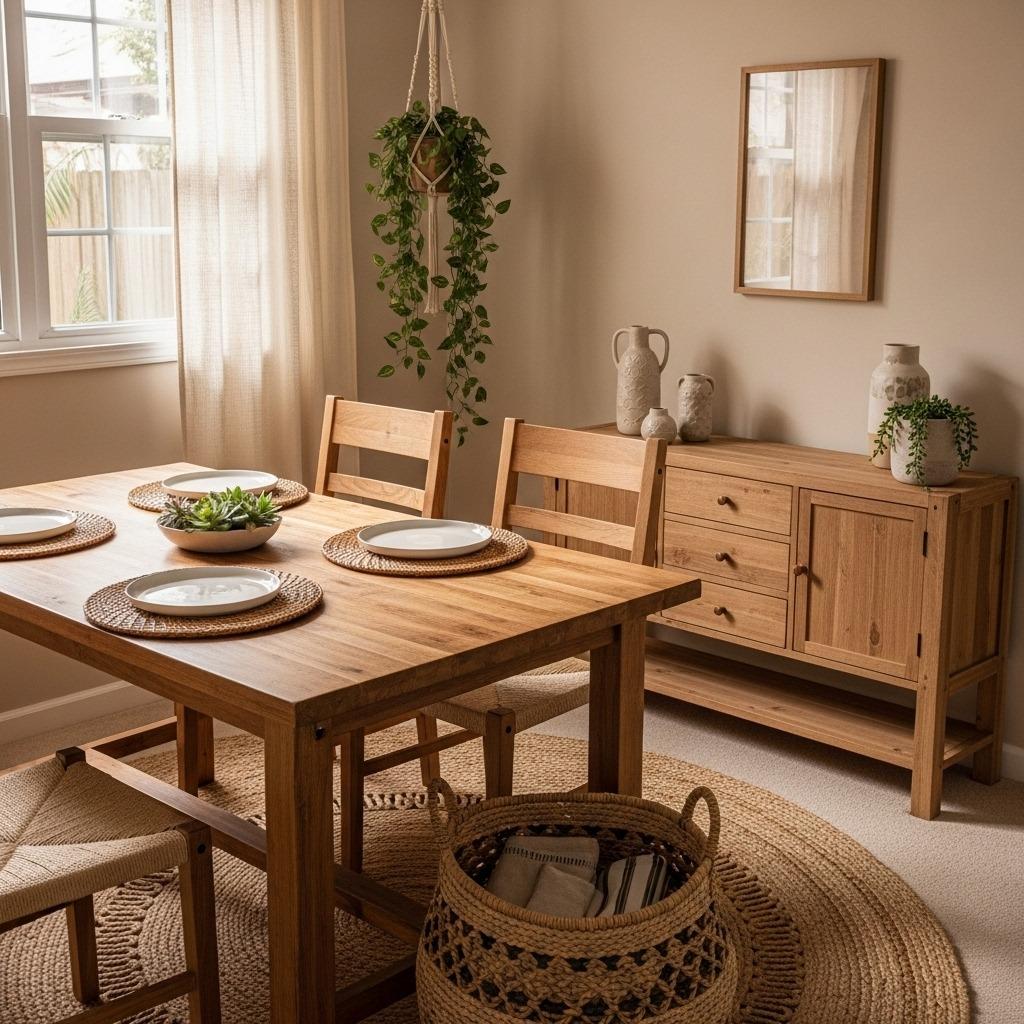
Texture is the secret ingredient in any bohemian dining decor scheme. Think jute rugs underfoot, linen table runners, woven placemats, and maybe a macramé wall hanging catching the light. Each material adds depth and visual interest without overwhelming the space.
Start with your largest surfaces and work your way down. A natural fiber rug anchors the room, while table linens in breathable fabrics like cotton or linen keep things casual. Don’t be afraid to combine rough and smooth textures – that contrast is what makes the look feel dynamic.
The key is balance. Too many textures can feel chaotic, but when you limit your color palette and let natural materials do the talking, everything falls into place. If you’re looking for more ways to incorporate these elements throughout your home, check out our guide on boho style bedroom design for additional inspiration.
3. Embrace Warm, Earthy Color Palettes
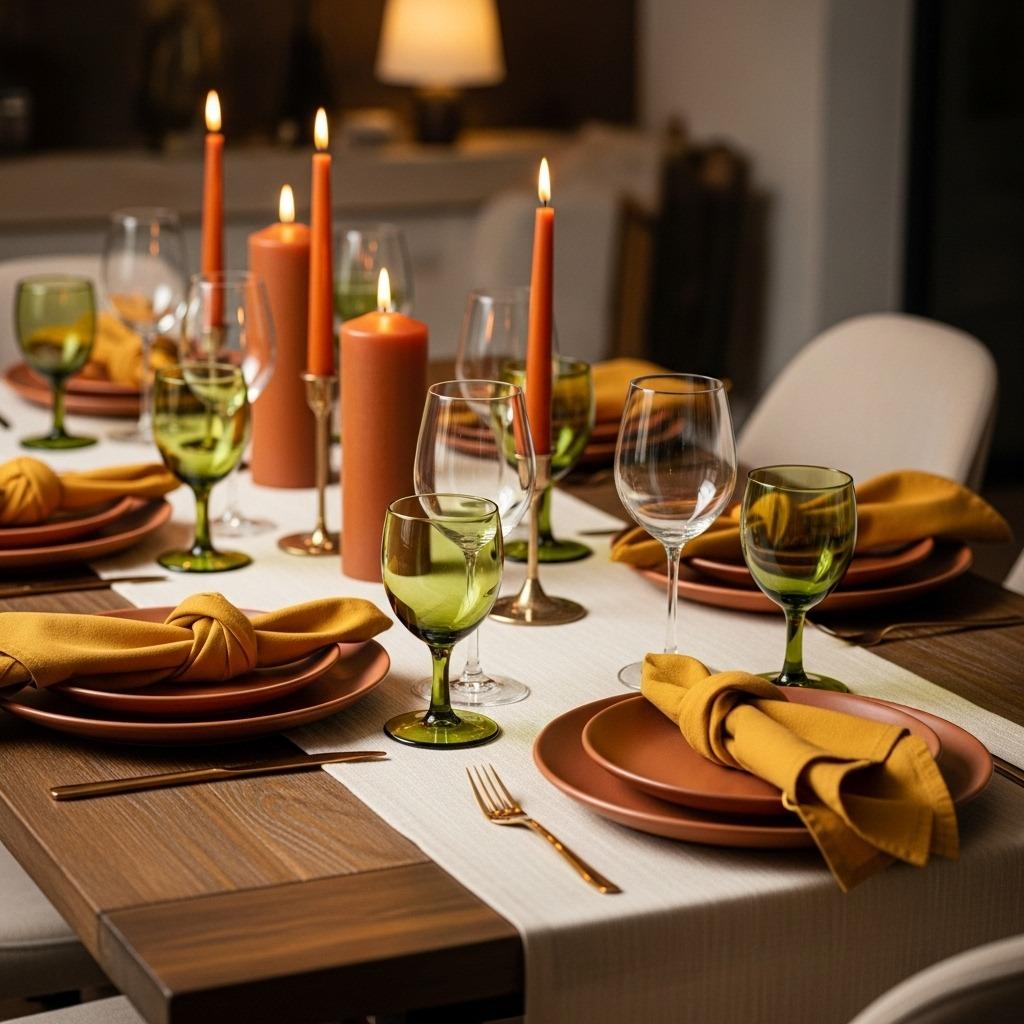
Boho spaces thrive on colors pulled straight from nature. Terracotta, ochre, sage green, warm browns, and creamy neutrals create a palette that feels grounding and inviting. These shades work together effortlessly because they’re already harmonious in the natural world.
You don’t need to commit to painting walls immediately. Start with table settings – plates in earthy tones, colored glassware, patterned napkins. Swap out a few throw pillows on nearby chairs. These small changes can shift the entire mood of your dining room.
What’s wonderful about this color approach is its flexibility. Earthy doesn’t mean boring. You can introduce pops of jewel tones through accessories or artwork, adding richness without losing that organic feel. The foundation remains calm and welcoming, perfect for lingering over meals.
4. Hang Statement Lighting That Steals the Show
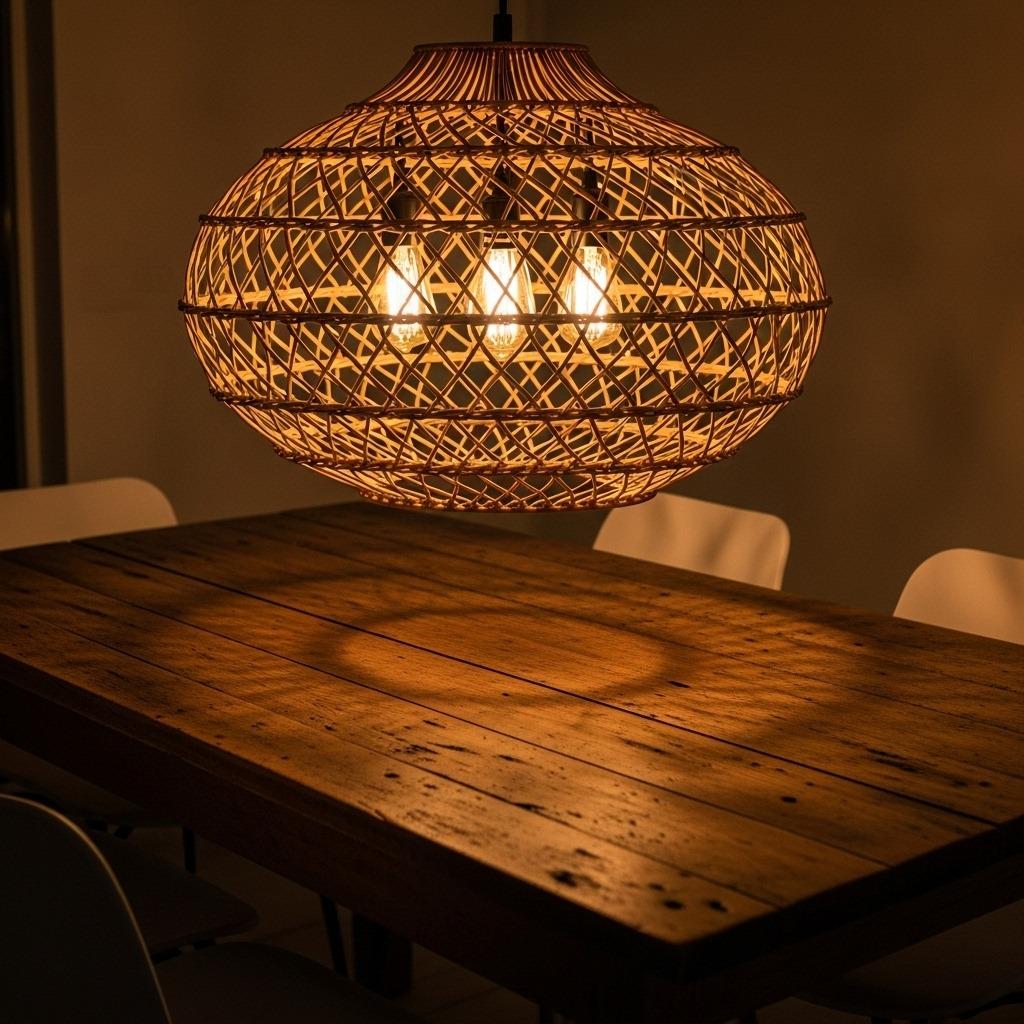
Lighting can make or break a dining space, and in a boho dining room, it’s your chance to go bold. Think oversized rattan pendants, clustered basket lights, or even a vintage chandelier adorned with beads or macramé. The fixture becomes both functional and a focal point.
Pendant lights work especially well because they define the dining zone without walls or dividers. Hang them low enough to create intimacy but high enough that they don’t obstruct conversation. Around 30-36 inches above the table surface usually hits the sweet spot.
Natural materials like woven rattan or bamboo are classic choices, but don’t overlook metal fixtures with an artisan feel. The goal is something that looks handcrafted rather than mass-produced. Dimmable options give you control over ambiance, transitioning from bright family dinners to moody evening gatherings.
5. Create an Eclectic Gallery Wall
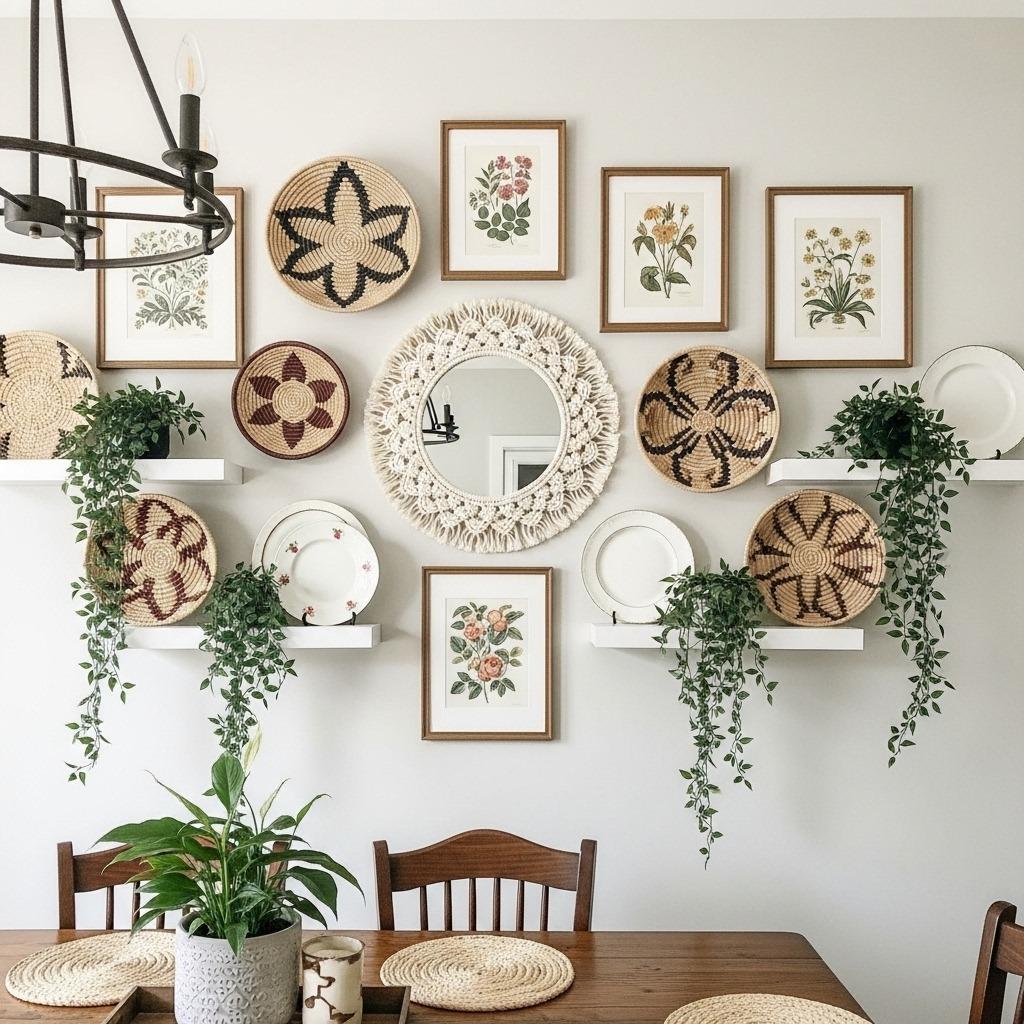
Empty walls are opportunities in disguise. A gallery wall in bohemian style mixes art, mirrors, woven pieces, and even three-dimensional objects like baskets or small shelves. The arrangement looks curated but not rigid – intentional yet relaxed.
Start by laying everything out on the floor first. Mix different sizes and shapes, balancing heavier visual pieces with lighter ones. Don’t worry about perfect symmetry; boho aesthetics favor organic arrangements over strict grids. Leave some breathing room between pieces so nothing feels cramped.
Include personal touches that spark conversation. Vintage finds from your travels, botanical prints, handmade ceramics. This wall becomes a reflection of your interests and experiences. For more ideas on creating stunning wall displays, our living room gallery wall ideas post offers plenty of inspiration.
6. Incorporate Abundant Greenery
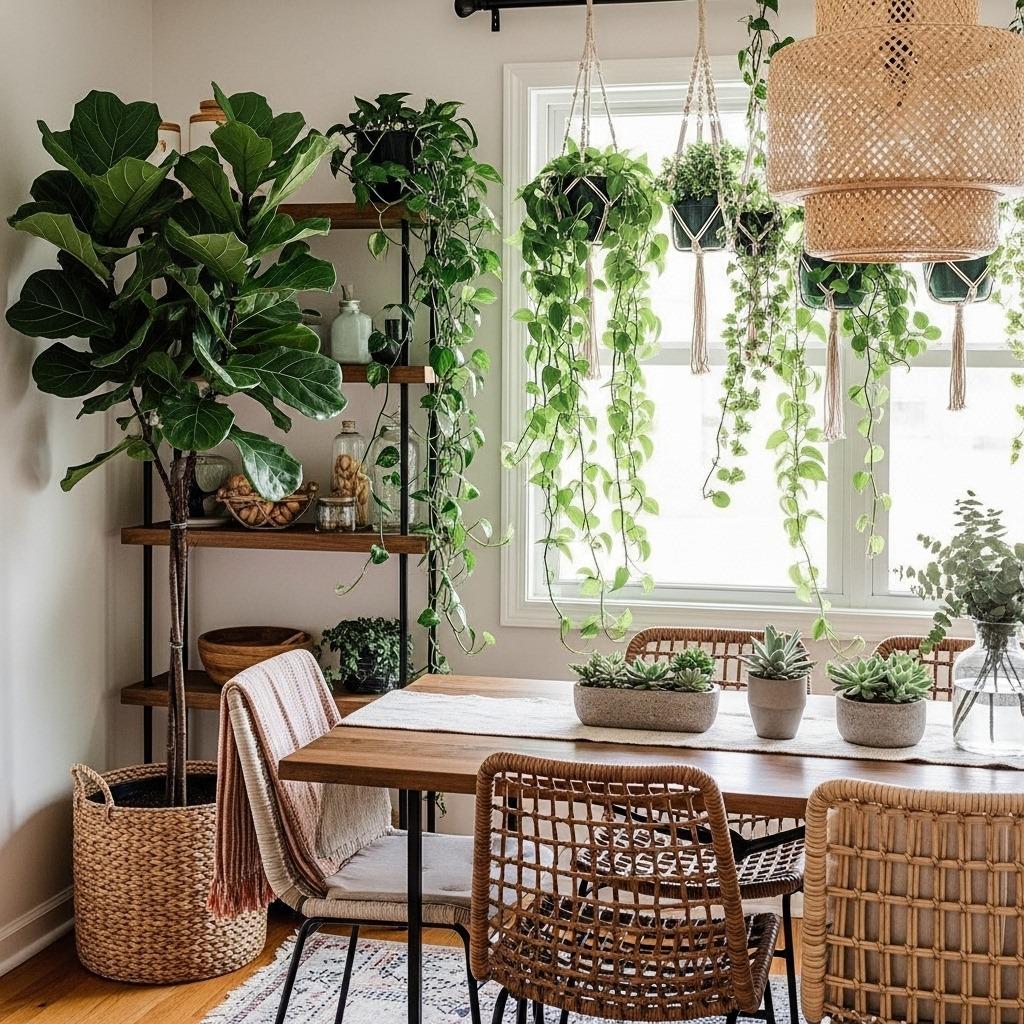
Plants breathe life into any space, and boho dining rooms practically demand them. Large leafy plants in corners, trailing varieties on shelves, small potted herbs as table centerpieces – greenery adds color, texture, and that essential organic element.
Choose plants based on your space’s light conditions, not just aesthetics. Fiddle leaf figs and monstera make dramatic statements if you have bright indirect light. Snake plants and pothos forgive less-than-perfect care. Mix sizes and heights for visual interest.
Display matters as much as the plants themselves. Woven baskets, ceramic pots in earthy glazes, macramé hangers – these vessels should complement your overall aesthetic. Group plants in odd numbers, and don’t be afraid to use them as table decor. A few small succulents or a single dramatic stem in a vintage bottle beats a fussy floral arrangement any day.
7. Style an Eclectic Tablescape with Global Finds
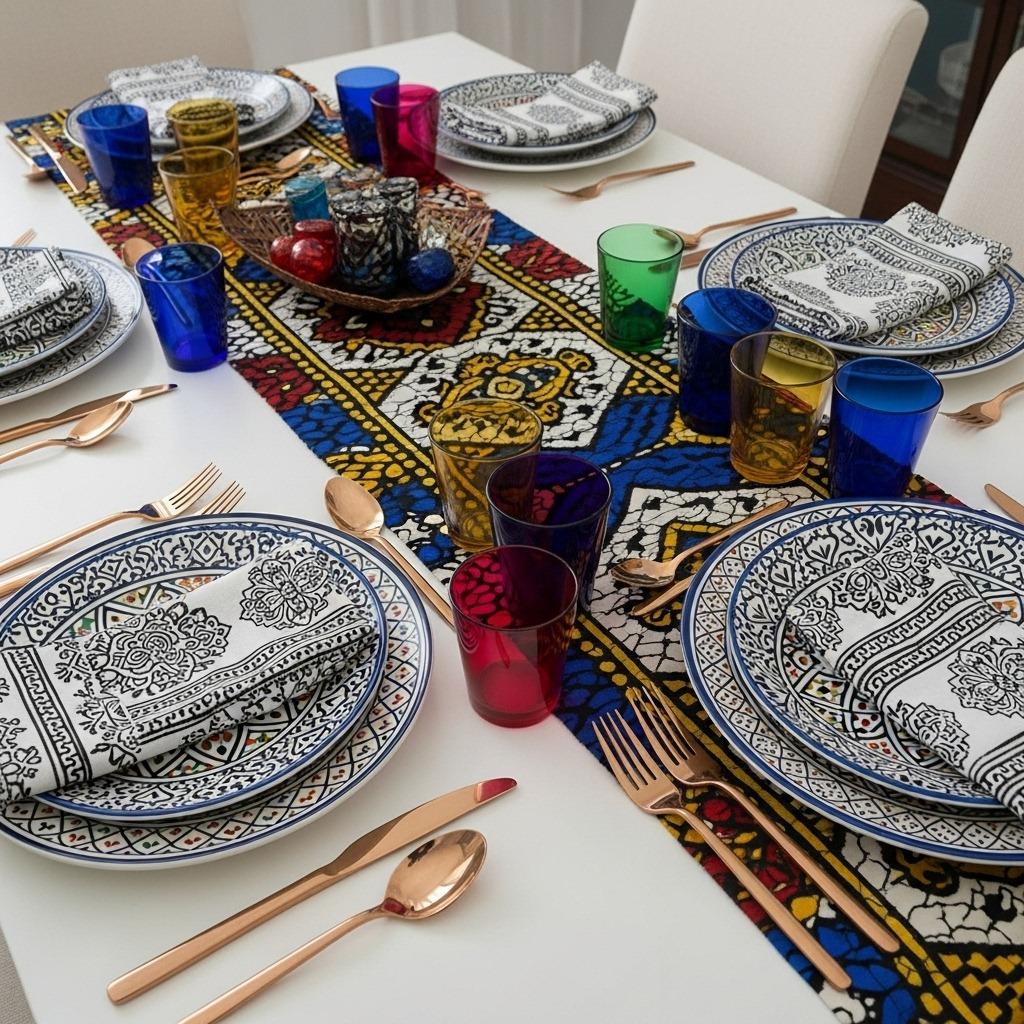
Your table is a blank canvas for telling stories. Bohemian tablescapes often draw from various cultures and traditions, mixing Moroccan patterns with Turkish textiles, African prints with Asian ceramics. The result feels well-traveled and thoughtfully collected.
Don’t stress about everything matching perfectly. Part of the charm is in the variety. Pair simple white plates with colorful chargers underneath. Mix vintage silverware patterns. Use napkins in different but complementary prints. Each place setting can have its own personality while contributing to the whole.
Layer, layer, layer. Start with a textured table runner or series of placemats, add chargers, then plates. Fold napkins creatively or tie them with natural twine. Scatter tea lights or small votives between place settings. This approach works for everyday meals and special occasions alike – just adjust the level of detail. If you’re interested in maximizing your dining space functionality, take a look at our space-saving dining room tips.
8. Use Vintage and Reclaimed Furniture
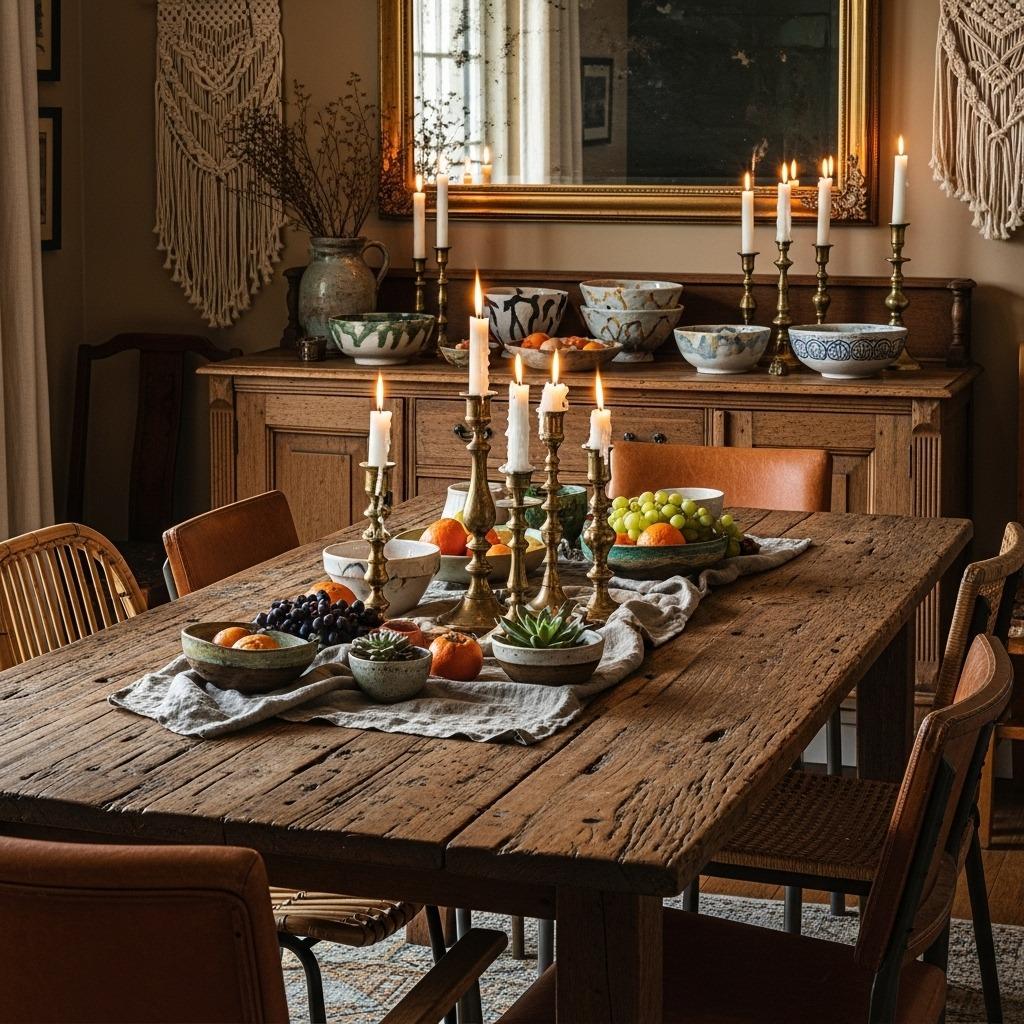
There’s warmth in furniture with history. A reclaimed wood table with its nicks and character, a vintage sideboard that’s been refinished, or inherited chairs that have seen decades of family dinners – these pieces anchor a boho dining room with authenticity.
Reclaimed wood brings texture you can’t fake. The grain patterns, slight imperfections, and natural variations make each piece unique. If you’re buying new, look for solid wood that will develop its own patina over time. Avoid anything too polished or perfect; bohemian style embraces the lived-in.
Mixing old and new keeps the space from feeling like a museum. Pair that vintage table with modern lighting, or surround a new table with antique chairs. The conversation between eras is what makes the room interesting. Plus, shopping secondhand is budget-friendly and more sustainable.
9. Add Bohemian Textiles and Tapestries
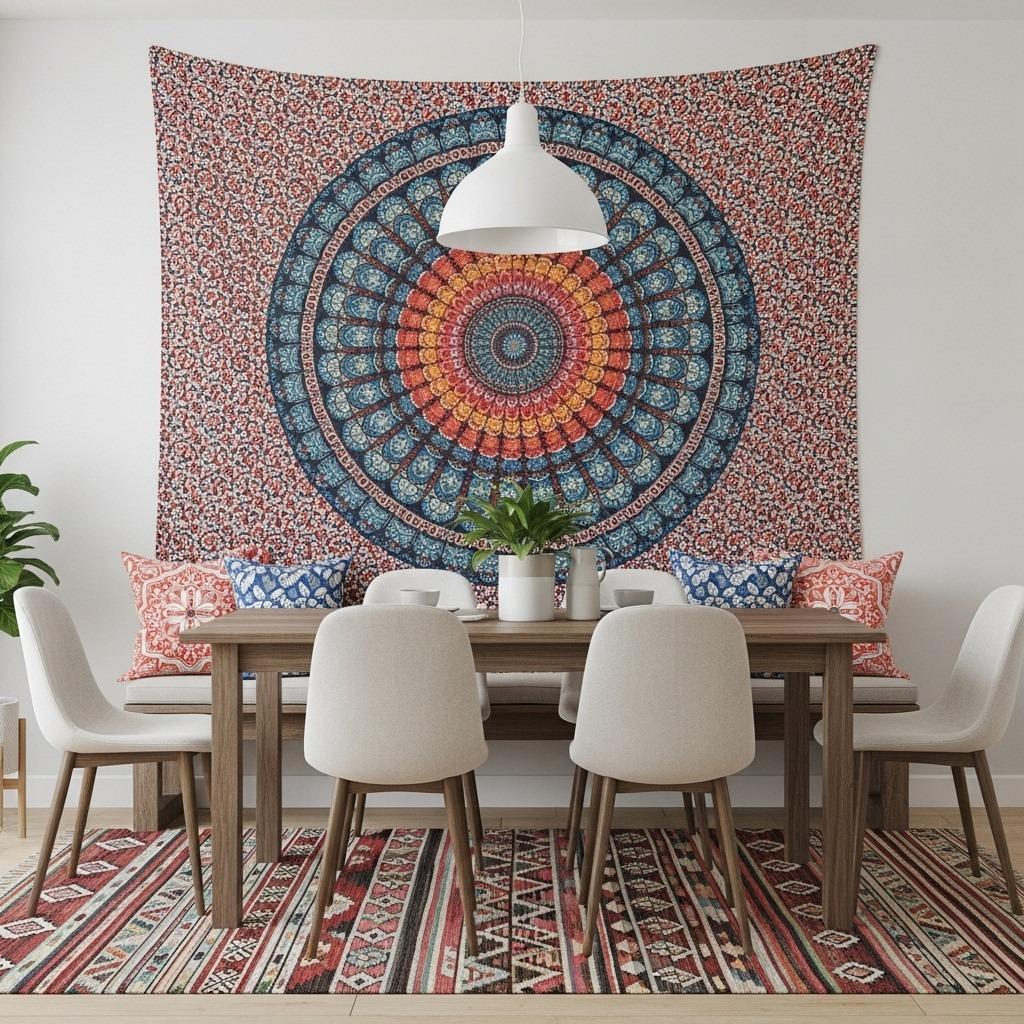
Textiles are the heart of bohemian design. A large tapestry can transform a plain wall into a focal point, adding color and pattern without the permanence of paint. Vintage rugs, throw pillows with ethnic prints, embroidered table linens – these elements soften hard surfaces and introduce personality.
When choosing textiles, consider both pattern and weight. A bold tapestry might call for more subdued pillows and runners. Or go all-in with layered patterns, making sure they share a color family so nothing clashes too harshly. The beauty of bohemian style is that there’s no single “right” approach.
Functionality matters too. That gorgeous vintage kilim under your table will hold up better if you treat it with a stain-resistant spray. Washable seat cushions make practical sense for a dining space. Beauty shouldn’t come at the expense of livability. For more ideas on incorporating textiles throughout your space, explore our bohemian tapestry guide.
10. Create Cozy Seating with Floor Cushions and Poufs
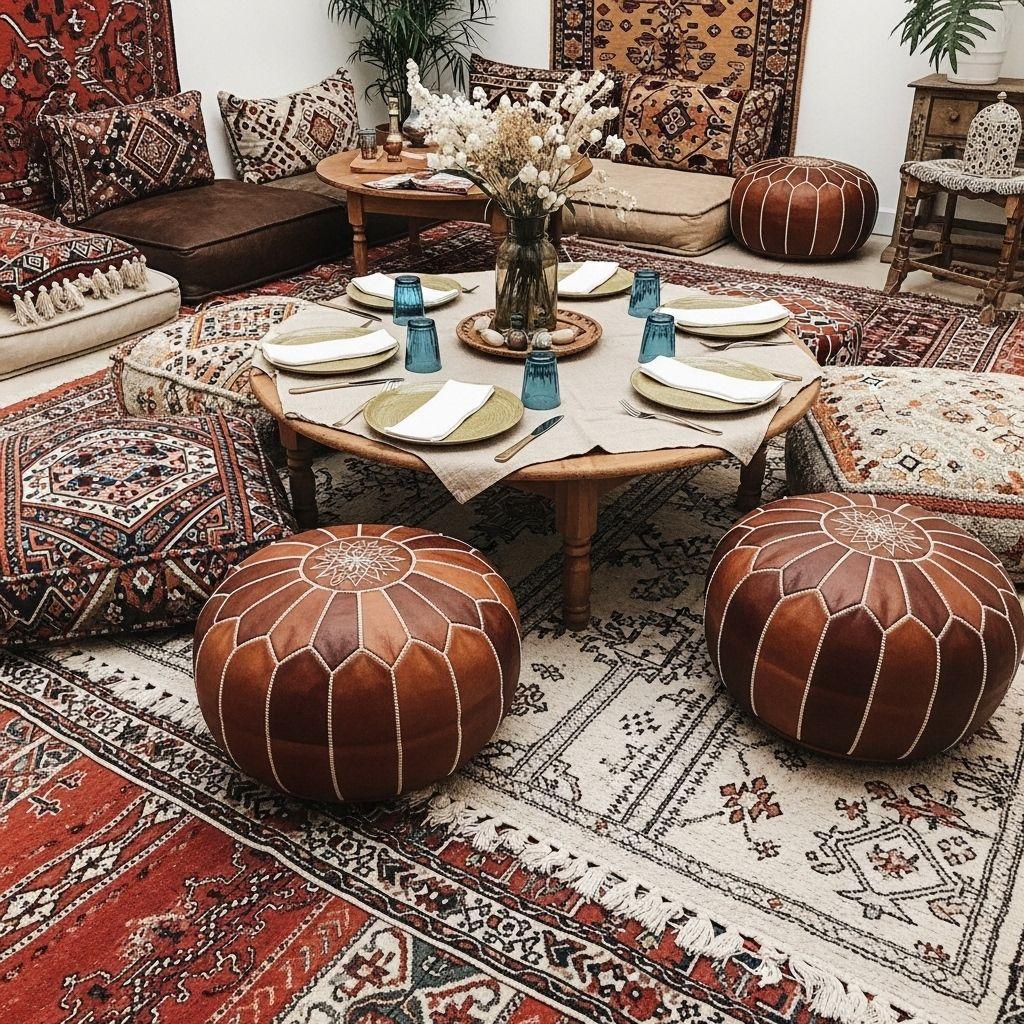
Who says dining has to happen in traditional chairs? Floor cushions and poufs bring a casual, global-inspired vibe that encourages longer, more relaxed meals. This setup works especially well for smaller spaces or when you want to create an intimate gathering spot.
Choose cushions with removable, washable covers in varying patterns and textures. Mix sizes – some larger floor pillows for primary seating, smaller ones for back support. Poufs can double as extra seating or footrests. This flexible arrangement adapts to different group sizes and occasions.
Pair this seating with a lower table, whether that’s a coffee table pressed into dining service or a purpose-made low dining table. The whole setup feels more communal, almost picnic-like, which naturally encourages conversation and connection. It’s relaxed dinner styling at its finest.
11. Style Open Shelving with Curated Collections
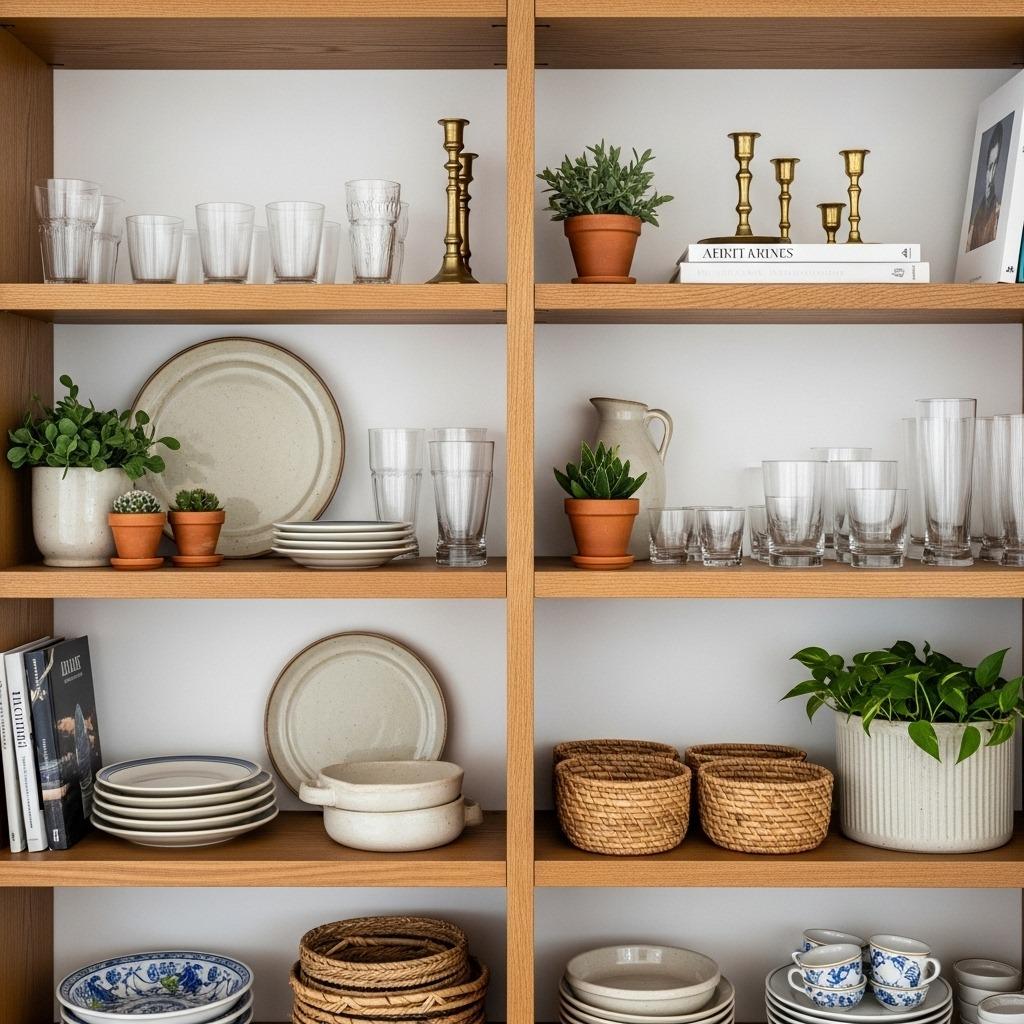
Open shelving isn’t just practical storage – it’s an opportunity to showcase your personal style. In a boho dining room, these shelves become mini vignettes combining functional dishware with decorative objects that catch the eye.
The trick is curation. Not everything you own needs to be on display. Choose pieces that work together visually – maybe all your ceramics have similar earthy tones, or your glassware spans various vintage styles. Mix in non-dish items like small plants, candles, or found objects from nature walks.
Vary heights and depths to keep things interesting. Stack some items, lean others against the wall. Leave breathing room so the shelves don’t look cluttered. Rotate items seasonally to keep the display fresh. This approach requires a bit more upkeep than closed cabinets, but the visual impact is worth it. Our kitchen shelving ideas post offers additional styling tips you can adapt for dining areas.
12. Incorporate Natural Wood Elements Throughout
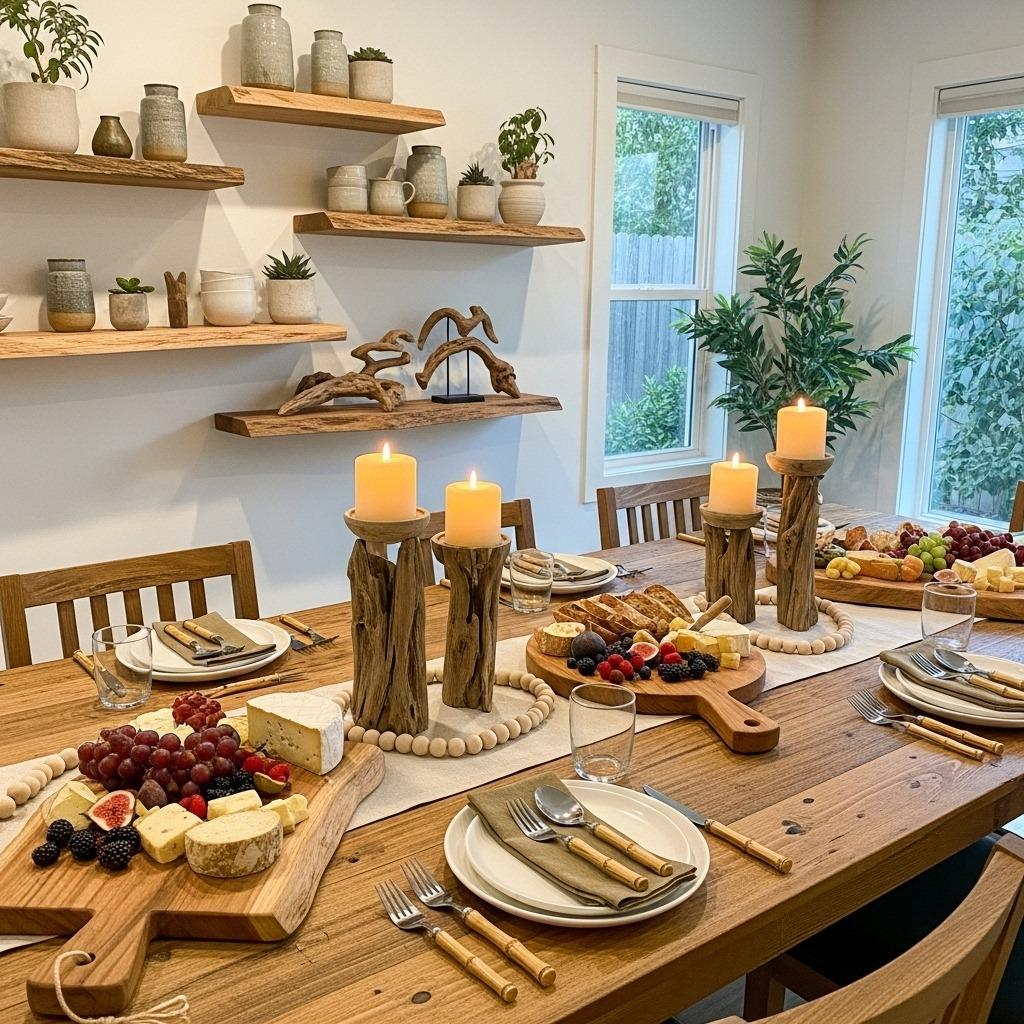
Wood brings warmth and organic texture that’s essential to bohemian spaces. Beyond the obvious table and chairs, look for ways to weave wood throughout your dining room. Live-edge serving boards, wooden bead garlands, driftwood candle holders, bamboo utensils – these touches reinforce the natural aesthetic.
Different wood tones can coexist beautifully in boho design. A dark walnut table can sit perfectly alongside lighter oak shelves and pale rattan chairs. The variety adds depth rather than confusion, as long as you’re working with natural, unstained woods that share an organic quality.
Consider unexpected applications too. A fallen branch mounted on the wall becomes sculptural art. Tree slices make unique coasters or trivets. Wooden bowls filled with fruit create effortless centerpieces. These elements connect your dining space to the natural world outside, which is ultimately what bohemian design is all about.
13. Design an Intimate Corner with Banquette Seating
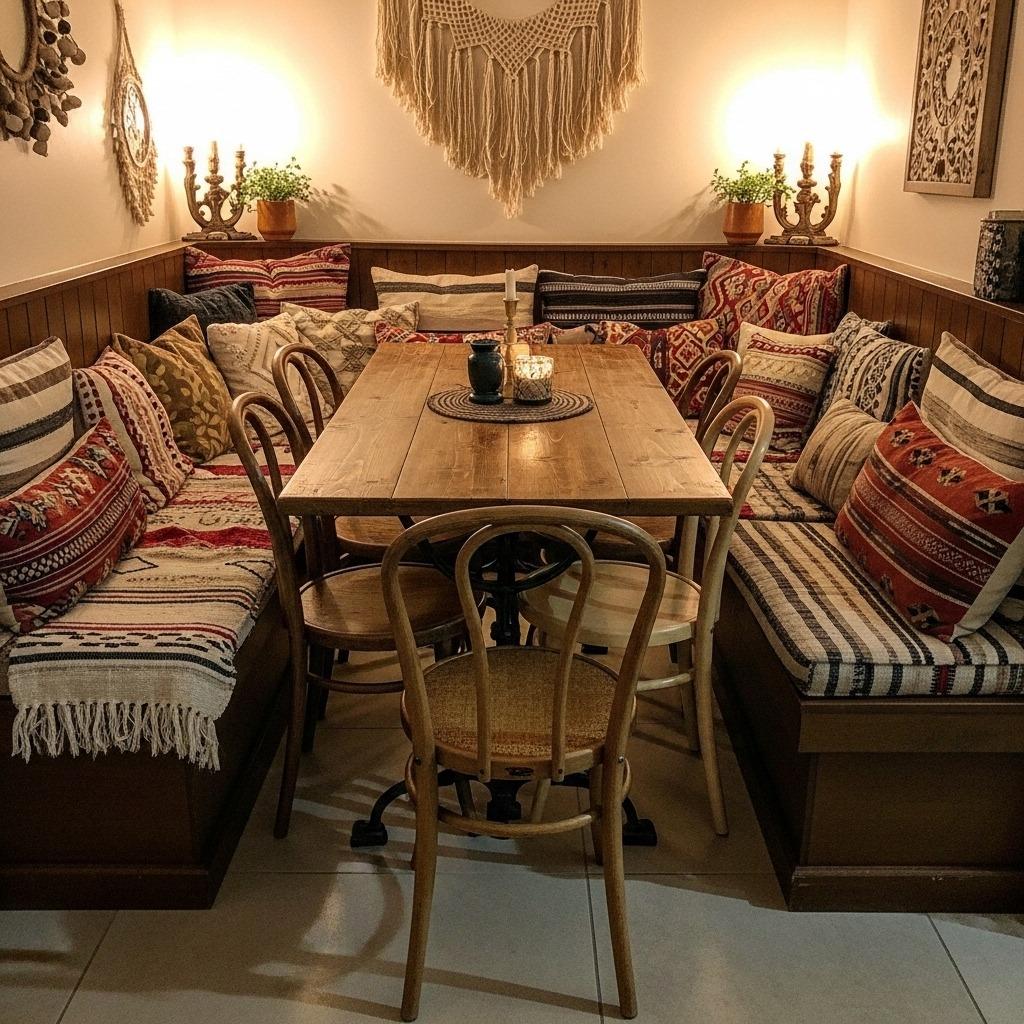
If you have an underused corner or awkward nook, banquette seating transforms it into the dining room’s coziest spot. This built-in approach maximizes seating while creating a defined, intimate area that feels intentionally designed.
The bohemian twist comes in the styling. Load that banquette with cushions in varying sizes, patterns, and textures. Layer throws for additional comfort and visual interest. Mix in pillows with different shapes – some square, some lumbar, maybe a round bolster. The goal is to create a space that invites people to settle in and stay a while.
Even if building custom seating isn’t feasible, you can achieve a similar effect by pushing a table against a wall and lining it with collected cushions on top of a bench or even a daybed. It’s about creating that tucked-away, nest-like quality that makes meals feel special. For more dining nook inspiration, check out our modern breakfast nook ideas.
14. Add Moroccan-Inspired Lighting and Accessories
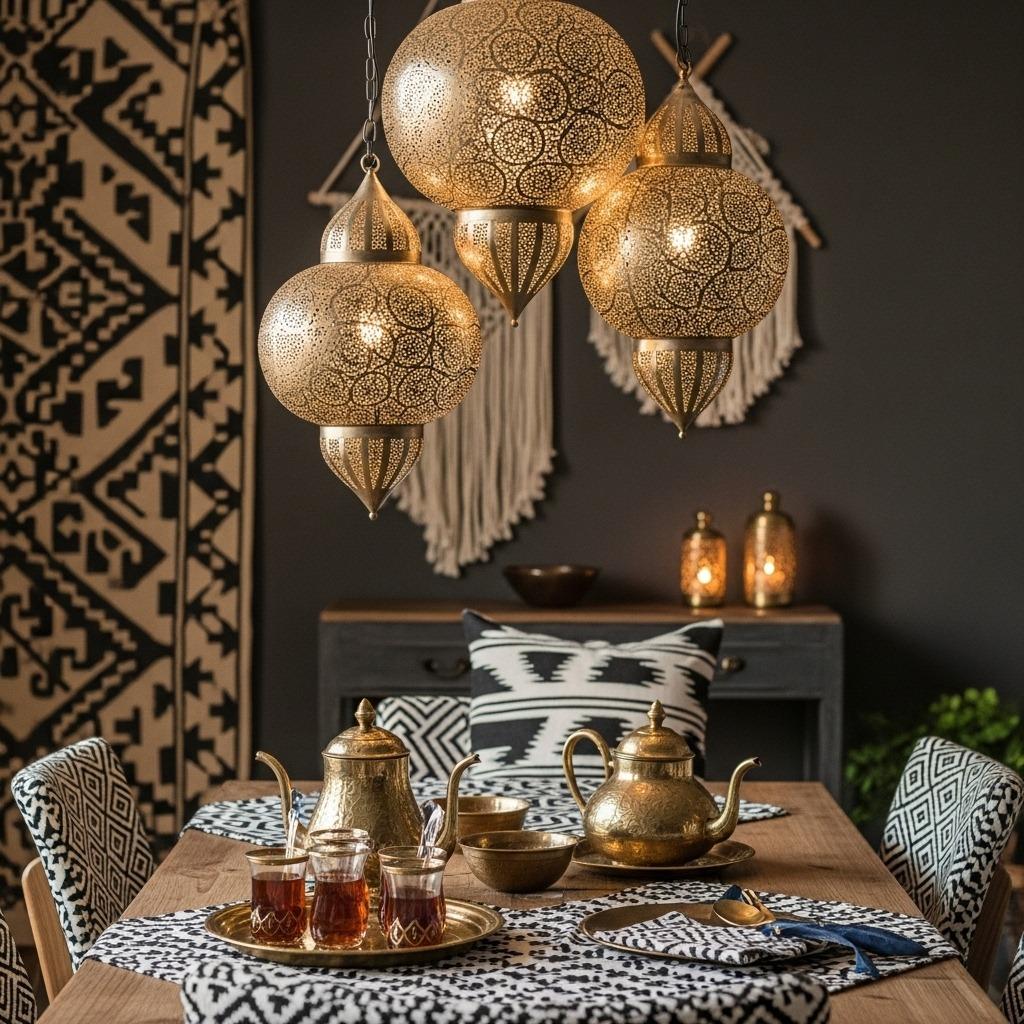
Moroccan design elements bring exotic flair and time-tested beauty to bohemian spaces. Pierced metal lanterns create magical shadow patterns when lit. Colorful tea glasses catch and reflect light. Geometric tiles or textiles add bold pattern that still feels organic.
These accessories work because they’re rooted in functionality – lanterns that actually provide light, glasses meant for use, textiles with purpose. Display a collection of brass lanterns on your sideboard. Hang a Moroccan-style pendant over the table. Use patterned tiles as trivets or coasters.
The key is not to theme the entire room but to incorporate these elements as part of your broader bohemian mix. A few well-chosen Moroccan pieces add depth and cultural richness without overwhelming the space. They’re conversation starters that hint at a love of travel and appreciation for global craftsmanship. If you enjoy this aesthetic, you might also appreciate our boho chic living room guide for coordinating adjacent spaces.
Creating a boho dining room isn’t about following strict rules or buying everything at once. It’s about gradually collecting pieces that speak to you, mixing textures and patterns with confidence, and prioritizing comfort alongside beauty. The spaces that feel most authentically bohemian are the ones that evolve over time, reflecting the people who gather there.
Whether you start with a single vintage chair, a handwoven runner, or a collection of plants in mismatched pots, each addition moves you closer to a dining space that feels personal and inviting. The beauty of bohemian dining decor is that there’s no finish line – your space can keep growing and changing along with your tastes and experiences.
What matters most is creating a place where people want to linger over meals, where conversations flow as freely as the wine, and where every gathering feels a little bit special. That’s the real magic of a boho dining room.