

There’s something about walking into a room that feels lived-in, warm, and unapologetically you. That’s the magic bohemian pillows and throws bring to your living space. These textiles aren’t just decorative afterthoughts – they’re the soul of your room, the pieces that invite you to sink in, stay awhile, and forget about the world outside.
I’ve always believed that your living room should tell a story, and nothing does that quite like layering colorful textiles across your furniture. The beauty of boho style is that it doesn’t follow rigid rules. You can mix patterns that “shouldn’t” work together, pair unexpected colors, and create something that feels authentically yours. It’s less about perfection and more about personality.
What makes this approach so appealing is how quickly you can transform your space. No painting walls, no major furniture purchases – just strategically placed cozy boho accents that completely shift the energy of your room. Whether you’re working with a minimalist foundation or already have a colorful living room base, these textiles adapt beautifully.
Why Bohemian Textiles Work in Any Living Room
The versatility of boho pillows and throws surprises people. You might think this style only works in eclectic, maximalist spaces, but that’s not the case. A single macrame pillow can soften a modern room, while a woven throw adds warmth to Scandinavian simplicity. The key is understanding how these pieces function beyond decoration.
Texture plays a huge role here. When you introduce materials like linen, cotton with tassels, velvet, or chunky knits, you’re creating visual interest without adding clutter. Your eye moves across the room differently, pausing on these tactile elements that beg to be touched. This works especially well in small living rooms where you want richness without overwhelming the space.
Color psychology comes into play too. Bohemian palettes typically draw from earth tones, jewel tones, and sun-bleached hues that create a sense of calm and creativity simultaneously. These aren’t the stark, cold colors of minimalism or the muted grays of industrial design. They’re warm, inviting, and they make your living room feel like an actual retreat rather than a showroom.
1. Layering Pillows Like a Pro
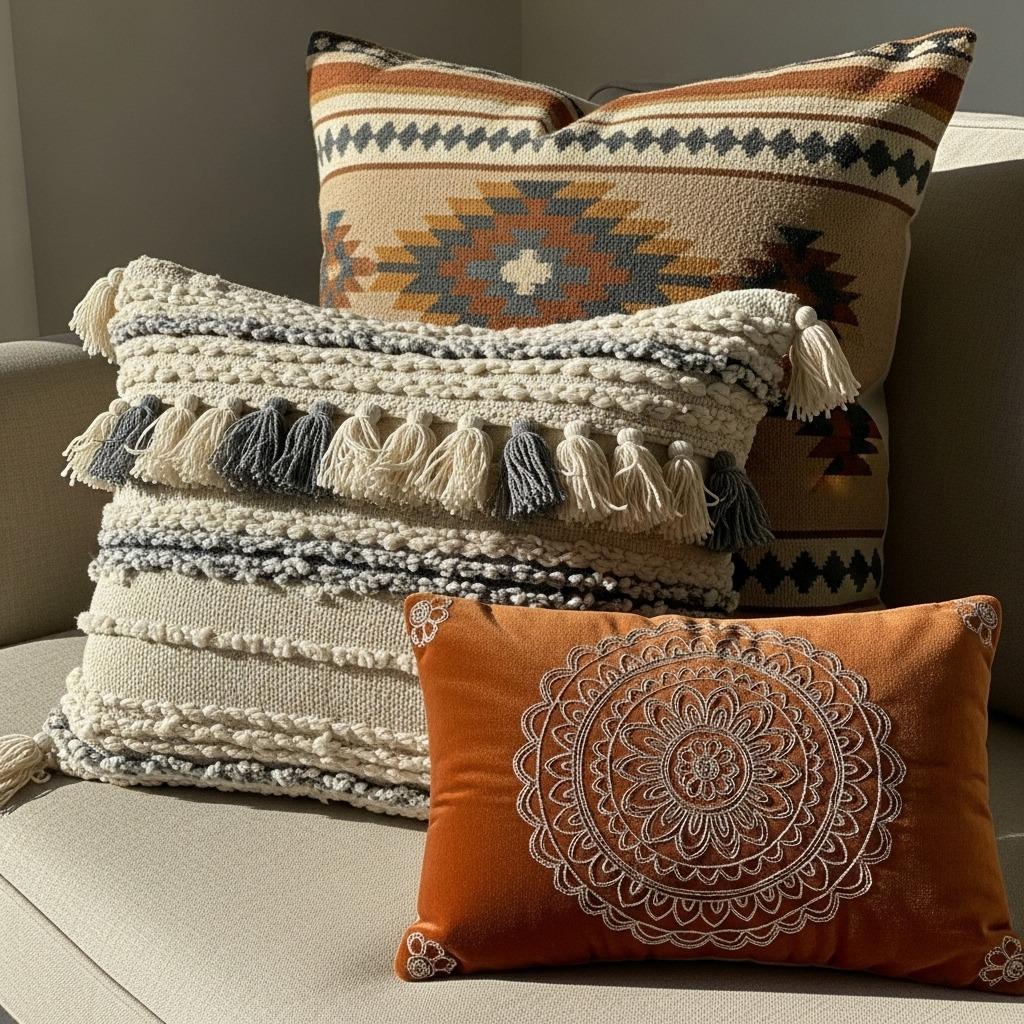
Starting with pillow arrangement might seem straightforward, but there’s an art to making it look effortlessly thrown together rather than staged. The trick is working in odd numbers – three, five, or seven pillows create visual balance that feels natural. I usually start with two larger pillows in the back corners, then build forward with medium and smaller sizes.
Pattern mixing is where people get nervous, but it shouldn’t be. Choose one dominant color that appears in multiple pillows, even if the patterns are completely different. Maybe it’s a rust orange that shows up in a geometric print, a floral design, and a solid velvet. That repeated color thread ties everything together while the varied patterns keep it interesting.
Don’t forget about texture variation. If all your pillows are smooth cotton, the arrangement falls flat. Mix in a chunky knit pillow, add one with tassels, include a smooth velvet, and maybe throw in a pillow with embroidery or beadwork. Each material catches light differently and creates that layered, collected-over-time look that defines bohemian style.
2. Choosing the Right Color Palette
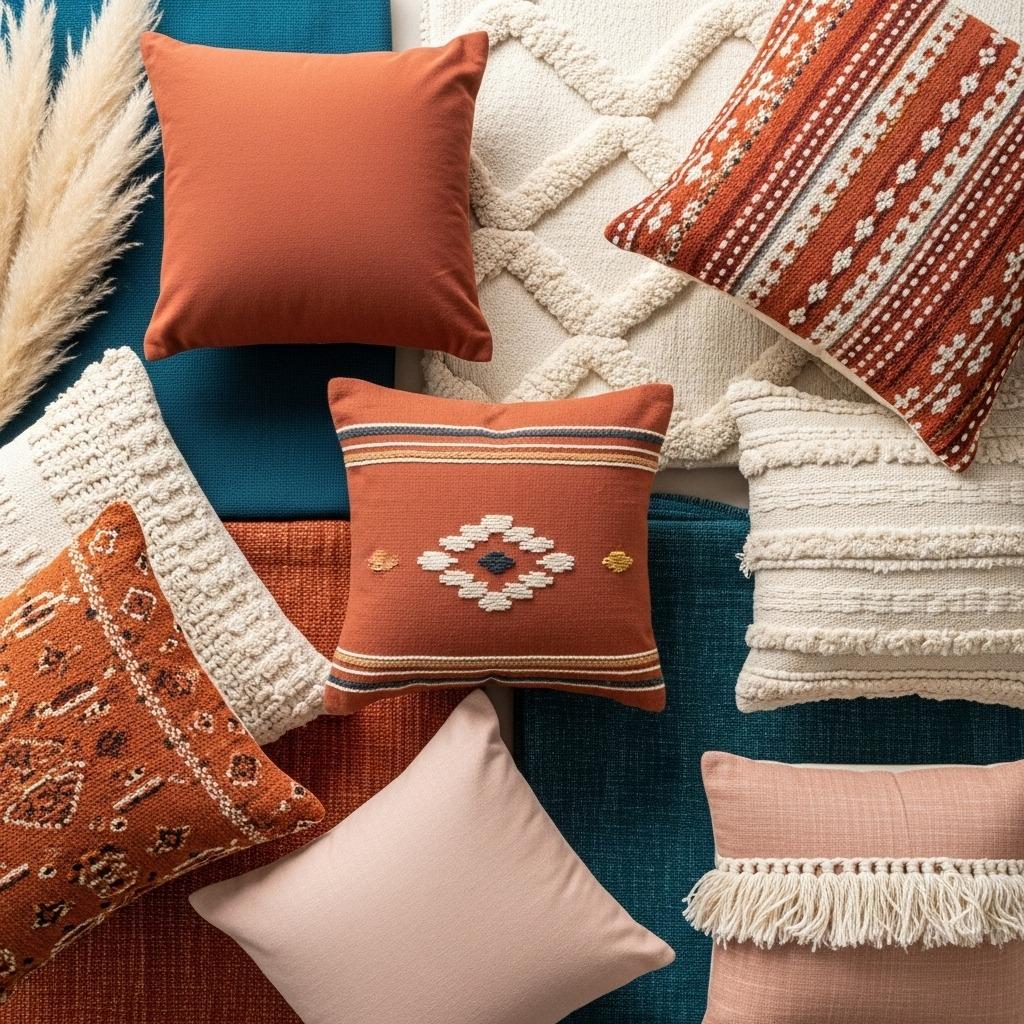
Your color choices set the entire mood for your living room transformation. While bohemian style embraces color fearlessly, that doesn’t mean throwing every shade together randomly. Think about creating color families that speak to each other. Warm earthy tones like terracotta, mustard, and burnt sienna create a grounded, sunset-inspired palette. Cool jewel tones like emerald, sapphire, and amethyst bring richness and depth.
Neutral bases work beautifully too. If your sofa is gray, beige, or white, you have a blank canvas for bolder pillow choices. Conversely, if you’re working with a colorful sofa, pulling accent colors from existing furniture helps everything feel cohesive. I’ve seen stunning rooms where a patterned rug dictated the entire pillow palette, creating this beautiful echo effect throughout the space.
Seasonal shifts are easy with textiles too. Lighter, brighter colors work for spring and summer – think coral, sky blue, and soft yellows. Deeper, moodier tones like burgundy, forest green, and chocolate brown make fall and winter feel cozy. Swapping out a few key pillows changes your room’s entire energy without requiring a full redesign.
3. Texture Combinations That Create Depth
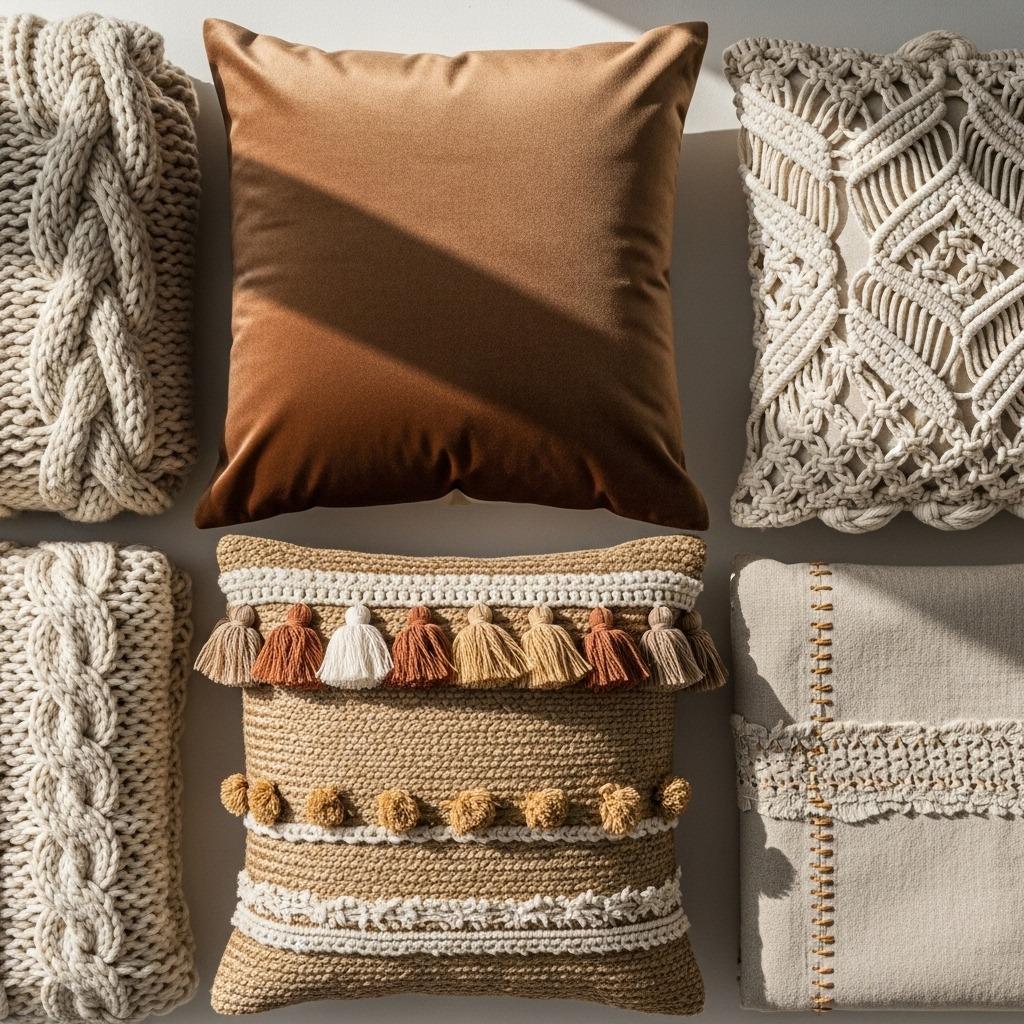
Texture is honestly more important than color when creating that signature boho look. A room with ten different textures in the same color family looks infinitely more interesting than a room with ten different colors in the same texture. This is where cozy boho accents really shine – they invite touch and interaction in a way that smooth, uniform surfaces never could.
Start with your base throw. A chunky cable knit creates visual weight and warmth, perfect for draping over a sofa arm or the back of a chair. Contrast that with smooth velvet pillows that catch light beautifully and feel luxurious. Add in something woven – maybe a pillow cover with visible texture from the weaving process itself, complete with irregular threads that show the handmade quality.
Don’t overlook fringe, tassels, and pom-poms. These details add movement to your static furniture arrangement. When someone walks by, these elements sway slightly. When you plop down on the couch, they shift and resettle. It’s these small, almost imperceptible movements that make a room feel alive rather than staged. Your living room should feel functional, not like a museum display.
4. The Art of Throw Placement
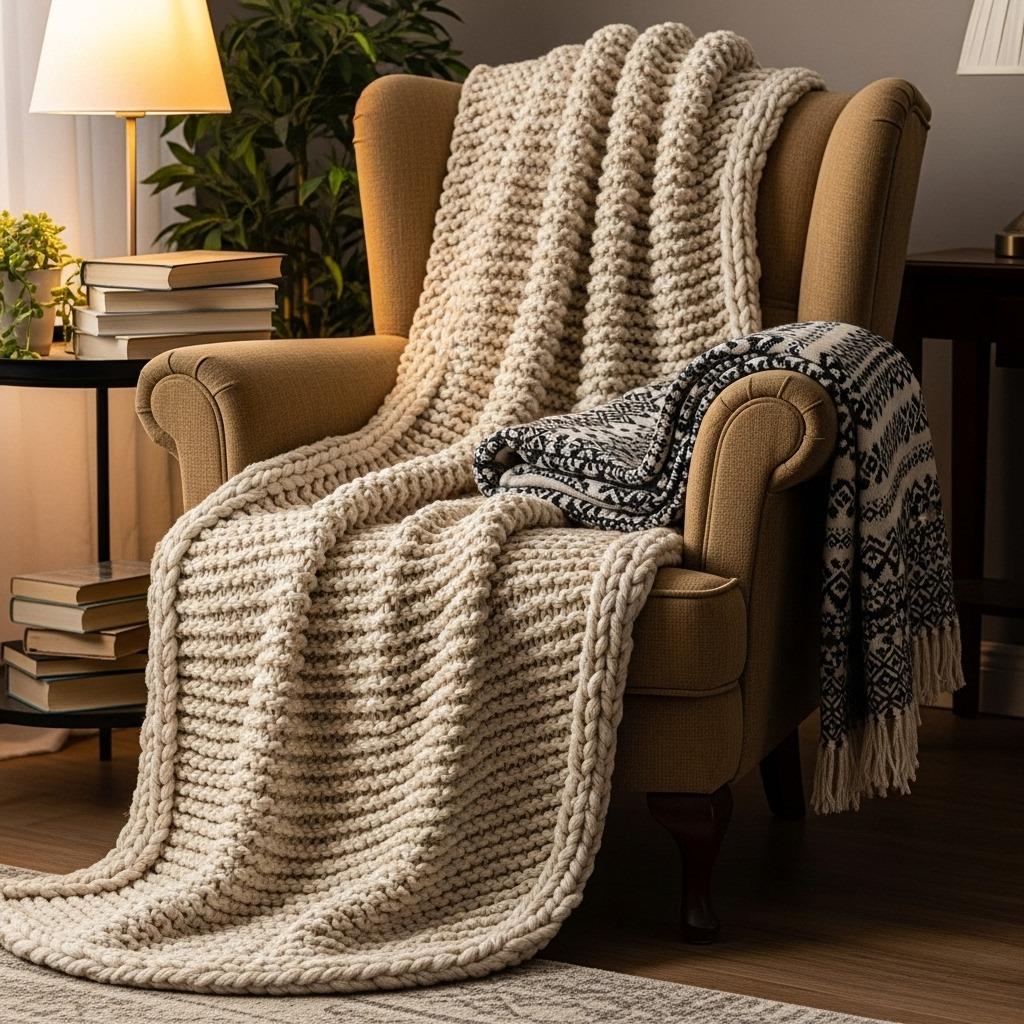
Throws shouldn’t look like they’ve been precisely placed by an interior designer – ironic, I know, since we’re talking about design. The goal is that “I just grabbed this because I got chilly” aesthetic. Draping a throw over one arm of your sofa, letting it cascade naturally with some fabric pooling on the floor, creates instant coziness.
Multiple throws aren’t excessive if you use them thoughtfully. Keep a lightweight throw folded on the back of the sofa for those evenings when you want something without too much weight. Have a heavier option draped over a chair arm for when you’re seriously settling in. This layered approach mirrors how we actually live – we don’t use the same blanket for every situation.
Storage becomes part of the design too. A vintage ladder leaning against the wall makes a perfect throw display. Drape two or three different textiles over the rungs, and suddenly you have functional storage that doubles as wall art. Baskets near the sofa work great too, especially those woven ones that already fit the bohemian aesthetic. You can toss throws in there when you want a cleaner look, then pull them out when you need them.
5. Mixing Patterns Without Creating Chaos
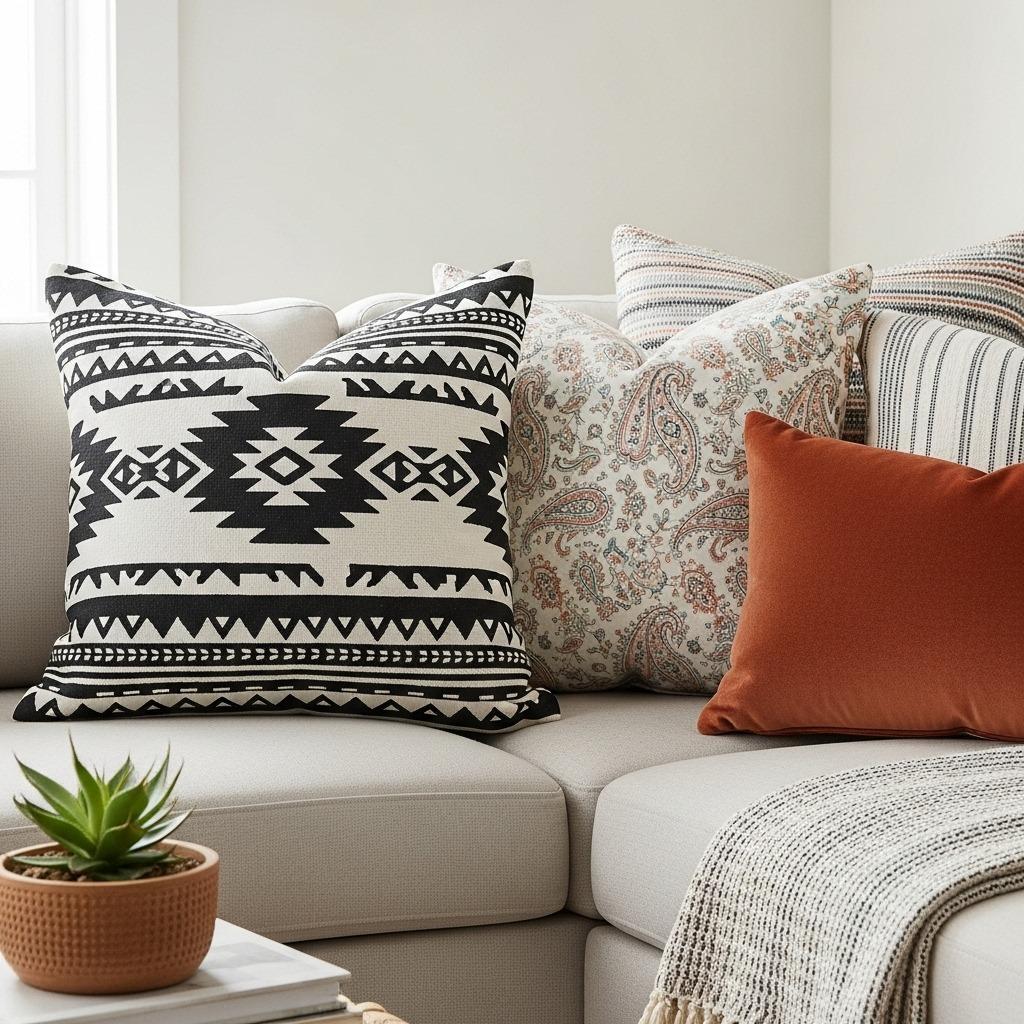
Pattern mixing intimidates a lot of people, but once you understand the basic principles, it becomes second nature. The scale rule is your friend here. Pair one large-scale pattern with medium and small-scale patterns. If you have a big, bold geometric print, balance it with smaller florals and tiny stripes. This variation in pattern size prevents visual competition.
Stick with one pattern style as your anchor. Maybe all your patterns share an organic, flowing quality even though one is floral, one is paisley, and one is abstract. Or perhaps they’re all geometric but in different configurations – triangles, diamonds, and chevrons. This underlying similarity creates cohesion even when the patterns themselves look completely different.
Introducing solids strategically gives your eye a place to rest. After several patterned pillows, a solid velvet or linen pillow acts as a visual break. This is especially important in boho chic living rooms where the eclectic nature of the style already brings a lot of visual information. Those solid pieces become anchors that prevent the space from feeling chaotic.
6. Budget-Friendly Sources for Boho Textiles
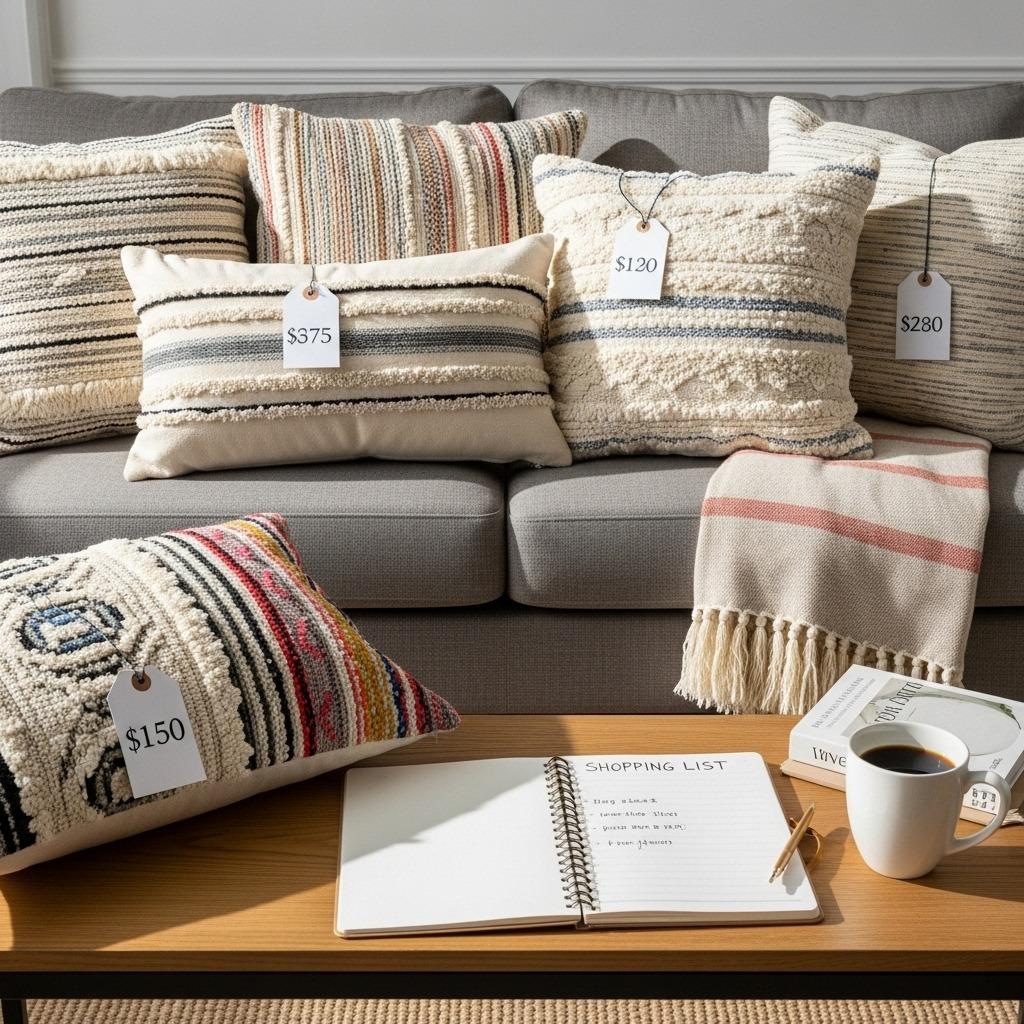
You don’t need to spend a fortune to achieve this look. Thrift stores and vintage markets are absolute goldmines for authentic bohemian textiles. I’ve found incredible handwoven throws and vintage kilim pillows for a fraction of what they’d cost new. The beauty of boho style is that worn, lived-in pieces actually enhance the aesthetic rather than detract from it.
Online marketplaces offer great options too, but shop smart. Look for independent makers and small shops rather than mass-produced items. Yes, you might pay a bit more, but you’re getting something with character and quality. Plus, many artisans offer custom color options, so you can get exactly the shade you need for your space.
DIY approaches work surprisingly well here. If you can sew basic seams, making pillow covers from vintage textiles, scarves, or even clothing is totally doable. I’ve created pillow covers from old embroidered tablecloths and vintage fabric remnants that look like they cost ten times what I actually paid. This approach also guarantees you won’t see your exact pillows in someone else’s home.
7. Seasonal Rotation Strategies
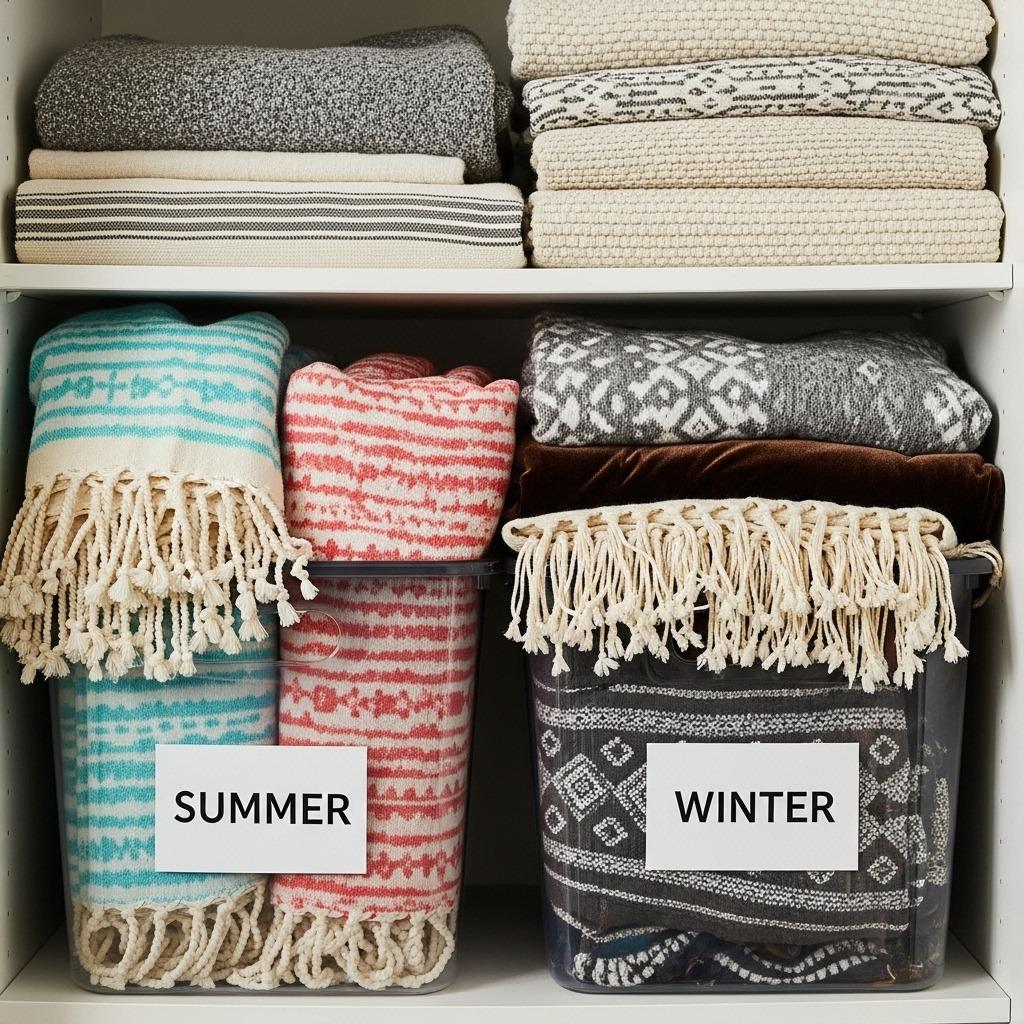
Rotating your textiles seasonally keeps your living room feeling fresh without requiring constant shopping. Summer calls for lighter materials – think cotton, linen, and lightweight weaves in brighter, airier colors. Swap in pillows with coral, turquoise, and yellow tones. Replace heavy throws with gauzy ones that provide texture without warmth.
Winter is when you bring out the big guns. Chunky knits, wool blends, and velvet pillows make everything feel instantly cozier. Deeper colors work better in lower winter light too – those burgundies, forest greens, and chocolate browns that might feel heavy in summer look rich and inviting when it’s cold outside. This is also when cozy winter bedroom principles translate beautifully to living spaces.
Storage doesn’t have to be complicated. Vacuum-seal bags maximize space if you’re tight on storage, though I prefer breathable fabric storage bags for natural materials. Label everything clearly with the season and a quick description. Trust me, six months from now you won’t remember which bin has the turquoise pillows versus the teal ones unless you write it down.
8. Caring for Different Textile Materials
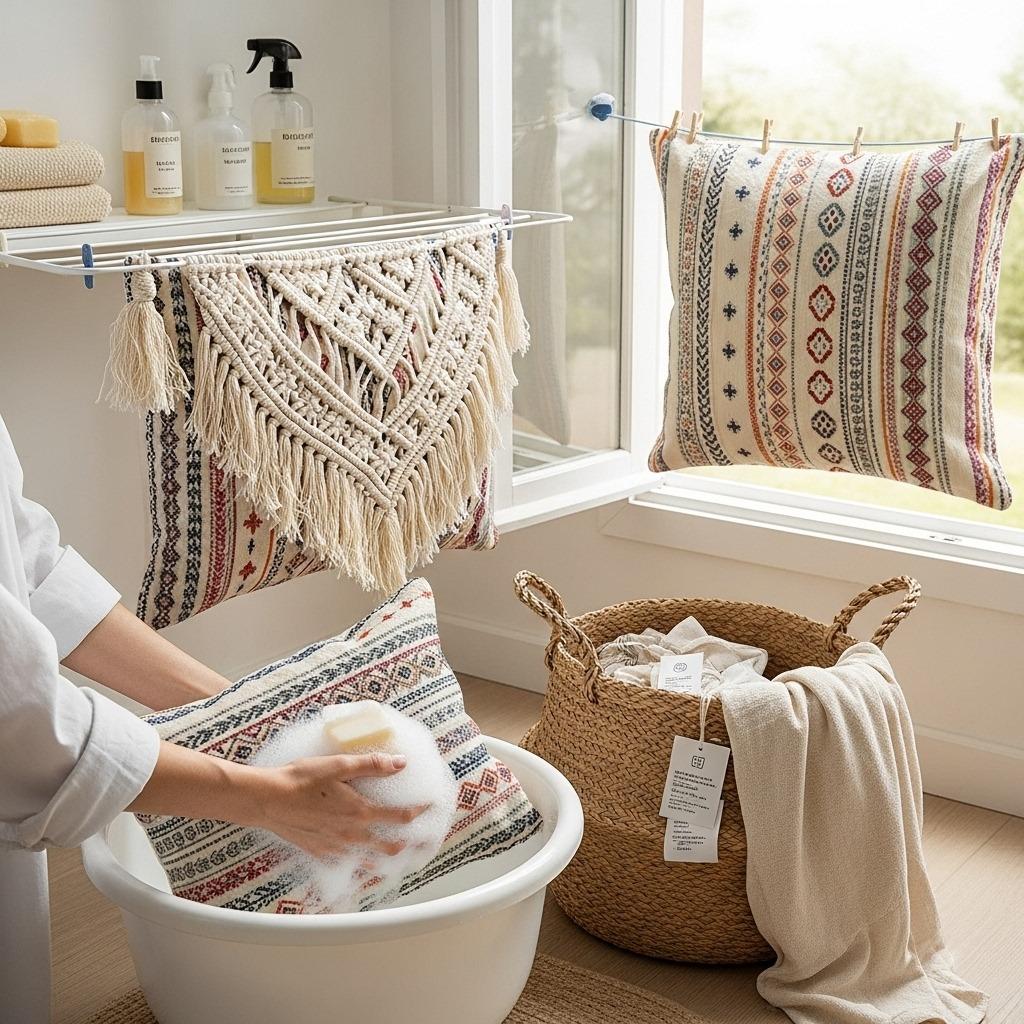
Different materials need different care approaches, and understanding this extends the life of your investment pieces. Cotton and linen are generally washable, but always check tags first. Cold water and gentle cycles prevent shrinking and color fading. Air drying is almost always preferable to machine drying, even if it takes longer. The reduced wear and tear is worth the patience.
Velvet and delicate embellished pieces require more careful handling. Spot cleaning works for minor issues – a slightly damp cloth with mild soap handles most small stains. For deeper cleaning, many require professional care. Before buying, consider whether you’re willing to deal with that maintenance. Sometimes a slightly less luxurious but more washable option makes more sense for high-traffic areas.
Wool throws need special attention. Moths love wool, so proper storage with cedar or lavender sachets protects your investment. Airing out wool pieces regularly prevents that musty smell that can develop. If your throw gets wet, never hang it – lay it flat to dry to prevent stretching. These might seem like small details, but they’re the difference between textiles that last years versus ones that fall apart quickly.
9. Creating Focal Points with Statement Pieces
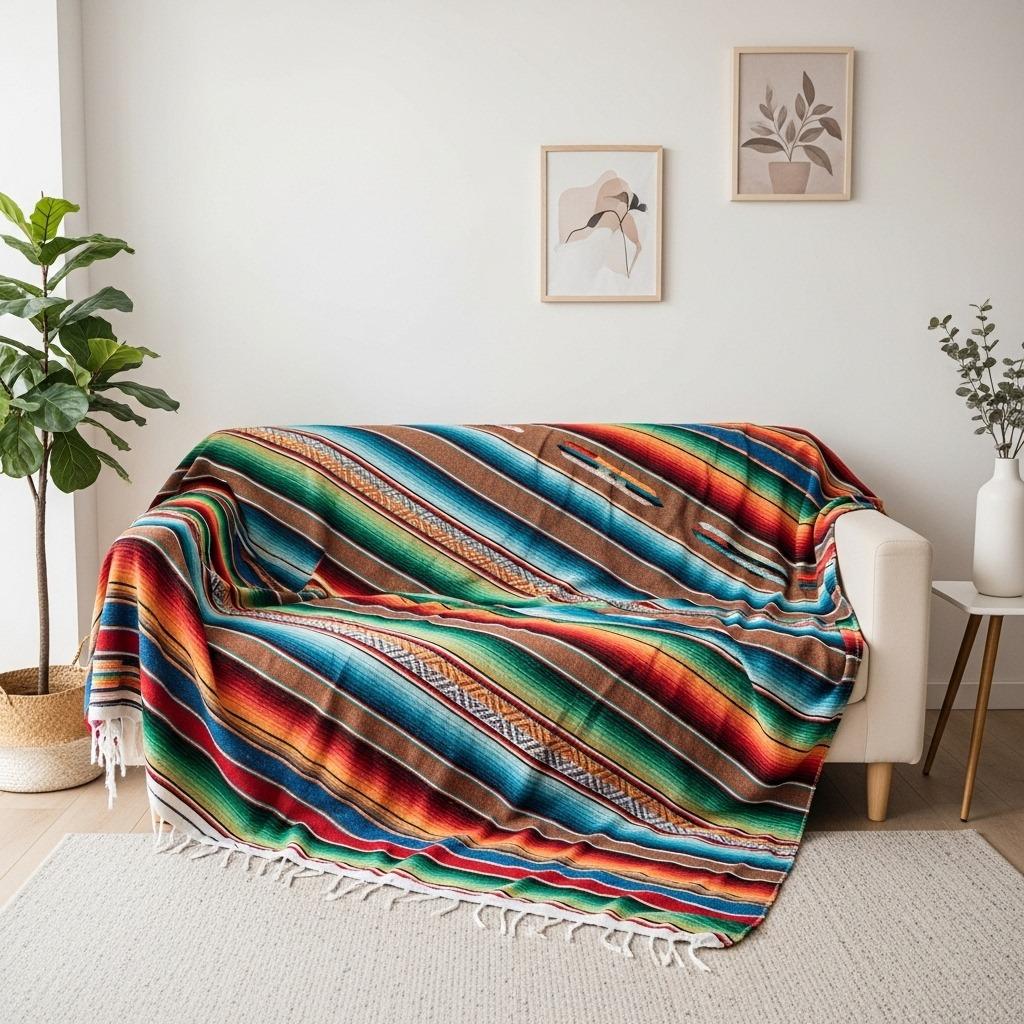
Sometimes one incredible piece does more than a dozen mediocre ones. A statement throw in bold colors or an oversized floor pillow with intricate embroidery becomes the conversation starter your room needs. This approach works particularly well if you’re nervous about going full boho – let one piece carry the style while keeping everything else relatively simple.
Placement matters with statement pieces. Don’t hide that gorgeous textile by burying it under six other pillows. Give it space to shine. If you have an incredible woven throw, drape it where it’s immediately visible when someone enters the room. That might be across the back of your sofa, over your favorite reading chair, or even displayed on a wall using a quilt hanger.
Balance is still important though. A statement piece needs supporting elements that don’t compete but do relate. If your bold throw has touches of indigo, echo that color in a smaller pillow or a piece of wall art. This creates intentional design rather than “I bought one random colorful thing.” The goal is eclectic decor that feels curated, not accidental.
10. Incorporating Global Influences Authentically
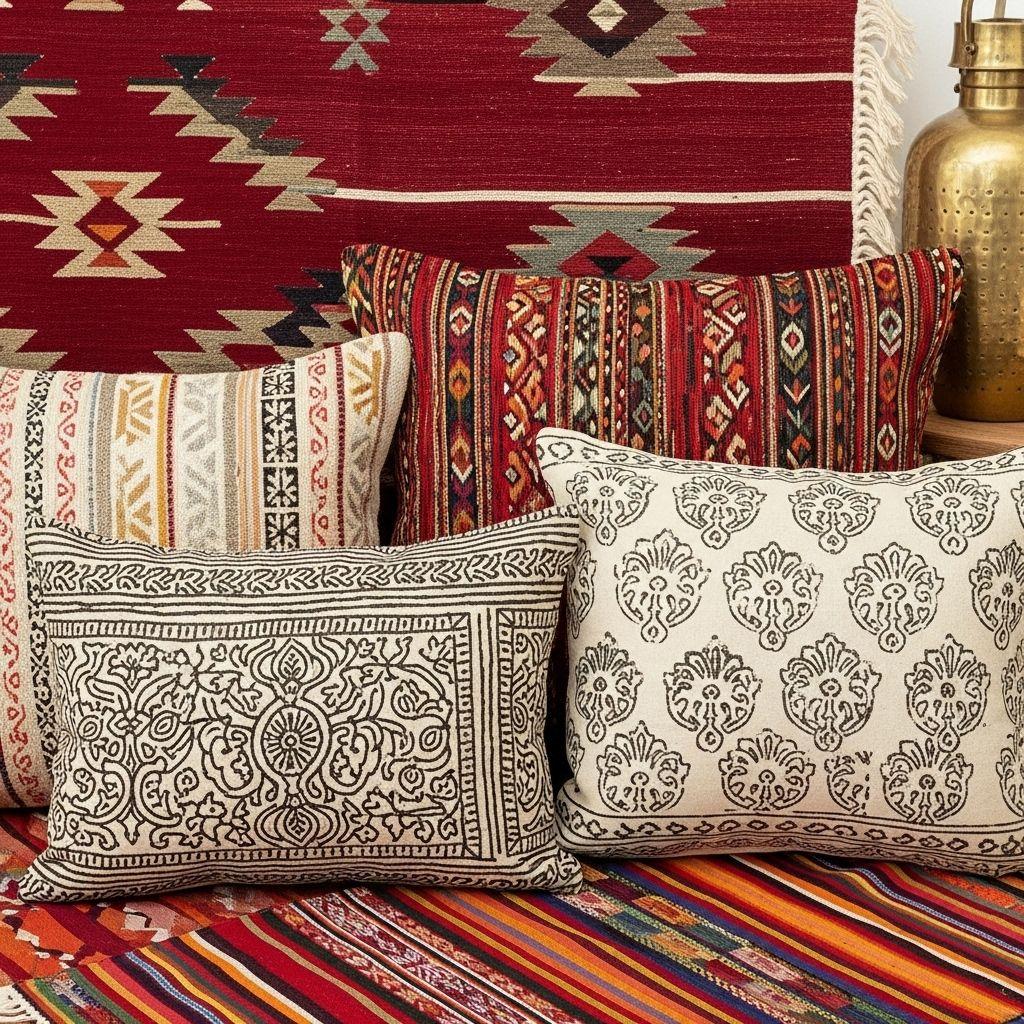
Bohemian style draws heavily from global textile traditions, and there’s something special about incorporating authentic pieces rather than mass-produced imitations. Moroccan wedding blankets, with their sequined details and geometric patterns, bring instant texture and sparkle. Turkish kilim pillow covers offer vibrant colors and patterns with centuries of history behind them.
Sourcing matters though. When possible, buy directly from artisans or through fair-trade organizations. You’ll pay more than you would for a knockoff from a big-box store, but you’re supporting traditional crafts and getting quality that actually lasts. Plus, authentic pieces have irregularities and imperfections that make them interesting – perfectly uniform textiles lack soul.
Mixing cultural influences works when you do it thoughtfully. An Indian block-printed pillow can absolutely sit next to a Mexican serape throw if the colors complement each other. The key is avoiding the “world tour gift shop” look by maintaining some color or texture cohesion. Think of it as a collected-over-time aesthetic, like you’ve traveled extensively and brought home treasures, even if everything actually came from online shopping over a few months.
11. Styling Pillows on Chairs and Accent Seating
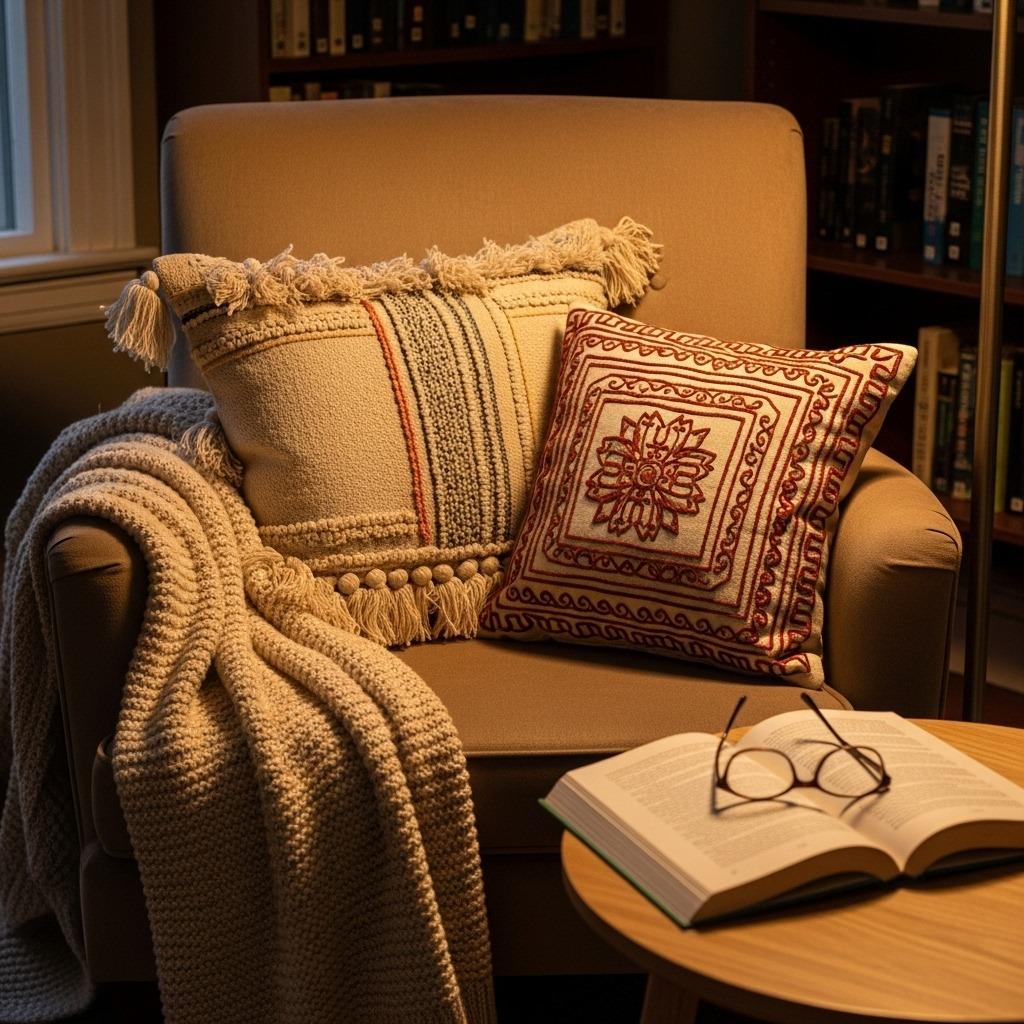
Chairs and accent seating deserve the same styling attention as sofas, though the approach differs slightly. A single well-chosen pillow can completely transform an armchair. Lumbar pillows work beautifully on chairs because they provide actual back support while adding visual interest. The elongated shape fits the chair’s proportions better than standard square pillows.
Floor seating embraces bohemian sensibilities perfectly. Large floor pillows or poufs create casual, flexible seating that screams boho. Stack two or three floor cushions in a corner for when extra guests arrive. They’re functional, comfortable, and when not in use, they’re decorative elements that add color and texture to empty floor space.
Window seats and benches need different styling too. Here, you can go a bit more minimal since these spaces often already have architectural interest. Two or three pillows in varying sizes, maybe one throw folded at one end, creates an inviting spot without overcrowding the space. The goal is making people want to curl up there with a book, not staging a pillow showroom.
12. Balancing Boho with Other Design Styles
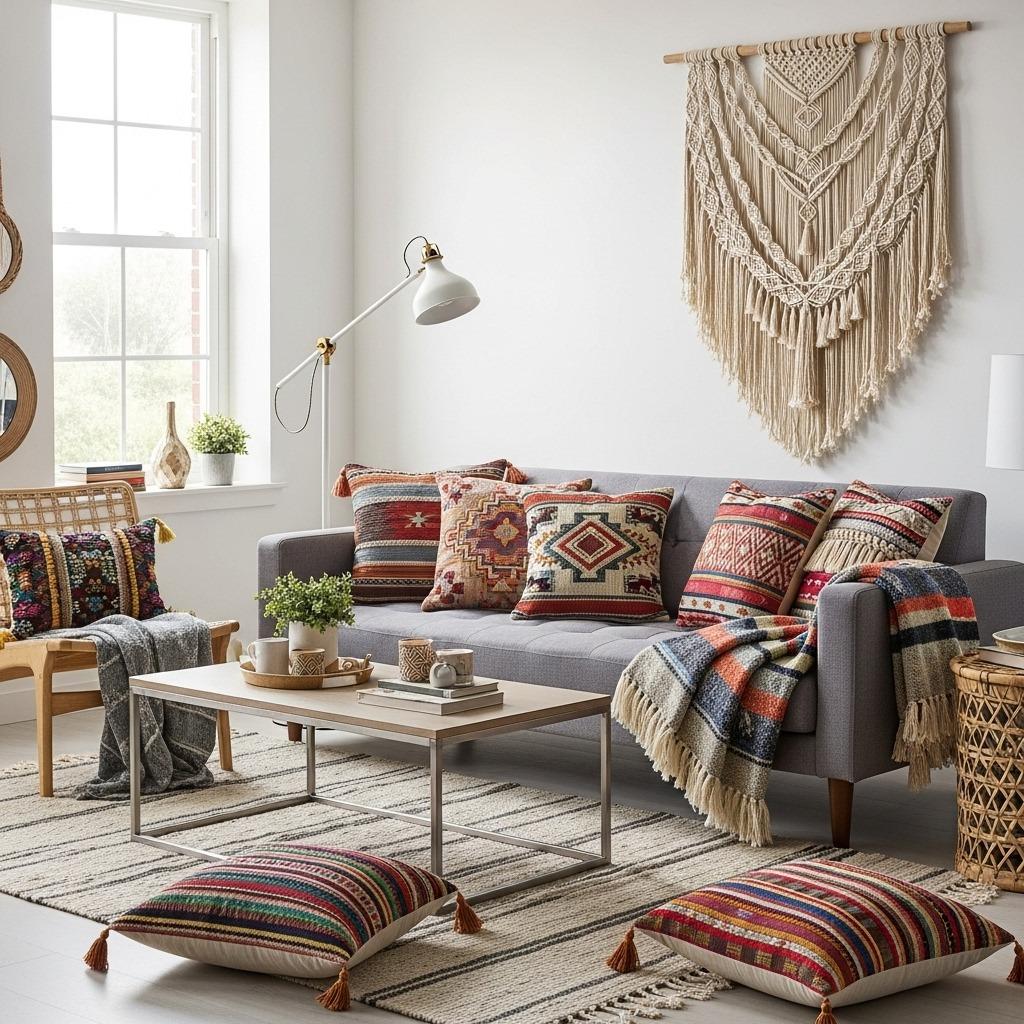
Bohemian elements don’t require a fully boho room to work. In fact, some of the most interesting spaces mix design styles thoughtfully. A mid-century modern living room with clean lines benefits from the softness and warmth that boho textiles provide. The structured furniture prevents the pillows and throws from looking messy, while the textiles prevent the space from feeling cold.
Scandinavian design and boho make surprisingly compatible partners. Both emphasize natural materials and comfort, though their execution differs. Adding colorful bohemian textiles to a Scandinavian living room brings personality and warmth without sacrificing the clean, uncluttered aesthetic. Keep the color palette slightly more muted than you would in a full boho space – think dusty rose instead of hot pink, sage instead of emerald.
Even in more traditional or formal spaces, boho accents can work if you’re selective. One beautiful woven throw draped over a traditional sofa adds contemporary relaxed vibes without clashing. The key is treating the bohemian elements as accent pieces rather than trying to force a style fusion that fights itself. Let the formal pieces provide structure while the boho textiles add warmth and approachability.
13. Small Space Solutions for Textile Lovers
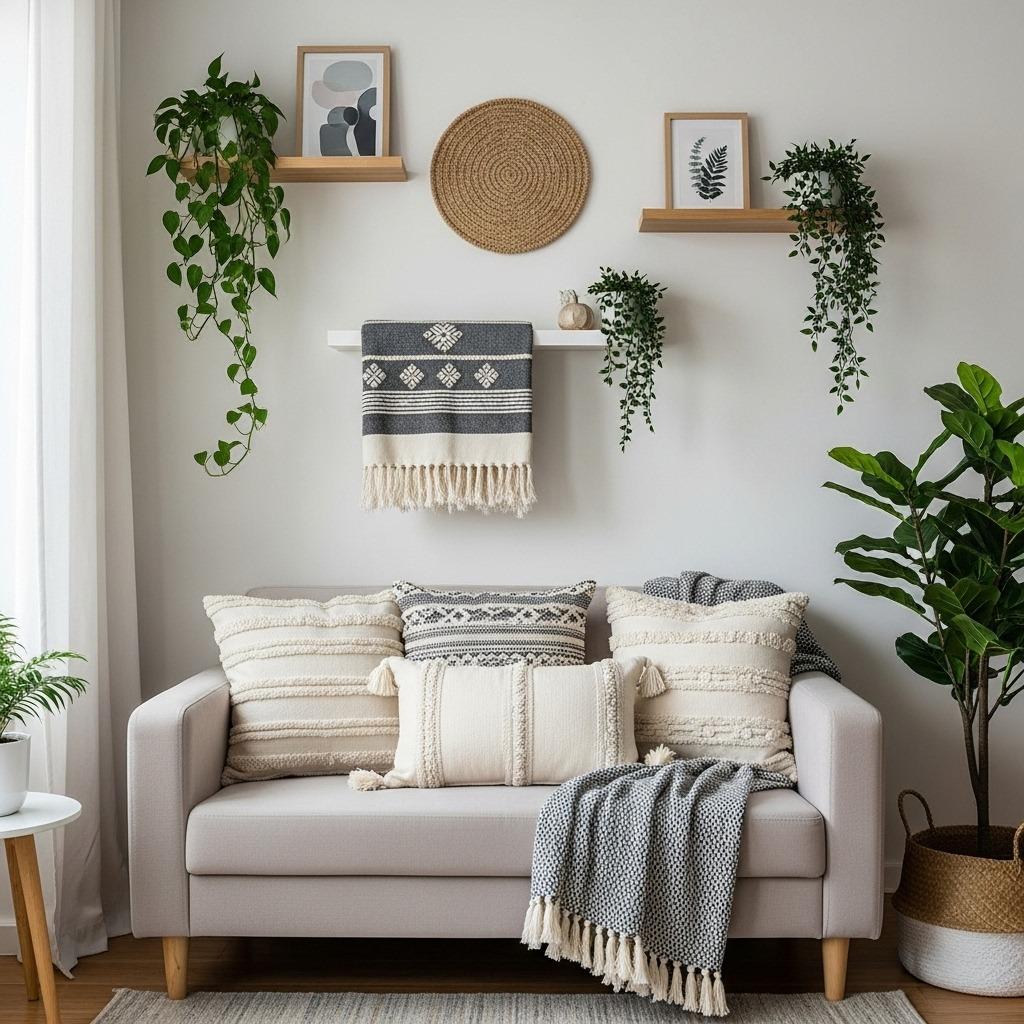
Small living rooms need careful pillow curation. While you might see Instagram photos with twelve pillows on a sofa, that’s not realistic when you actually need to sit down. Three to five pillows maximum allows you to use your furniture while still getting that layered look. Choose pieces that really speak to you rather than trying to include every color and pattern you like.
Multipurpose textiles work beautifully in tight spaces. A large throw can function as a blanket when you’re cold, a picnic blanket when you head outside, and even an impromptu curtain if you need to block light. This versatility means you don’t need three different items taking up storage space. Look for pieces that transition between uses seamlessly.
Vertical display solves storage issues while adding decoration. Hanging textiles as wall art – whether it’s a beautiful throw, a vintage scarf, or a small rug – brings color and texture without eating up precious floor or furniture space. This approach works especially well for pieces that are too beautiful to hide in a closet but might be too much for your actual seating. Check out these small space renovation ideas for more ways to maximize limited square footage.
14. Color Psychology and Mood Setting
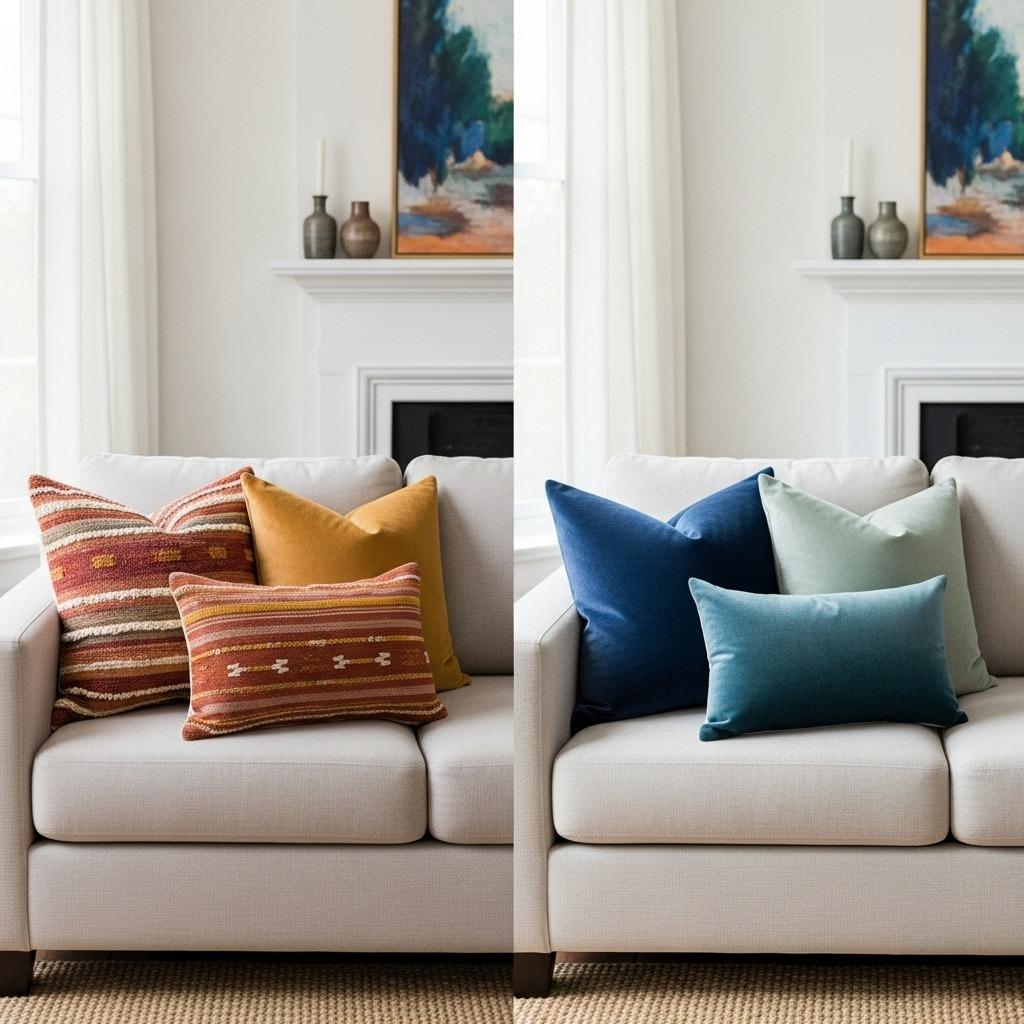
Colors affect our mood more than we realize, and your choice of pillow and throw colors shapes how your living room feels. Warm colors – those reds, oranges, and yellows – energize spaces and encourage conversation. They make rooms feel more intimate and lively, perfect if your living room is your main gathering space for friends and family.
Cool colors create different energy entirely. Blues, greens, and purples promote calm and relaxation. If your living room doubles as your relaxation zone where you decompress after work, cooler tones help facilitate that transition from day to evening. Deep indigos and teals bring richness without the energetic intensity of warm shades.
Neutral bohemian palettes deserve mention too. Not everyone wants bold color, and that’s completely fine. Layers of cream, beige, taupe, and soft gray create incredibly sophisticated spaces when you vary textures significantly. The visual interest comes from material differences rather than color contrast. This approach feels organic and calming, like a sun-bleached beach house that’s collected textiles over decades.
15. Maintenance and Long-Term Care Tips
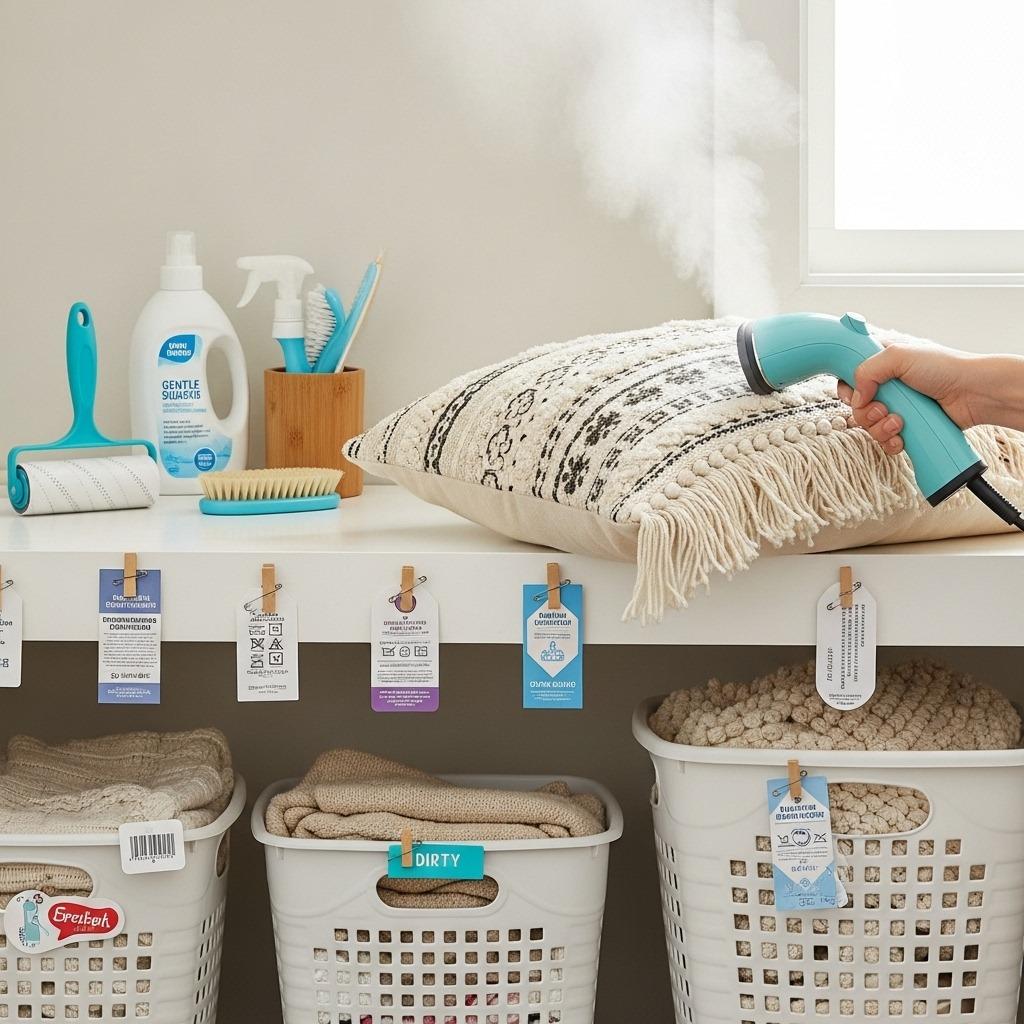
Regular maintenance keeps your textiles looking fresh longer. Fluffing pillows daily prevents them from developing permanent flat spots. It takes two seconds but makes a noticeable difference in how full and inviting your pillows look. Rotating pillow positions weekly distributes wear evenly – the pillow that gets sat against most won’t wear out faster than the others.
Vacuuming isn’t just for carpets and upholstery. Running your vacuum’s upholstery attachment over throws and pillows removes dust and allergens that settle into fibers. This is especially important for textured pieces like chunky knits where dust can nestle into the weave. Monthly vacuuming keeps colors bright and materials fresh.
Sun exposure fades textiles faster than almost anything else. If your living room gets strong afternoon sun, either rotate your pillows regularly so fading is uniform, or use window treatments during peak sun hours. Alternatively, accept the sun-faded look as part of the authentic bohemian aesthetic – many vintage textiles have that beautiful weathered appearance that only time and light can create.
Transforming your living room with bohemian pillows and throws isn’t about following strict rules or achieving some Pinterest-perfect ideal. It’s about creating a space that feels authentically yours, where you actually want to spend time. These textiles are invitations to relax, to get comfortable, to make yourself at home in your own home.
The beauty of working with cozy boho accents is how forgiving and flexible this style is. Don’t stress about getting everything perfect on the first try. Buy one pillow you love, see how it feels in your space, then build from there. Sometimes the best design happens gradually, as you discover what works for your lifestyle and aesthetic preferences.
Your living room should work as hard as you do, but it should also give you a place to rest and recharge. Whether you go all-in with colorful textiles everywhere or start with just a few carefully chosen pieces, these bohemian elements bring warmth, personality, and comfort to any space. That’s something worth investing in – not just financially, but emotionally. Create a room that welcomes you home every single day.

