
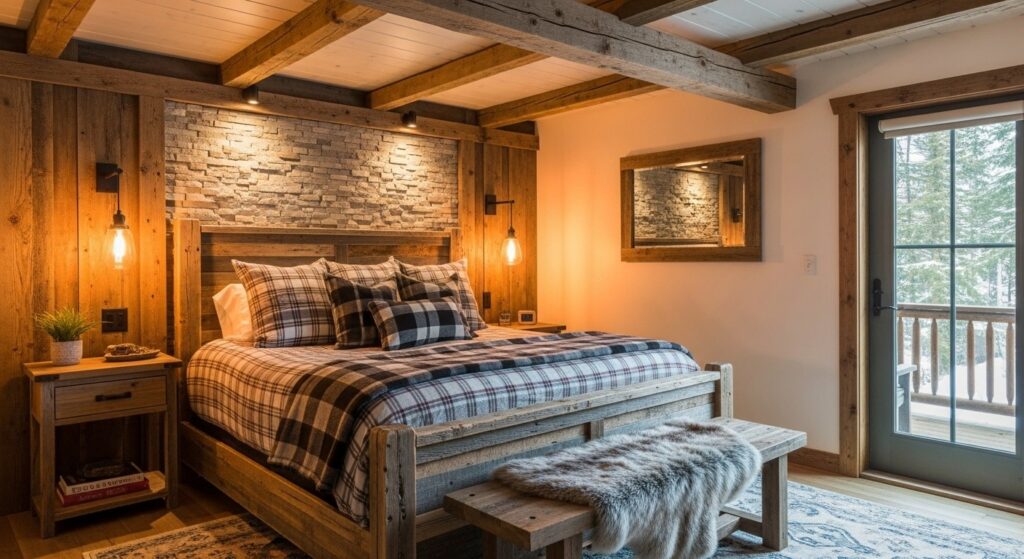
There’s something magical about stepping into a bedroom that feels like you’ve escaped to a secluded mountain lodge. The scent of cedar, the warmth of natural wood, and the kind of coziness that makes you want to burrow under thick blankets with a good book.
Creating a rustic cabin bedroom doesn’t mean you need to live in the wilderness or invest in a complete renovation. It’s about layering the right textures, choosing materials that tell a story, and building a space that wraps you in comfort the moment you walk through the door. Whether you’re working with a spacious master suite or a compact bedroom that needs smart styling, these ideas will help you capture that retreat-worthy feeling.
This style works beautifully because it taps into our desire for simplicity and connection to nature. And honestly? It’s one of those looks that actually gets better with age and use, unlike trends that feel dated after a season.
1. Start With Warm Wood Foundations
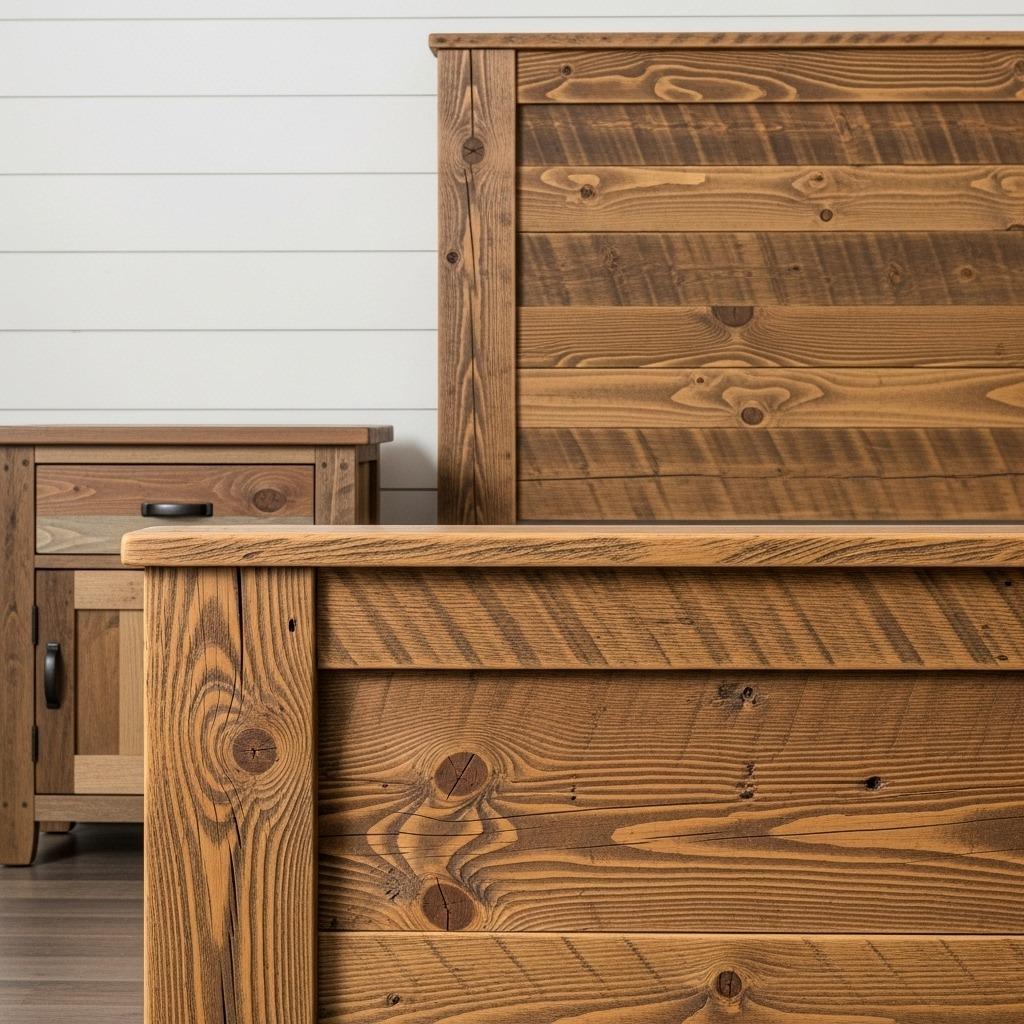
The backbone of any rustic cabin bedroom is wood, but not just any wood will do. You want pieces that have character, visible grain patterns, and that slightly weathered look that suggests they’ve been around for generations.
Reclaimed wood works incredibly well here because it brings instant history into your space. A headboard made from old barn wood or a platform bed crafted from salvaged timber adds authenticity that new materials simply can’t match. If reclaimed isn’t in your budget, look for pieces with knotty pine or cedar that have those natural imperfections we tend to sand away in more modern designs.
Don’t worry about everything matching perfectly. In fact, mixing different wood tones creates more visual interest and feels more organic. Your bed frame might be darker walnut while your nightstands are lighter pine, and that contrast actually enhances the collected-over-time aesthetic that makes cabin spaces so appealing.
The floor matters too. Wide-plank hardwood in honey or amber tones provides the perfect canvas. If you’re working with carpet or flooring you can’t change, large natural fiber rugs can bridge that gap and still give you that grounded, earthy feeling underfoot.
Think about adding wood to unexpected places as well. A ceiling with exposed beams instantly elevates the cabin vibe, but even adding wooden accents like a ladder used as a blanket rack or a tree branch fashioned into a curtain rod brings those natural elements throughout the room.
2. Layer Your Rustic Bedding Like a Pro
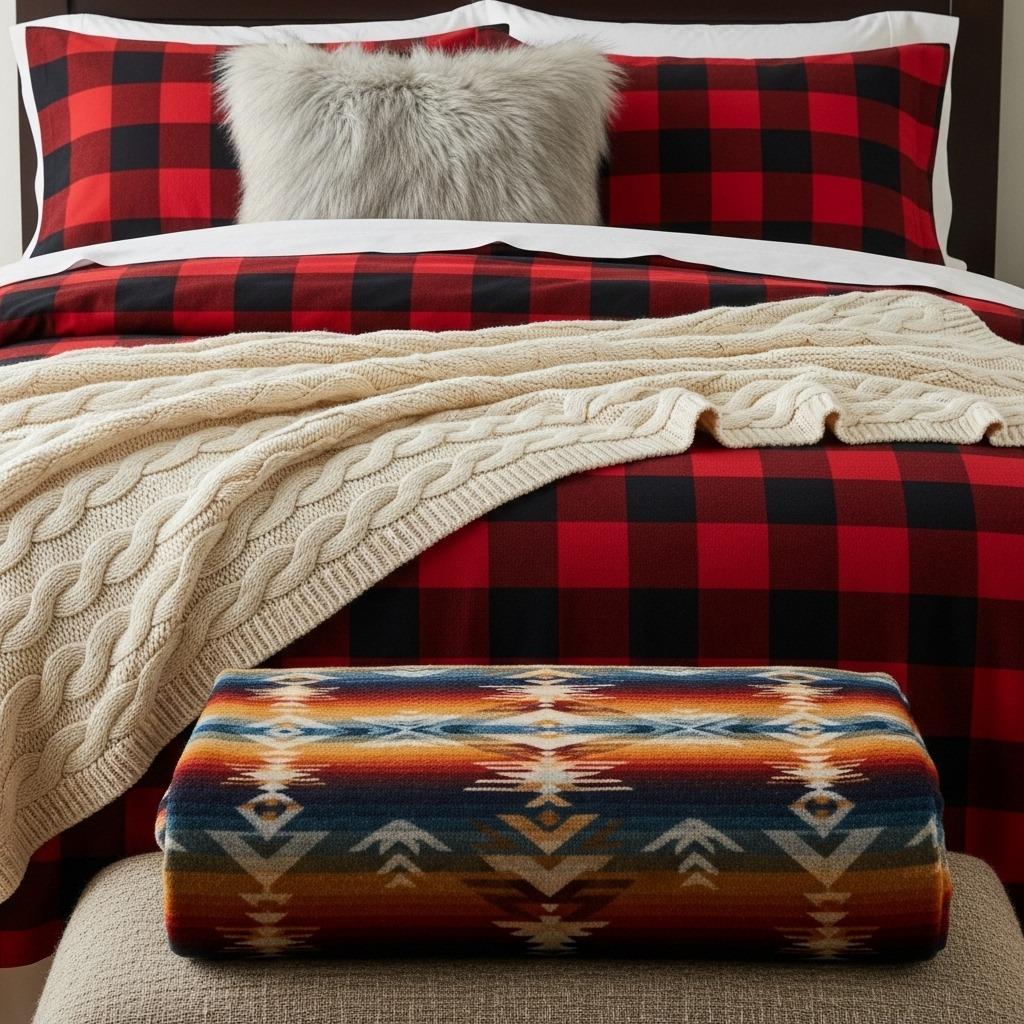
Here’s where you can really dial up the cozy factor. Rustic bedding isn’t just about aesthetics; it’s about creating layers that invite you to sink in and stay awhile.
Start with quality flannel sheets in plaids, buffalo checks, or solid earthy tones. There’s a reason these patterns are cabin classics. They read as timeless rather than trendy, and they actually get softer with every wash. For the duvet or comforter, think chunky textures like cable knit, faux fur, or quilted patterns that add dimension.
The key is building up those layers. A wool blanket folded at the foot of the bed, a faux fur throw tossed casually to one side, maybe a couple of vintage quilts if you’ve got them. This isn’t about making a hotel bed; it’s about creating something that looks lived-in and genuinely inviting. Similar layering techniques work beautifully in a cozy winter bedroom setting too.
Pillows are your chance to add personality. Mix sizes and textures freely. Leather accent pillows, burlap covers with natural linen, or even pillows with wildlife motifs all work. Just keep the color palette grounded in nature: forest greens, deep burgundies, warm tans, and plenty of cream or ivory to keep things from feeling too heavy.
Don’t forget about the practical side. These materials aren’t just pretty; flannel and wool are legitimately warm, which is exactly what you want in a space designed to feel like a mountain retreat.
3. Create Warmth With Lighting Choices
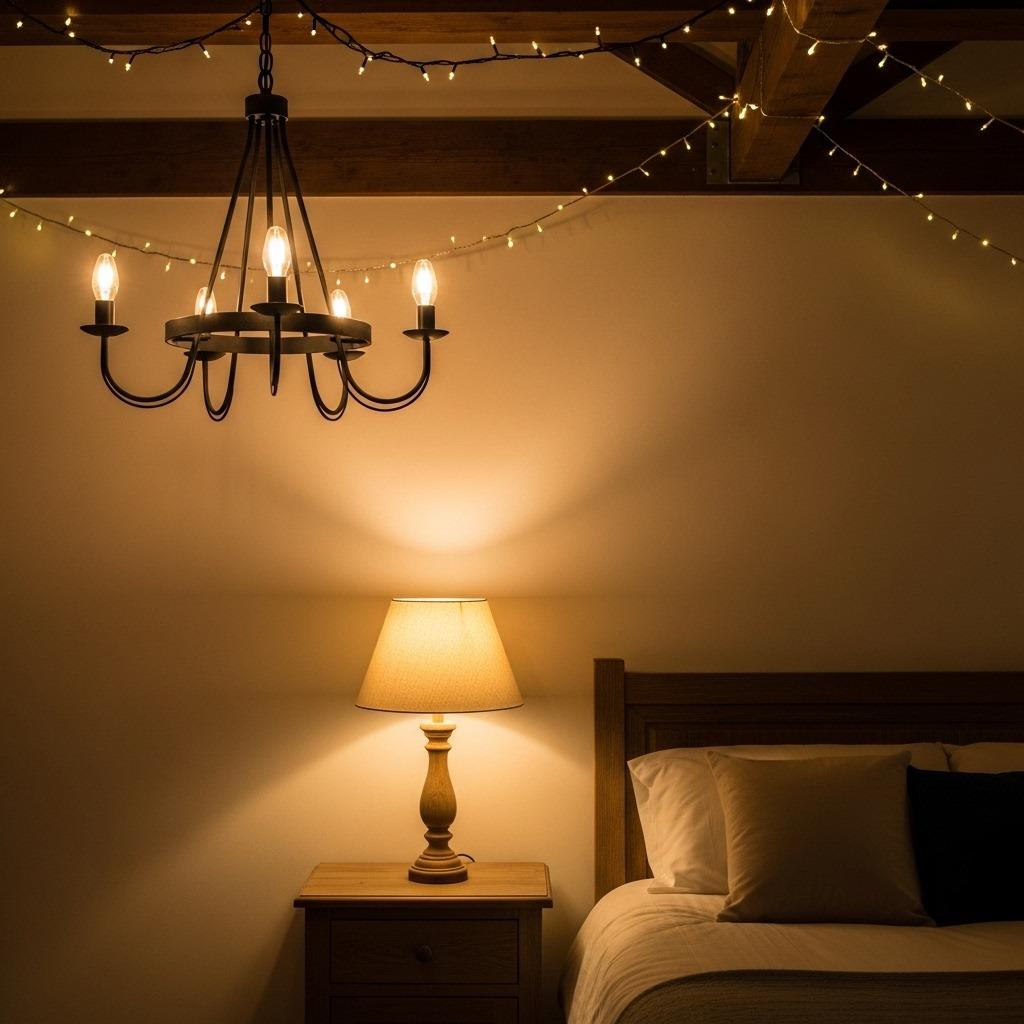
Lighting can make or break your rustic cabin bedroom ambiance. Forget about bright overhead fixtures that feel clinical. You want warm, layered lighting that creates pockets of coziness throughout the space.
Edison bulbs are your friend here. Their warm amber glow and visible filaments add to that nostalgic, old-world cabin feeling. Hang them in simple metal fixtures, vintage-style lanterns, or even mason jar sconces for an authentic touch. Table lamps with burlap or linen shades on your nightstands provide task lighting without disrupting the mood.
Consider adding a dimmer switch if you don’t have one already. Being able to adjust the brightness changes everything about how a room feels as the day progresses. You might also think about string lights with Edison bulbs draped along a beam or tucked behind a headboard for that extra layer of ambient warmth. Check out more bedroom lighting ideas that work across different styles.
Candles deserve a mention too. Clustered on a wooden tray on your dresser or arranged on a windowsill, they add both light and that flickering movement that makes a space feel alive. Look for natural wax candles in woodsy scents like cedar, pine, or sandalwood to engage another sense.
If you have windows with good natural light, embrace it. Simple curtains in natural linen or burlap let light filter through during the day while maintaining privacy. Heavy drapes can work too, especially in rich plaids or solid earth tones that tie into your bedding choices.
4. Incorporate Natural Stone Elements
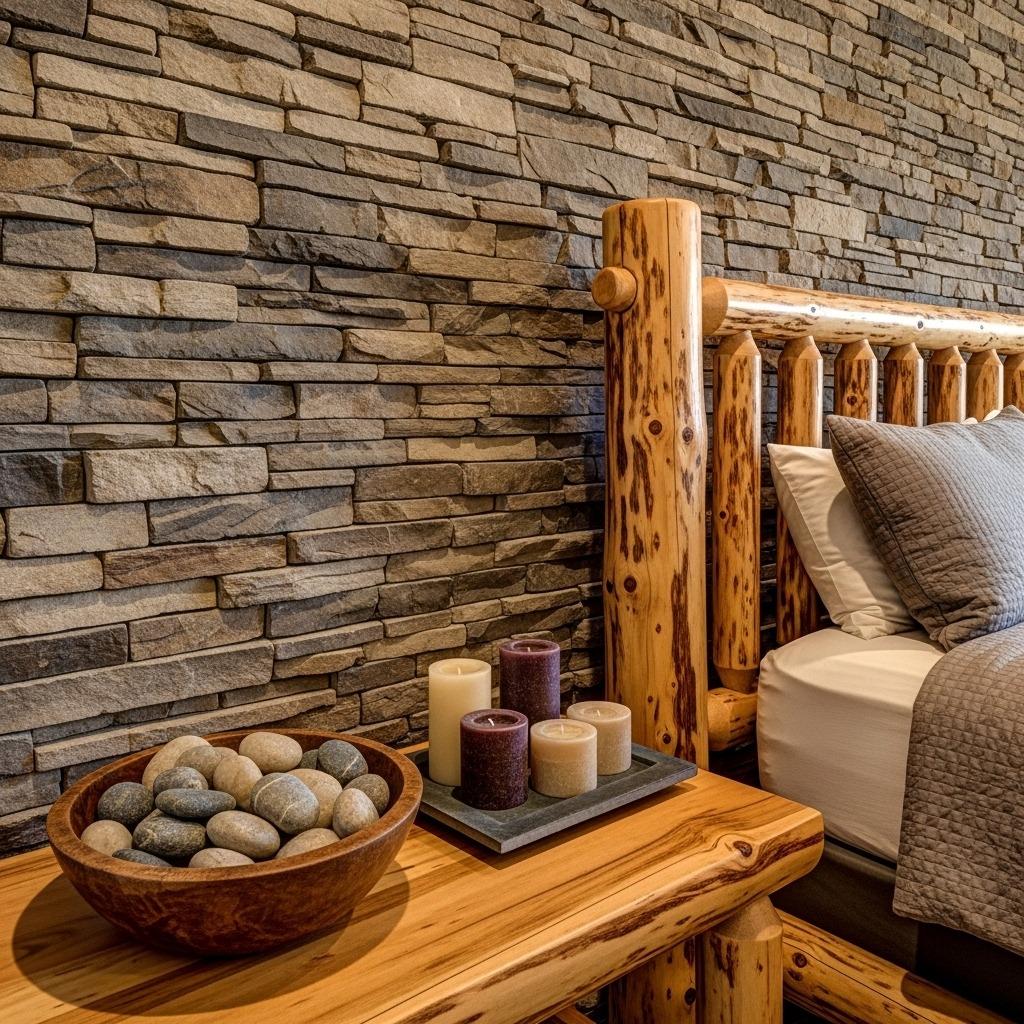
Nothing says “cabin in the woods” quite like stone. Even if you can’t install a full stone fireplace (though if you can, absolutely do it), there are plenty of ways to bring this rugged natural element into your bedroom.
A stone accent wall behind your bed creates an incredible focal point. You can use stacked stone veneer, river rock, or even large format stone tiles depending on the look you want. The texture and varied tones in natural stone add depth that paint alone simply cannot achieve.
Smaller stone touches work too. A stone top on your nightstand, river rocks arranged in a wooden bowl, or slate coasters on your bedside table all reinforce the connection to nature. These little details accumulate to create an overall impression that feels cohesive and intentional.
If a full accent wall isn’t feasible, consider a stone-clad fireplace surround if you have one, or even just a section of stone wainscoting along one wall. The contrast between smooth wood and rough stone creates visual interest that keeps the space from feeling one-note.
The beauty of stone in a rustic cabin bedroom is how it grounds the space. Wood can feel light and airy; stone provides weight and permanence. Together, they balance each other perfectly and create that solid, sheltering feeling that makes cabin spaces so comforting.
5. Choose Furniture With History and Character
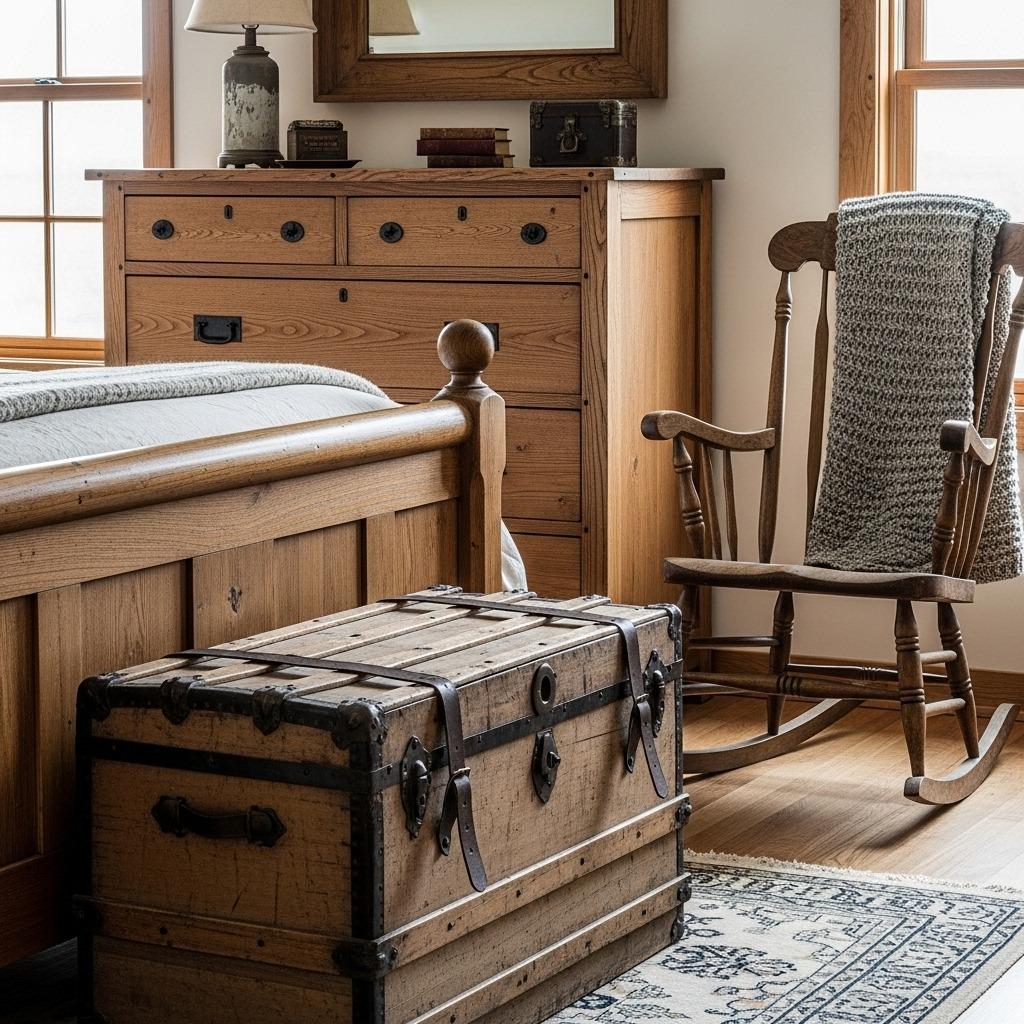
The furniture in a rustic cabin bedroom should feel substantial and tell a story. Avoid anything too sleek or modern; you want pieces that could have been crafted by hand and passed down through generations.
Look for bedroom furniture with visible joinery, hand-rubbed finishes, and solid construction. A heavy wooden dresser with wrought iron hardware, a trunk at the foot of your bed that serves as both storage and seating, or a wooden rocking chair in the corner all contribute to the narrative you’re building.
Antique stores and estate sales are treasure troves for these kinds of pieces. A refinished vintage dresser often costs less than new furniture and brings infinitely more character. Don’t worry if pieces need a little work; some wear and tear actually enhances the rustic aesthetic. This approach to furniture selection also works wonderfully in farmhouse bedroom themes.
Mix materials thoughtfully. A leather bench, metal hooks on the wall for hanging clothes or bags, and woven baskets for storage all add different textures while maintaining the overall rustic feel. The goal is to create a space that looks like it evolved over time rather than being decorated all at once from a single catalog.
Scale matters too. Rustic furniture tends to be chunkier and more substantial than contemporary pieces. This isn’t the place for delicate mid-century legs or glass-top tables. Choose pieces with heft that reinforce that solid, grounded cabin feeling.
6. Add Cozy Textiles Beyond the Bed
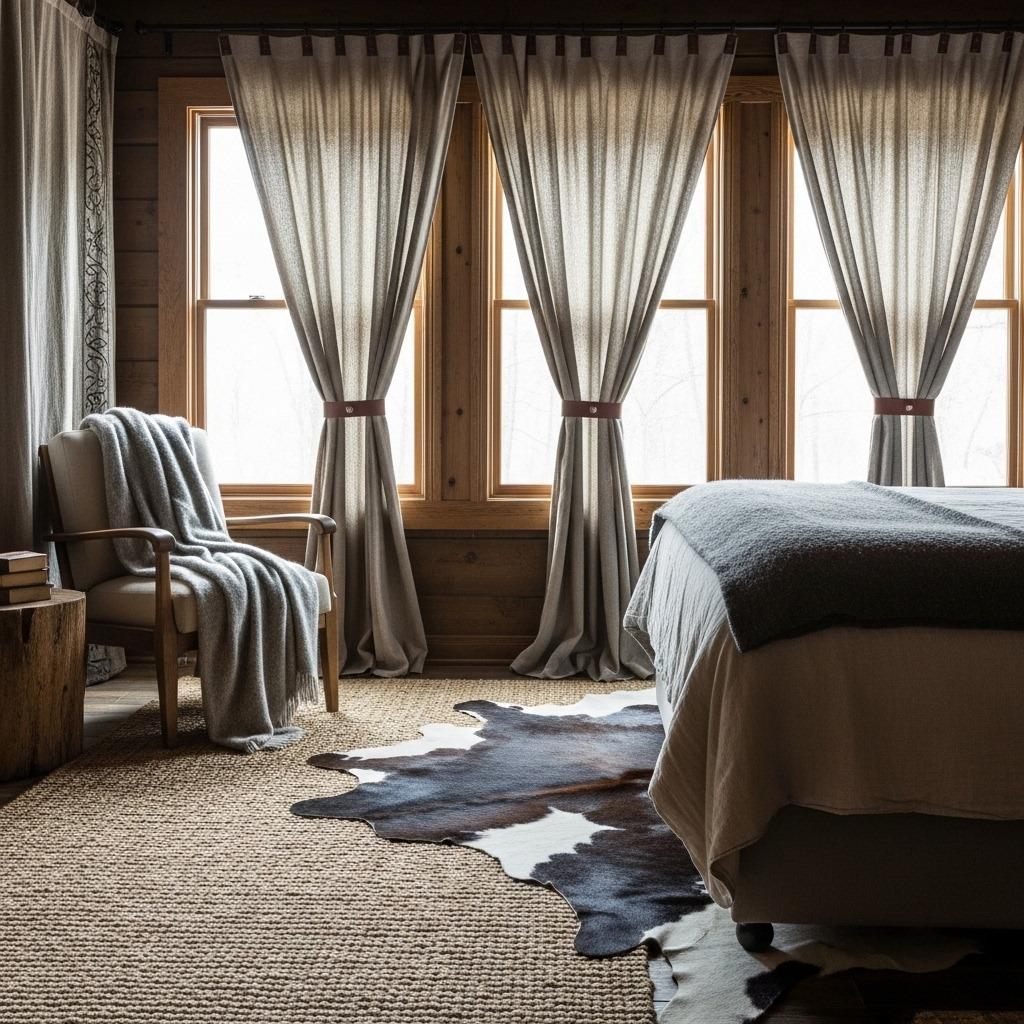
The textiles you choose throughout your rustic cabin bedroom extend the comfort beyond just where you sleep. These are the finishing touches that make the space feel complete and genuinely lived-in.
Start with window treatments. Heavy linen curtains, wool drapes, or even vintage blankets repurposed as curtains all work beautifully. The fabric should have body and texture rather than flowing smoothly. Tie them back with leather straps or rope for an authentic touch that doesn’t feel fussy.
Area rugs are essential, especially if you have hardwood floors. Layering rugs creates even more visual interest. Try a large jute or sisal rug as a base with a smaller cowhide or sheepskin layered on top near the bed. This gives you soft landing spots for bare feet while adding pattern and texture to the floor.
Think about upholstered pieces too. If you have a chair or bench in your bedroom, choose fabrics like leather, canvas, or heavy linen rather than anything shiny or synthetic. These materials age gracefully and actually look better with a bit of wear.
Don’t overlook smaller textile moments. Linen hand towels if you have a connected bathroom, cotton or linen table runners on your dresser, even the fabric you use to line storage baskets. When everything works together texture-wise, the space feels more intentional and sophisticated despite its rustic casualness.
7. Bring Nature Inside Through Decor
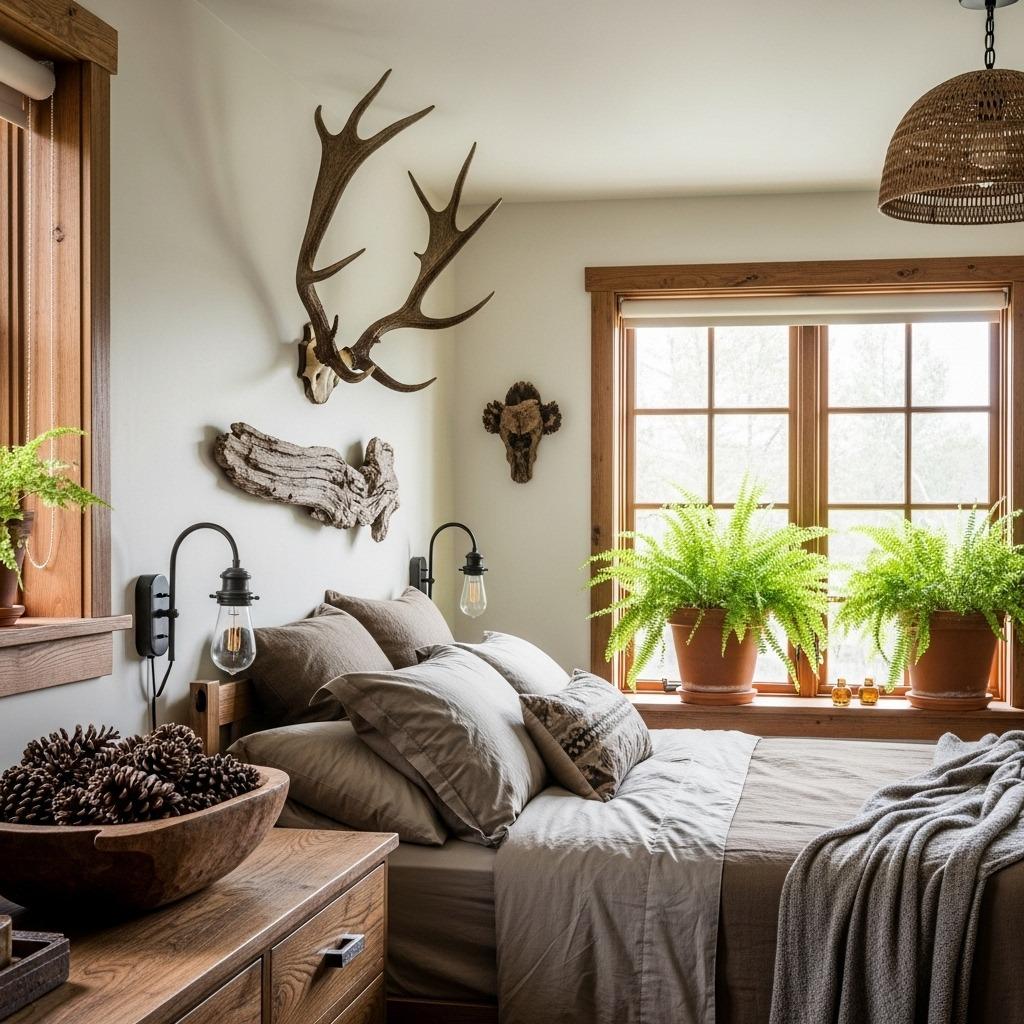
A rustic cabin bedroom should blur the line between indoors and outdoors. The decor you choose can reinforce your connection to nature and make the space feel like a true retreat.
Start with organic materials in your accessories. Antlers mounted on the wall (ethically sourced, of course), driftwood pieces used as art, or a collection of pinecones in a wooden bowl all work. These aren’t just decorations; they’re reminders of the natural world you’re trying to evoke.
Plants deserve a prominent place too. While you might not think of cabins as particularly green spaces, bringing living things into your bedroom adds life and freshness. Choose hardy plants that thrive in lower light if your bedroom doesn’t get tons of sun. Ferns, snake plants, or pothos in simple ceramic or terra cotta pots feel appropriately rustic. For more ways to incorporate greenery, explore these indoor garden living room concepts that translate beautifully to bedrooms.
Artwork in a rustic cabin bedroom should reflect the setting. Wildlife prints, landscape photography of mountains or forests, or even vintage maps of national parks all reinforce the theme without feeling kitschy. Keep frames simple in wood or black metal rather than ornate gilded options.
Consider the smaller moments too. A collection of smooth river stones on your nightstand, a feather you found on a hike displayed in a small frame, or vintage camping gear used decoratively all add personality and tie back to that outdoor retreat feeling you’re cultivating.
8. Establish a Cohesive Color Palette
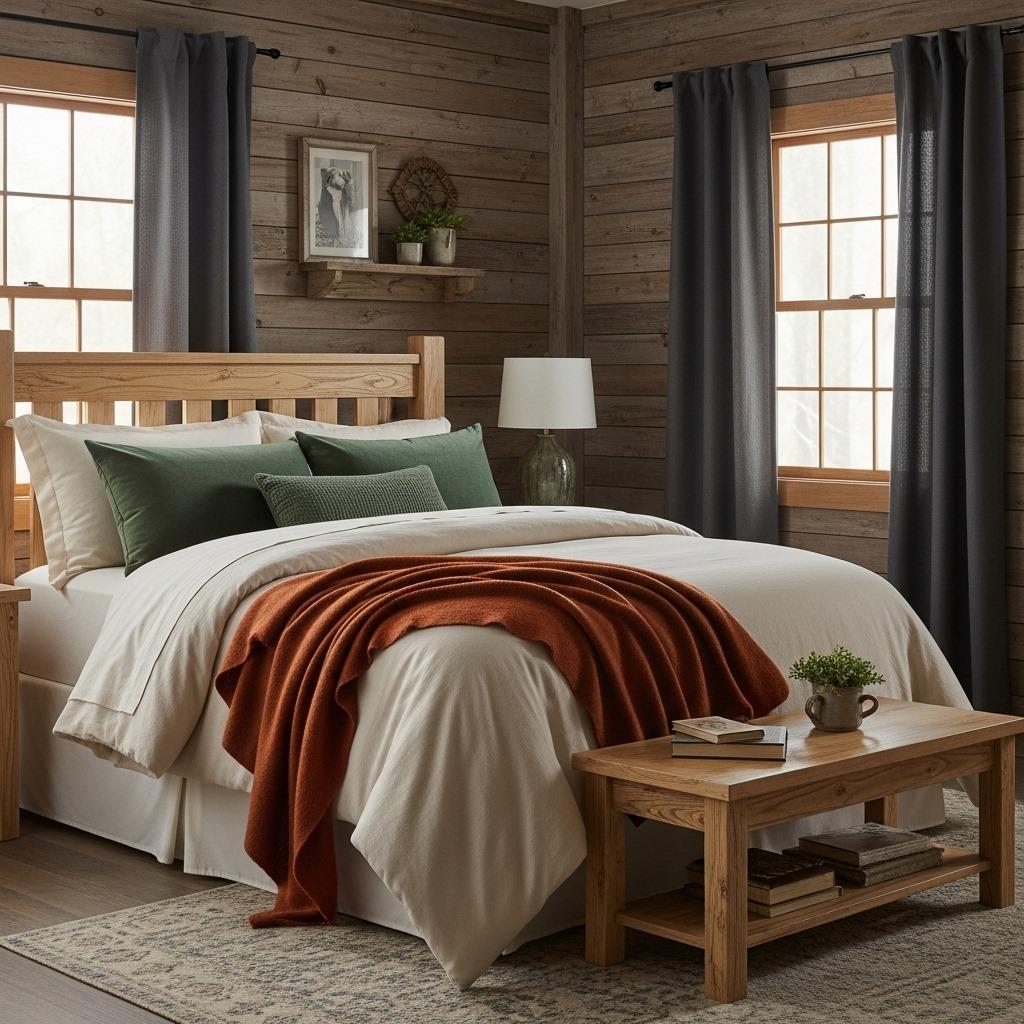
The colors in your rustic cabin bedroom should reflect nature and create a soothing, cohesive environment. This isn’t about being boring; it’s about being intentional with a palette that feels organic and timeless.
Start with a neutral base. Warm whites, creams, and soft tans provide a canvas that lets your wood tones shine. These neutrals also make the space feel larger and brighter, which is especially important if you’re working with limited natural light or a smaller room. You can find similar neutral approaches in monochromatic bedroom ideas that create serene spaces.
Layer in earth tones from there. Forest green, deep burgundy, rust orange, and charcoal gray all work beautifully in a rustic cabin bedroom. These colors appear in nature and feel grounding rather than jarring. Use them in your textiles, artwork, and accessories to add depth without overwhelming the wood-heavy space.
Don’t be afraid of going darker either. A charcoal or deep brown accent wall can create drama and make the space feel more intimate and cocoon-like. This works especially well behind the bed or on a wall with windows where the contrast makes the natural light feel even more special.
The key is keeping things muted rather than saturated. You want colors that feel like they’ve been softened by time and natural light rather than bright, crisp shades straight from the paint store. Think about how colors look in nature: never harsh, always harmonious with what’s around them.
9. Create Storage That Doubles as Decor
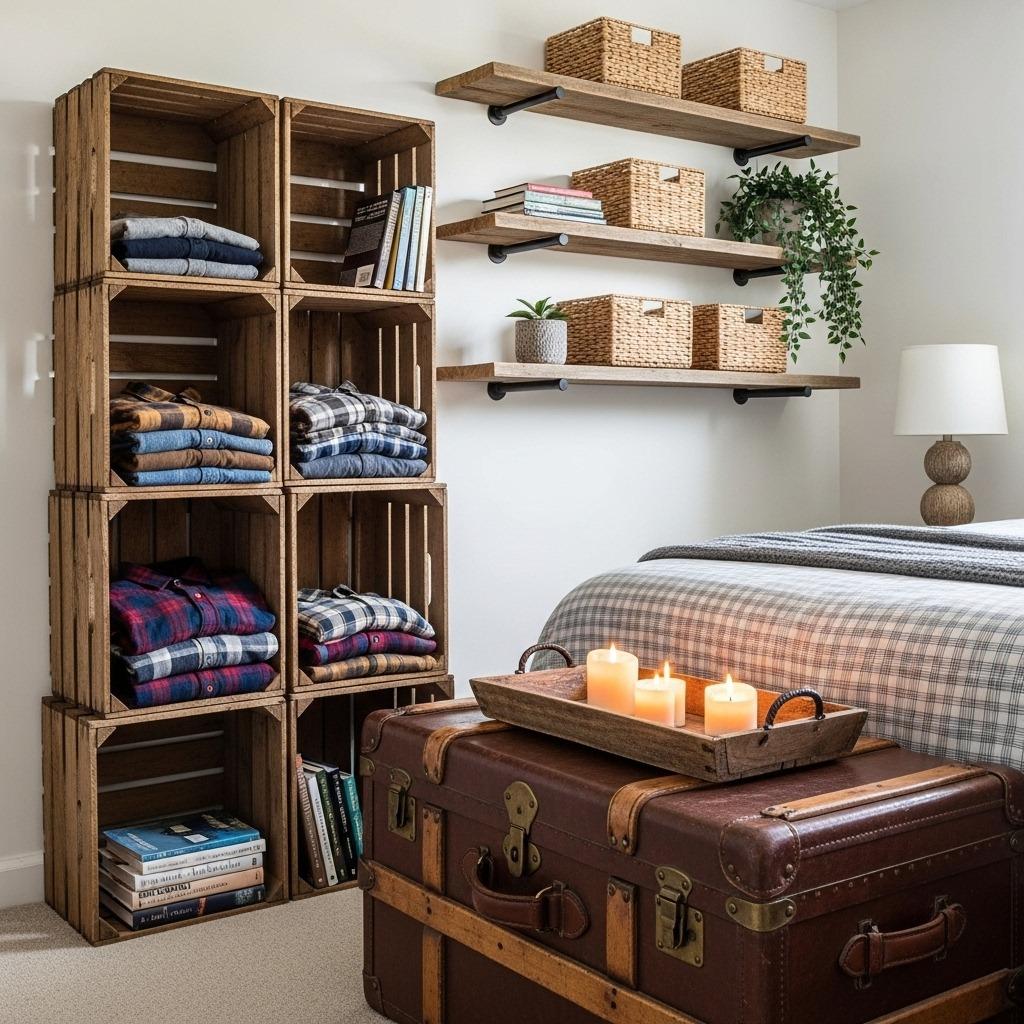
Storage in a rustic cabin bedroom shouldn’t feel like an afterthought hidden behind closed doors. Instead, embrace storage solutions that contribute to the overall aesthetic while keeping your space organized.
Vintage trunks and wooden crates are perfect for this dual purpose. Stack a few crates on their side to create open shelving for folded sweaters or books. Use a large trunk at the foot of your bed to store extra blankets while providing a surface for a tray with candles or a stack of your favorite reads.
Open shelving made from reclaimed wood planks mounted on iron brackets gives you display space that feels intentional rather than cluttered. Style these shelves with a mix of functional items (folded linens, baskets) and decorative touches (plants, framed photos, collected objects from nature). This type of smart storage living room thinking works just as well in bedrooms.
Woven baskets in various sizes are essential. Whether they’re holding extra throw blankets, magazines, or miscellaneous items, they add texture while keeping things tidy. Look for natural materials like seagrass, rattan, or wicker rather than synthetic options.
Consider unconventional storage too. Ladder racks leaning against the wall can hold quilts or towels. Wooden pegs or antler hooks mounted on the wall provide places to hang robes, bags, or hats while serving as decorative elements themselves. The best rustic storage feels like it belongs there, not like you’re trying to hide your stuff.
10. Pay Attention to Small Finishing Touches
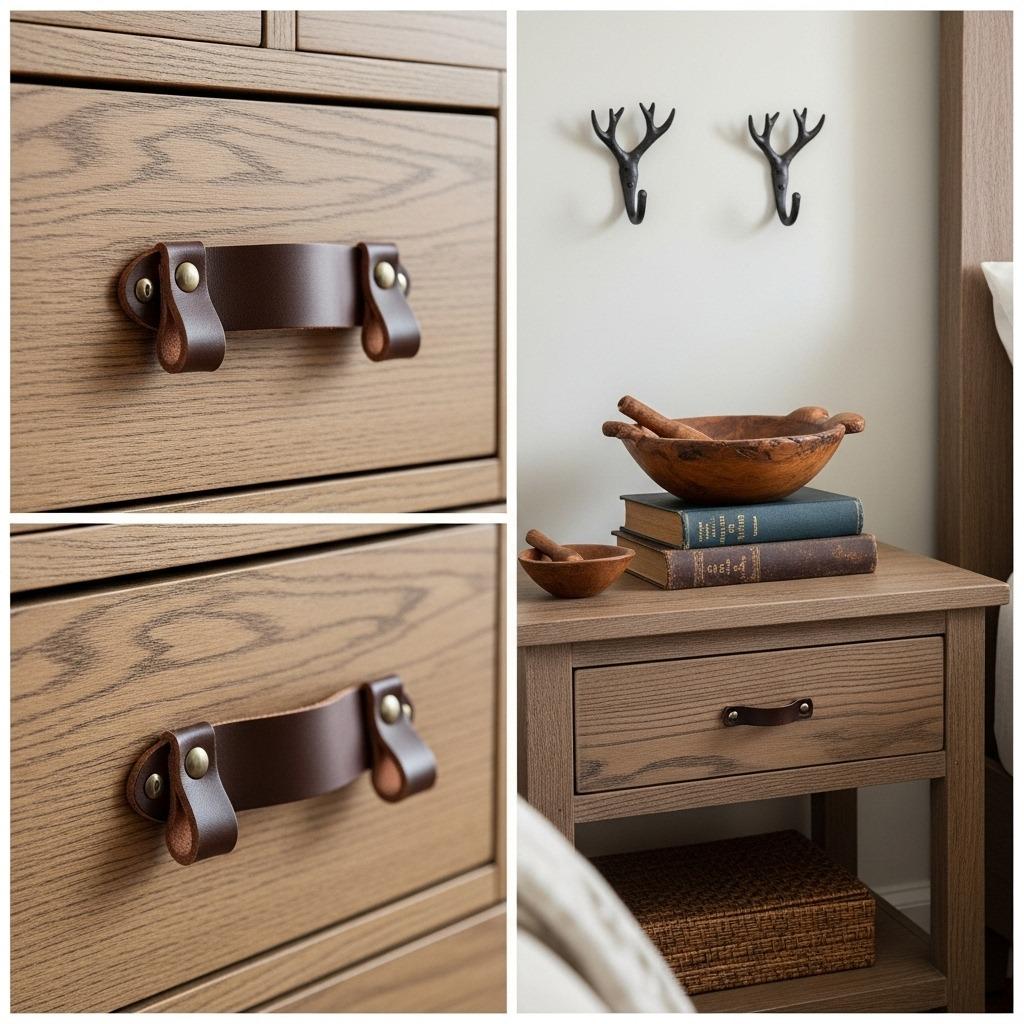
The difference between a good rustic cabin bedroom and a great one often comes down to the thoughtful details that tie everything together. These finishing touches might seem minor, but they’re what make a space feel complete and carefully curated.
Switch out standard hardware for pieces that enhance your theme. Leather drawer pulls, iron knobs with a hammered finish, or antler-shaped hooks all reinforce the rustic aesthetic. These small changes are relatively inexpensive but make a noticeable impact on how custom and intentional your space feels.
Think about what’s on display. Rather than hiding everything away, choose a few meaningful items to showcase. A collection of vintage books stacked on your nightstand, a handcrafted wooden bowl holding jewelry, or a leather-bound journal next to a pen creates vignettes that tell a story about who lives in this space.
Scent matters too, though it’s often overlooked. Wood-based diffusers with cedar or pine essential oils, soy candles in woodsy fragrances, or even just keeping a bowl of dried lavender or herbs on your dresser engages another sense and deepens the cabin experience.
Don’t forget about the practical details that affect comfort. Quality bedding that breathes well, blackout options for better sleep if needed, and ensuring your room temperature can be easily adjusted all contribute to actually enjoying your space rather than just admiring how it looks. Sometimes the best decorating decisions are the ones that prioritize function alongside form.
11. Balance Rustic With Personal Style
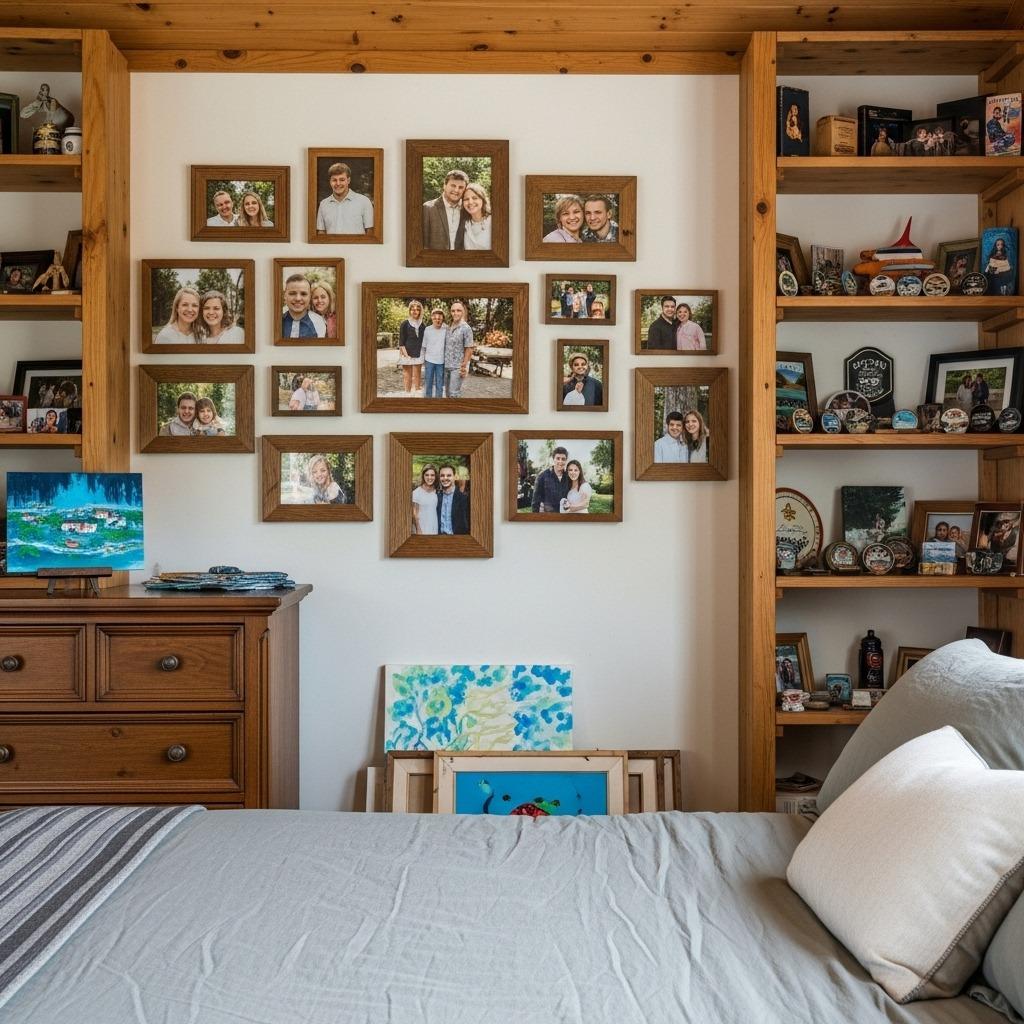
Here’s something worth remembering: your rustic cabin bedroom should still feel like yours. The best spaces happen when you take these guidelines and filter them through your own taste and needs.
Maybe you love the cabin aesthetic but want to lighten it up a bit. That’s fine. More white, cream, and lighter wood tones can give you a Scandinavian-rustic hybrid that feels fresh and airy while maintaining that cozy retreat vibe. Or perhaps you’re drawn to a more luxe version with velvet accents and brass fixtures mixed into your wood and stone – that works too.
Your personal collections and treasures should have a place here. Family photos in rustic frames, travel souvenirs that mean something to you, or artwork you’ve collected over time all make the space feel lived-in rather than styled for a magazine shoot. The goal isn’t perfection; it’s creating a bedroom that wraps you in comfort and reflects who you are.
Think about how you actually use your bedroom too. If you read before bed, make sure you have great task lighting. If you like working from bed occasionally, create a comfortable setup that supports that without disrupting the aesthetic. A rustic cabin bedroom that doesn’t function for your lifestyle won’t feel like the retreat you’re hoping for, no matter how good it looks.
The most successful spaces blend inspiration with adaptation. Take what resonates from these ideas, leave what doesn’t, and trust your instincts about what will make you happiest in your own space.
12. Consider Architectural Elements
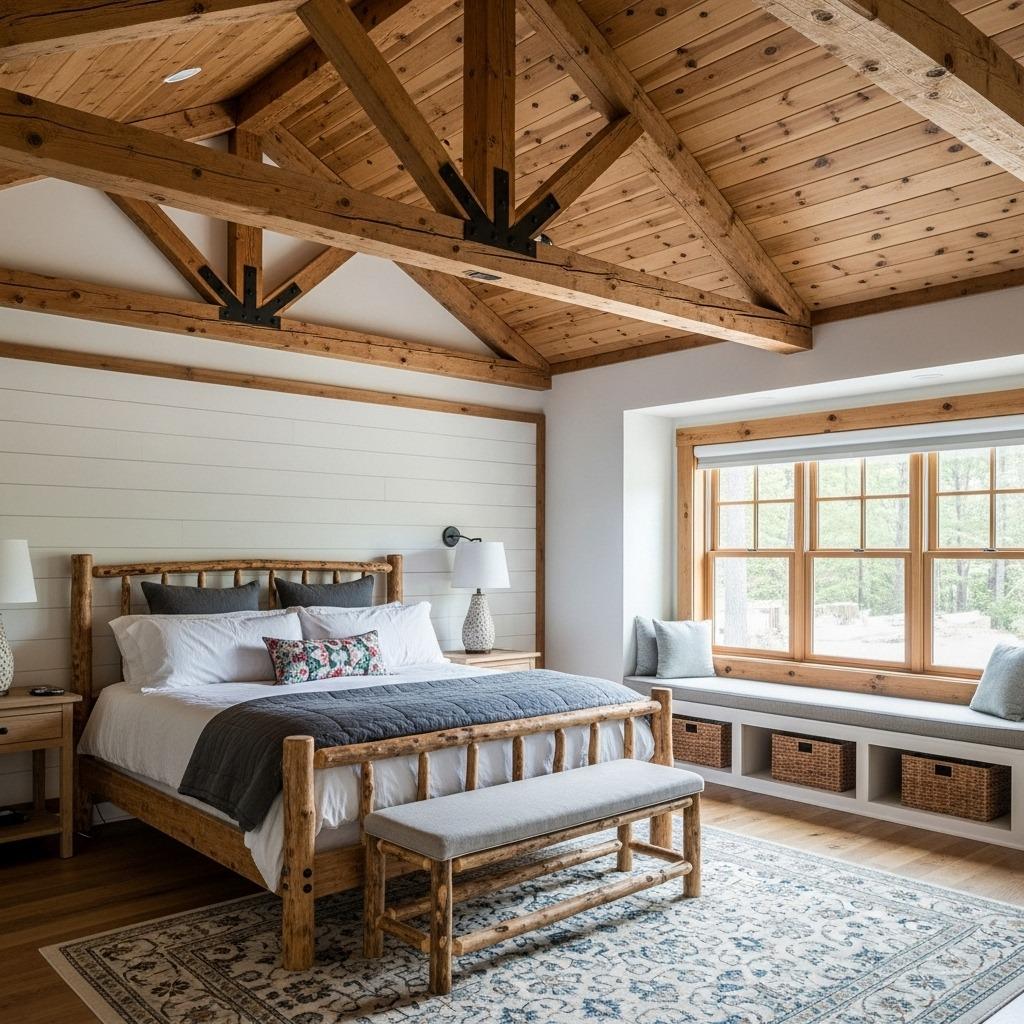
If you have the opportunity to make more permanent changes, certain architectural elements can transform your bedroom into an even more convincing cabin retreat.
Exposed ceiling beams are perhaps the most impactful architectural addition. If you have a vaulted or higher ceiling, adding wood beams instantly creates that lodge-like feel. Even in a standard height room, a few strategically placed beams or a coffered ceiling treatment with wood can make a dramatic difference.
Wood paneling on walls, whether it’s shiplap, tongue-and-groove, or board-and-batten, adds texture and warmth that paint alone cannot. You don’t need to panel every wall; an accent wall behind your bed or covering just the top or bottom half of your walls creates interest without overwhelming the space. This wall paneling DIY approach can help you add rustic charm affordably.
Window seats are another wonderful architectural element that enhances both form and function. If you have a decent-sized window, building a seat with storage underneath gives you a cozy reading nook that’s perfect for the cabin aesthetic. Add some cushions covered in plaid wool or linen, throw on some pillows, and you’ve created another inviting spot in your retreat.
Don’t overlook the impact of molding and trim work either. Rustic spaces benefit from more substantial trim in natural wood or painted white for contrast. It frames your space and adds that finished, custom-built quality that elevates the entire room.
13. Think About Seasonal Transitions
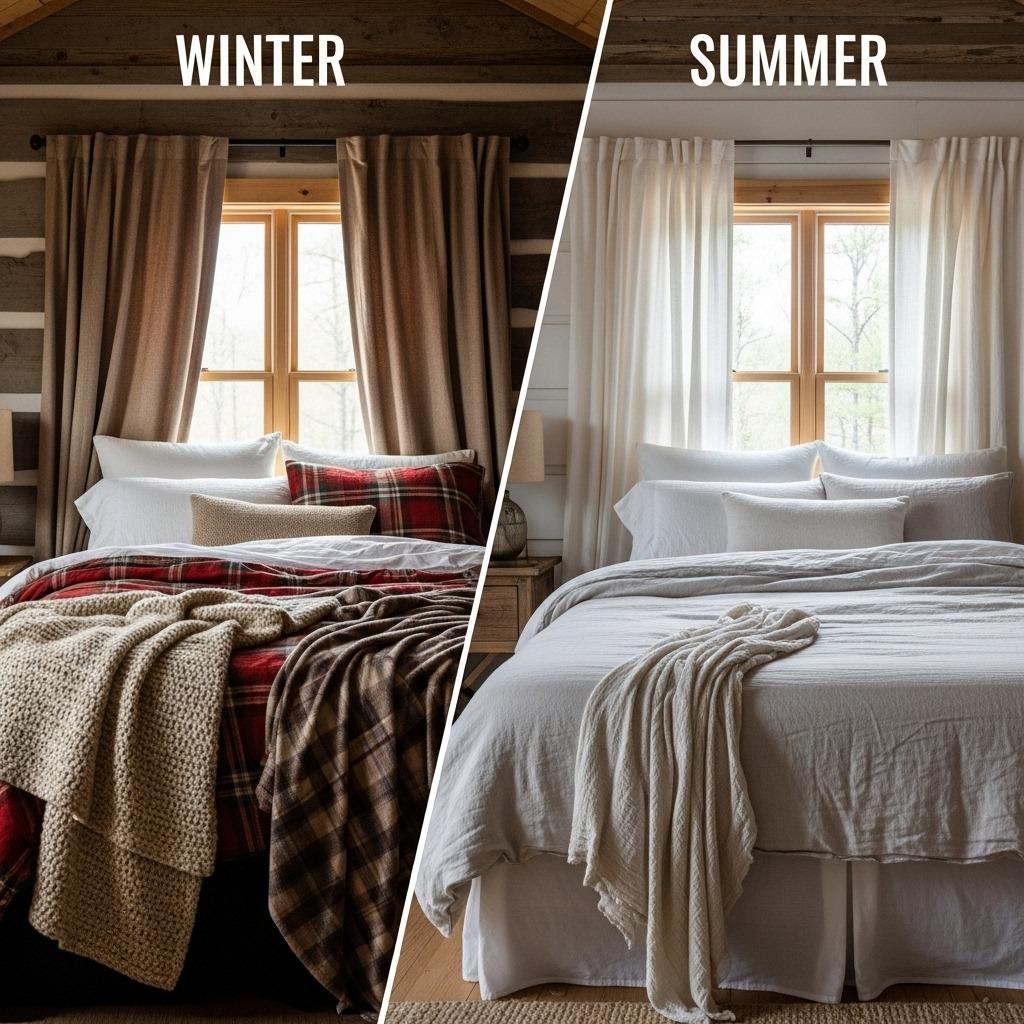
One of the joys of a rustic cabin bedroom is how easily it adapts across seasons while maintaining its core aesthetic. The heavy layering that feels perfect in winter can be lightened for warmer months without losing the overall vibe.
In colder months, pile on those textures we’ve talked about. Multiple blankets, faux fur throws, flannel everything, and heavier curtains create a cocoon against the cold. This is when your rustic bedroom really shines, feeling like the ultimate hibernation spot.
As weather warms, you can lighten things up considerably. Swap the flannel for linen sheets, remove some of the heavier blanket layers, and consider lighter-weight curtains or no curtains at all if privacy isn’t an issue. The wood, stone, and core furniture remain constant, so the space still reads as rustic even with these seasonal adjustments.
Color can shift subtly too. Summer might bring in more whites and creams while autumn and winter see deeper, richer tones. These transitions keep your space feeling fresh and responsive to how you’re living in it rather than static and unchanging.
This adaptability is actually one of the strengths of rustic design. Because it’s rooted in natural materials and timeless pieces rather than trendy specifics, you can refresh the feel of your room with relatively minor changes. It’s sustainable both aesthetically and practically.
Creating your own rustic cabin bedroom is about more than just following a design trend. It’s about building a personal sanctuary that connects you to nature, embraces comfort without pretense, and provides that retreat feeling we all crave at the end of a long day.
The beauty of this style lies in its flexibility. You can go full mountain lodge with floor-to-ceiling wood and massive stone features, or you can incorporate just a few key rustic elements into a more eclectic space. Either way, the principles remain the same: natural materials, layered textures, warm lighting, and an overall sense of being sheltered and surrounded by nature’s beauty.
Start with one or two elements that resonate most with you. Maybe it’s switching to rustic bedding or adding some reclaimed wood pieces. Build from there gradually, letting your space evolve naturally. The best rustic cabin bedrooms are the ones that feel like they’ve been loved and lived in for years, not decorated overnight.
Your bedroom should be where you escape from everything else, and a thoughtfully designed rustic cabin bedroom delivers on that promise every single night. Sweet dreams in your mountain retreat, wherever you actually call home.

