

Your bedroom shouldn’t just be a place to sleep anymore. With remote work becoming the norm and living spaces shrinking, that single room needs to pull double (or triple) duty. Maybe you’re trying to fit a home office into your sleeping space, or perhaps you need storage for hobbies without turning your sanctuary into a cluttered mess.
I’ve spent years figuring out how to make rooms work harder, and I’m sharing what actually makes a difference. These multifunctional bedroom layouts aren’t about cramming more stuff into tight quarters. They’re about intentional design choices that let one space serve multiple purposes gracefully.
Whether you’re dealing with a studio apartment or just want to make better use of your current bedroom, these ideas will show you how versatile room design can transform daily life. Let’s explore layouts that adapt to your needs instead of forcing you to adapt to them.
1. The Work-Sleep Divide Layout
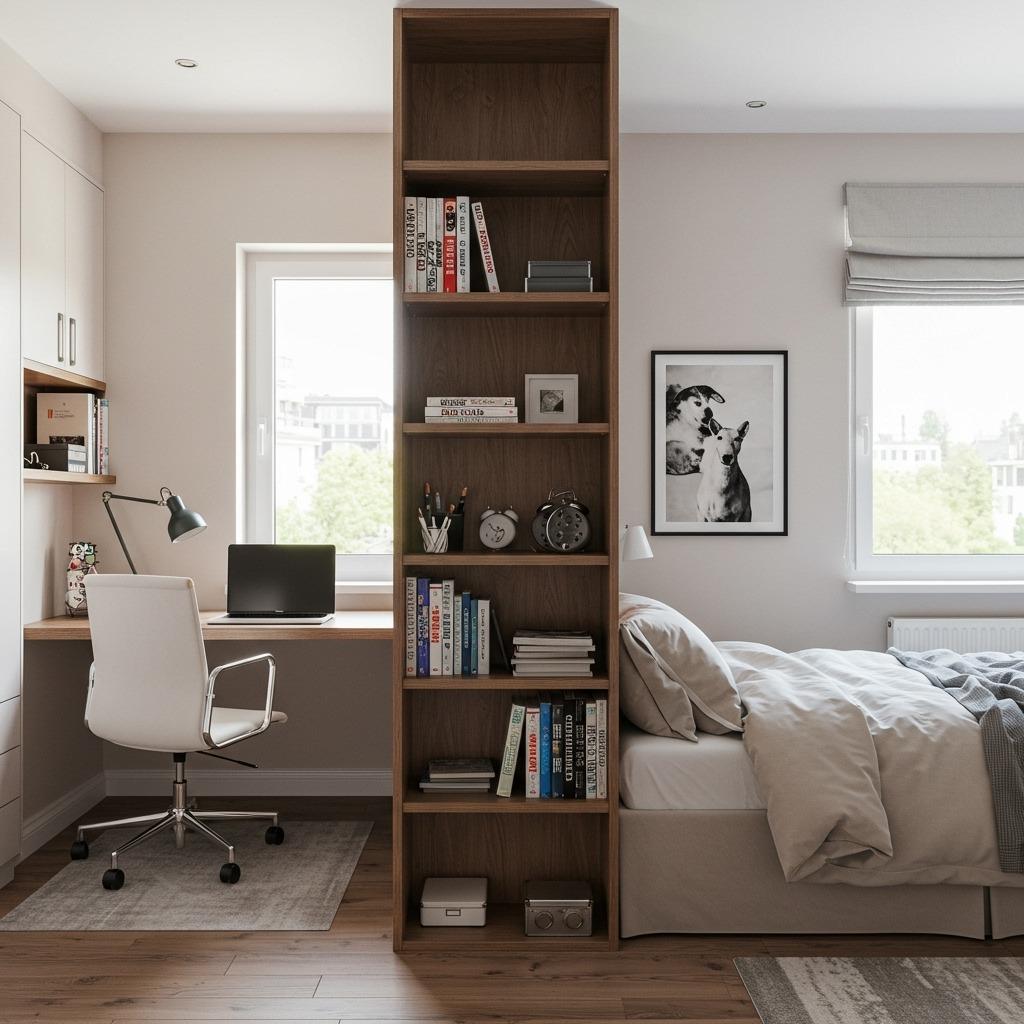
Creating distinct zones for work and rest doesn’t require walls. A well-placed bookshelf or a floor-to-ceiling curtain can separate your desk area from your bed without sacrificing square footage. This psychological boundary helps your brain switch between productivity mode and relaxation.
Position your desk perpendicular to your bed rather than facing it directly. You’ll avoid the temptation to check emails from under the covers. Add a small area rug under your workspace to further define the zone visually.
If natural light is limited, invest in task lighting for your desk and softer ambient lighting near your bed. The different lighting temperatures will reinforce the separation between spaces. This approach works especially well in small space bedroom hacks where every design choice matters.
2. The Murphy Bed Multi-Room
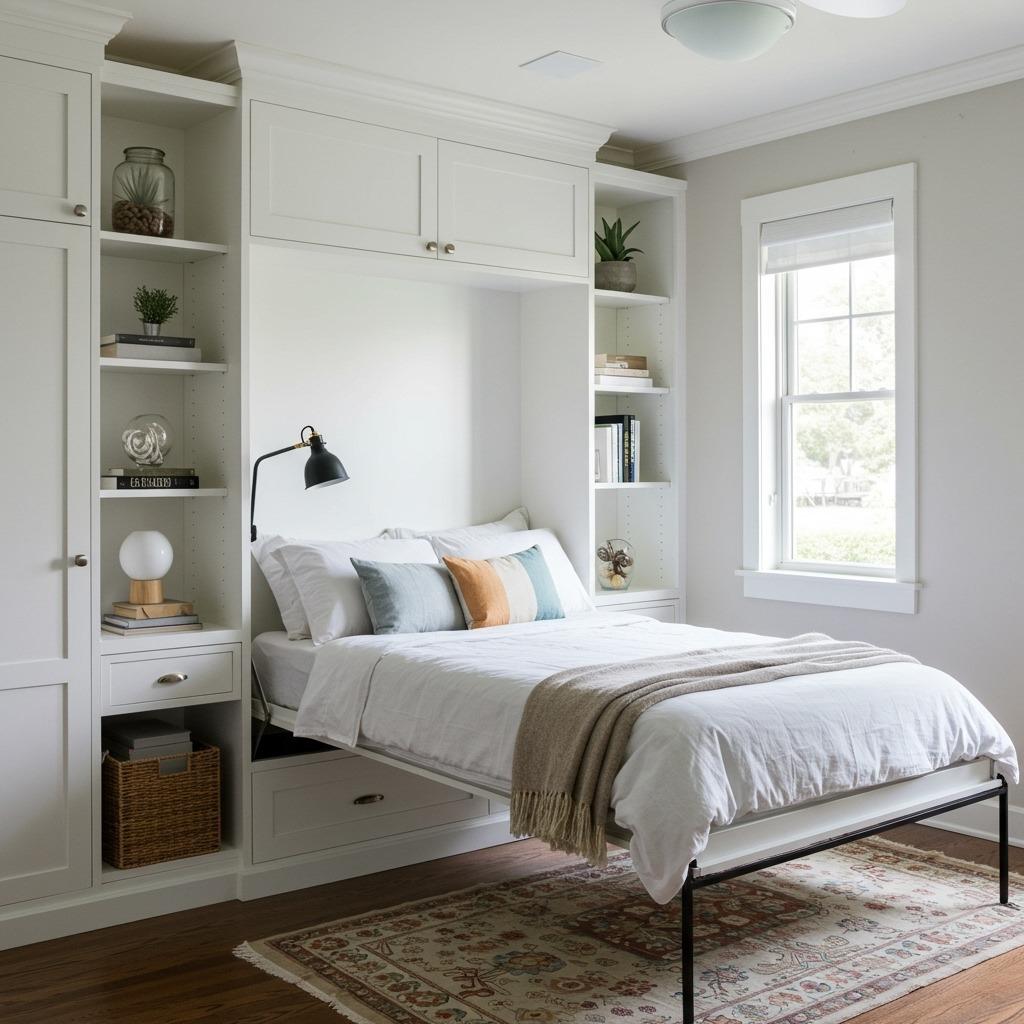
Murphy beds have evolved beyond their clunky predecessors. Modern wall beds fold seamlessly into custom cabinetry, revealing a completely different room when stored. During the day, your bedroom transforms into a yoga studio, craft room, or spacious home office.
The key is choosing a murphy bed system with built-in storage and a desk attachment. When the bed folds up, a workspace folds down in its place. This convertible furniture approach maximizes flexibility without permanent commitment to any single layout.
Consider the clearance space you’ll need when the bed is down. Measure twice before purchasing to ensure you won’t block doorways or closets. Some systems even include integrated shelving that remains accessible whether the bed is up or down.
3. The Platform Bed Storage Solution
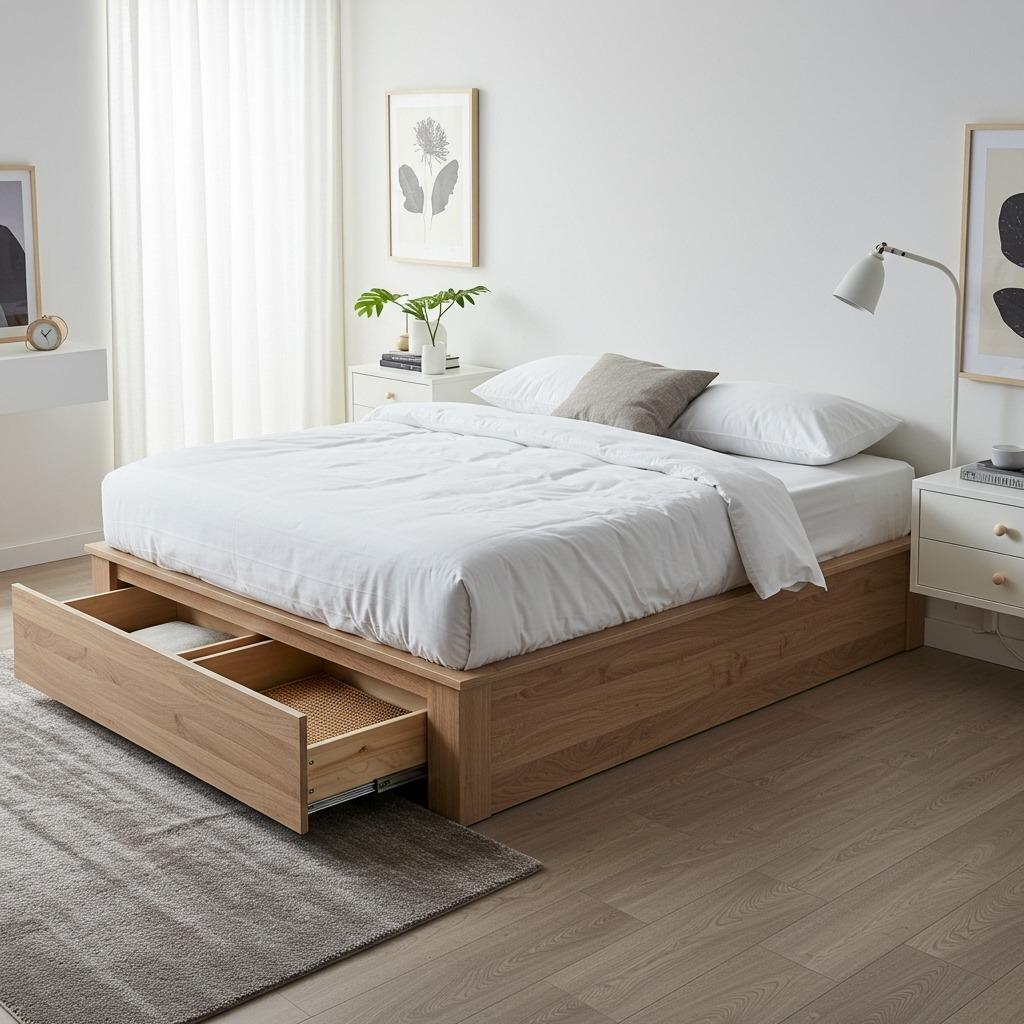
Platform beds with built-in drawers eliminate the need for separate dressers, freeing up valuable floor space. The best versions include hydraulic lift systems that reveal cavernous storage underneath the entire mattress. This is where off-season clothing, extra bedding, and bulky items can disappear.
Pair your platform bed with floating nightstands to maintain the streamlined look. Wall-mounted everything keeps the floor clear, making your room feel more spacious than it actually is. This principle applies whether you’re decorating a luxury master bedroom or a compact space.
Don’t overlook the vertical space above your bed either. A slim horizontal shelf or floating cabinet can hold books and small items without overwhelming the wall. Just make sure anything above the bed is securely mounted.
4. The Corner Workspace Integration
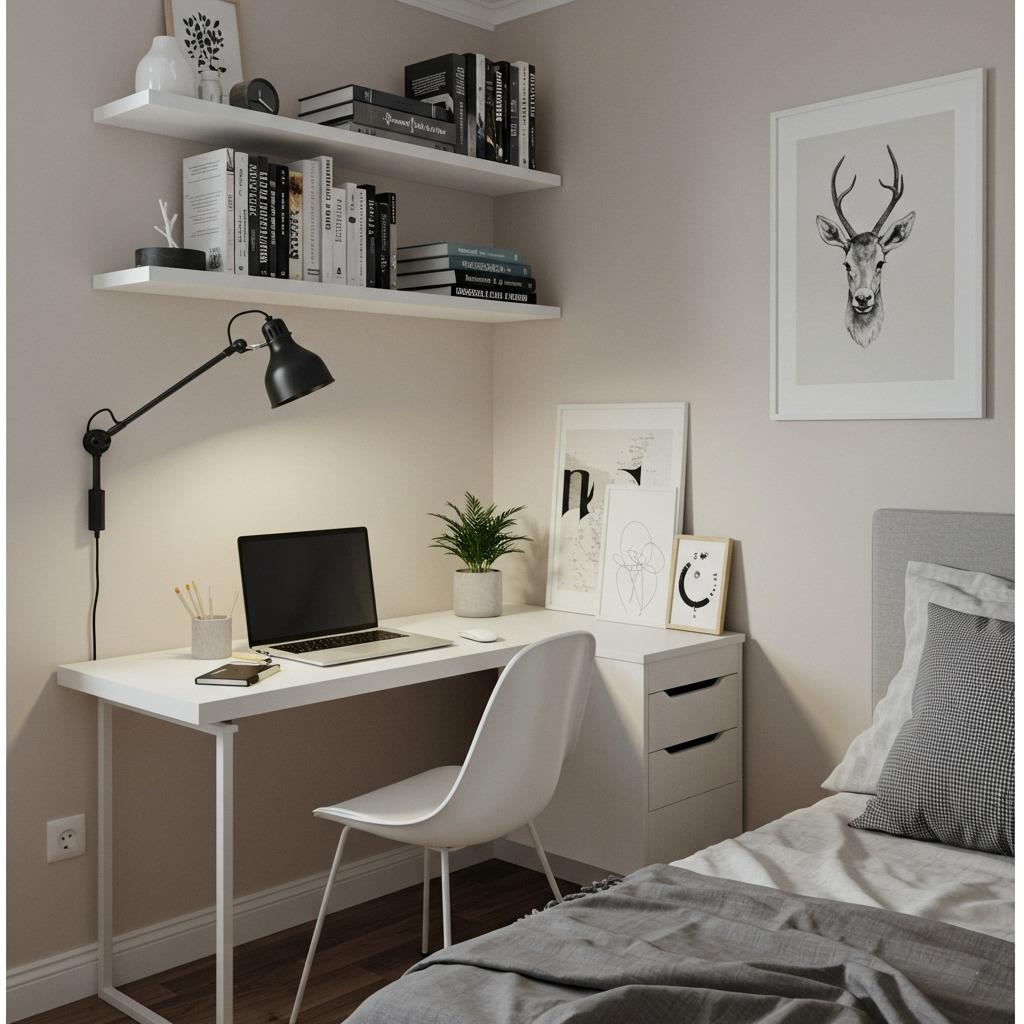
That awkward corner in your bedroom? It’s actually prime real estate for a compact office nook. A corner desk maximizes surface area while minimizing its footprint, and the L-shape naturally creates separation from your sleeping zone.
Add a small bookshelf above the desk and you’ve got ample storage for office supplies and reference materials. Choose a desk with built-in cable management to keep cords hidden and maintain a clean aesthetic. The corner placement also means your back faces the wall when working, reducing distractions.
Lighting matters tremendously here. A swing-arm wall lamp provides focused task lighting without taking up desk space. Pair it with under-shelf LED strips for a professional workspace that doesn’t feel cramped.
5. The Daybed Living Room

Daybeds blur the line between sofa and bed, creating a lounge-worthy spot during waking hours. Dress them with throw pillows and a cozy blanket, and nobody knows it’s where you sleep. This layout works brilliantly in studio apartments or guest rooms that need to function as sitting areas.
Position your daybed against the longest wall and style it like a sofa with decorative cushions arranged along the back. A low coffee table in front completes the living room illusion. When evening comes, simply remove the pillows and pull back the covers.
Choose a daybed with a trundle if you occasionally host overnight guests. The hidden bed slides out when needed and tucks away completely when not in use. It’s the definition of smart bedroom zoning.
6. The Reading Nook Sleep Space
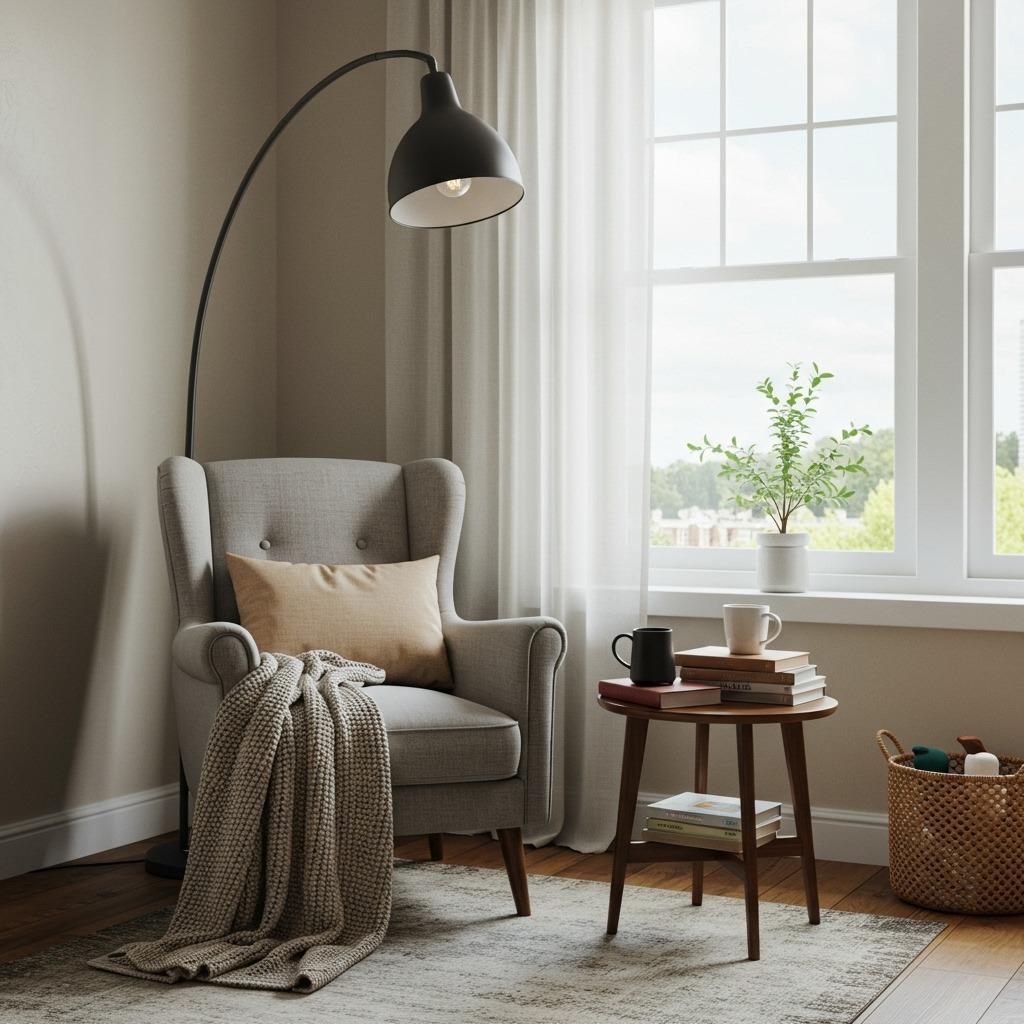
If you’re an avid reader, why not make your bedroom headquarters for your hobby? A comfortable reading chair positioned near a window with good natural light creates a dedicated relaxation zone separate from your bed. Add a floor lamp and a small side table for tea, and you’ve got the perfect retreat.
The trick is choosing a chair that’s genuinely comfortable for extended sitting. Test before you buy if possible. A compact armchair or even a hanging chair can work in tight spaces without overwhelming the room.
Built-in window seats offer another option if your bedroom has the right architecture. Add cushions and storage underneath for books and reading materials. This approach appears frequently in bedroom ideas that prioritize both function and comfort.
7. The Closet Office Conversion
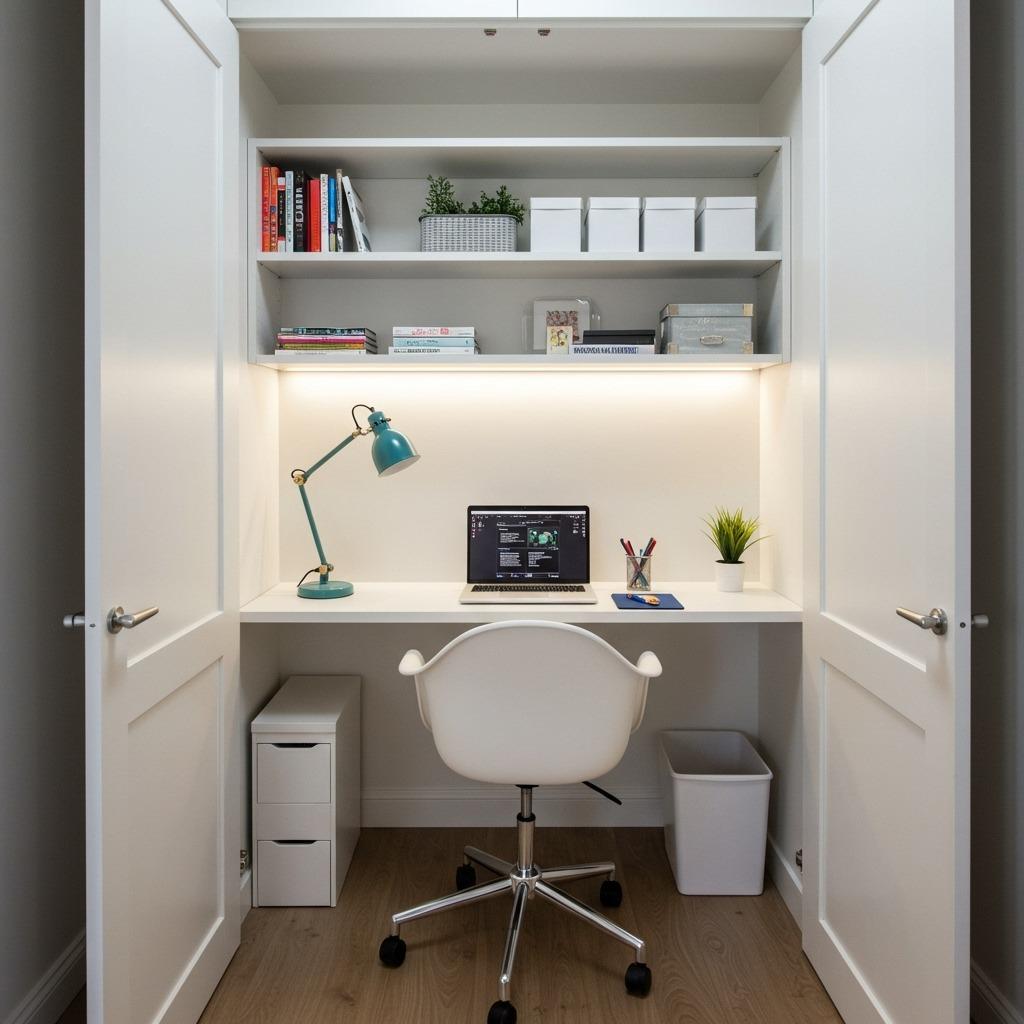
Small closets can become surprisingly functional workspaces. Remove the doors, add a desk surface at the right height, and install shelving above for supplies. Your office completely disappears when you step away, and closing curtains or bifold doors creates instant privacy.
This setup works best with shallow closets (24 inches deep or less). You’ll want to add task lighting since closets typically lack windows. Peel-and-stick wallpaper or a fresh coat of paint makes the space feel intentional rather than improvised.
Cable management is crucial in tight quarters. Run power strips along the back wall and use cable clips to keep everything organized.
8. The Lofted Sleeping Quarters
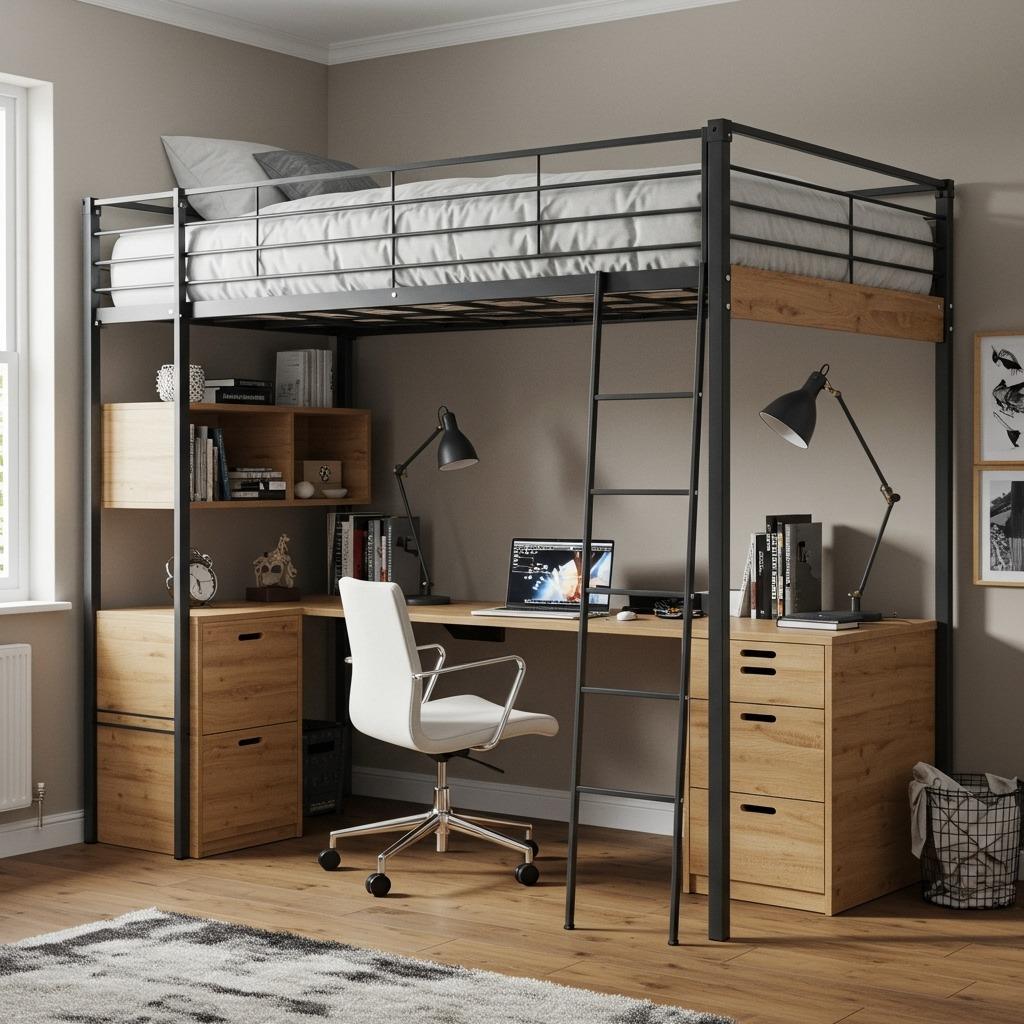
High ceilings unlock vertical possibilities. A lofted bed frame creates an entire room underneath – perfect for a home office, dressing area, or lounge space. This layout literally doubles your usable square footage without expanding your walls.
Adult loft beds look nothing like their college dorm ancestors. Modern designs incorporate sturdy construction, stylish materials, and integrated features like stairs with storage or built-in desks underneath. Just make sure you have at least 33-36 inches of clearance between your mattress and ceiling for comfortable sitting.
The space beneath requires thoughtful planning. Will it be a workspace with a desk? A cozy seating area? A walk-in closet? Decide before purchasing your loft frame since different configurations require different support structures. Similar concepts appear in small space renovation strategies.
9. The Modular Furniture Layout

Modular pieces that reconfigure based on your needs offer ultimate flexibility. A modular sofa can transform into a guest bed, while storage cubes stack and arrange into different configurations as your needs change. Nothing stays permanent, which is perfect for renters or people who enjoy regularly refreshing their space.
Start with a modular bed base that includes integrated storage drawers you can position on either side. Add modular shelving units that serve as both storage and room dividers. The beauty is you’re never locked into one arrangement.
Keep your color palette cohesive across all modular pieces so they look intentional together regardless of configuration. Neutral bases with colorful accent pieces give you flexibility to change the mood without replacing furniture. This adaptable mindset aligns with home improvement ideas focused on long-term functionality.
10. The Exercise and Sleep Combo
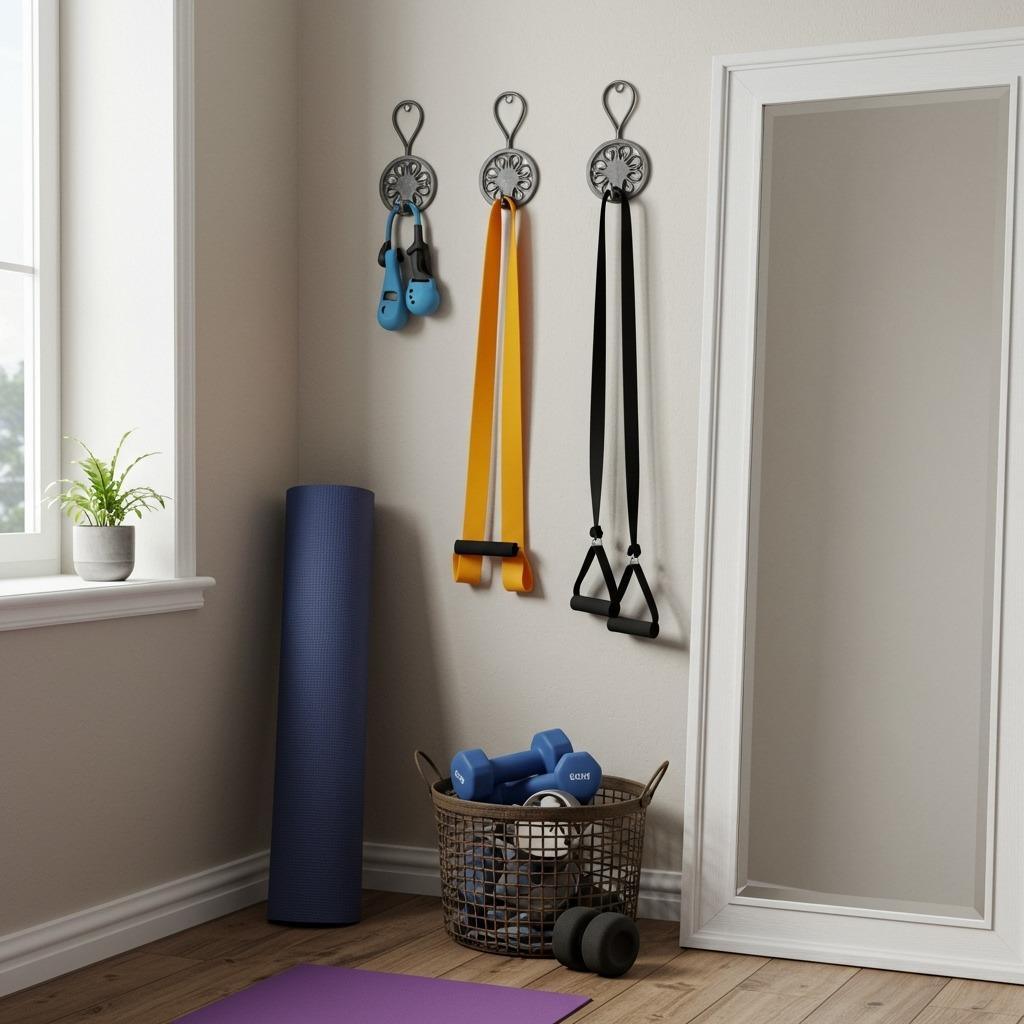
Your bedroom can absolutely accommodate fitness routines without becoming a full gym. A yoga mat stored under the bed, resistance bands hanging on decorative hooks, and a wall-mounted mirror create everything you need for effective workouts. When you’re done, everything tucks away.
Wall-mounted fold-down equipment takes this further. Fold-down weight racks, pull-up bars, or even compact treadmills exist that practically disappear when not in use. The key is choosing equipment that stores vertically since floor space is typically at a premium in bedrooms.
Keep a designated basket or bin for smaller equipment like weights, yoga blocks, and foam rollers. When workout time arrives, pull out the bin and you’re ready to go. This organized approach prevents exercise equipment from becoming permanent bedroom clutter.
11. The Craft Station Bedroom
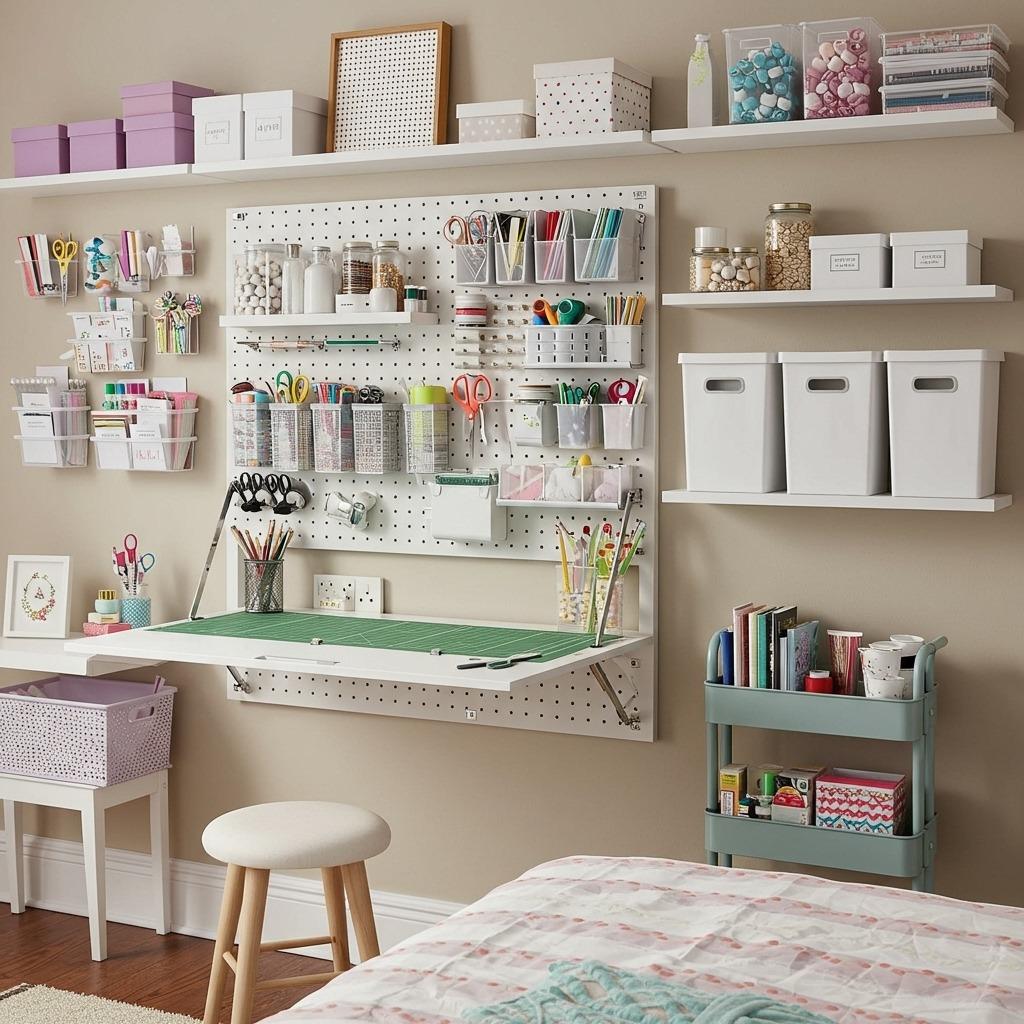
Creative hobbies need dedicated space, but craft rooms feel like a luxury most people can’t afford. A fold-down craft table mounted to the wall provides ample work surface when needed and vanishes when you’re done. Pair it with a rolling cart for supplies that slides under your bed or into a closet.
Vertical storage becomes your best friend. Pegboards organize tools and supplies visually while keeping everything accessible. Clear bins on shelving let you see what you have without digging through boxes. Label everything to maintain organization long-term.
Consider your hobby’s specific needs. Sewing requires good lighting and a solid surface. Painting needs ventilation and protection from spills. Model building demands precision and bright light. Design your multifunctional bedroom layouts around these requirements rather than forcing hobbies into spaces that don’t support them.
12. The Guest Ready Layout
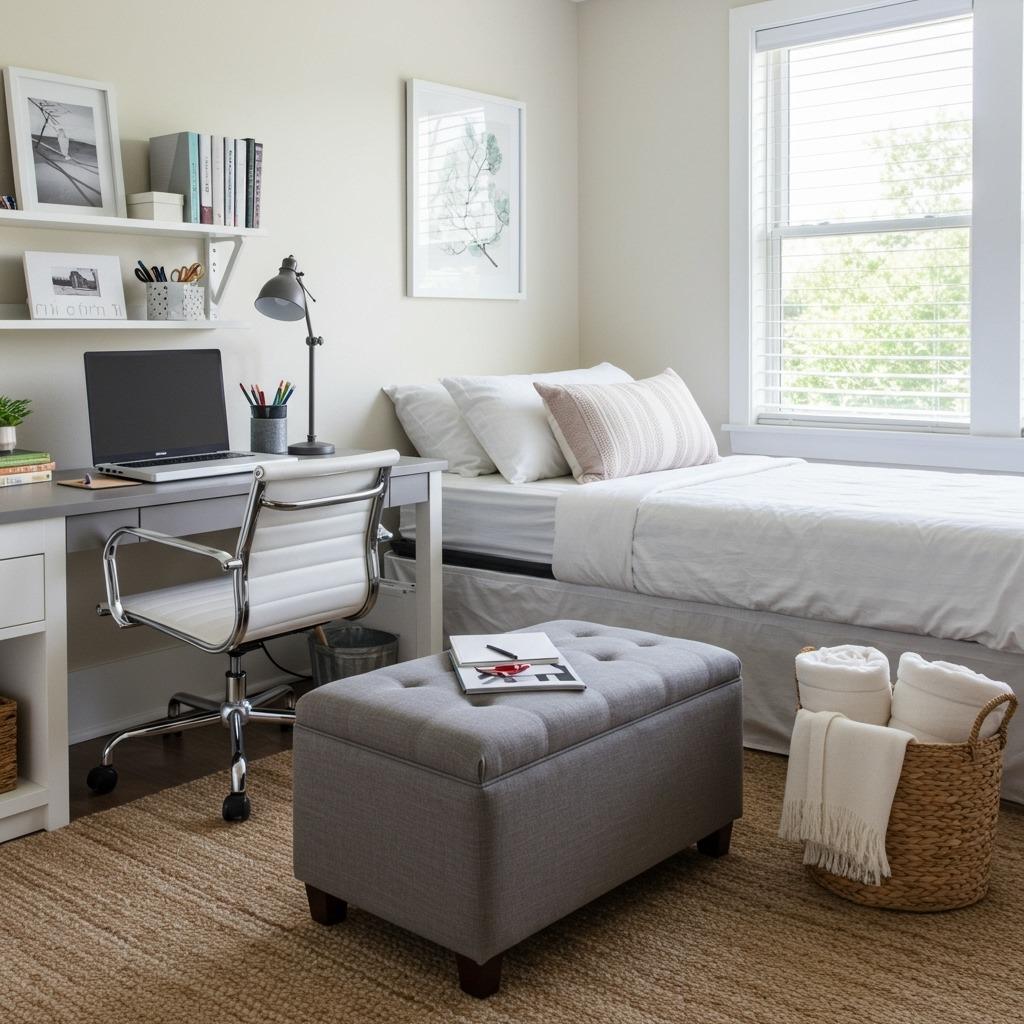
Spare bedrooms often sit empty most of the year, but that doesn’t mean they should. Set up the space as a home office or hobby room in its default state, with a quality air mattress or fold-out ottoman bed stored nearby for when visitors arrive. You get daily use from the space without sacrificing guest readiness.
Choose furniture with dual purpose in mind. An ottoman that opens for storage and converts to a bed serves multiple functions. A desk that clears easily for guest use works better than one piled with permanent fixtures. Keep guest bedding in a decorative basket that looks intentional even when visible.
Think through the guest experience. Clear a closet shelf or add a luggage rack for their belongings. Stock a basket with travel-size toiletries and fresh towels. These thoughtful touches make occasional guests comfortable without dominating your daily layout. Many of these concepts overlap with affordable home upgrades that enhance functionality.
13. The Media Center Sleep Space

Entertainment spaces and bedrooms don’t have to be separate. A wall-mounted TV with concealed cable management keeps screens from dominating the aesthetic. Add comfortable floor cushions or a compact loveseat at the foot of your bed for dedicated viewing that doesn’t require sitting in bed.
Built-in media storage keeps devices, remotes, and accessories organized without cluttering surfaces. Floating shelves on either side of the TV hold books, plants, or decorative objects that balance the screen’s presence. The goal is integration, not domination.
Consider soundproofing if your bedroom shares walls with other living spaces. Sound-dampening curtains, area rugs, and even acoustic panels disguised as art reduce noise bleed. Smart lighting that dims automatically for movie watching enhances the experience without requiring manual adjustment.
14. The Pet-Friendly Bedroom Layout
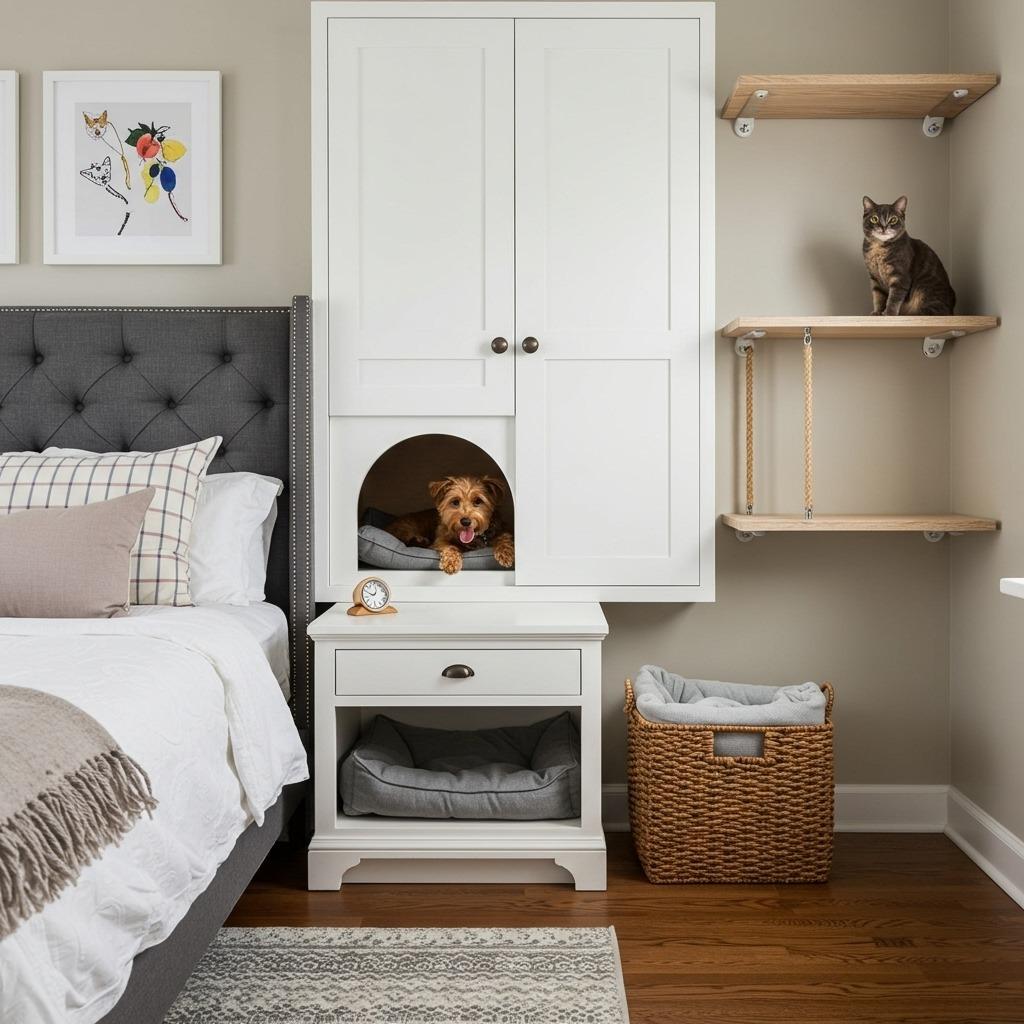
Pet parents know animals need their own spaces too. Built-in pet beds under nightstands or window seats give pets defined spots without adding floor clutter. Wall-mounted feeding stations keep bowls accessible but elevated, and dedicated toy storage prevents scattered chaos.
Consider your pet’s specific needs when planning. Cats benefit from vertical climbing spaces integrated into shelving. Dogs appreciate easy-to-clean washable rugs that define their sleeping zones. Small animals might need dedicated enclosure areas that don’t dominate the room visually.
Furniture choices matter when pets share your bedroom. Leather and microfiber resist pet hair better than textured fabrics. Washable slipcovers on chairs protect underlying upholstery. These practical choices let you maintain style while accommodating your furry family members. This practical approach mirrors strategies found in smart home improvement planning.
15. The Study and Sleep Sanctuary
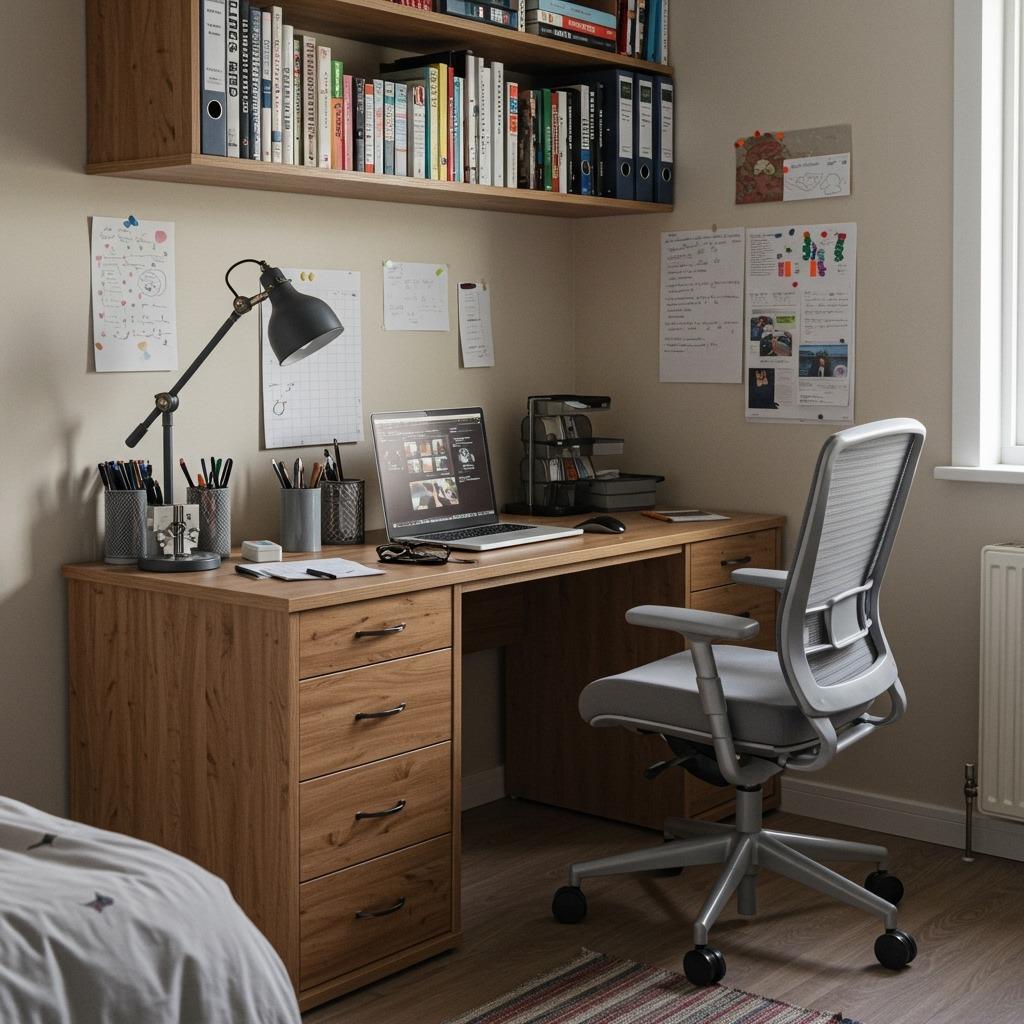
Students and lifelong learners need serious study space, but bedrooms often lack dedicated areas. A full-size desk positioned near natural light becomes command central for focused work. Add a comfortable desk chair that supports long study sessions, and organize supplies in drawer systems that keep distractions at bay.
Create physical separation between study and sleep zones using area rugs, different paint colors, or even a partial room divider. This matters more than you might think for sleep quality. Your brain needs clear signals that certain areas are for certain activities.
Noise control becomes critical if you share living space with others. Noise-cancelling headphones, white noise machines, or even a small fountain can mask disruptive sounds during study time. Blackout curtains help both with screen glare during the day and quality sleep at night. These environments benefit from principles discussed in colorful minimalist bedroom design.
16. The Dressing Room Bedroom

Why cram clothes into an inadequate closet when your bedroom could become a boutique-style dressing room? Open clothing racks, styled shelving, and a full-length mirror turn getting ready into an experience. This works especially well in bedrooms with generous wall space but limited closet storage.
Organize clothing by type and color for a visually pleasing display that functions like a store. Add a comfortable seating area for putting on shoes or planning outfits. Good lighting matters tremendously – install bright overhead lighting for practical dressing and softer ambient lighting for relaxation.
Storage solutions need to work hard here. Drawer systems for folded items, hooks for accessories, and clear shoe boxes maintain organization without visual chaos. A rolling garment rack can hold next week’s outfits or provide temporary storage during seasonal wardrobe swaps.
17. The Minimalist Multi-Zone Layout
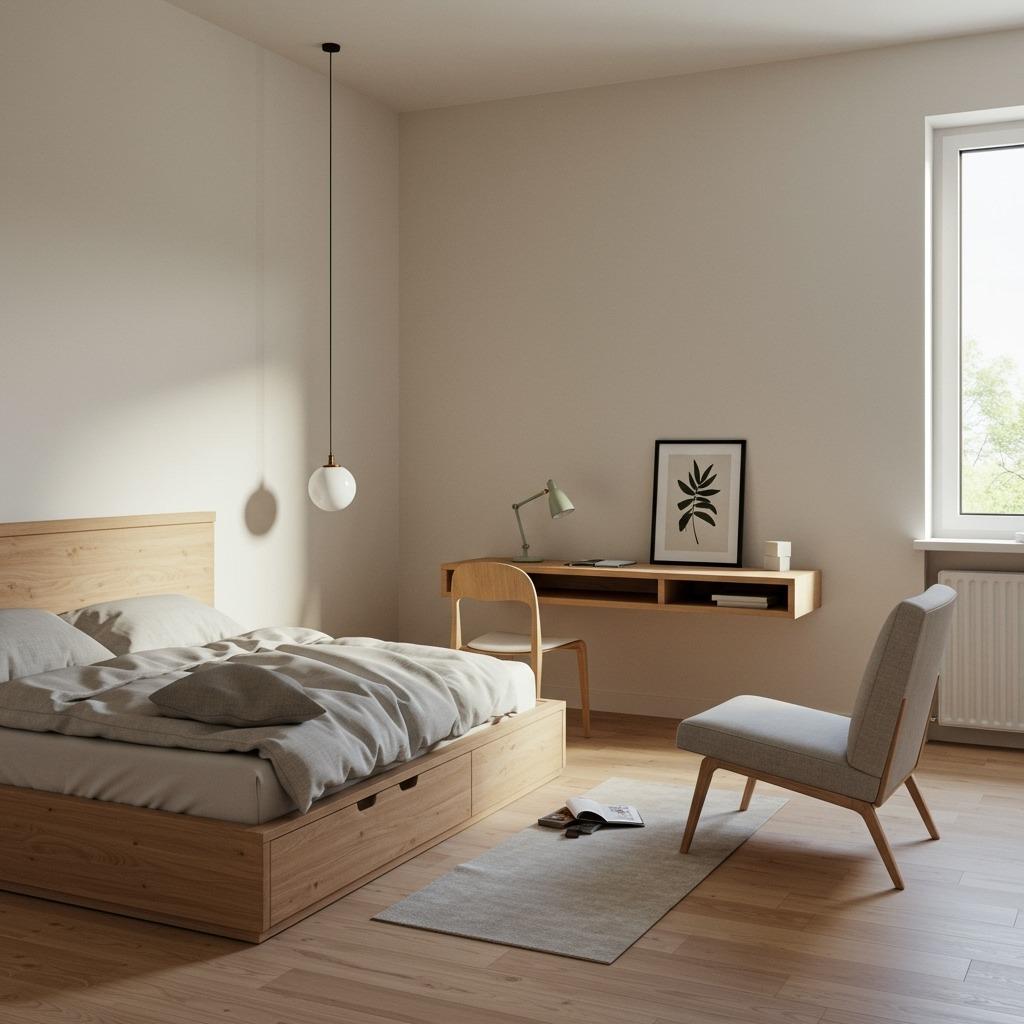
Sometimes less truly is more. A minimalist approach to multifunctional bedroom layouts focuses on fewer, higher-quality pieces that serve multiple purposes flawlessly. A bed with integrated storage, a single desk that folds away, and perhaps one accent chair create all the zones you need without overcrowding.
The minimalist mindset requires ruthless editing. Each item must earn its place by serving a genuine function. Decorative elements should be meaningful rather than space-filling. This discipline results in rooms that feel larger and calmer than their actual dimensions.
Choose a neutral color palette with one or two accent colors maximum. This creates visual continuity that makes distinct zones feel cohesive rather than choppy. Natural materials like wood, linen, and ceramic add warmth without visual noise. This philosophy extends beyond bedrooms into comprehensive minimalist bathroom design throughout the home.
Making Your Multifunctional Bedroom Layout Work
The most successful multifunctional bedroom layouts share common traits. They prioritize flexibility over permanence, embrace vertical storage solutions, and maintain clear visual separation between functional zones. The specific layout you choose depends entirely on how you actually use your space daily.
Start by tracking your bedroom activities for a week. How much time do you spend working versus relaxing? Do you exercise in your room or just sleep there? Honest assessment of your real habits beats aspirational planning every time. Design for the life you actually live.
Remember that versatile room design evolves over time. What works today might need adjustment as your circumstances change. Build in flexibility from the start by choosing movable furniture, modular systems, and storage solutions that adapt rather than commit. Your bedroom should serve you, not the other way around.
These layouts prove that multifunctional spaces don’t require sacrificing comfort or style. With thoughtful planning and the right convertible furniture choices, even compact bedrooms can accommodate work, hobbies, guests, and peaceful sleep. The key is intentional smart bedroom zoning that respects each activity’s unique needs while creating a cohesive whole.

