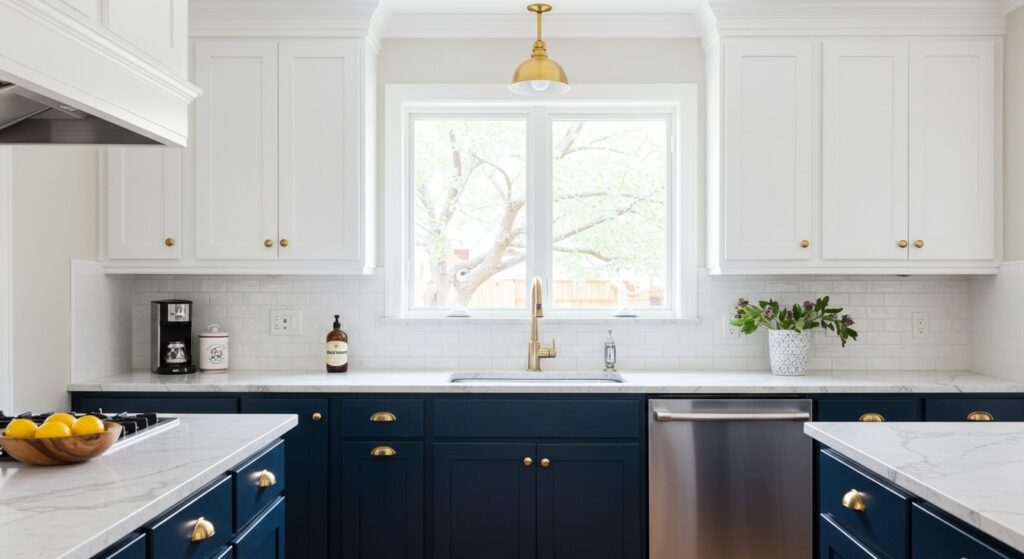

There’s something irresistible about stepping into a kitchen that feels like it’s been loved for decades. Maybe it’s the warm patina of aged brass hardware, or the way vintage canisters lined up on a shelf tell a story without saying a word. Vintage kitchen decor isn’t about recreating a museum – it’s about layering in pieces that bring character, warmth, and a sense of history into a space you use every single day.
The beauty of nostalgic kitchen styling is that it doesn’t demand perfection. A chipped enamel colander becomes a conversation piece. Mismatched china suddenly makes sense. You’re not following strict rules here; you’re curating a space that feels both collected and comfortable. Whether you’re working with a full kitchen renovation or just want to sprinkle in some retro kitchen accents, these ideas will help you strike that perfect balance between old-world charm and modern livability.
What I love most about this approach? You can start small. One vintage bread box or a set of glass canisters can shift the entire mood of your kitchen. Let’s explore how to bring that timeless appeal into your space without it feeling dated or overly themed.
1. Start with a Vintage-Inspired Color Palette

The colors you choose set the entire tone for your vintage kitchen decor. Think beyond stark white and consider the soft, muted hues that were popular in kitchens from the 1920s through the 1960s. Creamy whites, buttery yellows, mint greens, and robin’s egg blue all evoke that nostalgic feeling without overwhelming your space.
These colors work beautifully on cabinets, especially if you’re painting existing ones. A soft sage green on lower cabinets paired with cream uppers creates instant old-fashioned kitchen styling that feels fresh, not fussy. If painting cabinets feels like too much commitment, try these shades on your walls or even as an accent inside open shelving.
Don’t be afraid to mix in deeper tones like burgundy or navy through textiles and accessories. A vintage kitchen can handle richer colors when they’re used sparingly – think dish towels, a runner rug, or the interior of a glass-front cabinet. The key is keeping your base palette soft and letting bolder shades act as supporting players.
2. Hunt for Authentic Vintage Appliances
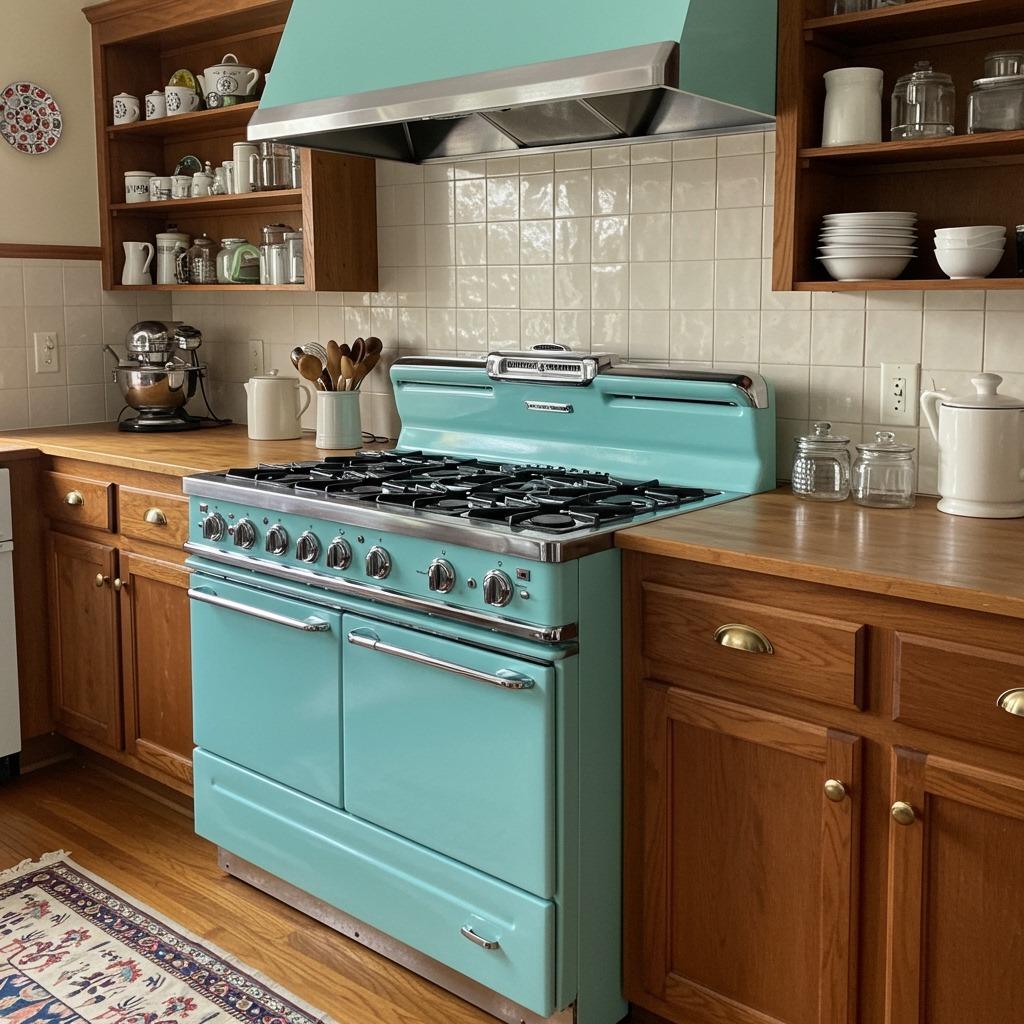
Nothing anchors a nostalgic kitchen quite like a genuine vintage appliance. A restored O’Keefe & Merritt stove or a Chambers range becomes the showstopping focal point that everything else revolves around. These pieces aren’t just beautiful – many still function beautifully and cook with the kind of even heat that modern appliances struggle to match.
If a full vintage stove isn’t in the cards, smaller appliances pack plenty of charm. Look for vintage Sunbeam mixers, Pyrex percolators, or chrome toasters from the 1950s. Even if they don’t work anymore, they make gorgeous display pieces that add authenticity to your kitchen and dining ideas. I’ve found some of my best pieces at estate sales and antique malls, often for less than modern “vintage-style” reproductions.
Refrigerators deserve special mention. Companies like Big Chill and Smeg make modern refrigerators with vintage silhouettes in gorgeous retro colors. Yes, they’re an investment, but they provide the vintage aesthetic while giving you contemporary cooling technology and energy efficiency. Sometimes reproduction beats restoration, especially for major appliances you rely on daily.
3. Install Open Shelving with Vintage Dishes

Open shelving and vintage kitchen decor are natural partners. There’s something deeply satisfying about displaying your collection of Fire-King jadite bowls, Pyrex mixing bowls, or vintage Fiestaware where you can see and use them daily. Open shelves transform your dishes from hidden necessities into decorative elements that define your kitchen’s personality.
The practical side? You’ll actually use these pieces more when they’re visible and accessible. I’m much more likely to reach for my grandmother’s mixing bowl when it’s sitting on a shelf than when it’s tucked in the back of a cabinet. Plus, the ever-changing arrangement of dishes, glasses, and serving pieces keeps your kitchen from feeling too static or staged.
When installing open shelving, consider reclaimed wood or simple brackets that don’t compete with what you’re displaying. The shelves themselves should fade into the background. Mix in a few modern pieces to keep things from feeling too precious – your everyday coffee mugs can sit right next to that vintage creamer set. For more kitchen storage ideas, check out these kitchen island ideas that blend function with style.
4. Add a Farmhouse Sink

Few elements say “vintage kitchen” quite like a deep farmhouse sink. These apron-front sinks were kitchen workhorses for generations, and they’re having a major moment in modern kitchen design. The generous basin size is genuinely practical – you can fit oversized pots and baking sheets without awkward maneuvering.
Look for authentic cast iron sinks with their original porcelain coating if you want true vintage character. The slight imperfections and age patina tell a story. Or opt for a new fireclay farmhouse sink that gives you the look with a fresh start. Either way, pair it with a bridge-style faucet or wall-mounted tap for maximum vintage impact.
The area around your sink offers prime real estate for retro kitchen accents. A vintage draining board, a collection of old dish soaps in glass bottles, or a simple cotton towel on a brass hook all contribute to the overall nostalgic feel. This is also where you might display a vintage soap dispenser or a ceramic sponge holder from the 1950s.
5. Incorporate Vintage Textiles and Linens

Textiles bring softness and pattern to your vintage kitchen in ways hard surfaces simply can’t. Vintage dish towels – especially flour sack towels with their charming prints – add pops of color and nostalgia. Hang them from your oven handle or display them folded on open shelves. The worn, soft quality of authentic vintage linens gives them a comfort that new items lack.
Table linens deserve attention too. A vintage tablecloth with hand-embroidered details or a cheerful 1950s print transforms your kitchen table from functional to memorable. Layer a vintage runner over a solid cloth, or use vintage napkins as unexpected decor on floating shelves. These pieces were made to be used and washed repeatedly, so don’t baby them.
Window treatments offer another opportunity for old-fashioned kitchen styling. Cafe curtains in gingham or vintage-inspired prints filter light beautifully while maintaining privacy. Or consider vintage valances – those gathered fabric toppers were kitchen staples for decades. If you find authentic vintage curtains, they’re usually easy to adapt to modern windows with simple hemming.
6. Display Collections Intentionally
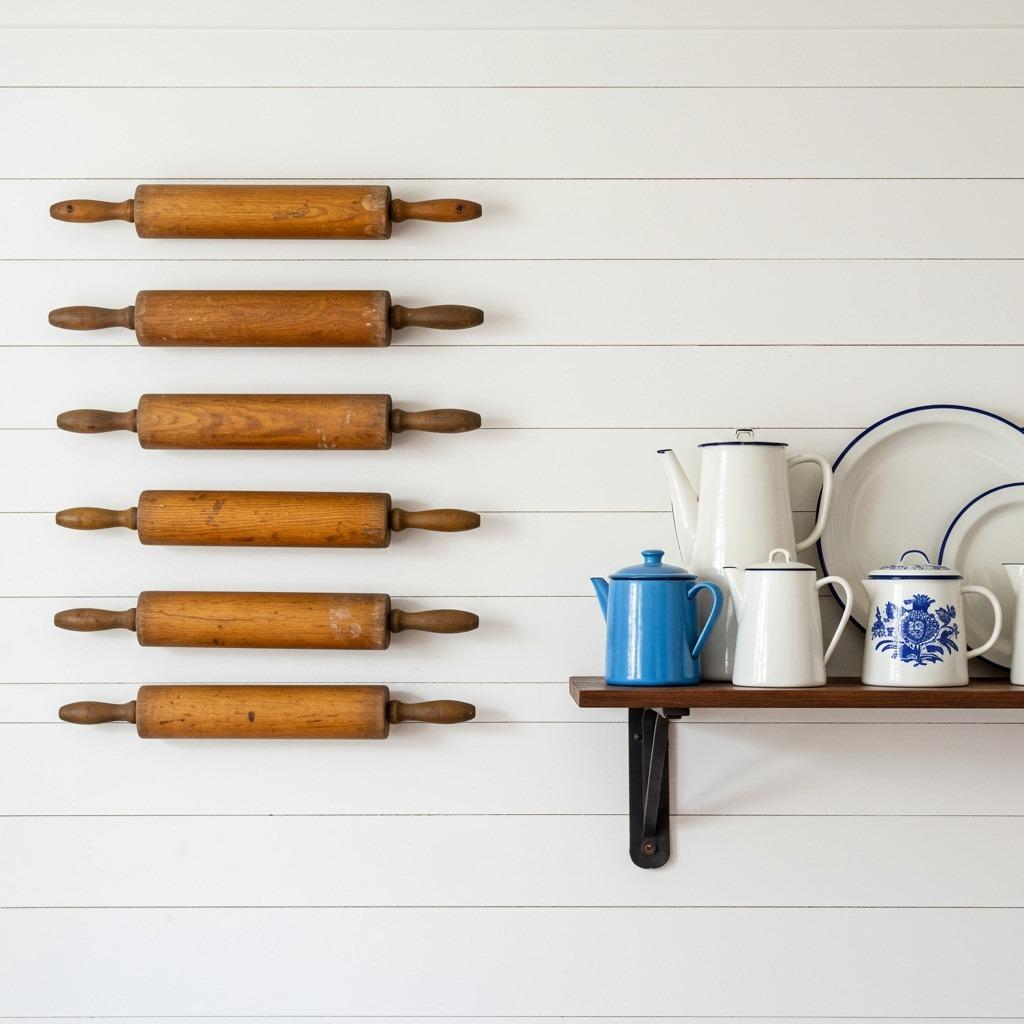
Vintage kitchens beg for collections. Whether it’s rolling pins, enamelware, cookie jars, or vintage advertising signs, grouping similar items creates visual impact while celebrating your finds. The trick is displaying them so they feel curated rather than cluttered.
Enamelware makes a particularly stunning collection. The chipped paint and variety of colors – from speckled navy to butter yellow – create visual interest even when pieces are simply lined up on a shelf. Use larger pieces like coffeepots and colanders as standalone statements, while smaller items like measuring cups can be grouped together. The same principle applies to other collectibles – varied heights and sizes keep arrangements dynamic.
Don’t feel pressured to collect everything. Pick one or two categories that genuinely appeal to you and build from there. I’ve seen beautiful vintage kitchens built around nothing more than a collection of vintage cookbooks and another of rolling pins. The focused approach keeps the space from feeling like an antique booth. Similar to farmhouse-style living room decor, less can definitely be more when each piece is meaningful.
7. Choose Vintage-Style Hardware and Fixtures
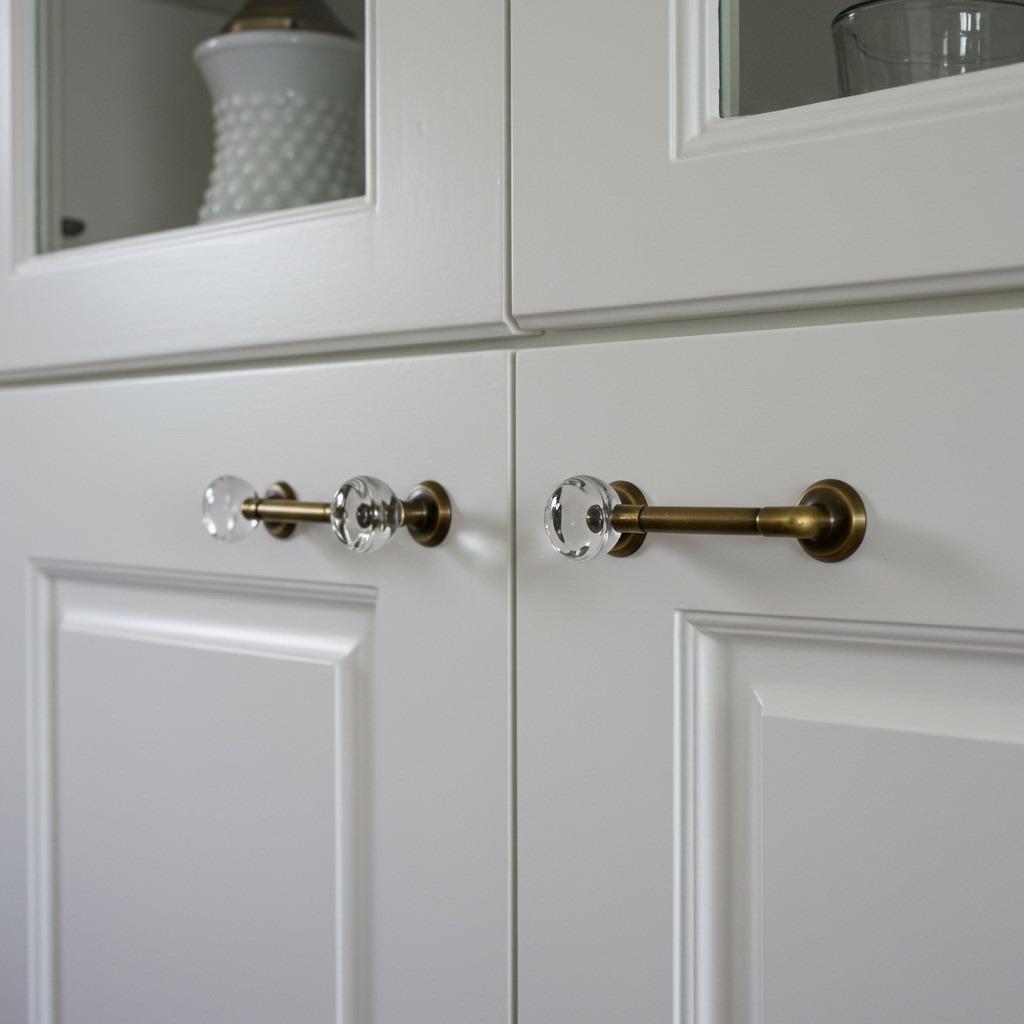
Hardware might seem like a small detail, but vintage-appropriate knobs, pulls, and fixtures make an enormous difference in achieving authentic nostalgic kitchen style. Swapping out modern hardware for glass knobs, bin pulls, or aged brass handles can transform builder-grade cabinets into something with genuine character.
Glass knobs were incredibly popular in kitchens from the 1920s through the 1940s. They came in clear glass, colored glass, and even with decorative patterns. Original vintage glass knobs can be found at architectural salvage shops, though many companies now make excellent reproductions. Pair them with simple bin pulls on drawers for a cohesive look that references different eras.
Don’t forget about light fixtures. Schoolhouse pendants, milk glass shades, and industrial-style fixtures all work beautifully in vintage kitchens. A porcelain pendant light over your sink or a vintage chandelier over your kitchen table adds that finishing touch. The warm glow from vintage-style bulbs enhances the nostalgic atmosphere, especially in the evening.
8. Install Subway Tile or Vintage-Style Backsplash
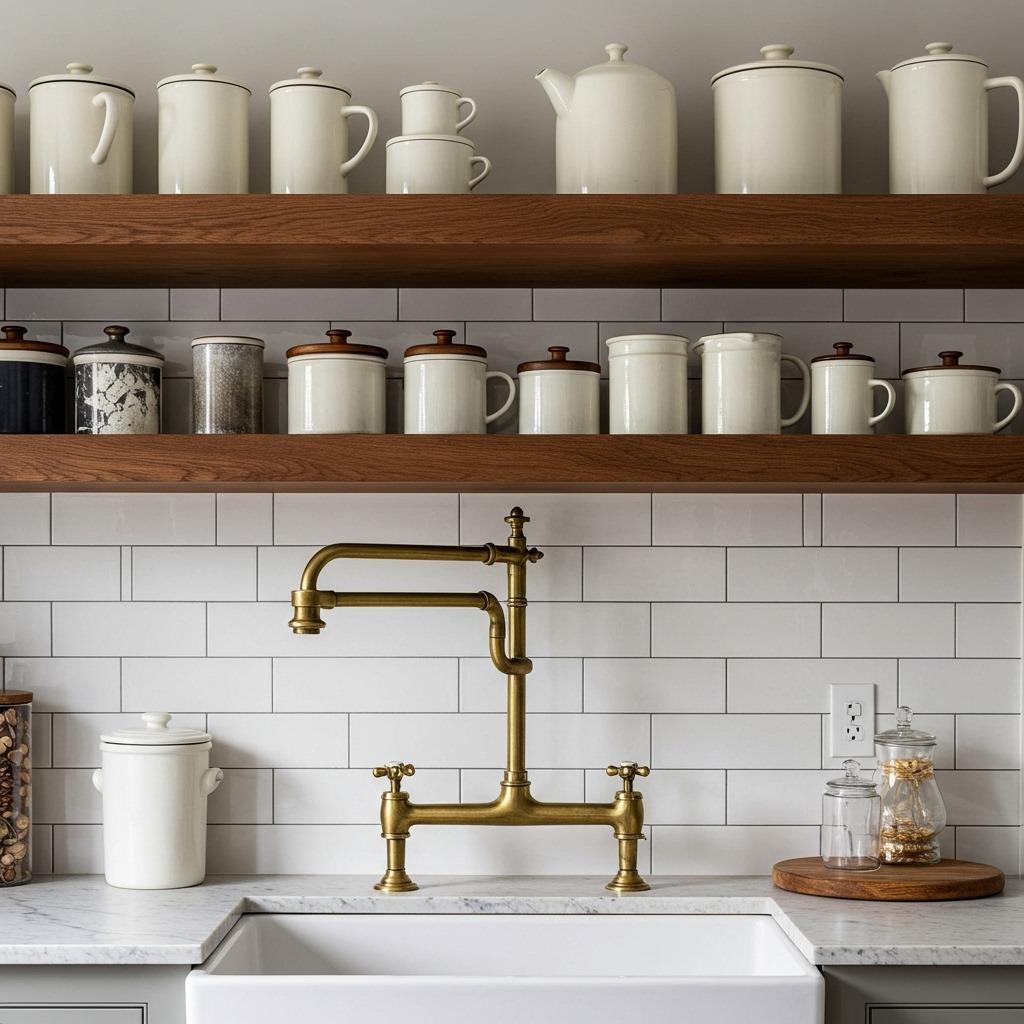
Subway tile has been a kitchen staple since the early 1900s, and it still works beautifully in vintage kitchen decor. The classic 3×6 inch white tile with dark grout creates that timeless look that feels both historic and fresh. If you want something with more personality, consider colored subway tile in mint, yellow, or that perfect vintage pink.
Beyond subway tile, hexagonal floor tiles (often called “penny tiles”) were kitchen favorites in the 1920s and 1930s. Using them as a backsplash creates unexpected visual interest. Or look for vintage-patterned cement tiles that reference Mediterranean or Victorian designs. These busier patterns work especially well as a focal point behind the stove.
Grout color matters more than you might think. Dark grout emphasizes the grid pattern and hides staining better, giving your backsplash that aged, authentic feel. White or cream grout creates a softer, more seamless look. Both work for vintage styles – it just depends on how much contrast you want. For more backsplash inspiration, explore these rustic kitchen backsplash ideas that blend beautifully with vintage elements.
9. Bring in Vintage Seating
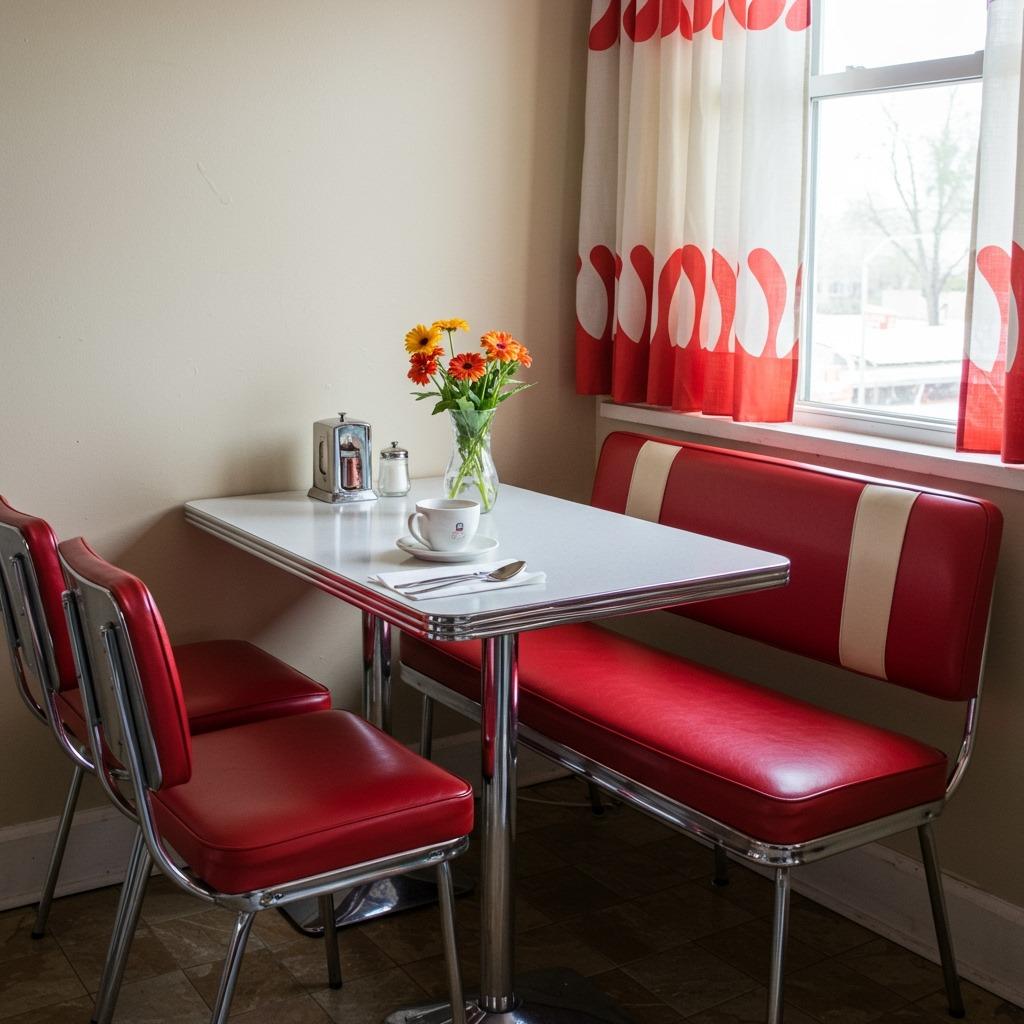
Kitchen seating offers a perfect opportunity to mix in vintage pieces that bring character and comfort. Chrome dinette sets from the 1950s with their vinyl seats and boomerang patterns are iconic retro kitchen accents. A mismatched set of vintage wooden chairs around a farmhouse table creates a collected-over-time feel that’s more interesting than a matched set.
Counter stools deserve special attention if you have a kitchen island or peninsula. Vintage industrial stools with adjustable heights and worn metal finishes add an unexpected edge to sweeter vintage elements. Or look for restored diner stools with their trademark chrome and vinyl – they’re surprisingly comfortable and instantly transport you to another era.
Don’t overlook vintage benches and settees. A small vintage church pew or school bench can tuck under a window or against a wall, providing flexible seating that doubles as a display surface. The key with vintage seating is ensuring it’s actually comfortable and sturdy enough for daily use. Beautiful but wobbly doesn’t work in a kitchen.
10. Create a Vintage Pantry Display
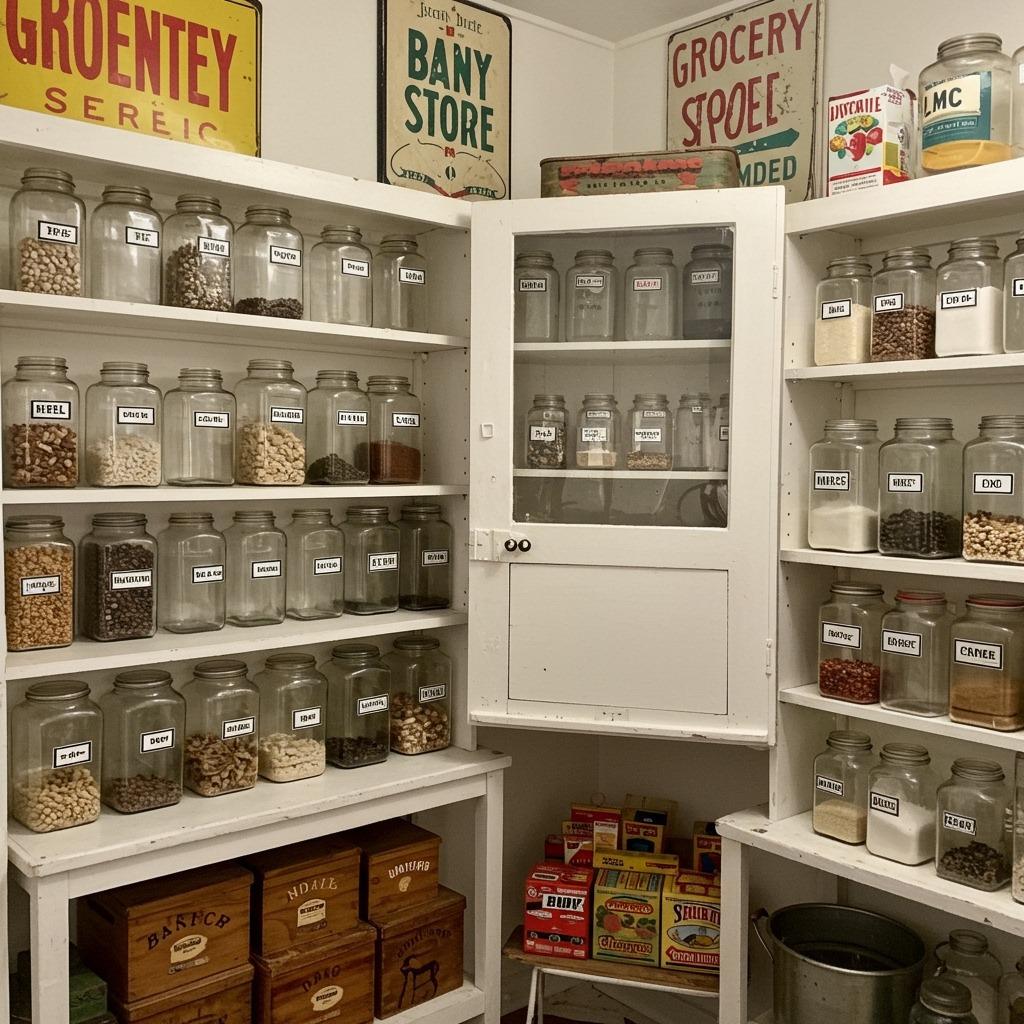
If you have the space, a dedicated pantry area styled with vintage elements becomes both functional storage and visual appeal. Glass canisters with metal lids were pantry staples for generations, and they’re perfect for storing flour, sugar, and other dry goods while keeping them visible. The varying heights and sizes create natural rhythm on pantry shelves.
Consider adding a vintage baker’s rack or Hoosier cabinet if you can find one. These all-in-one storage pieces were the original kitchen organization systems, with flour bins, spice racks, and work surfaces all in one unit. Even if you don’t use every original feature, they provide incredible storage and authentic vintage character. You might find similar organization tips in these smart bathroom storage ideas that translate well to kitchens.
Old grocery store signage, vintage advertising, or retro food packaging can decorate pantry walls and shelves. These graphic elements add color and personality without taking up valuable storage space. Just keep the display edited – you want your pantry to feel abundant but organized, not chaotic.
11. Mix Vintage with Modern Function
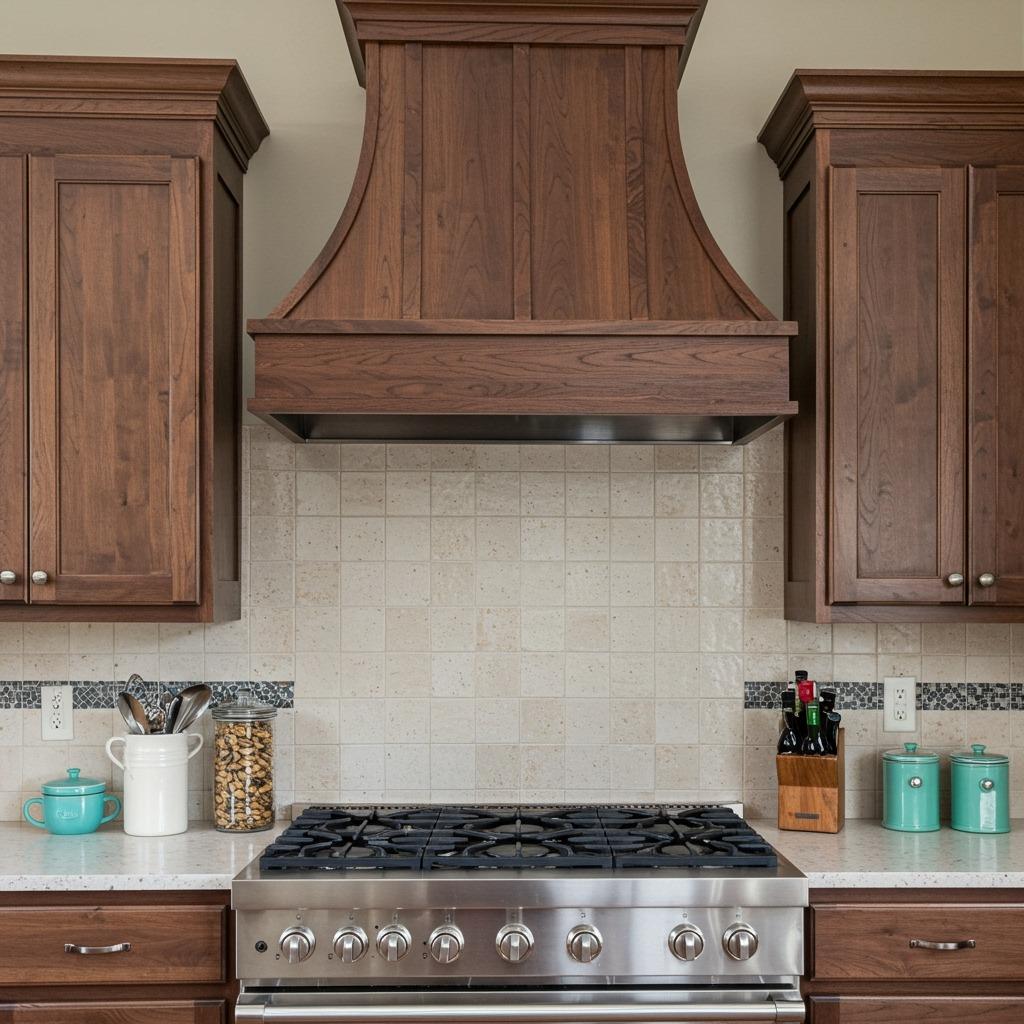
The most successful vintage kitchen decor doesn’t sacrifice modern convenience. Your beautiful vintage aesthetic can coexist perfectly with a contemporary dishwasher, microwave, and induction cooktop. The trick is integrating modern appliances thoughtfully so they don’t disrupt your nostalgic vibe.
Panel your dishwasher to match your cabinetry so it disappears completely. Tuck your microwave into a cabinet or pantry rather than displaying it on the counter. Choose a sleek range hood and then surround it with vintage tile or reclaimed wood to soften the modern lines. The goal is letting modern function happen quietly in the background.
This balanced approach makes your kitchen actually livable for modern life. You get the charm of vintage aesthetics with the ease of contemporary appliances. Nobody wants to hand-wash dishes every night or give up the speed of a microwave, no matter how beautiful their kitchen looks. Smart integration means you never have to choose between style and substance.
12. Add Vintage Rugs and Runners
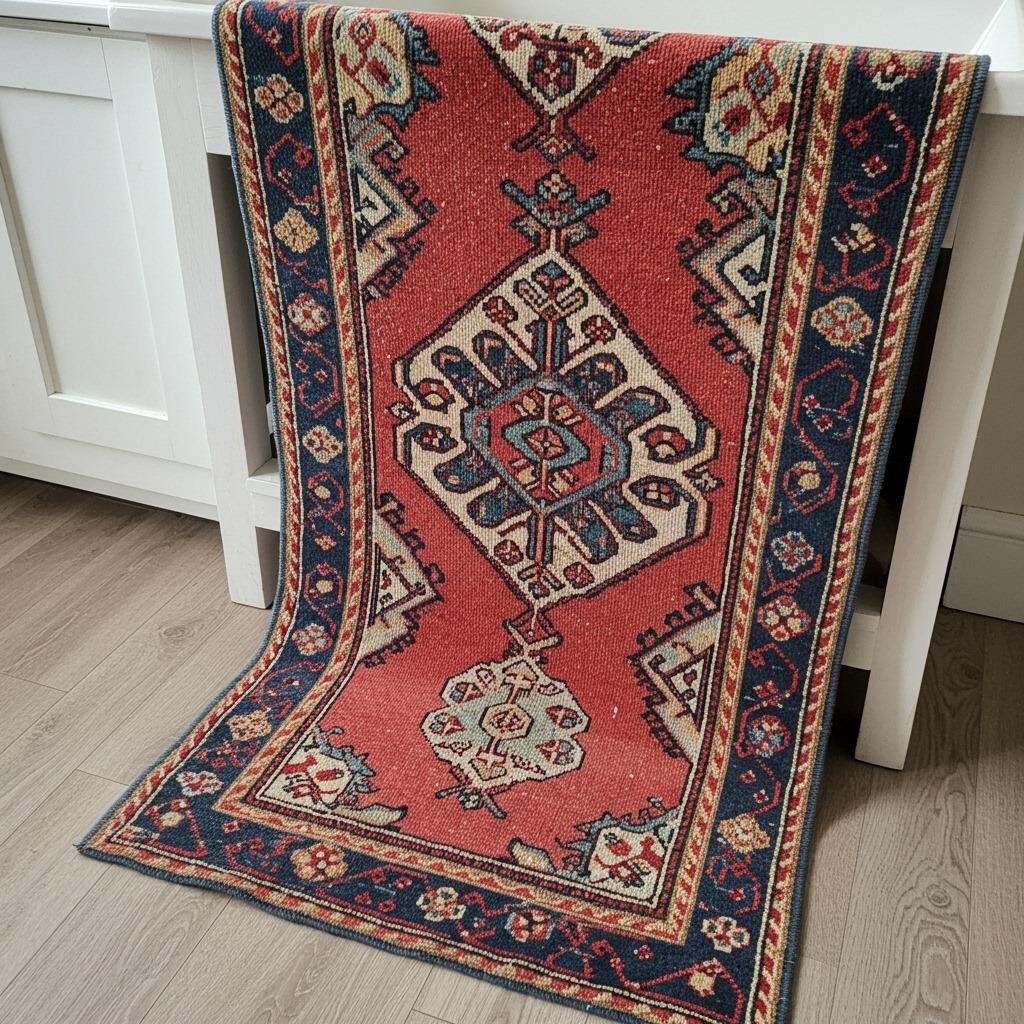
A vintage rug anchors your kitchen and adds warmth underfoot in a way that hard flooring alone can’t achieve. Persian runners, Turkish kilims, or even vintage hooked rugs bring pattern and color while defining different zones in an open kitchen. The beauty of truly vintage textiles is their faded, lived-in quality that instantly makes a space feel established.
Kitchen-specific vintage runners – those long, narrow rugs designed to sit in front of the sink or stove – are particularly practical. They’re often more durable than you’d expect, as they were made for high-traffic areas. Look for tightly woven options that lie flat and won’t shift underfoot. The slight wearing just adds to their authenticity.
Layering works beautifully in kitchens too. A larger neutral rug with a smaller vintage runner on top creates depth and lets you experiment with pattern. This approach also makes it easier to swap things seasonally or when you find a new treasure. Just make sure any rugs in work zones are secured with rug pads to prevent slipping.
13. Style with Vintage Cookware and Utensils

Vintage copper pots, cast iron skillets, and enamel cookware aren’t just decorative – they’re often superior to modern equivalents. Displaying these workhorses where you can see and reach them adds instant nostalgic kitchen character while keeping your favorite tools accessible. A hanging pot rack loaded with copper pans becomes functional art.
Collections of vintage wooden spoons, rolling pins, and whisks can be displayed in ceramic crocks on the counter or hung from hooks. These everyday tools gain visual interest when grouped together, and the patina from decades of use gives them depth that brand-new utensils lack. Plus, many cooks swear that vintage wooden spoons are actually better for certain tasks.
Don’t overlook specialty vintage pieces like flour sifters, egg beaters, or cheese graters. These single-purpose tools from an earlier era have beautiful mechanical details that modern all-in-one gadgets lack. Display them on open shelves or hang them from a vintage-style peg rail. Even if you rarely use them, they contribute to your kitchen’s story.
14. Incorporate Vintage Signage and Advertising
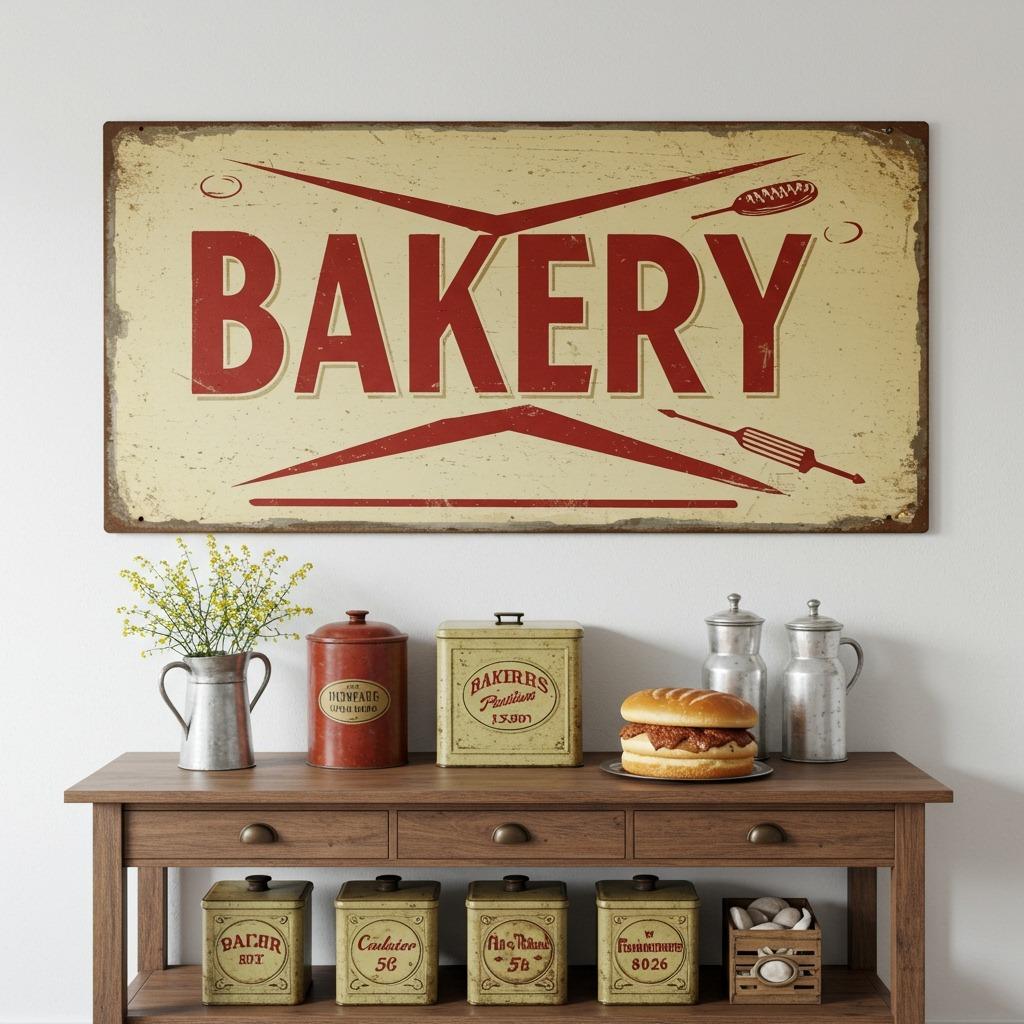
Old advertising signs, vintage grocery store letters, or retro brand logos add graphic punch to vintage kitchen walls. These pieces are conversation starters that reference a specific time and place. A weathered Coca-Cola sign or vintage flour advertisement brings color and nostalgia without requiring valuable counter or shelf space.
The key is not overdoing it – one or two well-chosen signs create impact, while covering every wall feels more like a themed restaurant than a home kitchen. Look for signs that complement your color palette or reference brands you actually use. Authenticity matters here; vintage signs have a warmth and quality that new reproduction signs trying to look old rarely achieve.
Consider three-dimensional advertising pieces too. Vintage metal bread boxes with bakery logos, old tin canisters from tea or coffee companies, or branded storage containers serve double duty as both storage and decor. These functional pieces integrate seamlessly into your kitchen while adding that collector’s touch.
15. Create Vintage Vignettes Throughout
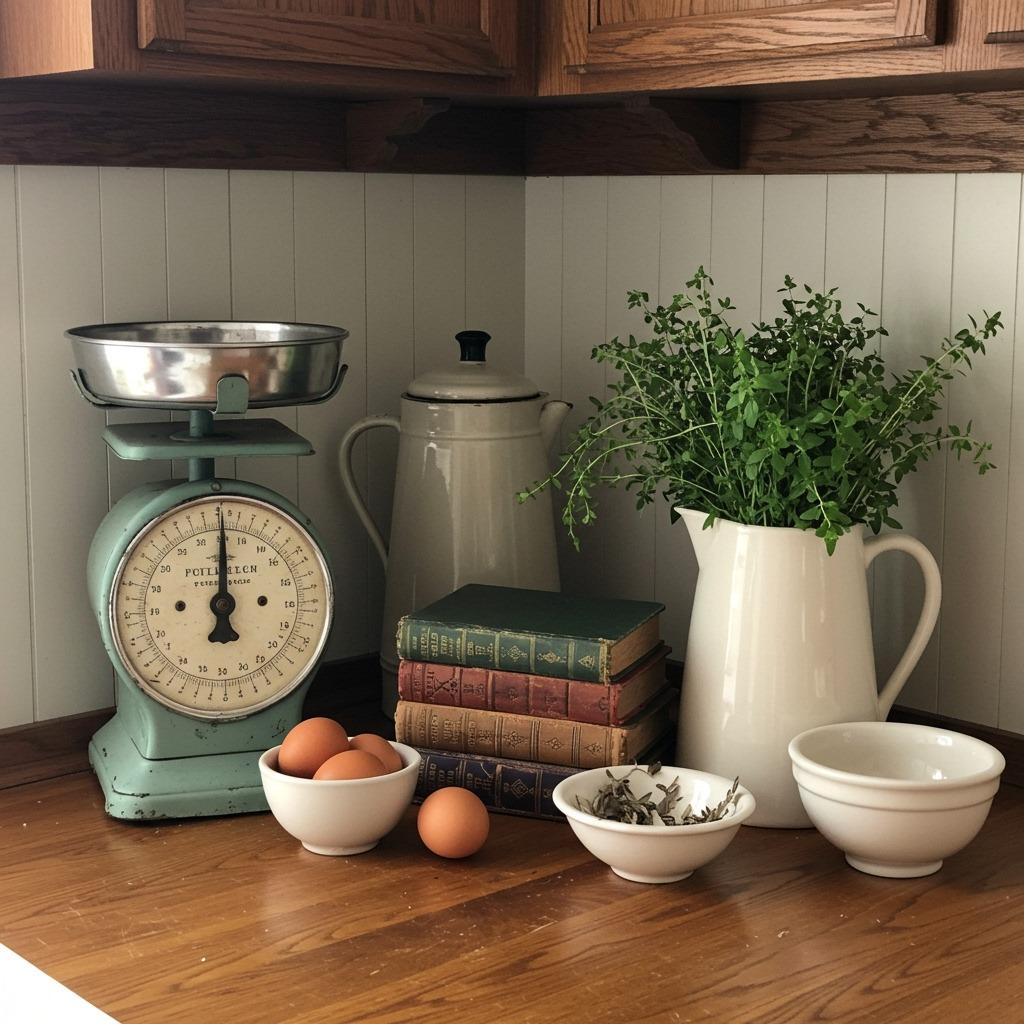
The magic of vintage kitchen decor often lives in small, carefully composed moments throughout the space. A vintage scale with a bowl of lemons on top. A stack of vintage cookbooks tied with twine next to a ceramic pitcher holding wooden spoons. These little vignettes catch your eye and make your kitchen feel curated rather than decorated.
Think about the spots where your eye naturally lands – the end of a counter, a corner of open shelving, the top of the refrigerator if it’s visible. These are prime real estate for vintage styling. Vary the heights within each vignette using books, small risers, or turned-over bowls. This creates visual interest and prevents the flat, lined-up look that reads as boring.
Switch these arrangements seasonally or when you find new pieces. Part of the joy of vintage decorating is the ongoing hunt and the way your space evolves as you add to your collections. What starts as a simple cutting board and vintage cookbook might grow into a full shelf of culinary treasures over time. Similar to minimalist kitchen decor, knowing when to edit is just as important as knowing what to add.
Blending Old and New in Your Vintage Kitchen
Creating a vintage kitchen doesn’t mean completely abandoning modern life or design. The most successful spaces honor the past while functioning beautifully for how we actually cook and live today. Maybe that means pairing your vintage stove with a contemporary range hood, or displaying your vintage dishes on modern floating shelves.
What draws us to vintage aesthetics isn’t just the look – it’s the feeling of permanence and quality. These were items made to last, to be used daily and passed down. When you choose vintage pieces for your kitchen, you’re not just decorating; you’re preserving history and rejecting the disposable culture that dominates so much of modern life.
Start with what speaks to you personally. Maybe you inherited your grandmother’s mixing bowls, or you’ve always loved the look of 1950s dinettes. Build your vintage kitchen around those elements that have genuine meaning rather than following someone else’s vision of what “vintage” should look like. The most beautiful nostalgic kitchens feel personal, collected, and wholly unique to the people who use them every day.
Your kitchen tells a story. Why not make it a good one?