

There’s something magnetic about a mid-century modern living room that pulls you in. Maybe it’s the clean lines that somehow feel both nostalgic and fresh. Or perhaps it’s the way these spaces balance form with function in a way that still works decades later.
I’ve spent years admiring (okay, obsessing over) these retro spaces, and what strikes me most is how they never try too hard. The beauty lies in simplicity. A well-placed credenza, the right chair, warm wood tones against white walls – suddenly you’ve got a room that feels both collected and effortless.
Whether you’re starting from scratch or refreshing your current space, creating a vintage lounge vibe doesn’t mean turning your home into a museum. It’s about capturing that mid-century spirit while keeping things livable for today.
What Makes a Living Room Feel Mid-Century Modern?
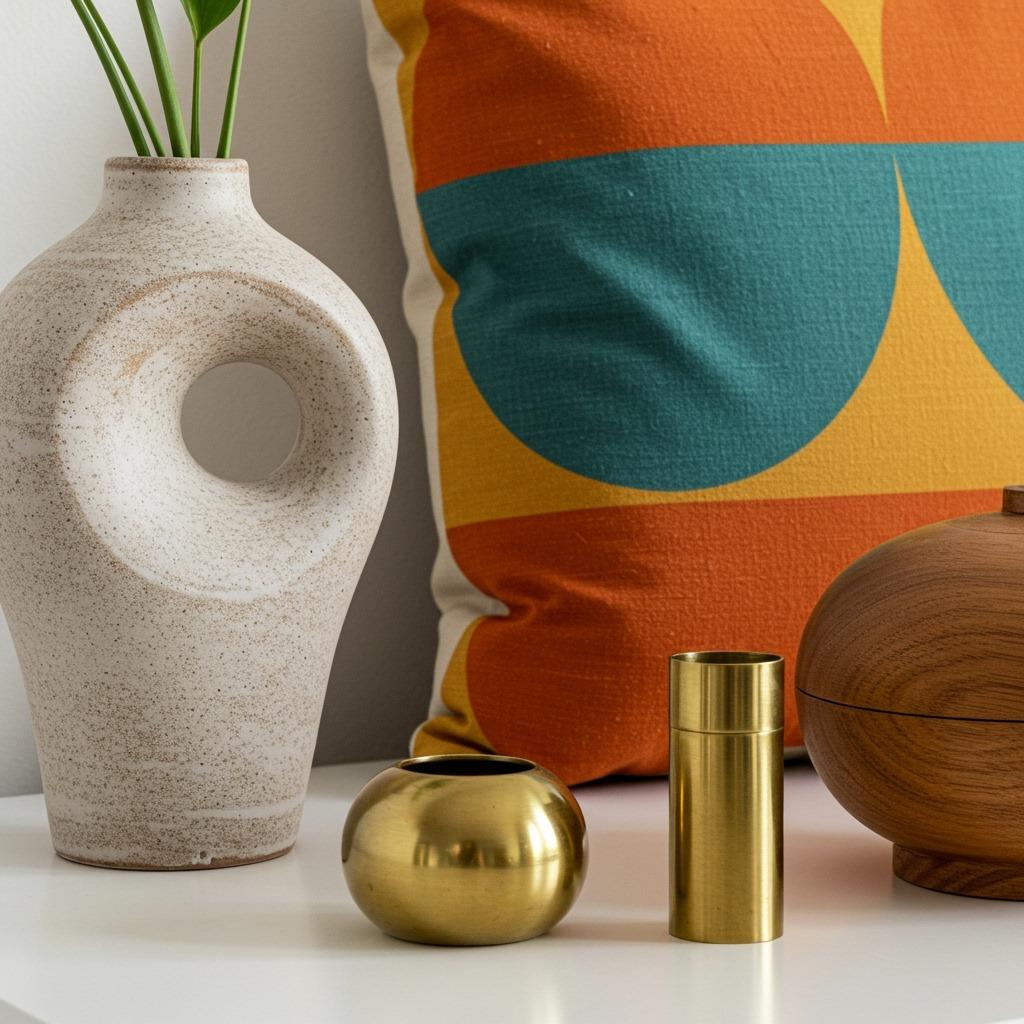
The soul of a mid-century modern living room lives in its honest materials and purposeful design. Think about the 1950s and 60s – designers like Eames, Saarinen, and Wegner weren’t just making furniture. They were reimagining how we live.
These spaces celebrate wood, leather, glass, and metal without hiding their true nature. A teak sideboard shows off its grain patterns. Chrome legs gleam without apology. There’s a transparency to the design philosophy that feels refreshing, even now.
What really defines this style is the marriage of organic and geometric forms. You’ll see kidney-shaped coffee tables next to angular sofas. Sculptural pendant lights hang above streamlined credenzas. This interplay creates visual interest without cluttering the space.
1. Start With the Right Color Palette
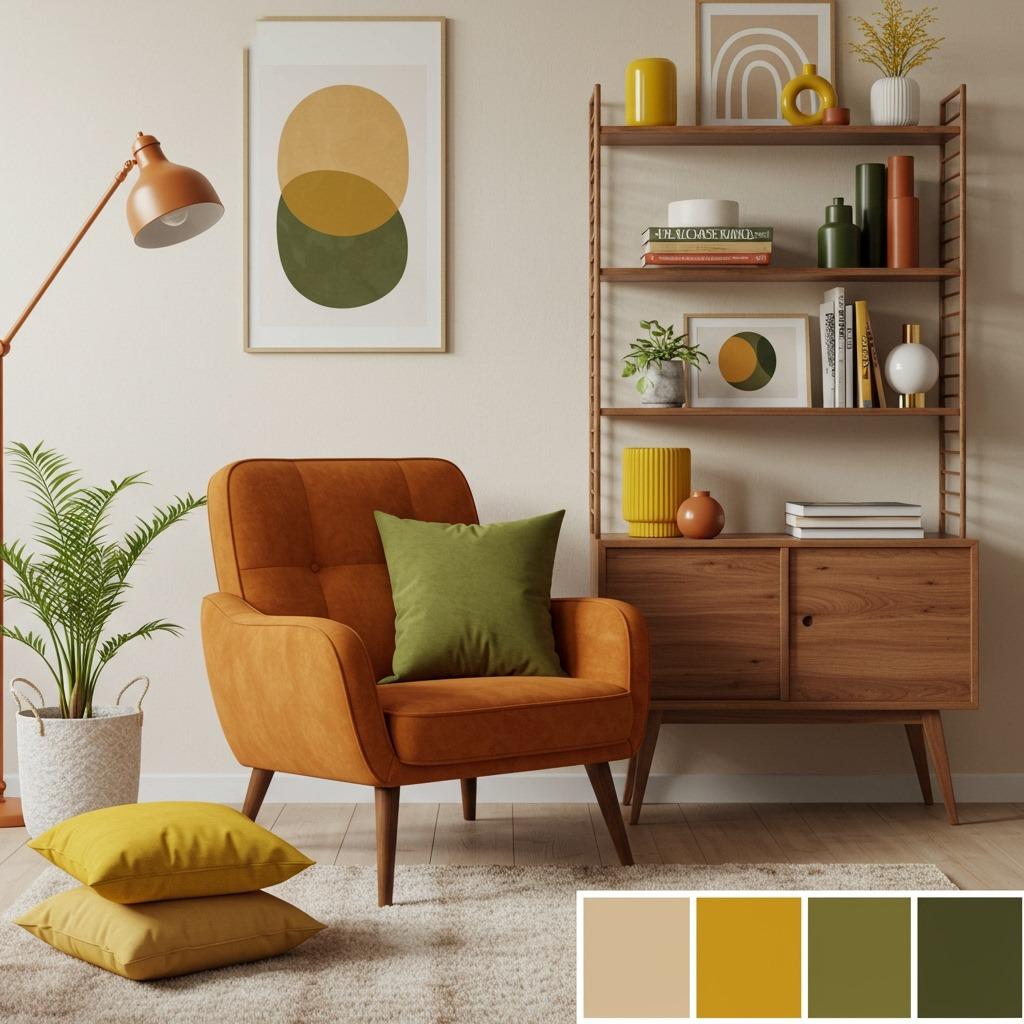
Mid-century color schemes walk a beautiful line between bold and sophisticated. The base typically stays neutral – think warm whites, soft grays, or even bold accent walls in burnt orange or avocado green.
I’m always drawn to how these spaces use color strategically rather than everywhere. A mustard yellow armchair becomes the room’s focal point. A teal accent wall draws your eye without overwhelming. The restraint makes each color choice feel intentional.
Don’t shy away from earthy tones either. Caramel browns, rust oranges, and olive greens bring that vintage warmth that defines the era. Pair these with crisp whites and natural wood tones for balance. If you’re looking for more ways to infuse personality through color, check out these colorful living room approaches that might spark ideas.
2. Choose Iconic Furniture Pieces
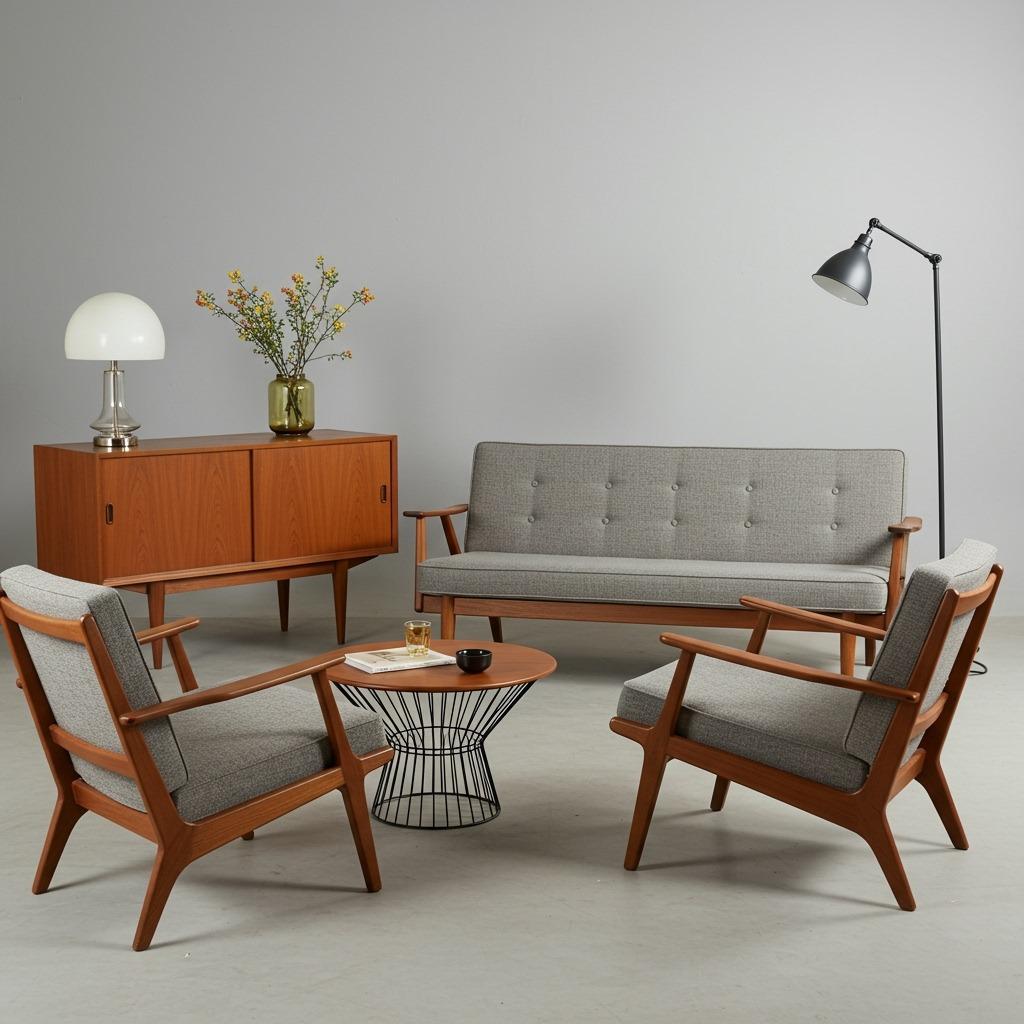
The furniture is where a mid-century modern living room really comes alive. Classic pieces have that “I’ve seen this before but can’t quite place it” quality. An Eames lounge chair. A Nelson bench. A Noguchi coffee table. These designs have staying power for good reason.
Look for low-profile seating with exposed wooden legs – often splayed or tapered. Sofas should have clean lines without excessive cushioning or ornamentation. The silhouette matters more than plushness here, though comfort isn’t sacrificed.
Credenzas and sideboards are non-negotiable in my book. These pieces provide storage while serving as statement furniture. Sliding doors, geometric handles, and rich wood finishes make them sculptural and functional. Hunt for vintage pieces at estate sales or invest in quality reproductions that’ll last.
3. Layer Textures Without Losing Simplicity
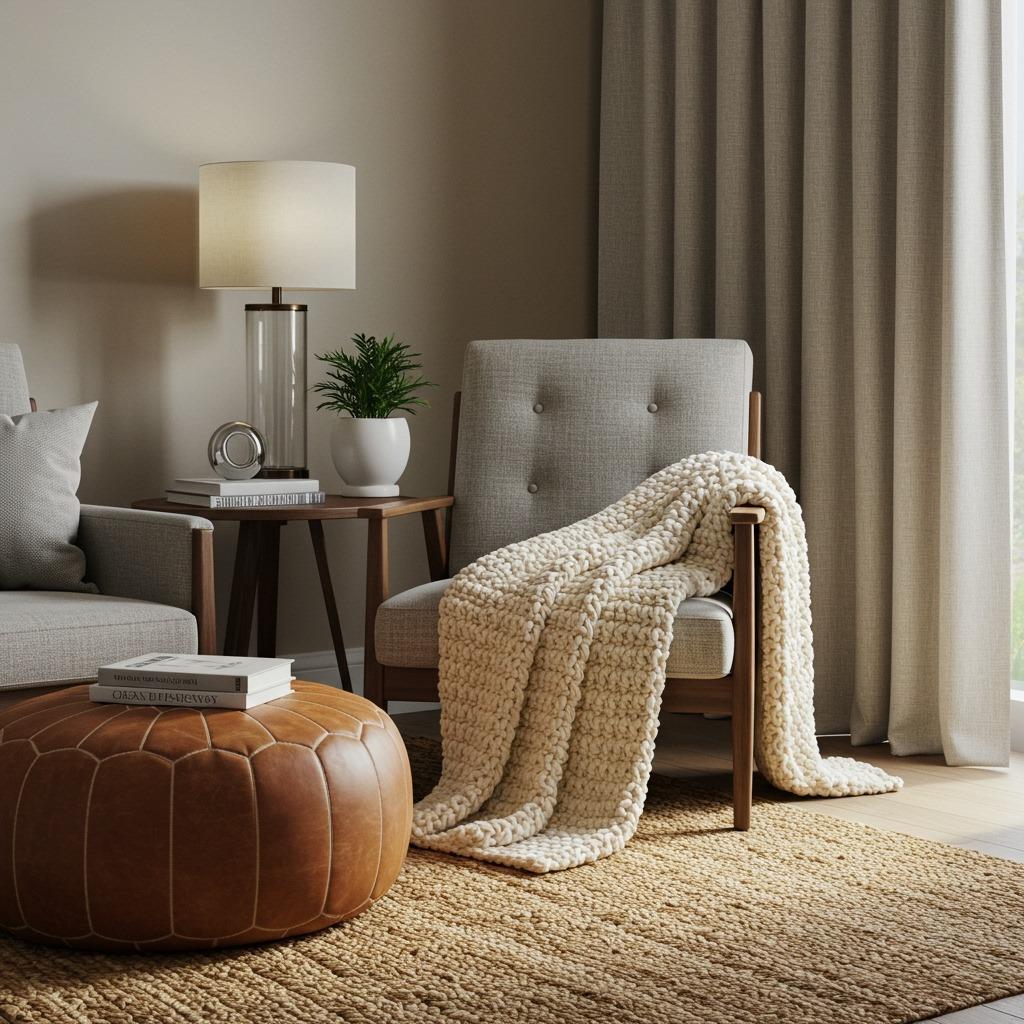
Mid-century spaces prove that minimalism doesn’t mean sterile. The key is layering thoughtful textures while maintaining that signature clean aesthetic. Wool rugs, leather upholstery, nubby linen curtains – each material adds depth.
I like mixing smooth and rough surfaces. A glossy ceramic vase on a matte wood surface. Smooth leather against a chunky knit throw. These contrasts create richness without visual clutter. The textures should complement rather than compete.
Natural materials work particularly well in this style. A jute rug grounds the space. Linen drapes soften harsh lines. Leather develops character over time. These aren’t trendy materials – they’re timeless choices that align with mid-century values of authenticity and quality.
4. Bring in the Right Lighting
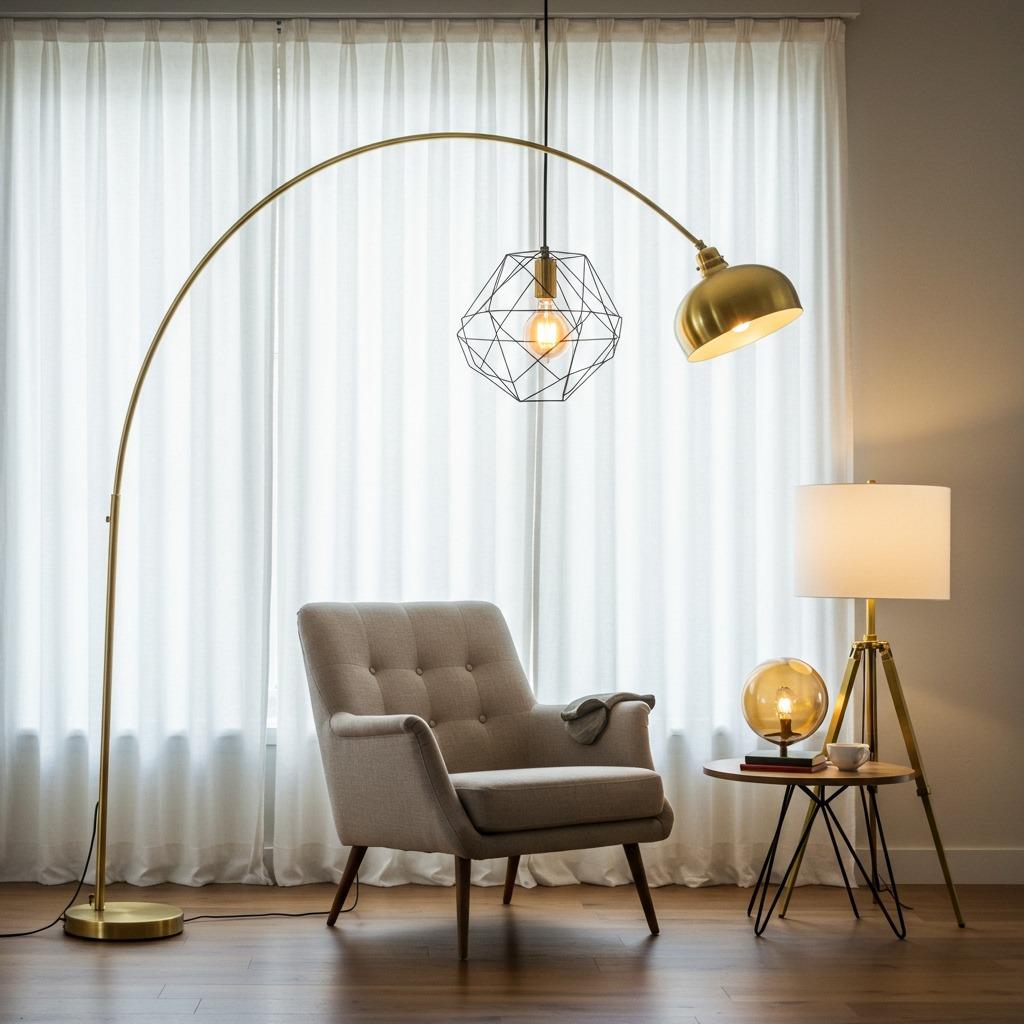
Lighting in a mid-century modern living room does serious heavy lifting. Statement pieces were sculptural during this era – Sputnik chandeliers, arc floor lamps, and globe pendants that look like art installations. These aren’t just light sources; they’re conversation starters.
I’m particularly fond of tripod floor lamps and atomic pendant lights. They echo the space-age optimism of the period while providing practical illumination. Position them strategically to highlight furniture groupings or create cozy reading nooks.
Don’t forget about natural light either. Mid-century architects loved big windows and open floor plans. Keep window treatments minimal – simple curtains or sleek blinds that don’t block light. The goal is bringing the outside in, which was revolutionary thinking back then. For more ideas on maximizing natural light, these living room ideas might offer useful inspiration.
5. Add Geometric Patterns Thoughtfully
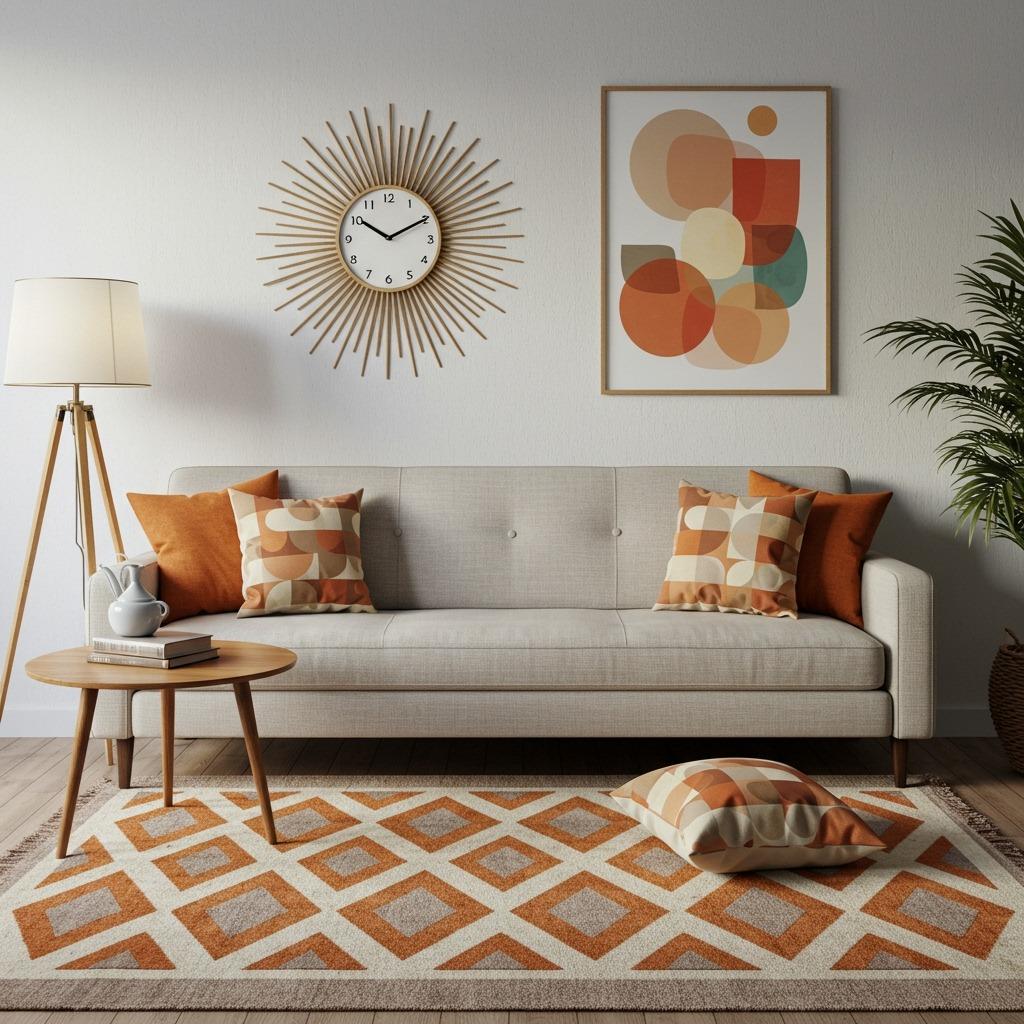
Retro design embraced geometry in playful yet sophisticated ways. Sunburst mirrors, diamond-patterned rugs, and abstract art prints featuring circles and angles – these patterns defined the era’s visual language. The trick is using them with restraint.
Pick one or two pattern types and let them repeat throughout the space. Maybe it’s angular prints in your throw pillows and a geometric rug. Or curved forms in your mirror and coffee table. This creates cohesion without pattern overload.
Scale matters too. A large-scale geometric rug can anchor a room, while smaller patterns work better in accent pieces. I’ve noticed that mixing pattern scales adds sophistication – a bold rug with delicate patterned curtains, for instance. Just make sure patterns share a common color thread.
6. Incorporate Statement Art and Decor

Abstract art was having a moment during the mid-century period, and it remains essential to the aesthetic. Think bold canvases with geometric shapes, color blocks, or organic forms. The art should feel expressive without being overly complicated.
Gallery walls weren’t really the mid-century way – instead, choose a few larger statement pieces. A vibrant abstract painting above the sofa. A sculptural piece on the credenza. Quality over quantity always wins here.
Decorative objects should lean sculptural. Ceramic vases with interesting silhouettes, wooden bowls, brass sculptures – these pieces add personality without clutter. I’m always hunting for vintage ceramics and glassware that capture that period’s design sensibility. They’re functional art that elevates everyday spaces.
7. Style With Plants for Organic Warmth
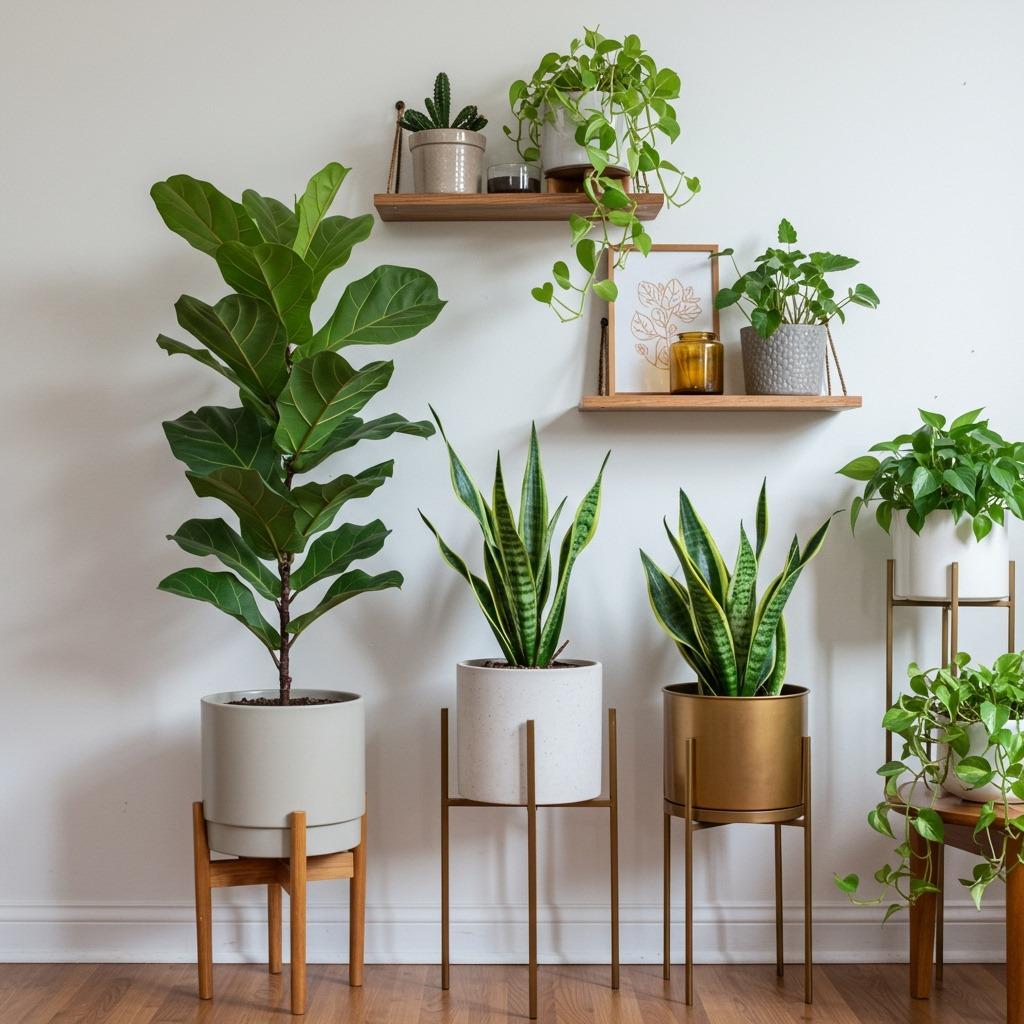
Nothing breathes life into a mid-century modern living room quite like greenery. The era celebrated bringing nature indoors, and plants were styled with the same thoughtfulness as furniture. Large-leafed varieties like monstera, fiddle leaf figs, and rubber plants were particular favorites.
Display matters just as much as plant selection. Ceramic planters in earthy glazes, elevated plant stands with spindle legs, hanging planters in macramé or ceramic – these choices feel authentically retro. The planters themselves become part of the decor.
Don’t just cluster plants in one corner. Distribute them throughout the space – a tall floor plant by the window, a potted succulent on the coffee table, trailing pothos on a bookshelf. This creates visual rhythm and reinforces that indoor-outdoor connection. If you’re curious about incorporating more greenery into your home, these indoor garden living room concepts offer creative approaches.
8. Focus on Functional Storage Solutions
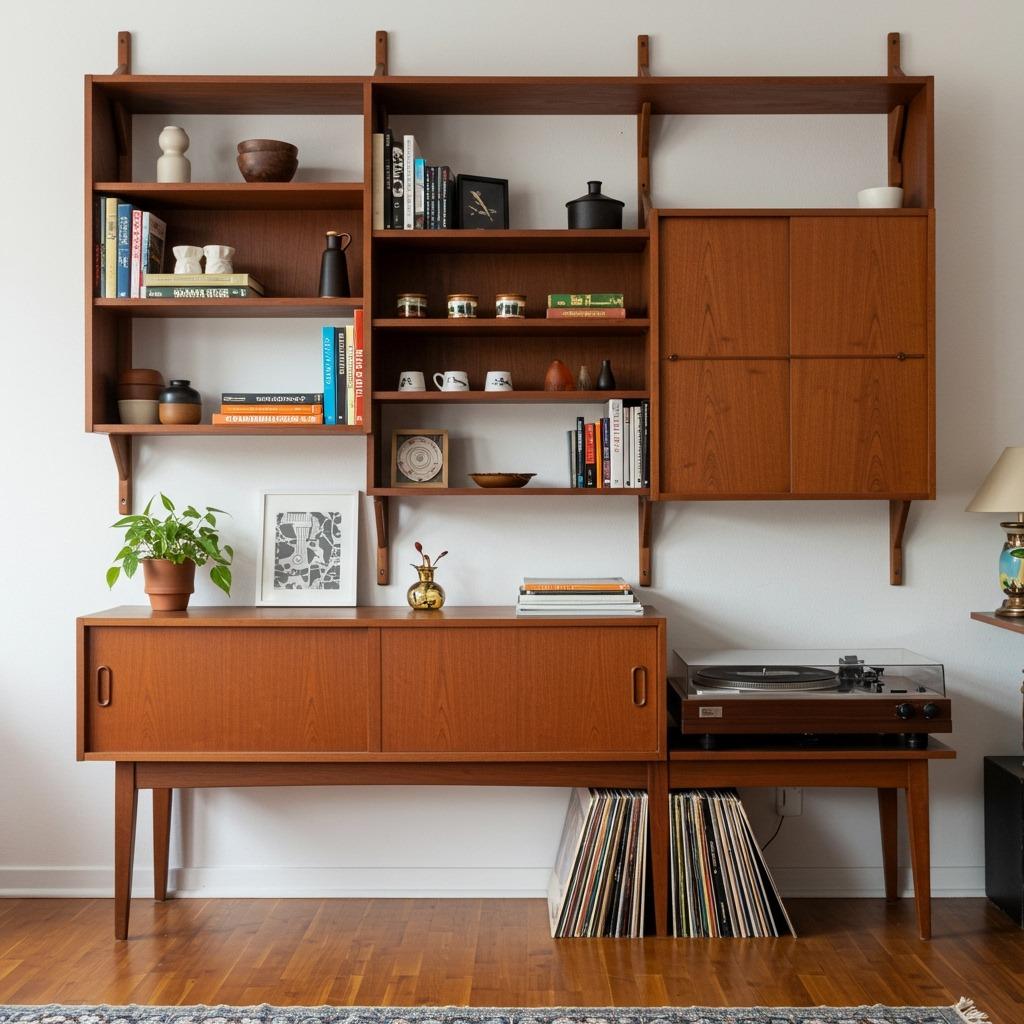
Mid-century designers were obsessed with smart storage – probably because post-war homes were getting smaller. Built-in shelving, modular wall units, and multi-functional furniture weren’t just clever; they were necessary. That practicality is part of the style’s enduring appeal.
Open shelving units with clean lines let you display books, objects, and vinyl records (because yes, record players fit perfectly in this aesthetic). The key is curating what you show. Group items by color or height. Leave some breathing room. Not every shelf needs to be packed.
Credenzas and sideboards hide clutter while providing surface space for displays. Look for pieces with sliding doors, which were a mid-century favorite. These functional beauties work equally well for media components, board games, or extra throw blankets. Storage that looks good is storage that gets used.
9. Create Conversation Areas With Furniture Placement
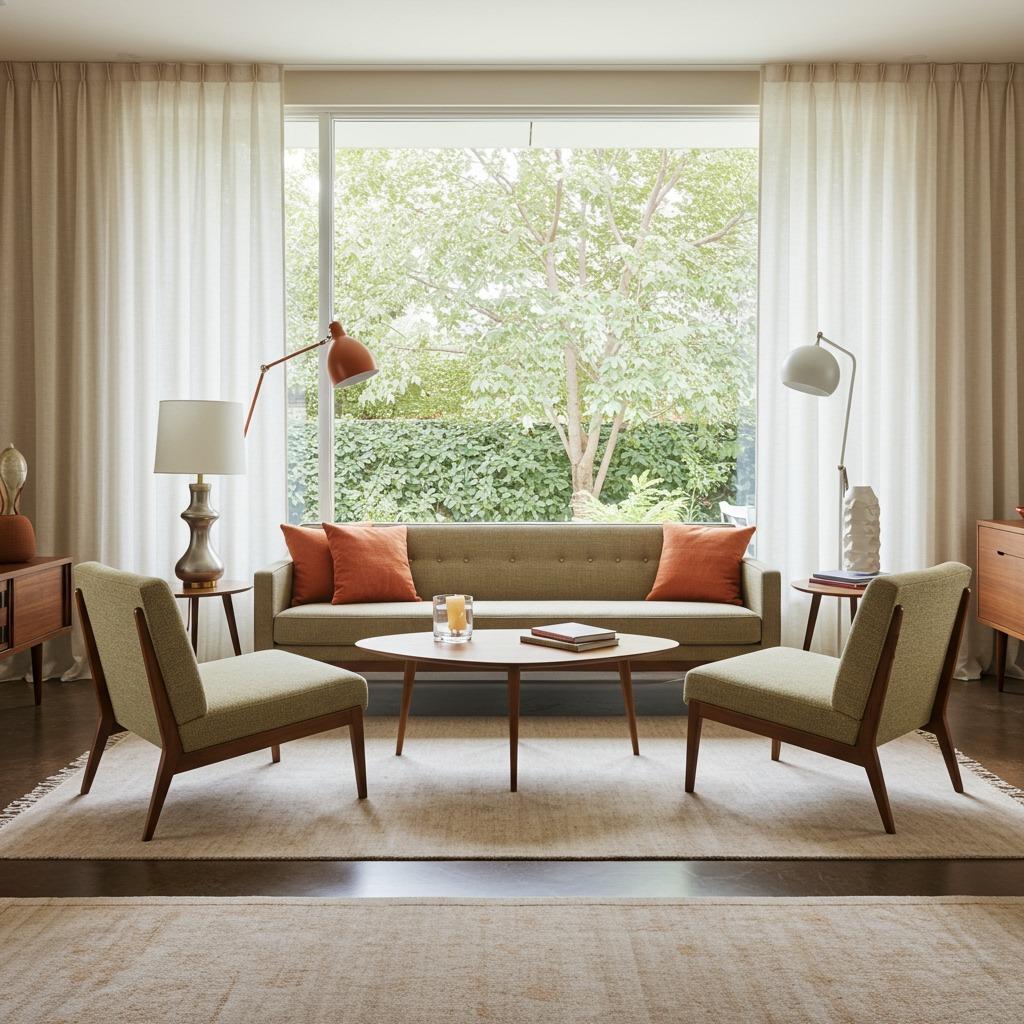
The mid-century modern living room rejected formal furniture arrangements. Instead of everything pushed against walls, seating was grouped to encourage conversation. This created intimate spaces within larger rooms – something we can definitely learn from today.
Anchor your seating around a central coffee table, but don’t make it feel like a waiting room. Angle chairs slightly. Float a sofa away from the wall if your space allows. This creates flow and makes the room feel purposeful rather than staged.
Consider traffic patterns too. Mid-century design valued openness and movement. Leave clear pathways between furniture groupings. The space should feel airy, not cramped. If you’re working with a tighter footprint, these cozy small living room strategies might help you nail the layout.
10. Mix Vintage Finds With Modern Comfort
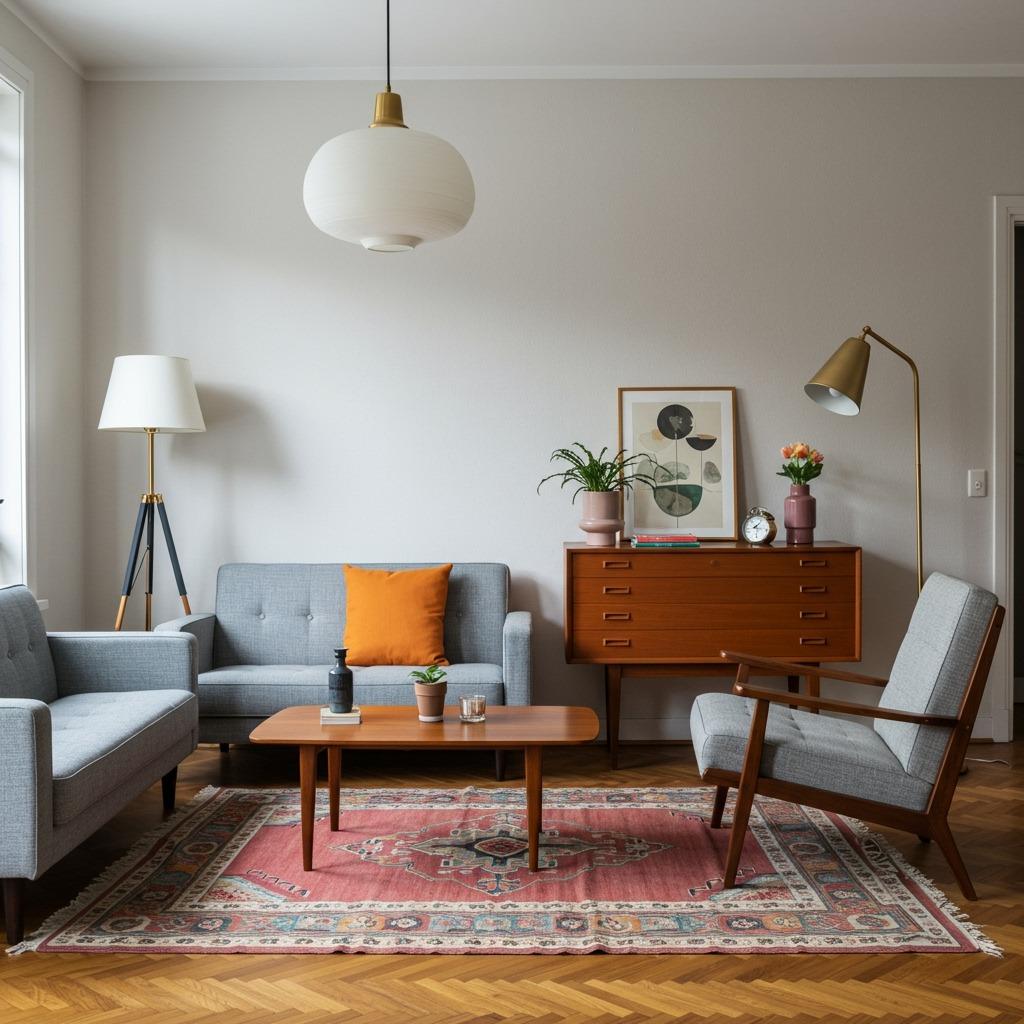
Here’s my honest take – you don’t need everything to be vintage. In fact, mixing authentic pieces with modern comfort often works better than going full museum mode. A vintage credenza paired with a contemporary sofa. Classic chairs alongside a modern rug. This keeps the space livable.
Hunt for true vintage pieces at estate sales, thrift stores, and online marketplaces. Focus on quality over quantity. One authentic Eames chair makes more impact than a room full of mediocre reproductions. These investment pieces anchor your design story.
But don’t sacrifice comfort for authenticity. Modern sofas often provide better support while still capturing mid-century lines. Updated lighting offers more efficient options. The goal is channeling the era’s spirit while meeting today’s lifestyle needs. That’s what makes a space feel personal rather than performative.
11. Keep Window Treatments Simple and Functional
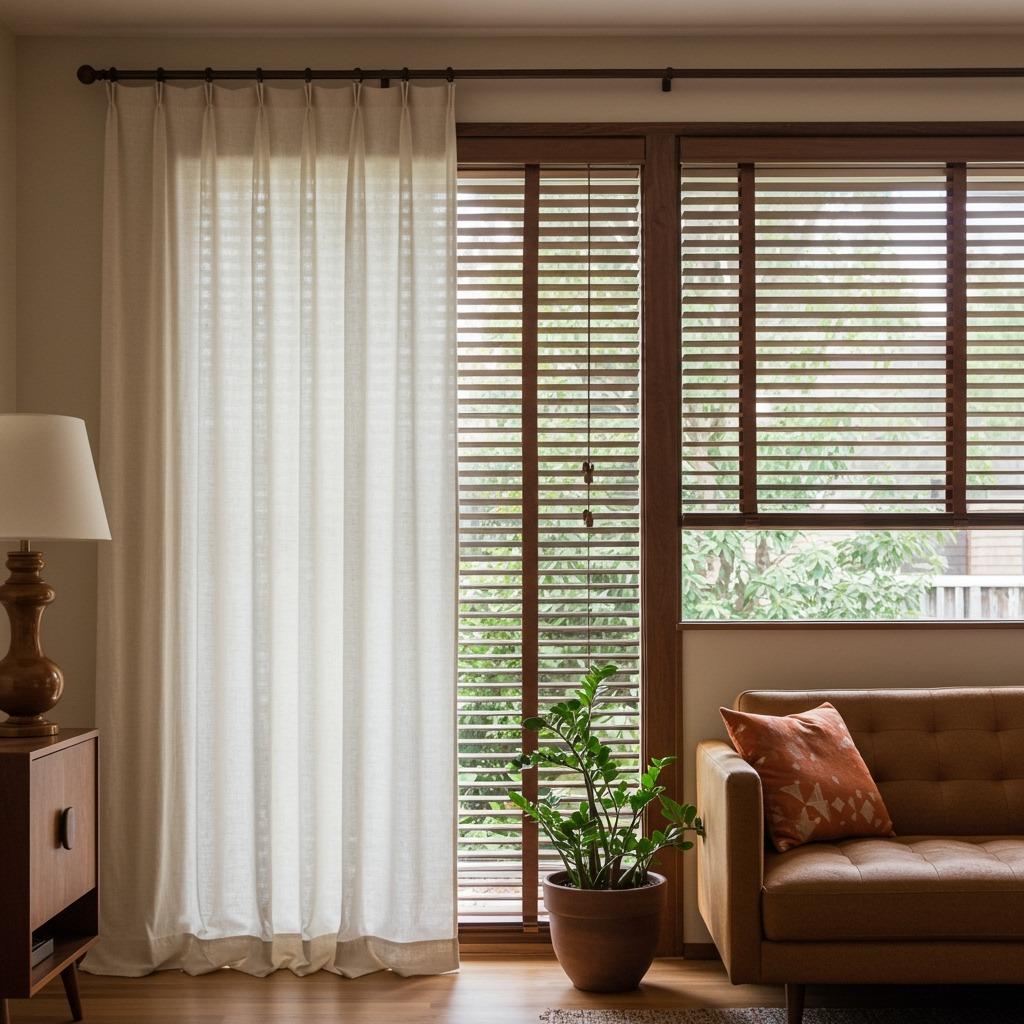
Windows were celebrated during the mid-century era, not covered up. The philosophy was simple – why block beautiful natural light and views? Window treatments should frame rather than dominate. This approach still feels refreshingly straightforward.
Floor-length curtains in natural fabrics work perfectly. Linen or cotton in neutral tones let light filter through while providing privacy when needed. Avoid heavy drapes, ornate rods, or fussy valances – those read Victorian, not mid-century.
If privacy isn’t a concern, consider leaving windows bare or using minimal roller shades. Wooden venetian blinds were popular during this period too. They offer control over light while maintaining clean lines. The simpler your window treatments, the more they fade into the architecture rather than competing with it.
12. Add a Statement Rug to Anchor the Space
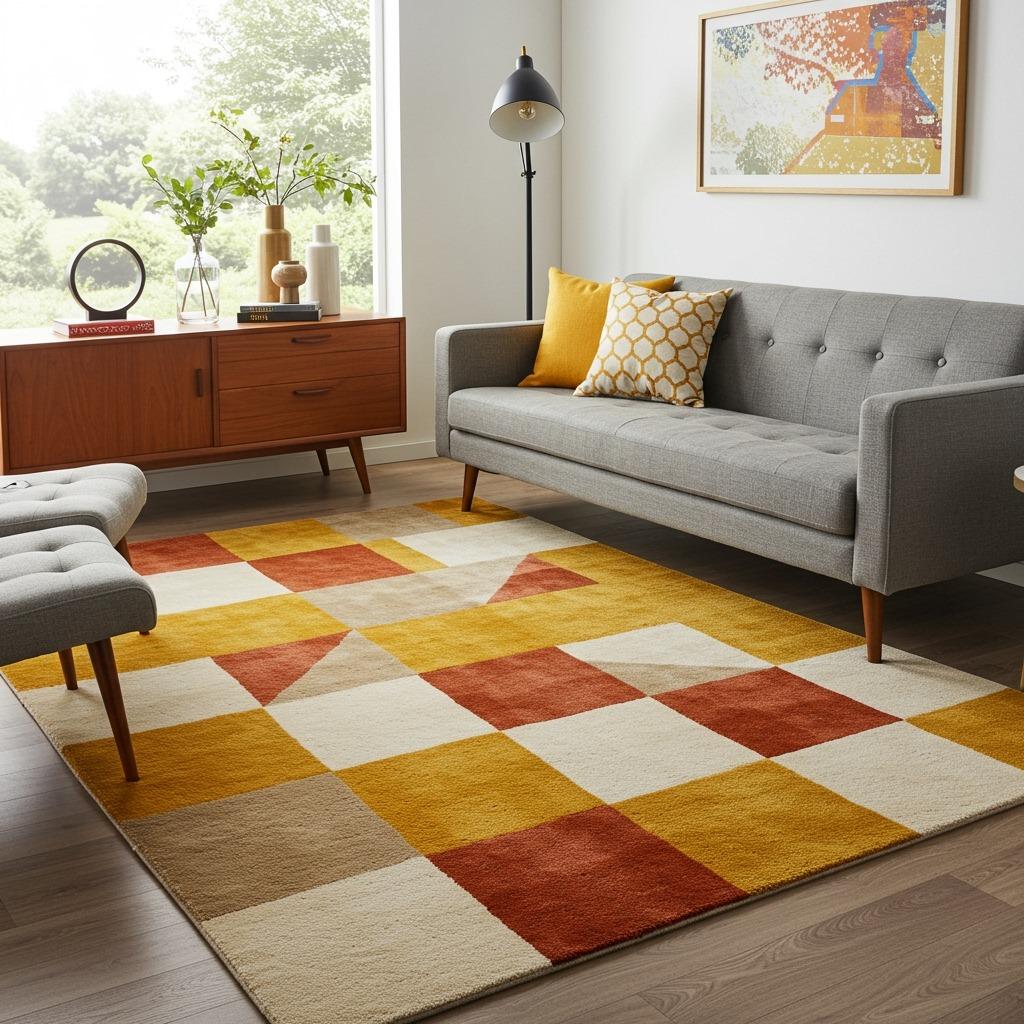
A well-chosen rug can define your entire mid-century modern living room. Geometric patterns were everywhere during this era – think abstract designs, atomic patterns, or Scandinavian-inspired motifs. These rugs weren’t just floor coverings; they were art pieces that pulled rooms together.
Size and placement matter more than you’d think. The rug should be large enough that at least the front legs of your furniture rest on it. This creates a cohesive seating area rather than furniture floating randomly in space. Too small, and the room feels disjointed.
Color-wise, your rug can either complement your palette or provide that pop of retro color. A bold orange and brown geometric pattern on a neutral room? That’s pure mid-century magic. Or go subtle with a cream and gray design that adds texture without competing for attention. Either approach works if it suits your overall vision.
13. Embrace the Open Floor Plan Philosophy

Mid-century design championed open, flowing spaces that broke from traditional closed-off rooms. This wasn’t just aesthetic – it reflected changing lifestyles and family dynamics. That openness still resonates today, especially in how we actually live and entertain.
If you’re working with an existing open plan, define your living area without walls. Use furniture placement, rugs, and lighting to create distinct zones. A sofa can act as a room divider. A credenza might separate living from dining. These soft boundaries maintain flow while providing structure.
For those in traditional layouts, you can still capture the spirit. Remove unnecessary furniture that blocks movement. Keep sightlines clear. Choose low-profile pieces that don’t obstruct views across the room. The goal is creating visual and physical openness that makes spaces feel larger and more connected. These open concept kitchen living room layout principles work beautifully for achieving that mid-century flow.
14. Incorporate Metallic Accents Strategically
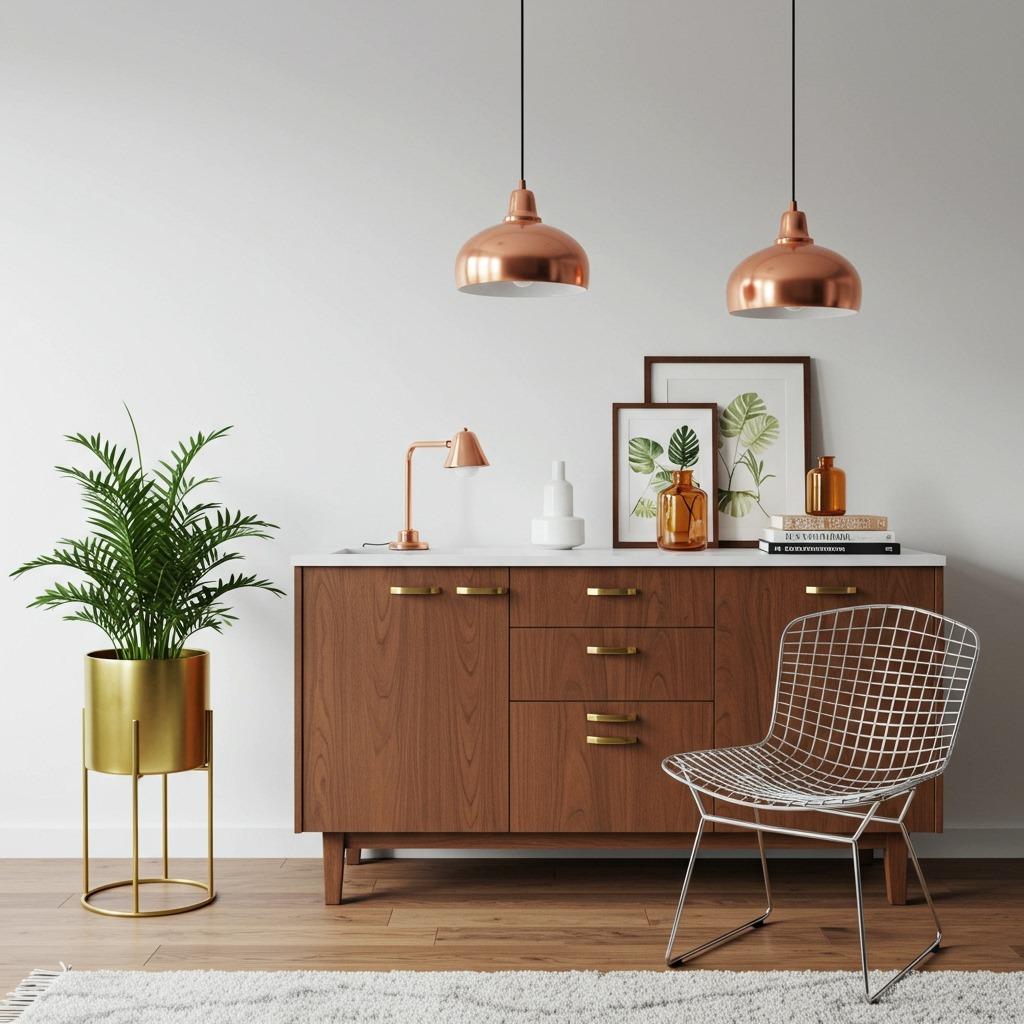
Metals were having a moment in mid-century design – brass, chrome, copper, and brushed nickel appeared everywhere. But here’s the thing: they were used as intentional accents, not overwhelming finishes. A little metallic gleam goes a long way in creating that polished retro look.
Brass particularly captures that warm vintage vibe. Lamp bases, cabinet hardware, picture frames, or decorative bowls in brass add instant mid-century character. The patina that develops over time? That’s a feature, not a flaw. It adds authenticity and depth.
Chrome and brushed metals work better for contemporary touches. Chair legs, coffee table bases, or lighting fixtures in these cooler metals keep the look from feeling too antique. Mix metals carefully though – pick two or three finishes and stick with them throughout the space. Too many different metals create chaos rather than cohesion.
15. Style Shelves Like Curated Displays
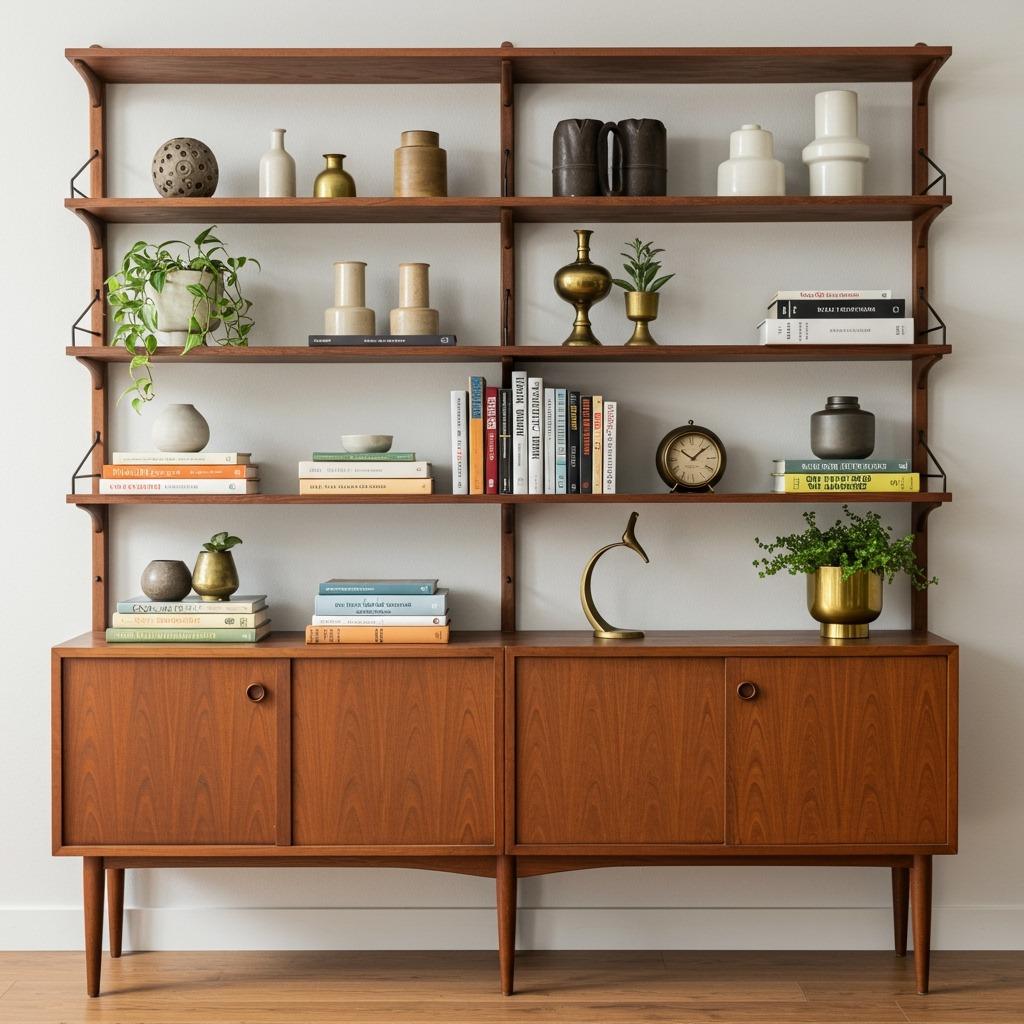
Open shelving in a mid-century modern living room should look thoughtfully composed, not haphazardly filled. Think of each shelf as a small vignette – books, objects, plants, and empty space working together. The negative space is just as important as what you display.
Group books horizontally and vertically for visual interest. Mix in sculptural ceramics, small plants, or vintage finds. The rule of thirds works well here – aim for roughly one-third books, one-third objects, and one-third empty space. This creates breathing room.
Color coordination helps too, though don’t get too matchy. Grouping books by color can look stunning, or keep things organic by subject. Rotate displays seasonally to keep things fresh. I love swapping out smaller accessories while keeping key pieces consistent. It makes the space feel alive without requiring a complete overhaul.
16. Design an Accent Wall With Retro Flair
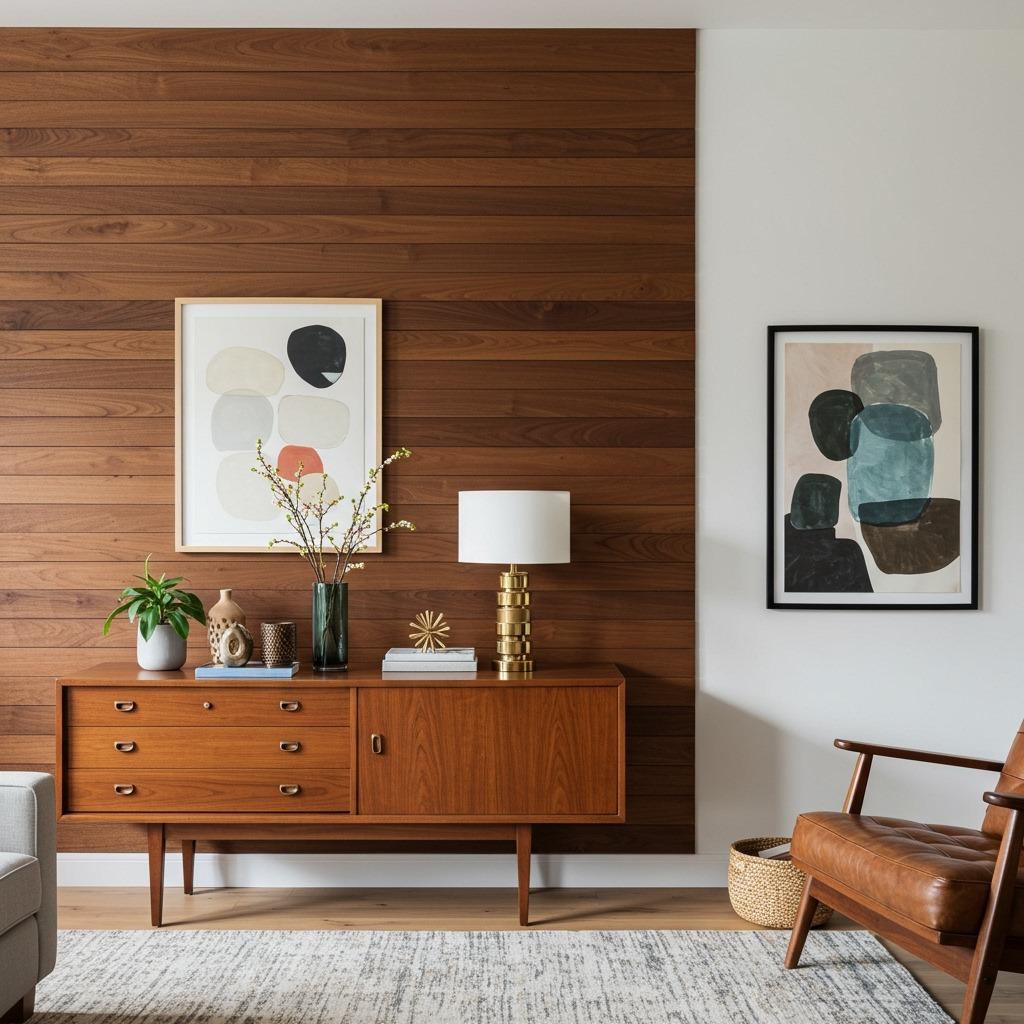
Accent walls weren’t called that back in the day, but the concept existed. A bold color, wood paneling, or even brick could transform one wall into the room’s focal point. This technique adds drama without overwhelming the entire space.
Wood paneling – particularly in walnut or teak – screams mid-century. If real wood feels too permanent or pricey, modern alternatives like peel-and-stick panels or even paint techniques can approximate the look. Position this behind your main seating area or where your eye naturally lands when entering.
Color is another route. A burnt orange or deep teal accent wall paired with neutral surroundings creates instant retro appeal. Just make sure it’s a wall that deserves attention – behind the sofa, framing a fireplace, or highlighting architectural features. For more inspiration on creating striking focal points, these modern accent wall ideas explore various approaches that could work with mid-century styling.
17. Balance Symmetry With Organic Asymmetry
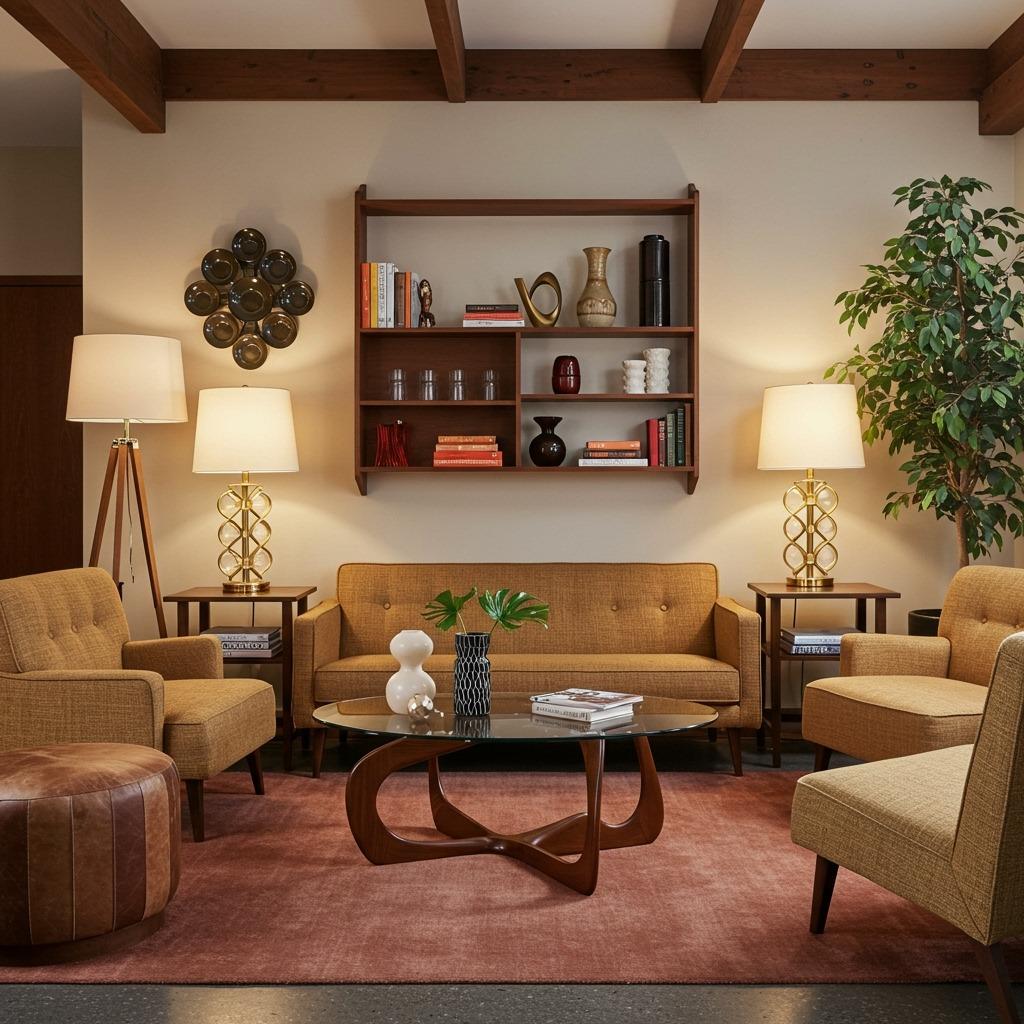
Mid-century design plays with an interesting tension – clean geometric lines paired with organic, flowing forms. This balance between order and nature is what keeps these spaces from feeling too rigid or too chaotic. It’s a dance worth learning.
You might have matching table lamps on a symmetrical credenza, but then place an asymmetrical sculpture between them. Or arrange your sofa and chairs in a balanced layout, but use a kidney-shaped coffee table to soften the geometry. These contradictions create visual interest.
Don’t stress about perfect matching either. Two similar chairs in different fabrics work beautifully. A pair of planters in slightly different sizes feels more collected than identical twins. This relaxed approach to pairing keeps the style feeling organic and personal rather than showroom-perfect.
18. Consider a Room Divider for Definition
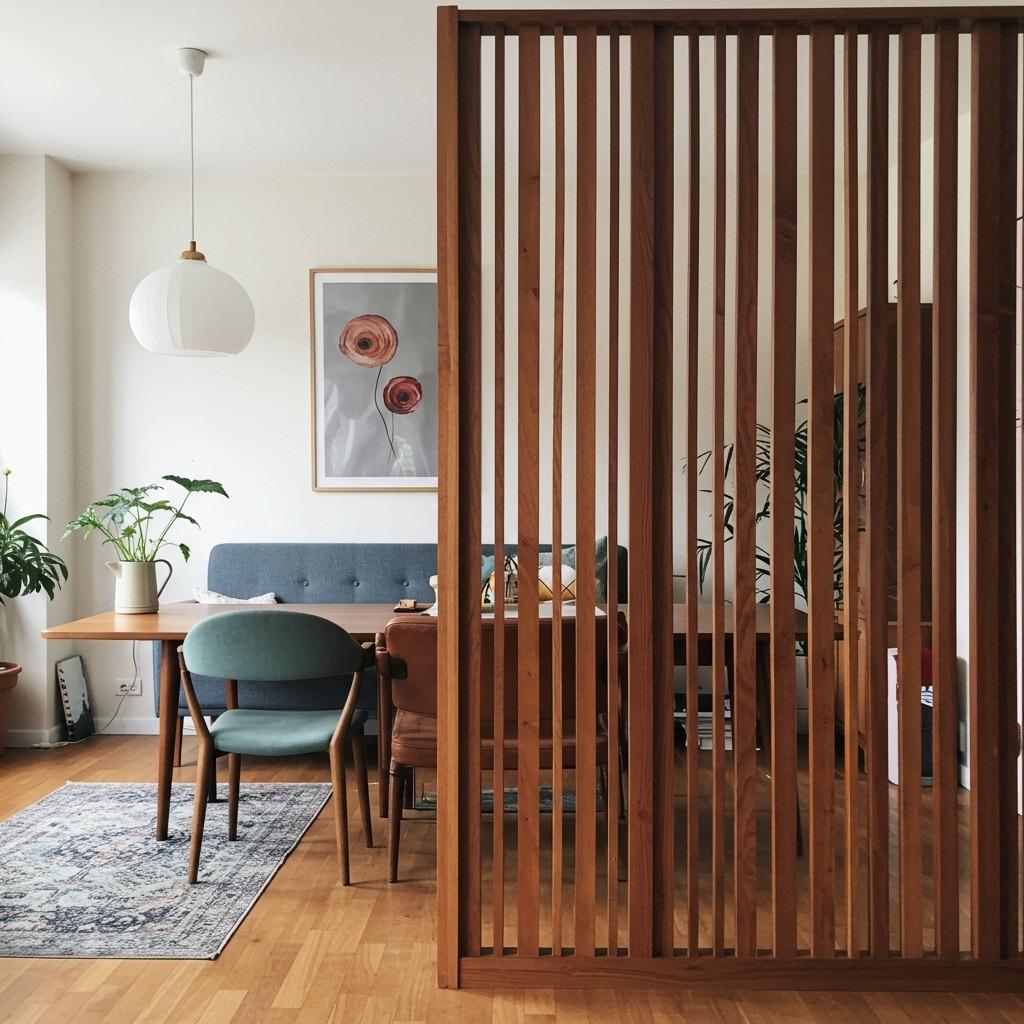
Room dividers were genius mid-century solutions that deserve more love today. These weren’t heavy, closed-off partitions – they were sculptural screens or open shelving units that suggested division without blocking light or views. Perfect for defining spaces in open layouts.
Slatted wood screens, geometric metal dividers, or even tall plant stands can create subtle separation. A low bookshelf perpendicular to a wall defines zones while staying visually light. These elements add architectural interest while serving a practical purpose.
I’ve seen hanging dividers and macramé screens work beautifully too. They’re particularly useful for small space renovation projects where you need to carve out distinct areas without sacrificing square footage. The key is choosing dividers that feel integrated rather than afterthoughts.
19. Layer Lighting at Different Heights
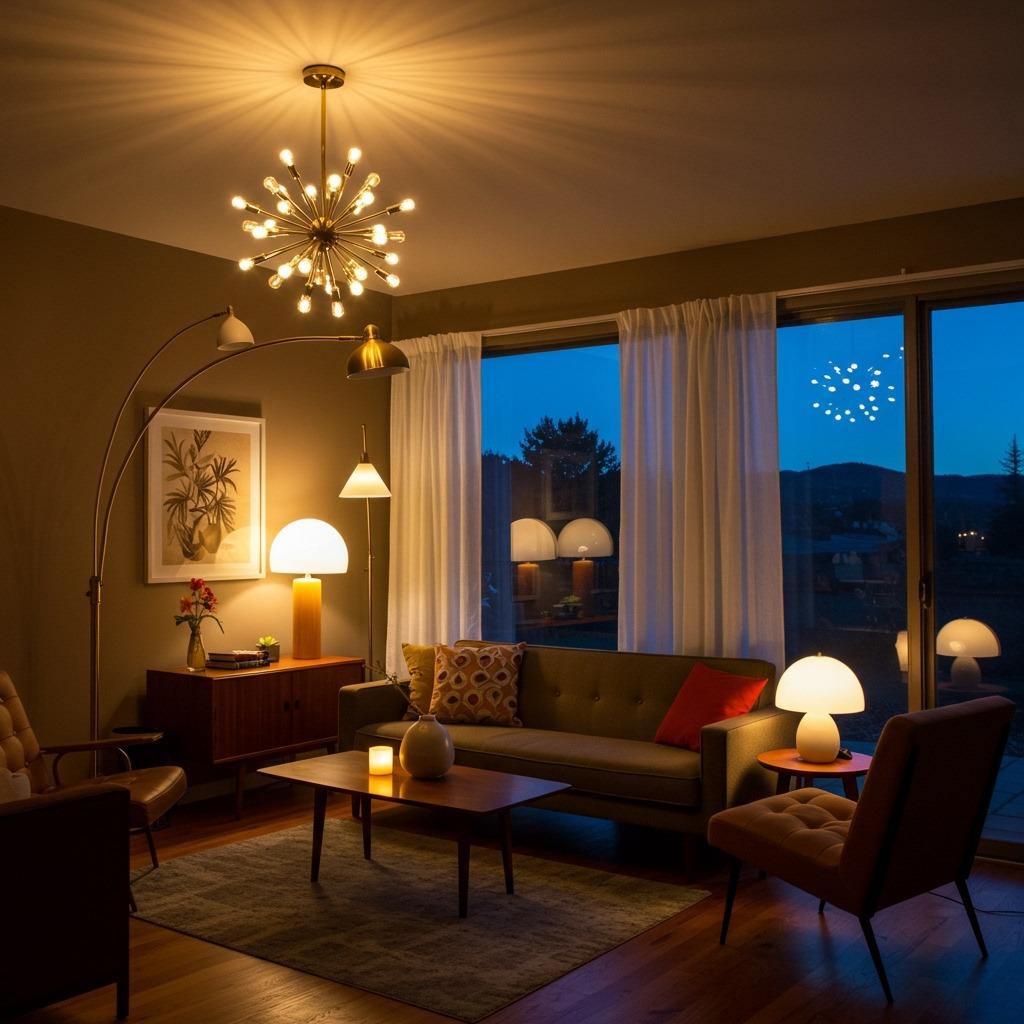
Lighting layers were central to mid-century design – overhead fixtures, floor lamps, table lamps, all working together to create ambiance at various levels. This approach is both practical and visually dynamic. One ceiling light rarely does enough.
Start with a statement overhead fixture, but don’t rely on it exclusively. Add a dramatic arc floor lamp for reading. Place table lamps on credenzas for ambient glow. This layering lets you adjust lighting based on time of day and mood. Task, ambient, and accent lighting all have roles.
Dimmer switches are your friend here. They weren’t common in the original era, but they help you achieve that warm, inviting atmosphere mid-century spaces are known for. Play with different bulb temperatures too – warmer tones (2700K-3000K) complement the wood and earth tones better than cool white.
20. Finish With Personal Touches That Tell Your Story
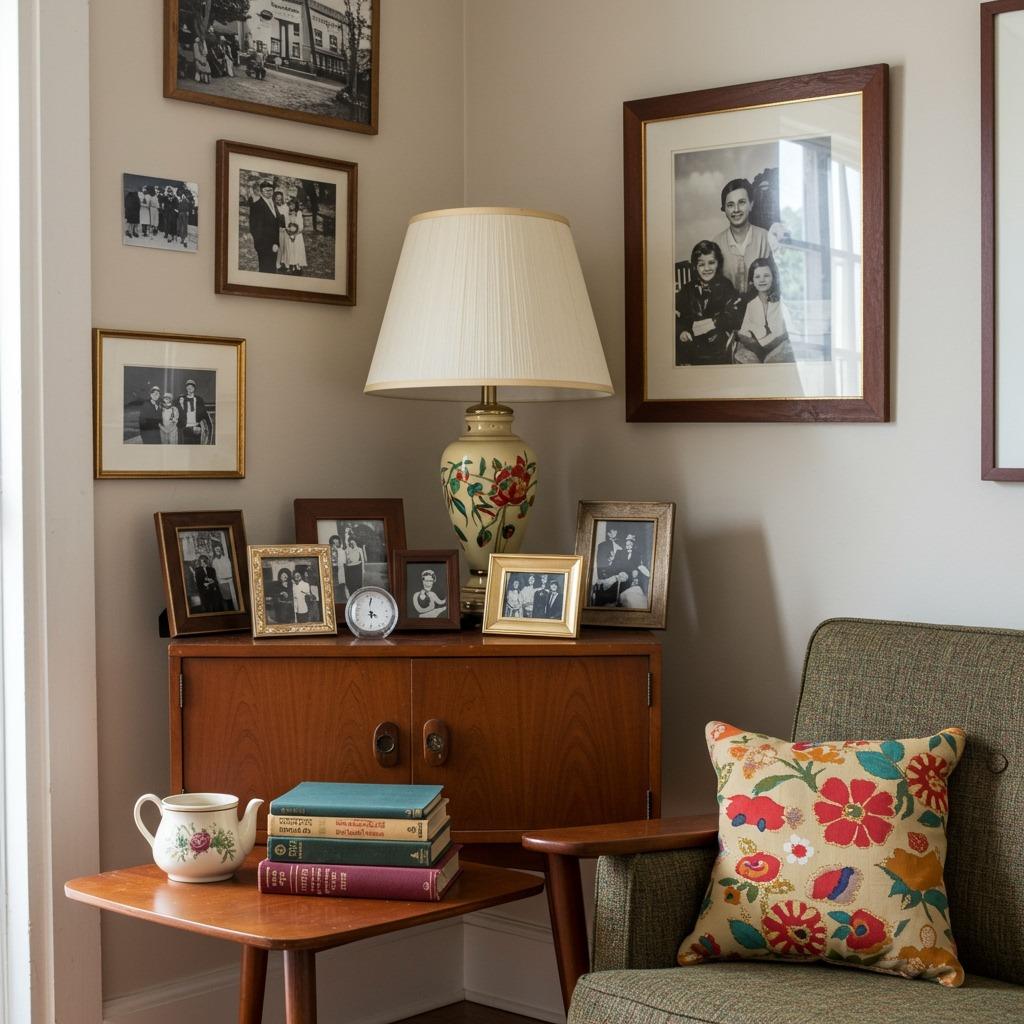
Here’s what nobody tells you about creating a mid-century modern living room – it should feel like yours, not a page from a 1960s catalog. The best spaces blend period authenticity with personal history and contemporary life. That’s what makes them homes rather than stage sets.
Display things that matter to you. Vintage cameras, inherited pottery, travel souvenirs – these personal objects make the style relatable. Just style them thoughtfully within the aesthetic. A modern book collection looks right at home on a vintage shelf. Your grandmother’s ceramics might fit perfectly with mid-century pieces.
Don’t be afraid to break rules occasionally. A contemporary painting in a gilded frame? Why not, if you love it. The mid-century designers were innovators who rejected stuffiness. They’d probably appreciate you making the style your own rather than following it religiously. Authenticity in design means being true to yourself as much as to the era.
Bringing Your Mid-Century Vision to Life
Creating a mid-century modern living room is less about rigid rules and more about understanding what made this design movement special. Clean lines, functional beauty, honest materials, and a connection to nature – these principles remain relevant because they’re fundamentally about good design.
You don’t need a massive budget or a house from the era to capture this aesthetic. Start with one quality vintage piece and build around it. Mix affordable reproductions with authentic finds. Focus on the elements that speak to you most – maybe it’s the color palette, or the furniture silhouettes, or that sculptural lighting.
What draws me back to this style repeatedly is how it balances sophistication with approachability. These aren’t fussy rooms that demand perfection. They’re spaces designed for living – entertaining friends, reading by a window, enjoying your surroundings. That livability, combined with timeless appeal, is why mid-century design continues captivating us decades later.
Looking for more ways to transform your spaces? Explore our collection of home improvement ideas and DIY home renovation ideas to bring your vision to life.

