

You know that moment when you walk into a home and everything just flows? That’s the magic of a well-planned open concept kitchen living room layout. But here’s what nobody tells you – knocking down walls is the easy part. The real challenge? Creating two distinct spaces that work together without one overtaking the other.
I’ve seen so many beautifully renovated homes where the kitchen feels like it’s invading the living room, or worse, where the TV is competing with dinner prep noise. An open floor design needs more than just removed walls. It needs intention, boundaries (invisible ones), and a layout that makes daily life easier, not more chaotic.
Whether you’re planning a small space renovation or reimagining your entire main floor, these layout ideas will help you create zones that feel connected yet purposeful. Some might surprise you. Others might make you rethink that island placement you’ve been so sure about.
Why Open Concept Kitchen Living Room Layouts Are Worth Considering
Open layouts have stuck around for good reason. They make smaller homes feel significantly more spacious without adding a single square foot. When my friend removed the wall between her 12×14 kitchen and equally small living room, the space suddenly felt like it doubled in size. The sight lines alone changed everything.
But it’s not just about the illusion of space. Modern open spaces solve real everyday problems. You can watch your kids do homework while prepping dinner. You can chat with guests instead of being isolated in the kitchen during parties. Natural light flows through the entire area instead of stopping at doorways.
The flexibility matters too. Unlike traditional closed-off rooms, kitchen living integration lets you adapt the space as your life changes. That dining table can move closer to the kitchen when you have toddlers who need supervision, then shift toward the living area as they grow. The layout grows with you, which is something home improvement ideas should always aim for.
1. The Classic L-Shaped Kitchen with Parallel Living Space
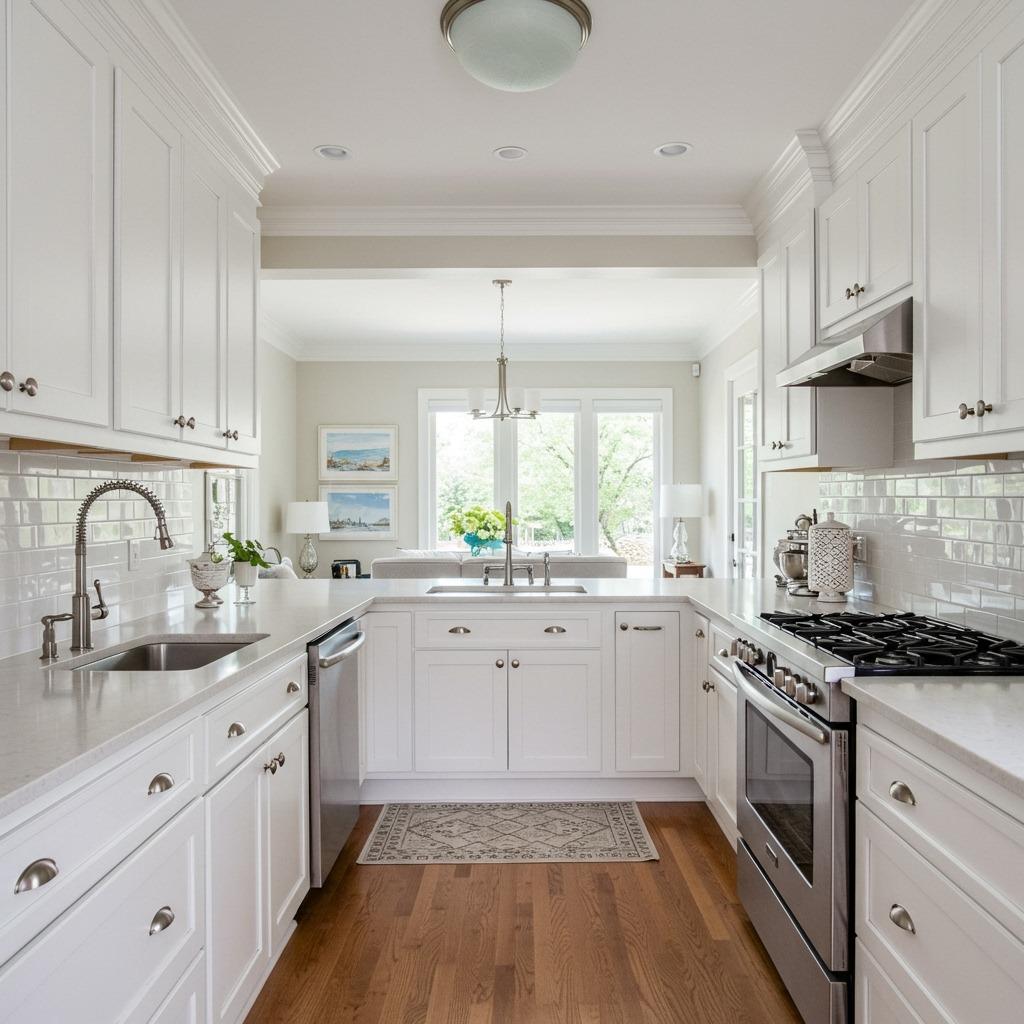
This layout is probably the most foolproof option for open floor design. The kitchen occupies two adjacent walls in an L-configuration, while the living area runs parallel along the opposite side. It’s straightforward, yes, but there’s something to be said for layouts that just work.
The beauty here is in the natural division. The L-shape creates a subtle boundary without needing physical separators. Your cooking zone stays contained while the living space has clear real estate for furniture arrangement. I’ve noticed this works especially well in rectangular rooms where the proportions naturally support this division.
Traffic flow becomes almost intuitive. People can move from the entry to the living room without cutting through your workspace. And when you’re cooking, you’re facing the living area, which means conversation flows easily but you’re not staring directly at the TV. It’s one of those details that seems small until you live with it daily.
2. Island as the Central Anchor Point
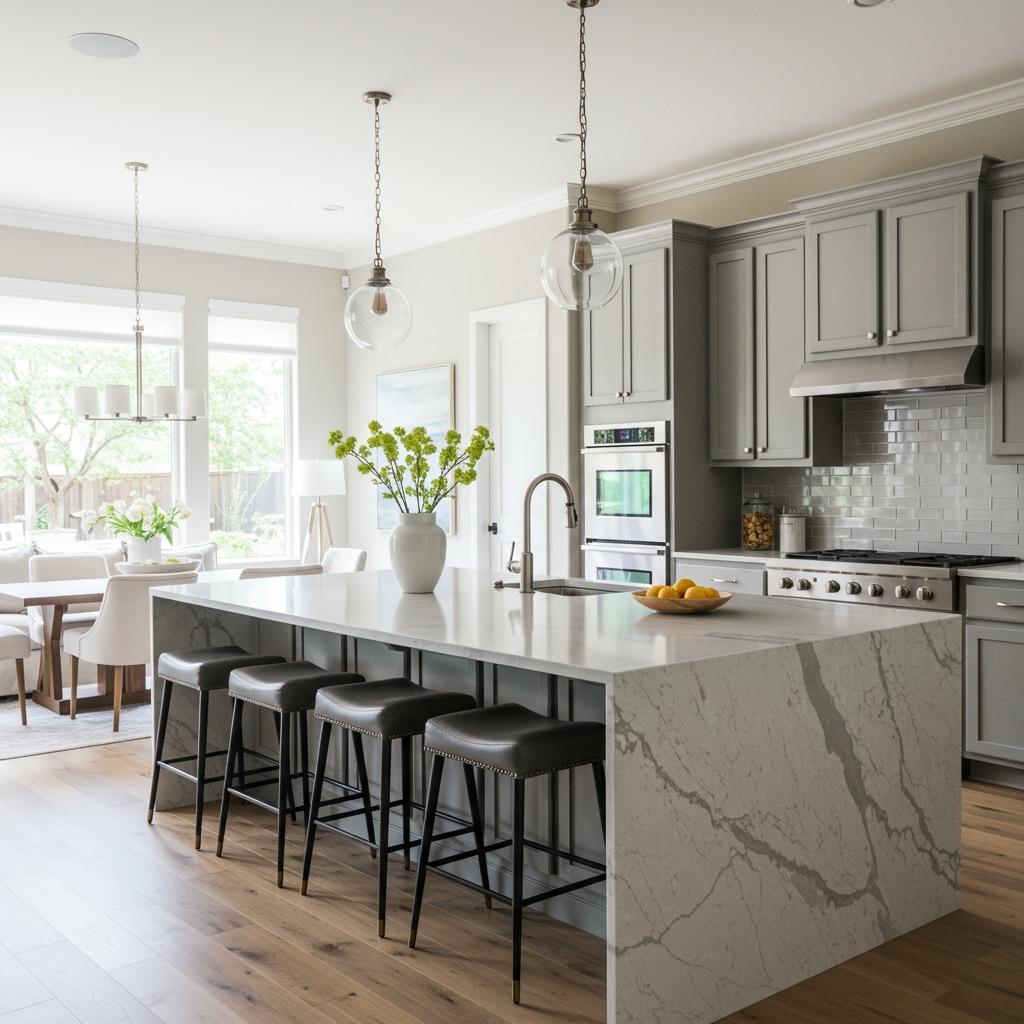
If I had to pick one element that defines modern kitchen living integration, it’s the island. But not just any island – one that’s sized and positioned to anchor the entire space. Think of it as the mediator between your two zones, belonging to both yet dominating neither.
The key is getting the proportions right. An island should be substantial enough to house your primary sink or cooktop, provide seating for 3-4 people, and offer storage underneath. But push it too large and it starts feeling like an obstacle course. I’ve found that leaving at least 42 inches (preferably 48) on all sides keeps things comfortable.
Positioning matters more than most people realize. Place your island too close to the kitchen perimeter and it feels cramped. Push it too far into the living space and it intrudes on furniture placement. The sweet spot? Usually about 4-5 feet from your main kitchen counter, creating a work aisle behind it while establishing that visual boundary with the living area.
3. The Galley Kitchen with Open End
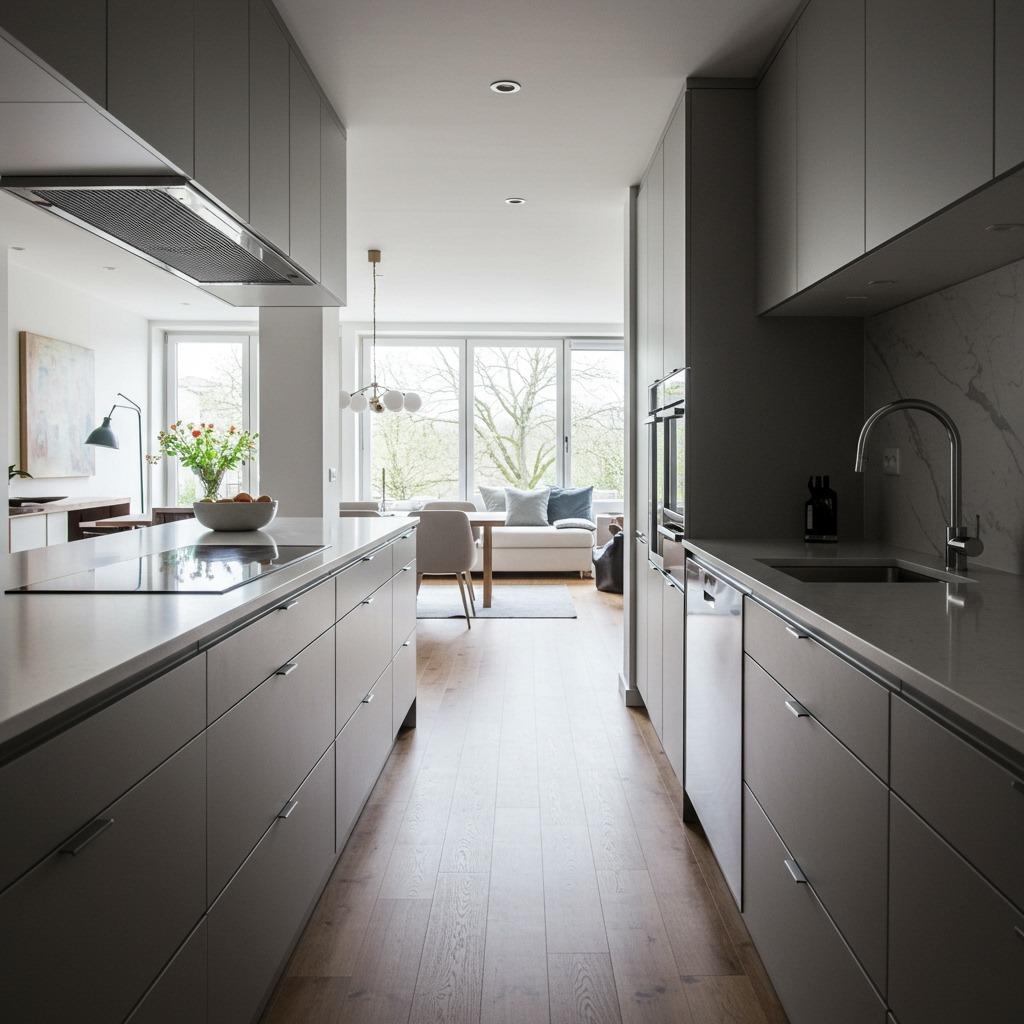
Not every open concept needs to sprawl sideways. A galley kitchen that opens at one end offers something different – a sense of reveal. You’re working in a defined, efficient corridor, then boom, it opens to the living space. There’s an almost theatrical quality to it.
This layout works brilliantly in narrower homes or when you want to maintain some separation without actual walls. The galley portion keeps your cooking mess contained and creates a natural workflow. Meanwhile, the open end prevents that tunnel feeling traditional galley kitchens can have.
I’ve seen this done beautifully in modern farmhouse kitchen designs where the galley portion has upper cabinets for storage, but the open end transitions to the living area with just lower cabinetry or an island. It gives you the storage you need without making the space feel closed off.
4. Kitchen at the Rear, Living Forward
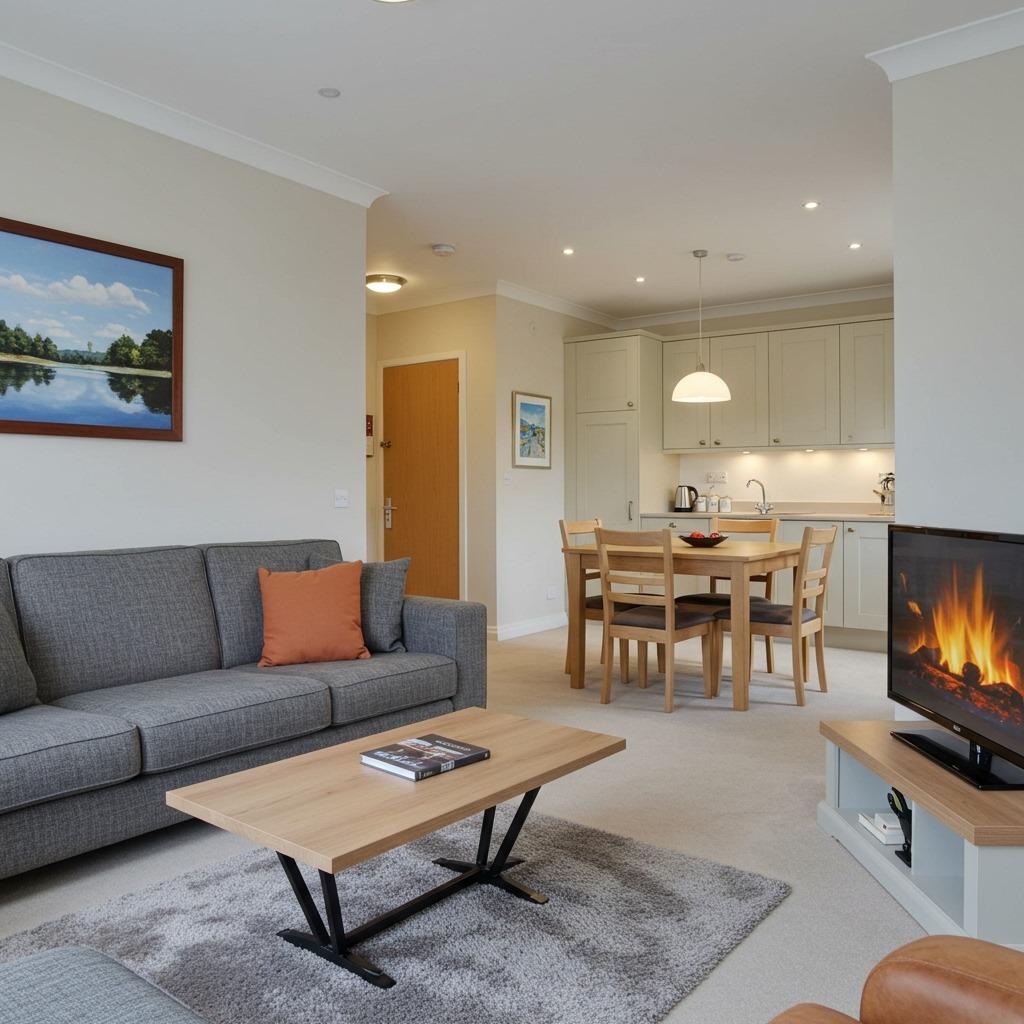
This might flip your expectations, but placing the kitchen toward the back of the space with the living area forward can be incredibly smart. It positions the “messy” work zone away from your main entry and sight lines, while keeping the relaxation area prominent.
The psychology of this layout is interesting. When guests enter, they see your beautifully styled living space first. The kitchen becomes visible but not immediately demanding attention. For those of us who don’t always have sparkling clean counters (guilty), this offers some grace.
Functionally, it also means your living room furniture faces away from kitchen activity. You’re not watching someone load the dishwasher while trying to watch a movie. The kitchen becomes backdrop rather than spectacle, which suits some lifestyles perfectly. Just make sure you have good lighting back there – kitchens pushed to the rear often lose out on natural light.
5. The Wrap-Around Peninsula Layout
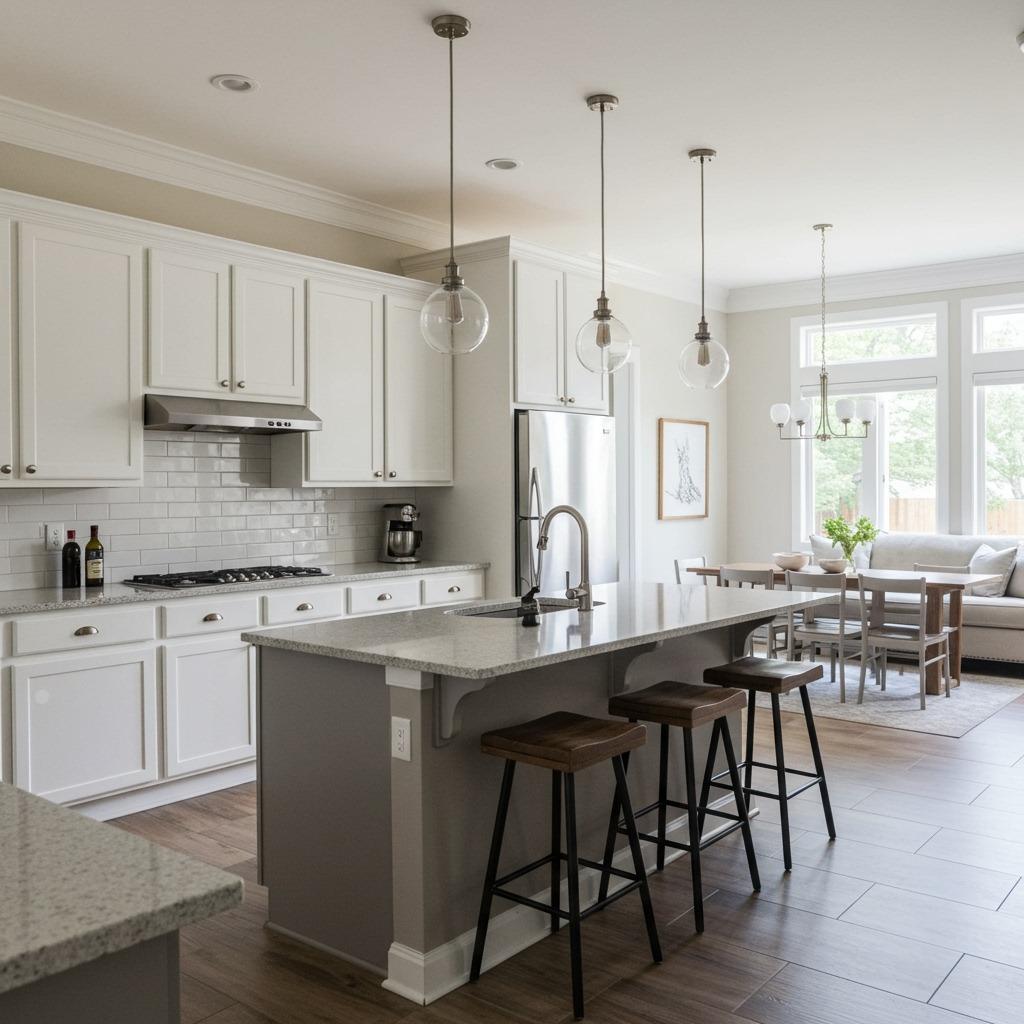
Peninsulas are having a moment, and for good reason. They offer the benefits of an island – extra counter space, seating, storage – while staying anchored to your main kitchen layout. Think of it as an island with commitment issues, attached on one end but reaching into your open concept kitchen living room layout.
What I love about peninsulas is how they create a gentle boundary. People sitting at the peninsula are technically in the living space but can swivel to join kitchen conversations. It’s a social sweet spot. Plus, you can use the underside facing the living room for open shelving, making it feel less wall-like.
The attached end also solves a common island dilemma – where to put the outlets. With a peninsula, you have a natural spot to run electrical without those awkward floor outlets or pop-up counter ones. Small detail, maybe, but these things matter when you’re actually living in the space. This approach pairs wonderfully with kitchen island ideas if you’re considering variations.
6. Floating Furniture as Space Dividers
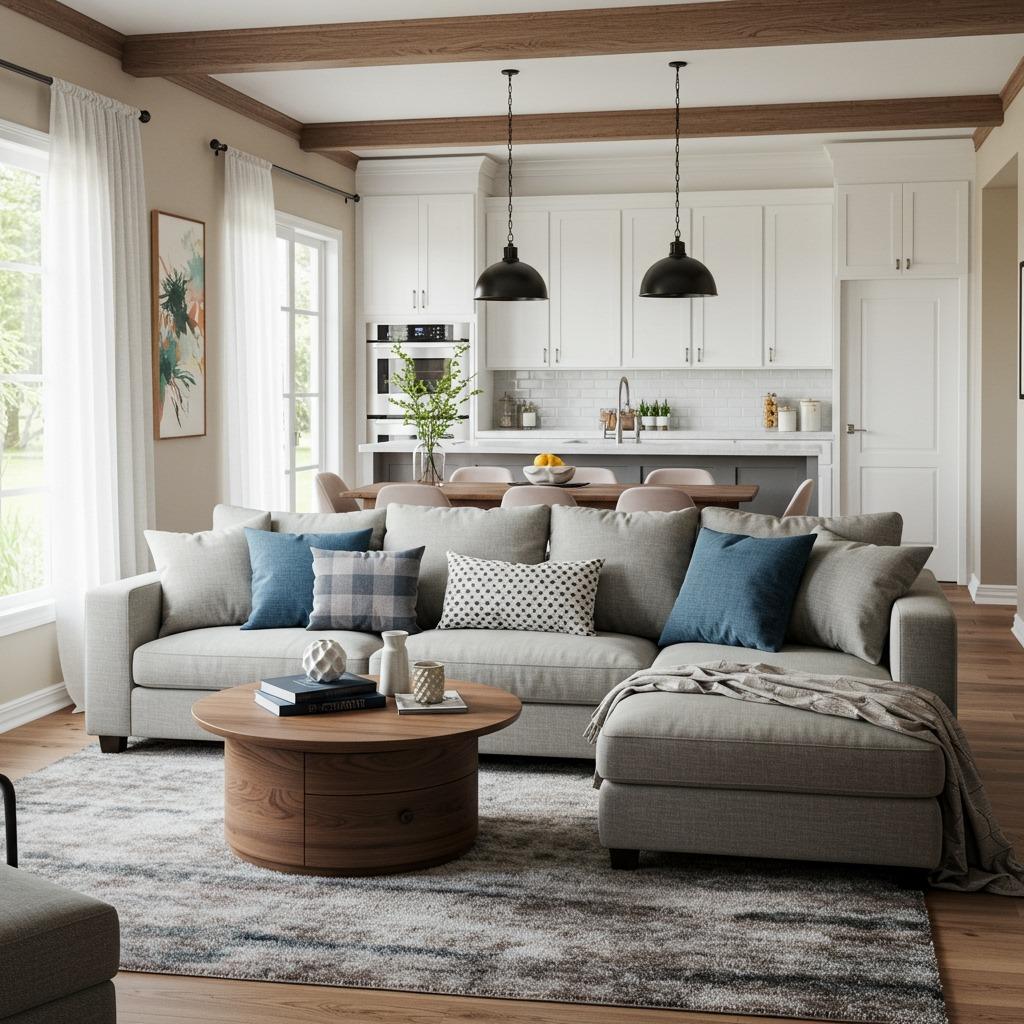
Here’s where people often overthink things. You don’t always need architectural elements to define zones. Sometimes your sofa, placed thoughtfully, does the job better than any half-wall ever could. Floating furniture – meaning pulled away from walls – creates natural boundaries in open floor design.
The trick is confidence. Pull that sectional 3-4 feet from the wall, face it toward the TV or fireplace, and suddenly you have a “back” to your living room that separates it from the kitchen. Add a console table behind the sofa for extra emphasis, maybe some table lamps, and you’ve created a clear division without blocking sight lines.
This works especially well in smaller open concepts where permanent dividers would feel heavy. Your furniture does double duty – providing function while establishing zones. And bonus: you can rearrange if the layout stops working for you. Try doing that with a pony wall. I’ve found this particularly effective in living room ideas that emphasize flexibility.
7. The Two-Island Power Move
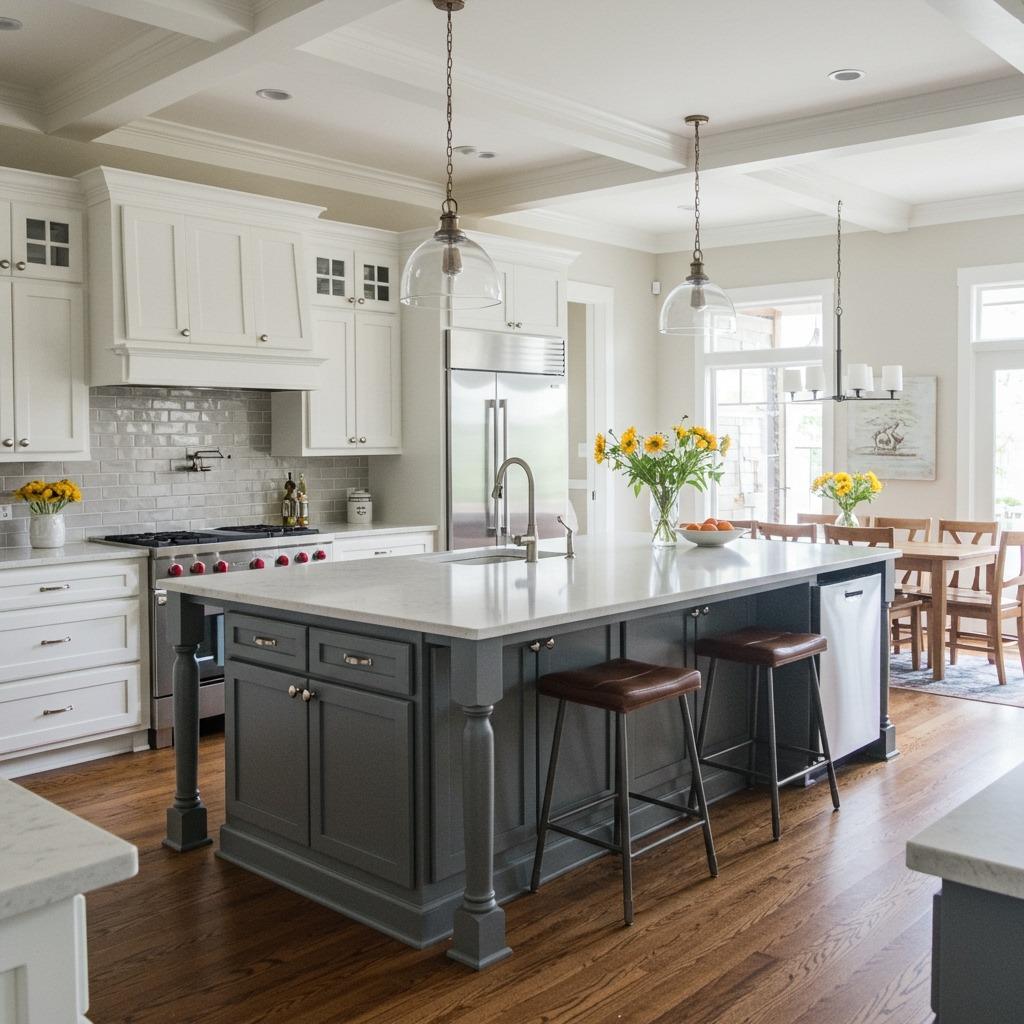
If you have the square footage, two islands might sound excessive but can actually solve multiple layout challenges. The first island serves as your primary work zone – sink, dishwasher, prep area. The second, positioned closer to the living space, becomes your social hub with seating and maybe a wine fridge.
This layout naturally creates three zones: kitchen, transitional (second island), and living. Each has a clear purpose without formal separators. I’ve seen this work beautifully in open concept kitchen layouts where the homeowners entertain frequently but also need serious cooking functionality.
The height variation can be key here. Keep your work island at standard 36-inch counter height, but consider raising the social island to 42 inches. This subtle elevation change signals “different purpose” without shouting it. Just make sure you leave adequate walkways – aim for 48 inches between islands minimum, 60 if traffic is heavy.
8. Kitchen in the Corner, Diagonal Living Space
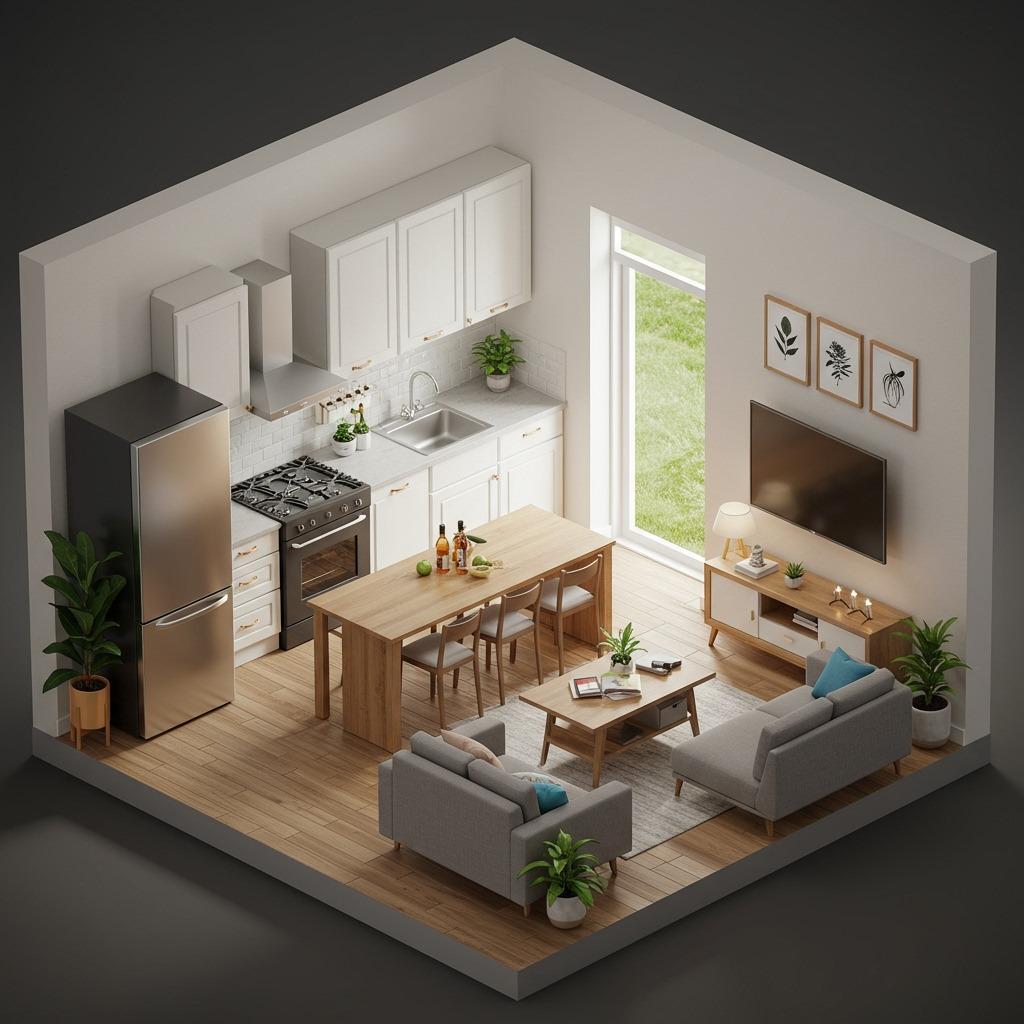
Diagonal arrangements break up the expected grid pattern most open concepts follow. By positioning your kitchen in a corner and angling your living furniture, you create a more dynamic flow. It feels less like two boxes side by side and more like a thoughtfully composed space.
This layout works particularly well in square or near-square rooms where traditional parallel arrangements can feel stiff. The diagonal creates longer sight lines, which tricks the eye into perceiving more space. Plus, it naturally guides traffic flow around the perimeter rather than through the middle of either zone.
The challenge? You’ll likely have some awkward corner spaces to address. But these can become opportunities – a reading nook in the living area, a coffee station in the kitchen corner, or even just some well-placed plants. Sometimes the imperfect spaces end up being the most character-filled.
9. Raised Kitchen Platform for Subtle Separation
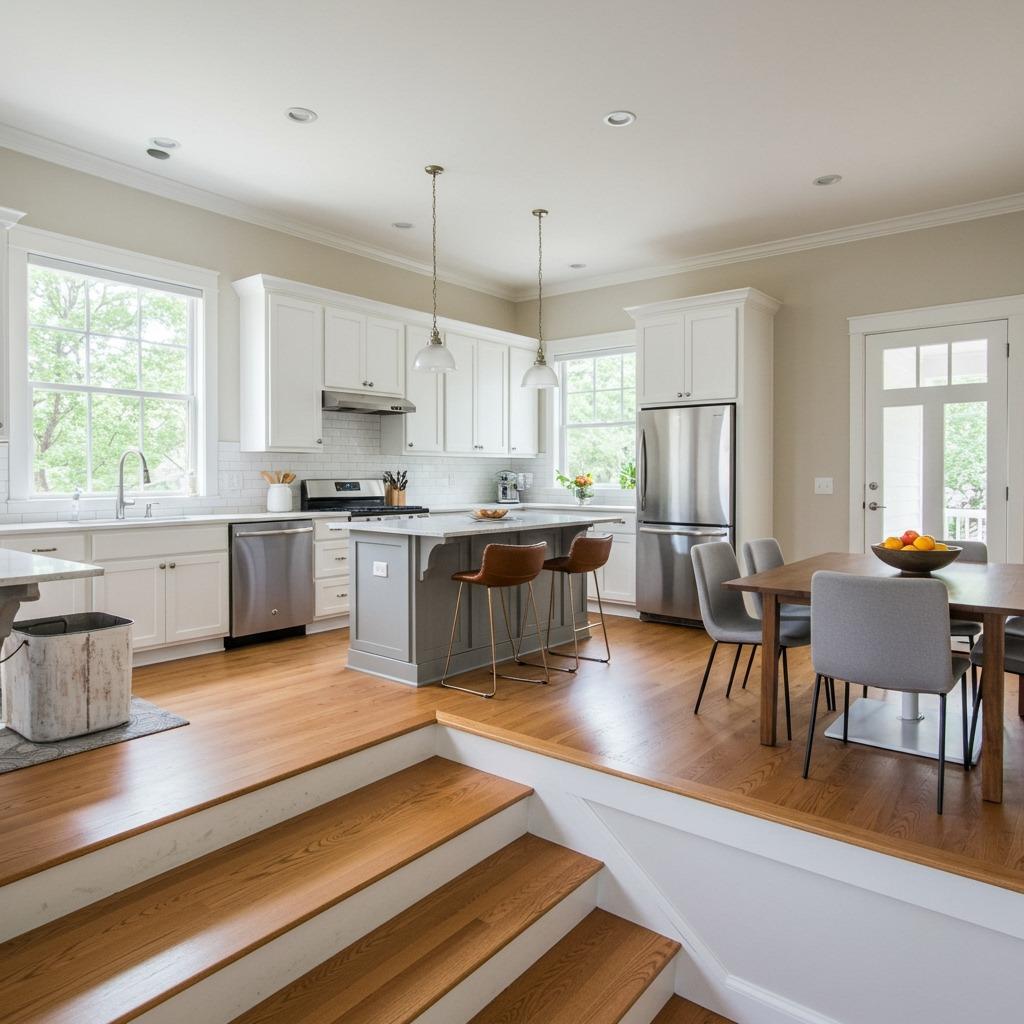
This one requires planning during construction or major renovation, but the impact is worth considering. Raising your kitchen by just 6-8 inches creates physical separation without walls or visual barriers. You maintain the open concept kitchen living room layout benefits while establishing clear zones.
The step-down to the living area makes that space feel cozier, almost sunken, which can be lovely for relaxation zones. Meanwhile, the elevated kitchen gets better sight lines over the space and subtly signals “work happens here.”
Safety consideration: that step needs to be clearly defined, especially at the edge. Contrasting flooring material at the edge, good lighting, or even a low glass railing can prevent stumbles. I’ve seen this work beautifully in modern breakfast nook designs that use elevation to create intimacy within open spaces.
10. The Single-Wall Kitchen with Maximum Openness
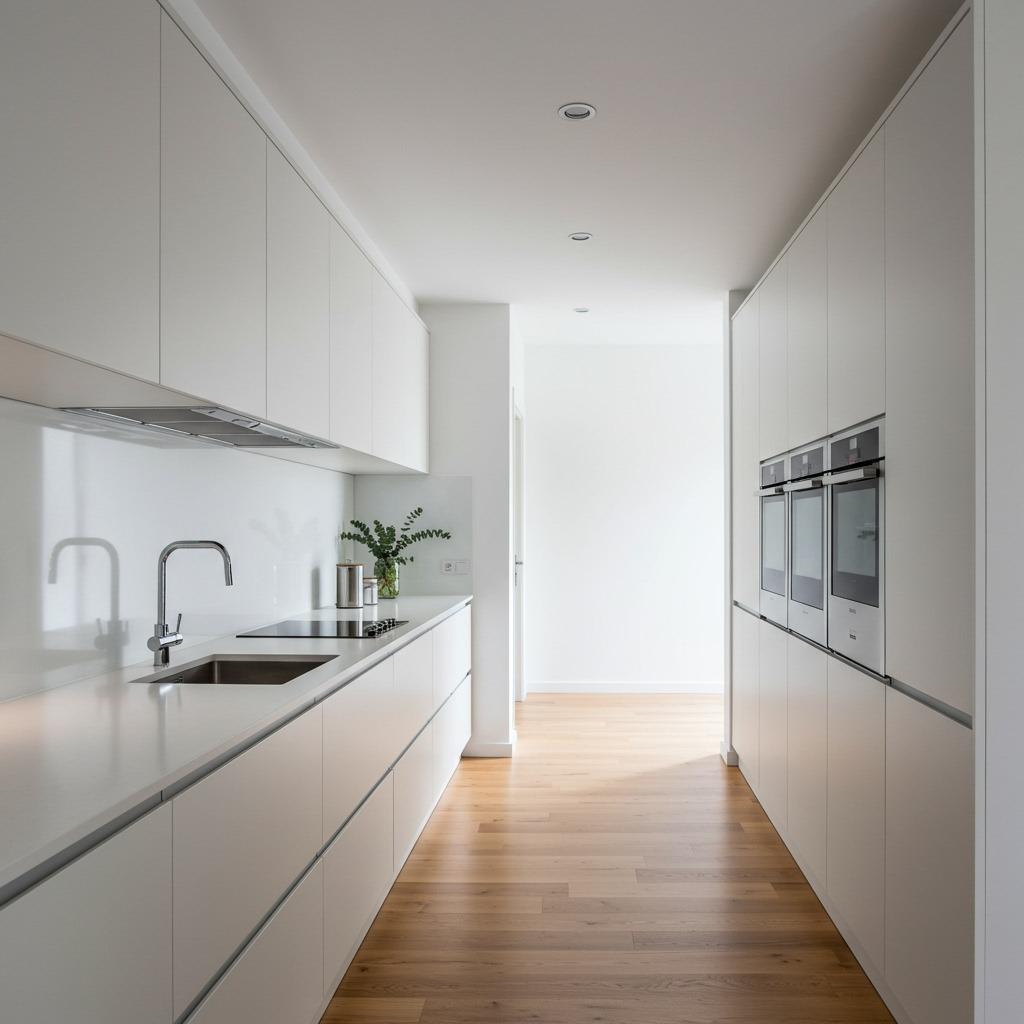
For smaller homes or studio-style living, a single-wall kitchen offers the ultimate in openness. Everything – sink, cooktop, fridge, storage – lives along one wall, leaving the rest of the space completely free for living area furniture. It’s minimalism that’s actually functional.
The key to making this work is vertical storage. You’ll need to use upper cabinets efficiently since you’re limited on horizontal space. Consider floor-to-ceiling cabinetry, pull-out pantries, and drawer organization systems. Every inch of that single wall needs to work hard.
What you lose in storage, you gain in flexibility. The rest of your space can be arranged however you want without working around kitchen footprint. I’ve seen tiny apartments use this layout brilliantly, with the living area doing double duty as dining and entertainment space. It requires some lifestyle adjustment – you won’t have sprawling counter space – but for many, that trade-off makes sense.
11. Back-to-Back Kitchen and Living Storage
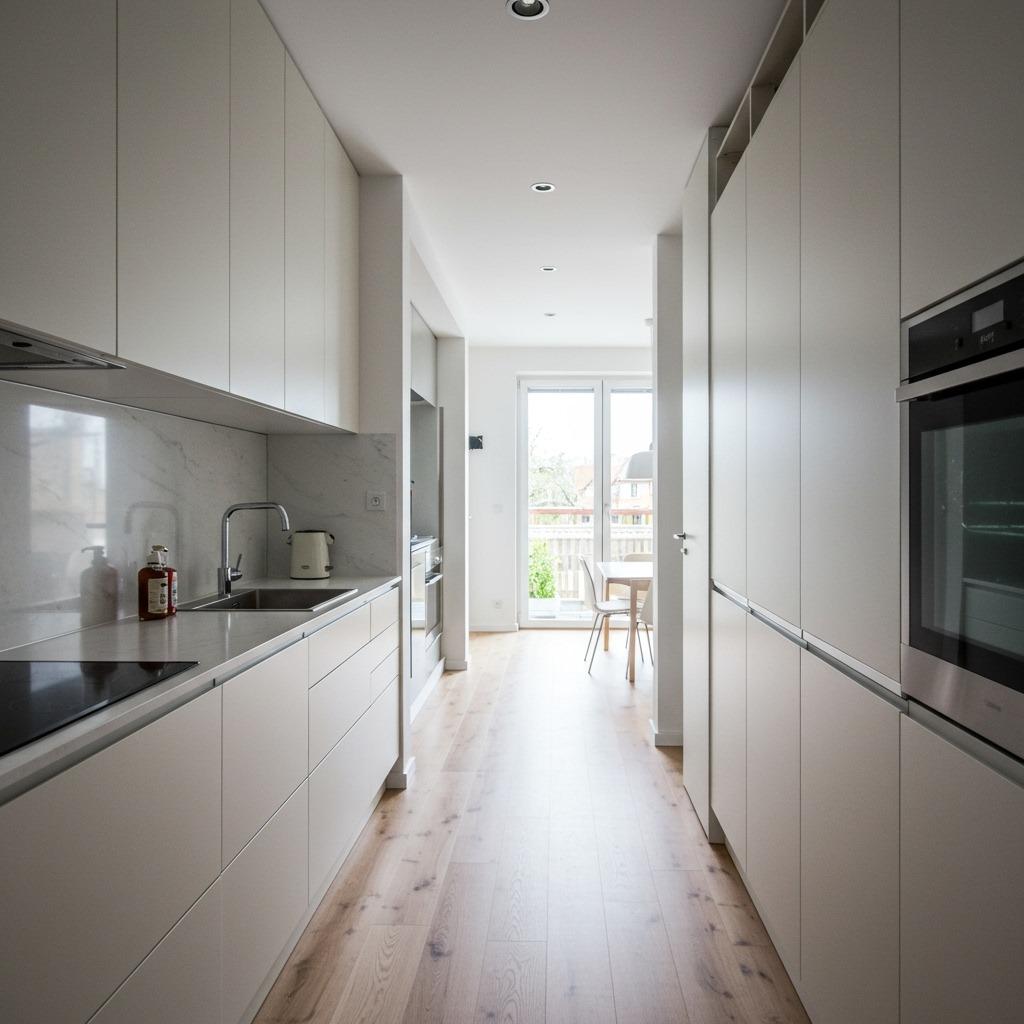
This symmetrical approach feels more intentional than casual. Your kitchen cabinetry runs along one wall, while directly opposite, you have built-in storage for living room needs – entertainment center, bookshelves, closed cabinets for living room clutter. The space between becomes your main traffic and activity zone.
The parallel storage walls create a sense of order without closing things off. Keep the upper portions open or use glass-front cabinets to maintain that crucial visual connection. The storage density helps both zones function better while the central clearing prevents the cramped feeling solid walls would create.
I particularly like this for people who need serious storage but don’t want their open concept to feel cluttered. Everything has a designated hiding spot, which maintains that clean, modern aesthetic. This pairs well with kitchen and dining ideas that emphasize organization within open layouts.
12. The Angled Island for Flow Optimization
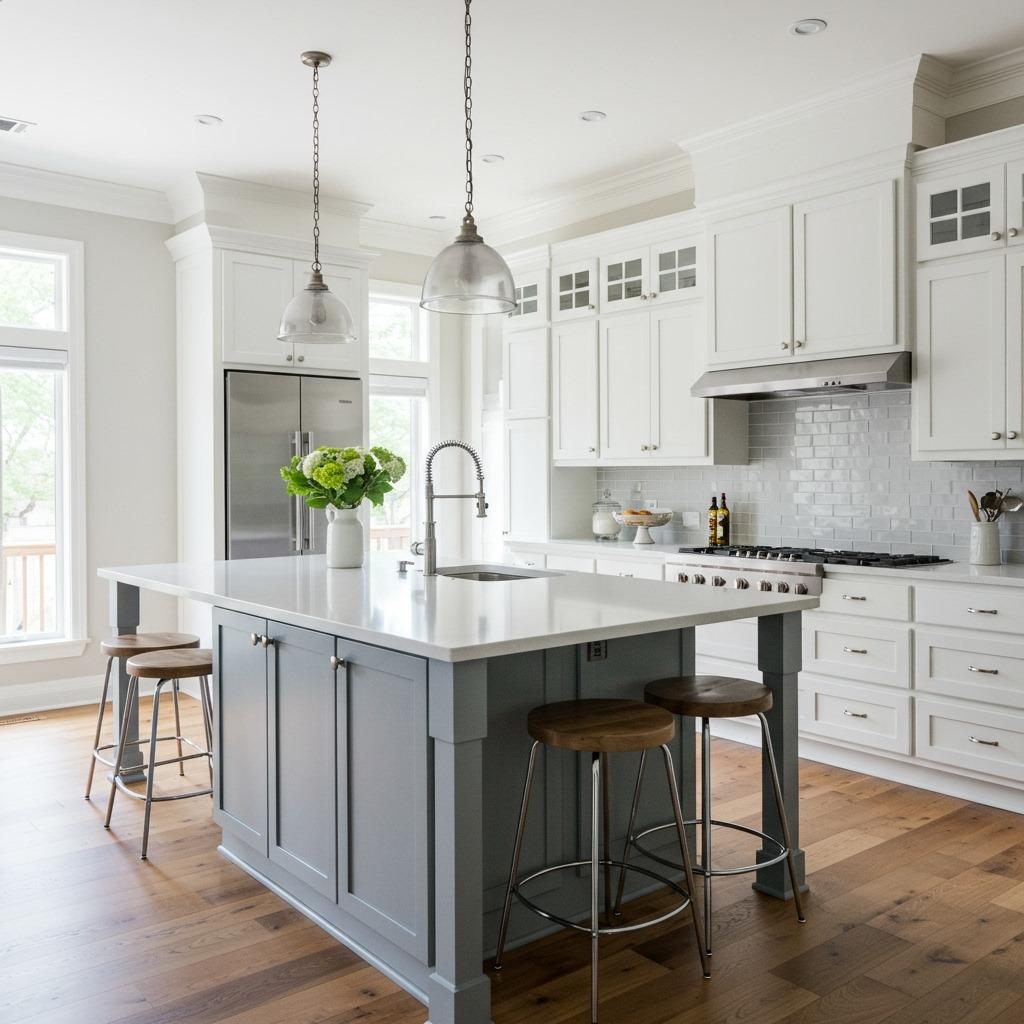
Why does every island have to be perfectly perpendicular? Angling your island can solve traffic flow problems while adding visual interest. Position it at maybe 30-45 degrees to your main kitchen run, and suddenly people naturally flow around it rather than through your work zone.
This works especially well in oddly shaped spaces where traditional layouts create awkward corners or dead zones. The angled island can bridge these irregular areas, making them feel intentional. Plus, it gives you multiple approach angles – useful when several people are working in the kitchen simultaneously.
The seating side of an angled island usually faces the living area at a more interesting angle too, making conversation feel more natural than straight-on counter seating. Just be prepared for slightly more complex cabinetry installation and potentially some custom pieces to fill the angled corners.
13. Kitchen Along Windows with Living Space Center
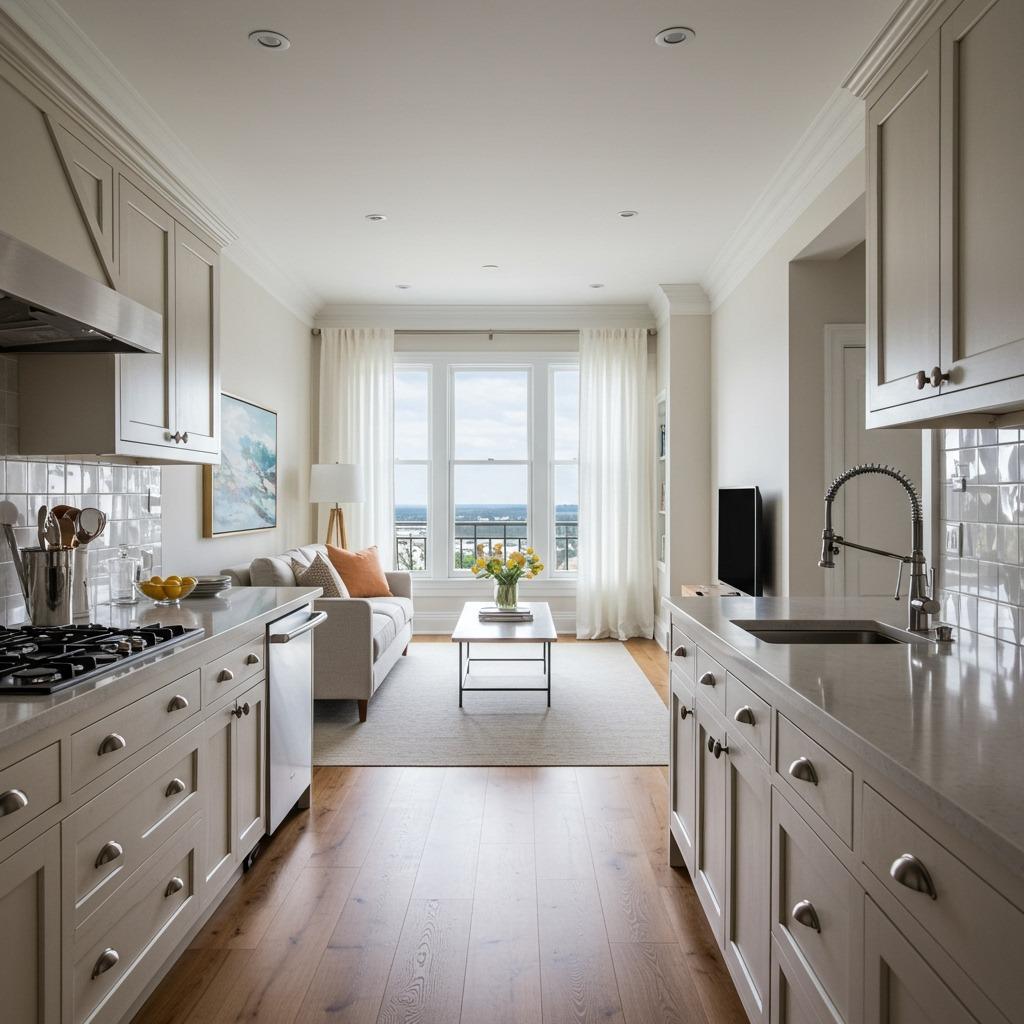
Here’s a controversial take: put your kitchen on the window wall. Traditional wisdom says that’s prime real estate for living space, but what if your kitchen is where you spend most of your waking hours? Why shouldn’t the person cooking get the best light and views?
This layout flips expectations but can be incredibly pleasant to use. Natural light makes food prep easier and more enjoyable. That window becomes your view while washing dishes – suddenly a chore becomes slightly less tedious. Meanwhile, your living area sits more toward the center or opposite wall, which can actually make it feel cozier.
The challenge is window treatments if your kitchen is visible from outside at night. You’ll want something that provides privacy without blocking that precious daylight. Café curtains, bottom-up shades, or thoughtfully placed plants can help. This approach fits naturally with spa-inspired bathroom philosophies that prioritize natural light in functional spaces.
14. Living Space Elevated, Kitchen Below
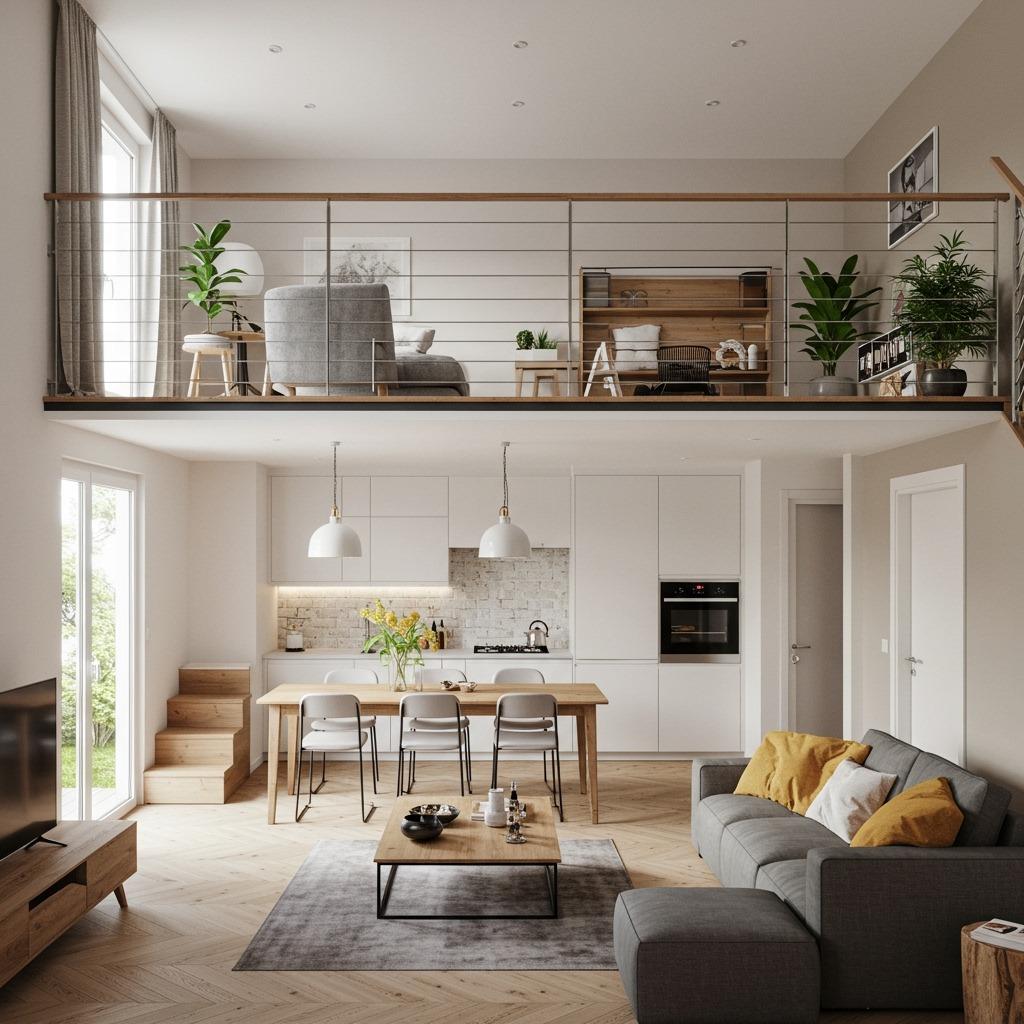
This reverses the raised kitchen concept – instead, elevate your living space by 2-3 steps. The kitchen stays at the main entry level for practical reasons (easier to carry groceries), while your living area becomes almost loft-like above. It creates a sense of destination, making the living space feel special.
The elevation also changes sight lines in interesting ways. From the living area, you have a slightly commanding view over the kitchen and rest of the main floor. From the kitchen, the elevated living space doesn’t dominate your view quite as much. It’s subtle psychology that affects how the spaces feel.
Building codes will have something to say about railings at that elevation change, so factor that into your planning. But a sleek, modern railing can actually enhance the definition between zones rather than detracting from it. This layout pairs well with homes that have interesting ceiling heights or architectural features to emphasize.
15. The Flexible Sliding Partition
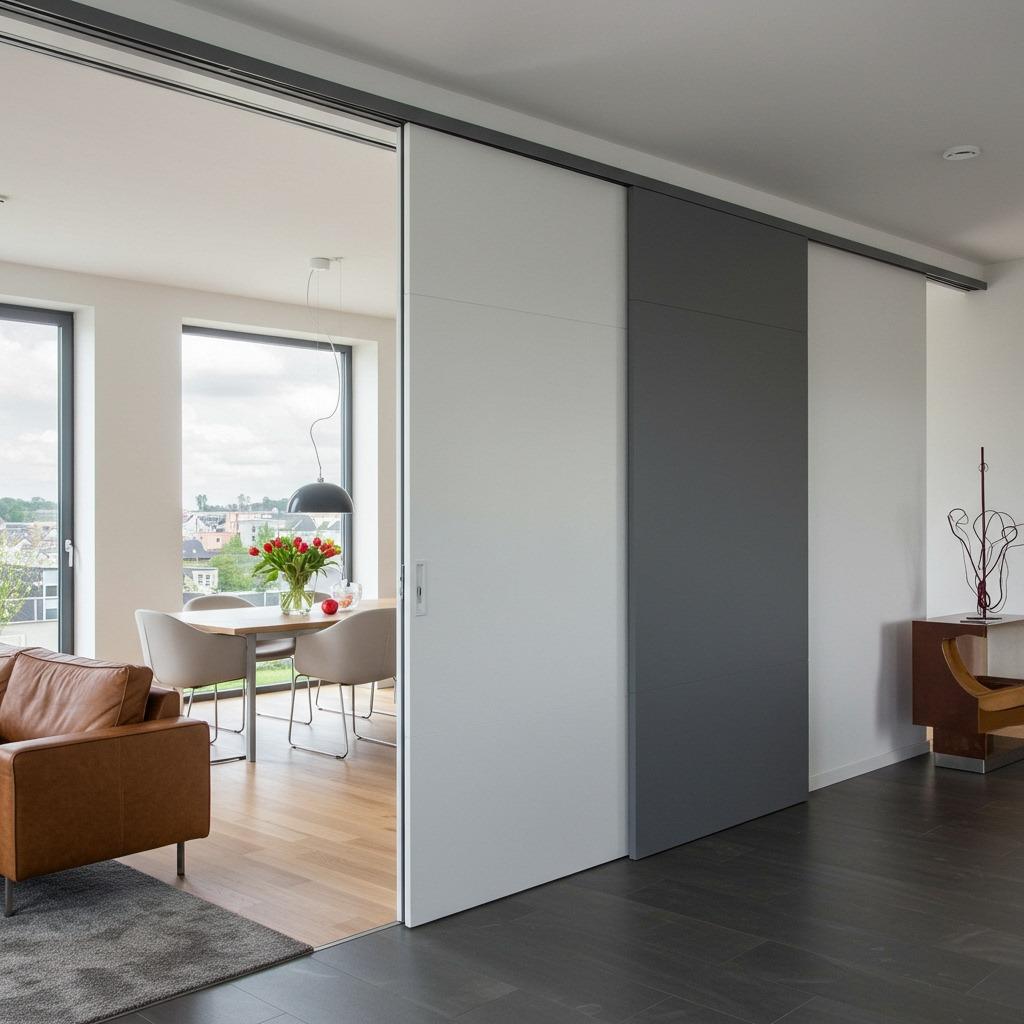
Sometimes you want openness. Other times – when you’re deep cleaning the kitchen before guests arrive, or when someone’s on a work call in the living room – you want the option to close things off. Installing a sliding partition system gives you both worlds.
Modern barn doors, pocket doors, or even accordion-style glass partitions can disappear when not needed but provide division when you want it. The key is choosing something that becomes a design feature rather than an eyesore. A beautifully crafted wood barn door or a sleek glass partition can enhance your modern open spaces aesthetic even when open.
This is particularly smart if your household has varying needs. Maybe you do messy cooking projects occasionally but love openness day-to-day. Or perhaps you work from home and sometimes need to fully separate the living area for video calls. Flexibility beats perfectly optimized but inflexible layouts almost every time. Consider exploring DIY home renovation ideas if you’re interested in installing partitions yourself.
Making Your Open Concept Layout Work Long-Term
The perfect open concept kitchen living room layout doesn’t exist in a vacuum. It needs to match how you actually live, not how Pinterest tells you to live. I’ve walked into stunning open concepts that clearly weren’t working for their owners – beautiful but impractical.
Start by tracking how you currently use your space. Where does clutter accumulate? Where do you naturally gather? What spots feel awkward or underused? These observations matter more than any design magazine. Your perfect layout might break conventional rules, and that’s completely fine.
Consider the acoustics too – something almost every design article forgets to mention. Open concepts amplify sound, which means that dishwasher might be louder than you’d like during movie time. Area rugs, upholstered furniture, and even strategically placed plants can help absorb sound without compromising your open floor design.
The real question isn’t which layout looks best, but which one you’ll still love after a year of living in it. Will you get tired of always seeing the kitchen from the living room? Do you actually cook enough to need that massive island? These honest assessments matter more than trends. Your home should serve your life, not the other way around.

